


Brewers Video
Hitting at the big-league level is incredibly hard, even for players with extraordinary talent and clear idea of what they're trying to do. As the Brewers wallow at the bottom of the league in offensive production, it's becoming clear that their hitters lack the latter, neutering the former.
In 2022, only the Yankees swung at fewer pitches in the bottom segment of the strike zone and below it than did the Brewers. Hitters on both of those teams were happy to take a walk, but their real goal was to force opposing pitchers to elevate a little bit. When they did, the hitters could elevate and do damage.
This season, the Brewers are similarly close to the bottom of the league when it comes to swing rate at pitches near the bottom of the zone. The Yankees are still below them, and now the Reds and Pirates are, too, but it's not a major gap. Milwaukee hitters wait out opposing pitchers when they attack the bottom of the zone.
Alas, the conviction and the competence that allowed last year's team to punish pitchers when they did leave a pitch up is absent. It seems as though, between new acquisitions and some injuries that have limited familiar faces, the 2023 Brewers lack the capacity to pounce when a mistake pitch comes. In baseball, there's nothing more deadly than a missed opportunity, and the Brewers seem to lead the league in those.
To his credit, when he got a couple of pitches up around the belly on Saturday afternoon, William Contreras did not miss. His game-tying homer was the kind of thing he needs to do consistently, in order to make up for the inevitable ground balls that come when he gets less friendly fodder to hit. He's been roughly what the team expected at the plate this year; it's just that everyone else has been worse.
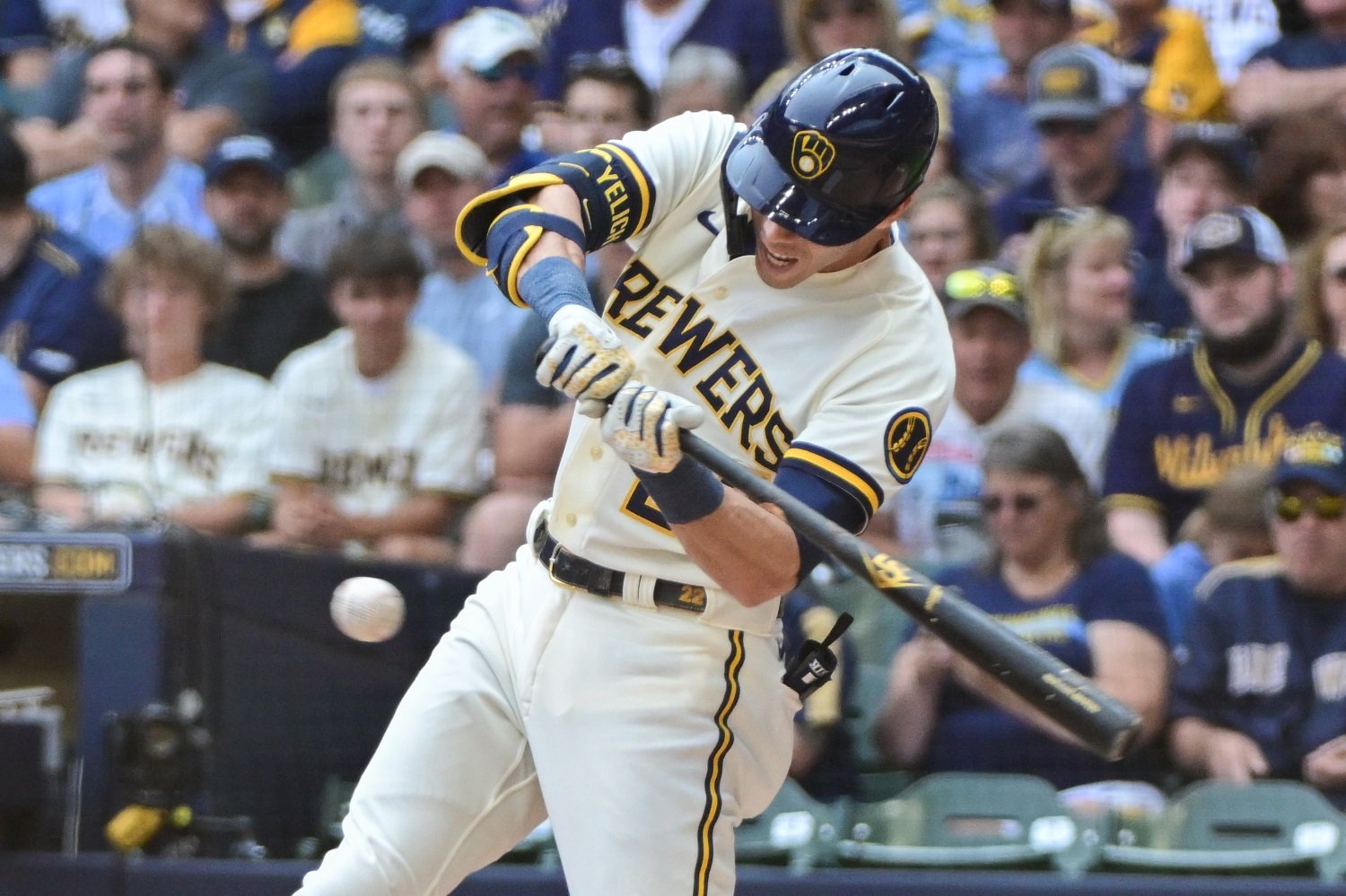
Willy Adames's ground ball rate has climbed by more than 7 percentage points. Brian Anderson's is up, too, and unlike Adames, he hardly had anywhere to go in that direction. He's now putting it on the ground nearly 53 percent of the time. Add those numbers and trend arrows to the well-documented tendencies of both Contreras and Christian Yelich to hammer the ball into the ground, and you have a team that spends far too much of its time hoping to squeeze a two-hopper between infielders, instead of trying to place a slicing liner between outfielders.
On its face, that the team so assiduously waits out low pitches would seem to clash with the fact that they hit so many ground balls. In truth, though, that reflects the swings the Brewers build, the types of hitters they like to acquire, and that lack of a clear, simple process at the plate. They don't ignore low stuff because they want to get slightly underneath the ball at contact, and have more room to do so when the pitch is up, but because it's harder to get the barrel to the ball low in the zone given the swing profiles of most players on this roster.
The same swing profiles, though, are exploitable by elevated pitches. Hurlers can manipulate most Brewers batters not only by getting whiffs (although there are far too many of those in the lineup right now), but also by moving the ball up and down their bats. Ground balls often happen because a hitter is unable to adjust to good, late horizontal movement, and the Brewers are no exception to that. Pitchers get them out by getting them to look for a pitch in a certain spot, but violating their expectations about which pitch it will be when they do throw to that spot.
Milwaukee batters have the third-lowest in-zone contact rate in MLB. That's obviously a bad thing, on its own, but trading contact for damage when contact is made is often a viable strategy. The problem is that, unlike other teams with similar problems, the Brewers aren't executing those tradeoffs. The other four teams in the bottom five in the league in that number are the Braves, the Twins, the Royals, and the Mariners. All four are in the top 10 in MLB in terms of the rate at which they pull the ball; the Brewers are 27th. The Twins, Mariners, and Royals are all in the bottom five in MLB in ground ball rate; the Brewers are fourth.
Trading Hunter Renfroe over the winter was defensible, and after a strong start, the Angels outfielder has struggled mightily over the last six weeks. Acquiring Contreras at such a low price was a no-brainer. Signing Anderson has, on balance, panned out well so far. Still, a bit more than 40 percent of the way through this season, the Brewers have to reckon with the fact that they have the second-worst offense in the National League.
Tweaks to several players' approaches are in order, but it's hard to gauge how well those will be able to take root, midstream. For that matter, it's hard to tell whether the Brewers even recognize the need for these changes, beyond knowing that whatever they're doing is not working. The team conceived and implemented a certain approach this spring, and it feels disturbingly unlikely that they'll be able to make an immediate change to it now.
Do you approve of the job the Brewers' front office is doing?

Follow Brewer Fanatic For Milwaukee Brewers News & Analysis



-
 2
2


Recommended Comments
There are no comments to display.
Create an account or sign in to comment
You need to be a member in order to leave a comment
Create an account
Sign up for a new account in our community. It's easy!
Register a new accountSign in
Already have an account? Sign in here.
Sign In Now