


Brewers Video
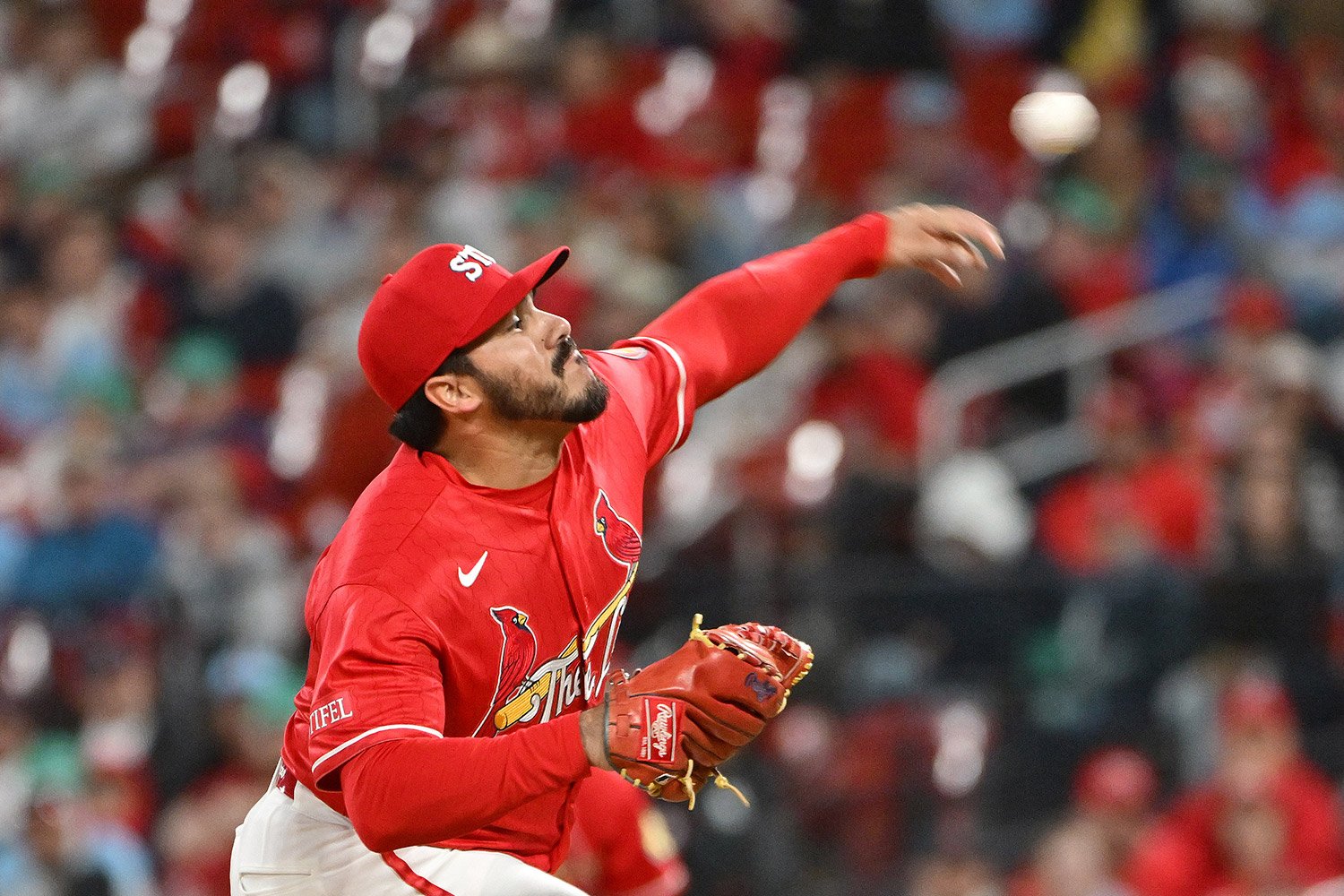
The Brewers’ biggest trade deadline deal was a four-player swap with the division-rival Cardinals on Monday afternoon. Milwaukee acquired veteran starter Dustin May and reliever JoJo Romero in exchange for outfield prospects Josiah Ragsdale and Alexander Frias.
That looks at first glance like a steep return. Injuries have kept May from making good on the promise he showed as a young starter for the Dodgers, and his 4.38 ERA for St. Louis this year is nothing special. Romero is a solid middle reliever. Both are rentals who will be free agents after this season. Meanwhile, Ragsdale was Brewer Fanatic’s No. 16 prospect, while Frias appeared in FanGraphs’ Top 50 prospects in their latest midseason update.
Several fans and pundits were quick to call that a clear overpay, but there’s more to dive into here. First, Ragsdale and Frias were both breakout prospects who remained beneath other outfielders on the organizational depth chart. The Brewers’ internal evaluations of both players are likely lower than the consensus. Second, May and Romero are great fits for Milwaukee’s pitching infrastructure with more upside than one might assume.
May’s results with the Cardinals this year were unremarkable, but his 3.91 xERA, 3.14 FIP, and 93 DRA- all suggest he’s pitched like an above-average starter. Most importantly, his arsenal has improved this year.
“The stuff is really electric,” president of baseball operations and general manager Matt Arnold said. “You saw what he did against us a couple weeks ago, and he was really, really good. He’s a guy that we’re happy to have on our side.”
May has reintroduced a curveball and changeup this year to expand his secondary stuff, but the Brewers are almost certainly more interested in his fastballs significantly improving. He's always been a fastball-heavy pitcher, but when May returned from his second career elbow surgery last season, he couldn't get the same mileage out of his hard stuff. His four-seamer, sinker, and cutter combined for a poor -12 run value, prompting him to throw more breaking balls that he couldn't spot in the strike zone. This year, May is back to throwing more heaters, and his fastball run value has flipped to an elite +11.

"My biggest thing is fastball execution," May said. "If I'm able to execute the fastballs, the offspeed stuff just plays off it, whether it's in the zone or not. So being able to kind of place the ball in and out is my biggest thing."
In his prime, May approached 100 mph with his four-seamer and sinker, but his average velocity dipped to around 95 mph last year. This year, he’s back to sitting nearly 97 mph, and his cutter is at its highest velocity since 2020.

It’s not just the velocity bump. May is also creating better angles with those three fastballs, allowing them to play off one another more effectively. He has raised his arm angle from 21 degrees to 34 degrees this year, which has added more than 2 inches of backspin carry to both his four-seamer and cutter, which also has more consistent glove-side movement.

"I think going into the offseason, the biggest thing for me was kind of getting back to my old throw," May said. "So that was something that I really worked on, and I feel like I've kind of gotten back to a close version of my previous self, whether it be arm angle and slot and everything like that, just to be able to maximize the efficiency of my throw."
The biggest piece to the puzzle, particularly for the Brewers, is May’s sinker. A higher arm slot raises the spin direction of a baseball, which is why May’s four-seamer and cutter now have more carry. It hasn’t affected his sinker, though, which has not lost any sink. That’s because May is generating more seam-shifted wake on the pitch. This seems to be because of his unique offset sinker grip, which orients the two seams in a way that creates a greater air pressure imbalance on each side of the ball as it spins toward home plate.
Hitters look for spin to identify a pitch as it makes its way toward home plate. When they see the ball spinning in a certain direction, they use that spin to predict how the ball will move. This year, May is creating an even greater difference between how much hitters expect his sinker to sink based on its spin and how it actually sinks.
Take a look at the two clock-like graphics below. In 2025, there was a clear difference in the direction May’s sinker would spin (the orange bars on the left) and how it would actually move (the orange bars on the right). The bars on the right were lower on the clock, meaning May’s sinker would move down and to the right more than it was spinning.

This year, there’s an even greater difference between the spin and the movement. Because of his higher arm slot, May’s sinker is spinning more vertically, but it has just as much depth and horizontal movement.

By getting the same amount of sink from a higher arm slot, it looks to the hitter like May’s ball is sinking even more than it did last year. His sinker’s vertical approach angle, which measures how “steep” a pitch looks to the hitter, has dropped from -5.28 degrees to -5.51 degrees this season. That means May’s sinker now ranks among the steepest in baseball.
The bottom line is that all of May’s fastballs are behaving better. His four-seamer has more carry, his cutter has more cut, and his sinker looks like it has more sink. With those improved fastballs, May can throw three pitches with very similar spin out of his hand, but with very different movement. According to MLB Pitch Profiler, his proMax+ (a stat that measures how well a pitcher mixes different pitch shapes while making them look the same out of his hand) has jumped from 92 to 107.
That makes May a perfect new toy for pitches coaches Chris Hook and Jim Henderson, who value tunneling three different fastballs off each other in the strike zone. With the Cardinals, May threw his sinker mostly to right-handers and his cutters mostly to left-handers, and he threw plenty of four-seamers to both sides. The Brewers could balance all three fastballs more evenly to both sides and bring May’s overall fastball usage closer to the 75% he averaged with the Dodgers years ago.
Romero doesn’t have three fastballs, but his leading pitch is also a power sinker that averages just 0.9 inches of induced vertical break (a lower number means more sink). The southpaw has very little extension toward home plate. With a shorter stride, his body is more upright and further above the ground, which raises his release height and adds to his perceived sink. Aaron Ashby creates a similar effect with low extension, albeit from a much higher arm slot.
Romero’s sinker has a -5.89 vertical approach angle, which is an elite -0.73 degrees steeper than expected from his release height and velocity. It’s gotten ground balls on at least 60% of batted balls in every year since 2021.
There’s a reason why the Brewers felt comfortable giving up what they did to bring in two division-rival arms. At minimum, a healthy May should remain a reliable innings-eater. At best, he could dominate down the stretch with one of baseball’s best fastball combinations. When Romero returns from an appendectomy, he’ll give Pat Murphy a ground-ball specialist who can ease the strain on the team’s leverage relievers. Don’t be surprised if what looks like an overpay becomes a great value deal for Milwaukee.
Do you approve of the job the Brewers' front office is doing?

Follow Brewer Fanatic For Milwaukee Brewers News & Analysis



-
 2
2


Recommended Comments
Create an account or sign in to comment
You need to be a member in order to leave a comment
Create an account
Sign up for a new account in our community. It's easy!
Register a new accountSign in
Already have an account? Sign in here.
Sign In Now