


Brewers Video
With superb bat-to-ball skills and an impressive awareness, the team's third baseman has earned himself a bunch of valuable calls at the edges of the strike zone.
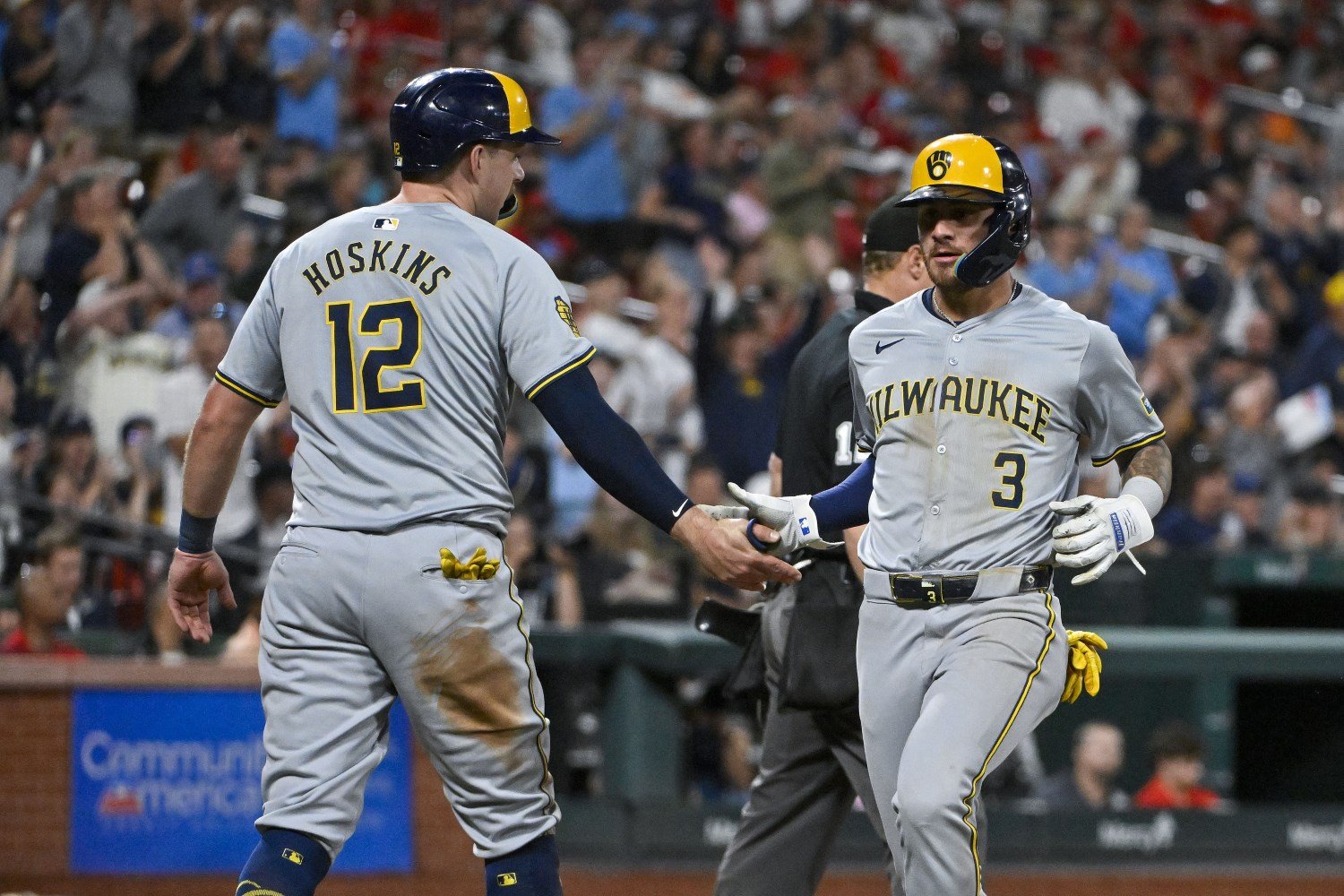
Early this season, I wrote about the skill at which Rhys Hoskins excels, but which many fans probably didn't realize existed: batter framing. It's a funny way to think about the game, because even catchers framing pitches to earn extra calls has only emerged into the analytical consciousness of the sport within the last two decades. Once you grapple with it for a bit, though, it makes sense. The pitcher is the first person to influence the likelihood of a called strike, by throwing a pitch toward a particular target with a particular degree of command or control. The catcher is the last person to exert that influence, by catching the ball with a particular style. In between, though, the hitter gets to make their own contribution to the process.
The better a hitter knows the edges of the zone, the more favorable the calls in that space turn out to be. Patterns of swinging or taking pitches that correlate with a real talent for pitch recognition and strike-zone judgment will lead to fewer called strikes on the borderlines of the zone, as long as a hitter also takes the determined approach of swinging when they identify a strike and taking when they identify a ball.
Shaping your own zone that way--defending the edges, without expanding, and/or applying some subtle blend of politicking and body language--is a skill, although not one with a huge spread in terms of how many runs above or below average a hitter can be worth that way. As I wrote in the spring, Hoskins is elite in this regard. It turns out that a Brewers rookie joins him very high on that leaderboard, though.

Yes, Joey Ortiz is getting multiple runs of value from forcing certain calls, based on his combination of skills in the box. Ortiz doesn't chase outside the zone very much, and doesn't even offer at fringy pitches with any great frequency. Among the 200 hitters with at least 400 plate appearances, Ortiz swings at the lowest percentage of close pitches--those with a probability of being called a strike between 20 and 80 percent, based on their location. He's assiduous about that, but what's striking is that he gets a lot of his value from not swinging at strikes much, period. No qualifying hitter swings at a lower share of all pitches in the zone.
As a team, the Brewers don't expand the zone much, which is part of why Hoskins and Ortiz are not the only ones with good framing value at the plate.

As you can see, though, there's more to the skill of defining the strike zone as a hitter than swing rates. Ortiz far outperforms Sal Frelick and Blake Perkins, who also don't expand their zones. It's a subtle art, but the rookie does seem to have a knack for selling a ball, with active takes that involve letting the bat start its arc toward the hitting zone, just a bit. He uses both approach skills and his mannerisms--plus good contact skills within the zone, which minimize the chances that he ever gets called out on strikes by getting the ball into play early in at-bats--to influence umpires on the pitches he doesn't choose to attack.
Again, this is one of those tiny, fractional ways players amass value. It's not as important as most other offensive skills, though it's closely tied in with some of them, like minimizing strikeouts and maximizing walks. Mostly, it's just a way of better understanding a player. Though not superficially similar to Hoskins or Aaron Judge or any of the others who rank among the league's top five in batter framing runs, Ortiz has demonstrated the skill. His approach is very much akin to those of Dansby Swanson, Ha-Seong Kim, and Jonathan India, which is quite a compliment, since all of them are fairly seasoned veterans. Ortiz has learned to derive value by influencing the zone and fighting for the few inches around it that can decide games, and he does it both on his swings and on his takes. It can slip by unnoticed in many contests, but next week, it might just become one of the minuscule skills that flips a playoff series. At that point, we'd all notice.
Which team do you dislike the most in the NL Central?

Follow Brewer Fanatic For Milwaukee Brewers News & Analysis



-
 1
1


Recommended Comments
There are no comments to display.
Create an account or sign in to comment
You need to be a member in order to leave a comment
Create an account
Sign up for a new account in our community. It's easy!
Register a new accountSign in
Already have an account? Sign in here.
Sign In Now