


Brewers Video
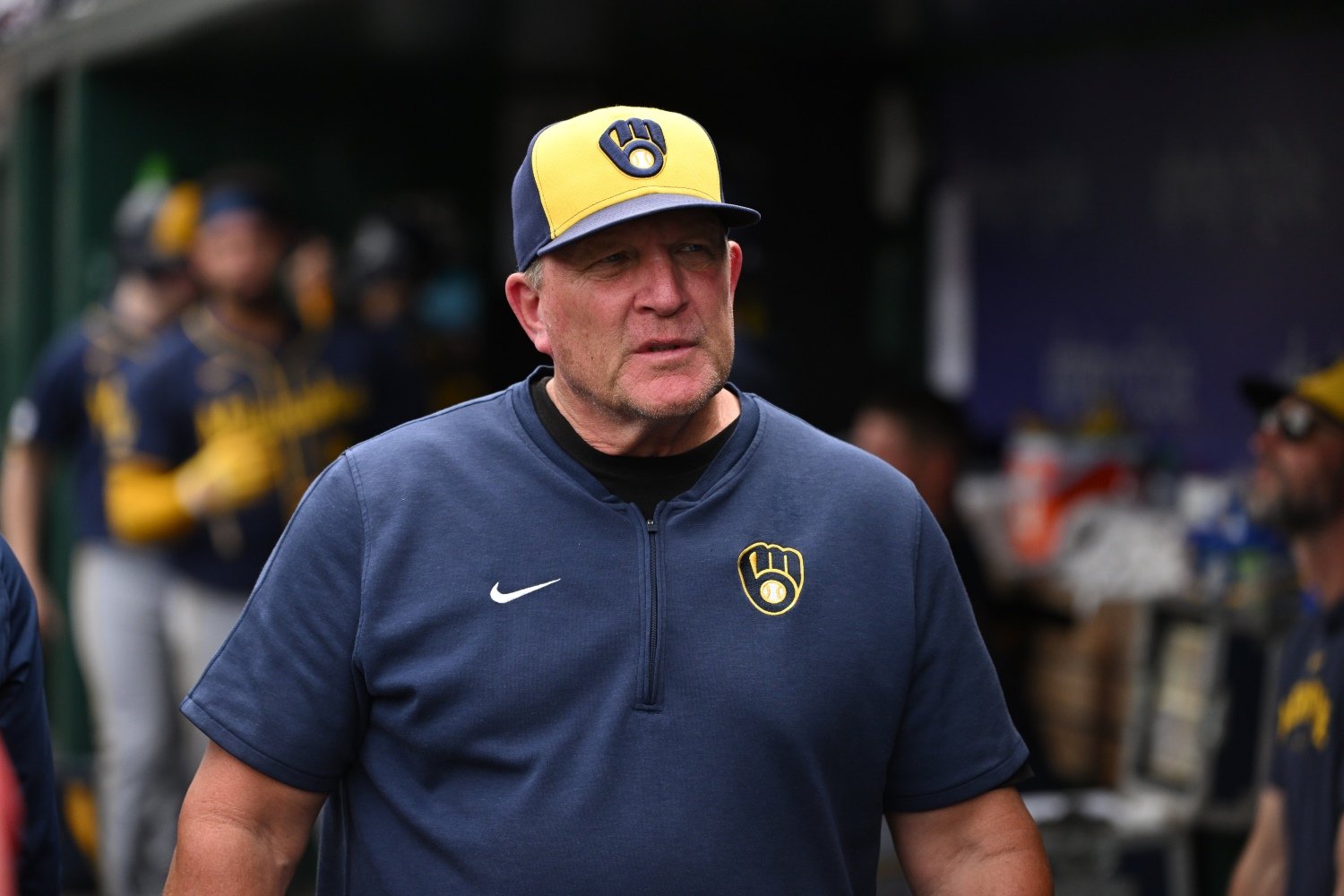
When Pat Murphy signaled to intentionally walk Brent Rooker in the seventh inning of Saturday’s win over the Oakland Athletics, it was the 22nd time the Brewers elected to send an opposing hitter directly to first base. Only four teams have issued more intentional walks.
It’s a dramatic strategic shift for a team that issued a combined 19 intentional walks over the past two seasons, including just seven last year. From 2023 to 2024, Milwaukee has flipped from issuing the third-fewest intentional walks in baseball to the fifth-most.
Even Murphy was surprised when informed, during the club’s last homestand, how many automatic free passes his team has issued.
“I would have said five. So I could have been sleeping some of those games, because that happens.”
He then called for three more in a five-game stretch when the Brewers went on the road.
Teams have grown far stingier over willingly filling a base in recent years. The 2017 MLB season featured 970 intentional walks. By 2021, that figure decreased to 703. It’s dropped to 475 in 2022, 474 in 2023, and 407 this year.
As modern front offices have assigned quantitative value to baserunners and outs, most teams pursue the latter in nearly every situation. Even baseball’s very best hitters reach base less than half the time. An out is both the more likely and beneficial outcome, and teams are more confident than ever in the gameplans they have even for dangerous sluggers. Under Craig Counsell, the Brewers followed the trend. In Murphy’s first season as manager, they’ve done the opposite.
The front office supplies Murphy with several analytical resources to inform his in-game decision-making, including a breakdown of when putting a runner on via a walk carries the least risk.
“There’s a script for it,” he said. “The people upstairs have created a probability [of] when is better.”
Murphy has the final say on those decisions, though. He has issued most of the intentional walks in contexts likely deemed acceptable by those probabilities, but his true inspiration seems to be his intuition about certain hitters and game situations. Murphy emphasizes avoiding damage at the hands of an opponent’s best bats in critical moments.
“In my life, every game I’ve ever been part of, I look at the lineup, and I’m like, ‘This guy ain’t beating us,’” he said.
In practice, that usually means intentionally walking a batter to prevent him from driving in a potentially decisive runner in scoring position. If first base is open, placing that batter there also creates a potential double-play opportunity.
“It’s the situation,” Murphy said. “But it’s usually a guy that, if he hits, can really hurt you. And it depends on who’s behind him, or sometimes it doesn’t depend on who’s behind him. It’s just the right thing to do when you got a guy on the mound that could create that ground ball.”
Murphy has no qualms about filling first base when it’s unoccupied in a high-leverage moment. Of the Brewers’ 22 intentional walks, 18 have come with first base open in a late and close situation (defined by TruMedia as a plate appearance in the seventh inning or later in which the batting team is leading by one run, tied, or has the tying run on base, at bat, or on deck).
No team has issued more intentional walks under such circumstances. The average club has done it about seven times. More than twice as often, Murphy’s Brewers send the batter straight to first base instead of attempting to retire him.
Murphy called for all three intentional walks on the road trip with first base open in a critical situation late in the game. With runners on second and third in the ninth on Tuesday, the Brewers walked Lars Nootbaar to load the bases and create a force out at home in a one-run game. They walked Willson Contreras with the winning run on third the following night. On Saturday, they walked Brent Rooker to obtain a more favorable matchup for Jared Koenig, against JJ Bleday.
The Rooker walk stands out the most, because it was the third time this season that Murphy upped the ante by walking the go-ahead run. He previously did it to Contreras on Apr. 19 and to Elly De La Cruz on Jun. 16. In all three instances, the Brewers escaped the inning without a run scoring after the walk.
Overall, Milwaukee has issued an intentional walk in 19 innings this year and prevented any scoring thereafter in 14 of them. The walks have combined for -0.1 Win Probability Added in isolation. The main takeaway is that they have not been discernibly detrimental to the Brewers.
One could argue that Murphy and the Brewers are too often conceding a base and bypassing opportunities to record an impactful out. He may be giving opposing hitters too much credit. At the end of the day, though, he’s simply turning to a low-risk play more than most managers. Even if Murphy is too liberal with issuing intentional walks, it’s hard to take serious issue with that inclination.





Recommended Comments
Create an account or sign in to comment
You need to be a member in order to leave a comment
Create an account
Sign up for a new account in our community. It's easy!
Register a new accountSign in
Already have an account? Sign in here.
Sign In Now