


Brewers Video
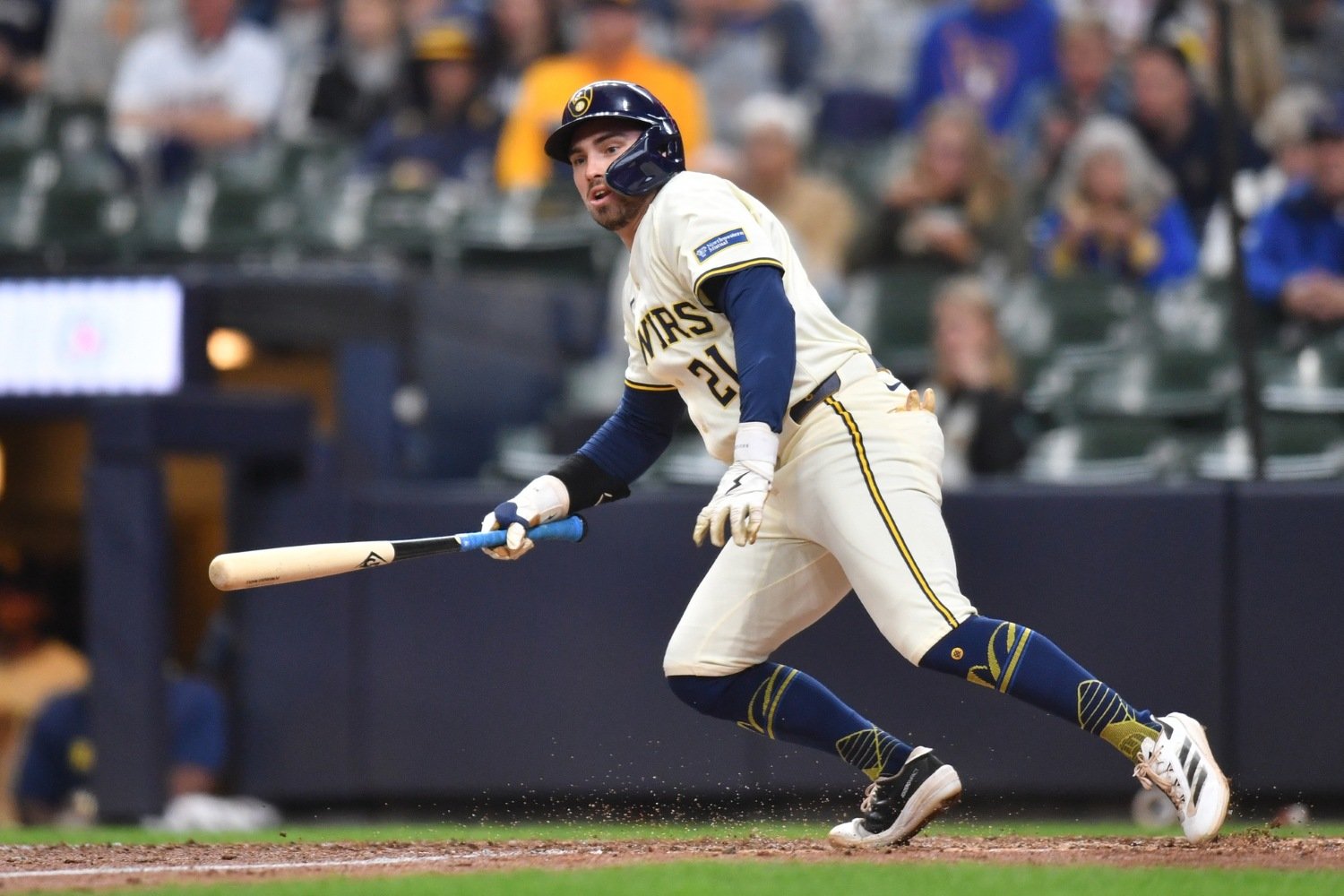
"I honestly never really felt bad in the box, since getting up," Caleb Durbin said Sunday, when asked to reflect on what's changed since his slow start in the big leagues. "I think baseball’s just, you go through ups and downs; it’s a part of it. I’ve gone through that at every level, so I really wasn’t rattled by that at this level. I know it’s a part of the game, and it’s a game of constant adjustments. Everyone at this level is just, no matter how many years you have in the league, you’re making constant adjustments. That’s a natural part of the game."
Kudos to Durbin for his self-confidence; it's a key ingredient in success against the best competition baseball can offer. He might not have been right, exactly, to believe he was in such good shape at his worst. In his first month in the major leagues, Durbin hit a disturbing .169/.263/.241. In 96 plate appearances, he had just four extra-base hits, and it looked like the worst fear for every undersized player whose skill set hinges on their hit tool would be realized in him: big-league pitchers would knock the bat right out of his hands.
So much for that. In the last five weeks (30 games and 121 plate appearances), Durbin is batting .279/.358/.404. He has just 14 strikeouts over that span, equal to the number of free passes he's gotten (9 walks, 5 times hit by pitch) and the number of extra advancements he's created (9 extra-base hits, 5 stolen bases). Without putting any particular, focused training into bat speed, he's increased his bat speed substantially as the season has progressed. In non-two-strike counts, he's now averaging 69.4 mph on his swings, up from 68.3 in May. That extra tick of bat speed matters, because it gets him to his preferred contact point more consistently and generates the extra bit of juice off the bat to get the ball through the infield or to plug a gap.
"You just make the adjustments you need to make, and it stems from your approach," Durbin said. "I’m getting back to what I do best approach-wise, being aggressive early in the count and getting good swings off. The comfortability in the big leagues stems from what you need to do to be your best, and I’m just wanting to fall back to that."
As a fairly extreme pull hitter (but not one who can consistently take aim at the fence, even down the line), Durbin has also had to find ways to force big-league defenses into positions that leave holes he wants to use. That means hitting the ball through the right side of the infield, sometimes, to force the weak-side defenders to stay honest, and he's done some of that. Yes, it also means bunting.
"Yeah, it’s a big part of it," Durbin said, when asked whether his 12 bunt attempts this year stemmed in part from trying to manipulate the defense. "Obviously, there’s the aspect of actually getting it down and getting a hit, but also, just showing it helps, because it does kind of move that third baseman in. You want to create as many holes as you can on that side, and showing the bunt as many times as you can in the season does that."
Durbin has forced the third baseman to play up against him a substantial share of the time this year, which gives him lots of ways to reach base by hitting the ball that direction. When the second baseman can't even cheat up the middle, there's an extra benefit—and Durbin's tendency to hit fly balls (plus that burgeoning bat speed) prevents the outfielders from pinching way in on him.

It sounds like a simple formula, and in amateur ball or the minors, it is. However, it's hard to pull a big-league defense out of shape. Durbin manages it. That's a testament to his ability to handle the bat and spray the ball.

It's also a testament to his speed. The threat of the bunt doesn't draw the corners in the way you want it to unless you have speed enough to make them do so, and speed amplifies the benefits of hitting the ball even past the third baseman, deep into the hole at short. That showed up in the fourth inning Sunday, when Durbin hit a ball that third baseman Brooks Lee might have cut off, had he been able to play deeper. Instead, it got past Lee, and although Carlos Correa made a sliding stop going to his right, there was no hope of throwing out Durbin thereafter.
Bat control and speed are valuable tools for keeping a defense on its heels. The bunt is a specialty tool for that purpose. Few hitters in the modern game use those tools the way Durbin does, but over the last five weeks, he's proved how well they can still work—especially once you settle in, find the high end of your range in terms of bat speed, and clear the minimum standard for sheer contact quality. It's not just keeping Durbin in the majors, anymore. It's actively helping the Brewers win games.
Do you approve of the job Pat Murphy is doing as Brewers manager?

Follow Brewer Fanatic For Milwaukee Brewers News & Analysis



-
 2
2


Recommended Comments
There are no comments to display.
Create an account or sign in to comment
You need to be a member in order to leave a comment
Create an account
Sign up for a new account in our community. It's easy!
Register a new accountSign in
Already have an account? Sign in here.
Sign In Now