


Brewers Video
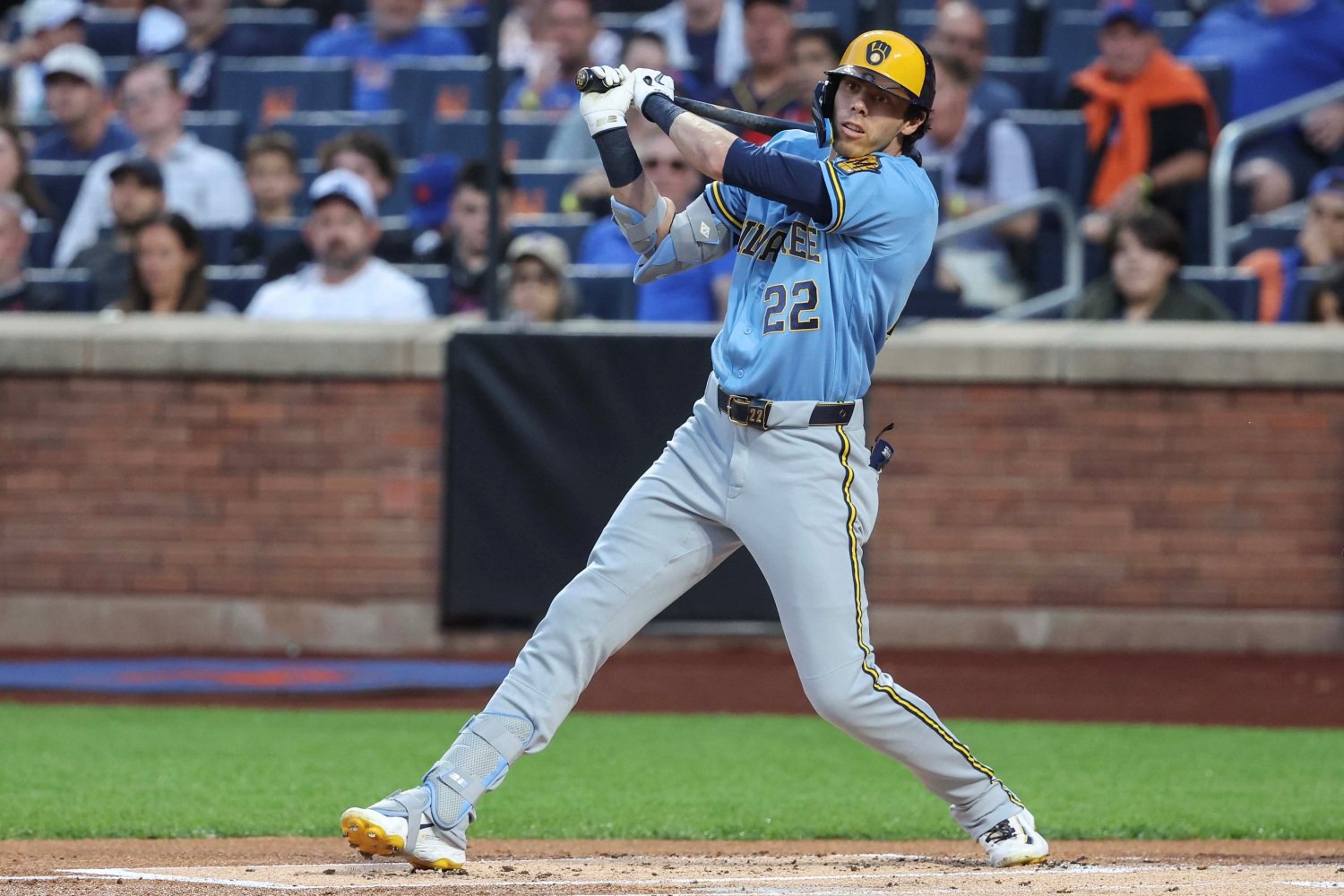
Even at his best, Christian Yelich comes with some limitations. He'll always hit the ball on the ground a lot. It's been a long time since he was a usable defender or a fast runner. More importantly, it's been rare to see Yelich at what feels anything like his best. Since he returned from a month on the injured list from mid-April through mid-May, Yelich has looked like he left some of himself on the shelf. In his first 71 games back, he batted an anemic .210/.296/.349, with a sclerotic swing.
Lately, though, things have trended suddenly upward. Yelich's torrid 10-game run in the second half of August serves as a reminder that he's still a great hitter, underneath the piled-up effects of age and multiple injuries. The question is whether he can peel away enough of the layers of things that interfere with his talent to produce the way the team needs him to for the balance of this season. Some evidence, at least, suggests that he can.
Squaring Up Balls in the Air Has Keyed Christian Yelich's Resurgence
Some hitters struggle to generate power (or even batting average) because they lack bat speed or are unable to center the ball on their barrel. For those players, the missing ingredient in their pursuit of production is exit velocity. It's hard to hit the ball hard if you can't either swing fast or catch the ball flush with your bat. Yelich, however, belongs to a rival fraternity of struggling sluggers: the ones who have a great feel to hit and decent bat speed, but rarely bring those things to bear by hitting it hard in the air.
When he's not going well, Yelich still occasionally hits the ball exceptionally hard, and he rarely goes through prolonged periods where he's truly producing weak contact. Rather, what he loses is the ability to drive the ball and elevate it at the same time. His hard contact all clusters on the ground. When he does hit fly balls, they're his least well-struck batted balls, and they become automatic outs.
That was all happening for much of June and July, leaving Yelich spiraling. The dearth of production lingered into August, too. However, under the hood, he's been hitting the ball much more squarely this month, and much more often, that squared-up contact is coming on high line drives and fly balls. To see this happening, consider this chart from FanGraphs, which shows the frequency (the bubbles; bigger means more batted balls in that range) and a smoothed curve that describes the relationship between efficient Yelich's contact is and the launch angle of his batted balls. In yellow, we see a lot of fly balls hit in a productive launch-angle band (the red shaded box shows the ideal range at which to hit a ball to produce a home run), but not nearly squarely enough to produce hard-hit balls and positive outcomes. That's June and July. In blue, you can see him squaring the ball up considerably more overall, but especially on the balls he hits at launch angles over 10°.

Thence has come his rediscovered power, along with plenty of singles that are possible only because he hit the ball with a little air under it, rather than on the ground. There are also some pitches he'd been pushing the other way earlier this season, but which he's found ways to turn on recently—as he did on this home run against the Mariners on August 18.
Stance Changes Have Unlocked Small Swing Changes
Yelich's stance is a bit more open this month, and he's a hair farther off the plate than he was earlier this year. The difference is subtle, but it's noticeable. Compare these shots of him from June (on the left) and mid-August (right), and you can see the difference in both his place in the batter's box and his hip and foot position.
.png.d65a93f1609d45c8b547e1e8f0ccc44c.png)
Being that bit open and creating a little more space between himself and the plate encourages Yelich to stride into the pitch more and cover the outer edge, without simply reaching out and flicking the ball, as you can see from these shots of him making contact on each pitch.
.png.c3ecf9c0d8bb9a24d7fb8f96afe9ebe9.png)
These small adjustments have Yelich better able to cover not only the outer edge of the plate, but a pitcher's whole arsenal. Against fastballs. he can still let the ball travel and hit it the other way, without getting beaten and hitting it on the ground. Against softer stuff, meanwhile, he's in position to turn on the ball more, and the way he's had to alter his bat path to compensate for his move in the box and change in initial stance has him less likely to roll over.
Don't expect a .900 OPS the rest of the way. Yelich is still a slightly diminished hitter, dealing with age and lingering injuries, and this hot streak might turn out to be just that. However, the fundamentals of his movements, approach and contact suggest that Yelich has survived this latest bout of near-obsolescence. He can still hit, and he's found a way to get back to hitting on lines and to areas where there's real damage to be done.
Are you optimistic about the Brewers right now?

Follow Brewer Fanatic For Milwaukee Brewers News & Analysis



-
 1
1


Recommended Comments
There are no comments to display.
Create an account or sign in to comment
You need to be a member in order to leave a comment
Create an account
Sign up for a new account in our community. It's easy!
Register a new accountSign in
Already have an account? Sign in here.
Sign In Now