


Brewers Video
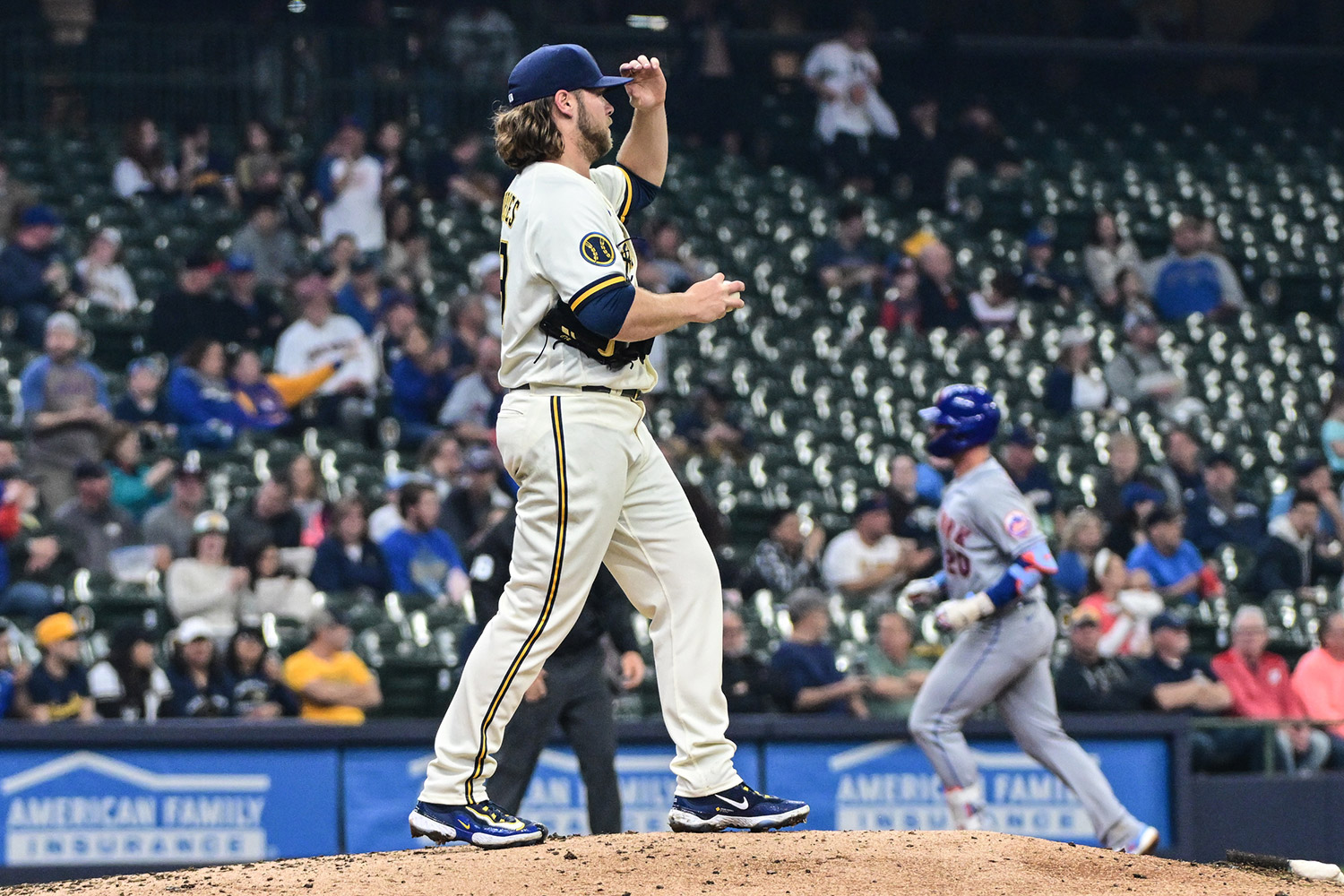
Corbin Burnes, in 2021 was without question the best pitcher in baseball. He gave up the fewest home runs per nine innings, had the best strikeout-to-walk ratio amongst starters, and had the best strikeouts per nine. His underlying expected stats were even better than his actual ones, demonstrating he was potentially unlucky in producing league-leading figures in ERA and FIP.
In 2022, Corbin Burnes regressed somewhat, largely due to the home run bug that hit him, which is concerning given the ball was less “bouncy” compared to his Cy Young year. He was barreled up almost twice as much throughout the season; pitchers were whiffing far less often on his cutter (and he used it even more despite this in 2022), with his curveball, change up, and cutter all being hit harder. In short, last season had less to do with bad luck and was entirely due to a regression in his effectiveness on the mound.
Predictability
One of the standout things, as mentioned in part two of this deep dive, is that Burnes in later counts can become highly predictable, and he fell behind batters to this extent a lot more often in 2022, facing 98 batters in 3-0 or 3-1 counts, vs. just 74 in 2021. This is significant because the league adapted to his cutter-heavy pattern in these counts. Having likely seen several cutters to this point and being able to expect that a cutter is almost certainly being thrown in these counts, hitters had a .472 WOBA against him that rose to .576 in 2022 in 3-0 counts, as well as drawing more walks. Burnes has a lot of pitches he locates well, and even throwing the occasional change up, slider, or curveball in these counts could dramatically improve his effectiveness.
The same issue comes in how he attacks hitters with the change up. It’s become such a deadly pitch that he utilizes it to great effect against left-handed hitters. Still, his velocity and above-average movement on this pitch could be paired well with the front-door cutter to right-handers or just dropping down and below the zone to give hitters something else to think about. He’s never been hit particularly hard with it, and the strict parameters he employs when using his pitch arsenal could be to his detriment. Given the sinker’s ineffectiveness and the change up averaging over 90 mph, he could almost use it to generate that other-way movement he wanted from the sinker to pair with his cutter.
In 2022, each change up, slider, and curveball held whiff rates between 46.7%-49.7% range on plate appearances ending in these pitches. While the cutter gets a lot of attention, the efficiency of his alternate pitches is the main reason for his high strikeout rates since returning from 2019’s disaster. Improving the variation with which he uses his pitchers, and becoming comfortable throwing them in any count, could make his cutter yet more destructive and generate many swinging strikes as hitters adjust to the new change.

So far, the change up has been worth over three runs above average (per FanGraphs) contrasted with almost minus two value for the entirety of last season. Adjusted for a per 100 pitches usage, look at the difference in his change up compared to the sinker, for six mph of difference in average velocity. Hitters are managing to foul Burnes's pitches off more, and that extra layer of deception could bring a big change in his effectiveness. Meanwhile, as you can see when the sinker is thrown… pray.
The Breaking Pitches
In 2021, Burnes didn’t allow many hits off his breaking pitches, mainly due to launch angles. An excessive average of 22 degrees launch angle on the curveball (with a 17% hard-hit rate) meant that many soft fly balls came down from it. On the other hand, his slider averaged just one degree, albeit with a higher hard-hit rate of 30%, and produced a ton of ground balls. In 2022, these two pitches averaged 14 and 18 degrees for the curveball and slider, respectively. However, the movement on these pitches didn’t change much, and his curveball and slider still weren’t hit particularly hard. This increased contact, dropping into the outfield for singles and more occasions with men on base. He occasionally hung his curveball more often in 2022, which didn’t help his cause.
Interestingly, his expected averages barely changed from 2021, so there is an element of bounce back to be expected from Burnes this season, but it may depend again on how much variation he can add to his pitch mix.
The Swing/Take Analysis

As you can see above, Burnes improved his ability to deceive pitchers around the fringes of the strike zone, with an improved -11 runs in the “shadow.” However, he greatly struggled in the heart of the zone, an area he generated a lot of swing and miss in throughout 2021, in part due to occasionally hanging his curveball slightly more often but also because his cutter, which regularly plays in the heart of the plate, had more contact against it. Then again, whiff rates are less a factor over the middle of the plate, but it’s more the quality of contact;
Take a look at these average exit velocities rates from 2021 (left) compared to 2022 (right):


As you can see, he was hit much harder, particularly middle/middle and middle/away to the right-handers. The cutter’s late horizontal movement fooled a lot of hitters in 2021, but it seems they had adjusted in 2022, and that pitch needs to work a lot harder to be as effective as a result. Although the movement profile is almost identical, the cutter dropped 4% in whiff rate and over 8% in strikeout rate.
Where can Burnes progress in 2023?
Aside from the pitch above mix, there’s one other area I think Burnes can exploit more, especially when he wants an easy strike. Let’s take a look at the average exit velocities to right-handers in 2022:


That inside part of the plate being attacked by sliders and cutters has produced astoundingly low exit velocities, yet is the most underused area for him to pitch into. Part of this is that hitters aren’t expecting it, but given how a lot of hitters look to work the count against him more so than ever to force that cutter, an early front-door cutter/slider would present a whole different look to the at-bat, forcing the hitter to cover the plate inside as well as away, and encouraging more chases on the cutter/slider combo. It also looks ideal for a down and in change up if he starts landing the cutter for strikes on the inner third. If only to add some variety to his slightly metronomic, predictable pitch usage, I feel this is an area he could massively exploit this coming season.
What do you think, Fanatics? Did anything here take you by surprise?






Recommended Comments
There are no comments to display.
Create an account or sign in to comment
You need to be a member in order to leave a comment
Create an account
Sign up for a new account in our community. It's easy!
Register a new accountSign in
Already have an account? Sign in here.
Sign In Now