


Brewers Video
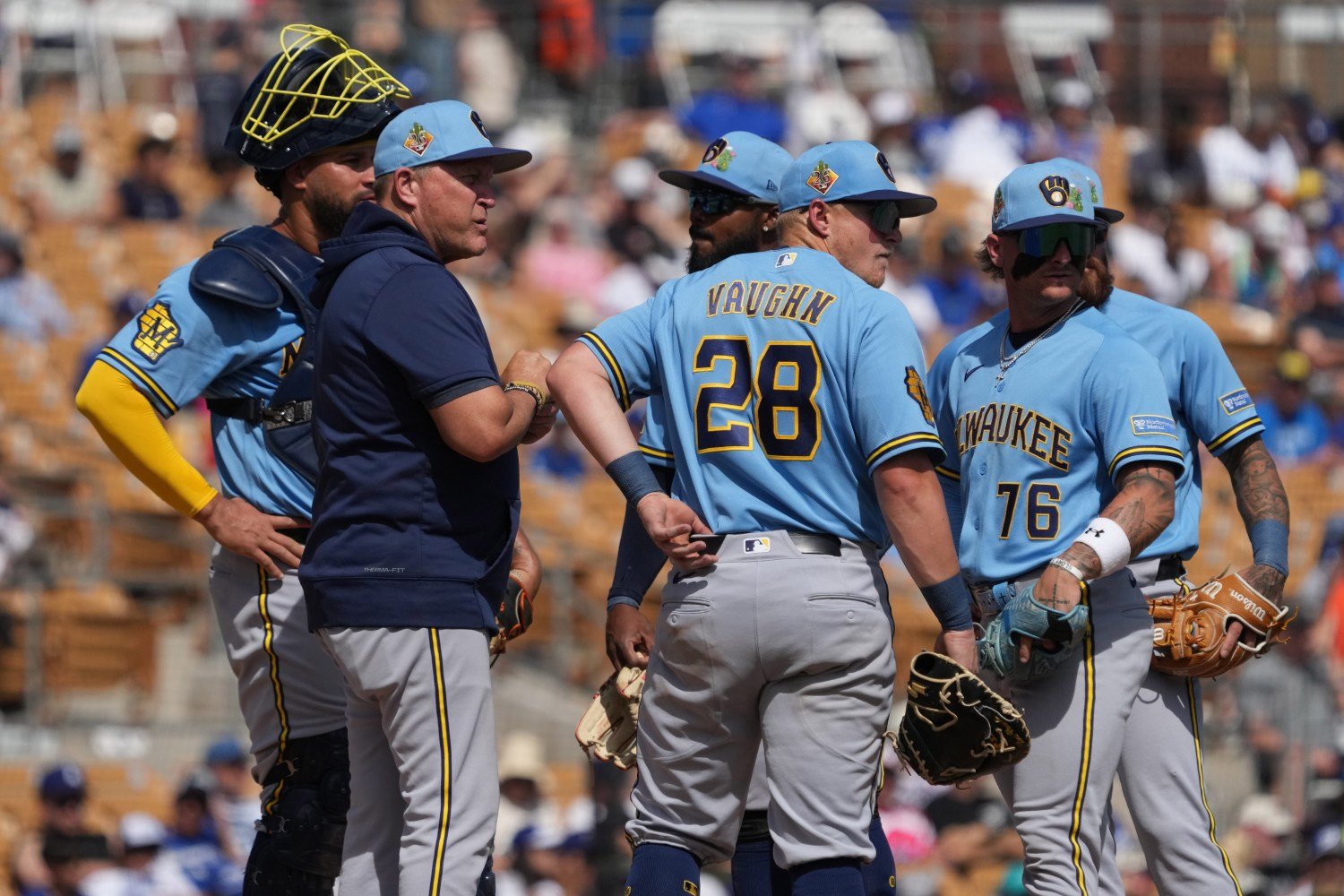
Pat Murphy's favorite metaphor for his own job is that of a bus driver. He's setting direction, and he bears ultimate responsibility for staying on the road and getting to the destination. However, he's cognizant of the fact that the most important people on the bus are the ones he's ferrying. Though his smirking acerbity and his penchant for storytelling and name-dropping might look like self-aggrandizement, Murphy's self-conception is as a servant leader. He understands that his job is to cultivate the talent of each individual on his roster, but it's also to ensure that the team is not unduly dependent on any one person—be that a player, a coach, Matt Arnold, or Murphy himself.
When the Brewers hired Murphy to take over for Craig Counsell, it was a perilous moment in the progress of a would-be regional hegemon. Counsell had guided the team so well for the previous decade that many ascribed the small-market Crew's improbably consistent success to Counsell, so when he defected to the team's top rivals, it looked like Milwaukee was in trouble. The team was losing Counsell; they would have to survive 2024 without either Corbin Burnes or Brandon Woodruff; and Christian Yelich was in apparent decline.
We know, now, that they had a deeper, abiding organizational competence that allowed them to weather those losses. The temptation might be to believe that that was true all along, and that there was never a real reason to fear the decline of the Brewers dynasty. In truth, though, that winter, even the organization itself had its doubts. The team was already doing a lot of things right—coaching players well, scouting exceptionally well, and making good, patient decisions at a front-office level—that made what they were doing more sustainable than it looked.
Murphy, though, was the perfect hire, because he's facilitated the profusion of that excellence all the way to the majors and the continuity that has made the team more resilient to roster turnover than they were even under Counsell. It helped that he'd spent years at Counsell's shoulder, and was able to retain all the key coaches who helped the team be so much better than the sum of its parts. It helped, too, that he had spent most of the three decades before joining the Brewers coaching college baseball. There, roster turnover isn't optional. There, you have to have a system, and you must quickly learn not to take that as an exercise in egomania—but rather, as a dedication to principles and precepts that extend beyond the organization's reliance on any set of players.
It's a balance you have to strike. It's about having an identity into which you seek to assimilate players, and about seeking players who will assimilate smoothly, but not becoming so rigid that you miss opportunities to bring in or empower great players who aren't natural fits for that identity. Not every manager even tries to be the locus of that identity in the modern game. Many of those who try to do so fail, leaning too far either toward accommodation or strict adherence to principle. Murphy has proved to be superb at that balancing act, though, and it has much to do with how long he waited for this chance and the variety of experiences he had before it came.
"I think it probably helped," the skipper said of his time coaching Notre Dame and Arizona State, as he takes on the challenge of managing players much richer, much better and with much more self-actualized self-interest than college kids have. "Everything we go through like that should help. I see the correlation there that you do. You have to go, 'Ok, this is the ingredients I'm working with now.' Then, what do you do?"
That's a mindset focused on adapting to his personnel, which Murphy knows will be forever changing. However, he also has a parallel mindset in which he expects his personnel to adapt to his system. The front office favors excellent defenders, patient hitters and fast runners, not because those are areas of market inefficiency—maybe they are, to some extent, but remember, this same front office seemed to endlessly collect plodding power hitters until a few years ago—but because Murphy likes them. He believes those are winning traits, and in particular, he believes that players like that who commit themselves to certain behaviors—situational swing decisions, excellent fundamentals on advanced plays, and seriousness of purpose—contribute to winning in ways that go beyond the box score.
His reputation runs toward the scrappy underdog shtick, which is partly a conscious effort on his part. But Murphy likes stars. He likes power hitters. He likes power arms. He just doesn't stop with any of those traits. He craves them and celebrates them, but they don't satisfy him. Because Murphy will reward a player whose preparation, daily intensity and concentration augment their game—occasionally, even at the expense of a player he knows has a higher upside—his charges quickly learn to meet those expectations.
With Murphy in the cockpit (or the driver's seat), the front office feels safe turning over the roster, even when it means trading players the skipper considered favorites. He admitted that trading Caleb Durbin "still hurts," but is on board with the udnerlying rationale for it. Swapping out Durbin, Isaac Collins and Freddy Peralta (among others) this winter gave the team better depth and more balance, and Murphy sees what he itches to see in players when he looks at new acquisitions Brandon Sproat, Jett Williams and David Hamilton.
Entropy is still coming for the Brewers. The parade of rules changes from MLB continues to infringe on their competitive edges, and the negotiation of a new collective bargaining agreement this winter could hurt them badly, even though fans only superficially familiar with the economics of the game might expect the opposite. This team has undergone quite a bit of change since last fall, and the national baseball media doesn't believe they've improved. If anything, the numbers and the punditry say, they've gone backward.
Murphy doesn't believe that. Neither does the team, and neither do I. While keeping the team's recent level of success going under their current circumstances will be difficult, I think it's much more likely than those not closely familiar with the team realize. They have depth and balance, and they have a system. It's unorthodox, but it's an excellent insulator against the erosion of their greatness. Murphy is still driving the bus, and he and the team have selected a direct route. The gas tank is full, and there are plans for refueling. They have supplies on board to withstand whatever adversity they encounter. This team isn't feeling the pulling-apart most teams like them would be feeling by now, and a great share of the credit goes to the two-time defending National League Manager of the Year.
Are you optimistic about the Brewers right now?

Follow Brewer Fanatic For Milwaukee Brewers News & Analysis



-
 1
1
-
 1
1


Recommended Comments
Create an account or sign in to comment
You need to be a member in order to leave a comment
Create an account
Sign up for a new account in our community. It's easy!
Register a new accountSign in
Already have an account? Sign in here.
Sign In Now