


Brewers Video
Last season, a bulging disc in his back kept Brian Anderson from being what he’s still capable of being. In 2021, it was a shoulder injury that shelved Anderson, and that flared up again at the end of the year. In 2020, his raw numbers looked good, but he was fighting for every hit, and his skills were slipping, all after a broken hand derailed his 2019. Understandably, the Marlins grew impatient after three rough campaigns, and no trade market developed for him ahead of the non-tender deadline. Still, he knew what he could do.
Injuries aren’t excuses for poor performance, of course. They can be real reasons for that kind of struggle, or not, but in either event, no one is giving out dispensations for players who bravely played through something and weren’t able to perform at their best during that span. Every year, dozens of players play through something that might have forced another player to the injured list, and sometimes, they perform as well as ever. More often, they’re diminished by their malady, but they prefer playing at less than their best to the unease and mental battle of not being out there at all. This is a production business. Anderson can’t expect anyone to believe that just because he’s now healthy, he’s going to hit well all season.
Still, being healthy after a significant or lingering injury can feel extraordinarily freeing for a player. It’s not just an opportunity to execute one’s best swing or throwing mechanics, or to prove that what looked like an occasional lack of hustle in a previous year was really sensible management of a real problem. It’s also a license to experiment. When a player is hurt and trying to survive that way at the MLB level, it’s everything they can do to do their usual thing. Everything shrinks. One takes fewer chances with adjustments to their bat path or their timing. It’s harder to conceive of, let alone perform, modifications that might be necessary.
This spring, Anderson tweaked his stance, his pre-swing setup, and his stride pattern multiple times, working with Brewers instructors to fine-tune what went without that kind of delicate calibration last year. He also tried out three or four different bat changes, including different shapes and sizes of knob, in search of what felt best. He was doing the kind of work that hitters long to do each spring, but that some don’t feel able to do even then, and that gets even harder to do as nicks and scrapes add up over the grind of the season.
Brian Anderson puts one on a tee and deposits it over the wall for a solo homer!!! #ThisIsMyCrew 💣 💣 pic.twitter.com/tXWnQwF1uN
— Bally Sports Wisconsin (@BallySportWI) February 28, 2023
A TV screen brings us an impressive stereograph of the task that is hitting, but it can be extremely difficult to undo that flattening in our heads and understand the challenge in all three dimensions. Making consistent, hard contact is equally about bat speed, bat path, and timing. Anderson had all three of those factors affected over the last few years, because with a lingering shoulder injury, one ends up subconsciously changing one’s bat path to accommodate, and when one’s back is barking, one ends up losing bat speed and trying to make up for that with new timing.
So far, the healthy Anderson looks like the guy who ran a .266/.349/.431 line for Miami from 2017 through 2020. That was a player who could get his bat on plane with the incoming pitch early, keeping it in the strike zone a long time and using the whole field, while also generating power when he got into a hitter’s count and could be especially aggressive. That guy had an average strikeout rate, average power, and an above-average walk rate, and didn’t have to trade any of those to get to the others. He’s made no radical changes this spring, but the small ones–in addition to a little bit of help in making good swing decisions and the stability to get off his best swings, in rhythm–are already adding up to big things.
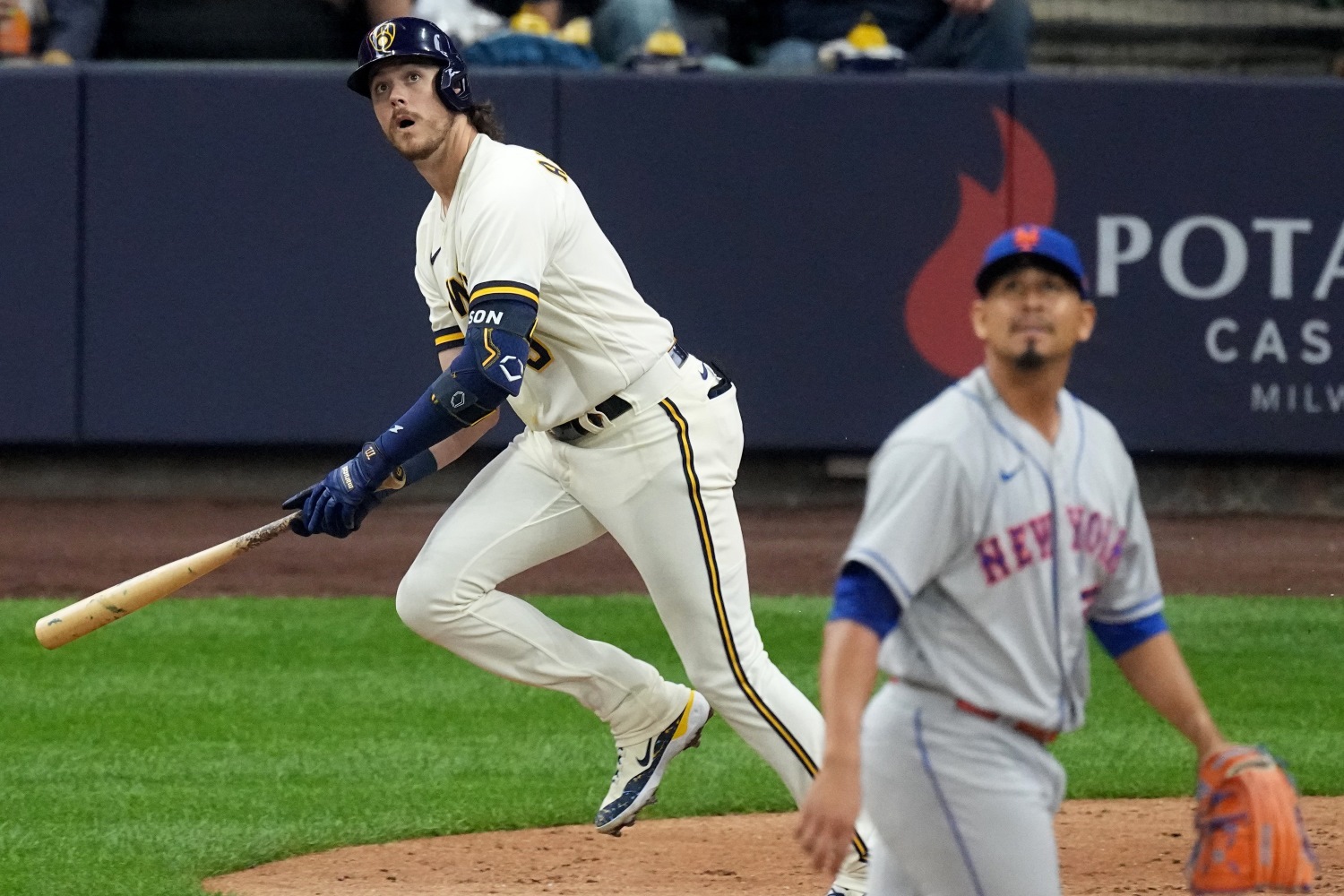
Brian Anderson LAUNCHED this 2-run homer.
— Brewers Stats (@BrewersStat) April 3, 2023
Ball traveled 421 feet and had 104.8 MPH exit velocity. The HR brings Anderson’s early season BA to .400. pic.twitter.com/Xbiln5ARiA
Whether this can last is unknowable. We can only say with confidence that it's been made possible by the freedom Anderson has felt and the adaptability he has shown since arriving in Maryvale in February, but those things make a pretty good start on being a productive big-league hitter.
Do you approve of Brewers' ownership?

Follow Brewer Fanatic For Milwaukee Brewers News & Analysis



-
 2
2


Recommended Comments
Create an account or sign in to comment
You need to be a member in order to leave a comment
Create an account
Sign up for a new account in our community. It's easy!
Register a new accountSign in
Already have an account? Sign in here.
Sign In Now