


Brewers Video
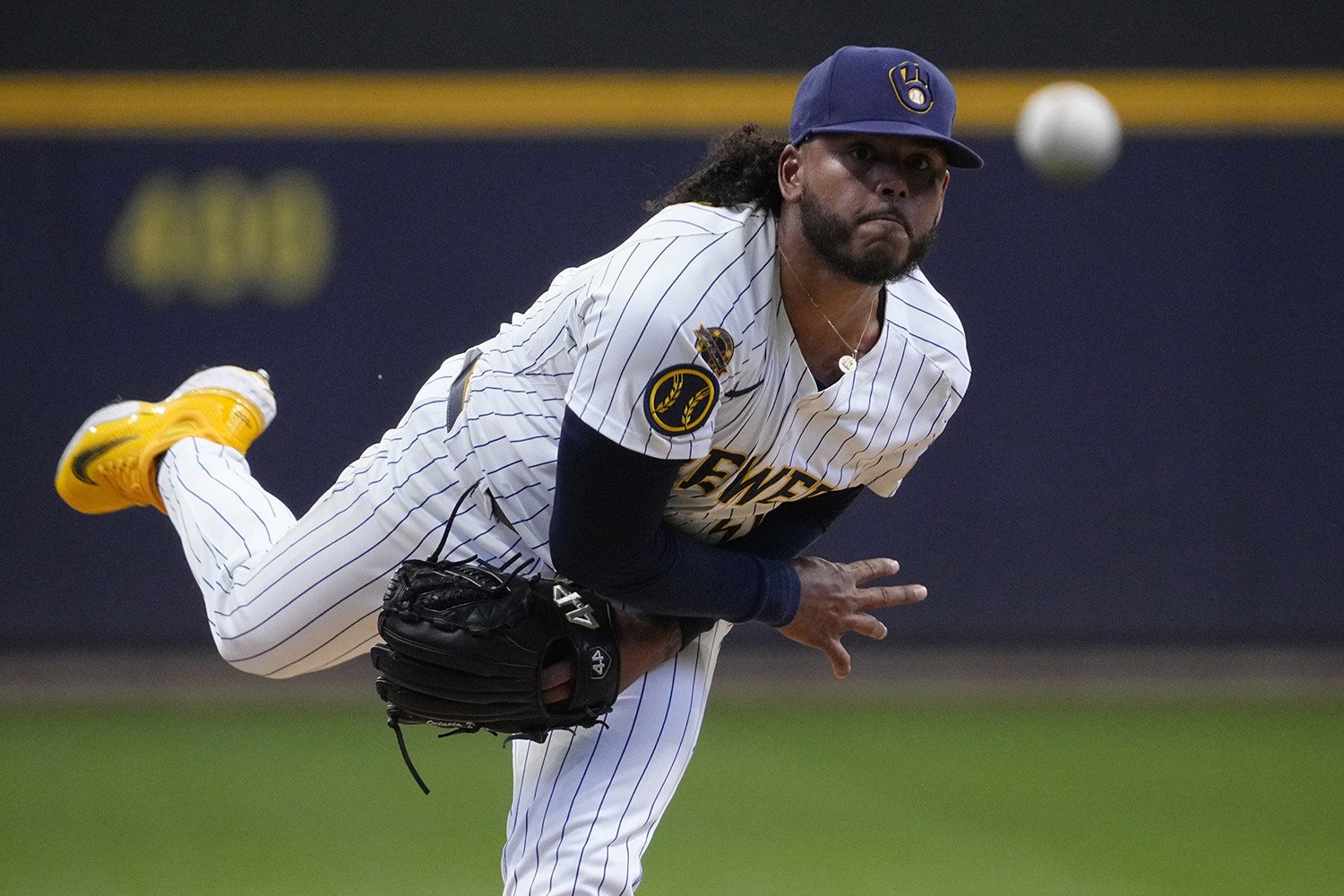
In 2024, Freddy Peralta was suddenly thrust into the top of the rotation after years of pitching behind Corbin Burnes and Brandon Woodruff. It was a catastrophe-ridden year for Brewers' starters, and while the organization had become renowned for its ability to develop pitching, Peralta hardly felt like a true “ace.” He resembled one in 2021 when he posted a 2.81 ERA over 144 ⅓ innings, but since then, he has managed just a 3.73 ERA over 79 starts, a respectable second or third arm but hardly the man you’d want to lead an elite staff.
One of the main obstacles preventing him from reaching the upper echelon of pitching has been his lack of an effective secondary pitch. He has always had a great fastball, but his breaking balls and offspeed pitches haven’t been able to meet the standard. This was especially apparent last year when his slider had a cumulative run value of -3. This figure is a little odd considering he had an opposing average of just .203 and a whiff rate of 41.0%, but it was far more often a ball than a strike. It’s such an interesting example that I used it as an example when unpacking the run value statistic and what it really means.
Shameless self-promotion aside, after three seasons of failing to recover what made his slider great in 2021, he seems to have left it behind in 2025 in favor of the curveball. The curveball has always been a part of his toolkit, but it was never a prevalent offering. Last year, he threw it just 7.1% of the time. Despite being an uncommon occurrence, it was typically very effective when thrown:
Okay, so he’s throwing the curveball more often. Is that why he’s off to a 2.18 ERA over his first eight starts with a WHIP of 1.04 and top-quartile figures for nearly all of his Stacast metrics? Sort of. As a result of elevating Uncle Charlie to the number one breaking ball offering in his arsenal, he likely spent some time in the offseason messing with it because its profile is noticeably different. Since debuting, his curveball has averaged somewhere in the mid-70s. Now, it’s averaging 80.5 mph. The average RPM on the pitch is 2,427, which is more than 200 more than where it was sitting last year, and the result is a few more inches of induced drop on the pitch, a crucial characteristic for missing bats or, at the very least, inducing ground balls.
The improved command helps a ton as well. Curveballs at the bottom of the strike zone, combined with high fastballs, are better than clean sheets and a cold pillow. And like your local Motel 6, Freddy Peralta possesses both this year.

But what do all these tables and charts really mean? I sure don’t know. I was raised as an iPad kid. So, like true iPad kids, let’s look at the video to see this dynamic duo in action. In a dominant three-pitch at-bat against JJ Bleday, Peralta starts things off with a fastball on the outside edge.
Next, he attacks that same spot with a curveball that just dives below Bleday’s bat for strike two.
To finish things off, he throws a changeup to the outside corner to make JJ Bleday look more like Jay Jay the Jet Plane.
A more effective secondary pitch improves one’s primary pitch, and that’s exactly what we’re seeing. No longer able to sit on his fastball as easily, the opposing batting average and slugging on his four-seam fastball have both decreased significantly. His changeup is worth a deep dive on its own as that’s actually the most valuable pitch by RV/100 in his arsenal, but if there’s one takeaway you get from this whole article, it’s that the Brewers are seemingly back to having prime Peralta. It’s in part thanks to his fancy new curveball.
Do you approve of Brewers' ownership?

Edited by Brock Beauchamp





Recommended Comments
Create an account or sign in to comment
You need to be a member in order to leave a comment
Create an account
Sign up for a new account in our community. It's easy!
Register a new accountSign in
Already have an account? Sign in here.
Sign In Now