


Brewers Video
After a slew of rough outings, he was outstanding in seven innings against the Marlins. What did he do differently, and how can he keep it up?
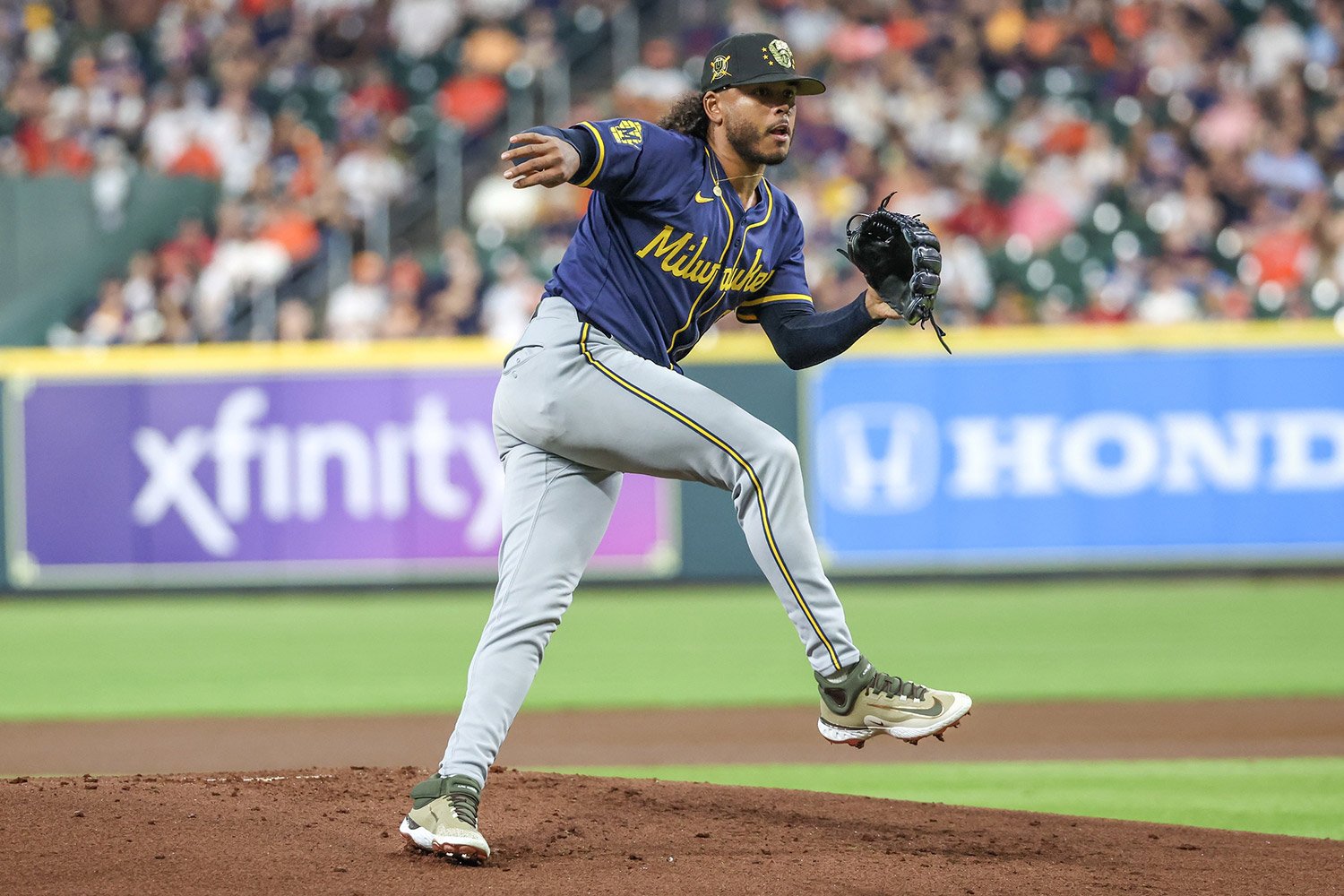
Most fans know how good Freddy Peralta can be when he’s at his best. 2021 was the best year of his career and saw him post a 2.81 ERA, 0.97 WHIP, and 12.2 K/9 over 144 ⅓ innings pitched. Stellar numbers that haven’t been repeated since. In the 300 ⅓ innings he has pitched after the conclusion of the 2021 season, he’s averaged a 3.78 ERA with a 1.09 WHIP and 11.0 K/9—still good figures, but not as good as they were or could be.
If you've watched him pitch for a while, you should know how wildly inconsistent he can be. In 2023, he had six starts with 10+ strikeouts, but he also had seven starts with four or more earned runs in fewer than six innings. Some of these rough outings were absolutely brutal, including an outing on May 26th against the Giants that saw San Francisco run the score up to 10-1 by the end of the third inning.
This year, that inconsistency returned at a similar time. In his first three starts in May, he conceded 11 earned runs in 16 innings with opposing batters combining for an .849 OPS against him. As the team’s current ace, adjustments needed to be made to keep Milwaukee atop the NL Central. In his most recent start, he finally dialed it up and returned to the prime Peralta we all know and love, striking out seven and giving up just one earned run. So what changed?
If we want to be lazy about it, we can chalk it up to the fact that he made his first three starts against the Cubs, Cardinals, and Astros, three teams more competitive than the Marlins (although that's not saying much). However, the Cubs and Cardinals are 21st and 23rd respectively in terms of team OPS, so it’s not like they’re offensive juggernauts like the Astros are.
In his first three starts, he gave up 19 hits, nine of which were off his fastball and seven off his slider. At first glance, this seems about even, but he threw 150 fastballs and just 69 sliders, so that seems like the first place to start digging. Like most breaking balls, sliders are often most effective when no, and double-t in the middle of the strike zone. He struggled with commanding his slider to follow this rule in his first three starts and kept landing in batter-friendly territory.
To illustrate Master McKibbin’s point even further, a peek at a frequency and placement heat map of his slider in the first three starts of May shows that the pitch was just far too hittable. Of the seven hits he gave up on the slider, two were home runs, and one was a double.

In his start against Miami, the slider was where it needed to be, down and away from right-handed batters. Sure, a few were dangerously close to the middle, but they were the exception and not the norm, which may have been why he only gave up one hit on 22 pitches.

When his slider is executed and located well, it's incredibly hard to hit and often makes a fool of opposing players at the plate.
Another aspect that might boost his game could be increased changeup usage. He’s been using it roughly 15% of the time for the past two years, but it’s been quite effective this year, getting a whiff rate of 41.5% and a strikeout rate of 31.8%. The shape of the pitch is more down than away, with most ending up at the bottom of the zone, but opposing batters have had a tough time against it so far, averaging just .150 in 2024.
The thing is, we already know his four-seam fastball is one of the best in the business. Stuff+ is a pretty nebulous concept, but it’s something worth noting, especially since Peralta has the second-highest Stuff+ rating (132) on his fastball in MLB, behind just Jared Jones (142) and ahead of elite arms like Hunter Greene (129), Tyler Glasnow (119), and Luis Castillo (117). However, it’s clear he needs a secondary weapon that’s just as potent.
In his All-Star 2021 season, he combined his slider and curveball to achieve great results. Since then, he’s struggled to find the same chemistry within his arsenal, but green shoots are showing through the soil. A better-located slider and a more frequent changeup could see him finally reach his incredibly high ceiling as a starting pitcher for the Brewers.





Recommended Comments
There are no comments to display.
Create an account or sign in to comment
You need to be a member in order to leave a comment
Create an account
Sign up for a new account in our community. It's easy!
Register a new accountSign in
Already have an account? Sign in here.
Sign In Now