


Brewers Video
The Brewers' enigmatic center fielder knows how poorly he's fared against elevated heaters, so much so that he's put holding his own against them at the heart of his approach.
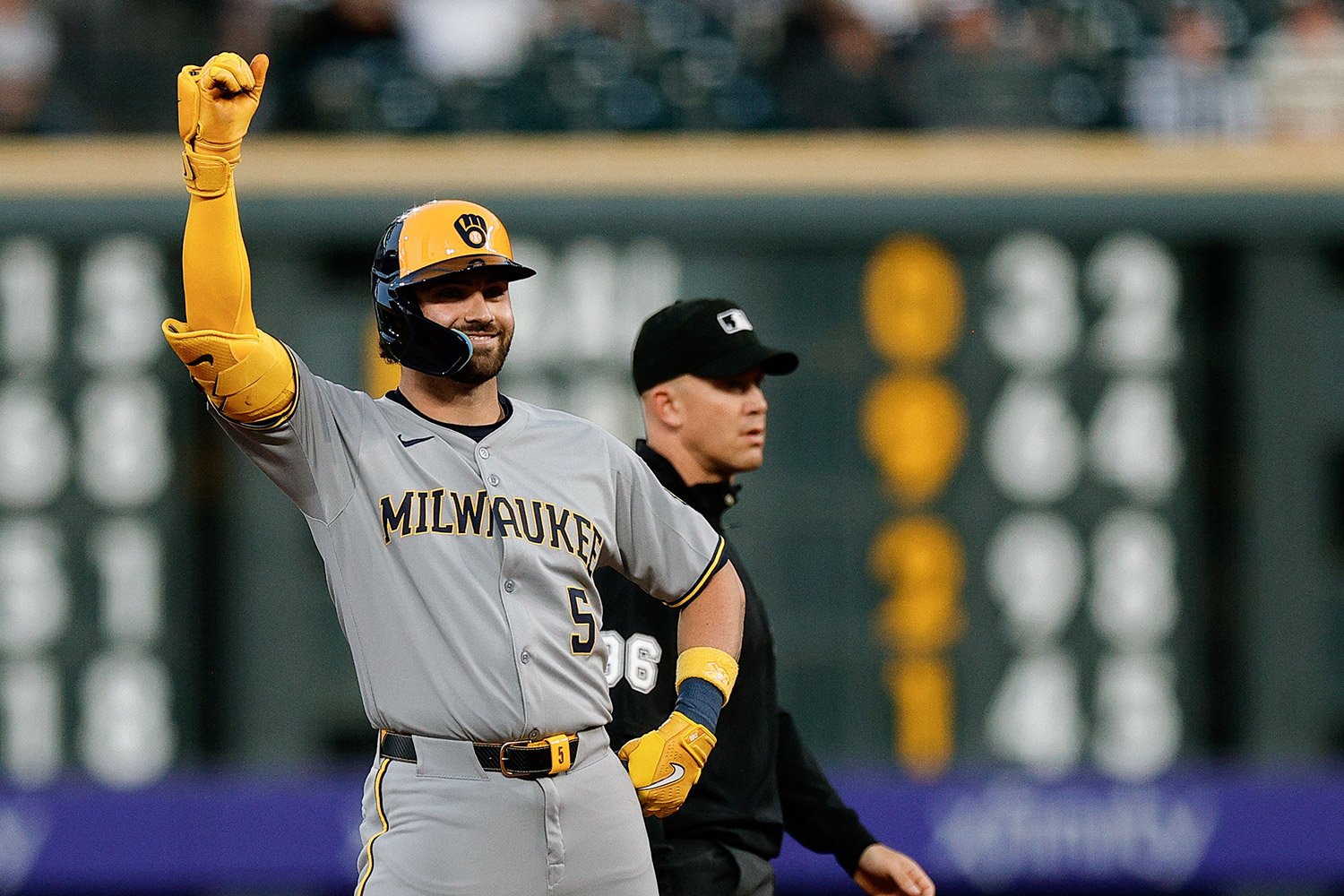
When Garrett Mitchell lined an elevated Antonio Senzetla fastball for a double on Wednesday night, it was just the second non-bunt hit on a high fastball in his big-league career.
All hitters have varying weaknesses, but Mitchell's swing has so far featured a gaping hole against velocity at the top third of the strike zone or above. According to Statcast, he has hit .051 in 59 career at-bats ending on a high fastball and whiffed on 50% of his swings at such pitches.
Being a near-automatic out on what has become an increasingly common pitch in modern baseball, along with a high ground-ball rate preventing him from turning his raw strength into consistent game power, has made Mitchell a challenging player to project despite his undeniable talent. He has arguably the highest ceiling in the Milwaukee outfield behind Jackson Chourio, but his weaknesses have long raised serious red flags.
Mitchell is aware of those shortcomings and is working to address them. As part of his training at Driveline Baseball last winter, he focused on working behind the baseball, allowing him to pull it in the air without selling out for a contact point out in front of the plate. His primary emphasis, though, was curbing his greatest weakness of hitting high fastballs.
"For the most part, it's every hitter's weakness in some regard," Mitchell said. "Just a tough pitch to get to. So a lot of my work is just trying to be able to control that, whether it's recognizing strike to ball, fouling them off on a two-strike approach, or even just making good quality contact with it."
Mitchell is not looking to change his profile and start destroying high fastballs. Instead, he's trying to shrink his hole at the top of the zone enough to force pitchers to attack him in ways that better play to his strengths. Sometimes, all that takes is a good enough swing to foul that fastball straight back or enough discernment to watch it for a ball.
"You don't necessarily have to crush it every single time," he said. "I'm just playing that game with (the pitcher) of, if you're going to throw it there and the swing looks good enough, you go, 'Oh, maybe I don't want to try that again.'"
Attacking with high fastballs will always be part of the plan against Mitchell, even if he improves against them. However, each additional pitch he can coax into other areas of the zone is impactful. As poorly as he's fared at the top, he's found big-league success by being just as lethal against pitches at his belt and knees. Maximizing that damage is key.

"I do damage on pitches down in the zone or down and in," Mitchell said. "If I can keep getting you to push to that spot, now you're playing my game."
It's too early to say whether he has reached his goal, but there are preliminary signs he is on the right track. Mitchell pinpointed a plate appearance against Kansas City Royals left-hander Cole Ragans last week. He fouled off a high fastball with two strikes, then took another for ball four when Ragans climbed the ladder further.

"To me," Mitchell said, "that was a perfect example of an at-bat where you have to protect because you never know, but then also having the recognition to go, 'Okay, I just saw that one above the zone and fouled it off,' but then take the next one and spit on it.'"
Statistically, things are trending in the right direction. Mitchell is seeing fewer high fastballs, and while his whiff rate against them remains much higher than the league average, it's fallen considerably from previous seasons.
| Season | High FB% | High FB Whiff% |
| 2022 | 26.3% | 45.7% |
| 2023 | 28.4% | 60.0% |
| 2024 | 30.8% | 50.0% |
| 2025 | 23.2% | 35.7% |
Still, that's not good enough to give pitchers serious reservations about elevating against him. Pat Murphy, while encouraged that his center fielder is working to narrow that hole in his swing, said he still needs to see more progress from him offensively. He's aware of Mitchell's high ceiling if he makes those strides.
"He's just a very, very small margin away from being very, very good," Murphy said.
Mitchell has the right mindset. He's not eschewing his identity as a hitter in pursuit of improvement. Instead, he's working within the framework of how his body moves and trying to minimize his weaknesses to maximize his strengths. He and the Brewers will soon learn if that work will translate into results.
Do you approve of Brewers' ownership?

Follow Brewer Fanatic For Milwaukee Brewers News & Analysis



-
 2
2


Recommended Comments
There are no comments to display.
Create an account or sign in to comment
You need to be a member in order to leave a comment
Create an account
Sign up for a new account in our community. It's easy!
Register a new accountSign in
Already have an account? Sign in here.
Sign In Now