


Brewers Video
On the eve of the trade deadline, prices for even short-term starting pitcher acquisitions shifted suddenly and sharply, in favor of sellers. The Brewers secured an arm with uninspiring statistics so far in 2024, but for whom they'll have a fistful of easy and efficacious tips.
In 2021 and for the first four months of 2022, Frankie Montas was one of the best starting pitchers in baseball. In the latest (sadly, last) surprise season of competitiveness from the Oakland Athletics, Montas was their ace, with 187 innings pitched, 207 strikeouts, and a 3.37 ERA in 32 starts. As the A's fell back to Earth in 2022, though, they shopped him, then dealt him to the Yankees.
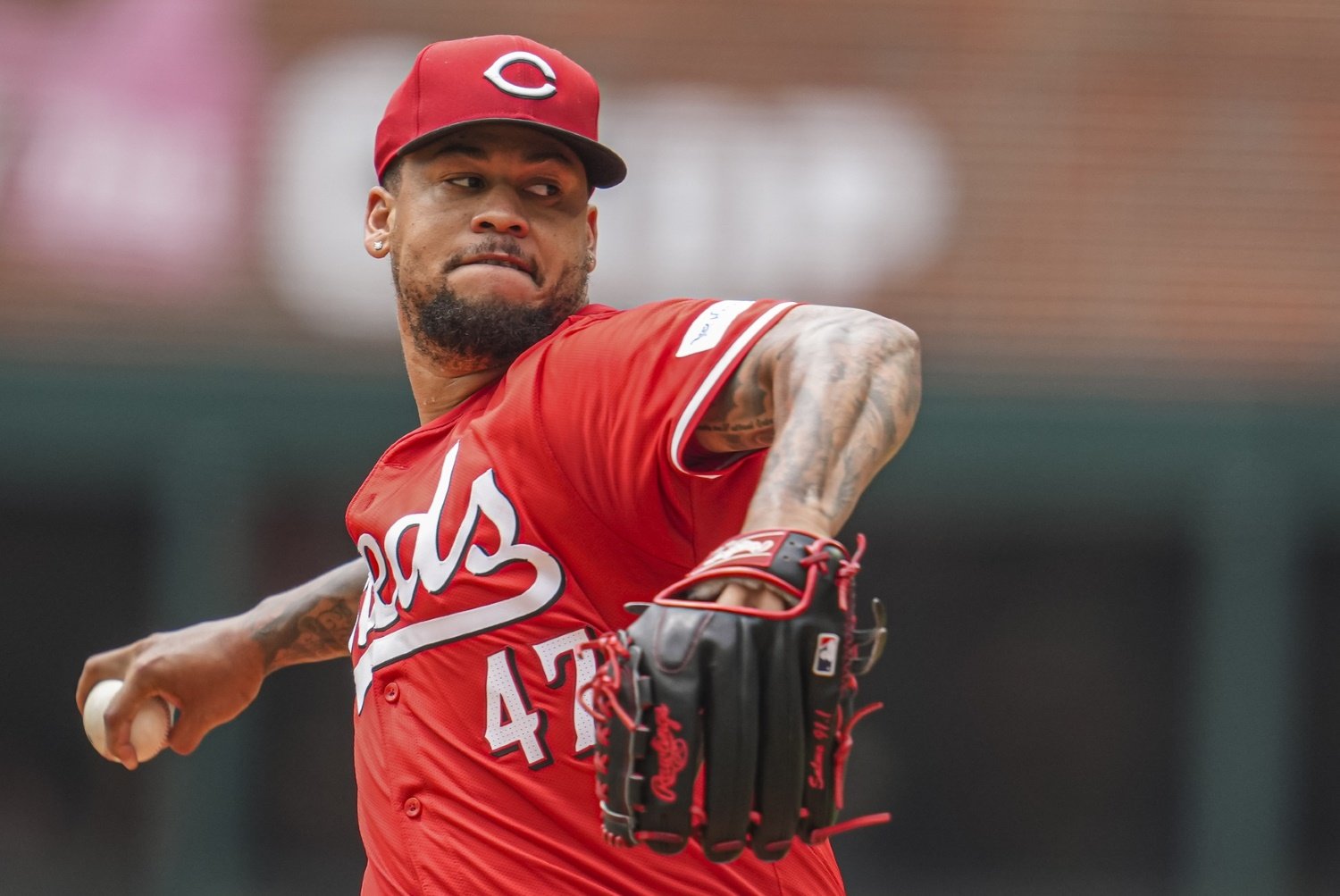
Right at that juncture in the career of the player and the progress of one of the game's best pitching development groups, there couldn't have been a much worse fit. Montas struggled mightily for the balance of that campaign, and lost all but a single cursory appearance's worth of 2023 to shoulder surgery. For plenty of pitchers, that's the sad end of the story. He found a fairly lucrative one-year deal with the Reds, but that, too, failed to pan out, and since he turned 31 this spring, it's fair to say that the clock is ticking on him. His stuff has come back after the injury, but (as you'd expect) not quite all the way.
Still, we should be clear about what has happened to Montas this season in Cincinnati. In piling up a 5.01 ERA exactly matched by his FIP, he really pitched very well--but only against right-handed batters. That collective has hit .232/.299/.345 against him this year, with a strikeout rate around 22% and a walk rate around 8%. That's perfectly livable.
Alas, lefties have bashed his brains in. They're hitting .277/.370/.508 off him in 2024, with a strikeout rate that rounds to 17% and an ugly walk rate of 12%. As a starting pitcher, it's much too easy for opponents to stack their lineup and thwack you if you're that vulnerable to opposite-handed batters. His own team could try to counteract that strategy by using an opener, and it's notable that the Reds didn't. The Brewers certainly might, with either Jared Koenig or Hoby Milner, on an occasion or two down the stretch. Still, sooner or later, a righty starter has to face a bunch of lefty batters. Montas has not been equal to that crucial task this year.
The Brewers can fix him. Let's break down how, in a few steps.
Step 1: Get Right, Young Man
Montas traditionally works from the first-base side of the rubber. That suits his natural movement profile, which (more on this later) favors arm-side stuff, so it's natural. Plenty of pitchers with similar profiles set up in the same spot. However, one thing the Brewers will definitely at least propose is a move toward the third-base side, if only by six or eight inches.
Right-handed pitchers for the Reds pitch, on average, from the second-closest release point to the center of the rubber. Brewers righties, by contrast, average the third-widest release points. The same is true of Milwaukee southpaws, of course. Ask Milner, or Bryan Hudson. Ask Bryse Wilson or Colin Rea. When the Crew get ahold of a pitcher, one quick thing they try is creating a more deceptive horizontal angle to the plate for them, and while it's far from a one-size-fits-all approach, the most common and consistently valuable way to do that is to slide them toward their throwing arm side of the rubber.
Step 2: The Remix
Obviously, slightly changing where Montas throws from will have little effect, if he doesn't also change some of what he's throwing. It's easy to foresee how the Brewers will do so, though, especially because it bears resemblances to many other cases in which the team got a player after they have passed through an organization whom the Brewers feel might have messed with them the wrong way.
Here's how Montas's pitch usage breaks down so far this year, against lefties and righties.

Regardless of which type of hitter is up, Montas's chief weapon is the four-seamer. That's a bit of a problem, though, because despite good velocity, his four-seamer is not an especially good pitch--at least not to front an arsenal. Notably, it works much better in smaller doses and something closer to parity with the sinker and cutter, against same-handed batters (i.e., righties), but the pitch just isn't adequately engineered to consistently get whiffs, called strikes, or weak contact, be it on the ground or in the form of weak flies. It shares much in common, in fact, with Wilson's heater.
For just that reason, though, Wilson isn't the same four-seamer-dominant pitcher he was when he first joined the Crew. Nor will Montas be. Let's flash back to how he attacked hitters in 2021 and 2022, removing the turbulent stop in New York.

It's hard to be much more starkly different than the lefty pitch distribution described by these sets of data. He was mostly splitters and sinkers to lefties in his heyday. Now, he's pumping in that perfectly visible, hittable fastball to lefties over a third of the time, and neglecting the sinker that was his primary heater to them in the past. Why?
Part of it, to be sure, could be that Montas is no longer comfortable leaning as much on his splitter as he did a few years ago. The Brewers will have to sound him out on that subject. Part of it, too, though, is more organizational dogma. The Reds are 28th in MLB in sinker usage to opposite-handed batters. In fairness, that's often the sign of an advanced organization. Sinkers generally do work better to same-handed batters than to opposite-handed ones. There's a certain rationale to throttling back sinker use against opposite-handed hitters, as a blanket approach.
Step 3: Relocating
Montas just doesn't fit under the blanket. Let's take a look at the way he located his sinkers to lefties back in his best seasons.

That shouldn't shock you. The sinker was effectively his primary heater to lefties in those halcyon days. You have to fill up the whole zone with such a pitch. Here's where he's thrown his sinkers to lefties in 2024, though.

After pushing the sinker into a secondary role, Montas has changed the way he targets the sinker, specializing it. He's not all over the zone, and he's especially never up with that pitch. It hasn't worked. Lefties have crushed his sinker to the tune of a .968 OPS this year. He's only induced one swing and miss with the pitch to such batters all season,
The Brewers can not only help him restore the sinker as his primary fastball to lefties, but get him targeting the whole plate with it. Of sinkers thrown to opposite-handed batters, 39.5% of the Brewers' this year have been to the inside part of the plate--away from the natural place where pitchers throw their sinkers, giving hitters a highly unusual look. No other team throws such a high percentage of their sinkers on the inside part of the plate. The Reds, as you'd expect, eschew the inside sinker almost altogether. Montas's sinker, thrown to that glove side against lefties, will set up his splitter gorgeously. That's why that approach worked so well a few short years ago.
You can't do everything with a midseason trade acquisition that you'd do with a new signee during spring training. Not discussed here are his slider and cutter, which seem to have a complicated relationship. You have to simplify and think small. These changes won't transform Montas into an ace, in all likelihood, but they can be implemented rapidly, and they have a chance to get Montas back to the level he reached a few years ago.
The Reds aren't terrible at pitching development, but under Chris Hook, the Brewers are one of the very best outfits in baseball. The fit between Montas and the Reds wasn't great, in terms of philosophy and development. The fit in Milwaukee has a chance to be much better, and to last a few weeks past the end of the regular season.
Which team do you dislike the most in the NL Central?

Follow Brewer Fanatic For Milwaukee Brewers News & Analysis



-
 4
4


Recommended Comments
Create an account or sign in to comment
You need to be a member in order to leave a comment
Create an account
Sign up for a new account in our community. It's easy!
Register a new accountSign in
Already have an account? Sign in here.
Sign In Now