


Brewers Video
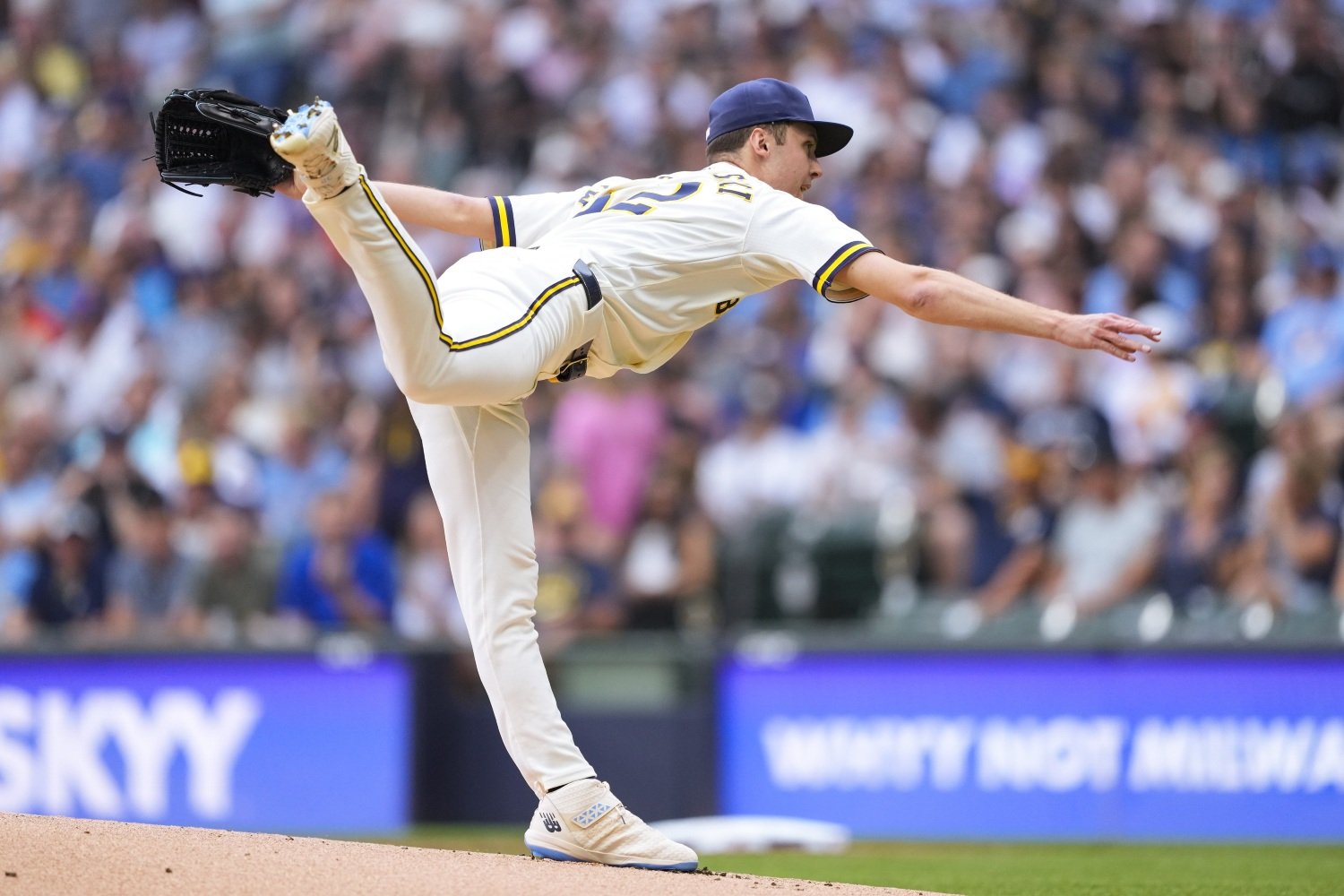
When the Brewers reconfigured their pitching plans to give Jacob Misiorowski a 12-day layoff between starts over the All-Star break, it brought to the forefront what was already going to be a significant story in the second half: how would the team manage his innings down the stretch?
"It's a big discussion. It's a big topic," Pat Murphy said before Misiorowski took the mound against the New York Mets on Monday night. "It's all sorts of concern, planning, discussion, sidebar discussion. It's mechanics, biomechanics, everything about it. Strength testing, all that. Thus, the reason for the layoff. Now, how do we ramp it back up?"
Misiorowski entered the break having thrown 111 innings. Last year, he set a career high with 129 ⅓ regular-season frames between Triple-A and the big leagues, plus 12 more innings in the postseason. After the Brewers frequently let him work deep into games during the first half, he's on pace to exceed last season's workload by a huge margin.
The conventional rule of thumb for young pitchers—or, at least, the oft-cited approach—is increasing innings totals by 20-to-30% each season. Under that approach, Misiorowski could make up to 12 more starts while averaging five innings per outing for the rest of the regular season. In reality, it's not that straightforward.
"I think it's very individual, very individually based, and I think that everybody's kind of keeping things in mind," Murphy said. "Has he had an injury history? Did he go through some setbacks? All that type of thing."
That 20-to-30% rule probably won't apply to Misiorowski. Many of those deeper outings featured few high-stress pitches. More importantly, after he put on good weight in his lower half last winter, the Brewers believe he's physically equipped for a significant increase in his workload.
"Offseason last year, we focused on legs and doing all that stuff to get myself ready for this track of the year," Misiorowski said. "I feel good where I'm at and ready to go."
"It factors, yeah," Murphy said. "I always say this: when you're training to run a marathon, you don't ever go out and run the 26, you know what I mean? You never do. … So I don't think you have to set a number [based on] only what he did in the past. I think you can plan for more than that."
Ironically, Misiorowski didn't have his legs underneath him a few hours later. With his body out of sync, he threw just 47% of his four-seam fastballs in the strike zone, prompting an in-game adjustment to lean more on his cutter.
"He didn't throw a commanded heater past the second inning," Murphy said. "He was kind of coming off his legs and kind of getting stuck, and then trying to get out of it, and the ball was sailing."
Entering Monday, Misiorowski had thrown his four-seamer 63% of the time and his cutter 14% of the time. In his outing against the Mets, those usage rates shifted to 55% and 29%, respectively. He threw as many cutters as four-seamers the second time through the order.
"Going cutter kind of forces me to be shorter," Misiorowski said postgame. "I wasn't really feeling the legs, so kind of overcorrected [with] cutters. It worked out."
Seeing that his body wasn't moving efficiently, the Brewers ended Misiorowski's outing at four innings at 65 pitches.
"We would have probably let him go further if his delivery and his legs felt great," Murphy said. "I think he was a little bit out of it. The long layoff kind of affected his delivery and everything else. I think it was important to notice that and get him out of there then."
The outing was a preview of how the Brewers plan to handle Misiorowski moving forward, even on nights when he's locked in. They may delay a few outings for extra rest days as the schedule allows, but the nearly two-week layoff was a one-time deal as a midseason break. Instead, they'll shorten some starts by an inning or two. It's less disruptive to Misiorowski's routine and the team's bullpen usage than outright skipping his turn in the rotation.
"I think we lean more towards that, to keep the consistency," Murphy said, while also acknowledging that finding an extra start during a given turn in the rotation is harder than patching in a few extra innings from multi-inning relievers. "When you have a natural break like we just did—we kept him out of the Pittsburgh game three, the big break, kept him out of the first series—I think we take that as kind of a reset. Now, I think we have to build him back up and be sure that we do it in a mindful way."
The Brewers aren't perfectly equipped to toe the line with their young ace—as the trade deadline approaches, they need more depth in both the rotation and the bullpen—but their position in the standings affords them some flexibility. Misiorowski's dominance and volume are a big reason why Milwaukee boasts the best record in baseball and leads the NL Central by 7 games. They won't treat him with kid gloves, but they have some wiggle room to be cautious when it makes sense.
Do you approve of Brewers' ownership?

Follow Brewer Fanatic For Milwaukee Brewers News & Analysis



-
 1
1


Recommended Comments
Create an account or sign in to comment
You need to be a member in order to leave a comment
Create an account
Sign up for a new account in our community. It's easy!
Register a new accountSign in
Already have an account? Sign in here.
Sign In Now