


Brewers Video
No pitching staff wants to face the Yankees' lineup, but they're an especially rough matchup for a group that relies on mixing fastballs with unremarkable velocity. For the Brewers, it was all downhill from that unfavorable starting point.
It was an opening weekend to forget for the Brewers, who have started the regular season 0-3 for the first time since 2015 after the Yankees bludgeoned them in New York. Milwaukee's run-prevention unit did anything but, coughing up 36 runs (powered by 15 homers) in the series.
That was the same total number of tallies the Bronx Bombers posted in a three-game set at American Family Field last April, and they profiled as a similarly challenging draw nearly a year later. The Yankees hit everything. In 2024, their formidable offense trailed only the Los Angeles Dodgers in wRC+, and they then added multiple power bats to replace Juan Soto and upgrade from underperforming veterans Anthony Rizzo and Alex Verdugo. However, they're especially potent against the kind of pitches most Brewers' hurlers throw frequently.
Last season, the Yankees slugged .522 against fastballs (four-seamers, sinkers, and cutters) between 85 and 93 mph, the fourth-best mark in baseball. The hitters in this year's New York lineup slugged .524 against them.
The Brewers threw 85-to-93-mph fastballs 30.5% of the time in 2024, which was also the sport's fourth-highest rate. In the final two games of this series, half of their pitches—50.6%, to be exact—were in that bucket. The Yankees scored 32 of their 36 runs in those games. Overall, they recorded 18 of their 34 hits and slugged 11 of their 15 home runs against those fastballs.
For a decent chunk of that time, the Brewers were somewhat limited by the arsenals of their pitchers. Nestor Cortes has always leaned heavily on his four-seamer and cutter at the top of the strike zone and features just one breaking ball in his arsenal. He also worked behind in the count for much of his unsuccessful season debut, which made experimenting on the fly with a breaker-heavy approach less practical.
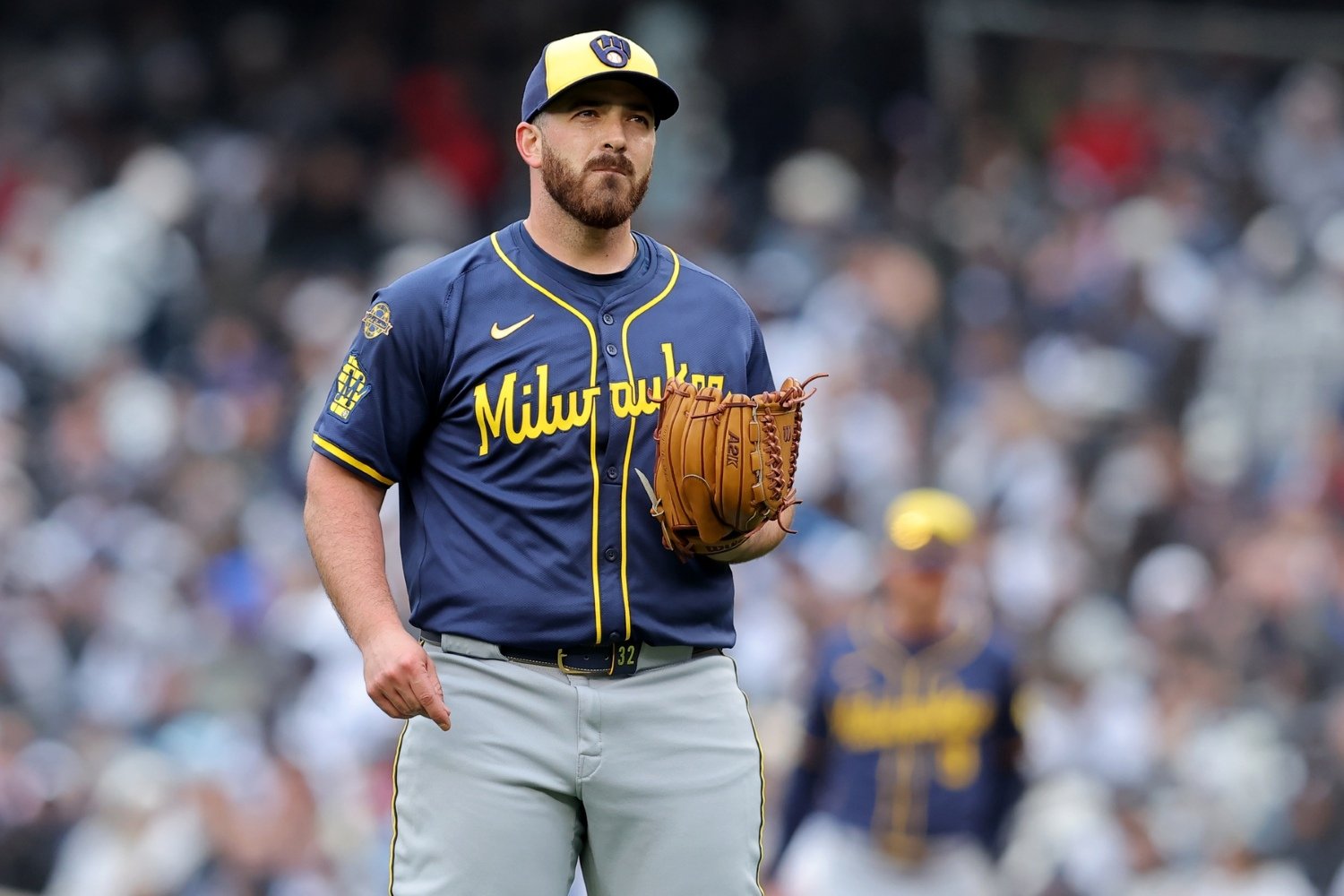
However, the Brewers had an opportunity to adjust, with Aaron Civale (who threw three distinct breaking pitches down the stretch last year) on the mound in the series finale. Instead, 76% of Civale's pitches on Sunday were fastballs, a greater proportion than his usual mix. He allowed three home runs.
In an era where pitch tracking and modeling make game planning more exhaustive and precise than ever before, sticking to the plan as tightly as possible is often a sage strategy. However, reading swings remains a key component of pitch calling. Chris Hook has previously acknowledged that he and the club's other pitching strategists have scrapped the original blueprint when opponents do damage early.
The question is when to switch things up, and that line is rarely bright and crisply drawn. Evidently, the Brewers did not feel they had reached that point in New York, but it's worth questioning if they should have used Civale's deep arsenal as an opportunity to alter what was a remarkably unsuccessful approach.
That's not to say a different mix would have solved the puzzle. There were plenty of other factors fueling the Yankees' weekend-long outburst, including the historic greatness of Aaron Judge, pitching from behind in the count, catching too much plate with specific pitches, the short right-field porch of Yankee Stadium, and hitter-friendly weather on Saturday. It was a perfect storm that created one ghastly pitching performance after another.
Run prevention has been the Brewers' strength for years, and one series does not change that. The club has plenty of time to turn things around, starting with its first homestand of the year, which begins on Monday.
Do you approve of Brewers' ownership?

Follow Brewer Fanatic For Milwaukee Brewers News & Analysis



-
 1
1


Recommended Comments
Create an account or sign in to comment
You need to be a member in order to leave a comment
Create an account
Sign up for a new account in our community. It's easy!
Register a new accountSign in
Already have an account? Sign in here.
Sign In Now