


Brewers Video
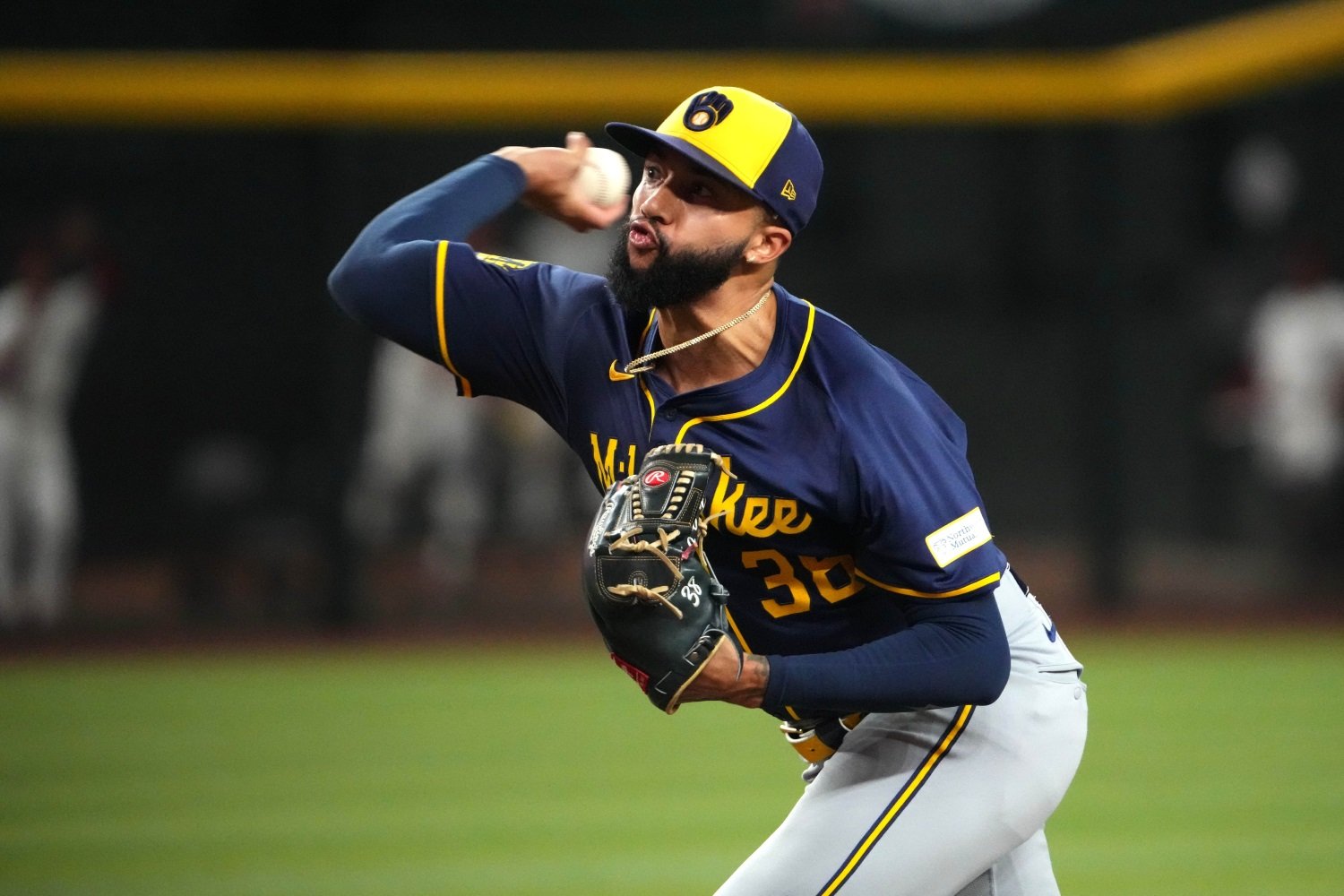
The market for relief pitchers tends to get hotter in the summer than around the stove in the winter. For various reasons, therefore, the Brewers might be well-suited to retain their relief ace heading into next season.
Multiple factors affect the demand for any given player on the trade market. Their salary matters. So do their track records of performance and health. Those tend to be fairly easy elements to capture and evaluate, even if they don't affect every player's value in precisely the same way. More nebulous, though, are the questions of how a player fits the specific needs and competitive timelines of various suitors, and of how much the availability of alternatives alters the conversations teams might have.
This winter, the Brewers seem likely to at least entertain offers for Devin Williams, their All-Star closer. He's just one season from free agency, and even after the team declines their $10.5-million option for 2025 under the multi-year deal the parties signed in January, he'll make something like $8 million via arbitration. That's a big chunk of what figures to be a svelte payroll for the Crew next year, and given the way the team does business--the fact that they traded Josh Hader and Corbin Burnes in similar situations, their stated desire to be perennial contenders, and their marvelous relief depth--trading Williams seems almost inevitable.
Demand might be a bit less rabid than the team would like, though, at least during the offseason. Williams won't be the only elite closer on the trade market; the Cardinals will also be looking to offload Ryan Helsley. The Athletics might trade the fireballing Mason Miller, who poses a more obvious injury risk but is under longer-term team control. There are also some formidable free-agent options coming onto the market, led by Carlos Estévez, Tanner Scott, Clay Holmes, and Jeff Hoffman. That surfeit of solutions, along with most teams' preference to build their bullpens cheaply and internally, might soften the market for Williams quite a bit.
It's not that teams delude themselves into believing they won't have acute needs at the back end of the bullpen, come next summer. It's just that many of them would prefer to wait and see how acute those needs turn out to be, and what options remain for them then, even if it means paying surge prices at the trade deadline. Sometimes, your problems solve themselves, because the new cutter grip you try turns a forgettable middle reliever into a shutdown closer. Flexibility--what the consultant-infested front office culture of the game currently calls 'optionality'--is as much in demand as talent for some executives, especially if the latter comes with a steep cost.
Theoretically, the Brewers should get more for Williams by trading him during the winter. An acquiring team would have the right to extend a qualifying offer to Williams next fall. They'd also gain the comforting certitude associated with working from the back end of the pen forward, using one of the top five relievers in the game as the foundation. In practice, though, it might not be that way. Many teams are wary of making the QO to relief pitchers. Many enter the winter in cost-cutting mode, making it as tough for them to take on Williams's expected salary as for the Brewers to hold onto it. The number of obvious, no-doubt contenders who will be willing to trade long-term value for a high-end reliever this winter will be small; it might even be zero.
Are Matt Arnold and his front office most likely to maximize their value by trading Williams within the next few months, or by waiting until the summer? It's a messier question than it seems. The risks of holding onto him are obvious, and dangerous. If they do so, they'll have little money with which to seek other roster upgrades in free agency. They'll also carry the risk of a serious injury that both depletes the team's bullpen and obliterates Williams's trade value, which would be devastating. Perhaps most dauntingly, they'd face the likely scenario of trading a semi-disgruntled closer in July, probably while trying to win their third straight division title and bulk up for a longer playoff run. Just two and a half years ago, the entire organization and its fan base saw how risky that can be.
On the other hand, though, the Williams and Hader situations don't have to be directly analogous. It was more surprising when Milwaukee traded Hader than it would be if they trade Williams next summer, because Williams will be on the cusp of free agency, whereas Hader was a year and a half away. Pat Murphy is a different skipper than Craig Counsell, and might better keep what is also a pretty different clubhouse humming. Though the Crew had Williams to replace Hader, they'll also have Trevor Megill in line to replace Williams, and their depth beyond the top options is probably better than was the depth behind Williams after Hader's departure. Beyond all that, of course, they'd have the option of just keeping Williams themselves, if they still feel he's integral to their staff next summer.
It might be uncomfortable. It might be untenable. But if the Brewers are focused principally on getting as much for Williams as they can, it might make more sense to keep him all winter and reassess the landscape next July.





Recommended Comments
Create an account or sign in to comment
You need to be a member in order to leave a comment
Create an account
Sign up for a new account in our community. It's easy!
Register a new accountSign in
Already have an account? Sign in here.
Sign In Now