


Brewers Video
ABS, or automated ball-strike, is technology that seeks to solve the age-old problem of missed umpire calls. Even the most casual of baseball fans has, at least once, witnessed a pitch down the middle being called a ball or a pitch in the other batter’s box being called a strike. As pitches have only become nastier over the years, it has become increasingly difficult for home plate umpires to make consistent, accurate calls. To try and rectify this recurring pain point, MLB has experimented with shifting this responsibility onto our future robot overlords.
The process is straightforward. Home plate umpires will continue to make calls manually, but if a pitcher, catcher, or hitter believes the call was incorrect, they can signal for an ABS review by tapping their head. At this point, the high-tech system will be consulted for its call of the pitch, which will serve as the final result. Each team will receive two total challenges per game, and these challenges must be made immediately without help from teammates or the dugout. The team will only lose a challenge if the umpire's call is confirmed.
While this system has already been in use in the minor and independent leagues for quite some time, the closest it has gotten to debuting in the big leagues was this year’s spring training. The technology wasn’t ubiquitous, but it was used in 13 different ballparks, and overall, the reception was quite positive. According to MLB officials, 72% of fans reported that it had a positive impact on the game, and 69% expressed interest in seeing it implemented in the future. But what are the downsides?
One might be the delaying of games. After all, rules like the pitch clock and three-batter minimum were implemented solely to ensure that baseball moved at a more Gen-Z pace, but this seems like it's moving in the opposite direction. More consistent challenges and reviews of every bad call would theoretically drag things out. However, the whole process is pretty seamless, and based on spring training results, each challenge added just under 14 seconds to the game time.
Another possible outcome is that catcher framing may become obsolete as a result. Backstops spend their whole lives learning how best to manipulate umpires' eyes to steal strikes, and it has created immense defensive value for the position, but it’s far more difficult to deceive a machine. If opposing batters are able to challenge pitches, the subtle art of framing could become significantly less important or even entirely anachronistic.
Perhaps you’re concerned about the welfare of umpires as a group of working individuals, and you're seeking a fair and empathetic perspective. Like Charlie Bucket’s father in the famous Roald Dahl tale, will their jobs be taken by a man-made replacement? Initially, it seemed that way. During the later stages of minor and independent league testing, MLB considered using full ABS to call every pitch, but they ended up deciding on the challenge system instead. Why they’re hesitating on a complete transfer of responsibility depends on who you ask and how cynical they are, but even if every pitch were called by machine, home plate umpires would still be needed to make other sorts of calls at the plate.
Despite its flaws, it’s clear that the consensus around ABS is largely positive. Unless you have a deep distrust of machines and are somehow reading this article on a clay tablet or papyrus sheet, this is a positive evolution of the sport. In many ways, the All-Star Game is a perfect proving ground for this technology. It’s a low-stakes event that’s more fun than functional, and there will be plenty of eyes on it. MLB’s biggest stars who didn’t get exposure to the technology during spring training may finally get a crack at it, although most individual appearances are admittedly very brief.
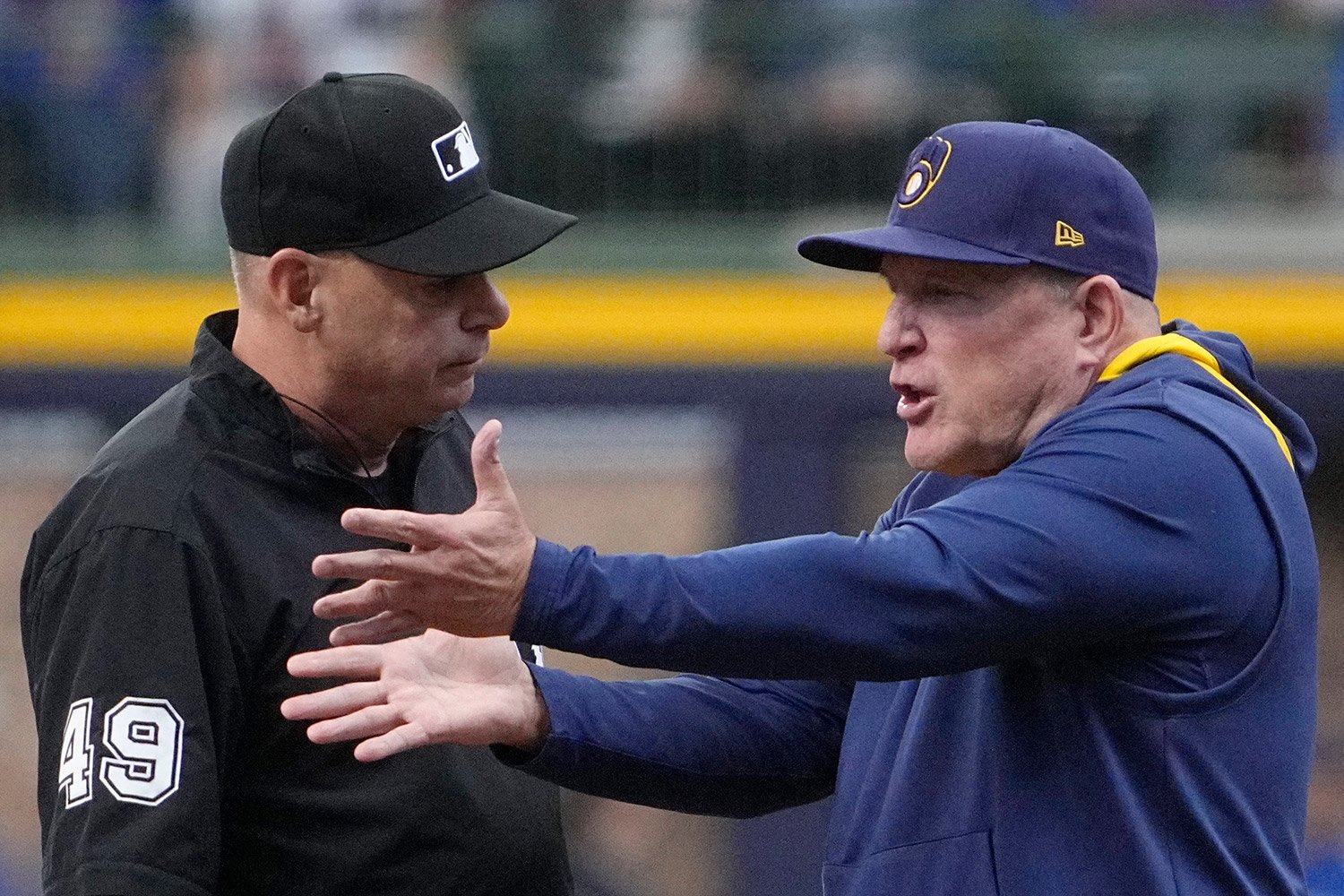
The group that is probably most excited about this change is probably the active players. We’ve already seen instances of ejections over missed calls this year, and let’s not forget when the Brewers were on the favorable end of a bad call and witnessed one of the greatest player meltdowns of the past decade. To fans at home, a missed ball or strike is just that, but to those whose job it is to play the game at the highest level, these mistakes are far more costly.
It may not be long before we see this technology installed in every major league ballpark. Like the pitch clock, it may initially seem like a rule that'll take some getting used to, but before long, it’ll likely become an integral and necessary part of the baseball experience.





Recommended Comments
Create an account or sign in to comment
You need to be a member in order to leave a comment
Create an account
Sign up for a new account in our community. It's easy!
Register a new accountSign in
Already have an account? Sign in here.
Sign In Now