


Brewers Video
The first month in the majors didn't treat Caleb Durbin well. He made his debut on April 18, and at the end of the Brewers' weekend series against the Twins (which ran through May 18), Durbin was hitting an anemic .169/.263/.241. He still had decent control of the strike zone, forcing a few walks and very rarely striking out, and he had shown the knack for getting hit by pitches and the baserunning savvy that were big parts of his game during his time in the minor leagues. On the whole, though, he was a mess, and the batted-ball data only encouraged discouragement.
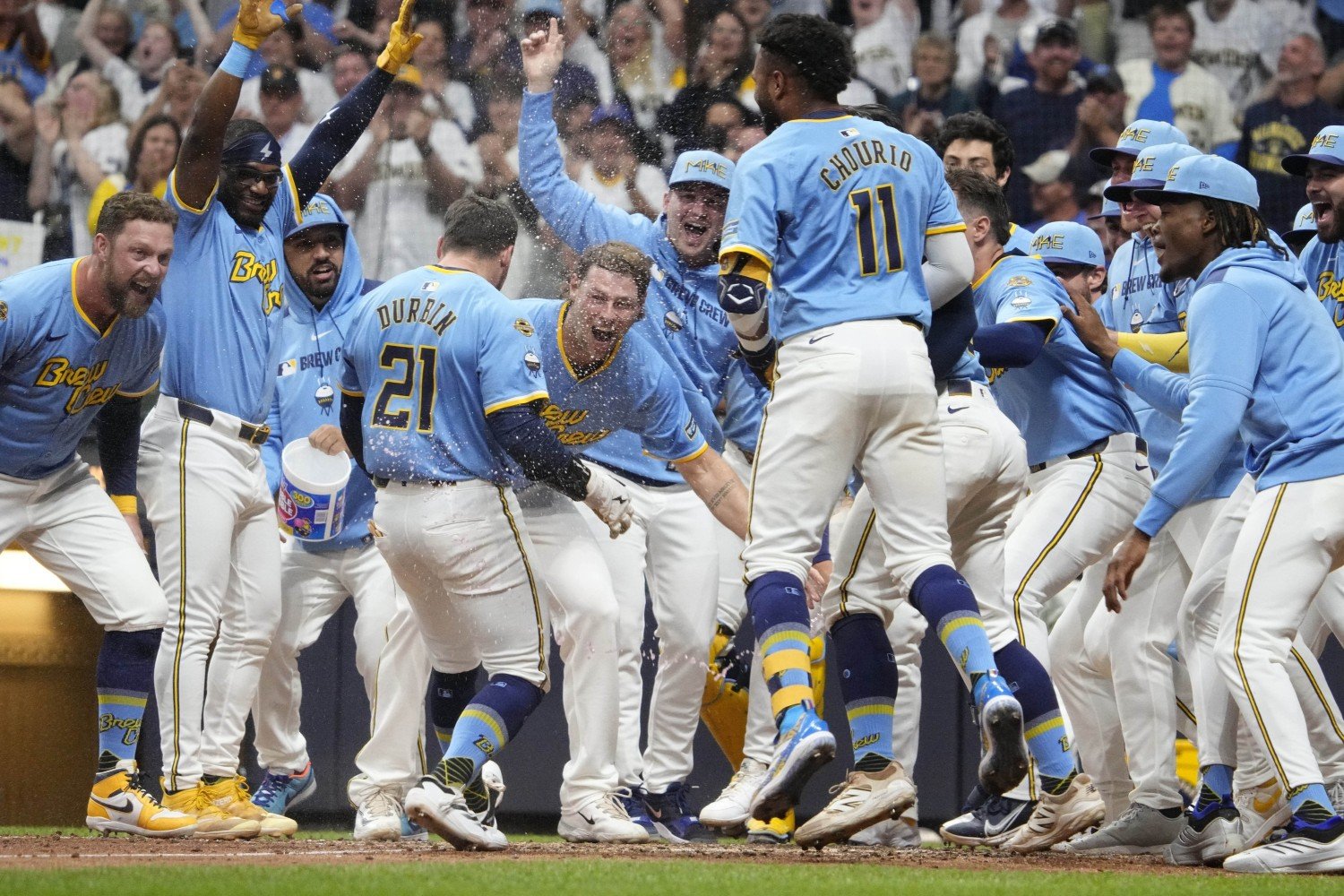
Since the start of the Brewers' series against the Orioles on May 19, however, Durbin has been a whole new man. In 71 plate appearances, he's hitting .279/.357/.443. He has five walks and five strikeouts in the span, which is extraordinary control of the zone, but the real headline is that he's cracked eight extra-base hits in that three-week stretch. Seven of them were doubles, but the other one came at an awfully good time.
Even during this great stretch, Durbin isn't exactly destroying the ball. In fact, this homer was not exactly cheap, but nor was it a no-doubter. If he can sustain this kind of production, though, the Brewers can (and should) wait quite a bit longer to see if he can iron out his defensive struggles at third base. This is the high end of the spectrum of possible outcomes for Durbin at the big-league level; it's what the Crew was betting on getting when they traded for him.
The question, of course, is how sustainable it is. The answer to that might not depend solely on Durbin, either. He was, perhaps, better than he looked for that first month—or, looking at it more gloomily, he might be set to come back to the pack. The key variable in play is the ball itself.
For the first seven or eight weeks of this season, the baseball being used throughout MLB was experiencing more drag than any since at least 2015, a time when offense throughout the league ebbed down toward levels last seen in the 1970s. By measuring the velocity loss on four-seam fastballs between when they're released and when they reach the plate, the league can directly measure the drag on the ball, and it has been way, way up this year.

In general, more drag means less offense. How great the effect is depends on the ball itself (and the magnitude of variation in drag). but also on environmental factors, batted-ball spin, and other variables, and even well-informed people disagree at times about how much drag affects the distance of a batted ball. This season, though, there's been lots of evidence that increased drag was taking up to 20 feet off the distance of well-struck fly balls.
For Durbin, whose success at the plate rides on his ability to overcome a lack of raw bat speed by hitting lots of high line drives and backspun fly balls to the smaller parts of the park, that can be a fatal difference. You can see it on video, too. He hit some balls well, early in his tenure in the majors, only to watch them lose steam and die in an outfielder's glove. Here's an example of that happening on a ball hit much like the one that became his walkoff homer this weekend.
And here's one of him taking aim at one of the coziest right-center fences in the game, in Cleveland, only to see the ball run out of juice at the wall again.
Lately, though, things are changing. Here's a ball he hit in Pittsburgh that did just keep carrying, right over the outfielder's head.
The reason why more of these balls are rewarding Durbin's good swings lately is simple: the ball is getting a bit more lively. Be it because of the interaction between this year's batch of balls and the weather, an intentional change by the league, or some mere coincidence, five of the 13 days with the lowest league-wide average drag have come in the last week. The ball is flying again.

When we zoom in this way, you can see not only that knot of low-drag days recently, but a gradual but meaningful downward trend in drag. The ball is coming back to an average place, something very like what it was for the last two seasons. That's a huge development for hitters like Durbin. It's tempting to say that the diminutive infielder only has warning-track power, at the big-league level. To that assertion, though, we have to return the question: When does he have only that kind of pop? Because if the early results are an indication, when the ball wakes up a bit, so does Durbin's pop.





Recommended Comments
There are no comments to display.
Create an account or sign in to comment
You need to be a member in order to leave a comment
Create an account
Sign up for a new account in our community. It's easy!
Register a new accountSign in
Already have an account? Sign in here.
Sign In Now