


Brewers Video
The Brewers' All-Star catcher has the very first habit your Little League coach tried to help you drop. Call that coach and tell them they cost you your shot at fame and riches.
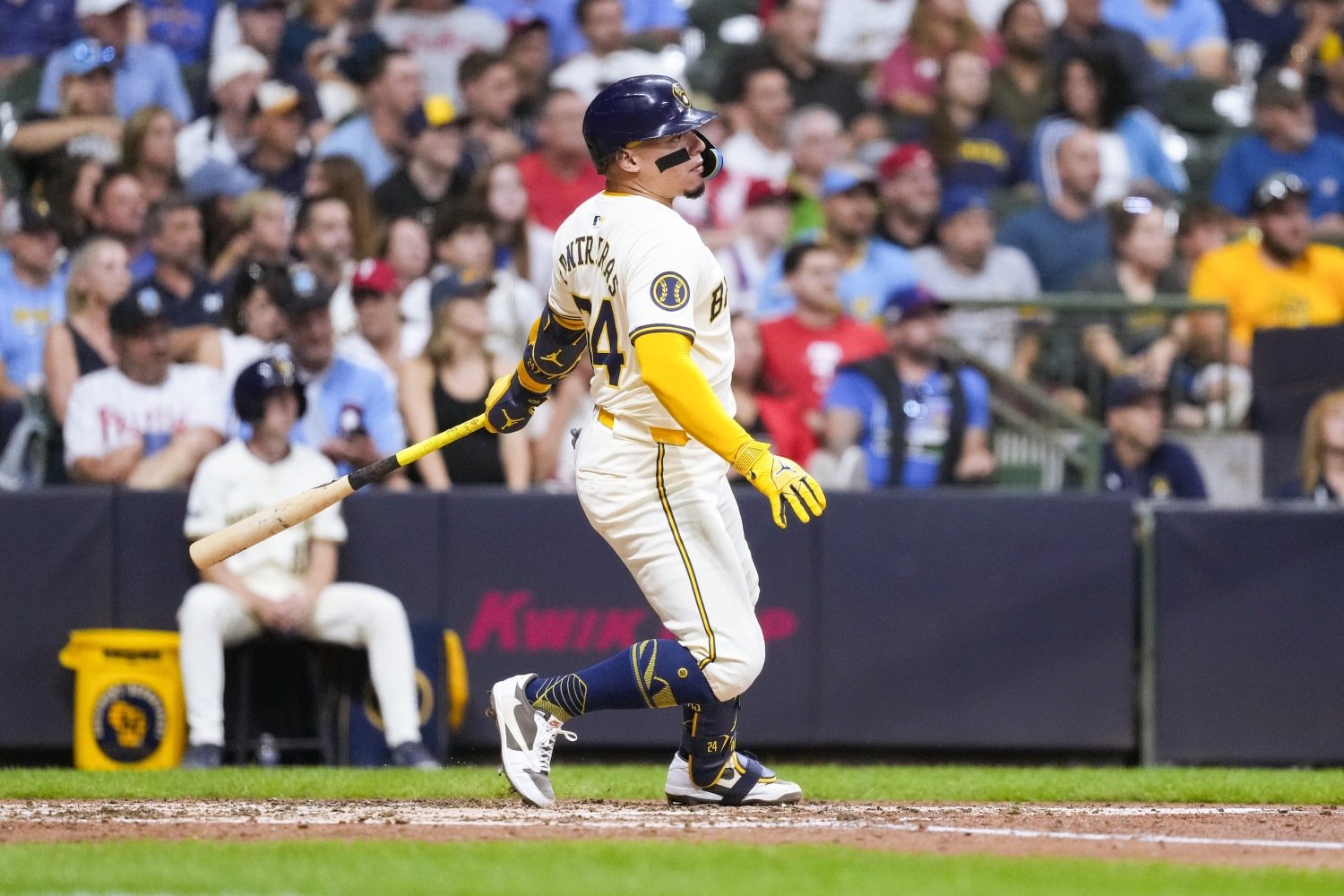
There are many fun things about watching William Contreras hit. He makes wonderful adjustments within games, and within at-bats. He selects strategic moments at which to exploit the positioning of the defense by shoving the ball effortlessly through an open hole on the right side of the infield. When he comes up big (especially if it's with a home run late in a close game), he emotes gloriously. The very best thing about his style in the box, though, is the way he steps all the way into the bucket.
Ok, that's not "stepping in the bucket" the way coaches help 9-year-olds learn not to do. It will come as no surprise to you to learn that you can't hit at all in the major leagues doing things that they rush to coach out of you at age 9. Nonetheless, Contreras's swing signature is unique, because he opens his front hip earlier and more aggressively than just about any other hitter in baseball—even if it sometimes means taking his foot with him.
You can see the way his stride pulls him open (with his hands stubbornly and strongly waiting back, creating the monumental torque required to hit a ball the way he does in the clip above), though, and now that Baseball Savant has posted leaderboards and graphics showing where players stand in the batter's box, how they stride, and where they generally make contact with the pitch, we can directly visualize it in a new way, too.

At first glance, this doesn't look terribly extreme. Contreras takes a long, aggressive stride, and he opens up a bit, but we knew that. One thing the image might not quite capture, by design, is the true angle of his front foot at the point when he makes contact. Often, he seems to be even more open than that with his front toe, which makes it look like he's pulling off the ball more than (as we can see) he truly does.
Still, relatively speaking, the above image is extreme. When you compare Contreras to other players who set up in the box much the way he does and make contact at a similar point relative to the front edge of home plate, you don't find others who stride that far open. Here are the same images for four of the most similar right-handed batters to Contreras in those regards:


Yainer Díaz

None of them (and none of the other 20 or so righties with similar data in this regard) opens up with their front foot the way Contreras does, and only Salvador Perez ends up with his front foot outside his back foot at the moment of contact. Almost all hitters want to be "closed", when it comes to the relationship between their feet, when they actually hit the ball. It's how they make sure they're not pulling off it, generating weak contact off the end of the bat or giving up the outside corner altogether. Contreras is unique.
There are drawbacks to this style of swing. Most hitters favor striding into the pitch a bit, because it allows them to see the ball slightly longer and gives them more margin for error in the hitting zone. You have to be a bit of a freak to get away with being as wildly aggressive—in terms of moves, if not in terms of swing decisions—as Contreras is.
That's why you hear Pat Murphy (among others) speak with such head-shaking admiration about the slugging backstop. He manages to make some of the hardest contact in baseball, and to consistently generate those high exit velocities, without swinging and missing very much, He does it with a swing that wouldn't work for most hitters, because it requires such a combination of explosive movement, body control, and intelligent preparation for what the opposing pitcher will try to do. You wouldn't teach this way of swinging to a kid, because the kid would probably whiff at everything on the outer half of the plate and not get enough power in the exchange to be remotely worth it. Contreras is such a gifted hitter, though, that he can use this unique movement pattern to maximize his own ability to consistently swing hard and hammer the ball. Now, we can see the extremes he achieves in a new way, and understand what sets him apart from other batters who can't quite imitate him.





Recommended Comments
Create an account or sign in to comment
You need to be a member in order to leave a comment
Create an account
Sign up for a new account in our community. It's easy!
Register a new accountSign in
Already have an account? Sign in here.
Sign In Now