


Brewers Video
Sometimes, it's just the other guy's night. A Cubs rookie ripped through the Brewers lineup Tuesday night like a circus performer through a phone book--but just as is true with the strongman and the prop, part of what made Brown's brilliance so impressive was the difficulty of the chosen task.
To win anything important in MLB these days, you have to hit well against high-velocity fastballs. They're everywhere, but they're especially prominent when the game is on the line. The best pitching staffs have many pitchers who throw hard, and even the bad ones have a couple of guys who throw extremely hard upon whom they can call in high-leverage situations.
Just about everyone knows that velocity has trended upward throughout the pitch-tracking era, which dates back to 2008. Specifically, the average fastball for the first six innings of an MLB game has gotten nearly 2.5 miles per hour faster in the last decade and a half. It's intuitive, but much less often mentioned, that if you zoom in on high-leverage situations in the seventh inning and later, the trend is even more apparent. In fact, over the same period, the average late-game, high-leverage fastball velocity has risen 2.8 miles per hour. Thus, while there's more velocity to handle throughout the game, it gets especially intense (and difficult) when the chips are down.

We crossed a milestone this spring. For the first time, isolating the portion of the season prior to June, the average velocity of a fastball thrown in the final few innings of a close game is 95.0 miles per hour. What was a marker of imposing dominance within the memory of most baseball fans is now the cover charge to get into a leverage role in the bullpen.
The Brewers contribute to this themselves, of course, with fireballers like Trevor Megill, Elvis Peguero, and others who parade through their pen. It's especially good news for them, though, because their hitters handle velocity in excess of 95 miles per hour about as well as any team in baseball.
This year, the Crew own a collective .324 wOBA on pitches at 95 or faster. That's the fourth-highest mark in baseball. They're fifth in hard-hit rate, and they even do a good job (as a group) of elevating against good heat. By my homespun weighted sweet-spot exit velocity (wSSEV) metric, they're eighth in MLB, despite the team's general tendency to hit balls on the ground too often, which makes them a bottom-10 team by wSSEV when we're not filtering for high-velocity heaters.
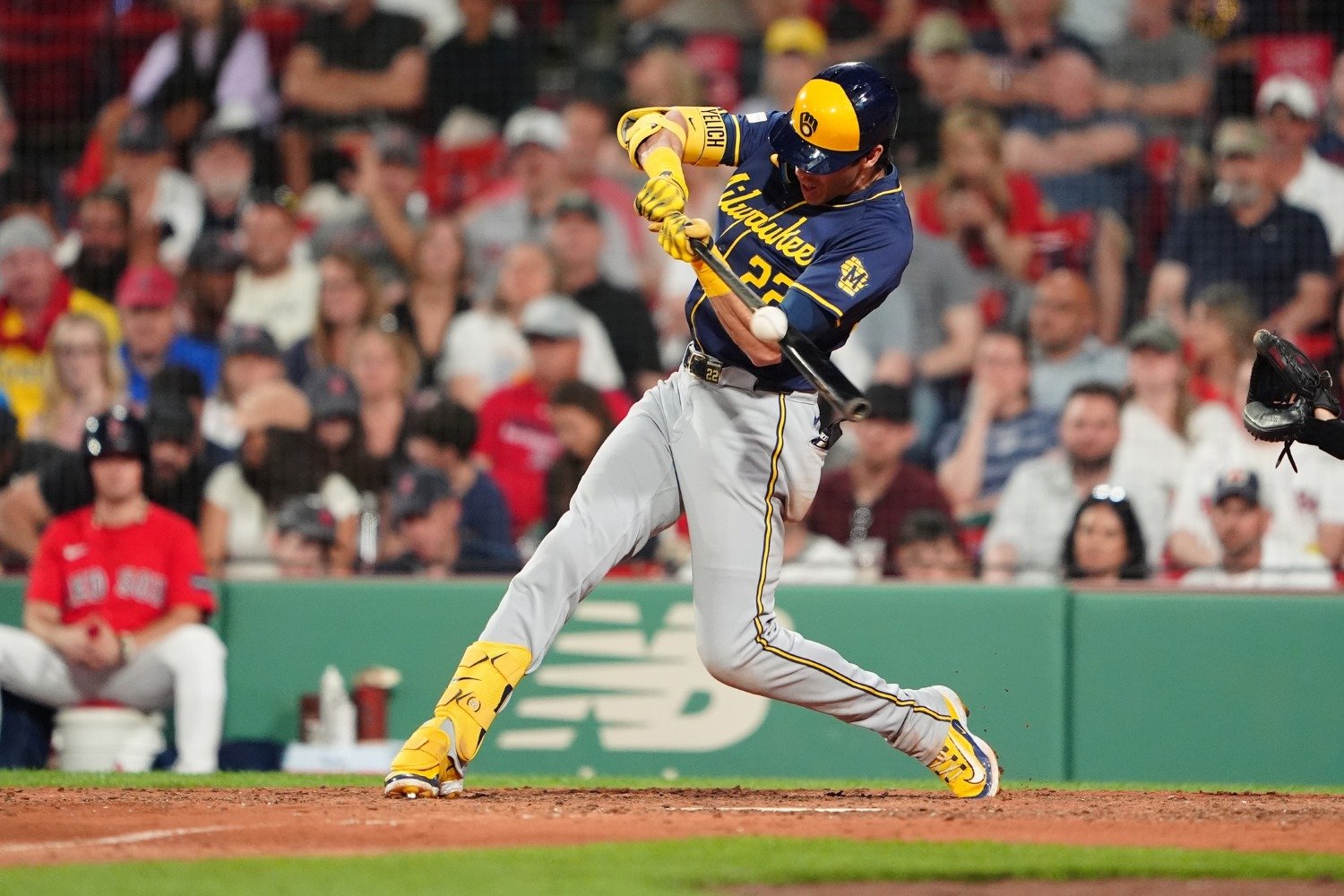
Right now, they're missing one of their best premium fastball power threats, in Rhys Hoskins, but he looks to be close to a return. In his absence, though, they've still been fine, because they have a long list of hitters who crush even high-90s fastballs. Christian Yelich and Gary Sánchez both hit those pitches so well and so consistently that teams try to avoid throwing them fastballs unless the pitcher on the mound happens to have good command to one of their cold zones.
Beyond those three, there's Brice Turang, who has a .382 wOBA against 95+. He, like Sal Frelick, contributes very little in terms of power against those offerings, because each tends even more strongly to hit their best batted balls downward when they see especially good fastballs. Each is capable of hitting a sharp grounder that gets through the infield, though, and neither swings and misses on those offerings very much.
Add this to the growing list of impressive and exciting things about Joey Ortiz, too. With a 98.8-MPH average exit velocity in the launch angle sweet spot (SSEV, where the sweet spot is defined as 10-35 degrees) and a 16.2-degree average launch angle on well-hit balls, he's dangerous in a way Turang and Frelick aren't, but he also whiffs on 95+ fastballs less than all but three other hitters in baseball--in sharp contrast to, for instance, Hoskins, who makes similarly dangerous contact but pays for it with lots of swings and misses.
William Contreras does the same things against 95 and above that he does against everything else: mash it. Jake Bauers finds tons of power on such pitches. The news is good almost all the way up and down the lineup. The only hitters who see significant time with the team but don't hit good velocity consistently are Blake Perkins, Oliver Dunn, and Jackson Chourio. Unfortunately, the news is very, very bad on Chourio. You might need both hands to count the hitters in the league who are worse than he is when a pitcher can get over 95 MPH, but you won't need your toes. Chourio doesn't generate decent exit velocity or square the ball up against those pitches, and he whiffs on nearly 38 percent of his swings on them. That would be an unfortunate whiff rate against good sliders. Against fastballs, it's catastrophic.
Chourio's struggles (and the team's usage of him) continues to be a storyline to watch this season, and for one night, the broader, happier story of the Crew's ability to mash good fastballs was overshadowed by a rookie having the best night of his life. In general, though, this team has a dynamic, scary offense, and they'll hit as well in big moments as anyone in the game--including, perhaps, when the heat of October spotlights matches that of the fastballs coming at them.





Recommended Comments
There are no comments to display.
Create an account or sign in to comment
You need to be a member in order to leave a comment
Create an account
Sign up for a new account in our community. It's easy!
Register a new accountSign in
Already have an account? Sign in here.
Sign In Now