


Brewers Video
The second game of the Wild Card Series was a thriller, highlighted by Jackson Chourio’s two home runs (the first player in Brewers history to hit multiple in a postseason game), Garrett Mitchell’s go-ahead blast, and outstanding bullpen utilization. With a 5-3 victory, Milwaukee staved off elimination and put the “can’t win a postseason game to save their lives” accusations to bed, for now.
One aspect of the game that was a cause for concern was the starting pitching situation. Through 3 ⅔ innings, Frankie Montas gave up six hits, three runs, made a key error, and looked generally unsteady. It was the second subpar outing from a Brewers starter in a row, after Freddy Peralta managed to go just four innings while giving up three earned runs. Now, the burden of moving the team to the Division Series will fall upon Tobias Myers.
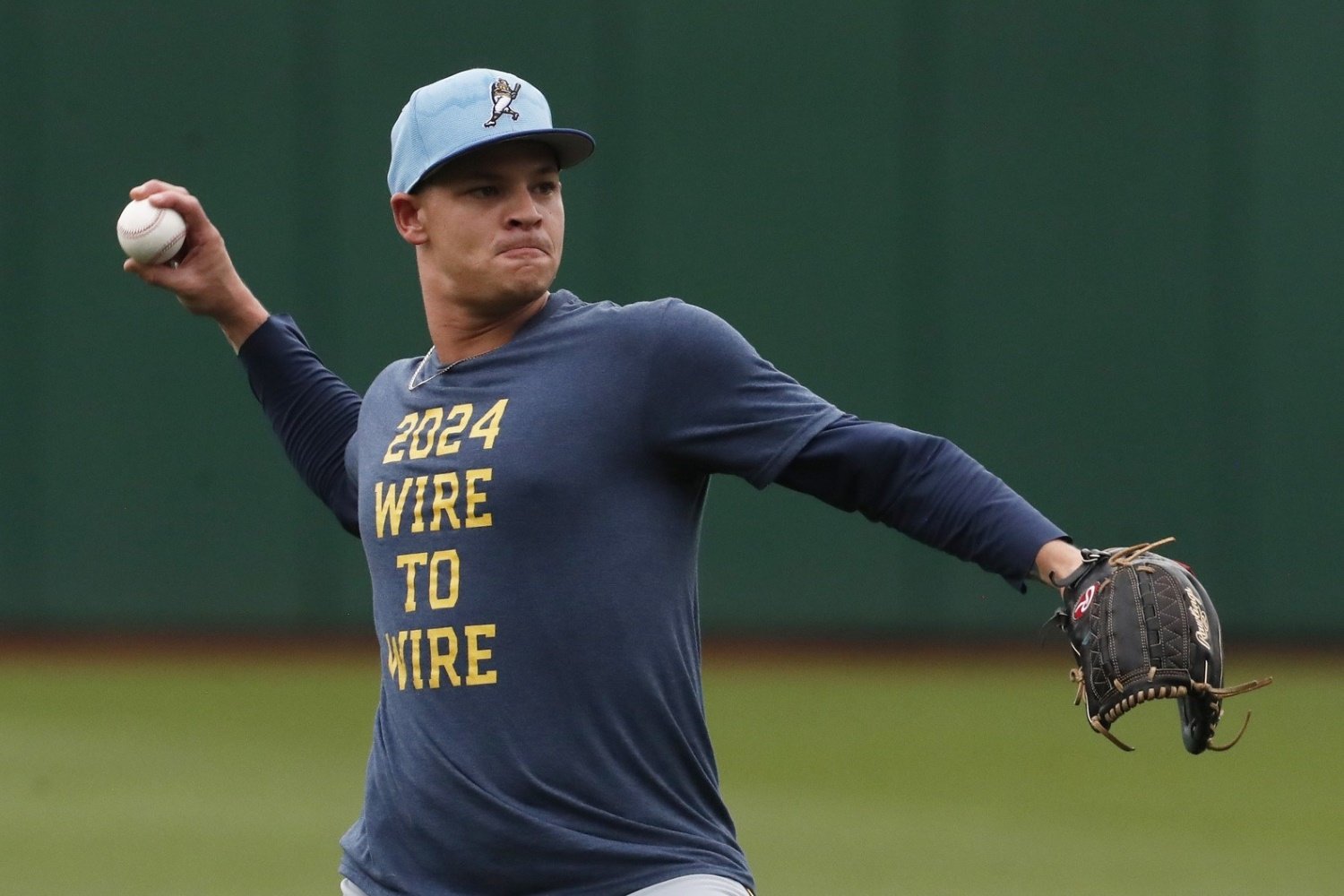
Myers exceeded all expectations this year, tossing 138 innings and posting a 3.00 ERA with a 1.17 WHIP. Utilizing four pitches in his arsenal, his primary weapon was the four-seam fastball, complemented by a cutter, slider, and changeup. His pair of fastballs was alright, but a closer look at the details spells potential trouble. His four-seamer had a relatively low whiff rate of 19.2%, while opposing hitters slugged .436 against it. To make matters worse, the Mets have several prolific hitters who have excelled against right-handed four-seamers, like Tyrone Taylor (.717 SLG), Mark Vientos (.661 SLG), and Pete Alonso (.606 SLG), all threats to do significant damage if Myers doesn't command and execute well with his heater.
Myers’s cutter has a similar story, with a low whiff rate of 11.9%, a .330 opposing batting average, and a .495 slugging percentage. Righty cutters have been generally more effective against the Mets, but because Myers has struggled to make his cutter competitive, it still leaves him vulnerable against hitters like Francisco Alvarez (.818 SLG) and Harrison Bader (.583 SLG). Fortunately, Bader doesn't figure to be in the starting lineup.
The keys to success lie in his slider and changeup. Myers threw his slider 21% of the time, and it was remarkably impactful, limiting batters to just a .474 OPS and a .269 BABIP. He isn’t particularly good at generating ground balls, getting them at just a 37.7% clip, but his slider had a stellar ground ball rate of 51.9% and an average exit velocity of just 86.7 mph. His changeup is somehow even better than his slider, allowing a .414 OPS, racking up a 44.4% whiff rate, an average exit velocity of 74.6 mph, and a hard-hit rate of 7.4%.
Furthermore, outside of Francisco Lindor, the Mets’ offensive production against these two pitches from right-handed pitchers is dramatically lower than it is against fastballs. If Myers leans into his strengths, he can overcome what has proven to be a scrappy New York lineup.
Taking the ball for the Mets will be José Quintana, a lefty bedrock of consistency since time immemorial. He had a 3.75 ERA over 170 ⅓ innings for the Mets, while throwing sinkers, four-seamers, curveballs, and changeups. Not much of a “stuff” pitcher, his low 90s-velocity, low strikeout (18.8%) and whiff (21.8%) rates leave him open to batted-ball luck and general chaotic baseball.
Milwaukee was average against southpaws this year, with a .713 team OPS, but struggled immensely against four-seam fastballs and curveballs. Their offensive production against sinkers and changeups was among the top five teams in MLB, which creates an even matchup based on arsenal.
Although Quintana’s 0.72 ERA in four September starts gives him a slight momentum advantage, the Brewers need to stay aggressive and attack the sinker. It worked well against Sean Manaea, another sinker-reliant starter, in the second game and was working well against Luis Severino in the first game before the lineup stalled completely.
With everyone in the bullpen getting a taste of the action and a Brewers starter yet to go past four innings, Myers must come up big to give Milwaukee a fighting chance in this series, as well as the next one. Quintana’s status as a workhorse means he’ll probably go relatively deep into the game, and if not, Carlos Mendoza’s stable of relievers is fresher than Pat Murphy's. Notably, Edwin Díaz is yet to come out of the bullpen in this series.
Myers has what it takes to get the job done. He has proved himself over the course of a full season, and has demonstrated the ability to step up when the team needs him most. Quintana has years of experience and three postseason series already under his belt, but he’s susceptible. Just as the lineup have been led by the youth in Jackson Chourio and Brice Turang, it’s time for a 26-year old rookie pitcher to take the team to the next level.





Recommended Comments
There are no comments to display.
Create an account or sign in to comment
You need to be a member in order to leave a comment
Create an account
Sign up for a new account in our community. It's easy!
Register a new accountSign in
Already have an account? Sign in here.
Sign In Now