


Brewers Video
There's a major difference between sitting 99, touching 102, and sitting 97, touching 99. It just might not be the difference you would expect.
It's extremely early, yet. Trevor Megill has only made three appearances and thrown 20 fastballs on the young season. When it comes to fastball velocity, though, a sample of just 20 is enough to tell if something significant has changed. That's bad news for the Brewers' towering closer, because he's down over 1 mph since 2024 and 1.7 mph since 2023. When a two-pitch reliever loses nearly two full ticks on their fastball, it's usually a recipe for trouble.
You've probably noticed, though, that Megill hasn't encountered any. In those three games, he's faced eight batters and retired seven of them, including racking up five strikeouts. He's yet to issue a walk. Megill, who's as superficially dependent upon his power as any pitcher in baseball, has lost a significant portion of that skill, but he's overwhelming batters, anyway.
Nor is it just the results singing this confusing ode to the new, slower version of Megill's fastball. According to Stuff+, Megill's heater is up from 113 in 2023 and 111 in 2024 to a blazing 128 so far in 2025. (For Stuff+, 100 is average and higher is better.) It had a 0.1 StuffPro and a -0.3 PitchPro last year, per Baseball Prospectus, where 0 is average and lower is better. This season, those figures are -1.1 and -1.5, respectively.
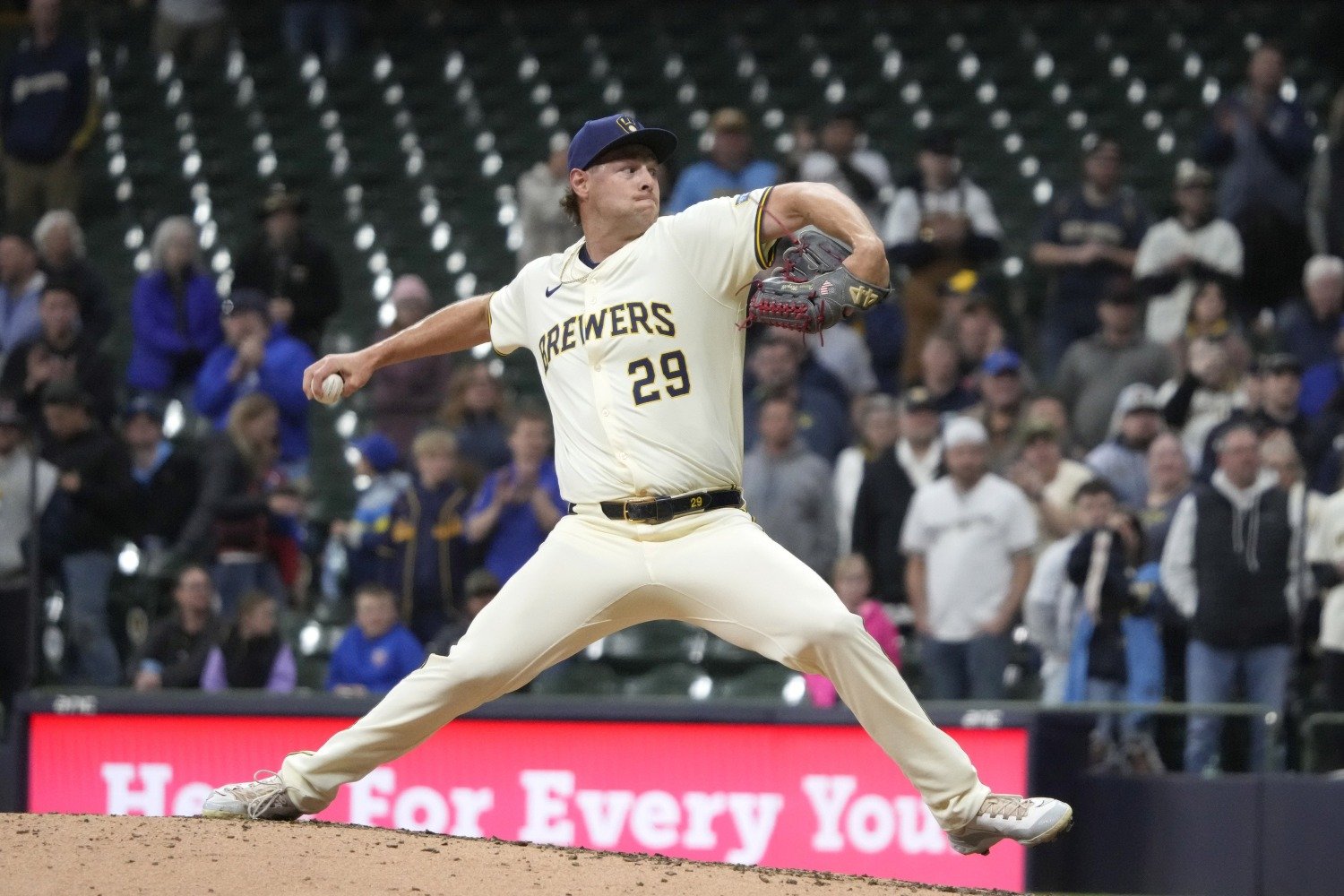
How is a slower fastball a better one? The answer lies in both Megill's release point and the movement of the pitch out of his hand. Firstly, the 6-foot-8 Megill comes from such a steep overhand angle and falls off with such controlled fury toward his glove side (the first-base side) of the mound that his horizontal release point is almost even with the center of the pitching rubber. Hitters aren't used to picking up the ball there, at all. It's a maximum-effort delivery that comes with effortless deception, for Megill.

More important, though, is the change Megill has effected in the way the pitch moves. Here's a scatterplot showing the horizontal and induced vertical break of all Megill's pitches in 2024, colored by pitch type.

He averaged 17.9 inches of induced vertical break and 5.7 inches of run to the arm side on his heater last year. This season, though, Megill's fastball has a new shape.

Although it's less sticky after such a small sample than is the drop in velocity, this change in movement signature makes Megill's fastball nastier in multiple ways. It now has 19.4 in. of IVB and only runs 2.3 in. to the arm side. That straightline rising heat is vicious stuff. It's why he's left hitters utterly stumped with that pitch thus far this year.
Holding onto this elite fastball shape might be difficult. It's a high-energy offering from a huge human being. On balance, you might prefer that Megill hadn't dropped from 99.1 mph in average velocity in 2023 to 97.4 this year, since the changes in other characteristics that have made up for that might not be sustainable. Still, it's fascinating to find that Megill—who lacks any type of third pitch and stubbornly sticks to a fastball-heavy mix of the heater and the hook—is more than surviving what could be a career-threatening crisis if it happened to many hurlers. Indeed, he's thriving. The Brewers' pitching staff has some big problems to fight through early this season, but their relief ace is not one of them—even if he's no longer lighting up the third column on the stadium radar gun display.
Do you approve of the job Pat Murphy is doing as Brewers manager?

Follow Brewer Fanatic For Milwaukee Brewers News & Analysis



-
 3
3


Recommended Comments
Create an account or sign in to comment
You need to be a member in order to leave a comment
Create an account
Sign up for a new account in our community. It's easy!
Register a new accountSign in
Already have an account? Sign in here.
Sign In Now