



DuWayne Steurer
-
Posts
11,848 -
Joined
-
Last visited
-
Days Won
8
Content Type
Profiles
Forums
Blogs
Events
News
2026 Milwaukee Brewers Top Prospects Ranking
Milwaukee Brewers Videos
2022 Milwaukee Brewers Draft Picks
Milwaukee Brewers Free Agent & Trade Rumors, Notes, & Tidbits
Guides & Resources
2023 Milwaukee Brewers Draft Picks
2024 Milwaukee Brewers Draft Picks
The Milwaukee Brewers Players Project
2025 Milwaukee Brewers Draft Pick Tracker
2026 Milwaukee Brewers Draft Pick Tracker
Store
Downloads
Gallery
Everything posted by DuWayne Steurer
-
 I think most projection systems tend to be conservative, some more than others. It's hard for a mathematical model to predict big breakouts (or major dropoffs), as they're based on following trends rather than predicting outliers or anomlies. That being said, one of the things holding Winker's numbers down may be the uncertainty around his return from injury. I also agree that the numbers for Contreras seemed conservative, (and stated as much) but he's young, and has barely had a full season worth of playing time in the majors to draw from, so there's not a lot of data to draw from.
 -
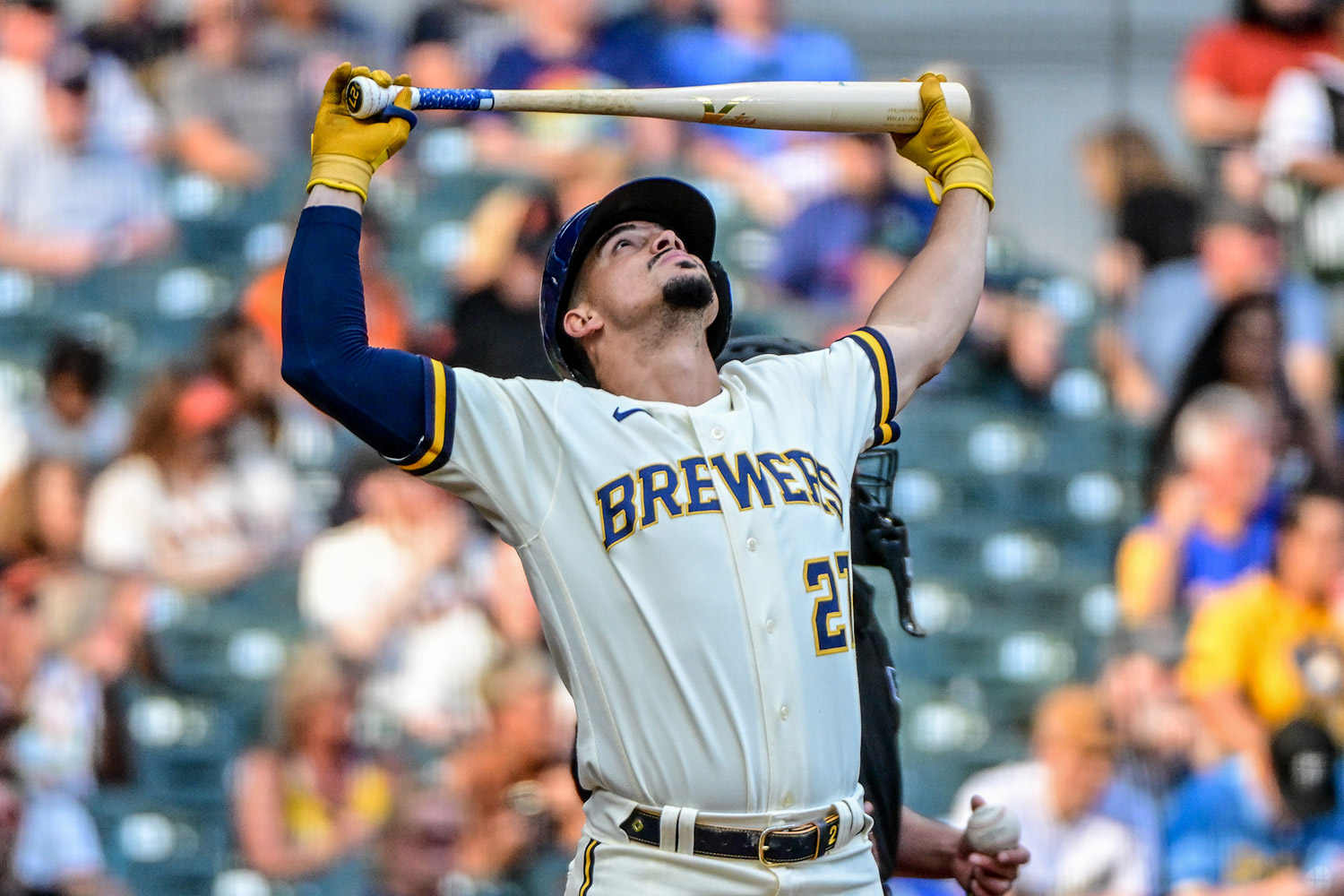 While Brewers General Manager Matt Arnold hasn't made any splashy moves such as inking any of the decade-plus, 300-million dollar signings, he has maneuvered trades to bring Jesse Winker and William Contreras to Milwaukee. Contreras is a young first-time all-star with legitimate 30 home run potential, and Winker is a candidate for a solid bounce-back campaign after an injury-marred 2022 season in Seattle. Arnold also brought in a pair of utility infielders, Abraham Toro and Owen Miller, possibly to compete for the Jace Peterson super-utility role or simply as extra depth. More moves may be made, and Luis Urias may fill the super-sub role in the future. Everyone has their preferred projection system, and each one uses different algorithms or methods to reach the numbers you see on the screen when you make your fantasy draft or browse the various sites. Another important distinction (a big distinction) is the difference between projections and predictions. Most of these systems are not predictions but simply mathematical models based on the previous season's data, age, and other factors. That being said, let's dig in! I'm going to use Steamer today. For one, it's available, and ZiPS currently isn't for the Brewers 2023 yet, and two, Steamer does a much better job of projecting playing time than ZiPS (and some other systems) does. So how does Steamer think the Brewers 2023 positional group stacks up? (per FanGraphs) Name Team G PA AB H 2B 3B HR R RBI BB SO HBP SB CS AVG OBP SLG OPS wOBA wRC+ BsR Fld Off Def WAR ADP Willy Adames MIL 146 653 580 141 30 1 28 85 81 61 173 3 8 4 .244 .316 .441 .758 .328 111 0.8 -1.5 9.3 5.8 3.9 999.0 Christian Yelich MIL 146 666 563 140 26 3 21 90 68 89 164 5 14 4 .249 .354 .419 .772 .339 119 1.5 -0.9 15.9 -9.5 3.0 999.0 Luis Urías MIL 139 575 501 122 24 1 19 65 65 59 119 9 4 2 .243 .331 .409 .740 .326 110 -0.5 0.6 6.0 3.2 3.0 999.0 Rowdy Tellez MIL 128 553 489 121 24 1 30 73 84 53 113 6 2 1 .247 .326 .486 .812 .346 123 -1.7 0.7 13.2 -10.3 2.3 999.0 William Contreras MIL 112 472 421 104 18 1 22 57 66 43 122 4 2 1 .247 .320 .450 .770 .334 115 -1.3 -1.9 7.1 2.2 2.2 999.0 Garrett Mitchell MIL 109 432 383 93 18 2 11 46 46 39 123 4 13 5 .243 .317 .385 .702 .310 99 0.4 0.4 -0.2 2.2 1.7 999.0 Jesse Winker MIL 115 494 418 104 21 1 17 61 59 64 92 6 1 0 .250 .355 .425 .780 .343 122 -2.4 -2.7 10.0 -12.0 1.5 999.0 Tyrone Taylor MIL 118 464 420 98 20 2 18 53 58 29 111 7 5 2 .232 .292 .419 .711 .309 98 0.2 2.6 -0.7 -2.1 1.4 999.0 Brice Turang MIL 102 384 340 83 16 1 7 43 37 36 77 2 12 3 .244 .317 .366 .683 .303 94 0.7 0.0 -2.1 1.9 1.3 999.0 Victor Caratini MIL 62 242 212 49 9 0 7 26 25 22 55 4 1 0 .232 .315 .372 .687 .303 94 -0.6 -0.1 -2.2 4.6 1.2 999.0 Sal Frelick MIL 32 131 118 33 6 1 3 15 14 10 19 2 3 1 .276 .337 .414 .751 .328 111 0.0 0.0 1.7 0.2 0.7 999.0 Abraham Toro MIL 42 172 153 37 8 1 5 19 20 14 30 2 2 1 .241 .313 .408 .721 .315 103 -0.2 -0.8 0.3 -0.1 0.6 999.0 Mike Brosseau MIL 44 181 160 35 7 0 6 20 20 16 52 3 2 1 .221 .301 .376 .676 .299 91 -0.3 -1.1 -2.2 -0.5 0.4 999.0 Joey Wiemer MIL 28 112 100 23 5 0 4 13 13 9 30 1 3 1 .234 .301 .414 .715 .311 99 0.0 0.0 0.0 -1.2 0.3 999.0 Keston Hiura MIL 66 272 240 52 10 1 12 31 33 23 99 6 4 2 .216 .298 .409 .707 .310 99 -0.1 0.0 -0.5 -6.5 0.2 999.0 Payton Henry MIL 6 24 21 4 1 0 1 2 2 2 7 0 0 0 .207 .278 .331 .609 .271 72 0.0 0.0 -0.8 0.5 0.1 999.0 Owen Miller MIL 13 54 49 12 3 0 1 5 5 4 12 1 0 0 .241 .299 .364 .663 .292 87 0.0 -0.6 -0.9 -0.4 0.1 999.0 Blake Perkins MIL 13 53 46 10 2 0 2 6 5 6 14 1 1 0 .211 .301 .363 .664 .295 88 0.0 0.0 -0.7 -0.6 0.0 999.0 Outfield The Brewers shipped out slugging right fielder Hunter Renfroe and brought in Jesse Winker. Winker profiles almost exclusively as a DH due to his defense, but the Brewers ideally would use Christian Yelich and Keston Hiura (if he remains with the club) in that role often as well. Right now, the outfield lines up with the bulk of playing time going to Yelich, Garrett Mitchell, and Tyrone Taylor. Steamer projects Mitchell for a 1.7 WAR and a .702 OPS, but it wouldn't be outrageous for a prospect to struggle his second time around the league. Mitchell hit well in his late-season call-up in 2022, but that's a sample of less than 100 plate appearances and his strikeout rate was over 40% in those limited chances. While Tyrone Taylor got the lion's share of playing time in center field after Lorenzo Cain was released last year, he struggled with on-base percentage and is well past prospect status entering his age 29 season. With Mitchell, Sal Frelick, and Joey Wiemer banging on the door, the Brewers could move Taylor to a reserve role sooner rather than later if he struggles to get on base. Christian Yelich projects for a 3.0 WAR and 21 home runs in Steamer's system, which would make most Brewer fans ecstatic. Tempering our enthusiasm, if Yelich can continue to be an on-base threat at the top of the order and set the table, he'll be providing worth as a table setter and leadoff man. Frelick's playing time depends on several factors. Notably, whether or not the Brewers acquire any other outfield pieces, whether or not Taylor struggles, and how well Frelick adjusts to big-league pitching. Infield There are some question marks here after dealing away Kolten Wong and Jace Peterson signing elsewhere. Rowdy Tellez returns at first base with his power bat. Despite knocking 35 home runs, Tellez hit just .219 last year with a .767 OPS. Tellez hopes to improve on that mainly by seeing a bounce back in his .215 BABiP (Batting Average on Balls in Play). Willy Adames will man shortstop again in 2023 after posting a 4.7 WAR in 2022. Adames' .298 on-base percentage last year was the lowest of his career by a wide margin, so it's arguable if he maintains his power (31 home runs), there's room to improve on the offensive side. The Brewers may look to hand second base to rookie Brice Turang, who broke through at Nashville in 2022 and had a .286 average and .772 OPS. Early projections from Steamer have a limited amount of confidence in his offense but the Brewers will have to be willing to let Turang grow into his game and let his defense provide his value until his bat can catch up. As of now, it looks like Luis Urias is the third baseman. Steamer projects a 3.0 WAR from Urias, which aligns with where he's been the last few years. A bit of power, a decent on base percentage, and decent defense. While the Brewers may end up going another route for third base, a 3.0 WAR projection is a safe bet. The infield backups are Abraham Toro, Owen Miller, and Mike Brosseau. Brosseau had a solid season in partial playing time for Milwaukee last year, but the Brewers will almost certainly look at the whole group and decide what pieces make the most sense and fit. Miller played almost full-time in Cleveland last year, primarily due to injuries to other players, and wasn't particularly spectacular, but he could provide a decent backup around the diamond. Designated Hitter Right now, there are plenty of DH candidates, but I'll focus on Jesse Winker and Keston Hiura. I suspect there's at least some chance that Hiura will be dealt with before spring training, so this is subject to change. After a brutal campaign in 2021, Hiura bounced back quite a bit this past year and slugged fourteen home runs with a .765 OPS in part-time play. Despite that, he never seemed to get on the good side of manager Craig Counsell and earned anything more than sporadic playing time. Often his playing time came against left-handed pitching, which he's notoriously (and oddly) terrible against. Be that as it may, with reverse splits, he doesn't make a good platoon DH partner for Winker, who hits left-handed and has more typical platoon splits. It'll be interesting to see how and when Hiura is used if he's still with the team come April. Jesse Winker was acquired in the Kolten Wong trade, and the Brewers are betting heavily on Winker having a big bounce-back season. He was terrible in Seattle in 2022. No getting around it. But in 2020 and 2021, he put up ..932 and .949 OPS numbers, respectively. His defensive prowess is best left unsaid, and if he only finds the field a handful of times, it's for the best. The DH spot will likely end up as Christian Yelich's long-term home, but for one season (Winker is a free agent after this year), Yelich can handle left field while WInker DHs. I'd be remiss if I didn't point out Winker's platoon splits. He has a career of .661 OPS vs. left-handers. The Brewers will need to find a platoon partner for him and hide that weakness. Catcher The big get of the offseason so far, and what a get it was. The Brewers acquired all-star catcher William Contreras in a three-team trade for minor league outfielder Esteury Ruiz. Contreras immediately adds some much-needed right-handed pop to the lineup, and should hit somewhere in the middle of the order. Contreras has his defensive drawbacks, but the Brewers seem more than willing to live with it and hope he improves. Steamer puts Contreras at 2.2 WAR with 22 home runs. I hope that's slightly conservative. The backup catcher is currently Victor Caratini. Caratini was doing a solid job with the backup duties to Omar Narvaez last year, providing some pop and decent defense. During the second half of the season, when he was forced to take on more regular catching duties his offensive numbers declined in August and September. Despite that, Caratini is a solid option for a backup with good defense and some decent power. That's where we stand in mid-December. The Brewers may make more moves, and there are plenty of free agents below the top-tier names who remain unsigned. What do you think, Brewer Fanatics? What will the lineup look like? What do you think of the first Projections that have come out? Let us know in the comments!
 -
After adding Jesse Winker, and William Contreras (and let's not forget Owen Miller!), we'll look at the Brewers' position players and some of the projected numbers and see where the offense stands. While Brewers General Manager Matt Arnold hasn't made any splashy moves such as inking any of the decade-plus, 300-million dollar signings, he has maneuvered trades to bring Jesse Winker and William Contreras to Milwaukee. Contreras is a young first-time all-star with legitimate 30 home run potential, and Winker is a candidate for a solid bounce-back campaign after an injury-marred 2022 season in Seattle. Arnold also brought in a pair of utility infielders, Abraham Toro and Owen Miller, possibly to compete for the Jace Peterson super-utility role or simply as extra depth. More moves may be made, and Luis Urias may fill the super-sub role in the future. Everyone has their preferred projection system, and each one uses different algorithms or methods to reach the numbers you see on the screen when you make your fantasy draft or browse the various sites. Another important distinction (a big distinction) is the difference between projections and predictions. Most of these systems are not predictions but simply mathematical models based on the previous season's data, age, and other factors. That being said, let's dig in! I'm going to use Steamer today. For one, it's available, and ZiPS currently isn't for the Brewers 2023 yet, and two, Steamer does a much better job of projecting playing time than ZiPS (and some other systems) does. So how does Steamer think the Brewers 2023 positional group stacks up? (per FanGraphs) Name Team G PA AB H 2B 3B HR R RBI BB SO HBP SB CS AVG OBP SLG OPS wOBA wRC+ BsR Fld Off Def WAR ADP Willy Adames MIL 146 653 580 141 30 1 28 85 81 61 173 3 8 4 .244 .316 .441 .758 .328 111 0.8 -1.5 9.3 5.8 3.9 999.0 Christian Yelich MIL 146 666 563 140 26 3 21 90 68 89 164 5 14 4 .249 .354 .419 .772 .339 119 1.5 -0.9 15.9 -9.5 3.0 999.0 Luis Urías MIL 139 575 501 122 24 1 19 65 65 59 119 9 4 2 .243 .331 .409 .740 .326 110 -0.5 0.6 6.0 3.2 3.0 999.0 Rowdy Tellez MIL 128 553 489 121 24 1 30 73 84 53 113 6 2 1 .247 .326 .486 .812 .346 123 -1.7 0.7 13.2 -10.3 2.3 999.0 William Contreras MIL 112 472 421 104 18 1 22 57 66 43 122 4 2 1 .247 .320 .450 .770 .334 115 -1.3 -1.9 7.1 2.2 2.2 999.0 Garrett Mitchell MIL 109 432 383 93 18 2 11 46 46 39 123 4 13 5 .243 .317 .385 .702 .310 99 0.4 0.4 -0.2 2.2 1.7 999.0 Jesse Winker MIL 115 494 418 104 21 1 17 61 59 64 92 6 1 0 .250 .355 .425 .780 .343 122 -2.4 -2.7 10.0 -12.0 1.5 999.0 Tyrone Taylor MIL 118 464 420 98 20 2 18 53 58 29 111 7 5 2 .232 .292 .419 .711 .309 98 0.2 2.6 -0.7 -2.1 1.4 999.0 Brice Turang MIL 102 384 340 83 16 1 7 43 37 36 77 2 12 3 .244 .317 .366 .683 .303 94 0.7 0.0 -2.1 1.9 1.3 999.0 Victor Caratini MIL 62 242 212 49 9 0 7 26 25 22 55 4 1 0 .232 .315 .372 .687 .303 94 -0.6 -0.1 -2.2 4.6 1.2 999.0 Sal Frelick MIL 32 131 118 33 6 1 3 15 14 10 19 2 3 1 .276 .337 .414 .751 .328 111 0.0 0.0 1.7 0.2 0.7 999.0 Abraham Toro MIL 42 172 153 37 8 1 5 19 20 14 30 2 2 1 .241 .313 .408 .721 .315 103 -0.2 -0.8 0.3 -0.1 0.6 999.0 Mike Brosseau MIL 44 181 160 35 7 0 6 20 20 16 52 3 2 1 .221 .301 .376 .676 .299 91 -0.3 -1.1 -2.2 -0.5 0.4 999.0 Joey Wiemer MIL 28 112 100 23 5 0 4 13 13 9 30 1 3 1 .234 .301 .414 .715 .311 99 0.0 0.0 0.0 -1.2 0.3 999.0 Keston Hiura MIL 66 272 240 52 10 1 12 31 33 23 99 6 4 2 .216 .298 .409 .707 .310 99 -0.1 0.0 -0.5 -6.5 0.2 999.0 Payton Henry MIL 6 24 21 4 1 0 1 2 2 2 7 0 0 0 .207 .278 .331 .609 .271 72 0.0 0.0 -0.8 0.5 0.1 999.0 Owen Miller MIL 13 54 49 12 3 0 1 5 5 4 12 1 0 0 .241 .299 .364 .663 .292 87 0.0 -0.6 -0.9 -0.4 0.1 999.0 Blake Perkins MIL 13 53 46 10 2 0 2 6 5 6 14 1 1 0 .211 .301 .363 .664 .295 88 0.0 0.0 -0.7 -0.6 0.0 999.0 Outfield The Brewers shipped out slugging right fielder Hunter Renfroe and brought in Jesse Winker. Winker profiles almost exclusively as a DH due to his defense, but the Brewers ideally would use Christian Yelich and Keston Hiura (if he remains with the club) in that role often as well. Right now, the outfield lines up with the bulk of playing time going to Yelich, Garrett Mitchell, and Tyrone Taylor. Steamer projects Mitchell for a 1.7 WAR and a .702 OPS, but it wouldn't be outrageous for a prospect to struggle his second time around the league. Mitchell hit well in his late-season call-up in 2022, but that's a sample of less than 100 plate appearances and his strikeout rate was over 40% in those limited chances. While Tyrone Taylor got the lion's share of playing time in center field after Lorenzo Cain was released last year, he struggled with on-base percentage and is well past prospect status entering his age 29 season. With Mitchell, Sal Frelick, and Joey Wiemer banging on the door, the Brewers could move Taylor to a reserve role sooner rather than later if he struggles to get on base. Christian Yelich projects for a 3.0 WAR and 21 home runs in Steamer's system, which would make most Brewer fans ecstatic. Tempering our enthusiasm, if Yelich can continue to be an on-base threat at the top of the order and set the table, he'll be providing worth as a table setter and leadoff man. Frelick's playing time depends on several factors. Notably, whether or not the Brewers acquire any other outfield pieces, whether or not Taylor struggles, and how well Frelick adjusts to big-league pitching. Infield There are some question marks here after dealing away Kolten Wong and Jace Peterson signing elsewhere. Rowdy Tellez returns at first base with his power bat. Despite knocking 35 home runs, Tellez hit just .219 last year with a .767 OPS. Tellez hopes to improve on that mainly by seeing a bounce back in his .215 BABiP (Batting Average on Balls in Play). Willy Adames will man shortstop again in 2023 after posting a 4.7 WAR in 2022. Adames' .298 on-base percentage last year was the lowest of his career by a wide margin, so it's arguable if he maintains his power (31 home runs), there's room to improve on the offensive side. The Brewers may look to hand second base to rookie Brice Turang, who broke through at Nashville in 2022 and had a .286 average and .772 OPS. Early projections from Steamer have a limited amount of confidence in his offense but the Brewers will have to be willing to let Turang grow into his game and let his defense provide his value until his bat can catch up. As of now, it looks like Luis Urias is the third baseman. Steamer projects a 3.0 WAR from Urias, which aligns with where he's been the last few years. A bit of power, a decent on base percentage, and decent defense. While the Brewers may end up going another route for third base, a 3.0 WAR projection is a safe bet. The infield backups are Abraham Toro, Owen Miller, and Mike Brosseau. Brosseau had a solid season in partial playing time for Milwaukee last year, but the Brewers will almost certainly look at the whole group and decide what pieces make the most sense and fit. Miller played almost full-time in Cleveland last year, primarily due to injuries to other players, and wasn't particularly spectacular, but he could provide a decent backup around the diamond. Designated Hitter Right now, there are plenty of DH candidates, but I'll focus on Jesse Winker and Keston Hiura. I suspect there's at least some chance that Hiura will be dealt with before spring training, so this is subject to change. After a brutal campaign in 2021, Hiura bounced back quite a bit this past year and slugged fourteen home runs with a .765 OPS in part-time play. Despite that, he never seemed to get on the good side of manager Craig Counsell and earned anything more than sporadic playing time. Often his playing time came against left-handed pitching, which he's notoriously (and oddly) terrible against. Be that as it may, with reverse splits, he doesn't make a good platoon DH partner for Winker, who hits left-handed and has more typical platoon splits. It'll be interesting to see how and when Hiura is used if he's still with the team come April. Jesse Winker was acquired in the Kolten Wong trade, and the Brewers are betting heavily on Winker having a big bounce-back season. He was terrible in Seattle in 2022. No getting around it. But in 2020 and 2021, he put up ..932 and .949 OPS numbers, respectively. His defensive prowess is best left unsaid, and if he only finds the field a handful of times, it's for the best. The DH spot will likely end up as Christian Yelich's long-term home, but for one season (Winker is a free agent after this year), Yelich can handle left field while WInker DHs. I'd be remiss if I didn't point out Winker's platoon splits. He has a career of .661 OPS vs. left-handers. The Brewers will need to find a platoon partner for him and hide that weakness. Catcher The big get of the offseason so far, and what a get it was. The Brewers acquired all-star catcher William Contreras in a three-team trade for minor league outfielder Esteury Ruiz. Contreras immediately adds some much-needed right-handed pop to the lineup, and should hit somewhere in the middle of the order. Contreras has his defensive drawbacks, but the Brewers seem more than willing to live with it and hope he improves. Steamer puts Contreras at 2.2 WAR with 22 home runs. I hope that's slightly conservative. The backup catcher is currently Victor Caratini. Caratini was doing a solid job with the backup duties to Omar Narvaez last year, providing some pop and decent defense. During the second half of the season, when he was forced to take on more regular catching duties his offensive numbers declined in August and September. Despite that, Caratini is a solid option for a backup with good defense and some decent power. That's where we stand in mid-December. The Brewers may make more moves, and there are plenty of free agents below the top-tier names who remain unsigned. What do you think, Brewer Fanatics? What will the lineup look like? What do you think of the first Projections that have come out? Let us know in the comments! View full article
- 10 replies
-
- 1
-

-
- jesse winker
- william contreras
- (and 3 more)
-
I edited this back to William, and I was pretty sure I had double double double checked myself when I wrote the article, but I was like 'Huh', must have just mentally typed Willson instead. "No biggie". Good to know I'm not the only one!
-
Brewers General Manager Matt Arnold surprised everyone on Monday afternoon when he pulled the trigger on a trade that brought all-star catcher William Contreras to Milwaukee to replace outgoing Omar Narvaez. We'll look at the trade and the Brewers' roster in the wake of this enormous acquisition. Before I say anything about the numbers, data, stats, or anything else, it has to be said that this deal was an absolute steal from the Brewers' standpoint. Even if you question the methodology or accuracy of sites like Baseball Trade Values, the Brewers got a fantastic deal, value-wise, compared to what they gave up. If you have yet to see it anywhere else... Baseball Trade Values won't even allow that trade to go through. It's tilted at 33.2 million dollars in surplus value in favor of the Brewers. Again, I understand that sites like these are just a starting point, and scouts and general managers have many advanced ways to evaluate trades, but at first blush, this one looks like highway robbery. Trades involving prospects are always best evaluated after they hit the big leagues and their impact on the big clubs is better felt. Still, everyone feels confident from the Brewer standpoint that giving up Esteury Ruiz for a young, slugging catcher and two relievers is a good deal right now. So what did the Brewers get, and what did they give up? Ruiz came over in the Josh Hader trade this past summer, and while he might have been looked at as the centerpiece of that particular trade, many looked at the return the Brewers got for the premier closer in the game to be light. Ruiz put up excellent numbers at Nashville after being acquired, and while he doesn't have the kind of bat that scouts expect to produce much power at the big league level, he has elite speed, stealing 85 bags over three levels in the minors last year. Another thing holding Ruiz back (at least in Milwaukee) will be the trio of talented outfielders already knocking on the door in Garrett Mitchell, Sal Frelick, and Joey Wiemer, not to mention the fast-rising and ultra-talented Jackson Chourio. Flipping a piece of the Hader trade then for a young, cost-controlled all-star catcher had to be a no-brainer for Matt Arnold and the Brewers front office. William Contreras emerged from the long shadow of his three-time all-star brother Willson last year to put together a big campaign for the Braves. With a .278/.354/.506 slash line and a healthy 138 ops+, Contreras was a first-time all-star at age 24. Contreras mauled left-handed pitching last year with a 1.036 OPS, which is an area the Brewers struggled all season long, so having his power bat from the right side of the plate in the middle of the order will be an immediate boost for the offense. He was still capable against right-handed pitching with a .784 OPS. I Split G GS PA AB R H 2B 3B HR RBI SB CS BB SO BA OBP SLG OPS TB GDP HBP SH SF IBB ROE BAbip tOPS+ vs RHP 139 416 374 49 91 12 1 21 51 1 0 38 120 .243 .315 .449 .764 168 5 2 0 2 2 2 .298 89 vs LHP 76 155 133 21 41 7 1 7 18 1 0 20 42 .308 .400 .534 .934 71 3 1 0 1 0 1 .400 132 vs RHP as RHB 139 416 374 91 12 1 21 51 0 0 38 120 .243 .315 .449 .764 168 5 2 0 2 2 2 .298 89 vs LHP as RHB 76 155 133 41 7 1 7 18 0 0 20 42 .308 .400 .534 .934 71 3 1 0 1 0 1 .400 132 vs RH Starter 106 95 392 350 44 83 9 1 19 39 0 0 38 117 .237 .314 .431 .745 151 5 2 0 2 2 2 .296 84 vs LH Starter 47 43 179 157 26 49 10 1 9 30 2 0 20 45 .312 .391 .561 .952 88 3 1 0 1 0 1 .385 135 Baseball-Reference rates Contreras' defense a bit higher than Fangraphs. At BR, he's listed at 0.0 dWAR for the last two years at BR. Fangraphs is a little more negative on his defense. Season Team Level Batting Base Running Fielding Positional Offense Defense League Replacement RAR WAR Dollars Salary 2020 ATL MLB 0.5 -0.1 0.0 0.2 0.4 0.2 -0.1 0.3 0.9 0.1 $0.7 2021 ATL MLB -3.2 -0.8 -5.9 3.6 -4.1 -2.3 0.4 5.8 -0.2 0.0 -$0.2 2022 ATL MLB 16.6 -2.6 -4.1 0.7 14.0 -3.4 1.4 11.2 23.3 2.4 $19.5 Total - - - MLB 13.9 -3.6 -10.0 4.5 10.4 -5.5 1.8 17.3 23.9 2.5 $20.1 With Victor Caratini most likely returning this year, it will be interesting to see how the catching duties are split and if Contreras spends any appreciable time at DH again, as he did in Atlanta in 2022. Either way, his defensive numbers aren't so bad as to viably negate his offensive value. The Brewers control Contreras through the 2027 season, so they're looking at five years of control through Contreras' age 29 season. Having those years of control for a team like the Brewers that will have to flip assets for prospects routinely is extremely valuable, especially when they're still in a competitive window with Burnes, Woodruff, and Peralta. Of the two relievers the Brewers acquired in the trade, Joel Payamps has seen major league experience, pitching over 50 innings each of the past two seasons. He's produced an earned run average of 3.35 over 113 major league innings, with a FIP (Fielding Independent Pitching) of 4.19. Payamps is not a big strikeout pitcher, punching out 6.7 batters per nine innings over his career, and that number has been consistent. Payamps throws a mid 90's four-seamer, mixed with a heavy sinker, slider, and occasional changeup that he relies on to induce an almost two-to-one groundball to flyout ratio. (per FanGraphs) Season Team Level GB/FB LD% GB% FB% IFFB% HR/FB IFH% BUH% Pull% Cent% Oppo% Soft% Med% Hard% SIERA xFIP- xFIP 2019 ARI MLB 0.20 40.0% 10.0% 50.0% 0.0% 0.0% 0.0% 0.0% 36.4% 45.5% 18.2% 18.2% 27.3% 54.5% 6.63 146 6.45 2020 ARI MLB 0.50 62.5% 12.5% 25.0% 0.0% 0.0% 0.0% 0.0% 37.5% 37.5% 25.0% 0.0% 25.0% 75.0% 7.49 138 6.14 2021 2 Tms MLB 1.08 14.6% 44.4% 41.1% 16.1% 9.7% 14.9% 0.0% 43.4% 32.9% 23.7% 21.1% 52.0% 27.0% 4.33 110 4.73 2022 2 Tms MLB 1.73 16.7% 52.8% 30.6% 21.8% 12.7% 11.6% 50.0% 47.3% 33.0% 19.8% 20.9% 52.7% 26.4% 3.86 103 4.07 Total - - - MLB 1.32 17.5% 47.0% 35.5% 17.7% 10.5% 12.8% 25.0% 45.0% 33.4% 21.5% 20.4% 51.0% 28.6% 4.27 109 4.50 While Payamps has relied on weak contact and groundballs to produce results, it would still be nice to see him push that K/9 rate more up around eight or nine punchouts per nine innings. Even so, if he can produce a low 3's ERA like he has the past two seasons, he can be a solid addition to the middle of the Brewers bullpen. The last piece acquired by the Brewers in the trade, Justin Yeager, came from the Braves. Yeager is a 24-year-old reliever who reached AA Mississippi in the Braves system this season. The right-hander works in the high 90's with his four-seamer but can touch 100, and he struck out 81 batters in 52.1 innings this past season. On the flip side, he also walked 32 batters and 66 batters in just 117.2 innings worked in affiliated ball. While Yeager certainly has the physical tools to be successful, gaining control of his repertoire will decide how far up the prospect ladder Yeager can climb. This trade (as many do) came out of left field for Brewers fans and certainly felt like a nice pre-holiday treat. It certainly shakes up the lineup and gives the team a little more (or a lot more) punch against left-handed pitching, and adds a reliable, if unspectacular, arm to the middle of the bullpen. At the same time, the Brewers were dealing from a position of depth and strength to strengthen their major league roster. Contreras should slot into the middle of the order and give the Brewers some much-needed right-hand power after the Hunter Renfroe trade. What do you think, Brewer Fanatics? Is Matt Arnold done making trades, or is something more on the horizon? What other moves might he have to improve the team before opening day? Let us know what you think in the comments! View full article
- 5 replies
-
- 2
-
-
- joel payamps
- william contreras
- (and 1 more)
-
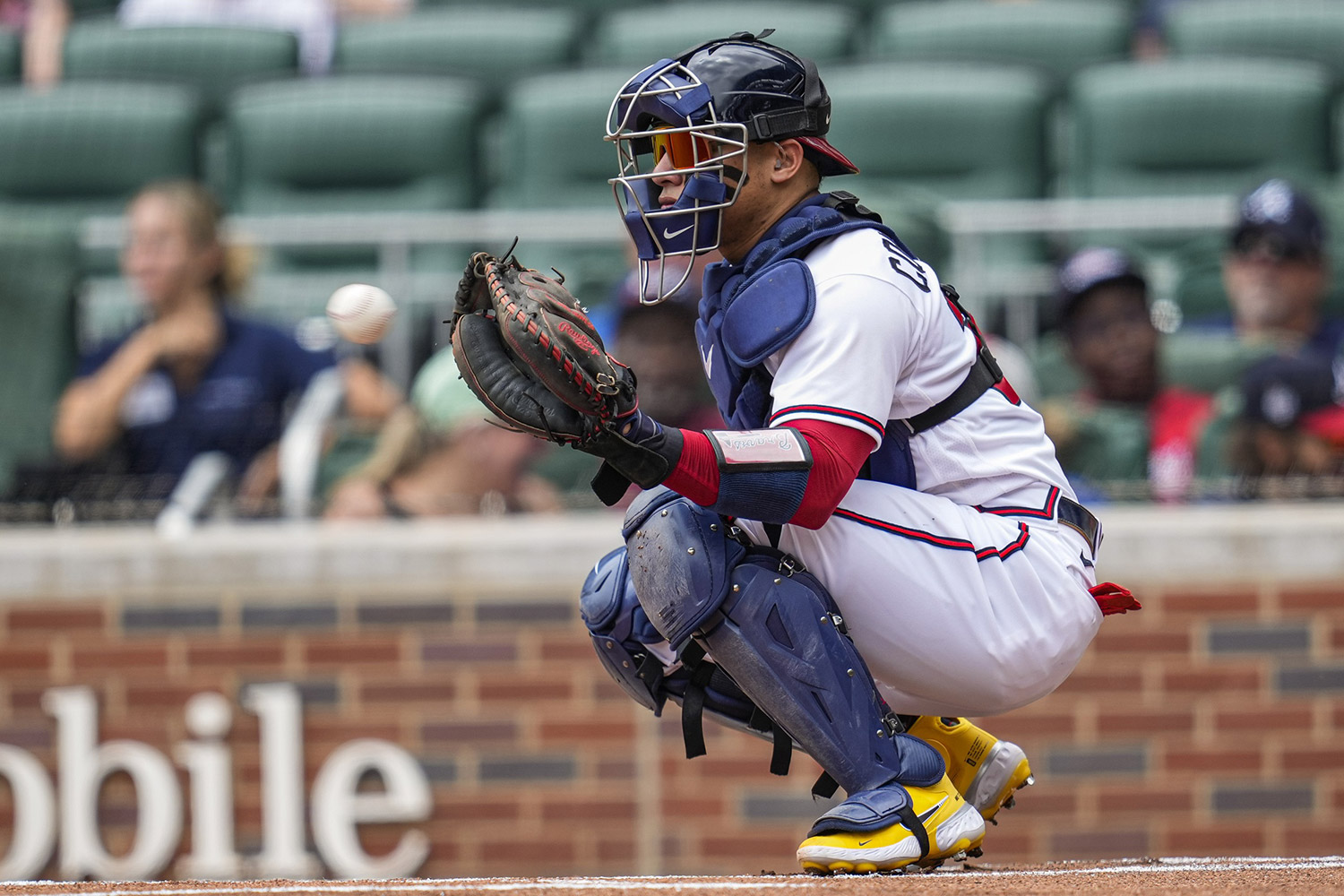 Before I say anything about the numbers, data, stats, or anything else, it has to be said that this deal was an absolute steal from the Brewers' standpoint. Even if you question the methodology or accuracy of sites like Baseball Trade Values, the Brewers got a fantastic deal, value-wise, compared to what they gave up. If you have yet to see it anywhere else... Baseball Trade Values won't even allow that trade to go through. It's tilted at 33.2 million dollars in surplus value in favor of the Brewers. Again, I understand that sites like these are just a starting point, and scouts and general managers have many advanced ways to evaluate trades, but at first blush, this one looks like highway robbery. Trades involving prospects are always best evaluated after they hit the big leagues and their impact on the big clubs is better felt. Still, everyone feels confident from the Brewer standpoint that giving up Esteury Ruiz for a young, slugging catcher and two relievers is a good deal right now. So what did the Brewers get, and what did they give up? Ruiz came over in the Josh Hader trade this past summer, and while he might have been looked at as the centerpiece of that particular trade, many looked at the return the Brewers got for the premier closer in the game to be light. Ruiz put up excellent numbers at Nashville after being acquired, and while he doesn't have the kind of bat that scouts expect to produce much power at the big league level, he has elite speed, stealing 85 bags over three levels in the minors last year. Another thing holding Ruiz back (at least in Milwaukee) will be the trio of talented outfielders already knocking on the door in Garrett Mitchell, Sal Frelick, and Joey Wiemer, not to mention the fast-rising and ultra-talented Jackson Chourio. Flipping a piece of the Hader trade then for a young, cost-controlled all-star catcher had to be a no-brainer for Matt Arnold and the Brewers front office. William Contreras emerged from the long shadow of his three-time all-star brother Willson last year to put together a big campaign for the Braves. With a .278/.354/.506 slash line and a healthy 138 ops+, Contreras was a first-time all-star at age 24. Contreras mauled left-handed pitching last year with a 1.036 OPS, which is an area the Brewers struggled all season long, so having his power bat from the right side of the plate in the middle of the order will be an immediate boost for the offense. He was still capable against right-handed pitching with a .784 OPS. I Split G GS PA AB R H 2B 3B HR RBI SB CS BB SO BA OBP SLG OPS TB GDP HBP SH SF IBB ROE BAbip tOPS+ vs RHP 139 416 374 49 91 12 1 21 51 1 0 38 120 .243 .315 .449 .764 168 5 2 0 2 2 2 .298 89 vs LHP 76 155 133 21 41 7 1 7 18 1 0 20 42 .308 .400 .534 .934 71 3 1 0 1 0 1 .400 132 vs RHP as RHB 139 416 374 91 12 1 21 51 0 0 38 120 .243 .315 .449 .764 168 5 2 0 2 2 2 .298 89 vs LHP as RHB 76 155 133 41 7 1 7 18 0 0 20 42 .308 .400 .534 .934 71 3 1 0 1 0 1 .400 132 vs RH Starter 106 95 392 350 44 83 9 1 19 39 0 0 38 117 .237 .314 .431 .745 151 5 2 0 2 2 2 .296 84 vs LH Starter 47 43 179 157 26 49 10 1 9 30 2 0 20 45 .312 .391 .561 .952 88 3 1 0 1 0 1 .385 135 Baseball-Reference rates Contreras' defense a bit higher than Fangraphs. At BR, he's listed at 0.0 dWAR for the last two years at BR. Fangraphs is a little more negative on his defense. Season Team Level Batting Base Running Fielding Positional Offense Defense League Replacement RAR WAR Dollars Salary 2020 ATL MLB 0.5 -0.1 0.0 0.2 0.4 0.2 -0.1 0.3 0.9 0.1 $0.7 2021 ATL MLB -3.2 -0.8 -5.9 3.6 -4.1 -2.3 0.4 5.8 -0.2 0.0 -$0.2 2022 ATL MLB 16.6 -2.6 -4.1 0.7 14.0 -3.4 1.4 11.2 23.3 2.4 $19.5 Total - - - MLB 13.9 -3.6 -10.0 4.5 10.4 -5.5 1.8 17.3 23.9 2.5 $20.1 With Victor Caratini most likely returning this year, it will be interesting to see how the catching duties are split and if Contreras spends any appreciable time at DH again, as he did in Atlanta in 2022. Either way, his defensive numbers aren't so bad as to viably negate his offensive value. The Brewers control Contreras through the 2027 season, so they're looking at five years of control through Contreras' age 29 season. Having those years of control for a team like the Brewers that will have to flip assets for prospects routinely is extremely valuable, especially when they're still in a competitive window with Burnes, Woodruff, and Peralta. Of the two relievers the Brewers acquired in the trade, Joel Payamps has seen major league experience, pitching over 50 innings each of the past two seasons. He's produced an earned run average of 3.35 over 113 major league innings, with a FIP (Fielding Independent Pitching) of 4.19. Payamps is not a big strikeout pitcher, punching out 6.7 batters per nine innings over his career, and that number has been consistent. Payamps throws a mid 90's four-seamer, mixed with a heavy sinker, slider, and occasional changeup that he relies on to induce an almost two-to-one groundball to flyout ratio. (per FanGraphs) Season Team Level GB/FB LD% GB% FB% IFFB% HR/FB IFH% BUH% Pull% Cent% Oppo% Soft% Med% Hard% SIERA xFIP- xFIP 2019 ARI MLB 0.20 40.0% 10.0% 50.0% 0.0% 0.0% 0.0% 0.0% 36.4% 45.5% 18.2% 18.2% 27.3% 54.5% 6.63 146 6.45 2020 ARI MLB 0.50 62.5% 12.5% 25.0% 0.0% 0.0% 0.0% 0.0% 37.5% 37.5% 25.0% 0.0% 25.0% 75.0% 7.49 138 6.14 2021 2 Tms MLB 1.08 14.6% 44.4% 41.1% 16.1% 9.7% 14.9% 0.0% 43.4% 32.9% 23.7% 21.1% 52.0% 27.0% 4.33 110 4.73 2022 2 Tms MLB 1.73 16.7% 52.8% 30.6% 21.8% 12.7% 11.6% 50.0% 47.3% 33.0% 19.8% 20.9% 52.7% 26.4% 3.86 103 4.07 Total - - - MLB 1.32 17.5% 47.0% 35.5% 17.7% 10.5% 12.8% 25.0% 45.0% 33.4% 21.5% 20.4% 51.0% 28.6% 4.27 109 4.50 While Payamps has relied on weak contact and groundballs to produce results, it would still be nice to see him push that K/9 rate more up around eight or nine punchouts per nine innings. Even so, if he can produce a low 3's ERA like he has the past two seasons, he can be a solid addition to the middle of the Brewers bullpen. The last piece acquired by the Brewers in the trade, Justin Yeager, came from the Braves. Yeager is a 24-year-old reliever who reached AA Mississippi in the Braves system this season. The right-hander works in the high 90's with his four-seamer but can touch 100, and he struck out 81 batters in 52.1 innings this past season. On the flip side, he also walked 32 batters and 66 batters in just 117.2 innings worked in affiliated ball. While Yeager certainly has the physical tools to be successful, gaining control of his repertoire will decide how far up the prospect ladder Yeager can climb. This trade (as many do) came out of left field for Brewers fans and certainly felt like a nice pre-holiday treat. It certainly shakes up the lineup and gives the team a little more (or a lot more) punch against left-handed pitching, and adds a reliable, if unspectacular, arm to the middle of the bullpen. At the same time, the Brewers were dealing from a position of depth and strength to strengthen their major league roster. Contreras should slot into the middle of the order and give the Brewers some much-needed right-hand power after the Hunter Renfroe trade. What do you think, Brewer Fanatics? Is Matt Arnold done making trades, or is something more on the horizon? What other moves might he have to improve the team before opening day? Let us know what you think in the comments!
- 5 comments
-
- 1
-
-
- joel payamps
- william contreras
- (and 1 more)
-
This is a fair point. I focused exclusively on left handed hitters because league wide, left handed batters were shifted on 55% of the time last year, while right handed batters were shifted on only 19% of the time. I think that's a pretty drastic difference. Interesting that Adames was shifted that much as a RH batter.
-
Oh, for sure I don't think that the shift is to blame. I think it's a part of the overall bigger picture though. That being said, I'll throw my opinion in and say I'm actually not in favor of the ban of the shift, even if it is part of the downward trend of lower offense and ugly baseball. It is what it is though, and going forward whether teams and players are for or against it, they have to play within the boundaries that have been set (except maybe the Astros, somewhow hahaha) and the way I see it, if you're going to be a fan of baseball, you have to accept that the game changes, sometimes for the better, and sometimes for the worse. Things can't go our way 100% of the time, all the time.
-
With league-wide rule changes in place for defensive alignments in 2023, the left-hand-heavy Brewers offense could benefit more than others. We'll break down the numbers and see what, if any, advantage the Crew might gain from the new ruleset in the coming season. However you feel about the new rules regarding infield defensive alignment, they're coming and probably here to stay. With strikeout totals soaring, defenses shifting on nearly every batter, and batters favoring launch angle and exit velocity over putting the ball in play, league-wide offense plummeted to an OPS of just .706. The league OPS was .700 in 2014 and .700 back in 1992 Over the past thirty years, the .706 OPS posted this past year is the third lowest league OPS. Baseball offense is down, and the powers that be don't seem to like it. On top of that, with strikeouts up and fewer balls in play turning into hits due to the shift, the phrase that more than one person has bandied about in the game (and without) is that the game "isn't aesthetically pleasing." With yearly tweaks being done at multiple levels in the minor leagues, the big one coming in 2023 is the *ban on defensive shifts. The asterisk shows up as we will see a partial ban on defensive positioning (at least not yet). The rules state that the defense must have four players with their feet on the infield dirt and two players on either side of second base when a pitch is thrown. With that in mind, defenses will still have a fair amount of freedom to shift a second baseman deep into the hole, have a shortstop right on top of second base, have the third baseman play in the shortstop position so on. We won't see a third baseman playing in short right field and a second baseman playing fifteen feet behind the first baseman, cutting off sharp line drives into the right field corner. So how does this affect or benefit the Brewers? Rule changes regarding defensive positioning should affect pull-hitting lefties nearly equally across the league. In 2023 the Brewers look to feature (again) a lefty-heavy lineup with mainstays Christian Yelich and Rowdy Tellez, newcomer Jesse Winker, and early indications are that Garrett Mitchell and Sal Frelick could both receive ample playing time in their rookie campaigns. Of the three lefties returning who'll see major playing time, Tellez is the most extreme pull hitter. (via FanGraphs) Partial SeasonsPostseasonPreseason ProjectionsMinor LeaguesRegular MLB Seasons Season Team Level GB/FB LD% GB% FB% IFFB% HR/FB IFH% BUH% Pull% Cent% Oppo% Soft% Med% Hard% 2018 TOR MLB 1.06 26.0% 38.0% 36.0% 11.1% 22.2% 21.1% 0.0% 42.0% 30.0% 28.0% 18.0% 42.0% 40.0% 2019 TOR MLB 1.02 23.7% 38.5% 37.7% 10.3% 21.6% 1.0% 0.0% 42.0% 39.3% 18.7% 15.6% 42.8% 41.6% 2020 TOR MLB 1.38 20.0% 46.3% 33.7% 6.3% 25.0% 6.8% 0.0% 36.8% 37.9% 25.3% 20.0% 42.1% 37.9% 2021 2 Tms MLB 1.08 20.6% 41.2% 38.2% 12.4% 12.4% 11.5% 0.0% 36.5% 36.9% 26.6% 15.9% 48.5% 35.6% 2022 MIL MLB 0.86 15.6% 38.9% 45.5% 12.3% 18.7% 4.4% 0.0% 41.4% 39.7% 19.0% 17.5% 42.1% 40.4% Total - - - MLB 0.99 19.6% 40.0% 40.4% 11.3% 18.7% 6.2% 0.0% 40.1% 38.3% 21.6% 16.9% 43.7% 39.4% Teams shifted 78.4% of the time against Tellez, resulting in a .020 drop in his wOBA, per Statcast. Over the past two seasons, Tellez's shift data has been fairly consistent with teams shifting on him often, and Tellez hitting well in his opportunities against standard alignment. Another factor in Tellez's performance to be considered has to be the .215 BABIP (Batting Average on Balls In Play). Well below his career norm, and any season he's had prior, the Brewers have to expect that number to rebound to some degree. Tellez doesn't strike out at the pace of most 30 - 35 home run sluggers, but having a bit higher BABIP would boost that slugging and OPS. Whether teams are shifting or not, that number seems unsustainable for another full season for Tellez. Despite the seeming perception of Christian Yelich grounding out repeatedly to second base, his spray chart, hit chart, and all the data shows that he distributes the ball evenly to all fields. (via FanGraphs) PostseasonPreseason ProjectionsMinor LeaguesRegular MLB Seasons Season Team Level GB/FB LD% GB% FB% IFFB% HR/FB IFH% BUH% Pull% Cent% Oppo% Soft% Med% Hard% 2013 MIA MLB 4.58 23.0% 63.2% 13.8% 0.0% 16.7% 8.2% 0.0% 32.0% 36.0% 32.0% 17.1% 48.6% 34.3% 2014 MIA MLB 3.42 21.2% 61.0% 17.8% 1.3% 11.5% 6.0% 50.0% 27.8% 40.9% 31.3% 15.8% 50.0% 34.2% 2015 MIA MLB 4.16 22.5% 62.5% 15.0% 0.0% 12.5% 5.2% 0.0% 31.7% 40.5% 27.7% 17.1% 49.9% 33.1% 2016 MIA MLB 2.82 23.4% 56.5% 20.0% 5.6% 23.6% 6.0% 100.0% 36.0% 35.1% 29.0% 17.5% 44.5% 38.0% 2017 MIA MLB 2.20 19.4% 55.4% 25.2% 2.5% 15.3% 4.2% 50.0% 33.3% 37.4% 29.3% 15.9% 48.8% 35.2% 2018 MIL MLB 2.20 24.7% 51.8% 23.5% 4.9% 35.0% 6.6% 33.3% 34.9% 38.1% 27.0% 14.5% 37.9% 47.6% 2019 MIL MLB 1.20 20.9% 43.2% 35.9% 7.5% 32.8% 6.2% 0.0% 39.3% 37.4% 23.3% 14.4% 34.8% 50.8% 2020 MIL MLB 1.70 19.4% 50.8% 29.8% 0.0% 32.4% 1.6% 0.0% 38.7% 33.1% 28.2% 8.1% 50.8% 41.1% 2021 MIL MLB 2.29 22.0% 54.4% 23.7% 2.9% 13.2% 7.7% 100.0% 35.3% 35.3% 29.4% 15.9% 49.1% 34.9% 2022 MIL MLB 2.55 18.4% 58.6% 23.0% 5.3% 14.7% 6.2% 33.3% 34.4% 35.3% 30.3% 13.9% 52.2% 33.9% Total - - - MLB 2.46 21.5% 55.8% 22.7% 3.9% 21.7% 5.9% 44.4% 34.0% 37.3% 28.7% 15.4% 46.2% 38.4% Accordingly, teams don't shift on Yelich all that much, at 30.6%, and interestingly when they do, his wOBA last season was .368 in 206 plate appearances compared to the .311 wOBA posted in his non-shifted plate appearances. During previous campaigns from 2018 to 2021, teams were shifting on Yelich more in the 50-55% range. It could be that Yelich becoming more of a singles and doubles hitter, and definitely a guy who uses all fields, is forcing teams to defend the whole field. Jesse Winker is an interesting case, as he had an extreme down year in 2022, seemingly due to playing injured for much of the season. Winker's shift data is strange in that in all but one season in his career, he has posted a higher wOBA while being shifted than not shifted, yet teams continue to shift against him, and his spray charts and hit data suggest he is a heavy pull hitter. (via FanGraphs) PostseasonPreseason ProjectionsMinor LeaguesRegular MLB Seasons Season Team Level GB/FB LD% GB% FB% IFFB% HR/FB IFH% BUH% Pull% Cent% Oppo% Soft% Med% Hard% 2017 CIN MLB 1.70 16.5% 52.6% 30.9% 3.3% 23.3% 2.0% 0.0% 40.8% 37.8% 21.4% 12.2% 52.0% 35.7% 2018 CIN MLB 1.24 24.0% 42.1% 33.9% 8.9% 8.9% 5.1% 50.0% 37.1% 37.1% 25.7% 11.8% 44.3% 43.9% 2019 CIN MLB 1.96 26.4% 48.7% 24.9% 4.3% 23.2% 1.5% 0.0% 39.9% 36.3% 23.7% 15.5% 43.2% 41.4% 2020 CIN MLB 1.67 23.1% 48.1% 28.8% 6.7% 40.0% 0.0% 0.0% 46.2% 31.7% 22.1% 10.6% 40.4% 49.0% 2021 CIN MLB 1.26 24.7% 42.0% 33.3% 9.5% 20.7% 4.8% 0.0% 39.4% 35.6% 25.0% 15.8% 47.7% 36.5% 2022 SEA MLB 0.96 20.6% 38.9% 40.6% 17.4% 9.7% 4.3% 0.0% 38.5% 35.7% 25.8% 20.5% 50.8% 28.7% Total - - - MLB 1.32 23.2% 43.7% 33.1% 10.5% 17.1% 3.4% 28.6% 39.5% 35.9% 24.6% 15.6% 46.8% 37.6% There's a lot to parse here. Winker's hard hit percentage fell off a cliff last year, after trending down in 2021. His flyball percentage was well up, but it didn't really translate into home runs in Seattle, which is somewhat to be expected. First and foremost, for Winker's 2023 to be successful, he needs to be healthy. Digging through the data, it's hard to tell how much of Winker's drop off was due to injury, playing in Seattle, or other factors. With the limited ability to shift next year however, a healthy Winker should be able to benefit. The rest of the Brewers roster still has a lot of left handed sticks as of early December. Garrett Mitchell and Sal Frelick should see plenty of time in the outfield. Victor Caratini and newly acquired utility infielder Abraham Toro each hit from both sides of the plate. It's possible on any given night the Brewers could send as many as six batters to the dish from the left side of the plate. The Brewers struggled against left handed pitching last year, and with their current makeup, it's possible that trend could continue. As the off season continues, it will be interesting to see how General Manager Matt Arnold approaches the lineup makeup of the team as it currently stands. With youngsters Frelick and Mitchell, who have had varying success against left handed pitching in their minor league careers and who are both more suited to on base roles rather than slugging and run producing roles, the Brewers offense could see a boost against left-handed pitching with these types of players more able to utilize the diamond with the shift being banned. Sal Frelick's splits in 2022 - (via StatCast) Platoon Splits Team Lg Type PA AB R H 2B 3B HR RBI BB SO SB CS HBP AVG OBP SLG OPS Nashville Sounds Triple-A vs Left 77 66 26 1 2 1 11 6 7 3 .394 .467 .515 .982 Biloxi Shuckers Double-A vs Left 65 55 15 1 1 2 7 6 10 3 .273 .369 .436 .805 Wisconsin Timber Rattlers High-A vs Left 24 19 4 1 0 0 1 5 4 0 .211 .375 .263 .638 Nashville Sounds Triple-A vs Right 140 123 43 10 0 3 14 13 9 2 .350 .417 .504 .921 Biloxi Shuckers Double-A vs Right 188 169 56 11 2 3 18 14 23 1 .331 .384 .473 .857 Wisconsin Timber Rattlers High-A vs Right 68 60 19 4 1 2 8 8 10 0 .317 .397 .517 .914 After an initial struggle at High A, Frelick hit well against lefties at both stops the rest of the season. Whether that will translate into success against the tough lefties he'll face at the major league level remains to be seen, but certainly those numbers are encouraging. Ultimately, regardless of where the fielders stand, the Brewer offense should be better than it was in 2022, and it absolutely has to produce better results than it did against left-handed pitching. However, with a bevy of pull-heavy lefties on the roster, a ban on the shift could make life easier for a few of the guys who will most likely be installed in the middle of the order in Tellez and Winker. Despite the fact that the shift ban should affect everyone equally, a team heavy on left handed batters like the Brewers could benefit more than some if the lineup stays as currently constructed. What do you think, Brewer Fanatics? Is the ban on the shift going to play any kind of role for the Brewers current lefty-heavy offense? Will the Brewers continue to struggle against left handed pitching regardless? Does Matt Arnold have a few more moves up his sleeves that will make a bigger difference than where the second baseman stands? Let us know what you think in the comments! View full article
-
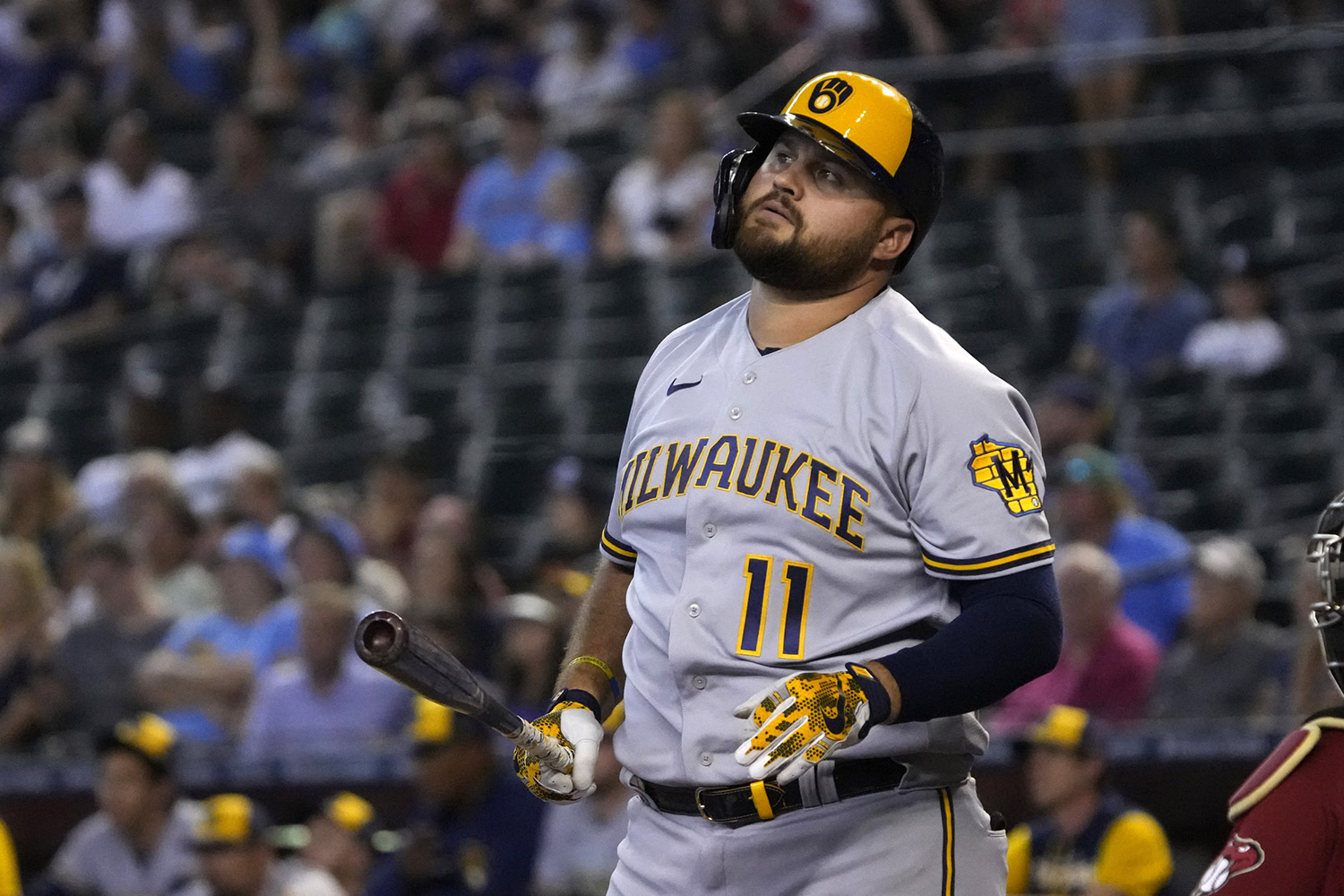 However you feel about the new rules regarding infield defensive alignment, they're coming and probably here to stay. With strikeout totals soaring, defenses shifting on nearly every batter, and batters favoring launch angle and exit velocity over putting the ball in play, league-wide offense plummeted to an OPS of just .706. The league OPS was .700 in 2014 and .700 back in 1992 Over the past thirty years, the .706 OPS posted this past year is the third lowest league OPS. Baseball offense is down, and the powers that be don't seem to like it. On top of that, with strikeouts up and fewer balls in play turning into hits due to the shift, the phrase that more than one person has bandied about in the game (and without) is that the game "isn't aesthetically pleasing." With yearly tweaks being done at multiple levels in the minor leagues, the big one coming in 2023 is the *ban on defensive shifts. The asterisk shows up as we will see a partial ban on defensive positioning (at least not yet). The rules state that the defense must have four players with their feet on the infield dirt and two players on either side of second base when a pitch is thrown. With that in mind, defenses will still have a fair amount of freedom to shift a second baseman deep into the hole, have a shortstop right on top of second base, have the third baseman play in the shortstop position so on. We won't see a third baseman playing in short right field and a second baseman playing fifteen feet behind the first baseman, cutting off sharp line drives into the right field corner. So how does this affect or benefit the Brewers? Rule changes regarding defensive positioning should affect pull-hitting lefties nearly equally across the league. In 2023 the Brewers look to feature (again) a lefty-heavy lineup with mainstays Christian Yelich and Rowdy Tellez, newcomer Jesse Winker, and early indications are that Garrett Mitchell and Sal Frelick could both receive ample playing time in their rookie campaigns. Of the three lefties returning who'll see major playing time, Tellez is the most extreme pull hitter. (via FanGraphs) Partial SeasonsPostseasonPreseason ProjectionsMinor LeaguesRegular MLB Seasons Season Team Level GB/FB LD% GB% FB% IFFB% HR/FB IFH% BUH% Pull% Cent% Oppo% Soft% Med% Hard% 2018 TOR MLB 1.06 26.0% 38.0% 36.0% 11.1% 22.2% 21.1% 0.0% 42.0% 30.0% 28.0% 18.0% 42.0% 40.0% 2019 TOR MLB 1.02 23.7% 38.5% 37.7% 10.3% 21.6% 1.0% 0.0% 42.0% 39.3% 18.7% 15.6% 42.8% 41.6% 2020 TOR MLB 1.38 20.0% 46.3% 33.7% 6.3% 25.0% 6.8% 0.0% 36.8% 37.9% 25.3% 20.0% 42.1% 37.9% 2021 2 Tms MLB 1.08 20.6% 41.2% 38.2% 12.4% 12.4% 11.5% 0.0% 36.5% 36.9% 26.6% 15.9% 48.5% 35.6% 2022 MIL MLB 0.86 15.6% 38.9% 45.5% 12.3% 18.7% 4.4% 0.0% 41.4% 39.7% 19.0% 17.5% 42.1% 40.4% Total - - - MLB 0.99 19.6% 40.0% 40.4% 11.3% 18.7% 6.2% 0.0% 40.1% 38.3% 21.6% 16.9% 43.7% 39.4% Teams shifted 78.4% of the time against Tellez, resulting in a .020 drop in his wOBA, per Statcast. Over the past two seasons, Tellez's shift data has been fairly consistent with teams shifting on him often, and Tellez hitting well in his opportunities against standard alignment. Another factor in Tellez's performance to be considered has to be the .215 BABIP (Batting Average on Balls In Play). Well below his career norm, and any season he's had prior, the Brewers have to expect that number to rebound to some degree. Tellez doesn't strike out at the pace of most 30 - 35 home run sluggers, but having a bit higher BABIP would boost that slugging and OPS. Whether teams are shifting or not, that number seems unsustainable for another full season for Tellez. Despite the seeming perception of Christian Yelich grounding out repeatedly to second base, his spray chart, hit chart, and all the data shows that he distributes the ball evenly to all fields. (via FanGraphs) PostseasonPreseason ProjectionsMinor LeaguesRegular MLB Seasons Season Team Level GB/FB LD% GB% FB% IFFB% HR/FB IFH% BUH% Pull% Cent% Oppo% Soft% Med% Hard% 2013 MIA MLB 4.58 23.0% 63.2% 13.8% 0.0% 16.7% 8.2% 0.0% 32.0% 36.0% 32.0% 17.1% 48.6% 34.3% 2014 MIA MLB 3.42 21.2% 61.0% 17.8% 1.3% 11.5% 6.0% 50.0% 27.8% 40.9% 31.3% 15.8% 50.0% 34.2% 2015 MIA MLB 4.16 22.5% 62.5% 15.0% 0.0% 12.5% 5.2% 0.0% 31.7% 40.5% 27.7% 17.1% 49.9% 33.1% 2016 MIA MLB 2.82 23.4% 56.5% 20.0% 5.6% 23.6% 6.0% 100.0% 36.0% 35.1% 29.0% 17.5% 44.5% 38.0% 2017 MIA MLB 2.20 19.4% 55.4% 25.2% 2.5% 15.3% 4.2% 50.0% 33.3% 37.4% 29.3% 15.9% 48.8% 35.2% 2018 MIL MLB 2.20 24.7% 51.8% 23.5% 4.9% 35.0% 6.6% 33.3% 34.9% 38.1% 27.0% 14.5% 37.9% 47.6% 2019 MIL MLB 1.20 20.9% 43.2% 35.9% 7.5% 32.8% 6.2% 0.0% 39.3% 37.4% 23.3% 14.4% 34.8% 50.8% 2020 MIL MLB 1.70 19.4% 50.8% 29.8% 0.0% 32.4% 1.6% 0.0% 38.7% 33.1% 28.2% 8.1% 50.8% 41.1% 2021 MIL MLB 2.29 22.0% 54.4% 23.7% 2.9% 13.2% 7.7% 100.0% 35.3% 35.3% 29.4% 15.9% 49.1% 34.9% 2022 MIL MLB 2.55 18.4% 58.6% 23.0% 5.3% 14.7% 6.2% 33.3% 34.4% 35.3% 30.3% 13.9% 52.2% 33.9% Total - - - MLB 2.46 21.5% 55.8% 22.7% 3.9% 21.7% 5.9% 44.4% 34.0% 37.3% 28.7% 15.4% 46.2% 38.4% Accordingly, teams don't shift on Yelich all that much, at 30.6%, and interestingly when they do, his wOBA last season was .368 in 206 plate appearances compared to the .311 wOBA posted in his non-shifted plate appearances. During previous campaigns from 2018 to 2021, teams were shifting on Yelich more in the 50-55% range. It could be that Yelich becoming more of a singles and doubles hitter, and definitely a guy who uses all fields, is forcing teams to defend the whole field. Jesse Winker is an interesting case, as he had an extreme down year in 2022, seemingly due to playing injured for much of the season. Winker's shift data is strange in that in all but one season in his career, he has posted a higher wOBA while being shifted than not shifted, yet teams continue to shift against him, and his spray charts and hit data suggest he is a heavy pull hitter. (via FanGraphs) PostseasonPreseason ProjectionsMinor LeaguesRegular MLB Seasons Season Team Level GB/FB LD% GB% FB% IFFB% HR/FB IFH% BUH% Pull% Cent% Oppo% Soft% Med% Hard% 2017 CIN MLB 1.70 16.5% 52.6% 30.9% 3.3% 23.3% 2.0% 0.0% 40.8% 37.8% 21.4% 12.2% 52.0% 35.7% 2018 CIN MLB 1.24 24.0% 42.1% 33.9% 8.9% 8.9% 5.1% 50.0% 37.1% 37.1% 25.7% 11.8% 44.3% 43.9% 2019 CIN MLB 1.96 26.4% 48.7% 24.9% 4.3% 23.2% 1.5% 0.0% 39.9% 36.3% 23.7% 15.5% 43.2% 41.4% 2020 CIN MLB 1.67 23.1% 48.1% 28.8% 6.7% 40.0% 0.0% 0.0% 46.2% 31.7% 22.1% 10.6% 40.4% 49.0% 2021 CIN MLB 1.26 24.7% 42.0% 33.3% 9.5% 20.7% 4.8% 0.0% 39.4% 35.6% 25.0% 15.8% 47.7% 36.5% 2022 SEA MLB 0.96 20.6% 38.9% 40.6% 17.4% 9.7% 4.3% 0.0% 38.5% 35.7% 25.8% 20.5% 50.8% 28.7% Total - - - MLB 1.32 23.2% 43.7% 33.1% 10.5% 17.1% 3.4% 28.6% 39.5% 35.9% 24.6% 15.6% 46.8% 37.6% There's a lot to parse here. Winker's hard hit percentage fell off a cliff last year, after trending down in 2021. His flyball percentage was well up, but it didn't really translate into home runs in Seattle, which is somewhat to be expected. First and foremost, for Winker's 2023 to be successful, he needs to be healthy. Digging through the data, it's hard to tell how much of Winker's drop off was due to injury, playing in Seattle, or other factors. With the limited ability to shift next year however, a healthy Winker should be able to benefit. The rest of the Brewers roster still has a lot of left handed sticks as of early December. Garrett Mitchell and Sal Frelick should see plenty of time in the outfield. Victor Caratini and newly acquired utility infielder Abraham Toro each hit from both sides of the plate. It's possible on any given night the Brewers could send as many as six batters to the dish from the left side of the plate. The Brewers struggled against left handed pitching last year, and with their current makeup, it's possible that trend could continue. As the off season continues, it will be interesting to see how General Manager Matt Arnold approaches the lineup makeup of the team as it currently stands. With youngsters Frelick and Mitchell, who have had varying success against left handed pitching in their minor league careers and who are both more suited to on base roles rather than slugging and run producing roles, the Brewers offense could see a boost against left-handed pitching with these types of players more able to utilize the diamond with the shift being banned. Sal Frelick's splits in 2022 - (via StatCast) Platoon Splits Team Lg Type PA AB R H 2B 3B HR RBI BB SO SB CS HBP AVG OBP SLG OPS Nashville Sounds Triple-A vs Left 77 66 26 1 2 1 11 6 7 3 .394 .467 .515 .982 Biloxi Shuckers Double-A vs Left 65 55 15 1 1 2 7 6 10 3 .273 .369 .436 .805 Wisconsin Timber Rattlers High-A vs Left 24 19 4 1 0 0 1 5 4 0 .211 .375 .263 .638 Nashville Sounds Triple-A vs Right 140 123 43 10 0 3 14 13 9 2 .350 .417 .504 .921 Biloxi Shuckers Double-A vs Right 188 169 56 11 2 3 18 14 23 1 .331 .384 .473 .857 Wisconsin Timber Rattlers High-A vs Right 68 60 19 4 1 2 8 8 10 0 .317 .397 .517 .914 After an initial struggle at High A, Frelick hit well against lefties at both stops the rest of the season. Whether that will translate into success against the tough lefties he'll face at the major league level remains to be seen, but certainly those numbers are encouraging. Ultimately, regardless of where the fielders stand, the Brewer offense should be better than it was in 2022, and it absolutely has to produce better results than it did against left-handed pitching. However, with a bevy of pull-heavy lefties on the roster, a ban on the shift could make life easier for a few of the guys who will most likely be installed in the middle of the order in Tellez and Winker. Despite the fact that the shift ban should affect everyone equally, a team heavy on left handed batters like the Brewers could benefit more than some if the lineup stays as currently constructed. What do you think, Brewer Fanatics? Is the ban on the shift going to play any kind of role for the Brewers current lefty-heavy offense? Will the Brewers continue to struggle against left handed pitching regardless? Does Matt Arnold have a few more moves up his sleeves that will make a bigger difference than where the second baseman stands? Let us know what you think in the comments!
 -
Mitchell has 24 homeruns total between college, minors, and his brief major league stint. It might be a tad early to be projecting him as a possible 30 homerun guy. Before we start tagging all these guys as possible 4-5 WAR players we might want to see them play in the majors. Projecting Chourio to put up MVP level production is pretty heavy before he's even reached double AA.
-
I agree with this, in general. I do think the Brewers need to do better than "hey, they were "xth" in offense!" while having great pitching, and struggling to score runs at times. Bending spoons to say "they were 3rd in the NL in runs from (insert date) to (insert date)" to make the argument that the offense isn't *that bad* underlies the fact that they just weren't great. Rowdy's fun! He hits a lot of dingers. But he's also below average (0.9 WAR), no matter how many people want to say he made some great scoops at first base, he's not a good defender. A .760-.770 ops out of the position that's supposed to supply the biggest pop isn't cutting it. So looking there is the logical choice. Like you said, Yelich isn't going anywhere. Wong's option has been picked up. Adames is a borderline all-star caliber SS. We've got a bevy of ready or near-ready outfield stud prospects who need to play, so it's 3B or 1B, and Bell and Abreu are both available, and a tier below the "break the bank" players that are going to be out there. What will Abreu command? I don't know. 2/30? 2/36? 3/45? There's obviously a line somewhere, but I hope we don't go into next season with an entire roster of .750 OPS guys again so we can say "from May 17th to August 2nd the Brewers were 4th in the NL in runs!"
-
I agree with this, in general. I do think the Brewers need to do better than "hey, they were "xth" in offense!" while having great pitching, and struggling to score runs at times. Bending spoons to say "they were 3rd in the NL in runs from (insert date) to (insert date)" to make the argument that the offense isn't *that bad* underlies the fact that they just weren't great. Rowdy's fun! He hits a lot of dingers. But he's also below average (0.9 WAR), no matter how many people want to say he made some great scoops at first base, he's not a good defender. A .760-.770 ops out of the position that's supposed to supply the biggest pop isn't cutting it. So looking there is the logical choice. Like you said, Yelich isn't going anywhere. Wong's option has been picked up. Adames is a borderline all-star caliber SS. We've got a bevy of ready or near-ready outfield stud prospects who need to play, so it's 3B or 1B, and Bell and Abreu are both available, and a tier below the "break the bank" players that are going to be out there. What will Abreu command? I don't know. 2/30? 2/36? 3/45? There's obviously a line somewhere, but I hope we don't go into next season with an entire roster of .750 OPS guys again so we can say "from May 17th to August 2nd the Brewers were 4th in the NL in runs!"
-
Potential First Base Free Agent Targets: Jose Abreu and Josh Bell
DuWayne Steurer posted an article in Brewers
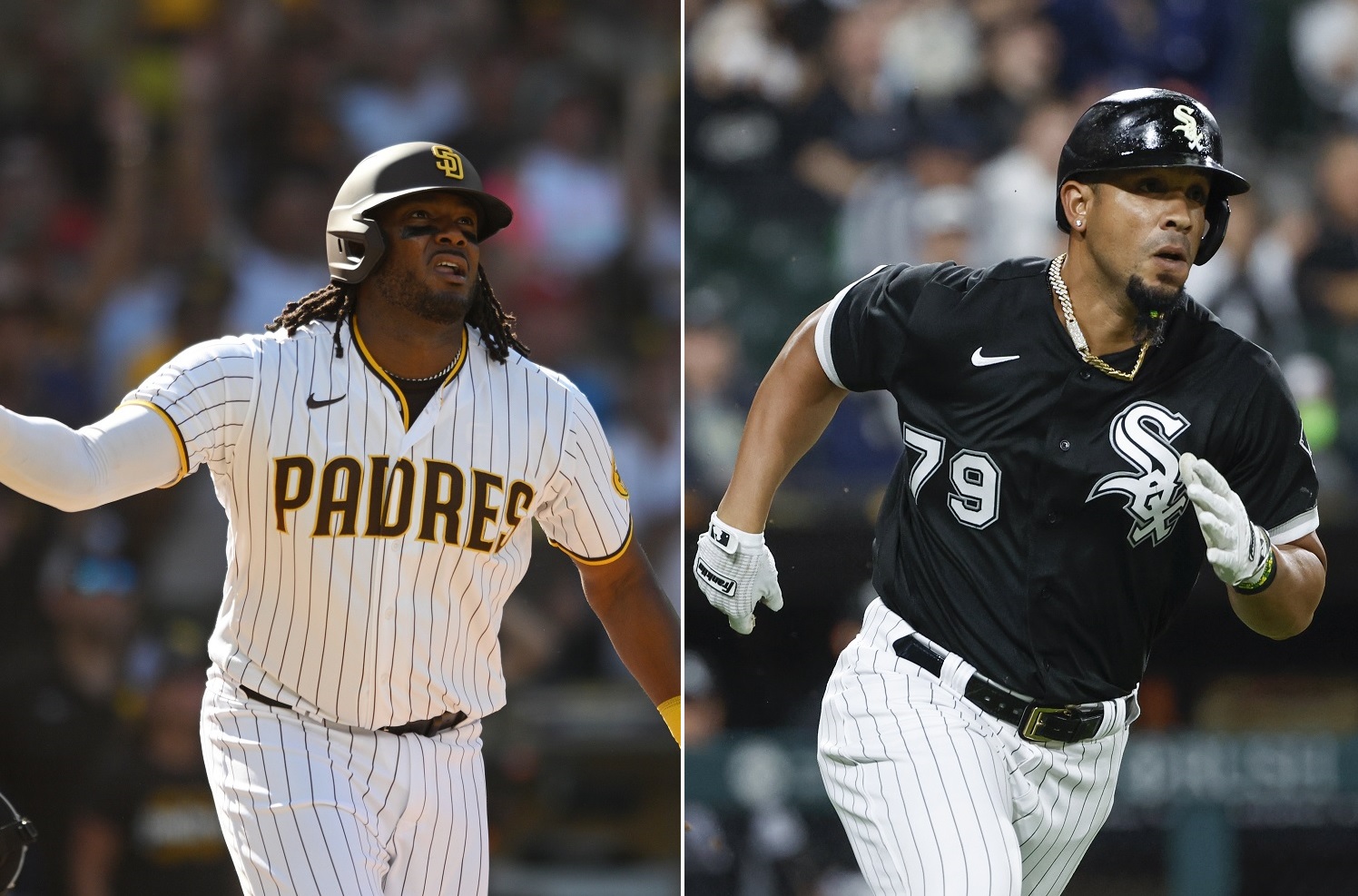 By all accounts, the Brewers regular first baseman and fan favorite, Rowdy Tellez had a fine 2022 season. He bashed 35 home runs, 23 doubles, and knocked in 89 run. While he only hit .219 for the year, he drew a respectable 62 walks and for a power-hitting slugger, struck out at a reasonable rate, with just 121 whiffs in 599 plate appearances. With a .767 OPS and a 115 OPS+, first base, at first blush, wasn't the main problem for the Brewers offense. Taking a deeper dive into Tellez's numbers though, he posted a -1.3 brDWar, and Fangraphs didn't like his defense much either, slotting him at -12.9 runs with the glove. His BABiP was surprisingly low, at .215, which was well below his career norms, and well below any number in his career prior, so that number should be expected to rebound in the coming season. But with a player like Rowdy Tellez, should Matt Arnold stand pat or look to improve? Taking a look at free agency, the two players who are available and may fit the Brewers budget are Josh Bell and former American League MVP, Jose Abreu. It's worth noting that acquiring either of these players doesn't preclude the Brewers from bringing back Tellez, with the addition of the DH to the National League. The Brewers have the luxury now (finally) of carrying a bat-only player on the roster. Taking a look at Jose Abreu, the obvious drawback is his age. Abreu will be 36 on Opening Day 2023. Abreu hit .304 in 2022, though his power took a dip, down from 30 home runs in 2021 to just 15 in 2022. Whether that's age-related, or just an odd fluctuation, it's hard to say. His launch angle at 8.0 degrees was the lowest of his career, but not by a large amount. His barrel percentage, hard hit, and exit velocity are still all in line or close to career averages. Despite his age, he's not showing much, if any, age-related decline. Season Team Level Events EV maxEV LA Barrels Barrel% HardHit HardHit% AVG xBA SLG xSLG wOBA xwOBA 2015 CHW MLB 474 91.0 114.9 9.7 42 8.9% 197 41.6% .290 .270 .502 .456 .361 .338 2016 CHW MLB 508 89.7 113.4 10.3 36 7.1% 199 39.2% .293 .280 .468 .467 .349 .348 2017 CHW MLB 506 90.6 114.9 11.1 43 8.5% 231 45.7% .304 .290 .552 .520 .377 .364 2018 CHW MLB 396 91.3 115.5 12.2 35 8.8% 179 45.2% .265 .277 .473 .493 .337 .356 2019 CHW MLB 492 92.1 117.9 10.9 59 12.0% 237 48.2% .284 .279 .503 .517 .344 .358 2020 CHW MLB 182 92.9 114.0 10.9 26 14.3% 97 53.3% .317 .299 .617 .587 .411 .399 2021 CHW MLB 433 92.0 115.6 10.4 44 10.2% 212 49.0% .261 .252 .481 .457 .354 .349 2022 CHW MLB 495 92.2 113.0 8.0 47 9.5% 256 51.7% .304 .296 .446 .486 .361 .373 Total - - - MLB 3486 91.3 117.9 10.4 332 9.5% 1608 46.1% .292 .506 .364 He did sock forty doubles and put up a more-than-solid .304/.378/.446 (.824) slash line, with a 133 OPS+. Any team investing two or three years in him is probably expecting to get a little more pop out of their first base position, of course, but there's a bit of a gamble that his power dip was a one-year anomaly. The .446 slugging percentage was the lowest of his career, and while at his age expecting Abreu to put up the numbers he did in his late 20's is unrealistic, the Brewers (or any team to sign him) would probably be banking on getting 20+ home run power for a few more seasons. Abreu's defense wasn't fantastic, and never really has been. He was -0.9 brDwar and was rated at -11.9 runs defensively at Fangraphs. Despite his poor defense, Abreu put up a 4.2 bWAR and a 3.9 WAR, per Fangraphs. Again, given age-related decline, we should expect that number to dip a little bit over the next few years, but that's still a sizeable improvement over the 0.9 WAR Tellez supplied this past season. The other target the Brewers may look at for first base, Josh Bell, was previously discussed at the trade deadline as a possible upgrade for the position. While the Brewers didn't acquire him, the Crew may take another look at Bell now in free agency. Bell's season was definitely a tale of two halves. In Washington, he hit a very nice .301 with 14 home runs with an .877 OPS. With Washington well out of the playoff race early, Bell's name was attached to just about every contender looking for some extra offense, including the Brewers. In the end, Bell went to the Padres, where he struggled immensely for the rest of the season, hitting a paltry .192 with just three home runs over 210 plate appearances. While it's hard to ignore the struggles he had down the stretch, Bell is just entering his age-30 season, and has a solid track record of success at the plate over seven major-league seasons. Like Abreu, Bell's power numbers were down last season, with 17 home runs between Washington and San Diego. Season Team Level GB/FB LD% GB% FB% IFFB% HR/FB IFH% BUH% Pull% Cent% Oppo% Soft% Med% Hard% 2016 PIT MLB 1.75 21.4% 50.0% 28.6% 9.4% 9.4% 7.1% 0.0% 22.3% 34.8% 42.9% 22.3% 44.6% 33.0% 2017 PIT MLB 1.64 17.7% 51.1% 31.2% 11.8% 19.1% 6.3% 0.0% 41.5% 29.6% 28.9% 20.6% 46.8% 32.6% 2018 PIT MLB 1.49 19.0% 48.5% 32.5% 9.2% 9.2% 8.2% 0.0% 33.8% 37.6% 28.6% 19.2% 47.0% 33.8% 2019 PIT MLB 1.18 18.8% 44.0% 37.3% 6.5% 23.9% 3.3% 0.0% 42.5% 33.2% 24.3% 13.2% 41.3% 45.4% 2020 PIT MLB 2.17 18.6% 55.7% 25.7% 8.3% 22.2% 3.8% 0.0% 38.6% 37.1% 24.3% 10.7% 47.9% 41.4% 2021 WSN MLB 2.02 20.0% 53.5% 26.5% 5.7% 25.5% 3.3% 0.0% 39.0% 35.8% 25.3% 12.0% 50.5% 37.5% 2022 2 Tms MLB 1.63 18.6% 50.4% 30.9% 9.9% 12.1% 3.5% 0.0% 38.4% 36.0% 25.7% 17.1% 53.3% 29.6% Total - - - MLB 1.60 18.9% 49.9% 31.2% 8.7% 17.7% 4.9% 0.0% 38.3% 34.5% 27.2% 16.4% 47.7% 35.9% Bell's HR/FB ratio dropped by more than half, playing in Washington and San Diego. While Pittsburgh isn't exactly known as a hitting haven, Bell's numbers took a big hit playing in two pitcher-friendly environments in 2022. Should the Brewers pursue Bell, Miller Park with its short right-field porch should prove to be a friendlier hitting environment for the big switch-hitter. Despite his struggles in San Diego, Bell secured a respectable 3.0 bWAR for the season, with a 124 OPS+. Like Tellez and Abreu, Bell's strength is with the stick, and not with the glove. Between both stops, Bell scored a -1.0 brDWar for the season and has historically been subpar at best in the field. The question around Bell and Abreu, of course, will be contract length and value. Bell is younger and will command a longer commitment, and possibly more dollars per year. At 30, his future may be slightly more projectible, and he hits from both sides of the plate. Abreu put up slightly better numbers for the season, and will almost certainly require fewer years of commitment, given his age. Either one may be a solid fit and allow the Brewers to tandem with Tellez at first base and designated hitter for the next couple of years. What do you think Brewer fanatics? Is either of these slugging first basemen a good fit for the Brewers? Which one would you target? Or is there someone else out there that is a better fit? Let us know in the comments!
 -
As the Brewers head into their first off-season under new President of Baseball Operations Matt Arnold, we'll be taking a look at some of the ways the team may look to improve on the 86-76 record that saw them fall just short of a playoff spot in 2022. In this article, we'll look at two of the possible first base targets Arnold may look at (and one that was rumored to be a trade target at the deadline last year in Josh Bell) who could add some punch to the Brewers lineup. By all accounts, the Brewers regular first baseman and fan favorite, Rowdy Tellez had a fine 2022 season. He bashed 35 home runs, 23 doubles, and knocked in 89 run. While he only hit .219 for the year, he drew a respectable 62 walks and for a power-hitting slugger, struck out at a reasonable rate, with just 121 whiffs in 599 plate appearances. With a .767 OPS and a 115 OPS+, first base, at first blush, wasn't the main problem for the Brewers offense. Taking a deeper dive into Tellez's numbers though, he posted a -1.3 brDWar, and Fangraphs didn't like his defense much either, slotting him at -12.9 runs with the glove. His BABiP was surprisingly low, at .215, which was well below his career norms, and well below any number in his career prior, so that number should be expected to rebound in the coming season. But with a player like Rowdy Tellez, should Matt Arnold stand pat or look to improve? Taking a look at free agency, the two players who are available and may fit the Brewers budget are Josh Bell and former American League MVP, Jose Abreu. It's worth noting that acquiring either of these players doesn't preclude the Brewers from bringing back Tellez, with the addition of the DH to the National League. The Brewers have the luxury now (finally) of carrying a bat-only player on the roster. Taking a look at Jose Abreu, the obvious drawback is his age. Abreu will be 36 on Opening Day 2023. Abreu hit .304 in 2022, though his power took a dip, down from 30 home runs in 2021 to just 15 in 2022. Whether that's age-related, or just an odd fluctuation, it's hard to say. His launch angle at 8.0 degrees was the lowest of his career, but not by a large amount. His barrel percentage, hard hit, and exit velocity are still all in line or close to career averages. Despite his age, he's not showing much, if any, age-related decline. Season Team Level Events EV maxEV LA Barrels Barrel% HardHit HardHit% AVG xBA SLG xSLG wOBA xwOBA 2015 CHW MLB 474 91.0 114.9 9.7 42 8.9% 197 41.6% .290 .270 .502 .456 .361 .338 2016 CHW MLB 508 89.7 113.4 10.3 36 7.1% 199 39.2% .293 .280 .468 .467 .349 .348 2017 CHW MLB 506 90.6 114.9 11.1 43 8.5% 231 45.7% .304 .290 .552 .520 .377 .364 2018 CHW MLB 396 91.3 115.5 12.2 35 8.8% 179 45.2% .265 .277 .473 .493 .337 .356 2019 CHW MLB 492 92.1 117.9 10.9 59 12.0% 237 48.2% .284 .279 .503 .517 .344 .358 2020 CHW MLB 182 92.9 114.0 10.9 26 14.3% 97 53.3% .317 .299 .617 .587 .411 .399 2021 CHW MLB 433 92.0 115.6 10.4 44 10.2% 212 49.0% .261 .252 .481 .457 .354 .349 2022 CHW MLB 495 92.2 113.0 8.0 47 9.5% 256 51.7% .304 .296 .446 .486 .361 .373 Total - - - MLB 3486 91.3 117.9 10.4 332 9.5% 1608 46.1% .292 .506 .364 He did sock forty doubles and put up a more-than-solid .304/.378/.446 (.824) slash line, with a 133 OPS+. Any team investing two or three years in him is probably expecting to get a little more pop out of their first base position, of course, but there's a bit of a gamble that his power dip was a one-year anomaly. The .446 slugging percentage was the lowest of his career, and while at his age expecting Abreu to put up the numbers he did in his late 20's is unrealistic, the Brewers (or any team to sign him) would probably be banking on getting 20+ home run power for a few more seasons. Abreu's defense wasn't fantastic, and never really has been. He was -0.9 brDwar and was rated at -11.9 runs defensively at Fangraphs. Despite his poor defense, Abreu put up a 4.2 bWAR and a 3.9 WAR, per Fangraphs. Again, given age-related decline, we should expect that number to dip a little bit over the next few years, but that's still a sizeable improvement over the 0.9 WAR Tellez supplied this past season. The other target the Brewers may look at for first base, Josh Bell, was previously discussed at the trade deadline as a possible upgrade for the position. While the Brewers didn't acquire him, the Crew may take another look at Bell now in free agency. Bell's season was definitely a tale of two halves. In Washington, he hit a very nice .301 with 14 home runs with an .877 OPS. With Washington well out of the playoff race early, Bell's name was attached to just about every contender looking for some extra offense, including the Brewers. In the end, Bell went to the Padres, where he struggled immensely for the rest of the season, hitting a paltry .192 with just three home runs over 210 plate appearances. While it's hard to ignore the struggles he had down the stretch, Bell is just entering his age-30 season, and has a solid track record of success at the plate over seven major-league seasons. Like Abreu, Bell's power numbers were down last season, with 17 home runs between Washington and San Diego. Season Team Level GB/FB LD% GB% FB% IFFB% HR/FB IFH% BUH% Pull% Cent% Oppo% Soft% Med% Hard% 2016 PIT MLB 1.75 21.4% 50.0% 28.6% 9.4% 9.4% 7.1% 0.0% 22.3% 34.8% 42.9% 22.3% 44.6% 33.0% 2017 PIT MLB 1.64 17.7% 51.1% 31.2% 11.8% 19.1% 6.3% 0.0% 41.5% 29.6% 28.9% 20.6% 46.8% 32.6% 2018 PIT MLB 1.49 19.0% 48.5% 32.5% 9.2% 9.2% 8.2% 0.0% 33.8% 37.6% 28.6% 19.2% 47.0% 33.8% 2019 PIT MLB 1.18 18.8% 44.0% 37.3% 6.5% 23.9% 3.3% 0.0% 42.5% 33.2% 24.3% 13.2% 41.3% 45.4% 2020 PIT MLB 2.17 18.6% 55.7% 25.7% 8.3% 22.2% 3.8% 0.0% 38.6% 37.1% 24.3% 10.7% 47.9% 41.4% 2021 WSN MLB 2.02 20.0% 53.5% 26.5% 5.7% 25.5% 3.3% 0.0% 39.0% 35.8% 25.3% 12.0% 50.5% 37.5% 2022 2 Tms MLB 1.63 18.6% 50.4% 30.9% 9.9% 12.1% 3.5% 0.0% 38.4% 36.0% 25.7% 17.1% 53.3% 29.6% Total - - - MLB 1.60 18.9% 49.9% 31.2% 8.7% 17.7% 4.9% 0.0% 38.3% 34.5% 27.2% 16.4% 47.7% 35.9% Bell's HR/FB ratio dropped by more than half, playing in Washington and San Diego. While Pittsburgh isn't exactly known as a hitting haven, Bell's numbers took a big hit playing in two pitcher-friendly environments in 2022. Should the Brewers pursue Bell, Miller Park with its short right-field porch should prove to be a friendlier hitting environment for the big switch-hitter. Despite his struggles in San Diego, Bell secured a respectable 3.0 bWAR for the season, with a 124 OPS+. Like Tellez and Abreu, Bell's strength is with the stick, and not with the glove. Between both stops, Bell scored a -1.0 brDWar for the season and has historically been subpar at best in the field. The question around Bell and Abreu, of course, will be contract length and value. Bell is younger and will command a longer commitment, and possibly more dollars per year. At 30, his future may be slightly more projectible, and he hits from both sides of the plate. Abreu put up slightly better numbers for the season, and will almost certainly require fewer years of commitment, given his age. Either one may be a solid fit and allow the Brewers to tandem with Tellez at first base and designated hitter for the next couple of years. What do you think Brewer fanatics? Is either of these slugging first basemen a good fit for the Brewers? Which one would you target? Or is there someone else out there that is a better fit? Let us know in the comments! View full article
-
 The Brewers came into 2022 with high hopes, riding the wave of four consecutive playoff appearances. However, by the end of the year, despite tallying 86 wins, the Crew fell just short of the Phillies for the final wild-card spot. Amid injuries, and at times inconsistent offense, and a pitching staff that just didn't perform up to the very high standards that were set for them in 2021, the team just wasn't able to put together long stretches of wins after a 32-18 start that was the best fifty game season opening in franchise history. Despite the failure to reach the playoffs, there's still more than a handful of positives to take from an eighty-six-win team and in this article, we're going to look at the most improved players on the 2022 Brewers. 3rd place SP Eric Lauer On the surface, Lauer's statistics look pretty similar from 2021 to 2022. He posted a 3.69 ERA and a 4.50 FIP in 2022, compared to a 3.19 ERA and a 4.04 FIP in 2021. His WHIP, walk, and K rates are almost all the same from season to season. His home run rate took a slight bump up, unfortunately. Lauer did stay on the field for the '22 Brewers, making 29 starts and throwing 158 2/3 innings. Lauer had stretches in 2022 where he looked close to becoming the "fourth ace" for the Brewers, joining Corbin Burnes, Brandon Woodruff, and Freddy Peralta at the top of the rotation. He carried an ERA in the low twos until mid-June when he got blown up for eight earned runs in a single start. Lauer's last start of the season he pitched six hitless innings and was removed for pitch count. More so for those stretches where he flashed "ace" material and not necessarily the raw numbers, and coming into his age twenty-eight season, Lauer earned a few "most improved" votes from the panel. 2nd place DH/UTIL Keston Hiura For the time that Hiura was in the lineup in 2022, he didn't return to his rookie form, but definitely added some punch to the lineup, with a .765 OPS and fourteen home runs in 266 plate appearances. After his disastrous 2021 campaign, getting any kind of offensive production out of Hiura had to be looked at as a bonus for the Crew. Hiura's reverse splits (.866 ops vs RHP, .619 OPS vs LHP) were a hindering factor, as he saw 109 of his 266 plate appearances against left-handed pitching. While it's heartening to see him providing offense, he'll probably have to continue to work on his reverse splits and cut down the strikeout rate (41.7% in 2022) for him to find a full-time job in 2023. 1st place RP Hoby Milner Hoby Milner entered 2022 with a total of 77 1/3 innings pitched for four teams over five seasons, and they had been best described as "bad" at best, and that could be considered generous. Over his previous two seasons, Milner had surrendered a ghastly thirteen home runs over just 35 innings. Coming into 2022, it's hard to know what the Brewers expected from Milner. A sidearm lefty who barely hits ninety, who's historically been really bad against righties, who will now have to face a minimum of three batters? That sounded like a recipe for disaster. I'm not here to tell you Hoby Milner is suddenly a Cy Young candidate, or reliever of the year candidate, or even that he's going to be great next year. Relievers, by nature, are pretty volatile from year to year. But in 2022 Milner caught proverbial lightning in a bottle and had a solid season from the front to the back. Throwing 64 2/3 innings, Milner posted a respectable 3.76 ERA/3.16 FIP, while lowering his home runs allowed to just five over those 64 2/3 innings. On top of that, Milner's splits were much better than they had been historical allowing just a .704 OPS against right-handers, against a .655 OPS vs. left-handed batters. With the Brewers bullpen going from a strength in 2021 to a sudden (and inexplicable) weakness in 2022, having Milner become a reliable middle-inning option was one of the few things that seemed to go right for the Brewers pen this year. Certainly, the role of the LOOGY has changed, and it appeared that there wouldn't be a place in the game for soft-tossing left-handers that struggle to get out right-handed batters. Milner certainly adjusted last year, and if he finds his way onto the Brewers in 2023, we'll hope he continues having success. Congratulations to Hoby Milner. Now let us know who you think was the Most Improved Brewers player in 2022?
 -
While the Brewers fell short of the playoffs for the first time in five seasons, there were still noteworthy performances on the diamond to talk about. Congratulations to the Brewer Fanatic Most Improved Player for 2022, Hoby Milner! The Brewers came into 2022 with high hopes, riding the wave of four consecutive playoff appearances. However, by the end of the year, despite tallying 86 wins, the Crew fell just short of the Phillies for the final wild-card spot. Amid injuries, and at times inconsistent offense, and a pitching staff that just didn't perform up to the very high standards that were set for them in 2021, the team just wasn't able to put together long stretches of wins after a 32-18 start that was the best fifty game season opening in franchise history. Despite the failure to reach the playoffs, there's still more than a handful of positives to take from an eighty-six-win team and in this article, we're going to look at the most improved players on the 2022 Brewers. 3rd place SP Eric Lauer On the surface, Lauer's statistics look pretty similar from 2021 to 2022. He posted a 3.69 ERA and a 4.50 FIP in 2022, compared to a 3.19 ERA and a 4.04 FIP in 2021. His WHIP, walk, and K rates are almost all the same from season to season. His home run rate took a slight bump up, unfortunately. Lauer did stay on the field for the '22 Brewers, making 29 starts and throwing 158 2/3 innings. Lauer had stretches in 2022 where he looked close to becoming the "fourth ace" for the Brewers, joining Corbin Burnes, Brandon Woodruff, and Freddy Peralta at the top of the rotation. He carried an ERA in the low twos until mid-June when he got blown up for eight earned runs in a single start. Lauer's last start of the season he pitched six hitless innings and was removed for pitch count. More so for those stretches where he flashed "ace" material and not necessarily the raw numbers, and coming into his age twenty-eight season, Lauer earned a few "most improved" votes from the panel. 2nd place DH/UTIL Keston Hiura For the time that Hiura was in the lineup in 2022, he didn't return to his rookie form, but definitely added some punch to the lineup, with a .765 OPS and fourteen home runs in 266 plate appearances. After his disastrous 2021 campaign, getting any kind of offensive production out of Hiura had to be looked at as a bonus for the Crew. Hiura's reverse splits (.866 ops vs RHP, .619 OPS vs LHP) were a hindering factor, as he saw 109 of his 266 plate appearances against left-handed pitching. While it's heartening to see him providing offense, he'll probably have to continue to work on his reverse splits and cut down the strikeout rate (41.7% in 2022) for him to find a full-time job in 2023. 1st place RP Hoby Milner Hoby Milner entered 2022 with a total of 77 1/3 innings pitched for four teams over five seasons, and they had been best described as "bad" at best, and that could be considered generous. Over his previous two seasons, Milner had surrendered a ghastly thirteen home runs over just 35 innings. Coming into 2022, it's hard to know what the Brewers expected from Milner. A sidearm lefty who barely hits ninety, who's historically been really bad against righties, who will now have to face a minimum of three batters? That sounded like a recipe for disaster. I'm not here to tell you Hoby Milner is suddenly a Cy Young candidate, or reliever of the year candidate, or even that he's going to be great next year. Relievers, by nature, are pretty volatile from year to year. But in 2022 Milner caught proverbial lightning in a bottle and had a solid season from the front to the back. Throwing 64 2/3 innings, Milner posted a respectable 3.76 ERA/3.16 FIP, while lowering his home runs allowed to just five over those 64 2/3 innings. On top of that, Milner's splits were much better than they had been historical allowing just a .704 OPS against right-handers, against a .655 OPS vs. left-handed batters. With the Brewers bullpen going from a strength in 2021 to a sudden (and inexplicable) weakness in 2022, having Milner become a reliable middle-inning option was one of the few things that seemed to go right for the Brewers pen this year. Certainly, the role of the LOOGY has changed, and it appeared that there wouldn't be a place in the game for soft-tossing left-handers that struggle to get out right-handed batters. Milner certainly adjusted last year, and if he finds his way onto the Brewers in 2023, we'll hope he continues having success. Congratulations to Hoby Milner. Now let us know who you think was the Most Improved Brewers player in 2022? View full article
-
The Brewers took on the Pirates in another critical three game series starting Monday. Despite a series win over the rival Cubs in the weekend set, a disappointing loss in Friday night's tilt left the Brewers still chasing the Padres for the final wild card spot, down a game and a half after the weekend. Game 1 -- Brewers 7, Pirates 5 Box Score Brewers ace Corbin Burnes took the hill for the first game of the series. The Brewers struck first, getting an RBI single from Willy Adames in the third, and an RBI double from hot hitting Hunter Renfroe later in the same frame. Staked to a three-run lead, Burnes pitched four scoreless innings, working around trouble until the fifth. An RBI single, and a three-run homerun by notorious Brewers killer Oneil Cruz gave the Pirates a 4-3 lead. The Pirates tagged Burnes for one more run in the sixth, and carried a 5-3 lead into the eighth inning. With two outs in the eights, and still down 5-3, Omar Narvaez drew a walk, prompting the Pirates to bring in reliever Wil Crowe. Freshly minted Brewers callup Garrett Mitchell greeted Crowe with his first career big league blast to tie the game. Devin Williams pitched a scoreless top of the ninth for the Brewers and Keston Hiura sent 'em home happy two batters into the bottom of the frame. Williams got the win for the Brewers on the walk-off, and his record improves to 5-3 on the year. Game 2 -- Pirates 4, Brewers 2 Box Score Jason Alexander took the hill for the Brewers tonight looking to stretch the Crew's modest win streak to four games. Alexander pitched well tonight and set a career high in strikeouts before the end of the third inning, with six punchouts. The Brewers staked Alexander to a 2-1 lead, on a Kolten Wong two-run homerun in the fourth inning. Alexander was pulled at the end of the fifth inning, having thrown just 59 pitches and allowing just three hits and one run. An argument could be made for sending Alexander back out to work another inning, but the top of the order was also due back up, and Alexander has an 1.112 OPS against when he faces the opposing order a third time through. That has to play in the decision making. Hoby Milner relieved Alexander and pitched a scoreless sixth. Matt Bush took the seventh, and gave up a run on a solo home run to Michael Chavis. Brad Boxberger and Peter Strzelecki each gave up a run in the eighth and ninth innings, respectively, as the bullpen collectively failed to back up Alexander tonight. The Brewers had a golden opportunity in the bottom of the ninth, with men on first and third and only one out, but Luis Urias grounded into a game ending double play to end the threat. Boxberger took the loss, dropping to 3-3 on the season. Game 3 -- Brewers 6, Pirates 1 Box Score Freddy Peralta took the hill for the series win.. Peralta pitched five solid innings, giving up just one run, on a solo home run to former Brewer (and noted Brewer killer) Ben Gamel, who has a higher OPS against the Brewers than any other team aside from the Tigers and Mariners, who he has only 8 plate appearances against. Aside from the dinger to Gamel, Peralta went five innings and struck out three batters, gave up just two hits, and threw just seventy four pitches. The Brewers tied the game in the fifth, on a Adames RBI double, and took the lead on an Narvaez groundout in the sixth. The Crew tacked on four runs in the seventh, and never looked back. Hiura and Urias RBI singles, followed by a pair of bases loaded walks around a pair of Pirates defensive miscues gave the Brewers a 6-1 lead. Adrian Houser returned and pitched two scoreless innings in relief today to mop up the game and secure the victory for Taylor Rogers, moving him to 3-6 on the year, and giving another series win to the Brewers as they get a day off on Thursday before heading to Arizona to take on the Diamondbacks. View full article
-
 Game 1 -- Brewers 7, Pirates 5 Box Score Brewers ace Corbin Burnes took the hill for the first game of the series. The Brewers struck first, getting an RBI single from Willy Adames in the third, and an RBI double from hot hitting Hunter Renfroe later in the same frame. Staked to a three-run lead, Burnes pitched four scoreless innings, working around trouble until the fifth. An RBI single, and a three-run homerun by notorious Brewers killer Oneil Cruz gave the Pirates a 4-3 lead. The Pirates tagged Burnes for one more run in the sixth, and carried a 5-3 lead into the eighth inning. With two outs in the eights, and still down 5-3, Omar Narvaez drew a walk, prompting the Pirates to bring in reliever Wil Crowe. Freshly minted Brewers callup Garrett Mitchell greeted Crowe with his first career big league blast to tie the game. Devin Williams pitched a scoreless top of the ninth for the Brewers and Keston Hiura sent 'em home happy two batters into the bottom of the frame. Williams got the win for the Brewers on the walk-off, and his record improves to 5-3 on the year. Game 2 -- Pirates 4, Brewers 2 Box Score Jason Alexander took the hill for the Brewers tonight looking to stretch the Crew's modest win streak to four games. Alexander pitched well tonight and set a career high in strikeouts before the end of the third inning, with six punchouts. The Brewers staked Alexander to a 2-1 lead, on a Kolten Wong two-run homerun in the fourth inning. Alexander was pulled at the end of the fifth inning, having thrown just 59 pitches and allowing just three hits and one run. An argument could be made for sending Alexander back out to work another inning, but the top of the order was also due back up, and Alexander has an 1.112 OPS against when he faces the opposing order a third time through. That has to play in the decision making. Hoby Milner relieved Alexander and pitched a scoreless sixth. Matt Bush took the seventh, and gave up a run on a solo home run to Michael Chavis. Brad Boxberger and Peter Strzelecki each gave up a run in the eighth and ninth innings, respectively, as the bullpen collectively failed to back up Alexander tonight. The Brewers had a golden opportunity in the bottom of the ninth, with men on first and third and only one out, but Luis Urias grounded into a game ending double play to end the threat. Boxberger took the loss, dropping to 3-3 on the season. Game 3 -- Brewers 6, Pirates 1 Box Score Freddy Peralta took the hill for the series win.. Peralta pitched five solid innings, giving up just one run, on a solo home run to former Brewer (and noted Brewer killer) Ben Gamel, who has a higher OPS against the Brewers than any other team aside from the Tigers and Mariners, who he has only 8 plate appearances against. Aside from the dinger to Gamel, Peralta went five innings and struck out three batters, gave up just two hits, and threw just seventy four pitches. The Brewers tied the game in the fifth, on a Adames RBI double, and took the lead on an Narvaez groundout in the sixth. The Crew tacked on four runs in the seventh, and never looked back. Hiura and Urias RBI singles, followed by a pair of bases loaded walks around a pair of Pirates defensive miscues gave the Brewers a 6-1 lead. Adrian Houser returned and pitched two scoreless innings in relief today to mop up the game and secure the victory for Taylor Rogers, moving him to 3-6 on the year, and giving another series win to the Brewers as they get a day off on Thursday before heading to Arizona to take on the Diamondbacks.
 -
I'm excited about the OF talent at the top of the system. We'll see how it all plays out of course but it's nice to have a logjam at the top levels.
-
I'm excited about the OF talent at the top of the system. We'll see how it all plays out of course but it's nice to have a logjam at the top levels.
-
My all time favorite Brewer. And player. Dude was my absolute hero when I was a wee lad and why I still have a soft spot for big swingin', home run hittin', strikeout machines today. I literally cried when they traded him in 83, and I didn't care that he was having an awful, awful season. Him not being a Brewer couldn't even register to my 9 year old brain. Very nice write up. Thanks for this!
-
My all time favorite Brewer. And player. Dude was my absolute hero when I was a wee lad and why I still have a soft spot for big swingin', home run hittin', strikeout machines today. I literally cried when they traded him in 83, and I didn't care that he was having an awful, awful season. Him not being a Brewer couldn't even register to my 9 year old brain. Very nice write up. Thanks for this!
-
The Brewers take on the National League top dog Dodgers in a four game series at American Family Field in a mid week series. With the Cardinals now having jumped the Brewers into first place in the NL Central, this series is critical for the Crew if they hope to have any chance at regaining the lead in the division. Game 1 -- Dodgers 4, Brewers 0 https://www.baseball-reference.com/boxes/MIL/MIL202208150.shtml Freddy Peralta worked game one for the Brewers, against (one of) the Dodgers aces, Julio Urias. Peralta struggled with his command, walking four and throwing 92 pitches in just four innings. Freddy only allowed one run on a solo home run in the first inning to Freddie Freeman, but with the Brewers scuffling offense, tonight that proved to be enough. There just wasn't much going on for the Brewers offensively tonight. Four hits, a pair of walks by Christian Yelich. Their best opportunity to score was the bottom of the first when Yelich leadoff with a walk and Willy Adames singled, but a strikeout and two fly ball outs ended the scoring chance. Hunter Renfroe lead off the bottom of the third with a double, but again, didn't move off of second base. On the night, the Brewers went 0-9 with men in scoring position. The team didn't have a lot of baserunners, but in those opportunities, they absolutely failed to cash in. If you're the type that's looking for a bright spot, Jason Alexander came in late and put up three scoreless innings of solid relief work. Freddy Peralta's record drops to 4-3 on the season with the loss. Game 2 -- Brewers 5, Dodgers 4 https://www.baseball-reference.com/boxes/MIL/MIL202208160.shtml The Brewers sent Brandon Woodruff against Ryan Pepiot in game two. The Brewers offense ended the scoreless streak right away with Christian Yelich taking a leadoff walk and Willy Adames banging a two run homerun to left. Woodruff cruised along for the Crew until the fifth, when he gave up a pair of solo homeruns to Mookie Betts and Joey Gallo. With his pitch count in the 90's, that signalled the end of the night for Woody. In the bottom of the fifth, the Brewers got a power boost from an unexpected source. The Brewers held the 3-2 lead until the seventh inning when the Dodgers Chris Taylor hit a solo home run off of Matt Bush. The score stayed knotted all the way until the 11th, when the Dodgers scored their ghost runner off of Brent Suter with a single, but Suter limited the Dodgers to just the one run. In the bottom of the frame, with Andrew McCutchen stationed at second base to start the inning, and closer Craig Kimbrel on the mound, slugger Hunter Renfroe shocked probably everyone watching when he laid a bunt single down the third base line. With runners at the corners, Kolten Wong struck out, Luis Urias walked, and the Brewers faced the prospect of a double play ball ending the rally. Victor Caratini delivered. It's not shown in this clip, but Hunter Renfroe had to get a great read on this ball right off the bat to score on this little bloop. With only one out, he had to be sure that was dropping. Great baseball in the 11th inning from Hunter Renfroe. Brent Suter gets the win, and moves to 4-3 on the season. Game 3 -- Dodgers 2, Brewers 1 https://www.baseball-reference.com/boxes/MIL/MIL202208170.shtml Eric Lauer pitched seven strong innings for the Crew tonight, giving up just two runs on solo homers to Austin Barnes and Max Muncy, but his Dodgers counterpart Tony Gonsolin was even better, shutting down the Brewers for seven innings on just two hits and a walk. Lauer went pitch for pitch with the Cy Young candidate Gonsolin for the first five innings, putting zeros on the board until the sixth, when Barnes got him for a solo homerun, and Muncy followed the next inning with a solo dinger of his own. On the night, Lauer allowed just four hits and three walks while striking out seven against the tough Dodgers lineup. The Brewers got one back in the eighth inning when Christian Yelich singled home a run. Willy Adames had a chance to do some damage, but lined out to short to end the threat. With another chance against closer Craig Kimbrel, the Brewers put men on first and second in the bottom of the ninth, but Luis Urias grounded out weakly to third to end the threat. Down a run, the Brewers had the tying run in scoring position in each of the last two innings, but couldn't push it across. Lauer takes the unfortunate loss and drops to 8-5 on the season. Game 4 -- Brewers 5, Dodgers 3 https://www.baseball-reference.com/boxes/MIL/MIL202208180.shtml With the Brewers needing a win to earn the split, Corbin Burnes takes the mound against Dodgers lefty Andrew Heaney. Andrew McCutchen started things off with a bang in the first inning, launching his twelfth homerun of the season. In the bottom of the third, with the game still 1-0 Crew, he did it again. The Crew added another two-spot in the fifth with a two run homer from Hunter Renfroe, his 21st of the season. The Brewers needed the offense today, as Burnes ran out of gas in the sixth. The Dodgers roughed him up a bit, pushing three runs across the plate before Brad Boxberger relieved him with two outs and got out of the inning. Taylor Rogers, Matt Bush, and Devin Williams handled the last three innings allowing just one walk from Bush, and Williams closed the door in the ninth, striking out the side. Burnes got the win to move to 9-5 on the season, and the Brewers got the much needed split with the very tough Dodgers squad. With the Brewers now hanging three games back of the Cardinals, the team heads to Chicago to take on the Cubs in a three game series. View full article
-
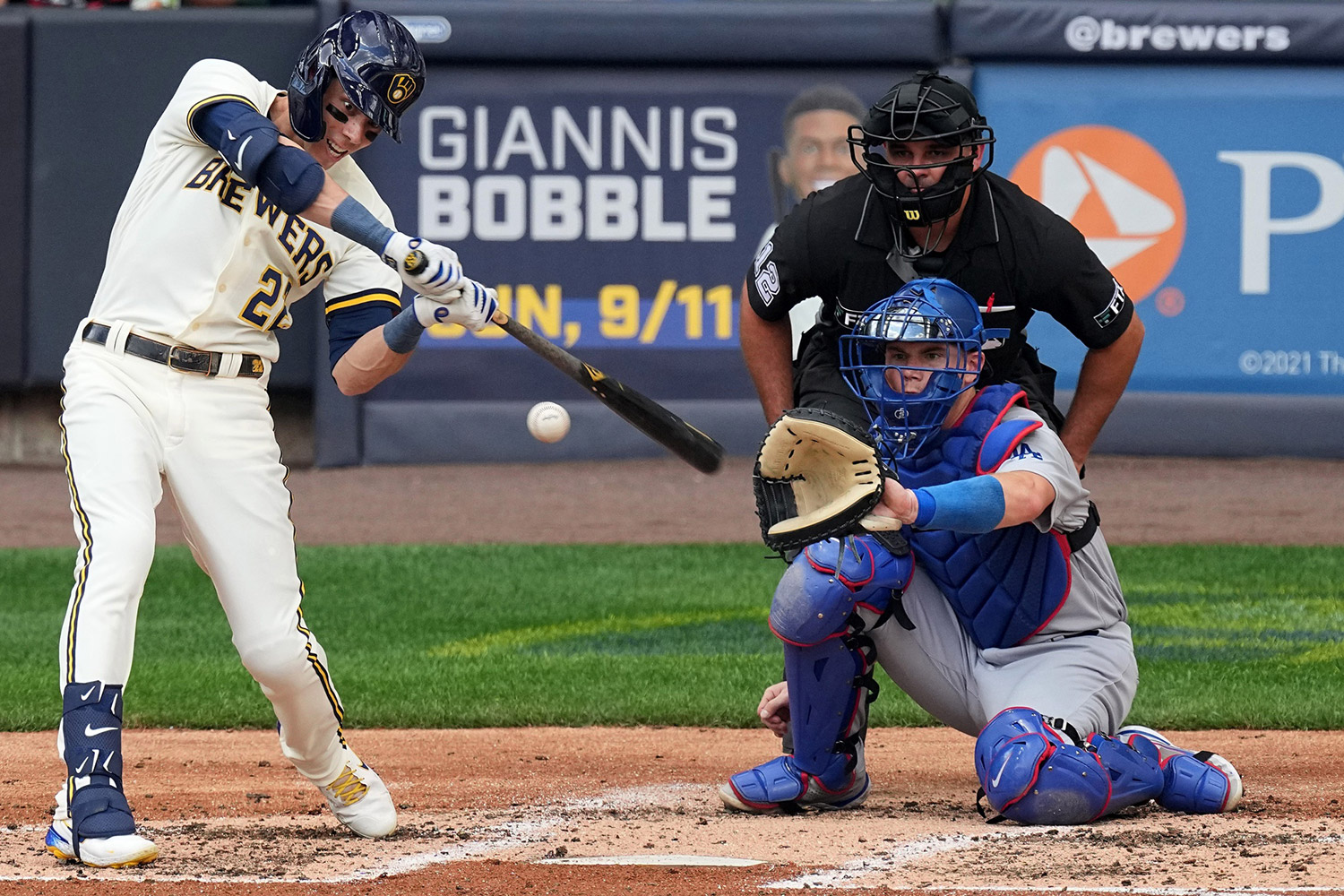 Game 1 -- Dodgers 4, Brewers 0 https://www.baseball-reference.com/boxes/MIL/MIL202208150.shtml Freddy Peralta worked game one for the Brewers, against (one of) the Dodgers aces, Julio Urias. Peralta struggled with his command, walking four and throwing 92 pitches in just four innings. Freddy only allowed one run on a solo home run in the first inning to Freddie Freeman, but with the Brewers scuffling offense, tonight that proved to be enough. There just wasn't much going on for the Brewers offensively tonight. Four hits, a pair of walks by Christian Yelich. Their best opportunity to score was the bottom of the first when Yelich leadoff with a walk and Willy Adames singled, but a strikeout and two fly ball outs ended the scoring chance. Hunter Renfroe lead off the bottom of the third with a double, but again, didn't move off of second base. On the night, the Brewers went 0-9 with men in scoring position. The team didn't have a lot of baserunners, but in those opportunities, they absolutely failed to cash in. If you're the type that's looking for a bright spot, Jason Alexander came in late and put up three scoreless innings of solid relief work. Freddy Peralta's record drops to 4-3 on the season with the loss. Game 2 -- Brewers 5, Dodgers 4 https://www.baseball-reference.com/boxes/MIL/MIL202208160.shtml The Brewers sent Brandon Woodruff against Ryan Pepiot in game two. The Brewers offense ended the scoreless streak right away with Christian Yelich taking a leadoff walk and Willy Adames banging a two run homerun to left. Woodruff cruised along for the Crew until the fifth, when he gave up a pair of solo homeruns to Mookie Betts and Joey Gallo. With his pitch count in the 90's, that signalled the end of the night for Woody. In the bottom of the fifth, the Brewers got a power boost from an unexpected source. The Brewers held the 3-2 lead until the seventh inning when the Dodgers Chris Taylor hit a solo home run off of Matt Bush. The score stayed knotted all the way until the 11th, when the Dodgers scored their ghost runner off of Brent Suter with a single, but Suter limited the Dodgers to just the one run. In the bottom of the frame, with Andrew McCutchen stationed at second base to start the inning, and closer Craig Kimbrel on the mound, slugger Hunter Renfroe shocked probably everyone watching when he laid a bunt single down the third base line. With runners at the corners, Kolten Wong struck out, Luis Urias walked, and the Brewers faced the prospect of a double play ball ending the rally. Victor Caratini delivered. It's not shown in this clip, but Hunter Renfroe had to get a great read on this ball right off the bat to score on this little bloop. With only one out, he had to be sure that was dropping. Great baseball in the 11th inning from Hunter Renfroe. Brent Suter gets the win, and moves to 4-3 on the season. Game 3 -- Dodgers 2, Brewers 1 https://www.baseball-reference.com/boxes/MIL/MIL202208170.shtml Eric Lauer pitched seven strong innings for the Crew tonight, giving up just two runs on solo homers to Austin Barnes and Max Muncy, but his Dodgers counterpart Tony Gonsolin was even better, shutting down the Brewers for seven innings on just two hits and a walk. Lauer went pitch for pitch with the Cy Young candidate Gonsolin for the first five innings, putting zeros on the board until the sixth, when Barnes got him for a solo homerun, and Muncy followed the next inning with a solo dinger of his own. On the night, Lauer allowed just four hits and three walks while striking out seven against the tough Dodgers lineup. The Brewers got one back in the eighth inning when Christian Yelich singled home a run. Willy Adames had a chance to do some damage, but lined out to short to end the threat. With another chance against closer Craig Kimbrel, the Brewers put men on first and second in the bottom of the ninth, but Luis Urias grounded out weakly to third to end the threat. Down a run, the Brewers had the tying run in scoring position in each of the last two innings, but couldn't push it across. Lauer takes the unfortunate loss and drops to 8-5 on the season. Game 4 -- Brewers 5, Dodgers 3 https://www.baseball-reference.com/boxes/MIL/MIL202208180.shtml With the Brewers needing a win to earn the split, Corbin Burnes takes the mound against Dodgers lefty Andrew Heaney. Andrew McCutchen started things off with a bang in the first inning, launching his twelfth homerun of the season. In the bottom of the third, with the game still 1-0 Crew, he did it again. The Crew added another two-spot in the fifth with a two run homer from Hunter Renfroe, his 21st of the season. The Brewers needed the offense today, as Burnes ran out of gas in the sixth. The Dodgers roughed him up a bit, pushing three runs across the plate before Brad Boxberger relieved him with two outs and got out of the inning. Taylor Rogers, Matt Bush, and Devin Williams handled the last three innings allowing just one walk from Bush, and Williams closed the door in the ninth, striking out the side. Burnes got the win to move to 9-5 on the season, and the Brewers got the much needed split with the very tough Dodgers squad. With the Brewers now hanging three games back of the Cardinals, the team heads to Chicago to take on the Cubs in a three game series.
