Adam Rygg
-
Posts
67 -
Joined
-
Last visited
Content Type
Profiles
Forums
Blogs
Events
News
2026 Milwaukee Brewers Top Prospects Ranking
Milwaukee Brewers Videos
2022 Milwaukee Brewers Draft Picks
Milwaukee Brewers Free Agent & Trade Rumors, Notes, & Tidbits
Guides & Resources
2023 Milwaukee Brewers Draft Picks
2024 Milwaukee Brewers Draft Picks
The Milwaukee Brewers Players Project
2025 Milwaukee Brewers Draft Pick Tracker
2026 Milwaukee Brewers Draft Tracker: Picks & Bonuses
Store
Downloads
Gallery
Everything posted by Adam Rygg
-
 Whether you know him best as Devin, DTrainn, Dave, or #ROYWilliams, there's no denying what an integral piece of the Brewers puzzle their current closer is. Opening Day is in 38 days. Meteoric is a term that gets applied to the ascent of today's BBtJN subject, but it's one with which I disagree. Since a permanent switch to relief in the minors ahead of the 2019 season, it's more accurate, but even then that term belies the amount of hard work put in following a 2nd round draft position and back-and-forth role changes. What that hard work allowed #38 on our countdown to Opening Day to really do was to refine his approach, command his repertoire, and learn how best to unleash a pitch that has a cult following of its own. Photo credit: © Benny Sieu-USA TODAY Sports Yes, Devin Williams and his "Airbender" are interwoven concepts in a game that loves and thrives on its narratives. I actually interviewed Williams via email shortly after his first full season in professional baseball. He's had this pitch for a while, but it's certainly the offering which has helped make him a household name in the sport. After a somewhat milquetoast debut of 13 games in The Show in 2019, Williams annihilated his competition in 2020 en route to not only winning the National League's Rooke of the Year Award but finishing seventh in the Cy Young Award voting as well as 18th in balloting for the league's Most Valuable Player Award. Lest we forget, he also was named as the NL's Reliever of the Year in 2020, hence my given nickname for him of "ROY Williams" highlighting both awards he won that season. After a slow start while recovering from a shoulder injury in late 2020 that cost him Postseason participation, 2021 was another tremendous campaign overall for Williams as he proved his mettle and staying power as an elite, leverage bullpen arm. In recapping his 2022 season properly, however, we are forced to remember his injury at the end of the 2021 season which slowed his start last year. And while Williams' shoulder inflammation in late 2020 was unfortunate, his broken pitching hand suffered after getting home following the team's Postseason clinching victory was his own fault and once again resulted in no Postseason for the dynamic right-hander. That said, 2022 was indeed a masterclass in relief work again by the now 28-year-old Williams. 65 G, 1.93 ERA, 60.2 IP, 31 H, 17 R (13 ER), 2 HR, 30 BB, 96 K, 205 ERA+, 2.01 FIP, 1.005 WHIP, 40.0 K%, 51.4 GB%, 2.2 fWAR, 3.46 WPA That's a stat line to really absorb for a few moments. Williams also finished with 15 saves following the disastrous midseason trade of Josh Hader away from the Brewers, a move that Williams was openly critical of when it shocked Milwaukee's clubhouse. The Brewers were in 1st place when it happened, and ended up missing the Postseason altogether, falling two wins short of overtaking the eventual NL Champion Philadelphia Phillies. For his part, Williams did come around quickly to the getting his new job done and helping the Brewers win a lot of games down the stretch, but the reverberations of that failed Hader trade colored so much of Williams' season that it couldn't be left out. One other thing worth mentioning about Williams' 2022: It's often said that the greatest ability for an athlete is "availability." If that's true, then it's another elite tool in Williams' kit. Nobody should forget the May series in San Diego when Hader was not with the team when Williams pitched in games on three straight days for the first time in his career. Nor should it be overlooked that he did it again in mid-July and technically again in early August when he also pitched in four games in a five-day span. In fact, Williams pitched on no days rest 18 times in 2022, something a closer must be able to do with regularity because you never can be certain when game-changing opportunities will arise. Perhaps ironically given how well he's pitched as a big leaguer, after the two injuries and the 2022 team miss, Williams still hasn't pitched in a MLB Postseason in his career. That's something the 2023 Brewers will look to remedy. Williams seems to be in good spirits so far in camp (as evidenced by the available social media nuggets), and his performance will be a key one in the fortunes for the 2023 team. Contract Status: This off-season, Williams received his first arbitration-eligible-fueled salary bump and will make $3.35 million on a one-year contract on which he and the club agreed to terms. 2023 Outlook: Williams has one of the easiest outlooks to write: Closer. Please verbalize that period when reading that. Williams has the 9th inning all to himself as often as he is available to pitch in a game, and as I outlined a few inches north of these words, Williams was available a lot in 2022. Manager Craig Counsell might juggle his set-up options until he finds his preferred guy (or guys) for that role, but whomever he takes the ball from after the 8th inning with a lead, it'll be Devin "ROY" Williams in the 9th. --- Catch up on BBtJN '23! #55 Hoby Milner #54 Jake Cousins #53 Brandon Woodruff #52 Eric Lauer #51 Freddy Peralta #39 Corbin Burnes View full article
 -
 Meteoric is a term that gets applied to the ascent of today's BBtJN subject, but it's one with which I disagree. Since a permanent switch to relief in the minors ahead of the 2019 season, it's more accurate, but even then that term belies the amount of hard work put in following a 2nd round draft position and back-and-forth role changes. What that hard work allowed #38 on our countdown to Opening Day to really do was to refine his approach, command his repertoire, and learn how best to unleash a pitch that has a cult following of its own. Photo credit: © Benny Sieu-USA TODAY Sports Yes, Devin Williams and his "Airbender" are interwoven concepts in a game that loves and thrives on its narratives. I actually interviewed Williams via email shortly after his first full season in professional baseball. He's had this pitch for a while, but it's certainly the offering which has helped make him a household name in the sport. After a somewhat milquetoast debut of 13 games in The Show in 2019, Williams annihilated his competition in 2020 en route to not only winning the National League's Rooke of the Year Award but finishing seventh in the Cy Young Award voting as well as 18th in balloting for the league's Most Valuable Player Award. Lest we forget, he also was named as the NL's Reliever of the Year in 2020, hence my given nickname for him of "ROY Williams" highlighting both awards he won that season. After a slow start while recovering from a shoulder injury in late 2020 that cost him Postseason participation, 2021 was another tremendous campaign overall for Williams as he proved his mettle and staying power as an elite, leverage bullpen arm. In recapping his 2022 season properly, however, we are forced to remember his injury at the end of the 2021 season which slowed his start last year. And while Williams' shoulder inflammation in late 2020 was unfortunate, his broken pitching hand suffered after getting home following the team's Postseason clinching victory was his own fault and once again resulted in no Postseason for the dynamic right-hander. That said, 2022 was indeed a masterclass in relief work again by the now 28-year-old Williams. 65 G, 1.93 ERA, 60.2 IP, 31 H, 17 R (13 ER), 2 HR, 30 BB, 96 K, 205 ERA+, 2.01 FIP, 1.005 WHIP, 40.0 K%, 51.4 GB%, 2.2 fWAR, 3.46 WPA That's a stat line to really absorb for a few moments. Williams also finished with 15 saves following the disastrous midseason trade of Josh Hader away from the Brewers, a move that Williams was openly critical of when it shocked Milwaukee's clubhouse. The Brewers were in 1st place when it happened, and ended up missing the Postseason altogether, falling two wins short of overtaking the eventual NL Champion Philadelphia Phillies. For his part, Williams did come around quickly to the getting his new job done and helping the Brewers win a lot of games down the stretch, but the reverberations of that failed Hader trade colored so much of Williams' season that it couldn't be left out. One other thing worth mentioning about Williams' 2022: It's often said that the greatest ability for an athlete is "availability." If that's true, then it's another elite tool in Williams' kit. Nobody should forget the May series in San Diego when Hader was not with the team when Williams pitched in games on three straight days for the first time in his career. Nor should it be overlooked that he did it again in mid-July and technically again in early August when he also pitched in four games in a five-day span. In fact, Williams pitched on no days rest 18 times in 2022, something a closer must be able to do with regularity because you never can be certain when game-changing opportunities will arise. Perhaps ironically given how well he's pitched as a big leaguer, after the two injuries and the 2022 team miss, Williams still hasn't pitched in a MLB Postseason in his career. That's something the 2023 Brewers will look to remedy. Williams seems to be in good spirits so far in camp (as evidenced by the available social media nuggets), and his performance will be a key one in the fortunes for the 2023 team. Contract Status: This off-season, Williams received his first arbitration-eligible-fueled salary bump and will make $3.35 million on a one-year contract on which he and the club agreed to terms. 2023 Outlook: Williams has one of the easiest outlooks to write: Closer. Please verbalize that period when reading that. Williams has the 9th inning all to himself as often as he is available to pitch in a game, and as I outlined a few inches north of these words, Williams was available a lot in 2022. Manager Craig Counsell might juggle his set-up options until he finds his preferred guy (or guys) for that role, but whomever he takes the ball from after the 8th inning with a lead, it'll be Devin "ROY" Williams in the 9th. --- Catch up on BBtJN '23! #55 Hoby Milner #54 Jake Cousins #53 Brandon Woodruff #52 Eric Lauer #51 Freddy Peralta #39 Corbin Burnes
 -
Baseball is a game of round numbers and milestones. Somehow, some way, 39 feels so much closer to Opening Day than 40. Brewers By the (Jersey) Numbers has reached the 30s, as one month away is suddenly appearing over the crest of the hill ahead. An unfortunate thing happened on the way to the laptop over the past 12 days. I didn't write any BBtJN pieces! With apologies to #43 Ethan Small, #41 Jason Alexander, #49 Thyago Vieira, #46 Bryse Wilson, #45 Thomas Pannone, and even #48 Colin Rea, life got in the way. I had some water damage in my kitchen due to a leaking dishwasher (resulting in contractors coming over for quotes, dealing with insurance adjustors, getting the damage cleaned up), my day job had a lot of situations pop up, and some business in my side gig and a few other things, I didn't have a lot of time during the 40s this year. Normally all these players would be deserving of a profile, as four of them are new (or returning) to the organization and two made MLB debuts in 2022. Even with my time constraints, I still tried to write up Small and Alexander, but I couldn't do the Small piece well enough and the Alexander piece was nearly written when the news of his injury broke and I decided not to bother rewriting it to include his health update. If I find time in a week or so, I might try to fire off a supplemental entry in BBtJN to give a brief update and outlook on each of the players I missed. If I do that, it'll be over at my blog and I'll share a link to the post on Twitter. But I digress. You're not here to read about any of those players. If you clicked on this link, you're looking for my thoughts on... Corbin Burnes. Photo credit: © Charles LeClaire-USA TODAY Sports Now 28 years old, Corbin Brian Burnes enters the 2023 season two years away from free agency and huge annual salaries. Where those dollars will be coming from has been the subject of speculation among Brewers fans ever since Burnes decided to emerge from a trip to the Crew's pitching lab as one of the best starters in the sport. By now, you know the story. Burnes debuted as a reliever in 2018 and was ridiculous. In 30 games that season for the Brewers, he won seven games, lost none, and posted a 2.61 ERA in 38.0 innings. Another six postseason appearances that year saw him post a 1-0 record with a 2.00 ERA in 9.0 innings. A star was seemingly born, but as good as 2018 was, 2019 was the stuff of nightmares. Thirty-two games, four starts, 49.0 IP, 70 H, 52 R (48 ER), 17 HR, 20 BB, 70 K. All told, that was "good" for a 8.82 ERA and a 51 ERA+. It was so ugly that Burnes was given a break to sort things out. There was enough coverage about 2019 eventually that I needn't rehash everything here, but suffice it to say that Burnes would indeed sort things out. 2020's COVID-shortened season saw Burnes appear in 12 games, nine of them starts, and post vastly improved numbers, both results and peripherals. The next year saw the quick culmination of all the work, effort, and improvements for Burnes. He opened the season by setting an MLB record for innings pitched without allowing a walk, and finished the year as the National League's Cy Young Award winner. Last season proved that 2021 was no fluke. This is a legitimate ace pitcher in the league, one worthy of huge dollars. Let the countdown to his free agency begin in earnest. Burnes' combined stats over the past three seasons: 73 G, 70 GS, 426.2 IP, 2.64 ERA, 304 H, 135 R (125 ER), 32 HR, 109 BB, 565 K Of note, 23 of those home runs came in 2022, as did 51 of the walks. Despite those stats suffering from similar inflation levels as the country, Burnes still kept his 2022 ERA under 3.00 at 2.94. And even that number includes a stretch from August 18th through September 19th which saw Burnes post totals of 41.2 IP and 29 runs allowed with 26 earned runs for a 5.62 ERA over the month and a day. Of course, that stretch included a 8.0 IP, 3 H, ER, 0 BB, 14 K start against the San Francisco Giants at American Family Field. A sampling of Burnes' accolades in 2022: Became the Brewers franchise leader in double-digit strikeout games Finished the season with 21 such games in his career Selected to his second All-Star Game Became the first Milwaukee Brewer to lead the National League in strikeouts (243) Had the winning decision as Craig Counsell became the Brewers' all-time leader in managerial wins Named the #1 Starting Pitcher in MLB entering 2023 by MLB Network Contract Status: Burnes' one-year contract for 2023 was arbitrated to be at a value of $10.01 million. Much has been written on the subject, including a breakdown of the fallout surrounding the arbitration hearing by our own Matt Trueblood. 2023 Outlook: Honestly, 2023 should give us more of what we've come to expect from Corbin Burnes. He'll often be dominant, typically be quality, and occasionally be stricken with a hiccup along the way. After all, he may be the best in the game, but nobody is perfect. As with all predictions, this carries the "so long as he's healthy" caveat, but I would expect Burnes is good for another 30+ starts, 200+ innings, and 200+ strikeouts. He's the epitome of a starting pitcher in this league right now. That's worth paying for, by whomever his employer is. --- Catch up on BBtJN '23! #55 Hoby Milner #54 Jake Cousins #53 Brandon Woodruff #52 Eric Lauer #51 Freddy Peralta View full article
-
 An unfortunate thing happened on the way to the laptop over the past 12 days. I didn't write any BBtJN pieces! With apologies to #43 Ethan Small, #41 Jason Alexander, #49 Thyago Vieira, #46 Bryse Wilson, #45 Thomas Pannone, and even #48 Colin Rea, life got in the way. I had some water damage in my kitchen due to a leaking dishwasher (resulting in contractors coming over for quotes, dealing with insurance adjustors, getting the damage cleaned up), my day job had a lot of situations pop up, and some business in my side gig and a few other things, I didn't have a lot of time during the 40s this year. Normally all these players would be deserving of a profile, as four of them are new (or returning) to the organization and two made MLB debuts in 2022. Even with my time constraints, I still tried to write up Small and Alexander, but I couldn't do the Small piece well enough and the Alexander piece was nearly written when the news of his injury broke and I decided not to bother rewriting it to include his health update. If I find time in a week or so, I might try to fire off a supplemental entry in BBtJN to give a brief update and outlook on each of the players I missed. If I do that, it'll be over at my blog and I'll share a link to the post on Twitter. But I digress. You're not here to read about any of those players. If you clicked on this link, you're looking for my thoughts on... Corbin Burnes. Photo credit: © Charles LeClaire-USA TODAY Sports Now 28 years old, Corbin Brian Burnes enters the 2023 season two years away from free agency and huge annual salaries. Where those dollars will be coming from has been the subject of speculation among Brewers fans ever since Burnes decided to emerge from a trip to the Crew's pitching lab as one of the best starters in the sport. By now, you know the story. Burnes debuted as a reliever in 2018 and was ridiculous. In 30 games that season for the Brewers, he won seven games, lost none, and posted a 2.61 ERA in 38.0 innings. Another six postseason appearances that year saw him post a 1-0 record with a 2.00 ERA in 9.0 innings. A star was seemingly born, but as good as 2018 was, 2019 was the stuff of nightmares. Thirty-two games, four starts, 49.0 IP, 70 H, 52 R (48 ER), 17 HR, 20 BB, 70 K. All told, that was "good" for a 8.82 ERA and a 51 ERA+. It was so ugly that Burnes was given a break to sort things out. There was enough coverage about 2019 eventually that I needn't rehash everything here, but suffice it to say that Burnes would indeed sort things out. 2020's COVID-shortened season saw Burnes appear in 12 games, nine of them starts, and post vastly improved numbers, both results and peripherals. The next year saw the quick culmination of all the work, effort, and improvements for Burnes. He opened the season by setting an MLB record for innings pitched without allowing a walk, and finished the year as the National League's Cy Young Award winner. Last season proved that 2021 was no fluke. This is a legitimate ace pitcher in the league, one worthy of huge dollars. Let the countdown to his free agency begin in earnest. Burnes' combined stats over the past three seasons: 73 G, 70 GS, 426.2 IP, 2.64 ERA, 304 H, 135 R (125 ER), 32 HR, 109 BB, 565 K Of note, 23 of those home runs came in 2022, as did 51 of the walks. Despite those stats suffering from similar inflation levels as the country, Burnes still kept his 2022 ERA under 3.00 at 2.94. And even that number includes a stretch from August 18th through September 19th which saw Burnes post totals of 41.2 IP and 29 runs allowed with 26 earned runs for a 5.62 ERA over the month and a day. Of course, that stretch included a 8.0 IP, 3 H, ER, 0 BB, 14 K start against the San Francisco Giants at American Family Field. A sampling of Burnes' accolades in 2022: Became the Brewers franchise leader in double-digit strikeout games Finished the season with 21 such games in his career Selected to his second All-Star Game Became the first Milwaukee Brewer to lead the National League in strikeouts (243) Had the winning decision as Craig Counsell became the Brewers' all-time leader in managerial wins Named the #1 Starting Pitcher in MLB entering 2023 by MLB Network Contract Status: Burnes' one-year contract for 2023 was arbitrated to be at a value of $10.01 million. Much has been written on the subject, including a breakdown of the fallout surrounding the arbitration hearing by our own Matt Trueblood. 2023 Outlook: Honestly, 2023 should give us more of what we've come to expect from Corbin Burnes. He'll often be dominant, typically be quality, and occasionally be stricken with a hiccup along the way. After all, he may be the best in the game, but nobody is perfect. As with all predictions, this carries the "so long as he's healthy" caveat, but I would expect Burnes is good for another 30+ starts, 200+ innings, and 200+ strikeouts. He's the epitome of a starting pitcher in this league right now. That's worth paying for, by whomever his employer is. --- Catch up on BBtJN '23! #55 Hoby Milner #54 Jake Cousins #53 Brandon Woodruff #52 Eric Lauer #51 Freddy Peralta
 -
 51. Ichiro. The Big Unit. Bernie. Fastball Freddy. Okay, so maybe the latter has a lot of ground to cover before being listed alongside those other 51s. It's hard to argue, though, that after Peralta's Mother's Day debut in Colorado in 2018 the future for the young Dominican right-hander didn't look very bright. Photo Credit: © Benny Sieu-USA TODAY Sports Point of fact: Freddy Peralta was just 22 years young when he first pulled on a Brewers uniform in a regular-season game. After coming over from Seattle in the Adam Lind 3-for-1 trade, Peralta steadily ascended in production as his talent matured, culminating in his first "full" MLB season in 2021. Peralta pitched in 28 big-league games (including 27 starts) and posted a 2.81 ERA in 144.1 innings. That inning total was potentially at play last season. I mentioned in a different piece in the series that the "Verducci Effect" may have contributed to injuries in 2022. No one had a bigger increase in the impact of his innings on the Brewers between 2020 and 2021 than did Peralta. He pitched only 29.1 innings of virtually all relief. His one start in the big leagues that year was a three-inning effort that began his campaign. He had two more appearances of three and four innings pitched next, but after that, the most he recorded on one day was six outs, and he only faced double-digit batters once, in his season finale. Peralta made 571 pitches in 2020 between the truncated regular season and his one Postseason appearance. In 2021, Peralta threw 2356 regular season pitches and 57 more in the Postseason. In 2022, Peralta dealt with multiple shoulder injuries, twice landing on the IL and missing 76 games. The first was the worse injury... ...and almost certainly resulted in the second, when he was pitching through the late-season schedule. Unfortunately for his prospects, 2022 was not the first time Peralta had shoulder issues. He also missed games on the injured list in 2021 & 2019 due to shoulder injures. When healthy, Peralta is dynamic, with big strikeout stuff (~30% K-rate) and the ability to avoid barrels, despite giving up some hard contact along the way. The issue, of course, is keeping him healthy. (More on that in his 2023 Outlook below.) Peralta's best start of the season came on May 16th, at home against the reigning World Series champion Atlanta Braves. Peralta went seven scoreless innings, allowing just two hits and one walk while striking out 10. That was one of only six scoreless outings for Peralta in 2022. Importantly, Peralta finished the 2022 season healthy and, at least from what has been said publicly, he will report to Arizona healthy as well. Contract Status: Peralta is somehow already entering year four of the five-year, $15.5 million contract extension he signed in late-February of 2020. Following a final guaranteed year in 2024, two club option years exist on the deal. Peralta will officially earn $3.5 million in 2023. 2023 Outlook: Starting pitching depth was a huge issue for the 2022 Brewers, exposed in no small part by the injuries to Peralta. Keeping such a talented arm available would go a long way in contributing to the success of the 2023 edition. When the Brewers signed Wade Miley to a free-agent contract this winter, speculation abounded as to which member of the 2022 rotation would open in the bullpen. Aaron Ashby and Adrian Houser were the two most frequently mentioned options, but especially recently on social media, Peralta's name has come up more often. Peralta has shown the ability to relieve in the past, but whether the health of his shoulder is better served by shorter appearances in relief versus the measured warm up and routine of starting is a matter of debate among fans, and among writers like our own Tim Muma who wrote on it earlier Tuesday. Personally, I expect Peralta to begin the season in the rotation, perhaps being eased through April to keep his overall season numbers in check while the team keeps an early eye on the target of having Peralta available for potential postseason play once again. --- Catch up on BBtJN '23! #55 Hoby Milner #54 Jake Cousins #53 Brandon Woodruff #52 Eric Lauer
 -
Actual baseball things are drawing ever closer, with meaningful milestones down to single-digit days away. Opening Day remains farther out on the horizon, however. As of February 7, 2023, it is 51 days away. 51. Ichiro. The Big Unit. Bernie. Fastball Freddy. Okay, so maybe the latter has a lot of ground to cover before being listed alongside those other 51s. It's hard to argue, though, that after Peralta's Mother's Day debut in Colorado in 2018 the future for the young Dominican right-hander didn't look very bright. Photo Credit: © Benny Sieu-USA TODAY Sports Point of fact: Freddy Peralta was just 22 years young when he first pulled on a Brewers uniform in a regular-season game. After coming over from Seattle in the Adam Lind 3-for-1 trade, Peralta steadily ascended in production as his talent matured, culminating in his first "full" MLB season in 2021. Peralta pitched in 28 big-league games (including 27 starts) and posted a 2.81 ERA in 144.1 innings. That inning total was potentially at play last season. I mentioned in a different piece in the series that the "Verducci Effect" may have contributed to injuries in 2022. No one had a bigger increase in the impact of his innings on the Brewers between 2020 and 2021 than did Peralta. He pitched only 29.1 innings of virtually all relief. His one start in the big leagues that year was a three-inning effort that began his campaign. He had two more appearances of three and four innings pitched next, but after that, the most he recorded on one day was six outs, and he only faced double-digit batters once, in his season finale. Peralta made 571 pitches in 2020 between the truncated regular season and his one Postseason appearance. In 2021, Peralta threw 2356 regular season pitches and 57 more in the Postseason. In 2022, Peralta dealt with multiple shoulder injuries, twice landing on the IL and missing 76 games. The first was the worse injury... ...and almost certainly resulted in the second, when he was pitching through the late-season schedule. Unfortunately for his prospects, 2022 was not the first time Peralta had shoulder issues. He also missed games on the injured list in 2021 & 2019 due to shoulder injures. When healthy, Peralta is dynamic, with big strikeout stuff (~30% K-rate) and the ability to avoid barrels, despite giving up some hard contact along the way. The issue, of course, is keeping him healthy. (More on that in his 2023 Outlook below.) Peralta's best start of the season came on May 16th, at home against the reigning World Series champion Atlanta Braves. Peralta went seven scoreless innings, allowing just two hits and one walk while striking out 10. That was one of only six scoreless outings for Peralta in 2022. Importantly, Peralta finished the 2022 season healthy and, at least from what has been said publicly, he will report to Arizona healthy as well. Contract Status: Peralta is somehow already entering year four of the five-year, $15.5 million contract extension he signed in late-February of 2020. Following a final guaranteed year in 2024, two club option years exist on the deal. Peralta will officially earn $3.5 million in 2023. 2023 Outlook: Starting pitching depth was a huge issue for the 2022 Brewers, exposed in no small part by the injuries to Peralta. Keeping such a talented arm available would go a long way in contributing to the success of the 2023 edition. When the Brewers signed Wade Miley to a free-agent contract this winter, speculation abounded as to which member of the 2022 rotation would open in the bullpen. Aaron Ashby and Adrian Houser were the two most frequently mentioned options, but especially recently on social media, Peralta's name has come up more often. Peralta has shown the ability to relieve in the past, but whether the health of his shoulder is better served by shorter appearances in relief versus the measured warm up and routine of starting is a matter of debate among fans, and among writers like our own Tim Muma who wrote on it earlier Tuesday. Personally, I expect Peralta to begin the season in the rotation, perhaps being eased through April to keep his overall season numbers in check while the team keeps an early eye on the target of having Peralta available for potential postseason play once again. --- Catch up on BBtJN '23! #55 Hoby Milner #54 Jake Cousins #53 Brandon Woodruff #52 Eric Lauer View full article
-
It's six days until the NFL crowns its champion. There is just over a week until Valentine's Day. One more day after that and Pitchers & Catchers will be required to have reported to Spring camp in Phoenix. But Opening Day 2023? Well that's 52 days away from February 6. What a whirlwind of a year 2022 was for the man who wears #52 for the Milwaukee Brewers... Eric Lauer. Photo Credit: © Rick Scuteri-USA TODAY Sports I'm writing this piece pretty late in the day on February 6, but not only does BBtJN need the piece to be finished before midnight to satisfy the trope, but the story of Lauer's season is one that needs to be revisited. Luckily, that's part of why Brewers By the (Jersey) Numbers exists in the first place. Before we get to 2022 though, let's remind you -- informed reader -- of how Lauer traversed the last few years with Milwaukee. Eric Lance Lauer is listed as a 6'3" southpaw drafted out of Kent State University in the 1st round of the 2016 MLB Draft by the San Diego Padres. He originally joined the Brewers ahead of the 2020 season in a trade with San Diego, in exchange for Zach Davies and the pariah that was Trent Grisham. Initially, changing organizations did no favors for Lauer, who only pitched in four games for the parent club that year and still managed to give up 16 runs in the final three games after 2.2 innings of scoreless baseball in his season debut. Lauer's pitch mix and level of execution had many Minor League writers and reporters excited about his prospects as a starting pitcher if the Brewers' brain trust could just get Lauer into their secretive "Pitching Lab" in Arizona. Not to minimize that part of his ascent, but the hopes proved fruitful. Lauer, in his age-26 season in 2021, posted a fantastic final set of numbers. Outside of the volume, Lauer gave the Brewers and manager Craig Counsell everything else they could have hoped for. Overly quickly, that brings us to 2022. Lauer was entering camp with an understandable high related to his job prospects. The final season numbers look strong as well, but the true depth comes from beyond the box scores for Lauer last year. Lauer developed and started utilizing a change up in 2022, and while the final numbers (e.g. 3.69 ERA) look fine, it was really an up and down season for Lauer. Of his 29 starts in 2022, Lauer allowed multiple runs 15 times, at least 3 ER a full 10 times, but all that was offset well by his better executed starts. Lauer never finished a game above a 2.60 season ERA between April 24 and June 10. The month of June was easily Lauer's worst (6.83 ERA, 5 starts, 27.2 innings, 31 H, 23 R (21 ER), 8 HR, 10 BB, 19 K, 1.482 WHIP), raising his season ERA into the 3.50s. Happily, he was pretty consistent thereafter. An injury on September 7th cost him a couple of starts (and several runs against his line), and while it changed from left elbow "tightness" to a strain, Lauer was officially put on the IL due to left elbow "inflammation" and came back off after a minimum stint to finish the season healthy and with consecutive scoreless appearances at the end. The biggest issue for Lauer in 2022 was the long ball. Perhaps he was the victim of the "Aaron Judge" batch of baseballs at times, but Lauer giving up 28 home runs was as egregious as it was uncharacteristic. Don't misunderstand, though. Lauer has always been a fly ball pitcher, but before 2022, only about 12% of those batted balls in the air found their way over the outfield wall. In 2022, that figure jumped to over 14%. Couple that with an increase in the volume of fly balls, and you can understand the jump in allowed homers. That's got to be a focus this spring, even more so than I'm sure Lauer has already been working on it. Final season line: 11-7 record, 3.69 ERA, 29 starts, 158.2 IP, 135 H, 71 R (65 ER), 27 HR, 59 BB, 157 K Contract Status: Signed to a one-year contract worth $5,075,000, to which the sides agreed to avoid an arbitration hearing. Lauer is eligible for arbitration again after the 2023 season and then could become a free agent following 2024. 2023 Outlook: As mentioned above, if Lauer can tame the long ball a bit better like he used to, a highly contributive season of a mid-3.00s ERA seems plausible, as do plenty of strikeouts. Lauer should break camp in the starting rotation. View full article
-
 What a whirlwind of a year 2022 was for the man who wears #52 for the Milwaukee Brewers... Eric Lauer. Photo Credit: © Rick Scuteri-USA TODAY Sports I'm writing this piece pretty late in the day on February 6, but not only does BBtJN need the piece to be finished before midnight to satisfy the trope, but the story of Lauer's season is one that needs to be revisited. Luckily, that's part of why Brewers By the (Jersey) Numbers exists in the first place. Before we get to 2022 though, let's remind you -- informed reader -- of how Lauer traversed the last few years with Milwaukee. Eric Lance Lauer is listed as a 6'3" southpaw drafted out of Kent State University in the 1st round of the 2016 MLB Draft by the San Diego Padres. He originally joined the Brewers ahead of the 2020 season in a trade with San Diego, in exchange for Zach Davies and the pariah that was Trent Grisham. Initially, changing organizations did no favors for Lauer, who only pitched in four games for the parent club that year and still managed to give up 16 runs in the final three games after 2.2 innings of scoreless baseball in his season debut. Lauer's pitch mix and level of execution had many Minor League writers and reporters excited about his prospects as a starting pitcher if the Brewers' brain trust could just get Lauer into their secretive "Pitching Lab" in Arizona. Not to minimize that part of his ascent, but the hopes proved fruitful. Lauer, in his age-26 season in 2021, posted a fantastic final set of numbers. Outside of the volume, Lauer gave the Brewers and manager Craig Counsell everything else they could have hoped for. Overly quickly, that brings us to 2022. Lauer was entering camp with an understandable high related to his job prospects. The final season numbers look strong as well, but the true depth comes from beyond the box scores for Lauer last year. Lauer developed and started utilizing a change up in 2022, and while the final numbers (e.g. 3.69 ERA) look fine, it was really an up and down season for Lauer. Of his 29 starts in 2022, Lauer allowed multiple runs 15 times, at least 3 ER a full 10 times, but all that was offset well by his better executed starts. Lauer never finished a game above a 2.60 season ERA between April 24 and June 10. The month of June was easily Lauer's worst (6.83 ERA, 5 starts, 27.2 innings, 31 H, 23 R (21 ER), 8 HR, 10 BB, 19 K, 1.482 WHIP), raising his season ERA into the 3.50s. Happily, he was pretty consistent thereafter. An injury on September 7th cost him a couple of starts (and several runs against his line), and while it changed from left elbow "tightness" to a strain, Lauer was officially put on the IL due to left elbow "inflammation" and came back off after a minimum stint to finish the season healthy and with consecutive scoreless appearances at the end. The biggest issue for Lauer in 2022 was the long ball. Perhaps he was the victim of the "Aaron Judge" batch of baseballs at times, but Lauer giving up 28 home runs was as egregious as it was uncharacteristic. Don't misunderstand, though. Lauer has always been a fly ball pitcher, but before 2022, only about 12% of those batted balls in the air found their way over the outfield wall. In 2022, that figure jumped to over 14%. Couple that with an increase in the volume of fly balls, and you can understand the jump in allowed homers. That's got to be a focus this spring, even more so than I'm sure Lauer has already been working on it. Final season line: 11-7 record, 3.69 ERA, 29 starts, 158.2 IP, 135 H, 71 R (65 ER), 27 HR, 59 BB, 157 K Contract Status: Signed to a one-year contract worth $5,075,000, to which the sides agreed to avoid an arbitration hearing. Lauer is eligible for arbitration again after the 2023 season and then could become a free agent following 2024. 2023 Outlook: As mentioned above, if Lauer can tame the long ball a bit better like he used to, a highly contributive season of a mid-3.00s ERA seems plausible, as do plenty of strikeouts. Lauer should break camp in the starting rotation.
 -
Wisconsin's weather might be in the 30s today, but BBtJN is in the mid-to-low-50s as we continue counting down to Opening Day. Who wears #53 on the back whilst pitching for our favorite nine? I'm glad you asked. Image courtesy of Brewer Fanatic If you think about it, there are only a few meaningful fifty-threes in active Milwaukee professional sports franchise history. The Bucks have only seen the number worn by five players, the longest-tenured of which being Alton Lister from 1982-86, and in a return visit in the 1995-96 season. The Packers (who played in Milwaukee, a bunch) had 25 different wearers, but do you remember anyone besides George Koonce and maybe Nick Perry? Do you remember that Jonathan Garvin has worn it for Green Bay for the last three seasons? The Milwaukee Admirals don't have anybody currently wearing it, nor is it retired for any reason. No, baseball is the only professional sport that has a meaningful 53. That 53 would be 1953 -- the year the Braves franchise moved to town from Boston. Of course, the only World Series win for the city of Milwaukee (at least for now) belongs to that franchise. Few people who might be stopping by Brewer Fanatic remember that year, though. My mother was born later. You'd likely have to be an octogenarian to recall memories from that first Milwaukee Braves season vividly. That said, the first thing I think of when I hear "sportzball+53" is the longest wearer of the jersey number in Milwaukee Brewers franchise history... Brandon Woodruff. Brandon Kyle Woodruff will be 30 years old by the time he officially reports to Spring Training in Arizona in 10 days. Knowing "Woody" as we do, he'll be early. His work ethic is well-renowned among those who pay attention to the team. He was getting work this winter early and often, as evidenced by social media. Woodruff was a 5th-round draft pick in 2011 out of high school by the Texas Rangers but chose not to sign and instead honored his college commitment to Mississippi State. The Brewers drafted Woodruff in the 11th round in 2014, and he signed his professional contract that summer. Starting his pro career immediately, Woodruff appeared in 14 games for the rookie ball Helena Brewers in 2014. An entire season of A-ball in 2015 as a Brevard County Manatee continued a steady rise through the system. 2016 began in High-A and finished back home in Mississippi at Double-A Biloxi. Entering 2017, Woodruff was likely to make his MLB debut at some point that year. He spent time with Triple-A Colorado Springs but made his big league debut on August 4, 2017. It wouldn't be until 2019 that Woodruff truly stuck in The Show, but even that season saw him deal with injuries and only make 22 starts. The COVID season notwithstanding, Woodruff finally had a full and traditional MLB season in 2021 which saw him make 30 starts and pile up 179.1 innings. A theory in baseball, most publicized by Tom Verducci, worries about innings increase on pitchers from one season to the next. But, the idea is that pitchers who see too large of an increase from one season to the next often feel the effects of the increase in the following months. Either they wear down before the end of the bigger season, or the pitcher's health impacts the following season. Woodruff saw his total increase from 73.2 innings in 2020 in the aforementioned 179.1 innings in 2021. That is an astronomical leap, according to the theory referenced. In 2022, Woodruff would lose time to injury. Who's to say precisely if it was related, but the idea exists for a reason? It often holds. Still, around his injury and rehab, Woodruff made 27 big league starts to a 3.05 ERA in 153.1 innings. He struck out 190 batters while walking just 42 opposing players. His 1.07 WHIP, 3.08 FIP, and many other supporting numbers help to evidence that Woodruff's results were true to his expected numbers based on his execution. As such, most projection systems show Woodruff is expected to post more of the same high-level performance in 2023. Once an Opening Day starter in his own right, Woodruff is now 1B to Corbin Burnes' 1A in manager Craig Counsell's rotation, but he would be a true number one on plenty of teams around the league. Contract Status: Woodruff is arbitration-eligible again for the 2024 season. He will be a free agent following the 2024 season if no long-term extension is reached. As for 2023... 2023 Outlook: Perhaps the one thing to worry about when it comes to Woodruff's outlook is that 2022 was the first season in his career that he allowed more fly balls than ground balls. If that should continue trending in the wrong direction, Woodruff might become more prone to the home run ball than anybody would like. Then again, solo home runs rarely kill a team, and Woodruff didn't allow many multi-run dingers in 2022. That counter-trend will need to continue if the home run rate rises due to a higher fly ball rate (43.4%). I consider it too concerning to project Woodruff to be terrible by any means, but it's something to keep an eye on if he gets out of the gate with some skewed statistics, especially in the season's colder months. View full article
-
 If you think about it, there are only a few meaningful fifty-threes in active Milwaukee professional sports franchise history. The Bucks have only seen the number worn by five players, the longest-tenured of which being Alton Lister from 1982-86, and in a return visit in the 1995-96 season. The Packers (who played in Milwaukee, a bunch) had 25 different wearers, but do you remember anyone besides George Koonce and maybe Nick Perry? Do you remember that Jonathan Garvin has worn it for Green Bay for the last three seasons? The Milwaukee Admirals don't have anybody currently wearing it, nor is it retired for any reason. No, baseball is the only professional sport that has a meaningful 53. That 53 would be 1953 -- the year the Braves franchise moved to town from Boston. Of course, the only World Series win for the city of Milwaukee (at least for now) belongs to that franchise. Few people who might be stopping by Brewer Fanatic remember that year, though. My mother was born later. You'd likely have to be an octogenarian to recall memories from that first Milwaukee Braves season vividly. That said, the first thing I think of when I hear "sportzball+53" is the longest wearer of the jersey number in Milwaukee Brewers franchise history... Brandon Woodruff. Brandon Kyle Woodruff will be 30 years old by the time he officially reports to Spring Training in Arizona in 10 days. Knowing "Woody" as we do, he'll be early. His work ethic is well-renowned among those who pay attention to the team. He was getting work this winter early and often, as evidenced by social media. Woodruff was a 5th-round draft pick in 2011 out of high school by the Texas Rangers but chose not to sign and instead honored his college commitment to Mississippi State. The Brewers drafted Woodruff in the 11th round in 2014, and he signed his professional contract that summer. Starting his pro career immediately, Woodruff appeared in 14 games for the rookie ball Helena Brewers in 2014. An entire season of A-ball in 2015 as a Brevard County Manatee continued a steady rise through the system. 2016 began in High-A and finished back home in Mississippi at Double-A Biloxi. Entering 2017, Woodruff was likely to make his MLB debut at some point that year. He spent time with Triple-A Colorado Springs but made his big league debut on August 4, 2017. It wouldn't be until 2019 that Woodruff truly stuck in The Show, but even that season saw him deal with injuries and only make 22 starts. The COVID season notwithstanding, Woodruff finally had a full and traditional MLB season in 2021 which saw him make 30 starts and pile up 179.1 innings. A theory in baseball, most publicized by Tom Verducci, worries about innings increase on pitchers from one season to the next. But, the idea is that pitchers who see too large of an increase from one season to the next often feel the effects of the increase in the following months. Either they wear down before the end of the bigger season, or the pitcher's health impacts the following season. Woodruff saw his total increase from 73.2 innings in 2020 in the aforementioned 179.1 innings in 2021. That is an astronomical leap, according to the theory referenced. In 2022, Woodruff would lose time to injury. Who's to say precisely if it was related, but the idea exists for a reason? It often holds. Still, around his injury and rehab, Woodruff made 27 big league starts to a 3.05 ERA in 153.1 innings. He struck out 190 batters while walking just 42 opposing players. His 1.07 WHIP, 3.08 FIP, and many other supporting numbers help to evidence that Woodruff's results were true to his expected numbers based on his execution. As such, most projection systems show Woodruff is expected to post more of the same high-level performance in 2023. Once an Opening Day starter in his own right, Woodruff is now 1B to Corbin Burnes' 1A in manager Craig Counsell's rotation, but he would be a true number one on plenty of teams around the league. Contract Status: Woodruff is arbitration-eligible again for the 2024 season. He will be a free agent following the 2024 season if no long-term extension is reached. As for 2023... 2023 Outlook: Perhaps the one thing to worry about when it comes to Woodruff's outlook is that 2022 was the first season in his career that he allowed more fly balls than ground balls. If that should continue trending in the wrong direction, Woodruff might become more prone to the home run ball than anybody would like. Then again, solo home runs rarely kill a team, and Woodruff didn't allow many multi-run dingers in 2022. That counter-trend will need to continue if the home run rate rises due to a higher fly ball rate (43.4%). I consider it too concerning to project Woodruff to be terrible by any means, but it's something to keep an eye on if he gets out of the gate with some skewed statistics, especially in the season's colder months.
 -
 So you have your cousins, and then you have your 1st cousins, and then you have your 2nd cousins... That's not right, is it? Regardless, as we're 54 days away from Opening Day on Saturday, February 4th, Brewers By the (Jersey) Numbers profiles a right-handed reliever from the University of Pennsylvania... Jake Cousins. A 20th-round draft pick in 2017 by the Washington Nationals, Jake Owen Cousins is a 6'4" righty who features a wipeout slider as his out pitch, along with a four-seam fastball, a sinker, and a (seldom-used) changeup. When healthy, Cousins has been a high-strikeout pitcher with control problems. When he's spotting his heater, his slider is explosive and generates a lot of swings and misses. Unfortunately, 2022 was not a season of much health for the now-28-year-old Cousins. Health is what allowed the Brewers to take a flier on Cousins in the first place. Cousins was often injured as a Nationals prospect, and subsequently released. He signed with an Independent League team, and was effective enough (0.47 ERA in 15 games) over just a couple of months to catch the scouting eyes in Milwaukee. They signed him to a minor-league contract. Cousins sped through the Brewers' system after signing, performing very well. His numbers in 2019 saw Cousins pitch in 14 games -- seven each between the Arizona Complex League and the Midwest League -- and do better at the higher level. In 2020, Cousins was not invited to the alternate site for the COVID season, but pitched in 15 games in independent ball that summer to continue his development. After earning himself a big-league camp invite to open 2021, Cousins showed that his 2020 work paid off. He pitched to a 2.41 ERA in 14 games, striking out 30 in just 18.2 innings. He would eventually be called up to the parent club on June 21, 2021, and not look back for the rest of the year. He carried a sub-1.00 ERA into September. Perhaps he tired by the end of the campaign, as he would finish with a 2.70 season ERA. All that was written out so that this could follow it. Cousins came to big-league camp again in 2022, but with a spot all but secured. Cousins would only pitch in two calendar months for Milwaukee in 2022, however, as he suffered a right elbow effusion and landed on the Injured List on May 1. Cousins had a long road back to the big-league roster. He had to first get healthy, and then rediscover his control, which had proven by then to be somewhat spotty. He was reinstated from the 60-day IL on August 24, but optioned to Nashville to continue his comeback. Cousins would finally reemerge on the active roster in mid-September. Perhaps most importantly, Cousins finished the 2022 season healthy (so far as is known publicly) and enters 2023 with more competition in the bullpen, but with an easily discernable path back to Milwaukee. Contract status: With just over a year of MLB service time, Cousins is still pre-arbitration, and would be under team control through the 2027 season. Cousins can be optioned to the minor leagues in 2023. 2023 Outlook: As mentioned previously, Cousins has the stuff to pitch out of the Brewers bullpen when he's healthy and his control is dialed in. In April of 2022, that control seemed more questionable than it had in 2021, which was a bit concerning. That he ended up injured made sense as a reason for his problems, though. As such, I would expect Cousins to begin 2023 on manager Craig Counsell's pitching staff. Whether he remains will depend entirely on his performance. That's because General Manager Matt Arnold has increased the depth of the group this winter; there will be more arms vying for opportunities should anyone, Cousins or otherwise, falter early in the season.
 -
February 4 is 54 days away from Opening Day on March 30. Jake Cousins wears #54 when he's pitching out of the Brewers' bullpen. Let's review Cousins' recent performance and see how things look for 2023. Image courtesy of Photo Credit: © Michael McLoone-USA TODAY Sports So you have your cousins, and then you have your 1st cousins, and then you have your 2nd cousins... That's not right, is it? Regardless, as we're 54 days away from Opening Day on Saturday, February 4th, Brewers By the (Jersey) Numbers profiles a right-handed reliever from the University of Pennsylvania... Jake Cousins. A 20th-round draft pick in 2017 by the Washington Nationals, Jake Owen Cousins is a 6'4" righty who features a wipeout slider as his out pitch, along with a four-seam fastball, a sinker, and a (seldom-used) changeup. When healthy, Cousins has been a high-strikeout pitcher with control problems. When he's spotting his heater, his slider is explosive and generates a lot of swings and misses. Unfortunately, 2022 was not a season of much health for the now-28-year-old Cousins. Health is what allowed the Brewers to take a flier on Cousins in the first place. Cousins was often injured as a Nationals prospect, and subsequently released. He signed with an Independent League team, and was effective enough (0.47 ERA in 15 games) over just a couple of months to catch the scouting eyes in Milwaukee. They signed him to a minor-league contract. Cousins sped through the Brewers' system after signing, performing very well. His numbers in 2019 saw Cousins pitch in 14 games -- seven each between the Arizona Complex League and the Midwest League -- and do better at the higher level. In 2020, Cousins was not invited to the alternate site for the COVID season, but pitched in 15 games in independent ball that summer to continue his development. After earning himself a big-league camp invite to open 2021, Cousins showed that his 2020 work paid off. He pitched to a 2.41 ERA in 14 games, striking out 30 in just 18.2 innings. He would eventually be called up to the parent club on June 21, 2021, and not look back for the rest of the year. He carried a sub-1.00 ERA into September. Perhaps he tired by the end of the campaign, as he would finish with a 2.70 season ERA. All that was written out so that this could follow it. Cousins came to big-league camp again in 2022, but with a spot all but secured. Cousins would only pitch in two calendar months for Milwaukee in 2022, however, as he suffered a right elbow effusion and landed on the Injured List on May 1. Cousins had a long road back to the big-league roster. He had to first get healthy, and then rediscover his control, which had proven by then to be somewhat spotty. He was reinstated from the 60-day IL on August 24, but optioned to Nashville to continue his comeback. Cousins would finally reemerge on the active roster in mid-September. Perhaps most importantly, Cousins finished the 2022 season healthy (so far as is known publicly) and enters 2023 with more competition in the bullpen, but with an easily discernable path back to Milwaukee. Contract status: With just over a year of MLB service time, Cousins is still pre-arbitration, and would be under team control through the 2027 season. Cousins can be optioned to the minor leagues in 2023. 2023 Outlook: As mentioned previously, Cousins has the stuff to pitch out of the Brewers bullpen when he's healthy and his control is dialed in. In April of 2022, that control seemed more questionable than it had in 2021, which was a bit concerning. That he ended up injured made sense as a reason for his problems, though. As such, I would expect Cousins to begin 2023 on manager Craig Counsell's pitching staff. Whether he remains will depend entirely on his performance. That's because General Manager Matt Arnold has increased the depth of the group this winter; there will be more arms vying for opportunities should anyone, Cousins or otherwise, falter early in the season. View full article
-
Opening Day 2023 is 55 days away. Hoby Milner wears #55 on his Milwaukee Brewers jersey. Feels like there might be something there... Welcome to Brewers By the (Jersey) Numbers '23! There is no clever lede written for this first BBtJN article of the year, but rather with the series moving here to its new home at Brewer Fanatic, it feels important to (re)introduce what this series aims to accomplish in hopes that you'll stick with it for the duration. Besides, it's cold outside in Wisconsin, so what are we supposed to do instead? BBtJN is my way to count down the days until the scheduled Opening Day of a Milwaukee Brewers regular season. It previews a different player each day as appropriate, giving you a little information about who the player is, a summary of said player's recent seasons, and a projection for their role on the team for the upcoming season--a statistical projection when appropriate, and some supplementary information as deemed noteworthy. The hook is that a player is profiled on the date where the player's assigned jersey number reflects how many days away Opening Day happens to be. The intent is that this series begins as soon as the Cactus League roster is released and that -- at a bare minimum -- every 40-man rostered player and every non-roster invitee gets a profile. Beyond that, key minor leaguers and prospects also typically are also included. This year, the roster came out, and with it the knowledge that so many players who might get some inches in this space already had their day come and go. Joey Wiemer, as a prime example, will be wearing #80 in big league camp, but that wasn't known until we were approaching the fifties. Somedays it feels as though no time at all has passed since last my fingers clicked and clacked against my keyboard to churn out my once-annual Opening Day countdown series. Then I look at my old blog space and realize that the last time I got through most of the series was 2017, and that 2017 was a full six years ago. So much has changed since then. In fact, there isn't one player on the roster today who would have been part of that countdown. But I digress; let the profiling can commence. Therefore, with apologies to Howie and the rest of BSB... Oh my God, it's back again! Today is Friday, February 3rd. Opening Day on March 30th is 55 days away. As such, BBtJN brings you... Hoby Milner. Photo credit: © MARK HOFFMAN/MILWAUKEE JOURNAL SENTINEL / USA TODAY NETWORK Hoby Trey Milner is a 6'3", thrice-drafted, left-handed relief pitcher who first came to the Brewers organization as a free agent on December 18, 2020. He signed his first professional contract with the Philadelphia Phillies after he was drafted in the 7th round of the 2012 MLB Draft. The Texas Longhorn product was also drafted out of high school in 2009, by the Washington Nationals. After cutting his teeth with the Phillies, Milner was selected in the 2016 Rule 5 Draft by the Cleveland Guardians, but would be returned to Philadelphia before the end of Spring Training. Coincidentally, being back with the Phillies resulted in Milner making his MLB debut anyway in 2017, specifically on June 24. Milner would make 37 appearances in MLB games that year, compiling a 2.01 ERA in 31.1 innings. Tampa Bay would send the Phillies cash considerations for Milner's contract in July of 2018, with whom Milner would make a total of eight big league appearances before leaving as a free agent. A poor turn with the Los Angeles Angels across 19 games in 2020 resulted in another foray into free agency. The Brewers announced the signing of Milner to a minor-league contract on December 17, 2020 and invited him to big-league camp. While Milner didn't make the team out of Spring Training, he was ultimately added to the 40-man and 26-man rosters when his contract was purchased on May 15, 2021. Milner would be up and down between Milwaukee and Triple-A Nashville a handful of times during 2021, with his longest continuous stretch spanning most of the month of June. His final 2021 MLB numbers: 5.40 ERA in 21.2 innings pitched across 19 games. He struck out 30 and walked only three, but did allow eight home runs. With Nashville, Milner posted a 1.69 ERA in 30 games (32 innings) with impressive strikeout numbers (48) as well. Fast forward to the 2022 season, as the 31-year-old Milner headed to camp with a clear path to a full-time job in the Brewers bullpen. Milner would see a handful of personal accomplishments last season, including his first big-league win, which came early on April 12. By the time summer officially came, Milner had pitched his way into a meaningful bullpen role for Craig Counsell. Through June 30, Milner had pitched in 32 games and allowed runs in just seven of them. Milner had his struggles along the way to a fine overall season for his role, most notably between July 30 and August 24, a span that saw Milner record 33 outs and allow 15 earned runs. That said, beginning with his outing on August 28, Milner would allow runs in just two more of the 15 games in which he appeared. He spent no days in the minors, compiling this final season stat line: 3-3 record, 3.76 ERA, 64.2 IP, 61 H, 29 R (27 ER), 15 BB, 64 K, 5 HR, 1.175 WHIP Also among his statistics: 105 ERA+, 3.16 FIP, 0.4 bWAR, 0.7 fWAR, 48.9% GB rate, 3.2% barrel rate Translation: Milner was hard to square up in 2022 and was better than league average in results. Contract Status: Milner remains under team control through the 2025 season. On January 12, 2023, he agreed to a one-year, $1,025,000 contract. Milner has one option year remaining. 2023 Outlook: Public projection systems around the industry have Milner more or less repeating his 2022 season. Milner has a better-than-average chance to once again be a slightly above-average pitcher, which is a valuable thing to have in the bullpen, given the reliance on relievers in today's game. Assuming health, I would expect Milner to once again appear in 60+ games with a sub-4.00 ERA. He's got a fine fastball/slider combo out of his low arm slot, which gives him a profile that manager Craig Counsell has come to trust and rely on in certain spots. As of this article publishing, Milner is the only southpaw who figures into the back end of the bullpen. Aaron Ashby might open up the season in relief as well, but with a starter's profile, Ashby won't be available as often as Milner. Therefore, it will typically be Milner who takes the one- or two-out spots where Counsell needs a lefty. View full article
-
 Welcome to Brewers By the (Jersey) Numbers '23! There is no clever lede written for this first BBtJN article of the year, but rather with the series moving here to its new home at Brewer Fanatic, it feels important to (re)introduce what this series aims to accomplish in hopes that you'll stick with it for the duration. Besides, it's cold outside in Wisconsin, so what are we supposed to do instead? BBtJN is my way to count down the days until the scheduled Opening Day of a Milwaukee Brewers regular season. It previews a different player each day as appropriate, giving you a little information about who the player is, a summary of said player's recent seasons, and a projection for their role on the team for the upcoming season--a statistical projection when appropriate, and some supplementary information as deemed noteworthy. The hook is that a player is profiled on the date where the player's assigned jersey number reflects how many days away Opening Day happens to be. The intent is that this series begins as soon as the Cactus League roster is released and that -- at a bare minimum -- every 40-man rostered player and every non-roster invitee gets a profile. Beyond that, key minor leaguers and prospects also typically are also included. This year, the roster came out, and with it the knowledge that so many players who might get some inches in this space already had their day come and go. Joey Wiemer, as a prime example, will be wearing #80 in big league camp, but that wasn't known until we were approaching the fifties. Somedays it feels as though no time at all has passed since last my fingers clicked and clacked against my keyboard to churn out my once-annual Opening Day countdown series. Then I look at my old blog space and realize that the last time I got through most of the series was 2017, and that 2017 was a full six years ago. So much has changed since then. In fact, there isn't one player on the roster today who would have been part of that countdown. But I digress; let the profiling can commence. Therefore, with apologies to Howie and the rest of BSB... Oh my God, it's back again! Today is Friday, February 3rd. Opening Day on March 30th is 55 days away. As such, BBtJN brings you... Hoby Milner. Photo credit: © MARK HOFFMAN/MILWAUKEE JOURNAL SENTINEL / USA TODAY NETWORK Hoby Trey Milner is a 6'3", thrice-drafted, left-handed relief pitcher who first came to the Brewers organization as a free agent on December 18, 2020. He signed his first professional contract with the Philadelphia Phillies after he was drafted in the 7th round of the 2012 MLB Draft. The Texas Longhorn product was also drafted out of high school in 2009, by the Washington Nationals. After cutting his teeth with the Phillies, Milner was selected in the 2016 Rule 5 Draft by the Cleveland Guardians, but would be returned to Philadelphia before the end of Spring Training. Coincidentally, being back with the Phillies resulted in Milner making his MLB debut anyway in 2017, specifically on June 24. Milner would make 37 appearances in MLB games that year, compiling a 2.01 ERA in 31.1 innings. Tampa Bay would send the Phillies cash considerations for Milner's contract in July of 2018, with whom Milner would make a total of eight big league appearances before leaving as a free agent. A poor turn with the Los Angeles Angels across 19 games in 2020 resulted in another foray into free agency. The Brewers announced the signing of Milner to a minor-league contract on December 17, 2020 and invited him to big-league camp. While Milner didn't make the team out of Spring Training, he was ultimately added to the 40-man and 26-man rosters when his contract was purchased on May 15, 2021. Milner would be up and down between Milwaukee and Triple-A Nashville a handful of times during 2021, with his longest continuous stretch spanning most of the month of June. His final 2021 MLB numbers: 5.40 ERA in 21.2 innings pitched across 19 games. He struck out 30 and walked only three, but did allow eight home runs. With Nashville, Milner posted a 1.69 ERA in 30 games (32 innings) with impressive strikeout numbers (48) as well. Fast forward to the 2022 season, as the 31-year-old Milner headed to camp with a clear path to a full-time job in the Brewers bullpen. Milner would see a handful of personal accomplishments last season, including his first big-league win, which came early on April 12. By the time summer officially came, Milner had pitched his way into a meaningful bullpen role for Craig Counsell. Through June 30, Milner had pitched in 32 games and allowed runs in just seven of them. Milner had his struggles along the way to a fine overall season for his role, most notably between July 30 and August 24, a span that saw Milner record 33 outs and allow 15 earned runs. That said, beginning with his outing on August 28, Milner would allow runs in just two more of the 15 games in which he appeared. He spent no days in the minors, compiling this final season stat line: 3-3 record, 3.76 ERA, 64.2 IP, 61 H, 29 R (27 ER), 15 BB, 64 K, 5 HR, 1.175 WHIP Also among his statistics: 105 ERA+, 3.16 FIP, 0.4 bWAR, 0.7 fWAR, 48.9% GB rate, 3.2% barrel rate Translation: Milner was hard to square up in 2022 and was better than league average in results. Contract Status: Milner remains under team control through the 2025 season. On January 12, 2023, he agreed to a one-year, $1,025,000 contract. Milner has one option year remaining. 2023 Outlook: Public projection systems around the industry have Milner more or less repeating his 2022 season. Milner has a better-than-average chance to once again be a slightly above-average pitcher, which is a valuable thing to have in the bullpen, given the reliance on relievers in today's game. Assuming health, I would expect Milner to once again appear in 60+ games with a sub-4.00 ERA. He's got a fine fastball/slider combo out of his low arm slot, which gives him a profile that manager Craig Counsell has come to trust and rely on in certain spots. As of this article publishing, Milner is the only southpaw who figures into the back end of the bullpen. Aaron Ashby might open up the season in relief as well, but with a starter's profile, Ashby won't be available as often as Milner. Therefore, it will typically be Milner who takes the one- or two-out spots where Counsell needs a lefty.
 -
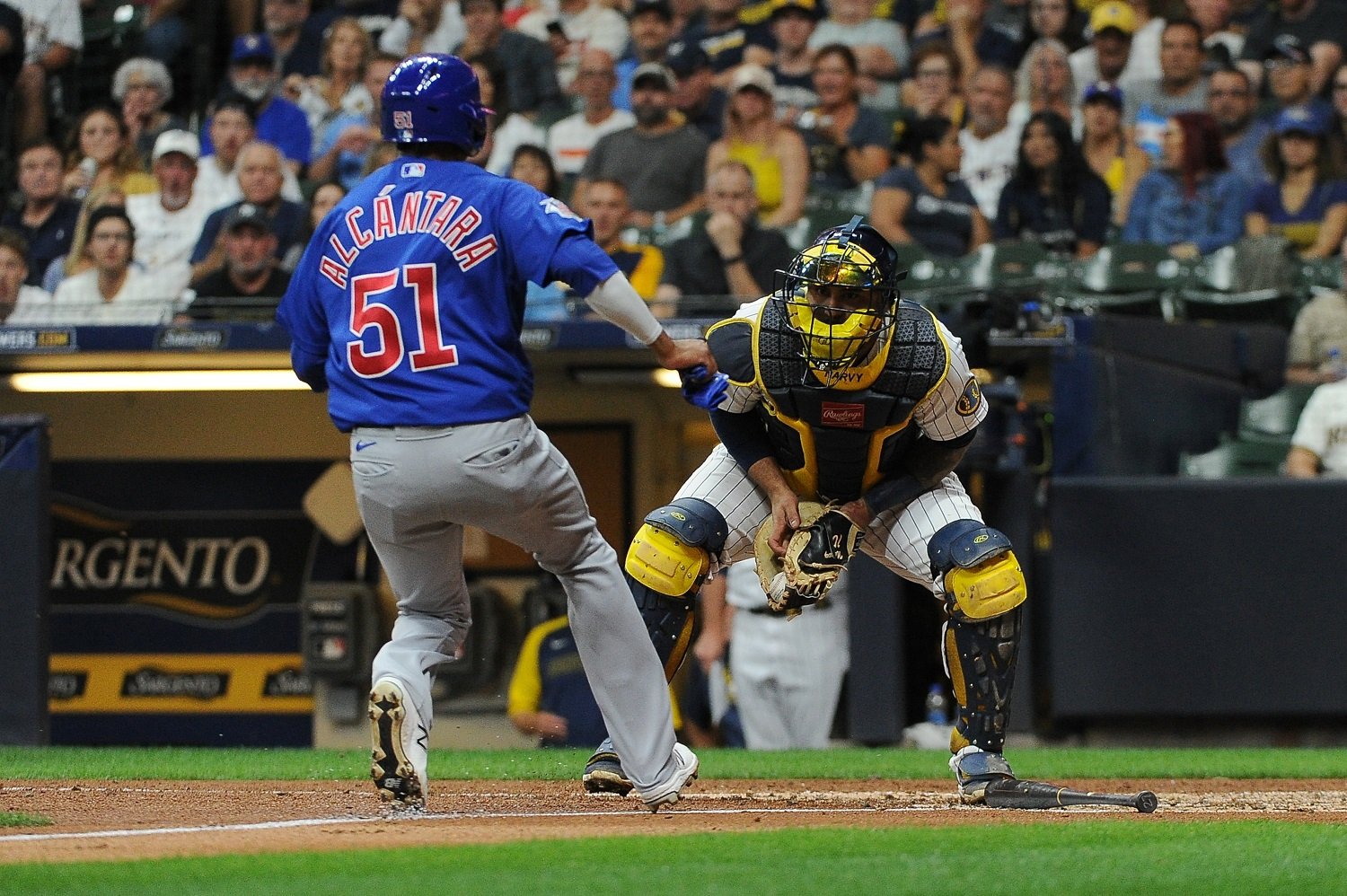 Opponent: Chicago Cubs Location: Wrigley Field Series length: Four (4) games Dates: April 7-10 Probable Starting Pitching Match-ups: Thursday: Corbin Burnes (no record) vs. RHP Kyle Hendricks (NR) Friday: Brandon Woodruff (NR) vs. RHP Justin Steele (NR) Saturday: Freddy Peralta (NR) vs. RHP Marcus Stroman (NR) Sunday: Adrian Houser (NR) -or- Eric Lauer (NR) vs. LHP Drew Smyly (NR) Thoughts from the on-deck circle (Initial thoughts about the series off the cuff): The delayed 2022 regular season begins with a series that, at least on paper, would have been much more highly contested a year ago at this time. The I-94 rivalry -- so named for the Interstate which connects the cities -- has been a tight one over years past. The fan bases aren't fond of one another, and even though players are more congenial nowadays when compared to the Milwaukee Brewers' initial move to the National League, every member of these teams knows that these games matter. This is an NL Central Division opponent, a designation that resulted in a losing record against the Brewers in 2021. As the Crew strives to repeat as division champions and Postseason qualifiers, replicating their intra-divisional successes from a season ago would provide a strong base of operations for 2022. But as you look up and down the rosters, which you can see below since this is the first series of the regular season, certain names who moved on at various points during 2021 are quite conspicuous by their individual and collective absences. There is still talent on this Cubs team, but this isn't even last year's model let alone a division contender. Of Note (Something unique, usually specific to just this series): Brewers Manager Craig Counsell has not yet decided between Houser or Lauer to take the ball first in Sunday afternoon's game. The two had been lined up on the same day for most of Spring Training. Counsell said the decision could be influenced by weather and lineup considerations. Also, Major League Baseball and the Players Association agreed to expand regular-season rosters by two players for the month of April 2022. There's more that goes into what that means later on, but for now, teams get to carry extra bodies. The Brewers brought 15 pitchers north from Arizona on the roster. Coincidentally, Milwaukee won 15 of the 19 head-to-head meetings against the Cubs in 2021. That allowed them to take over the lead in the all-time series at 200-198. The Brewers are 97-103 all-time at Wrigley Field. Who Are These Guys? Here are the 28-man Opening Day rosters for both teams. (Players new to a club over the off-season will be designated by a ^ behind their uniform number.) The members of the Brewers' initial 28-man roster... PITCHERS (15) LHP Aaron Ashby (#26) RHP Brad Boxberger (#45) RHP Corbin Burnes (#39) RHP Jake Cousins (#54) RHP Trevor Gott (#48)^ RHP Jandel Gustave (#31) LHP Josh Hader (#71) RHP Adrian Houser (#37) LHP Eric Lauer (#52) LHP Hoby Milner (#55) RHP Freddy Peralta (#51) LHP Brent Suter (#35) RHP José Ureña (#32)^ RHP Devin Williams (#38) RHP Brandon Woodruff (#53) CATCHERS (2) Victor Caratini (#7)^ Omar Narváez (#10) INFIELDERS (6) Willy Adames (#27) Mike Brosseau (#20)^ Keston Hiura (#18) Jace Peterson (#14) Rowdy Tellez (#11) Kolten Wong (#16) OUTFIELDERS (5) Lorenzo Cain (#6) Andrew McCutchen (#24)^ Hunter Renfroe (#12)^ Tyrone Taylor (#15) Christian Yelich (#22) INJURED LIST (2) Justin Topa (#56) Luis Urías (#2) -- The members of the Cubs' initial 28-man roster... PITCHERS (15) RHP Jesse Chavez (#43) RHP Scott Effross (#57) RHP Mychal Givens (#60) RHP Kyle Hendricks (#28) RHP Chris Martin (#58) RHP Alec Mills (#30) LHP Daniel Norris (#49)^ RHP Ethan Roberts (#93) RHP David Robertson (#37) RHP Michael Rucker (#59) LHP Drew Smyly (#11) RHP Justin Steele (#35) RHP Marcus Stroman (#0)^ RHP Keegan Thompson (#71) RHP Rowan Wick (#50) CATCHERS (2) Willson Contreras (#40) Yan Gomes (#7)^ INFIELDERS (7) Nico Hoerner (#2) Nick Madrigal (#1) Alfonso Rivas (#67) Frank Schwindel (#18) Jonathan Villar (#24) Patrick Wisdom (#16) OUTFIELDERS (5) Clint Frazier (#77)^ Ian Happ (#8) Michael Hermosillo (#32) Jason Heyward (#22) Rafael Ortega (#66) Seiya Suzuki (#27)^ INJURED LIST (2) LHP Wade Miley (#20) Andrelton Simmons (#19) What's Up, What's Down? Gone are the household names who starred as the Cubs finally broke their long World Series curse. Anthony Rizzo was traded to and re-signed this winter with, the New York Yankees. Kris Bryant enjoyed a division championship out west after being sent to San Francisco in a trade and hopes to bring similar joy to his new free agency home in Colorado. Even Javier Báez, who moved to second base after a trade to the New York Mets so he could play alongside friend Francisco Lindor, found his way back to shortstop and the Midwest, but in the American League as a Detroit Tiger. Game By Game: Game 1: The last time Burnes toed the slab at Wrigley Field, he tied the Major League record for consecutive strikeouts recorded (10) en route to posting this line: 8.0 IP, 0 R, 15 K. Hendricks has been a thorn in the side of the Brew Crew for some time now. He has solid career numbers against Milwaukee and performs a bit better at Wrigley when facing Milwaukee than up the road. That said, he struggled to a 6.14 ERA in just 22.0 innings pitched across four starts against the Brewers in 2021. Game 2 & 4 are together here because the Brewers had a pretty glaring weakness in 2021 in that they struggled to hit left-handed pitching. Both Chicago scheduled starters in these games (Steele & Smyly) are southpaws. The main thing to look for in these games is whether the Brewers can be better against lefties. Game 3 sees the veteran pitcher (but new Cub) Marcus Stroman square off against third of Milwaukee's rotation Cerberus, Freddy Peralta. For the Brewers to continue to grow into a deep Postseason contender, Peralta's maturation is a key in 2022. As for Storman, the Cubs badly need confidence and swagger if they're going to have any real chance in 2021. Luckily for them, Stroman has plenty of both. Bottom Line (sometimes a prediction, often a summary): The Milwaukee Brewers are under more pressure to get off to a strong start in a season with such high expectations. A decisive series win would go a long way in setting the tone among the national pundits, with a split being understandable, if disappointing. These two teams traditionally play each other tough, regardless of win-loss records or even recent performances against other teams. A series loss would be frustrating to say the least, but these things happen too. I expect the Brewers to get out of the gates strong against Hendricks and Chicago. This team has a chip on its shoulder and making hay against one of the starters who you actually did hit around a bit last year is a good way to kick off an offense redemption tour. Milwaukee wins the series, 3-1.
 -
In the first of a recurring feature, I will preview the upcoming series with everything I can think of to analyze from probable starting pitchers to weather forecasts (if applicable). I'm open to suggestions on what you want to know about the next opponent so hit up the comments once you're down there and tell me what you want me to include. Opponent: Chicago Cubs Location: Wrigley Field Series length: Four (4) games Dates: April 7-10 Probable Starting Pitching Match-ups: Thursday: Corbin Burnes (no record) vs. RHP Kyle Hendricks (NR) Friday: Brandon Woodruff (NR) vs. RHP Justin Steele (NR) Saturday: Freddy Peralta (NR) vs. RHP Marcus Stroman (NR) Sunday: Adrian Houser (NR) -or- Eric Lauer (NR) vs. LHP Drew Smyly (NR) Thoughts from the on-deck circle (Initial thoughts about the series off the cuff): The delayed 2022 regular season begins with a series that, at least on paper, would have been much more highly contested a year ago at this time. The I-94 rivalry -- so named for the Interstate which connects the cities -- has been a tight one over years past. The fan bases aren't fond of one another, and even though players are more congenial nowadays when compared to the Milwaukee Brewers' initial move to the National League, every member of these teams knows that these games matter. This is an NL Central Division opponent, a designation that resulted in a losing record against the Brewers in 2021. As the Crew strives to repeat as division champions and Postseason qualifiers, replicating their intra-divisional successes from a season ago would provide a strong base of operations for 2022. But as you look up and down the rosters, which you can see below since this is the first series of the regular season, certain names who moved on at various points during 2021 are quite conspicuous by their individual and collective absences. There is still talent on this Cubs team, but this isn't even last year's model let alone a division contender. Of Note (Something unique, usually specific to just this series): Brewers Manager Craig Counsell has not yet decided between Houser or Lauer to take the ball first in Sunday afternoon's game. The two had been lined up on the same day for most of Spring Training. Counsell said the decision could be influenced by weather and lineup considerations. Also, Major League Baseball and the Players Association agreed to expand regular-season rosters by two players for the month of April 2022. There's more that goes into what that means later on, but for now, teams get to carry extra bodies. The Brewers brought 15 pitchers north from Arizona on the roster. Coincidentally, Milwaukee won 15 of the 19 head-to-head meetings against the Cubs in 2021. That allowed them to take over the lead in the all-time series at 200-198. The Brewers are 97-103 all-time at Wrigley Field. Who Are These Guys? Here are the 28-man Opening Day rosters for both teams. (Players new to a club over the off-season will be designated by a ^ behind their uniform number.) The members of the Brewers' initial 28-man roster... PITCHERS (15) LHP Aaron Ashby (#26) RHP Brad Boxberger (#45) RHP Corbin Burnes (#39) RHP Jake Cousins (#54) RHP Trevor Gott (#48)^ RHP Jandel Gustave (#31) LHP Josh Hader (#71) RHP Adrian Houser (#37) LHP Eric Lauer (#52) LHP Hoby Milner (#55) RHP Freddy Peralta (#51) LHP Brent Suter (#35) RHP José Ureña (#32)^ RHP Devin Williams (#38) RHP Brandon Woodruff (#53) CATCHERS (2) Victor Caratini (#7)^ Omar Narváez (#10) INFIELDERS (6) Willy Adames (#27) Mike Brosseau (#20)^ Keston Hiura (#18) Jace Peterson (#14) Rowdy Tellez (#11) Kolten Wong (#16) OUTFIELDERS (5) Lorenzo Cain (#6) Andrew McCutchen (#24)^ Hunter Renfroe (#12)^ Tyrone Taylor (#15) Christian Yelich (#22) INJURED LIST (2) Justin Topa (#56) Luis Urías (#2) -- The members of the Cubs' initial 28-man roster... PITCHERS (15) RHP Jesse Chavez (#43) RHP Scott Effross (#57) RHP Mychal Givens (#60) RHP Kyle Hendricks (#28) RHP Chris Martin (#58) RHP Alec Mills (#30) LHP Daniel Norris (#49)^ RHP Ethan Roberts (#93) RHP David Robertson (#37) RHP Michael Rucker (#59) LHP Drew Smyly (#11) RHP Justin Steele (#35) RHP Marcus Stroman (#0)^ RHP Keegan Thompson (#71) RHP Rowan Wick (#50) CATCHERS (2) Willson Contreras (#40) Yan Gomes (#7)^ INFIELDERS (7) Nico Hoerner (#2) Nick Madrigal (#1) Alfonso Rivas (#67) Frank Schwindel (#18) Jonathan Villar (#24) Patrick Wisdom (#16) OUTFIELDERS (5) Clint Frazier (#77)^ Ian Happ (#8) Michael Hermosillo (#32) Jason Heyward (#22) Rafael Ortega (#66) Seiya Suzuki (#27)^ INJURED LIST (2) LHP Wade Miley (#20) Andrelton Simmons (#19) What's Up, What's Down? Gone are the household names who starred as the Cubs finally broke their long World Series curse. Anthony Rizzo was traded to and re-signed this winter with, the New York Yankees. Kris Bryant enjoyed a division championship out west after being sent to San Francisco in a trade and hopes to bring similar joy to his new free agency home in Colorado. Even Javier Báez, who moved to second base after a trade to the New York Mets so he could play alongside friend Francisco Lindor, found his way back to shortstop and the Midwest, but in the American League as a Detroit Tiger. Game By Game: Game 1: The last time Burnes toed the slab at Wrigley Field, he tied the Major League record for consecutive strikeouts recorded (10) en route to posting this line: 8.0 IP, 0 R, 15 K. Hendricks has been a thorn in the side of the Brew Crew for some time now. He has solid career numbers against Milwaukee and performs a bit better at Wrigley when facing Milwaukee than up the road. That said, he struggled to a 6.14 ERA in just 22.0 innings pitched across four starts against the Brewers in 2021. Game 2 & 4 are together here because the Brewers had a pretty glaring weakness in 2021 in that they struggled to hit left-handed pitching. Both Chicago scheduled starters in these games (Steele & Smyly) are southpaws. The main thing to look for in these games is whether the Brewers can be better against lefties. Game 3 sees the veteran pitcher (but new Cub) Marcus Stroman square off against third of Milwaukee's rotation Cerberus, Freddy Peralta. For the Brewers to continue to grow into a deep Postseason contender, Peralta's maturation is a key in 2022. As for Storman, the Cubs badly need confidence and swagger if they're going to have any real chance in 2021. Luckily for them, Stroman has plenty of both. Bottom Line (sometimes a prediction, often a summary): The Milwaukee Brewers are under more pressure to get off to a strong start in a season with such high expectations. A decisive series win would go a long way in setting the tone among the national pundits, with a split being understandable, if disappointing. These two teams traditionally play each other tough, regardless of win-loss records or even recent performances against other teams. A series loss would be frustrating to say the least, but these things happen too. I expect the Brewers to get out of the gates strong against Hendricks and Chicago. This team has a chip on its shoulder and making hay against one of the starters who you actually did hit around a bit last year is a good way to kick off an offense redemption tour. Milwaukee wins the series, 3-1. View full article
-
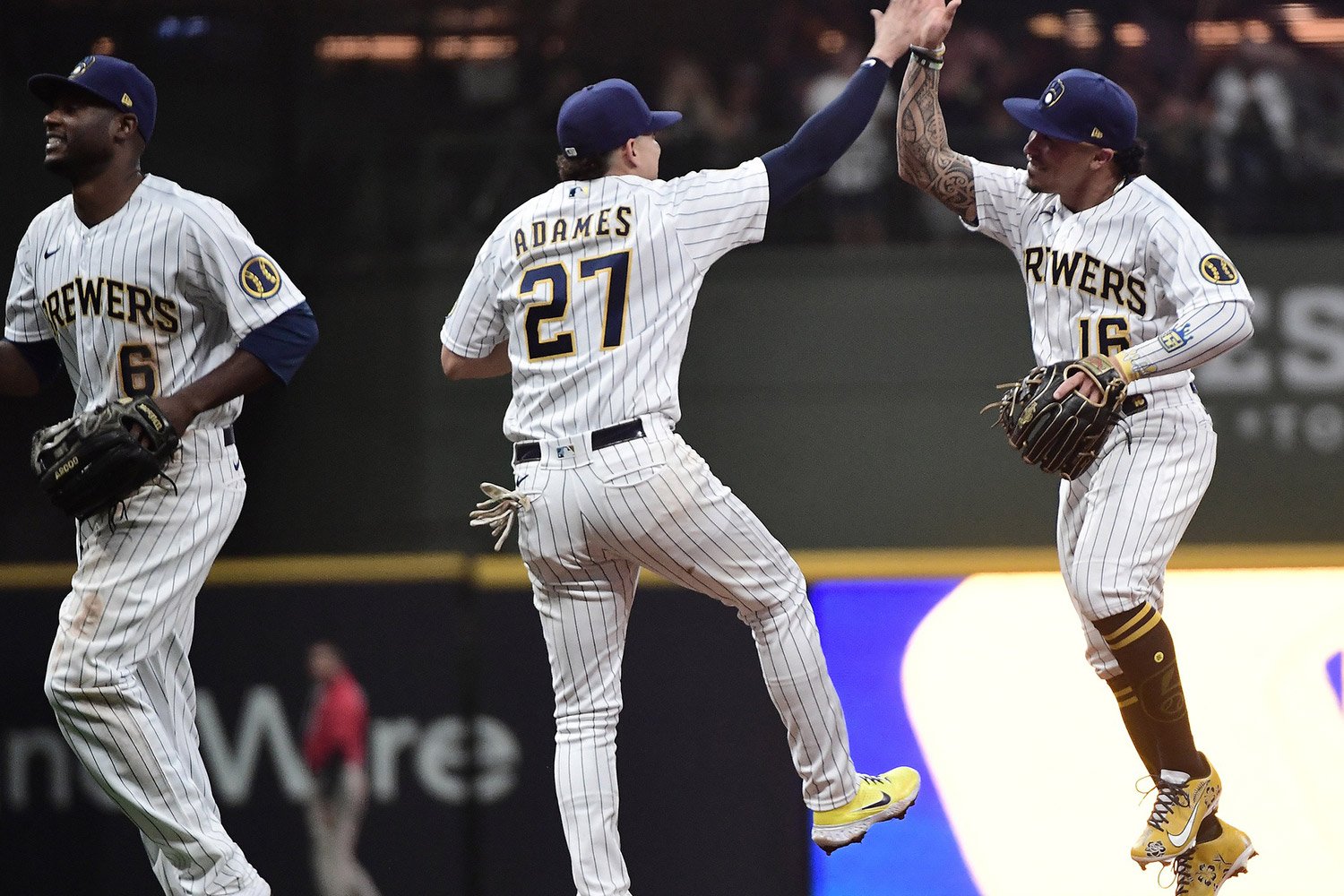 This is my first official piece for Brewer Fanatic so let me tell you this upfront... Full disclosure: I am an optimist by nature. I believe in the best in people until proven otherwise. I give people second (and sometimes 10th) chances like they were scratch-off cards during the final series at American Family Field each season. I hope for the grandest outcome possible when presented with an unknown. If there's a sliver of doubt to your negativity, I'll wedge the business end of a crowbar into it and pry it wide and explain why you should let that light shine through. That worldview leads to disappointment, frustration, and even anger when people repeatedly let me down or show their true colors. It's a hard lesson to learn who you can't count on. It's a more challenging lesson when it takes a few classes to sink in. It has a sobering effect when you strive to see the best in people, and they show you anything but. It's worse when they give you flashes of their good and great but continually revert to a disheartening standard. You know there's greatness in them, but it isn't on display enough. This is a Brewers baseball site. Much can and undoubtedly will be said about the franchise's history of coming up short and failing to win a championship, but this column is dedicated to a much smaller focus. This column is being written to point out that disappointment in baseball requires context. A bad offense needs to be viewed through the right lens more succinctly. There's no denying that the 2021 Milwaukee Brewers did not score enough. This was especially impactful during a truncated Postseason run when once again, the Crew was ousted by the eventual League Pennant winner. The Brewers have been built in this competitive cycle on the theory of run prevention. You don't need to score much at the plate if you aren't giving up much on the mound or in the field. That said, you still need to score to win. To that end, David Stearns has built a core around a dynamic pitching staff that features arguably the best starting rotation in the league and a bullpen anchored by two of the sport's very best relievers. The offense was constructed around 2018 National League MVP (and 2019 runner-up) Christian Yelich, with capable veterans filling some roles, proven big leaguers in other spots, and some players with a shorter track record and room on both ends of the projection range. The pitching held up its end-all of 2021. Specifics could genuinely be listed ad nauseam, but I digress for the sake of internet inches. This is about the offense, after all. The short version of what was happening in April and most of May to the Brewers at the plate is that it was a disjointed, underwhelming, subpar mess. The Brewers scored three or fewer runs in 12 games in April 2021. When scoring three or fewer runs in 2021, they only won 24.6% of the time. They still managed, thanks in large part to the pitching and some bad opponents, to post a 16-10 April record. The month of May was not as kind, and a 13-15 record was the result. Fans lamented the offensive struggles of the team. Christian Yelich was hurt. Lorenzo Cain didn't have his legs. Luis Urías wasn't responding well to being given the starting shortstop job. Keston Hiura's 2020 woes carried forward in the worst ways. Kolten Wong missed time with uncharacteristic injuries. Manny Piña wasn't hitting at all when he was called on. Avisaíl García limped out of the gate to a .609 OPS in April. It wasn't good almost all the way around. One day in May has been pointed to that changed all of the Brewers' fortunes. Willy Adames Day! A new starting shortstop, rescued from the hideous hitting environment of Tropicana Field, blossomed as a Beermaker in a big way. The offense improved. Urías relaxed and settled in at the plate. García, perhaps buoyed by having a friend join the team, went on to a strong summer at the plate. Many parts of the sum began to perform better, and the Brewers rattled off four months of winning records. Still, people loved to point to the overall team rankings that the offense was destined to fail. Many of those people felt that they were proven right in October against eventual World Series Champion Atlanta. This is where the context is needed, which will inform why 2022 could be very different from 2021 on those same leaderboards. The horrific offensive totals attributed to the team were largely produced in an awful April and early May by players who were no longer on the team by midseason. Orlando Arcia lost his starting job and was traded. Travis Shaw didn't play for the team after June 9. Hiura, who suffered multiple demotions to Triple-A Nashville and had a surface-numbers-decent stretch in June, wasn't dragging down the team averages for very long. Daniel Vogelbach had fun moments, but he under-produced against expectations. And despite Jackie Bradley, Jr. surviving the entire campaign, he is the prime example of the next point. They were, and nearly all are now, gone. Addition by subtraction can be a powerful salve in sports. Cut away the frayed fringes, and the overall roster tapestry looks less disheveled. The Brewers didn't get exponentially better in 2021 simply by adding one piece in Adames. They got better because General Manager David Stearns wasn't afraid to make changes. Trading two contributing arms for a new shortstop was the marquee deal, and rightfully so, but don't miss the forest for the trees. Bradley, Jr. was the only player to survive with poor production the entire season. (You could include Piña if you want to, and I won't argue, but his handling of the pitching staff was still providing incredible value, and he didn't hit significantly better in the second half.) Some names were laid out above, but don't forget Daniel Robertson, Tim Lopes, Derek Fisher, Billy McKinney, Jacob Nottingham, and even Vogelbach and Piña to a degree. All weren't contributing as needed in 2021. All were deemed expendable as Stearns worked to improve the team. Whether you think that the offense ran out of gas, peaked too early, or wasn't great anyway in 2021, they didn't perform when it mattered most...October. Again, though, it is imperative to understand that the pieces in place by the Postseason were finally capable of doing so and that they didn't. There's a difference between did not and cannot. That's the most disappointing, frustrated, and anger-inducing part. Flashes of greatness only to suffer a disheartening letdown. Stearns has a strong core on this 2022 team, but he recognized this offseason, as he did during the 2021 regular season, that there were areas in which he could and needed to improve. He removed Bradley, Jr. and replaced the departed García in one move by trading for Hunter Renfroe. They acquired Mike Brosseau in a trade to more capably fill the utility role, one that saw that litany of names fails to produce in 2021. Catcher Pedro Severino was signed to give more consistent punch to the lineup on days Omar Narváez needs a rest (and give him more days off so he'll be fresher in the second half to stay productive all season, hopefully). With the new Designated Hitter position in the National League in 2022, the team signed a veteran to bolster one of their biggest weaknesses, facing left-handed pitching. Andrew McCutchen should provide his usual excellence against southpaws and contribute against righties now that he's healthy and his mechanics will return to form following the lingering effects of a 2019 torn ACL. Furthermore, 2021 acquisitions will hopefully be Brewers all season instead of partial seasons with Milwaukee. Rowdy Tellez, acquired during the 2021 season and performed very well down the stretch in 56 games, will be around for 162. Adames will increase his 99 games as a Brewer in 2021. Tyrone Taylor could see an increase in his opportunities, but every game he plays is one Bradley, Jr. isn't. Finally, you can't always predict injuries, so you must project that health will be prevalent more often than not. Therefore, Lorenzo Cain (78 games played), Wong (116 games), Yelich (117), and even Renfroe (144) played more than García (135) in 2021, as the latter was slowed down by a bad back late in the year. At the end of the day, a team is its numbers. The numbers tell the story of what happened. The story is written by the roster. The roster is a sum of its parts. However, the sum of this roster's parts should be better than that of their 2021 counterparts. If they're not, Stearns won't hesitate to upgrade. The positivity train is ready to begin a fresh season with a fresh outlook on the roster. There's plenty of room. You might experience some disappointment along the way. You might feel frustrated or even angry when a player or two inevitably struggles for a stretch. If you'd rather be negative because you're more likely to be correct, that's your decision. For my time, I'll continue to yearn for the best and enjoy cheering my heart out in support of those desired outcomes.
- 7 comments
-
- 4
-

-
- christian yelich
- willy adames
- (and 2 more)
-
A common refrain heard last May and June was that the Milwaukee Brewers were near the bottom of team rankings in many statistical measures of production on offense. The MLB team totals were referenced without thought because, after all, the numbers told the story of what had happened. While true, they also weren't telling the whole story -- and it's story that will be rewritten again in 2022. This is my first official piece for Brewer Fanatic so let me tell you this upfront... Full disclosure: I am an optimist by nature. I believe in the best in people until proven otherwise. I give people second (and sometimes 10th) chances like they were scratch-off cards during the final series at American Family Field each season. I hope for the grandest outcome possible when presented with an unknown. If there's a sliver of doubt to your negativity, I'll wedge the business end of a crowbar into it and pry it wide and explain why you should let that light shine through. That worldview leads to disappointment, frustration, and even anger when people repeatedly let me down or show their true colors. It's a hard lesson to learn who you can't count on. It's a more challenging lesson when it takes a few classes to sink in. It has a sobering effect when you strive to see the best in people, and they show you anything but. It's worse when they give you flashes of their good and great but continually revert to a disheartening standard. You know there's greatness in them, but it isn't on display enough. This is a Brewers baseball site. Much can and undoubtedly will be said about the franchise's history of coming up short and failing to win a championship, but this column is dedicated to a much smaller focus. This column is being written to point out that disappointment in baseball requires context. A bad offense needs to be viewed through the right lens more succinctly. There's no denying that the 2021 Milwaukee Brewers did not score enough. This was especially impactful during a truncated Postseason run when once again, the Crew was ousted by the eventual League Pennant winner. The Brewers have been built in this competitive cycle on the theory of run prevention. You don't need to score much at the plate if you aren't giving up much on the mound or in the field. That said, you still need to score to win. To that end, David Stearns has built a core around a dynamic pitching staff that features arguably the best starting rotation in the league and a bullpen anchored by two of the sport's very best relievers. The offense was constructed around 2018 National League MVP (and 2019 runner-up) Christian Yelich, with capable veterans filling some roles, proven big leaguers in other spots, and some players with a shorter track record and room on both ends of the projection range. The pitching held up its end-all of 2021. Specifics could genuinely be listed ad nauseam, but I digress for the sake of internet inches. This is about the offense, after all. The short version of what was happening in April and most of May to the Brewers at the plate is that it was a disjointed, underwhelming, subpar mess. The Brewers scored three or fewer runs in 12 games in April 2021. When scoring three or fewer runs in 2021, they only won 24.6% of the time. They still managed, thanks in large part to the pitching and some bad opponents, to post a 16-10 April record. The month of May was not as kind, and a 13-15 record was the result. Fans lamented the offensive struggles of the team. Christian Yelich was hurt. Lorenzo Cain didn't have his legs. Luis Urías wasn't responding well to being given the starting shortstop job. Keston Hiura's 2020 woes carried forward in the worst ways. Kolten Wong missed time with uncharacteristic injuries. Manny Piña wasn't hitting at all when he was called on. Avisaíl García limped out of the gate to a .609 OPS in April. It wasn't good almost all the way around. One day in May has been pointed to that changed all of the Brewers' fortunes. Willy Adames Day! A new starting shortstop, rescued from the hideous hitting environment of Tropicana Field, blossomed as a Beermaker in a big way. The offense improved. Urías relaxed and settled in at the plate. García, perhaps buoyed by having a friend join the team, went on to a strong summer at the plate. Many parts of the sum began to perform better, and the Brewers rattled off four months of winning records. Still, people loved to point to the overall team rankings that the offense was destined to fail. Many of those people felt that they were proven right in October against eventual World Series Champion Atlanta. This is where the context is needed, which will inform why 2022 could be very different from 2021 on those same leaderboards. The horrific offensive totals attributed to the team were largely produced in an awful April and early May by players who were no longer on the team by midseason. Orlando Arcia lost his starting job and was traded. Travis Shaw didn't play for the team after June 9. Hiura, who suffered multiple demotions to Triple-A Nashville and had a surface-numbers-decent stretch in June, wasn't dragging down the team averages for very long. Daniel Vogelbach had fun moments, but he under-produced against expectations. And despite Jackie Bradley, Jr. surviving the entire campaign, he is the prime example of the next point. They were, and nearly all are now, gone. Addition by subtraction can be a powerful salve in sports. Cut away the frayed fringes, and the overall roster tapestry looks less disheveled. The Brewers didn't get exponentially better in 2021 simply by adding one piece in Adames. They got better because General Manager David Stearns wasn't afraid to make changes. Trading two contributing arms for a new shortstop was the marquee deal, and rightfully so, but don't miss the forest for the trees. Bradley, Jr. was the only player to survive with poor production the entire season. (You could include Piña if you want to, and I won't argue, but his handling of the pitching staff was still providing incredible value, and he didn't hit significantly better in the second half.) Some names were laid out above, but don't forget Daniel Robertson, Tim Lopes, Derek Fisher, Billy McKinney, Jacob Nottingham, and even Vogelbach and Piña to a degree. All weren't contributing as needed in 2021. All were deemed expendable as Stearns worked to improve the team. Whether you think that the offense ran out of gas, peaked too early, or wasn't great anyway in 2021, they didn't perform when it mattered most...October. Again, though, it is imperative to understand that the pieces in place by the Postseason were finally capable of doing so and that they didn't. There's a difference between did not and cannot. That's the most disappointing, frustrated, and anger-inducing part. Flashes of greatness only to suffer a disheartening letdown. Stearns has a strong core on this 2022 team, but he recognized this offseason, as he did during the 2021 regular season, that there were areas in which he could and needed to improve. He removed Bradley, Jr. and replaced the departed García in one move by trading for Hunter Renfroe. They acquired Mike Brosseau in a trade to more capably fill the utility role, one that saw that litany of names fails to produce in 2021. Catcher Pedro Severino was signed to give more consistent punch to the lineup on days Omar Narváez needs a rest (and give him more days off so he'll be fresher in the second half to stay productive all season, hopefully). With the new Designated Hitter position in the National League in 2022, the team signed a veteran to bolster one of their biggest weaknesses, facing left-handed pitching. Andrew McCutchen should provide his usual excellence against southpaws and contribute against righties now that he's healthy and his mechanics will return to form following the lingering effects of a 2019 torn ACL. Furthermore, 2021 acquisitions will hopefully be Brewers all season instead of partial seasons with Milwaukee. Rowdy Tellez, acquired during the 2021 season and performed very well down the stretch in 56 games, will be around for 162. Adames will increase his 99 games as a Brewer in 2021. Tyrone Taylor could see an increase in his opportunities, but every game he plays is one Bradley, Jr. isn't. Finally, you can't always predict injuries, so you must project that health will be prevalent more often than not. Therefore, Lorenzo Cain (78 games played), Wong (116 games), Yelich (117), and even Renfroe (144) played more than García (135) in 2021, as the latter was slowed down by a bad back late in the year. At the end of the day, a team is its numbers. The numbers tell the story of what happened. The story is written by the roster. The roster is a sum of its parts. However, the sum of this roster's parts should be better than that of their 2021 counterparts. If they're not, Stearns won't hesitate to upgrade. The positivity train is ready to begin a fresh season with a fresh outlook on the roster. There's plenty of room. You might experience some disappointment along the way. You might feel frustrated or even angry when a player or two inevitably struggles for a stretch. If you'd rather be negative because you're more likely to be correct, that's your decision. For my time, I'll continue to yearn for the best and enjoy cheering my heart out in support of those desired outcomes. View full article
-
If he's on the 40-man to begin the year, and is optioned to get to Triple-A, I can't see how it wouldn't count.
-
It should count as one of the five in-season options, yes.
-
And now, with the Joel Sherman report that the owners are set to vote on expanding rosters to 28 for the month of April, I'd be surprised if Reyes wasn't on the Opening Day roster if Urías isn't ready.
-
I still think that with the limit on times optioned for players this year before having to expose them to waivers, they'll do their best to not carry Reyes on the Opening Day roster if Urías won't miss much time.
-
In Saturday's non-televised game against the Texas Rangers, infielder Luis Urías exited early after injuring himself while running the bases. Reports came in quickly that Urías strained his left quadriceps muscle. After the game, manager Craig Counsell told reporters in Arizona that they'd know more about the severity of the injury come Sunday morning after some tests were performed. The results of those efforts ended up being that Urías will be out at least two weeks which puts his Opening Day start in jeopardy. If all that has you asking "Who's on Third?" and you respond to yourself with the classic "I Don't Know", you're in the right spot. I won't get into all of the why in this space today, but the immediate options as to who could play third for the Brewers until Urías returns to the lineup include last season's surprise Jace Peterson, new Brewer and natural third baseman Mike Brosseau (who was acquired via trade from the Tampa Bay Rays before the owners' lockout), and 2021's utility man and frequent optionee Pablo Reyes. The Brewers hope that they know what they've got in Peterson. He was a strong contributor at the plate when called upon in 2021, despite being available more than once to every other team in the league. If Peterson approximates the same level of offensive output in 2022, he'd be very viable as strong side of a platoon until Urías is ready. The soft side of that platoon would then come in the form of Brosseau who general manager Matt Arnold brought over in part because of his demonstrated ability to mash against left-handed pitching, an area of weakness for the Milwaukee offense last year. Backing them up -- likely at Triple-A Nashville to open the season unless the league decides to expand April rosters due to the shortness of this Spring Training -- would be Reyes. They're covered at the hot corner, is my point. Urías can take his time and make sure he's healthy before he gets back on the field.
-
Introducing Achievements!
Adam Rygg commented on Brock Beauchamp's blog entry in Battle Your Tail Off
Should be fun for engagement. I assume it's worked well elsewhere.