


Matthew Trueblood
-
Posts
2,074 -
Joined
-
Last visited
-
Days Won
10
Content Type
Profiles
Forums
Blogs
Events
Milwaukee Brewers News, Rumors & Analysis
2026 Milwaukee Brewers Top Prospect Rankings
Milwaukee Brewers Videos
2022 Milwaukee Brewers Draft Picks & Signing Bonuses
Milwaukee Brewers Trade & Free Agent Rumors
Milwaukee Brewers Fan Guides & Resources
2023 Milwaukee Brewers Draft Picks & Signing Bonuses
2024 Milwaukee Brewers Draft Picks & Signing Bonuses
2025 Milwaukee Brewers Draft Picks & Signing Bonuses
2026 Milwaukee Brewers Draft Picks & Signing Bonuses
Store
Downloads
Gallery
Everything posted by Matthew Trueblood
-
On Tuesday night, the Brewers try to make it back-to-back wins against the $350-million behemoth that is the New York Mets. That team is in disarray, but it's still difficult to show up in their house and take the first two of a four-game set as a team from one of the league's smallest markets. To do it, you need things like what Milwaukee has gotten from Julio Teheran this year. Image courtesy of © Michael McLoone-USA TODAY Sports On Tuesday night, the Brewers try to make it back-to-back wins against the $350-million behemoth that is the New York Mets. That team is in disarray, but it's still difficult to show up in their house and take the first two of a four-game set as a team from one of the league's smallest markets. To do it, you need things like what Milwaukee has gotten from Julio Teheran this year. Funnily enough, Plan A for Julio Teheran was to be part of another massively expensive team in 2023, albeit in a market that resembles Milwaukee more closely than New York. He signed a minor-league deal with the Padres in February, marking a return to affiliated baseball. He'd spent all of 2022 playing in independent ball, the Mexican League, and the Dominican Winter League, but never signing with any of the 30 MLB organizations. Teheran had an opt-out in his deal with the Padres, should he not be called up by early May. That time came, and he opted out, but he re-signed with them a couple days later. Another three weeks on, he still hadn't gotten a shot at the big-league rotation, and he opted out again. This time, as we know, the Brewers had a sudden and urgent need for a starter, so Teheran got an unexpected and semi-permanent opportunity. Just five weeks later, it's hard to imagine the Brewers rotation without Teheran. He could always backslide from here, and whenever Brandon Woodruff is able to return, things will get more crowded. In the meantime, though, Teheran is a mainstay. He's posted a 1.53 ERA through his first six starts, and although neither his sheer stuff nor his peripheral numbers suggest that he's actually metamorphosed into an ace, he's also not purely smoke and mirrors. A lot of things have changed, and Teheran has found the approach and repertoire that could give his career a second act of some length. Firstly, Teheran has added a cutter to his pitch mix this year. He actually did so during his stint in the San Diego system, but he's certainly sharpened the pitch and figured out the balancing act involved in his new arsenal with the Brewers. He's now throwing five different pitches against lefties, giving them a true kitchen-sink look against which it's hard to get aggressive. By and large, it's not a good idea to have a sinker leading your attack against opposite-handed batters, Teheran has gotten away with it, though, not only because having four other offerings he throws in even mixture keeps them from sitting on it, but because the pitch has gotten heavier this year. Its vertical movement is greater, which is always a plus against opposite-handed batters, but which especially accentuates its difference from his four-seamer and cutter. Against righties, he's equally comfortable using the new cutter as a changer of lanes and eye levels relative to the sinker and the four-seamer. For the first time in almost a decade, he's a four-pitch guy against same-handed batters. As a result of that increased unpredictability, Teheran is suddenly able to rear back and throw his four-seamer right past righties. Despite the fact that he averages just under 90 miles per hour with the heater, he's missing bats with it (in a tiny sample, we have to admit) at a career-best rate. Teheran only has 23 strikeouts in 35 innings this year. He's not going to become a strikeout machine. Still, missing bats is non-optional in today's game. Swings and misses might be too rare to yield many punchouts, but they get the batter one pitch closer thereto--and thus, one pitch more defensive, less powerful, and less effective. It's unlikely that Teheran can run even a 3.53 ERA the rest of the year, let alone a 1.53. He's already given the team as much as they could have hoped for, though, thanks to a new pitch, some small tweaks to their usage and shape, and the intelligence and poise that come with having been in MLB for a decade. View full article
-
A New Cutter, a Heavier Sinker, and a Brand-New Julio Teheran
Matthew Trueblood posted an article in Brewers
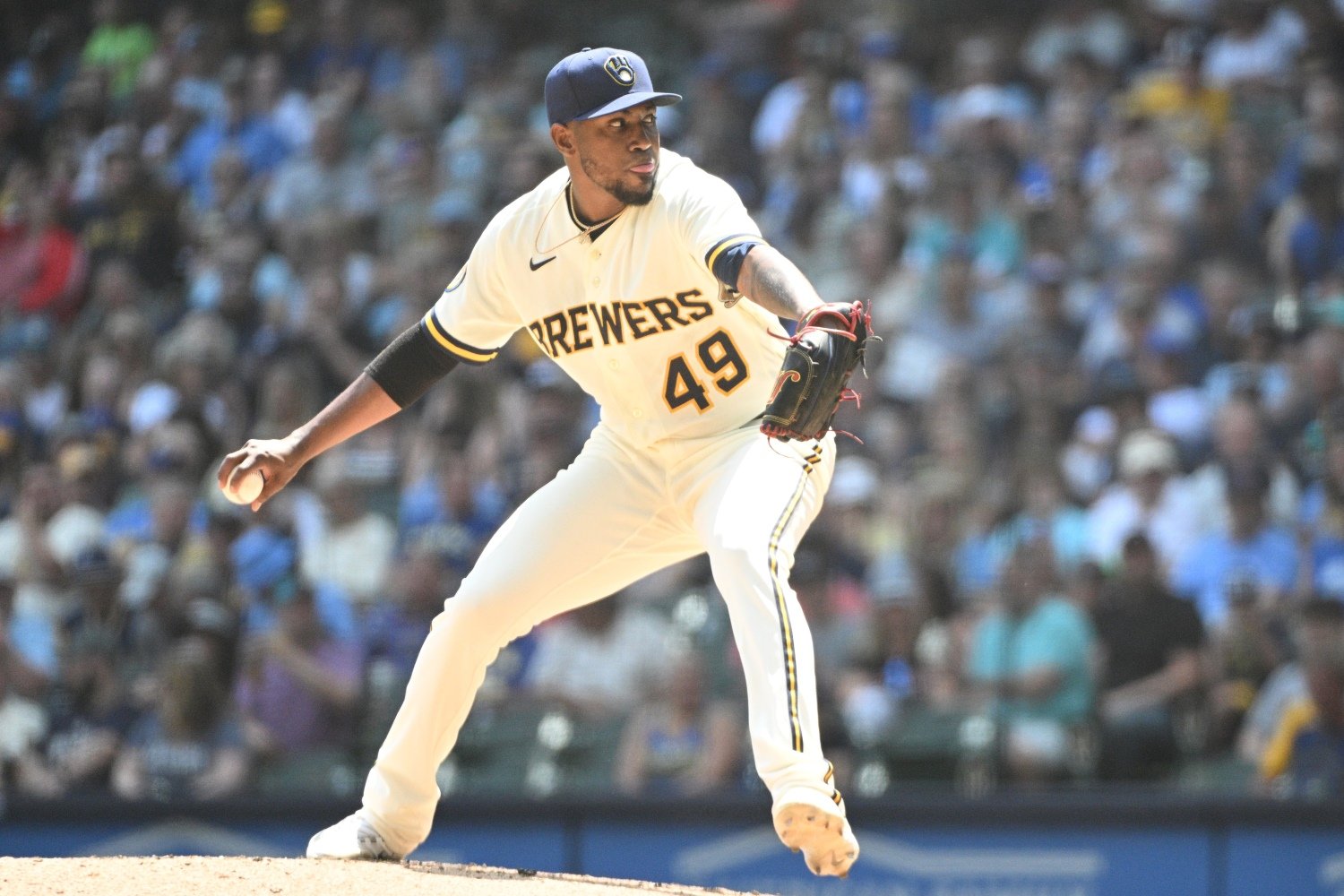 Funnily enough, Plan A for Julio Teheran was to be part of another massively expensive team in 2023, albeit in a market that resembles Milwaukee more closely than New York. He signed a minor-league deal with the Padres in February, marking a return to affiliated baseball. He'd spent all of 2022 playing in independent ball, the Mexican League, and the Dominican Winter League, but never signing with any of the 30 MLB organizations. Teheran had an opt-out in his deal with the Padres, should he not be called up by early May. That time came, and he opted out, but he re-signed with them a couple days later. Another three weeks on, he still hadn't gotten a shot at the big-league rotation, and he opted out again. This time, as we know, the Brewers had a sudden and urgent need for a starter, so Teheran got an unexpected and semi-permanent opportunity. Just five weeks later, it's hard to imagine the Brewers rotation without Teheran. He could always backslide from here, and whenever Brandon Woodruff is able to return, things will get more crowded. In the meantime, though, Teheran is a mainstay. He's posted a 1.53 ERA through his first six starts, and although neither his sheer stuff nor his peripheral numbers suggest that he's actually metamorphosed into an ace, he's also not purely smoke and mirrors. A lot of things have changed, and Teheran has found the approach and repertoire that could give his career a second act of some length. Firstly, Teheran has added a cutter to his pitch mix this year. He actually did so during his stint in the San Diego system, but he's certainly sharpened the pitch and figured out the balancing act involved in his new arsenal with the Brewers. He's now throwing five different pitches against lefties, giving them a true kitchen-sink look against which it's hard to get aggressive. By and large, it's not a good idea to have a sinker leading your attack against opposite-handed batters, Teheran has gotten away with it, though, not only because having four other offerings he throws in even mixture keeps them from sitting on it, but because the pitch has gotten heavier this year. Its vertical movement is greater, which is always a plus against opposite-handed batters, but which especially accentuates its difference from his four-seamer and cutter. Against righties, he's equally comfortable using the new cutter as a changer of lanes and eye levels relative to the sinker and the four-seamer. For the first time in almost a decade, he's a four-pitch guy against same-handed batters. As a result of that increased unpredictability, Teheran is suddenly able to rear back and throw his four-seamer right past righties. Despite the fact that he averages just under 90 miles per hour with the heater, he's missing bats with it (in a tiny sample, we have to admit) at a career-best rate. Teheran only has 23 strikeouts in 35 innings this year. He's not going to become a strikeout machine. Still, missing bats is non-optional in today's game. Swings and misses might be too rare to yield many punchouts, but they get the batter one pitch closer thereto--and thus, one pitch more defensive, less powerful, and less effective. It's unlikely that Teheran can run even a 3.53 ERA the rest of the year, let alone a 1.53. He's already given the team as much as they could have hoped for, though, thanks to a new pitch, some small tweaks to their usage and shape, and the intelligence and poise that come with having been in MLB for a decade.
-
The Brewers had one really good chance to put away the Guardians on Saturday, before Cleveland staged a small comeback and turned a 2-1 deficit into what turned out to be an ironclad 4-2 lead. The opportunity came in the top of the sixth inning, when back-to-back walks gave Brian Anderson a chance to break the game open. Alas, that at-bat went the way pretty much everything has for Anderson this month. Image courtesy of © Benny Sieu-USA TODAY Sports The Brewers had one really good chance to put away the Guardians on Saturday, before Cleveland staged a small comeback and turned a 2-1 deficit into what turned out to be an ironclad 4-2 lead. The opportunity came in the top of the sixth inning, when back-to-back walks gave Brian Anderson a chance to break the game open. Alas, that at-bat went the way pretty much everything has for Anderson this month. Guardians starter Tanner Bibee, entrusted with the difficult situation even though he'd already faced Anderson twice in the game and was showing some signs of fatigue, calmly worked over the Brewers third baseman, earning a strikeout that halted the momentum of the inning before it could get away from the home team. Unfortunately, that didn't take a master stroke in the art of pitching. Right now, it's too easy to get Anderson out, as the two meaty sliders that escaped his slashing swing early in the count imply. Anderson is a low-ball hitter, and has always been vulnerable to the high fastball Bibee ultimately used to punch him out. When he's going well, though, he owns the lower half of the zone, and can afford to lay off the high heat. Right now, Anderson is (emphatically) not going well. In June, Anderson has 76 plate appearances, and he's batting .182/.290/.258. He's grounded into a double play more times (twice) than he's cleared the fences. He's taking a patient approach, but it seems to be as much about knowing that he can't hit most good pitches than it is about grinding out an at-bat and finding the one to drive. His strikeout rate is over 30 percent for the month. Nothing is going right. Again, it's not unusual to see Anderson swing through a high fastball. It's much more troubling, though, to see him be unable to mash breaking balls that hang significantly above the kneecap over the middle third of the plate, and that's what's played out this month. Anderson's swing just isn't right, and as a result, his power and his confidence are both missing. For the season, Anderson has both an average exit velocity and a hard-hit frequency lower than in any other season of his career. He's hitting half his batted balls on the ground, and has only pulled 29.2 percent of all his batted balls, another career-low figure. That's especially confusing. Usually, a hitter will see their pull rate rise with their groundball rate, because most ground balls are pulled. Indeed, Anderson is in the 25th percentile in the percentage of his grounders that go to the pull side, which is bad news for a right-handed batter and not the place to be in Year One of restrictions on defensive positioning in the infield. When he elevates the ball, though, his pull rate is even lower, and rests in the 5th percentile of the league. That's a huge problem. It was fun to see Anderson ram a few opposite-field home runs in the early going, but the reliable, lasting power in MLB lies to a hitter's pull field. That's why so many fans obsess over whether Christian Yelich can start using the right side of the diamond more consistently. It's also the foundational principle of some of the league's most successful offenses over the last decade. By contrast, the Brewers have the second-lowest pull rate on fly balls and line drives in MLB. Only the Marlins creep beneath them, and that has as much to do with the distortionary effects of Luis Arraez as with anything else. The Brewers don't give themselves enough opportunity to do real damage, and Anderson is an excellent example of that. His swing is broken, because it's only designed to drive low pitches to center and right field. He needs a new angle, a new club in his bag, and he's on the wrong team to help him find one. View full article
-
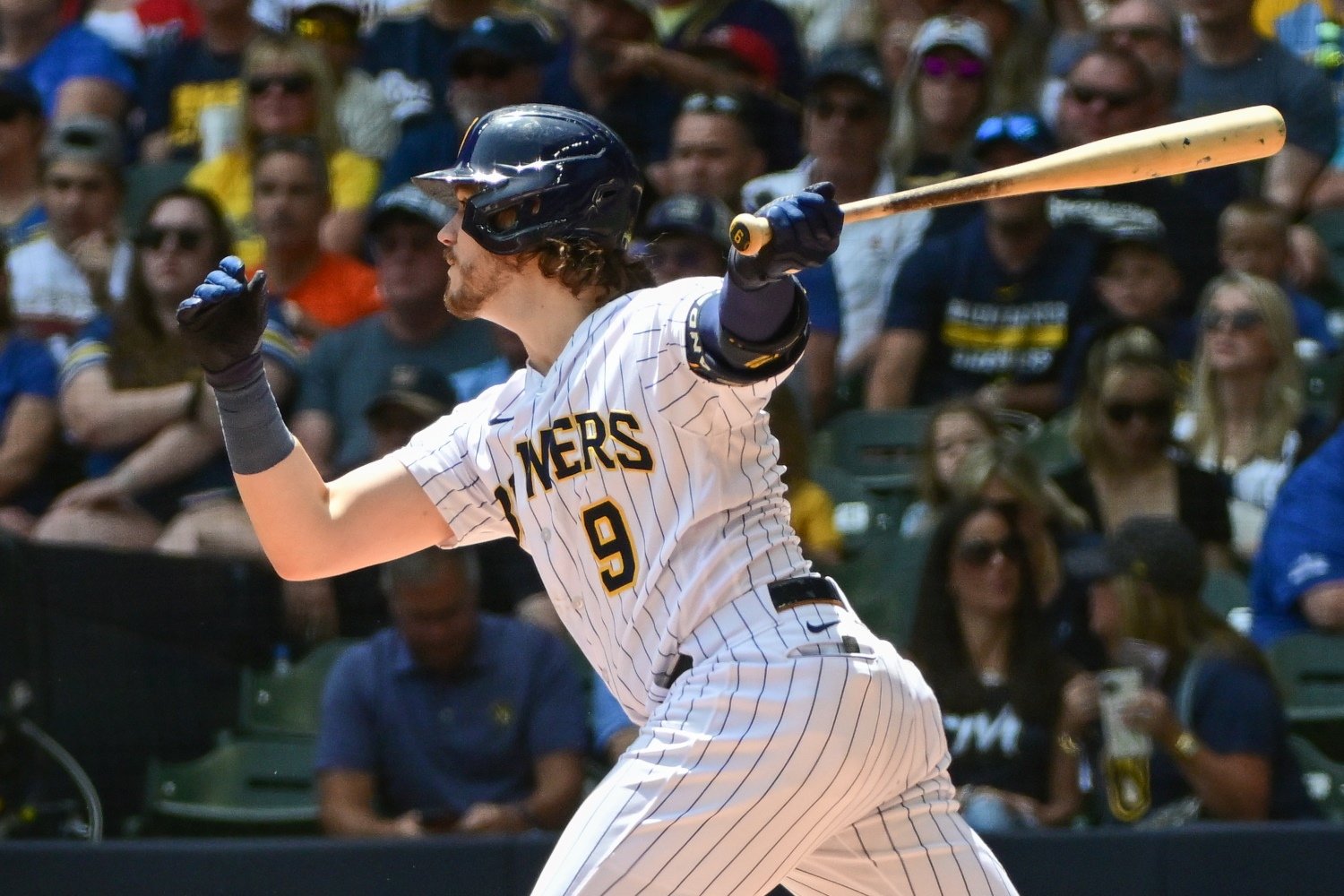 Guardians starter Tanner Bibee, entrusted with the difficult situation even though he'd already faced Anderson twice in the game and was showing some signs of fatigue, calmly worked over the Brewers third baseman, earning a strikeout that halted the momentum of the inning before it could get away from the home team. Unfortunately, that didn't take a master stroke in the art of pitching. Right now, it's too easy to get Anderson out, as the two meaty sliders that escaped his slashing swing early in the count imply. Anderson is a low-ball hitter, and has always been vulnerable to the high fastball Bibee ultimately used to punch him out. When he's going well, though, he owns the lower half of the zone, and can afford to lay off the high heat. Right now, Anderson is (emphatically) not going well. In June, Anderson has 76 plate appearances, and he's batting .182/.290/.258. He's grounded into a double play more times (twice) than he's cleared the fences. He's taking a patient approach, but it seems to be as much about knowing that he can't hit most good pitches than it is about grinding out an at-bat and finding the one to drive. His strikeout rate is over 30 percent for the month. Nothing is going right. Again, it's not unusual to see Anderson swing through a high fastball. It's much more troubling, though, to see him be unable to mash breaking balls that hang significantly above the kneecap over the middle third of the plate, and that's what's played out this month. Anderson's swing just isn't right, and as a result, his power and his confidence are both missing. For the season, Anderson has both an average exit velocity and a hard-hit frequency lower than in any other season of his career. He's hitting half his batted balls on the ground, and has only pulled 29.2 percent of all his batted balls, another career-low figure. That's especially confusing. Usually, a hitter will see their pull rate rise with their groundball rate, because most ground balls are pulled. Indeed, Anderson is in the 25th percentile in the percentage of his grounders that go to the pull side, which is bad news for a right-handed batter and not the place to be in Year One of restrictions on defensive positioning in the infield. When he elevates the ball, though, his pull rate is even lower, and rests in the 5th percentile of the league. That's a huge problem. It was fun to see Anderson ram a few opposite-field home runs in the early going, but the reliable, lasting power in MLB lies to a hitter's pull field. That's why so many fans obsess over whether Christian Yelich can start using the right side of the diamond more consistently. It's also the foundational principle of some of the league's most successful offenses over the last decade. By contrast, the Brewers have the second-lowest pull rate on fly balls and line drives in MLB. Only the Marlins creep beneath them, and that has as much to do with the distortionary effects of Luis Arraez as with anything else. The Brewers don't give themselves enough opportunity to do real damage, and Anderson is an excellent example of that. His swing is broken, because it's only designed to drive low pitches to center and right field. He needs a new angle, a new club in his bag, and he's on the wrong team to help him find one.
-
Lifelong Learning with Wade Miley
Matthew Trueblood posted a topic in Brewer Fanatic Front Page News
Satchel Paige said, "Don't look back. Something might be gaining on you." It's not just an admonition against letting the past follow you to the present, though. It's also about the importance of continuing to move forward. Wade Miley isn't as sagacious as Paige, but he's always looking forward, and it's why he keeps getting better when he should be getting worse. What he told the press after the game was, at least, a slight exaggeration. It's clear that Miley picked up the sinker more than a few days ago, because he also threw it four times in his previous outing--the one in which he returned from the IL, on June 17. It was easier to miss at that point, because all three swings against it led to balls in play--though all three were relatively soft contact, too. It's probably not quite true that Miley saw Skenes throw his sinker on TV five days ago and implemented it right away. It's more likely, for instance, that the soft-tossing lefty started tinkering with a sinker during his rehab assignment, and then merely spotted a slight grip variation while watching closely for sinkers sometime during the last fortnight. Even so, it's a delightful reminder of how eagerly and persistently Miley adjusts and improves. He's defied the typical aging curve of an injury-plagued lefty without a high-octane fastball already, and there's no imminent end in sight. The same spirit that let him buy into the concept of the cutter five years ago now has him tweaking and polishing things at the edges. A few sinkers per game sounds like nothing, but in reality, it can have a major impact on how hitters see and try to attack his repertoire. The pitch has velocity and movement that differentiate it from everything else he throws, especially because he's most comfortable attacking the glove side (inside on right-handed batters) with his four-seamer. The sinker is a pitch with which he can get inside on lefties, or try to induce a weak ground ball the other way from a righty. The more transparent circles on the right side, above, are the league-average movement ranges of each of those pitch types. Note that Miley's four-seamer, slider, and curve all move much more toward a righty batter than do the typical pitches of that type. For that reason, the sinker is especially helpful. His changeup moves similarly, but he'll mostly throw that pitch against righties, after setting them up inside with the four-seamer and cutter. Against lefties, he can slip in the sinker when he feels like batters are diving out too eagerly to chase what is largely a diet of stuff low and away from them. There are plenty of big-leaguers who, understandably, try not to take work home with them. After a long day at the ballpark, they don't want to watch baseball for fun. Plenty of players do seek out games like the College World Series, but even then, they mostly do so because of their rooting interests. Watching closely enough to pick up a subtlety in the sinker grip of a pitcher who uses the opposite hand and throws 10 miles per hour harder, and then having the audacity to utilize the same thing, speaks well of Miley, whose reputation as a teammate, craftsman, and competitor should lead everyone to expect that very type of behavior. Being a baseball rat pays off sometimes. For the Brewers, Miley's curiosity and dedication is paying off in a huge way, once again. View full article -
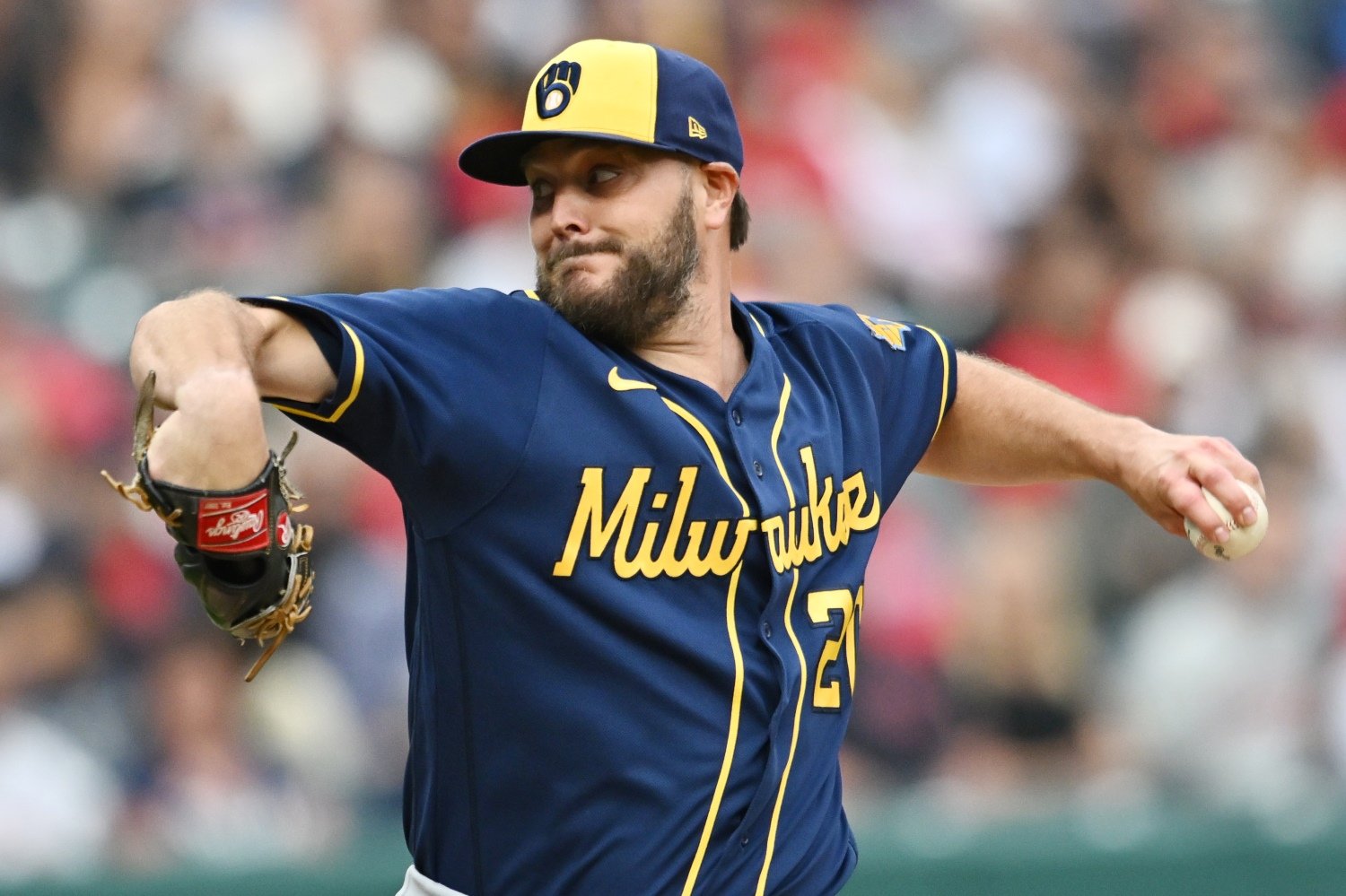 The Brewers have won each of Wade Miley's first two starts since returning from the injured list. The grizzled southpaw has yielded only five hits and two walks in 11 scoreless innings across the two outings. He's done it, mostly, the same way he's survived and thrived ever since adding a cutter and changing the course of his career, with this same Brewers team in 2018. The cutter is his biggest weapon, as it has been for years now. Yet, while shelved with a lat problem, Miley didn't just work to keep his existing arsenal sharp. Even at age 36, he relentlessly seeks the next innovation that will keep him ahead of opposing hitters, despite his underwhelming velocity. This time, that meant that the erstwhile Southeastern Louisiana hurler tuned in to watch flamethrowing LSU starter Paul Skenes pitch--and realized he could learn something from the student-athlete who will be picked somewhere in the top 5 in next month's Draft. No less an authority than Twitter denizen Pitching Ninja took note of Miley's devastating sinker, What he told the press after the game was, at least, a slight exaggeration. It's clear that Miley picked up the sinker more than a few days ago, because he also threw it four times in his previous outing--the one in which he returned from the IL, on June 17. It was easier to miss at that point, because all three swings against it led to balls in play--though all three were relatively soft contact, too. It's probably not quite true that Miley saw Skenes throw his sinker on TV five days ago and implemented it right away. It's more likely, for instance, that the soft-tossing lefty started tinkering with a sinker during his rehab assignment, and then merely spotted a slight grip variation while watching closely for sinkers sometime during the last fortnight. Even so, it's a delightful reminder of how eagerly and persistently Miley adjusts and improves. He's defied the typical aging curve of an injury-plagued lefty without a high-octane fastball already, and there's no imminent end in sight. The same spirit that let him buy into the concept of the cutter five years ago now has him tweaking and polishing things at the edges. A few sinkers per game sounds like nothing, but in reality, it can have a major impact on how hitters see and try to attack his repertoire. The pitch has velocity and movement that differentiate it from everything else he throws, especially because he's most comfortable attacking the glove side (inside on right-handed batters) with his four-seamer. The sinker is a pitch with which he can get inside on lefties, or try to induce a weak ground ball the other way from a righty. The more transparent circles on the right side, above, are the league-average movement ranges of each of those pitch types. Note that Miley's four-seamer, slider, and curve all move much more toward a righty batter than do the typical pitches of that type. For that reason, the sinker is especially helpful. His changeup moves similarly, but he'll mostly throw that pitch against righties, after setting them up inside with the four-seamer and cutter. Against lefties, he can slip in the sinker when he feels like batters are diving out too eagerly to chase what is largely a diet of stuff low and away from them. There are plenty of big-leaguers who, understandably, try not to take work home with them. After a long day at the ballpark, they don't want to watch baseball for fun. Plenty of players do seek out games like the College World Series, but even then, they mostly do so because of their rooting interests. Watching closely enough to pick up a subtlety in the sinker grip of a pitcher who uses the opposite hand and throws 10 miles per hour harder, and then having the audacity to utilize the same thing, speaks well of Miley, whose reputation as a teammate, craftsman, and competitor should lead everyone to expect that very type of behavior. Being a baseball rat pays off sometimes. For the Brewers, Miley's curiosity and dedication is paying off in a huge way, once again.
-
If Brewers fans were hoping for a full metamorphosis and breakout from reliever Bryse Wilson in 2023, they've been disappointed. Wilson isn't an out-of-nowhere relief ace. He still can't miss bats the way great relievers can. He's been solid, though, thanks to his ability to stay off the barrels of opposing hitters' bats. Image courtesy of © Michael McLoone-USA TODAY Sports If Brewers fans were hoping for a full metamorphosis and breakout from reliever Bryse Wilson in 2023, they've been disappointed. Wilson isn't an out-of-nowhere relief ace. He still can't miss bats the way great relievers can. He's been solid, though, thanks to his ability to stay off the barrels of opposing hitters' bats. Is it possible to have both a below-average cutter and an above-average one? In this era of pitching analysis, it certainly is. Bryse Wilson is proof of the concept. Though he still hasn't found a pitch that allows him to rack up strikeouts, he's learned to manage contact in a more consistent way than he had in any of his previous big-league stints. It's the cutter that has fueled that success, but interestingly, it's hard to pinpoint what makes that offering special for Wilson. Of the 101 pitchers who have thrown at least 100 cutters this year, Wilson lies shockingly close to the average in velocity on the pitch, and in both horizontal and vertical movement. He gets an above-average number of whiffs per swing, but batters swing at the pitch at a below-average rate, so his actual whiff rate on it is average. When batters don't swing at the pitch, it's called a strike at exactly an average rate. That accretion of average attributes makes for a pitch cutting-edge pitching metrics find unimpressive. The Pitching+ suite of numbers uses release point, spin rate, movement, velocity, and location to evaluate pitchers' offerings, and it only rates Wilson's cutter as a 95 (where 100 is average, and higher is better). At the same time, opponents are only hitting .175 against the pitch. By linear weights, the cutter has been worth 3.9 runs above average for Wilson this year, good for 18th in all of baseball. That statistic is cumulative, too, so the fact that most of the pitchers above him have thrown more cutters than he has means he's had something more like a top-10 cutter in the league. Which thing is true? Frustratingly, it's both. Wilson has gotten lucky on the cutter this year. It's not yielding an exceptionally high groundball rate. The .182 BABIP hitters have racked up against it is unsustainable. The pitch modeling metrics are right, on that level. On the other hand, there are things that aren't yet worked into those models, and anyway, pitching is more than optimizing things to fit a model. Some of the things Wilson does well lie outside the vision of Pitching+ and similar tools. For one, Wilson uses a four-seam fastball and a sinker, in addition to the cutter. The three pitches have very similar spin axes and spin rates, which make them all look very similar to a batter out of his hand. Because of Wilson's grips and seam-shifted wake, though, they move differently. This is why the addition of the cutter has been so important for Wilson. He's still only striking out 19 percent of opposing hitters, which is well below the average rate for relievers in 2023, but the frequency of hard contact against him has ticked down this season. Hitters are squaring the ball up much less often, because that slight misidentification of pitches results in the ball crawling up toward the handle or running out to the end of the bat. Much of Wilson's value to the Brewers' bullpen lies in his versatility. He can (and often does) work multiple innings, and he comes back relatively well when called upon with limited rest. The team doesn't need him to come in with runners on base and get pivotal strikeouts, or to dominate the best hitters in the opposing lineup. They need him to eat innings and save other pitchers on the roster in medium-leverage spots, when there's a margin for error but a pitcher who will abuse that margin could cost them the game. He's a supplemental piece, but an important one. In that way, his role on the team is similar to the cutter's role in his arsenal. The odd paradox of that role--that it can be both very valuable, and expendable--also reflects the inability of metrics to agree on the value of the pitch. View full article
-
How Bryse Wilson's Below-Average Cutter Has Been So Above-Average
Matthew Trueblood posted an article in Brewers
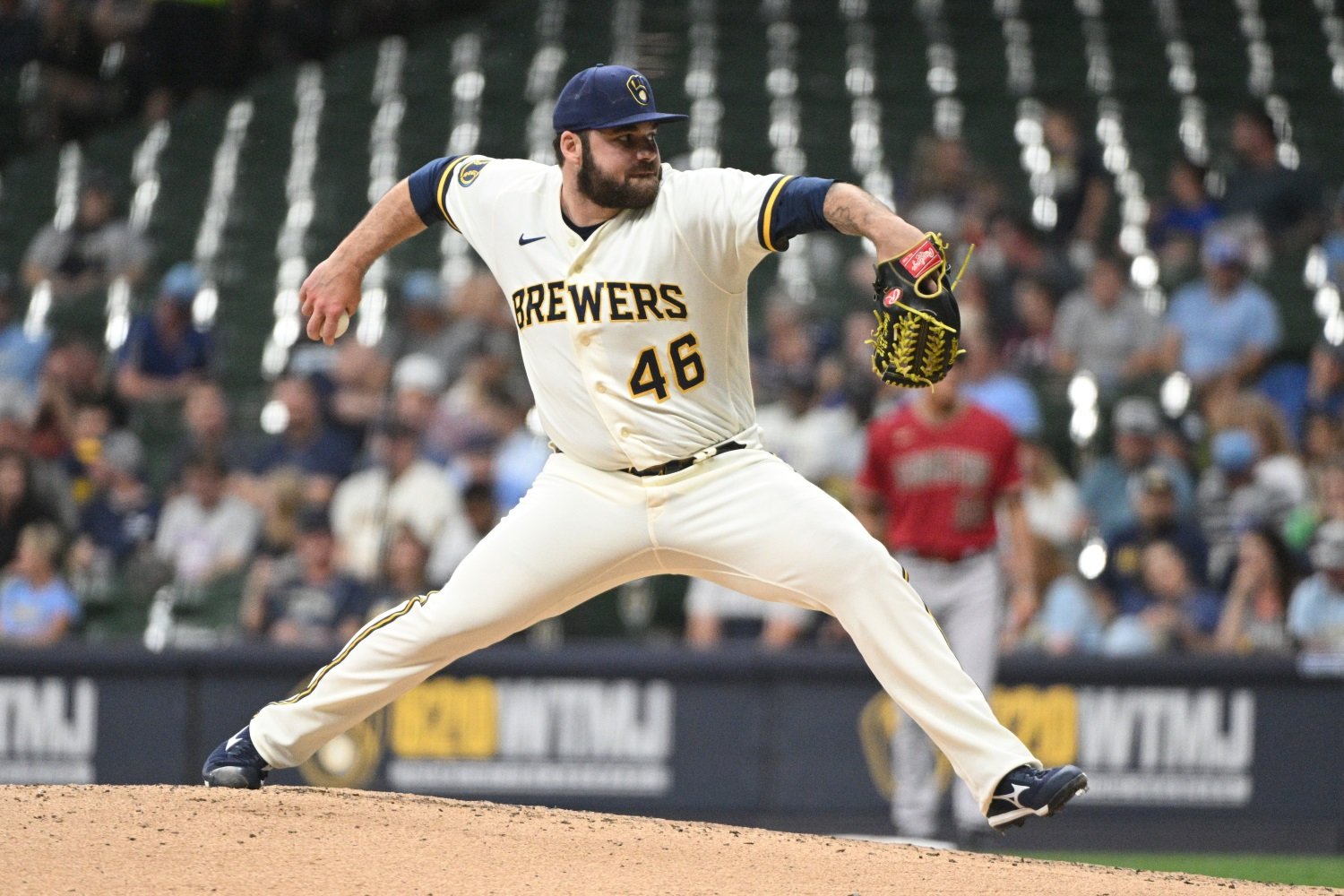 Is it possible to have both a below-average cutter and an above-average one? In this era of pitching analysis, it certainly is. Bryse Wilson is proof of the concept. Though he still hasn't found a pitch that allows him to rack up strikeouts, he's learned to manage contact in a more consistent way than he had in any of his previous big-league stints. It's the cutter that has fueled that success, but interestingly, it's hard to pinpoint what makes that offering special for Wilson. Of the 101 pitchers who have thrown at least 100 cutters this year, Wilson lies shockingly close to the average in velocity on the pitch, and in both horizontal and vertical movement. He gets an above-average number of whiffs per swing, but batters swing at the pitch at a below-average rate, so his actual whiff rate on it is average. When batters don't swing at the pitch, it's called a strike at exactly an average rate. That accretion of average attributes makes for a pitch cutting-edge pitching metrics find unimpressive. The Pitching+ suite of numbers uses release point, spin rate, movement, velocity, and location to evaluate pitchers' offerings, and it only rates Wilson's cutter as a 95 (where 100 is average, and higher is better). At the same time, opponents are only hitting .175 against the pitch. By linear weights, the cutter has been worth 3.9 runs above average for Wilson this year, good for 18th in all of baseball. That statistic is cumulative, too, so the fact that most of the pitchers above him have thrown more cutters than he has means he's had something more like a top-10 cutter in the league. Which thing is true? Frustratingly, it's both. Wilson has gotten lucky on the cutter this year. It's not yielding an exceptionally high groundball rate. The .182 BABIP hitters have racked up against it is unsustainable. The pitch modeling metrics are right, on that level. On the other hand, there are things that aren't yet worked into those models, and anyway, pitching is more than optimizing things to fit a model. Some of the things Wilson does well lie outside the vision of Pitching+ and similar tools. For one, Wilson uses a four-seam fastball and a sinker, in addition to the cutter. The three pitches have very similar spin axes and spin rates, which make them all look very similar to a batter out of his hand. Because of Wilson's grips and seam-shifted wake, though, they move differently. This is why the addition of the cutter has been so important for Wilson. He's still only striking out 19 percent of opposing hitters, which is well below the average rate for relievers in 2023, but the frequency of hard contact against him has ticked down this season. Hitters are squaring the ball up much less often, because that slight misidentification of pitches results in the ball crawling up toward the handle or running out to the end of the bat. Much of Wilson's value to the Brewers' bullpen lies in his versatility. He can (and often does) work multiple innings, and he comes back relatively well when called upon with limited rest. The team doesn't need him to come in with runners on base and get pivotal strikeouts, or to dominate the best hitters in the opposing lineup. They need him to eat innings and save other pitchers on the roster in medium-leverage spots, when there's a margin for error but a pitcher who will abuse that margin could cost them the game. He's a supplemental piece, but an important one. In that way, his role on the team is similar to the cutter's role in his arsenal. The odd paradox of that role--that it can be both very valuable, and expendable--also reflects the inability of metrics to agree on the value of the pitch.
-
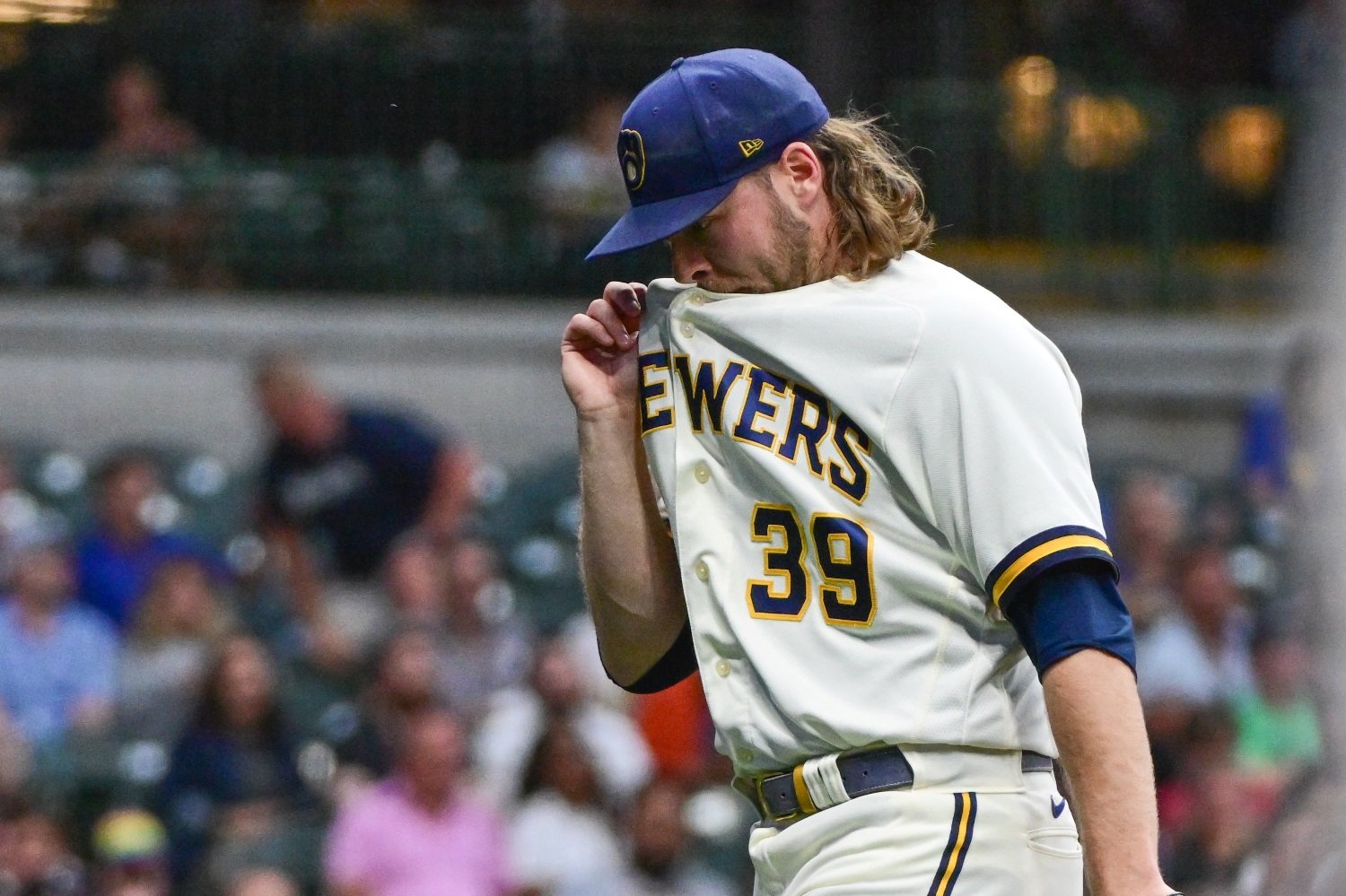 Tuesday isn't the first time the Brewers have woken up looking up at first place in the division since their Craigtember in April promotion. This time, though, it has a much greater sense of gravity and danger to it. The Pirates, who had briefly eclipsed them a couple other times this spring, are in freefall. The Cubs remain a few games back, stumbling in their own ways. The Reds, though, seem to be just hitting their stride, while the Crew are floundering. When the class of the National League for 2023 came to Miller Park Monday night, it was a chance to prove that the Brewers should be primarily identified as a first-place team, rather than as one who has been outscored on the season and can't hit its way around even the slightest misstep by its pitching staff. Instead, before the first out was recorded by Corbin Burnes, the rout was on. The Diamondbacks looked around, figured one turn-of-the-century retractable-roofed rectangle was as good as another, and made Milwaukee their home field for the night. It's true that the Brewers are getting healthy, now. They won't get Mitchell back at all in 2023, and Woodruff seems to be a month or more away, but the rest of the guys who were felled by injury as the team faded from its hot start--Urias, Jesse Winker, Wade Miley, Willy Adames, and Eric Lauer--are back, in various forms. It's just not nearly enough to make a difference. The team isn't in a death spiral, but their unproductive fishtailing continues. On a given night, everything depends on what their starting pitcher has, because they're hardly ever going to bowl an opponent over with their bats, and their defense is no longer the very best in baseball. On Monday, Corbin Burnes couldn't figure out how to finish off any of the Diamondbacks. He only induced six whiffs in an 86-pitch outing, and Arizona relentlessly chipped away at him. That's not all his fault. No team in baseball makes contact at a higher rate than Torey Lovullo's this year. They're the 2023 version of last year's Cleveland Guardians, only they have better power and (therefore) are even more dangerous. Still, Burnes was coming off an impressive and important start against the Orioles, in which he looked as though he was poised to turn a corner and become the workhorse with the sub-3.00 ERA that Brewers fans were able to enjoy for the last three years. Instead, faced with the inability to miss bats, he imploded, like a disguised cyborg on an old cartoon when confronted with a simple riddle. As much as the offense should be castigated for its utter unresponsiveness against the unimposing Merrill Kelly, it would be wrong to drop the blame for Monday night on them. Burnes left the team with no realistic chance to win before they were even able to Velcro their batting gloves. Then again, it's the inefficiency of the offense that helps make situations like the first inning snowball. Burnes tried to be too fine, knowing that even allowing two or three runs in the first frame was as likely to prove fatal to the team as the six Arizona eventually scored against him. That 14-5 start happened to a different team. This one bears little resemblance to it. That doesn't mean there aren't good things happening. Christian Yelich has been better during the team's bout of turbulence than he was during their halcyon start. William Contreras keeps hitting, however flawed his profile might be. Despite significant turnover, the bullpen has been what the team hoped it would be. Still, the 14-5 version of the Brewers--with optimism bubbling around Brice Turang, plenty of production from Willy Adames and Rowdy Tellez, and a hot start by Brian Anderson--was more complete than this one. Whatever advantage that start gave them remains, in some sense, because without it, they might be in as rough a shape as the Cubs, or even the Cardinals. It feels irrelevant now, though. They're back to Square One. Winning this year's NL Central will not merely be a slog through the mud. It might also be a Sisyphean rolling of a stone uphill. Every now and then, because they're broken and star-crossed and because the rest of the division is good enough to at least stay close, the Brewers are going to find that they've fallen right back to their starting point--that their progress has been erased, and have to get the stone moving again from the bottom of the hill. Inarguably, the Central is a messy, undignified race this year. Changes to the schedule have made the division look even weaker than it really is. The Cardinals' collapse has created a power vacuum, and no team has yet been equal to the task of filling it. The Brewers are still the best-equipped team to do that. It's just that they no longer have even the vestigial head start they'd enjoyed over the last few weeks.
-
The Brewers fought like hell to earn their 14-5 start. They had to overcome the immediate loss of Luis Urias. They had to brave series against two of the juggernauts of the NL in 2022, in the Cardinals and Mets. They had to survive a long West Coast swing, during which they lost both Brandon Woodruff and Garrett Mitchell for long periods. Now, they get to start from scratch. Image courtesy of © Benny Sieu-USA TODAY Sports The Brewers fought like hell to earn their 14-5 start. They had to overcome the immediate loss of Luis Urias. They had to brave series against two of the juggernauts of the NL in 2022, in the Cardinals and Mets. They had to survive a long West Coast swing, during which they lost both Brandon Woodruff and Garrett Mitchell for long periods. Now, they get to start from scratch. Tuesday isn't the first time the Brewers have woken up looking up at first place in the division since their Craigtember in April promotion. This time, though, it has a much greater sense of gravity and danger to it. The Pirates, who had briefly eclipsed them a couple other times this spring, are in freefall. The Cubs remain a few games back, stumbling in their own ways. The Reds, though, seem to be just hitting their stride, while the Crew are floundering. When the class of the National League for 2023 came to Miller Park Monday night, it was a chance to prove that the Brewers should be primarily identified as a first-place team, rather than as one who has been outscored on the season and can't hit its way around even the slightest misstep by its pitching staff. Instead, before the first out was recorded by Corbin Burnes, the rout was on. The Diamondbacks looked around, figured one turn-of-the-century retractable-roofed rectangle was as good as another, and made Milwaukee their home field for the night. It's true that the Brewers are getting healthy, now. They won't get Mitchell back at all in 2023, and Woodruff seems to be a month or more away, but the rest of the guys who were felled by injury as the team faded from its hot start--Urias, Jesse Winker, Wade Miley, Willy Adames, and Eric Lauer--are back, in various forms. It's just not nearly enough to make a difference. The team isn't in a death spiral, but their unproductive fishtailing continues. On a given night, everything depends on what their starting pitcher has, because they're hardly ever going to bowl an opponent over with their bats, and their defense is no longer the very best in baseball. On Monday, Corbin Burnes couldn't figure out how to finish off any of the Diamondbacks. He only induced six whiffs in an 86-pitch outing, and Arizona relentlessly chipped away at him. That's not all his fault. No team in baseball makes contact at a higher rate than Torey Lovullo's this year. They're the 2023 version of last year's Cleveland Guardians, only they have better power and (therefore) are even more dangerous. Still, Burnes was coming off an impressive and important start against the Orioles, in which he looked as though he was poised to turn a corner and become the workhorse with the sub-3.00 ERA that Brewers fans were able to enjoy for the last three years. Instead, faced with the inability to miss bats, he imploded, like a disguised cyborg on an old cartoon when confronted with a simple riddle. As much as the offense should be castigated for its utter unresponsiveness against the unimposing Merrill Kelly, it would be wrong to drop the blame for Monday night on them. Burnes left the team with no realistic chance to win before they were even able to Velcro their batting gloves. Then again, it's the inefficiency of the offense that helps make situations like the first inning snowball. Burnes tried to be too fine, knowing that even allowing two or three runs in the first frame was as likely to prove fatal to the team as the six Arizona eventually scored against him. That 14-5 start happened to a different team. This one bears little resemblance to it. That doesn't mean there aren't good things happening. Christian Yelich has been better during the team's bout of turbulence than he was during their halcyon start. William Contreras keeps hitting, however flawed his profile might be. Despite significant turnover, the bullpen has been what the team hoped it would be. Still, the 14-5 version of the Brewers--with optimism bubbling around Brice Turang, plenty of production from Willy Adames and Rowdy Tellez, and a hot start by Brian Anderson--was more complete than this one. Whatever advantage that start gave them remains, in some sense, because without it, they might be in as rough a shape as the Cubs, or even the Cardinals. It feels irrelevant now, though. They're back to Square One. Winning this year's NL Central will not merely be a slog through the mud. It might also be a Sisyphean rolling of a stone uphill. Every now and then, because they're broken and star-crossed and because the rest of the division is good enough to at least stay close, the Brewers are going to find that they've fallen right back to their starting point--that their progress has been erased, and have to get the stone moving again from the bottom of the hill. Inarguably, the Central is a messy, undignified race this year. Changes to the schedule have made the division look even weaker than it really is. The Cardinals' collapse has created a power vacuum, and no team has yet been equal to the task of filling it. The Brewers are still the best-equipped team to do that. It's just that they no longer have even the vestigial head start they'd enjoyed over the last few weeks. View full article
-
Right, but what I’m highlighting here isn’t the presence of all four pitches. It’s that he’s never utilized them all so much within one start before. They were, for the first time, complements to one another in relatively equal mixture, instead of replacements for one another when something wasn’t working. That’s an important distinction.
-
Did We Just Witness the Birth of Four-Pitch Freddy Peralta?
Matthew Trueblood posted an article in Brewers
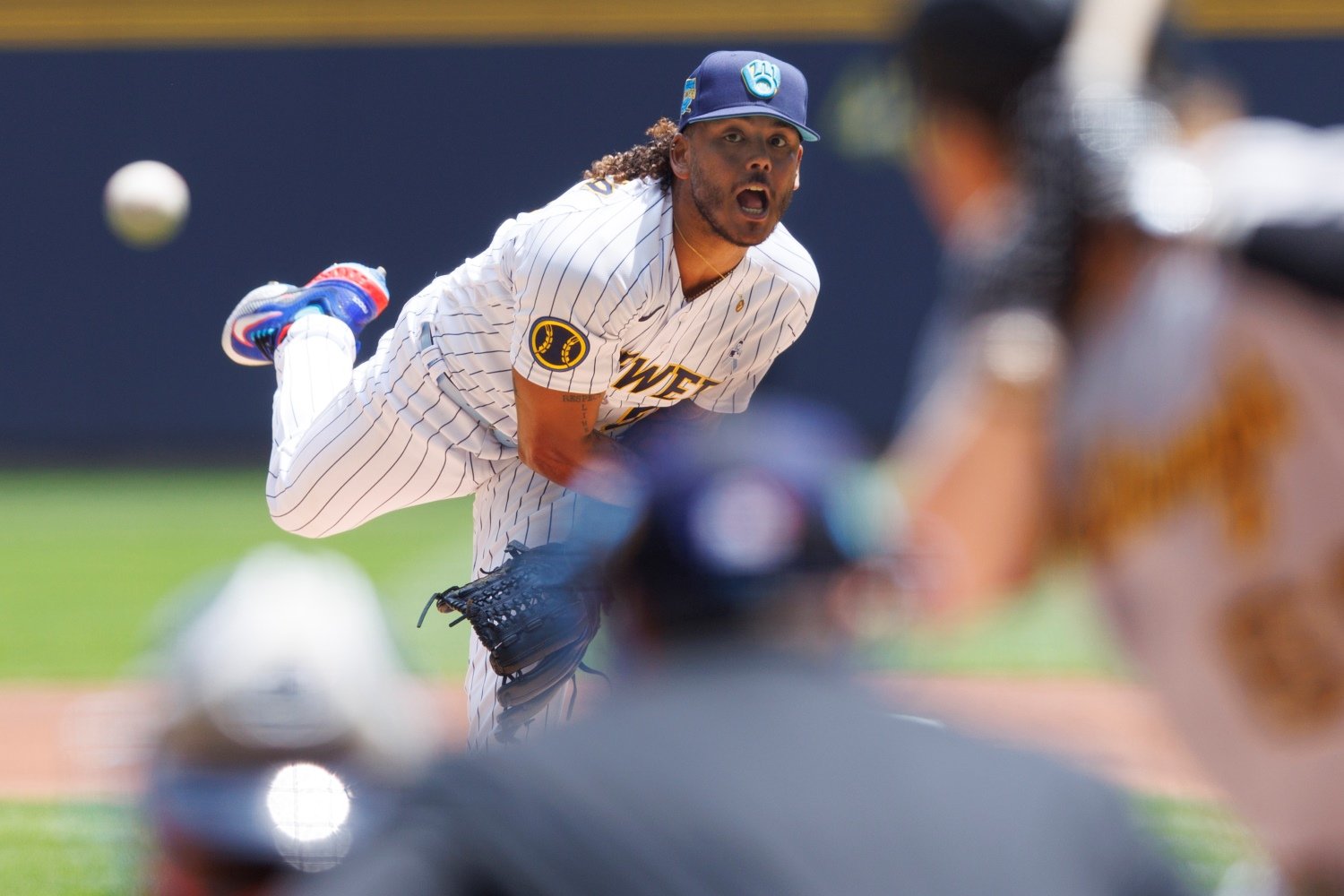 First of all, it's important to note that the Pirates didn't want Freddy Peralta facing any more right-handed batters than was absolutely necessary. Manager Derek Shelton wrote out a lineup that included left-hitting Ji-Hwan Bae, Jack Suwinski, Tucupita Marcano, and Josh Palacios, plus switch-hitters Bryan Reynolds, Carlos Santana, and Rodolfo Castro. As a result, Peralta threw most of his pitches against lefties. That's the same challenge Corbin Burnes had to navigate in his start against the Orioles a little over a week ago, about which I wrote last week. For Burnes, the solution was to throw his cutter unusually often, and it seemed to help him find a feel for the pitch that was absent when he was using it less often earlier in the season. Peralta, however, took just the opposite tack. Partially because of his established pitch mix, but also partially in an effort to show a large number of batters something different, he varied his arsenal more than he usually does. Peralta developed his current changeup at the start of 2021. From that point through his previous outing this month, he had never thrown the pitch more than 15 times in any outing. He only used it 20 total times across his last three starts. On Sunday, he threw the Pirates 18 changeups. It wasn't a devastating offering. He only induced three swings with it, and none of the three resulted in a whiff. He got just four called strikes. By and large, Pirates hitters spotted it, and they let it go for a ball. However, by using it so much, he forced those hitters to keep the change in mind. That's not terribly newsworthy, of course. A pitcher whose changeup tends to be a marginal weapon threw it a lot because he faced a bunch of opposite-handed batters, and the results were mixed, even if there was some fringe benefit to merely making it part of the mix. However, that's just one part of the story. Peralta also threw 20 curveballs Sunday. That's more than he's thrown in a start since last August, and the two times he depended that much on the hook in that month, it was because he had no feel for his slider. Sunday, he used both breaking balls. We've seen him make such equipollent use of the two breaking balls before, but it was mostly in 2021. Even then, it was always at the expense of (or, more likely, to make up for) the changeup, which he would throw less often. The man they once called Fastball Freddy now seems to have four full-fledged pitches, and an idea of how to use them to get deep into a game. Even if only three of those pitches are likely to be at full strength on a given night, and even if it requires somewhat unusual circumstances for us to see them all on display within a start, Sunday was a milestone in the evolution of Peralta into the top-of-the-rotation guy Brewers fans have envisioned for so long. If he can do this consistently, he'll be a credible co-ace for the next few years, and saying goodbye to either Corbin Burnes or Brandon Woodruff could be less painful.
-
There have been games in which Freddy Peralta leaned as heavily on his curveball as he did Sunday, There have been some in which he leaned as heavily on his changeup. There have been plenty in which he used his slider at least as often. But we might never have seen the Brewers' young right-hander use all four of his pitches as much as he just did. What could this mean? Image courtesy of © Jeff Hanisch-USA TODAY Sports There have been games in which Freddy Peralta leaned as heavily on his curveball as he did Sunday, There have been some in which he leaned as heavily on his changeup. There have been plenty in which he used his slider at least as often. But we might never have seen the Brewers' young right-hander use all four of his pitches as much as he just did. What could this mean? First of all, it's important to note that the Pirates didn't want Freddy Peralta facing any more right-handed batters than was absolutely necessary. Manager Derek Shelton wrote out a lineup that included left-hitting Ji-Hwan Bae, Jack Suwinski, Tucupita Marcano, and Josh Palacios, plus switch-hitters Bryan Reynolds, Carlos Santana, and Rodolfo Castro. As a result, Peralta threw most of his pitches against lefties. That's the same challenge Corbin Burnes had to navigate in his start against the Orioles a little over a week ago, about which I wrote last week. For Burnes, the solution was to throw his cutter unusually often, and it seemed to help him find a feel for the pitch that was absent when he was using it less often earlier in the season. Peralta, however, took just the opposite tack. Partially because of his established pitch mix, but also partially in an effort to show a large number of batters something different, he varied his arsenal more than he usually does. Peralta developed his current changeup at the start of 2021. From that point through his previous outing this month, he had never thrown the pitch more than 15 times in any outing. He only used it 20 total times across his last three starts. On Sunday, he threw the Pirates 18 changeups. It wasn't a devastating offering. He only induced three swings with it, and none of the three resulted in a whiff. He got just four called strikes. By and large, Pirates hitters spotted it, and they let it go for a ball. However, by using it so much, he forced those hitters to keep the change in mind. That's not terribly newsworthy, of course. A pitcher whose changeup tends to be a marginal weapon threw it a lot because he faced a bunch of opposite-handed batters, and the results were mixed, even if there was some fringe benefit to merely making it part of the mix. However, that's just one part of the story. Peralta also threw 20 curveballs Sunday. That's more than he's thrown in a start since last August, and the two times he depended that much on the hook in that month, it was because he had no feel for his slider. Sunday, he used both breaking balls. We've seen him make such equipollent use of the two breaking balls before, but it was mostly in 2021. Even then, it was always at the expense of (or, more likely, to make up for) the changeup, which he would throw less often. The man they once called Fastball Freddy now seems to have four full-fledged pitches, and an idea of how to use them to get deep into a game. Even if only three of those pitches are likely to be at full strength on a given night, and even if it requires somewhat unusual circumstances for us to see them all on display within a start, Sunday was a milestone in the evolution of Peralta into the top-of-the-rotation guy Brewers fans have envisioned for so long. If he can do this consistently, he'll be a credible co-ace for the next few years, and saying goodbye to either Corbin Burnes or Brandon Woodruff could be less painful. View full article
-
Don't Look Now, but the Brewers Have a Very Rays-Like Bullpen
Matthew Trueblood posted an article in Brewers
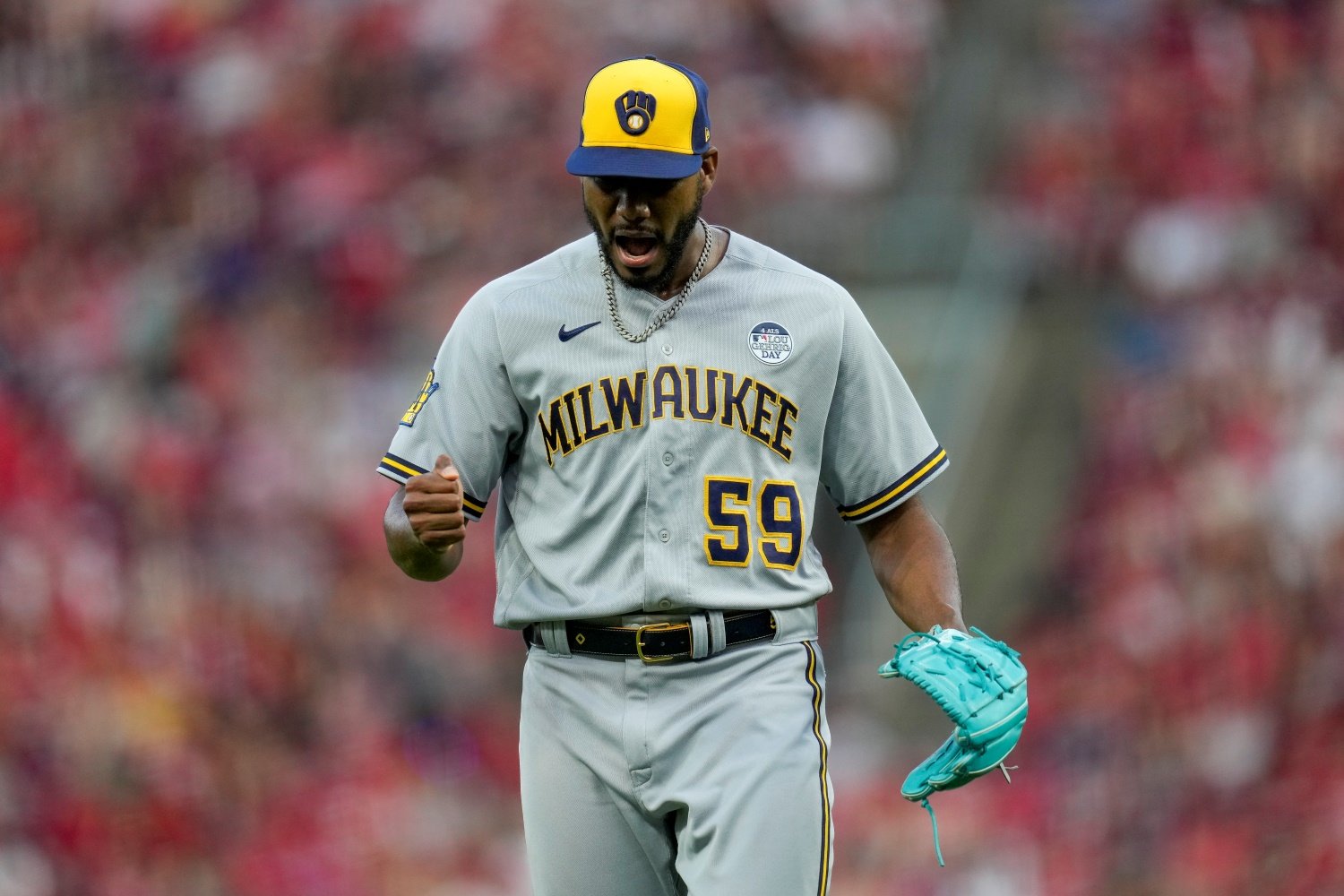 The Brewers made three big trades this winter. In two of them, they acquired a relief pitcher as a secondary piece in their side of the transaction. When they landed William Contreras, they also got Joel Payamps from the Athletics. When they sent Hunter Renfroe to the Angels, they not only got some promising potential starters, but reeled in Elvis Peguero as a throw-in. Now, in mid-June, Payamps and Peguero are the chief setup men to Devin Williams. Merely by getting those two at such low cost and then seeing them perform so well, the Brewers merit some praise. They're emulating the model the Rays use to assemble an elite bullpen virtually every season. The particular ways in which they've done it, though, make that comparison more compelling. As I wrote late last month, Payamps has reconfigured his pitch mix, and he's also throwing harder than ever. Peguero has not seen a similar velocity change, and the tweaks to his pitch mix have been quite subtle. He's only made one meaningful adjustment, gaining more consistency and a more lateral shape on his slider. Here's his spin direction chart for 2022: And here's the same chart for 2023: The movement on Peguero's bowling ball of a sinker is a hair more consistent this year, too. It's a small change, but it's been sufficient to make Peguero a good middle reliever. Credit has to go to the Brewers front office for grabbing these guys, based on traits they'd identified and on analyses of the rosters of potential trade partners. That allowed them to hone in on hurlers who might be viewed as expendable elsewhere, but who would be valuable here. That can't be a purely precision-based operation, because the reason those kinds of players become available precisely because of the risks associated with them. It has to be something you try with more players than you need, so that you can latch onto the successes and jettison the failures. To that end, we saw the Crew bring in not just those two as right-handed relievers, but also Javy Guerra, Gus Varland, Bryse Wilson, and (after the season began) Trevor Megill. This is where the coaching staff and the lower-level front office members who engage with the team on a day-to-day basis come in for their laurels. Personnel decisions ultimately need to be made by the likes of Matt Arnold and his closest advisors, but it's the coaching and support staff who gather and process the most important information about players. Their work allows quick decisions to be correct ones. The Brewers cut the right guys, because they were able to get all of these hurlers in front of their best player development thinkers and their best technology. It's not a simple test of talent or skills. It's not even about whether the player is receptive and responsive to good coaching and tech-driven optimization. Sometimes, things take, and a new weapon is created. Sometimes, they don't, and the trick lies in recognizing those cases and moving on quickly enough to land another player with some real upside. Megill is the latest such player. The Brewers scooped him up after things didn't work out in San Diego, Chicago, or Minnesota. There's no guarantee that things will be different in Milwaukee, but he's throwing harder than ever--touching 101 miles per hour and frequently lighting it up at 100--and generating tighter movement with his curveball. Sometimes there's an extra tick for a player to find, while at others, there's a new pitch to unlock--as with the cutter that Wilson has made a centerpiece of his arsenal. The new fireballers fit in among the team's existing core of relievers, which was designed primarily to give hitters radical and unexpected looks. Devin Williams's screwball. Hoby Milner's funky left-handed delivery and east-west attack from the port side. Peter Strzelecki's equally idiosyncratic mechanics from the right. As the Rays famously do, the Brewers have different arm angles and pitch shapes throughout their pen. There's no hitter for whom they won't be ready, and there's no shortage of ways Craig Counsell can chase outs when he needs to hold onto a lead.
-
- 1
-

-
- joel payamps
- elvis peguero
- (and 2 more)
-
Before this season began, there was some sturm and drang about the Brewers' bullpen. They consciously eschewed spending any major resources on that unit over the winter, and brought back much of the same group that struggled down the stretch in 2022. Now, though, they've essentially rebuilt the relief corps on the run, and the players they've used to do it conspire to make this group feel a lot like the league's best bullpen-building outfit. Image courtesy of © Sam Greene-USA TODAY Sports Before this season began, there was some sturm and drang about the Brewers' bullpen. They consciously eschewed spending any major resources on that unit over the winter, and brought back much of the same group that struggled down the stretch in 2022. Now, though, they've essentially rebuilt the relief corps on the run, and the players they've used to do it conspire to make this group feel a lot like the league's best bullpen-building outfit. The Brewers made three big trades this winter. In two of them, they acquired a relief pitcher as a secondary piece in their side of the transaction. When they landed William Contreras, they also got Joel Payamps from the Athletics. When they sent Hunter Renfroe to the Angels, they not only got some promising potential starters, but reeled in Elvis Peguero as a throw-in. Now, in mid-June, Payamps and Peguero are the chief setup men to Devin Williams. Merely by getting those two at such low cost and then seeing them perform so well, the Brewers merit some praise. They're emulating the model the Rays use to assemble an elite bullpen virtually every season. The particular ways in which they've done it, though, make that comparison more compelling. As I wrote late last month, Payamps has reconfigured his pitch mix, and he's also throwing harder than ever. Peguero has not seen a similar velocity change, and the tweaks to his pitch mix have been quite subtle. He's only made one meaningful adjustment, gaining more consistency and a more lateral shape on his slider. Here's his spin direction chart for 2022: And here's the same chart for 2023: The movement on Peguero's bowling ball of a sinker is a hair more consistent this year, too. It's a small change, but it's been sufficient to make Peguero a good middle reliever. Credit has to go to the Brewers front office for grabbing these guys, based on traits they'd identified and on analyses of the rosters of potential trade partners. That allowed them to hone in on hurlers who might be viewed as expendable elsewhere, but who would be valuable here. That can't be a purely precision-based operation, because the reason those kinds of players become available precisely because of the risks associated with them. It has to be something you try with more players than you need, so that you can latch onto the successes and jettison the failures. To that end, we saw the Crew bring in not just those two as right-handed relievers, but also Javy Guerra, Gus Varland, Bryse Wilson, and (after the season began) Trevor Megill. This is where the coaching staff and the lower-level front office members who engage with the team on a day-to-day basis come in for their laurels. Personnel decisions ultimately need to be made by the likes of Matt Arnold and his closest advisors, but it's the coaching and support staff who gather and process the most important information about players. Their work allows quick decisions to be correct ones. The Brewers cut the right guys, because they were able to get all of these hurlers in front of their best player development thinkers and their best technology. It's not a simple test of talent or skills. It's not even about whether the player is receptive and responsive to good coaching and tech-driven optimization. Sometimes, things take, and a new weapon is created. Sometimes, they don't, and the trick lies in recognizing those cases and moving on quickly enough to land another player with some real upside. Megill is the latest such player. The Brewers scooped him up after things didn't work out in San Diego, Chicago, or Minnesota. There's no guarantee that things will be different in Milwaukee, but he's throwing harder than ever--touching 101 miles per hour and frequently lighting it up at 100--and generating tighter movement with his curveball. Sometimes there's an extra tick for a player to find, while at others, there's a new pitch to unlock--as with the cutter that Wilson has made a centerpiece of his arsenal. The new fireballers fit in among the team's existing core of relievers, which was designed primarily to give hitters radical and unexpected looks. Devin Williams's screwball. Hoby Milner's funky left-handed delivery and east-west attack from the port side. Peter Strzelecki's equally idiosyncratic mechanics from the right. As the Rays famously do, the Brewers have different arm angles and pitch shapes throughout their pen. There's no hitter for whom they won't be ready, and there's no shortage of ways Craig Counsell can chase outs when he needs to hold onto a lead. View full article
-
Since his return from the injured list on June 5, Luis Urias has looked exactly like a man who had a disjointed spring training and an unexpected, jolting halt of a leg injury on Opening Day. He's overmatched. The Brewers should send him to Nashville, in favor of the more robustly ready Abraham Toro. Image courtesy of © Nick Turchiaro-USA TODAY Sports Since his return from the injured list on June 5, Luis Urias has looked exactly like a man who had a disjointed spring training and an unexpected, jolting halt of a leg injury on Opening Day. He's overmatched. The Brewers should send him to Nashville, in favor of the more robustly ready Abraham Toro. It's true that Luis Urias has only come to the plate 36 times in his first fortnight of big-league action in 2023. He hasn't yet had any chance to shake off the rust that comes with a hamstring strain severe enough to have put him on the shelf for two full months. It's almost unfair to even discuss optioning him to Triple A. Nor has Abraham Toro burned it up so relentlessly that promoting him from Nashville to Milwaukee is a no-brainer. Toro did do a bit of impressive work during his very brief call-up earlier this month, but on the year, he's only hitting .252/.337/.344 even in Nashville. That line is, perhaps, misleadingly weak, because the OBP is pretty strong, and Toro has drawn 22 walks while striking out just 28 times, in almost 200 plate appearances. Still, his numbers make less than an ironclad case for him. Even so, Milwaukee needs to make the move. Urías is scuffling badly, in just the same way as the rest of the lineup. He has two hits, and both were for extra bases. Like the lineup he's joined, he's an all-or-nothing hitter. Toro would provide something of a counterbalance to the identity of the Brewers offense, whereas Urías only makes that identity more extreme. This maneuver is pretty easy, logistically. Urías has two option years left, and the shape of his development makes it hard to imagine that the Brewers will still want to send him down at any point in 2025 or beyond. Giving him a chance to see Triple-A pitching for a while--to get his timing and approach calibrated better without costing the parent club outs in the process--would cost the team almost nothing. Meanwhile, Toro could be the lineup-lengthening infielder who has been missing from the positional corps. If Willy Adames and Brian Anderson were hitting better, the decision would be a bit easier. If Andruw Monasterio and Owen Miller weren't proving so versatile and valuable, it might be impossible. As it is, though, the spot on the roster and within both the offensive and defensive lineups that Urías occupies can be quite fluid right now. They have interchangeable parts everywhere. A targeted trade of a player with a redundant skill set for one with something new to offer an offense in crisis makes good sense. The Brewers were cautious with Urías's injury, but because they couldn't hit and felt he was ready, they moved him more quickly through the rehab assignment phase of his recovery. It's time to pay the piper for that. Urías isn't broken, and he'll eventually rediscover his approach. While he regains the balances and rhythms he's missing, though, Toro deserves a longer look. He might provide a nice little charge for the bottom half of the lineup, where the team has been stunningly flat lately. View full article
-
The Brewers Should Swap Luis Urias and Abraham Toro, Right Away
Matthew Trueblood posted an article in Brewers
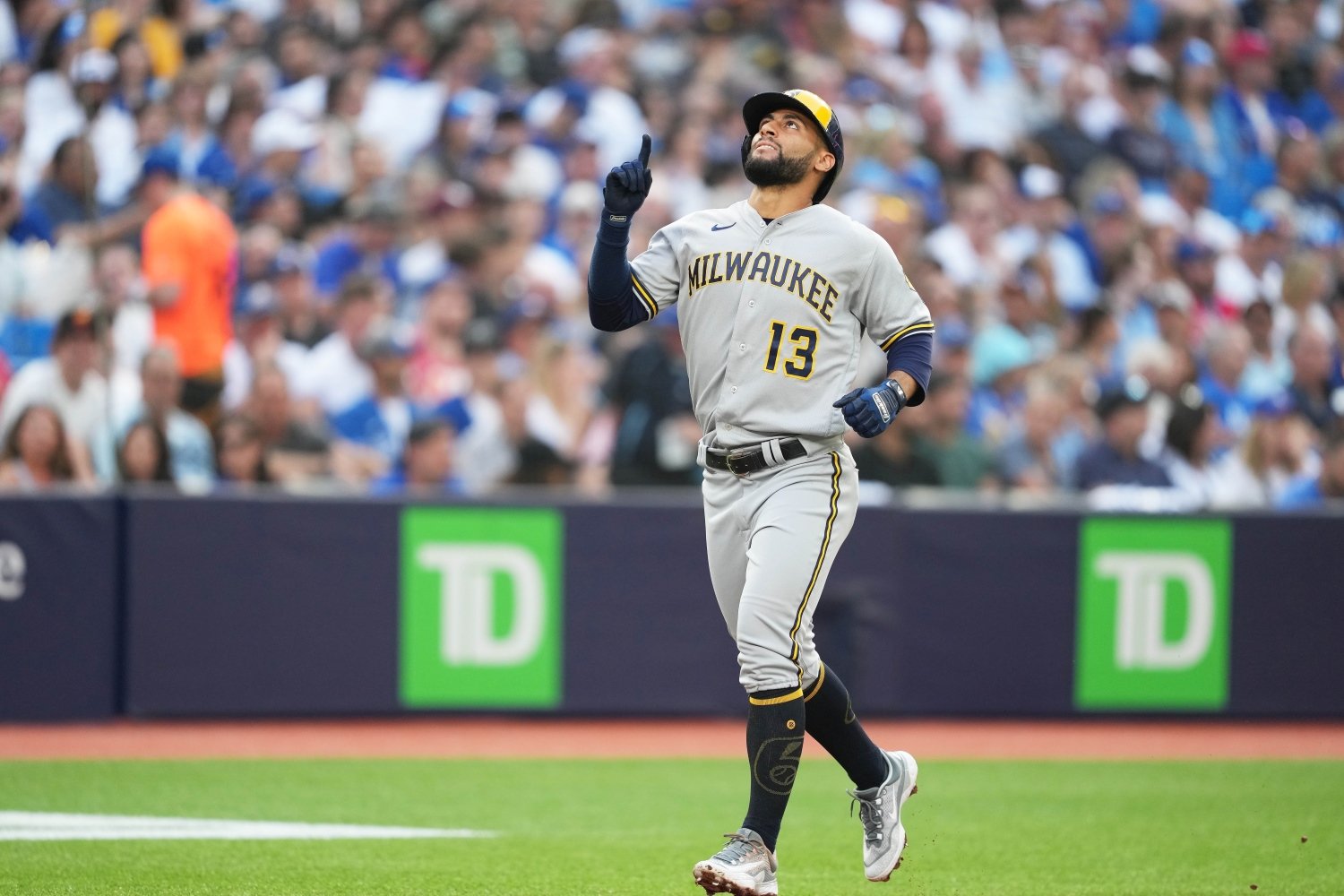 It's true that Luis Urias has only come to the plate 36 times in his first fortnight of big-league action in 2023. He hasn't yet had any chance to shake off the rust that comes with a hamstring strain severe enough to have put him on the shelf for two full months. It's almost unfair to even discuss optioning him to Triple A. Nor has Abraham Toro burned it up so relentlessly that promoting him from Nashville to Milwaukee is a no-brainer. Toro did do a bit of impressive work during his very brief call-up earlier this month, but on the year, he's only hitting .252/.337/.344 even in Nashville. That line is, perhaps, misleadingly weak, because the OBP is pretty strong, and Toro has drawn 22 walks while striking out just 28 times, in almost 200 plate appearances. Still, his numbers make less than an ironclad case for him. Even so, Milwaukee needs to make the move. Urías is scuffling badly, in just the same way as the rest of the lineup. He has two hits, and both were for extra bases. Like the lineup he's joined, he's an all-or-nothing hitter. Toro would provide something of a counterbalance to the identity of the Brewers offense, whereas Urías only makes that identity more extreme. This maneuver is pretty easy, logistically. Urías has two option years left, and the shape of his development makes it hard to imagine that the Brewers will still want to send him down at any point in 2025 or beyond. Giving him a chance to see Triple-A pitching for a while--to get his timing and approach calibrated better without costing the parent club outs in the process--would cost the team almost nothing. Meanwhile, Toro could be the lineup-lengthening infielder who has been missing from the positional corps. If Willy Adames and Brian Anderson were hitting better, the decision would be a bit easier. If Andruw Monasterio and Owen Miller weren't proving so versatile and valuable, it might be impossible. As it is, though, the spot on the roster and within both the offensive and defensive lineups that Urías occupies can be quite fluid right now. They have interchangeable parts everywhere. A targeted trade of a player with a redundant skill set for one with something new to offer an offense in crisis makes good sense. The Brewers were cautious with Urías's injury, but because they couldn't hit and felt he was ready, they moved him more quickly through the rehab assignment phase of his recovery. It's time to pay the piper for that. Urías isn't broken, and he'll eventually rediscover his approach. While he regains the balances and rhythms he's missing, though, Toro deserves a longer look. He might provide a nice little charge for the bottom half of the lineup, where the team has been stunningly flat lately.
-
In the stormy present, it’s hard to remember the halcyon home stretch of 2021, and even harder to see a sun-drenched dynasty emerging in the near future. Yet, blending current trends with core identity, it’s the Brewers who look best-positioned to own the NL Central for the next half-decade. Image courtesy of © Charles LeClaire-USA TODAY Sports In the stormy present, it’s hard to remember the halcyon home stretch of 2021, and even harder to see a sun-drenched dynasty emerging in the near future. Yet, blending current trends with core identity, it’s the Brewers who look best-positioned to own the NL Central for the next half-decade. A losing jag at home, especially one punctuated by a sweep at the hands of the worst team in MLB, can make everything seem hopeless. At this moment, the Brewers (who started 14-5, against what looked like a formidable early slate!) are barely over .500, and they’re staring up at the Pirates in the standings. Corbin Burnes, Brandon Woodruff, and Willy Adames are all a year and a half from free agency, and it’s not clear which (if any) is a good candidate for a contract extension at an agreeable price. Craig Counsell isn’t under contract beyond this season, and the lack of news on that front has gone from eerie silence to an active, ominous sucking sound. That’s one way of looking at things. Here’s another. If you had to line up the five teams in the NL Central from best to worst for the next five years (2024-28), based on their current assets and liabilities (be they players, ownership, market strength, or other), how would you do it? I think I would go: Brewers Reds Cardinals Cubs Pirates If the early progress of this season has taught us anything—and that’s a subject of some debate, but let’s take it as read for now—it’s that everyone in this division has problems. Funnily, despite Bud Selig having long ago made sure that they were the embodiment of baseball’s Third World, the Crew currently have first-world problems. Their owner is consistently committed and motivated, to a greater extent than at least three of their rivals. Their front office has demonstrated greater competence in scouting, player development, and roster construction than at least three of their rivals. They have a better balance of proven talent and help coming from the farm system than at least three of their rivals. At the moment, and in defiance of all odds before this season began, the Reds look like the most serious threat to the Brewers’ hegemony. They’ve built a promising, young pitching staff, and even with Kyle Boddy having moved on from his affiliation with the team, they feel as close to the state of the art in technology-driven pitching development as any team in the division. They were perspicacious and fortunate in trading off the core of their last would-be contending club, and they’ve drafted quite well recently—blending betting on upside and smart draft demography as well as any team in baseball. They also have Elly De La Cruz. On the other hand, nothing in the track record of any members of the Castellini family suggests that they’ll be as patient or as resilient as Mark Attanasio has been. When they spend money, they do it hurriedly, fitfully, temporarily, and not on a sufficient scale to obliterate the downsides of those errors. In all likelihood, they’ll leave the door open for others to win the division, even when they have enough talent and (theoretical) spending power to lock things up. The Cardinals still have the best mix of organizational fundamentals—tons of money, an august market, good player development—of any team in the Central, but let’s be honest: they’re a mess. They’re a mess in 2023, and the particular way in which they are a mess makes it likely that they’ll remain pretty messy in 2024 and beyond. Their farm system, especially compared to those of the other four teams in this group, is top-heavy, and their current core is getting old right in front of our eyes. That leaves the Cubs and Pirates, who are what they have been for the last 125 years or so: perfect foils. The Cubs are always rich, but only sometimes interested in acting like it. They’re often talented, but frequently uninspired. Owned for much of their history by monuments to nepotism and vestigial entrepreneurship, they’ve frittered away many of their best chances to claim lasting dominion even in this minor regional kingdom, and the Ricketts family (the very reason why they’ve fallen so far in the last half-decade) is the most galling example of that yet. The Cubs need new baseball leadership, but lack owners with the give-a-damn to see that need, let alone act upon it. The same problem has often haunted the Pirates, but whereas the Cubs’ endless supply of money creates a wide and lived-in margin for error, the Pirates never have one at all. As has sometimes been the case, though, Pittsburgh has the edge at the moment. They have as deep a farm as anyone in the race, especially if one counts the infusion they’ll enjoy after picking first in next month’s draft. They have made some improbably fan-friendly moves recently, including extending Bryan Reynolds, and there are signs that they’ve gotten back to (or even north of) average in player development, after falling behind the curve several years ago. Still, you can’t trust the Pirates to be good for long. As much as they make better foils for the Cubs throughout history, in the modern baseball landscape, they’re like the Reds, only more so. At some point, they’ll fall behind on the development side again, and they’ll fail to invest what would be required to make up for that, financially. To a greater extent than at any time in recent memory, the division is wide open. The Cardinals are at a 30-year nadir. The Cubs aren’t in position to strongarm anyone. Yet, to a greater extent than usual, every team seems to have short- or medium-term hope. There’s no clear-cut favorite locked in for the years to come. Do you agree, though, that the Brewers have the brightest future? Or do they face a steeper set of peaks and valleys ahead, as they navigate the nearing free agency of some key contributors and the aging curves of others? How would you rank the five NL Central clubs, starting next season? View full article
-
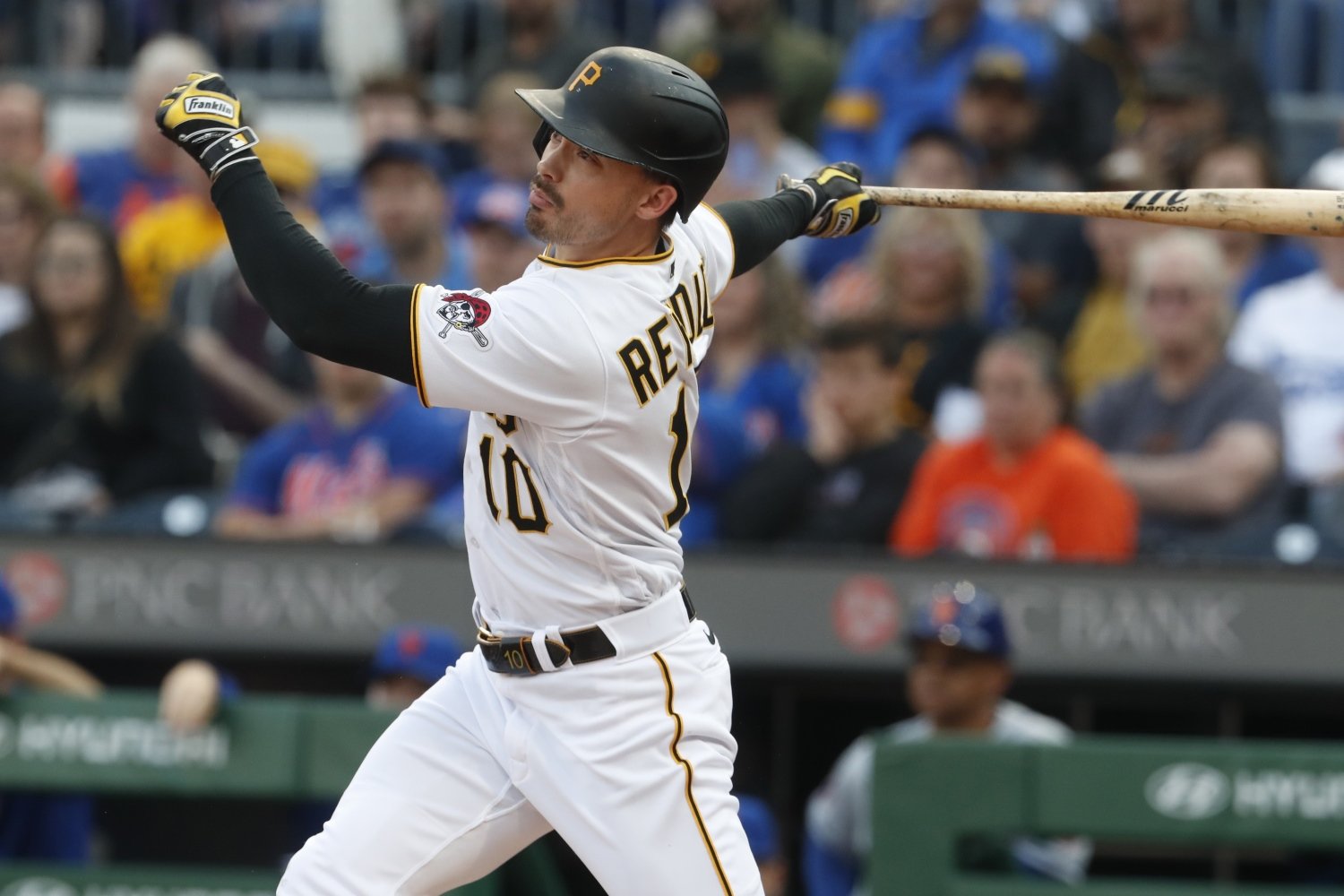 A losing jag at home, especially one punctuated by a sweep at the hands of the worst team in MLB, can make everything seem hopeless. At this moment, the Brewers (who started 14-5, against what looked like a formidable early slate!) are barely over .500, and they’re staring up at the Pirates in the standings. Corbin Burnes, Brandon Woodruff, and Willy Adames are all a year and a half from free agency, and it’s not clear which (if any) is a good candidate for a contract extension at an agreeable price. Craig Counsell isn’t under contract beyond this season, and the lack of news on that front has gone from eerie silence to an active, ominous sucking sound. That’s one way of looking at things. Here’s another. If you had to line up the five teams in the NL Central from best to worst for the next five years (2024-28), based on their current assets and liabilities (be they players, ownership, market strength, or other), how would you do it? I think I would go: Brewers Reds Cardinals Cubs Pirates If the early progress of this season has taught us anything—and that’s a subject of some debate, but let’s take it as read for now—it’s that everyone in this division has problems. Funnily, despite Bud Selig having long ago made sure that they were the embodiment of baseball’s Third World, the Crew currently have first-world problems. Their owner is consistently committed and motivated, to a greater extent than at least three of their rivals. Their front office has demonstrated greater competence in scouting, player development, and roster construction than at least three of their rivals. They have a better balance of proven talent and help coming from the farm system than at least three of their rivals. At the moment, and in defiance of all odds before this season began, the Reds look like the most serious threat to the Brewers’ hegemony. They’ve built a promising, young pitching staff, and even with Kyle Boddy having moved on from his affiliation with the team, they feel as close to the state of the art in technology-driven pitching development as any team in the division. They were perspicacious and fortunate in trading off the core of their last would-be contending club, and they’ve drafted quite well recently—blending betting on upside and smart draft demography as well as any team in baseball. They also have Elly De La Cruz. On the other hand, nothing in the track record of any members of the Castellini family suggests that they’ll be as patient or as resilient as Mark Attanasio has been. When they spend money, they do it hurriedly, fitfully, temporarily, and not on a sufficient scale to obliterate the downsides of those errors. In all likelihood, they’ll leave the door open for others to win the division, even when they have enough talent and (theoretical) spending power to lock things up. The Cardinals still have the best mix of organizational fundamentals—tons of money, an august market, good player development—of any team in the Central, but let’s be honest: they’re a mess. They’re a mess in 2023, and the particular way in which they are a mess makes it likely that they’ll remain pretty messy in 2024 and beyond. Their farm system, especially compared to those of the other four teams in this group, is top-heavy, and their current core is getting old right in front of our eyes. That leaves the Cubs and Pirates, who are what they have been for the last 125 years or so: perfect foils. The Cubs are always rich, but only sometimes interested in acting like it. They’re often talented, but frequently uninspired. Owned for much of their history by monuments to nepotism and vestigial entrepreneurship, they’ve frittered away many of their best chances to claim lasting dominion even in this minor regional kingdom, and the Ricketts family (the very reason why they’ve fallen so far in the last half-decade) is the most galling example of that yet. The Cubs need new baseball leadership, but lack owners with the give-a-damn to see that need, let alone act upon it. The same problem has often haunted the Pirates, but whereas the Cubs’ endless supply of money creates a wide and lived-in margin for error, the Pirates never have one at all. As has sometimes been the case, though, Pittsburgh has the edge at the moment. They have as deep a farm as anyone in the race, especially if one counts the infusion they’ll enjoy after picking first in next month’s draft. They have made some improbably fan-friendly moves recently, including extending Bryan Reynolds, and there are signs that they’ve gotten back to (or even north of) average in player development, after falling behind the curve several years ago. Still, you can’t trust the Pirates to be good for long. As much as they make better foils for the Cubs throughout history, in the modern baseball landscape, they’re like the Reds, only more so. At some point, they’ll fall behind on the development side again, and they’ll fail to invest what would be required to make up for that, financially. To a greater extent than at any time in recent memory, the division is wide open. The Cardinals are at a 30-year nadir. The Cubs aren’t in position to strongarm anyone. Yet, to a greater extent than usual, every team seems to have short- or medium-term hope. There’s no clear-cut favorite locked in for the years to come. Do you agree, though, that the Brewers have the brightest future? Or do they face a steeper set of peaks and valleys ahead, as they navigate the nearing free agency of some key contributors and the aging curves of others? How would you rank the five NL Central clubs, starting next season?
-
The Brewers' much-heralded ace has rarely been in top form thus far in 2023. In his most recent start, however, he might have begun to shake off the muck and get up to full speed for the first time. Was the Orioles' lineup the key to getting Milwaukee's stud going? Image courtesy of © Michael McLoone-USA TODAY Sports The Brewers' much-heralded ace has rarely been in top form thus far in 2023. In his most recent start, however, he might have begun to shake off the muck and get up to full speed for the first time. Was the Orioles' lineup the key to getting Milwaukee's stud going? It's hard to blame Orioles manager Brandon Hyde for not wanting to send out more right-handed batters than necessary against Corbin Burnes Wednesday. Since the start of 2021, they're only hitting .195/.257/.318 against him. Lefties have actually put up almost identical numbers during that span, but the minatory bulk of him and the spin of his fastball have to make him a pitiably miserable at-bat for a righty. Thus, Hyde ran out a lineup in which the only right-handed hitters (at least against a righty like Burnes) were Austin Hays and Jorge Mateo. Seven of every nine of his batters would have the platoon advantage on the crossdraw California cowboy. As it happened, Burnes was so efficient against Hays and Mateo that facing lefties made up even more of his start than that breakdown would imply. As anyone who tuned into that game knows, though, it didn't matter. Burnes struck out nine batters for the first time this year. He fired eight dominant innings, allowing just two hits and no runs. The lefties were helpless against him, as were Hays and Mateo, thanks to an extraordinarily sharp day for Burnes's cutter. In one sense, that was just the natural response to the circumstances he faced. Burnes has made heavy use of the cutter against lefties all season. He was fractionally more reliant on that pitch against them than is his wont, but still mixed his changeup and curveball in with the offering against them, Because facing so many lefties got him so deep into his cutter, though, or because he had superb feel for the pitch, or just because he doesn't have as much faith in his other options at the moment, Burnes also leaned much more heavily on the cutter against Hays and Mateo than he usually does against right-handed batters. As Brewers fans know, the cutter is the key to everything for Burnes. It's far from being his only weapon, but it's the pitch at the heart of his repertoire, and it hasn't been itself this year. Opponents seem to be getting unusually good looks at it. His command of it is much less fine than it usually is. That he went to it so relentlessly and so successfully Wednesday, then, is encouraging. It's just possible that, thanks to the Orioles' ability and eagerness to play matchups against him, Burnes is now back in the saddle. He overwhelmed and overcame a good offense almost solely on the strength of his cutter, and got to throw it more often in a single start than he might have done in a couple of them under normal circumstances. Tuesday night's start in Minnesota will be a fascinating test. Will Burnes go back to that well as often against the Twins, or revert to trying to mix his pitches and changing speeds and eye levels on hitters who are geared up for the cutter? Was his success against Baltimore serendipity--the confluence of slightly better feel for a pitch on a given night with some friendly umpiring and accidentally accommodating matchups from the opponent--or the start of something more significant and sustainable? We can't answer that question. Even Burnes can only make a more educated (but, perhaps, also more biased) guess. We don't know ourselves well enough to tell luck or random variation apart from concrete, lasting change, especially when the competing possibilities are complicated by interactions with forces beyond luck or internal control, like the opposing force of an opponent and their adjustments. Plainly, though, Wednesday was a good development for Burnes. It represented a step on the journey back to the land of aces, and whether his next step is clearly in the same direction or not, he's closer to being the hurler the Brewers need him to be after having that outing. View full article
-
Can an Insanely Cutter-Heavy Start Get Corbin Burnes Untracked?
Matthew Trueblood posted an article in Brewers
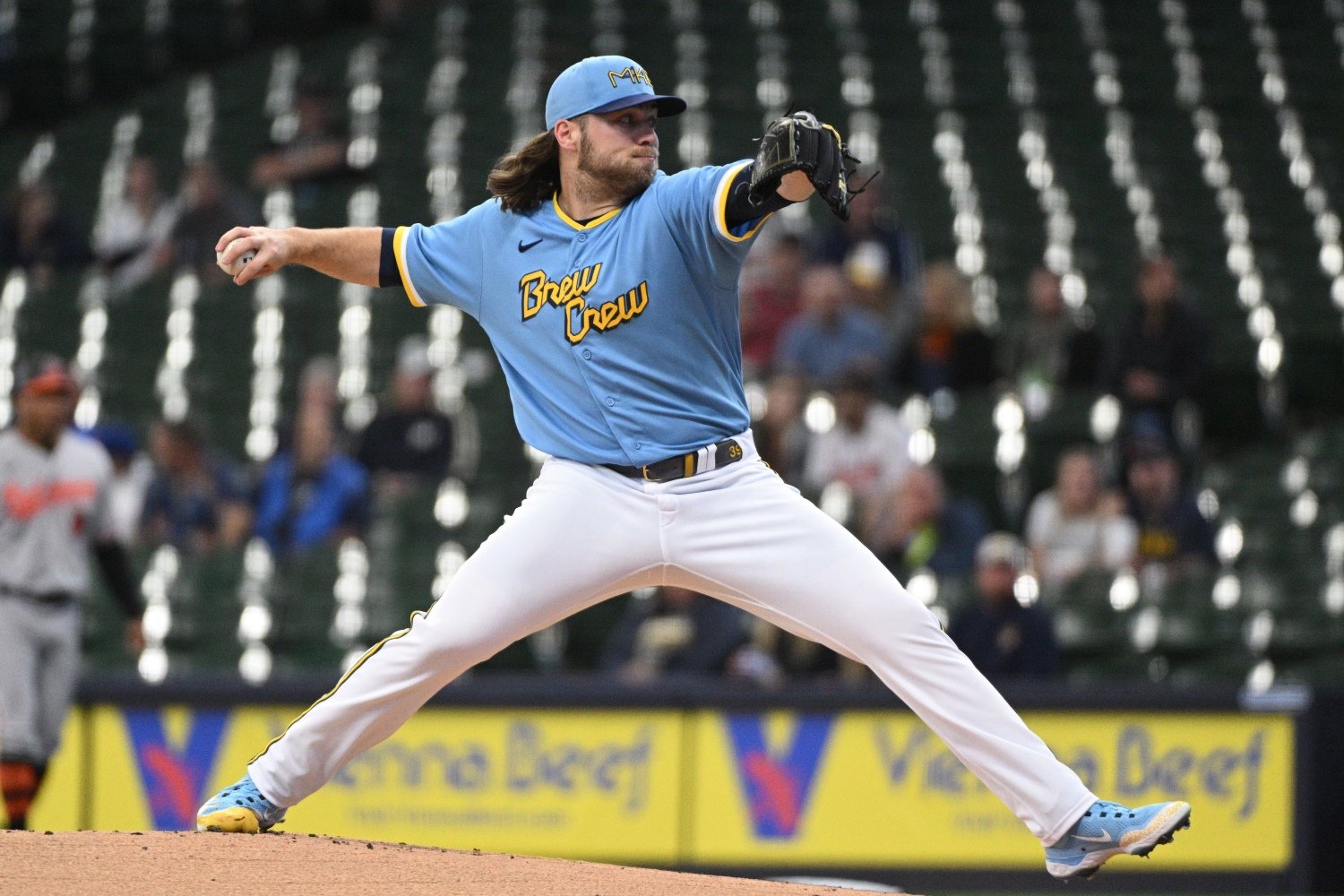 It's hard to blame Orioles manager Brandon Hyde for not wanting to send out more right-handed batters than necessary against Corbin Burnes Wednesday. Since the start of 2021, they're only hitting .195/.257/.318 against him. Lefties have actually put up almost identical numbers during that span, but the minatory bulk of him and the spin of his fastball have to make him a pitiably miserable at-bat for a righty. Thus, Hyde ran out a lineup in which the only right-handed hitters (at least against a righty like Burnes) were Austin Hays and Jorge Mateo. Seven of every nine of his batters would have the platoon advantage on the crossdraw California cowboy. As it happened, Burnes was so efficient against Hays and Mateo that facing lefties made up even more of his start than that breakdown would imply. As anyone who tuned into that game knows, though, it didn't matter. Burnes struck out nine batters for the first time this year. He fired eight dominant innings, allowing just two hits and no runs. The lefties were helpless against him, as were Hays and Mateo, thanks to an extraordinarily sharp day for Burnes's cutter. In one sense, that was just the natural response to the circumstances he faced. Burnes has made heavy use of the cutter against lefties all season. He was fractionally more reliant on that pitch against them than is his wont, but still mixed his changeup and curveball in with the offering against them, Because facing so many lefties got him so deep into his cutter, though, or because he had superb feel for the pitch, or just because he doesn't have as much faith in his other options at the moment, Burnes also leaned much more heavily on the cutter against Hays and Mateo than he usually does against right-handed batters. As Brewers fans know, the cutter is the key to everything for Burnes. It's far from being his only weapon, but it's the pitch at the heart of his repertoire, and it hasn't been itself this year. Opponents seem to be getting unusually good looks at it. His command of it is much less fine than it usually is. That he went to it so relentlessly and so successfully Wednesday, then, is encouraging. It's just possible that, thanks to the Orioles' ability and eagerness to play matchups against him, Burnes is now back in the saddle. He overwhelmed and overcame a good offense almost solely on the strength of his cutter, and got to throw it more often in a single start than he might have done in a couple of them under normal circumstances. Tuesday night's start in Minnesota will be a fascinating test. Will Burnes go back to that well as often against the Twins, or revert to trying to mix his pitches and changing speeds and eye levels on hitters who are geared up for the cutter? Was his success against Baltimore serendipity--the confluence of slightly better feel for a pitch on a given night with some friendly umpiring and accidentally accommodating matchups from the opponent--or the start of something more significant and sustainable? We can't answer that question. Even Burnes can only make a more educated (but, perhaps, also more biased) guess. We don't know ourselves well enough to tell luck or random variation apart from concrete, lasting change, especially when the competing possibilities are complicated by interactions with forces beyond luck or internal control, like the opposing force of an opponent and their adjustments. Plainly, though, Wednesday was a good development for Burnes. It represented a step on the journey back to the land of aces, and whether his next step is clearly in the same direction or not, he's closer to being the hurler the Brewers need him to be after having that outing.
-
Brewers Hitters Don't Know What They're Looking For Up There
Matthew Trueblood posted an article in Brewers
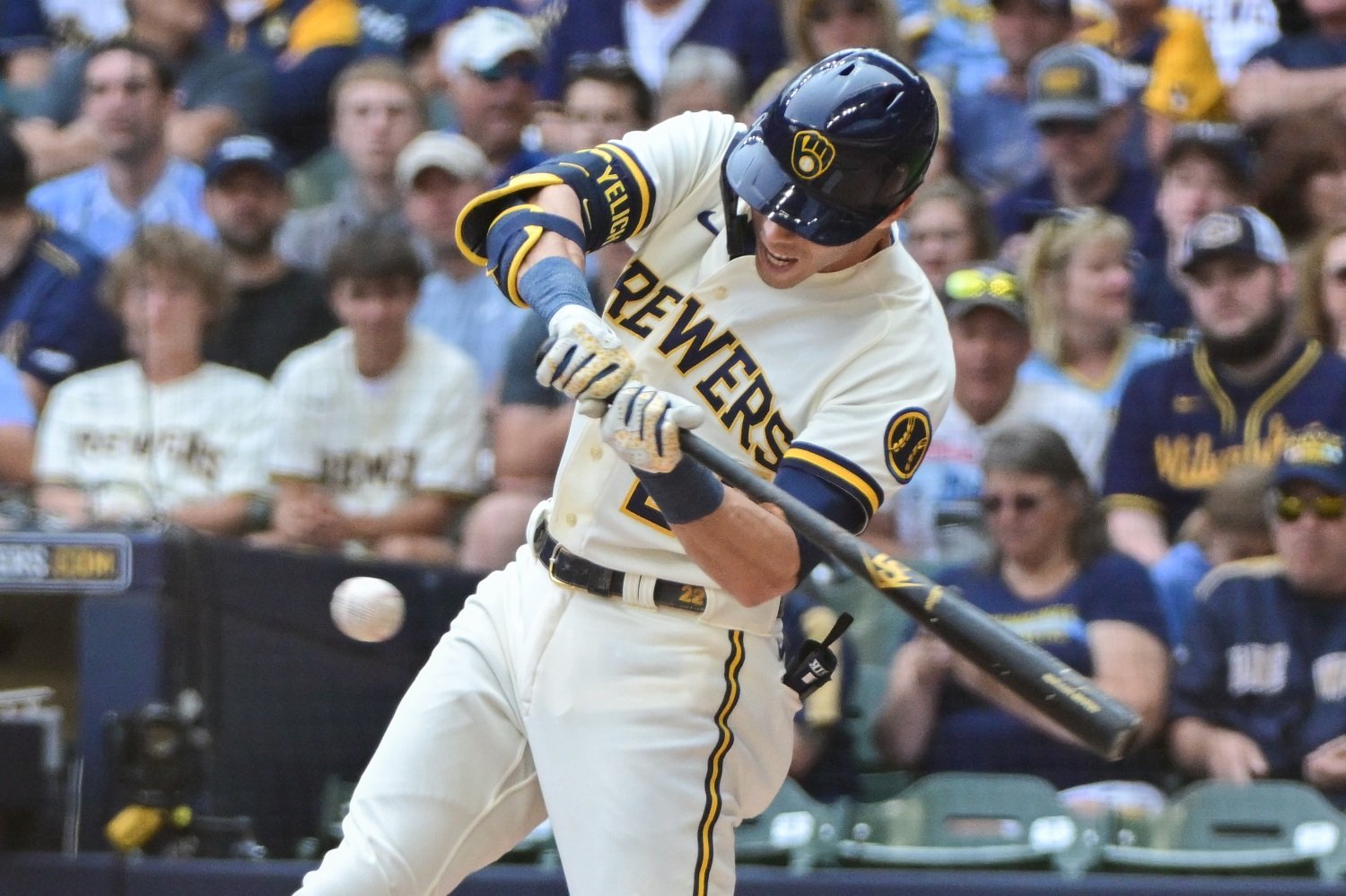 In 2022, only the Yankees swung at fewer pitches in the bottom segment of the strike zone and below it than did the Brewers. Hitters on both of those teams were happy to take a walk, but their real goal was to force opposing pitchers to elevate a little bit. When they did, the hitters could elevate and do damage. This season, the Brewers are similarly close to the bottom of the league when it comes to swing rate at pitches near the bottom of the zone. The Yankees are still below them, and now the Reds and Pirates are, too, but it's not a major gap. Milwaukee hitters wait out opposing pitchers when they attack the bottom of the zone. Alas, the conviction and the competence that allowed last year's team to punish pitchers when they did leave a pitch up is absent. It seems as though, between new acquisitions and some injuries that have limited familiar faces, the 2023 Brewers lack the capacity to pounce when a mistake pitch comes. In baseball, there's nothing more deadly than a missed opportunity, and the Brewers seem to lead the league in those. To his credit, when he got a couple of pitches up around the belly on Saturday afternoon, William Contreras did not miss. His game-tying homer was the kind of thing he needs to do consistently, in order to make up for the inevitable ground balls that come when he gets less friendly fodder to hit. He's been roughly what the team expected at the plate this year; it's just that everyone else has been worse. Willy Adames's ground ball rate has climbed by more than 7 percentage points. Brian Anderson's is up, too, and unlike Adames, he hardly had anywhere to go in that direction. He's now putting it on the ground nearly 53 percent of the time. Add those numbers and trend arrows to the well-documented tendencies of both Contreras and Christian Yelich to hammer the ball into the ground, and you have a team that spends far too much of its time hoping to squeeze a two-hopper between infielders, instead of trying to place a slicing liner between outfielders. On its face, that the team so assiduously waits out low pitches would seem to clash with the fact that they hit so many ground balls. In truth, though, that reflects the swings the Brewers build, the types of hitters they like to acquire, and that lack of a clear, simple process at the plate. They don't ignore low stuff because they want to get slightly underneath the ball at contact, and have more room to do so when the pitch is up, but because it's harder to get the barrel to the ball low in the zone given the swing profiles of most players on this roster. The same swing profiles, though, are exploitable by elevated pitches. Hurlers can manipulate most Brewers batters not only by getting whiffs (although there are far too many of those in the lineup right now), but also by moving the ball up and down their bats. Ground balls often happen because a hitter is unable to adjust to good, late horizontal movement, and the Brewers are no exception to that. Pitchers get them out by getting them to look for a pitch in a certain spot, but violating their expectations about which pitch it will be when they do throw to that spot. Milwaukee batters have the third-lowest in-zone contact rate in MLB. That's obviously a bad thing, on its own, but trading contact for damage when contact is made is often a viable strategy. The problem is that, unlike other teams with similar problems, the Brewers aren't executing those tradeoffs. The other four teams in the bottom five in the league in that number are the Braves, the Twins, the Royals, and the Mariners. All four are in the top 10 in MLB in terms of the rate at which they pull the ball; the Brewers are 27th. The Twins, Mariners, and Royals are all in the bottom five in MLB in ground ball rate; the Brewers are fourth. Trading Hunter Renfroe over the winter was defensible, and after a strong start, the Angels outfielder has struggled mightily over the last six weeks. Acquiring Contreras at such a low price was a no-brainer. Signing Anderson has, on balance, panned out well so far. Still, a bit more than 40 percent of the way through this season, the Brewers have to reckon with the fact that they have the second-worst offense in the National League. Tweaks to several players' approaches are in order, but it's hard to gauge how well those will be able to take root, midstream. For that matter, it's hard to tell whether the Brewers even recognize the need for these changes, beyond knowing that whatever they're doing is not working. The team conceived and implemented a certain approach this spring, and it feels disturbingly unlikely that they'll be able to make an immediate change to it now.
-
- 2
-
-
- william contreras
- willy adames
- (and 1 more)
-
Hitting at the big-league level is incredibly hard, even for players with extraordinary talent and clear idea of what they're trying to do. As the Brewers wallow at the bottom of the league in offensive production, it's becoming clear that their hitters lack the latter, neutering the former. Image courtesy of © Benny Sieu-USA TODAY Sports Hitting at the big-league level is incredibly hard, even for players with extraordinary talent and clear idea of what they're trying to do. As the Brewers wallow at the bottom of the league in offensive production, it's becoming clear that their hitters lack the latter, neutering the former. In 2022, only the Yankees swung at fewer pitches in the bottom segment of the strike zone and below it than did the Brewers. Hitters on both of those teams were happy to take a walk, but their real goal was to force opposing pitchers to elevate a little bit. When they did, the hitters could elevate and do damage. This season, the Brewers are similarly close to the bottom of the league when it comes to swing rate at pitches near the bottom of the zone. The Yankees are still below them, and now the Reds and Pirates are, too, but it's not a major gap. Milwaukee hitters wait out opposing pitchers when they attack the bottom of the zone. Alas, the conviction and the competence that allowed last year's team to punish pitchers when they did leave a pitch up is absent. It seems as though, between new acquisitions and some injuries that have limited familiar faces, the 2023 Brewers lack the capacity to pounce when a mistake pitch comes. In baseball, there's nothing more deadly than a missed opportunity, and the Brewers seem to lead the league in those. To his credit, when he got a couple of pitches up around the belly on Saturday afternoon, William Contreras did not miss. His game-tying homer was the kind of thing he needs to do consistently, in order to make up for the inevitable ground balls that come when he gets less friendly fodder to hit. He's been roughly what the team expected at the plate this year; it's just that everyone else has been worse. Willy Adames's ground ball rate has climbed by more than 7 percentage points. Brian Anderson's is up, too, and unlike Adames, he hardly had anywhere to go in that direction. He's now putting it on the ground nearly 53 percent of the time. Add those numbers and trend arrows to the well-documented tendencies of both Contreras and Christian Yelich to hammer the ball into the ground, and you have a team that spends far too much of its time hoping to squeeze a two-hopper between infielders, instead of trying to place a slicing liner between outfielders. On its face, that the team so assiduously waits out low pitches would seem to clash with the fact that they hit so many ground balls. In truth, though, that reflects the swings the Brewers build, the types of hitters they like to acquire, and that lack of a clear, simple process at the plate. They don't ignore low stuff because they want to get slightly underneath the ball at contact, and have more room to do so when the pitch is up, but because it's harder to get the barrel to the ball low in the zone given the swing profiles of most players on this roster. The same swing profiles, though, are exploitable by elevated pitches. Hurlers can manipulate most Brewers batters not only by getting whiffs (although there are far too many of those in the lineup right now), but also by moving the ball up and down their bats. Ground balls often happen because a hitter is unable to adjust to good, late horizontal movement, and the Brewers are no exception to that. Pitchers get them out by getting them to look for a pitch in a certain spot, but violating their expectations about which pitch it will be when they do throw to that spot. Milwaukee batters have the third-lowest in-zone contact rate in MLB. That's obviously a bad thing, on its own, but trading contact for damage when contact is made is often a viable strategy. The problem is that, unlike other teams with similar problems, the Brewers aren't executing those tradeoffs. The other four teams in the bottom five in the league in that number are the Braves, the Twins, the Royals, and the Mariners. All four are in the top 10 in MLB in terms of the rate at which they pull the ball; the Brewers are 27th. The Twins, Mariners, and Royals are all in the bottom five in MLB in ground ball rate; the Brewers are fourth. Trading Hunter Renfroe over the winter was defensible, and after a strong start, the Angels outfielder has struggled mightily over the last six weeks. Acquiring Contreras at such a low price was a no-brainer. Signing Anderson has, on balance, panned out well so far. Still, a bit more than 40 percent of the way through this season, the Brewers have to reckon with the fact that they have the second-worst offense in the National League. Tweaks to several players' approaches are in order, but it's hard to gauge how well those will be able to take root, midstream. For that matter, it's hard to tell whether the Brewers even recognize the need for these changes, beyond knowing that whatever they're doing is not working. The team conceived and implemented a certain approach this spring, and it feels disturbingly unlikely that they'll be able to make an immediate change to it now. View full article
-
 With the returns of Willy Adames and Luis Urias this week, the positional corps is starting to look the way the team envisioned before the season began. Although Jesse Winker is nominally on the IL, he's really off the roster because he wasn't hitting the way he would have needed to in order to remain on it. He's hit the ball hard much more often in his first couple of rehab appearances, but needs to prove his power is back before rejoining the team. Garrett Mitchell won't be back, and it seems like Tyrone Taylor's elbow injury could be a lingering problem, but Joey Wiemer and Brian Anderson have been good enough to minimize the impact of those losses. With Christian Yelich, Wiemer, and Anderson available in the outfield; Adames, Urias, Rowdy Tellez, Abraham Toro, and Andruw Monasterio on the infield; and William Contreras and Victor Caratini sharing the catching duties, the lineup is more or less what the team hoped it would be two months ago, at least in terms of the names. Obviously, that's the not the same thing as being pleased with the production. The team is last in the National League in both on-base percentage and slugging. The hope is that the full-strength lineup will be better than that, even if the goal is more in the range of league-average than of becoming a juggernaut. Alas, so far, Urias looks compromised by his long injury-enforced layoff, and Adames has been as boom-or-bust since his return as he was for the month before he went down with a concussion. On the pitching side, the reinforcements aren't really here yet, but they're getting close. Matt Bush had a solid inning on Thursday for Triple-A Nashville, with two strikeouts and only one baserunner allowed. His fastball was sitting 95, and his curveball had its usual, healthy movement. It's no surprise that Bush overpowered hitters at that level, but the outing underscored the fact that he's nearly ready to return to what has become a somewhat shorthanded bullpen. Eric Lauer's first rehab appearance for Nashville was rocky, in terms of results, but his velocity was up, and the drop in that very number was a major indicator of the trouble he had before landing on the injured list last month. More than whether he gets hit or not, what matters for Lauer is showing that he can sustain that velocity as he stretches back out and works on normal rest. If so, he should be back before the month is out. Wade Miley, too, figures to be back in the rotation soon. The Crew has stayed afloat through considerable adversity. They've shown well even against tough competition, as when they beat the Orioles in a home series this week. Still, losing to the A's Friday night is a good reminder that being down so many important contributors takes a toll. Even a team that feeble can steal a game (or, God forbid, a few of them, as the Pirates found out this week) when their opponent is so diminished by injuries that they have a flavor of Triple A themselves. With the roster regaining its intended shape, the Brewers should be able to avoid losses like that one in the future--even against left-handed pitchers. For now, though, they just need to continue convalescing. Over the next three weeks, they'll play two series against the overachievers from Pittsburgh, and if Counsell has a healthy group when those games are played, the team should come out of them with a fairly comfortable division lead.
-
Lately, it feels like there's a weekly line change on the Brewers roster, as a few players return from the injured list and a few others land there. The first two and a half months have been a bloodbath, testing the depth and the mettle of the team, and they've survived. Now, they're getting closer to full strength. The question will be whether they can stay that way for any length of time. Image courtesy of © Jeff Hanisch-USA TODAY Sports Lately, it feels like there's a weekly line change on the Brewers roster, as a few players return from the injured list and a few others land there. The first two and a half months have been a bloodbath, testing the depth and the mettle of the team, and they've survived. Now, they're getting closer to full strength. The question will be whether they can stay that way for any length of time. With the returns of Willy Adames and Luis Urias this week, the positional corps is starting to look the way the team envisioned before the season began. Although Jesse Winker is nominally on the IL, he's really off the roster because he wasn't hitting the way he would have needed to in order to remain on it. He's hit the ball hard much more often in his first couple of rehab appearances, but needs to prove his power is back before rejoining the team. Garrett Mitchell won't be back, and it seems like Tyrone Taylor's elbow injury could be a lingering problem, but Joey Wiemer and Brian Anderson have been good enough to minimize the impact of those losses. With Christian Yelich, Wiemer, and Anderson available in the outfield; Adames, Urias, Rowdy Tellez, Abraham Toro, and Andruw Monasterio on the infield; and William Contreras and Victor Caratini sharing the catching duties, the lineup is more or less what the team hoped it would be two months ago, at least in terms of the names. Obviously, that's the not the same thing as being pleased with the production. The team is last in the National League in both on-base percentage and slugging. The hope is that the full-strength lineup will be better than that, even if the goal is more in the range of league-average than of becoming a juggernaut. Alas, so far, Urias looks compromised by his long injury-enforced layoff, and Adames has been as boom-or-bust since his return as he was for the month before he went down with a concussion. On the pitching side, the reinforcements aren't really here yet, but they're getting close. Matt Bush had a solid inning on Thursday for Triple-A Nashville, with two strikeouts and only one baserunner allowed. His fastball was sitting 95, and his curveball had its usual, healthy movement. It's no surprise that Bush overpowered hitters at that level, but the outing underscored the fact that he's nearly ready to return to what has become a somewhat shorthanded bullpen. Eric Lauer's first rehab appearance for Nashville was rocky, in terms of results, but his velocity was up, and the drop in that very number was a major indicator of the trouble he had before landing on the injured list last month. More than whether he gets hit or not, what matters for Lauer is showing that he can sustain that velocity as he stretches back out and works on normal rest. If so, he should be back before the month is out. Wade Miley, too, figures to be back in the rotation soon. The Crew has stayed afloat through considerable adversity. They've shown well even against tough competition, as when they beat the Orioles in a home series this week. Still, losing to the A's Friday night is a good reminder that being down so many important contributors takes a toll. Even a team that feeble can steal a game (or, God forbid, a few of them, as the Pirates found out this week) when their opponent is so diminished by injuries that they have a flavor of Triple A themselves. With the roster regaining its intended shape, the Brewers should be able to avoid losses like that one in the future--even against left-handed pitchers. For now, though, they just need to continue convalescing. Over the next three weeks, they'll play two series against the overachievers from Pittsburgh, and if Counsell has a healthy group when those games are played, the team should come out of them with a fairly comfortable division lead. View full article

