



Jamie Cameron
-
Posts
203 -
Joined
-
Last visited
Content Type
Profiles
Forums
Blogs
Events
News
2026 Milwaukee Brewers Top Prospects Ranking
Milwaukee Brewers Videos
2022 Milwaukee Brewers Draft Picks
Milwaukee Brewers Free Agent & Trade Rumors, Notes, & Tidbits
Guides & Resources
2023 Milwaukee Brewers Draft Picks
2024 Milwaukee Brewers Draft Picks
The Milwaukee Brewers Players Project
2025 Milwaukee Brewers Draft Pick Tracker
2026 Milwaukee Brewers Draft Tracker: Picks & Bonuses
Store
Downloads
Gallery
Everything posted by Jamie Cameron
-
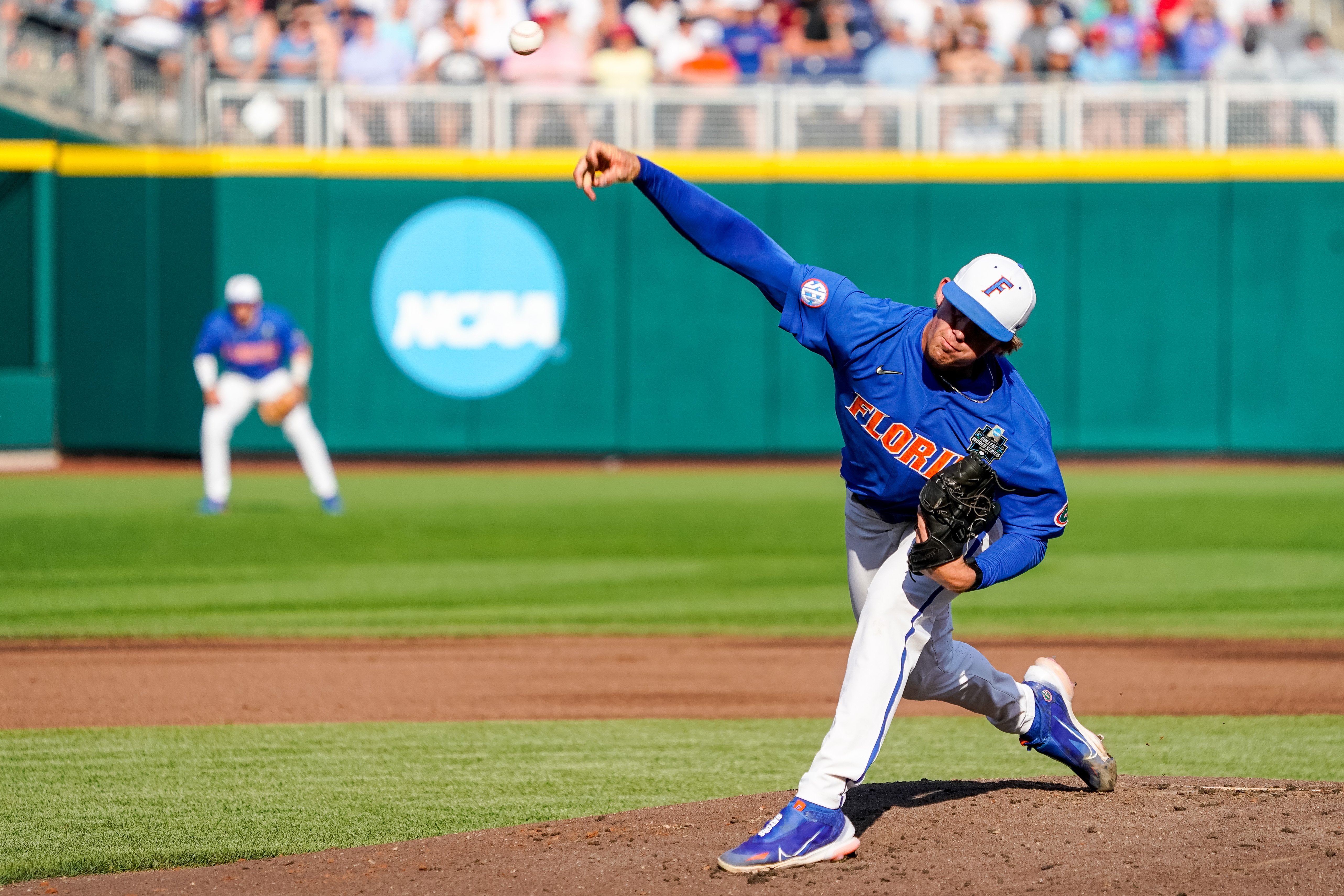 The Draft is now just days away. We continue our profiles of potential Brewers picks with an arm who would be an interesting fit in Milwaukee, Hurston Waldrep. While Waldrep may be gone by the time the Brewers pick (Cubs?) he fits the Brewers' preferred profile of a college pitcher with unique pitch traits. In his case, it's a cluster of outstanding secondary pitching that give him enormous upside. Who is He? Hurston Waldrep is a right-handed starting pitcher for the University of Florida who has had an uneven year for the Gators after transferring from Southern Miss. Waldrep turned it on in his first two starts in the College World Series before struggling in game two of the Championship Series. Still, his dominant end to the season helped surface that much of his inconsistencies during the regular season was as a result of poor pitch calling, specifically, an over reliance on his fastball as opposed to his secondary pitches. For me, Waldrep is comfortably the second-highest upside starting pitching prospect in the draft behind Paul Skenes. Why the Brewers Will Draft Him Waldrep currently sits 15th overall on the Consensus Board and has rankings between 6th and 26th on the boards I use as inputs to it. The appeal of Waldrep lies in having two comfortably plus secondary pitches and a possible third in the making. His fastball has good velocity, sitting 95-97mph (although it can reach 99 mph). He struggled to throw it for strikes consistently this season and its the one pitch opposing lineups have done damage against. His slider is plus, creating a ton of swing and miss. Waldrep also throws a curveball as a second breaker which is above average, and used significantly less. His best pitch is his split change. It’s an easy plus pitch and my favorite pitch in the entire class. It tumbles and just drops away from bats as it crosses the plate. Waldrep tends to command his secondaries more effectively than his fastball. Waldrep’s stuff is tantalizing, a four-pitch mix with each offering being at least above average. Combine that with his velocity and ability to command his secondaries and you have a rare combination of stuff resulting in uncommon upside. Why the Brewers Won’t Draft Him While Waldrep is a higher upside play than someone like Rhett Lowder , there’s much more risk in the profile. Waldrep has a high effort delivery, with a longer arm stroke and a lot of moving parts in his operation on the mound. The spotty control and command of his fastball adds another element of risk. The Brewers have done a good job of ironing out pitcher’s mechanical inconsistencies, and the potential payoff from drafting the caliber of stuff Waldrep possesses is rich. Ultimately, I think Waldrep might be gone when the Brewers pick. The way the board is shaping up currently, it looks like there will be a cluster of excellent college hitting available to Milwaukee at eighteen. What do you think of Hurston Waldrep as a prospect? How would you feel about him being the Brewers pick at 18 overall? Join the discussion in the comments.
 -
.jpg.75aa2c00a95abb098d6edba79d3c78eb.jpg) The MLB Draft is fast approaching. In recent weeks, there has been plenty of steam connecting the Brewers with a bevy of college hitters. The 2023 Draft is incredibly deep in most demographics, particularly college hitters with many prep prospects opting to go to college ahead of the shortened five-round COVID-impacted draft of 2020. Brayden Taylor is a prospect likely to appeal to the Brewers and other model-heavy teams. He'll be one of the many candidates the Brewers may consider with the 18th overall pick. Who is He? Brayden Taylor is a left-handed hitting third baseman from TCU. Taylor was a top-ten prospect on most draft boards until an uneven, inconsistent beginning of the college season caused his stock to drop. An outstanding finish to the season, an elite approach at the plate, and plenty of analytically friendly traits should ensure there is plenty of appeal for teams drafting between 11-30 overall in July. Taylor currently sits at #20 on the Consensus Board with rankings between 16 overall and 30 overall from the inputs I use. Why the Brewers Will Draft Him Taylor has a really promising approach at the plate that will likely translate into success as a professional. In addition to a beautiful left-handed swing, he has excellent bat-to-ball skills and a really keen eye at the plate. While he will lay off pitches outside the zone, he’s not afraid to be aggressive with pitches he feels like he can attack. Taylor does not put up some of the gaudy exit velocities of other college hitters in the class and had an inconsistent beginning of the 2023 season, in which he was perhaps trying too hard to show off pull-side power. When it was all said and done, Taylor hit .306/.430/.635 with a career-best 23 home runs (13 in 2022). Taylor’s plate discipline numbers add to his promising floor as he carried a 21 BB% in 2023, although his strikeouts were up, possibly in his search for more pop. Defensively, Taylor should stick at third base. He has good actions, an above-average arm, and solid range at the position. Why the Brewers Won’t Draft Him There’s little to critique in Taylor’s profile unless you want to ding a 4% increase in strikeouts in 2023. There’s an argument to be made that his ceiling is limited and you can knock his batted ball data being less exciting than other college bats. Ultimately, a team drafting Taylor is getting a polished offensive profile with multiple paths to success, a good defender at a corner infield spot, and a canny base runner who stole 39 bases over three seasons at TCU to boot. What do you think of Braden Taylor as a prospect? How would you feel about him being the Brewers pick at 18 overall? Join the discussion in the comments. Previous Draft Articles and Profiles Yohandy Morales Enrique Bradfield, Jr Tommy Troy Nolan Schanuel Nygaard Mock Draft v.2 Consensus Big Board Profiles: 26-50 Consensus Big Board Profiles: 1-25
The MLB Draft is fast approaching. In recent weeks, there has been plenty of steam connecting the Brewers with a bevy of college hitters. The 2023 Draft is incredibly deep in most demographics, particularly college hitters with many prep prospects opting to go to college ahead of the shortened five-round COVID-impacted draft of 2020. Brayden Taylor is a prospect likely to appeal to the Brewers and other model-heavy teams. He'll be one of the many candidates the Brewers may consider with the 18th overall pick. Who is He? Brayden Taylor is a left-handed hitting third baseman from TCU. Taylor was a top-ten prospect on most draft boards until an uneven, inconsistent beginning of the college season caused his stock to drop. An outstanding finish to the season, an elite approach at the plate, and plenty of analytically friendly traits should ensure there is plenty of appeal for teams drafting between 11-30 overall in July. Taylor currently sits at #20 on the Consensus Board with rankings between 16 overall and 30 overall from the inputs I use. Why the Brewers Will Draft Him Taylor has a really promising approach at the plate that will likely translate into success as a professional. In addition to a beautiful left-handed swing, he has excellent bat-to-ball skills and a really keen eye at the plate. While he will lay off pitches outside the zone, he’s not afraid to be aggressive with pitches he feels like he can attack. Taylor does not put up some of the gaudy exit velocities of other college hitters in the class and had an inconsistent beginning of the 2023 season, in which he was perhaps trying too hard to show off pull-side power. When it was all said and done, Taylor hit .306/.430/.635 with a career-best 23 home runs (13 in 2022). Taylor’s plate discipline numbers add to his promising floor as he carried a 21 BB% in 2023, although his strikeouts were up, possibly in his search for more pop. Defensively, Taylor should stick at third base. He has good actions, an above-average arm, and solid range at the position. Why the Brewers Won’t Draft Him There’s little to critique in Taylor’s profile unless you want to ding a 4% increase in strikeouts in 2023. There’s an argument to be made that his ceiling is limited and you can knock his batted ball data being less exciting than other college bats. Ultimately, a team drafting Taylor is getting a polished offensive profile with multiple paths to success, a good defender at a corner infield spot, and a canny base runner who stole 39 bases over three seasons at TCU to boot. What do you think of Braden Taylor as a prospect? How would you feel about him being the Brewers pick at 18 overall? Join the discussion in the comments. Previous Draft Articles and Profiles Yohandy Morales Enrique Bradfield, Jr Tommy Troy Nolan Schanuel Nygaard Mock Draft v.2 Consensus Big Board Profiles: 26-50 Consensus Big Board Profiles: 1-25 -
Today, we continue our profiles of 10 players the Brewers could take with the 18th overall pick in the 2023 MLB Draft. Next up, TCU third baseman, Brayden Taylor. Image courtesy of Dylan Widger, USA Today Sports The MLB Draft is fast approaching. In recent weeks, there has been plenty of steam connecting the Brewers with a bevy of college hitters. The 2023 Draft is incredibly deep in most demographics, particularly college hitters with many prep prospects opting to go to college ahead of the shortened five-round COVID-impacted draft of 2020. Brayden Taylor is a prospect likely to appeal to the Brewers and other model-heavy teams. He'll be one of the many candidates the Brewers may consider with the 18th overall pick. Who is He? Brayden Taylor is a left-handed hitting third baseman from TCU. Taylor was a top-ten prospect on most draft boards until an uneven, inconsistent beginning of the college season caused his stock to drop. An outstanding finish to the season, an elite approach at the plate, and plenty of analytically friendly traits should ensure there is plenty of appeal for teams drafting between 11-30 overall in July. Taylor currently sits at #20 on the Consensus Board with rankings between 16 overall and 30 overall from the inputs I use. Why the Brewers Will Draft Him Taylor has a really promising approach at the plate that will likely translate into success as a professional. In addition to a beautiful left-handed swing, he has excellent bat-to-ball skills and a really keen eye at the plate. While he will lay off pitches outside the zone, he’s not afraid to be aggressive with pitches he feels like he can attack. Taylor does not put up some of the gaudy exit velocities of other college hitters in the class and had an inconsistent beginning of the 2023 season, in which he was perhaps trying too hard to show off pull-side power. When it was all said and done, Taylor hit .306/.430/.635 with a career-best 23 home runs (13 in 2022). Taylor’s plate discipline numbers add to his promising floor as he carried a 21 BB% in 2023, although his strikeouts were up, possibly in his search for more pop. Defensively, Taylor should stick at third base. He has good actions, an above-average arm, and solid range at the position. Why the Brewers Won’t Draft Him There’s little to critique in Taylor’s profile unless you want to ding a 4% increase in strikeouts in 2023. There’s an argument to be made that his ceiling is limited and you can knock his batted ball data being less exciting than other college bats. Ultimately, a team drafting Taylor is getting a polished offensive profile with multiple paths to success, a good defender at a corner infield spot, and a canny base runner who stole 39 bases over three seasons at TCU to boot. What do you think of Braden Taylor as a prospect? How would you feel about him being the Brewers pick at 18 overall? Join the discussion in the comments. Previous Draft Articles and Profiles Yohandy Morales Enrique Bradfield, Jr Tommy Troy Nolan Schanuel Nygaard Mock Draft v.2 Consensus Big Board Profiles: 26-50 Consensus Big Board Profiles: 1-25 View full article
-
 We’re finally in the home stretch and the MLB Draft is only a handful of days. In the coming week, I’ll release the final Consensus Board. The timing is tricky, as there are plenty of outlets who haven’t released their final pre-draft rankings just yet. So, here’s a taster of what’s to come. Here’s the current state of the top 50 consensus prospects, split into 26-50, and 1-25. It’s likely that prospect’s positions in the final rankings will be slightly different, as final inputs for the Consensus Board are updated. If you enjoy these rankings, be sure to look out for my final board, where you’ll find over 200 players ranked with over 100 written up. 25. Yohandy Morales, 3B, Miami A big, physical third baseman with a power hitting profile, Yohandy Morales was a Top 100 prospect coming out of high school but elected to play at Miami. In his last two seasons with the Hurricanes, he's put up nearly identical numbers, managing a .408/.475/.713 line through 61 games in 2023. Morales has easy raw power (38 HR between 2022-2023) and puts up consistently massive exit velocities (his 90th percentile exit velocity was north of 108 mph in 2023). That type of power comes with a good amount of swing and miss, a tendency which will govern his floor as a prospect. In 2023, Morales saw his K% (23%) and BB% (~12.5%) stay close to his 2022 numbers through the end of the season. A good defender at third with a strong arm, Morales will do a ton of damage at the plate and is likely a first-round selection. 24. Kevin McGonigle, SS, Monsignor Bonner HS, PA McGonigle's calling card is his hit tool, it's one of the best in the class. He features an efficient, short swing, and lightning quick hands that have allowed him to hit consistently well against good competition throughout his amateur career to date. There are questions about how much power McGonigle may develop, but his swing currently offers line drive power to all fields. Defensively, while he's currently a shortstop, a lack of quickness and an average arm may move him to second base. Make no mistake, the bat and hit tool are the headlines here, and they're high quality enough for a team to find him a home on the infield somewhere. 23. Brock Wilken, 3B, Wake Forest Wilken has been on the draft radar for some time as a third base masher who cranked 40 home runs in his first two seasons at Wake. In 2023, everything has taken a step forward at the plate. Through 66 games, he hit 31 home runs and a triple slash of .345/.506/.807, all significant improvements from a year ago. Through the end of the CWS he cut his K% from 28% to 24% and increased his BB% from 13% to 29%. These improvements speak to a better approach at the plate and a hit tool that can develop to at least average. He may need to find a more aggressive approach at the plate as a pro as his passivity has allowed better pitchers to get to their best secondary offerings against him. Defensively Wilken has good hands and a plus arm. His lateral movement and slow foot speed may necessitate a move to first base eventually. Wilken has been moving up draft boards steadily this season and has 30 home run potential at the next level. 22. Chase Davis, OF, Arizona Davis is an athletic outfielder who was a Top 100 rated prospect on most boards in 2020 before the Draft was shortened to five rounds and he ended up honoring his commitment to Arizona. Davis has a ton of great tools. He has plus power to all fields which he's taken to the next level in games this season. In 2023, he put up a year for the ages .362/.489/.742 with 21 home runs and a left-handed swing reminiscent of Carlos Gonzalez, ripping consistently huge exit velocities. Critically, he's cut down on his chase rate and swing and miss dramatically and has a good argument for the most improved player in college baseball. Defensively, he's athletic with a bazooka arm in the outfield. I think Davis is a Top 10 player. He's been zooming up boards, but is still ranked consistently too low in my opinion. 21. Braden Taylor, 3B, TCU Taylor has some of the best strike zone control in the '23 class. I'd expect him to eventually be picked in the 10-20 range. In his first two years at TCU his production was incredibly consistent, before exhibiting more unevenness in 2023. Taylor has a great eye (21 BB% in 2023), rarely expanding the strike zone and line drive power all over the field, including home run power to the pull side (23 through 67 games in 2023) underpinned by a beautiful left-handed swing. Taylor is a good defender at the hot corner and should stick at third base long term. His ceiling is hurt by poorer results against elite velocity and a lack of upper echelon exit velocities although his strong end to the season and other strong underlying analytical markers will appeal to model heavy teams. 20. Jacob Wilson, SS, Grand Canyon Jacob Wilson is the son of former All-Star MLB SS Jack Wilson. His calling card is his strike zone control and plate discipline. At the time of writing, Wilson carried just a 2.7 K% through his 22-23 seasons at Grand Canyon. He *literally* doesn't strike out. Wilson has improved his offensive production every season in college, building to a .411/.461/.635 through 49 games in 2023. Wilson doesn't have much in the way of power but may develop pull-side pop as he continues to develop and refine his approach at the plate. A solid defender, Wilson probably doesn't have the lateral quickness to stick at shortstop, but would be a solid option at either second or third base. Wilson has an incredibly advanced approach and high floor, he should move quickly through the minors when he turns pro although a lack of power may limit his offensive ceiling. 19. Bryce Eldridge, RHP/1B, Madison HS, VA Eldridge is one of the most projectable prospects in the '23 class, and a legitimate two-way player. In the pre-draft process, he’s been adamant about hitting and pitching at the next level as a pro. He features a fastball that has touched 96 mph, a sharp breaking slider that sits in the low 80s, and a developmental changeup, and curveball. Eldridge is incredibly athletic and has a motion with good repeatability so more velocity and more effective pitch shapes are likely to come with time and development. As a hitter he has massive raw power, some of the best in the prep class. His hit tool is a little fringy currently with plenty of swing and miss, and its development will govern his upside as a hitter. He has a strong arm and good hands, usually playing at first base, but right field would be an option too. Eldridge is committed to Alabama. 18. Colin Houck, SS, Parkview HS, GA Houck is a multiple sport athlete with scholarship offers to play quarterback at the Power 5 level, which he turned down to commit to Mississippi State. Hailing from the same high school as Matt Olson, Houck already has several well rounded tools. He has a simple, efficient swing and has gotten into his raw power somewhat, particularly on the pull side. His approach at the plate does feature some swing and miss, something likely to improve with time and experience. At worst defensively, Houck will be a good defensive third baseman although he has a chance to stick at shortstop. Houck is well rounded for a prep prospect and an outstanding athlete. He'll likely hear his name called in the first 25 picks in July. 17. Aidan Miller, 3B, Mitchell HS, FL Miller is a big, projectable third baseman and one of the most athletic and explosive prep bats in the '23 class. Already boasting 60 grade raw power, Miller has a solid approach at the plate coupled with electric bat speed, albeit in noisy plate operation. Miller has an above average hit tool to go with his mashing ability, and plays good defense at the hot corner to go with a plus arm. Whether he sticks at third or moves to first base, Miller's offensive profile will likely play anywhere. Miller is committed to Arkansas, but a mid-first round selection will likely put him on the path to a career as a prototypical slugging third baseman. But for injury limiting his playing time in 2023, Miller would likely be pushing for top ten consideration. 16. Blake Mitchell, C, Sinton HS, TX Mitchell has been a two-way player through high school but likely will find himself behind the dish long term. Behind the plate he has a solid hit tool and excellent raw power to all fields. He has a patient approach at the plate that, coupled with his excellent athleticism should lead to good power and on-base numbers. The one hole in Mitchell's offensive game currently is his swing carries a good amount of swing and miss, his contact skills could stand to improve. Defensively, Mitchell is strong behind the plate, showing good pop times, lateral quickness that will lead to strong blocking abilities, and has a bazooka of a right arm to help control the running game (his fastball has been clocked at 97mph). Mitchell could move to a corner outfield spot and his offensive profile would carry him, but he promises to stick at catcher at the next level. Mitchell is a Texas commit. 15. Hurston Waldrep, RHP, Florida Waldrep is in a group of four high-caliber college pitchers at the front of the 2023 draft. A transfer from Southern Mississippi, Waldrep used to be a reliever but is in his second season as a starter at Florida in a rotation that also boasts Brandon Sproat . Waldrep has a noisy, violent operation on the mound but excellent athleticism, strength and arm quickness. His repertoire features a mid-90s fastball that can grab upper 90s and even 100mph, in addition to an excellent slider with good tilt. The big development, prior to the '23 season has been the split change which disappears on hitters and is one of the nastiest pitches in the entire draft class. Waldrep has had mixed results in 2023, a 4.16 ERA not helped by 57 walks in 101 2/3 innings. 156 strikeouts in that same spell flashes the potential though. Waldrep has front of the rotation upside with some of the best secondaries in the entire draft (better sequencing than he experienced at Florida will lead to stronger results) but needs to be a more consistent strike thrower. 14. Matt Shaw, SS, Maryland Shaw demonstrated a huge power breakout in his sophomore season at Maryland, jumping from 8 home runs to 22. In 2023, he took his offensive game to a new level with a .341/.445/.697 line through 62 games, keeping a steady 16 K% while increasing his BB% to 16%, in addition to slugging 24 home runs and stealing 18 bases. Shaw is a stocky middle infielder, who played shortstop for the Terps but is likely to slide over to second base as a pro. He's a proficient base stealer and a solid defender, but the headline is the bat that possesses power to all fields. Shaw has already shown his chops in the Cape, he checks a ton of boxes and may be picked in the teens in July. 13. Rhett Lowder, RHP, Wake Forest Lowder is in the quartet in a group of incredibly impressive college pitchers in the '23 draft class. Although lacking the ceiling of Skenes and Dollander, Lowder has been an incredibly consistent and improving performer in his third year in the rotation of one of the best college teams in the country. In 121 innings in '23, Lowder has allowed a miniscule 1.87 ERA, striking out 143 and walking just 24. Lowder relies on three pitches. His fastball sits in the mid-90s and can grab 96 mph, with sink that tends to generate ground balls instead of whiffs. His slider shape is more dependent on vertical movement than horizontal. His best pitch is his changeup, a devastating plus pitch which has a ton of fade and tumble. Lowder's current pitch shapes are somewhat out of vogue, but he's been an incredibly consistent performer in the ACC and should move quickly when he turns pro. 12. Noble Meyer, RHP, Jesuit HS, OR Meyer comes into the draft as a prototypical, projectable prep power arm. Meyer plays his prep ball at Jesuit, the same school that produced Mick Abel a few years ago and an area of the country increasingly producing high caliber pitching talent. 6'5 with an athletic, repeatable delivery, Meyer already features two plus pitches; a mid-90s fastball that can grab 98 mph with a ton of arm side run, and a sweeping slider that gets good horizontal movement. A deceptive three quarter arm slot and good control only adds to the boxes he already checks. Meyer's third pitch is a changeup, more of a work in progress and something he has rarely needed in games. Meyer has an extremely high ceiling and is likely a mid-first round pick, which should draw him away from his commitment to Oregon, particularly after earning rave reviews for his approach to pitching from teams who interviewed him at the Draft Combine. 11. Jacob Gonzalez, SS, Mississippi Gonzalez, unusually, has started since his freshman year at Ole Miss, helping to bring them the 2022 College World Series title. He has some traits similar to Twins' 2022 first pick Brooks Lee in that he has excellent contact ability, doesn't strike out much, and probably isn't a shortstop at the next level. In 2023, Gonzalez put together a .327/.435/.564 line with 10 home runs, close to half his total in 2022. Gonzalez has a divisive swing, becoming a little disconnected through it, but his results in the SEC are hard to argue with. He may be destined for third base as he is so big bodied, despite a good arm and solid movement skills. Gonzalez is a high-floored prospect who should move quickly when he turns pro. Gonzalez should be an above average hitter with good power (mostly to the pull side). He’s become one of the toughest to predict prospects in the first round and could go anywhere from 5 to somewhere in the 20s. 10. Enrique Bradfield Jr, OF, Vanderbilt Bradfield is best known for his speed and is one of the fastest prospects in the '23 draft class, amassing over 130 stolen bases as a 91% success rate in 3 years at Vanderbilt at the time of writing. While there's not much power to speak of, Bradfield possesses a line drive swing to all fields and has excellent strike zone control. Through 233 at-bats in 2023, he'd amassed 19 BB% and 17 K%, both improvements on his rates from 2022. While Bradfield isn't a prototypical outfield hit/power bat, he's an excellent old-fashioned leadoff hitter type who should have gold-glove caliber defense and challenge for stolen base titles as a pro. 9. Arjun Nimmala, SS, Strawberry Crest HS, FL If you want a prospect to dream on in the '23 class, Nimmala is him. Nimmala will be just 17 on draft day and is all about projectability. Currently 6'0, 170 pounds, Nimmala has impressive bat speed with already well developed raw power at the plate. Nimmala's approach needs work, and his contact rates will have to improve if he's going to fulfill his potential. Nimmala should stick at shortstop long term. He's a smooth defender with a solid arm and good lateral quickness. The question with Nimmala moving forwards will be his hit tool. If it can develop to average or better, he'll have a massive impact with 30 home run potential at the next level. Nimmala has some serious steam this spring and should go high enough to sign away from his commitment to Florida State having earned rave reviews in private team workouts ahead of the draft. 8. Tommy Troy, 2B/3B, Stanford Tommy Troy has been working his way up draft boards since the beginning of the season to the point he's under consideration as a top ten pick. Despite missing time to injury, he's made his game time count so far in 2023. Through 249 at bats, Troy is slashing .394/.478/.699 with 17 home runs, 14 BB%, 17 K%, and 17 stolen bases. Impressively, Troy has assuaged concerns about his weaknesses so far in '23, cutting down on strikeouts and increasing walks and steals, increasing his impact all over the field. Long term, he's likely a bat first second or third baseman who could produce .275 with 25 home runs on a regular basis. 7. Kyle Teel, C, Virginia Teel is the top college catcher in this years' class and has been steadily moving up draft boards all spring. Teel has taken a significant step forward at the plate, production wise in '23, putting together a stellar .423/.487/.690 line through his first 60 games. It's not all good news though, as his walk rate has dropped from 20% in '22 to 13% in '23 (although he's cut his K% by 3% at the time of writing). Teel has an excellent hit tool, producing good bat speed and line drives all over the field. He has some pop in his bat and may develop more future power (with 13 home runs through his first 239 at bats in 2023). Defensively, Teel is versatile (could play third base or outfield) but ought to stick behind the dish. He's a solid defender with a plus arm and average speed. He's trending towards a Top 10 pick in July off the back of his excellent production in the ACC this season and his outstanding athleticism. 6. Chase Dollander, RHP, Tennessee Dollander was the top arm in the '23 class until Skenes burst onto the scene. Now, it’s incredibly difficult to predict where he might fall after an uneven 2023 season. Dollander has a smooth, repeatable three quarters operation with an extremely quick arm. His fastball has deception and ride and sits in the mid 90s, touching 99mph. Dollander also features a plus sweeping slider that sits in the mid 80s, a changeup and curveball which are currently a smidge above average. Dollander has had an up and down '23, amassing a 4.75 ERA through 89 innings at the time of writing with less control and command than he had in '22, although he still struck out 120 batters. Notably, his slider has regressed this season as he's generating less movement on the pitch and leaning more heavily on his fastball. Interested teams will hope these challenges are mechanical. Dollander still boasts front of the rotation upside and should be a top handful of picks in July. 5. Max Clark, OF, Franklin Community HS, IN Clark is one of two elite prep prospects in the 2023 draft class. Clark has an incredibly well-rounded skill set. A smooth swing that's short to the ball produces line drives all over the field. Clark worked this offseason to add more loft to his swing. He can make all the plays in the outfield with effortless defense thanks to double plus speed. Clark is a Vanderbilt commit but should sign as a Top 10 pick. It'll be tough for him to overtake the college prospects at the top of the class as the prep season in Indiana starts so late. Even so, he should be among the first handful of players taken. He has four plus tools already, and a chance to be an All-Star, five-tool center fielder. 4. Walker Jenkins, OF, South Brunswick HS, NC Jenkins is one of two premier prep prospects in the '23 class. At 6'3, 210, he's projectable and his athleticism is a clear separator. Jenkins has a quiet operation at the plate with excellent bat speed that gives him easy power to all fields. Jenkins is a good runner and route runner in the field with a plus arm. His speed may diminish over time, moving him to a corner spot eventually. Committed to North Carolina, Jenkins should be a Top 5 pick in July and has the best hit/power combo of any prep bat and 30 home run potential at the next level. 3. Paul Skenes, RHP, LSU Skenes transferred to LSU after two years at Air Force, joining forces with Wes Johnson. He's currently in the midst of the best season from a college pitcher since Stephen Strasburg. Skenes primarily throws a fastball with good spin in the upper 90s that will touch 101 mph. In 2023, he's been maintaining velocity through 80-95 pitches into starts. Skenes' slider has taken strides in 2023 with good velocity (~90 mph) and plenty of horizontal break. Skenes features a changeup he has needed sparingly but used to good effect in the CWS. Skenes came to LSU as a two-way player but will leave the draft focused on pitching. Through the end of the CWS, Skenes has pitched 122.2 innings, giving up just 23 ER, walking 20, and striking out 209 batters. If he stays healthy and continues to progress, Skenes has the physicality and stuff to be an ace. He should be a Top 3 pick in July. 2. Wyatt Langford, OF, Florida Langford is one of a trio of incredibly impressive college prospects at the top of the class. Langford barely played in 2021, his first at Florida before a tour de force as a sophomore in which he clubbed 26 home runs in 66 games. Despite missing some time with a lower body injury in 2023, he's on track to surpass his numbers from last season. Through the end of the CWS, he managed a .373/.498/.784 line with 21 bombs while increasing his BB% by 10% to 24%. He has easy power to all fields with 90th percentile Exit Velocity upwards of 110 mph. In the field, Langford has an average arm but good speed and a solid jump in the outfield. He may end up in left-field long term. Langford can be a consistent 30 homer outfielder at the next level with speed to boot, and should be a Top 3 pick. 1. Dylan Crews, OF, LSU Crews has been on the draft map since high school. Since arriving at LSU, he's done nothing but mash. After hitting 18 home runs as a freshman, and 22 as a sophomore, he *averaged* over 100 mph Exit Velocity through early April. In 2023 through Regionals, Crews managed a .426/.567/.713 line with 18 home runs, 18 K% and almost a 28 BB%. Ridiculous. His underlying metrics support the story on the back of the card with a 90th percentile Exit Velocity north of 109 mph. Crews is a good defender and has an excellent chance to stick at center field long term. Crews' all round profile is incredibly impressive, but the bat is the cherry on top. He hits the ball hard, and has extremely impressive contact rates. He should be the number one pick in July and a perennial All-Star outfielder at the next level. Which of the prospects are your favorites? Which do you think might be a fit for your favorite team? Join the discussion in the comments below.
 -
We are a little over a week away from day one of the 2023 MLB Draft. Who are the current top 50 players on JD Cameron’s Consensus Board? Let’s dig in. Image courtesy of Brock Beauchamp We’re finally in the home stretch and the MLB Draft is only a handful of days. In the coming week, I’ll release the final Consensus Board. The timing is tricky, as there are plenty of outlets who haven’t released their final pre-draft rankings just yet. So, here’s a taster of what’s to come. Here’s the current state of the top 50 consensus prospects, split into 26-50 and then 1-25. It’s likely that prospect’s positions in the final rankings will be slightly different, as final inputs for the Consensus Board are updated. If you enjoy these rankings, be sure to look out for my final board, where you’ll find over 200 players ranked with over 100 written up. 50. Brandon Sproat , RHP, Florida Sproat has been the Friday night starter for one of the best college teams in the country for the last two seasons. A veteran of the draft (he was drafted by the Rangers in the seventh round in 2019 and the Mets in the third round in 2022), Sproat elected to return to school. Sproat's repertoire is headlined by a fastball that sits at 96 mph but can grab 100mph. His best secondary offering is a sharp slider. He also features a curveball and a changeup, both of which need further development. Sproat has been pretty uneven in 2023, while he's struck out 106 batters in 84 innings, he's walked 36 (his control was significantly improved in the second half of the season after a rough start). The arm talent is undoubtedly there and Sproat profiles as a top 60 pick, but he'll need to throw strikes more consistently and refine pitch shapes as a pro to remain a starter. 49. Josh Knoth, Patchogue Medford HS, NY Knoth is another prospect who wasn't on Version 1.0 of the consensus board. A prep arm from the northeast, he's taken significant strides forward in 2023. Knoth is a smaller-framed pitcher, but has a simple, repeatable delivery and good athleticism on the mound. His arsenal consists of a fastball that operated between 90-92 mph but now typically sits in the 93-95 mph range after a velocity jump. It's likely he'll be able to add velocity to this pitch. He has a real ability to spin the ball, having a curve that surpasses 3,000 rpm, gets a ton of good depth, and that he can land for strikes. Knoth also has a changeup that's more of a work in progress. Knoth has been dominant this season and is one of the buzziest helium prep arms in the draft. Knoth is committed to Mississippi. 48. Alexander Clemmey, LHP, Bishop Hendricken HS, RI Clemmey is that most valuable of MLB Draft commodities, a left handed starting pitcher with good velocity and good stuff. He throws a fastball that usually sits in the 92-95 mph range but can reach for 97 mph and has a ton of carry. His primary breaking pitch is a slider with two-plane tilt. Finally, he throws a changeup he has rarely needed and is currently more of a fringy, developmental pitch. Clemmey does have some concerns associated with a violent pitching motion, but it's a really solid package of velocity, stuff, and ability to spin the ball (in addition to being a lefty). Clemmey is currently committed to Vanderbilt. 47. Travis Honeyman, OF, Boston College Honeyman is a 'solid across the board' type prospect who at least partially checks almost every box without emphatically checking any of them. In '23, he performed well for a surprisingly good BC team, through the end of the college season he put together a .304/.383/.534 line with six home runs. Honeyman has a good hit tool, and some raw power, particularly to the pull side. He rarely strikes out (13 K%) but rarely walks either (8 BB%). Defensively, Honeyman is likely a left fielder, with a fringy arm and solid speed. While not 'wowing' with one particular tool, Honeyman has all the ingredients to be a solid MLB outfielder, with more on the table if a team feels like there's something specific to tap into to further his ceiling. 46. Cade Kuehler, RHP, Campbell Kuehler is an arm who should interest many teams. Pitching for Campbell as their number one starter in '23 (after backing up Thomas Harrington last season), he put together a great season for a Camels program churning out high-end draft talent. In 73 innings of work in '23, Kuehler has struck out 91, and walked 26, both improved rates from 2022, where control was one of the primary knocks against him. Kuehler already has two plus pitches, a high-spin fastball that sits 93-95 mph but can grab 98 mph, and a sharp breaking slider. He also features a curveball and changeup, both of which are a work in progress. Kuehler has some reliever risk due to control issues and some challenges repeating his delivery. The improvements he's made in '23 should be cause for optimism that he can stick as a starter at the next level. 45. Blake Wolters, RHP, Mahomet Seymour HS, IL Wolters has shot up draft boards after not making the initial consensus board. A super projectable prep righty, Wolters already has mid 90s velocity on his fastball, although he can reach back for the upper 90s underpinned by smooth, loose mechanics. His secondary pitches are not yet as developed as his fastball. His slider shows a ton of promise and has plenty of horizontal movement and is already above average. Wolters also has a split change that's a work in progress. The velocity and slider potential are exciting, and Wolters has established himself as one of the most talked about, high ceiling prep pitchers entering the Draft. Wolters is an Arizona commit. 44. Cameron Johnson, LHP, IMG Academy, FL Johnson is a big dude at 6'4 240 pounds and is an imposing presence on the mound. The left-hander uses a three pitch mix. His fastball is already plus, comfortably sitting at 96 mph with plenty of sink. His best secondary offering right now is an above average slider, that's developed well this season and is missing bats more frequently. Finally, Johnson has a fringy changeup that could become a serviceable pitch with further development. Johnson has a deceptive three quarter arm slot that makes his delivery difficult for hitters to pick up. He's been an inconsistent strike thrower to this point, dividing opinions on whether he will remain a starter. If he can, Johnson could be a powerful arm. He's currently committed to LSU and might be a tough sign, although a strong Draft Combine generated plenty of buzz around him. 43. Juaron Watts-Brown, RHP, Oklahoma State Watts-Brown is an athletic mover on the mound. The 6'3 RHP transferred to OSU from Long Beach State and has had a strong first season in the Big 12, striking out 124 hitters in his first 82 1/3 innings of work while walking 48. Watts-Brown currently has a four pitch mix. His 92-95 mph but can grab 96-97 mph. It doesn't have a ton going for it analytically and Watts-Brown has struggled to make hitters whiff with it. He does have great extension and should be able to add to the fastball after turning pro. His slider is his best pitch, producing swings and misses wherever and whenever thrown. Watts-Brown also has a solid curveball and changeup. Watts-Brown hasn't thrown enough strikes in 2023. If he can clean up his control and generate more swing and miss on his fastball, he can stick in the middle of a rotation. 42. Ralphy Velazquez, C/1B, Huntington Beach HS, CA Velzaquez is a big-framed prep catcher whose development behind the plate has teams excited this spring. He has a short, smooth, left-handed swing that gives him easy power. The big draw is his eye and approach. Velazquez doesn't tend to expand the zone and has excellent contact numbers that should translate to great on-base skills as a professional. His defensive work at catcher needs refinement, but that's normal for a prep catcher, and he is young for his class. Currently committed to Arizona State, Velazquez should be a top two round pick. 41. Travis Sykora, RHP, Round Rock HS, TX Sykora is a hard throwing prep righty out of Texas, who's currently committed to the Longhorns. He has the hardest fastball of any prep in the class, consistently sitting between 96-98 mph but surpassing 100 mph frequently. For secondary pitches, Sykora has an average slider and an above average split changeup. Neither secondary pitch is the finished product and both need refinement that will come with development and time. Like many hard throwing young pitchers, Sykora doesn't yet have great control, and will need to become a more consistent strike thrower to thrive as a starter long term. If Sykora can develop his secondaries and stay healthy, he has the arm to be a serious problem at the next level. The arm talent is what you’re drafting here. Sykora has a simple delivery from a three quarter slot that is pretty repeatable, which will support his need to improve his strike throwing consistency and refine his secondary pitches. 40. Sammy Stafura, SS, Walter Panas HS, NY Stafura is another 'where did he come from?' prospect. A prep shortstop from the northeast who performed well on the showcase circuit last summer. Stafura has a surprising amount of polish and a strong all around game. Offensively, he has a good approach, frequently making hard contact with gap to gap power, although he already has home run power to the pull side. Stafura has put up plus run times and has at least average defense at shortstop, such that he should be able to stick at the position as a pro. He's gone from non-existent on a lot of boards to almost universally a top 75 type player. Stafura is currently committed to Clemson. 39. Adrian Santana, SS, Doral Academy, FL Santana is one of the youngest prep prospects in the class and has been a riser on draft boards throughout spring. Offensively, he has a good swing with gap to gap in game power that could develop into home run power as he fills out (he's slight at 160 pounds currently). He’s a premium defensive shortstop with at least plus speed, a plus defender with a plus arm. If he grows and develops into an above average hit tool with above average power, he'll have a long career ahead as a starting shortstop. Santana is currently committed to Miami. 38. Johnny Farmelo, OF, Westfield HS, VA Farmelo is an athletic outfielder with strong tools across the board. He has a smooth left-handed swing that is adding more power. He already makes good contact and has a calm operation at the plate with a toe tap and minimal movement as he loads. He has plus speed that gives him the potential to be an impact center fielder. Farmelo has a great floor for a prep prospect with at least an average grade on every tool. He may be a tough sign (he's a Virginia commit) as a few years of development in college could put him on a clear first round trajectory, although he’s in the Day 1 mix already. 37. Brice Matthews, SS, Nebraska Matthews is a helium guy. Already significantly higher on the draft board than he would have been entering 2023, he's made incredible strides in every offensive area of his game. A former quarterback and an exceptional athlete, Matthews has been especially great against fastballs. His power is mostly to the pull side currently. Good hands, solid defensive actions and a good arm give him a chance to stick at shortstop. If not, right field or even center field could be a fit (he has enough athleticism to be a versatile defender). In 2023, he hit a ridiculous .359/.481/.723 line with 20 home runs and 20 stolen bases (that's up from .261/.379/.446 in 2022). He's cut his strikeouts from 35% to 26 K%, his walks have increased from 15% to 23%. If you buy the breakout, and there's no reason not to, Matthews could be one of the steals of the draft. I expect him to be a significant riser on the June and July editions of the Consensus Board. 36. Jake Gelof, 3B, Virginia Gelof has been pulverizing baseballs all season as Virginia's third baseman. Through the end of the college season, he had an impressive .321/.427/.710 line with 23 home runs, walking 19% of the time and striking out at the same rate. The younger brother of a prospect in the As system, Gelof is an aggressive hitter and taps into plus raw power, particularly to the pull side. Defensively, Gelof has an above average arm and is at least average at third base. He's a sluggish mover though and may transition to first base long term. Either way, the bat plays. He's got plenty of power to be a significant offensive contributor as a pro. 35. Colton Ledbetter, OF, Mississippi State Colton Ledbetter is one of the analytical darlings of the '23 draft class. Through 53 games for MSU, he hit .320/.452/.574, with a 24 BB% and 18 K%. Ledbetter consistently puts up really solid exit velocities, with his top EV surpassing 115 mph and combines that with excellent contact ability, rarely whiffing in the zone. He's flown a little under the radar as a transfer to FSU but I've seen his name as a top ten player on draft boards. Defensively, Ledbetter is a good athlete, but likely profiles in a corner spot long term. He's going to be popular with model heavy teams, although he may need to be less passive in the zone as a pro. He's one of my favorite college bats in the '23 class. 34. Colt Emerson, SS, Glenn HS, OH Emerson is a prep shortstop out of Ohio who was a promising wide receiver before electing to focus solely on baseball. His biggest strength is his hit tool. He has a line drive swing to all parts of the field, has strong in-zone contact rates, and doesn't chase too much. He hasn't developed much in game power yet, but stands to have at least average raw power. Defensively, Emerson is a solid shortstop with an above average arm. He'll likely move off the position eventually and the arm will play at third base. Even if he moves position and only develops average power, Emerson's hit tool is enough to carry an offensive profile as a professional. Emerson is currently committed to Auburn. 33. Charlee Soto, RHP, Reborn Academy, FL Soto has been one of the prep-pitching darlings of the '23 draft cycle. A 6'3, physical, athletic, right-handed starter who is relatively new to pitching, he's come on in leaps and bounds over the last year. He features a three pitch mix. His fastball sits 94-96 mph but can grab 98 mph. He has a biting power slider that he primarily throws to same handed hitters, and a changeup with legit tumble and fade when it's on. While Soto can be an inconsistent strike thrower, his athleticism and the fact he'll be 17 on draft day, means a team will be in on him in the Top 25 picks in July. Soto is currently committed to Central Florida. 32. Roch Cholowsky, SS, Hamilton HS, AZ Cholowsky, son of a former MiLB player and current Reds scout, is another impressive two-sport athlete, having the option to play baseball and football at UCLA. On the diamond he's a hit over power type prospect. Currently, he doesn’t have much access to in-game power, although this could change as he grows, matures, and develops. Cholowsky is a legit defensive shortstop, he has a strong arm, moves well, is a plus runner, and is a smooth operator in the field, and is particularly adept at making plays and throws on the run, which is no surprise when you consider his skill at quarterback. He’s part of a very exciting group of prep infielders in the 20-50 range. 31. Walker Martin, SS, Eaton HS, CO Martin is a left-handed hitting prep shortstop who started gathering steam in early spring in the midst of a power breakout. A multi-sport athlete, Martin is athletic and projectable at 6'2, 185. He has a clean, efficient swing that bangs line drives all over the diamond, in addition to a recent outbreak of pull side home runs. Martin is a solid defensive shortstop and a good mover, although he'll need to continue to develop the fluidity of his hands defensively. While he may eventually move to third base, his offensive profile will fit there just fine. The Arkansas commit has been getting plenty of attention from teams in the back half of the first round. 30. Jack Hurley, OF, Virginia Tech Hurley has been an incredibly productive outfielder for the last two years in an outfield that produced Top 10 pick Gavin Cross in 2022. So far in '23, he's kept at it, managing a .320/.413/.805 line with 17 home runs and 15 doubles in 45 games played. There's not a ton of holes to pick in Hurley's game. His approach will need refinement as a pro, as he strikes out too much and his walk rate has dipped in 2023. Additionally, he has an average arm that probably makes him destined for a corner outfield spot long term. He's an above average runner though and has enough to be an extremely well-rounded outfielder at the next level and a significant offensive contributor. 29. Dillon Head, OF, Homewood Flossmoor HS, IL Dillon Head is a left-handed center fielder currently committed to Clemson. He has an excellent combination of an above average hit tool (on the way to plus) and a legit 70 grade speed in center field. Head doesn't have much power at the plate, his approach currently produced gap to gap line drives. With his speed, this results in a ton of doubles and triples to the gaps. If he continues to add strength, Head could be good for 10-15 home runs per year. He plays excellent defense in center field (aided by his speed and an above average arm). Any power development in his senior year could see Head rise up draft boards rapidly, although he’s already firmly in the Day 1 conversation. 28. George Lombard Jr, SS, Gulliver Prep HS, FL Lombard's dad was a second rounder who now serves as the bench coach for the Tigers. Lombard Jr is a toolsy, well-rounded infield prospect who has an excellent all round game. Lombard has a smooth, right-handed swing and can spray the baseball all over the field and should eventually have plus power. He does have some swing and miss to his approach which will be an area of refinement when he turns pro. Defensively, while he's spent most of his time on the left side of the infield, he may end up at second base or a corner outfield position, depending on how much he fills out. This is one of the best prep bats in the class. I'd expect him to be closer to a first round consensus ranking when the final board is released in early July. Lombard is currently committed to Vanderbilt. 27. Thomas White, LHP, Phillips Academy, MA White has the kind of projectability it's easy to dream on heading into a draft. 18 years old. 6'5. Left-handed. Already throwing mid to upper 90s gas. He's been on the radar of teams for a long time as left-handed starters are rare commodities. White throws a mid-90s fastball that many believe will be closer to triple digits when his development is optimized. He's experimented with both a curveball and slider (a slider would be better for him) as a primary breaking pitch, and a fringy changeup that's a work in progress. While athletic and fluid, White's release point has been inconsistent which has impacted his control. That will be a major factor in determining his success moving forwards. In terms of ingredients, White has massive upside. High risk, high reward. White is currently committed to Vanderbilt. 26. Nolan Schanuel, 1B, Florida Atlantic We'll get this out the way, Schanuel is one of my favorite prospects in the entire draft class. A starter all three years at Florida Atlantic, he's raked since day one. In '23, Schanuel was the only hitter in college baseball, preventing Dylan Crews from the top of every statistical leaderboard. Schanuel's greatest strength is probably his elite approach at the plate. In '23, his average exit velocity exceeded 95 mph, his 90th percentile exit velocity exceeded 106 mph, and he rarely whiffs in the zone. Oh, not to mention 19 home runs, walking 36% of the time and striking out just 7%. You can ding him for being a first baseman and playing slightly weaker competition than some of his peers, but Schanuel is an elite hitter. I think he's a first round talent. You can worry about defensive positioning later. Which of the prospects are your favorites? Which do you think might be a fit for your favorite team? Join the discussion in the comments below. View full article
-
 We’re finally in the home stretch and the MLB Draft is only a handful of days. In the coming week, I’ll release the final Consensus Board. The timing is tricky, as there are plenty of outlets who haven’t released their final pre-draft rankings just yet. So, here’s a taster of what’s to come. Here’s the current state of the top 50 consensus prospects, split into 26-50 and then 1-25. It’s likely that prospect’s positions in the final rankings will be slightly different, as final inputs for the Consensus Board are updated. If you enjoy these rankings, be sure to look out for my final board, where you’ll find over 200 players ranked with over 100 written up. 50. Brandon Sproat , RHP, Florida Sproat has been the Friday night starter for one of the best college teams in the country for the last two seasons. A veteran of the draft (he was drafted by the Rangers in the seventh round in 2019 and the Mets in the third round in 2022), Sproat elected to return to school. Sproat's repertoire is headlined by a fastball that sits at 96 mph but can grab 100mph. His best secondary offering is a sharp slider. He also features a curveball and a changeup, both of which need further development. Sproat has been pretty uneven in 2023, while he's struck out 106 batters in 84 innings, he's walked 36 (his control was significantly improved in the second half of the season after a rough start). The arm talent is undoubtedly there and Sproat profiles as a top 60 pick, but he'll need to throw strikes more consistently and refine pitch shapes as a pro to remain a starter. 49. Josh Knoth, Patchogue Medford HS, NY Knoth is another prospect who wasn't on Version 1.0 of the consensus board. A prep arm from the northeast, he's taken significant strides forward in 2023. Knoth is a smaller-framed pitcher, but has a simple, repeatable delivery and good athleticism on the mound. His arsenal consists of a fastball that operated between 90-92 mph but now typically sits in the 93-95 mph range after a velocity jump. It's likely he'll be able to add velocity to this pitch. He has a real ability to spin the ball, having a curve that surpasses 3,000 rpm, gets a ton of good depth, and that he can land for strikes. Knoth also has a changeup that's more of a work in progress. Knoth has been dominant this season and is one of the buzziest helium prep arms in the draft. Knoth is committed to Mississippi. 48. Alexander Clemmey, LHP, Bishop Hendricken HS, RI Clemmey is that most valuable of MLB Draft commodities, a left handed starting pitcher with good velocity and good stuff. He throws a fastball that usually sits in the 92-95 mph range but can reach for 97 mph and has a ton of carry. His primary breaking pitch is a slider with two-plane tilt. Finally, he throws a changeup he has rarely needed and is currently more of a fringy, developmental pitch. Clemmey does have some concerns associated with a violent pitching motion, but it's a really solid package of velocity, stuff, and ability to spin the ball (in addition to being a lefty). Clemmey is currently committed to Vanderbilt. 47. Travis Honeyman, OF, Boston College Honeyman is a 'solid across the board' type prospect who at least partially checks almost every box without emphatically checking any of them. In '23, he performed well for a surprisingly good BC team, through the end of the college season he put together a .304/.383/.534 line with six home runs. Honeyman has a good hit tool, and some raw power, particularly to the pull side. He rarely strikes out (13 K%) but rarely walks either (8 BB%). Defensively, Honeyman is likely a left fielder, with a fringy arm and solid speed. While not 'wowing' with one particular tool, Honeyman has all the ingredients to be a solid MLB outfielder, with more on the table if a team feels like there's something specific to tap into to further his ceiling. 46. Cade Kuehler, RHP, Campbell Kuehler is an arm who should interest many teams. Pitching for Campbell as their number one starter in '23 (after backing up Thomas Harrington last season), he put together a great season for a Camels program churning out high-end draft talent. In 73 innings of work in '23, Kuehler has struck out 91, and walked 26, both improved rates from 2022, where control was one of the primary knocks against him. Kuehler already has two plus pitches, a high-spin fastball that sits 93-95 mph but can grab 98 mph, and a sharp breaking slider. He also features a curveball and changeup, both of which are a work in progress. Kuehler has some reliever risk due to control issues and some challenges repeating his delivery. The improvements he's made in '23 should be cause for optimism that he can stick as a starter at the next level. 45. Blake Wolters, RHP, Mahomet Seymour HS, IL Wolters has shot up draft boards after not making the initial consensus board. A super projectable prep righty, Wolters already has mid 90s velocity on his fastball, although he can reach back for the upper 90s underpinned by smooth, loose mechanics. His secondary pitches are not yet as developed as his fastball. His slider shows a ton of promise and has plenty of horizontal movement and is already above average. Wolters also has a split change that's a work in progress. The velocity and slider potential are exciting, and Wolters has established himself as one of the most talked about, high ceiling prep pitchers entering the Draft. Wolters is an Arizona commit. 44. Cameron Johnson, LHP, IMG Academy, FL Johnson is a big dude at 6'4 240 pounds and is an imposing presence on the mound. The left-hander uses a three pitch mix. His fastball is already plus, comfortably sitting at 96 mph with plenty of sink. His best secondary offering right now is an above average slider, that's developed well this season and is missing bats more frequently. Finally, Johnson has a fringy changeup that could become a serviceable pitch with further development. Johnson has a deceptive three quarter arm slot that makes his delivery difficult for hitters to pick up. He's been an inconsistent strike thrower to this point, dividing opinions on whether he will remain a starter. If he can, Johnson could be a powerful arm. He's currently committed to LSU and might be a tough sign, although a strong Draft Combine generated plenty of buzz around him. 43. Juaron Watts-Brown, RHP, Oklahoma State Watts-Brown is an athletic mover on the mound. The 6'3 RHP transferred to OSU from Long Beach State and has had a strong first season in the Big 12, striking out 124 hitters in his first 82 1/3 innings of work while walking 48. Watts-Brown currently has a four pitch mix. His 92-95 mph but can grab 96-97 mph. It doesn't have a ton going for it analytically and Watts-Brown has struggled to make hitters whiff with it. He does have great extension and should be able to add to the fastball after turning pro. His slider is his best pitch, producing swings and misses wherever and whenever thrown. Watts-Brown also has a solid curveball and changeup. Watts-Brown hasn't thrown enough strikes in 2023. If he can clean up his control and generate more swing and miss on his fastball, he can stick in the middle of a rotation. 42. Ralphy Velazquez, C/1B, Huntington Beach HS, CA Velzaquez is a big-framed prep catcher whose development behind the plate has teams excited this spring. He has a short, smooth, left-handed swing that gives him easy power. The big draw is his eye and approach. Velazquez doesn't tend to expand the zone and has excellent contact numbers that should translate to great on-base skills as a professional. His defensive work at catcher needs refinement, but that's normal for a prep catcher, and he is young for his class. Currently committed to Arizona State, Velazquez should be a top two round pick. 41. Travis Sykora, RHP, Round Rock HS, TX Sykora is a hard throwing prep righty out of Texas, who's currently committed to the Longhorns. He has the hardest fastball of any prep in the class, consistently sitting between 96-98 mph but surpassing 100 mph frequently. For secondary pitches, Sykora has an average slider and an above average split changeup. Neither secondary pitch is the finished product and both need refinement that will come with development and time. Like many hard throwing young pitchers, Sykora doesn't yet have great control, and will need to become a more consistent strike thrower to thrive as a starter long term. If Sykora can develop his secondaries and stay healthy, he has the arm to be a serious problem at the next level. The arm talent is what you’re drafting here. Sykora has a simple delivery from a three quarter slot that is pretty repeatable, which will support his need to improve his strike throwing consistency and refine his secondary pitches. 40. Sammy Stafura, SS, Walter Panas HS, NY Stafura is another 'where did he come from?' prospect. A prep shortstop from the northeast who performed well on the showcase circuit last summer. Stafura has a surprising amount of polish and a strong all around game. Offensively, he has a good approach, frequently making hard contact with gap to gap power, although he already has home run power to the pull side. Stafura has put up plus run times and has at least average defense at shortstop, such that he should be able to stick at the position as a pro. He's gone from non-existent on a lot of boards to almost universally a top 75 type player. Stafura is currently committed to Clemson. 39. Adrian Santana, SS, Doral Academy, FL Santana is one of the youngest prep prospects in the class and has been a riser on draft boards throughout spring. Offensively, he has a good swing with gap to gap in game power that could develop into home run power as he fills out (he's slight at 160 pounds currently). He’s a premium defensive shortstop with at least plus speed, a plus defender with a plus arm. If he grows and develops into an above average hit tool with above average power, he'll have a long career ahead as a starting shortstop. Santana is currently committed to Miami. 38. Johnny Farmelo, OF, Westfield HS, VA Farmelo is an athletic outfielder with strong tools across the board. He has a smooth left-handed swing that is adding more power. He already makes good contact and has a calm operation at the plate with a toe tap and minimal movement as he loads. He has plus speed that gives him the potential to be an impact center fielder. Farmelo has a great floor for a prep prospect with at least an average grade on every tool. He may be a tough sign (he's a Virginia commit) as a few years of development in college could put him on a clear first round trajectory, although he’s in the Day 1 mix already. 37. Brice Matthews, SS, Nebraska Matthews is a helium guy. Already significantly higher on the draft board than he would have been entering 2023, he's made incredible strides in every offensive area of his game. A former quarterback and an exceptional athlete, Matthews has been especially great against fastballs. His power is mostly to the pull side currently. Good hands, solid defensive actions and a good arm give him a chance to stick at shortstop. If not, right field or even center field could be a fit (he has enough athleticism to be a versatile defender). In 2023, he hit a ridiculous .359/.481/.723 line with 20 home runs and 20 stolen bases (that's up from .261/.379/.446 in 2022). He's cut his strikeouts from 35% to 26 K%, his walks have increased from 15% to 23%. If you buy the breakout, and there's no reason not to, Matthews could be one of the steals of the draft. I expect him to be a significant riser on the June and July editions of the Consensus Board. 36. Jake Gelof, 3B, Virginia Gelof has been pulverizing baseballs all season as Virginia's third baseman. Through the end of the college season, he had an impressive .321/.427/.710 line with 23 home runs, walking 19% of the time and striking out at the same rate. The younger brother of a prospect in the As system, Gelof is an aggressive hitter and taps into plus raw power, particularly to the pull side. Defensively, Gelof has an above average arm and is at least average at third base. He's a sluggish mover though and may transition to first base long term. Either way, the bat plays. He's got plenty of power to be a significant offensive contributor as a pro. 35. Colton Ledbetter, OF, Mississippi State Colton Ledbetter is one of the analytical darlings of the '23 draft class. Through 53 games for MSU, he hit .320/.452/.574, with a 24 BB% and 18 K%. Ledbetter consistently puts up really solid exit velocities, with his top EV surpassing 115 mph and combines that with excellent contact ability, rarely whiffing in the zone. He's flown a little under the radar as a transfer to FSU but I've seen his name as a top ten player on draft boards. Defensively, Ledbetter is a good athlete, but likely profiles in a corner spot long term. He's going to be popular with model heavy teams, although he may need to be less passive in the zone as a pro. He's one of my favorite college bats in the '23 class. 34. Colt Emerson, SS, Glenn HS, OH Emerson is a prep shortstop out of Ohio who was a promising wide receiver before electing to focus solely on baseball. His biggest strength is his hit tool. He has a line drive swing to all parts of the field, has strong in-zone contact rates, and doesn't chase too much. He hasn't developed much in game power yet, but stands to have at least average raw power. Defensively, Emerson is a solid shortstop with an above average arm. He'll likely move off the position eventually and the arm will play at third base. Even if he moves position and only develops average power, Emerson's hit tool is enough to carry an offensive profile as a professional. Emerson is currently committed to Auburn. 33. Charlee Soto, RHP, Reborn Academy, FL Soto has been one of the prep-pitching darlings of the '23 draft cycle. A 6'3, physical, athletic, right-handed starter who is relatively new to pitching, he's come on in leaps and bounds over the last year. He features a three pitch mix. His fastball sits 94-96 mph but can grab 98 mph. He has a biting power slider that he primarily throws to same handed hitters, and a changeup with legit tumble and fade when it's on. While Soto can be an inconsistent strike thrower, his athleticism and the fact he'll be 17 on draft day, means a team will be in on him in the Top 25 picks in July. Soto is currently committed to Central Florida. 32. Roch Cholowsky, SS, Hamilton HS, AZ Cholowsky, son of a former MiLB player and current Reds scout, is another impressive two-sport athlete, having the option to play baseball and football at UCLA. On the diamond he's a hit over power type prospect. Currently, he doesn’t have much access to in-game power, although this could change as he grows, matures, and develops. Cholowsky is a legit defensive shortstop, he has a strong arm, moves well, is a plus runner, and is a smooth operator in the field, and is particularly adept at making plays and throws on the run, which is no surprise when you consider his skill at quarterback. He’s part of a very exciting group of prep infielders in the 20-50 range. 31. Walker Martin, SS, Eaton HS, CO Martin is a left-handed hitting prep shortstop who started gathering steam in early spring in the midst of a power breakout. A multi-sport athlete, Martin is athletic and projectable at 6'2, 185. He has a clean, efficient swing that bangs line drives all over the diamond, in addition to a recent outbreak of pull side home runs. Martin is a solid defensive shortstop and a good mover, although he'll need to continue to develop the fluidity of his hands defensively. While he may eventually move to third base, his offensive profile will fit there just fine. The Arkansas commit has been getting plenty of attention from teams in the back half of the first round. 30. Jack Hurley, OF, Virginia Tech Hurley has been an incredibly productive outfielder for the last two years in an outfield that produced Top 10 pick Gavin Cross in 2022. So far in '23, he's kept at it, managing a .320/.413/.805 line with 17 home runs and 15 doubles in 45 games played. There's not a ton of holes to pick in Hurley's game. His approach will need refinement as a pro, as he strikes out too much and his walk rate has dipped in 2023. Additionally, he has an average arm that probably makes him destined for a corner outfield spot long term. He's an above average runner though and has enough to be an extremely well-rounded outfielder at the next level and a significant offensive contributor. 29. Dillon Head, OF, Homewood Flossmoor HS, IL Dillon Head is a left-handed center fielder currently committed to Clemson. He has an excellent combination of an above average hit tool (on the way to plus) and a legit 70 grade speed in center field. Head doesn't have much power at the plate, his approach currently produced gap to gap line drives. With his speed, this results in a ton of doubles and triples to the gaps. If he continues to add strength, Head could be good for 10-15 home runs per year. He plays excellent defense in center field (aided by his speed and an above average arm). Any power development in his senior year could see Head rise up draft boards rapidly, although he’s already firmly in the Day 1 conversation. 28. George Lombard Jr, SS, Gulliver Prep HS, FL Lombard's dad was a second rounder who now serves as the bench coach for the Tigers. Lombard Jr is a toolsy, well-rounded infield prospect who has an excellent all round game. Lombard has a smooth, right-handed swing and can spray the baseball all over the field and should eventually have plus power. He does have some swing and miss to his approach which will be an area of refinement when he turns pro. Defensively, while he's spent most of his time on the left side of the infield, he may end up at second base or a corner outfield position, depending on how much he fills out. This is one of the best prep bats in the class. I'd expect him to be closer to a first round consensus ranking when the final board is released in early July. Lombard is currently committed to Vanderbilt. 27. Thomas White, LHP, Phillips Academy, MA White has the kind of projectability it's easy to dream on heading into a draft. 18 years old. 6'5. Left-handed. Already throwing mid to upper 90s gas. He's been on the radar of teams for a long time as left-handed starters are rare commodities. White throws a mid-90s fastball that many believe will be closer to triple digits when his development is optimized. He's experimented with both a curveball and slider (a slider would be better for him) as a primary breaking pitch, and a fringy changeup that's a work in progress. While athletic and fluid, White's release point has been inconsistent which has impacted his control. That will be a major factor in determining his success moving forwards. In terms of ingredients, White has massive upside. High risk, high reward. White is currently committed to Vanderbilt. 26. Nolan Schanuel, 1B, Florida Atlantic We'll get this out the way, Schanuel is one of my favorite prospects in the entire draft class. A starter all three years at Florida Atlantic, he's raked since day one. In '23, Schanuel was the only hitter in college baseball, preventing Dylan Crews from the top of every statistical leaderboard. Schanuel's greatest strength is probably his elite approach at the plate. In '23, his average exit velocity exceeded 95 mph, his 90th percentile exit velocity exceeded 106 mph, and he rarely whiffs in the zone. Oh, not to mention 19 home runs, walking 36% of the time and striking out just 7%. You can ding him for being a first baseman and playing slightly weaker competition than some of his peers, but Schanuel is an elite hitter. I think he's a first round talent. You can worry about defensive positioning later. Which of the prospects are your favorites? Which do you think might be a fit for your favorite team? Join the discussion in the comments below.
 -
Enrique Bradfield Jr is a center field prospect who currently sits 11th on the Consensus Board. In three seasons at Vanderbilt, 80-grade speed and defense have helped him emerge as an impact MLB prospect, particularly in light of base stealing increases in 2023. Bradfield has a more well-rounded and intriguing profile than you might imagine. What does he offer the Brewers? How might he be a fit for Milwaukee? Image courtesy of Mark Zaleski, The Tennesean Over the next two weeks, we're going to be providing you with profiles of 10 players the Brewers could take with the 18th pick in the 2023 MLB Draft. Who is He? Enrique Bradfield Jr. is a left-handed center fielder out of Vanderbilt. His underlying speed (he is possibly the fastest player in this draft) gives him a solid floor as an elite defensive center fielder at the pro level. Bradfield currently sits at eleventh on the Consensus Board, with rankings ranking from 8-17. He has been in a similar spot since the beginning of the pre-draft process and initial spring rankings were released in February, which speaks to the value of his athletic trait tools. Why the Brewers Will Draft HimIt might be easy to assume that Bradfield’s value might be limited to speed and defense, instead, it’s added to by an average to above average hit tool. Bradfield has a swing characterized by a flat bat path, leading to plenty of line drives and ground balls that allow him to leverage his speed. He accompanies this with an excellent approach at the plate, with a 16 BB% in 2023. Bradfield has typically struck out at a rate close to his walk rate in his three seasons at Vanderbilt, with that strong on base skill set allowing him to steal 130 bases in 191 games. While Bradfield has a below average arm in centerfield, his range more than makes up for it. His speed and route efficiency allow him to cover huge amounts of ground in the outfield. His floor is buoyed by speed and defense, how much he hits will determine his ceiling. Why the Brewers Won’t Draft HimBradfield doesn’t offer much in the way of power and is not a profile that lines up with a typical first round college outfield selection. In three seasons at Vanderbilt, he hit just 15 home runs, and 31 doubles. There’s not much reason to suspect there’s more in the tank here, but MLB’s rule changes to favor stolen bases and aggressive base running ought to increase his value as a base stealer. I think it remains more likely that the Brewers draft a college infielder at 18 (if Troy or Shaw are available). While Bradfield isn’t a typical profile, it’s likely some folks will undervalue him not digging into the speed/defense assets thoroughly enough. What do you think of Enrique Bradfield Jr as a prospect? How would you feel about him being the Brewers pick at 18 overall? Join the discussion in the comments. View full article
-
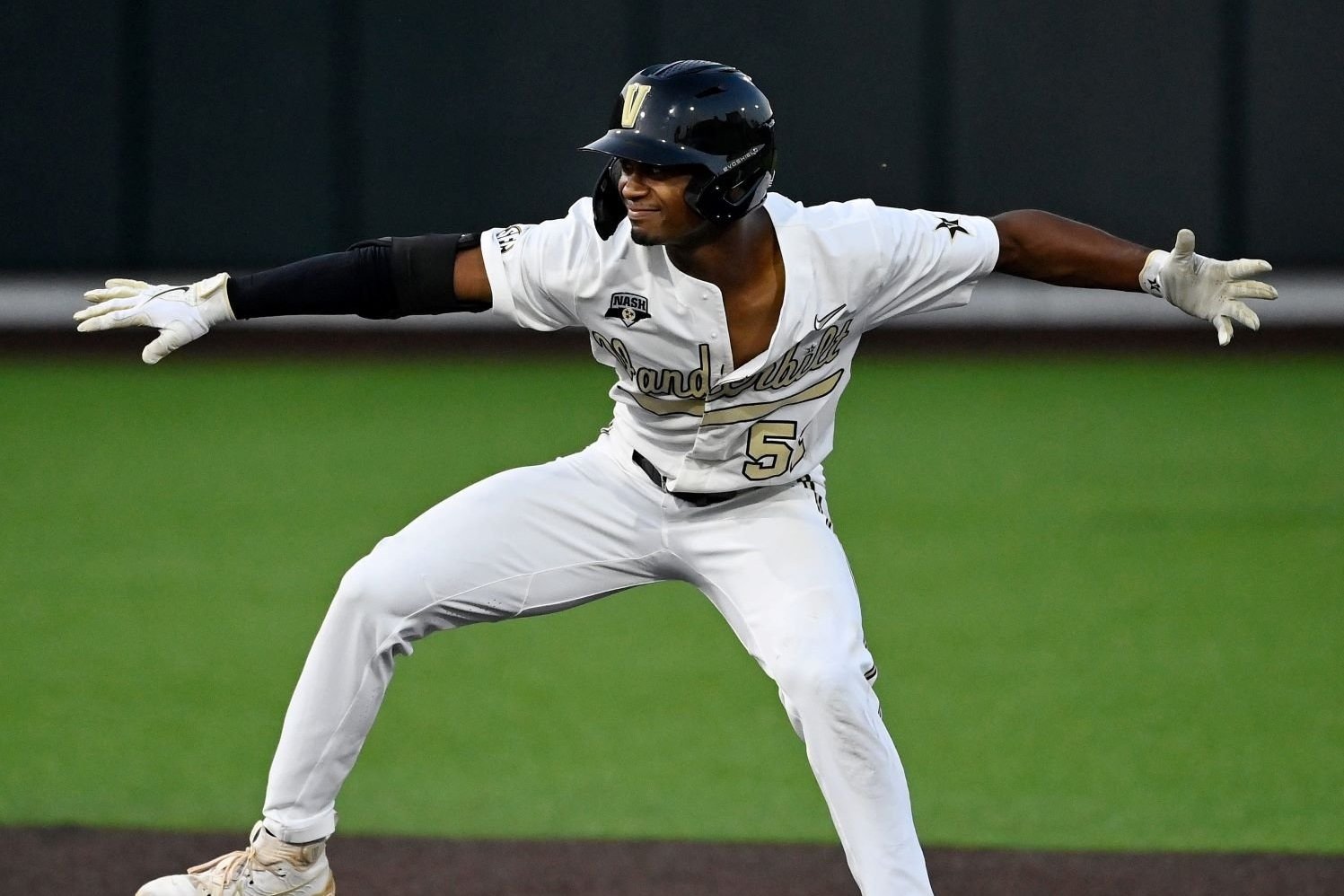 Over the next two weeks, we're going to be providing you with profiles of 10 players the Brewers could take with the 18th pick in the 2023 MLB Draft. Who is He? Enrique Bradfield Jr. is a left-handed center fielder out of Vanderbilt. His underlying speed (he is possibly the fastest player in this draft) gives him a solid floor as an elite defensive center fielder at the pro level. Bradfield currently sits at eleventh on the Consensus Board, with rankings ranking from 8-17. He has been in a similar spot since the beginning of the pre-draft process and initial spring rankings were released in February, which speaks to the value of his athletic trait tools. Why the Brewers Will Draft HimIt might be easy to assume that Bradfield’s value might be limited to speed and defense, instead, it’s added to by an average to above average hit tool. Bradfield has a swing characterized by a flat bat path, leading to plenty of line drives and ground balls that allow him to leverage his speed. He accompanies this with an excellent approach at the plate, with a 16 BB% in 2023. Bradfield has typically struck out at a rate close to his walk rate in his three seasons at Vanderbilt, with that strong on base skill set allowing him to steal 130 bases in 191 games. While Bradfield has a below average arm in centerfield, his range more than makes up for it. His speed and route efficiency allow him to cover huge amounts of ground in the outfield. His floor is buoyed by speed and defense, how much he hits will determine his ceiling. Why the Brewers Won’t Draft HimBradfield doesn’t offer much in the way of power and is not a profile that lines up with a typical first round college outfield selection. In three seasons at Vanderbilt, he hit just 15 home runs, and 31 doubles. There’s not much reason to suspect there’s more in the tank here, but MLB’s rule changes to favor stolen bases and aggressive base running ought to increase his value as a base stealer. I think it remains more likely that the Brewers draft a college infielder at 18 (if Troy or Shaw are available). While Bradfield isn’t a typical profile, it’s likely some folks will undervalue him not digging into the speed/defense assets thoroughly enough. What do you think of Enrique Bradfield Jr as a prospect? How would you feel about him being the Brewers pick at 18 overall? Join the discussion in the comments.
 -
.jpg.e8017df92d609600b00d03b4f664f999.jpg) Over the next two weeks, we're going to be providing you with profiles of 10 players the Brewers could take with the 18th overall pick in the 2023 MLB Draft. Who is He? Tommy Troy is a 21 year old infielder out of Stanford University. His exceptional 2023 campaign for the Cardinal helped propel them to a College World Series berth. Currently sitting at 12th overall on the Consensus Board, Troy has continued to take steps forward in 2023. His well-rounded skill set, combined with consistently outstanding performances on the Cape, make him one of the higher-floored college bats in a class loaded with them. Why the Brewers Will Draft HimTroy doesn’t necessarily have a carrying tool, because they are all pretty good. He has a short, right-handed swing and makes consistent hard contact, particularly on fastballs, where his contact percentage is north of 90%. Troy has power to all fields, particularly the pull side, in addition to a patient approach at the plate. He’s improved every year at Stanford. In 2023, he managed a .398/.481/.707 line with 17 home runs and 17 stolen bases. He lowered his strikeouts from 20 K% in 2022, to 16 K% in 2023, increasing his walks to 14 BB% in 2023, a career high. Why the Brewers Won’t Draft Him At the plate, Troy has consistently punished fastballs, but had more challenges handling spin on off-speed pitches, hardly unique for an amateur hitter, but something to monitor as he turns pro. Defensively, Troy has enough to play on the dirt. At Stanford, he’s split time between second and third base with at least average defensive actions and at least an average arm. The defense isn’t what you're buying, though. Troy profiles to offer defensive infield versatility, hit somewhere in the .260-.280 range, with 20 home run power. That’s a skillset that will serve a drafting major league team well for the long term. What do you think of Tommy Troy as a prospect? How would you feel about him being the Brewers pick at 18 overall? Join the discussion in the comments.
Over the next two weeks, we're going to be providing you with profiles of 10 players the Brewers could take with the 18th overall pick in the 2023 MLB Draft. Who is He? Tommy Troy is a 21 year old infielder out of Stanford University. His exceptional 2023 campaign for the Cardinal helped propel them to a College World Series berth. Currently sitting at 12th overall on the Consensus Board, Troy has continued to take steps forward in 2023. His well-rounded skill set, combined with consistently outstanding performances on the Cape, make him one of the higher-floored college bats in a class loaded with them. Why the Brewers Will Draft HimTroy doesn’t necessarily have a carrying tool, because they are all pretty good. He has a short, right-handed swing and makes consistent hard contact, particularly on fastballs, where his contact percentage is north of 90%. Troy has power to all fields, particularly the pull side, in addition to a patient approach at the plate. He’s improved every year at Stanford. In 2023, he managed a .398/.481/.707 line with 17 home runs and 17 stolen bases. He lowered his strikeouts from 20 K% in 2022, to 16 K% in 2023, increasing his walks to 14 BB% in 2023, a career high. Why the Brewers Won’t Draft Him At the plate, Troy has consistently punished fastballs, but had more challenges handling spin on off-speed pitches, hardly unique for an amateur hitter, but something to monitor as he turns pro. Defensively, Troy has enough to play on the dirt. At Stanford, he’s split time between second and third base with at least average defensive actions and at least an average arm. The defense isn’t what you're buying, though. Troy profiles to offer defensive infield versatility, hit somewhere in the .260-.280 range, with 20 home run power. That’s a skillset that will serve a drafting major league team well for the long term. What do you think of Tommy Troy as a prospect? How would you feel about him being the Brewers pick at 18 overall? Join the discussion in the comments. -
.jpg.33740bc09f1e8e057e231cbff9de5c00.jpg) Over the next two weeks, we're going to be providing you with profiles of 10 players the Brewers could take with the number 18 pick in the 2023 MLB Draft. Who is He? Brock Wilken is a power hitting third baseman whose stellar offensive 2023 season helped propel Wake Forest to a College World Series berth in 2023. Currently sitting at 23rd on the Consensus Board, Wilken was a top 500 prospect coming out of high school and has continued to cement his status as a top 30 prospect in a deep 2023 class. Wilken has taken significant steps forward offensively this season, in what was already an exceptional profile. Why the Brewers Will Draft Him Power is the carrying tool in Wilken’s offensive profile. In his first two seasons at Wake, he mashed 40 home runs in 437 at bats. In 2023, he’s at 30 and counting at the time of writing. Wilken has adjusted to a more selective approach at the plate this season, lowering his strikeouts from 28 K% to 22 K%. He’s also increased his walk rate from 13 BB% to 29 BB%. There’s an argument that he can be a little passive at the plate, but it's hard to argue with a .357/.517/.835 line in the ACC. Wilken has improved his contact in 2023 and the power is legitimate. He has easy plus power, both raw and in game, to all fields. He has good bat speed and his 90th percentile exit velocity sits north of 108 mph. Why the Brewers Won’t Draft Him Defensively, Wilken is a mixed bag. He has an incredibly strong arm at third base and good enough defensive actions to stick at the position. Slow foot speed and acceleration will limit his range, though, and it's possible he moves to first base eventually, lowering his overall ceiling. He should at least begin his pro career at the hot corner. Wilken’s increased patience at the plate has allowed pitchers to go after him with their better secondary offerings. This could be an area of his game that better pitching exposes. Ultimately, the hit tool will govern the ceiling. It’s going to be fringy at best, but easy 30 home run power is likely to make him an effective contributor, regardless of his offensive position What do you think of Brock Wilken as a prospect? How would you feel about him being the Brewers pick at 18 overall? Join the discussion in the comments.
Over the next two weeks, we're going to be providing you with profiles of 10 players the Brewers could take with the number 18 pick in the 2023 MLB Draft. Who is He? Brock Wilken is a power hitting third baseman whose stellar offensive 2023 season helped propel Wake Forest to a College World Series berth in 2023. Currently sitting at 23rd on the Consensus Board, Wilken was a top 500 prospect coming out of high school and has continued to cement his status as a top 30 prospect in a deep 2023 class. Wilken has taken significant steps forward offensively this season, in what was already an exceptional profile. Why the Brewers Will Draft Him Power is the carrying tool in Wilken’s offensive profile. In his first two seasons at Wake, he mashed 40 home runs in 437 at bats. In 2023, he’s at 30 and counting at the time of writing. Wilken has adjusted to a more selective approach at the plate this season, lowering his strikeouts from 28 K% to 22 K%. He’s also increased his walk rate from 13 BB% to 29 BB%. There’s an argument that he can be a little passive at the plate, but it's hard to argue with a .357/.517/.835 line in the ACC. Wilken has improved his contact in 2023 and the power is legitimate. He has easy plus power, both raw and in game, to all fields. He has good bat speed and his 90th percentile exit velocity sits north of 108 mph. Why the Brewers Won’t Draft Him Defensively, Wilken is a mixed bag. He has an incredibly strong arm at third base and good enough defensive actions to stick at the position. Slow foot speed and acceleration will limit his range, though, and it's possible he moves to first base eventually, lowering his overall ceiling. He should at least begin his pro career at the hot corner. Wilken’s increased patience at the plate has allowed pitchers to go after him with their better secondary offerings. This could be an area of his game that better pitching exposes. Ultimately, the hit tool will govern the ceiling. It’s going to be fringy at best, but easy 30 home run power is likely to make him an effective contributor, regardless of his offensive position What do you think of Brock Wilken as a prospect? How would you feel about him being the Brewers pick at 18 overall? Join the discussion in the comments. -
 The Brewers are in a strong position entering the 2023 MLB Draft. In addition to having the 12th-largest bonus pool, north of $10.95 million, they have four top-100 picks, and three in the top 55. The 2023 Draft class is loaded with talent, one of the strongest in years. In the run-up to the Draft, we're going to share some names to watch at particular spots that give an indication of the caliber of talent that might be available for a particular pick. Today, we'll dig into the Brewers pick at 33 overall. Sammy Stafura Position: SS, Age: 18, School: Walter Panas HS, Height: 6’0, Weight: 185, B/T: R/R, Rank: 51 Stafura was a sudden arrival on the Consensus Board in May, going from unranked to the 50s, and he’s been climbing on Draft boards all spring. It’s easy to see why, a cold-weather bat that doesn’t get a lot of visibility in early spring, but Stafura has a great, well-rounded profile. In the box, it's a quiet operation with a smooth, timely load and good bat speed. He has a good approach, doesn’t whiff much in zone and shows good power to all fields. There will be more there as he fills out. Stafura is a really good athlete. He’s already a plus runner and has a solid arm. Defensively, he’s one of the better defensive prep shortstops. He has good footwork and good defensive actions. He should be able to stick at shortstop as a pro comfortably. Stafura is a Clemson commit, but he has an appealing all round profile that could see him go in the top 40 selections in July. Hunter Owen Position: LHP, Age: 21, School: Vanderbilt, Height: 6’6, Weight: 260, B/T: R/L, Rank: 54 6’6 left handed college pitchers with a strong track record in the SEC are going to be a coveted group. Owen fits that description. Originally an intriguing prep prospect out of Maine, Owen elected to make good on his commitment to Vanderbilt and it has paid off. He’s improved significantly every year for the Commodores. This is particularly evidenced by his control. He walked 15 hitters in 16.2 innings as a reliever in his first season, and 17 in 64 innings in 2023 as a starter, despite being limited by injuries in the second half of the season. Aside from throwing more strikes, Owen has a solid arsenal to work with. His fastball is average, a 93-95 mph offering without any remarkable shape. He has a pair of breakers, a curveball that he seems to prefer, with good depth, and a slider which evaluators prefer. He also has a changeup with good fade. Owen struck out 76 hitters in 64 innings in 2023 while putting up respectable run prevention in a season in which many pitchers struggled to do so. The consistent improvement over three seasons, his handedness, and an established four pitch mix that he commands give Owen an enticing profile. LuJames Groover Position: 3B, Age: 21, School: North Carolina State, Height: 6’2, Weight: 200, B/T: R/R, Rank: 55 Groover is an intriguing prospect with a wide range of rankings. As of early June, he ranked anywhere from the 40s to the low 100s on inputs into the Consensus Board, indicating a split of evaluators in how he is perceived as a prospect. Promoters of Groover will cite his ability to hit the ball hard (a max EV north of 113 mph), good barrel control, and excellent bat to ball skills. In 2023, Groover put together a .332/.430/.546 line with 13 home runs. Some of Groover’s best contact is on the ground, and adding more consistent loft to batted balls could take his home run totals into the 20-25 range as a professional. Detractors of Groover will cite an uncertain defensive home. After initially playing first base at North Carolina State he moved to third base in 2023. He’s limited defensively, with solid enough defensive actions but limited range and a fringy arm. He’s also played at second base and in the outfield. The offensive profile is exciting, but a drafting team will have to figure out where he fits defensively long term. Alonzo Tredwell Position: RHP, Age: 21, School: UCLA, Height: 6’8, Weight: 230, B/T: L/R, Rank: 57 Tredwell had TJ surgery during the 2020 season and has had his 2023 significantly impacted by injuries. That’s probably expected when you’re a 6’8 pitcher, but it is a cause for concern with his profile. After filling the role of closer for UCLA in 2022 he moved into the rotation, with encouraging results. In 45.1 innings in 2023, Tredwell struck out 51 hitters and walked just 12, putting up good production in the PAC 12. Tredwell has good command for his size and has a four pitch mix. His fastball velocity has increased significantly in the last two seasons, up from 91 mph to the 94-96 mph range. His best secondary offering is a slider that misses a lot of bats. HIs changeup is above average too and his curveball is more average. Tredwell has a repeatable, compact delivery. A high release point and excellent extension are additional positives in an intriguing starting pitcher profile. Who are your favorite prospects mentioned? What are other names that intrigue you with this pick? Join our draft speculation in the comments below.
 -
 The Brewers are in a strong position entering the 2023 MLB Draft. In addition to having the 12th-largest bonus pool, north of $10.95 million, they have four top-100 picks, and three in the top 55. The 2023 Draft class is loaded with talent, one of the strongest in years. In the run-up to the Draft, we're going to share some names to watch at particular spots that give an indication of the caliber of talent that might be available for a particular pick. Today, we'll dig into the Brewers pick at 33 overall. Yohandy Morales Position: 3B, Age: 21, School: Miami, Height: 6’4, Weight: 210, B/T: R/R, Rank: 27 ‘Yoyo’ Morales is a third baseman who was on the map as a prep prospect in 2020 (when a shortened draft significantly cut into the number of prep prospects taken). He’s a former shortstop who has already outgrown the position and made the transition to third base, where his solid defensive actions and rocket of a right arm should allow him to at least be average defensively. Morales’s offensive profile is high-risk, high-reward. Power is the carrying tool offensively. He’s put up plenty of exit velocities over 110 mph, and has easy plus power in game. He has 45 home runs in his first 670 or so college at-bats, with an improved 14-percent walk rate and a too-high 23-percent strikeout rate. If Morales can refine his approach further as a pro, he has a chance to be a dangerous and productive hitter; the power is legit. Colton Ledbetter Position: OF, Age: 21, School: Mississippi State, Height: 6’2, Weight: 205, B/T: L/R, Rank: 32 Ledbetter is a transfer from Samford and an analytical darling who has a pretty wide variance on draft boards. He checks a ton of boxes offensively for a model-heavy team, led by an elite approach. He has an in-zone whiff rate of around 11 percent, combined with great EVs. At the plate, it’s a compact, very selective operation (he’ll need to be more aggressive at times as a pro), but there’s no glaring weakness on any portion of the plate or against a particular type of pitch. Defensively, Ledbetter has solid outfield range and is at least an average runner. A fringy arm likely moves him to left field when he turns professional. Any questions about how he’d perform in the SEC have been put to bed. Ledbetter ran a 24 BB% throughout the season, along with an 18 K% and 12 home runs. It’s hit over power, but it’s still above-average power. Anyone who lands Ledbetter after pick 30 should be pleased with the value in a strong, well-rounded offensive profile. Roch Cholowsky Position: SS, Age: 18, School: Hamilton HS, AZ, Height: 6’1, Weight: 185, B/T: R/R, Rank: 33 Cholowsky is a member of an impressive class of prep shortstops, whose profile currently favors strong defense and a good hit tool. Cholowsky is the son of a former minor leaguer and current scout. He’s currently committed to UCLA, and previously announced his intention to play both baseball and football there. (He plays quarterback.) Unsurprisingly, his defensive profile benefits significantly from quarterback play. Excellent defensive actions and elite footwork, underpinned by a strong arm, make for a strong defensive profile that should stick at the position. Cholowsky has turned in plus run times, adding further defensive value in addition to that on the base paths. Offensively, it’s a solid, hit-over-power profile, although there’s projectability to drive the ball more as he fills out. Cholowsky can be overly aggressive with swing decisions, but the speed, defense, and strong hit tool provide an intriguing floor for anyone who can pry him away from a two-sport commitment. Juaron Watts Brown Position: RHP, Age: 21, School: Oklahoma State, Height: 6’2, Weight: 180, B/T: R/R, Rank: 35 Watts Brown transferred to Oklahoma State after initially playing at Long Beach State. The headline? There’s great clay to mold. Watts Brown is a good athlete (standout everything in high school). His delivery is compact, with good repeatability. His arsenal is a four-pitch mix. He has a fastball that typically sits between 92-95 mph and plays well up in the zone, with good ride. His slider is his best secondary offering, with good downward tilt and the ability to land it for called strikes. It’s already a plus pitch. Watts Brown also throws a curveball that's more average, and a changeup with good fade that he doesn’t use much. Watts Brown struck out an impressive 117 batters in 78 innings of regular-season work in 2023, although he walked 47 and had a significant blip in April where he lost control altogether. Still, he has four pitches with solid shapes as a platform. Any kind of added velocity to his fastball and refinement to his control could make him a really exciting pitching prospect. Adrian Santana Position: SS, Age: 18, School: Doral Academy, FL, Height: 5’11, Weight: 160, B/T: S/R, Rank: 37 Santana is a defense- and run-first prep shortstop prospect who will stick at the position as a professional. Defensively, he has smooth actions, good hands, and a quick first step. This combines well with (at least) plus speed, to give him excellent range. A plus arm ties a bow on the package. There are some question marks about what his offensive impact will be. He’s diminutive, at 5’11 and weighing 160 pounds, and while he has a good approach and smooth moves at the plate, setting him up to have an average to above average hit tool. He has some raw home run power from both sides of the plate, but this hasn’t manifested much in games yet, where it’s line drive power at best. If the hit tool continues to develop, Santana’s defense and speed will make him a valuable, versatile prospect. Who are your favorite prospects mentioned? What are other names that intrigue you with this pick? Join our draft speculation in the comments below.
 -
Five Pitchers the Brewers Could Target with the Number 18 Overall Pick
Jamie Cameron posted an article in Brewers
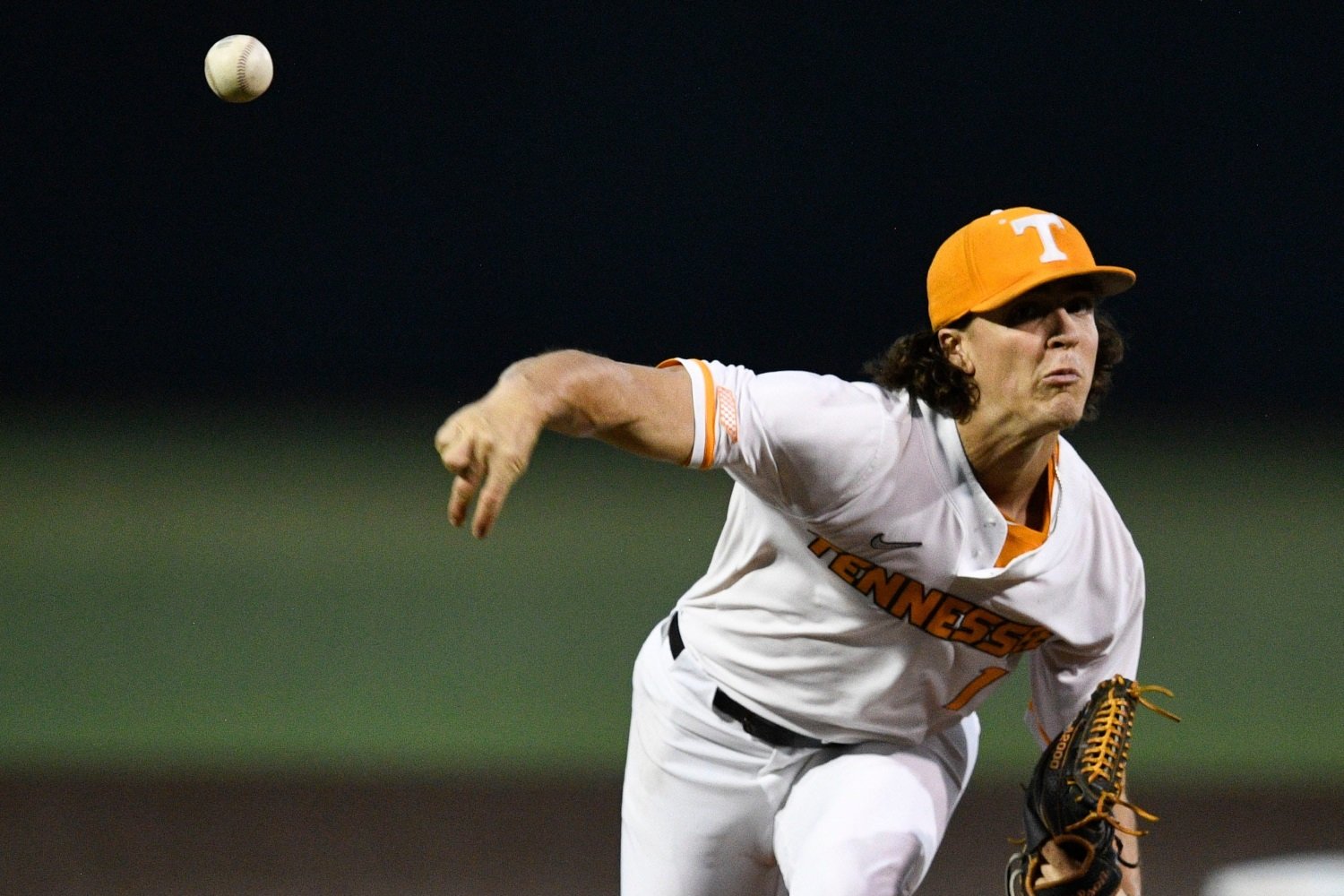 Chase Dollander Position: RHP, Age: 21, School: Tennessee, Height: 6’3, Weight: 195, B/T: R/R, Rank: 7 Dollander was a consensus top-three pick for the early part of the season. His fall down the rankings is due as much to the rise and dominance of Paul Skenes as it is to his own uneven performance in 2023. So what does Dollander offer, and what type of emphasis should we place on his 2023 performance? While Dollander’s production and stuff have taken a step back in 2023, he’s still an excellent prospect with a diverse, high-quality arsenal of pitches. His fastball sits 94-96 mph, although it’s hit 99 mph. It's thrown from a low release in his three-quarters slot. It’s not an elite pitch, but serves to set up his breaking pitches exceptionally well. Dollander has a curveball which is above-average and has an excellent chase rate (and a pitch he can land for strikes). His best pitch is probably his slider, a nasty sweeper with a ton of horizontal movement that’s death on hitters. He also has a changeup which has a ton of fade and could be another plus pitch for him. The foundation of four pitches, three of which could be plus, is still incredibly exciting. Two challenges have plagued Dollander in 2023. He’s lost some control, walking almost double the number of hitters that he did in 2022 at the time of writing. Additionally, his slider metrics have ticked back, resulting in him throwing the pitch less often, and having to rely more heavily on his fastball. There have been a number of smart baseball folks suggesting Dollander’s challenges in 2023 are more mechanical than anything else. There’s a front-of-the-rotation arm in there, who's already proved it over the course of the 2022 season. Hurston Waldrep Position: RHP, Age: 21, School: Florida, Height: 6’2, Weight: 205, B/T: R/R, Rank: 13 Waldrep has an argument for the best series of secondary pitches in the entire draft. Originally a relief pitcher for Southern Miss, he transferred to Florida after breaking out as a starter in 2022, amassing 140 strikeouts in just over 90 innings of work. His pitching arsenal is led by a fastball that sits 95-97 mph and has good carry to it, which helps it play up in the zone. The command of the fastball has been inconsistent, and he’s been made to throw it far too much for the Gators. Waldrep has a great sweeping slider, which is a 70-grade pitch and a whiff machine already. That’s paired with a curveball that has more 12-6 action to it. Finally, he throws a devastating split changeup that he’s been able to land for strikes at the bottom of the zone, and which has a whiff rate north of 60%. Waldrep’s control has been shaky (42 walks in 72.2 innings at the time of writing in 2023). He has a drop-and-drive approach on the mound and great arm speed but a noisy delivery. He might be the best argument there is for ignoring performance outcomes in college baseball. He has one of the most complete repertoires of any starter in the draft and a chance for three secondary pitches that are at least plus. I think he has the second-most upside of a pitcher in the draft outside of Skenes. Noble Meyer Position: RHP, Age: 18, School: Jesuit HS, OR, Height: 6’5, Weight: 200, B/T: R/R, Rank: 14 Meyer has established himself as the top prep arm in the 2023 draft. Hailing from Jesuit High School in Oregon (which recently produced Mick Abel), Meyer has big projectability that will have organizations excited about what his future holds. Meyer broke out in the summer of 2022 on the showcase circuit, featuring a fastball that sat 95-97 mph, thrown from a slightly deceptive slot that gives hitters fits. He’s been up to triple digits with the pitch this year in shorter starts. He pairs it with a great slider that is generating a ton of swing-and-miss--one over which he has impressive command for a prep arm. Meyer also has a changeup that is more of a work in progress. His pitching motion is athletic and repeatable. There’s still a ton of projectability left for Meyer as he fills out more and adds strength. He has a great starter profile, and teams with a track record of developing high school pitching should be incredibly excited about Meyer’s long-term upside. Rhett Lowder Position: RHP, Age: 21, School: Wake Forest, Height: 6’2, Weight: 200, B/T: R/R, Rank: 15 Lowder qualifies as the highest-floor, lowest-ceiling member of the top four college pitchers available in July. There’s still plenty to like about Lowder’s profile, however, and he shined at Wake Forest in 2023, one of the college programs most noted for an analytical approach to player development. Lowder has 3 pitches he uses regularly. His fastball is a sinker, typically thrown in the 92-95 mph range, although he has reached back for 97 mph. He gets a ton of ground balls with it. He’s also thrown a more typical four-seam fastball at the top of the zone, in order to give hitters a different look. For secondary pitches, he throws a slider, with more downward break than sweep. His best pitch is a changeup which has a ton of fade, and is one of the better examples in the whole class. Lowder caps his profile off with good control and command of all of his pitches. In 2023, he's walked just 17 in around 90 innings of work, with 108 strikeouts at the time of writing. Lowder has a polished, middle-of-the-rotation profile and is likely open to an analytically-minded approach. Thomas White Position: LHP, Age: 18, School: Phillips Academy, MA, Height: 6’5, Weight: 210, B/T: L/L, Rank: 24 White is the one name to make the list who appears a little further down the consensus board. There’s a real lack of quality left-handed pitching options in the 2023 draft, with the distinct possibility that a left-handed college pitcher won’t be taken in the first round for the first time in over 30 years. On the prep side, White is the best available. White has been on the prospect map forever. He has a tall but wiry frame at present and will likely have a jump in velocity as he adds more weight. His fastball sits 93-95 mph currently, thrown from a low angle, combined with great extension, making it very tough for hitters to pick up. White has experimented with both a slider and curveball, often mixing the two. The curveball is already an above average pitch and his ability to spin the baseball suggests White should be able to develop at least one of those into a really effective offering. White has also shown propensity for a changeup, although he’s used it less than his breaking pitches and it’s average at the moment. White is more of a ‘projection pick’ that a ‘current talent’ pick, but he has all the ingredients to develop into a really effective starting pitcher. He’s currently committed to Vanderbilt. Which of the players profiled do you like best as a fit for your team? Is there anyone you’ve read about or watched who you think is missing? Draft speculation is the best speculation, so join the discussion in the comments.
 -
Five Hitters the Brewers Could Target With the Number 18 Overall Pick
Jamie Cameron commented on Jamie Cameron's article in Brewers
Didn't list as an option, but I think Chase Davis fits the athletic hitter category nicely and likely he'll be slotted around where Brewers pick in July. Started on the board at 49, now at 26. I think he'll be in the teens in July. -
Five Hitters the Brewers Could Target With the Number 18 Overall Pick
Jamie Cameron posted an article in Brewers
 We’ll start by profiling some hitters, before looking at pitchers next week. For each installment, we’ll use the positions of players on the Consensus Board as a proxy for who they might take, as opposed to trying to predict what each team will actually do. The goal is to give a flavor of the kind of talent and options that might be around when that pick hits, as we all know trying to predict the draft is perilous at best. Matt Shaw Position: SS, Age: 21, School: Maryland, Height: 5’11, Weight: 185, B/T: R/R, Rank: 15 Shaw has been floating around the teens of most draft boards throughout the pre-draft process, currently owning a tight cluster of rankings between 15th and 20th overall. Shaw is a solid-floored prospect due to the fact that he does a little bit of everything well. At the plate, it’s a slightly unconventional swing with a big leg kick to start out but it has a track record of results. Shaw has a track record of hitting in college and on the Cape, using all fields and possessing in-game power to all fields. He’s improved his approach in 2023, increasing his BB% and decreasing his K%. Defensively, he’s not a shortstop, although he has an above average arm and solid defensive actions. Given his solid all-round offensive profile, he’d provide the most value for a team at second base although he could stick at third also. In 2023 Shaw has put together a .359/.457/.743 line with 23 home runs and 17 stolen bases. He’s a legitimate offensive threat. Aidan Miller Position: 3B, Age: 19, School: Mitchell HS, FL, Height: 6’2, Weight: 210, B/T: R/R, Rank: 16 Miller is the younger brother of Jackson Miller, a catching prospect drafted by the Reds in 2020. Miller is one of the most physical prep bats in the class, generating exceptional bat speed with a steep swing that generates plus raw power, although it hasn’t shown up a ton in games yet. Miller’s operation at the plate is quite noisy, a hand hitch and big leg kick are both present in his swing, but he has a sound approach and generates frequent hard contact. Defensively, Miller is very athletic and is already well filled-out for a 19 year old at 220lbs. If he maintains his athleticism, it’ll be a solid third base profile with the perfect offensive profile to match. If it he doesn’t, he could move to a corner outfield spot and still put up the offensive numbers to carry the position. Evaluators haven’t seen as much of Miller at the front end of this season as he had a broken hamate bone which caused him to miss time. As a result, Miller’s evaluations have a bit more range to them than some other prospects in this area of the draft board. All that said, he’s one of the best prep bats in the class and should go in the 12-25 range. Miller is committed to Arkansas. Bryce Eldridge Position: RHP/1B , Age: 18, School: Madison HS, VA, Height: 6’7, Weight: 230, B/T: L/R, Rank: 18 Eldridge has been making moves up draft boards all spring and is a uniquely projectable, two-way prep prospect out of Virginia. The appeal is easy to see. On the mound, Eldridge has added to an already good fastball this spring which now sits 94-97 mph but can grab 98 mph with good run. He throws two breaking pitches, the slider the better of them currently looking like it might develop into a legitimate weapon and out pitch. Eldridge has also shown a propensity towards his changeup, which has some fade and good separation from his fastball. Offensively, Eldridge has some massive raw power to dip into, similar to Spencer Jones. Perhaps surprisingly, he has a relatively short, compact swing although he does have some swing and miss and it's definitely a power over hit profile offensively. Teams interested in Eldridge will have to decide whether to keep him a two way player or help him hone one of his prodigious skill sets. The University of Alabama commit has some helium right now. Braden Taylor Position: 3B, Age: 21, School: TCU, Height: 6’1, Weight: 180, B/T: L/R, Rank: 20 Taylor has fallen significantly on the consensus board since pre and beginning of season lists were formed. Let’s start with the positive. Taylor has an incredibly sweet swing and it might be the highlight of one of the best hit tools in the entire draft class. Taylor has a tremendous eye, rarely chases, and has exceptional in zone contact rates. Combine this with his ability to take a walk and you have a player who is going to get on base a lot. The power is average, maybe a tick above, and that’s where some of the concerns come in. Taylor makes plenty of flush contact but his 90th percentile and max EVs are towards the lower end of where you’d want to see them for a top hitting prospect (and haven’t taken much of a step forwards). Despite the fact that he’s hit double digit home runs every year in college, some wonder if that will transfer to the pro game. Defensively, Taylor is a solid third baseman. He could handily man left field if he struggles defensively as the hot corner. At the time of writing, Taylor had put together a .297./.422/.623 line with 19 home runs on the year. Taylor had a strong second half of the season. Colin Houck Position: SS , Age: 18, School: Parkview HS, GA, Height: 6’1, Weight: 190, B/T: R/R, Rank: 21 Houck is one of the best prep athletes in the draft, showing ability to stick defensively in the infield with a good arm, good speed, and a well rounded offensive approach. At the plate, Houck doesn’t chase much and a combination of a compact swing, quiet operation, and upwards trajectory in his bat path should allow him to access more than the gap to gap power he’s shown in high school. Defensively, Houck shows great athleticism and solid defensive actions to go with an above average arm. As he fills out, he may outgrow shortstop. If that’s the case, he’ll be a plus defensive third baseman and should have the offensive output to match the position. A Mississippi St baseball commit, Houck has multiple D1 offers to play quarterback. He might profile as an over slot prep depending on where he’s drafted. Also considered: Kevin Magonigle, SS (18), Blake Mitchell, C (19), Brock Wilken, 3B (23) Which of the players profiled do you like best as a fit for the Brewers? Is there anyone you’ve read about or watched who you think is missing? Draft speculation is the best speculation, so join the discussion in the comments.
 -
Article: Consensus MLB Draft Board V2
Jamie Cameron replied to Jamie Cameron's topic in Brewer Fanatic Front Page News
Love Waldrep. He's my second favorite pitcher in the draft bc there's potentially 3 plus secondary pitches there. Florida doesn't do a great job maximizing his strengths in game which is why his card numbers aren't that exciting this year. Schanuel is the most underrated prospect in the draft IMO. Forget the conference, he crushed against quality teams too. His numbers are ridiculous. -
Article: Consensus MLB Draft Board V2
Jamie Cameron replied to Jamie Cameron's topic in Brewer Fanatic Front Page News
I think Teel is the only one you name whose definitely gone by the time the Brewers pick. Thing about this draft is, if you aren't picking in the top 5-6, picking anywhere in the top 25 is going to net you a similar caliber prospect. Brewers are going to have someone they really like fall in their lap. -
Article: Consensus MLB Draft Board V2
Jamie Cameron posted a topic in Brewer Fanatic Front Page News
The Brewers heads into the 2023 MLB Draft with the 12th most money to spend ($10,950,600) are in a great position ahead of the 2023 MLB Draft. They hold four top 100 picks (18, 33, 54, and 87). 2023 is one of the deeper draft classes in recent years. Let's take a look at some of the prospects available to teams in July. Image courtesy of Brock Beauchamp How to Use This Tool This is hopefully easy to navigate. For a full explainer on the what, why, and how, here’s the explainer for V1. For each ranked player, you’ll see position, age, ranking, school, first name, last name, height, weight, handedness (S=switch), future value (not yet), and writeup. Every top 100 player has a writeup, if you hover over the report icon for that player, it’ll give you notes on players tools, strengths, areas of growth, and recent performance. What’s New for V2? Here’s some brief notes about V2 of the Consensus Board: The rankings are based on a consensus from 10 draft boards that provide a range of evaluations from well-known industry standard boards, to more data-driven boards. I DID NOT update writeups for the players who remained in the top 100 from the beginning of May. I’ll update them a final time on a rolling basis between June and July. I added ten more writeups for prospects who moved into the consensus top 100 since the beginning of May. If you see a prospect outside the top 100 with a writeup, it means they’ve fallen out (I’m not adding new reports outside the top 100). Finally, I color coded the top 75 players to track risers and fallers between V1 and V2. Specifically: Light green - moved up 5-9 spots Dark green - moved up 10+ spots Light red - moved down 5-9 spots Dark red - moved down 10+ spots What’s Next? The Consensus Board will get one more big update, to be published at the beginning of July. Additionally, there will be updates to the notes of the most significant prospects, accounting for their end of season performance (particularly for college players), in addition to future value grades added for prospects in the final version of the board. The final rankings will also be published as articles at all three sites. I recognize that some folks may prefer to consume rankings as an article, so I’ll publish them with write ups as part of a 2 or 3 part series in the final week leading up to the draft, working to get players highlights added to those pieces. If you have questions or feedback about the process or generation of the board, please use the comments. I want readers at all three sites to feel well-informed and excited about the draft and the influx of talent to their favorite teams. Whether it's an idea to make the rankings better, catching a mistake (I’m sure there are some), or a comment on who you want your team to draft, we’d love to hear from you. Jeremy Nygaard and I will be working to provide y’all with comprehensive draft coverage as July gets closer, so let’s chop it up! 2023 Consensus MLB Draft Board V2 View full article -
 How to Use This Tool This is hopefully easy to navigate. For a full explainer on the what, why, and how, here’s the explainer for V1. For each ranked player, you’ll see position, age, ranking, school, first name, last name, height, weight, handedness (S=switch), future value (not yet), and writeup. Every top 100 player has a writeup, if you hover over the report icon for that player, it’ll give you notes on players tools, strengths, areas of growth, and recent performance. What’s New for V2? Here’s some brief notes about V2 of the Consensus Board: The rankings are based on a consensus from 10 draft boards that provide a range of evaluations from well-known industry standard boards, to more data-driven boards. I DID NOT update writeups for the players who remained in the top 100 from the beginning of May. I’ll update them a final time on a rolling basis between June and July. I added ten more writeups for prospects who moved into the consensus top 100 since the beginning of May. If you see a prospect outside the top 100 with a writeup, it means they’ve fallen out (I’m not adding new reports outside the top 100). Finally, I color coded the top 75 players to track risers and fallers between V1 and V2. Specifically: Light green - moved up 5-9 spots Dark green - moved up 10+ spots Light red - moved down 5-9 spots Dark red - moved down 10+ spots What’s Next? The Consensus Board will get one more big update, to be published at the beginning of July. Additionally, there will be updates to the notes of the most significant prospects, accounting for their end of season performance (particularly for college players), in addition to future value grades added for prospects in the final version of the board. The final rankings will also be published as articles at all three sites. I recognize that some folks may prefer to consume rankings as an article, so I’ll publish them with write ups as part of a 2 or 3 part series in the final week leading up to the draft, working to get players highlights added to those pieces. If you have questions or feedback about the process or generation of the board, please use the comments. I want readers at all three sites to feel well-informed and excited about the draft and the influx of talent to their favorite teams. Whether it's an idea to make the rankings better, catching a mistake (I’m sure there are some), or a comment on who you want your team to draft, we’d love to hear from you. Jeremy Nygaard and I will be working to provide y’all with comprehensive draft coverage as July gets closer, so let’s chop it up! 2023 Consensus MLB Draft Board V2
 -
Agree that there's a ton of opportunity there and that's a direction lots of teams are continuing to move in with pitching development as advanced as it is. I'd put the over/under on first round pitchers taken at 6.5 or 7.5, crazy. Thanks for reading and commenting.
- 3 replies
-
- 1
-

-
- mlb draft 2023
- brewer fanatic mlb draft
- (and 1 more)
-
 As a reminder, here’s a link to the board that was published at the end of April. 2023 Consensus MLB Draft Board V1 A Consensus Top Five I’ve been tracking the draft boards since an initial Top 30 in February. With recent updates, it’s clear that there’s currently a consensus top five players, split into tiers. Dylan Crews is in a world by himself. He’s ranked number one by every board that I use for the Consensus Board. Wyatt Langford and Paul Skenes are two and three (although I think Skenes may go number two overall), followed by outfielders Walker Jenkins and Max Clark. Long the top prep player in the draft, Clark has recently been surpassed by Jenkins, with most outlets weighing a higher hit/power ceiling in Jenkins’ favor. College Bats on the Rise I’ve written for a while that this draft is well stocked with excellent college bats. That’s become more evident in the last month, with several surging up the Consensus Board. Here are some notes on a few favorites. Tommy Troy (2B Stanford) is up from 20th in February all the way to 13th currently. Troy is putting up a .669 SLG with an improved 13 BB% in the PAC 12. Kyle Teel (C, Virginia) was 22nd in March and is up to 12th overall, aided by a lack of top-end catching talent. Colton Ledbetter (OF Mississippi State) was 52nd overall in March and is now 29th. I think he’s firmly a first round talent and he has the analytical profile to match. Jack Hurley (OF, Virginia Tech) is up from 38th in March to 25th currently one of the most aggressive hitters in the draft. He’s putting up a .781 SLG in the ACC. Chase Davis (OF, Arizona) is perhaps the most improved hitter in college baseball in 2023. He has moved up from 49th in March to 34th currently. He’s cut his strikeouts from 28 K% to 16 K% with matching contact rate improvements and is crushing the ball. I think he'll continue to rise quickly up the rankings through May and June. I think he’ll go no later than the teens if he has a strong end to the season. College Pitchers Stock Falling College starting pitching has been disappointing and a lot of it has fallen pretty sharply on the board. My current working board for June has 214 prospects on it. Outside the top handful of top college arms (Skenes, Hurston Waldrep, Rhett Lowder, Chase Dollander), there are five more college arms in the current Top 50. All but one have fallen in the past two months, mostly due to uneven production or uncertainties around health. There’s still plenty of college arm talent available though, particularly for teams picking between 35 and 50 overall. Juaron Watts-Brown (RHP, Oklahoma State), Cade Kuehler (RHP, Campbell), Tanner Witt (RHP, Texas), Hunter Owen (LHP, Vanderbilt), and Will Sanders (RHP, South Carolina) are all in or around that range, with massive UCLA righty Alonzo Treadwell lurking just outside. Depth in the Top 50 There’s a great variety of prospects and prospect depth in the Top 50 this season. There’s something to fit your profile or flavor, pretty much regardless of what that might be. With the exception of catching, which is a position of weakness at the top end, you can land great talent throughout. Which prospects are you interested in your team targeting with their first round pick? In the top 50? Join the discussion in the comments below.
 -
We’re getting into the middle of May. As such, we’re also a few weeks away from the next Consensus Board update. Several major outlets (The Athletic, ESPN, MLB dot com among others) have updated their draft boards in the last 10 days. Here are some noticeable trends surrounding how the Consensus Board is shaping up ahead of the June update. Image courtesy of Brock Beauchamp As a reminder, here’s a link to the board that was published at the end of April. 2023 Consensus MLB Draft Board V1 A Consensus Top Five I’ve been tracking the draft boards since an initial Top 30 in February. With recent updates, it’s clear that there’s currently a consensus top five players, split into tiers. Dylan Crews is in a world by himself. He’s ranked number one by every board that I use for the Consensus Board. Wyatt Langford and Paul Skenes are two and three (although I think Skenes may go number two overall), followed by outfielders Walker Jenkins and Max Clark. Long the top prep player in the draft, Clark has recently been surpassed by Jenkins, with most outlets weighing a higher hit/power ceiling in Jenkins’ favor. College Bats on the Rise I’ve written for a while that this draft is well stocked with excellent college bats. That’s become more evident in the last month, with several surging up the Consensus Board. Here are some notes on a few favorites. Tommy Troy (2B Stanford) is up from 20th in February all the way to 13th currently. Troy is putting up a .669 SLG with an improved 13 BB% in the PAC 12. Kyle Teel (C, Virginia) was 22nd in March and is up to 12th overall, aided by a lack of top-end catching talent. Colton Ledbetter (OF Mississippi State) was 52nd overall in March and is now 29th. I think he’s firmly a first round talent and he has the analytical profile to match. Jack Hurley (OF, Virginia Tech) is up from 38th in March to 25th currently one of the most aggressive hitters in the draft. He’s putting up a .781 SLG in the ACC. Chase Davis (OF, Arizona) is perhaps the most improved hitter in college baseball in 2023. He has moved up from 49th in March to 34th currently. He’s cut his strikeouts from 28 K% to 16 K% with matching contact rate improvements and is crushing the ball. I think he'll continue to rise quickly up the rankings through May and June. I think he’ll go no later than the teens if he has a strong end to the season. College Pitchers Stock Falling College starting pitching has been disappointing and a lot of it has fallen pretty sharply on the board. My current working board for June has 214 prospects on it. Outside the top handful of top college arms (Skenes, Hurston Waldrep, Rhett Lowder, Chase Dollander), there are five more college arms in the current Top 50. All but one have fallen in the past two months, mostly due to uneven production or uncertainties around health. There’s still plenty of college arm talent available though, particularly for teams picking between 35 and 50 overall. Juaron Watts-Brown (RHP, Oklahoma State), Cade Kuehler (RHP, Campbell), Tanner Witt (RHP, Texas), Hunter Owen (LHP, Vanderbilt), and Will Sanders (RHP, South Carolina) are all in or around that range, with massive UCLA righty Alonzo Treadwell lurking just outside. Depth in the Top 50 There’s a great variety of prospects and prospect depth in the Top 50 this season. There’s something to fit your profile or flavor, pretty much regardless of what that might be. With the exception of catching, which is a position of weakness at the top end, you can land great talent throughout. Which prospects are you interested in your team targeting with their first round pick? In the top 50? Join the discussion in the comments below. View full article
-
Article: Consensus MLB Draft Board V1
Jamie Cameron replied to Jamie Cameron's topic in Brewer Fanatic Front Page News
Thanks for reading/commenting. No Brewers skin in the game (Twins fan here) but if I was in your spot, I'd be particularly excited if Troy was available there. I think he'll end up considerably higher on the board. Brian Dozier is a good comp. I think Teel will be top 12-ish so not sure he'll make it, but those are all exciting bats. -
 Last year, I published the first ever ‘Consensus Draft Board’, at Twins Daily. I also wrote, after the fact, about some commitments to making it better for 2023, and I think I’m delivering on those. So what is a Consensus Board? What’s new for 2023? What? I love drafts in sports, always have, likely always will. As data, information, and the availability of information to the public has transformed so has our understanding of the draft process. Nowhere is this more true than the NFL. While I’d argue that MLB leads all sports in its use of data to inform player development and performance, there is so much less data publicly available for the draft and amateur prospects, in addition to less draft-related content. The MLB Draft is always inherently unpredictable, with wildly discrepant rankings depending on what evaluators value. The Consensus Board (inspired by Arif Hasan’s NFL Consensus Board), takes as many inputs as I have available to me, and creates a consensus ranking for prospects. Last year, I took rankings from BA, Prospects Live, MLB, The Athletic, and ESPN and created a consensus top 56 players for the 2022 MLB Draft. They were published at Twins Daily in two articles. You can find part one of that series here, and part two here. The results were encouraging. After day 1 in 2022 (through 80 picks), 63 of our top 70 players had been drafted, with 3 more heading to college. Not bad. How to Use This Tool You’ll find the Consensus Board linked at the bottom of this page. Hopefully it’s easy to navigate. For each ranked player, you’ll see position, age, ranking, school, first name, last name, height, weight, handedness (S=switch), future value (not yet), and writeup. Every top 100 player has a writeup, if you hover over the report icon for that player, it’ll give you notes on players tools, strengths, areas of growth, and recent performance. What are the Strengths and Flaws of This Approach? There’s inherently some value in consensus. The MLB Draft is so much more complicated than other sports. Combining rankings into a consensus can eliminate some of the noise and outliers from different evaluators models and processes. In year one, there were two major challenges: Consensus rankings with a relatively small number of inputs can lead to missing a great evaluation of a prospect that someone else has noticed or caught onto. The rankings lag significantly behind current performance. Because major outlets (like MLB dot com) only update their rankings twice or three times from December to July, there’s often a disagreement in early versions of the board between consensus ranking and production (i.e. some players are higher than they should be, and some lower). I’d offer that the final version (July) of the board has the most value and will (hopefully) offer the most accuracy. What Next? The chances are, unless you’re a draft junkie, this version of the board won’t be that relevant to you. However, as we get closer to the draft, it will become more so. The Consensus Board will get two further updates, to be published at the beginning of June, and the beginning of July. Readers will be able to see all three sets of rankings side by side to notice how prospects have moved up and down in the rankings as we approach the draft. Additionally, there will be updates to the notes of the most significant prospects, accounting for their end of season performance (particularly for college players), in addition to future value grades added for prospects in the final version of the board. Finally, the final rankings will also be published as articles at all three sites. I recognize that some folks may prefer to consume rankings as an article, so I’ll publish them with write ups as part of a 2 or 3 part series in the final week leading up to the draft, working to get players highlights added to those pieces. If you have questions or feedback about the process or generation of the board, please use the comments. I want readers at all three sites to feel well-informed and excited about the draft and the influx of talent to their favorite teams. Whether it's an idea to make the rankings better, catching a mistake (I’m sure there are some), or a comment on who you want your team to draft, we’d love to hear from you. Jeremy Nygaard and I will be working to provide y’all with comprehensive draft coverage as July gets closer, so let’s chop it up! The TD.BF.NSB Consensus Draft Board V1: May Edition
 -
Article: Consensus MLB Draft Board V1
Jamie Cameron posted a topic in Brewer Fanatic Front Page News
The Brewers heads into the 2023 MLB Draft with the 12th most money to spend ($10,950,600) are in a great position ahead of the 2023 MLB Draft. They hold four top 100 picks (18, 33, 54, and 87). 2023 is one of the deeper draft classes in recent years. Let's take a look at some of the prospects available to teams in July. Image courtesy of Brock Beauchamp Last year, I published the first ever ‘Consensus Draft Board’, at Twins Daily. I also wrote, after the fact, about some commitments to making it better for 2023, and I think I’m delivering on those. So what is a Consensus Board? What’s new for 2023? What? I love drafts in sports, always have, likely always will. As data, information, and the availability of information to the public has transformed so has our understanding of the draft process. Nowhere is this more true than the NFL. While I’d argue that MLB leads all sports in its use of data to inform player development and performance, there is so much less data publicly available for the draft and amateur prospects, in addition to less draft-related content. The MLB Draft is always inherently unpredictable, with wildly discrepant rankings depending on what evaluators value. The Consensus Board (inspired by Arif Hasan’s NFL Consensus Board), takes as many inputs as I have available to me, and creates a consensus ranking for prospects. Last year, I took rankings from BA, Prospects Live, MLB, The Athletic, and ESPN and created a consensus top 56 players for the 2022 MLB Draft. They were published at Twins Daily in two articles. You can find part one of that series here, and part two here. The results were encouraging. After day 1 in 2022 (through 80 picks), 63 of our top 70 players had been drafted, with 3 more heading to college. Not bad. How to Use This Tool You’ll find the Consensus Board linked at the bottom of this page. Hopefully it’s easy to navigate. For each ranked player, you’ll see position, age, ranking, school, first name, last name, height, weight, handedness (S=switch), future value (not yet), and writeup. Every top 100 player has a writeup, if you hover over the report icon for that player, it’ll give you notes on players tools, strengths, areas of growth, and recent performance. What are the Strengths and Flaws of This Approach? There’s inherently some value in consensus. The MLB Draft is so much more complicated than other sports. Combining rankings into a consensus can eliminate some of the noise and outliers from different evaluators models and processes. In year one, there were two major challenges: Consensus rankings with a relatively small number of inputs can lead to missing a great evaluation of a prospect that someone else has noticed or caught onto. The rankings lag significantly behind current performance. Because major outlets (like MLB dot com) only update their rankings twice or three times from December to July, there’s often a disagreement in early versions of the board between consensus ranking and production (i.e. some players are higher than they should be, and some lower). I’d offer that the final version (July) of the board has the most value and will (hopefully) offer the most accuracy. What Next? The chances are, unless you’re a draft junkie, this version of the board won’t be that relevant to you. However, as we get closer to the draft, it will become more so. The Consensus Board will get two further updates, to be published at the beginning of June, and the beginning of July. Readers will be able to see all three sets of rankings side by side to notice how prospects have moved up and down in the rankings as we approach the draft. Additionally, there will be updates to the notes of the most significant prospects, accounting for their end of season performance (particularly for college players), in addition to future value grades added for prospects in the final version of the board. Finally, the final rankings will also be published as articles at all three sites. I recognize that some folks may prefer to consume rankings as an article, so I’ll publish them with write ups as part of a 2 or 3 part series in the final week leading up to the draft, working to get players highlights added to those pieces. If you have questions or feedback about the process or generation of the board, please use the comments. I want readers at all three sites to feel well-informed and excited about the draft and the influx of talent to their favorite teams. Whether it's an idea to make the rankings better, catching a mistake (I’m sure there are some), or a comment on who you want your team to draft, we’d love to hear from you. Jeremy Nygaard and I will be working to provide y’all with comprehensive draft coverage as July gets closer, so let’s chop it up! The TD.BF.NSB Consensus Draft Board V1: May Edition View full article
.jpg.75aa2c00a95abb098d6edba79d3c78eb.jpg)
.jpg.e8017df92d609600b00d03b4f664f999.jpg)
.jpg.33740bc09f1e8e057e231cbff9de5c00.jpg)


