



Jack Stern
-
Posts
720 -
Joined
-
Last visited
-
Days Won
2
Content Type
Profiles
Forums
Blogs
Events
News
2026 Milwaukee Brewers Top Prospects Ranking
Milwaukee Brewers Videos
2022 Milwaukee Brewers Draft Picks
Milwaukee Brewers Free Agent & Trade Rumors, Notes, & Tidbits
Guides & Resources
2023 Milwaukee Brewers Draft Picks
2024 Milwaukee Brewers Draft Picks
The Milwaukee Brewers Players Project
2025 Milwaukee Brewers Draft Pick Tracker
2026 Milwaukee Brewers Draft Tracker: Picks & Bonuses
Store
Downloads
Gallery
Everything posted by Jack Stern
-
 Image courtesy of Michael McLoone-Imagn Images In a 20-0 blowout win over the Reds that made the Brewers the first National League team to secure a playoff berth this season, a few inconsequential add-on runs stood out the most to Pat Murphy. After a William Contreras RBI single gave the Brewers a 13-0 lead in the fifth inning, Christian Yelich and Jake Bauers struck out. It had already been a productive night and a productive inning, and it seemed the scoring might finally be subsiding. Murphy had seen this movie before. On Wednesday against the Cubs, after his offense scored seven runs in the first three innings, it managed just two baserunners the rest of the way, one of whom reached on an error. Failing to add on nearly proved costly in the ninth, as the tying run came to the plate for Chicago after Brandon Sproat’s meltdown. Afterward, Murphy praised those early at-bats, but criticized his hitters for easing off the gas pedal with poor process. It wasn’t a problem this time. With two outs and a runner on first, Luis Lara roped a first-pitch single into right field. Cooper Pratt saw four of five pitches from Luis Mey well outside the zone and remained selective to draw a walk. With the bases suddenly loaded, Garrett Mitchell blasted a 3-1 pitch for the Brewers’ first grand slam of the season. Instead of a four-run inning, it was an eight-run frame. “It's insignificant to a lot. We're already up in the game a bunch,” Murphy said. “Strikeout, strikeout, and then we went base hit, walk, homer, base hit.” Those continued quality at-bats are what Murphy wants to see in the postseason. For the eighth time in nine seasons and for the fourth year in a row, the Brewers will play meaningful October baseball. “I think you have to appreciate it,” Murphy said. “I’m grateful that I’m part of a group, that I have the type of personnel and the type of people that live up to these expectations, live up to the standards, and are very serious about it.” Because the postseason has become the standard in Milwaukee, the celebration has become more subdued. The Brewers no longer pop champagne bottles until they clinch the division, which could also happen this weekend. “The Chicago White Sox, when they clinch a playoff berth this year, they're going to go crazy, and they should, because they did an incredible job coming from where they came from,” Murphy said. “We've been kind of steady for a while, and we want to just keep going. We want to see how far we can go and how complete this can be.” Instead, Murphy gave a private postgame toast in which he focused on members of the club’s support staff. “Him calling out the guys behind the scenes,” Brice Turang said. “Obviously, everyone sees the players, and they don’t always see the guys behind the scenes. The trainers, the weight coaches, the chefs, stuff like that.” “It matters that we’re a team, but everybody contributes, and everybody gets recognized for this, because it doesn’t just happen because you have good players,” Murphy said. After that, it was a normal postgame clubhouse. Players quietly filed out of the room as they do after a normal regular season win. That’s because the Brewers have not accomplished their final goal of winning a World Series. “We’ve still got a lot more to go,” Garrett Mitchell said. “This is just the beginning.” During this otherwise successful run, the Brewers have not gone very far in October. Their win over the Cubs in last year’s NLDS was their first postseason series win since 2018. The run ended unceremoniously with a sweep at the hands of the Dodgers in the NLCS. Murphy wants this group, which includes many returners from that team, to let that failure motivate them to bring their best deeper into the fall. The standard has been raised. “This isn't enough for this group in there. They want more,” Murphy said. “They remember last year. They want more.” That’s why he circled the second half of an eight-run fifth inning on his scorecard. The Brewers already did something impressive. They could have stopped at a 13-0 lead, especially after a few unsuccessful at-bats, but they didn’t. That’s what they’ll have to do in the postseason to get further than last year against elite pitching, when the runs are not coming easily. In last year's NLCS, they ran out of steam and stopped punching. “You just got to stay in the fight, stay in the process, stay in the now, and good things can happen,” Murphy said. “When you get that realization as a team, then you realize, ‘Hey, we can score at any time.’ Down three, that's not the end of the world.” “We all know what the end goal is, and that's what we're chasing,” Turang said. “So this is a small little step, and we just enjoy it tonight, and then tomorrow we go out and try to win a game.” View full article
 -
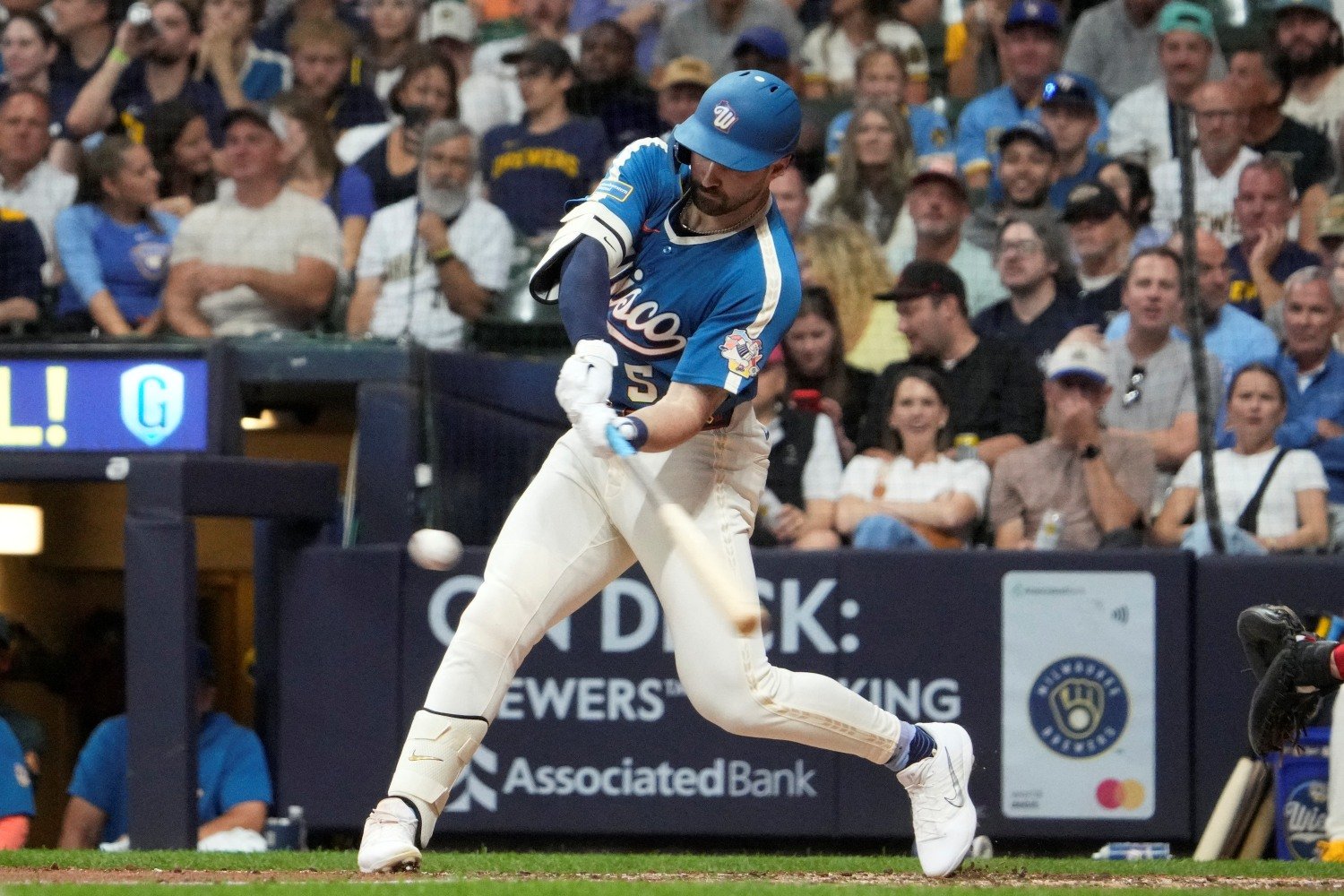 In a 20-0 blowout win over the Reds that made the Brewers the first National League team to secure a playoff berth this season, a few inconsequential add-on runs stood out the most to Pat Murphy. After a William Contreras RBI single gave the Brewers a 13-0 lead in the fifth inning, Christian Yelich and Jake Bauers struck out. It had already been a productive night and a productive inning, and it seemed the scoring might finally be subsiding. Murphy had seen this movie before. On Wednesday against the Cubs, after his offense scored seven runs in the first three innings, it managed just two baserunners the rest of the way, one of whom reached on an error. Failing to add on nearly proved costly in the ninth, as the tying run came to the plate for Chicago after Brandon Sproat’s meltdown. Afterward, Murphy praised those early at-bats, but criticized his hitters for easing off the gas pedal with poor process. It wasn’t a problem this time. With two outs and a runner on first, Luis Lara roped a first-pitch single into right field. Cooper Pratt saw four of five pitches from Luis Mey well outside the zone and remained selective to draw a walk. With the bases suddenly loaded, Garrett Mitchell blasted a 3-1 pitch for the Brewers’ first grand slam of the season. Instead of a four-run inning, it was an eight-run frame. “It's insignificant to a lot. We're already up in the game a bunch,” Murphy said. “Strikeout, strikeout, and then we went base hit, walk, homer, base hit.” Those continued quality at-bats are what Murphy wants to see in the postseason. For the eighth time in nine seasons and for the fourth year in a row, the Brewers will play meaningful October baseball. “I think you have to appreciate it,” Murphy said. “I’m grateful that I’m part of a group, that I have the type of personnel and the type of people that live up to these expectations, live up to the standards, and are very serious about it.” Because the postseason has become the standard in Milwaukee, the celebration has become more subdued. The Brewers no longer pop champagne bottles until they clinch the division, which could also happen this weekend. “The Chicago White Sox, when they clinch a playoff berth this year, they're going to go crazy, and they should, because they did an incredible job coming from where they came from,” Murphy said. “We've been kind of steady for a while, and we want to just keep going. We want to see how far we can go and how complete this can be.” Instead, Murphy gave a private postgame toast in which he focused on members of the club’s support staff. “Him calling out the guys behind the scenes,” Brice Turang said. “Obviously, everyone sees the players, and they don’t always see the guys behind the scenes. The trainers, the weight coaches, the chefs, stuff like that.” “It matters that we’re a team, but everybody contributes, and everybody gets recognized for this, because it doesn’t just happen because you have good players,” Murphy said. After that, it was a normal postgame clubhouse. Players quietly filed out of the room as they do after a normal regular season win. That’s because the Brewers have not accomplished their final goal of winning a World Series. “We’ve still got a lot more to go,” Garrett Mitchell said. “This is just the beginning.” During this otherwise successful run, the Brewers have not gone very far in October. Their win over the Cubs in last year’s NLDS was their first postseason series win since 2018. The run ended unceremoniously with a sweep at the hands of the Dodgers in the NLCS. Murphy wants this group, which includes many returners from that team, to let that failure motivate them to bring their best deeper into the fall. The standard has been raised. “This isn't enough for this group in there. They want more,” Murphy said. “They remember last year. They want more.” That’s why he circled the second half of an eight-run fifth inning on his scorecard. The Brewers already did something impressive. They could have stopped at a 13-0 lead, especially after a few unsuccessful at-bats, but they didn’t. That’s what they’ll have to do in the postseason to get further than last year against elite pitching, when the runs are not coming easily. In last year's NLCS, they ran out of steam and stopped punching. “You just got to stay in the fight, stay in the process, stay in the now, and good things can happen,” Murphy said. “When you get that realization as a team, then you realize, ‘Hey, we can score at any time.’ Down three, that's not the end of the world.” “We all know what the end goal is, and that's what we're chasing,” Turang said. “So this is a small little step, and we just enjoy it tonight, and then tomorrow we go out and try to win a game.”
-
- 1
-

-
- pat murphy
- garrett mitchell
- (and 1 more)
-
Image courtesy of Jeff Hanisch-Imagn Images Brandon Sproat’s audition for a postseason bullpen role did not go well. In fact, it went so poorly that it might be a one-and-done opportunity. In Sproat's return to the big leagues after last month’s demotion to Triple-A, Pat Murphy tasked the former starter with recording the final six outs against the Cubs with a seven-run lead on Wednesday night. He only recorded four of those outs, issuing four walks and hitting a batter. Before long, Abner Uribe was facing pinch-hitter BJ Murray as the tying run, with the dangerous Pete Crow-Armstrong on deck. Uribe struck out Murray to extinguish the fire and close out a three-game sweep. Despite a trio of statement wins against the Brewers’ top division rival, however, Murphy’s postgame presser carried a mixed tone. His offense had backed off the gas pedal after scoring six early runs against Kevin Gausman, and Sproat’s poor performance nearly made it costly. “It’s unacceptable,” Murphy said. “You’ve got to throw the ball over the plate to be a major-league pitcher.” That was already a recurring issue for Sproat, who walked 11.6% of batters faced before his demotion. It was even worse in Nashville, where he posted a 12.8% walk rate and threw just 42% of his pitches in the strike zone. Because of his electric stuff, Sproat struck out 34.6% of opponents and pitched to a 3.18 xERA against less disciplined hitters, but there was no improvement from a process standpoint. It wasn’t for a lack of effort. The development staff in Nashville tried simplifying things for Sproat to get him back into the zone, leaning more on his straight four-seamer and relying less on the new cutter that had the worst run value of any pitch in his arsenal this year. In a two-inning relief appearance before his call-up, 67% of Sproat’s pitches were four-seamers or curveballs. That’s a simple, vertical sequence that he can tunnel by aiming both pitches right down the middle. That approach often turns converted starters into successful relievers. Getting less cute with pitch usage and command can free a pitcher mentally and physically. By throwing their two or three best pitches at max effort anywhere in the strike zone, things can click into place pretty easily. The Brewers have recently seen it work for Chad Patrick and Shane Drohan. It doesn’t address Sproat’s biggest issue: letting things get out of hand quickly after a bad sequence or plate appearance. He showed brief flashes of dominance in nearly every start, but he was prone to big innings, and when something disrupted his rhythm on the mound, he couldn’t recalibrate. That’s what did him in on Wednesday. Sproat walked Crow-Armstrong on eight pitches to open the inning. The adage is that leadoff walks will haunt defenses, but the real turning point was when Sproat attempted to pick off Crow-Armstrong in a situation where every team would give him second base on defensive indifference. Andrew Vaughn was not holding the runner, so Sproat’s throw sailed into foul territory. The floodgates opened from there: a wild pitch as part of a five-pitch walk, a third walk to load the bases, an Alex Bregman strikeout, then a run-scoring walk. “I knew he was nervous,” Murphy said. “No matter what, you can’t let it snowball like that.” “It’s a game of highs and lows,” William Contreras said. “I don’t know if he’s out there trying to do more than what he is. We all know who he is in this room. We’ve seen plenty of him this season. He’s helped us this season. But it’s a hard game whenever you’re trying to do more than maybe what you’re capable of.” Until that part of Sproat’s game is resolved, he’ll keep running into similar issues in any role. For now, he’ll almost certainly head back to Nashville in exchange for a fresh arm. Given his upside, it’s still hard to rule him out for a postseason roster spot, but that won’t happen until Sproat proves he can stay poised and course-correct during an outing. Time is running out for that to happen in 2026. View full article
-
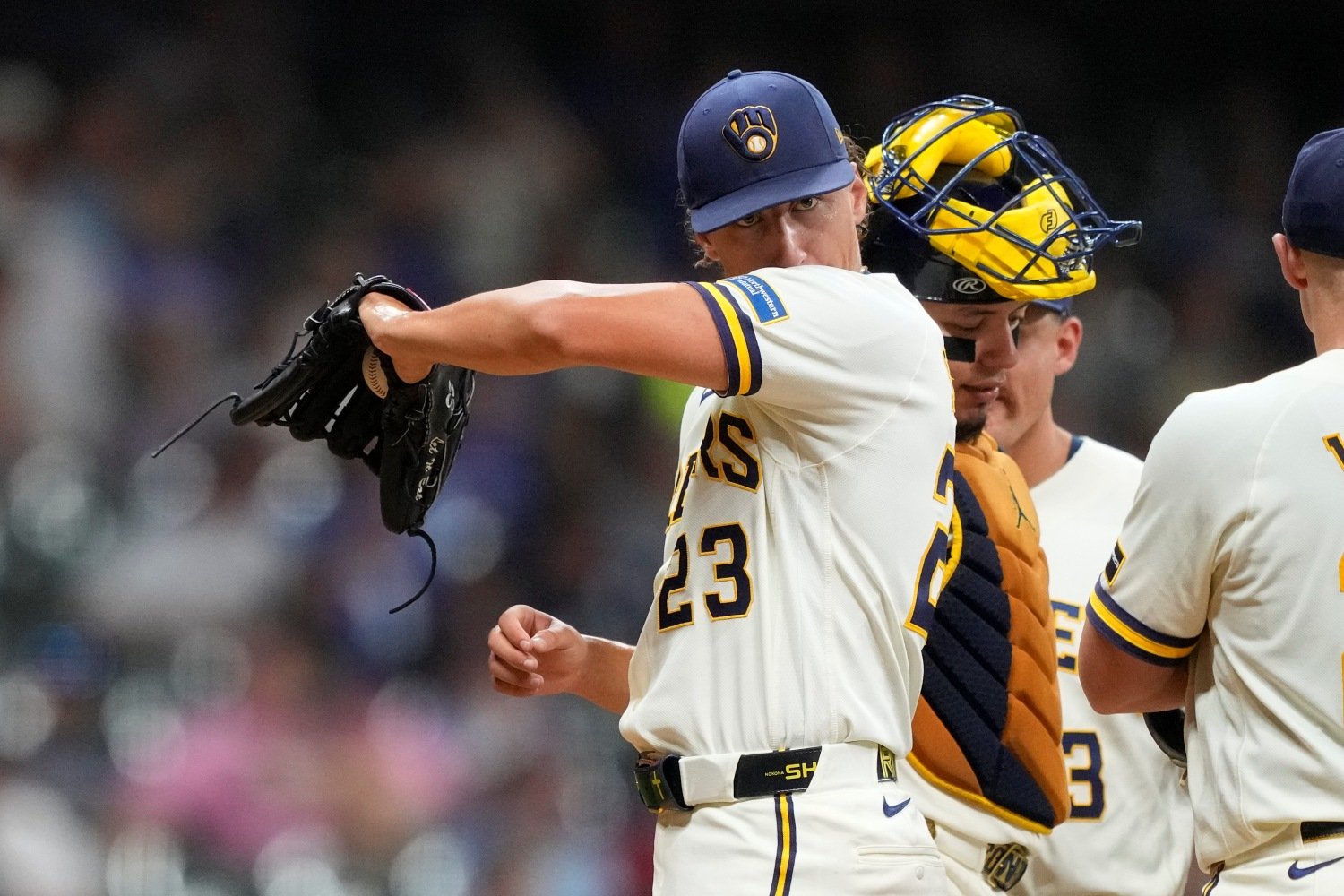 Brandon Sproat’s audition for a postseason bullpen role did not go well. In fact, it went so poorly that it might be a one-and-done opportunity. In Sproat's return to the big leagues after last month’s demotion to Triple-A, Pat Murphy tasked the former starter with recording the final six outs against the Cubs with a seven-run lead on Wednesday night. He only recorded four of those outs, issuing four walks and hitting a batter. Before long, Abner Uribe was facing pinch-hitter BJ Murray as the tying run, with the dangerous Pete Crow-Armstrong on deck. Uribe struck out Murray to extinguish the fire and close out a three-game sweep. Despite a trio of statement wins against the Brewers’ top division rival, however, Murphy’s postgame presser carried a mixed tone. His offense had backed off the gas pedal after scoring six early runs against Kevin Gausman, and Sproat’s poor performance nearly made it costly. “It’s unacceptable,” Murphy said. “You’ve got to throw the ball over the plate to be a major-league pitcher.” That was already a recurring issue for Sproat, who walked 11.6% of batters faced before his demotion. It was even worse in Nashville, where he posted a 12.8% walk rate and threw just 42% of his pitches in the strike zone. Because of his electric stuff, Sproat struck out 34.6% of opponents and pitched to a 3.18 xERA against less disciplined hitters, but there was no improvement from a process standpoint. It wasn’t for a lack of effort. The development staff in Nashville tried simplifying things for Sproat to get him back into the zone, leaning more on his straight four-seamer and relying less on the new cutter that had the worst run value of any pitch in his arsenal this year. In a two-inning relief appearance before his call-up, 67% of Sproat’s pitches were four-seamers or curveballs. That’s a simple, vertical sequence that he can tunnel by aiming both pitches right down the middle. That approach often turns converted starters into successful relievers. Getting less cute with pitch usage and command can free a pitcher mentally and physically. By throwing their two or three best pitches at max effort anywhere in the strike zone, things can click into place pretty easily. The Brewers have recently seen it work for Chad Patrick and Shane Drohan. It doesn’t address Sproat’s biggest issue: letting things get out of hand quickly after a bad sequence or plate appearance. He showed brief flashes of dominance in nearly every start, but he was prone to big innings, and when something disrupted his rhythm on the mound, he couldn’t recalibrate. That’s what did him in on Wednesday. Sproat walked Crow-Armstrong on eight pitches to open the inning. The adage is that leadoff walks will haunt defenses, but the real turning point was when Sproat attempted to pick off Crow-Armstrong in a situation where every team would give him second base on defensive indifference. Andrew Vaughn was not holding the runner, so Sproat’s throw sailed into foul territory. The floodgates opened from there: a wild pitch as part of a five-pitch walk, a third walk to load the bases, an Alex Bregman strikeout, then a run-scoring walk. “I knew he was nervous,” Murphy said. “No matter what, you can’t let it snowball like that.” “It’s a game of highs and lows,” William Contreras said. “I don’t know if he’s out there trying to do more than what he is. We all know who he is in this room. We’ve seen plenty of him this season. He’s helped us this season. But it’s a hard game whenever you’re trying to do more than maybe what you’re capable of.” Until that part of Sproat’s game is resolved, he’ll keep running into similar issues in any role. For now, he’ll almost certainly head back to Nashville in exchange for a fresh arm. Given his upside, it’s still hard to rule him out for a postseason roster spot, but that won’t happen until Sproat proves he can stay poised and course-correct during an outing. Time is running out for that to happen in 2026.
 -
Image courtesy of USA TODAY Network via Reuters Connect Last week at Wrigley Field, Pat Murphy made a rare admission to the media: in a close game, he made a decision that didn't maximize the Brewers' chances of winning. After hitting Andrew Vaughn for David Hamilton last Sunday against the Rangers, Murphy kept him in the game as the third baseman. That was a hit to the infield defense with Milwaukee trailing by three runs, but Murphy was thinking ahead to their first September series against the Cubs. "I wanted to get him two at-bats, because I knew coming into the series he was going to get some at-bats," Murphy said. "Do I do that if I'm ruthless about winning every single game? Probably not. But I have to think of those things." Murphy has to think ahead as a manager, but it's one of his least favorite parts of the job to discuss. Having cut his teeth as a coach in the uncertain and chaotic environment of college baseball, he believes you can't control much about the future. The best thing you can do is try your best to win the game in front of you. One of Murphy's most repeated mantras is "Win Tonight." That means Murphy puts his chips on the table when he sniffs a potential win. He wants his best players on the field whenever possible. He doesn't push players to the point of immediate injury risk, but Murphy will wade into the gray area on workloads to win tonight. The standings aren't changing his view—at least not yet. Milwaukee entered their final regular-season series against the Cubs with a seven-game lead over Chicago in the NL Central. According to FanGraphs, they had a 98.6% chance of winning the division. Still, Murphy has insisted repeatedly over the last several weeks that the Brewers cannot start thinking ahead about October ("We're not in the postseason yet," he cautioned before the Wrigley series). In fairness, there is still something to play for; securing baseball's best record would guarantee home-field advantage through the postseason. On Monday, Murphy pitched Abner Uribe in a back-to-back outing while trailing by one run in the eighth inning, saying afterward that he considered it a high-leverage situation. On Tuesday, he kept Uribe off-limits and gave Jake Bauers a second straight maintenance day as he deals with shin splints. However, he also pitched Aaron Ashby for the sixth time in eight days and pinch-hit for Bauers in the fifth inning, so he played the second half of the game at first base. As they often have, Murphy's more aggressive decisions paid off, at least in the short term. The Brewers notched comeback wins in both games, including Tuesday's particularly dramatic walk-off win. Even though neither meant much for the divisional standings – particularly after the Brewers secured the season series and postseason tiebreaker over the Cubs on Monday – both had a playoff-like atmosphere. "Playing here and being close to Chicago and playing in Wrigley, it's always pretty crazy," DL Hall said. "But I think we just look at it like any other game, and we just play our game, no matter who's across the field in the other dugout." For the Brewers, that means leaving everything on the field and refusing to quit. Redemption was the story of the night, as the key contributors behind the late-inning comeback were having unproductive nights, made mistakes earlier in the game, or both. "We made some junior mistakes before that, but hung in there and [were] resilient," Murphy said of the eventual walk-off victory. "That's just kind of what you'd love to be part of, trusting your team and believing they'll keep coming back." After Trevor Megill allowed two runs in the top of the ninth, the Brewers were down to their final strike. Christian Yelich battled back from an 0-2 count for a pinch-hit single, giving Jackson Chourio a crack at Cubs closer Jacob Webb. The Brewers may have taken a lead to the ninth had Chourio not cost them a run on the bases an hour earlier. Trying to score from second on William Contreras's two-out single in the fifth, Chourio awkwardly slid feet first into the plate, trying to swipe home plate with his left hand. He jammed his thumb and was tagged out on a tag he should have beaten, even if it was a great throw by Seiya Suzuki. "He's got a lane to slide in. You hope he's safe there," Murphy said. "Feet first at the plate, I just don't like it." He made up for it in the ninth. After fouling off a first-pitch changeup over the inner third of the plate, Chourio turned on the next one he saw and launched a game-tying home run to left. After his go-ahead single in the eighth the day before, it was the latest addition to his growing resume of coming through in the biggest moments. "You got to get 27 outs, right? There's not another person I probably want up in that situation." Garrett Mitchell said. "He just does less and demolishes baseballs." Mitchell was having a rough night at the plate himself, going 0-for-4 with three strikeouts, but he set up the walk-off with his defense in extra innings. When Alex Bregman led off the top of the tenth with a fly ball to center field, Mitchell positioned himself, stepped into the catch (with Chourio alerting him that the placed runner Suzuki was preparing to tag up), and fired to third. David Hamilton held the tag as Suzuki slid past the base to complete the double play. "It's baseball. You can have a really good day and a really crappy day," Mitchell said. "I think I've talked about this a lot. There's not a lot you can control on the offensive end when things aren't going well, but if there's one thing I take pride in, it's playing good defense, and you don't take your offense to defense." Luis Lara was also 0-for-4 when he stepped up with the bases loaded in the bottom of the tenth. In the sixth, he emotionally challenged a third strike that was fully in the zone, exhausting the Brewers' final ABS challenge. That proved consequential in the ninth, as what should have been a Michael Conforto strikeout became a one-out walk when ball four clipped the zone and William Contreras could not challenge. Lara also struck out with runners on second and third in the eighth to end a potential rally. Before Lara stepped into the box, Murphy approached him in the on-deck circle with a message of encouragement. "He asked me if I was ready, and he told me that he believed in me 100 percent," Lara said through translator Daniel de Mondesert. "I was just trying to get him to take the emotions out of it and just have kind of a clear head," Murphy said. "'It's not about you, it's about the ballclub right here. The ballclub needs you to stay level-headed.' I don't think that had any difference in the at-bat." On the first pitch, Lara drove a walk-off single down the left-field line. "I think the only thing that was repeating in my head over and over again was, 'Wow, wow, wow,'" Lara said. "It was just unbelievable." "He just cares," Murphy said. "When you come into the environment here, you care about the team. That's the deal." On one hand, resiliency should serve the Brewers well in October. Regular-season baseball already punches you in the mouth repeatedly, and it hits even harder in do-or-die playoff environments. The Cubs could again be Milwaukee's NLDS opponent, and in recent games, the Brewers have embodied the traits of a successful postseason team. They've bounced back from bad losses, pitched well against a formidable lineup, played great defense, and gotten enough big swings from hitters like Chourio to flip the scoreboard when it matters most. On the other hand, last year's NLCS sweep showed what happens when the tank runs dry too soon. The offense looked like a shell of itself after grinding out every plate appearance for six months and playing through injuries. With diminished command and velocity, respectively, Ashby and Uribe looked to be running on fumes. The Brewers didn't back off that September. With that context, it's fair to wonder whether Monday and Tuesday's high-effort wins would look different after a playoff exit. Are a few extra regular-season wins worth it if they send a club to an earlier October burnout? Every team has wear and tear by the postseason, but unlike most teams, the Brewers played so well that they earned the luxury of pacing themselves down the stretch. Is continuing to go full-throttle with the best playoff odds in baseball the best use of the next three weeks? That's the balance Murphy and the Brewers must strike, particularly after they clinch a postseason spot and the division in the coming days. They should still make a push for the top seed, but at that point, there are more important considerations than winning the game in front of you. The last two wins can be an October preview, but not the premature peak of Milwaukee's season. View full article
-
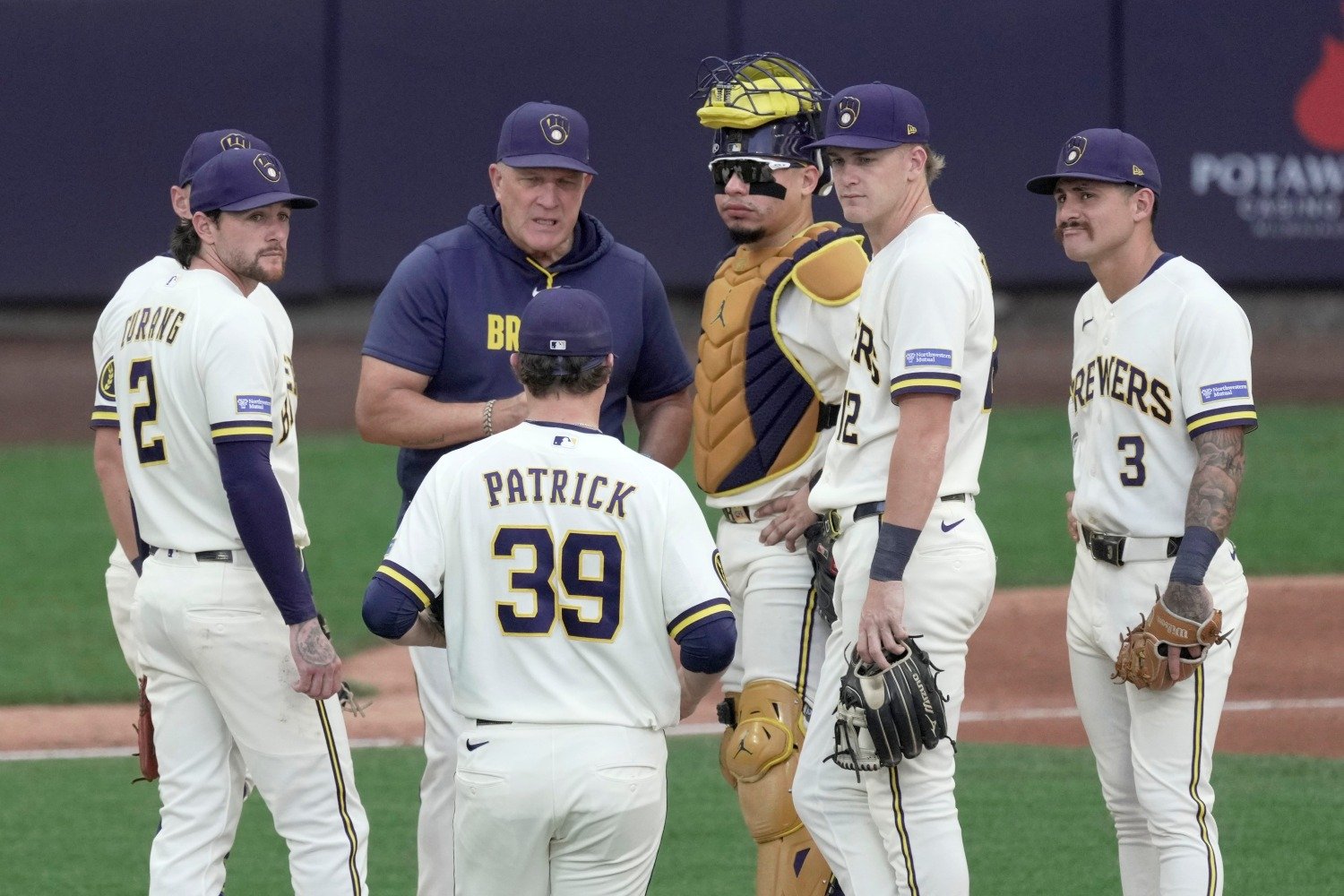 Last week at Wrigley Field, Pat Murphy made a rare admission to the media: in a close game, he made a decision that didn't maximize the Brewers' chances of winning. After hitting Andrew Vaughn for David Hamilton last Sunday against the Rangers, Murphy kept him in the game as the third baseman. That was a hit to the infield defense with Milwaukee trailing by three runs, but Murphy was thinking ahead to their first September series against the Cubs. "I wanted to get him two at-bats, because I knew coming into the series he was going to get some at-bats," Murphy said. "Do I do that if I'm ruthless about winning every single game? Probably not. But I have to think of those things." Murphy has to think ahead as a manager, but it's one of his least favorite parts of the job to discuss. Having cut his teeth as a coach in the uncertain and chaotic environment of college baseball, he believes you can't control much about the future. The best thing you can do is try your best to win the game in front of you. One of Murphy's most repeated mantras is "Win Tonight." That means Murphy puts his chips on the table when he sniffs a potential win. He wants his best players on the field whenever possible. He doesn't push players to the point of immediate injury risk, but Murphy will wade into the gray area on workloads to win tonight. The standings aren't changing his view—at least not yet. Milwaukee entered their final regular-season series against the Cubs with a seven-game lead over Chicago in the NL Central. According to FanGraphs, they had a 98.6% chance of winning the division. Still, Murphy has insisted repeatedly over the last several weeks that the Brewers cannot start thinking ahead about October ("We're not in the postseason yet," he cautioned before the Wrigley series). In fairness, there is still something to play for; securing baseball's best record would guarantee home-field advantage through the postseason. On Monday, Murphy pitched Abner Uribe in a back-to-back outing while trailing by one run in the eighth inning, saying afterward that he considered it a high-leverage situation. On Tuesday, he kept Uribe off-limits and gave Jake Bauers a second straight maintenance day as he deals with shin splints. However, he also pitched Aaron Ashby for the sixth time in eight days and pinch-hit for Bauers in the fifth inning, so he played the second half of the game at first base. As they often have, Murphy's more aggressive decisions paid off, at least in the short term. The Brewers notched comeback wins in both games, including Tuesday's particularly dramatic walk-off win. Even though neither meant much for the divisional standings – particularly after the Brewers secured the season series and postseason tiebreaker over the Cubs on Monday – both had a playoff-like atmosphere. "Playing here and being close to Chicago and playing in Wrigley, it's always pretty crazy," DL Hall said. "But I think we just look at it like any other game, and we just play our game, no matter who's across the field in the other dugout." For the Brewers, that means leaving everything on the field and refusing to quit. Redemption was the story of the night, as the key contributors behind the late-inning comeback were having unproductive nights, made mistakes earlier in the game, or both. "We made some junior mistakes before that, but hung in there and [were] resilient," Murphy said of the eventual walk-off victory. "That's just kind of what you'd love to be part of, trusting your team and believing they'll keep coming back." After Trevor Megill allowed two runs in the top of the ninth, the Brewers were down to their final strike. Christian Yelich battled back from an 0-2 count for a pinch-hit single, giving Jackson Chourio a crack at Cubs closer Jacob Webb. The Brewers may have taken a lead to the ninth had Chourio not cost them a run on the bases an hour earlier. Trying to score from second on William Contreras's two-out single in the fifth, Chourio awkwardly slid feet first into the plate, trying to swipe home plate with his left hand. He jammed his thumb and was tagged out on a tag he should have beaten, even if it was a great throw by Seiya Suzuki. "He's got a lane to slide in. You hope he's safe there," Murphy said. "Feet first at the plate, I just don't like it." He made up for it in the ninth. After fouling off a first-pitch changeup over the inner third of the plate, Chourio turned on the next one he saw and launched a game-tying home run to left. After his go-ahead single in the eighth the day before, it was the latest addition to his growing resume of coming through in the biggest moments. "You got to get 27 outs, right? There's not another person I probably want up in that situation." Garrett Mitchell said. "He just does less and demolishes baseballs." Mitchell was having a rough night at the plate himself, going 0-for-4 with three strikeouts, but he set up the walk-off with his defense in extra innings. When Alex Bregman led off the top of the tenth with a fly ball to center field, Mitchell positioned himself, stepped into the catch (with Chourio alerting him that the placed runner Suzuki was preparing to tag up), and fired to third. David Hamilton held the tag as Suzuki slid past the base to complete the double play. "It's baseball. You can have a really good day and a really crappy day," Mitchell said. "I think I've talked about this a lot. There's not a lot you can control on the offensive end when things aren't going well, but if there's one thing I take pride in, it's playing good defense, and you don't take your offense to defense." Luis Lara was also 0-for-4 when he stepped up with the bases loaded in the bottom of the tenth. In the sixth, he emotionally challenged a third strike that was fully in the zone, exhausting the Brewers' final ABS challenge. That proved consequential in the ninth, as what should have been a Michael Conforto strikeout became a one-out walk when ball four clipped the zone and William Contreras could not challenge. Lara also struck out with runners on second and third in the eighth to end a potential rally. Before Lara stepped into the box, Murphy approached him in the on-deck circle with a message of encouragement. "He asked me if I was ready, and he told me that he believed in me 100 percent," Lara said through translator Daniel de Mondesert. "I was just trying to get him to take the emotions out of it and just have kind of a clear head," Murphy said. "'It's not about you, it's about the ballclub right here. The ballclub needs you to stay level-headed.' I don't think that had any difference in the at-bat." On the first pitch, Lara drove a walk-off single down the left-field line. "I think the only thing that was repeating in my head over and over again was, 'Wow, wow, wow,'" Lara said. "It was just unbelievable." "He just cares," Murphy said. "When you come into the environment here, you care about the team. That's the deal." On one hand, resiliency should serve the Brewers well in October. Regular-season baseball already punches you in the mouth repeatedly, and it hits even harder in do-or-die playoff environments. The Cubs could again be Milwaukee's NLDS opponent, and in recent games, the Brewers have embodied the traits of a successful postseason team. They've bounced back from bad losses, pitched well against a formidable lineup, played great defense, and gotten enough big swings from hitters like Chourio to flip the scoreboard when it matters most. On the other hand, last year's NLCS sweep showed what happens when the tank runs dry too soon. The offense looked like a shell of itself after grinding out every plate appearance for six months and playing through injuries. With diminished command and velocity, respectively, Ashby and Uribe looked to be running on fumes. The Brewers didn't back off that September. With that context, it's fair to wonder whether Monday and Tuesday's high-effort wins would look different after a playoff exit. Are a few extra regular-season wins worth it if they send a club to an earlier October burnout? Every team has wear and tear by the postseason, but unlike most teams, the Brewers played so well that they earned the luxury of pacing themselves down the stretch. Is continuing to go full-throttle with the best playoff odds in baseball the best use of the next three weeks? That's the balance Murphy and the Brewers must strike, particularly after they clinch a postseason spot and the division in the coming days. They should still make a push for the top seed, but at that point, there are more important considerations than winning the game in front of you. The last two wins can be an October preview, but not the premature peak of Milwaukee's season.
- 2 comments
-
- 1
-
-
- pat murphy
- jackson chourio
- (and 4 more)
-
Image courtesy of David Banks-Imagn Images The Brewers’ young outfielders were right in the middle of their Labor Day comeback win over the Cubs, which inched Milwaukee closer to another NL Central title by securing the season series. Luis Lara scored their first run in the fifth inning. After Jackson Chourio delivered the go-ahead single as part of a three-run eighth, Lara added more flair in the ninth with a leaping catch at the wall, robbing Pedro Ramírez of extra bases against Trevor Megill. “In that situation, I’m just reacting,” Lara said through interpreter Daniel de Mondesert. “That’s the only thing going through my head, is reacting to the play and to the ball off the bat, and just finding any way I possibly can to make the play there.” It wasn’t lost on Pat Murphy that Lara made a pivotal play in the field minutes after a poor at-bat to end that eighth-inning rally. “That response type stuff is what it’s all about,” Murphy said. “Responding after things don’t go right, and as quickly as possible.” His closer appreciated the effort. “He goes balls to the wall,” Megill said. “That’s what we want from our outfielders and our defense, and that’s the standard. He goes out there and does that every single day on defense.” That’s a crude but accurate way to put it. In fewer than 50 big-league games, Lara has already assembled an impressive highlight reel. He entered Monday with 6 Defensive Runs Saved and 2 Outs Above Average in 339 outfield innings. Before that, Lara won a Gold Glove in 2025 in the minor leagues, where he developed a reputation for his daring patrol of the grass. “He makes that play at the wall look really, really easy,” said Christian Yelich, who formerly traversed right field at American Family Field. “And it’s not an easy play, especially in right field, because of how [the wall] slants in and goes back. It’s just a funky area over there, and he makes it look easy.” That wasn’t the case immediately after Lara’s promotion to the majors. After he played mostly center in the minor leagues, the Brewers have used him primarily in right field. While most modern big-league stadiums measure at least 325 feet between home plate and the foul poles in both outfield corners, many minor-league parks have smaller dimensions closer to 300 feet in the corners, with shorter warning tracks. Lara has maintained that he has always felt confident in his ability to play any outfield position, but he was clearly unfamiliar with that newfound space in right field. He seemed uncertain of how close he was to the wall, leading to some early hesitation on plays that should have been easier for him. The most notable moment came in his second big-league game in St. Louis. When Masyn Winn drove a deep but relatively routine fly ball to right, Lara kept checking on the wall. As soon as he hit the warning track, he believed he was running out of room, so he slowed down and leaped. Instead of hitting the padding as he expected, Lara fell forward into open space, flubbing the ball and turning what should have been an out into a double. MDRYV05fVjBZQUhRPT1fVTFjQUJsd0JVd0VBQVZZS0JBQUhCd0JmQUFNTldsWUFCRkFHQndjRUExSUdBVmRU.mp4 A couple of weeks later, Lara was tested with a bloop fly ball down the right-field line, with Brice Turang and Jake Bauers converging toward him as the play unfolded. It was Lara’s ball, but he hesitated to avoid a collision, and the ball dropped for a double. V0FXUVBfWGw0TUFRPT1fQkZjRkJsRlNBRlFBRHdRRkFBQUhCd0JUQUFNQ0JRY0FWd0ZXQXdZRkFRVUdVd3BS.mp4 Both misplays were understandable for a young outfielder acclimating to new and unfamiliar surroundings. Lara had played very little right field as a professional, but there was reason to believe that his instincts and ability would allow him to transition quickly. That’s precisely what happened. August brought more reckless catches, with Lara sacrificing his body to the wall without hesitation. His coming-out party was an extra-innings win against the Twins on August 9. With the game tied at 3-3 in the sixth inning, he robbed Brooks Lee of extra bases with a leap at the wall. NHlLZUJfWGw0TUFRPT1fQWdkVVVnVlNBbFlBWFZFRVZ3QUhCVklEQUZnTlYxUUFCUU1GQmdRRlVsRlVWQVlI.mp4 He made a far better play in the 10th, taking a perfect route on a Kody Clemens drive and slamming into the wall, preventing the go-ahead run on second base from scoring. NHlLZUJfWGw0TUFRPT1fVlZkUVhBQlhBMWNBV3dNQ1V3QUhWdzVXQUFNTldsWUFDMU1HVlFBQ0NWWUdVZ3BU.mp4 At that point, Lara had played just two big-league games in center field, and nearly all of his action came in right. Pat Murphy revealed that to be a deliberate decision after the game, saying he wanted to limit Lara to one position to ease his transition. “He’s very capable of [playing] center field, but I didn’t put him in center because I want him to just keep getting more and more comfortable in right field,” Murphy said. Lara has since gotten more action in center while Garrett Mitchell nursed a foot injury, and the highlight-reel plays have accumulated at both positions. Pair that defense with a passable 97 wRC+ and .337 on-base percentage, and the 21-year-old has already been an impact player in his rookie season. “In all areas on the field, I feel like I have confidence,” Lara said. “Defending, at the plate, running the bases—whatever it is, I have confidence in my ability, so [I'm] just really out there enjoying it.” View full article
-
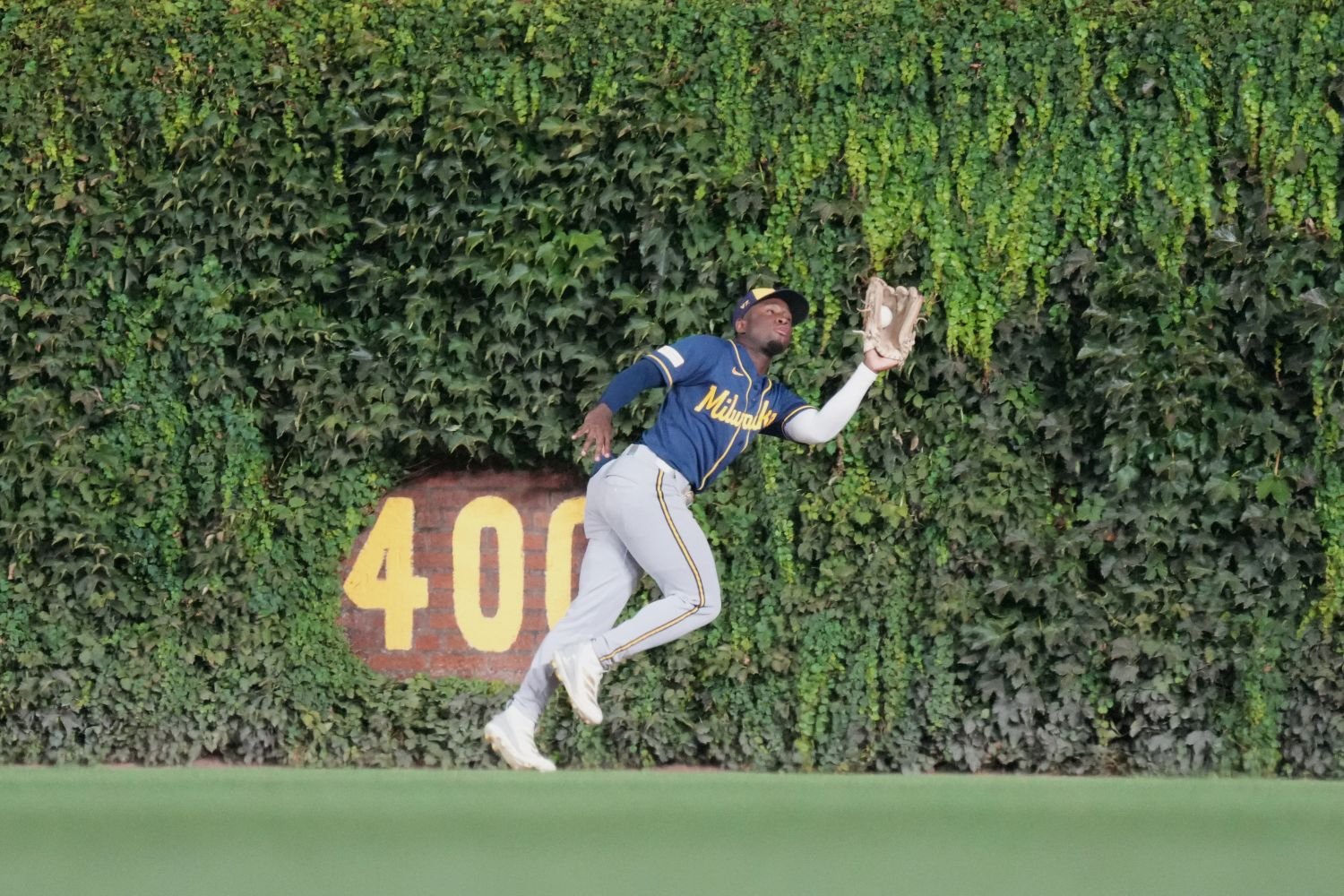 The Brewers’ young outfielders were right in the middle of their Labor Day comeback win over the Cubs, which inched Milwaukee closer to another NL Central title by securing the season series. Luis Lara scored their first run in the fifth inning. After Jackson Chourio delivered the go-ahead single as part of a three-run eighth, Lara added more flair in the ninth with a leaping catch at the wall, robbing Pedro Ramírez of extra bases against Trevor Megill. “In that situation, I’m just reacting,” Lara said through interpreter Daniel de Mondesert. “That’s the only thing going through my head, is reacting to the play and to the ball off the bat, and just finding any way I possibly can to make the play there.” It wasn’t lost on Pat Murphy that Lara made a pivotal play in the field minutes after a poor at-bat to end that eighth-inning rally. “That response type stuff is what it’s all about,” Murphy said. “Responding after things don’t go right, and as quickly as possible.” His closer appreciated the effort. “He goes balls to the wall,” Megill said. “That’s what we want from our outfielders and our defense, and that’s the standard. He goes out there and does that every single day on defense.” That’s a crude but accurate way to put it. In fewer than 50 big-league games, Lara has already assembled an impressive highlight reel. He entered Monday with 6 Defensive Runs Saved and 2 Outs Above Average in 339 outfield innings. Before that, Lara won a Gold Glove in 2025 in the minor leagues, where he developed a reputation for his daring patrol of the grass. “He makes that play at the wall look really, really easy,” said Christian Yelich, who formerly traversed right field at American Family Field. “And it’s not an easy play, especially in right field, because of how [the wall] slants in and goes back. It’s just a funky area over there, and he makes it look easy.” That wasn’t the case immediately after Lara’s promotion to the majors. After he played mostly center in the minor leagues, the Brewers have used him primarily in right field. While most modern big-league stadiums measure at least 325 feet between home plate and the foul poles in both outfield corners, many minor-league parks have smaller dimensions closer to 300 feet in the corners, with shorter warning tracks. Lara has maintained that he has always felt confident in his ability to play any outfield position, but he was clearly unfamiliar with that newfound space in right field. He seemed uncertain of how close he was to the wall, leading to some early hesitation on plays that should have been easier for him. The most notable moment came in his second big-league game in St. Louis. When Masyn Winn drove a deep but relatively routine fly ball to right, Lara kept checking on the wall. As soon as he hit the warning track, he believed he was running out of room, so he slowed down and leaped. Instead of hitting the padding as he expected, Lara fell forward into open space, flubbing the ball and turning what should have been an out into a double. MDRYV05fVjBZQUhRPT1fVTFjQUJsd0JVd0VBQVZZS0JBQUhCd0JmQUFNTldsWUFCRkFHQndjRUExSUdBVmRU.mp4 A couple of weeks later, Lara was tested with a bloop fly ball down the right-field line, with Brice Turang and Jake Bauers converging toward him as the play unfolded. It was Lara’s ball, but he hesitated to avoid a collision, and the ball dropped for a double. V0FXUVBfWGw0TUFRPT1fQkZjRkJsRlNBRlFBRHdRRkFBQUhCd0JUQUFNQ0JRY0FWd0ZXQXdZRkFRVUdVd3BS.mp4 Both misplays were understandable for a young outfielder acclimating to new and unfamiliar surroundings. Lara had played very little right field as a professional, but there was reason to believe that his instincts and ability would allow him to transition quickly. That’s precisely what happened. August brought more reckless catches, with Lara sacrificing his body to the wall without hesitation. His coming-out party was an extra-innings win against the Twins on August 9. With the game tied at 3-3 in the sixth inning, he robbed Brooks Lee of extra bases with a leap at the wall. NHlLZUJfWGw0TUFRPT1fQWdkVVVnVlNBbFlBWFZFRVZ3QUhCVklEQUZnTlYxUUFCUU1GQmdRRlVsRlVWQVlI.mp4 He made a far better play in the 10th, taking a perfect route on a Kody Clemens drive and slamming into the wall, preventing the go-ahead run on second base from scoring. NHlLZUJfWGw0TUFRPT1fVlZkUVhBQlhBMWNBV3dNQ1V3QUhWdzVXQUFNTldsWUFDMU1HVlFBQ0NWWUdVZ3BU.mp4 At that point, Lara had played just two big-league games in center field, and nearly all of his action came in right. Pat Murphy revealed that to be a deliberate decision after the game, saying he wanted to limit Lara to one position to ease his transition. “He’s very capable of [playing] center field, but I didn’t put him in center because I want him to just keep getting more and more comfortable in right field,” Murphy said. Lara has since gotten more action in center while Garrett Mitchell nursed a foot injury, and the highlight-reel plays have accumulated at both positions. Pair that defense with a passable 97 wRC+ and .337 on-base percentage, and the 21-year-old has already been an impact player in his rookie season. “In all areas on the field, I feel like I have confidence,” Lara said. “Defending, at the plate, running the bases—whatever it is, I have confidence in my ability, so [I'm] just really out there enjoying it.”
 -
Image courtesy of David Banks-Imagn Images Looking at the box score, one wouldn't think that anything was wrong with Kyle Harrison. Since returning from a month-long stint on the injured list with left forearm tightness, Harrison's results and peripherals largely matched his pre-injury dominance. Entering Monday night’s outing against the Cubs, he had pitched to a 1.83 ERA, 3.61 xERA, and 3.13 SIERA with a 31.7% strikeout rate since his return. While Harrison’s results were nearly identical to before, his stuff was not. Before his IL stint, his signature fastball averaged a career-best 95 mph. Since his return, it’s averaged 93.7 mph. He was also unintentionally dropping his arm slot for a couple of starts, which killed some of the fastball’s carry. The downturn in stuff made him more homer-prone – Harrison allowed 1.83 home runs per nine in his first four starts back, after a 1.08 rate before the injury – but for the most part, he was making do with what he had. Against mostly below-average lineups, the fastball was still getting whiffs at 92-to-94, and he corrected the arm slot problem after a rough outing in San Diego. Still, the velocity dip remained noteworthy. Monday night was the first time Harrison faced a postseason-caliber lineup with his diminished fastball, and they demolished him. The Cubs, who lead baseball in runs scored and wRC+, whiffed only twice on 32 swings against Harrison’s fastball and hit four of their five home runs against the heater. Each home run pitch was under 95 mph, and three were under 94. Harrison allowed a career-high nine earned runs in 3 ⅔ innings. Velocity wasn’t the only issue. Harrison and Pat Murphy said that he was tipping his pitches early in the outing by coming set with his hands in different positions for each pitch type. “When you know what’s coming, it’s a little bit easier to hit, I think,” Harrison said. “So it's on me [to address] during the week. I knew these guys are looking for any sign of edge that they can get, and they got a little bit of an edge on me, I think, in that first inning.” Harrison’s command was also poor, as three of those four fastball homers came on pitches over the middle of the plate. However, Harrison’s fastball has been effective right down the middle at higher velocities. This season, on fastballs thrown at least 94 mph where Statcast considers down the middle, Harrison has produced a +2 run value and held hitters to a .190 batting average with a 23.6% whiff rate. The Cubs hit fastballs in locations that have been effective for Harrison this year. Even after he tried to fix the tipping after the first inning, they still hit him hard. Above all else, the bottom line is that his current fastball is not the same pitch it was in the first half. That also includes the pitch’s movement. When Harrison generates less velocity, he also generates less backspin on his fastball. On Monday, it averaged one less inch of induced vertical break than his season average. “I don't think it's necessarily about the velo as much, it's about the shape,” Harrison said. “That's some of the frustrating stuff. I thought we were in a good spot last bullpen, was able to get back up to like 20 [induced vertical break], and then coming out today was more like 13.” “It's more about not only the [velocity] number, but if the ball's taking off the way it usually does at the top [of the zone], then that makes him really effective, because it looks like it's going to be here and then it takes off,” Murphy said. “When it's not doing that, it's more hittable. We saw a little bit of that in spring training. We've seen it a few times.” That backspin usually gives Harrison’s fastball above-average carry (which hitters often describe as “ride” or “late life”) from a low release height. When that carry is there, it hasn't become unusable around 93 mph. Instead, it goes from an elite pitch to an above-average one for his career. MPH Run Value Run Value/100p wOBA Whiff% 94+ 20 1.5 .257 29.0% 93-94 5 0.7 .313 23.7% 92-93 2 0.3 .331 28.4% <92 -11 -2.6 .469 17.2% In reality, Harrison’s fastball is not entirely dependent on velocity to be effective. The real issue is his limited arsenal, which becomes exposed when his fastball velocity dips. Pitchers with deep pitch mixes can get by with a merely solid fastball, but Harrison is effectively a two-pitch pitcher with one fastball and one breaking ball. To make that two-pitch combination work as a starter, at least one must be excellent, and Harrison’s non-fastballs are not. His slider has big, loopy break with below-average spin. That kind of pitch does not play well on its own, so its effectiveness hinges on separation from an elite fastball. Harrison throws a kick changeup with significant drop as a third pitch, but he’s used it just 9% of the time this year with poor command. He threw progressively more changeups on Monday as the Cubs barreled his fastball, but he located just 21% of them in the strike zone. Harrison’s 2024 season showed what happens when his fastball is solid instead of elite. His fastball averaged 92.6 mph that year, and it still limited hitters to a .328 wOBA with a 23% whiff rate. However, his breaking ball was hit harder, producing a .347 wOBA, compared to just .188 this year. Harrison was a below-average pitcher that season, pitching to a 4.56 ERA, 4.33 FIP, and 4.18 SIERA. That’s not a postseason starter, an alarming twist after Jacob Misiorowski and Harrison looked like a formidable 1-2 rotation punch mere weeks ago. For most of the year, it seemed those two could give the Brewers a chance against any team in a short playoff series. Now they must prepare for Harrison to be entirely out of the mix. Logan Henderson should start Game 2 instead, and Shane Drohan and Dustin May, each of whom has his own shortcomings, will also have to cover more important innings. Where the Brewers go from here remains to be seen. Harrison has maintained that his velocity will return. “I'm not giving up on the velo. I think it’ll still be there,” he said. “I'm feeling great physically, so just gotta keep going, keep grinding, put the head down.” If Harrison truly is healthy, then where did his plus fastball go, and how can he get it back? “His delivery might be a little bit jacked,” Murphy said. “I think it's in there, and I haven't lost trust, but I think we got to go back and look at the delivery and make sure his mechanics are solid.” Harrison and the Brewers have four weeks to get him right. How he looks during that time carries massive implications for their postseason pitching picture. View full article
-
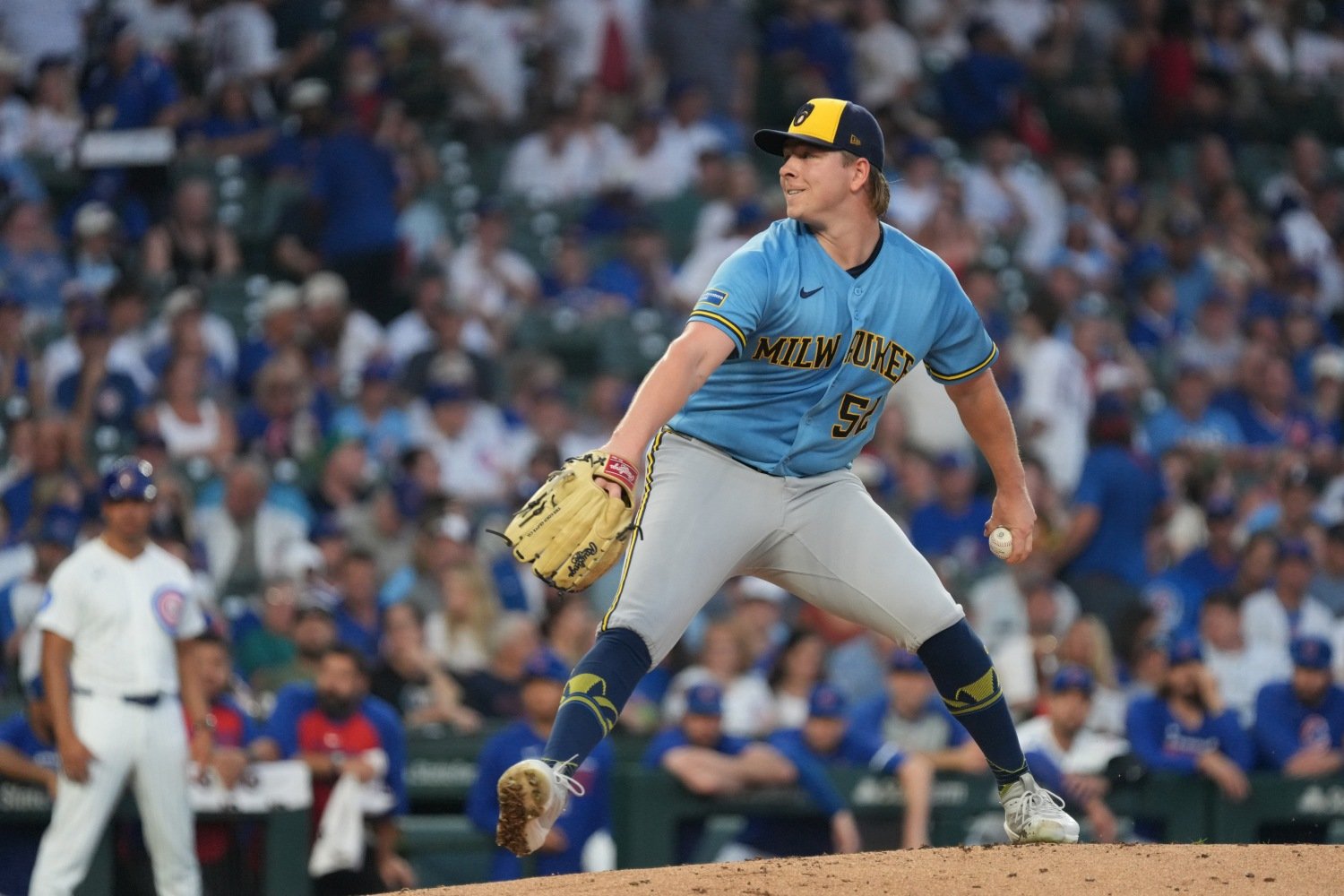 Looking at the box score, one wouldn't think that anything was wrong with Kyle Harrison. Since returning from a month-long stint on the injured list with left forearm tightness, Harrison's results and peripherals largely matched his pre-injury dominance. Entering Monday night’s outing against the Cubs, he had pitched to a 1.83 ERA, 3.61 xERA, and 3.13 SIERA with a 31.7% strikeout rate since his return. While Harrison’s results were nearly identical to before, his stuff was not. Before his IL stint, his signature fastball averaged a career-best 95 mph. Since his return, it’s averaged 93.7 mph. He was also unintentionally dropping his arm slot for a couple of starts, which killed some of the fastball’s carry. The downturn in stuff made him more homer-prone – Harrison allowed 1.83 home runs per nine in his first four starts back, after a 1.08 rate before the injury – but for the most part, he was making do with what he had. Against mostly below-average lineups, the fastball was still getting whiffs at 92-to-94, and he corrected the arm slot problem after a rough outing in San Diego. Still, the velocity dip remained noteworthy. Monday night was the first time Harrison faced a postseason-caliber lineup with his diminished fastball, and they demolished him. The Cubs, who lead baseball in runs scored and wRC+, whiffed only twice on 32 swings against Harrison’s fastball and hit four of their five home runs against the heater. Each home run pitch was under 95 mph, and three were under 94. Harrison allowed a career-high nine earned runs in 3 ⅔ innings. Velocity wasn’t the only issue. Harrison and Pat Murphy said that he was tipping his pitches early in the outing by coming set with his hands in different positions for each pitch type. “When you know what’s coming, it’s a little bit easier to hit, I think,” Harrison said. “So it's on me [to address] during the week. I knew these guys are looking for any sign of edge that they can get, and they got a little bit of an edge on me, I think, in that first inning.” Harrison’s command was also poor, as three of those four fastball homers came on pitches over the middle of the plate. However, Harrison’s fastball has been effective right down the middle at higher velocities. This season, on fastballs thrown at least 94 mph where Statcast considers down the middle, Harrison has produced a +2 run value and held hitters to a .190 batting average with a 23.6% whiff rate. The Cubs hit fastballs in locations that have been effective for Harrison this year. Even after he tried to fix the tipping after the first inning, they still hit him hard. Above all else, the bottom line is that his current fastball is not the same pitch it was in the first half. That also includes the pitch’s movement. When Harrison generates less velocity, he also generates less backspin on his fastball. On Monday, it averaged one less inch of induced vertical break than his season average. “I don't think it's necessarily about the velo as much, it's about the shape,” Harrison said. “That's some of the frustrating stuff. I thought we were in a good spot last bullpen, was able to get back up to like 20 [induced vertical break], and then coming out today was more like 13.” “It's more about not only the [velocity] number, but if the ball's taking off the way it usually does at the top [of the zone], then that makes him really effective, because it looks like it's going to be here and then it takes off,” Murphy said. “When it's not doing that, it's more hittable. We saw a little bit of that in spring training. We've seen it a few times.” That backspin usually gives Harrison’s fastball above-average carry (which hitters often describe as “ride” or “late life”) from a low release height. When that carry is there, it hasn't become unusable around 93 mph. Instead, it goes from an elite pitch to an above-average one for his career. MPH Run Value Run Value/100p wOBA Whiff% 94+ 20 1.5 .257 29.0% 93-94 5 0.7 .313 23.7% 92-93 2 0.3 .331 28.4% <92 -11 -2.6 .469 17.2% In reality, Harrison’s fastball is not entirely dependent on velocity to be effective. The real issue is his limited arsenal, which becomes exposed when his fastball velocity dips. Pitchers with deep pitch mixes can get by with a merely solid fastball, but Harrison is effectively a two-pitch pitcher with one fastball and one breaking ball. To make that two-pitch combination work as a starter, at least one must be excellent, and Harrison’s non-fastballs are not. His slider has big, loopy break with below-average spin. That kind of pitch does not play well on its own, so its effectiveness hinges on separation from an elite fastball. Harrison throws a kick changeup with significant drop as a third pitch, but he’s used it just 9% of the time this year with poor command. He threw progressively more changeups on Monday as the Cubs barreled his fastball, but he located just 21% of them in the strike zone. Harrison’s 2024 season showed what happens when his fastball is solid instead of elite. His fastball averaged 92.6 mph that year, and it still limited hitters to a .328 wOBA with a 23% whiff rate. However, his breaking ball was hit harder, producing a .347 wOBA, compared to just .188 this year. Harrison was a below-average pitcher that season, pitching to a 4.56 ERA, 4.33 FIP, and 4.18 SIERA. That’s not a postseason starter, an alarming twist after Jacob Misiorowski and Harrison looked like a formidable 1-2 rotation punch mere weeks ago. For most of the year, it seemed those two could give the Brewers a chance against any team in a short playoff series. Now they must prepare for Harrison to be entirely out of the mix. Logan Henderson should start Game 2 instead, and Shane Drohan and Dustin May, each of whom has his own shortcomings, will also have to cover more important innings. Where the Brewers go from here remains to be seen. Harrison has maintained that his velocity will return. “I'm not giving up on the velo. I think it’ll still be there,” he said. “I'm feeling great physically, so just gotta keep going, keep grinding, put the head down.” If Harrison truly is healthy, then where did his plus fastball go, and how can he get it back? “His delivery might be a little bit jacked,” Murphy said. “I think it's in there, and I haven't lost trust, but I think we got to go back and look at the delivery and make sure his mechanics are solid.” Harrison and the Brewers have four weeks to get him right. How he looks during that time carries massive implications for their postseason pitching picture.
 -
Image courtesy of Benny Sieu-Imagn Images On August 14 against the Dodgers, William Contreras went 0-for-4 to drop his OPS to .702, its lowest point of the season. It was Contreras's sixth straight game without a hit. Over his last 30, he had hit .153/.241/.243. His struggles had grown so severe that Pat Murphy moved him from the top half to the bottom half of the lineup. When Contreras stepped up to the plate that night in Los Angeles, this was how his stance looked. He held his hands over his head and his outstretched arms well away from his body. Contreras has always been a tinkerer in the box. He's long toyed with different versions of his stance throughout the season, even when he's going well. At times, it changes from day to day. This was one of several stances he deployed during his slump, and he had been using it since the Brewers' previous West Coast trip two weeks earlier. It wasn't helping him break out of his struggles. If anything, it was digging him further into his hole. The screenshot above was taken seconds before a swing-and-miss on a 96-mph Yoshinobu Yamamoto sinker low and inside. It's a well-executed pitch that's hard to barrel, but Contreras is a strong athlete with above-average bat speed. When he's going well, he can pull his hands in on a down-and-in pitch and get the bat head far enough in front to make loud contact. That was harder to do with his hands starting so far from his body. By the time he pulled them in, he was late on that sinker and slashed over the top of it. YkJMMTRfVjBZQUhRPT1fQVFsVkJ3WldWRlFBQ3dBQkF3QUhDQVFGQUZsUUFsVUFBZ2NNVmdjR0NBUUhVVkZY.mp4 "Now you got to start early to get to that," Pat Murphy said. "Now guys [are pitching] him in, and your hands are way out here, you got to start early to get to that pitch. Now you're cutting across balls, missing balls, and you can't get there. It's just really hard to get to that spot." The following night, Contreras returned to his old stance. His hands were still above his head, but he held his bat above his shoulder and closer to his body. In his first at-bat, he roped a 107-mph line drive to left for a single. His next time up, he hit his first home run since July 19. That was the start of a torrid stretch for the Milwaukee backstop, who has hit .408/.456/.612 (191 wRC+) in his last 12 games. He's back to hitting the ball hard, posting a 51.5% hard-hit rate and average exit velocity of 91.9 mph in that span. By the time of the Brewers' series in New York last week, he was resting his bat on his shoulder, allowing him to pull that same low-and-in sinker for a 106-mph double. TzA0OW9fVjBZQUhRPT1fVkFKVlV3WU1Bd3NBWGxWVEF3QUhWUUZWQUZsVFZsQUFBVmNOQmxJTUFBZFJCd3RV.mp4 On Saturday night, Contreras launched another inside sinker for a towering home run that gave the Brewers an early lead. TzA0UjlfV0ZRVkV3dEdEUT09X1UxUURWMWNCVXdVQUNGSldVd0FIQ1E1U0FGaFhVRllBVkYxVUJsQURCZ3RVQXdZRA==.mp4 There are more tweaks going on here—Contreras has also started using a toe tap lately—but more than anything, his hands are allowing him to get to the ball directly and on time. "He's now got himself a little more tight [between his hands and his body], and he can stay a little linear with his hand path," Murphy said. "He doesn't need that space in there. I think it's helped him." Most of hitting is timing, so in some cases, less is often more. By becoming more compact with less pre-pitch movement, Contreras has simplified his setup. That's one of the tenets Murphy and the Brewers preach to their hitters: stop thinking too much and let your swing do the work. His other warning is that what works in batting practice won't necessarily translate against live pitching. Contreras is known for his vigorous pregame hitting work, which is where Murphy said he fell into that pitfall while trying different hand positions. Raising his hands worked in that practice setting, but not in games. "He goes out in pregame, and he hits it a long way. And it's timing that does that," Murphy said. "It doesn't matter where you have your hands if you time it up with the barrel. You don't get to do that when a guy's changing pitches and that type of thing." This is the second straight season in which Contreras's offense has declined, but he remains one of the Brewers' most talented hitters. He has the raw power to change a game with one swing, and Milwaukee's lineup functions more efficiently when he's a spark plug near the top of the order. That's the version they've seen over the past couple of weeks, and the version they hope to get in October. "He's learning, and he's been a good hitter his whole career, so he'll get back to being himself," Murphy said. "I think he's on track." View full article
-
William Contreras Simplified His Stance and Looks Like Himself Again
Jack Stern posted an article in Brewers
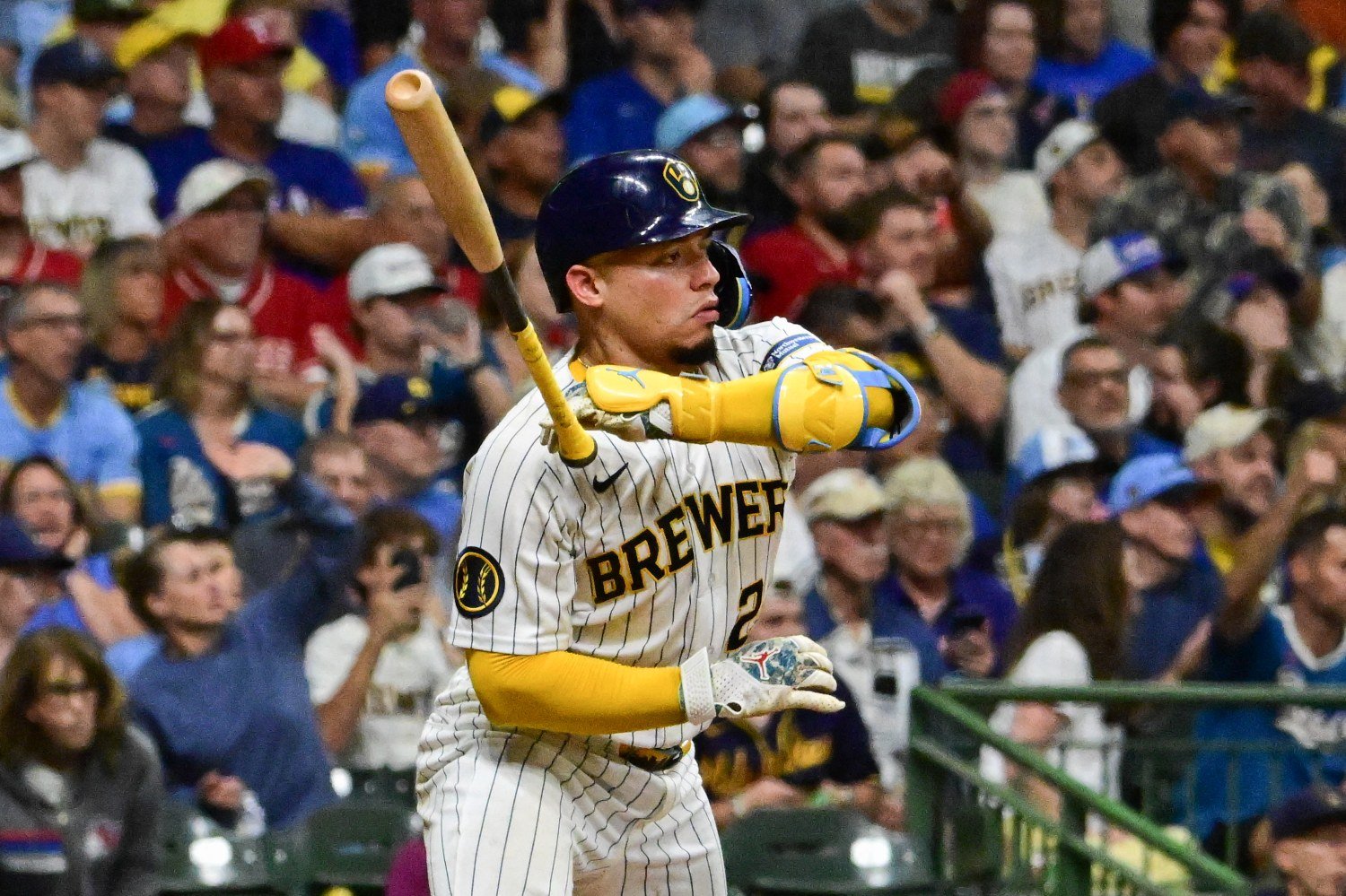 On August 14 against the Dodgers, William Contreras went 0-for-4 to drop his OPS to .702, its lowest point of the season. It was Contreras's sixth straight game without a hit. Over his last 30, he had hit .153/.241/.243. His struggles had grown so severe that Pat Murphy moved him from the top half to the bottom half of the lineup. When Contreras stepped up to the plate that night in Los Angeles, this was how his stance looked. He held his hands over his head and his outstretched arms well away from his body. Contreras has always been a tinkerer in the box. He's long toyed with different versions of his stance throughout the season, even when he's going well. At times, it changes from day to day. This was one of several stances he deployed during his slump, and he had been using it since the Brewers' previous West Coast trip two weeks earlier. It wasn't helping him break out of his struggles. If anything, it was digging him further into his hole. The screenshot above was taken seconds before a swing-and-miss on a 96-mph Yoshinobu Yamamoto sinker low and inside. It's a well-executed pitch that's hard to barrel, but Contreras is a strong athlete with above-average bat speed. When he's going well, he can pull his hands in on a down-and-in pitch and get the bat head far enough in front to make loud contact. That was harder to do with his hands starting so far from his body. By the time he pulled them in, he was late on that sinker and slashed over the top of it. YkJMMTRfVjBZQUhRPT1fQVFsVkJ3WldWRlFBQ3dBQkF3QUhDQVFGQUZsUUFsVUFBZ2NNVmdjR0NBUUhVVkZY.mp4 "Now you got to start early to get to that," Pat Murphy said. "Now guys [are pitching] him in, and your hands are way out here, you got to start early to get to that pitch. Now you're cutting across balls, missing balls, and you can't get there. It's just really hard to get to that spot." The following night, Contreras returned to his old stance. His hands were still above his head, but he held his bat above his shoulder and closer to his body. In his first at-bat, he roped a 107-mph line drive to left for a single. His next time up, he hit his first home run since July 19. That was the start of a torrid stretch for the Milwaukee backstop, who has hit .408/.456/.612 (191 wRC+) in his last 12 games. He's back to hitting the ball hard, posting a 51.5% hard-hit rate and average exit velocity of 91.9 mph in that span. By the time of the Brewers' series in New York last week, he was resting his bat on his shoulder, allowing him to pull that same low-and-in sinker for a 106-mph double. TzA0OW9fVjBZQUhRPT1fVkFKVlV3WU1Bd3NBWGxWVEF3QUhWUUZWQUZsVFZsQUFBVmNOQmxJTUFBZFJCd3RV.mp4 On Saturday night, Contreras launched another inside sinker for a towering home run that gave the Brewers an early lead. TzA0UjlfV0ZRVkV3dEdEUT09X1UxUURWMWNCVXdVQUNGSldVd0FIQ1E1U0FGaFhVRllBVkYxVUJsQURCZ3RVQXdZRA==.mp4 There are more tweaks going on here—Contreras has also started using a toe tap lately—but more than anything, his hands are allowing him to get to the ball directly and on time. "He's now got himself a little more tight [between his hands and his body], and he can stay a little linear with his hand path," Murphy said. "He doesn't need that space in there. I think it's helped him." Most of hitting is timing, so in some cases, less is often more. By becoming more compact with less pre-pitch movement, Contreras has simplified his setup. That's one of the tenets Murphy and the Brewers preach to their hitters: stop thinking too much and let your swing do the work. His other warning is that what works in batting practice won't necessarily translate against live pitching. Contreras is known for his vigorous pregame hitting work, which is where Murphy said he fell into that pitfall while trying different hand positions. Raising his hands worked in that practice setting, but not in games. "He goes out in pregame, and he hits it a long way. And it's timing that does that," Murphy said. "It doesn't matter where you have your hands if you time it up with the barrel. You don't get to do that when a guy's changing pitches and that type of thing." This is the second straight season in which Contreras's offense has declined, but he remains one of the Brewers' most talented hitters. He has the raw power to change a game with one swing, and Milwaukee's lineup functions more efficiently when he's a spark plug near the top of the order. That's the version they've seen over the past couple of weeks, and the version they hope to get in October. "He's learning, and he's been a good hitter his whole career, so he'll get back to being himself," Murphy said. "I think he's on track."
 -
Image courtesy of Benny Sieu-Imagn Images Pitcher-batter matchups are often framed as a handedness thing. Generally speaking, a same-sided matchup is more favorable for the pitcher, while an opposite-handed matchup favors the hitter. Left-handed hitters are better against right-handed pitchers, and right-handed hitters are better against left-handed pitchers. The left-on-left matchup is particularly tough for hitters, partially because lefties see fewer southpaws than righties do fellow righties. In reality, it's more complex than that. Matchups are really about the angle at which the hitter sees the pitch. Handedness usually determines much of that angle. Most pitchers throw from a three-quarters arm slot or lower, and they run, cut, or sweep their pitches. Those right-handed pitchers release the ball closer to a right-handed hitter, making it tougher to pick up out of the hand. Add some late run barreling in on them or late break sweeping away, and it gets even more uncomfortable. A lefty, meanwhile, gets a clearer window to see that pitcher's release. That's not always the case, though. For over-the-top pitchers with riding four-seamers, 12-6 curveballs, and straight changeups, the horizontal angles of their pitches don't change much from one side to the other. These pitchers can sometimes be platoon neutral or even have reverse splits. Different swing paths also line up better or worse against different pitch shapes. Simplifying things to handedness makes sense because it usually tells most of the story, but it doesn't explain everything. For those reasons, Pat Murphy and the Brewers don't automatically default to the most obvious matchup when they write lineups or make pitching changes. Murphy believes in and abides by reverse splits when they can be explained by a pitcher's arsenal or a hitter's swing. He starts Andrew Vaughn and Joey Ortiz against righties who throw mostly four-seamers, but not against those who throw sinkers and sliders. On Friday night, the Brewers faced Texas Rangers southpaw Cody Bradford, who owns reverse splits throughout his big-league career. Righties entered the night with a .707 OPS against him, while lefties had a .731 OPS. That's not a statistical fluke. Bradford throws from a higher arm slot, and more than 85% of his pitches this year have been a straight fastball with occasional slight cut and a changeup. Here's what a right-handed hitter sees from Bradford, visualized with Statcast's 3D ball tracking. The fastball and changeup are nearly inseparable by the time he must decide whether to swing. Flip those same pitches to a lefty point of view, and that separation becomes much easier to see. That was part of the calculus when Murphy rolled out his usual lineup of left-handed hitters against Bradford. Christian Yelich, Jake Bauers, Garrett Mitchell, Sal Frelick, and David Hamilton all started. "The way we look at it, it's not any lefty versus any lefty, but there are times when that guy's kind of a reverse-split guy, there's times when we leave our lefties in there," he said. There was even more to it than the hitting matchups. Murphy and the Brewers also felt their left-handed hitters were better positioned to bunt for hits against Bradford. As a lefty, he falls off toward third base as he delivers the ball, making a drag bunt down the first-base line difficult to defend. Lefty hitters can also take an early step toward first while dropping down that bunt, getting them down the line faster and forcing Bradford to make an even quicker play. "Sometimes it's easier to bunt left-on-left with that guy falling off the other way," Murphy said. It worked right from the get-go. Brice Turang led off the bottom of the first by bunting toward first, stepping into the bunt and springing out of the box as he made contact. After Bradford redirected his momentum and spun around, he misfired the ball down the line, allowing Turang to advance to second. Turang advanced to third on Jackson Chourio's flyout, then scored on William Contreras's groundout. Yelich then one-hopped an RBI double off the wall in left-center to score Bauers, who reached base on a walk. Hamilton added insurance in the sixth, lining a left-on-left fastball up the middle to score Mitchell. After Bradford left the game, Murphy stuck with his lefties against lefty reliever Adam Macko in the eighth, and they continued to take advantage. Frelick and Hamilton bunted for back-to-back singles to lead off the eighth. Both later scored to make it a 6-1 game, allowing another day of rest for Trevor Megill after a rare multi-inning appearance in New York. "We executed that three or four times perfectly," Murphy said. "So, yeah, sometimes you leave lefties in." Murphy and the Brewers didn't play conventional matchups, and it created most of their offense on Friday night. It was the latest example of winning on the margins both on the field and in the dugout, which has made Milwaukee the most successful regular-season team in baseball for the second year in a row. View full article
-
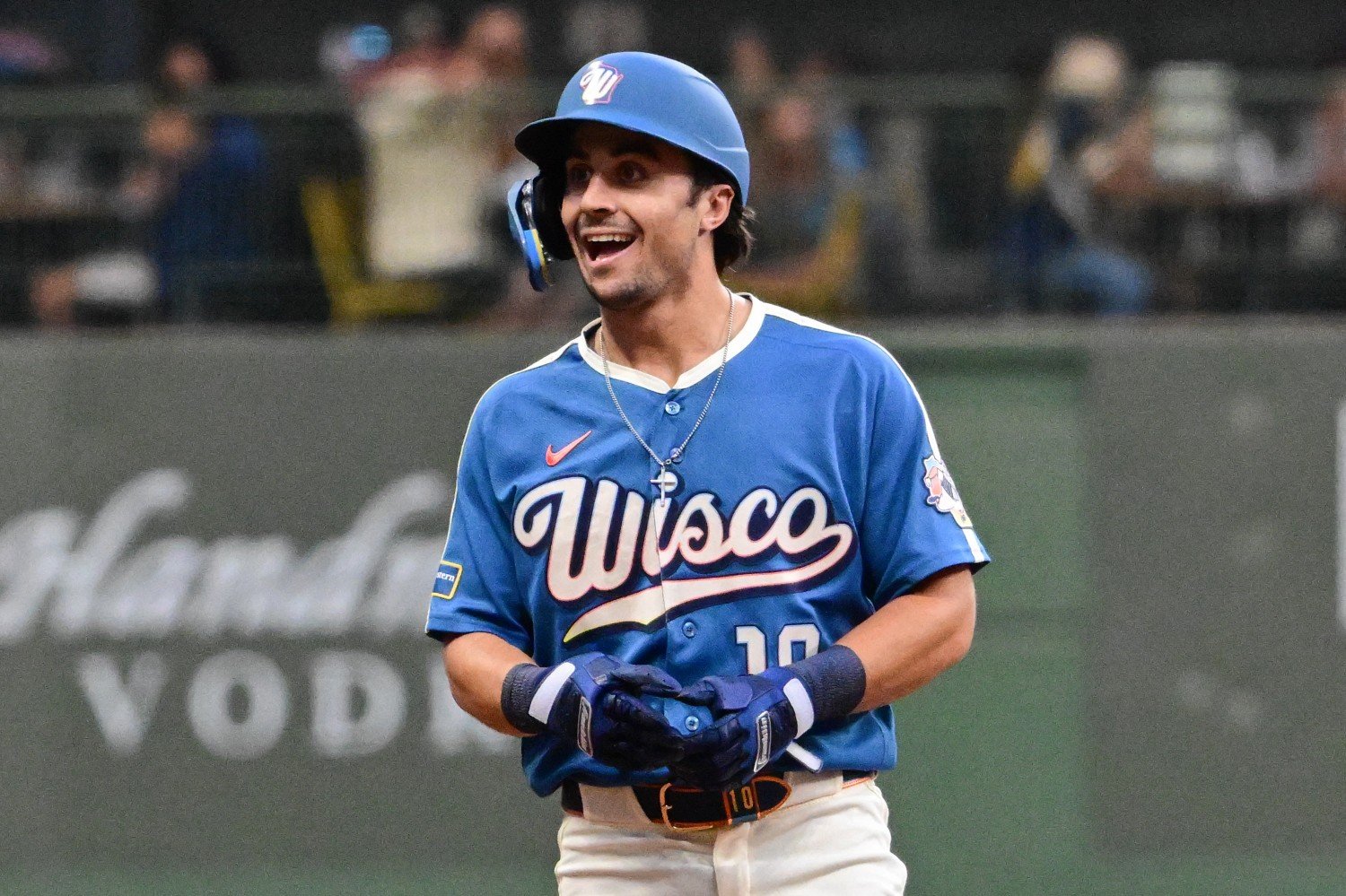 Pitcher-batter matchups are often framed as a handedness thing. Generally speaking, a same-sided matchup is more favorable for the pitcher, while an opposite-handed matchup favors the hitter. Left-handed hitters are better against right-handed pitchers, and right-handed hitters are better against left-handed pitchers. The left-on-left matchup is particularly tough for hitters, partially because lefties see fewer southpaws than righties do fellow righties. In reality, it's more complex than that. Matchups are really about the angle at which the hitter sees the pitch. Handedness usually determines much of that angle. Most pitchers throw from a three-quarters arm slot or lower, and they run, cut, or sweep their pitches. Those right-handed pitchers release the ball closer to a right-handed hitter, making it tougher to pick up out of the hand. Add some late run barreling in on them or late break sweeping away, and it gets even more uncomfortable. A lefty, meanwhile, gets a clearer window to see that pitcher's release. That's not always the case, though. For over-the-top pitchers with riding four-seamers, 12-6 curveballs, and straight changeups, the horizontal angles of their pitches don't change much from one side to the other. These pitchers can sometimes be platoon neutral or even have reverse splits. Different swing paths also line up better or worse against different pitch shapes. Simplifying things to handedness makes sense because it usually tells most of the story, but it doesn't explain everything. For those reasons, Pat Murphy and the Brewers don't automatically default to the most obvious matchup when they write lineups or make pitching changes. Murphy believes in and abides by reverse splits when they can be explained by a pitcher's arsenal or a hitter's swing. He starts Andrew Vaughn and Joey Ortiz against righties who throw mostly four-seamers, but not against those who throw sinkers and sliders. On Friday night, the Brewers faced Texas Rangers southpaw Cody Bradford, who owns reverse splits throughout his big-league career. Righties entered the night with a .707 OPS against him, while lefties had a .731 OPS. That's not a statistical fluke. Bradford throws from a higher arm slot, and more than 85% of his pitches this year have been a straight fastball with occasional slight cut and a changeup. Here's what a right-handed hitter sees from Bradford, visualized with Statcast's 3D ball tracking. The fastball and changeup are nearly inseparable by the time he must decide whether to swing. Flip those same pitches to a lefty point of view, and that separation becomes much easier to see. That was part of the calculus when Murphy rolled out his usual lineup of left-handed hitters against Bradford. Christian Yelich, Jake Bauers, Garrett Mitchell, Sal Frelick, and David Hamilton all started. "The way we look at it, it's not any lefty versus any lefty, but there are times when that guy's kind of a reverse-split guy, there's times when we leave our lefties in there," he said. There was even more to it than the hitting matchups. Murphy and the Brewers also felt their left-handed hitters were better positioned to bunt for hits against Bradford. As a lefty, he falls off toward third base as he delivers the ball, making a drag bunt down the first-base line difficult to defend. Lefty hitters can also take an early step toward first while dropping down that bunt, getting them down the line faster and forcing Bradford to make an even quicker play. "Sometimes it's easier to bunt left-on-left with that guy falling off the other way," Murphy said. It worked right from the get-go. Brice Turang led off the bottom of the first by bunting toward first, stepping into the bunt and springing out of the box as he made contact. After Bradford redirected his momentum and spun around, he misfired the ball down the line, allowing Turang to advance to second. Turang advanced to third on Jackson Chourio's flyout, then scored on William Contreras's groundout. Yelich then one-hopped an RBI double off the wall in left-center to score Bauers, who reached base on a walk. Hamilton added insurance in the sixth, lining a left-on-left fastball up the middle to score Mitchell. After Bradford left the game, Murphy stuck with his lefties against lefty reliever Adam Macko in the eighth, and they continued to take advantage. Frelick and Hamilton bunted for back-to-back singles to lead off the eighth. Both later scored to make it a 6-1 game, allowing another day of rest for Trevor Megill after a rare multi-inning appearance in New York. "We executed that three or four times perfectly," Murphy said. "So, yeah, sometimes you leave lefties in." Murphy and the Brewers didn't play conventional matchups, and it created most of their offense on Friday night. It was the latest example of winning on the margins both on the field and in the dugout, which has made Milwaukee the most successful regular-season team in baseball for the second year in a row.
 -
Image courtesy of Wendell Cruz-Imagn Images Cooper Pratt's benching was the central story of the Brewers' series-opening loss in New York on Tuesday night, but Robert Gasser received similar treatment in his last start. Last Thursday against the Mariners, Murphy pulled Gasser mid-count in the fourth inning after he fell behind 2-0 to Randy Arozarena. Staked to a 6-0 lead after the first, Gasser sprayed the ball around in an inefficient outing, walking four and hitting one. That doesn't fly with Murphy. He had seen enough. It was the latest frustration in an odd season for Gasser. His 4.59 ERA, 4.45 FIP, and 4.11 SIERA are all below average. Gasser's command has mostly been poor since he underwent Tommy John surgery. Even in some of his better outings of limiting runs and missing barrels, many of his pitches have been near the middle of the plate or non-competitive misses. He's hit eight batters, but his walk rate is a solid 7%. Even after finishing a stretch of 17 games in 17 days, the Brewers are using six starters to maximize rest for their young pitchers, but two straight weeks with an off day forced them to get creative to avoid too many days between starts. Last Tuesday, they used Shane Drohan for two innings of relief behind Kyle Harrison, then started Drohan on Sunday to keep Harrison on six days between starts. This week, it was Gasser skipping a start to keep the rotation on a reasonable schedule, so he was likely to come out of the bullpen on Wednesday night as a bridge appearance. Instead, he essentially made a full start, after a comebacker struck Dustin May and ended his outing after one pitch. Thrust into emergency long relief, Gasser delivered one of his best outings of the season, both in terms of process and results. He threw a first-pitch strike to 17 of 24 hitters and tossed 57% of his pitches in the strike zone. Gasser limited the Mets to just two hard-hit balls and generated whiffs on 26% of swings. He covered 5 ⅓ innings while allowing just one run, saving the bullpen and helping to turn a potential disaster into a smooth 8-1 win. Pratt, meanwhile, returned to the starting lineup after Murphy benched him for a perceived lack of hustle and other small mistakes. In reality, Pratt took a second to get out of the box after getting jammed high and inside. Once he found the ball, he ran to first. His bloop near the right-field line was in the air for a while, but he was never reaching second base against Carson Benge's elite throwing arm. Murphy later admitted, after watching a replay, that Pratt ran harder than he thought in the moment. Say what you want about the lesson Murphy was trying to teach and how he taught it. Regardless, Pratt said all of the right things to the media, and like Gasser, he bounced back on Wednesday. He legged out infield singles for both of his hits. At times, it feels like Murphy has unnecessarily fallen back on his college coaching experience to impose amateur-level discipline on grown professionals (though the 22-year-old Pratt is still college-aged). Most managers don't do this, for good reason. It can be embarrassing and patronizing, making players feel disrespected and damaging their trust in the manager. If not handled correctly, benching at the big-league level can create more issues than it solves. It's hard to say whether Murphy's benchings work. Maybe Gasser and Pratt would have performed well even without being reprimanded. But the bottom line is that they haven't created new problems. Furthermore, compared to his in-game strategy and questionable workload management, it's much harder to criticize Murphy's feel for managing people and intangibles. It's arguably his greatest strength as a leader. With limited bullpen depth on the 40-man roster and innings concerns in the rotation, the Brewers need quality innings from Gasser. They also need Pratt to be fundamentally sound. As a team, they must play to a high standard. Murphy has his method of enforcing that standard, and he's shown several times that he won't back down from it. Regardless of how they got there, Wednesday night was what he and the team wanted and needed. View full article
-
Robert Gasser, Cooper Pratt, and Pat Murphy's Enforcement of Standards
Jack Stern posted an article in Brewers
 Cooper Pratt's benching was the central story of the Brewers' series-opening loss in New York on Tuesday night, but Robert Gasser received similar treatment in his last start. Last Thursday against the Mariners, Murphy pulled Gasser mid-count in the fourth inning after he fell behind 2-0 to Randy Arozarena. Staked to a 6-0 lead after the first, Gasser sprayed the ball around in an inefficient outing, walking four and hitting one. That doesn't fly with Murphy. He had seen enough. It was the latest frustration in an odd season for Gasser. His 4.59 ERA, 4.45 FIP, and 4.11 SIERA are all below average. Gasser's command has mostly been poor since he underwent Tommy John surgery. Even in some of his better outings of limiting runs and missing barrels, many of his pitches have been near the middle of the plate or non-competitive misses. He's hit eight batters, but his walk rate is a solid 7%. Even after finishing a stretch of 17 games in 17 days, the Brewers are using six starters to maximize rest for their young pitchers, but two straight weeks with an off day forced them to get creative to avoid too many days between starts. Last Tuesday, they used Shane Drohan for two innings of relief behind Kyle Harrison, then started Drohan on Sunday to keep Harrison on six days between starts. This week, it was Gasser skipping a start to keep the rotation on a reasonable schedule, so he was likely to come out of the bullpen on Wednesday night as a bridge appearance. Instead, he essentially made a full start, after a comebacker struck Dustin May and ended his outing after one pitch. Thrust into emergency long relief, Gasser delivered one of his best outings of the season, both in terms of process and results. He threw a first-pitch strike to 17 of 24 hitters and tossed 57% of his pitches in the strike zone. Gasser limited the Mets to just two hard-hit balls and generated whiffs on 26% of swings. He covered 5 ⅓ innings while allowing just one run, saving the bullpen and helping to turn a potential disaster into a smooth 8-1 win. Pratt, meanwhile, returned to the starting lineup after Murphy benched him for a perceived lack of hustle and other small mistakes. In reality, Pratt took a second to get out of the box after getting jammed high and inside. Once he found the ball, he ran to first. His bloop near the right-field line was in the air for a while, but he was never reaching second base against Carson Benge's elite throwing arm. Murphy later admitted, after watching a replay, that Pratt ran harder than he thought in the moment. Say what you want about the lesson Murphy was trying to teach and how he taught it. Regardless, Pratt said all of the right things to the media, and like Gasser, he bounced back on Wednesday. He legged out infield singles for both of his hits. At times, it feels like Murphy has unnecessarily fallen back on his college coaching experience to impose amateur-level discipline on grown professionals (though the 22-year-old Pratt is still college-aged). Most managers don't do this, for good reason. It can be embarrassing and patronizing, making players feel disrespected and damaging their trust in the manager. If not handled correctly, benching at the big-league level can create more issues than it solves. It's hard to say whether Murphy's benchings work. Maybe Gasser and Pratt would have performed well even without being reprimanded. But the bottom line is that they haven't created new problems. Furthermore, compared to his in-game strategy and questionable workload management, it's much harder to criticize Murphy's feel for managing people and intangibles. It's arguably his greatest strength as a leader. With limited bullpen depth on the 40-man roster and innings concerns in the rotation, the Brewers need quality innings from Gasser. They also need Pratt to be fundamentally sound. As a team, they must play to a high standard. Murphy has his method of enforcing that standard, and he's shown several times that he won't back down from it. Regardless of how they got there, Wednesday night was what he and the team wanted and needed.
 -
Image courtesy of Denis Poroy-Imagn Images Since July 10, 171 pitchers throughout Major League Baseball have thrown at least 20 innings. Bryse Wilson is the only one who has not issued a walk. July 10 was the day Wilson signed a big-league deal to return to the Brewers, for whom he filled every role from starter to high-leverage reliever across the 2023 and 2024 seasons. This time around, his role has been more strictly defined as the long man. It's the least glamorous task on a pitching staff and comes with a mundane job description: throw strikes to eat innings. Because the game is often nearly decided by the time a long reliever takes over, keeping runs off the board is a plus, but not a necessity. Wilson understands his assignment and has flooded the strike zone with impressive efficiency. He's recorded six or more outs in five appearances, maxing out at four innings in a July 21 outing. Since his signing last month, his 55.3% zone rate is the fifth-highest among those pitchers with at least 20 innings. "If I come in and we're down a lot of runs, I know that innings have to be covered," Wilson said. "I just go in and do the best I can to cover as many innings to where the next day, we have a much better chance to win because everybody's available and there's more options to go to in the bullpen." Wilson's strike-throwing and embrace of his role have not gone unnoticed by his manager. "He's been magnificent. He really has," Pat Murphy said. "It's the epitome of that role, understanding that role. I think of a long snapper. I think of a great punter, a great kicker—somebody [who] just contributes when not too many people are noticing the greatness, and he does his role." While the game situation in most of his outings has freed Wilson to be even more aggressive in the zone, he also posted zone rates above 50% in each of his previous two seasons with the Brewers. He acknowledged that their emphasis on tunneling different fastball variations within the zone has typically worked best for his unassuming stuff, making Milwaukee a uniquely good fit. "I think it's just a lot of filling up the zone and just trusting that I can get guys out in-zone," Wilson said. "I'm not necessarily going after chase. Kind of avoid the longer at-bats." "He just pounds [the zone], but he pounds with command, and that ball is going all different ways," Murphy said. "He's not afraid 2-0 to throw a heater, where in today's game the amount of 2-0 heaters has decreased immensely. He's not afraid to just cut a heater or use a little comeback sinker on a 2-0 count, and he's got that kind of command." Wilson isn't just throwing strikes with his fastballs. He's throwing quality strikes. Since signing, he's been one of baseball's best command pitchers by Location+, and his stuff is playing better than ever. In his first two seasons as a Brewer, Wilson's 3.42 ERA masked a less impressive 4.73 xERA, 4.68 FIP, and 4.33 SIERA. This time, he's pitched to a 3.15 ERA, 3.33 xERA, 1.93 FIP, and 2.95 SIERA. Wilson hasn't been a soft-contact specialist, but he's held hitters to a meager 3.1% barrel rate. That success has come after Wilson returned to what worked best for him before, with a few new wrinkles. Last season, the White Sox tried to help him develop his secondary pitches, including a new changeup reliant on seam-shifted wake (cutting the ball just the right amount, so that the distribution of airflow around the seams pushes the ball down and to the arm side). Wilson lowered his arm slot, which impacted the movement of his fastballs and may have reduced his deception. Most notably, his cutter lost some of the downward and glove-side movement that made it effective. This season, Wilson has raised his slot slightly, and his pitches are moving as they did during his first stint in Milwaukee. Since rejoining the Brewers, he's also transitioned back toward his old mix, leaning increasingly on his cutter and sinker at the expense of his curveball and a new split-changeup. His refined command may also stem from improved timing in his delivery. When he was last a Brewer, Wilson lowered his hands toward his lap as he began his windup, which meant he had to bring them back up during his leg kick. 2024 windup.mp4 This year, he's eliminated some of that movement by using an over-the-head windup and starting his hands at his chest out of the stretch. Now, when Wilson begins his leg kick, he no longer needs to worry about where his hands are to ensure his arm is on time when his front foot lands. 2026.mp4 "Earlier this season, I was kind of having a tough time finding the timing in the break of when the hands separate, and so I was just kind of going through different things and trying to figure out what felt good," Wilson said. "Back when I played with Atlanta, I went over the head and had some success doing it, and so I tried it, and it felt good. The timing felt good, and I just didn't feel like I had to think about it as much. So we just kind of rolled with it." Wilson's latest tenure in Milwaukee has technically been two stints, as the partnership survived unusual roster math when the club used a six-man rotation over a stretch of 17 games in 17 days. When a 34-pitch outing left him unavailable for a few days, the Brewers designated him for assignment on August 8 to add a fresh arm, in Lyon Richardson. After Wilson cleared waivers and elected free agency, they signed him again on August 11 to replace Richardson, who pitched the night before. "In my mind, I thought there was a possibility that we could come back," Wilson said. "It was just about seeing it through, and then the timing of it just kind of worked out perfectly to where they needed to make a move, and I had just cleared waivers, so it was just good timing and kind of worked out all around." As one of the last relievers in the bullpen—particularly one who cannot be optioned to the minor leagues—Wilson's spot on the 40-man roster will never be fully secure. However, he's thrown well enough to help keep the rest of the bullpen reasonably fresh, and the Brewers can add one more reliever to their bullpen as a September call-up next week. If he continues performing, Wilson could stick through the rest of the season. "He's been great," Murphy said. "He's loved in that locker room." View full article
-
Bryse Wilson Understands His Assignment as Brewers' Long Reliever
Jack Stern posted an article in Brewers
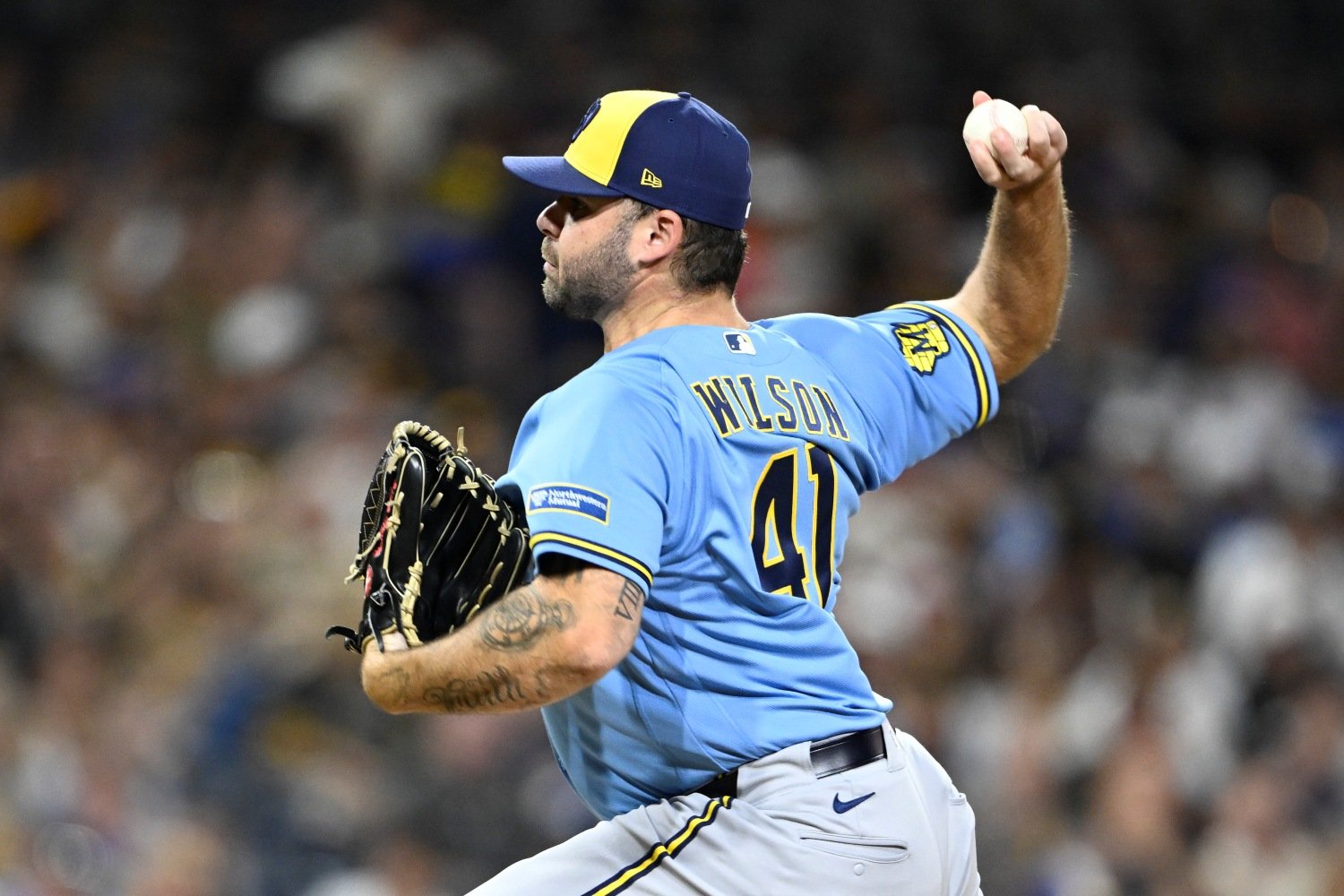 Since July 10, 171 pitchers throughout Major League Baseball have thrown at least 20 innings. Bryse Wilson is the only one who has not issued a walk. July 10 was the day Wilson signed a big-league deal to return to the Brewers, for whom he filled every role from starter to high-leverage reliever across the 2023 and 2024 seasons. This time around, his role has been more strictly defined as the long man. It's the least glamorous task on a pitching staff and comes with a mundane job description: throw strikes to eat innings. Because the game is often nearly decided by the time a long reliever takes over, keeping runs off the board is a plus, but not a necessity. Wilson understands his assignment and has flooded the strike zone with impressive efficiency. He's recorded six or more outs in five appearances, maxing out at four innings in a July 21 outing. Since his signing last month, his 55.3% zone rate is the fifth-highest among those pitchers with at least 20 innings. "If I come in and we're down a lot of runs, I know that innings have to be covered," Wilson said. "I just go in and do the best I can to cover as many innings to where the next day, we have a much better chance to win because everybody's available and there's more options to go to in the bullpen." Wilson's strike-throwing and embrace of his role have not gone unnoticed by his manager. "He's been magnificent. He really has," Pat Murphy said. "It's the epitome of that role, understanding that role. I think of a long snapper. I think of a great punter, a great kicker—somebody [who] just contributes when not too many people are noticing the greatness, and he does his role." While the game situation in most of his outings has freed Wilson to be even more aggressive in the zone, he also posted zone rates above 50% in each of his previous two seasons with the Brewers. He acknowledged that their emphasis on tunneling different fastball variations within the zone has typically worked best for his unassuming stuff, making Milwaukee a uniquely good fit. "I think it's just a lot of filling up the zone and just trusting that I can get guys out in-zone," Wilson said. "I'm not necessarily going after chase. Kind of avoid the longer at-bats." "He just pounds [the zone], but he pounds with command, and that ball is going all different ways," Murphy said. "He's not afraid 2-0 to throw a heater, where in today's game the amount of 2-0 heaters has decreased immensely. He's not afraid to just cut a heater or use a little comeback sinker on a 2-0 count, and he's got that kind of command." Wilson isn't just throwing strikes with his fastballs. He's throwing quality strikes. Since signing, he's been one of baseball's best command pitchers by Location+, and his stuff is playing better than ever. In his first two seasons as a Brewer, Wilson's 3.42 ERA masked a less impressive 4.73 xERA, 4.68 FIP, and 4.33 SIERA. This time, he's pitched to a 3.15 ERA, 3.33 xERA, 1.93 FIP, and 2.95 SIERA. Wilson hasn't been a soft-contact specialist, but he's held hitters to a meager 3.1% barrel rate. That success has come after Wilson returned to what worked best for him before, with a few new wrinkles. Last season, the White Sox tried to help him develop his secondary pitches, including a new changeup reliant on seam-shifted wake (cutting the ball just the right amount, so that the distribution of airflow around the seams pushes the ball down and to the arm side). Wilson lowered his arm slot, which impacted the movement of his fastballs and may have reduced his deception. Most notably, his cutter lost some of the downward and glove-side movement that made it effective. This season, Wilson has raised his slot slightly, and his pitches are moving as they did during his first stint in Milwaukee. Since rejoining the Brewers, he's also transitioned back toward his old mix, leaning increasingly on his cutter and sinker at the expense of his curveball and a new split-changeup. His refined command may also stem from improved timing in his delivery. When he was last a Brewer, Wilson lowered his hands toward his lap as he began his windup, which meant he had to bring them back up during his leg kick. 2024 windup.mp4 This year, he's eliminated some of that movement by using an over-the-head windup and starting his hands at his chest out of the stretch. Now, when Wilson begins his leg kick, he no longer needs to worry about where his hands are to ensure his arm is on time when his front foot lands. 2026.mp4 "Earlier this season, I was kind of having a tough time finding the timing in the break of when the hands separate, and so I was just kind of going through different things and trying to figure out what felt good," Wilson said. "Back when I played with Atlanta, I went over the head and had some success doing it, and so I tried it, and it felt good. The timing felt good, and I just didn't feel like I had to think about it as much. So we just kind of rolled with it." Wilson's latest tenure in Milwaukee has technically been two stints, as the partnership survived unusual roster math when the club used a six-man rotation over a stretch of 17 games in 17 days. When a 34-pitch outing left him unavailable for a few days, the Brewers designated him for assignment on August 8 to add a fresh arm, in Lyon Richardson. After Wilson cleared waivers and elected free agency, they signed him again on August 11 to replace Richardson, who pitched the night before. "In my mind, I thought there was a possibility that we could come back," Wilson said. "It was just about seeing it through, and then the timing of it just kind of worked out perfectly to where they needed to make a move, and I had just cleared waivers, so it was just good timing and kind of worked out all around." As one of the last relievers in the bullpen—particularly one who cannot be optioned to the minor leagues—Wilson's spot on the 40-man roster will never be fully secure. However, he's thrown well enough to help keep the rest of the bullpen reasonably fresh, and the Brewers can add one more reliever to their bullpen as a September call-up next week. If he continues performing, Wilson could stick through the rest of the season. "He's been great," Murphy said. "He's loved in that locker room."
 -
Image courtesy of Jon Endow-Imagn Images More than anything, the Brewers’ only loss in an otherwise successful series against the Mariners came because Dustin May put them in a 7-0 hole after two innings. Even after that, the offense battled back to make it a close 7-5 loss. Milwaukee might even have notched a three-game sweep, if not for a few poor at-bats that quashed potential late-inning rallies. Trailing 7-2 in the sixth, William Contreras and Christian Yelich walked. Andrew Vaughn singled to load the bases with nobody out for Luis Lara. Lara watched a pair of strikes to go down 0-2 (including a pitch fully inside the zone that he thought was a ball) before chasing an Eduard Bazardo sinker up and away. “The pitch before that might have been a ball, I don't know, but he let that really bother him,” Pat Murphy said postgame. “Then he went to the next pitch, and he wasn't as focused.” After Joey Ortiz’s sacrifice fly plated the runner from third to make it 7-3, Cooper Pratt stepped up with two outs. After Bazardo executed a back-door sinker for strike one, he missed badly with two sweepers to put Pratt ahead 2-1. Hitters say that there are no longer true fastball counts in the modern game. For the most part, they’re correct. The league fastball usage has steadily decreased throughout the pitch-tracking era, particularly since the turn of the decade. In 2015, hitters saw fastballs on 70.9% of pitches when ahead in the count. This year, that rate is down to 64.4%, a significant difference. This was a rare fastball count. The Mariners still had a four-run lead, and Bazardo had fallen behind on non-competitive breaking balls with leadoff hitter Brice Turang on deck. He needed an in-zone pitch to regain count leverage. Pratt didn’t need to sell out for velocity, but he needed to be ready to pull the trigger on a fastball over the heart of the plate. He wasn’t. Bazardo planted a sinker right down the middle, and Pratt watched it go by for strike two. That set up a chase on a sweeper that nearly hit the dirt for an inning-ending strikeout. Positioned for a big inning, the Brewers barely scratched across a run. Pratt had a shot at redemption in his next at-bat in the eighth, coming up as the tying run with runners on the corners in a 7-4 game. In a similar setup, Seranthony Domínguez fell behind 2-0, first with a sweeper that bounced in the other batter’s box, then a fastball yanked low and away. Again, Pratt needed to be ready for the fastball. He got it again and swung—but this time, he probably shouldn’t have. It was a sinker barreling toward the inner third of the zone. Pratt was late and got jammed, bouncing a double play to second that plated a run but left the bases empty while still trailing by two. It would be the last run the Brewers scored. “Pratt's last two at-bats, he just left the zone and left the zone [again],” Murphy said, referring the second time to a pitcher’s pitch that Pratt should have taken with no strikes. He was out of the lineup the following day, with Ortiz starting at shortstop, instead. Just three months apart in age, Pratt and Lara are traveling similar paths. Both are trying to establish themselves in the big leagues during a playoff push after signing pre-debut extensions. Both have been valuable from the get-go, thanks to their defense: Pratt already has 4 Defensive Runs Saved at shortstop, while Lara is at 1 Out Above Average in right field. Offensively, it’s been a mixed bag. That was expected. Pratt has posted better results (97 wRC+) than Lara (84 wRC+), but Lara’s at-bats have arguably been better. His .325 xwOBA and 91 DRC+, metrics that focus on plate discipline and contact quality, are higher than Pratt’s. Lara’s ball-strike recognition has been impressive for his age, as he’s chased just 21.7% of pitches outside the zone. After that strikeout, he bounced back with a line-drive single up the middle in his next at-bat. Pratt deserves some grace for a pair of rough at-bats in his first game back from a hamstring injury, but his swing decisions were less refined in the minor leagues. At times, he’s shown a knack for the measured opposite-field approach the Brewers wanted to see before he grows into his raw power, but his chase rate had been ballooning in recent weeks, even before the injury. “Those kids are 21,” Murphy said. “Sometimes in this league, when you're 21, you make those kind of mistakes. [Jackson] Chourio’s made them. He's done the same thing. So they'll have to learn from it.” Now is the time for those lessons. The Brewers aren’t asking Pratt or Lara to be their most important bats as rookies, but if they start games in the postseason, they could hit in pivotal situations. To succeed in those moments, they’ll need to stay mentally grounded and have smart at-bats. Milwaukee is constantly striking a balance between developing and competing in the big leagues, and they're experiencing both sides with their two youngest players. View full article
-
How Will the Brewers' Young Hitters Fare as the Lights Get Brighter?
Jack Stern posted an article in Brewers
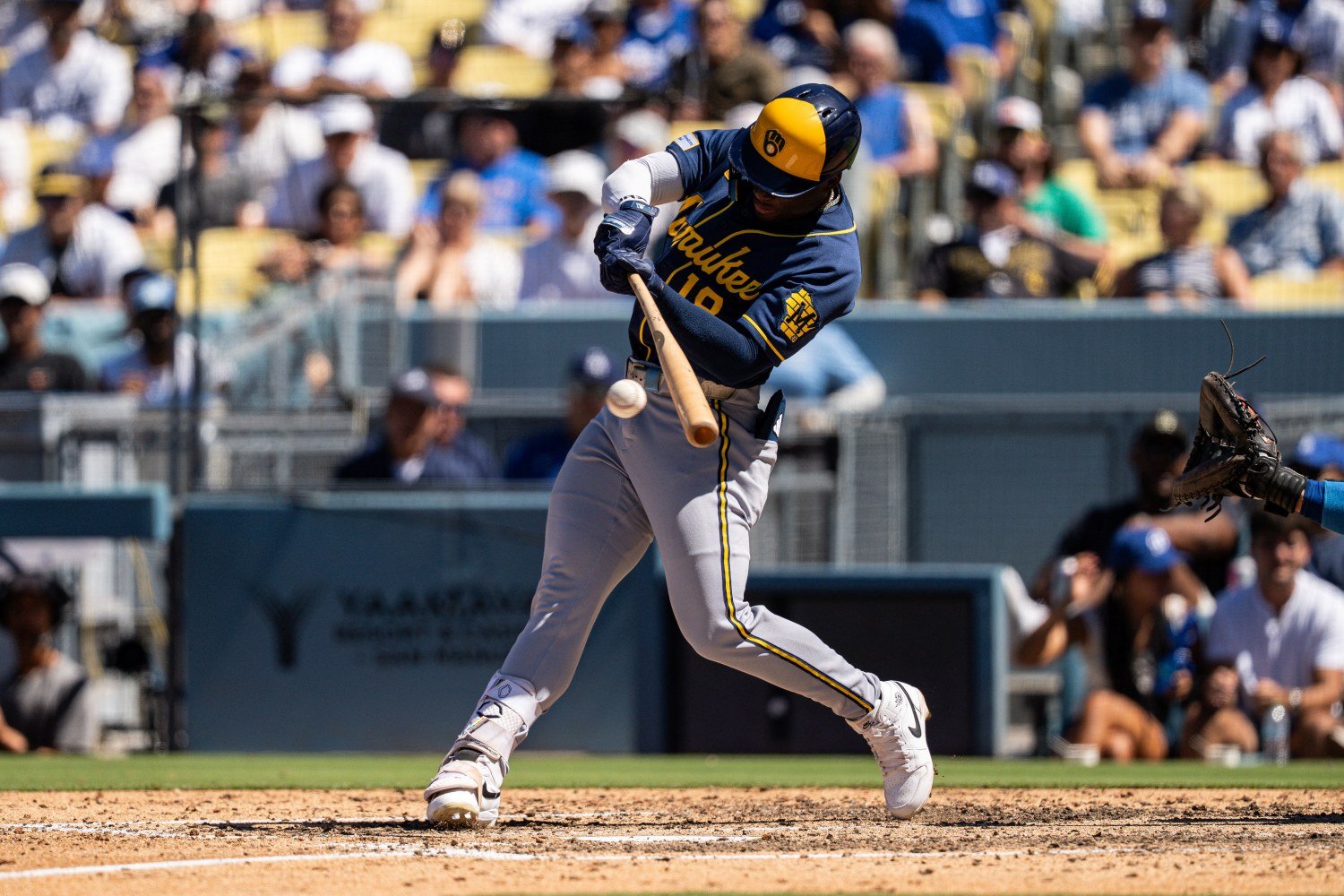 More than anything, the Brewers’ only loss in an otherwise successful series against the Mariners came because Dustin May put them in a 7-0 hole after two innings. Even after that, the offense battled back to make it a close 7-5 loss. Milwaukee might even have notched a three-game sweep, if not for a few poor at-bats that quashed potential late-inning rallies. Trailing 7-2 in the sixth, William Contreras and Christian Yelich walked. Andrew Vaughn singled to load the bases with nobody out for Luis Lara. Lara watched a pair of strikes to go down 0-2 (including a pitch fully inside the zone that he thought was a ball) before chasing an Eduard Bazardo sinker up and away. “The pitch before that might have been a ball, I don't know, but he let that really bother him,” Pat Murphy said postgame. “Then he went to the next pitch, and he wasn't as focused.” After Joey Ortiz’s sacrifice fly plated the runner from third to make it 7-3, Cooper Pratt stepped up with two outs. After Bazardo executed a back-door sinker for strike one, he missed badly with two sweepers to put Pratt ahead 2-1. Hitters say that there are no longer true fastball counts in the modern game. For the most part, they’re correct. The league fastball usage has steadily decreased throughout the pitch-tracking era, particularly since the turn of the decade. In 2015, hitters saw fastballs on 70.9% of pitches when ahead in the count. This year, that rate is down to 64.4%, a significant difference. This was a rare fastball count. The Mariners still had a four-run lead, and Bazardo had fallen behind on non-competitive breaking balls with leadoff hitter Brice Turang on deck. He needed an in-zone pitch to regain count leverage. Pratt didn’t need to sell out for velocity, but he needed to be ready to pull the trigger on a fastball over the heart of the plate. He wasn’t. Bazardo planted a sinker right down the middle, and Pratt watched it go by for strike two. That set up a chase on a sweeper that nearly hit the dirt for an inning-ending strikeout. Positioned for a big inning, the Brewers barely scratched across a run. Pratt had a shot at redemption in his next at-bat in the eighth, coming up as the tying run with runners on the corners in a 7-4 game. In a similar setup, Seranthony Domínguez fell behind 2-0, first with a sweeper that bounced in the other batter’s box, then a fastball yanked low and away. Again, Pratt needed to be ready for the fastball. He got it again and swung—but this time, he probably shouldn’t have. It was a sinker barreling toward the inner third of the zone. Pratt was late and got jammed, bouncing a double play to second that plated a run but left the bases empty while still trailing by two. It would be the last run the Brewers scored. “Pratt's last two at-bats, he just left the zone and left the zone [again],” Murphy said, referring the second time to a pitcher’s pitch that Pratt should have taken with no strikes. He was out of the lineup the following day, with Ortiz starting at shortstop, instead. Just three months apart in age, Pratt and Lara are traveling similar paths. Both are trying to establish themselves in the big leagues during a playoff push after signing pre-debut extensions. Both have been valuable from the get-go, thanks to their defense: Pratt already has 4 Defensive Runs Saved at shortstop, while Lara is at 1 Out Above Average in right field. Offensively, it’s been a mixed bag. That was expected. Pratt has posted better results (97 wRC+) than Lara (84 wRC+), but Lara’s at-bats have arguably been better. His .325 xwOBA and 91 DRC+, metrics that focus on plate discipline and contact quality, are higher than Pratt’s. Lara’s ball-strike recognition has been impressive for his age, as he’s chased just 21.7% of pitches outside the zone. After that strikeout, he bounced back with a line-drive single up the middle in his next at-bat. Pratt deserves some grace for a pair of rough at-bats in his first game back from a hamstring injury, but his swing decisions were less refined in the minor leagues. At times, he’s shown a knack for the measured opposite-field approach the Brewers wanted to see before he grows into his raw power, but his chase rate had been ballooning in recent weeks, even before the injury. “Those kids are 21,” Murphy said. “Sometimes in this league, when you're 21, you make those kind of mistakes. [Jackson] Chourio’s made them. He's done the same thing. So they'll have to learn from it.” Now is the time for those lessons. The Brewers aren’t asking Pratt or Lara to be their most important bats as rookies, but if they start games in the postseason, they could hit in pivotal situations. To succeed in those moments, they’ll need to stay mentally grounded and have smart at-bats. Milwaukee is constantly striking a balance between developing and competing in the big leagues, and they're experiencing both sides with their two youngest players.
 -
Image courtesy of USA TODAY Network via Reuters Connect Kyle Harrison isn’t at his best right now. Since returning from a stint on the injured list with forearm tightness, his velocity and command have been below their first-half levels. That was the case again on Tuesday night. Harrison’s fastball averaged 93.5 MPH (well below his season average of 95 MPH) and he threw just 47% of them in the strike zone. “I think there was flashes of brilliance, and then there was times when he was kind of not in sync, and the fastball didn’t play like it normally does,” Pat Murphy said postgame. As Harrison approaches his career-high of 124 ⅓ innings from 2024 (between the big leagues and a rehab start last month, he’s at 104 this year), he’s battling mechanical issues. His arm angle has steadily gotten lower, particularly since his return from the injured list. “Just looking at the history of my time here, it’s been as the season gets longer, and as you go further in the season, the arm release likes to drop a little bit,” Harrison said. “I’ve always known that with myself, but then it’s staying consistent on the work throughout the week to make sure I maintain that.” Harrison is at his best when his arm angle is closer to 34°. That’s when his slot is high enough to drive through the baseball and backspin it to create the carry on his dominant four-seamer. In Harrison’s last start in San Diego, his slot dropped to a season-low 28°, and he allowed a season-high eight runs. Those velocity and mechanical declines are real concerns to monitor down the stretch. The Brewers will need the healthy and effective version of Harrison in October. For now, amid those issues, he still struck out eight in five scoreless innings Tuesday night. After just three swings and misses through his first three innings, he induced six whiffs over his final two frames. “I’d say the heater was more down in the zone early, and then just wasn’t really getting up to the arm slot I’d like,” Harrison said. “It took a little bit longer than I liked, but yeah, the heater command definitely got better.” Harrison is a microcosm of the Brewers as a team right now. The dog days of August are here, and they just played 17 games in 17 days—a stretch that included parts of two West Coast trips. They lost Joey Ortiz, Cooper Pratt, and Brice Turang to concurrent injuries, forcing a break-glass-in-case-of-emergency infield of Andrew Vaughn at third base and Gary Sánchez at first. Using a six-man rotation left them a man short in the bullpen even before Abner Uribe hit the injured list. They were swept by the Padres last week in a three-game series filled with poor situational hitting and questionable defense. “Seventeen games and two West Coast trips in a matter of three weeks wasn’t easy,” Jake Bauers said. “I think everybody was kind of feeling it a little bit. I don’t know that anybody in here will tell you that, but I think we were feeling it toward the end there.” And yet, the Brewers kept winning just enough. They snapped their three-game skid with a ninth-inning comeback win against the Dodgers, the first of three wins in the four-game series. At the start of those 17 games, they led the NL Central by 5.5 games. After going 10-7 in that stretch, they returned home with a five-game lead. Monday was a much-needed off day. With a grueling trip in the rearview mirror, the Brewers returned to play and clobbered the Mariners in a 22-0 win, the most lopsided victory in franchise history. It didn’t start that way. The Brewers were still in grind-it-out mode through the first half of the game, clinging to a 1-0 lead through four-and-a-half innings. That lone run scored on a gritty baserunning play by Bauers in the first. After an aggressive send by third base coach Matt Erickson on William Contreras’s two-out single to shallow left field and a strong throw by Randy Arozarena, Bauers looked like an easy out at the plate. He tried to dive headfirst into home, just as he did successfully on a nearly identical play in LA on Sunday. This time, the throw took Cal Raleigh into the lane to which Bauers had already committed himself, so Bauers’s dive attempt took him into Raleigh’s glove. “I saw the replay. I definitely wasn’t trying to hit his glove,” Bauers said. “I was more trying to protect him and me because I didn’t want to barrel through him. I didn’t want to break my neck on his chest protector.” In bracing himself, Bauers inadvertently swatted the ball out of Raleigh’s glove. As Raleigh retrieved it, Christian Yelich noticed that Bauers hadn’t touched the plate and yelled at him to dive back into home. “I don’t really remember what happened after that,” Bauers said. “I just remember Yeli screaming at me to touch home.” It wasn’t pretty, but Bauers’s left hand barely beat Raleigh’s tag to score the run. That kind of scratch-and-claw play epitomizes the Brewers’ identity under Murphy, and it’s been their means of survival during this stretch. Every inch has felt like a mile. “I play hard,” Bauers said. “I don’t know any other way. Regardless of the score, if I’m out there, I’m going to play hard.” After that 18-pitch first, the Brewers worked Bryce Miller for 23 more pitches in the second. The breakthrough didn’t come until the fifth, though. After they pecked away with two singles and a pair of walks (including an RBI knock by Jackson Chourio and a sac fly by William Contreras), Yelich blew things open with a three-run homer to make it 6-0. That ended Miller’s night at 92 pitches in just 4 2/3 innings. “That’s how we play,” Murphy said. “To be able to lay off really tough pitches and not panic that you have to swing because you’re down 0-1. Having two strikes is not a death [sentence]. Those type of at-bats. Then Yeli hits a big homer, and you break through.” The floodgates opened from there, with a combination of quality plate appearances and poor Seattle defense. Earlier in the day, there were symbols affirming that the most grueling portion of the schedule was over. Turang returned to the lineup after missing four games, and Pratt began what could be a one-game rehab assignment in Appleton. With each run that scored, the road trip seemed further in the rearview mirror. Exactly one week ago, Gary Sánchez was lobbing eephus pitches in a blowout loss. Now, he was finishing off a blowout win. More challenges lie ahead. The Brewers must manage the workloads of Harrison and their other young starters during a pennant race. Next week, they begin a stretch of 16 games in 16 days, seven of them against the second-place Cubs in two series that could decide the division. They still can’t let off the gas, even after weathering what was likely to be their toughest stretch on paper. Most teams have hot streaks throughout the course of a 162-game season. What separates the best teams is their ability to avoid prolonged losing streaks when they aren’t playing well and their environment is stacked against them. The Brewers earned a comfortable division lead by playing their best baseball in the first half. This is the time for staying afloat. So far, they’ve remained up to the task. View full article
-
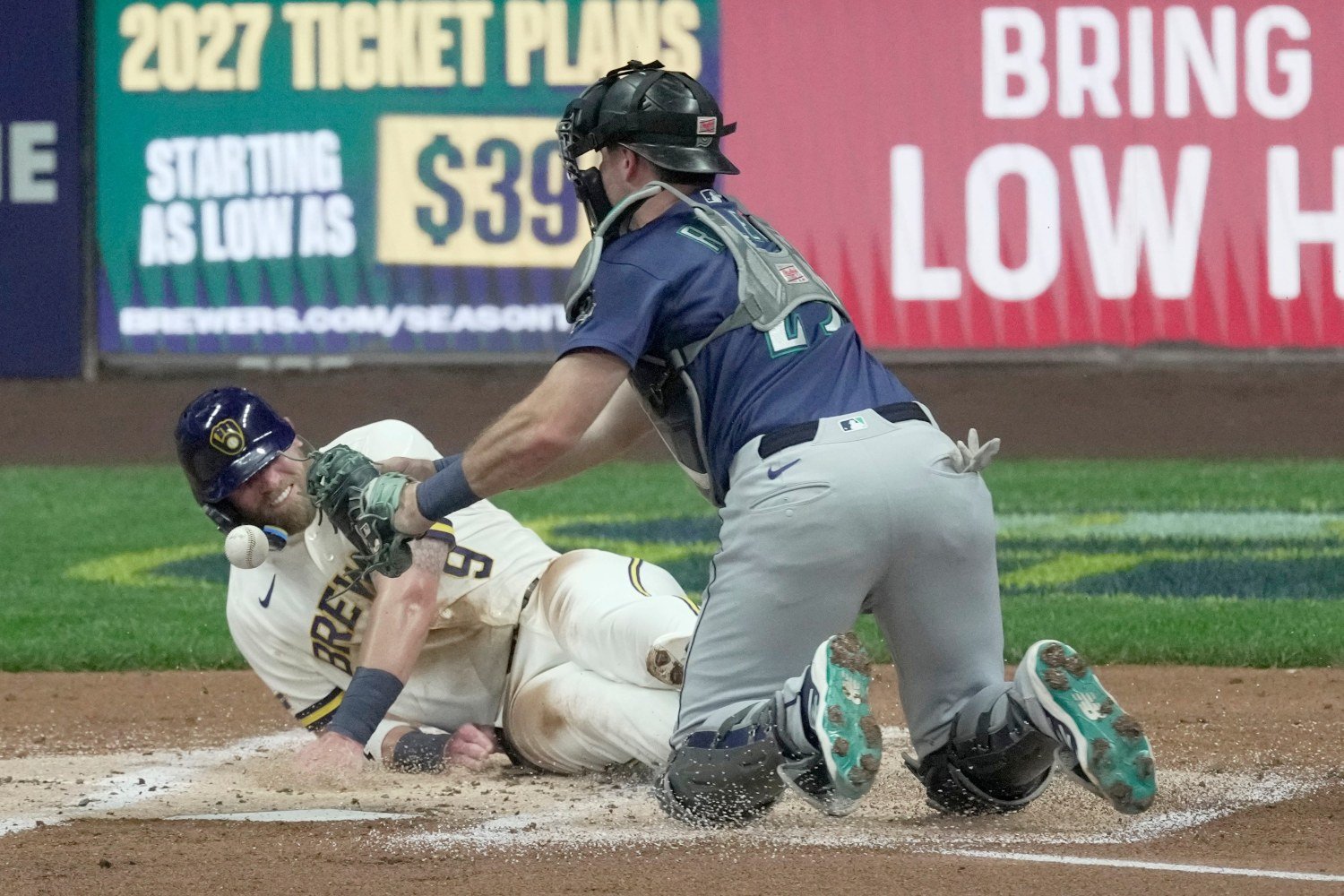 Kyle Harrison isn’t at his best right now. Since returning from a stint on the injured list with forearm tightness, his velocity and command have been below their first-half levels. That was the case again on Tuesday night. Harrison’s fastball averaged 93.5 MPH (well below his season average of 95 MPH) and he threw just 47% of them in the strike zone. “I think there was flashes of brilliance, and then there was times when he was kind of not in sync, and the fastball didn’t play like it normally does,” Pat Murphy said postgame. As Harrison approaches his career-high of 124 ⅓ innings from 2024 (between the big leagues and a rehab start last month, he’s at 104 this year), he’s battling mechanical issues. His arm angle has steadily gotten lower, particularly since his return from the injured list. “Just looking at the history of my time here, it’s been as the season gets longer, and as you go further in the season, the arm release likes to drop a little bit,” Harrison said. “I’ve always known that with myself, but then it’s staying consistent on the work throughout the week to make sure I maintain that.” Harrison is at his best when his arm angle is closer to 34°. That’s when his slot is high enough to drive through the baseball and backspin it to create the carry on his dominant four-seamer. In Harrison’s last start in San Diego, his slot dropped to a season-low 28°, and he allowed a season-high eight runs. Those velocity and mechanical declines are real concerns to monitor down the stretch. The Brewers will need the healthy and effective version of Harrison in October. For now, amid those issues, he still struck out eight in five scoreless innings Tuesday night. After just three swings and misses through his first three innings, he induced six whiffs over his final two frames. “I’d say the heater was more down in the zone early, and then just wasn’t really getting up to the arm slot I’d like,” Harrison said. “It took a little bit longer than I liked, but yeah, the heater command definitely got better.” Harrison is a microcosm of the Brewers as a team right now. The dog days of August are here, and they just played 17 games in 17 days—a stretch that included parts of two West Coast trips. They lost Joey Ortiz, Cooper Pratt, and Brice Turang to concurrent injuries, forcing a break-glass-in-case-of-emergency infield of Andrew Vaughn at third base and Gary Sánchez at first. Using a six-man rotation left them a man short in the bullpen even before Abner Uribe hit the injured list. They were swept by the Padres last week in a three-game series filled with poor situational hitting and questionable defense. “Seventeen games and two West Coast trips in a matter of three weeks wasn’t easy,” Jake Bauers said. “I think everybody was kind of feeling it a little bit. I don’t know that anybody in here will tell you that, but I think we were feeling it toward the end there.” And yet, the Brewers kept winning just enough. They snapped their three-game skid with a ninth-inning comeback win against the Dodgers, the first of three wins in the four-game series. At the start of those 17 games, they led the NL Central by 5.5 games. After going 10-7 in that stretch, they returned home with a five-game lead. Monday was a much-needed off day. With a grueling trip in the rearview mirror, the Brewers returned to play and clobbered the Mariners in a 22-0 win, the most lopsided victory in franchise history. It didn’t start that way. The Brewers were still in grind-it-out mode through the first half of the game, clinging to a 1-0 lead through four-and-a-half innings. That lone run scored on a gritty baserunning play by Bauers in the first. After an aggressive send by third base coach Matt Erickson on William Contreras’s two-out single to shallow left field and a strong throw by Randy Arozarena, Bauers looked like an easy out at the plate. He tried to dive headfirst into home, just as he did successfully on a nearly identical play in LA on Sunday. This time, the throw took Cal Raleigh into the lane to which Bauers had already committed himself, so Bauers’s dive attempt took him into Raleigh’s glove. “I saw the replay. I definitely wasn’t trying to hit his glove,” Bauers said. “I was more trying to protect him and me because I didn’t want to barrel through him. I didn’t want to break my neck on his chest protector.” In bracing himself, Bauers inadvertently swatted the ball out of Raleigh’s glove. As Raleigh retrieved it, Christian Yelich noticed that Bauers hadn’t touched the plate and yelled at him to dive back into home. “I don’t really remember what happened after that,” Bauers said. “I just remember Yeli screaming at me to touch home.” It wasn’t pretty, but Bauers’s left hand barely beat Raleigh’s tag to score the run. That kind of scratch-and-claw play epitomizes the Brewers’ identity under Murphy, and it’s been their means of survival during this stretch. Every inch has felt like a mile. “I play hard,” Bauers said. “I don’t know any other way. Regardless of the score, if I’m out there, I’m going to play hard.” After that 18-pitch first, the Brewers worked Bryce Miller for 23 more pitches in the second. The breakthrough didn’t come until the fifth, though. After they pecked away with two singles and a pair of walks (including an RBI knock by Jackson Chourio and a sac fly by William Contreras), Yelich blew things open with a three-run homer to make it 6-0. That ended Miller’s night at 92 pitches in just 4 2/3 innings. “That’s how we play,” Murphy said. “To be able to lay off really tough pitches and not panic that you have to swing because you’re down 0-1. Having two strikes is not a death [sentence]. Those type of at-bats. Then Yeli hits a big homer, and you break through.” The floodgates opened from there, with a combination of quality plate appearances and poor Seattle defense. Earlier in the day, there were symbols affirming that the most grueling portion of the schedule was over. Turang returned to the lineup after missing four games, and Pratt began what could be a one-game rehab assignment in Appleton. With each run that scored, the road trip seemed further in the rearview mirror. Exactly one week ago, Gary Sánchez was lobbing eephus pitches in a blowout loss. Now, he was finishing off a blowout win. More challenges lie ahead. The Brewers must manage the workloads of Harrison and their other young starters during a pennant race. Next week, they begin a stretch of 16 games in 16 days, seven of them against the second-place Cubs in two series that could decide the division. They still can’t let off the gas, even after weathering what was likely to be their toughest stretch on paper. Most teams have hot streaks throughout the course of a 162-game season. What separates the best teams is their ability to avoid prolonged losing streaks when they aren’t playing well and their environment is stacked against them. The Brewers earned a comfortable division lead by playing their best baseball in the first half. This is the time for staying afloat. So far, they’ve remained up to the task.
- 9 comments
-
- 1
-
-
- kyle harrison
- jake bauers
- (and 1 more)
-
Image courtesy of Jon Endow-Imagn Images Logan Henderson is not Tarik Skubal. At his best, Skubal’s two fastballs flirt with triple digits. They comprise just one part of a powerful five-pitch mix from the left side. His ceiling is the best starting pitcher in baseball. Henderson, meanwhile, averages 93 MPH with his heater, and his ceiling is probably a solid No. 2 starter. But when the Brewers reportedly withheld Henderson from an already-aggressive trade offer to the Detroit Tigers, and Skubal instead became a Los Angeles Dodger for a pitching-centric return, the calculus wasn’t just about ceiling. Skubal was a rental who would make at most 15 more starts through a 2026 World Series run. Even if the best version of Skubal is better than the best version of Henderson, the latter could easily perform similarly for the rest of this year, after which he’ll have five more seasons of team control before free agency. Skubal’s body of work since he started breaking out in 2023 is more significant, but Henderson has come impressively close to his rate stats in his first 17 big-league starts. That includes a nearly identical strikeout-minus-walk rate, among the most powerful predictors of pitcher performance. Pitcher GS IP ERA- FIP- DRA- SIERA K-BB% Tarik Skubal 96 581.1 60 59 70 2.80 26.9% Logan Henderson 17 88.2 61 78 87 2.95 26.3% The emphasis here is “close.” If the question is whom to pick for 15 starts, the answer is Skubal. If the question is whom to pick for a winner-take-all postseason start, the answer is Skubal. Henderson isn’t a bad alternative, though. He’s capable of matching him within such a 15-start stretch and on a given night. Henderson going directly against Skubal just a couple of weeks after the trade was a prompt test of that hypothesis. The early returns supported it. Skubal didn’t have great support from his defense, as just one of the two runs he allowed was earned. For that reason, it’s not quite fair to say Henderson outdueled him, but he absolutely matched him. Beyond their box-score lines, the two were nearly identical when it came to commanding the strike zone and missing barrels. Pitcher IP H ER BB K CStr + Whiff Whiff Hard Hit Barrel Tarik Skubal 6 7 1 2 7 31% (29/93) 29% (15/52) 47% (8/17) 6% (1/17) Logan Henderson 7 3 1 1 6 28% (31/109) 28% (18/64) 50% (9/18) 5% (1/18) Adding to the symmetry is the fact that both pitchers are propelled by their excellent changeups. Both Henderson and Skubal induced whiffs on 50% of swings with their changeups Sunday, offsetting louder contact against their fastballs. Most notably, Henderson got another opportunity to pitch into the seventh inning after an unsuccessful attempt in his last start. In San Diego, his fastball velocity tumbled to 90.6 MPH in his seventh frame, and he hung a changeup to Jackson Merrill for a go-ahead home run. On Sunday, Henderson averaged 93.7 MPH in the seventh, tossing a scoreless final inning and tying a career high with 93 pitches. As things currently stand, Skubal and Henderson could line up for a direct rematch in a postseason game. Even if they don’t, Henderson profiles as one of the Brewers’ top three starters, so they’ll start him in important October games. Whether those outings come against the Dodgers or someone else, they’ll hope for similar results to what they would have gotten from Skubal had they acquired him instead. A Sunday afternoon outing in August guarantees nothing from a rookie starter in the postseason, but it was the latest sign that the guy the Brewers insisted on keeping could match the game’s best arms when needed. View full article
-
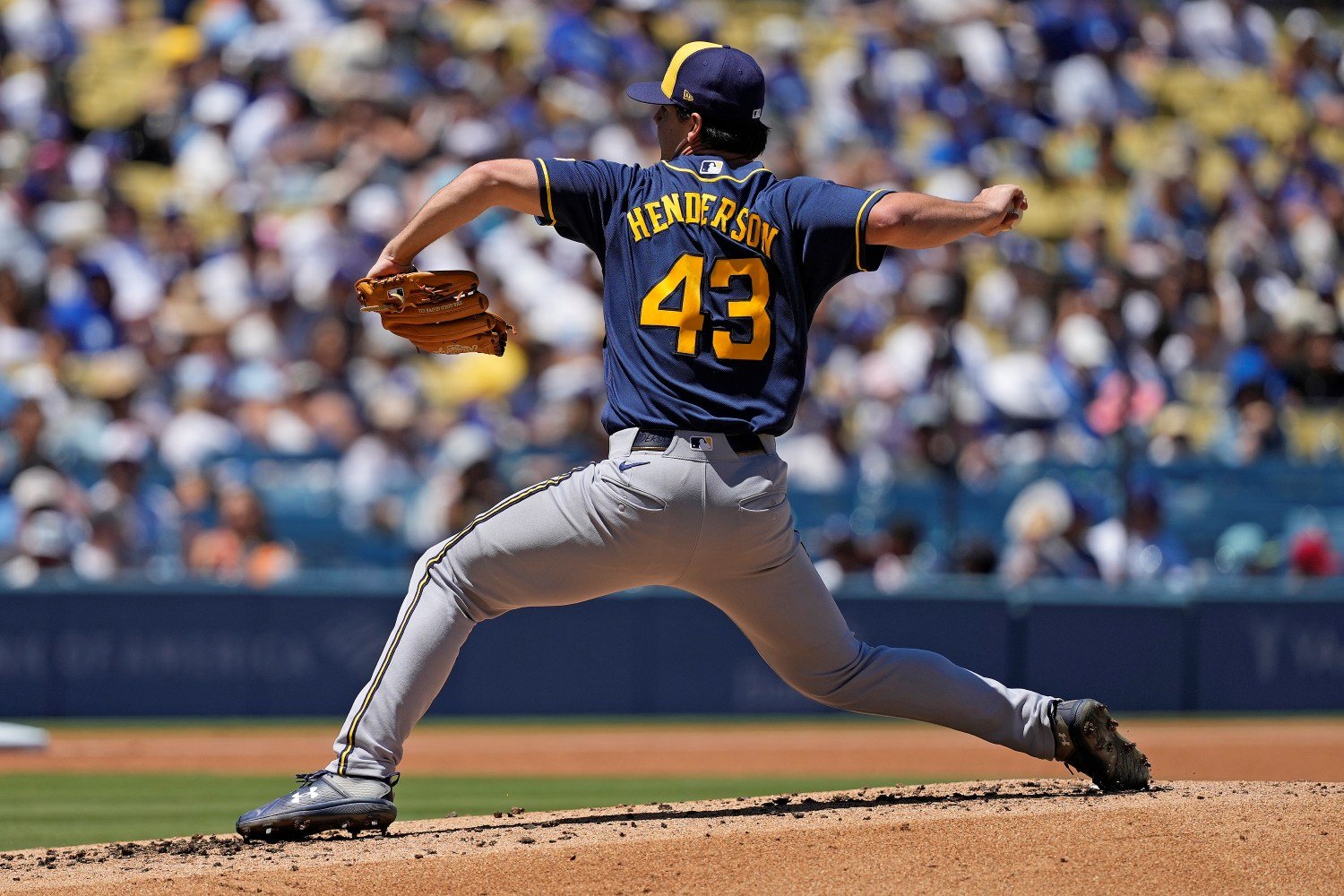 Logan Henderson is not Tarik Skubal. At his best, Skubal’s two fastballs flirt with triple digits. They comprise just one part of a powerful five-pitch mix from the left side. His ceiling is the best starting pitcher in baseball. Henderson, meanwhile, averages 93 MPH with his heater, and his ceiling is probably a solid No. 2 starter. But when the Brewers reportedly withheld Henderson from an already-aggressive trade offer to the Detroit Tigers, and Skubal instead became a Los Angeles Dodger for a pitching-centric return, the calculus wasn’t just about ceiling. Skubal was a rental who would make at most 15 more starts through a 2026 World Series run. Even if the best version of Skubal is better than the best version of Henderson, the latter could easily perform similarly for the rest of this year, after which he’ll have five more seasons of team control before free agency. Skubal’s body of work since he started breaking out in 2023 is more significant, but Henderson has come impressively close to his rate stats in his first 17 big-league starts. That includes a nearly identical strikeout-minus-walk rate, among the most powerful predictors of pitcher performance. Pitcher GS IP ERA- FIP- DRA- SIERA K-BB% Tarik Skubal 96 581.1 60 59 70 2.80 26.9% Logan Henderson 17 88.2 61 78 87 2.95 26.3% The emphasis here is “close.” If the question is whom to pick for 15 starts, the answer is Skubal. If the question is whom to pick for a winner-take-all postseason start, the answer is Skubal. Henderson isn’t a bad alternative, though. He’s capable of matching him within such a 15-start stretch and on a given night. Henderson going directly against Skubal just a couple of weeks after the trade was a prompt test of that hypothesis. The early returns supported it. Skubal didn’t have great support from his defense, as just one of the two runs he allowed was earned. For that reason, it’s not quite fair to say Henderson outdueled him, but he absolutely matched him. Beyond their box-score lines, the two were nearly identical when it came to commanding the strike zone and missing barrels. Pitcher IP H ER BB K CStr + Whiff Whiff Hard Hit Barrel Tarik Skubal 6 7 1 2 7 31% (29/93) 29% (15/52) 47% (8/17) 6% (1/17) Logan Henderson 7 3 1 1 6 28% (31/109) 28% (18/64) 50% (9/18) 5% (1/18) Adding to the symmetry is the fact that both pitchers are propelled by their excellent changeups. Both Henderson and Skubal induced whiffs on 50% of swings with their changeups Sunday, offsetting louder contact against their fastballs. Most notably, Henderson got another opportunity to pitch into the seventh inning after an unsuccessful attempt in his last start. In San Diego, his fastball velocity tumbled to 90.6 MPH in his seventh frame, and he hung a changeup to Jackson Merrill for a go-ahead home run. On Sunday, Henderson averaged 93.7 MPH in the seventh, tossing a scoreless final inning and tying a career high with 93 pitches. As things currently stand, Skubal and Henderson could line up for a direct rematch in a postseason game. Even if they don’t, Henderson profiles as one of the Brewers’ top three starters, so they’ll start him in important October games. Whether those outings come against the Dodgers or someone else, they’ll hope for similar results to what they would have gotten from Skubal had they acquired him instead. A Sunday afternoon outing in August guarantees nothing from a rookie starter in the postseason, but it was the latest sign that the guy the Brewers insisted on keeping could match the game’s best arms when needed.
 -
Image courtesy of Jeff Hanisch-Imagn Images After he allowed a season-high six earned runs against the Minnesota Twins in his last start, Shane Drohan knew what went wrong. "I was just too low with the slider," he said postgame. Drohan's tight gyro slider is his best pitch. FanGraphs's Stuff+ model grades it as his most dominant pitch (108 Stuff+), and big-league hitters have managed just a .215 xwOBA against it (with a 41.6% whiff rate) this year. It wasn't a useful part of his arsenal last Friday, however, because he was not nearly competitive enough with it. Sliders are usually more of a chase pitch than an in-zone pitch, because their late break occurs after the hitter has already decided to swing. But to force those chases, the slider must start in or near the bottom of the zone. Drohan wasn't doing that against the Twins. Just a quarter of his sliders were in the zone, and most of them bounced in the dirt well shy of home plate. "I was just throwing it too low," Drohan said. "It could be a couple inches higher, so out of hand it's looking like that fastball at the bottom of the zone." The Twins made him pay. Because those sliders were nowhere close, they could effectively eliminate swinging at anything around the bottom of the zone. That allowed them to focus on the top of the zone, where Drohan likes to attack with his fastballs. Of the nine hits he allowed, eight came on fastballs, and five came on heaters at or above the belt. Drohan wasn't hit as hard as his line indicated. His average exit velocity against was 78.6 mph, and only six of 18 batted balls (33.3%) were hit 95 mph or above. If anything, that's a testament to how deceptive his fastballs can be. However, those deceptive heaters usually induce plenty of swings and misses around the top of the zone. The Twins only whiffed twice each at Drohan's four-seamer and cutter. Eliminating the slider was the difference between a whiff and contact that could find the outfield grass, even if it wasn't hit hard. "They eliminated down, and the breaking ball didn't come into play," Pat Murphy said. "His slider did not come into play much, and that's been key for him." The issues with the slider have become a recurring problem for Drohan over his past few starts. Before his Twins start, he bounced plenty of uncompetitive sliders in Anaheim, but he threw enough at the bottom of the zone to work six solid innings with seven strikeouts. He even induced chases on some of those bad misses against a poor Los Angeles Angels lineup. A better offense made him pay his next time out. "They hit them hard," Murphy said. "You give up 10 hits, or whatever you gave up, that's unusual. A couple homers. He missed some spots." On the whole, Drohan is still authoring a productive rookie season. His 3.87 ERA is still above average, and his 3.50 xERA and 3.34 FIP are both a touch lower. He's one of the reasons Milwaukee's pitching staff has kept chugging along amid injuries and workload management measures. "He's throwing the ball great for us," Murphy said. "Let's not act like he hasn't been good. If you had to pick four guys from the July time frame, this guy would be one of the four in everybody's ballot who have put us in this position." As October nears, though, the Brewers will have to decide whether Drohan fits best as a back-of-the-rotation starter or a multi-inning reliever who can pitch in high-leverage situations. He has the arsenal and poise for either role and has shown flashes in both. To be the productive starter version, Drohan needs to get his slider closer to the plate more consistently. View full article

