Jack Stern
-
Posts
764 -
Joined
-
Last visited
-
Days Won
2
Content Type
Profiles
Forums
Blogs
Events
News
2026 Milwaukee Brewers Top Prospects Ranking
Milwaukee Brewers Videos
2022 Milwaukee Brewers Draft Picks
Milwaukee Brewers Free Agent & Trade Rumors, Notes, & Tidbits
Guides & Resources
2023 Milwaukee Brewers Draft Picks
2024 Milwaukee Brewers Draft Picks
The Milwaukee Brewers Players Project
2025 Milwaukee Brewers Draft Pick Tracker
2026 Milwaukee Brewers Draft Tracker: Picks & Bonuses
Store
Downloads
Gallery
Everything posted by Jack Stern
-
Image courtesy of © Jeff Hanisch-Imagn Images The Brewers want Jackson Chourio to chase less. He's been a more aggressive hitter than most, especially on a team that values swing decisions and has the second-lowest chase rate in baseball since his debut in 2024. In that time, Chourio's 34.6% chase rate is the 20th-highest among qualified hitters. A hitter with Chourio's quick hands and raw power should be aggressive, because he can drive pitches that many can't. He's still been a solid hitter while chasing so much and walking so little, posting a career .273/.320/.461 line (115 wRC+). However, he often takes that aggression too far with poor swing decisions, and it's prevented him from blossoming into a star. He wants to hit, and it can make him jumpy in the box. "I think it still comes down to the anxiousness to get [the at-bat] over with, the anxiousness to get to it," Pat Murphy said earlier this week. "He can get to so many pitches that I think it hurts him." In Year 3, Chourio's plate discipline has yet to improve. If anything, it has gotten worse. His chase rate jumped from 31.9% to 37% last season. This year, it's still at 36.3%. What's more, the aggression on hittable pitches has disappeared. Chourio's in-zone swing rate is just 57.4%, down from 70.5% last year. Zone swing rate minus chase rate is not always the most telling metric, but by that measure, Chourio is making even worse swing decisions than Joey Ortiz, the Brewer most notorious for offering at the wrong pitches. To get a good swing off in time, hitters must assume a pitch will be a strike and recognize when it's a ball, not assume it will be a ball and recognize a strike. As the pitch is delivered, the thought is "Yes, yes, yes, yes – no," not "No, no, no, no – yes." When Chourio tries to be selective, he seems to be starting with that "no" mindset, leaving him recognizing strikes he can punish once it's already too late to swing. "When you're trying to get your ball-strike order, you end up taking your foot off the gas," Murphy said, "instead of keeping your foot on the gas, but really seeing what you want to see and knowing how to say no at the last second." That's led to at-bats in which Chourio takes a hittable pitch for an early strike before chasing off the plate. Other times, he's being too passive with two strikes. He's making an effort to be more selective, but it's felt forced at the wrong times. "I think he's trying to think through it and trying to be really good at it," Murphy said. "When you're trying to prove yourself, you're sometimes not being yourself." The good news is that he is still producing, in part because he's crushing strikes when he does swing at them. Chourio is hitting .291/.354/.437, and his 125 wRC+ would be a career best. His 18.1% barrel rate would be among the best in baseball if he had enough plate appearances to qualify for the leaderboard. On Tuesday night, he recorded two well-struck hits by swinging at fastballs early in the count. Chourio's skill set plays best when he's being aggressive. The Brewers don't want to take that from him, but they do want him to become more discerning at the plate. Balance is key. "It's selectively aggressive. How do we get to that spot?" Murphy said. "On the way to selectively aggressive [are] some bumps in the road. I think that's what we got going on." View full article
-
 Image courtesy of © Michael McLoone-Imagn Images Outings like Monday night's have become typical for DL Hall this year. In two innings of relief, Hall issued three walks. He also struck out two, allowed zero hard-hit balls, and surrendered just one hit, enabling him to wiggle out of traffic without allowing any runs. Hall's 2.20 ERA this year is not fully sustainable. Nor is it a true reflection of how he's pitched. His 20.3% walk rate is the third-highest among qualified relievers. He's issued a walk in 16 of his 23 appearances, including an active streak of eight straight outings with at least one free pass. Those free bases have kept him from getting the high-leverage assignments entrusted to fellow multi-inning relievers Aaron Ashby, Chad Patrick, and Shane Drohan. Still, Hall's 3.86 xERA, 3.99 FIP, and 97 DRA- all indicate that from a process standpoint, he's been an above-average pitcher, despite the walks. He's kept the rest of the bullpen running efficiently by eating medium-leverage innings. It works because he rarely allows hits. Hall's batting average on balls in play this season is just .197. Last year, it was .202. He has the fifth-lowest BABIP among pitchers to throw at least 50 innings over the last two seasons. It's a statistical outlier for that many batted balls to become outs. At some point, hitters will start finding some holes, but in Hall's case, allowing such harmless contact no longer seems to be purely a fluke. It means he's repeatedly achieving his primary goal against most hitters. "Miss the barrel," he said. "That's what we're paid for, so that's all I'm trying to do." Hall has excelled at missing the barrel over the last two seasons. In 2025, he induced whiffs on just 19.5% of swings, but he limited opponents to an elite 28.8% hard-hit rate and 6.3% barrel rate. His quality of contact is similar this year (32.2% hard-hit, 6.6% barrel), but now his whiff rate has jumped to 29.6%. Opponents have an expected slugging percentage of just .282 against Hall this year, which ranks in the top 7% of pitchers who qualify for Statcast's batted ball leaderboards. He's harder than ever to square up, because his stuff is the best it's been in years. After failing to recapture the carry and velocity on what was once his signature four-seam fastball, Hall began reinventing himself last year to get outs by mixing speeds and shapes. He went from throwing one fastball to three, adding a cutter and a two-seamer. This year, he introduced a sweeper to bring his arsenal up to seven pitches. His stuff is grading out as above-average for the first time since his early days with the Baltimore Orioles. Season Stf+ 4FB Stf+ 2FB Stf+ FC Stf+ SL Stf+ CU Stf+ CH Stuff+ 2022 113 130 97 113 116 2023 109 114 127 112 112 2024 82 103 94 92 89 2025 91 95 86 97 95 94 92 2026 95 106 92 116 99 89 103 "Before I came here, I always threw so hard that I was essentially a two-pitch guy," Hall said. "That was great when you're throwing 98-100, but I think God put me in the situation to where I couldn't go out there and do that at 92-93, so I basically got forced to learn to adjust. And I think that was kind of a wake-up call. In the long run, if you want to pitch in this game for a long time, you've got to have variety." The two-seamer was more of an experimental pitch last year, but it's now Hall's primary fastball. He's still mostly a two-pitch pitcher to lefties, pairing the two-seamer with his new sweeper to beat them with stuff. Righties see more variety, which makes Hall's arsenal difficult to time up, even if it's not overpowering. Committing to the two-seamer allowed Hall to refine it over the offseason. He's increased the average arm-side run of the pitch from 14.5 inches last year to 16 inches this season. "When you throw a four-seam your whole life and then you grab two-seam, something feels different in your hand," he said. "I'm throwing so many sinkers now, when I go back to the four, it almost feels a little bit foreign sometimes." With an average of 10.4 inches of induced vertical break from his three-quarters arm slot, Hall's two-seamer rarely has true sink. Instead, it's more of a ride-run shape. For that reason, rather than targeting the bottom of the strike zone, Hall has thrown most of his "sinkers" closer to the top of the zone, with the goal of running them off the barrel. "Whether it's up or down, I'm running it off that sweet spot," he said. "I might throw one that's super ride-run, and then one might be kind of more just run. Either way, as long as I'm getting off that barrel, I'm probably getting the ground ball." It's working. Formerly a fly-ball pitcher as a four-seam guy, Hall's 53.2% ground-ball rate is a career best. That includes a 58.3% ground-ball rate against his sinker. He's induced five double plays, second on the Brewers' pitching staff to only Chad Patrick, who has pitched 18 more innings than Hall. Amid all of that good, the walks have remained a significant problem. Hall's new pitch mix is somewhat to blame. In past seasons, he consistently threw nearly 60% of his four-seamers in the zone, but he's still learning to control his new running fastball, throwing just 52.6% of his two-seamers in the zone. Throwing so many pitches has made it more difficult to find his release points, both within an outing and on the season as a whole. "Coming out of the bullpen with seven pitches is kind of absurd," Hall said. "It's not really much heard of. I think part of it is getting into the rhythm of the game, and I think me and William [Contreras] do a really good job of limiting how much [time] it takes. Sometimes it might take a batter, and that batter gets walked, but I think we're good at limiting." Some free bases are what Hall calls "useful walks," a byproduct of his determination to miss the barrel. The average MLB pitcher leans on their fastball to get back in the count after falling behind, throwing secondary pitches just 35.2% of the time in those situations. Hall throws non-fastballs at a 40.1% rate when behind. He willingly risks missing the zone with a breaking ball to keep a hitter off-balance in what is typically a fastball count. While he tries to attack lefties more aggressively with fastballs, he throws plenty of changeups and curveballs when behind in the count to righties. "Having the sinker-sweeper combo against lefties now, if I'm landing those and doing what I'm supposed to do, there's no reason to try and give that righty any chance to hit a homer, or just hit it and catch a barrel," Hall said. Part of his maturation, Hall said, has been learning when and how to pitch more carefully to potent righties when he has a more favorable matchup on deck. "If I get a runner on, I'm a double play away," he said. "So if there's one out or two outs, then I know that if I'm facing a righty, I'm not giving him anything too good. Now, I've kind of learned to use that." Even so, Hall knows he's walking too many hitters. He wants his misses to be more competitive, even when he's working more carefully around the zone by design. Walking some right-handers is okay, but every free pass to a lefty bothers him. He's even set up an accountability system with the rest of the Brewers' bullpen to curtail those. "Every time I walk a lefty, I owe them a little something," he said. The biggest help may come from his velocity finally returning. After Hall's two-seamer sat between 93 and 94 mph for most of April, it has sat nearly 96 and touched 97 over the last couple of weeks. That could give him the mental freedom to attack the zone more consistently. "If the velo is still ticking [up], then that simplifies everything," Hall said. "Now you can really just be like, 'Hey, I'm just gonna rip this over the plate and get a good result.'" Walks might always be part of the package for this version of Hall, who will likely remain closer to a middle reliever than a back-end bullpen arm. But even if some regression awaits, he's a useful big-league pitcher who, after some maturation, is adept at missing barrels. That's a major step up from where he was two years ago. "It's like learning everything new, and also trying to get the body to a good spot," he said. "But it's definitely rewarding, and to see a little bit of light at the end of the tunnel is really cool." View full article
 -
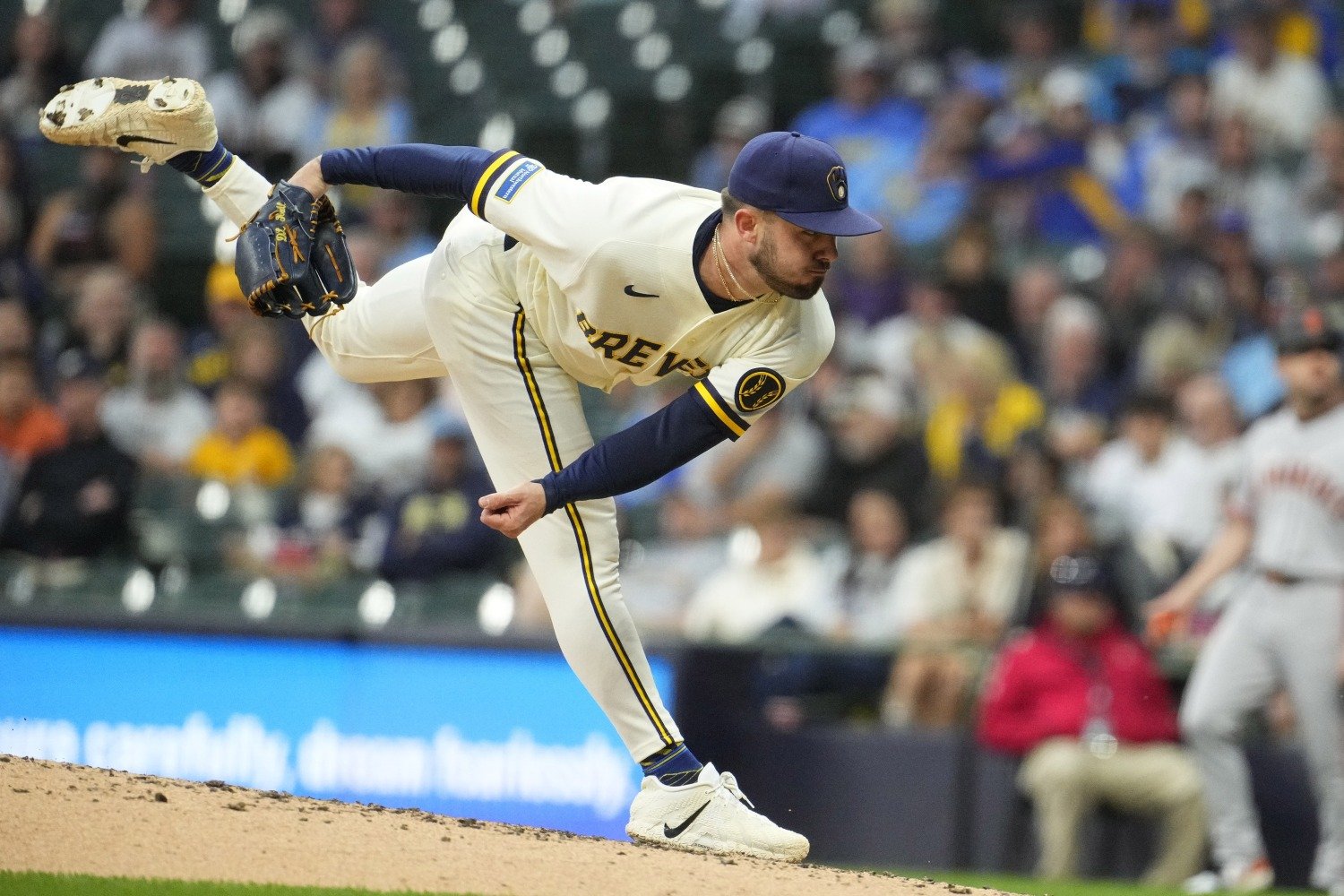 Outings like Monday night's have become typical for DL Hall this year. In two innings of relief, Hall issued three walks. He also struck out two, allowed zero hard-hit balls, and surrendered just one hit, enabling him to wiggle out of traffic without allowing any runs. Hall's 2.20 ERA this year is not fully sustainable. Nor is it a true reflection of how he's pitched. His 20.3% walk rate is the third-highest among qualified relievers. He's issued a walk in 16 of his 23 appearances, including an active streak of eight straight outings with at least one free pass. Those free bases have kept him from getting the high-leverage assignments entrusted to fellow multi-inning relievers Aaron Ashby, Chad Patrick, and Shane Drohan. Still, Hall's 3.86 xERA, 3.99 FIP, and 97 DRA- all indicate that from a process standpoint, he's been an above-average pitcher, despite the walks. He's kept the rest of the bullpen running efficiently by eating medium-leverage innings. It works because he rarely allows hits. Hall's batting average on balls in play this season is just .197. Last year, it was .202. He has the fifth-lowest BABIP among pitchers to throw at least 50 innings over the last two seasons. It's a statistical outlier for that many batted balls to become outs. At some point, hitters will start finding some holes, but in Hall's case, allowing such harmless contact no longer seems to be purely a fluke. It means he's repeatedly achieving his primary goal against most hitters. "Miss the barrel," he said. "That's what we're paid for, so that's all I'm trying to do." Hall has excelled at missing the barrel over the last two seasons. In 2025, he induced whiffs on just 19.5% of swings, but he limited opponents to an elite 28.8% hard-hit rate and 6.3% barrel rate. His quality of contact is similar this year (32.2% hard-hit, 6.6% barrel), but now his whiff rate has jumped to 29.6%. Opponents have an expected slugging percentage of just .282 against Hall this year, which ranks in the top 7% of pitchers who qualify for Statcast's batted ball leaderboards. He's harder than ever to square up, because his stuff is the best it's been in years. After failing to recapture the carry and velocity on what was once his signature four-seam fastball, Hall began reinventing himself last year to get outs by mixing speeds and shapes. He went from throwing one fastball to three, adding a cutter and a two-seamer. This year, he introduced a sweeper to bring his arsenal up to seven pitches. His stuff is grading out as above-average for the first time since his early days with the Baltimore Orioles. Season Stf+ 4FB Stf+ 2FB Stf+ FC Stf+ SL Stf+ CU Stf+ CH Stuff+ 2022 113 130 97 113 116 2023 109 114 127 112 112 2024 82 103 94 92 89 2025 91 95 86 97 95 94 92 2026 95 106 92 116 99 89 103 "Before I came here, I always threw so hard that I was essentially a two-pitch guy," Hall said. "That was great when you're throwing 98-100, but I think God put me in the situation to where I couldn't go out there and do that at 92-93, so I basically got forced to learn to adjust. And I think that was kind of a wake-up call. In the long run, if you want to pitch in this game for a long time, you've got to have variety." The two-seamer was more of an experimental pitch last year, but it's now Hall's primary fastball. He's still mostly a two-pitch pitcher to lefties, pairing the two-seamer with his new sweeper to beat them with stuff. Righties see more variety, which makes Hall's arsenal difficult to time up, even if it's not overpowering. Committing to the two-seamer allowed Hall to refine it over the offseason. He's increased the average arm-side run of the pitch from 14.5 inches last year to 16 inches this season. "When you throw a four-seam your whole life and then you grab two-seam, something feels different in your hand," he said. "I'm throwing so many sinkers now, when I go back to the four, it almost feels a little bit foreign sometimes." With an average of 10.4 inches of induced vertical break from his three-quarters arm slot, Hall's two-seamer rarely has true sink. Instead, it's more of a ride-run shape. For that reason, rather than targeting the bottom of the strike zone, Hall has thrown most of his "sinkers" closer to the top of the zone, with the goal of running them off the barrel. "Whether it's up or down, I'm running it off that sweet spot," he said. "I might throw one that's super ride-run, and then one might be kind of more just run. Either way, as long as I'm getting off that barrel, I'm probably getting the ground ball." It's working. Formerly a fly-ball pitcher as a four-seam guy, Hall's 53.2% ground-ball rate is a career best. That includes a 58.3% ground-ball rate against his sinker. He's induced five double plays, second on the Brewers' pitching staff to only Chad Patrick, who has pitched 18 more innings than Hall. Amid all of that good, the walks have remained a significant problem. Hall's new pitch mix is somewhat to blame. In past seasons, he consistently threw nearly 60% of his four-seamers in the zone, but he's still learning to control his new running fastball, throwing just 52.6% of his two-seamers in the zone. Throwing so many pitches has made it more difficult to find his release points, both within an outing and on the season as a whole. "Coming out of the bullpen with seven pitches is kind of absurd," Hall said. "It's not really much heard of. I think part of it is getting into the rhythm of the game, and I think me and William [Contreras] do a really good job of limiting how much [time] it takes. Sometimes it might take a batter, and that batter gets walked, but I think we're good at limiting." Some free bases are what Hall calls "useful walks," a byproduct of his determination to miss the barrel. The average MLB pitcher leans on their fastball to get back in the count after falling behind, throwing secondary pitches just 35.2% of the time in those situations. Hall throws non-fastballs at a 40.1% rate when behind. He willingly risks missing the zone with a breaking ball to keep a hitter off-balance in what is typically a fastball count. While he tries to attack lefties more aggressively with fastballs, he throws plenty of changeups and curveballs when behind in the count to righties. "Having the sinker-sweeper combo against lefties now, if I'm landing those and doing what I'm supposed to do, there's no reason to try and give that righty any chance to hit a homer, or just hit it and catch a barrel," Hall said. Part of his maturation, Hall said, has been learning when and how to pitch more carefully to potent righties when he has a more favorable matchup on deck. "If I get a runner on, I'm a double play away," he said. "So if there's one out or two outs, then I know that if I'm facing a righty, I'm not giving him anything too good. Now, I've kind of learned to use that." Even so, Hall knows he's walking too many hitters. He wants his misses to be more competitive, even when he's working more carefully around the zone by design. Walking some right-handers is okay, but every free pass to a lefty bothers him. He's even set up an accountability system with the rest of the Brewers' bullpen to curtail those. "Every time I walk a lefty, I owe them a little something," he said. The biggest help may come from his velocity finally returning. After Hall's two-seamer sat between 93 and 94 mph for most of April, it has sat nearly 96 and touched 97 over the last couple of weeks. That could give him the mental freedom to attack the zone more consistently. "If the velo is still ticking [up], then that simplifies everything," Hall said. "Now you can really just be like, 'Hey, I'm just gonna rip this over the plate and get a good result.'" Walks might always be part of the package for this version of Hall, who will likely remain closer to a middle reliever than a back-end bullpen arm. But even if some regression awaits, he's a useful big-league pitcher who, after some maturation, is adept at missing barrels. That's a major step up from where he was two years ago. "It's like learning everything new, and also trying to get the body to a good spot," he said. "But it's definitely rewarding, and to see a little bit of light at the end of the tunnel is really cool."
 -
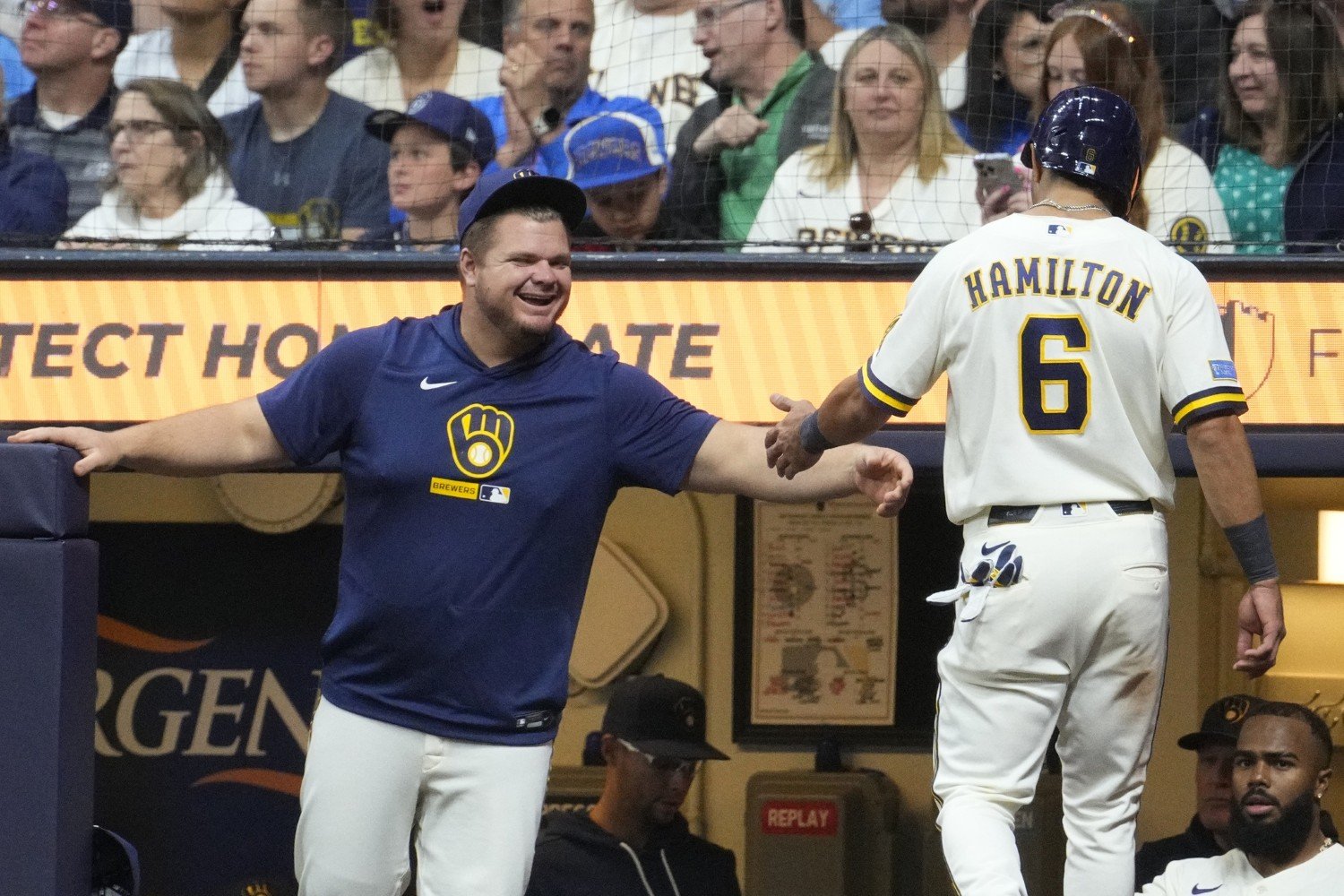 Pat Murphy has spoken highly of David Hamilton all season, even though he’s been far from the Brewers’ most productive position player. His OPS has hovered beneath .600 for most of the year, and he’s been inconsistent in the field. Still, Murphy and the Brewers have repeatedly pointed to his upside and how he’s impacted the game in smaller ways, such as bunting for hits and taking extra bases with his speed. Murphy could offer new compliments on Monday night, as Hamilton went 3-for-5 in a blowout win over the San Francisco Giants. Since May 20, he’s hitting .276/.290/.483 for a strong .773 OPS while flashing more of that upside the club has insisted is in the tank. Hamilton’s hard-hit rate during this stretch on non-bunts is 50%, and his average exit velocity is 90.2 mph. Before, those marks were 28.2% and 84.3 mph, respectively. That’s a small sample of just 24 batted balls, but it might be more than a blip on the radar. Hamilton is swinging the bat harder than he was before. His average bat speed has increased from 69.1 mph before his hot streak to 70.8 during it. He added three more hard-hit balls on Monday, including a double he pulled to the right-field wall in his last at-bat. His bat speed was at least 72.5 mph on each of those three hard hits. Only eight players with at least 100 batted balls this year have a greater separation between their maximum exit velocity and their average than Hamilton, and most of the players with whom he shares that leaderboard are sluggers. He can hit the ball much harder than the waterbug types to whom people tend to compare him; that has always been in there. “He’s made some adjustments,” Murphy said. “No one has been tinkered with more than Hamilton, and to see him handle it all and do what he’s doing, he knows he’s found a home back where he started.” Hamilton still isn’t fully calibrated. Five of his hard-hit balls during this stretch have had an expected batting average below .200, because he got under the pitch and hit it too high for an easy flyout. Improving what Murphy refers to as his “flight plan”—effectively, the launch angle of his batted balls—remains a work in progress. Hamilton will fare better on hard line drives than hard fly balls, but hitting more balls hard in general by cutting his ‘A’ swing loose is a step forward. Furthermore, that swing has looked more well-rounded than it did earlier in the year. A point of emphasis has been keeping Hamilton’s front side from flying open on most swings, which had confined his productive contact to pitches low and inside. Here’s a hard 97.9-mph lineout against the Los Angeles Dodgers last week that saw Hamilton stay on a splitter away. lineout.mp4 Hamilton’s first home run of the season in Houston was an undeniable Crawford Box Special; it was hit 94.1 mph, traveled just 343 feet, and had a .140 xBA. But it was another example of staying closed on a pitch slightly away. HR.mp4 “He had a whole front side get out of there type thing going on, and he only handled one pitch,” Murphy said. “Now he’s starting to handle more pitches and more areas.” Hamilton has also flashed more of his upside in the field. He made a rangy play in the hole against the St. Louis Cardinals last week, along with a diving stop toward second base and an acrobatic leaping catch in shallow left-center. On Monday night, Hamilton converted a fielder's choice that was more impressive than it looks on video. With the pull-heavy Willy Adames hitting, he was shaded toward third base. By the time the camera cut, he had already taken several steps toward second. Hamilton quickly covered a good deal of distance to reach Adames's hard grounder, gobbling it up with a slide before flipping to Brice Turang for an inning-ending forceout. He again showcased his range a few innings later at second base, sprinting into center field for a challenging over-the-shoulder catch. Hamilton must maintain and build on the swing improvements he's flashed lately. His defense still isn't consistent enough, as he made a routine throwing error against the Cardinals before those Web Gems. But within the last two weeks, the seeds the Brewers planted have noticeably sprouted. “He knows we believe in him, and it’s showing up,” Murphy said.
 -
Image courtesy of © Michael McLoone-Imagn Images Pat Murphy has spoken highly of David Hamilton all season, even though he’s been far from the Brewers’ most productive position player. His OPS has hovered beneath .600 for most of the year, and he’s been inconsistent in the field. Still, Murphy and the Brewers have repeatedly pointed to his upside and how he’s impacted the game in smaller ways, such as bunting for hits and taking extra bases with his speed. Murphy could offer new compliments on Monday night, as Hamilton went 3-for-5 in a blowout win over the San Francisco Giants. Since May 20, he’s hitting .276/.290/.483 for a strong .773 OPS while flashing more of that upside the club has insisted is in the tank. Hamilton’s hard-hit rate during this stretch on non-bunts is 50%, and his average exit velocity is 90.2 mph. Before, those marks were 28.2% and 84.3 mph, respectively. That’s a small sample of just 24 batted balls, but it might be more than a blip on the radar. Hamilton is swinging the bat harder than he was before. His average bat speed has increased from 69.1 mph before his hot streak to 70.8 during it. He added three more hard-hit balls on Monday, including a double he pulled to the right-field wall in his last at-bat. His bat speed was at least 72.5 mph on each of those three hard hits. Only eight players with at least 100 batted balls this year have a greater separation between their maximum exit velocity and their average than Hamilton, and most of the players with whom he shares that leaderboard are sluggers. He can hit the ball much harder than the waterbug types to whom people tend to compare him; that has always been in there. “He’s made some adjustments,” Murphy said. “No one has been tinkered with more than Hamilton, and to see him handle it all and do what he’s doing, he knows he’s found a home back where he started.” Hamilton still isn’t fully calibrated. Five of his hard-hit balls during this stretch have had an expected batting average below .200, because he got under the pitch and hit it too high for an easy flyout. Improving what Murphy refers to as his “flight plan”—effectively, the launch angle of his batted balls—remains a work in progress. Hamilton will fare better on hard line drives than hard fly balls, but hitting more balls hard in general by cutting his ‘A’ swing loose is a step forward. Furthermore, that swing has looked more well-rounded than it did earlier in the year. A point of emphasis has been keeping Hamilton’s front side from flying open on most swings, which had confined his productive contact to pitches low and inside. Here’s a hard 97.9-mph lineout against the Los Angeles Dodgers last week that saw Hamilton stay on a splitter away. lineout.mp4 Hamilton’s first home run of the season in Houston was an undeniable Crawford Box Special; it was hit 94.1 mph, traveled just 343 feet, and had a .140 xBA. But it was another example of staying closed on a pitch slightly away. HR.mp4 “He had a whole front side get out of there type thing going on, and he only handled one pitch,” Murphy said. “Now he’s starting to handle more pitches and more areas.” Hamilton has also flashed more of his upside in the field. He made a rangy play in the hole against the St. Louis Cardinals last week, along with a diving stop toward second base and an acrobatic leaping catch in shallow left-center. On Monday night, Hamilton converted a fielder's choice that was more impressive than it looks on video. With the pull-heavy Willy Adames hitting, he was shaded toward third base. By the time the camera cut, he had already taken several steps toward second. Hamilton quickly covered a good deal of distance to reach Adames's hard grounder, gobbling it up with a slide before flipping to Brice Turang for an inning-ending forceout. He again showcased his range a few innings later at second base, sprinting into center field for a challenging over-the-shoulder catch. Hamilton must maintain and build on the swing improvements he's flashed lately. His defense still isn't consistent enough, as he made a routine throwing error against the Cardinals before those Web Gems. But within the last two weeks, the seeds the Brewers planted have noticeably sprouted. “He knows we believe in him, and it’s showing up,” Murphy said. View full article
-
To Be His Best Self, Coleman Crow Needs His Signature Breaking Stuff
Jack Stern posted an article in Brewers
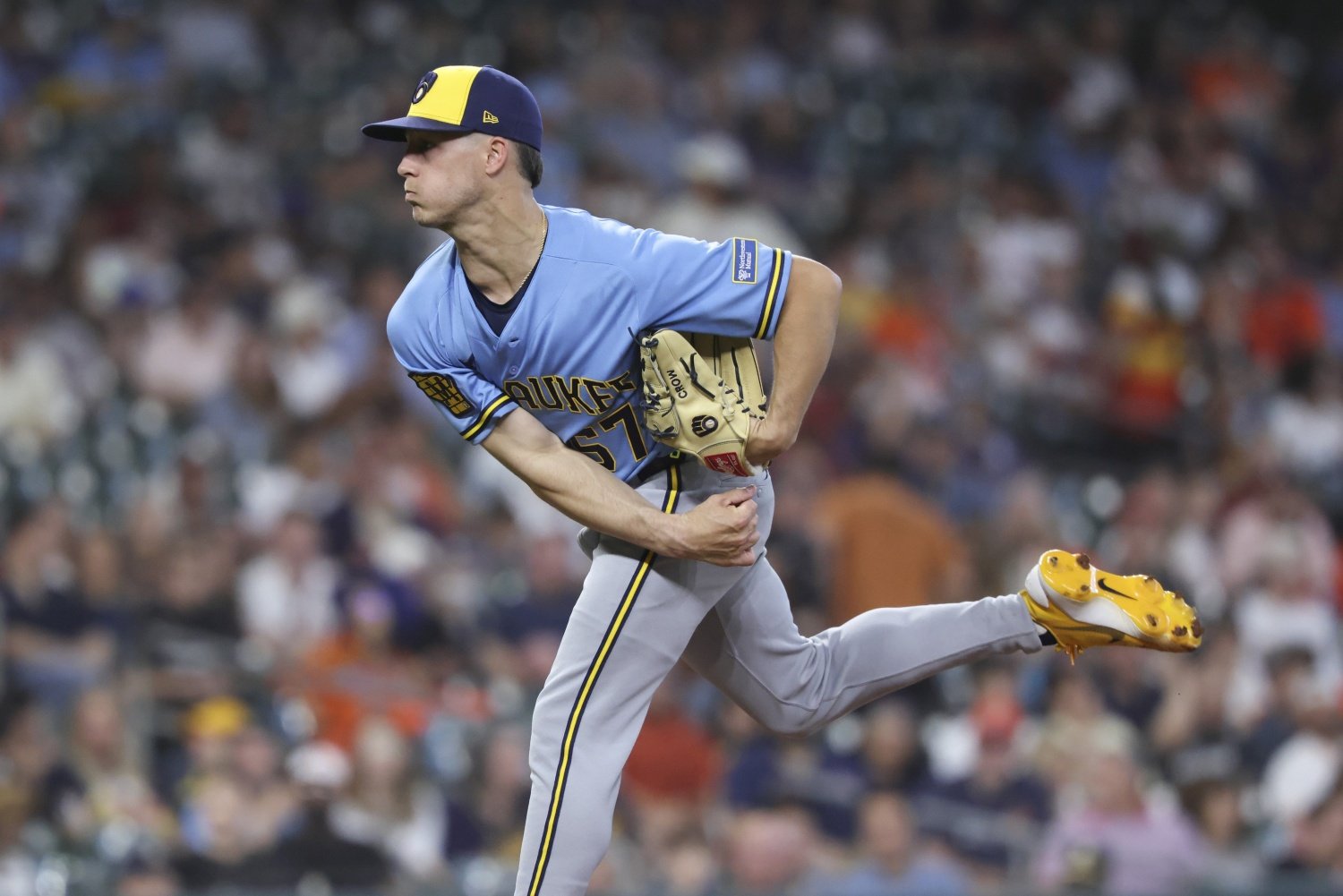 Coleman Crow is a game planner’s dream. He’s the right kind of natural supinator, meaning his wrist instinctively angles away from his body as he releases the baseball, but in a controlled, adjustable way. That allows him to create a wide array of pitch shapes. Crow has expanded his arsenal to five pitches this year. With his four-seamer and sinker both averaging just over 91 mph, mixing those shapes and speeds effectively is a necessity. Crow’s bread and butter, though, is his breaking stuff. His curveball has averaged an elite 2,926 RPM this year, with -14.3 inches of induced vertical break (IVB) and 17.5 inches of glove-side break. His sweeper similarly averages 2,946 RPM, with 21.3 inches of horizontal break. Crow’s cutter, four-seamer, and sinker draw mixed reviews from pitch modeling metrics, but every public model agrees that his breaking balls are his best offerings. The drawback is that pitches with such big break are not very versatile. They can be harder to land in the strike zone early in counts. Because Crow’s spinners both average under 80 MPH, they’re likely to generate more weak contact than swings and misses. There are limits to how often he can use his breaking pitches as a starter, which made the cutter and sinker necessary additions to his mix. Still, spinning the ball is his strength, and his curveball and sweeper should be a significant part of what he’s doing on the mound in any role. Crow sequenced his arsenal well in Triple-A this year. Against righties, he worked ahead with cutters and sinkers before expanding the zone with both his sweeper and curveball. Lefties saw cutters early, followed by curveballs and high four-seamers as put-away pitches. Overall, 65.5% of his pitches have been some version of the fastball, meaning he used his breaking stuff at a 34.5% clip—noticeably higher than the MLB average of 29.1% for starting pitchers. It was a similar approach in his first two big-league starts. Unsurprisingly, William Contreras and the fastball-favoring Brewers nudged his mix slightly further in that direction, throwing 69% heaters. However, they still utilized Crow’s breaking balls an above-average 31% of the time. That changed on Friday night in Houston, when a whopping 81% of his pitches were fastballs. It’s unclear whether this was the plan from the get-go or an in-game shift to the pitches Crow was throwing most competitively that night. He wasn’t his sharpest, throwing just 48% of his pitches in the strike zone after attacking it aggressively (58.4% and 55.9%) in his first two starts. Both his curveball and sweeper had in-zone rates of 25%. However, Contreras and Crow didn’t exactly give themselves much of an opportunity to see how competitive those breaking balls could be throughout the start, throwing just eight curveballs and four sweepers. Furthermore, while a couple of sweepers were non-competitive misses, most of Crow’s curveballs were just outside the zone, and four induced chases. Meanwhile, the Astros made loud contact against Crow’s fastballs. His cutter produced zero whiffs and yielded three hard-hit balls, for an average exit velocity of 93.1 mph. Similarly, his sinker was responsible for a pair of hard hits and an average exit velocity of 94.8 mph. His final line of four runs (two earned) in four innings was partially the product of shoddy defense, but the fastball-heavy version of Crow wasn’t putting himself in positions to succeed, either. Above all else, Crow will need better command than he had on Friday to navigate most outings. All three of his fastballs are useful pitches that give him a counter for most swing paths, counts, and hitter timing. However, spinning a breaking ball remains his specialty. His best work will come when he’s throwing his curveball and sweeper competitively. Crow must prove those pitches can be consistent, and the Brewers’ game planners must give him the opportunity to throw them.
 -
Coleman Crow is a game planner’s dream. He’s the right kind of natural supinator, meaning his wrist instinctively angles away from his body as he releases the baseball, but in a controlled, adjustable way. That allows him to create a wide array of pitch shapes. Crow has expanded his arsenal to five pitches this year. With his four-seamer and sinker both averaging just over 91 mph, mixing those shapes and speeds effectively is a necessity. Crow’s bread and butter, though, is his breaking stuff. His curveball has averaged an elite 2926 rpm this year with -14.3 inches of induced vertical drop and -17.5 inches of glove-side break. His sweeper similarly averages 2946 rpm with -21.3 inches of horizontal break. Crow’s cutter, four-seamer, and sinker draw mixed reviews from pitch modeling metrics, but every public model agrees that his breaking balls are his best offerings. The drawback is that pitches with such big break are not very versatile. They can be harder to land in the strike zone early in counts. Because Crow’s spinners both average under 80 mph, they’re likely to generate more weak contact than swings and misses. There are limits to how often he can use his breaking pitches as a starter, which made the cutter and sinker necessary additions to his mix. Still, spinning the ball is his strength, and his curveball and sweeper should be a significant part of what he’s doing on the mound in any role. Crow has sequenced his arsenal well in Triple-A this year. Against righties, he’s worked ahead with cutters and sinkers before expanding the zone with both his sweeper and curveball. Lefties saw cutters early, followed by curveballs and high four-seamers as put-away pitches. Overall, 65.5% of his pitches have been some version of the fastball, meaning he used his breaking stuff at a 34.5% clip – noticeably higher than the MLB average of 29.1% for starting pitchers. It was a similar approach in his first two big-league starts. Unsurprisingly, William Contreras and the fastball-favoring Brewers nudged his mix slightly further in that direction, throwing 69% heaters. However, they still utilized Crow’s breaking balls an above-average 31% of the time. That changed on Friday night in Houston, when a whopping 81% of his pitches were fastballs. It’s unclear whether this was the plan from the get-go or an in-game shift to the pitches Crow was throwing most competitively that night. He wasn’t his sharpest, throwing just 48% of his pitches in the strike zone after attacking it aggressively (58.4% and 55.9%) in his first two starts. Both his curveball and sweeper had in-zone rates of 25%. However, Contreras and Crow didn’t exactly give themselves much of an opportunity to see how competitive those breaking balls could be throughout the start, throwing just eight curveballs and four sweepers. Furthermore, while a couple of sweepers were non-competitive misses, most of Crow’s curveballs were just outside the zone, and four induced chases. Meanwhile, the Astros made loud contact against Crow’s fastballs. His cutter produced zero whiffs and yielded three hard-hit balls for an average exit velocity of 93.1 mph. Similarly, his sinker was responsible for a pair of hard hits and an average exit velocity of 94.8 mph. His final line of four runs (two earned) in four innings was partially the product of shoddy defense, but the fastball-heavy version of Crow wasn’t putting himself in positions to succeed, either. Above all else, Crow will need better command than he had on Friday to navigate most outings. All three of his fastballs are useful pitches that give him a counter for most swing paths, counts, and hitter timing. However, spinning a breaking ball remains his specialty. His best work will come when he’s throwing his curveball and sweeper competitively. Crow’s must prove those pitches can be consistent, and the Brewers’ game planners must give him the opportunity to throw them. View full article
-
How the Brewers' Co-Aces are Taking Baseball by Storm with Their Fastballs
Jack Stern posted an article in Brewers
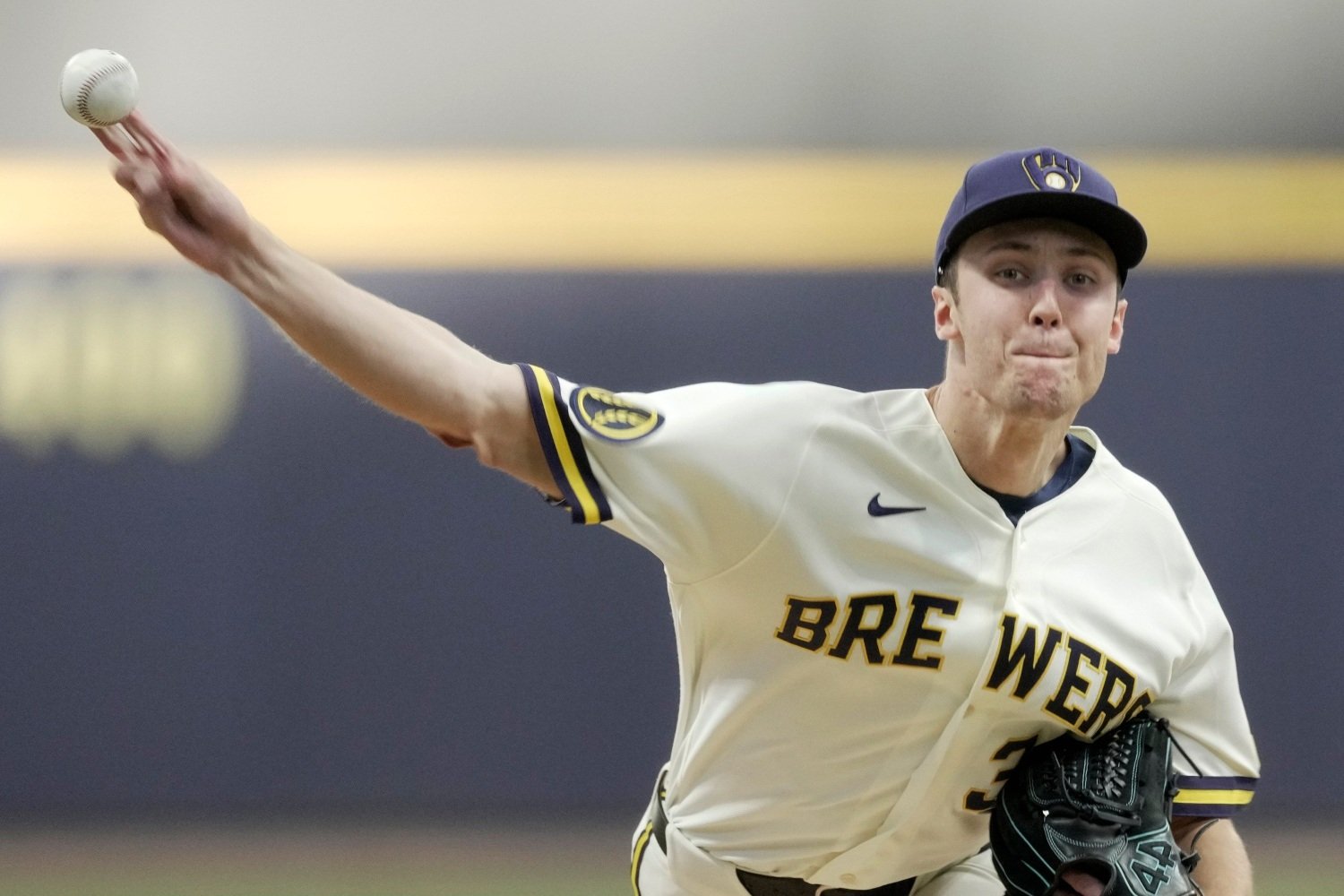 As he manages a staff of young starters, Pat Murphy frequently muses aloud about how pitching development and strategy have evolved throughout his time in baseball. "In the old days, guys would come out and throw their heater the first time around because they could locate their heater," Murphy said during a pregame media session earlier this month. "They'd come out and throw their heater and rarely show you something secondary. Second time around, they show you the second pitch. You don't see a changeup until the third time around." In an era where technology and physics have made pitch design a science, more pitchers have expanded their arsenals and know exactly which pitch types to throw based on their motor preferences. That's left fewer hurlers reliant on four-seam fastballs, particularly since the turn of the decade. In 2026, 30.4% of pitches thrown have been four-seamers. It's still the most prevalent pitch in the game, but the standard fastball is being thrown at the lowest rate in the pitch-tracking era, which began in 2008. Instead, the game has entered an era of meticulously crafting and utilizing pitch shapes. "The game's just changed," Murphy said. "Now, you might show all your pitches on the first hitter. It's the way the game has changed because command is different. Now it's stuff." The Brewers have diverged somewhat from most of the league in this department, throwing fastballs 65.2% of the time this year, compared to the league average of 54.5%. That number is a bit misleading, though. While much of baseball is mixing entire arsenals of pitches more evenly, the Brewers are mixing four-seamers, sinkers, and cutters. Their 31.5% four-seamer usage rate is comparable to the rest of MLB; it's the two other flavors of fastball they throw unusually often. Milwaukee's top two starters, however, are eschewing both versions of the mix-it-up approach. Jacob Misiorowski has thrown his four-seamer 62.3% of the time, the highest rate among pitchers who have thrown at least 50 innings this season. Kyle Harrison ranks second, throwing his four-seamer 58.9% of the time. It's hard to argue with the results. Misiorowski boasts a 1.83 ERA, 1.89 FIP, and 53 DRA- in 11 starts. Harrison isn't far behind, posting a 1.57 ERA, 2.46 FIP, and 76 DRA-. Those numbers give the pair a statistical case as the best one-two punch atop any rotation in baseball. Misiorowski can supplement that fastball with a full arsenal that also includes a cutter, slider, curveball, and changeup. Harrison has improved at executing his slurve, which he used a season-high 42.4% of the time on Tuesday night when he didn't have his best fastball. But much of the time, neither has needed those secondary pitches to carve through opposing lineups. Misiorowski struck out a season-high 12 on Monday while throwing 76% four-seamers. Last week, Harrison punched out 11 at Wrigley Field while throwing 68.1% heaters. "It's both their bread and butter," Murphy said. "I think you've got to go with it and not shy away from it." According to Statcast, both fastballs have been worth 8 runs, tying them for fourth among four-seamers. Many hitters keep seeing one heater after another from both pitchers, and they've been unable to square them up. They've slugged just .268 against Misiorowski's four-seamer while whiffing on 45.2% of swings, and they've slugged .318 with a 30.8% whiff rate against Harrison's. Mixing speeds and locations is often cited as one of the keys to effective pitching. At the end of the day, though, a pitcher's goal is to prevent hitters from making contact on time and on the barrel, whether the result is a whiff, a ground ball, or a lazy flyout. Misiorowski and Harrison can do that with such heavy doses of fastballs because they have unusual movement and enter the zone at deceptive angles. "They're both unique fastballs," said pitching coordinator Jim Henderson. Both hurlers release the ball closer to the ground than many pitchers, from crossfire deliveries. Misiorowski throws his fastball from an average arm angle of 29 degrees, and even though he stands 6-foot-7, his release height is just 5.25 feet off the ground. At 34 degrees, Harrison's arm slot is a bit higher, but his average release height of 5.04 feet is even lower. Generally speaking, the lower the release height of a pitch, the less "carry" or "rise"—measured as induced vertical break—a hitter expects it to have. That's because the lower a pitcher's arm slot, the more the seam orientation of a baseball shifts, so it spins in a direction that counteracts gravity less and creates less of that perceived rise as it interacts with the air around it. Misiorowski and Harrison are different. The former averages 15.9 inches of induced vertical break, while the latter averages 15.1 inches. By generating so much carry from a low release height, Misiorowski's fastball has a -3.66° vertical approach angle (VAA, the angle at which the ball enters the hitting zone, relative to an imaginary line parallel to the ground), the lowest among four-seamers thrown by regular starting pitchers. Harrison's four-seamer has a -3.88° VAA, which ranks fourth. To put that into more practical terms, a low vertical approach angle means a fastball appears "flat" in a good way. Instead of entering the hitting zone on a downhill plane, as a hitter would expect from a pitcher throwing off an elevated mound, the ball appears to stay up or even travel on an uphill plane as it crosses the plate. Misiorowski adds even more freakish qualities to his fastball. It's the hardest among starting pitchers, averaging 99.8 mph. But because he averages 7.5 feet of extension down the mound, he delivers the ball closer to home plate than any other pitcher in the game. With that reduced reaction time, the average perceived velocity of his fastball is 101.9 mph. "I'd probably say it's pretty unique with everything that he's able to do, and how he makes it really difficult on guys with the extension, the perceived velocity—all that stuff is probably one of one," Christian Yelich said. "It's electric stuff," Andrew Vaughn said. "That fastball is probably the best in the game." Harrison can't quite dial his fastball up to that level, but it can be nearly as untouchable on a given day against certain opponents. It's returned a whiff rate of at least 40% in three of his starts, including that outing against the Chicago Cubs. "I got onto the bus after the game, and I'm looking at the highlights, and I'm just like, 'That's 95 pitches of Josh Hader,'" Henderson recalled, invoking the same comparison to the fastball-dominant former Brewers reliever as lead pitching coach Chris Hook did before Harrison's season debut. Misiorowski has become untouchable in May by spotting more fastballs to the glove-side corner, but Harrison's execution has been even simpler. There's an emphasis on elevating his fastball, where it's most effective, but he's thrown the majority of them right down the middle of the zone. For fastballs with their qualities, throwing them in the zone is often good enough. "It's nice," Henderson said. "They don't have to get so crazy on locations, either, so they can kind of pitch with some more freedom there." That simplicity of attacking the zone with fastballs isn't the only thing spurring breakouts for Misiorowski and Harrison, but not having to get too cute with their sequencing or game planning has played a significant role. When a hitter does show signs of getting to those fastballs, they have good enough secondary stuff to slow them down. "When you don't have to mix as much, it simplifies your approach, and you can just kind of get to more of just reading swings," Henderson said. "You can kind of get after your game plan a little bit easier with two pitches sometimes, where you just have to read what the hitter's looking for, and then just kind of adjust from there, instead of trying to trick them." Misiorowski still has those three additional pitches in his repertoire, should he need them. In addition to his breaking ball, Harrison and the Brewers are still working on honing his kick changeup, and they could also reintroduce a cutter down the line. For now, though, the fastballs are doing the job and then some. "I think you build a reputation of it, too, that you got to try to get to the heater," Henderson said. "And if it has a little angle, a little bit of movement to it, and you start feeling as a hitter like you have to cheat to it, and it opens up even just one other pitch for you to kind of get through a game with a two-pitch mix. It's just about being unique and having to honor it, really."
- 1 comment
-
- 2
-

-
- jacob misiorowski
- kyle harrison
- (and 1 more)
-
Image courtesy of © Mark Hoffman/Milwaukee Journal Sentinel / USA TODAY NETWORK via Imagn Images As he manages a staff of young starters, Pat Murphy frequently muses aloud about how pitching development and strategy have evolved throughout his time in baseball. "In the old days, guys would come out and throw their heater the first time around because they could locate their heater," Murphy said during a pregame media session earlier this month. "They'd come out and throw their heater and rarely show you something secondary. Second time around, they show you the second pitch. You don't see a changeup until the third time around." In an era where technology and physics have made pitch design a science, more pitchers have expanded their arsenals and know exactly which pitch types to throw based on their motor preferences. That's left fewer hurlers reliant on four-seam fastballs, particularly since the turn of the decade. In 2026, 30.4% of pitches thrown have been four-seamers. It's still the most prevalent pitch in the game, but the standard fastball is being thrown at the lowest rate in the pitch-tracking era, which began in 2008. Instead, the game has entered an era of meticulously crafting and utilizing pitch shapes. "The game's just changed," Murphy said. "Now, you might show all your pitches on the first hitter. It's the way the game has changed because command is different. Now it's stuff." The Brewers have diverged somewhat from most of the league in this department, throwing fastballs 65.2% of the time this year, compared to the league average of 54.5%. That number is a bit misleading, though. While much of baseball is mixing entire arsenals of pitches more evenly, the Brewers are mixing four-seamers, sinkers, and cutters. Their 31.5% four-seamer usage rate is comparable to the rest of MLB; it's the two other flavors of fastball they throw unusually often. Milwaukee's top two starters, however, are eschewing both versions of the mix-it-up approach. Jacob Misiorowski has thrown his four-seamer 62.3% of the time, the highest rate among pitchers who have thrown at least 50 innings this season. Kyle Harrison ranks second, throwing his four-seamer 58.9% of the time. It's hard to argue with the results. Misiorowski boasts a 1.83 ERA, 1.89 FIP, and 53 DRA- in 11 starts. Harrison isn't far behind, posting a 1.57 ERA, 2.46 FIP, and 76 DRA-. Those numbers give the pair a statistical case as the best one-two punch atop any rotation in baseball. Misiorowski can supplement that fastball with a full arsenal that also includes a cutter, slider, curveball, and changeup. Harrison has improved at executing his slurve, which he used a season-high 42.4% of the time on Tuesday night when he didn't have his best fastball. But much of the time, neither has needed those secondary pitches to carve through opposing lineups. Misiorowski struck out a season-high 12 on Monday while throwing 76% four-seamers. Last week, Harrison punched out 11 at Wrigley Field while throwing 68.1% heaters. "It's both their bread and butter," Murphy said. "I think you've got to go with it and not shy away from it." According to Statcast, both fastballs have been worth 8 runs, tying them for fourth among four-seamers. Many hitters keep seeing one heater after another from both pitchers, and they've been unable to square them up. They've slugged just .268 against Misiorowski's four-seamer while whiffing on 45.2% of swings, and they've slugged .318 with a 30.8% whiff rate against Harrison's. Mixing speeds and locations is often cited as one of the keys to effective pitching. At the end of the day, though, a pitcher's goal is to prevent hitters from making contact on time and on the barrel, whether the result is a whiff, a ground ball, or a lazy flyout. Misiorowski and Harrison can do that with such heavy doses of fastballs because they have unusual movement and enter the zone at deceptive angles. "They're both unique fastballs," said pitching coordinator Jim Henderson. Both hurlers release the ball closer to the ground than many pitchers, from crossfire deliveries. Misiorowski throws his fastball from an average arm angle of 29 degrees, and even though he stands 6-foot-7, his release height is just 5.25 feet off the ground. At 34 degrees, Harrison's arm slot is a bit higher, but his average release height of 5.04 feet is even lower. Generally speaking, the lower the release height of a pitch, the less "carry" or "rise"—measured as induced vertical break—a hitter expects it to have. That's because the lower a pitcher's arm slot, the more the seam orientation of a baseball shifts, so it spins in a direction that counteracts gravity less and creates less of that perceived rise as it interacts with the air around it. Misiorowski and Harrison are different. The former averages 15.9 inches of induced vertical break, while the latter averages 15.1 inches. By generating so much carry from a low release height, Misiorowski's fastball has a -3.66° vertical approach angle (VAA, the angle at which the ball enters the hitting zone, relative to an imaginary line parallel to the ground), the lowest among four-seamers thrown by regular starting pitchers. Harrison's four-seamer has a -3.88° VAA, which ranks fourth. To put that into more practical terms, a low vertical approach angle means a fastball appears "flat" in a good way. Instead of entering the hitting zone on a downhill plane, as a hitter would expect from a pitcher throwing off an elevated mound, the ball appears to stay up or even travel on an uphill plane as it crosses the plate. Misiorowski adds even more freakish qualities to his fastball. It's the hardest among starting pitchers, averaging 99.8 mph. But because he averages 7.5 feet of extension down the mound, he delivers the ball closer to home plate than any other pitcher in the game. With that reduced reaction time, the average perceived velocity of his fastball is 101.9 mph. "I'd probably say it's pretty unique with everything that he's able to do, and how he makes it really difficult on guys with the extension, the perceived velocity—all that stuff is probably one of one," Christian Yelich said. "It's electric stuff," Andrew Vaughn said. "That fastball is probably the best in the game." Harrison can't quite dial his fastball up to that level, but it can be nearly as untouchable on a given day against certain opponents. It's returned a whiff rate of at least 40% in three of his starts, including that outing against the Chicago Cubs. "I got onto the bus after the game, and I'm looking at the highlights, and I'm just like, 'That's 95 pitches of Josh Hader,'" Henderson recalled, invoking the same comparison to the fastball-dominant former Brewers reliever as lead pitching coach Chris Hook did before Harrison's season debut. Misiorowski has become untouchable in May by spotting more fastballs to the glove-side corner, but Harrison's execution has been even simpler. There's an emphasis on elevating his fastball, where it's most effective, but he's thrown the majority of them right down the middle of the zone. For fastballs with their qualities, throwing them in the zone is often good enough. "It's nice," Henderson said. "They don't have to get so crazy on locations, either, so they can kind of pitch with some more freedom there." That simplicity of attacking the zone with fastballs isn't the only thing spurring breakouts for Misiorowski and Harrison, but not having to get too cute with their sequencing or game planning has played a significant role. When a hitter does show signs of getting to those fastballs, they have good enough secondary stuff to slow them down. "When you don't have to mix as much, it simplifies your approach, and you can just kind of get to more of just reading swings," Henderson said. "You can kind of get after your game plan a little bit easier with two pitches sometimes, where you just have to read what the hitter's looking for, and then just kind of adjust from there, instead of trying to trick them." Misiorowski still has those three additional pitches in his repertoire, should he need them. In addition to his breaking ball, Harrison and the Brewers are still working on honing his kick changeup, and they could also reintroduce a cutter down the line. For now, though, the fastballs are doing the job and then some. "I think you build a reputation of it, too, that you got to try to get to the heater," Henderson said. "And if it has a little angle, a little bit of movement to it, and you start feeling as a hitter like you have to cheat to it, and it opens up even just one other pitch for you to kind of get through a game with a two-pitch mix. It's just about being unique and having to honor it, really." View full article
-
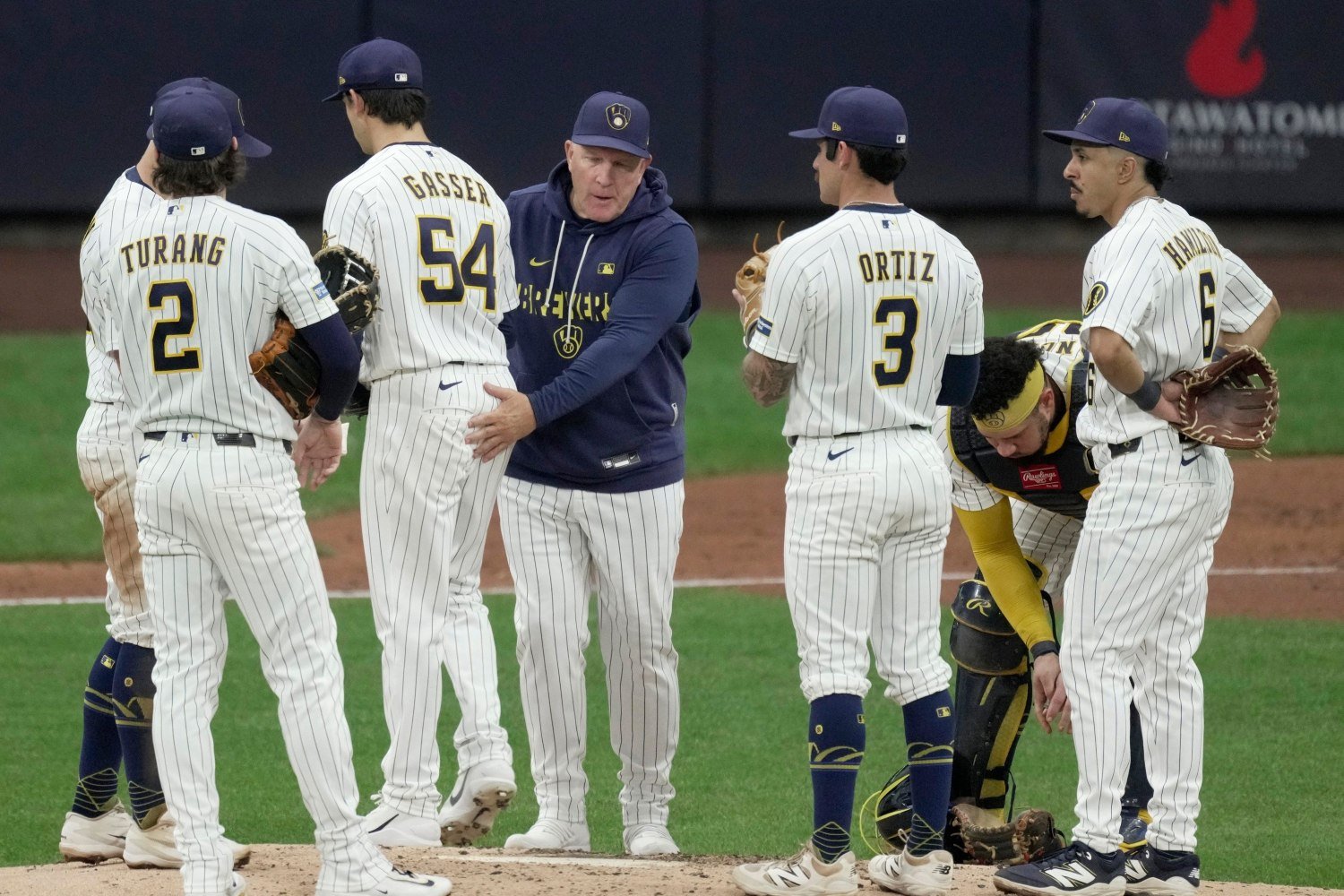 After a trio of young Brewers starting pitchers did not allow a run for three straight games, the tides turned over the weekend in a series loss to the Los Angeles Dodgers. In the last two games of the series, Milwaukee pitchers issued 17 walks and hit a batter. Robert Gasser and Brandon Sproat surrendered nine of those free passes, each failing to complete the fifth inning. Gasser lost his temporary spot in the rotation after that outing, his second start since being recalled in Minneapolis last week. That short leash wasn't surprising, given how uncompetitive he looked in both appearances. In 8 ⅓ innings, Gasser walked 14.6% of opposing hitters and made additional mistakes that don't show up in a box score. He failed to back up home plate on what became a Little League home run in Minnesota, and the Brewers believe he tipped his pitches to runners on second base on Saturday. "I'm not pleased with it," Gasser said on Saturday night of his recent big-league work. "This is a winning ball club, and I came in and [was] part of two losses. It's not ideal." It's another unfortunate development for Gasser, who will turn 27 years old in a few days without a clear role in Milwaukee. That seemed unfathomable less than two years ago, when he debuted in 2024 with five solid starts, but he has not looked like a big-league pitcher since undergoing Tommy John surgery that summer. Gasser showed in his first season that his three distinct fastballs and sweeping slider could deceive hitters from his low left-handed arm slot, but with a four-seamer and sinker that sit around 91 MPH, he must command his four best pitches and sequence them effectively. In sporadic opportunities, he hasn't done that. According to FanGraphs's Location+ (a metric that grades pitch location on a scale where 100 is average), Gasser's command has dropped from a passable 98 in 2024 to just 73 over the last two seasons. There will be more opportunities for Gasser throughout the season if he throws well in Triple-A, but for now, he's put himself behind other pitchers on the depth chart. Coleman Crow showed excellent command (113 Location+) in two spot starts. He or a rehabbing Brandon Woodruff could soon slot back into the rotation, which won't need a fifth starter until June 2 due to Thursday's off day. Shane Drohan, who has used a full starter's pitch mix as an effective long reliever, also deserves to be ahead of Gasser for big-league starts. Command also remains an issue for Sproat, who owns a 13.8% walk rate and has posted a 5.84 ERA, 5.57 FIP, and 4.38 SIERA in 10 outings. Saturday's start was the sixth outing in which he failed to complete a fifth inning as the bulk pitcher, and his sixth with at least three walks. While Sproat downplayed any specific pitch contributing to his struggles, he has struggled to establish his power sinker, throwing just 38% of them in the strike zone against the Dodgers. "He's got a lot of three-ball counts," manager Pat Murphy said. "He's behind 2-and-0 a ton." Unlike Gasser, Sproat has flashed enough upside to retain his rotation spot. His cutter, four-seamer, and breaking balls keep racking up swing and misses, and he struck out seven against a dangerous Los Angeles lineup. Most of his issues (high pitch counts, struggling to contain the big inning, and failing to maintain his velocity late into outings) are common for rookie starting pitchers. "He's had a couple of rough outings, but in no way, shape, or form would I think we're considering getting him out of there," Murphy said, adding that the Brewers aren't merely "sticking with" Sproat, but believe in his current upside. "This guy's got a chance to be a high-end starter. He's a rookie, so rookies are going to go through that." Sproat's lack of progress has become worth monitoring, but with Woodruff and Quinn Priester still on the shelf, the Brewers are a bit short on replacement starters. His stuff also warrants a few more opportunities before the club should consider a change. "He's so good when he's good that it gives you hope," Murphy said.
 -
Image courtesy of © Mark Hoffman/Milwaukee Journal Sentinel / USA TODAY NETWORK via Imagn Images After a trio of young Brewers starting pitchers did not allow a run for three straight games, the tides turned over the weekend in a series loss to the Los Angeles Dodgers. In the last two games of the series, Milwaukee pitchers issued 17 walks and hit a batter. Robert Gasser and Brandon Sproat surrendered nine of those free passes, each failing to complete the fifth inning. Gasser lost his temporary spot in the rotation after that outing, his second start since being recalled in Minneapolis last week. That short leash wasn't surprising, given how uncompetitive he looked in both appearances. In 8 ⅓ innings, Gasser walked 14.6% of opposing hitters and made additional mistakes that don't show up in a box score. He failed to back up home plate on what became a Little League home run in Minnesota, and the Brewers believe he tipped his pitches to runners on second base on Saturday. "I'm not pleased with it," Gasser said on Saturday night of his recent big-league work. "This is a winning ball club, and I came in and [was] part of two losses. It's not ideal." It's another unfortunate development for Gasser, who will turn 27 years old in a few days without a clear role in Milwaukee. That seemed unfathomable less than two years ago, when he debuted in 2024 with five solid starts, but he has not looked like a big-league pitcher since undergoing Tommy John surgery that summer. Gasser showed in his first season that his three distinct fastballs and sweeping slider could deceive hitters from his low left-handed arm slot, but with a four-seamer and sinker that sit around 91 MPH, he must command his four best pitches and sequence them effectively. In sporadic opportunities, he hasn't done that. According to FanGraphs's Location+ (a metric that grades pitch location on a scale where 100 is average), Gasser's command has dropped from a passable 98 in 2024 to just 73 over the last two seasons. There will be more opportunities for Gasser throughout the season if he throws well in Triple-A, but for now, he's put himself behind other pitchers on the depth chart. Coleman Crow showed excellent command (113 Location+) in two spot starts. He or a rehabbing Brandon Woodruff could soon slot back into the rotation, which won't need a fifth starter until June 2 due to Thursday's off day. Shane Drohan, who has used a full starter's pitch mix as an effective long reliever, also deserves to be ahead of Gasser for big-league starts. Command also remains an issue for Sproat, who owns a 13.8% walk rate and has posted a 5.84 ERA, 5.57 FIP, and 4.38 SIERA in 10 outings. Saturday's start was the sixth outing in which he failed to complete a fifth inning as the bulk pitcher, and his sixth with at least three walks. While Sproat downplayed any specific pitch contributing to his struggles, he has struggled to establish his power sinker, throwing just 38% of them in the strike zone against the Dodgers. "He's got a lot of three-ball counts," manager Pat Murphy said. "He's behind 2-and-0 a ton." Unlike Gasser, Sproat has flashed enough upside to retain his rotation spot. His cutter, four-seamer, and breaking balls keep racking up swing and misses, and he struck out seven against a dangerous Los Angeles lineup. Most of his issues (high pitch counts, struggling to contain the big inning, and failing to maintain his velocity late into outings) are common for rookie starting pitchers. "He's had a couple of rough outings, but in no way, shape, or form would I think we're considering getting him out of there," Murphy said, adding that the Brewers aren't merely "sticking with" Sproat, but believe in his current upside. "This guy's got a chance to be a high-end starter. He's a rookie, so rookies are going to go through that." Sproat's lack of progress has become worth monitoring, but with Woodruff and Quinn Priester still on the shelf, the Brewers are a bit short on replacement starters. His stuff also warrants a few more opportunities before the club should consider a change. "He's so good when he's good that it gives you hope," Murphy said. View full article
-
Abner Uribe Hasn't Found His Slider, and It's Limiting His Effectiveness
Jack Stern posted an article in Brewers
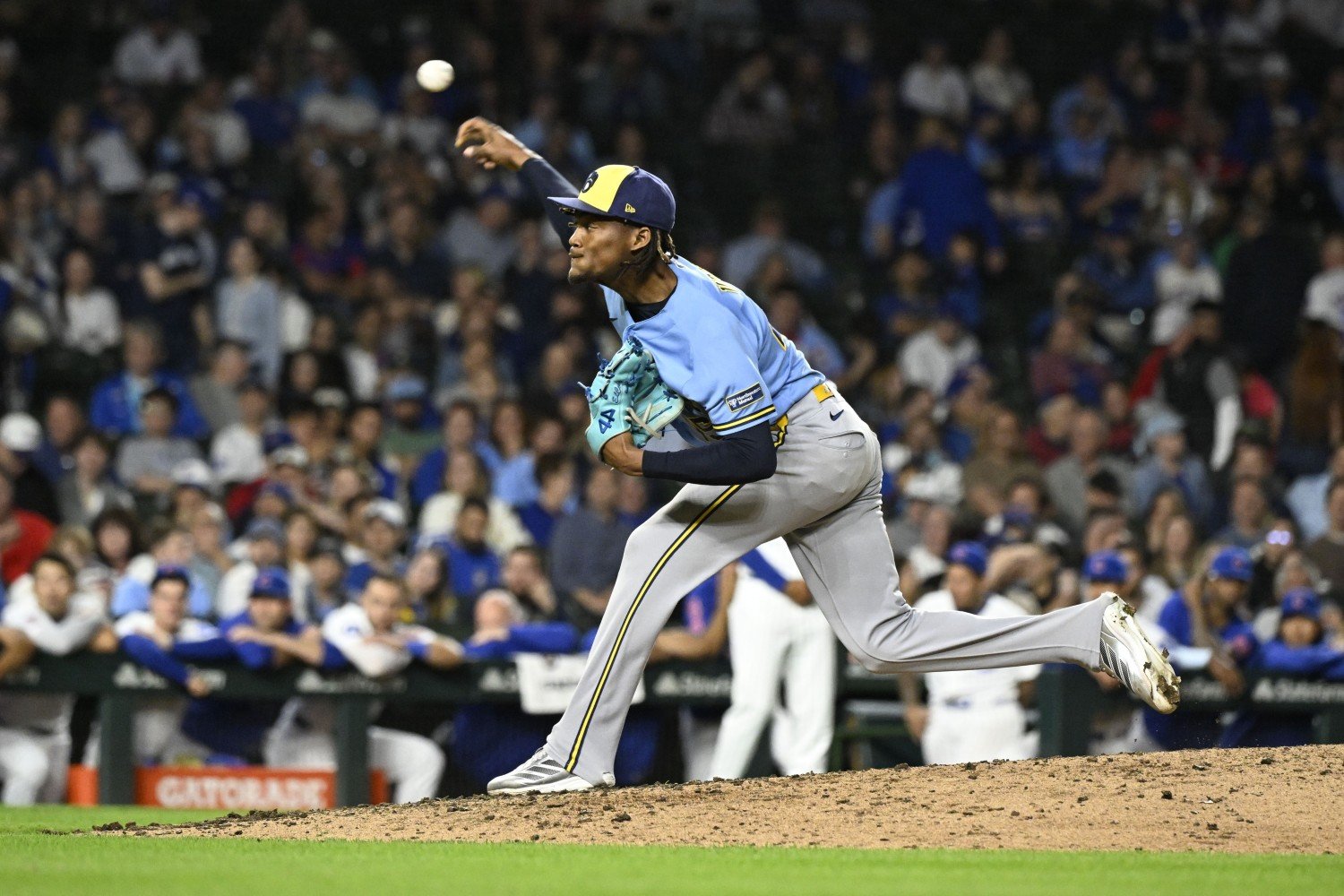 He has pitched better than his 4.42 ERA suggests, but even from a process standpoint, Abner Uribe hasn’t been the dominant late-inning force he was last season. His 3.60 FIP, 3.37 SIERA, and 92 DRA- look more like the ERA estimators of a solid middle reliever, not a high-leverage arm. His 25.3% strikeout rate is still above average, but his 22% whiff rate only ranks in the 27th percentile of qualified pitchers. All of those marks are far cries from last year, when Uribe posted a 1.67 ERA, 2.75 FIP, 2.89 SIERA, and 77 DRA- with a 30.2% strikeout rate. He induced whiffs on an excellent 32% of swings and ground balls on 54.3% of batted balls. Uribe owed much of that breakout to a more balanced pitch mix. He used his sweeping slider a career-high 46% of the time, even making it his most-used pitch to right-handed batters. According to Baseball Savant, it held opponents to .203 wOBA, yielded a 46.8% whiff rate, and was worth 7 runs. This year, Uribe has slashed his slider usage and reverted to the sinker-heavy mix that was less successful earlier in his career. With its elite velocity and late movement, Uribe’s sinker is a good fastball, but it’s not a great one. Pitch modeling metrics regard his slider as his nastiest pitch. It induces more swings and misses and weak contact than his sinker, making it an important equalizer in Uribe’s arsenal that prevents opponents from sitting on velocity. The slider hasn’t been as useful this year, however, entering the weekend with a -1 run value. That has prompted Uribe to lean more than ever on his sinker this month. Uribe’s slider hasn’t actually become a worse pitch. Last season, it had a 130 Stuff+ and -1.4 StuffPro; this year, it’s at a 127 Stuff+ and -1.3 StuffPro. The difference has been that he’s stopped throwing it competitively. After throwing it for a strike 67.5% of the time last year, Uribe has managed just a 59.4% strike rate with his slider in 2026. He’s falling behind in counts with it and failing to put hitters away, which is why it suddenly has a negative run value despite minimal damage against it. Sweeping breaking balls are useful in-zone pitches against same-handed hitters, who will struggle to stay on the pitch as it breaks away from them. Opposite-handed hitters can square them up more easily as the ball breaks back toward their barrel. Right now, too many of Uribe’s sliders are missing outside the zone to right-handers and inside the zone to lefties. Compared to last season, right-handers have looked just as feeble when swinging at Uribe’s slider, recording zero hits with a 47.6% whiff rate, but its in-zone rate has fallen from 47.1% to 28.6%. The nasty sliders that once started over the plate before sweeping out of reach are now starting on the corner and breaking into the other batter’s box, making them easier for most of those hitters to take. On the flip side, Uribe’s slider neutralized lefties last year because he threw it at or below the knees or near their back foot, where it had more perceived depth and generated more swings over the top of it. This year, he’s thrown a whopping 66.7% of his sliders to lefties in the zone, many of them around the belt. As a result, they’re slugging .615 against it with just an 11.1% whiff rate. The current version of Uribe is still a useful pitcher, but a limited one. His ground ball rate has bounced back this month, largely thanks to that sinker, but his heater does not miss enough bats or force chases outside the zone. For things to truly start clicking again, Uribe’s breaking ball must become a weapon again. His feel for that pitch could have a pronounced ripple effect on the back end of Milwaukee’s bullpen this summer.
 -
Image courtesy of © Matt Marton-Imagn Images He has pitched better than his 4.42 ERA suggests, but even from a process standpoint, Abner Uribe hasn’t been the dominant late-inning force he was last season. His 3.60 FIP, 3.37 SIERA, and 92 DRA- look more like the ERA estimators of a solid middle reliever, not a high-leverage arm. His 25.3% strikeout rate is still above average, but his 22% whiff rate only ranks in the 27th percentile of qualified pitchers. All of those marks are far cries from last year, when Uribe posted a 1.67 ERA, 2.75 FIP, 2.89 SIERA, and 77 DRA- with a 30.2% strikeout rate. He induced whiffs on an excellent 32% of swings and ground balls on 54.3% of batted balls. Uribe owed much of that breakout to a more balanced pitch mix. He used his sweeping slider a career-high 46% of the time, even making it his most-used pitch to right-handed batters. According to Baseball Savant, it held opponents to .203 wOBA, yielded a 46.8% whiff rate, and was worth 7 runs. This year, Uribe has slashed his slider usage and reverted to the sinker-heavy mix that was less successful earlier in his career. With its elite velocity and late movement, Uribe’s sinker is a good fastball, but it’s not a great one. Pitch modeling metrics regard his slider as his nastiest pitch. It induces more swings and misses and weak contact than his sinker, making it an important equalizer in Uribe’s arsenal that prevents opponents from sitting on velocity. The slider hasn’t been as useful this year, however, entering the weekend with a -1 run value. That has prompted Uribe to lean more than ever on his sinker this month. Uribe’s slider hasn’t actually become a worse pitch. Last season, it had a 130 Stuff+ and -1.4 StuffPro; this year, it’s at a 127 Stuff+ and -1.3 StuffPro. The difference has been that he’s stopped throwing it competitively. After throwing it for a strike 67.5% of the time last year, Uribe has managed just a 59.4% strike rate with his slider in 2026. He’s falling behind in counts with it and failing to put hitters away, which is why it suddenly has a negative run value despite minimal damage against it. Sweeping breaking balls are useful in-zone pitches against same-handed hitters, who will struggle to stay on the pitch as it breaks away from them. Opposite-handed hitters can square them up more easily as the ball breaks back toward their barrel. Right now, too many of Uribe’s sliders are missing outside the zone to right-handers and inside the zone to lefties. Compared to last season, right-handers have looked just as feeble when swinging at Uribe’s slider, recording zero hits with a 47.6% whiff rate, but its in-zone rate has fallen from 47.1% to 28.6%. The nasty sliders that once started over the plate before sweeping out of reach are now starting on the corner and breaking into the other batter’s box, making them easier for most of those hitters to take. On the flip side, Uribe’s slider neutralized lefties last year because he threw it at or below the knees or near their back foot, where it had more perceived depth and generated more swings over the top of it. This year, he’s thrown a whopping 66.7% of his sliders to lefties in the zone, many of them around the belt. As a result, they’re slugging .615 against it with just an 11.1% whiff rate. The current version of Uribe is still a useful pitcher, but a limited one. His ground ball rate has bounced back this month, largely thanks to that sinker, but his heater does not miss enough bats or force chases outside the zone. For things to truly start clicking again, Uribe’s breaking ball must become a weapon again. His feel for that pitch could have a pronounced ripple effect on the back end of Milwaukee’s bullpen this summer. View full article
-
Image courtesy of © Matt Marton-Imagn Images Garrett Mitchell owes many of his continued opportunities as the Brewers’ starting center fielder to his high ceiling. When he’s clicking, no position player on the 40-man roster has the potential to be a more explosive player. Part of what makes Mitchell so polarizing is that his shortcomings are glaring issues, but he’s countered some of those flaws by being elite in his areas of strength. For most of his career, that has included being an excellent defensive center fielder. Mitchell entered this season with 10 Defensive Runs Saved and a 7 Fielding Run Value in just 822 ⅓ innings, a pace that would make him one of the game’s most valuable defenders at the position over a full season. It’s been a much different story in 2026. Mitchell has been a negative up the middle, with -3 DRS and -2 FRV in just over 300 innings. Mitchell is converting fewer plays, despite having some of the best reads and athleticism of his career. His average sprint speed of 29.7 feet per second is the fastest he’s run since his debut in late 2022. According to Statcast, he’s covering 2.3 more feet with his jump (distance traveled in the correct direction within the first three seconds of a ball being hit) than the average outfielder, which is a career best. The issue hasn’t been tracking the ball. Mitchell is putting himself in positions to make just as many rangy catches as before—if not even more. However, things unravel quickly when he faces danger in the final pace or two of completing the play. Mitchell has already accumulated a laundry list of injuries by age 27. He’s finally been able to stay on the field for the most continuous stretch of his career, but has looked afraid to put himself in harm’s way. That hesitancy cropped up almost immediately during Opening Day weekend, when Mitchell made his first atypical failed attempt of the year against the Chicago White Sox. 40.mp4 Based on the trajectory of the ball and how much ground Mitchell had to cover, Statcast assigned him a 40% catch probability for this play. It was far from a routine opportunity, but it’s the kind he has historically made with ease. As he usually does, Mitchell made it to the ball, but once it appeared he might need to dive for it, he slowed down and got tangled up as he reached for the catch while trying to stay on his feet. Ironically, he could have caught this one on the run had he kept closing in at full speed, but that hesitation to lay out thwarted his attempt. Here’s a similar play from the Brewers’ last homestand against the San Diego Padres: 5_2.mp4 With just a 5% catch probability, this was a far more challenging play that required a dive to complete. The fact that Mitchell got there speaks to his athleticism and his jump on the ball. He did lay out for this one, but it was a half-hearted attempt in which he never fully left his feet. This time, the irony lay in Mitchell jamming his wrist on the awkward dive, thus injuring himself in an apparent attempt to avoid injury from a harsher landing. Mitchell’s most egregious misplays have come on fly balls taking him back near the wall, where he has frequently pulled up to avoid a hard collision. His worst non-catch of the season also came during the Padres series, when he missed a ball with a 99% catch probability. By slowing down as he neared the warning track, he forced himself to leap backward toward the ball, and it popped out of his glove. 99.mp4 He had a similar issue in Miami less than a month earlier. This time, in addition to slowing down, Mitchell turned his eyes toward the wall and braced himself before making the catch, turning a would-be flyout into a triple. As another play with just a 5% catch probability, this was a challenging one, but he had already completed the hard part of getting there. It’s an opportunity an athlete of his caliber should convert. 5.mp4 Mitchell hasn't lost the tools of an excellent center fielder, but if he keeps failing to use them, it should become a factor in how the Brewers construct their lineups. This version of Mitchell is not demonstrably better in center than Jackson Chourio, who posted -4 DRS and 1 FRV in over 700 innings there last season. Chourio started up the middle in consecutive games on Sunday and Monday, allowing Pat Murphy to start Jake Bauers, Andrew Vaughn, and Christian Yelich in the same lineup for the best version of the Brewers’ offense. Because of Mitchell’s upside, that may not become the permanent arrangement any time soon. Even if Chourio starts making more appearances in center, Mitchell will get semi-regular starts as long as he’s healthy and providing nearly average offense. But the longer Mitchell’s cautious approach leaves his defense lagging behind his ability, the less convincing the argument that he’s part of Milwaukee’s best starting nine. View full article
-
A Risk-Averse Garrett Mitchell is Not Finishing the Job in Center Field
Jack Stern posted an article in Brewers
 Garrett Mitchell owes many of his continued opportunities as the Brewers’ starting center fielder to his high ceiling. When he’s clicking, no position player on the 40-man roster has the potential to be a more explosive player. Part of what makes Mitchell so polarizing is that his shortcomings are glaring issues, but he’s countered some of those flaws by being elite in his areas of strength. For most of his career, that has included being an excellent defensive center fielder. Mitchell entered this season with 10 Defensive Runs Saved and a 7 Fielding Run Value in just 822 ⅓ innings, a pace that would make him one of the game’s most valuable defenders at the position over a full season. It’s been a much different story in 2026. Mitchell has been a negative up the middle, with -3 DRS and -2 FRV in just over 300 innings. Mitchell is converting fewer plays, despite having some of the best reads and athleticism of his career. His average sprint speed of 29.7 feet per second is the fastest he’s run since his debut in late 2022. According to Statcast, he’s covering 2.3 more feet with his jump (distance traveled in the correct direction within the first three seconds of a ball being hit) than the average outfielder, which is a career best. The issue hasn’t been tracking the ball. Mitchell is putting himself in positions to make just as many rangy catches as before—if not even more. However, things unravel quickly when he faces danger in the final pace or two of completing the play. Mitchell has already accumulated a laundry list of injuries by age 27. He’s finally been able to stay on the field for the most continuous stretch of his career, but has looked afraid to put himself in harm’s way. That hesitancy cropped up almost immediately during Opening Day weekend, when Mitchell made his first atypical failed attempt of the year against the Chicago White Sox. 40.mp4 Based on the trajectory of the ball and how much ground Mitchell had to cover, Statcast assigned him a 40% catch probability for this play. It was far from a routine opportunity, but it’s the kind he has historically made with ease. As he usually does, Mitchell made it to the ball, but once it appeared he might need to dive for it, he slowed down and got tangled up as he reached for the catch while trying to stay on his feet. Ironically, he could have caught this one on the run had he kept closing in at full speed, but that hesitation to lay out thwarted his attempt. Here’s a similar play from the Brewers’ last homestand against the San Diego Padres: 5_2.mp4 With just a 5% catch probability, this was a far more challenging play that required a dive to complete. The fact that Mitchell got there speaks to his athleticism and his jump on the ball. He did lay out for this one, but it was a half-hearted attempt in which he never fully left his feet. This time, the irony lay in Mitchell jamming his wrist on the awkward dive, thus injuring himself in an apparent attempt to avoid injury from a harsher landing. Mitchell’s most egregious misplays have come on fly balls taking him back near the wall, where he has frequently pulled up to avoid a hard collision. His worst non-catch of the season also came during the Padres series, when he missed a ball with a 99% catch probability. By slowing down as he neared the warning track, he forced himself to leap backward toward the ball, and it popped out of his glove. 99.mp4 He had a similar issue in Miami less than a month earlier. This time, in addition to slowing down, Mitchell turned his eyes toward the wall and braced himself before making the catch, turning a would-be flyout into a triple. As another play with just a 5% catch probability, this was a challenging one, but he had already completed the hard part of getting there. It’s an opportunity an athlete of his caliber should convert. 5.mp4 Mitchell hasn't lost the tools of an excellent center fielder, but if he keeps failing to use them, it should become a factor in how the Brewers construct their lineups. This version of Mitchell is not demonstrably better in center than Jackson Chourio, who posted -4 DRS and 1 FRV in over 700 innings there last season. Chourio started up the middle in consecutive games on Sunday and Monday, allowing Pat Murphy to start Jake Bauers, Andrew Vaughn, and Christian Yelich in the same lineup for the best version of the Brewers’ offense. Because of Mitchell’s upside, that may not become the permanent arrangement any time soon. Even if Chourio starts making more appearances in center, Mitchell will get semi-regular starts as long as he’s healthy and providing nearly average offense. But the longer Mitchell’s cautious approach leaves his defense lagging behind his ability, the less convincing the argument that he’s part of Milwaukee’s best starting nine.
 -
David Hamilton Hasn't (Yet) Become What the Brewers (Still) Think He Can Be
Jack Stern posted an article in Brewers
 From the moment they reacquired him from the Boston Red Sox a few weeks before spring training, the Brewers have raved about David Hamilton’s athleticism. “From an ability standpoint and his work, I couldn't ask for anything more to work with,” third base and infield coach Matt Erickson said. “I think he’s a part of this for a while.” Compared to the headline return of left-handers Kyle Harrison and Shane Drohan, Hamilton may have looked like a throw-in piece in that Boston trade—a part-time player who could replace Andruw Monasterio in a utility role. The Brewers see him as anything but an afterthought. He’s appeared in 34 of the team’s 41 games, has taken the seventh-most plate appearances despite hitting near the bottom of the order, and has recently taken much of Joey Ortiz’s playing time at shortstop against right-handed pitchers. Hamilton’s track record as a 28-year-old doesn’t point to much upside. In 668 career plate appearances, he’s hit for a 76 wRC+, 80 DRC+, and .272 xwOBA, meaning both his results and process in the box have been extremely poor. But the Brewers see a player who can move quickly and explosively. Hamilton’s average sprint speed of 29.2 feet per second ranks in the 95th percentile of runners this year. That athleticism, they believe, gives him the potential to be an elite defender at any position and hit for more pop than he’s shown so far. “He's not even scratching the surface of what he's capable of,” Murphy said, “but there are some big, big adjustments he needs to make to be the player we think he can be. And I'm sure the Red Sox saw the same thing.” So far, the Brewers have not gotten much more out of Hamilton than the Red Sox. In 118 plate appearances this year, he owns a 75 wRC+, 86 DRC+, and .269 xwOBA. Each of those numbers nearly matches what he did in Boston. Baseball Prospectus has credited him with 0 Deserved Runs Prevented at both third base and shortstop, meaning he’s been an average defender instead of a plus one. There have been two noticeable changes to Hamilton’s offense this year: he’s walking 11% of the time, and he’s leveraging his speed by bunting, leading baseball with eight bunt hits. That approach has gotten him on base more often, but it’s tanked any semblance of power in his game. Hamilton’s .327 on-base percentage is easily a career high, but he has just one extra-base hit. That walk rate might not hold up, either, as he expands the zone much more than the average hitter with two strikes. Shrinking the field with bunts and making speed his defining attribute won’t help Hamilton unlock his upside. If anything, it discourages a breakthrough. The Brewers aren’t trying to pigeonhole him into playing that style of offense, Murphy said, but for him to be a helpful piece right now, he needs to reach base with walks and singles on the ground. “If he gets to first, wow, he's dangerous,” Murphy said, alluding to Hamilton’s base-stealing ability. “So we're trying to build it from there. The swing part, the amount of impact he can have, he's got some in there. He's got some bat speed, and his hands work. He can handle different pitches. He can hit the ball hard. But that's a process, though.” Behind the scenes, the Brewers are trying to make Hamilton’s swing—most specifically, how he rotates his torso—more nuanced. He’s always been a pull-happy hitter who has hit the ball hardest when it leaks back over the middle or is low and inside. Pitchers have countered that by pitching him away, where he often fails to stay on the ball. Because of his inclination to open up and pull the inside pitch, nearly all of Hamilton’s hard-hit fly balls this year have occurred on pitches around that low-and-in pocket. The problem is that he’s doing that same thing on most pitches, regardless of location. In both clips below, you can see Hamilton’s front side fly open as he swings. On the middle-in fastball, he rips a hard fly ball to center field. On the middle-away sinker, he rolls over to second base. hamilton_swings.mp4 If you freeze the video just as he’s about to make contact, his chest is similarly open toward right field on both swings, even though they’re on opposite sides of the plate. Hamilton keeps his eye on the ball and adjusts his swing path to make contact with both pitches, but he’s not in a position to work through the pitch away because his chest is already rotating toward right field. “Your direction is here,” Murphy said, gesturing toward a hypothetical right field before pointing in the opposite direction, “and that pitch is coming from here. You’re going to pull off it. You’re going to hit around it. You’re going to smother it, when it’s closer to him. So having him understand how to get on the ball line is a really tough process.” That process has yet to bear fruit. The results have been more mixed for Hamilton’s continued work with Erickson on the left side of the infield, where he has misplayed a handful of routine opportunities. Ortiz got off to a similarly unremarkable start as a full-time shortstop last year, and it took him months to develop a more explosive first step alongside his fluid hands and body control. Hamilton is the opposite: his first step and range are elite, but he struggles with controlling that explosiveness. According to Baseball Prospectus’s Attempt Range metric, he has fielded two more balls than the average shortstop would reach, but he has completed plays at a slightly below-average rate. “His metrics are unbelievable, but controlling the baseball, throwing accurately, redirecting the ball, tags, all that stuff, he's got a ways to go,” Murphy said. “But his movement and the ground he can cover, those metrics are unbelievable.” On some occasions, Erickson said, Hamilton has been so eager to complete a play that he’s taken his eye off the ball prematurely. It caused him to miss a catch on an attempted double play turn against the Pittsburgh Pirates last month. hamilton_field_error.mp4 Other times, Hamilton has gotten stuck in his fielding position after a grounder enters his glove, prompting him to urgently fire an errant throw to make up for that lost time. That also happened multiple times in that Pittsburgh series. hamilton_throws.mp4 In each instance, Hamilton struggled with the start-and-stop rhythm of completing certain plays. At times, his raw athleticism has outpaced his tempo on the infield. “I think that's something with all infielders in general, and especially ones that are super explosive and twitchy, not to play the game too fast,” Erickson said. “You want to break down and slow down for the catch, and then kind of keep that same rhythm through the catch and through the exchange and into your throw. And I think the guys that do that are the most consistent throwers with accuracy.” After still grading as a negative defender at shortstop a few weeks ago, Hamilton’s metrics have trended positively since the calendar flipped to May. There’s still work to be done (Erickson wants to see a more consistent arm action across throws), but he’s looked more comfortable lately. “He's a versatile piece, because he can play all three infield spots, and he can play them all very well,” Erickson said. “Now we’ve just got to get him to be consistent as much as possible.” Even if the Brewers remain bullish on his ceiling, the reality is that Hamilton has not progressed enough overall as the club nears a decision point on the left side of the infield. Milwaukee shortstops have combined for a 49 wRC+ so far this year, and prospects Cooper Pratt and Jett Williams have started adapting to Triple-A pitching within the last two weeks. Ortiz is more likely to lose his roster spot to one of those two, but their arrival would push Hamilton into more of a part-time role. For now, he’ll remain in the lineup against most right-handed pitchers as the Brewers keep trying to tap into his skill set. “This is a super valuable kid, but it's got to come together,” Murphy said. “He’s got to understand exactly who he is and what he can become, and understand what adjustments he needs to make and how to do it.”
- 2 comments
-
- 3
-

-
- david hamilton
- joey ortiz
- (and 2 more)
-
Image courtesy of © Benny Sieu-Imagn Images From the moment they reacquired him from the Boston Red Sox a few weeks before spring training, the Brewers have raved about David Hamilton’s athleticism. “From an ability standpoint and his work, I couldn't ask for anything more to work with,” third base and infield coach Matt Erickson said. “I think he’s a part of this for a while.” Compared to the headline return of left-handers Kyle Harrison and Shane Drohan, Hamilton may have looked like a throw-in piece in that Boston trade—a part-time player who could replace Andruw Monasterio in a utility role. The Brewers see him as anything but an afterthought. He’s appeared in 34 of the team’s 41 games, has taken the seventh-most plate appearances despite hitting near the bottom of the order, and has recently taken much of Joey Ortiz’s playing time at shortstop against right-handed pitchers. Hamilton’s track record as a 28-year-old doesn’t point to much upside. In 668 career plate appearances, he’s hit for a 76 wRC+, 80 DRC+, and .272 xwOBA, meaning both his results and process in the box have been extremely poor. But the Brewers see a player who can move quickly and explosively. Hamilton’s average sprint speed of 29.2 feet per second ranks in the 95th percentile of runners this year. That athleticism, they believe, gives him the potential to be an elite defender at any position and hit for more pop than he’s shown so far. “He's not even scratching the surface of what he's capable of,” Murphy said, “but there are some big, big adjustments he needs to make to be the player we think he can be. And I'm sure the Red Sox saw the same thing.” So far, the Brewers have not gotten much more out of Hamilton than the Red Sox. In 118 plate appearances this year, he owns a 75 wRC+, 86 DRC+, and .269 xwOBA. Each of those numbers nearly matches what he did in Boston. Baseball Prospectus has credited him with 0 Deserved Runs Prevented at both third base and shortstop, meaning he’s been an average defender instead of a plus one. There have been two noticeable changes to Hamilton’s offense this year: he’s walking 11% of the time, and he’s leveraging his speed by bunting, leading baseball with eight bunt hits. That approach has gotten him on base more often, but it’s tanked any semblance of power in his game. Hamilton’s .327 on-base percentage is easily a career high, but he has just one extra-base hit. That walk rate might not hold up, either, as he expands the zone much more than the average hitter with two strikes. Shrinking the field with bunts and making speed his defining attribute won’t help Hamilton unlock his upside. If anything, it discourages a breakthrough. The Brewers aren’t trying to pigeonhole him into playing that style of offense, Murphy said, but for him to be a helpful piece right now, he needs to reach base with walks and singles on the ground. “If he gets to first, wow, he's dangerous,” Murphy said, alluding to Hamilton’s base-stealing ability. “So we're trying to build it from there. The swing part, the amount of impact he can have, he's got some in there. He's got some bat speed, and his hands work. He can handle different pitches. He can hit the ball hard. But that's a process, though.” Behind the scenes, the Brewers are trying to make Hamilton’s swing—most specifically, how he rotates his torso—more nuanced. He’s always been a pull-happy hitter who has hit the ball hardest when it leaks back over the middle or is low and inside. Pitchers have countered that by pitching him away, where he often fails to stay on the ball. Because of his inclination to open up and pull the inside pitch, nearly all of Hamilton’s hard-hit fly balls this year have occurred on pitches around that low-and-in pocket. The problem is that he’s doing that same thing on most pitches, regardless of location. In both clips below, you can see Hamilton’s front side fly open as he swings. On the middle-in fastball, he rips a hard fly ball to center field. On the middle-away sinker, he rolls over to second base. hamilton_swings.mp4 If you freeze the video just as he’s about to make contact, his chest is similarly open toward right field on both swings, even though they’re on opposite sides of the plate. Hamilton keeps his eye on the ball and adjusts his swing path to make contact with both pitches, but he’s not in a position to work through the pitch away because his chest is already rotating toward right field. “Your direction is here,” Murphy said, gesturing toward a hypothetical right field before pointing in the opposite direction, “and that pitch is coming from here. You’re going to pull off it. You’re going to hit around it. You’re going to smother it, when it’s closer to him. So having him understand how to get on the ball line is a really tough process.” That process has yet to bear fruit. The results have been more mixed for Hamilton’s continued work with Erickson on the left side of the infield, where he has misplayed a handful of routine opportunities. Ortiz got off to a similarly unremarkable start as a full-time shortstop last year, and it took him months to develop a more explosive first step alongside his fluid hands and body control. Hamilton is the opposite: his first step and range are elite, but he struggles with controlling that explosiveness. According to Baseball Prospectus’s Attempt Range metric, he has fielded two more balls than the average shortstop would reach, but he has completed plays at a slightly below-average rate. “His metrics are unbelievable, but controlling the baseball, throwing accurately, redirecting the ball, tags, all that stuff, he's got a ways to go,” Murphy said. “But his movement and the ground he can cover, those metrics are unbelievable.” On some occasions, Erickson said, Hamilton has been so eager to complete a play that he’s taken his eye off the ball prematurely. It caused him to miss a catch on an attempted double play turn against the Pittsburgh Pirates last month. hamilton_field_error.mp4 Other times, Hamilton has gotten stuck in his fielding position after a grounder enters his glove, prompting him to urgently fire an errant throw to make up for that lost time. That also happened multiple times in that Pittsburgh series. hamilton_throws.mp4 In each instance, Hamilton struggled with the start-and-stop rhythm of completing certain plays. At times, his raw athleticism has outpaced his tempo on the infield. “I think that's something with all infielders in general, and especially ones that are super explosive and twitchy, not to play the game too fast,” Erickson said. “You want to break down and slow down for the catch, and then kind of keep that same rhythm through the catch and through the exchange and into your throw. And I think the guys that do that are the most consistent throwers with accuracy.” After still grading as a negative defender at shortstop a few weeks ago, Hamilton’s metrics have trended positively since the calendar flipped to May. There’s still work to be done (Erickson wants to see a more consistent arm action across throws), but he’s looked more comfortable lately. “He's a versatile piece, because he can play all three infield spots, and he can play them all very well,” Erickson said. “Now we’ve just got to get him to be consistent as much as possible.” Even if the Brewers remain bullish on his ceiling, the reality is that Hamilton has not progressed enough overall as the club nears a decision point on the left side of the infield. Milwaukee shortstops have combined for a 49 wRC+ so far this year, and prospects Cooper Pratt and Jett Williams have started adapting to Triple-A pitching within the last two weeks. Ortiz is more likely to lose his roster spot to one of those two, but their arrival would push Hamilton into more of a part-time role. For now, he’ll remain in the lineup against most right-handed pitchers as the Brewers keep trying to tap into his skill set. “This is a super valuable kid, but it's got to come together,” Murphy said. “He’s got to understand exactly who he is and what he can become, and understand what adjustments he needs to make and how to do it.” View full article
-
Image courtesy of © Geoff Burke-Imagn Images When the Brewers activated Christian Yelich from the injured list on Tuesday, it was not surprising that they optioned Tyler Black back to Triple-A Nashville as the corresponding move. If anything, it was expected. Black was effectively the Yelich replacement: a left-handed-hitting DH and occasional left fielder. He was going to lose most of his at-bats with the former NL MVP back in the fold. Furthermore, despite his productive .333/.357/.481 slash line, Black was not actually having quality plate appearances or putting good swings on the ball. His .369 wOBA was nearly double his .192 xwOBA, which was so low because he struck out 25% of the time and had just a 15% hard-hit rate. Baseball Prospectus evaluated his performance less harshly but still credited him with just an 86 DRC+, meaning he deserved to perform 14% worse than the average hitter based on the process of his plate appearances and the quality of pitching he faced. Black did, however, show a change that could make him a more viable hitter down the line. He's changed his bat path this year, decreasing his swing tilt from 37 degrees in 2024 and 39 degrees in 2025 to 35 degrees this year. Pat Murphy teased that modified swing when Black was recalled, saying he and the Brewers had worked on making his bat path less choppy to help him make more consistent contact. "He had that small margin for error this way in his swing," Murphy said last month, referring to Black's inability to get his barrel to pitches at different heights in the strike zone. "We're helping him try to [get] a little more on plane a little bit. Because it's hard to hit that other way, with that 'V,' you know? A lot of guys did, but you're going to mishit a lot of balls." With a swing tilt nearing 40 degrees, Black had one of the steeper, more vertical swings in baseball. Such a swing travels downward more before working its way back up as it makes contact with the pitch. Philadelphia Phillies outfielder Brandon Marsh has a similar 37-degree swing tilt this year as a left-handed hitter. Notice how his swing path forms a "U" shape as it travels through the hitting zone. marsh.mp4 There's no one right swing path for success – every hitter is different, and there's more to a swing than just its tilt – but a naturally steeper path can often put hitters in a better position to make the best kind of contact with different pitches, provided there's some adaptability to the swing based on pitch height. Murphy himself considers more vertical swings to be the most productive. Black's bat path didn't have that "U" shape, though. Instead of traveling in an arc, his bat often came straight down and then straight up. He makes contact very deep in the hitting zone – about 21 inches toward the pitcher from his center of mass, according to Statcast. With such a steep swing, you would expect his bat to still be coming down when he makes that deep contact, producing a negative attack angle. Instead, his attack angle last season was 9 degrees, meaning his bat was already coming back up by that time. That's the choppy "V" shape Murphy is referencing. If all of that sounds like a mouthful, here's what it looked like in real life back in 2024. You can see Black chop at a fastball down the middle, with his bat quickly traveling straight down and then straight up. It was a very hittable pitch, yet he was late on it and underneath it, producing a 77.6-mph bloop single to left-center. It was a hit, but it wasn't the kind of contact any hitter would hope to make with such a fastball. black 2024.mp4 In addition to lowering his swing tilt, Black's attack angle also decreased to 5 degrees in his brief time with the Brewers this year. His swing path is still pretty steep, but it's far less choppy. You can see how it's a more normal-looking path in one of Black's few hard-hit balls this year, a fastball he pulled off the right-field wall for a double against the Arizona Diamondbacks. black 2026.mp4 It's worth noting that those two swings occurred in different situations. One was a middle fastball, and the other was closer to the outside corner. The first was also a defensive two-strike swing, while the second came in a 1-1 count, where a hitter will usually look to do more damage with an in-zone pitch. Still, those two cuts illustrate the problem with Black's previous swing and how he and the Brewers are trying to correct it. The payoff hasn't come yet, though, with Black still looking overmatched by big-league pitching. His timing was still too late during his latest stint, and he chased too much and rarely made solid contact. Those mishit balls would have eventually found more gloves. Black is best off in Nashville for now, where he'll continue getting at-bats to grow more comfortable with that revamped swing. "Tyler knows that he's good enough to play in the big leagues," Murphy said. "He knows that he's wanted, and his time will come again." View full article
-
Tyler Black Still Has Adjustments to Work Through in Triple-A
Jack Stern posted an article in Brewers
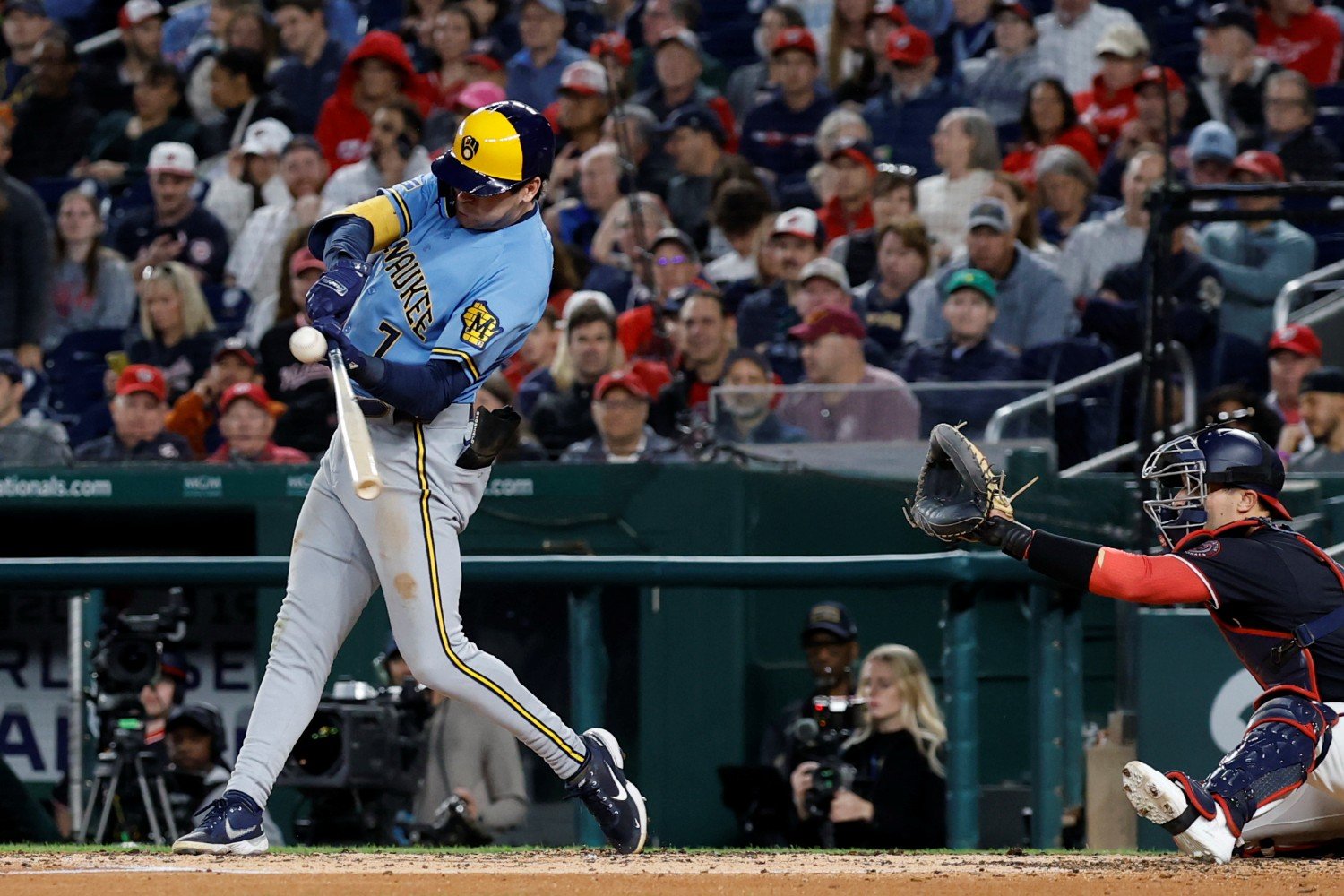 When the Brewers activated Christian Yelich from the injured list on Tuesday, it was not surprising that they optioned Tyler Black back to Triple-A Nashville as the corresponding move. If anything, it was expected. Black was effectively the Yelich replacement: a left-handed-hitting DH and occasional left fielder. He was going to lose most of his at-bats with the former NL MVP back in the fold. Furthermore, despite his productive .333/.357/.481 slash line, Black was not actually having quality plate appearances or putting good swings on the ball. His .369 wOBA was nearly double his .192 xwOBA, which was so low because he struck out 25% of the time and had just a 15% hard-hit rate. Baseball Prospectus evaluated his performance less harshly but still credited him with just an 86 DRC+, meaning he deserved to perform 14% worse than the average hitter based on the process of his plate appearances and the quality of pitching he faced. Black did, however, show a change that could make him a more viable hitter down the line. He's changed his bat path this year, decreasing his swing tilt from 37 degrees in 2024 and 39 degrees in 2025 to 35 degrees this year. Pat Murphy teased that modified swing when Black was recalled, saying he and the Brewers had worked on making his bat path less choppy to help him make more consistent contact. "He had that small margin for error this way in his swing," Murphy said last month, referring to Black's inability to get his barrel to pitches at different heights in the strike zone. "We're helping him try to [get] a little more on plane a little bit. Because it's hard to hit that other way, with that 'V,' you know? A lot of guys did, but you're going to mishit a lot of balls." With a swing tilt nearing 40 degrees, Black had one of the steeper, more vertical swings in baseball. Such a swing travels downward more before working its way back up as it makes contact with the pitch. Philadelphia Phillies outfielder Brandon Marsh has a similar 37-degree swing tilt this year as a left-handed hitter. Notice how his swing path forms a "U" shape as it travels through the hitting zone. marsh.mp4 There's no one right swing path for success – every hitter is different, and there's more to a swing than just its tilt – but a naturally steeper path can often put hitters in a better position to make the best kind of contact with different pitches, provided there's some adaptability to the swing based on pitch height. Murphy himself considers more vertical swings to be the most productive. Black's bat path didn't have that "U" shape, though. Instead of traveling in an arc, his bat often came straight down and then straight up. He makes contact very deep in the hitting zone – about 21 inches toward the pitcher from his center of mass, according to Statcast. With such a steep swing, you would expect his bat to still be coming down when he makes that deep contact, producing a negative attack angle. Instead, his attack angle last season was 9 degrees, meaning his bat was already coming back up by that time. That's the choppy "V" shape Murphy is referencing. If all of that sounds like a mouthful, here's what it looked like in real life back in 2024. You can see Black chop at a fastball down the middle, with his bat quickly traveling straight down and then straight up. It was a very hittable pitch, yet he was late on it and underneath it, producing a 77.6-mph bloop single to left-center. It was a hit, but it wasn't the kind of contact any hitter would hope to make with such a fastball. black 2024.mp4 In addition to lowering his swing tilt, Black's attack angle also decreased to 5 degrees in his brief time with the Brewers this year. His swing path is still pretty steep, but it's far less choppy. You can see how it's a more normal-looking path in one of Black's few hard-hit balls this year, a fastball he pulled off the right-field wall for a double against the Arizona Diamondbacks. black 2026.mp4 It's worth noting that those two swings occurred in different situations. One was a middle fastball, and the other was closer to the outside corner. The first was also a defensive two-strike swing, while the second came in a 1-1 count, where a hitter will usually look to do more damage with an in-zone pitch. Still, those two cuts illustrate the problem with Black's previous swing and how he and the Brewers are trying to correct it. The payoff hasn't come yet, though, with Black still looking overmatched by big-league pitching. His timing was still too late during his latest stint, and he chased too much and rarely made solid contact. Those mishit balls would have eventually found more gloves. Black is best off in Nashville for now, where he'll continue getting at-bats to grow more comfortable with that revamped swing. "Tyler knows that he's good enough to play in the big leagues," Murphy said. "He knows that he's wanted, and his time will come again."
 -
Trevor Megill is Reinventing Himself on the Fly, and it's Working
Jack Stern posted an article in Brewers
 After his struggles reached their apex in a blown save on April 14, Trevor Megill’s results have flipped for the better. Megill has allowed just one earned run in his last nine outings, picking up four holds and an extra-innings save while settling in as a productive setup man ahead of Abner Uribe. It hasn’t been a run of favorable luck, either. Megill has been legitimately dominant during this stretch, missing barrels and posting excellent strikeout and walk rates. Most of his major ERA estimators since April 16 are below 2.50. {C}%3C!%2D%2Dtd%20%7Bborder%3A%201px%20solid%20%23cccccc%3B%7Dbr%20%7Bmso-data-placement%3Asame-cell%3B%7D%2D%2D%3E--> Date BF ERA xERA FIP SIERA Hard Hit K% BB% K-BB% Through 4/14 29 14.40 7.90 4.12 5.00 52.6% 17.2% 13.8% 3.4% Since 4/16 33 1.00 1.75 1.34 2.21 35.0% 33.3% 6.1% 27.3% The turnaround has not come from Megill rediscovering the lost fastball velocity that plagued him in his first several outings. In fact, his velocity has continued to decrease ever so slightly, even at the time of year when he starts rounding into form. His heater averaged 99 mph last May, but it’s at just 96.9 mph this month. Sitting 96-to-98 now looks even more like his new normal than an early-season blip on the radar. At that velocity, Megill’s fastball remains a magnet for loud contact instead of the overpowering pitch it was when it regularly touched triple digits. It’s performed more reliably during this stretch, though, largely because Megill has used it more strategically. {C}%3C!%2D%2Dtd%20%7Bborder%3A%201px%20solid%20%23cccccc%3B%7Dbr%20%7Bmso-data-placement%3Asame-cell%3B%7D%2D%2D%3E--> Date FB MPH FB Exit Velo FB Hard Hit FB wOBA FB xwOBA FB Whiff% Through 4/14 97.5 98.7 77.8% .520 .595 16.7% Since 4/16 97.2 91.0 57.1% .299 .402 22.9% For starters, Megill has made his pitch mix far less predictable. Here’s how he attacked hitters through that blown save: Since that outing, Megill has not only decreased his overall fastball usage and thrown more curveballs, but also mixed those pitches more evenly in most count situations. It’s become harder for hitters to pick up on patterns and sit on a certain pitch. As a fireballing late-inning reliever, Megill has never needed to be a command pitcher. His breakout with the Brewers stemmed mostly from throwing more pitches in the strike zone, not locating them in perfect spots. With reduced velocity, his old approach of trying to throw every pitch down the middle—knowing his fastball would stay true through the zone, while his curveball would drop below the knees—is no longer viable. Instead, Megill appears to be targeting more specific locations when playing his fastball and curve (which is essentially a short, tight gyrospin slider at this point) off one another. In those early weeks of the season, his command was sporadic, but the middle of the zone still looked like his focal point. Lately, his location has looked more deliberate. Megill is keeping his fastball around the top of the zone to righties, allowing him to land more in-zone curveballs out of the same tunnel for takes and weak contact. Against lefties, he’s setting up chases on back-foot breaking balls with low fastballs shaded inside. In addition to throwing more high fastballs, Megill is also backspinning them a bit more, and his release height is slightly higher. Those changes have increased the carry on his heater, improving its induced vertical break from 19.1 inches to 20 inches during this stretch. Small improvements like that can be the difference between a barreled ball and a swing slightly underneath his fastball. Without its best velocity, Megill needed new strategies to keep hitters from timing it up. He’s made some impressive progress on the fly in response to his struggles, allowing him to remain a key piece in the Brewers’ bullpen—for now.
 -
Image courtesy of © Sam Navarro-Imagn Images After his struggles reached their apex in a blown save on April 14, Trevor Megill’s results have flipped for the better. Megill has allowed just one earned run in his last nine outings, picking up four holds and an extra-innings save while settling in as a productive setup man ahead of Abner Uribe. It hasn’t been a run of favorable luck, either. Megill has been legitimately dominant during this stretch, missing barrels and posting excellent strikeout and walk rates. Most of his major ERA estimators since April 16 are below 2.50. {C}%3C!%2D%2Dtd%20%7Bborder%3A%201px%20solid%20%23cccccc%3B%7Dbr%20%7Bmso-data-placement%3Asame-cell%3B%7D%2D%2D%3E--> Date BF ERA xERA FIP SIERA Hard Hit K% BB% K-BB% Through 4/14 29 14.40 7.90 4.12 5.00 52.6% 17.2% 13.8% 3.4% Since 4/16 33 1.00 1.75 1.34 2.21 35.0% 33.3% 6.1% 27.3% The turnaround has not come from Megill rediscovering the lost fastball velocity that plagued him in his first several outings. In fact, his velocity has continued to decrease ever so slightly, even at the time of year when he starts rounding into form. His heater averaged 99 mph last May, but it’s at just 96.9 mph this month. Sitting 96-to-98 now looks even more like his new normal than an early-season blip on the radar. At that velocity, Megill’s fastball remains a magnet for loud contact instead of the overpowering pitch it was when it regularly touched triple digits. It’s performed more reliably during this stretch, though, largely because Megill has used it more strategically. {C}%3C!%2D%2Dtd%20%7Bborder%3A%201px%20solid%20%23cccccc%3B%7Dbr%20%7Bmso-data-placement%3Asame-cell%3B%7D%2D%2D%3E--> Date FB MPH FB Exit Velo FB Hard Hit FB wOBA FB xwOBA FB Whiff% Through 4/14 97.5 98.7 77.8% .520 .595 16.7% Since 4/16 97.2 91.0 57.1% .299 .402 22.9% For starters, Megill has made his pitch mix far less predictable. Here’s how he attacked hitters through that blown save: Since that outing, Megill has not only decreased his overall fastball usage and thrown more curveballs, but also mixed those pitches more evenly in most count situations. It’s become harder for hitters to pick up on patterns and sit on a certain pitch. As a fireballing late-inning reliever, Megill has never needed to be a command pitcher. His breakout with the Brewers stemmed mostly from throwing more pitches in the strike zone, not locating them in perfect spots. With reduced velocity, his old approach of trying to throw every pitch down the middle—knowing his fastball would stay true through the zone, while his curveball would drop below the knees—is no longer viable. Instead, Megill appears to be targeting more specific locations when playing his fastball and curve (which is essentially a short, tight gyrospin slider at this point) off one another. In those early weeks of the season, his command was sporadic, but the middle of the zone still looked like his focal point. Lately, his location has looked more deliberate. Megill is keeping his fastball around the top of the zone to righties, allowing him to land more in-zone curveballs out of the same tunnel for takes and weak contact. Against lefties, he’s setting up chases on back-foot breaking balls with low fastballs shaded inside. In addition to throwing more high fastballs, Megill is also backspinning them a bit more, and his release height is slightly higher. Those changes have increased the carry on his heater, improving its induced vertical break from 19.1 inches to 20 inches during this stretch. Small improvements like that can be the difference between a barreled ball and a swing slightly underneath his fastball. Without its best velocity, Megill needed new strategies to keep hitters from timing it up. He’s made some impressive progress on the fly in response to his struggles, allowing him to remain a key piece in the Brewers’ bullpen—for now. View full article
-
Image courtesy of © Jeff Hanisch-Imagn Images After taking a no-hitter into the sixth inning against the Washington Nationals last week before a cramp ended his night early, Jacob Misiorowski's follow-up start was arguably more dominant. The right-hander held the New York Yankees -- who entered Friday as the third-best offense in baseball, by measure of wRC+ -- to two hits and two walks over six scoreless innings, striking out 11. Throughout the night, he shattered records on the radar gun. In the first inning, Misiorowski threw the five fastest pitches thrown by a starting pitcher in the pitch-tracking era (which began in 2008), hitting at least 103 mph seven times. He fell one strike short of opening his outing with an immaculate inning when his ninth pitch was a ball just below the zone to Aaron Judge. "I had no clue," Misiorowski said postgame. "I got told in the dugout. I went back and looked and thought it was close, but yeah." Misiorowski didn't sit 103 the entire night, but he held triple-digit velocity throughout, averaging north of 100 mph in every inning but the fourth. In the sixth, his final fastball of the night and 94th pitch overall was 102.7 mph. "Never seen that," said Shane Drohan, who picked up his first big-league save with three innings of relief behind Misiorowski. "That was a first." "I've had games in the past where you get that sudden burst of adrenaline in the fifth or sixth somewhere, and you find it back," Misiorowski said. "But this was a first for the big leagues." Misiorowski leaned heavily on that signature fastball, throwing it 60% of the time and recording seven of his strikeouts with it. Sitting at 101.1 mph, it was the highest recorded average fastball velocity (four-seamers and two-seamers) in any outing of at least 90 pitches. It was actually the third time he's set that record in his last four starts. Misiorowski's start against the Pittsburgh Pirates on April 25 (100.5 mph) ranks second on that list, and his start before that on April 19 (99.7 mph) is third. As the weather has warmed up, so has Misiorowski's velocity. More impressively, he's maintaining it deeper into games, a product of the lanky 24-year-old adding strength and learning to better use his body since debuting in the big leagues last summer. "If you look at his legs and you look at his body, he's working," Pat Murphy said. "He's got guys like [Brandon Woodruff], our strength staff, they're showing him, 'Look, man, this is how you've got to maintain. You want to be a major-league pitcher, you've got to work in between those five days.' And he's in there working." In his current form, Misiorowski could establish himself as the hardest-throwing starting pitcher that baseball has ever reliably documented. His average fastball velocity of 99.7 mph would be the highest of any qualified starting pitcher season in the pitch-tracking era, a full tick above Jacob deGrom's 98.6-mph average in 2020 and Paul Skenes's 98.2-mph mark last year. A pitcher's best velocity and command usually go hand in hand. When his body is moving most effectively, he's putting himself in the best position to generate energy at release and throw the ball accurately. That's been the case for Misiorowski. His fastball averaged 98.5 mph through his first four starts, and he threw just 45.2% of them in the zone. In his last four, his fastball has averaged 100.5 mph with a 56.1% in-zone rate. In those outings, he's cut his walk rate to 8.9% while striking out 41.6% of batters faced. "It's not just velo," Murphy said. "There's a lot more to it." That has included Misiorowski's poise on the mound and his handling of physical and mental adversity. Some of his outings as a rookie (and a couple last month) were derailed by one rough inning or fatigue near the end of starts. On Friday, he remained sharp through a long break during a four-run second inning for the Brewers' offense and an injury delay in the fourth for Brandon Lockridge, who suffered a right knee laceration in a collision with the left-field wall. Misiorowski still looked strong as he neared 100 pitches in the sixth. "You saw it in Boston, his legs got really tired," Murphy said. "His legs were tired today, and he said that. He said, 'Hey, I'm not done, but my legs are getting tired.' So with that, he maintained his composure and didn't walk people, or whatever. He got right back on the horse." Misiorowski is breaking out. His stuff is better than ever. His control is better than ever. His mound presence is improving. He leads baseball in strikeouts. Misiorowski quickly put himself on baseball's radar last season, but his two latest outings checked every box of a pitcher who has arrived as one of the game's elite starters. "I think he's learning day in and day out what it takes to be a big-time guy," Murphy said. View full article
-
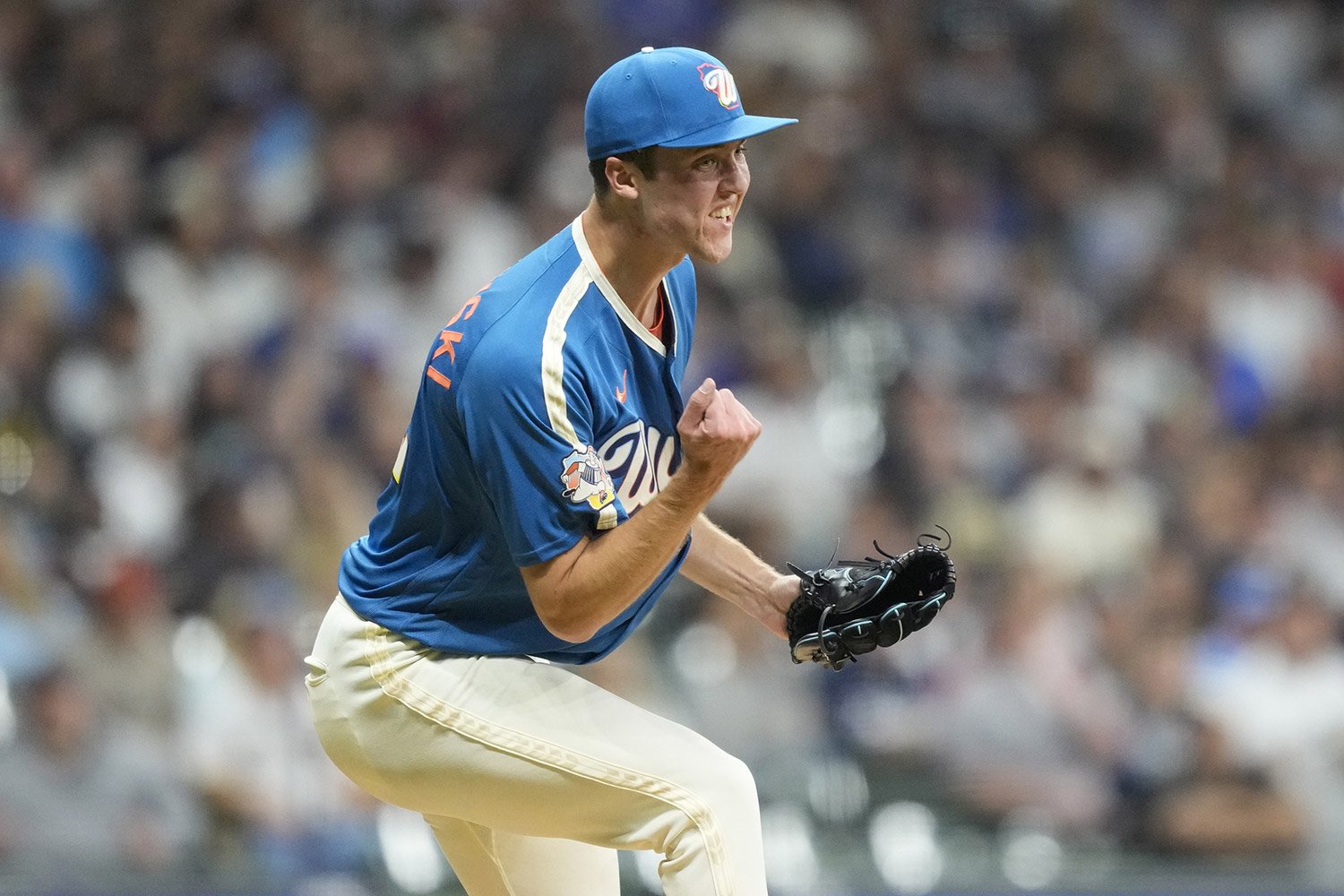 After taking a no-hitter into the sixth inning against the Washington Nationals last week before a cramp ended his night early, Jacob Misiorowski's follow-up start was arguably more dominant. The right-hander held the New York Yankees -- who entered Friday as the third-best offense in baseball, by measure of wRC+ -- to two hits and two walks over six scoreless innings, striking out 11. Throughout the night, he shattered records on the radar gun. In the first inning, Misiorowski threw the five fastest pitches thrown by a starting pitcher in the pitch-tracking era (which began in 2008), hitting at least 103 mph seven times. He fell one strike short of opening his outing with an immaculate inning when his ninth pitch was a ball just below the zone to Aaron Judge. "I had no clue," Misiorowski said postgame. "I got told in the dugout. I went back and looked and thought it was close, but yeah." Misiorowski didn't sit 103 the entire night, but he held triple-digit velocity throughout, averaging north of 100 mph in every inning but the fourth. In the sixth, his final fastball of the night and 94th pitch overall was 102.7 mph. "Never seen that," said Shane Drohan, who picked up his first big-league save with three innings of relief behind Misiorowski. "That was a first." "I've had games in the past where you get that sudden burst of adrenaline in the fifth or sixth somewhere, and you find it back," Misiorowski said. "But this was a first for the big leagues." Misiorowski leaned heavily on that signature fastball, throwing it 60% of the time and recording seven of his strikeouts with it. Sitting at 101.1 mph, it was the highest recorded average fastball velocity (four-seamers and two-seamers) in any outing of at least 90 pitches. It was actually the third time he's set that record in his last four starts. Misiorowski's start against the Pittsburgh Pirates on April 25 (100.5 mph) ranks second on that list, and his start before that on April 19 (99.7 mph) is third. As the weather has warmed up, so has Misiorowski's velocity. More impressively, he's maintaining it deeper into games, a product of the lanky 24-year-old adding strength and learning to better use his body since debuting in the big leagues last summer. "If you look at his legs and you look at his body, he's working," Pat Murphy said. "He's got guys like [Brandon Woodruff], our strength staff, they're showing him, 'Look, man, this is how you've got to maintain. You want to be a major-league pitcher, you've got to work in between those five days.' And he's in there working." In his current form, Misiorowski could establish himself as the hardest-throwing starting pitcher that baseball has ever reliably documented. His average fastball velocity of 99.7 mph would be the highest of any qualified starting pitcher season in the pitch-tracking era, a full tick above Jacob deGrom's 98.6-mph average in 2020 and Paul Skenes's 98.2-mph mark last year. A pitcher's best velocity and command usually go hand in hand. When his body is moving most effectively, he's putting himself in the best position to generate energy at release and throw the ball accurately. That's been the case for Misiorowski. His fastball averaged 98.5 mph through his first four starts, and he threw just 45.2% of them in the zone. In his last four, his fastball has averaged 100.5 mph with a 56.1% in-zone rate. In those outings, he's cut his walk rate to 8.9% while striking out 41.6% of batters faced. "It's not just velo," Murphy said. "There's a lot more to it." That has included Misiorowski's poise on the mound and his handling of physical and mental adversity. Some of his outings as a rookie (and a couple last month) were derailed by one rough inning or fatigue near the end of starts. On Friday, he remained sharp through a long break during a four-run second inning for the Brewers' offense and an injury delay in the fourth for Brandon Lockridge, who suffered a right knee laceration in a collision with the left-field wall. Misiorowski still looked strong as he neared 100 pitches in the sixth. "You saw it in Boston, his legs got really tired," Murphy said. "His legs were tired today, and he said that. He said, 'Hey, I'm not done, but my legs are getting tired.' So with that, he maintained his composure and didn't walk people, or whatever. He got right back on the horse." Misiorowski is breaking out. His stuff is better than ever. His control is better than ever. His mound presence is improving. He leads baseball in strikeouts. Misiorowski quickly put himself on baseball's radar last season, but his two latest outings checked every box of a pitcher who has arrived as one of the game's elite starters. "I think he's learning day in and day out what it takes to be a big-time guy," Murphy said.
 -
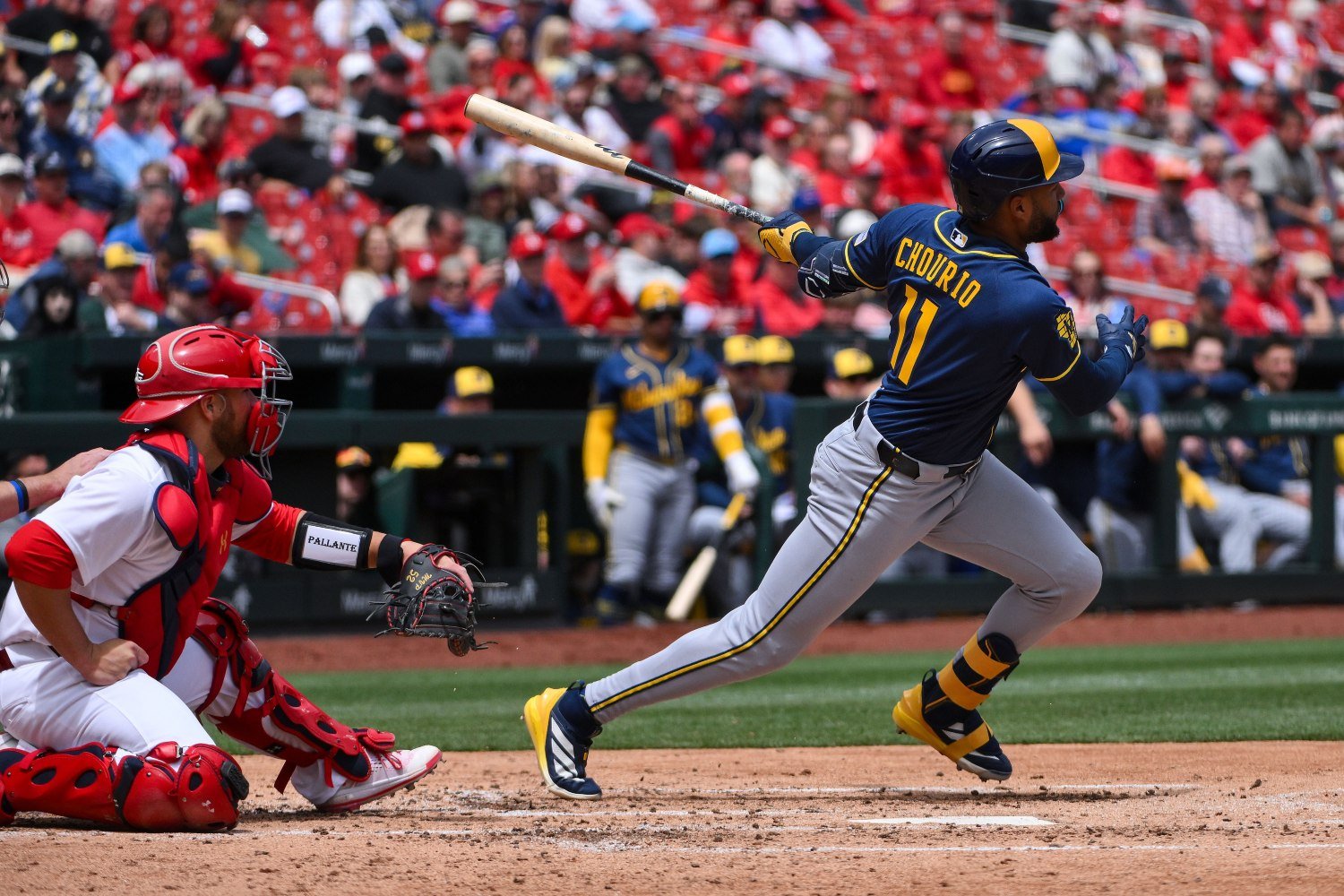 Results alone made it clear that the Brewers were missing Jackson Chourio and Andrew Vaughn. Through May 3, Milwaukee’s offense posted a collective 96 wRC+, which ranked 18th in baseball. Their .354 slugging percentage ranked 28th. Both hitters quickly helped in that regard upon returning from the injured list in St. Louis on Monday. In two games, Chourio has gone 6-for-9 with three doubles, while Vaughn launched his first home run of the season on Wednesday afternoon. Beyond their individual results lies the pair’s larger impact on the Brewers’ offensive identity. With Chourio and Vaughn sidelined, their lineup made do with an even more extreme version of the scrappy small-ball approach that has defined them during the Pat Murphy era. According to Baseball Savant, last season’s Brewers had baseball’s fourth-highest ground ball rate and laid down the second-most bunts. Without Chourio and Vaughn (who was only active for four plate appearances on Opening Day), they were the only team with a ground ball rate over 50%, the league’s highest by nearly four percentage points. They also bunted four more times than any other team. Through a combination of fortunate sequencing and timely, well-executed small ball, the Brewers have gotten more mileage from that approach than many might expect. Despite that below-average wRC+, they were eighth in runs scored without Chourio and Vaughn. It would always be challenging to successfully ride that style of play through a 162-game season, though, so regaining those two hitters and their more powerful batted-ball profiles was a welcome change. Chourio’s career ground-ball rate is 45.1%, and Vaughn’s is 43.1%. In addition to supplying more line drives and fly balls, the two bring something else the lineup was lacking more generally: hard-hit balls. Without them, the Brewers were 24th in hard-hit rate. While Chourio and Vaughn’s contact quality is closer to good than great, their respective hard-hit rates ranked in the 62nd and 84th percentiles of hitters last season. The aggressive Chourio also brings a damage-hunting approach to a lineup that once again has baseball’s lowest swing rate. Blake Perkins, Luis Matos, Greg Jones, and Tyler Black filled most of the playing time while Chourio and Vaughn were on the shelf. In 118 combined plate appearances, they combined to hit eight balls with an exit velocity of at least 100 mph. In 19 plate appearances, Chourio and Vaughn have hit nine. With two of their heavier hitters in tow, the Brewers’ lineup now comes together more cohesively. Their presence takes pressure off Brice Turang as one of the few remaining power bats in the order. Black, Jake Bauers, Sal Frelick, and Garrett Mitchell need not hit in as many unfavorable left-on-left matchups and can return to roles better suited to their skill sets. Murphy won’t be forced to sacrifice flexibility with late-game substitutions by starting backup catcher Gary Sánchez as the DH. As encouraging as the early results were, the bigger-picture impact makes Chourio and Vaughn’s returns most promising.
 -
Image courtesy of © Jeff Curry-Imagn Images Results alone made it clear that the Brewers were missing Jackson Chourio and Andrew Vaughn. Through May 3, Milwaukee’s offense posted a collective 96 wRC+, which ranked 18th in baseball. Their .354 slugging percentage ranked 28th. Both hitters quickly helped in that regard upon returning from the injured list in St. Louis on Monday. In two games, Chourio has gone 6-for-9 with three doubles, while Vaughn launched his first home run of the season on Wednesday afternoon. Beyond their individual results lies the pair’s larger impact on the Brewers’ offensive identity. With Chourio and Vaughn sidelined, their lineup made do with an even more extreme version of the scrappy small-ball approach that has defined them during the Pat Murphy era. According to Baseball Savant, last season’s Brewers had baseball’s fourth-highest ground ball rate and laid down the second-most bunts. Without Chourio and Vaughn (who was only active for four plate appearances on Opening Day), they were the only team with a ground ball rate over 50%, the league’s highest by nearly four percentage points. They also bunted four more times than any other team. Through a combination of fortunate sequencing and timely, well-executed small ball, the Brewers have gotten more mileage from that approach than many might expect. Despite that below-average wRC+, they were eighth in runs scored without Chourio and Vaughn. It would always be challenging to successfully ride that style of play through a 162-game season, though, so regaining those two hitters and their more powerful batted-ball profiles was a welcome change. Chourio’s career ground-ball rate is 45.1%, and Vaughn’s is 43.1%. In addition to supplying more line drives and fly balls, the two bring something else the lineup was lacking more generally: hard-hit balls. Without them, the Brewers were 24th in hard-hit rate. While Chourio and Vaughn’s contact quality is closer to good than great, their respective hard-hit rates ranked in the 62nd and 84th percentiles of hitters last season. The aggressive Chourio also brings a damage-hunting approach to a lineup that once again has baseball’s lowest swing rate. Blake Perkins, Luis Matos, Greg Jones, and Tyler Black filled most of the playing time while Chourio and Vaughn were on the shelf. In 118 combined plate appearances, they combined to hit eight balls with an exit velocity of at least 100 mph. In 19 plate appearances, Chourio and Vaughn have hit nine. With two of their heavier hitters in tow, the Brewers’ lineup now comes together more cohesively. Their presence takes pressure off Brice Turang as one of the few remaining power bats in the order. Black, Jake Bauers, Sal Frelick, and Garrett Mitchell need not hit in as many unfavorable left-on-left matchups and can return to roles better suited to their skill sets. Murphy won’t be forced to sacrifice flexibility with late-game substitutions by starting backup catcher Gary Sánchez as the DH. As encouraging as the early results were, the bigger-picture impact makes Chourio and Vaughn’s returns most promising. View full article