



Jack Stern
-
Posts
764 -
Joined
-
Last visited
-
Days Won
2
Content Type
Profiles
Forums
Blogs
Events
News
2026 Milwaukee Brewers Top Prospects Ranking
Milwaukee Brewers Videos
2022 Milwaukee Brewers Draft Picks
Milwaukee Brewers Free Agent & Trade Rumors, Notes, & Tidbits
Guides & Resources
2023 Milwaukee Brewers Draft Picks
2024 Milwaukee Brewers Draft Picks
The Milwaukee Brewers Players Project
2025 Milwaukee Brewers Draft Pick Tracker
2026 Milwaukee Brewers Draft Tracker: Picks & Bonuses
Store
Downloads
Gallery
Everything posted by Jack Stern
-
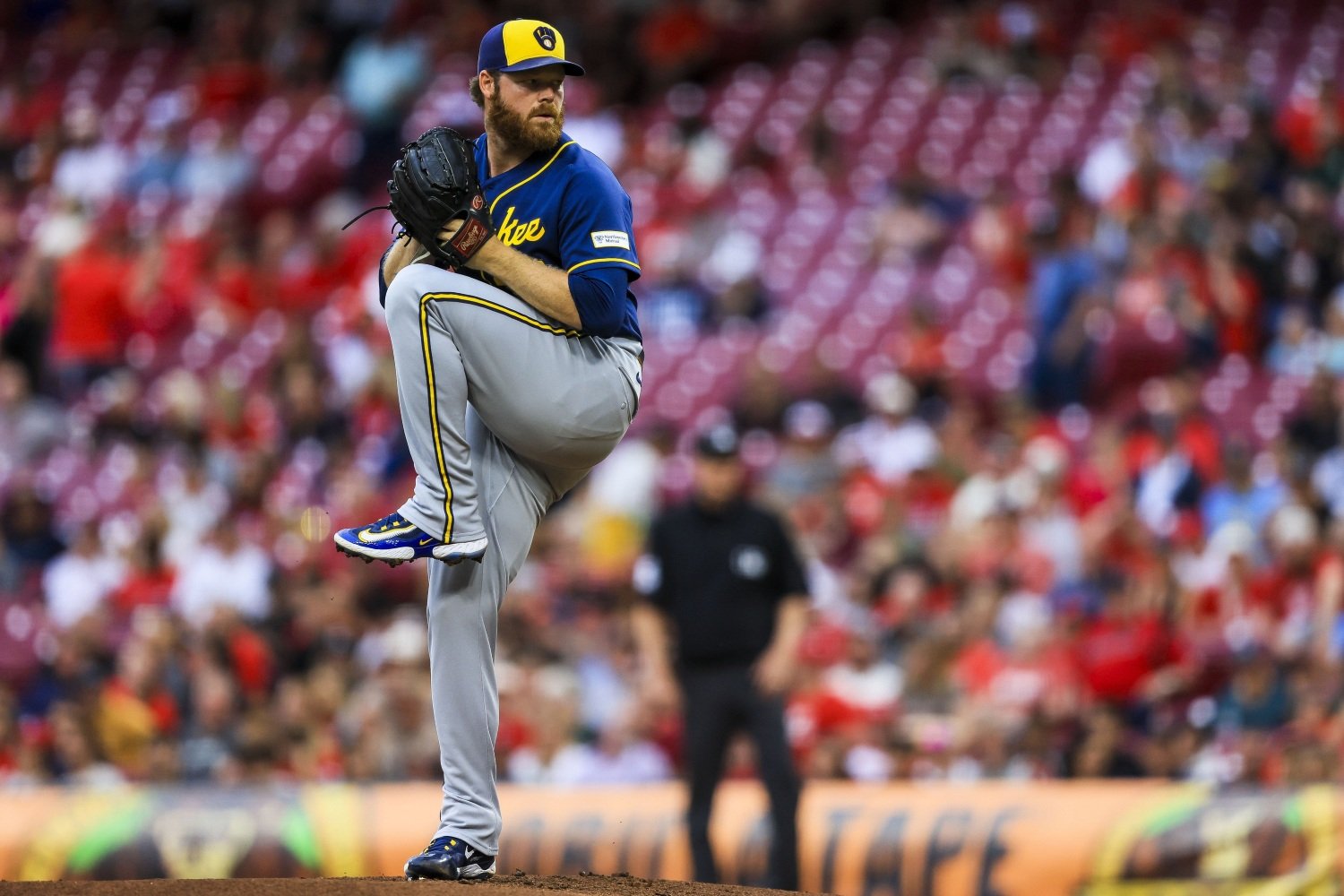
Image courtesy of © Michael McLoone-Imagn Images Nearly every pitcher will say that above all else, their objective on the mound is to compete. Each individual is wired differently, though. Some can maintain that competitive focus while thinking with precise detail about pitch sequencing and strategy. Some can diagnose and correct mechanical problems in the middle of the game. Others function best when they block out all of the noise and simply throw with conviction. Chad Patrick leans toward that approach. "As far as being on the mound, I try not to think about those things," Patrick said. "I think this game is based off of confidence, and it's a mental game. If I'm not out there thinking I'm good enough to be out there, then I shouldn't be out there." That mindset has shaped how Patrick's coaches present information to him and how they evaluate his performance. He needs space to do his thing. "Chad is a feel guy," pitching coach Chris Hook said in Cincinnati last week. "I think you could look into him every time, and he's a little bit different. I can't cage that. He flows. He wants to go." In a data-driven era of player development, pitching has become more of a science than ever. But in many ways, it's also still an art, and Patrick approaches it as such. Like a creator, his work is often driven by what he's feeling in that moment. That's why the brightest lights—the situations where the competitive juices flow the strongest—have often unleashed the best version of Patrick's stuff. "He's an artist," Hook said. "He's got a nice little paintbrush, but he's got to be in position to use it." Patrick's cutter has always been a unique pitch capable of special brushstrokes, and he should now have a better mastery of his canvas than he did early in the season. After a couple of tweaks since his move to the bullpen, his stuff is the best it's been all year. The Brewers want all of their pitchers to move quickly and repeatably. Patrick was doing neither early in the year as a starter, when he pitched out of the windup with the bases empty. As a reliever, Patrick has pitched exclusively out of the stretch, and he's moving more explosively, with a much quicker time to the plate. patrick mechanics.mp4 "He's ready to throw the baseball more often," Hook said. "I like him out of the stretch. I think it just takes the thinking out of it. I mean, we're seeing it all over baseball." "I think it does simplify a lot of different things, a lot of moving pieces," Patrick said. "Like, my windup's a little unconventional. It's a step forward, a rock back, my foot slides a little bit. So I kind of [have] to gather myself over the rubber better, whereas in the stretch I'm already in that position of being successful." By pitching in shorter stints and moving faster down the mound, Patrick has increased his velocity. His four-seamer and two-seamer averaged 94.2 MPH as a starter, but they've averaged 95.8 MPH since his last traditional start on May 4. Finding the best version of Patrick's cutter (or, more accurately, his two cutters) has been an ongoing process. He still manipulates it between a shorter version for back-door called strikes to left-handed hitters and a longer version to jam them or get swings and misses off the outside corner against righties. This spring, he temporarily switched to a four-seam cutter grip, and it often backed up, with slight arm-side movement rather than true cut. In late April, Patrick revived his normal cutter, a sweeper grip that has more velocity and carry than a breaking pitch due to how his long fingers spin the ball. That restored some of the glove-side movement, but the rest of it returned more consistently after a mechanical tweak. Patrick didn't just need space mentally. He literally needed more physical space between his head and his right hand in his delivery. "It's probably not a recommendation we talk about for guys, to say, 'Let's keep your head away from your hand,'" said pitching coordinator Jim Henderson. "He's just kind of a unique cat with that." Patrick throws his best cutters when his hand can drive through the pitch along the outside of the baseball and spin it on the proper axis. Creating space between his head and his hand lowers his arm slot slightly, putting him in the best position to execute his cutter. He was in that spot late last year, but this spring, his hand was getting stuck in that higher slot. Because he wasn't releasing the ball on time at foot strike (the moment a pitcher's front foot hits the ground), Patrick was yanking too many cutters and throwing them with too much backspin. "Sweeper guys have to kind of have some freedom," Henderson said. "He can't be tight with a curveball kind of arm angle or arm slot. You kind of have to have some freedom with it. When he gets [his arm] a little bit closer to his head on his cutter, we just notice that there's not as great movement." With the adjustment, Patrick's stride has become slightly more cross-fire toward home plate, and his arm angle has kept dropping. His slot is now comparable to last September, when he began a dominant stretch of relief pitching that extended into the postseason. To confirm that Patrick is working through the ball properly, the Brewers monitor his horizontal release point. When he throws his cutter, Hook wants to see him release the ball about 1.5 feet from the center of the rubber toward the third-base side. Since May 22, Patrick's average cutter release point is -1.4 feet. Before that, it was -1.2 feet. "I think his release side got a little close to his head early on, and as part of it, there just was no hip-shoulder separation at all," Hook said. "It was just like he was a one-piece mover, and when you're one-piece, and you're kind of stuck, and you're close to your head, he just couldn't get his hand through the ball the way he wanted." Since May 22, most of Patrick's cutters have had true glove-side movement. The lower arm slot and synced-up mechanics have also turned his two-seamer into more of a true sinker, with less carry and more depth. "Two-seams, you have to drive through this ball," Henderson said. "If you leak front side early, or you lose your lower half, you're not gonna be able to hold onto this. You'll just be on the side of the ball, and it would be more [running, not sinking]. So just to be able to get a little bit more on top of the baseball and making sure the front side is strong is going to give you a better sinker, in my opinion." Better velocity and better movement sound nice on paper, but Patrick has found himself weathering storms throughout the last three weeks. Since June 10, he's pitched to a 9.95 ERA, 7.07 xERA, and 7.45 FIP. Free bases and home runs have been the problems, as Patrick has issued six walks and allowed five home runs while facing 60 batters during that time. Patrick's stuff has continued to play well against right-handers. Most of the damage has come against lefties, who have pulverized his cutter. He must jam them with the pitch for it to miss barrels, and he's left more of them down the middle lately. In his manager's eyes, the tone of Patrick's art changed. "He's a great competitor, but he's also very critical of himself, and he's very emotional," Pat Murphy said. "He's very anxiety-ridden, and things easily bother him. We got to get him over that." Patrick may have turned a corner this week, logging scoreless multi-inning outings with no walks on consecutive nights. He felt he was moving too fast in some of his recent appearances and said he found a way to move quickly while still being in control of his body. That's not something he wants to think about on the mound, though. "It's not really physical," Patrick said. "It comes down to competing." As their bullpen searches for consistency behind Trevor Megill, Abner Uribe, and Aaron Ashby, the Brewers need big innings from Patrick. He's been closer to figuring things out than it seemed for most of June. The artist just needs space to work. "I still consider him a young major leaguer," Hook said. "He's still figuring out what he needs to do. He's such a feel guy, so we're kind of always balancing all of those things." View full article
-
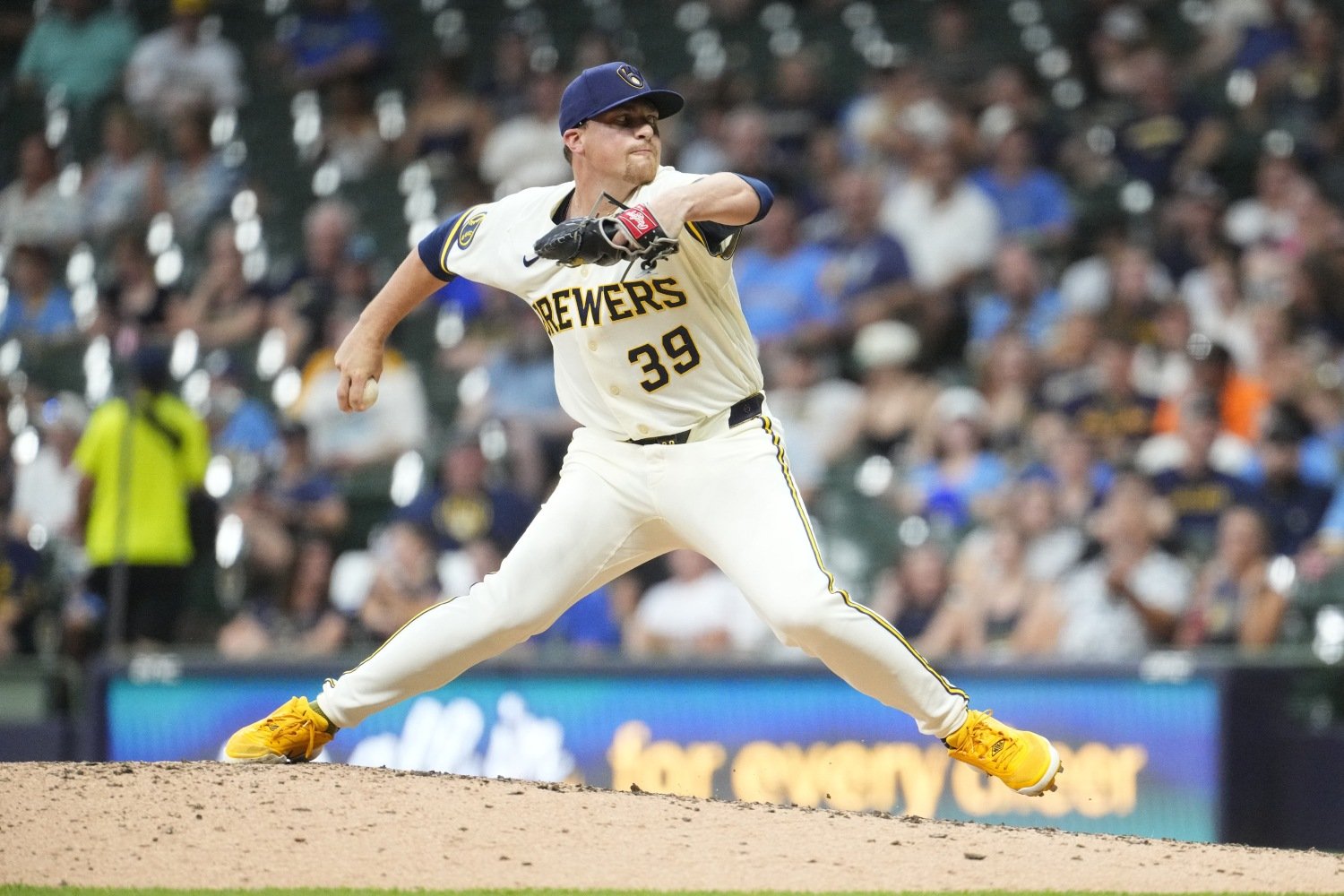 Nearly every pitcher will say that above all else, their objective on the mound is to compete. Each individual is wired differently, though. Some can maintain that competitive focus while thinking with precise detail about pitch sequencing and strategy. Some can diagnose and correct mechanical problems in the middle of the game. Others function best when they block out all of the noise and simply throw with conviction. Chad Patrick leans toward that approach. "As far as being on the mound, I try not to think about those things," Patrick said. "I think this game is based off of confidence, and it's a mental game. If I'm not out there thinking I'm good enough to be out there, then I shouldn't be out there." That mindset has shaped how Patrick's coaches present information to him and how they evaluate his performance. He needs space to do his thing. "Chad is a feel guy," pitching coach Chris Hook said in Cincinnati last week. "I think you could look into him every time, and he's a little bit different. I can't cage that. He flows. He wants to go." In a data-driven era of player development, pitching has become more of a science than ever. But in many ways, it's also still an art, and Patrick approaches it as such. Like a creator, his work is often driven by what he's feeling in that moment. That's why the brightest lights—the situations where the competitive juices flow the strongest—have often unleashed the best version of Patrick's stuff. "He's an artist," Hook said. "He's got a nice little paintbrush, but he's got to be in position to use it." Patrick's cutter has always been a unique pitch capable of special brushstrokes, and he should now have a better mastery of his canvas than he did early in the season. After a couple of tweaks since his move to the bullpen, his stuff is the best it's been all year. The Brewers want all of their pitchers to move quickly and repeatably. Patrick was doing neither early in the year as a starter, when he pitched out of the windup with the bases empty. As a reliever, Patrick has pitched exclusively out of the stretch, and he's moving more explosively, with a much quicker time to the plate. patrick mechanics.mp4 "He's ready to throw the baseball more often," Hook said. "I like him out of the stretch. I think it just takes the thinking out of it. I mean, we're seeing it all over baseball." "I think it does simplify a lot of different things, a lot of moving pieces," Patrick said. "Like, my windup's a little unconventional. It's a step forward, a rock back, my foot slides a little bit. So I kind of [have] to gather myself over the rubber better, whereas in the stretch I'm already in that position of being successful." By pitching in shorter stints and moving faster down the mound, Patrick has increased his velocity. His four-seamer and two-seamer averaged 94.2 MPH as a starter, but they've averaged 95.8 MPH since his last traditional start on May 4. Finding the best version of Patrick's cutter (or, more accurately, his two cutters) has been an ongoing process. He still manipulates it between a shorter version for back-door called strikes to left-handed hitters and a longer version to jam them or get swings and misses off the outside corner against righties. This spring, he temporarily switched to a four-seam cutter grip, and it often backed up, with slight arm-side movement rather than true cut. In late April, Patrick revived his normal cutter, a sweeper grip that has more velocity and carry than a breaking pitch due to how his long fingers spin the ball. That restored some of the glove-side movement, but the rest of it returned more consistently after a mechanical tweak. Patrick didn't just need space mentally. He literally needed more physical space between his head and his right hand in his delivery. "It's probably not a recommendation we talk about for guys, to say, 'Let's keep your head away from your hand,'" said pitching coordinator Jim Henderson. "He's just kind of a unique cat with that." Patrick throws his best cutters when his hand can drive through the pitch along the outside of the baseball and spin it on the proper axis. Creating space between his head and his hand lowers his arm slot slightly, putting him in the best position to execute his cutter. He was in that spot late last year, but this spring, his hand was getting stuck in that higher slot. Because he wasn't releasing the ball on time at foot strike (the moment a pitcher's front foot hits the ground), Patrick was yanking too many cutters and throwing them with too much backspin. "Sweeper guys have to kind of have some freedom," Henderson said. "He can't be tight with a curveball kind of arm angle or arm slot. You kind of have to have some freedom with it. When he gets [his arm] a little bit closer to his head on his cutter, we just notice that there's not as great movement." With the adjustment, Patrick's stride has become slightly more cross-fire toward home plate, and his arm angle has kept dropping. His slot is now comparable to last September, when he began a dominant stretch of relief pitching that extended into the postseason. To confirm that Patrick is working through the ball properly, the Brewers monitor his horizontal release point. When he throws his cutter, Hook wants to see him release the ball about 1.5 feet from the center of the rubber toward the third-base side. Since May 22, Patrick's average cutter release point is -1.4 feet. Before that, it was -1.2 feet. "I think his release side got a little close to his head early on, and as part of it, there just was no hip-shoulder separation at all," Hook said. "It was just like he was a one-piece mover, and when you're one-piece, and you're kind of stuck, and you're close to your head, he just couldn't get his hand through the ball the way he wanted." Since May 22, most of Patrick's cutters have had true glove-side movement. The lower arm slot and synced-up mechanics have also turned his two-seamer into more of a true sinker, with less carry and more depth. "Two-seams, you have to drive through this ball," Henderson said. "If you leak front side early, or you lose your lower half, you're not gonna be able to hold onto this. You'll just be on the side of the ball, and it would be more [running, not sinking]. So just to be able to get a little bit more on top of the baseball and making sure the front side is strong is going to give you a better sinker, in my opinion." Better velocity and better movement sound nice on paper, but Patrick has found himself weathering storms throughout the last three weeks. Since June 10, he's pitched to a 9.95 ERA, 7.07 xERA, and 7.45 FIP. Free bases and home runs have been the problems, as Patrick has issued six walks and allowed five home runs while facing 60 batters during that time. Patrick's stuff has continued to play well against right-handers. Most of the damage has come against lefties, who have pulverized his cutter. He must jam them with the pitch for it to miss barrels, and he's left more of them down the middle lately. In his manager's eyes, the tone of Patrick's art changed. "He's a great competitor, but he's also very critical of himself, and he's very emotional," Pat Murphy said. "He's very anxiety-ridden, and things easily bother him. We got to get him over that." Patrick may have turned a corner this week, logging scoreless multi-inning outings with no walks on consecutive nights. He felt he was moving too fast in some of his recent appearances and said he found a way to move quickly while still being in control of his body. That's not something he wants to think about on the mound, though. "It's not really physical," Patrick said. "It comes down to competing." As their bullpen searches for consistency behind Trevor Megill, Abner Uribe, and Aaron Ashby, the Brewers need big innings from Patrick. He's been closer to figuring things out than it seemed for most of June. The artist just needs space to work. "I still consider him a young major leaguer," Hook said. "He's still figuring out what he needs to do. He's such a feel guy, so we're kind of always balancing all of those things."
 -
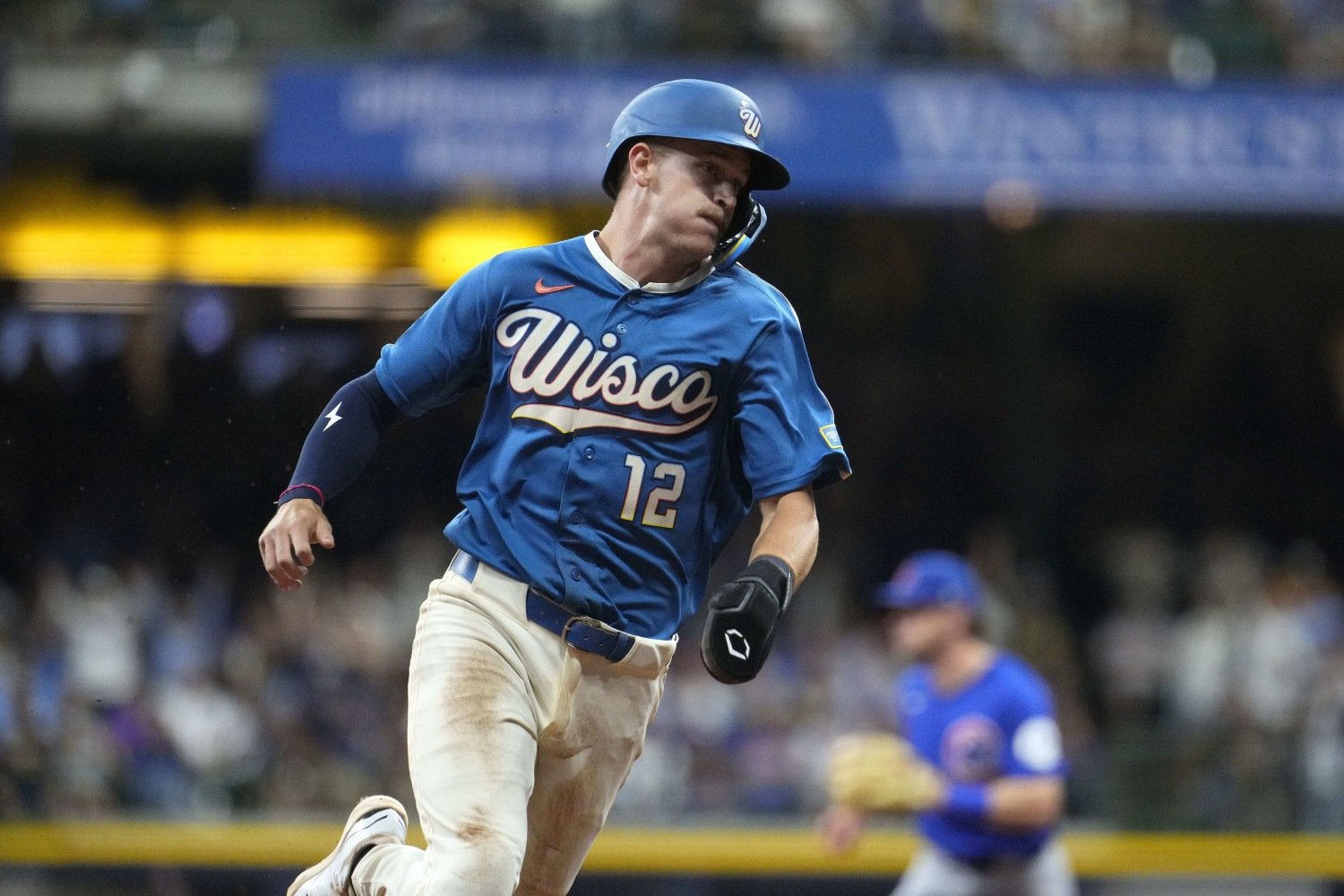 In the bottom of the sixth inning on Monday night, with runners on first and second and the Brewers trailing 3-2, Pat Murphy pinch-hit David Hamilton for Cooper Pratt. The decision could be seen as securing the platoon advantage by batting the left-handed Hamilton against the right-handed Chase Petty, but the changeup specialist has pronounced reverse splits in his limited big-league innings. He’s also been generally unsuccessful against big-league hitters overall during that time. In reality, it was a big spot, and a struggling Pratt was not a great fit for the moment. He was an on-base machine during his first two series in the majors, but he has since gone 1-for-19. In his last three games, Pratt is hitless with four strikeouts and zero walks. On Sunday and Monday, to put it bluntly, he looked like a mess. He chased a handful of high fastballs, several of them well above the strike zone: Murphy said the buildup of those poor swings contributed to the substitution, and his last at-bat on Monday triggered the move. His first time up, Pratt chased a 2-1 changeup just below the zone, prompting him to swing through a borderline two-strike fastball at the top of the zone for a strikeout. In that second at-bat, he lofted a changeup straddling the outside corner for a routine flyout. “I made the decision early in the game,” Murphy said. “I was going to pinch-hit for him when I saw his second at-bat.” Pratt’s chase rate was too high throughout the minor leagues, and improving his swing decisions is near the top of his development checklist. Before his last two games, he had contained his chase rate enough to match the league average. For the most part, he did what the Brewers asked him to do: swing at strikes, let the ball get deep, and use the opposite field to maximize his on-base potential. That’s changed during this lull. “He’s trying to do too much. He’s trying to take another step, instead of just do what you were doing,” Murphy said. “Not just the success. The pitch selection was very, very good. He took his walks. He had a better flight plan. He wasn’t punching out. He’s gotten away from it a little bit the last couple series.” After hitting 40% of his batted balls to the opposite field over his first nine games, Pratt has hit none that way in his last four games. His swing has been slightly longer and faster in that very brief sample, a sign that he’s unloading on more swings and trying to force damage. That kind of offense has not yet been developed in his 21-year-old body. Murphy took action beyond Monday night, also withholding Pratt from the starting lineup on Tuesday. It wasn’t a punishment, but rather a mental break to help Pratt slow things down before his struggles continued snowballing. “I called him in today and talked to him,” Murphy said. “It’s perspective.” He took a similar approach with Jackson Chourio early in his rookie season. The former top prospect struggled to a .207/.251/.323 line (60 wRC+) over his first 176 plate appearances. During that stretch, Murphy did not start him for three straight games in early May, then for two straight games near the end of the month. There’s a fine line between productive breaks and preventing a young player from getting going by limiting his reps, but things worked out fine for Chourio. He went on a tear in the second half as a rookie and has since remained a mainstay near the top of the lineup. Murphy thinks Pratt is already more mature than Chourio was at that time and won’t require as many resets. “I think he’ll get back on his game quicker,” he said. “I think he’s done great. His baserunning, his defense has been nearly impeccable.” Thirteen games into his career, Pratt is hitting just .211/.295/.237 with a 55 wRC+, though his .320 xwOBA and 81 DRC+ indicate the quality of his plate appearances has been a bit better than his results. More than anything, the last few days are a reminder that Pratt will probably take some lumps at the plate for a bit. His defense and baseball instincts made him big league-ready, but the bat could take a few years to come around. “I was just really sincere with him about it and reinforced with him how much we believed in him and how proud I am of the way he transitioned when he first got here,” Murphy said. “A lot of guys don’t do that.”
 -
 Image courtesy of © Michael McLoone-Imagn Images In the bottom of the sixth inning on Monday night, with runners on first and second and the Brewers trailing 3-2, Pat Murphy pinch-hit David Hamilton for Cooper Pratt. The decision could be seen as securing the platoon advantage by batting the left-handed Hamilton against the right-handed Chase Petty, but the changeup specialist has pronounced reverse splits in his limited big-league innings. He’s also been generally unsuccessful against big-league hitters overall during that time. In reality, it was a big spot, and a struggling Pratt was not a great fit for the moment. He was an on-base machine during his first two series in the majors, but he has since gone 1-for-19. In his last three games, Pratt is hitless with four strikeouts and zero walks. On Sunday and Monday, to put it bluntly, he looked like a mess. He chased a handful of high fastballs, several of them well above the strike zone: Murphy said the buildup of those poor swings contributed to the substitution, and his last at-bat on Monday triggered the move. His first time up, Pratt chased a 2-1 changeup just below the zone, prompting him to swing through a borderline two-strike fastball at the top of the zone for a strikeout. In that second at-bat, he lofted a changeup straddling the outside corner for a routine flyout. “I made the decision early in the game,” Murphy said. “I was going to pinch-hit for him when I saw his second at-bat.” Pratt’s chase rate was too high throughout the minor leagues, and improving his swing decisions is near the top of his development checklist. Before his last two games, he had contained his chase rate enough to match the league average. For the most part, he did what the Brewers asked him to do: swing at strikes, let the ball get deep, and use the opposite field to maximize his on-base potential. That’s changed during this lull. “He’s trying to do too much. He’s trying to take another step, instead of just do what you were doing,” Murphy said. “Not just the success. The pitch selection was very, very good. He took his walks. He had a better flight plan. He wasn’t punching out. He’s gotten away from it a little bit the last couple series.” After hitting 40% of his batted balls to the opposite field over his first nine games, Pratt has hit none that way in his last four games. His swing has been slightly longer and faster in that very brief sample, a sign that he’s unloading on more swings and trying to force damage. That kind of offense has not yet been developed in his 21-year-old body. Murphy took action beyond Monday night, also withholding Pratt from the starting lineup on Tuesday. It wasn’t a punishment, but rather a mental break to help Pratt slow things down before his struggles continued snowballing. “I called him in today and talked to him,” Murphy said. “It’s perspective.” He took a similar approach with Jackson Chourio early in his rookie season. The former top prospect struggled to a .207/.251/.323 line (60 wRC+) over his first 176 plate appearances. During that stretch, Murphy did not start him for three straight games in early May, then for two straight games near the end of the month. There’s a fine line between productive breaks and preventing a young player from getting going by limiting his reps, but things worked out fine for Chourio. He went on a tear in the second half as a rookie and has since remained a mainstay near the top of the lineup. Murphy thinks Pratt is already more mature than Chourio was at that time and won’t require as many resets. “I think he’ll get back on his game quicker,” he said. “I think he’s done great. His baserunning, his defense has been nearly impeccable.” Thirteen games into his career, Pratt is hitting just .211/.295/.237 with a 55 wRC+, though his .320 xwOBA and 81 DRC+ indicate the quality of his plate appearances has been a bit better than his results. More than anything, the last few days are a reminder that Pratt will probably take some lumps at the plate for a bit. His defense and baseball instincts made him big league-ready, but the bat could take a few years to come around. “I was just really sincere with him about it and reinforced with him how much we believed in him and how proud I am of the way he transitioned when he first got here,” Murphy said. “A lot of guys don’t do that.” View full article
 -
Image courtesy of © Dale Zanine-Imagn Images Let's get this out of the way first: the Brewers have not permanently forgotten how to hit with runners in scoring position. During the course of a 162-game regular season, teams go through ebbs and flows, especially on offense. The Brewers still have an .800 OPS with runners in scoring position this year, the third-highest in baseball. Last year, they ranked ninth. The year before, they ranked second. Before last Monday, the Brewers still had an .842 OPS with runners in scoring position in June. It's been one bad week. They'll bounce back sooner than later. "We're just going through a rough stretch of it," Christian Yelich said. "We've been really good at it at times. Right now, we're in one of those times where we're really bad at it, but we'll come through on the other side of it, and I think we'll start getting back to normal." It truly has been an abysmal week, though. Since the start of their series in Cincinnati, Milwaukee hitters have slashed .118/.216/.230 with runners in scoring position. The Brewers managed to go 4-2 during that stretch, but the lack of timely hits proved costly on Sunday, when they dropped a 4-3 contest to lose a three-game series to the Chicago Cubs. Performance with runners in scoring position is a particularly fickle stat, especially in such a small sample. However, the quality of the Brewers' at-bats in run-scoring situations has been much worse lately. As their lack of production has continued, they're getting jumpy in the box. "Sometimes guys maybe try to do too much, and that's where we try to preach you've got to take what the game gives you," offense and strategy coordinator Jason Lane said postgame on Sunday. "And that might be taking pitches and handing it to the next guy. But there weren't too many mistakes in those situations, from what I saw. Just, we offered at some pitches on the edges that got a couple ground balls, a pop-up, and a strikeout in those situations." The numbers bear out what Lane is saying. During this stretch, the Brewers have chased significantly more pitches outside the strike zone with runners in scoring position. RISP Split Avg LA Under% K% Z-Swing% Z-Contact% O-Swing% O-Contact% Thru 6/21 7° 20.3% 21.3% 65.9% 85.5% 29.3% 59.0% Since 6/22 13° 33.3% 31.7% 64.1% 72.0% 34.8% 50.0% That's not the full story, though. The Brewers have also whiffed at an alarming number of in-zone pitches, and they're making more contact underneath the ball. It goes without saying that striking out and hitting pop-ups with runners in scoring position is a poor recipe for success. It's not worth looking further into those chases. Pitches outside the zone are much harder to reach, so those swings will never be lined up with the ball particularly well. Swinging at those pitches in the first place is the problem, not the quality of swings at those pitches. Instead, the question is what the Brewers are doing differently on more hittable pitches. Once again, the answer is that they're too jumpy. According to Statcast, on pitches in the heart of the strike zone, they've been more on time, but for the wrong reason. The Brewers want many of their hitters to let the ball get deep, so the fact that they're late less often means they're cheating to pitches in attempts to force damage. As a result, they're pulling off the ball and flailing at more pitches, running out of bat to make contact. Split Late% (Fastballs) Late% (Breaking) Late% (Offspeed) Flail% (Fastballs) Flail% (Breaking) Flail% (Offspeed) Thru 6/21 24% 10% 6% 10% 13% 22% Since 6/22 19% 4% 0% 15% 17% 33% In other words, the hitters are feeling pressure to deliver. They're trying too hard to make something happen, and it's leading to more chases and whiffs. "Trying harder and wanting it more isn't going to make it happen," Yelich said. "Obviously, you want to get the job done. Everybody wants to get the job done. There's no right answer for how to do that. It's just, oftentimes, you've got to slow that down and try to focus." Look no further than a few key at-bats on Sunday. With runners on first and third and one out in the third inning, Jackson Chourio and Brice Turang stranded them with back-to-back strikeouts. Chourio chased a high fastball for strike three, while Turang expanded the zone on a pair of fastballs during the middle of his at-bat. In the fourth, after Andrew Vaughn's leadoff triple, Jake Bauers rolled over a 2-1 changeup on the outside corner, and Gary Sánchez popped up an up-and-in curveball. Sal Frelick hit a 100-mph groundout, but it was already too late; no more productive outs were available. With runners on first and second in the ninth, Cooper Pratt and Joey Ortiz chased several high fastballs to abruptly extinguish a potential walk-off rally. The Cubs would score three runs against Joel Kuhnel in the top of the 10th, and the Brewers fell short of a comeback in the bottom half of the inning. That was too many brutal at-bats in one game, the latest entries in what has become an unfortunate recent trend for the offense. "You feel like you kind of left one out there today, but it is what it is," Yelich said. "Part of the season, and you've just got to keep grinding through it." Given the Brewers' track record, it's safe to assume they will round back into form. That must happen sooner rather than later, though. For this particular lineup, which lacks the tremendous in-game power to sell out for damage on too many pitches, less is often more. "Maybe we could have waited for a better pitch, but that's the battle of driving in runs," Lane said. "It's the hardest thing to do at the plate sometimes, and it's where your discipline has to show up, and we didn't do a great job of that today." View full article
-
What's Changed for the Brewers With Runners in Scoring Position?
Jack Stern posted an article in Brewers
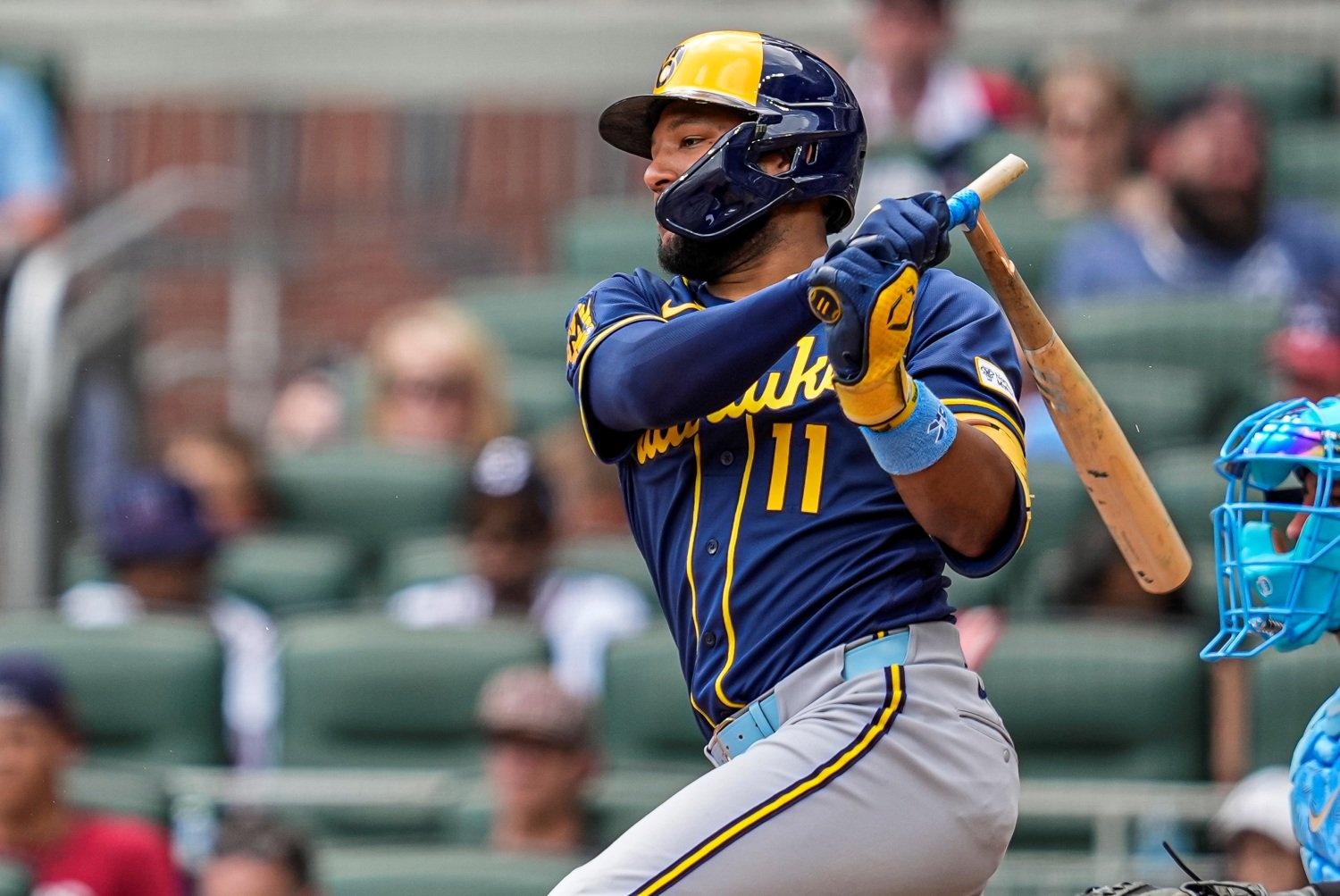 Let's get this out of the way first: the Brewers have not permanently forgotten how to hit with runners in scoring position. During the course of a 162-game regular season, teams go through ebbs and flows, especially on offense. The Brewers still have an .800 OPS with runners in scoring position this year, the third-highest in baseball. Last year, they ranked ninth. The year before, they ranked second. Before last Monday, the Brewers still had an .842 OPS with runners in scoring position in June. It's been one bad week. They'll bounce back sooner than later. "We're just going through a rough stretch of it," Christian Yelich said. "We've been really good at it at times. Right now, we're in one of those times where we're really bad at it, but we'll come through on the other side of it, and I think we'll start getting back to normal." It truly has been an abysmal week, though. Since the start of their series in Cincinnati, Milwaukee hitters have slashed .118/.216/.230 with runners in scoring position. The Brewers managed to go 4-2 during that stretch, but the lack of timely hits proved costly on Sunday, when they dropped a 4-3 contest to lose a three-game series to the Chicago Cubs. Performance with runners in scoring position is a particularly fickle stat, especially in such a small sample. However, the quality of the Brewers' at-bats in run-scoring situations has been much worse lately. As their lack of production has continued, they're getting jumpy in the box. "Sometimes guys maybe try to do too much, and that's where we try to preach you've got to take what the game gives you," offense and strategy coordinator Jason Lane said postgame on Sunday. "And that might be taking pitches and handing it to the next guy. But there weren't too many mistakes in those situations, from what I saw. Just, we offered at some pitches on the edges that got a couple ground balls, a pop-up, and a strikeout in those situations." The numbers bear out what Lane is saying. During this stretch, the Brewers have chased significantly more pitches outside the strike zone with runners in scoring position. RISP Split Avg LA Under% K% Z-Swing% Z-Contact% O-Swing% O-Contact% Thru 6/21 7° 20.3% 21.3% 65.9% 85.5% 29.3% 59.0% Since 6/22 13° 33.3% 31.7% 64.1% 72.0% 34.8% 50.0% That's not the full story, though. The Brewers have also whiffed at an alarming number of in-zone pitches, and they're making more contact underneath the ball. It goes without saying that striking out and hitting pop-ups with runners in scoring position is a poor recipe for success. It's not worth looking further into those chases. Pitches outside the zone are much harder to reach, so those swings will never be lined up with the ball particularly well. Swinging at those pitches in the first place is the problem, not the quality of swings at those pitches. Instead, the question is what the Brewers are doing differently on more hittable pitches. Once again, the answer is that they're too jumpy. According to Statcast, on pitches in the heart of the strike zone, they've been more on time, but for the wrong reason. The Brewers want many of their hitters to let the ball get deep, so the fact that they're late less often means they're cheating to pitches in attempts to force damage. As a result, they're pulling off the ball and flailing at more pitches, running out of bat to make contact. Split Late% (Fastballs) Late% (Breaking) Late% (Offspeed) Flail% (Fastballs) Flail% (Breaking) Flail% (Offspeed) Thru 6/21 24% 10% 6% 10% 13% 22% Since 6/22 19% 4% 0% 15% 17% 33% In other words, the hitters are feeling pressure to deliver. They're trying too hard to make something happen, and it's leading to more chases and whiffs. "Trying harder and wanting it more isn't going to make it happen," Yelich said. "Obviously, you want to get the job done. Everybody wants to get the job done. There's no right answer for how to do that. It's just, oftentimes, you've got to slow that down and try to focus." Look no further than a few key at-bats on Sunday. With runners on first and third and one out in the third inning, Jackson Chourio and Brice Turang stranded them with back-to-back strikeouts. Chourio chased a high fastball for strike three, while Turang expanded the zone on a pair of fastballs during the middle of his at-bat. In the fourth, after Andrew Vaughn's leadoff triple, Jake Bauers rolled over a 2-1 changeup on the outside corner, and Gary Sánchez popped up an up-and-in curveball. Sal Frelick hit a 100-mph groundout, but it was already too late; no more productive outs were available. With runners on first and second in the ninth, Cooper Pratt and Joey Ortiz chased several high fastballs to abruptly extinguish a potential walk-off rally. The Cubs would score three runs against Joel Kuhnel in the top of the 10th, and the Brewers fell short of a comeback in the bottom half of the inning. That was too many brutal at-bats in one game, the latest entries in what has become an unfortunate recent trend for the offense. "You feel like you kind of left one out there today, but it is what it is," Yelich said. "Part of the season, and you've just got to keep grinding through it." Given the Brewers' track record, it's safe to assume they will round back into form. That must happen sooner rather than later, though. For this particular lineup, which lacks the tremendous in-game power to sell out for damage on too many pitches, less is often more. "Maybe we could have waited for a better pitch, but that's the battle of driving in runs," Lane said. "It's the hardest thing to do at the plate sometimes, and it's where your discipline has to show up, and we didn't do a great job of that today."
 -
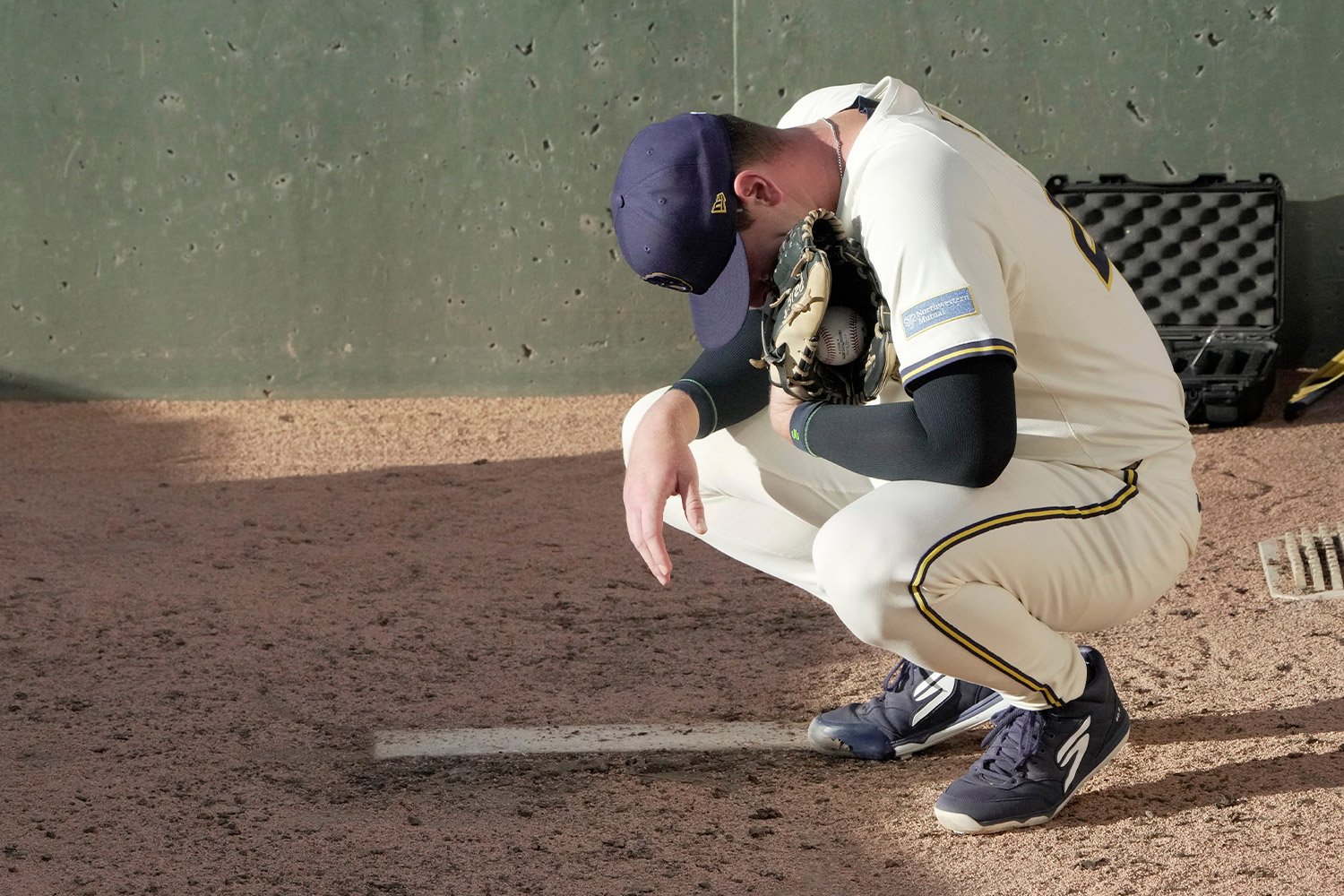 After he dominated the minor leagues and reached the majors in his second full professional season last year, Craig Yoho's career has not followed the path he or the Brewers hoped for. In 13 career appearances, most of them low-leverage outings, the 26-year-old has pitched to a 6.75 ERA and 5.22 SIERA. It was not long ago that Pat Murphy spoke highly of Yoho after a dominant spring training showing in 2025. Within a few months, he became an afterthought on the 40-man roster. After a few rough outings last year, it became clear that the Brewers struggled to trust Yoho in pivotal situations. This season, they've rarely trusted him enough to roster him at all. Control issues have been the primary culprit, in part because Yoho's stuff moves so much. In Triple-A this year, his signature screwball-like changeup has averaged 2.2 inches of induced vertical drop and 17.8 inches of arm-side run. Even his fastball has averaged 16.6 inches of horizontal movement. In his big-league career, he's walked 17.9% of batters faced. Back in the big leagues by necessity for most of June, Yoho showed signs of progress this month amid his longest stint to date. In his first four outings, he was throwing enough strikes and missing barrels, posting a 1.73 xERA and 2.54 SIERA. According to Statcast, he induced whiffs on 36.6% of swings, and his average exit velocity allowed on balls in play was 83.5 mph. His walk rate was still 10%, but that will always be part of the picture for a reliever with so much movement. In each of his last two outings, Yoho threw more than half of his pitches in the strike zone. On Monday in Cincinnati, Murphy said that performance played a role in the decision to option left-handed reliever Drew Rom, not Yoho, to make room for Brandon Woodruff's return. Given that solid work and the recent unsteadiness throughout Milwaukee's 'B' bullpen, one could argue Yoho had earned another shot at higher-leverage work. He got that opportunity on Wednesday night, as Trevor Megill, Aaron Ashby, and a suspended Abner Uribe were unavailable. Yoho inherited a bases-loaded jam from Grant Anderson in the seventh inning, with JJ Bleday representing the tying run in a 6-2 game. With one pitch, a changeup in the zone, he induced an early swing from Bleday for a soft inning-ending groundout to first base. Yoho had answered the call in a big spot. Things went haywire when he returned for the eighth. Edwin Arroyo waited back on an elevated changeup, dunking it to right field for a leadoff single. Elly De La Cruz worked him for a nine-pitch walk. Yoho nearly escaped with just one run allowed after coaxing routine groundouts from Dane Myers and Sal Stewart, but Spencer Steer blasted an 0-1 fastball over the heart of the plate for a three-run home run. With the score now 6-5, Yoho's night – and his latest big-league stint – was over. The Brewers optioned him to Triple-A the following day. As Yoho was being informed in the Cincinnati clubhouse that his next travel would be to Nashville instead of Milwaukee, Murphy gave a blunt postgame assessment of his outing, reiterating the shortcomings that have kept the Brewers from trusting him as an MLB-caliber reliever. "They don't know him yet, they haven't faced him yet," Murphy said of Yoho's first inning. "Now he goes out the second inning, they're expecting it. It's a two-pitch guy, really, and he doesn't throw strikes. You can't do that ... You can see he wasn't comfortable in that situation." There were signs on Wednesday that some hitters could easily formulate a productive approach against Yoho. Arroyo waited back on his changeup. De La Cruz appeared intent on waiting him out and forcing him back into the strike zone; he watched five of those nine pitches, including two just outside the strike zone and a 3-1 changeup down the middle. "They know the deal," Murphy said. "I mean, the report's out there. Fastball command, question mark. Changeup, very slow, sit on it, not a swing-and-miss [pitch]. So he's got to make some adjustments with it, and I think he will. He's a great kid." Most of the Brewers' concerns are valid. Yoho's movement is not only difficult to control, but it also makes pitch sequencing more challenging. His changeup is more than 15 mph slower than his fastball, and its extreme depth means he can't tunnel any pitches within – or even near – the strike zone. Assume that to get a chase on a changeup just below the zone, Yoho must make it look like his fastball out of the hand. The visual below from FanGraphs shows that, based on how his pitches move, he would have to throw that fastball well above the zone for the two pitches to start at the same sight line. In other words, his stuff moves so much that he can't use an in-zone pitch to set up a chase on an out-of-zone pitch, or vice-versa. Murphy made a questionable assertion that Yoho is purely a two-pitch pitcher, as he also features a curveball and cutter. However, the curveball is a more extreme inverse of his changeup in all the wrong ways: averaging 75.9 mph with 10 inches of induced vertical drop and 20 inches of glove-side break in Triple-A, it's challenging for Yoho to land in the zone and is effectively impossible to tunnel. To even get that breaking ball to fit on a similar tunneling graphic from last year, you'd have to position his fastball at a right-handed batter's helmet. A pitcher with Yoho's stuff will never defeat hitters with pitch tunneling and deception, though. Instead, it will work because the extreme movement will miss barrels, even if it's not particularly deceptive. That's where the Brewers may be selling him short. So far, Yoho's changeup has excelled at avoiding loud contact, even though hitters have likely known it's coming and it has not always been located competitively. In his limited big-league work across two seasons, opponents have managed just a .247 xwOBA, 17.6% hard-hit rate, and 5.9% barrel rate against it with a 33.8% whiff rate. On Wednesday night, it induced two chases and two soft ground balls. The Reds did not whiff on it, but Murphy's claim that it isn't a swing-and-miss pitch is, frankly, incorrect. Such a pitch does not need to be disguised as a fastball to be effective. Yoho just needs to throw it in and around the zone below the belt. When hitters start timing it up, a timely in-zone fastball can produce a take or a late swing. So far, he has done neither consistently. Yoho is partially responsible for his current situation because he sprayed the ball too much in his early chances last summer. At the same time, it's becoming clear that a poor fit between player and team is also part of the issue. Whenever Chris Hook talks about a particular pitch, he instinctively states whether it "tracks" in the strike zone like it's a checklist item. To the Brewers, many big shapes pose tunneling problems and do not maximize in-zone swings, so they often find throwing more fastball variants and shorter sliders to be more useful than better "stuff" pitches. There are some exceptions, like Grant Anderson's sweeper, but Yoho's stuff is well beyond the mold. Perhaps the Brewers are right about him, or perhaps it's simply a poor fit. At this point, a change of scenery looks like the best way to find out. The club has a history of trading former prospects who have been leapfrogged on the 40-man roster for moderate upgrades at the trade deadline. In 2018, they flipped Brett Phillips in a two-player package for Mike Moustakas. In 2019, it was Mauricio Dubon for Drew Pomeranz. More recently, they traded Joey Wiemer for Frankie Montas in 2024. With the deadline five weeks away, Yoho could be next. A fresh start – and, just as importantly, a setting where he'll get a longer leash to become as competitive as possible with his arsenal – may be exactly what he needs. The Brewers, meanwhile, could fill his roster spot with a more consistent contributor.
 -
After he dominated the minor leagues and reached the majors in his second full professional season last year, Craig Yoho's career has not followed the path he or the Brewers hoped for. In 13 career appearances, most of them low-leverage outings, the 26-year-old has pitched to a 6.75 ERA and 5.22 SIERA. It was not long ago that Pat Murphy spoke highly of Yoho after a dominant spring training showing in 2025. Within a few months, he became an afterthought on the 40-man roster. After a few rough outings last year, it became clear that the Brewers struggled to trust Yoho in pivotal situations. This season, they've rarely trusted him enough to roster him at all. Control issues have been the primary culprit, in part because Yoho's stuff moves so much. In Triple-A this year, his signature screwball-like changeup has averaged 2.2 inches of induced vertical drop and 17.8 inches of arm-side run. Even his fastball has averaged 16.6 inches of horizontal movement. In his big-league career, he's walked 17.9% of batters faced. Back in the big leagues by necessity for most of June, Yoho showed signs of progress this month amid his longest stint to date. In his first four outings, he was throwing enough strikes and missing barrels, posting a 1.73 xERA and 2.54 SIERA. According to Statcast, he induced whiffs on 36.6% of swings, and his average exit velocity allowed on balls in play was 83.5 mph. His walk rate was still 10%, but that will always be part of the picture for a reliever with so much movement. In each of his last two outings, Yoho threw more than half of his pitches in the strike zone. On Monday in Cincinnati, Murphy said that performance played a role in the decision to option left-handed reliever Drew Rom, not Yoho, to make room for Brandon Woodruff's return. Given that solid work and the recent unsteadiness throughout Milwaukee's 'B' bullpen, one could argue Yoho had earned another shot at higher leverage work. He got that opportunity on Wednesday night, as Trevor Megill, Aaron Ashby, and a suspended Abner Uribe were unavailable. Yoho inherited a bases-loaded jam from Grant Anderson in the seventh inning, with JJ Bleday representing the tying run in a 6-2 game. With one pitch, a changeup in the zone, he induced an early swing from Bleday for a soft inning-ending groundout to first base. Yoho had answered the call in a big spot. Things went haywire when he returned for the eighth. Edwin Arroyo waited back on an elevated changeup, dunking it to right field for a leadoff single. Elly De La Cruz worked him for a nine-pitch walk. Yoho nearly escaped with just one run allowed after coaxing routine groundouts from Dane Myers and Sal Stewart, but Spencer Steer blasted an 0-1 fastball over the heart of the plate for a three-run home run. With the score now 6-5, Yoho's night – and his latest big-league stint – was over. The Brewers optioned him to Triple-A the following day. As Yoho was being informed in the Cincinnati clubhouse that his next travel would be to Nashville instead of Milwaukee, Murphy gave a blunt postgame assessment of his outing, reiterating the shortcomings that have kept the Brewers from trusting him as an MLB-caliber reliever. "They don't know him yet, they haven't faced him yet," Murphy said of Yoho's first inning. "Now he goes out the second inning, they're expecting it. It's a two-pitch guy, really, and he doesn't throw strikes. You can't do that ... You can see he wasn't comfortable in that situation." There were signs on Wednesday that some hitters could easily formulate a productive approach against Yoho. Arroyo waited back on his changeup. De La Cruz appeared intent on waiting him out and forcing him back into the strike zone; he watched five of those nine pitches, including two just outside the strike zone and a 3-1 changeup down the middle. "They know the deal," Murphy said. "I mean, the report's out there. Fastball command, question mark. Changeup, very slow, sit on it, not a swing-and-miss [pitch]. So he's got to make some adjustments with it, and I think he will. He's a great kid." Most of the Brewers' concerns are valid. Yoho's movement is not only difficult to control, but it also makes pitch sequencing more challenging. His changeup is more than 15 mph slower than his fastball, and its extreme depth means he can't tunnel any pitches within – or even near – the strike zone. Assume that to get a chase on a changeup just below the zone, Yoho must make it look like his fastball out of the hand. The visual below from FanGraphs shows that, based on how his pitches move, he would have to throw that fastball well above the zone for the two pitches to start at the same sight line. In other words, his stuff moves so much that he can't use an in-zone pitch to set up a chase on an out-of-zone pitch, or vice-versa. Murphy made a questionable assertion that Yoho is purely a two-pitch pitcher, as he also features a curveball and cutter. However, the curveball is a more extreme inverse of his changeup in all the wrong ways: averaging 75.9 mph with 10 inches of induced vertical drop and 20 inches of glove-side break in Triple-A, it's challenging for Yoho to land in the zone and is effectively impossible to tunnel. To even get that breaking ball to fit on a similar tunneling graphic from last year, you'd have to position his fastball at a right-handed batter's helmet. A pitcher with Yoho's stuff will never defeat hitters with pitch tunneling and deception, though. Instead, it will work because the extreme movement will miss barrels, even if it's not particularly deceptive. That's where the Brewers may be selling him short. So far, Yoho's changeup has excelled at avoiding loud contact, even though hitters have likely known it's coming and it has not always been located competitively. In his limited big-league work across two seasons, opponents have managed just a .247 xwOBA, 17.6% hard-hit rate, and 5.9% barrel rate against it with a 33.8% whiff rate. On Wednesday night, it induced two chases and two soft ground balls. The Reds did not whiff on it, but Murphy's claim that it isn't a swing-and-miss pitch is, frankly, incorrect. Such a pitch does not need to be disguised as a fastball to be effective. Yoho just needs to throw it in and around the zone below the belt. When hitters start timing it up, a timely in-zone fastball can produce a take or a late swing. So far, he has done neither consistently. Yoho is partially responsible for his current situation because he sprayed the ball too much in his early chances last summer. At the same time, it's becoming clear that a poor fit between player and team is also part of the issue. Whenever Chris Hook talks about a particular pitch, he instinctively states whether it "tracks" in the strike zone like it's a checklist item. To the Brewers, many big shapes pose tunneling problems and do not maximize in-zone swings, so they often find throwing more fastball variants and shorter sliders to be more useful than better "stuff" pitches. There are some exceptions, like Grant Anderson's sweeper, but Yoho's stuff is well beyond the mold. Perhaps the Brewers are right about him, or perhaps it's simply a poor fit. At this point, a change of scenery looks like the best way to find out. The club has a history of trading former prospects who have been leapfrogged on the 40-man roster for moderate upgrades at the trade deadline. In 2018, they flipped Brett Phillips in a two-player package for Mike Moustakas. In 2019, it was Mauricio Dubon for Drew Pomeranz. More recently, they traded Joey Wiemer for Frankie Montas in 2024. With the deadline five weeks away, Yoho could be next. A fresh start – and, just as importantly, a setting where he'll get a longer leash to become as competitive as possible with his arsenal – may be exactly what he needs. The Brewers, meanwhile, could fill his roster spot with a more consistent contributor. View full article
-
Image courtesy of © Katie Stratman-Imagn Images Major League Baseball released its latest All-Star balloting update on Monday afternoon. Brice Turang is the closest to representing the Brewers in Philadelphia next month, but he remains roughly 63,000 votes behind Phillies second baseman Bryson Stott for second place. To advance to the next phase of voting, Turang must bridge that gap to land within the top two spots at his position. Turang deserves to play in the Midsummer Classic for his performance on the whole this year. He leads qualified second basemen with a 132 wRC+, and his 2.9 bWAR ranks second. However, he hasn’t been in his All-Star form for several weeks. It’s been an especially rough go lately. Since June 5, Turang is hitting .225/.267/.437 for a .703 OPS. During that time, he’s struck out in 35.2% of his plate appearances, while walking at just a 5.6% clip. “I think he's going through a little lull,” Pat Murphy said in the visiting manager’s office in Cincinnati earlier this week. “I think he'll self-correct.” Since a red-hot start to his season, Turang’s bat has cooled considerably. After posting a 160 wRC+ in April, he slipped to 105 in May and 124 in June. His strikeouts have steadily increased throughout. The good news is that even the slumping version of Turang has still been a solid hitter, particularly for someone still playing strong defense at the keystone. “There's a few exceptions, but he figures it out for a hit for one at-bat,” Murphy said. “Well, not figures it out, but he's good enough to still produce, and his lulls are not that low. That's a sign of a really good player.” During the club’s last homestand, Murphy explained that Turang was struggling with his timing because he was drifting forward off his back leg, rather than staying back and working behind the baseball with his swing. “He understands his swing, and he understands what he's doing right now that's holding him back a little bit. We talked about it in the dugout yesterday,” Murphy said at the time. “He totally understands what he's doing when he gets in these modes where he drifts forward and gets to his front, he can't stay behind the ball.” When a hitter drifts forward, velocity gets on them quicker. Turang has always let the ball get deep, which means he swings later at fastballs, but it has progressed to the point where he’s too late too often. That lateness means that even when he lines the ball up and makes contact, it's weaker than it should be, because the ball sails a hair deeper before his bat can get to it, so he catches it off the end. Overcompensating for that can also result in pulling off the ball, with the same result. “You're going forward, ball's coming, it makes sense,” Murphy said. “So then you start cheating to it, and then what happens? Then you come off the ball. So there's all sorts of ramifications of it.” The issue has been most pronounced against left-handed pitchers. Turang has kept his head above water against right-handers, but the quality of his at-bats has fallen off badly against southpaws. According to Statcast, he was late on 30% of his swings against left-handed fastballs in May. That’s up to 58% in June. Month wRC+ (RHP) wRC+ (LHP) DRC+ (RHP) DRC+ (LHP) April 185 98 150 110 May 140 14 123 89 June 170 -20 102 51 Murphy wanted to give Turang, who has played in 73 of the team’s 77 games and experienced a slight decrease in bat speed, more days off to work through the issue, away from the pressure of a game setting. That may be more plausible now that Cooper Pratt is in the fold as the everyday shortstop. On June 14, two days after Pratt’s promotion, Turang was out of the lineup for the first time since May 3. In eight games since then, he’s hit .303/.343/.455 while making more loud contact, but he’s remained too late on velocity and continued striking out 37.1% of the time. The good news is that Turang and the Brewers have already diagnosed the problem, and it’s a fairly simple fix. Nothing is wrong with his swing path, which is nearly identical to when he was crushing the ball in April. That doesn’t necessarily make applying the adjustment easier, though. “It's easy to talk about. ‘Well, just change it.’ But it's hard to do when the action’s on and you've repeated it,” Murphy said. Fortunately, Jackson Chourio and Jake Bauers have alleviated the pressure on Turang to be the linchpin of the lineup. Those hitters will fall into their own ebbs. At that point, it could again be Turang’s turn to carry more weight in the middle of the order. In the meantime, his timing and contact rate are worth monitoring. “If he stays behind the ball, things are a lot different for him,” Murphy said. “The swing is just beautiful. I mean, it's what you dream about.” View full article
-
 Major League Baseball released its latest All-Star balloting update on Monday afternoon. Brice Turang is the closest to representing the Brewers in Philadelphia next month, but he remains roughly 63,000 votes behind Phillies second baseman Bryson Stott for second place. To advance to the next phase of voting, Turang must bridge that gap to land within the top two spots at his position. Turang deserves to play in the Midsummer Classic for his performance on the whole this year. He leads qualified second basemen with a 132 wRC+, and his 2.9 bWAR ranks second. However, he hasn’t been in his All-Star form for several weeks. It’s been an especially rough go lately. Since June 5, Turang is hitting .225/.267/.437 for a .703 OPS. During that time, he’s struck out in 35.2% of his plate appearances, while walking at just a 5.6% clip. “I think he's going through a little lull,” Pat Murphy said in the visiting manager’s office in Cincinnati earlier this week. “I think he'll self-correct.” Since a red-hot start to his season, Turang’s bat has cooled considerably. After posting a 160 wRC+ in April, he slipped to 105 in May and 124 in June. His strikeouts have steadily increased throughout. The good news is that even the slumping version of Turang has still been a solid hitter, particularly for someone still playing strong defense at the keystone. “There's a few exceptions, but he figures it out for a hit for one at-bat,” Murphy said. “Well, not figures it out, but he's good enough to still produce, and his lulls are not that low. That's a sign of a really good player.” During the club’s last homestand, Murphy explained that Turang was struggling with his timing because he was drifting forward off his back leg, rather than staying back and working behind the baseball with his swing. “He understands his swing, and he understands what he's doing right now that's holding him back a little bit. We talked about it in the dugout yesterday,” Murphy said at the time. “He totally understands what he's doing when he gets in these modes where he drifts forward and gets to his front, he can't stay behind the ball.” When a hitter drifts forward, velocity gets on them quicker. Turang has always let the ball get deep, which means he swings later at fastballs, but it has progressed to the point where he’s too late too often. That lateness means that even when he lines the ball up and makes contact, it's weaker than it should be, because the ball sails a hair deeper before his bat can get to it, so he catches it off the end. Overcompensating for that can also result in pulling off the ball, with the same result. “You're going forward, ball's coming, it makes sense,” Murphy said. “So then you start cheating to it, and then what happens? Then you come off the ball. So there's all sorts of ramifications of it.” The issue has been most pronounced against left-handed pitchers. Turang has kept his head above water against right-handers, but the quality of his at-bats has fallen off badly against southpaws. According to Statcast, he was late on 30% of his swings against left-handed fastballs in May. That’s up to 58% in June. Month wRC+ (RHP) wRC+ (LHP) DRC+ (RHP) DRC+ (LHP) April 185 98 150 110 May 140 14 123 89 June 170 -20 102 51 Murphy wanted to give Turang, who has played in 73 of the team’s 77 games and experienced a slight decrease in bat speed, more days off to work through the issue, away from the pressure of a game setting. That may be more plausible now that Cooper Pratt is in the fold as the everyday shortstop. On June 14, two days after Pratt’s promotion, Turang was out of the lineup for the first time since May 3. In eight games since then, he’s hit .303/.343/.455 while making more loud contact, but he’s remained too late on velocity and continued striking out 37.1% of the time. The good news is that Turang and the Brewers have already diagnosed the problem, and it’s a fairly simple fix. Nothing is wrong with his swing path, which is nearly identical to when he was crushing the ball in April. That doesn’t necessarily make applying the adjustment easier, though. “It's easy to talk about. ‘Well, just change it.’ But it's hard to do when the action’s on and you've repeated it,” Murphy said. Fortunately, Jackson Chourio and Jake Bauers have alleviated the pressure on Turang to be the linchpin of the lineup. Those hitters will fall into their own ebbs. At that point, it could again be Turang’s turn to carry more weight in the middle of the order. In the meantime, his timing and contact rate are worth monitoring. “If he stays behind the ball, things are a lot different for him,” Murphy said. “The swing is just beautiful. I mean, it's what you dream about.”
 -
Image courtesy of © Katie Stratman-Imagn Images After departing his last start for the Brewers on April 30 with his fastballs averaging 85.4 miles per hour, Brandon Woodruff faced another round of questions regarding his future—not just about his health, but what kind of pitcher he would be when he was ready to return to a big-league mound. The first question faded away once imaging revealed that Woodruff avoided a serious injury. However, he and the Brewers played things slowly with his recovery, and there were hints along the way that he was preparing to adapt, if necessary, to changes in his stuff. In his first rehab start in the Arizona Complex League on June 9, Woodruff used his arsenal differently and tested a lower arm slot, which seemed to affect the movement of his fastballs. In his first start off the injured list in Cincinnati on Monday night, he took a step toward putting those concerns to rest. Woodruff tossed six shutout innings with 10 strikeouts and did not allow his lone baserunner until a sixth-inning single. More importantly, in nearly every process-based sense—velocity, movement, and control—he was in his usual post-surgery form. That was the version that pitched to a 3.20 ERA, 2.20 xERA, and 3.17 FIP last season. “He looked like Big Woo,” said Joey Ortiz, who broke a scoreless tie in the 10th inning with a sacrifice fly in an eventual 2-1 Milwaukee win. “He attacks the zone, attacks hitters, and he gets outs.” “Nobody’s shocked,” manager Pat Murphy said. “Just because that’s ‘Woo,’ and he takes his craft seriously.” It was an inauspicious start. Woodruff’s four-seam fastball averaged just 89.5 mph in his first inning, while his two-seamer averaged 90.5. He fell behind 3-0 to the first two hitters he faced. He was battling his mechanics and said he briefly considered pitching from the stretch with the bases empty to make his delivery more direct down the mound to home plate. “To be honest, it took me a couple of innings to find it there,” Woodruff said. The control improved, though, and so did the velocity. In the third inning, Woodruff started averaging over 92 mph, maxing out at 94.9 mph in the sixth. By the end of the night, his overall average fastball velocity of 91.9 was barely below his season average of 92.2. His stuff was moving like it always had, if not slightly better. After his four-seamer had less backspin carry in that ACL start, it averaged 18 inches of induced vertical break, matching his season average. “I’ve always been a slow starter, but in the past, before surgery, it’s more of the 93, 94, and then it goes up. Now, it’s a little less than that, and that’s okay,” he said. “I just try to put the ball in good spots, and the hitter tells me everything.” The hitters were telling Woodruff to keep doing what he did before his hiatus: pound the strike zone with fastballs. As he did last season, he leaned heavily on his four-seamer and two-seamer, throwing one or the other for 61 of his 79 pitches. He expanded above the strike zone in putaway counts, but otherwise threw many of those fastballs right over the heart of the plate. “He commands the baseball, and he challenges them to hit his heater,” Murphy said. The Reds, like most teams facing the good version of Woodruff, were often late and underneath the heaters. They whiffed on 24.2% of swings against the four-seamer and two-seamer. There was some hard contact early, but five of the eight balls in play against those fastballs were hit with a launch angle above 30°, so they were hit high enough to be routine flyouts. “If I’m seeing guys, if they’re late, whether it’s 90, 91, it still plays, and I try to treat it that way,” Woodruff said. Now he faces the challenge of staying healthy for a prolonged stretch, which will take the rest of the season to prove. But for now, the fact that Woodruff still looks like himself is a positive development for him and the Brewers. Not only does it reinstate a stabilizing force near the back of the rotation, but it could also bolster the bullpen by sending Shane Drohan, Robert Gasser, or eventually Coleman Crow—each of whom has flashed abilities to be capable starting pitchers—back to multi-inning relief roles. “I’m really proud of him and what he did for the club,” Murphy said. “Because the leadership he shows doing that, it’s pretty special.” View full article
-
Brandon Woodruff Looked Like Himself in Return Start in Cincinnati
Jack Stern posted an article in Brewers
 After departing his last start for the Brewers on April 30 with his fastballs averaging 85.4 miles per hour, Brandon Woodruff faced another round of questions regarding his future—not just about his health, but what kind of pitcher he would be when he was ready to return to a big-league mound. The first question faded away once imaging revealed that Woodruff avoided a serious injury. However, he and the Brewers played things slowly with his recovery, and there were hints along the way that he was preparing to adapt, if necessary, to changes in his stuff. In his first rehab start in the Arizona Complex League on June 9, Woodruff used his arsenal differently and tested a lower arm slot, which seemed to affect the movement of his fastballs. In his first start off the injured list in Cincinnati on Monday night, he took a step toward putting those concerns to rest. Woodruff tossed six shutout innings with 10 strikeouts and did not allow his lone baserunner until a sixth-inning single. More importantly, in nearly every process-based sense—velocity, movement, and control—he was in his usual post-surgery form. That was the version that pitched to a 3.20 ERA, 2.20 xERA, and 3.17 FIP last season. “He looked like Big Woo,” said Joey Ortiz, who broke a scoreless tie in the 10th inning with a sacrifice fly in an eventual 2-1 Milwaukee win. “He attacks the zone, attacks hitters, and he gets outs.” “Nobody’s shocked,” manager Pat Murphy said. “Just because that’s ‘Woo,’ and he takes his craft seriously.” It was an inauspicious start. Woodruff’s four-seam fastball averaged just 89.5 mph in his first inning, while his two-seamer averaged 90.5. He fell behind 3-0 to the first two hitters he faced. He was battling his mechanics and said he briefly considered pitching from the stretch with the bases empty to make his delivery more direct down the mound to home plate. “To be honest, it took me a couple of innings to find it there,” Woodruff said. The control improved, though, and so did the velocity. In the third inning, Woodruff started averaging over 92 mph, maxing out at 94.9 mph in the sixth. By the end of the night, his overall average fastball velocity of 91.9 was barely below his season average of 92.2. His stuff was moving like it always had, if not slightly better. After his four-seamer had less backspin carry in that ACL start, it averaged 18 inches of induced vertical break, matching his season average. “I’ve always been a slow starter, but in the past, before surgery, it’s more of the 93, 94, and then it goes up. Now, it’s a little less than that, and that’s okay,” he said. “I just try to put the ball in good spots, and the hitter tells me everything.” The hitters were telling Woodruff to keep doing what he did before his hiatus: pound the strike zone with fastballs. As he did last season, he leaned heavily on his four-seamer and two-seamer, throwing one or the other for 61 of his 79 pitches. He expanded above the strike zone in putaway counts, but otherwise threw many of those fastballs right over the heart of the plate. “He commands the baseball, and he challenges them to hit his heater,” Murphy said. The Reds, like most teams facing the good version of Woodruff, were often late and underneath the heaters. They whiffed on 24.2% of swings against the four-seamer and two-seamer. There was some hard contact early, but five of the eight balls in play against those fastballs were hit with a launch angle above 30°, so they were hit high enough to be routine flyouts. “If I’m seeing guys, if they’re late, whether it’s 90, 91, it still plays, and I try to treat it that way,” Woodruff said. Now he faces the challenge of staying healthy for a prolonged stretch, which will take the rest of the season to prove. But for now, the fact that Woodruff still looks like himself is a positive development for him and the Brewers. Not only does it reinstate a stabilizing force near the back of the rotation, but it could also bolster the bullpen by sending Shane Drohan, Robert Gasser, or eventually Coleman Crow—each of whom has flashed abilities to be capable starting pitchers—back to multi-inning relief roles. “I’m really proud of him and what he did for the club,” Murphy said. “Because the leadership he shows doing that, it’s pretty special.”
 -
Image courtesy of © Jeff Hanisch-Imagn Images It's best to keep expectations for Cooper Pratt in his debut season a bit muted. That's not a knock on his abilities or physical ceiling, but a reminder that a player's development is rarely complete when he reaches the big leagues. There's maturation—both physical and mental—that can only take place at the game's highest level. That's especially true for Pratt, who is just 21 years old and playing in his third full professional season. It might be tempting to think that as one of the Brewers' top prospects (including Brewer Fanatic's No. 4), Pratt could transform the left side of the infield from anemic to dynamic by replacing Luis Rengifo and Joey Ortiz. In reality, the left side will probably remain the weakest portion of the lineup. Pratt helps by raising the floor there. He can be a well-below-average hitter and still exceed the combined 58 wRC+ of Rengifo and Ortiz. He'll be a better defensive shortstop than David Hamilton, and Hamilton and Ortiz will field better at third base than Rengifo. "The pieces fit easily," Pat Murphy said ahead of Pratt's debut on Tuesday, also noting that the realigned infield would allow for more days off for Brice Turang, who has appeared in 67 of Milwaukee's first 71 games. Murphy similarly sees Pratt's impact this year as more about floor than ceiling. He has a solid foundation as a player that will make the Brewers better right now. Murphy praised his defense and baseball IQ in spring training, and has done so again multiple times in the two days since Pratt's promotion. However, the whole coaching staff knows they won't see the best version of him until later, after continued development at the big-league level. "He's not going to come into his power until later on in his career, in my opinion, but I think right now we can expect him to be an on-base guy, a guy that can do some things offensively for us," Murphy said. For now, that's the best approach for Pratt to have. At 6-foot-4 and 210 pounds, he's prompted scouts to dream about the potential power in his build, but it hasn't yet developed at this stage of his career. In Triple-A Nashville this year, his 34.6% hard-hit rate and 84.4-mph average exit velocity were well below average. The current version of Pratt won't be productive if he hits the ball in the air, so maximizing his high contact rate makes much more sense. That means seeing the ball deep to make good swing decisions, with a focus on hitting low line drives and using the opposite field. The Brewers are nearing the tail end of a similar development process with Pratt's new double-play partner. After struggling early, Brice Turang minimized his swing to become an on-base-oriented hitter. Paired with his defense, that was enough to make him a solid player. Since he established that base, a stronger, more mature Turang has eased back into a longer, steeper swing and unlocked more in-game power. "With Brice, you didn't know for sure he could be this as a hitter," Murphy said. "But by his second time around, you could just see it, like, 'This guy's ready to go, he's ready to take off.' And then it doesn't always happen on your terms, because the game deals you what the game deals you. But I think it's the same way with Cooper." Pratt's at-bats in his first two games have reflected the on-base approach. He went hitless in his debut, hitting two of his three groundouts to the right side of the infield. On Wednesday, the first two hits of his career (a ground-ball single and a line-drive, RBI base hit) were both to right field. "He'll tell you it was predicted by some great swami that his first hit would be between the three and four hole," Murphy joked postgame. "I was afraid he was going to dive or something and throw me out," Pratt said. "Once I saw it go through, I was like, 'Oh, yeah.' I heard the crowd, and it was sick." Pratt's baserunning, which drew positive reviews in the minor leagues as part of his high-IQ makeup, was tested quickly. After advancing on a sacrifice bunt by David Hamilton, Christian Yelich lined a base hit just over the head of Cleveland Guardians shortstop Brayan Rocchio. Pratt read it well and got a good jump, allowing him to score from second base. "I knew once [Yelich] hit it, it was over his head," he said, "so I just freaking ran as hard as I could." After his second hit, Pratt stole his first career base. Despite not having great speed, he swiped 27 bases in 2024 and 31 last season due to his awareness. Two days in, Murphy continues to see the little things that led him to believe Pratt can be a meaningful player this year, even if he only scratches the surface of his long-term potential. "He had two great at-bats where he stayed in the zone and didn't try to do too much," Murphy said. "Really proud of him." View full article
-
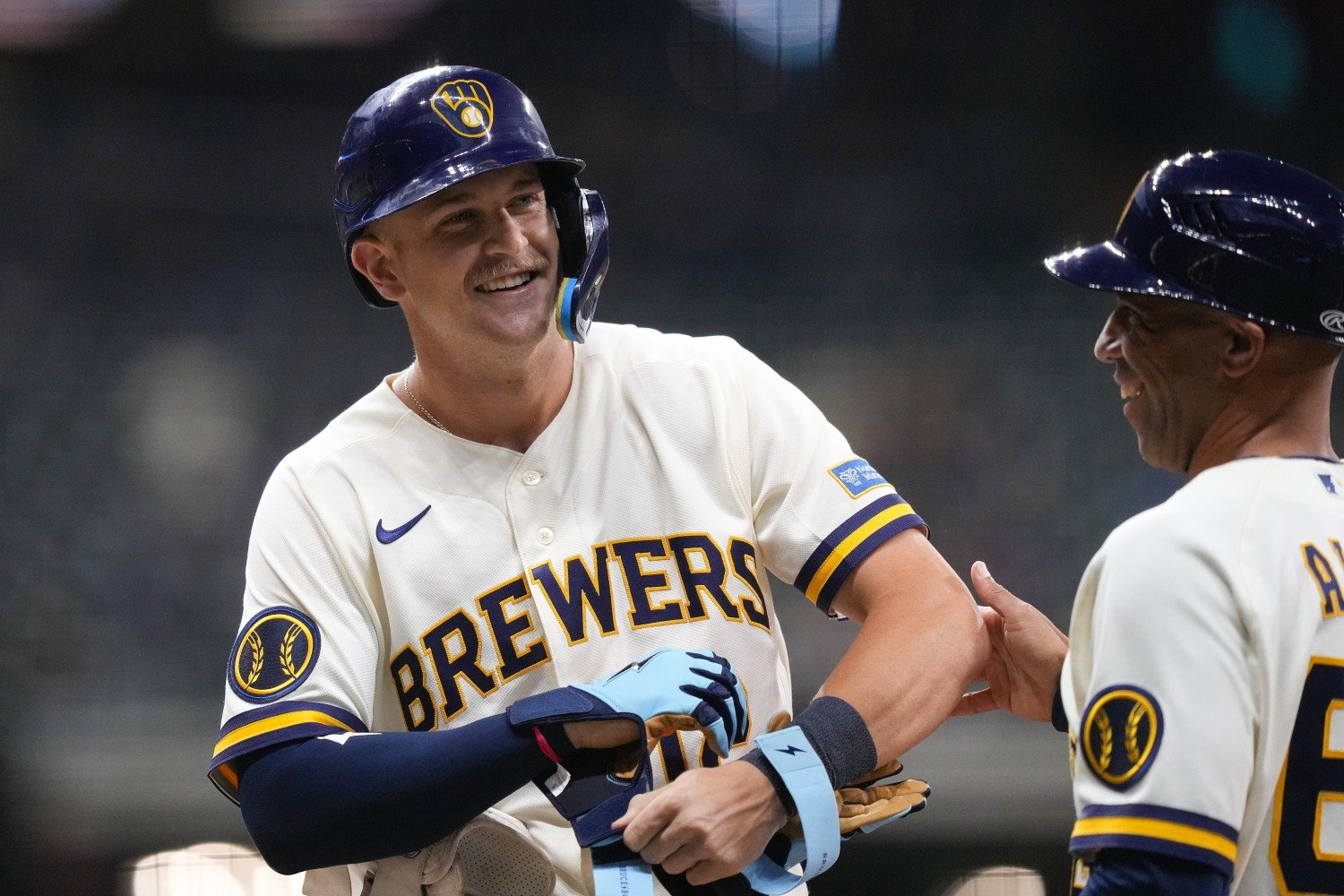 It's best to keep expectations for Cooper Pratt in his debut season a bit muted. That's not a knock on his abilities or physical ceiling, but a reminder that a player's development is rarely complete when he reaches the big leagues. There's maturation—both physical and mental—that can only take place at the game's highest level. That's especially true for Pratt, who is just 21 years old and playing in his third full professional season. It might be tempting to think that as one of the Brewers' top prospects (including Brewer Fanatic's No. 4), Pratt could transform the left side of the infield from anemic to dynamic by replacing Luis Rengifo and Joey Ortiz. In reality, the left side will probably remain the weakest portion of the lineup. Pratt helps by raising the floor there. He can be a well-below-average hitter and still exceed the combined 58 wRC+ of Rengifo and Ortiz. He'll be a better defensive shortstop than David Hamilton, and Hamilton and Ortiz will field better at third base than Rengifo. "The pieces fit easily," Pat Murphy said ahead of Pratt's debut on Tuesday, also noting that the realigned infield would allow for more days off for Brice Turang, who has appeared in 67 of Milwaukee's first 71 games. Murphy similarly sees Pratt's impact this year as more about floor than ceiling. He has a solid foundation as a player that will make the Brewers better right now. Murphy praised his defense and baseball IQ in spring training, and has done so again multiple times in the two days since Pratt's promotion. However, the whole coaching staff knows they won't see the best version of him until later, after continued development at the big-league level. "He's not going to come into his power until later on in his career, in my opinion, but I think right now we can expect him to be an on-base guy, a guy that can do some things offensively for us," Murphy said. For now, that's the best approach for Pratt to have. At 6-foot-4 and 210 pounds, he's prompted scouts to dream about the potential power in his build, but it hasn't yet developed at this stage of his career. In Triple-A Nashville this year, his 34.6% hard-hit rate and 84.4-mph average exit velocity were well below average. The current version of Pratt won't be productive if he hits the ball in the air, so maximizing his high contact rate makes much more sense. That means seeing the ball deep to make good swing decisions, with a focus on hitting low line drives and using the opposite field. The Brewers are nearing the tail end of a similar development process with Pratt's new double-play partner. After struggling early, Brice Turang minimized his swing to become an on-base-oriented hitter. Paired with his defense, that was enough to make him a solid player. Since he established that base, a stronger, more mature Turang has eased back into a longer, steeper swing and unlocked more in-game power. "With Brice, you didn't know for sure he could be this as a hitter," Murphy said. "But by his second time around, you could just see it, like, 'This guy's ready to go, he's ready to take off.' And then it doesn't always happen on your terms, because the game deals you what the game deals you. But I think it's the same way with Cooper." Pratt's at-bats in his first two games have reflected the on-base approach. He went hitless in his debut, hitting two of his three groundouts to the right side of the infield. On Wednesday, the first two hits of his career (a ground-ball single and a line-drive, RBI base hit) were both to right field. "He'll tell you it was predicted by some great swami that his first hit would be between the three and four hole," Murphy joked postgame. "I was afraid he was going to dive or something and throw me out," Pratt said. "Once I saw it go through, I was like, 'Oh, yeah.' I heard the crowd, and it was sick." Pratt's baserunning, which drew positive reviews in the minor leagues as part of his high-IQ makeup, was tested quickly. After advancing on a sacrifice bunt by David Hamilton, Christian Yelich lined a base hit just over the head of Cleveland Guardians shortstop Brayan Rocchio. Pratt read it well and got a good jump, allowing him to score from second base. "I knew once [Yelich] hit it, it was over his head," he said, "so I just freaking ran as hard as I could." After his second hit, Pratt stole his first career base. Despite not having great speed, he swiped 27 bases in 2024 and 31 last season due to his awareness. Two days in, Murphy continues to see the little things that led him to believe Pratt can be a meaningful player this year, even if he only scratches the surface of his long-term potential. "He had two great at-bats where he stayed in the zone and didn't try to do too much," Murphy said. "Really proud of him."
 -
Image courtesy of © Erik Williams-Imagn Images Since returning to play after a fractured left hamate bone put him on the shelf for a month, Andrew Vaughn has once again been a productive middle-of-the-order bat for the Brewers. In 109 plate appearances, Vaughn has slashed .354/.431/.531. Among Milwaukee hitters with at least 100 plate appearances, his 172 wRC+ is the best—no surprise, since only Yordan Alvarez and Nick Kurtz have him beat, league-wide. Despite that productivity, he hasn’t been a mainstay in the lineup. Since his return from the injured list on May 4, Vaughn has only started about half of the Brewers’ games against a right-handed pitcher—14 of 27, to be exact. In many of those games, he’s functioned instead as a weapon off the bench, already setting a new career high with eight pinch-hit appearances this year. Those limited opportunities are because Vaughn’s overall line is misleading, and he hasn’t quite been the same hitter he was last summer. According to Baseball Prospectus, his 108 DRC+ is still above average, but it's still much less sexy than his results. Baseball Savant tells the same story, as Vaughn’s .355 xwOBA is far lower than his .422 wOBA. Last season, Vaughn had a 117 DRC+ and .377 xwOBA after being traded from the White Sox to the Brewers. Furthermore, as fellow first baseman Jake Bauers has emerged as one of the club’s best hitters (both by process and by results), Vaughn has performed more like a platoon bat so far this year. He’s mashed lefties to the tune of a 1.438 OPS and 294 wRC+. A 117 DRC+ and .427 xwOBA don’t fully support that performance, but either way, Vaughn is doing good work against southpaws. He’s been more pedestrian against righties, posting a .693 OPS, 99 wRC+, 102 DRC+, and .323 xwOBA. Because those numbers all come from small samples, they don’t mean much on their own. However, Vaughn clearly has not found his best swing against right-handers. Since returning from that hamate injury (which can reduce the pop in a player’s swing for a few weeks past technical full recovery), his bat speed has dipped, particularly against righties. {C}%3C!%2D%2Dtd%20%7Bborder%3A%201px%20solid%20%23cccccc%3B%7Dbr%20%7Bmso-data-placement%3Asame-cell%3B%7D%2D%2D%3E--> Season Bat Speed (RHP) Bat Speed (LHP) 2025 (MIL) 70.9 71.6 2026 68.8 71.1 Bat speed isn’t everything. Hitting is not just about how fast your bat is traveling when you meet the ball, but when and where your bat makes contact. Vaughn has always had below-average bat speed, but above-average bat control. That’s helped him continue to produce this year, as he’s whiffing less and hitting more line drives. A slower swing has been part of an issue against same-handed pitchers, though. Without his usual bat speed, Vaughn has been late more often on right-handed fastballs. Thanks to that good bat control, Vaughn is still lining up his bat with the ball well enough, even when he’s late. That means he can still shoot the ball to right field; his rate of opposite field contact against right-handed fastballs is up to a career-high 41.4% this year. However, those kinds of hits are mostly singles and the occasional double. That’s how Vaughn is still hitting a decent .274 against righties this year, but only slugging .355. It’s the opposite against right-handed breaking balls. Vaughn is early more often on those pitches, leading to more whiffs and softer contact. Since returning to play, Vaughn’s swing has looked diminished, and his timing has been caught in between without the platoon advantage. With Bauers earning everyday at-bats and Garrett Mitchell and Sal Frelick swinging the bat better of late, Vaughn has not been a leading candidate for the greatest share of playing time against right-handers. The good news is that while his bat speed remains lower than last season, it has ticked up over the last couple of weeks. If Vaughn looks more like the hitter he was last season—the one who was regularly on time, allowing him to use the middle of the field and pull enough well-struck balls into the gap—it won’t take much for Pat Murphy to grant him more starts. He drew back-to-back starts against righties last week, with Bauers sliding to the outfield. “He’s a professional hitter, and we need him in there,” Murphy said over the weekend. “The only way to get them both in there is [for] Jake to go out and play the outfield, which he’s done quite well.” Still, Vaughn has to show a bit more to secure more of that playing time. Plenty of season remains for him to do so. View full article
-
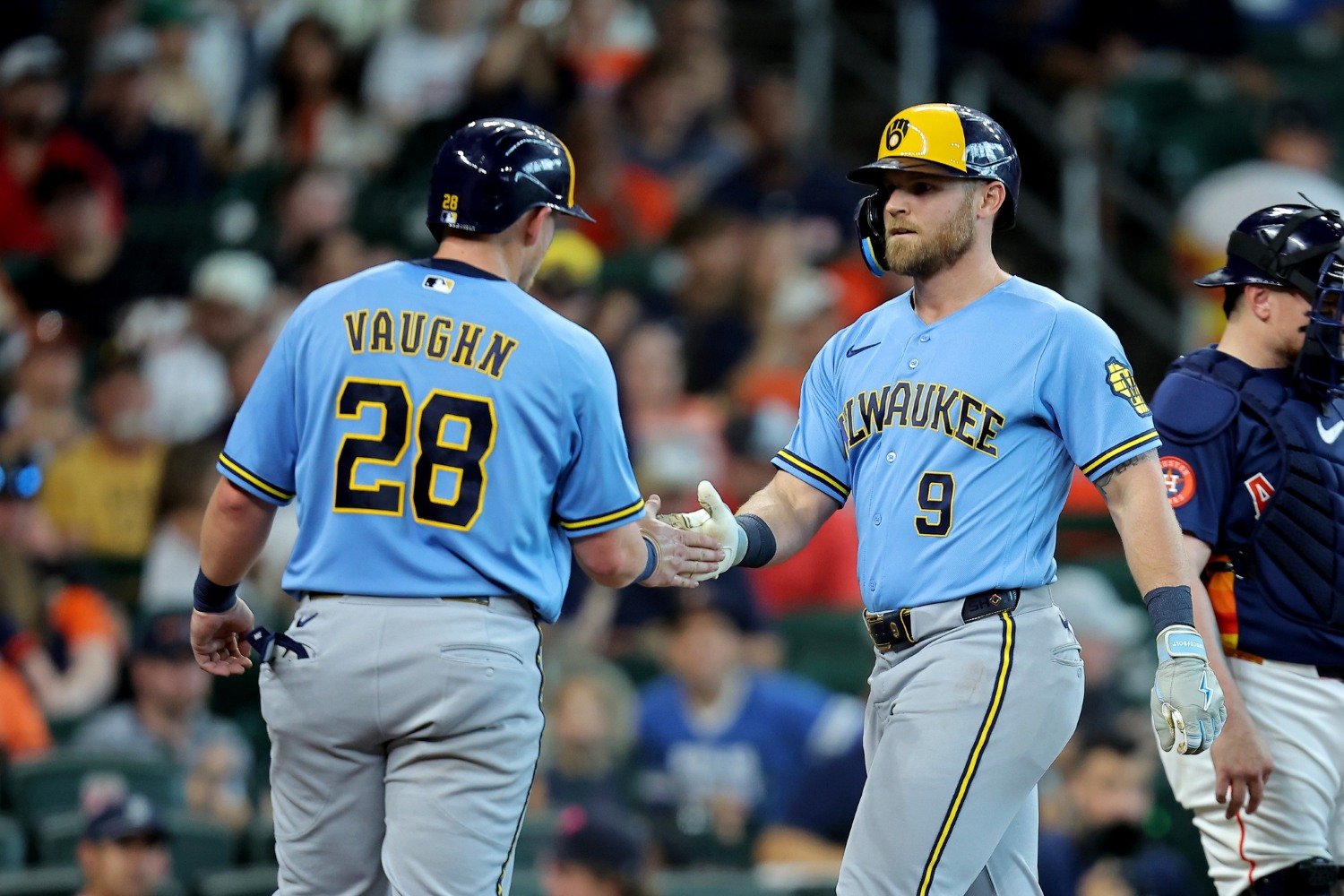 Since returning to play after a fractured left hamate bone put him on the shelf for a month, Andrew Vaughn has once again been a productive middle-of-the-order bat for the Brewers. In 109 plate appearances, Vaughn has slashed .354/.431/.531. Among Milwaukee hitters with at least 100 plate appearances, his 172 wRC+ is the best—no surprise, since only Yordan Alvarez and Nick Kurtz have him beat, league-wide. Despite that productivity, he hasn’t been a mainstay in the lineup. Since his return from the injured list on May 4, Vaughn has only started about half of the Brewers’ games against a right-handed pitcher—14 of 27, to be exact. In many of those games, he’s functioned instead as a weapon off the bench, already setting a new career high with eight pinch-hit appearances this year. Those limited opportunities are because Vaughn’s overall line is misleading, and he hasn’t quite been the same hitter he was last summer. According to Baseball Prospectus, his 108 DRC+ is still above average, but it's still much less sexy than his results. Baseball Savant tells the same story, as Vaughn’s .355 xwOBA is far lower than his .422 wOBA. Last season, Vaughn had a 117 DRC+ and .377 xwOBA after being traded from the White Sox to the Brewers. Furthermore, as fellow first baseman Jake Bauers has emerged as one of the club’s best hitters (both by process and by results), Vaughn has performed more like a platoon bat so far this year. He’s mashed lefties to the tune of a 1.438 OPS and 294 wRC+. A 117 DRC+ and .427 xwOBA don’t fully support that performance, but either way, Vaughn is doing good work against southpaws. He’s been more pedestrian against righties, posting a .693 OPS, 99 wRC+, 102 DRC+, and .323 xwOBA. Because those numbers all come from small samples, they don’t mean much on their own. However, Vaughn clearly has not found his best swing against right-handers. Since returning from that hamate injury (which can reduce the pop in a player’s swing for a few weeks past technical full recovery), his bat speed has dipped, particularly against righties. {C}%3C!%2D%2Dtd%20%7Bborder%3A%201px%20solid%20%23cccccc%3B%7Dbr%20%7Bmso-data-placement%3Asame-cell%3B%7D%2D%2D%3E--> Season Bat Speed (RHP) Bat Speed (LHP) 2025 (MIL) 70.9 71.6 2026 68.8 71.1 Bat speed isn’t everything. Hitting is not just about how fast your bat is traveling when you meet the ball, but when and where your bat makes contact. Vaughn has always had below-average bat speed, but above-average bat control. That’s helped him continue to produce this year, as he’s whiffing less and hitting more line drives. A slower swing has been part of an issue against same-handed pitchers, though. Without his usual bat speed, Vaughn has been late more often on right-handed fastballs. Thanks to that good bat control, Vaughn is still lining up his bat with the ball well enough, even when he’s late. That means he can still shoot the ball to right field; his rate of opposite field contact against right-handed fastballs is up to a career-high 41.4% this year. However, those kinds of hits are mostly singles and the occasional double. That’s how Vaughn is still hitting a decent .274 against righties this year, but only slugging .355. It’s the opposite against right-handed breaking balls. Vaughn is early more often on those pitches, leading to more whiffs and softer contact. Since returning to play, Vaughn’s swing has looked diminished, and his timing has been caught in between without the platoon advantage. With Bauers earning everyday at-bats and Garrett Mitchell and Sal Frelick swinging the bat better of late, Vaughn has not been a leading candidate for the greatest share of playing time against right-handers. The good news is that while his bat speed remains lower than last season, it has ticked up over the last couple of weeks. If Vaughn looks more like the hitter he was last season—the one who was regularly on time, allowing him to use the middle of the field and pull enough well-struck balls into the gap—it won’t take much for Pat Murphy to grant him more starts. He drew back-to-back starts against righties last week, with Bauers sliding to the outfield. “He’s a professional hitter, and we need him in there,” Murphy said over the weekend. “The only way to get them both in there is [for] Jake to go out and play the outfield, which he’s done quite well.” Still, Vaughn has to show a bit more to secure more of that playing time. Plenty of season remains for him to do so.
 -
Breaking Down Jacob Misiorowski's Record-Setting Maddux by the Numbers
Jack Stern posted an article in Brewers
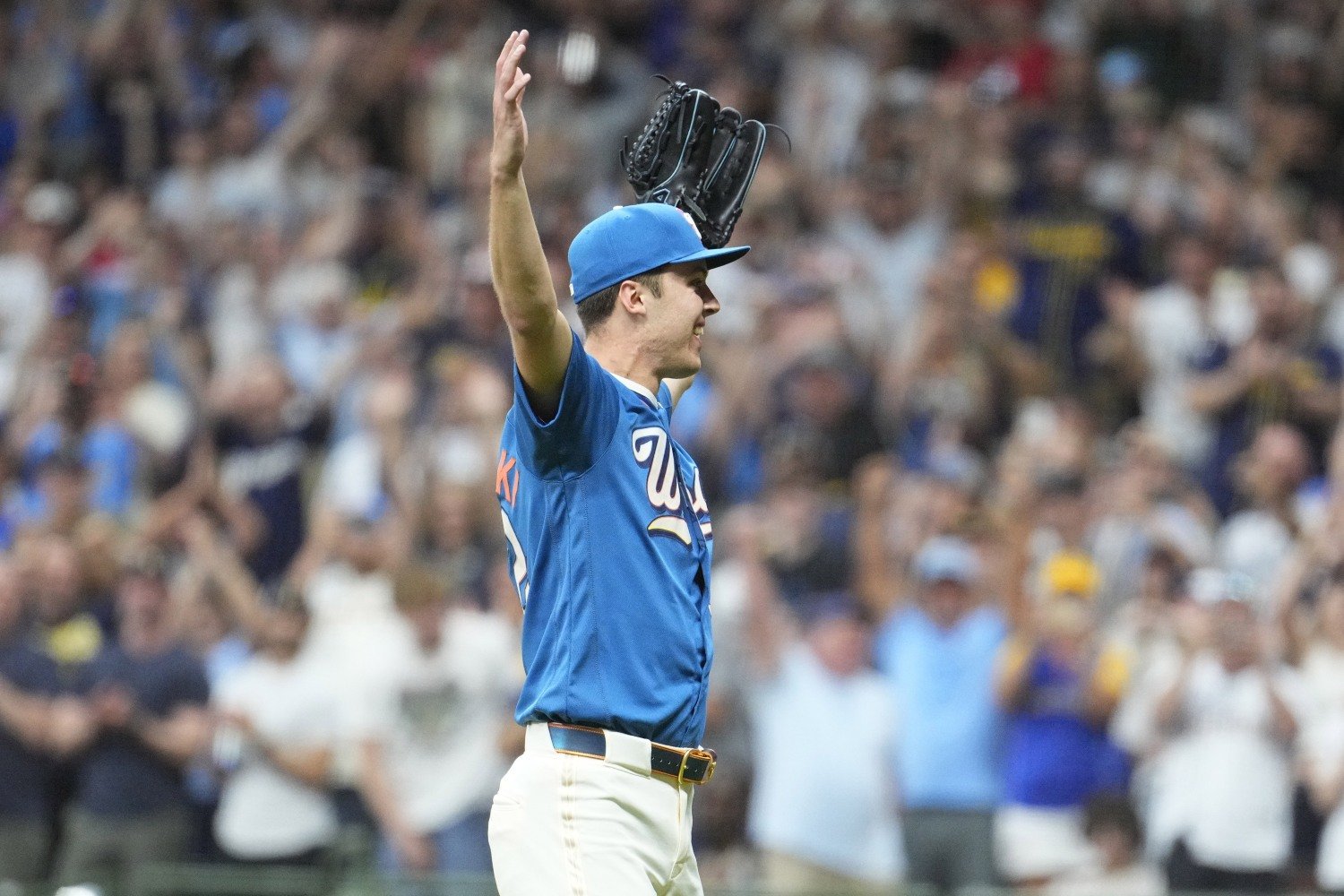 On the one-year anniversary of his big-league debut, Jacob Misiorowski delivered one of the best starts in modern baseball history. That might sound like hyperbole, but it’s hard to dominate hitters more wholly than Misiorowski dismantled Philadelphia Phillies hitters on Friday night at American Family Field: a 95-pitch, one-hit complete-game shutout with 15 strikeouts. According to Stathead, it was the most strikeouts in a Maddux (a complete-game shutout in under 100 pitches, named for inner-circle Hall of Famer Greg Maddux) since consistent pitch-count tracking began in 1988. “For me, personally, that was as good as it gets,” Pat Murphy said postgame. “That’s probably the first one ever,” Misiorowski said, when asked if he had ever pitched that well at any level in his life. Just listing the box score line doesn’t fully do the start justice. Misiorowski threw hard. He missed bats. He induced weak contact. He controlled the count. He showed five different pitches. There’s a lot to unpack regarding just how complete his dominance was, so let’s walk through each notable number one by one. 104.5 mph This is where Misiorowski first turned heads, and it happened right out of the gates, when he struck out Kyle Schwarber to lead off the game. The 2-2 fastball that Schwarber foul-tipped for strike three was 104.5 mph, the fastest pitch thrown by a starting pitcher in the pitch-tracking era (since 2008). And Misiorowski threw it when he felt his worst all night. “To be honest, the first few innings, I feel like I didn’t have it all that well,” he said. “I was just hoping they would swing, and they were hacking away, so that helped a lot.” Misiorowski has set that record multiple times, as he now owns the 17 fastest measured pitches thrown by a starter. He actually set the new high twice in the Schwarber at-bat, the first coming when he unleashed a 104-mph fastball with his third pitch. He still thinks there’s more in the tank, too. “It’s awesome,” Misiorowski said of setting another velocity record. “I mean, honestly, that’s really cool, but I think there’s always another step to go with it, so keep pushing it.” 15 strikeouts It was a career-high for Misiorowski, who has already pitched eight 10-plus strikeout games in 29 career regular-season appearances. He became the third pitcher in franchise history to record at least 15 strikeouts in a game, and the first since Corbin Burnes on August 11, 2021. Misiorowski’s outing was also baseball’s first 15-strikeout start in nearly a year, since Atlanta’s Grant Holmes did it on June 15, 2025. Eight of those strikeouts came against the first nine batters he faced, and 12 were on his signature fastball. Misiorowski’s heater has done the heavy lifting in most of his starts this year, and Friday night was no different. 24 fastball whiffs That’s the second-most swings and misses against a four-seam fastball in any outing in the pitch-tracking era. Only James Paxton managed more when he induced 25 four-seam whiffs on May 2, 2018. (Paxton struck out 16 that day in just seven innings of work, but needed 105 pitches to get those 21 outs.) Misiorowski threw his fastball 72.6% of the time, the second time this season he’s thrown it at more than a 70% rate in a start. For most of the night, he peppered one after another near the top of the zone, where it’s nearly impossible to get on top of with the bat. 3 hard-hit balls When the Phillies did make contact, it wasn’t solid contact. Of their 12 batted balls against Misiorowski, only three were hit with an exit velocity above 95 mph. Two of those were ground balls. The other was Schwarber’s line-drive single on a slider in the fourth inning, the lone Philadelphia baserunner of the night. “I thought I located it well, maybe slightly off,” Misiorowski said. “I don’t remember exactly where it was at, but I’m happy with it. Just trying to jump out ahead of him. He’s probably thinking heater, and he poked it through.” 95 pitches, 74 strikes Getting as much swing-and-miss as Misiorowski did is often a double-edged sword. It can put the pitcher in control of an outing, but it can also cut that outing short by inflating pitch counts. Balls in play make for quicker outs than strikeouts. That didn’t matter for Misiorowski, though, because he was historically efficient. He issued zero walks and never reached a three-ball count. Only five batters reached two balls. Misiorowski’s command has made massive strides this year. A year ago at this time, he was debuting in the big leagues after walking 12.2% of batters in Triple-A Nashville. His walk rate in 2026 is now 6.7%, well below the league average of 9.2%. That’s the product of focused, diligent work with the Brewers’ big-league trainers and pitching coaches. After adding muscle and ironing out his mechanics, Misiorowski’s lower half is stronger and more controlled than ever. “It’s a lot of work from people behind me and in the training room and weight room and all that,” he said. “The kid is working for it,” Murphy said. “He’ll be here tomorrow doing his work, and that’s what it’s about. Today is over. It’s a great accomplishment, enjoy it, but tomorrow’s a day of work. Get back to it tomorrow. He’s that type of kid.” 9 innings Given how he felt earlier in the outing, the thought of going the distance didn’t cross Misiorowski’s mind for most of the night. “Honestly, I thought the seventh was going to be it,” he said. “When we scored all those runs, I thought they were going to turn to me and be like, ‘Well, you’re done.’” Misiorowski went back out for the eighth, though. After he completed that frame with just 86 pitches, there wasn’t much discussion. “At the end of the eighth, I’m like, ‘You’re good, right?’” Murphy said. “He looked at me like, ‘No way. I’m going back out.’ I was joking, of course. William [Contreras] looked at me like, ‘Really?’” American Family Field came to its feet when Misiorowski returned for the ninth inning. When he reached the mound, he paused for a few seconds to take it all in. “That was cool,” he said. “It’s awesome to have the support from the city and everyone like that.” Misiorowski’s velocity dipped below triple digits a few times in the eighth inning, but the adrenaline boost of the moment helped him reach back for some of his best velocity to close things out. His average fastball velocity in the ninth was 102.6 mph, his highest since the first inning. His last fastball of the night was 103.1 mph. It struck out Justin Crawford swinging, the final bow on the most dominant Maddux on record. “I can’t remember one better,” Murphy said. In Milwaukee, at least, no one can.
 -
Image courtesy of © Michael McLoone-Imagn Images On the one-year anniversary of his big-league debut, Jacob Misiorowski delivered one of the best starts in modern baseball history. That might sound like hyperbole, but it’s hard to dominate hitters more wholly than Misiorowski dismantled Philadelphia Phillies hitters on Friday night at American Family Field: a 95-pitch, one-hit complete-game shutout with 15 strikeouts. According to Stathead, it was the most strikeouts in a Maddux (a complete-game shutout in under 100 pitches, named for inner-circle Hall of Famer Greg Maddux) since consistent pitch-count tracking began in 1988. “For me, personally, that was as good as it gets,” Pat Murphy said postgame. “That’s probably the first one ever,” Misiorowski said, when asked if he had ever pitched that well at any level in his life. Just listing the box score line doesn’t fully do the start justice. Misiorowski threw hard. He missed bats. He induced weak contact. He controlled the count. He showed five different pitches. There’s a lot to unpack regarding just how complete his dominance was, so let’s walk through each notable number one by one. 104.5 mph This is where Misiorowski first turned heads, and it happened right out of the gates, when he struck out Kyle Schwarber to lead off the game. The 2-2 fastball that Schwarber foul-tipped for strike three was 104.5 mph, the fastest pitch thrown by a starting pitcher in the pitch-tracking era (since 2008). And Misiorowski threw it when he felt his worst all night. “To be honest, the first few innings, I feel like I didn’t have it all that well,” he said. “I was just hoping they would swing, and they were hacking away, so that helped a lot.” Misiorowski has set that record multiple times, as he now owns the 17 fastest measured pitches thrown by a starter. He actually set the new high twice in the Schwarber at-bat, the first coming when he unleashed a 104-mph fastball with his third pitch. He still thinks there’s more in the tank, too. “It’s awesome,” Misiorowski said of setting another velocity record. “I mean, honestly, that’s really cool, but I think there’s always another step to go with it, so keep pushing it.” 15 strikeouts It was a career-high for Misiorowski, who has already pitched eight 10-plus strikeout games in 29 career regular-season appearances. He became the third pitcher in franchise history to record at least 15 strikeouts in a game, and the first since Corbin Burnes on August 11, 2021. Misiorowski’s outing was also baseball’s first 15-strikeout start in nearly a year, since Atlanta’s Grant Holmes did it on June 15, 2025. Eight of those strikeouts came against the first nine batters he faced, and 12 were on his signature fastball. Misiorowski’s heater has done the heavy lifting in most of his starts this year, and Friday night was no different. 24 fastball whiffs That’s the second-most swings and misses against a four-seam fastball in any outing in the pitch-tracking era. Only James Paxton managed more when he induced 25 four-seam whiffs on May 2, 2018. (Paxton struck out 16 that day in just seven innings of work, but needed 105 pitches to get those 21 outs.) Misiorowski threw his fastball 72.6% of the time, the second time this season he’s thrown it at more than a 70% rate in a start. For most of the night, he peppered one after another near the top of the zone, where it’s nearly impossible to get on top of with the bat. 3 hard-hit balls When the Phillies did make contact, it wasn’t solid contact. Of their 12 batted balls against Misiorowski, only three were hit with an exit velocity above 95 mph. Two of those were ground balls. The other was Schwarber’s line-drive single on a slider in the fourth inning, the lone Philadelphia baserunner of the night. “I thought I located it well, maybe slightly off,” Misiorowski said. “I don’t remember exactly where it was at, but I’m happy with it. Just trying to jump out ahead of him. He’s probably thinking heater, and he poked it through.” 95 pitches, 74 strikes Getting as much swing-and-miss as Misiorowski did is often a double-edged sword. It can put the pitcher in control of an outing, but it can also cut that outing short by inflating pitch counts. Balls in play make for quicker outs than strikeouts. That didn’t matter for Misiorowski, though, because he was historically efficient. He issued zero walks and never reached a three-ball count. Only five batters reached two balls. Misiorowski’s command has made massive strides this year. A year ago at this time, he was debuting in the big leagues after walking 12.2% of batters in Triple-A Nashville. His walk rate in 2026 is now 6.7%, well below the league average of 9.2%. That’s the product of focused, diligent work with the Brewers’ big-league trainers and pitching coaches. After adding muscle and ironing out his mechanics, Misiorowski’s lower half is stronger and more controlled than ever. “It’s a lot of work from people behind me and in the training room and weight room and all that,” he said. “The kid is working for it,” Murphy said. “He’ll be here tomorrow doing his work, and that’s what it’s about. Today is over. It’s a great accomplishment, enjoy it, but tomorrow’s a day of work. Get back to it tomorrow. He’s that type of kid.” 9 innings Given how he felt earlier in the outing, the thought of going the distance didn’t cross Misiorowski’s mind for most of the night. “Honestly, I thought the seventh was going to be it,” he said. “When we scored all those runs, I thought they were going to turn to me and be like, ‘Well, you’re done.’” Misiorowski went back out for the eighth, though. After he completed that frame with just 86 pitches, there wasn’t much discussion. “At the end of the eighth, I’m like, ‘You’re good, right?’” Murphy said. “He looked at me like, ‘No way. I’m going back out.’ I was joking, of course. William [Contreras] looked at me like, ‘Really?’” American Family Field came to its feet when Misiorowski returned for the ninth inning. When he reached the mound, he paused for a few seconds to take it all in. “That was cool,” he said. “It’s awesome to have the support from the city and everyone like that.” Misiorowski’s velocity dipped below triple digits a few times in the eighth inning, but the adrenaline boost of the moment helped him reach back for some of his best velocity to close things out. His average fastball velocity in the ninth was 102.6 mph, his highest since the first inning. His last fastball of the night was 103.1 mph. It struck out Justin Crawford swinging, the final bow on the most dominant Maddux on record. “I can’t remember one better,” Murphy said. In Milwaukee, at least, no one can. View full article
-
A New Way to See Why Jacob Misiorowski's Fastball Dominates Hitters
Jack Stern posted an article in Brewers
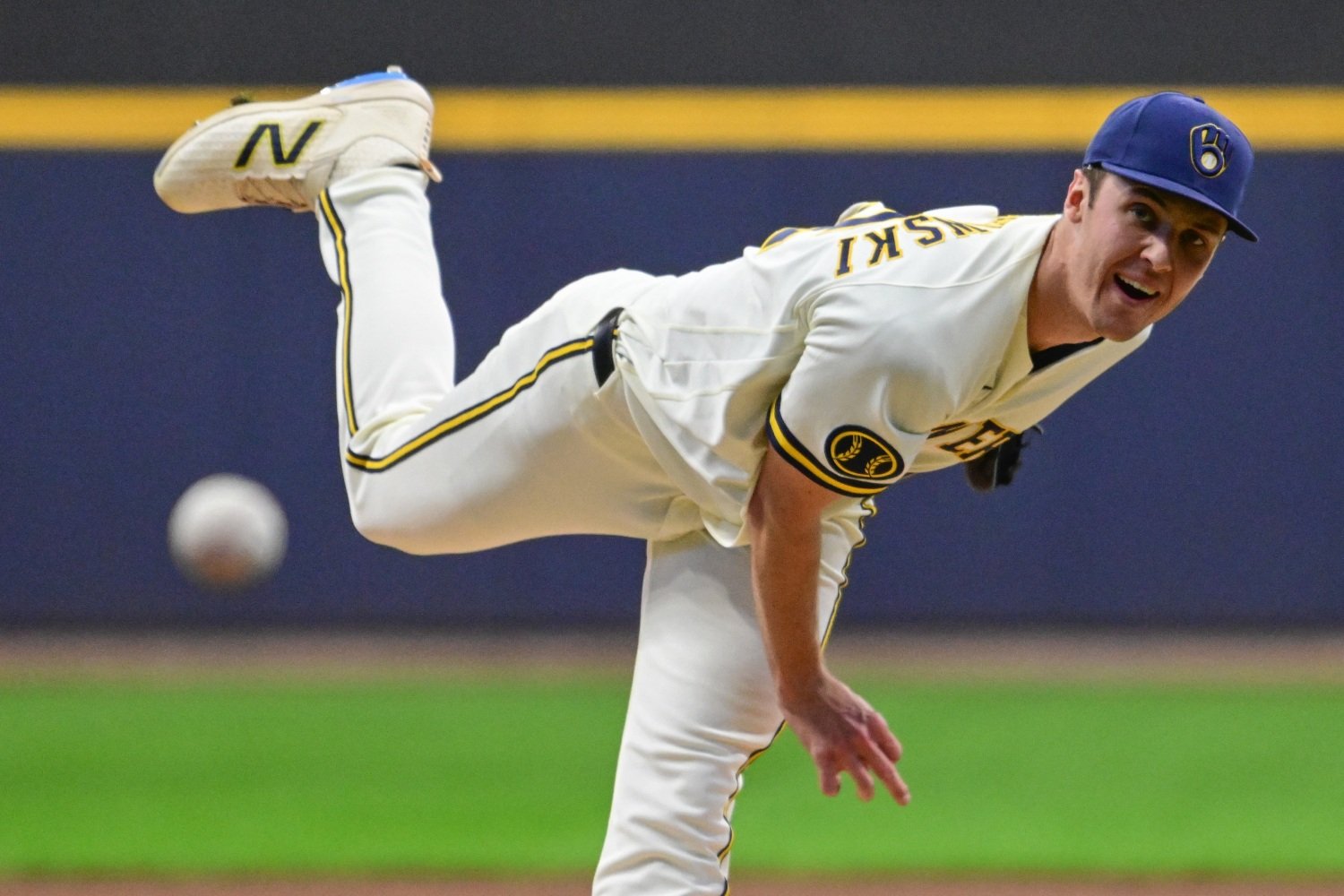 At this point, most of the baseball world knows Jacob Misiorowski has one of baseball’s best fastballs. According to Statcast, Misiorowski’s heater ranks third among qualified four-seamers in pitcher run value (+12), first in whiff rate (42.5%), and 14th in expected slugging against (.262). Those following the game closely probably also know what makes that fastball so tough to hit. In addition to averaging 100 and touching 104 MPH with it, Misiorowski’s 7.5 feet of extension down the mound adds an extra 2 MPH of perceived velocity by reducing a hitter’s reaction time, and he generates more carry on the ball from backspin than one expects to see from his low arm slot. In the 365 days since his major-league debut, Misiorowski has thrown 741 pitches with a perceived velocity of 102 MPH or higher, which is more than all but one pitcher—Aroldis Chapman, who's been pitching in the majors continuously since Misiorowski was eight years old—has in the pitch-tracking era. That abnormal combination of timing and angles often makes it nearly impossible to get on top of his fastball. Thanks to Statcast’s new swing timing metrics, we can confirm how Misiorowski’s fastball misses bats, rather than inferring it from the eye test and hitter testimonies. For the most part, that original conclusion was correct. Hitters are later on his fastball than the MLB average (the middle bell curves), and they swing underneath it more than average (the rightmost bell curves). Look more closely, though, and there are more details about how much each attribute of Misiorowski’s fastball leads to those imprecise swings. In the graphic above, the timing and vertical position of the swing are shown separately, but in reality, they’re closely related. Being late on a four-seamer typically makes a hitter more likely to swing underneath it. Every hitter’s bat path starts by traveling downward, at least slightly. If he starts his swing late on an elevated fastball, his hands and bat will probably still be traveling downward as his bat comes through the hitting zone, so he’ll swing farther underneath the ball. But against Misiorowski’s fastball, that relationship between timing and bat path isn’t perfectly proportional, particularly compared to most pitchers. Hitters are late on 35% of swings against it, which ranks 41st among qualified four-seamers, but they’re underneath it on 63% of swings, which ranks 7th. Put another way, Misiorowski’s fastball gets no more late swings than Kyle Harrison’s, but it gets swings underneath it an additional 4% of the time. That means that abnormal carry from a low slot—15.6 inches of induced vertical break from a 5.26-foot release height—might be most responsible for Misiorowski’s dominance, even if he gets more attention for lighting up the radar gun. That’s good news, because a pitcher’s excellence is more sustainable when it’s not tied strictly to velocity. Sitting in the triple digits takes Misiorowski’s fastball to another level, but it can still get bad swings underneath the ball at 97 mph. It’s not just a good pitch because he throws hard. Misioroswki’s unicorn fastball also elevates his other pitches, particularly his curveball. When a hitter takes a bad swing at a breaking ball, he’s usually early. That’s the pitcher’s goal. It’s a slower pitch than a fastball, so it’s meant to catch guys out in front when they’re on time for a heater. Then there’s Misiorowski, who doesn’t get many early swings on his curveball compared to the average pitcher. Instead, 19% of swings against it are late, the highest rate among qualified curveballs. Once again, a big reason for this is that Misiorowski throws hard. His curveball averages 87.4 MPH, the fifth-fastest qualified curveball in the game. But like his fastball, there’s much more to it than just velocity. Misiorowski’s fastball is so good that hitters must devote their full energy to squaring it up. That means eliminating his slowest pitch. If a pitch starts around the zone, they’ll see it as a fastball, and beating the fastball—getting on top of it when it’s in the zone, and laying off when it’s not—is the top priority. If a pitch starts closer to the knees, they’ll often assume it’s a curveball and let it go for a ball, trying to stay on the fastball. That’s the right approach, as most of Misiorowski’s in-zone pitches are four-seamers, cutters, and sliders. Unsurprisingly, opponents are swinging slightly more at Misiorowski’s hard stuff this year, but far less at his curveball. When Misiorowski does plant an in-zone curveball, their pitch recognition short-circuits, prompting most of those late swings. Here’s Roman Anthony taking a very late cut at a comeback curveball. anthony.mp4 Here’s Pete Crow-Armstrong making a late decision and getting tied up by a back-foot breaker. pca.mp4 In the same game, Seiya Suzuki managed to single it through the right side, but only via an 81.3-mph roller on an emergency swing. suzuki.mp4 For another non-whiff, here’s Jazz Chisholm Jr. realizing too late that he’s seeing a curveball down the middle, not an elevated two-strike fastball, and chopping it into the ground with a late, all-arms swing. jazz.mp4 Swings on in-zone curveballs are often bad news for pitchers. Across the league, they’ve allowed a .348 xwOBA and -25 pitcher run value on such swings. In many cases, the hitter ambushed a hanger. Misiorowski, meanwhile, has allowed just a .213 xwOBA on in-zone curveball swings with a +1 run value, meaning it’s actually been an effective pitch for him. It all stems from establishing his elite fastball. It was exactly one year ago that Misiorowski made his MLB debut. There were some early bumps in the road, but he matured into one of baseball’s best starting pitchers remarkably quickly. He’s gotten plenty of complimentary coverage in that time, and yet, there’s somehow still more about his performance to admire than meets the eye.
 -
Image courtesy of © Benny Sieu-Imagn Images At this point, most of the baseball world knows Jacob Misiorowski has one of baseball’s best fastballs. According to Statcast, Misiorowski’s heater ranks third among qualified four-seamers in pitcher run value (+12), first in whiff rate (42.5%), and 14th in expected slugging against (.262). Those following the game closely probably also know what makes that fastball so tough to hit. In addition to averaging 100 and touching 104 MPH with it, Misiorowski’s 7.5 feet of extension down the mound adds an extra 2 MPH of perceived velocity by reducing a hitter’s reaction time, and he generates more carry on the ball from backspin than one expects to see from his low arm slot. In the 365 days since his major-league debut, Misiorowski has thrown 741 pitches with a perceived velocity of 102 MPH or higher, which is more than all but one pitcher—Aroldis Chapman, who's been pitching in the majors continuously since Misiorowski was eight years old—has in the pitch-tracking era. That abnormal combination of timing and angles often makes it nearly impossible to get on top of his fastball. Thanks to Statcast’s new swing timing metrics, we can confirm how Misiorowski’s fastball misses bats, rather than inferring it from the eye test and hitter testimonies. For the most part, that original conclusion was correct. Hitters are later on his fastball than the MLB average (the middle bell curves), and they swing underneath it more than average (the rightmost bell curves). Look more closely, though, and there are more details about how much each attribute of Misiorowski’s fastball leads to those imprecise swings. In the graphic above, the timing and vertical position of the swing are shown separately, but in reality, they’re closely related. Being late on a four-seamer typically makes a hitter more likely to swing underneath it. Every hitter’s bat path starts by traveling downward, at least slightly. If he starts his swing late on an elevated fastball, his hands and bat will probably still be traveling downward as his bat comes through the hitting zone, so he’ll swing farther underneath the ball. But against Misiorowski’s fastball, that relationship between timing and bat path isn’t perfectly proportional, particularly compared to most pitchers. Hitters are late on 35% of swings against it, which ranks 41st among qualified four-seamers, but they’re underneath it on 63% of swings, which ranks 7th. Put another way, Misiorowski’s fastball gets no more late swings than Kyle Harrison’s, but it gets swings underneath it an additional 4% of the time. That means that abnormal carry from a low slot—15.6 inches of induced vertical break from a 5.26-foot release height—might be most responsible for Misiorowski’s dominance, even if he gets more attention for lighting up the radar gun. That’s good news, because a pitcher’s excellence is more sustainable when it’s not tied strictly to velocity. Sitting in the triple digits takes Misiorowski’s fastball to another level, but it can still get bad swings underneath the ball at 97 mph. It’s not just a good pitch because he throws hard. Misioroswki’s unicorn fastball also elevates his other pitches, particularly his curveball. When a hitter takes a bad swing at a breaking ball, he’s usually early. That’s the pitcher’s goal. It’s a slower pitch than a fastball, so it’s meant to catch guys out in front when they’re on time for a heater. Then there’s Misiorowski, who doesn’t get many early swings on his curveball compared to the average pitcher. Instead, 19% of swings against it are late, the highest rate among qualified curveballs. Once again, a big reason for this is that Misiorowski throws hard. His curveball averages 87.4 MPH, the fifth-fastest qualified curveball in the game. But like his fastball, there’s much more to it than just velocity. Misiorowski’s fastball is so good that hitters must devote their full energy to squaring it up. That means eliminating his slowest pitch. If a pitch starts around the zone, they’ll see it as a fastball, and beating the fastball—getting on top of it when it’s in the zone, and laying off when it’s not—is the top priority. If a pitch starts closer to the knees, they’ll often assume it’s a curveball and let it go for a ball, trying to stay on the fastball. That’s the right approach, as most of Misiorowski’s in-zone pitches are four-seamers, cutters, and sliders. Unsurprisingly, opponents are swinging slightly more at Misiorowski’s hard stuff this year, but far less at his curveball. When Misiorowski does plant an in-zone curveball, their pitch recognition short-circuits, prompting most of those late swings. Here’s Roman Anthony taking a very late cut at a comeback curveball. anthony.mp4 Here’s Pete Crow-Armstrong making a late decision and getting tied up by a back-foot breaker. pca.mp4 In the same game, Seiya Suzuki managed to single it through the right side, but only via an 81.3-mph roller on an emergency swing. suzuki.mp4 For another non-whiff, here’s Jazz Chisholm Jr. realizing too late that he’s seeing a curveball down the middle, not an elevated two-strike fastball, and chopping it into the ground with a late, all-arms swing. jazz.mp4 Swings on in-zone curveballs are often bad news for pitchers. Across the league, they’ve allowed a .348 xwOBA and -25 pitcher run value on such swings. In many cases, the hitter ambushed a hanger. Misiorowski, meanwhile, has allowed just a .213 xwOBA on in-zone curveball swings with a +1 run value, meaning it’s actually been an effective pitch for him. It all stems from establishing his elite fastball. It was exactly one year ago that Misiorowski made his MLB debut. There were some early bumps in the road, but he matured into one of baseball’s best starting pitchers remarkably quickly. He’s gotten plenty of complimentary coverage in that time, and yet, there’s somehow still more about his performance to admire than meets the eye. View full article
-
Brandon Woodruff Looks Like He's Reinventing Himself (Again)
Jack Stern posted an article in Brewers
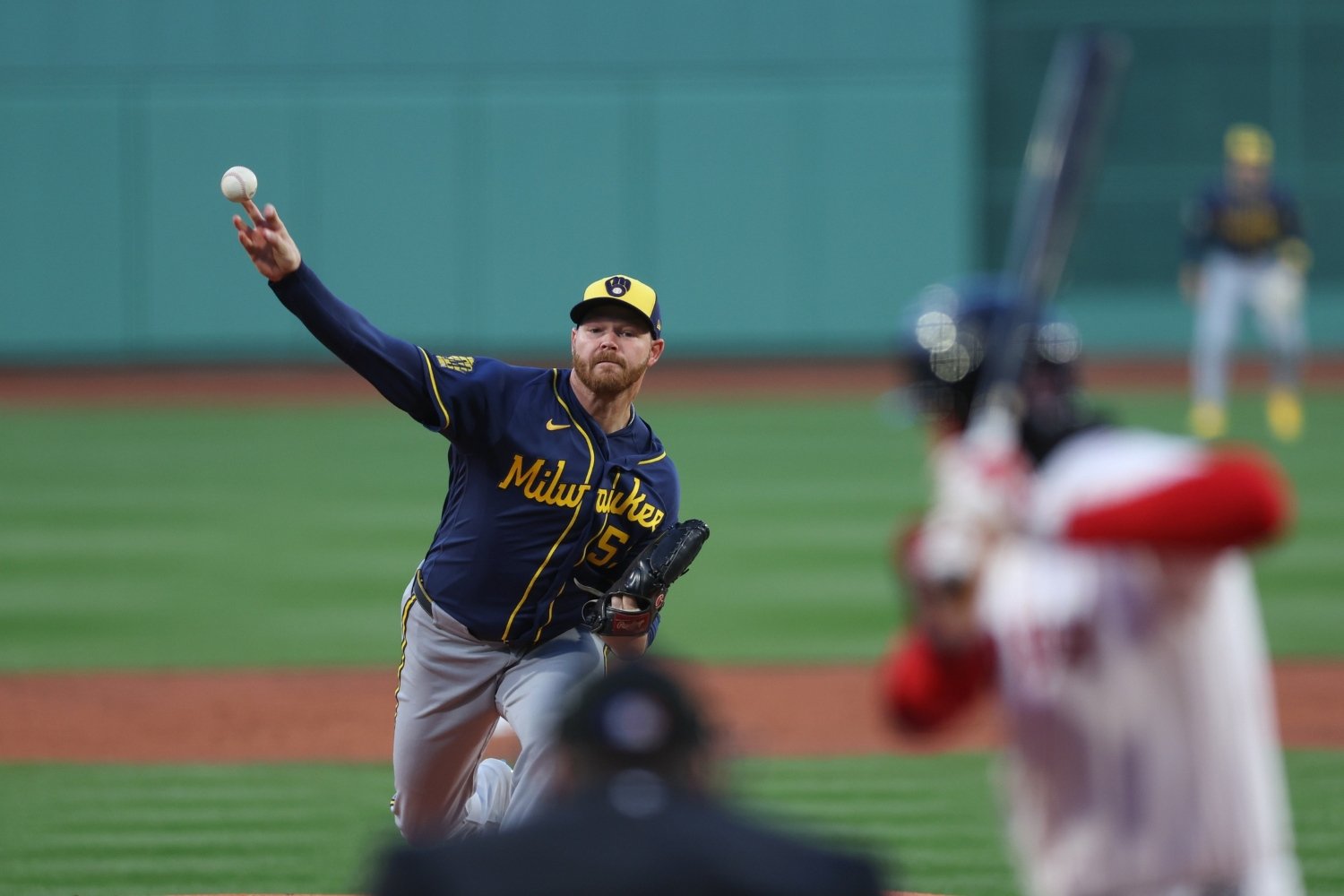 It's been six weeks since Brandon Woodruff last pitched in a big-league game. After leaving his start on April 30 with a dead arm and having a cyst drained in his surgically repaired right shoulder, he and the Brewers have taken his rehab slowly. It seems he's finally nearing a return, though, as he threw 68 pitches in an Arizona Complex League game on Tuesday night. Before that outing, Woodruff threw three simulated innings of live at-bats in Milwaukee last week. With media present for that session, he appeared to lean heavily on cutters and changeups. There were no public velocity readings, but his main fastballs looked slower than his usual post-surgery cruising speed of 92-93 mph. Velocity didn't look like the focus of the session, anyway, as MLB.com's Adam McCalvy reported that Woodruff was testing a lower arm slot so that his shoulder could work more efficiently. Those changes in release, velocity, and pitch usage all carried over to the ACL, where Woodruff worked 3 2/3 innings. The results from that outing don't matter, but there are takeaways to glean from how his stuff moved and how he used it. Like his simulated outing, there were signs that Woodruff might return to the big leagues as a slightly different pitcher than he was several weeks ago. Woodruff's four-seamer and sinker combined to average 90.6 mph on Tuesday. That's a welcome improvement after his fastballs dropped into the mid-80s in his last big-league appearance, but it's also more than a tick below his season average of 92.2. He was also cutting the ball more from his lower slot, leading to less induced vertical break on his four-seamer—the late carry that got hitters to swing underneath the ball for whiffs, even at 92—and less arm-side run on his two-seamer and changeup. Perhaps Woodruff will find more of that backspin carry as he settles into that lower slot. The adrenaline boost of pitching in meaningful games could also nudge that velocity closer to that 91-93 range, where he learned to succeed last year by tunneling his two-seamer and new cutter to work both sides of the plate. Right now, though, he looks like a pitcher responding to the possibility that his raw stuff has further declined. If Woodruff is indeed preparing to navigate hitters differently, his cutter might be at the center of that new approach. Last season, he threw it just 12% of the time to left-handed batters. Facing a lineup with eight lefties on Tuesday, he used it more than 30% of the time, another sign that it may be a bigger part of his pitch mix moving forward. Because that cutter is a true cut fastball, Woodruff could miss barrels with it as his primary pitch if necessary. While he threw fewer four-seamers last year, it still played well over the heart of the plate when he did use it. If that pitch is less effective in the zone with diminished velocity and movement, throwing more cutters would help him change lanes even more effectively and give that four-seamer more perceived life. Woodruff's next outing could come in Milwaukee next week, which would shed more light on where his stuff is and how best to use it. For now, the signs suggest he's adapting again and entering a new chapter of his post-surgery career.
 -
Image courtesy of © Paul Rutherford-Imagn Images It's been six weeks since Brandon Woodruff last pitched in a big-league game. After leaving his start on April 30 with a dead arm and having a cyst drained in his surgically repaired right shoulder, he and the Brewers have taken his rehab slowly. It seems he's finally nearing a return, though, as he threw 68 pitches in an Arizona Complex League game on Tuesday night. Before that outing, Woodruff threw three simulated innings of live at-bats in Milwaukee last week. With media present for that session, he appeared to lean heavily on cutters and changeups. There were no public velocity readings, but his main fastballs looked slower than his usual post-surgery cruising speed of 92-93 mph. Velocity didn't look like the focus of the session, anyway, as MLB.com's Adam McCalvy reported that Woodruff was testing a lower arm slot so that his shoulder could work more efficiently. Those changes in release, velocity, and pitch usage all carried over to the ACL, where Woodruff worked 3 2/3 innings. The results from that outing don't matter, but there are takeaways to glean from how his stuff moved and how he used it. Like his simulated outing, there were signs that Woodruff might return to the big leagues as a slightly different pitcher than he was several weeks ago. Woodruff's four-seamer and sinker combined to average 90.6 mph on Tuesday. That's a welcome improvement after his fastballs dropped into the mid-80s in his last big-league appearance, but it's also more than a tick below his season average of 92.2. He was also cutting the ball more from his lower slot, leading to less induced vertical break on his four-seamer—the late carry that got hitters to swing underneath the ball for whiffs, even at 92—and less arm-side run on his two-seamer and changeup. Perhaps Woodruff will find more of that backspin carry as he settles into that lower slot. The adrenaline boost of pitching in meaningful games could also nudge that velocity closer to that 91-93 range, where he learned to succeed last year by tunneling his two-seamer and new cutter to work both sides of the plate. Right now, though, he looks like a pitcher responding to the possibility that his raw stuff has further declined. If Woodruff is indeed preparing to navigate hitters differently, his cutter might be at the center of that new approach. Last season, he threw it just 12% of the time to left-handed batters. Facing a lineup with eight lefties on Tuesday, he used it more than 30% of the time, another sign that it may be a bigger part of his pitch mix moving forward. Because that cutter is a true cut fastball, Woodruff could miss barrels with it as his primary pitch if necessary. While he threw fewer four-seamers last year, it still played well over the heart of the plate when he did use it. If that pitch is less effective in the zone with diminished velocity and movement, throwing more cutters would help him change lanes even more effectively and give that four-seamer more perceived life. Woodruff's next outing could come in Milwaukee next week, which would shed more light on where his stuff is and how best to use it. For now, the signs suggest he's adapting again and entering a new chapter of his post-surgery career. View full article
-
How Balancing the Plate Has Powered Another Leap for Shane Drohan
Jack Stern posted an article in Brewers
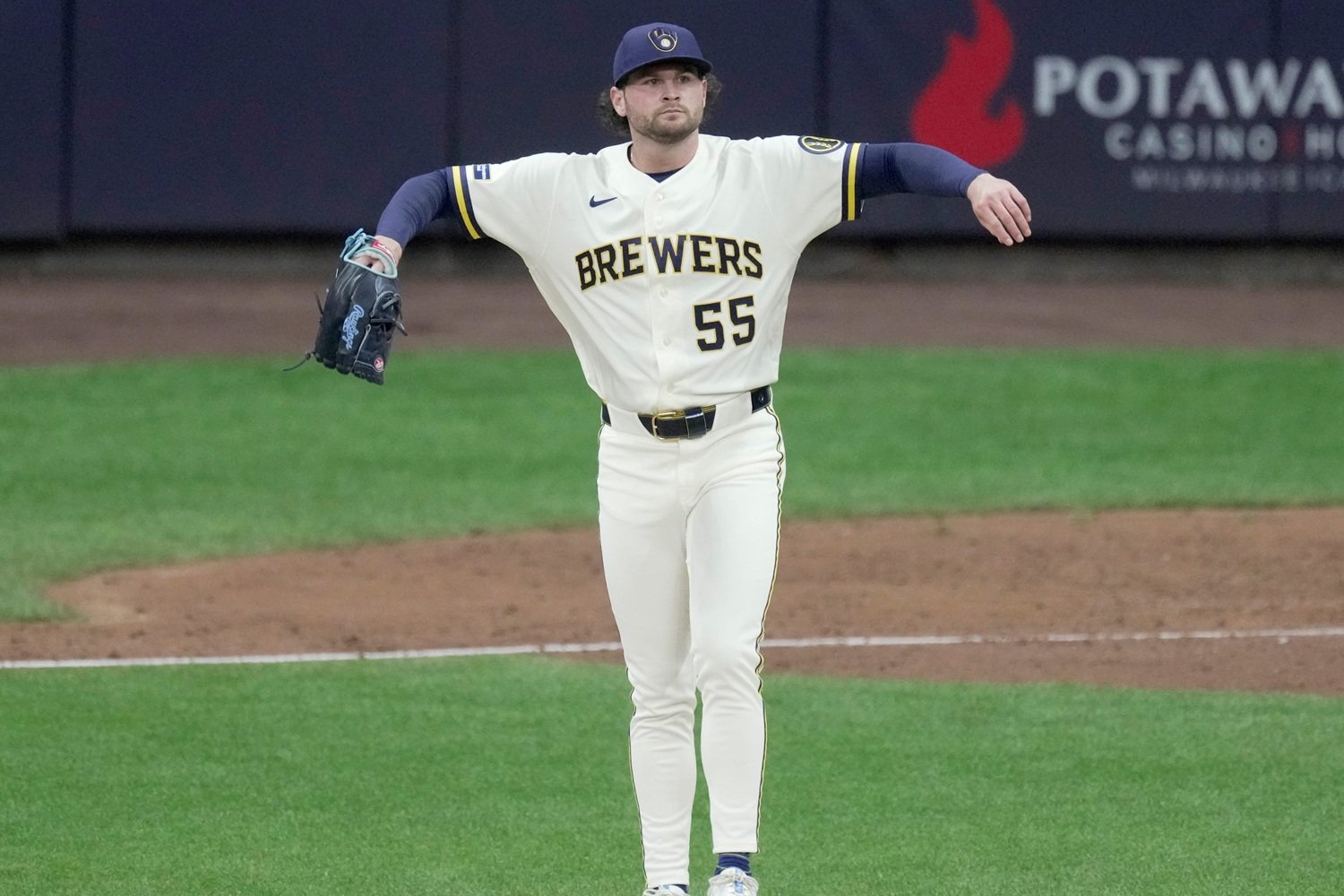 As the Brewers have weathered a slew of injuries to their starting rotation, roles have become less defined by necessity. Shane Drohan has been the poster child for that flexibility, posting a 2.87 ERA, 2.79 FIP, and 74 DRA- in outings ranging from two batters to four-plus innings. "He's been terrific for us," Pat Murphy said last week. "He's really unassuming, humble. I think he's a major-league pitcher. I think we got very, very lucky." A starting pitcher for most of his minor-league career, Drohan excelled as a multi-inning reliever last month, but did so with a starter's pitch mix. Since Logan Henderson joined Quinn Priester and Brandon Woodruff on the injured list near the end of May, Drohan is back to starting. It's unclear how long he'll hold a rotation spot – his future role may have more to do with the club's needs than his own performance – but the Brewers believe he's equipped to be a traditional starter. "No doubt," pitching coach Chris Hook said. "I have no issue with him being able to [start], and just having the wherewithal to know what pitch to throw in certain counts. I mean, he can throw any pitch in any count, and that's just the mark of a starter, being able to do that and feel comfortable." That wasn't always the case. For most of his career, scouts and prospect evaluators projected Drohan as a reliever. His control wasn't good enough in the minors. He didn't consistently reach his best velocity. He threw five pitches, but didn't always sequence them well. Once the Brewers acquired him, they quickly addressed those shortcomings. They noticed that Drohan's arsenal and mechanics limited him to pitching mostly to one side of the plate. Last season in Triple-A, he leaned predominantly on his four-seamer, cutter, and two breaking pitches. With those offerings, he played the north-south game effectively -- fastballs up, breakers down -- but all to the glove side. When he threw something to the arm side, it was rarely a competitive pitch in the strike zone. Eliminating half of the strike zone makes things much easier for big-league hitters. For Drohan's stuff to play at the game's highest level, the Brewers knew he needed to give opponents more surface area to protect. "We want to balance the plate out a little bit," Hook said. As it usually does, Milwaukee's pitching development team started by working on Drohan's mechanics. Instead of rigidly veering his body toward the glove side, they wanted him to rotate more efficiently while working through the arm side. "It was just trying to get his body moving a little bit more, so we could get free and clear to the arm side," Hook said. "I think he's getting squared up a little better, on time, and his body is just moving a little cleaner through that side of the plate." Drohan generates enough backspin on his four-seamer for it to average 12 inches of arm-side run, but for him to use that side of the plate more effectively, the Brewers wanted a pitch with even more horizontal movement. That used to be his changeup, but since Drohan underwent surgery in 2024, his reinforced shoulder now guides his hand toward the outside of the baseball. That supinated motion is the healthier, more natural release for most pitchers, but it means Drohan can no longer pronate a traditional changeup effectively. In spring training, the Brewers helped Drohan add a one-seam sinker to obtain that arm-side movement. It doesn't have a remarkable shape, averaging 9.1 inches of induced vertical break and 15.8 inches of run, but it has more horizontal movement than his four-seamer. Because it's designed to add variety to his arsenal rather than be a great pitch on its own, Drohan has used it roughly 20% of the time against both right-handed and left-handed hitters. "It's just a different look off of the four-seam," Drohan said. "It makes them have to respect something hard going – a righty, going away from them, or a lefty, coming back in to them." With the sinker in tow, Drohan is now a three-fastball pitcher, and his pitch locations are more balanced. He throws the cutter to his glove side to jam right-handed batters, the sinker to his arm side, and the four-seamer to both sides of the plate. Instead of just pitching up and down, he's pitching up, down, in, and out. "Everything was kind of glove-side, and incorporating the [sinker] in spring training, getting him comfortable with that, we start seeing him be able to do a little bit more arm-side stuff," Hook said. The mechanical work has also unlocked more velocity. Drohan's two main fastballs now regularly exceed 95 mph, and his breaking pitches are firmer and tighter. That's not just a product of pitching in shorter relief outings, either. He threw 68 pitches in his last start, and his four-seamer averaged 95.8 mph. "Even though the velo has picked up so much, I feel like my perceived effort level has gone down," Drohan said. "It just tells me I'm moving really efficiently. I'm exploding in my delivery at the right time. It's just working up the chain, throwing everything harder. It's awesome." "When we first saw him, it's like, 'Man, I got to get him a little bit freer,'" Hook said. "I mean, he was so stiff. Now you start seeing some freedom and some looseness, and being on time and through the baseball more often." Drohan's mix still isn't as complete as he and the Brewers believe it can be. He replaced his old changeup with a kick change but has struggled to find a feel for locating it. The Brewers also want to see more glove-side cut on his cutter, which often backs up and instead has a few inches of arm-side movement. It's still distinct enough from his other fastballs to keep hitters honest, but right-handers have slugged .625 against it. "I don't let it get too much into my head, because I know that I have enough run on the four-seam and the two-seam that even if it technically backs up an inch or two, it's still a perceived cut to the hitter," Drohan said. "I've been able to flash cutters that are 92-93 and really cutting, and so it's like, 'That's it.' That's a really good pitch, so obviously you want that. But it's always something you're working on." Hook believes that driving his body through the arm side will also help Drohan's cutter by forcing him to stay on the ball longer. When his body drifts toward the glove side, his arm falls behind. That leaves the ball popping out while his hand is still further behind it, before he has a chance to get toward the outside of a cutter and finish it. "He's been so glove-side-oriented that he kind of gets there, and he almost forces that pitch in there instead of allowing his body to travel," Hook said. "That's where you get these backups, because the ball just kind of spins out. And for him to stay on [the ball], and then for him to be able to get to the arm side, I know that he's going to be able to get through the cutter." The Brewers will rarely declare any pitcher a finished product. Drohan is no different, but he has come a long way in a relatively short time. He's a more balanced pitcher than he was mere months ago, and he'll need those newly acquired skills to navigate Coors Field in his third career start on Sunday.
 -
Image courtesy of © Mark Hoffman/Milwaukee Journal Sentinel / USA TODAY NETWORK via Imagn Images As the Brewers have weathered a slew of injuries to their starting rotation, roles have become less defined by necessity. Shane Drohan has been the poster child for that flexibility, posting a 2.87 ERA, 2.79 FIP, and 74 DRA- in outings ranging from two batters to four-plus innings. "He's been terrific for us," Pat Murphy said last week. "He's really unassuming, humble. I think he's a major-league pitcher. I think we got very, very lucky." A starting pitcher for most of his minor-league career, Drohan excelled as a multi-inning reliever last month, but did so with a starter's pitch mix. Since Logan Henderson joined Quinn Priester and Brandon Woodruff on the injured list near the end of May, Drohan is back to starting. It's unclear how long he'll hold a rotation spot – his future role may have more to do with the club's needs than his own performance – but the Brewers believe he's equipped to be a traditional starter. "No doubt," pitching coach Chris Hook said. "I have no issue with him being able to [start], and just having the wherewithal to know what pitch to throw in certain counts. I mean, he can throw any pitch in any count, and that's just the mark of a starter, being able to do that and feel comfortable." That wasn't always the case. For most of his career, scouts and prospect evaluators projected Drohan as a reliever. His control wasn't good enough in the minors. He didn't consistently reach his best velocity. He threw five pitches, but didn't always sequence them well. Once the Brewers acquired him, they quickly addressed those shortcomings. They noticed that Drohan's arsenal and mechanics limited him to pitching mostly to one side of the plate. Last season in Triple-A, he leaned predominantly on his four-seamer, cutter, and two breaking pitches. With those offerings, he played the north-south game effectively -- fastballs up, breakers down -- but all to the glove side. When he threw something to the arm side, it was rarely a competitive pitch in the strike zone. Eliminating half of the strike zone makes things much easier for big-league hitters. For Drohan's stuff to play at the game's highest level, the Brewers knew he needed to give opponents more surface area to protect. "We want to balance the plate out a little bit," Hook said. As it usually does, Milwaukee's pitching development team started by working on Drohan's mechanics. Instead of rigidly veering his body toward the glove side, they wanted him to rotate more efficiently while working through the arm side. "It was just trying to get his body moving a little bit more, so we could get free and clear to the arm side," Hook said. "I think he's getting squared up a little better, on time, and his body is just moving a little cleaner through that side of the plate." Drohan generates enough backspin on his four-seamer for it to average 12 inches of arm-side run, but for him to use that side of the plate more effectively, the Brewers wanted a pitch with even more horizontal movement. That used to be his changeup, but since Drohan underwent surgery in 2024, his reinforced shoulder now guides his hand toward the outside of the baseball. That supinated motion is the healthier, more natural release for most pitchers, but it means Drohan can no longer pronate a traditional changeup effectively. In spring training, the Brewers helped Drohan add a one-seam sinker to obtain that arm-side movement. It doesn't have a remarkable shape, averaging 9.1 inches of induced vertical break and 15.8 inches of run, but it has more horizontal movement than his four-seamer. Because it's designed to add variety to his arsenal rather than be a great pitch on its own, Drohan has used it roughly 20% of the time against both right-handed and left-handed hitters. "It's just a different look off of the four-seam," Drohan said. "It makes them have to respect something hard going – a righty, going away from them, or a lefty, coming back in to them." With the sinker in tow, Drohan is now a three-fastball pitcher, and his pitch locations are more balanced. He throws the cutter to his glove side to jam right-handed batters, the sinker to his arm side, and the four-seamer to both sides of the plate. Instead of just pitching up and down, he's pitching up, down, in, and out. "Everything was kind of glove-side, and incorporating the [sinker] in spring training, getting him comfortable with that, we start seeing him be able to do a little bit more arm-side stuff," Hook said. The mechanical work has also unlocked more velocity. Drohan's two main fastballs now regularly exceed 95 mph, and his breaking pitches are firmer and tighter. That's not just a product of pitching in shorter relief outings, either. He threw 68 pitches in his last start, and his four-seamer averaged 95.8 mph. "Even though the velo has picked up so much, I feel like my perceived effort level has gone down," Drohan said. "It just tells me I'm moving really efficiently. I'm exploding in my delivery at the right time. It's just working up the chain, throwing everything harder. It's awesome." "When we first saw him, it's like, 'Man, I got to get him a little bit freer,'" Hook said. "I mean, he was so stiff. Now you start seeing some freedom and some looseness, and being on time and through the baseball more often." Drohan's mix still isn't as complete as he and the Brewers believe it can be. He replaced his old changeup with a kick change but has struggled to find a feel for locating it. The Brewers also want to see more glove-side cut on his cutter, which often backs up and instead has a few inches of arm-side movement. It's still distinct enough from his other fastballs to keep hitters honest, but right-handers have slugged .625 against it. "I don't let it get too much into my head, because I know that I have enough run on the four-seam and the two-seam that even if it technically backs up an inch or two, it's still a perceived cut to the hitter," Drohan said. "I've been able to flash cutters that are 92-93 and really cutting, and so it's like, 'That's it.' That's a really good pitch, so obviously you want that. But it's always something you're working on." Hook believes that driving his body through the arm side will also help Drohan's cutter by forcing him to stay on the ball longer. When his body drifts toward the glove side, his arm falls behind. That leaves the ball popping out while his hand is still further behind it, before he has a chance to get toward the outside of a cutter and finish it. "He's been so glove-side-oriented that he kind of gets there, and he almost forces that pitch in there instead of allowing his body to travel," Hook said. "That's where you get these backups, because the ball just kind of spins out. And for him to stay on [the ball], and then for him to be able to get to the arm side, I know that he's going to be able to get through the cutter." The Brewers will rarely declare any pitcher a finished product. Drohan is no different, but he has come a long way in a relatively short time. He's a more balanced pitcher than he was mere months ago, and he'll need those newly acquired skills to navigate Coors Field in his third career start on Sunday. View full article
-
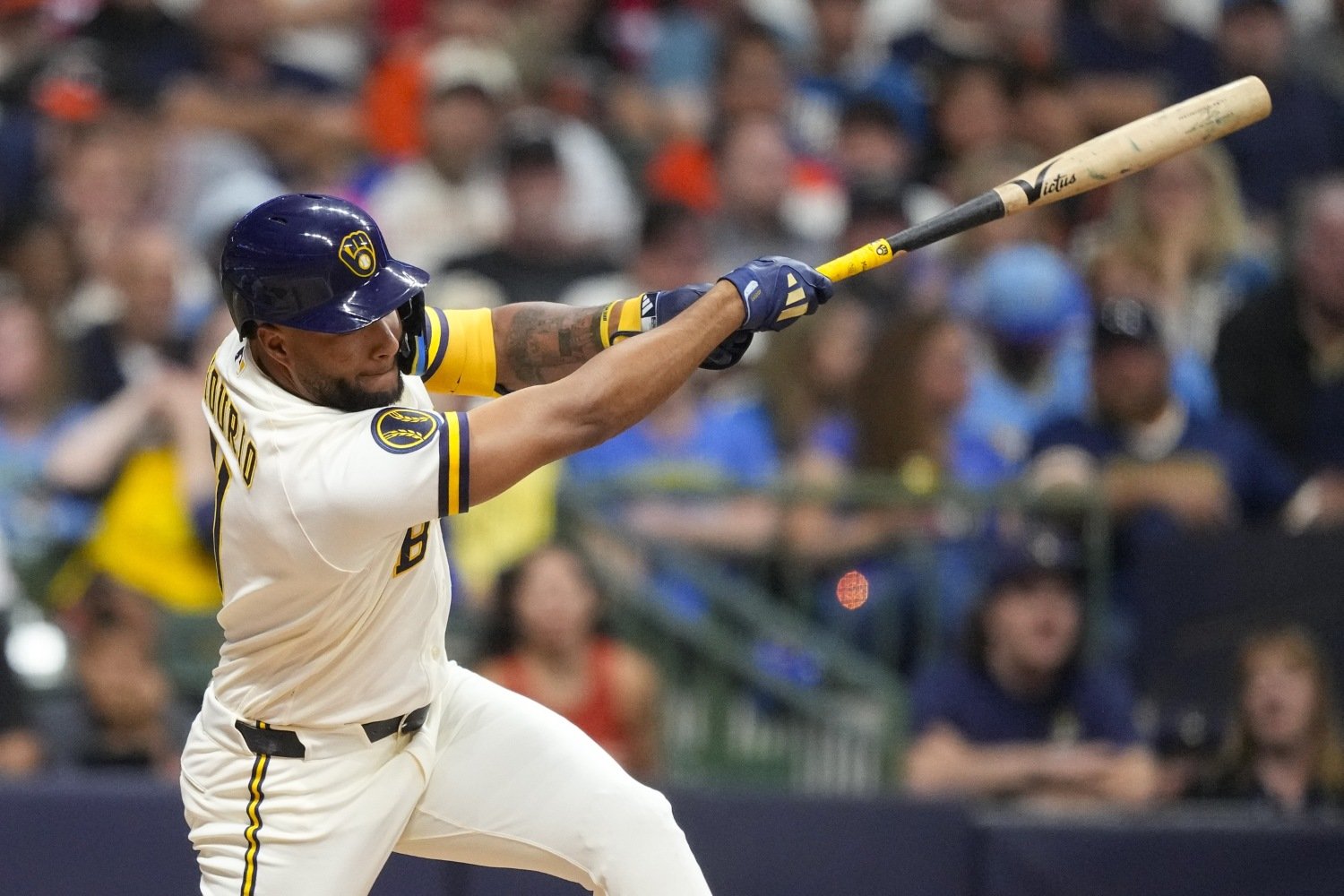 The Brewers want Jackson Chourio to chase less. He's been a more aggressive hitter than most, especially on a team that values swing decisions and has the second-lowest chase rate in baseball since his debut in 2024. In that time, Chourio's 34.6% chase rate is the 20th-highest among qualified hitters. A hitter with Chourio's quick hands and raw power should be aggressive, because he can drive pitches that many can't. He's still been a solid hitter while chasing so much and walking so little, posting a career .273/.320/.461 line (115 wRC+). However, he often takes that aggression too far with poor swing decisions, and it's prevented him from blossoming into a star. He wants to hit, and it can make him jumpy in the box. "I think it still comes down to the anxiousness to get [the at-bat] over with, the anxiousness to get to it," Pat Murphy said earlier this week. "He can get to so many pitches that I think it hurts him." In Year 3, Chourio's plate discipline has yet to improve. If anything, it has gotten worse. His chase rate jumped from 31.9% to 37% last season. This year, it's still at 36.3%. What's more, the aggression on hittable pitches has disappeared. Chourio's in-zone swing rate is just 57.4%, down from 70.5% last year. Zone swing rate minus chase rate is not always the most telling metric, but by that measure, Chourio is making even worse swing decisions than Joey Ortiz, the Brewer most notorious for offering at the wrong pitches. To get a good swing off in time, hitters must assume a pitch will be a strike and recognize when it's a ball, not assume it will be a ball and recognize a strike. As the pitch is delivered, the thought is "Yes, yes, yes, yes – no," not "No, no, no, no – yes." When Chourio tries to be selective, he seems to be starting with that "no" mindset, leaving him recognizing strikes he can punish once it's already too late to swing. "When you're trying to get your ball-strike order, you end up taking your foot off the gas," Murphy said, "instead of keeping your foot on the gas, but really seeing what you want to see and knowing how to say no at the last second." That's led to at-bats in which Chourio takes a hittable pitch for an early strike before chasing off the plate. Other times, he's being too passive with two strikes. He's making an effort to be more selective, but it's felt forced at the wrong times. "I think he's trying to think through it and trying to be really good at it," Murphy said. "When you're trying to prove yourself, you're sometimes not being yourself." The good news is that he is still producing, in part because he's crushing strikes when he does swing at them. Chourio is hitting .291/.354/.437, and his 125 wRC+ would be a career best. His 18.1% barrel rate would be among the best in baseball if he had enough plate appearances to qualify for the leaderboard. On Tuesday night, he recorded two well-struck hits by swinging at fastballs early in the count. Chourio's skill set plays best when he's being aggressive. The Brewers don't want to take that from him, but they do want him to become more discerning at the plate. Balance is key. "It's selectively aggressive. How do we get to that spot?" Murphy said. "On the way to selectively aggressive [are] some bumps in the road. I think that's what we got going on."


