



Jack Stern
-
Posts
764 -
Joined
-
Last visited
-
Days Won
2
Content Type
Profiles
Forums
Blogs
Events
News
2026 Milwaukee Brewers Top Prospects Ranking
Milwaukee Brewers Videos
2022 Milwaukee Brewers Draft Picks
Milwaukee Brewers Free Agent & Trade Rumors, Notes, & Tidbits
Guides & Resources
2023 Milwaukee Brewers Draft Picks
2024 Milwaukee Brewers Draft Picks
The Milwaukee Brewers Players Project
2025 Milwaukee Brewers Draft Pick Tracker
2026 Milwaukee Brewers Draft Tracker: Picks & Bonuses
Store
Downloads
Gallery
Everything posted by Jack Stern
-
 Image courtesy of Ken Blaze-Imagn Images The Brewers began their trade deadline activity on Saturday morning with a four-player deal with the Guardians. Reliever Craig Yoho and outfielder Blake Perkins went to Cleveland, while catcher Bo Naylor and reliever Codi Heuer joined Milwaukee. In optioning both Naylor and Heuer to Triple-A Nashville, the Brewers reinforced that the deal is (for now) a swap of peripheral players. None of the four had clear roles in their former organizations, but each may be more appreciated by their new teams. Naylor is the most notable piece coming back. The Guardians' first-round pick in 2018, he enjoyed a productive rookie year, hitting .237/.339/.470 (123 wRC+) in 67 games. He didn't make much loud contact, though, and his approach of catching fastballs out in front to pull them in the air left him vulnerable against secondary pitches. Those aspects of his profile quickly caught up to him, and he's hit just .192/.266/.351 (74 wRC+) since the start of 2024. Patrick Bailey, Austin Hedges, and David Fry all surpassed Naylor on Cleveland's catching depth chart, but he has a clearer path to playing time in Milwaukee. Reports have been mixed on whether the Brewers are shopping incumbent backup catcher Gary Sánchez, but if he's dealt in the next 50 hours or so, Naylor could take his place. Even if Sánchez stays, he'll be a free agent after this season, and William Contreras will hit the open market after 2027. Once that catching core thins, Naylor could be ahead of Jeferson Quero as the next man up. Quero was an excellent defensive catcher with a promising bat, but his development was stalled by a shoulder injury two years ago, and Will Sammon and Ken Rosenthal of The Athletic report that the reason why he's been exclusively a DH since June 28 is a biceps injury. Even if Quero rounds into better form on both offense and defense, Naylor could have more upside, particularly at the plate. Despite his subpar hard-hit rate in the big leagues, he was scouted with above-average raw power. The Brewers diverge from much of baseball in emphasizing deep contact and an all-fields approach over pulling the ball in the air, so they could make Naylor's bat more consistent and tap into some doubles power with a more balanced approach. In any case, Naylor looks like a potential supporting piece for the stretch run, then a more important long-term piece if things go according to plan. The 26-year-old is controlled through 2030 and is first-time arbitration-eligible this winter, but the Brewers could push that back one more year if he remains in Triple-A for the rest of the season. He's more likely to help than Perkins, whose defense in center field and left-handed swing cratered after he fractured his shin last spring. It's the opposite tradeoff in swapping Yoho for Heuer, as the former is a rookie reliever with enticing stuff, while the latter is a non-tender candidate in a few months. After the Brewers selected him in the eighth round of the 2023 draft, Yoho skyrocketed through the minor leagues with an arsenal of elite east-west movement and debuted last season. The writing was on the wall for his time in Milwaukee, though, as the big-league coaching staff remained reluctant to trust him over concerns about his control and whether his stuff could deceive more disciplined hitters. The Brewers will replace him with Heuer, who owns a passable career 3.76 ERA, 3.97 FIP, and 4.20 SIERA but has spent most of the season with Triple-A Columbus. As a 30-year-old journeyman, he lacks Yoho's upside, but the Brewers probably believe his arsenal gives him a higher floor as a middle reliever they can shuttle between Nashville and Milwaukee. Like Yoho, Heuer throws from a low right-handed slot and naturally pronates when he releases the baseball, giving him a solid fastball-changeup combination. The difference is that he has less raw movement and a tighter velocity spread. His mid-90s fastball runs less than Yoho's, his changeup has less downward movement and is 8 mph faster on average, and his short gyro slider is more useful than the big 77-mph curveball Yoho could not control. The Brewers' top assignment for Yoho was to throw more strikes. They also felt hitters could pick up his changeup too early because of its low velocity and big movement, prompting Pat Murphy to say last month that it was "not a swing-and-miss" pitch, even though Yoho has gotten whiffs on 33.1% of changeup swings in his limited big-league career. With shorter shapes and closer velocity across his pitches, Heuer may be better-equipped right now to throw strikes and make his pitches look similar to each other out of his hand. According to the tunneling metrics at Baseball Prospectus, batters have an 82.4% chance of correctly identifying Yoho's changeup by the time they must decide to swing or take, and a 69.5% chance of identifying his sinker. For Heuer's changeup and four-seamer, those chances are 56% and 78.7%, respectively. Even though those pitches have less actual movement, their perceived depth to the hitter is similar to Yoho. Standing 6-foot-5, Heuer is three inches taller than Yoho and throws from a slightly higher slot. His pitches move downward less, but because he's throwing them from a higher release, they approach home plate at more of a downward angle. Vertical approach angle looks at both movement and where the pitcher releases the ball, making it a great metric for measuring how much carry or drop a pitch appears to have to a hitter. Vertically, Heuer's stuff looks strikingly similar to Yoho's. His secondaries have actually gotten more swings and misses, both this season (the table below) and for their careers. Craig Yoho Pitch Type MPH Vert Horz VAA Stuff+ Whiff% Sinker 94.4 6.3 16.2 -5.3 91 12.1% Changeup 79.1 -4.2 16.4 -7.6 92 35.0% Curveball 77.7 -9.1 -17.3 -9.5 174 - Codi Heuer Pitch Type MPH Vert Horz VAA Stuff+ Whiff% Four-Seamer 95.4 14.2 10.4 -5.2 94 10.5% Changeup 87.1 5.2 16.0 -7.1 91 33.3% Slider 86.5 0.7 -4.3 -7.9 107 54.5% Yoho, meanwhile, could be a better fit with the Guardians, who throw significantly fewer fastballs (57.9% as a team) than the Brewers (67.3%, once again the highest rate in baseball). Even if he pans out as a high-leverage arm in Cleveland, the Brewers would only lose so much future value in giving up on a talented one-inning reliever. It's fair to question whether they truly gave Yoho's skill set a fair opportunity and shipped him out too quickly for what they believe is the better short-term version of him. For now, though, the Brewers have probably made their bullpen slightly better today and their catching mix slightly better in the future. More moves are almost certainly coming as the trade deadline nears. View full article
 -
Brewers' Trade Deadline Moves Could Determine Joel Kuhnel's Future
Jack Stern posted an article in Brewers
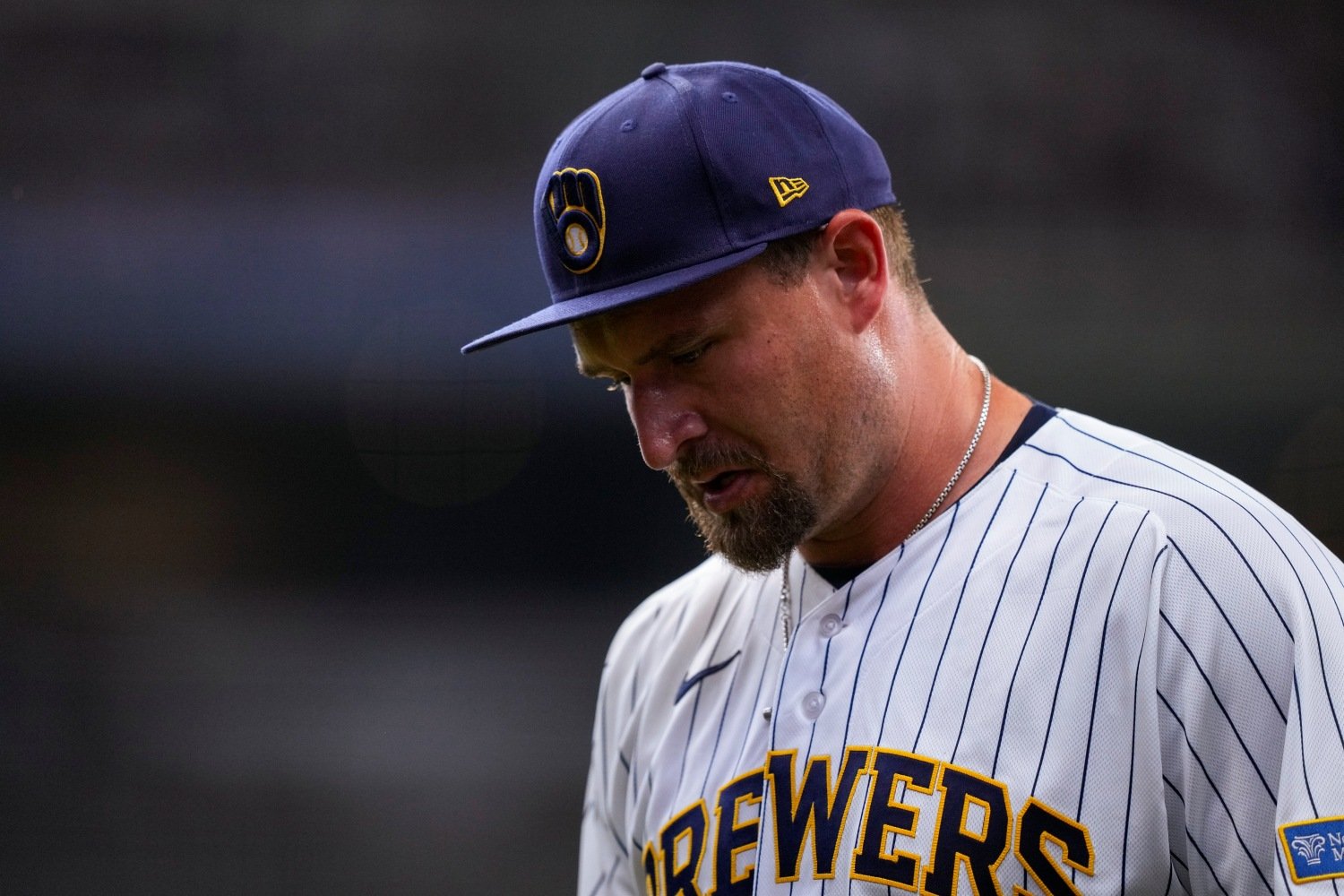 With baseball’s August 3 trade deadline days away, pitching remains the Brewers’ greatest need. They're a great team in an enviable position, but in order to maintain their lead in the NL Central and make a push for the top postseason seed, they need to gather some reinforcements. It would be surprising if Milwaukee did not acquire a mid-rotation starter, a reliever, or both. If the club adds a couple of arms, it will have to send a couple out. Joel Kuhnel currently lives on the roster bubble. The 31-year-old right-hander owns a career 5.58 ERA and 4.73 FIP in 117 appearances, most of them in low-leverage situations. As a Brewer, he’s pitched to a 6.52 ERA and 9.32 FIP. He’s out of minor-league options, so if there’s no room for him, they must remove him from the 40-man roster and expose him to waivers. Whether by design, coincidence, or a combination of both, Kuhnel’s ramp-up to return from the injured list is lining up with the trade deadline. The Brewers haven’t revealed his next steps after a live batting practice session in Appleton on Thursday, but as a one-inning reliever, he should only need one rehab appearance before he’s ready to return next week. Their trade deadline activity will probably determine whether there’s a spot for Kuhnel. Even with DL Hall on the mend, the Brewers could use another reliever capable of pitching multiple innings in close games to ease the strain on Aaron Ashby and Chad Patrick. A short-range lefty to take what was formerly Jared Koenig’s role would also help. Adding a starter could push someone currently in the rotation mix into long relief. Should those deals not come together, there are worse fallback options than adding Kuhnel back to the bullpen. Despite his grisly performance before his injury, there are reasons why he seemed to be Pat Murphy’s preferred choice when a ‘B’ reliever had to pitch in a pivotal situation. When the Brewers acquired him from the Athletics in June, it was actually the second time they brought him in; they also signed him to a minor-league deal during the 2024 season. Kuhnel’s sinker has helped him post a 50.4% ground-ball rate and hold right-handed hitters to a .614 OPS this season. His velocity has jumped a couple of ticks since coming over, making his stuff above average for the first time in his career. {C}%3C!%2D%2Dtd%20%7Bborder%3A%201px%20solid%20%23cccccc%3B%7Dbr%20%7Bmso-data-placement%3Asame-cell%3B%7D%2D%2D%3E--> Team Sinker MPH Sinker Stuff+ Cutter MPH Cutter Stuff+ Curveball MPH Curveball Stuff+ Total Stuff+ ATH 94.5 97 89.9 94 80.3 103 94 MIL 96.5 100 91.5 105 83.9 122 103 The problem has been controlling those gains. As a Brewer, he’s walked 12.2% of hitters and plunked two batters. That’s a flip from the kind of pitcher he has typically been. He posted an excellent 5.6% walk rate for the Athletics and has walked only 6.4% of opponents for his career. Leading up to his injury, Kuhnel was pitching frequently in key situations when the Brewers were short-handed in the bullpen, and that workload seemed to be taking its toll. That’s not a full excuse; taking the ball regularly is part of the job for a big-league reliever. Still, he could fare much better in the right role. The Brewers can do better than Kuhnel to round out their relief corps, and if they make additions before Monday evening, he’ll be among the first on the chopping block. There’s no harm in keeping him around as an insurance option, though. His stuff is good enough to be a serviceable middle reliever, if he's given the chance.
 -
Image courtesy of Jeff Hanisch-Imagn Images With baseball’s August 3 trade deadline days away, pitching remains the Brewers’ greatest need. They're a great team in an enviable position, but in order to maintain their lead in the NL Central and make a push for the top postseason seed, they need to gather some reinforcements. It would be surprising if Milwaukee did not acquire a mid-rotation starter, a reliever, or both. If the club adds a couple of arms, it will have to send a couple out. Joel Kuhnel currently lives on the roster bubble. The 31-year-old right-hander owns a career 5.58 ERA and 4.73 FIP in 117 appearances, most of them in low-leverage situations. As a Brewer, he’s pitched to a 6.52 ERA and 9.32 FIP. He’s out of minor-league options, so if there’s no room for him, they must remove him from the 40-man roster and expose him to waivers. Whether by design, coincidence, or a combination of both, Kuhnel’s ramp-up to return from the injured list is lining up with the trade deadline. The Brewers haven’t revealed his next steps after a live batting practice session in Appleton on Thursday, but as a one-inning reliever, he should only need one rehab appearance before he’s ready to return next week. Their trade deadline activity will probably determine whether there’s a spot for Kuhnel. Even with DL Hall on the mend, the Brewers could use another reliever capable of pitching multiple innings in close games to ease the strain on Aaron Ashby and Chad Patrick. A short-range lefty to take what was formerly Jared Koenig’s role would also help. Adding a starter could push someone currently in the rotation mix into long relief. Should those deals not come together, there are worse fallback options than adding Kuhnel back to the bullpen. Despite his grisly performance before his injury, there are reasons why he seemed to be Pat Murphy’s preferred choice when a ‘B’ reliever had to pitch in a pivotal situation. When the Brewers acquired him from the Athletics in June, it was actually the second time they brought him in; they also signed him to a minor-league deal during the 2024 season. Kuhnel’s sinker has helped him post a 50.4% ground-ball rate and hold right-handed hitters to a .614 OPS this season. His velocity has jumped a couple of ticks since coming over, making his stuff above average for the first time in his career. {C}%3C!%2D%2Dtd%20%7Bborder%3A%201px%20solid%20%23cccccc%3B%7Dbr%20%7Bmso-data-placement%3Asame-cell%3B%7D%2D%2D%3E--> Team Sinker MPH Sinker Stuff+ Cutter MPH Cutter Stuff+ Curveball MPH Curveball Stuff+ Total Stuff+ ATH 94.5 97 89.9 94 80.3 103 94 MIL 96.5 100 91.5 105 83.9 122 103 The problem has been controlling those gains. As a Brewer, he’s walked 12.2% of hitters and plunked two batters. That’s a flip from the kind of pitcher he has typically been. He posted an excellent 5.6% walk rate for the Athletics and has walked only 6.4% of opponents for his career. Leading up to his injury, Kuhnel was pitching frequently in key situations when the Brewers were short-handed in the bullpen, and that workload seemed to be taking its toll. That’s not a full excuse; taking the ball regularly is part of the job for a big-league reliever. Still, he could fare much better in the right role. The Brewers can do better than Kuhnel to round out their relief corps, and if they make additions before Monday evening, he’ll be among the first on the chopping block. There’s no harm in keeping him around as an insurance option, though. His stuff is good enough to be a serviceable middle reliever, if he's given the chance. View full article
-
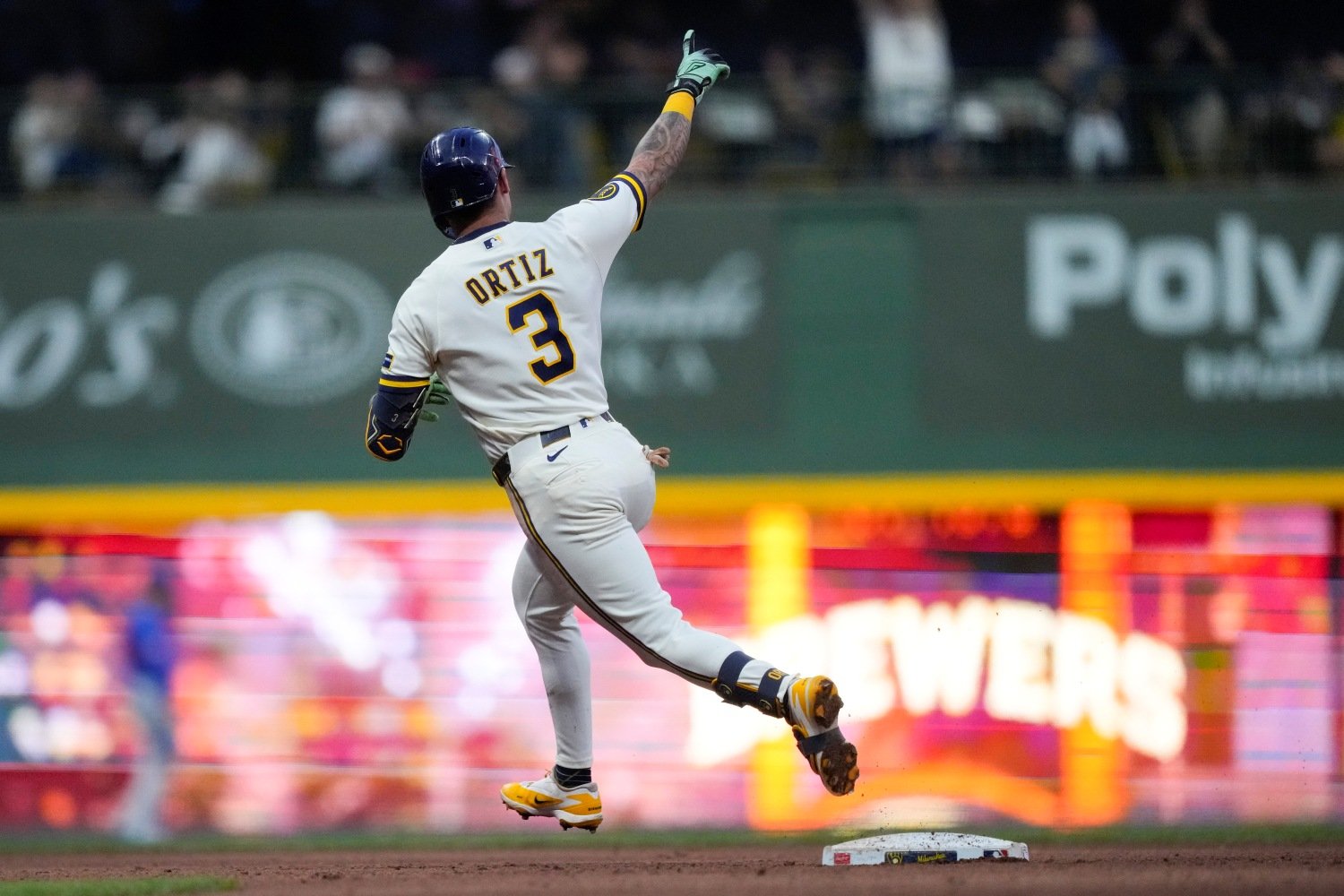 Early in the season, the left side of the infield looked like a short-term weakness for the Brewers. For now, Pat Murphy faces the good problem of finding playing time for three capable players between shortstop and third base. Barring an acquisition before next Monday’s trade deadline, Milwaukee will probably get less offense from shortstop and third base than most other positions. It’s still safest to assume none of Cooper Pratt, Joey Ortiz, or David Hamilton will be above-average hitters by season’s end. Pratt and Ortiz have been red-hot in July, though, and Hamilton’s elite range has helped him accrue 7 Defensive Runs Saved at third base despite shoddy fundamentals and a nagging elbow issue. Before the Brewers’ series against the Colorado Rockies last weekend, Murphy was asked how the club would handle playing time on the left side of the infield after Hamilton’s return from a brief stint on the injured list. “We get them all in there,” he said. “Pratt, Ortiz, Hamilton, they all play a lot. They’re all starters.” The Brewers like all three players, so it makes sense to balance their opportunities accordingly. However, since Hamilton and Ortiz are both great defenders and below-average hitters, it also makes sense to ride the hot hand for now at third base. That’s how Murphy seems inclined to play things. On Friday, Ortiz started at shortstop over Pratt to get him and Hamilton in the same lineup. On Monday night, he started at third base against right-handed starter Tyler Mahle. “If he keeps playing well, he’ll keep playing,” Murphy said on Friday. “There’s days that it doesn’t match up as [well], but he’s been great for us, and we’re not going to do anything to hurt his confidence.” “Confidence” has long been Murphy’s buzzword surrounding Ortiz’s play, but lately, it’s been repeated in a positive context. After he lost his shortstop job to Pratt, Murphy met with Ortiz and reminded him that the Brewers still valued his abilities. He cited longtime Marlins and Dodgers utility man Miguel Rojas as a shortstop who became the best version of himself after a long stretch as a spare piece. Within a few days, Ortiz responded. Since June 29, he’s hitting .316/.358/.592 (157 wRC+). In just 191 innings at third base, he has already racked up 4 DRS. “My view is that I’m on the team for a reason,” Ortiz said after falling a home run shy of hitting for the cycle last Wednesday. “Wherever they need to put me, I’m gladly ready to play anywhere they need me.” “He’s just in a good, free space,” Murphy said. “He sees the ball a little more confident with two strikes. A little more confident, period. Just swinging the bat with conviction.” Ortiz has made some subtle tweaks to his setup and stride in the box, but conviction has made the greatest difference. He’s swinging at more strikes, and he’s swinging harder. Split xwOBA Z-Swing% Bat Speed (MPH) Fast Swing% Hard Hit% Through June 28 .285 55.6% 72.3 21.6% 32.4% Since June 29 .341 60.8% 74.3 49.2% 41.3% Ortiz’s bat speed is up by 2 MPH, and his rate of “fast swings” (defined by Statcast as swings with a bat speed of at least 75 MPH) has more than doubled. That's allowing him to make more hard contact. Players can train bat speed with the goal of naturally swinging faster more often, but it's an offseason project. The in-season jump Ortiz has experienced generally does not come from training. That bat speed was already in there; he’s just unleashing it more often. During his struggles, Ortiz looked like he was playing defense on offense. He wouldn’t swing the bat until he had to with two strikes, and he wasn’t using his best, most powerful swing. Now, he’s seeing the ball well and letting it rip. “He’s way more confident, and when you’re more confident, you can get your 'A' swing off,” Murphy said. Publicly, Ortiz said that his confidence hasn’t fluctuated throughout his time in Milwaukee. That can't be fully quantified. However, the authority with which he’s swinging has typically been a solid indirect measurement of how he’s feeling at the plate. Ortiz was similarly great in May 2024, slashing .290/.366/.581 (159 wRC+). That stretch featured strikingly similar swing metrics: an average bat speed of 74.9 mph, a 49.5% fast swing rate, and a 57.4% zone swing rate. Like that month of May, Ortiz is probably amid his hottest run of the season and won’t keep hitting at this level. He’s been a bit lucky during this stretch to make up for some poor luck earlier in the year. His swing decisions have been better lately, but they still haven’t been great. But there’s been a real shift in his conviction behind his improved results. The Brewers should take advantage of it while Ortiz stays hot. “I’m just really happy for the person,” Murphy said.
 -
Image courtesy of Jeff Hanisch-Imagn Images Early in the season, the left side of the infield looked like a short-term weakness for the Brewers. For now, Pat Murphy faces the good problem of finding playing time for three capable players between shortstop and third base. Barring an acquisition before next Monday’s trade deadline, Milwaukee will probably get less offense from shortstop and third base than most other positions. It’s still safest to assume none of Cooper Pratt, Joey Ortiz, or David Hamilton will be above-average hitters by season’s end. Pratt and Ortiz have been red-hot in July, though, and Hamilton’s elite range has helped him accrue 7 Defensive Runs Saved at third base despite shoddy fundamentals and a nagging elbow issue. Before the Brewers’ series against the Colorado Rockies last weekend, Murphy was asked how the club would handle playing time on the left side of the infield after Hamilton’s return from a brief stint on the injured list. “We get them all in there,” he said. “Pratt, Ortiz, Hamilton, they all play a lot. They’re all starters.” The Brewers like all three players, so it makes sense to balance their opportunities accordingly. However, since Hamilton and Ortiz are both great defenders and below-average hitters, it also makes sense to ride the hot hand for now at third base. That’s how Murphy seems inclined to play things. On Friday, Ortiz started at shortstop over Pratt to get him and Hamilton in the same lineup. On Monday night, he started at third base against right-handed starter Tyler Mahle. “If he keeps playing well, he’ll keep playing,” Murphy said on Friday. “There’s days that it doesn’t match up as [well], but he’s been great for us, and we’re not going to do anything to hurt his confidence.” “Confidence” has long been Murphy’s buzzword surrounding Ortiz’s play, but lately, it’s been repeated in a positive context. After he lost his shortstop job to Pratt, Murphy met with Ortiz and reminded him that the Brewers still valued his abilities. He cited longtime Marlins and Dodgers utility man Miguel Rojas as a shortstop who became the best version of himself after a long stretch as a spare piece. Within a few days, Ortiz responded. Since June 29, he’s hitting .316/.358/.592 (157 wRC+). In just 191 innings at third base, he has already racked up 4 DRS. “My view is that I’m on the team for a reason,” Ortiz said after falling a home run shy of hitting for the cycle last Wednesday. “Wherever they need to put me, I’m gladly ready to play anywhere they need me.” “He’s just in a good, free space,” Murphy said. “He sees the ball a little more confident with two strikes. A little more confident, period. Just swinging the bat with conviction.” Ortiz has made some subtle tweaks to his setup and stride in the box, but conviction has made the greatest difference. He’s swinging at more strikes, and he’s swinging harder. Split xwOBA Z-Swing% Bat Speed (MPH) Fast Swing% Hard Hit% Through June 28 .285 55.6% 72.3 21.6% 32.4% Since June 29 .341 60.8% 74.3 49.2% 41.3% Ortiz’s bat speed is up by 2 MPH, and his rate of “fast swings” (defined by Statcast as swings with a bat speed of at least 75 MPH) has more than doubled. That's allowing him to make more hard contact. Players can train bat speed with the goal of naturally swinging faster more often, but it's an offseason project. The in-season jump Ortiz has experienced generally does not come from training. That bat speed was already in there; he’s just unleashing it more often. During his struggles, Ortiz looked like he was playing defense on offense. He wouldn’t swing the bat until he had to with two strikes, and he wasn’t using his best, most powerful swing. Now, he’s seeing the ball well and letting it rip. “He’s way more confident, and when you’re more confident, you can get your 'A' swing off,” Murphy said. Publicly, Ortiz said that his confidence hasn’t fluctuated throughout his time in Milwaukee. That can't be fully quantified. However, the authority with which he’s swinging has typically been a solid indirect measurement of how he’s feeling at the plate. Ortiz was similarly great in May 2024, slashing .290/.366/.581 (159 wRC+). That stretch featured strikingly similar swing metrics: an average bat speed of 74.9 mph, a 49.5% fast swing rate, and a 57.4% zone swing rate. Like that month of May, Ortiz is probably amid his hottest run of the season and won’t keep hitting at this level. He’s been a bit lucky during this stretch to make up for some poor luck earlier in the year. His swing decisions have been better lately, but they still haven’t been great. But there’s been a real shift in his conviction behind his improved results. The Brewers should take advantage of it while Ortiz stays hot. “I’m just really happy for the person,” Murphy said. View full article
-
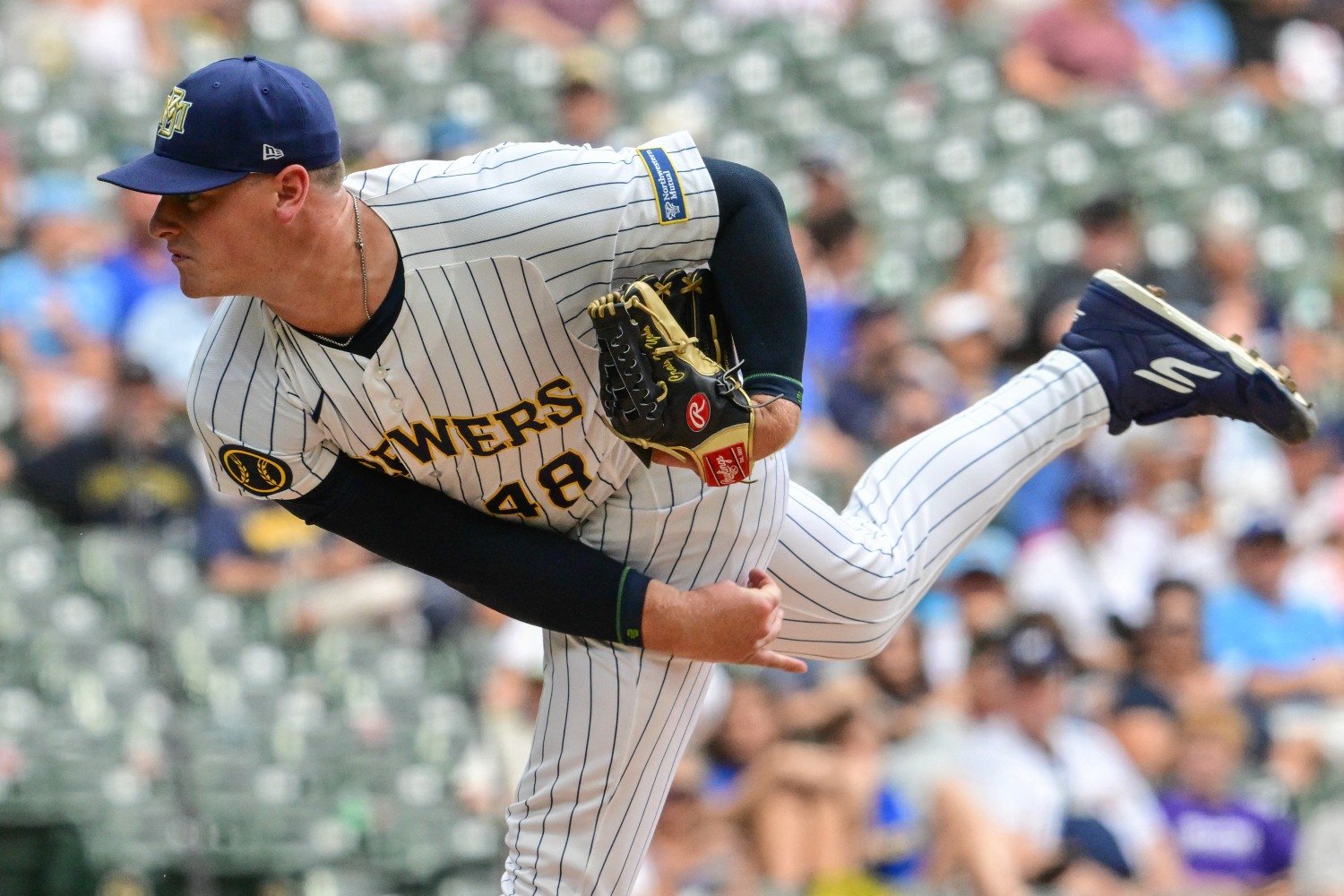 Craig Yoho ascended so quickly to the big leagues as a reliever that it's easy to forget he's only in his fourth season as a pitcher. A position player for most of his injury-riddled college career, the 26-year-old didn't move to the mound until 2023 at Indiana and was drafted by the Brewers that summer. He's now trying to find his footing in the majors in just his third full professional season. "This is, what, my third-and-a-half year pitching, something like that?" Yoho said at his locker in the Milwaukee clubhouse over the weekend. "So there's still a lot of stuff I'm learning about myself and stuff in the game of baseball that I haven't experienced yet. It's been, in a way, just a learning experience through it all." Yoho's elite movement, particularly the screwball-like shape of his changeup, helped him tear through college and minor-league hitters with ease. In the majors, he's encountered more first-time challenges. Some of the lessons have been mechanical, but most have related to the mental game and his daily work with the Brewers' big-league pitching coaches. "Just going in each and every day, understanding the work I need to put in to be ready to go that night, and just having the right mindset of going into the game," Yoho said. He's also learning the best way to use his arsenal. The pitches Yoho originally threw after converting to pitching were effective until he reached the majors, so he never needed to think much about which pitches he should throw to perform at the game's highest level. That changed after Yoho struggled to a 7.27 ERA, 6.48 FIP, and 6.61 SIERA in 8 ⅔ innings in his debut season last year. Late in the year, he experimented with a shorter slider to replace his curveball, but he ditched it when it started to blend with his cutter. He made a grip change this year to give his changeup even more depth, increasing its induced vertical break from -3 inches to -4.4 inches. During his most recent stint in Triple-A Nashville, Yoho made his most substantial yet simplistic change: he added a sinker and has since used it as his primary fastball instead of his four-seamer. "I decided to start pitching my last year of college, and [the four-seam was] the grip I chose," Yoho said. "It wasn't necessarily like a rhyme or reason to it. So, for the most part, my arsenal hadn't changed since the day I picked up a baseball." The four-seamer moved inconsistently because it wasn't the best fastball grip for Yoho. He's an extreme pronator, which means his palm turns outward, away from his body and over the top of the baseball as he releases it. That allows him to create the sideways spin that makes his changeup drop and fade, but it also produces a four-seamer with lots of arm-side run and very little carry, instead of a normal four-seamer that looks like it's rising due to more vertical backspin. In other words, Yoho's four-seamer is a worse version of a sinker with less sink. Why not add a real sinker instead? "It's always crossed my mind because his four-seam is kind of like a two-seam anyway, so might as well just get some depth to it," Brewers pitching coordinator Jim Henderson said. "It's something I've thought about pretty much every offseason, but hadn't actually done anything with," Yoho said. "I always kind of wondered if it would actually help my arsenal or not." At the beginning of July, he finally added the sinker. Yoho is using a standard two-seam grip with his fingers riding along the parallel laces of the ball, with the friction of those seams allowing him to rip the ball off his fingertips more comfortably than he can with a four-seam grip. "The hand coming off the ball feels great," he said. Unsurprisingly, the sinker has nearly the same amount of run as Yoho's four-seamer, but it has more depth. It has averaged 6.7 inches of induced vertical break, while the four-seamer has averaged 11.4 inches (excluding his outings at Coors Field, where the ball moves less due to the high altitude). Yoho has still mixed in some four-seamers to show hitters slightly different versions of two similar fastballs. In addition to generating more sink to induce more ground balls, Yoho and the Brewers are hoping that more consistent movement will help him throw more fastballs for strikes. "I got to start my line a little bit more on my glove side, just so that way when the ball runs, it comes back [into the strike zone]," Yoho said. "With the four-seam, I felt like sometimes it would come back a lot, sometimes it wouldn't as much, and so it was a little bit working against what I was trying to do. So the two-seam has helped kind of clean some of that up." "I like it because I think it's a training tool for his mechanics," Henderson said. "When you throw sinkers back-door [to righties], you can't come out of your delivery." The improved control has yet to materialize, as Yoho has thrown fewer sinkers in the strike zone (47.7%) than four-seamers (52.6%). That's what Henderson and lead pitching coach Chris Hook are monitoring most. Their main message to Yoho has been that he must force hitters to honor his fastball in the zone to get chases and early swings against his changeup. "If he commands the fastball, if they have to respect the fastball, then the changeup, no matter what [the velocity] is, is going to have them out in front," Henderson said. One of the reservations the Brewers have with Yoho's changeup is its low velocity, which can give hitters time to recognize the pitch and take it for a ball or foul it off, even if they were initially fooled by it. During the second half of July, his changeup has gone from sitting around 77 mph to more than 80 mph. That velocity bump wasn't by design, but it's a welcome improvement. "Movement's great, but when it's big and it's early, big-league hitters are good enough to spoil it or take pitches that aren't tracking [in the zone]," Henderson said. "So for him to be able to sell it a little bit more with some velo is good if he can maintain movement, and then there's still the Bugs Bunny one that can mess different hitters up." Yoho has done a solid job of missing barrels this year, posting a 29.1% whiff rate and 32.6% hard-hit rate. However, his current success is not sustainable. He's allowed three home runs and walked 10.8% of batters faced while benefitting from a .116 batting average on balls in play. For those reasons, his 4.84 FIP and 3.90 SIERA are both higher than his 3.32 ERA. As a result, the Brewers have used him mostly in a low-leverage role. Yoho still profiles as a potential trade candidate with a murky future in Milwaukee, but he's trying to adapt and do what he can to become a reliable member of the bullpen. "It hasn't really been a conversation about roles," Yoho said. "Honestly, from pitch one, I'm ready to go, to the last pitch of the game."
 -
Image courtesy of Benny Sieu-Imagn Images Craig Yoho ascended so quickly to the big leagues as a reliever that it's easy to forget he's only in his fourth season as a pitcher. A position player for most of his injury-riddled college career, the 26-year-old didn't move to the mound until 2023 at Indiana and was drafted by the Brewers that summer. He's now trying to find his footing in the majors in just his third full professional season. "This is, what, my third-and-a-half year pitching, something like that?" Yoho said at his locker in the Milwaukee clubhouse over the weekend. "So there's still a lot of stuff I'm learning about myself and stuff in the game of baseball that I haven't experienced yet. It's been, in a way, just a learning experience through it all." Yoho's elite movement, particularly the screwball-like shape of his changeup, helped him tear through college and minor-league hitters with ease. In the majors, he's encountered more first-time challenges. Some of the lessons have been mechanical, but most have related to the mental game and his daily work with the Brewers' big-league pitching coaches. "Just going in each and every day, understanding the work I need to put in to be ready to go that night, and just having the right mindset of going into the game," Yoho said. He's also learning the best way to use his arsenal. The pitches Yoho originally threw after converting to pitching were effective until he reached the majors, so he never needed to think much about which pitches he should throw to perform at the game's highest level. That changed after Yoho struggled to a 7.27 ERA, 6.48 FIP, and 6.61 SIERA in 8 ⅔ innings in his debut season last year. Late in the year, he experimented with a shorter slider to replace his curveball, but he ditched it when it started to blend with his cutter. He made a grip change this year to give his changeup even more depth, increasing its induced vertical break from -3 inches to -4.4 inches. During his most recent stint in Triple-A Nashville, Yoho made his most substantial yet simplistic change: he added a sinker and has since used it as his primary fastball instead of his four-seamer. "I decided to start pitching my last year of college, and [the four-seam was] the grip I chose," Yoho said. "It wasn't necessarily like a rhyme or reason to it. So, for the most part, my arsenal hadn't changed since the day I picked up a baseball." The four-seamer moved inconsistently because it wasn't the best fastball grip for Yoho. He's an extreme pronator, which means his palm turns outward, away from his body and over the top of the baseball as he releases it. That allows him to create the sideways spin that makes his changeup drop and fade, but it also produces a four-seamer with lots of arm-side run and very little carry, instead of a normal four-seamer that looks like it's rising due to more vertical backspin. In other words, Yoho's four-seamer is a worse version of a sinker with less sink. Why not add a real sinker instead? "It's always crossed my mind because his four-seam is kind of like a two-seam anyway, so might as well just get some depth to it," Brewers pitching coordinator Jim Henderson said. "It's something I've thought about pretty much every offseason, but hadn't actually done anything with," Yoho said. "I always kind of wondered if it would actually help my arsenal or not." At the beginning of July, he finally added the sinker. Yoho is using a standard two-seam grip with his fingers riding along the parallel laces of the ball, with the friction of those seams allowing him to rip the ball off his fingertips more comfortably than he can with a four-seam grip. "The hand coming off the ball feels great," he said. Unsurprisingly, the sinker has nearly the same amount of run as Yoho's four-seamer, but it has more depth. It has averaged 6.7 inches of induced vertical break, while the four-seamer has averaged 11.4 inches (excluding his outings at Coors Field, where the ball moves less due to the high altitude). Yoho has still mixed in some four-seamers to show hitters slightly different versions of two similar fastballs. In addition to generating more sink to induce more ground balls, Yoho and the Brewers are hoping that more consistent movement will help him throw more fastballs for strikes. "I got to start my line a little bit more on my glove side, just so that way when the ball runs, it comes back [into the strike zone]," Yoho said. "With the four-seam, I felt like sometimes it would come back a lot, sometimes it wouldn't as much, and so it was a little bit working against what I was trying to do. So the two-seam has helped kind of clean some of that up." "I like it because I think it's a training tool for his mechanics," Henderson said. "When you throw sinkers back-door [to righties], you can't come out of your delivery." The improved control has yet to materialize, as Yoho has thrown fewer sinkers in the strike zone (47.7%) than four-seamers (52.6%). That's what Henderson and lead pitching coach Chris Hook are monitoring most. Their main message to Yoho has been that he must force hitters to honor his fastball in the zone to get chases and early swings against his changeup. "If he commands the fastball, if they have to respect the fastball, then the changeup, no matter what [the velocity] is, is going to have them out in front," Henderson said. One of the reservations the Brewers have with Yoho's changeup is its low velocity, which can give hitters time to recognize the pitch and take it for a ball or foul it off, even if they were initially fooled by it. During the second half of July, his changeup has gone from sitting around 77 mph to more than 80 mph. That velocity bump wasn't by design, but it's a welcome improvement. "Movement's great, but when it's big and it's early, big-league hitters are good enough to spoil it or take pitches that aren't tracking [in the zone]," Henderson said. "So for him to be able to sell it a little bit more with some velo is good if he can maintain movement, and then there's still the Bugs Bunny one that can mess different hitters up." Yoho has done a solid job of missing barrels this year, posting a 29.1% whiff rate and 32.6% hard-hit rate. However, his current success is not sustainable. He's allowed three home runs and walked 10.8% of batters faced while benefitting from a .116 batting average on balls in play. For those reasons, his 4.84 FIP and 3.90 SIERA are both higher than his 3.32 ERA. As a result, the Brewers have used him mostly in a low-leverage role. Yoho still profiles as a potential trade candidate with a murky future in Milwaukee, but he's trying to adapt and do what he can to become a reliable member of the bullpen. "It hasn't really been a conversation about roles," Yoho said. "Honestly, from pitch one, I'm ready to go, to the last pitch of the game." View full article
-
Image courtesy of © Mark Hoffman/Milwaukee Journal Sentinel / USA TODAY NETWORK via Imagn Images Pat Murphy was eager to discuss Joey Ortiz's fantastic game after Wednesday's Brewers win over the New York Mets, but he was just as excited to talk about another hitter's multi-hit performance after prolonged struggles. "How about Yelich today?" Murphy asked after praising Ortiz. "Nine-pitch at-bat to lead off the game, which is underrated, RBI, an RBI triple—good at-bats against really good pitching." Yelich drove in Ortiz twice: first with a single in the second inning, then with that triple in the sixth. He has four extra-base hits on the current homestand, hitting .250/.375/.500 (a 140 wRC+). "I'm pumped for 'Yeli,'" Murphy said, deliberately shouting him out a second time in his five-minute press conference. After a rough first half, Yelich's production and role will be a major storyline down the stretch. If the season ended today, his 99 wRC+ would be the lowest of his career, and the first time he's been a statistically below-average hitter. Lackluster results in a sample of around 300 plate appearances aren't new for Yelich. His overall solid production has experienced more ebbs and flows in recent years. Just last year, Yelich got off to a slow start before doing his best work in the second half. When things went poorly in the past, Yelich was still hitting the ball hard and usually getting a bit unlucky. That hasn't been the case this year. His .299 xwOBA is lower than his .316 wOBA and is a career low. His hard-hit rate and average exit velocity are also personal worsts. Yelich has never really been a contact hitter, but his whiff rate has jumped to 30.5%, his worst mark outside of the shortened 2020 season. In the rolling chart below of Yelich's xwOBA over 200 plate appearances, that blip in 2026 below the red average line jumps out. It's still just a blip, but it's a first-time blip. In other words, Yelich has never had a stretch this prolonged in which his quality of contact (not just his results) has been this poor. Yelich is moving more rigidly. His average sprint speed is down from 28.2 feet per second last season to 27.3. He hasn't looked flexible enough to reach low pitches with his swing path, making it even harder for him to make contact with back-foot breaking balls (the league's whiff rate on those pitches is 40.2%; Yelich's is 63.6%). Being stiffer has also limited Yelich's skill set and made him less valuable in a few smaller ways. In another pair of unwelcome firsts, he now has below-average speed and has taken fewer extra bases on balls in play than the average runner, according to Statcast. Yelich's infield hit rate has cratered from 7% of ground balls in each of his previous two seasons to a career-worst 4% in 2026. Earlier this month in Pittsburgh, he laid down a near-perfect bunt for an attempted hit. It took him long enough to get out of the box and run to first that third baseman Nick Gonzales, positioned on the dirt near the traditional shortstop position, had enough time to charge the ball as it rolled down the third-base line and throw out Yelich by half a step. YkJMeExfWGw0TUFRPT1fQndBRUJWVldVRllBREFjQ1ZRQUhWdzlTQUZsVVUxa0FBZ2RUQkZZTVVnQUdWUVpT.mp4 These could all be symptoms of an underlying injury. Yelich missed time in April and May with an adductor strain and a recurrence of back issues. But with Jackson Chourio, Garrett Mitchell, Jake Bauers, and (until his recent shoulder injury) Sal Frelick all playing well, there's been no need for him to play through pain. When his back has flared up in the past, the Brewers have usually shut him down pretty quickly. The likelier and more sobering answer is that at 34 years old, Yelich is physically declining and cannot move like he used to. If that's the case, he and the Brewers should not count on a return to form, because that form is gone. Instead, he must make physical adjustments to perform without his past mobility. As a 14-year veteran in tune with his body, Yelich is equipped to make that transition, but it's still challenging to do in-season. The Brewers are already quietly platooning Yelich; he's started just two of their last eight games against a left-handed starter. But it's too early to relegate him to a part-time player. Not only has he earned a long leash, but Frelick will be sidelined for an undetermined stretch, and Andrew Vaughn's 98 wRC+ against right-handers isn't much better than Yelich's. If Frelick returns and Yelich doesn't improve, it will be easy to say that the Brewers should reduce the latter's role, but it's not that simple. Yelich is their highest-paid player, their longest-tenured hitter, and a respected clubhouse figure who leads more with his conduct on the field than with his words. To demote him in the lineup—or, even worse, to the bench—is an open acknowledgment that something is wrong, and that it's not immediately fixable. The implications could bleed off the field. To avoid that dilemma, Yelich must start producing. That's why any signs of life, like those glimpses since the All-Star break, are encouraging. View full article
-
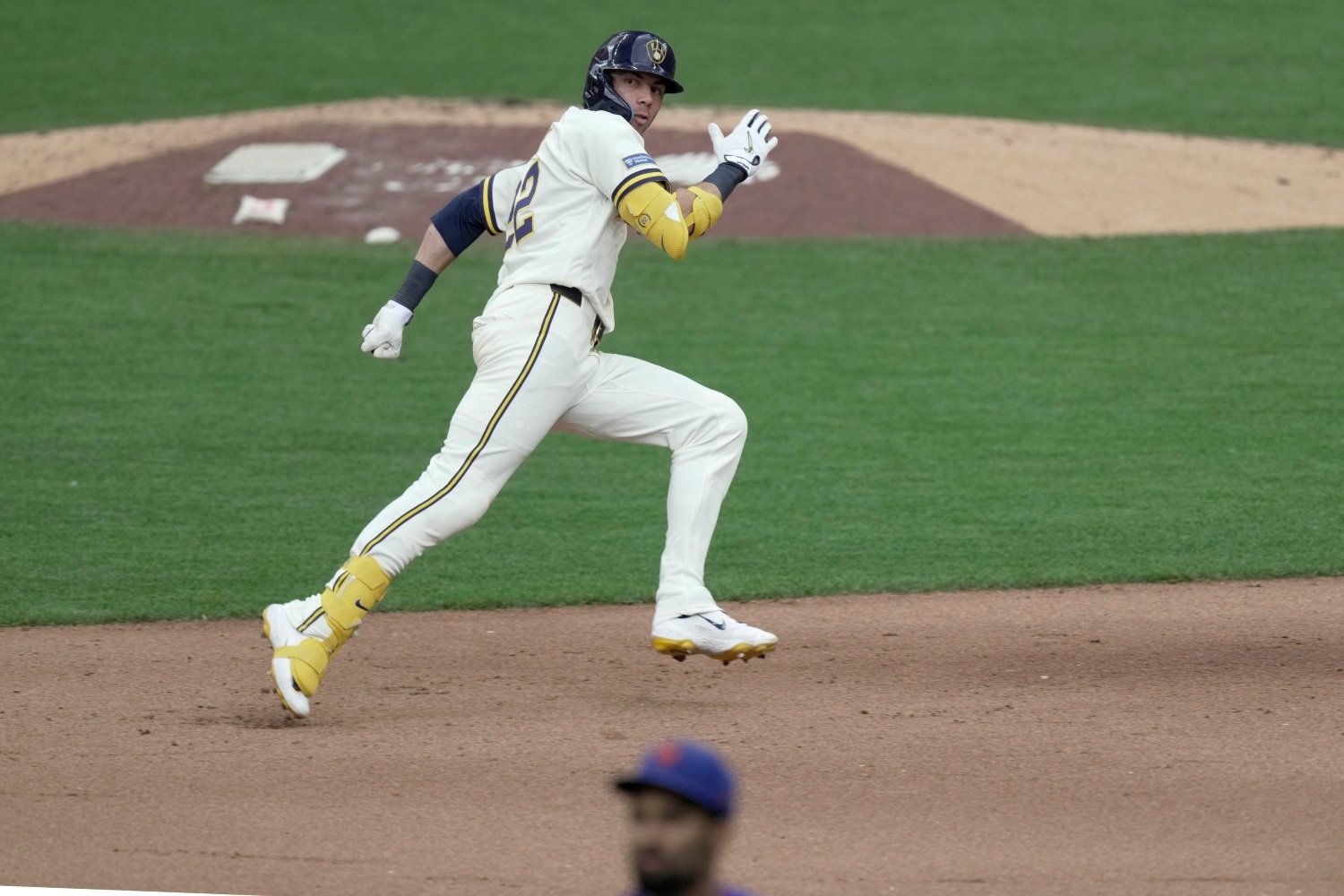 Pat Murphy was eager to discuss Joey Ortiz's fantastic game after Wednesday's Brewers win over the New York Mets, but he was just as excited to talk about another hitter's multi-hit performance after prolonged struggles. "How about Yelich today?" Murphy asked after praising Ortiz. "Nine-pitch at-bat to lead off the game, which is underrated, RBI, an RBI triple—good at-bats against really good pitching." Yelich drove in Ortiz twice: first with a single in the second inning, then with that triple in the sixth. He has four extra-base hits on the current homestand, hitting .250/.375/.500 (a 140 wRC+). "I'm pumped for 'Yeli,'" Murphy said, deliberately shouting him out a second time in his five-minute press conference. After a rough first half, Yelich's production and role will be a major storyline down the stretch. If the season ended today, his 99 wRC+ would be the lowest of his career, and the first time he's been a statistically below-average hitter. Lackluster results in a sample of around 300 plate appearances aren't new for Yelich. His overall solid production has experienced more ebbs and flows in recent years. Just last year, Yelich got off to a slow start before doing his best work in the second half. When things went poorly in the past, Yelich was still hitting the ball hard and usually getting a bit unlucky. That hasn't been the case this year. His .299 xwOBA is lower than his .316 wOBA and is a career low. His hard-hit rate and average exit velocity are also personal worsts. Yelich has never really been a contact hitter, but his whiff rate has jumped to 30.5%, his worst mark outside of the shortened 2020 season. In the rolling chart below of Yelich's xwOBA over 200 plate appearances, that blip in 2026 below the red average line jumps out. It's still just a blip, but it's a first-time blip. In other words, Yelich has never had a stretch this prolonged in which his quality of contact (not just his results) has been this poor. Yelich is moving more rigidly. His average sprint speed is down from 28.2 feet per second last season to 27.3. He hasn't looked flexible enough to reach low pitches with his swing path, making it even harder for him to make contact with back-foot breaking balls (the league's whiff rate on those pitches is 40.2%; Yelich's is 63.6%). Being stiffer has also limited Yelich's skill set and made him less valuable in a few smaller ways. In another pair of unwelcome firsts, he now has below-average speed and has taken fewer extra bases on balls in play than the average runner, according to Statcast. Yelich's infield hit rate has cratered from 7% of ground balls in each of his previous two seasons to a career-worst 4% in 2026. Earlier this month in Pittsburgh, he laid down a near-perfect bunt for an attempted hit. It took him long enough to get out of the box and run to first that third baseman Nick Gonzales, positioned on the dirt near the traditional shortstop position, had enough time to charge the ball as it rolled down the third-base line and throw out Yelich by half a step. YkJMeExfWGw0TUFRPT1fQndBRUJWVldVRllBREFjQ1ZRQUhWdzlTQUZsVVUxa0FBZ2RUQkZZTVVnQUdWUVpT.mp4 These could all be symptoms of an underlying injury. Yelich missed time in April and May with an adductor strain and a recurrence of back issues. But with Jackson Chourio, Garrett Mitchell, Jake Bauers, and (until his recent shoulder injury) Sal Frelick all playing well, there's been no need for him to play through pain. When his back has flared up in the past, the Brewers have usually shut him down pretty quickly. The likelier and more sobering answer is that at 34 years old, Yelich is physically declining and cannot move like he used to. If that's the case, he and the Brewers should not count on a return to form, because that form is gone. Instead, he must make physical adjustments to perform without his past mobility. As a 14-year veteran in tune with his body, Yelich is equipped to make that transition, but it's still challenging to do in-season. The Brewers are already quietly platooning Yelich; he's started just two of their last eight games against a left-handed starter. But it's too early to relegate him to a part-time player. Not only has he earned a long leash, but Frelick will be sidelined for an undetermined stretch, and Andrew Vaughn's 98 wRC+ against right-handers isn't much better than Yelich's. If Frelick returns and Yelich doesn't improve, it will be easy to say that the Brewers should reduce the latter's role, but it's not that simple. Yelich is their highest-paid player, their longest-tenured hitter, and a respected clubhouse figure who leads more with his conduct on the field than with his words. To demote him in the lineup—or, even worse, to the bench—is an open acknowledgment that something is wrong, and that it's not immediately fixable. The implications could bleed off the field. To avoid that dilemma, Yelich must start producing. That's why any signs of life, like those glimpses since the All-Star break, are encouraging.
 -
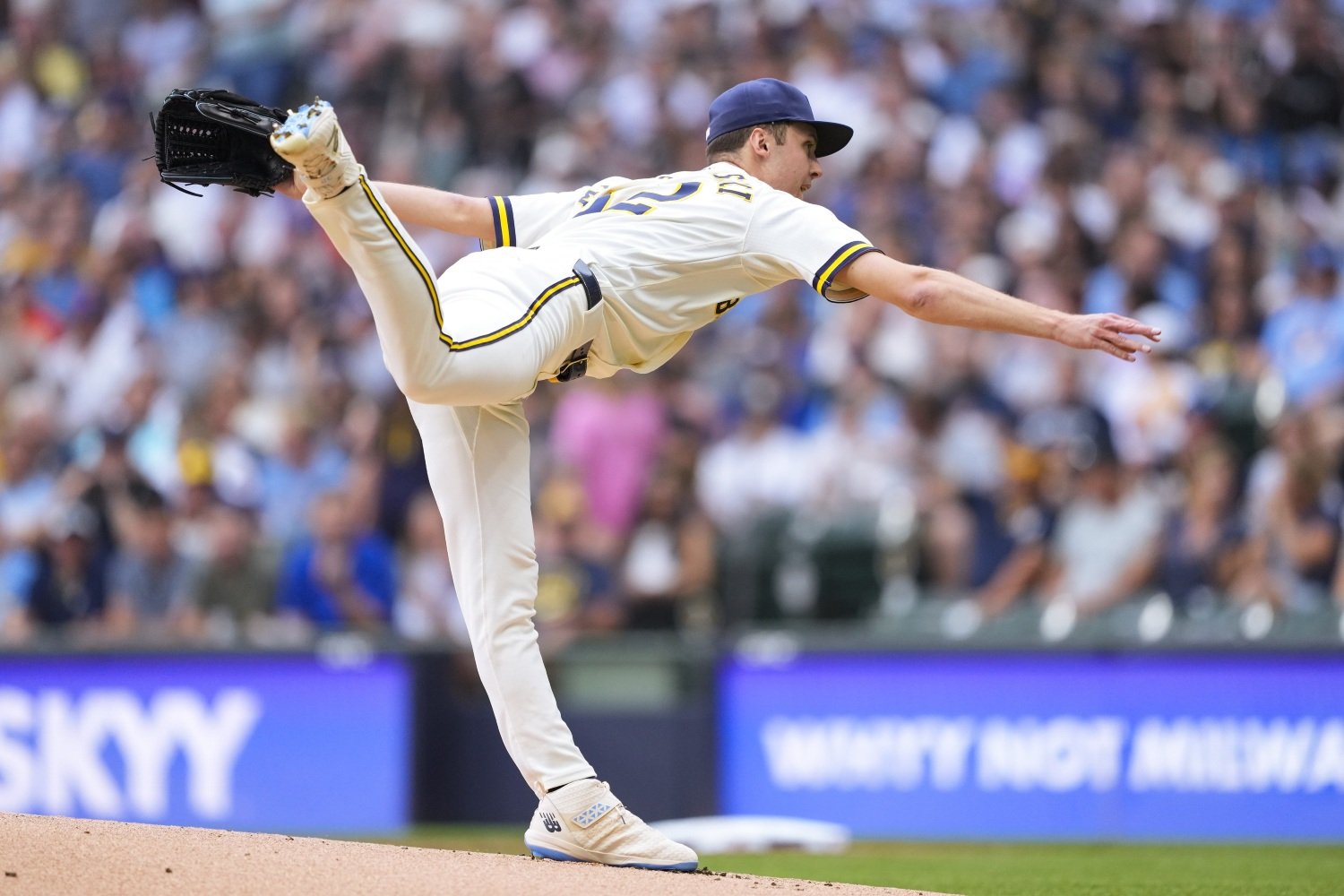 When the Brewers reconfigured their pitching plans to give Jacob Misiorowski a 12-day layoff between starts over the All-Star break, it brought to the forefront what was already going to be a significant story in the second half: how would the team manage his innings down the stretch? "It's a big discussion. It's a big topic," Pat Murphy said before Misiorowski took the mound against the New York Mets on Monday night. "It's all sorts of concern, planning, discussion, sidebar discussion. It's mechanics, biomechanics, everything about it. Strength testing, all that. Thus, the reason for the layoff. Now, how do we ramp it back up?" Misiorowski entered the break having thrown 111 innings. Last year, he set a career high with 129 ⅓ regular-season frames between Triple-A and the big leagues, plus 12 more innings in the postseason. After the Brewers frequently let him work deep into games during the first half, he's on pace to exceed last season's workload by a huge margin. The conventional rule of thumb for young pitchers—or, at least, the oft-cited approach—is increasing innings totals by 20-to-30% each season. Under that approach, Misiorowski could make up to 12 more starts while averaging five innings per outing for the rest of the regular season. In reality, it's not that straightforward. "I think it's very individual, very individually based, and I think that everybody's kind of keeping things in mind," Murphy said. "Has he had an injury history? Did he go through some setbacks? All that type of thing." That 20-to-30% rule probably won't apply to Misiorowski. Many of those deeper outings featured few high-stress pitches. More importantly, after he put on good weight in his lower half last winter, the Brewers believe he's physically equipped for a significant increase in his workload. "Offseason last year, we focused on legs and doing all that stuff to get myself ready for this track of the year," Misiorowski said. "I feel good where I'm at and ready to go." "It factors, yeah," Murphy said. "I always say this: when you're training to run a marathon, you don't ever go out and run the 26, you know what I mean? You never do. … So I don't think you have to set a number [based on] only what he did in the past. I think you can plan for more than that." Ironically, Misiorowski didn't have his legs underneath him a few hours later. With his body out of sync, he threw just 47% of his four-seam fastballs in the strike zone, prompting an in-game adjustment to lean more on his cutter. "He didn't throw a commanded heater past the second inning," Murphy said. "He was kind of coming off his legs and kind of getting stuck, and then trying to get out of it, and the ball was sailing." Entering Monday, Misiorowski had thrown his four-seamer 63% of the time and his cutter 14% of the time. In his outing against the Mets, those usage rates shifted to 55% and 29%, respectively. He threw as many cutters as four-seamers the second time through the order. "Going cutter kind of forces me to be shorter," Misiorowski said postgame. "I wasn't really feeling the legs, so kind of overcorrected [with] cutters. It worked out." Seeing that his body wasn't moving efficiently, the Brewers ended Misiorowski's outing at four innings at 65 pitches. "We would have probably let him go further if his delivery and his legs felt great," Murphy said. "I think he was a little bit out of it. The long layoff kind of affected his delivery and everything else. I think it was important to notice that and get him out of there then." The outing was a preview of how the Brewers plan to handle Misiorowski moving forward, even on nights when he's locked in. They may delay a few outings for extra rest days as the schedule allows, but the nearly two-week layoff was a one-time deal as a midseason break. Instead, they'll shorten some starts by an inning or two. It's less disruptive to Misiorowski's routine and the team's bullpen usage than outright skipping his turn in the rotation. "I think we lean more towards that, to keep the consistency," Murphy said, while also acknowledging that finding an extra start during a given turn in the rotation is harder than patching in a few extra innings from multi-inning relievers. "When you have a natural break like we just did—we kept him out of the Pittsburgh game three, the big break, kept him out of the first series—I think we take that as kind of a reset. Now, I think we have to build him back up and be sure that we do it in a mindful way." The Brewers aren't perfectly equipped to toe the line with their young ace—as the trade deadline approaches, they need more depth in both the rotation and the bullpen—but their position in the standings affords them some flexibility. Misiorowski's dominance and volume are a big reason why Milwaukee boasts the best record in baseball and leads the NL Central by 7 games. They won't treat him with kid gloves, but they have some wiggle room to be cautious when it makes sense.
 -
Image courtesy of © Jeff Hanisch-Imagn Images When the Brewers reconfigured their pitching plans to give Jacob Misiorowski a 12-day layoff between starts over the All-Star break, it brought to the forefront what was already going to be a significant story in the second half: how would the team manage his innings down the stretch? "It's a big discussion. It's a big topic," Pat Murphy said before Misiorowski took the mound against the New York Mets on Monday night. "It's all sorts of concern, planning, discussion, sidebar discussion. It's mechanics, biomechanics, everything about it. Strength testing, all that. Thus, the reason for the layoff. Now, how do we ramp it back up?" Misiorowski entered the break having thrown 111 innings. Last year, he set a career high with 129 ⅓ regular-season frames between Triple-A and the big leagues, plus 12 more innings in the postseason. After the Brewers frequently let him work deep into games during the first half, he's on pace to exceed last season's workload by a huge margin. The conventional rule of thumb for young pitchers—or, at least, the oft-cited approach—is increasing innings totals by 20-to-30% each season. Under that approach, Misiorowski could make up to 12 more starts while averaging five innings per outing for the rest of the regular season. In reality, it's not that straightforward. "I think it's very individual, very individually based, and I think that everybody's kind of keeping things in mind," Murphy said. "Has he had an injury history? Did he go through some setbacks? All that type of thing." That 20-to-30% rule probably won't apply to Misiorowski. Many of those deeper outings featured few high-stress pitches. More importantly, after he put on good weight in his lower half last winter, the Brewers believe he's physically equipped for a significant increase in his workload. "Offseason last year, we focused on legs and doing all that stuff to get myself ready for this track of the year," Misiorowski said. "I feel good where I'm at and ready to go." "It factors, yeah," Murphy said. "I always say this: when you're training to run a marathon, you don't ever go out and run the 26, you know what I mean? You never do. … So I don't think you have to set a number [based on] only what he did in the past. I think you can plan for more than that." Ironically, Misiorowski didn't have his legs underneath him a few hours later. With his body out of sync, he threw just 47% of his four-seam fastballs in the strike zone, prompting an in-game adjustment to lean more on his cutter. "He didn't throw a commanded heater past the second inning," Murphy said. "He was kind of coming off his legs and kind of getting stuck, and then trying to get out of it, and the ball was sailing." Entering Monday, Misiorowski had thrown his four-seamer 63% of the time and his cutter 14% of the time. In his outing against the Mets, those usage rates shifted to 55% and 29%, respectively. He threw as many cutters as four-seamers the second time through the order. "Going cutter kind of forces me to be shorter," Misiorowski said postgame. "I wasn't really feeling the legs, so kind of overcorrected [with] cutters. It worked out." Seeing that his body wasn't moving efficiently, the Brewers ended Misiorowski's outing at four innings at 65 pitches. "We would have probably let him go further if his delivery and his legs felt great," Murphy said. "I think he was a little bit out of it. The long layoff kind of affected his delivery and everything else. I think it was important to notice that and get him out of there then." The outing was a preview of how the Brewers plan to handle Misiorowski moving forward, even on nights when he's locked in. They may delay a few outings for extra rest days as the schedule allows, but the nearly two-week layoff was a one-time deal as a midseason break. Instead, they'll shorten some starts by an inning or two. It's less disruptive to Misiorowski's routine and the team's bullpen usage than outright skipping his turn in the rotation. "I think we lean more towards that, to keep the consistency," Murphy said, while also acknowledging that finding an extra start during a given turn in the rotation is harder than patching in a few extra innings from multi-inning relievers. "When you have a natural break like we just did—we kept him out of the Pittsburgh game three, the big break, kept him out of the first series—I think we take that as kind of a reset. Now, I think we have to build him back up and be sure that we do it in a mindful way." The Brewers aren't perfectly equipped to toe the line with their young ace—as the trade deadline approaches, they need more depth in both the rotation and the bullpen—but their position in the standings affords them some flexibility. Misiorowski's dominance and volume are a big reason why Milwaukee boasts the best record in baseball and leads the NL Central by 7 games. They won't treat him with kid gloves, but they have some wiggle room to be cautious when it makes sense. View full article
-
Image courtesy of (C) Katie Stratman-Imagn Images Brandon Woodruff planned to address the media on Sunday afternoon about his future, but after speculation about that pending announcement spread quickly on Friday afternoon, he moved his press conference up a day to clear the air. “I’m not having a funeral or anything,” Woodruff said. Woodruff made clear that he is not retiring, which was how some interpreted Pat Murphy’s announcement on Friday that “the outlook isn’t good” regarding the right-hander’s latest shoulder injury. As forecasted, though, it was bad news: Woodruff will undergo another surgery to repair his right shoulder capsule, the same procedure he had after the 2023 season. “There's a couple other things that are going on that's not the real issue,” Woodruff said. “The real issue is the capsule. I'll have to get it fixed, and then go from there.” He hasn’t looked ahead at timelines, but for now, Woodruff plans to fully rehab and prepare to pitch again. “The good news is I know exactly what this rehab entails,” he said. “I'm never closing the door on pitching. Like, I'm getting this with the intention of rehabbing and taking care of that and being able to pitch again. But as far as like when that is, I haven't even looked at the dates.” The last time around, that rehab was a 20-month process between regular-season outings, although that included two delays for separate injuries (at least technically) unrelated to his shoulder. When he finally made it back, he pitched to a 3.20 ERA and 3.17 FIP in 12 starts and still struck out 32.3% of opposing hitters, despite predictably diminished fastball velocity. It was a similar story this year, as Woodruff posted a 2.98 ERA and 3.19 FIP. “Going forward, it's like, I know I can go pitch,” Woodruff said. “Yeah, I would love to have 95-plus, but I've always prided myself on being a pitcher. It's almost, your brain works in a way where it's more fun getting guys out like I've had to get them out the last couple years. So in terms of going forward for me, it doesn’t take the fact away that you can still go and pitch at those velocities.” “Him coming back that first time in Miami last year … just watching that happen, we’re just looking at each other like, ‘He's rolling,’” Murphy said. “And then he bumps a 95 or a 96 in there, and we’re like, ‘This guy’s doing it.’ And then the continuation of the way he went out there, he was in command.” Throughout that time, though, Woodruff faced repeated problems in or near his surgically repaired shoulder. His 2025 season was cut short by a lat injury. He and the Brewers said his shoulder was structurally intact, and the club extended a qualifying offer for the 2025 season, which Woodruff accepted. In his sixth start of the year, his four-seam fastball velocity dipped to 85.4 mph, and he ultimately missed seven weeks after having fluid drained from a cyst in his shoulder. The Brewers would not confirm it, but as he worked his way back, there were signs that Woodruff was making tweaks to his mechanics and pitch usage to prepare for another velocity dip. However, he looked like his usual post-surgery self in his return outing in Cincinnati, and he was solid again in his next outing against the Chicago Cubs. Woodruff said that he had no reason to believe another major injury was about to occur in his next start in Arizona. “Truthfully, leading up before Arizona, I'd had a good week leading in between,” he said. “I had nothing that indicated that what was going to happen on July the 4th in Arizona was going to happen. And honestly, I was in a good spot. I was throwing the ball well and felt fine.” It was a similar story to last time, coincidentally another start against the Diamondbacks. Woodruff’s velocity dipped into the mid-80s, and he departed in the fourth inning with Murphy, pitching coach Chris Hook, and athletic trainers. There was a more somber tone to this exit, an unspoken acknowledgment that it was more than a minor setback. “If you watched my reaction out there, I kind of knew it was bad,” Murphy said. “And then when I heard the news, really what the MRI revealed at first, it was like, none of this can be good.” That MRI showed a new injury to Woodruff’s anterior capsule. Another surgery will sideline him for 2027 and position him to return in 2028–if he successfully makes it back. Given their unclear outlook for recovery, already making it back from one surgery of this kind was a remarkable feat. Recovering from a second one to pitch again would be unprecedented. The last notable comparison was Johan Santana, whose career ended after he tore his capsule a second time. For now, Woodruff will try to beat the odds by taking things one day at a time. “The kid’s been coming back from adversity his whole career,” Murphy said. “I didn't know what I was getting into three years ago when I had surgery,” Woodruff said. “Thankfully, I've got that perspective now, which I think will benefit me, for sure. It's not going to be easy. I know it's going to be tough, and so I know what's ahead of me.” View full article
-
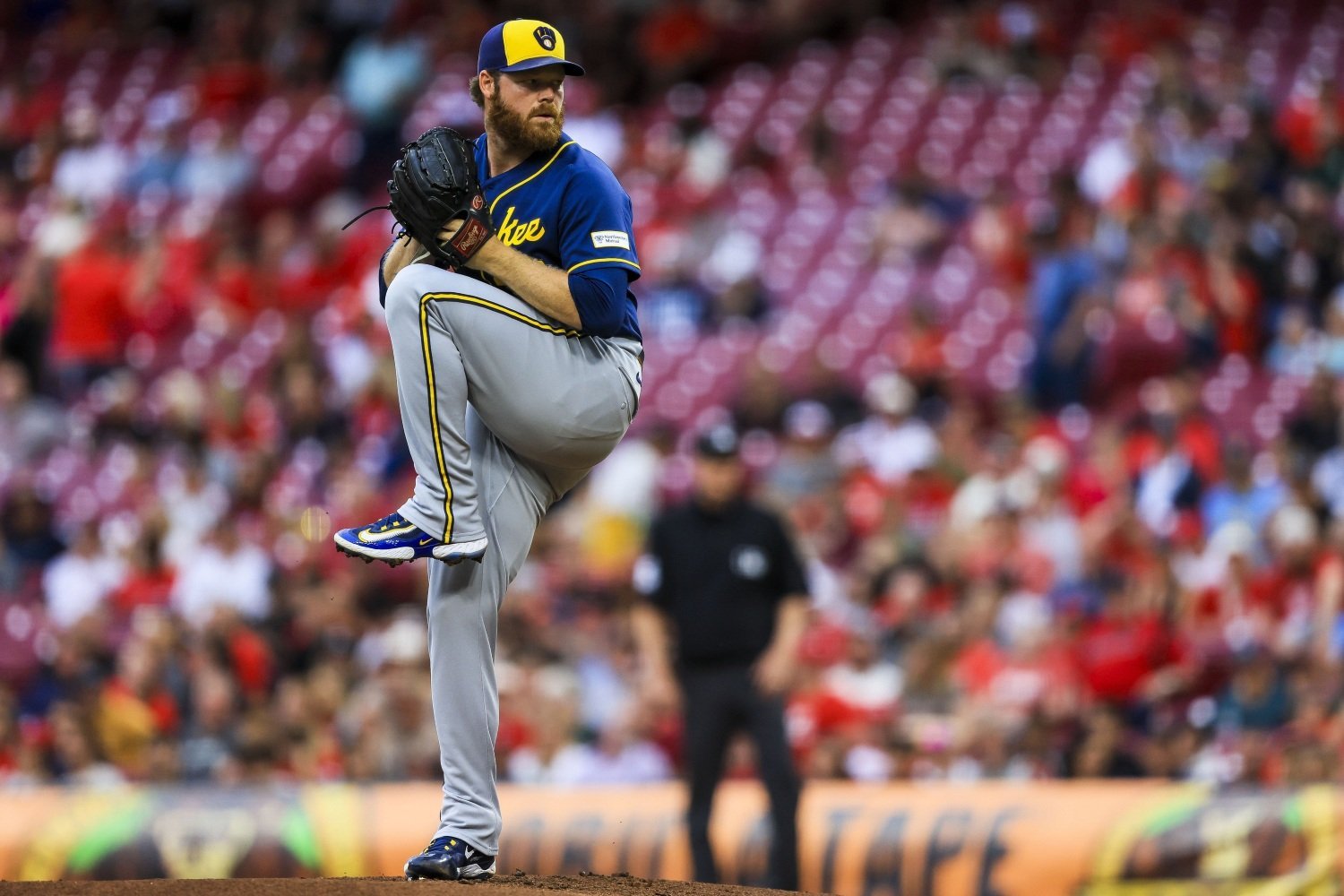 Brandon Woodruff planned to address the media on Sunday afternoon about his future, but after speculation about that pending announcement spread quickly on Friday afternoon, he moved his press conference up a day to clear the air. “I’m not having a funeral or anything,” Woodruff said. Woodruff made clear that he is not retiring, which was how some interpreted Pat Murphy’s announcement on Friday that “the outlook isn’t good” regarding the right-hander’s latest shoulder injury. As forecasted, though, it was bad news: Woodruff will undergo another surgery to repair his right shoulder capsule, the same procedure he had after the 2023 season. “There's a couple other things that are going on that's not the real issue,” Woodruff said. “The real issue is the capsule. I'll have to get it fixed, and then go from there.” He hasn’t looked ahead at timelines, but for now, Woodruff plans to fully rehab and prepare to pitch again. “The good news is I know exactly what this rehab entails,” he said. “I'm never closing the door on pitching. Like, I'm getting this with the intention of rehabbing and taking care of that and being able to pitch again. But as far as like when that is, I haven't even looked at the dates.” The last time around, that rehab was a 20-month process between regular-season outings, although that included two delays for separate injuries (at least technically) unrelated to his shoulder. When he finally made it back, he pitched to a 3.20 ERA and 3.17 FIP in 12 starts and still struck out 32.3% of opposing hitters, despite predictably diminished fastball velocity. It was a similar story this year, as Woodruff posted a 2.98 ERA and 3.19 FIP. “Going forward, it's like, I know I can go pitch,” Woodruff said. “Yeah, I would love to have 95-plus, but I've always prided myself on being a pitcher. It's almost, your brain works in a way where it's more fun getting guys out like I've had to get them out the last couple years. So in terms of going forward for me, it doesn’t take the fact away that you can still go and pitch at those velocities.” “Him coming back that first time in Miami last year … just watching that happen, we’re just looking at each other like, ‘He's rolling,’” Murphy said. “And then he bumps a 95 or a 96 in there, and we’re like, ‘This guy’s doing it.’ And then the continuation of the way he went out there, he was in command.” Throughout that time, though, Woodruff faced repeated problems in or near his surgically repaired shoulder. His 2025 season was cut short by a lat injury. He and the Brewers said his shoulder was structurally intact, and the club extended a qualifying offer for the 2025 season, which Woodruff accepted. In his sixth start of the year, his four-seam fastball velocity dipped to 85.4 mph, and he ultimately missed seven weeks after having fluid drained from a cyst in his shoulder. The Brewers would not confirm it, but as he worked his way back, there were signs that Woodruff was making tweaks to his mechanics and pitch usage to prepare for another velocity dip. However, he looked like his usual post-surgery self in his return outing in Cincinnati, and he was solid again in his next outing against the Chicago Cubs. Woodruff said that he had no reason to believe another major injury was about to occur in his next start in Arizona. “Truthfully, leading up before Arizona, I'd had a good week leading in between,” he said. “I had nothing that indicated that what was going to happen on July the 4th in Arizona was going to happen. And honestly, I was in a good spot. I was throwing the ball well and felt fine.” It was a similar story to last time, coincidentally another start against the Diamondbacks. Woodruff’s velocity dipped into the mid-80s, and he departed in the fourth inning with Murphy, pitching coach Chris Hook, and athletic trainers. There was a more somber tone to this exit, an unspoken acknowledgment that it was more than a minor setback. “If you watched my reaction out there, I kind of knew it was bad,” Murphy said. “And then when I heard the news, really what the MRI revealed at first, it was like, none of this can be good.” That MRI showed a new injury to Woodruff’s anterior capsule. Another surgery will sideline him for 2027 and position him to return in 2028–if he successfully makes it back. Given their unclear outlook for recovery, already making it back from one surgery of this kind was a remarkable feat. Recovering from a second one to pitch again would be unprecedented. The last notable comparison was Johan Santana, whose career ended after he tore his capsule a second time. For now, Woodruff will try to beat the odds by taking things one day at a time. “The kid’s been coming back from adversity his whole career,” Murphy said. “I didn't know what I was getting into three years ago when I had surgery,” Woodruff said. “Thankfully, I've got that perspective now, which I think will benefit me, for sure. It's not going to be easy. I know it's going to be tough, and so I know what's ahead of me.”
 -
Image courtesy of © Michael McLoone-Imagn Images When the Brewers activated newly-acquired Lance McCullers Jr. from the injured list on Friday afternoon, they optioned left-handed reliever Jared Koenig to Triple-A Nashville. It was not a surprising corresponding move, as Koenig allowed five runs (including two walks and a hit-by-pitch) without recording an out in Pittsburgh on Sunday. But it's the latest frustrating chapter in the 2026 season for the veteran southpaw, who was Pat Murphy's Swiss Army knife in each of the last two seasons. His velocity dropped in spring training, and while he avoided surgery for a left UCL sprain, he's pitched to a 4.82 xERA and 6.38 FIP when healthy. "He's been right in the thick of it, maybe underrated, so much in the thick of it," Murphy said. "And to see him go out there and try to compete without his best stuff, he just can't get on track. And the injury in spring, the rehab and the coming back, it just isn't on track." Koenig returned from the injured list at the end of June, and while his stuff and command were inconsistent throughout his rehab assignment, the initial returns after his activation were promising. In his first outing back, his sinker averaged 95.2 MPH and touched 97 in a scoreless inning. The wheels quickly fell off, though, as he allowed seven earned runs and issued six free bases in 4 ⅔ innings after that. "There was a pitch here or there, you're like, 'Wow,'" Murphy said. "But you look at the properties of the pitches, and it's not the same guy." Koenig's overall movement profile hasn't changed dramatically, but it seems like he isn't finishing his pitches as he once did. There's the obvious velocity drop of his sinker (down from 95.8 MPH last year to 94.2 this season). Furthermore, his secondary pitches are moving similarly, but not quite the same way. His cutter is backing up, with slight arm-side run; his changeup has less fade; and his curveball has less depth. Put all of that together, and stuff modeling metrics believe his arsenal is noticeably worse right now. He clearly wasn't trusting his stuff in the same way, either. At his best, Koenig succeeded by aggressively attacking the strike zone with his deceptive sinker, which looked out of his hand like it would cut to the glove side before running back over the plate. Not only has his control vanished since he came back, but he's thrown significantly more changeups to right-handers and cutters to lefties, instead of trusting his sinker. "Now he's [in a] 3-1 [count], now he's nitpicking, now he's pitching like he never has," Murphy said. "He knows he's not helping us, and all that hurts." Murphy said Koenig already knew the move was coming, as he and the Brewers spent recent days developing a plan to get him back to form. Although he was optioned to Nashville, he'll first head to the club's spring training complex in Arizona, where he can focus exclusively on improving his delivery to rediscover his velocity and pitch shapes. That's easier to do in a more controlled environment than at the big-league level. "He didn't feel like he could get the work in between either, because he had to be available, right? So it's hard to be available and get your work in between," Murphy said. "So hopefully we can set up something where he gets his work, gets his delivery locked down, the properties of his pitches start to increase with a little more rest in between." Koenig's status underscores Milwaukee's need for more pitching help ahead of the August 3 trade deadline. Middle relievers often have short shelf lives, so even if his stuff is not far off from usual, the Brewers are best advised not to expect him to bounce back. Without Koenig, Aaron Ashby is their lone active left-handed reliever, although DL Hall is nearing a rehab assignment. The front office could directly fortify that group by trading for a reliever or two, or it could add another starter to bump Shane Drohan or Robert Gasser to the bullpen. Even after acquiring McCullers and Colton Gordon, they should still be scouring both markets in the coming weeks. Koenig has been a trusted and well-liked piece of their bullpen for longer than many middle relievers last, but at this point, anything he can give them down the stretch is gravy. View full article
-
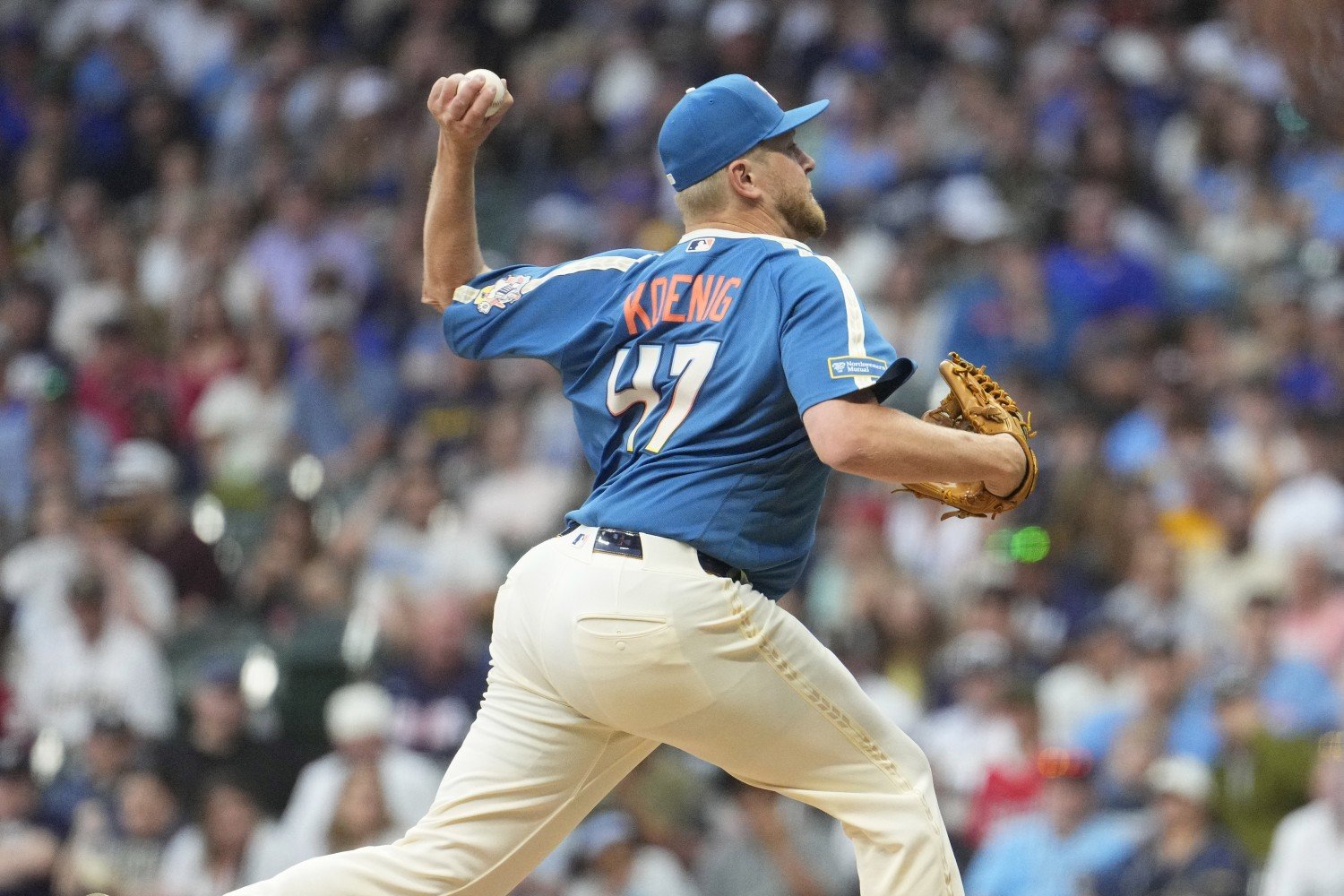 When the Brewers activated newly-acquired Lance McCullers Jr. from the injured list on Friday afternoon, they optioned left-handed reliever Jared Koenig to Triple-A Nashville. It was not a surprising corresponding move, as Koenig allowed five runs (including two walks and a hit-by-pitch) without recording an out in Pittsburgh on Sunday. But it's the latest frustrating chapter in the 2026 season for the veteran southpaw, who was Pat Murphy's Swiss Army knife in each of the last two seasons. His velocity dropped in spring training, and while he avoided surgery for a left UCL sprain, he's pitched to a 4.82 xERA and 6.38 FIP when healthy. "He's been right in the thick of it, maybe underrated, so much in the thick of it," Murphy said. "And to see him go out there and try to compete without his best stuff, he just can't get on track. And the injury in spring, the rehab and the coming back, it just isn't on track." Koenig returned from the injured list at the end of June, and while his stuff and command were inconsistent throughout his rehab assignment, the initial returns after his activation were promising. In his first outing back, his sinker averaged 95.2 MPH and touched 97 in a scoreless inning. The wheels quickly fell off, though, as he allowed seven earned runs and issued six free bases in 4 ⅔ innings after that. "There was a pitch here or there, you're like, 'Wow,'" Murphy said. "But you look at the properties of the pitches, and it's not the same guy." Koenig's overall movement profile hasn't changed dramatically, but it seems like he isn't finishing his pitches as he once did. There's the obvious velocity drop of his sinker (down from 95.8 MPH last year to 94.2 this season). Furthermore, his secondary pitches are moving similarly, but not quite the same way. His cutter is backing up, with slight arm-side run; his changeup has less fade; and his curveball has less depth. Put all of that together, and stuff modeling metrics believe his arsenal is noticeably worse right now. He clearly wasn't trusting his stuff in the same way, either. At his best, Koenig succeeded by aggressively attacking the strike zone with his deceptive sinker, which looked out of his hand like it would cut to the glove side before running back over the plate. Not only has his control vanished since he came back, but he's thrown significantly more changeups to right-handers and cutters to lefties, instead of trusting his sinker. "Now he's [in a] 3-1 [count], now he's nitpicking, now he's pitching like he never has," Murphy said. "He knows he's not helping us, and all that hurts." Murphy said Koenig already knew the move was coming, as he and the Brewers spent recent days developing a plan to get him back to form. Although he was optioned to Nashville, he'll first head to the club's spring training complex in Arizona, where he can focus exclusively on improving his delivery to rediscover his velocity and pitch shapes. That's easier to do in a more controlled environment than at the big-league level. "He didn't feel like he could get the work in between either, because he had to be available, right? So it's hard to be available and get your work in between," Murphy said. "So hopefully we can set up something where he gets his work, gets his delivery locked down, the properties of his pitches start to increase with a little more rest in between." Koenig's status underscores Milwaukee's need for more pitching help ahead of the August 3 trade deadline. Middle relievers often have short shelf lives, so even if his stuff is not far off from usual, the Brewers are best advised not to expect him to bounce back. Without Koenig, Aaron Ashby is their lone active left-handed reliever, although DL Hall is nearing a rehab assignment. The front office could directly fortify that group by trading for a reliever or two, or it could add another starter to bump Shane Drohan or Robert Gasser to the bullpen. Even after acquiring McCullers and Colton Gordon, they should still be scouring both markets in the coming weeks. Koenig has been a trusted and well-liked piece of their bullpen for longer than many middle relievers last, but at this point, anything he can give them down the stretch is gravy.
 -
How Brewers Will Try to Make Lance McCullers Jr. Serviceable Again
Jack Stern posted an article in Brewers
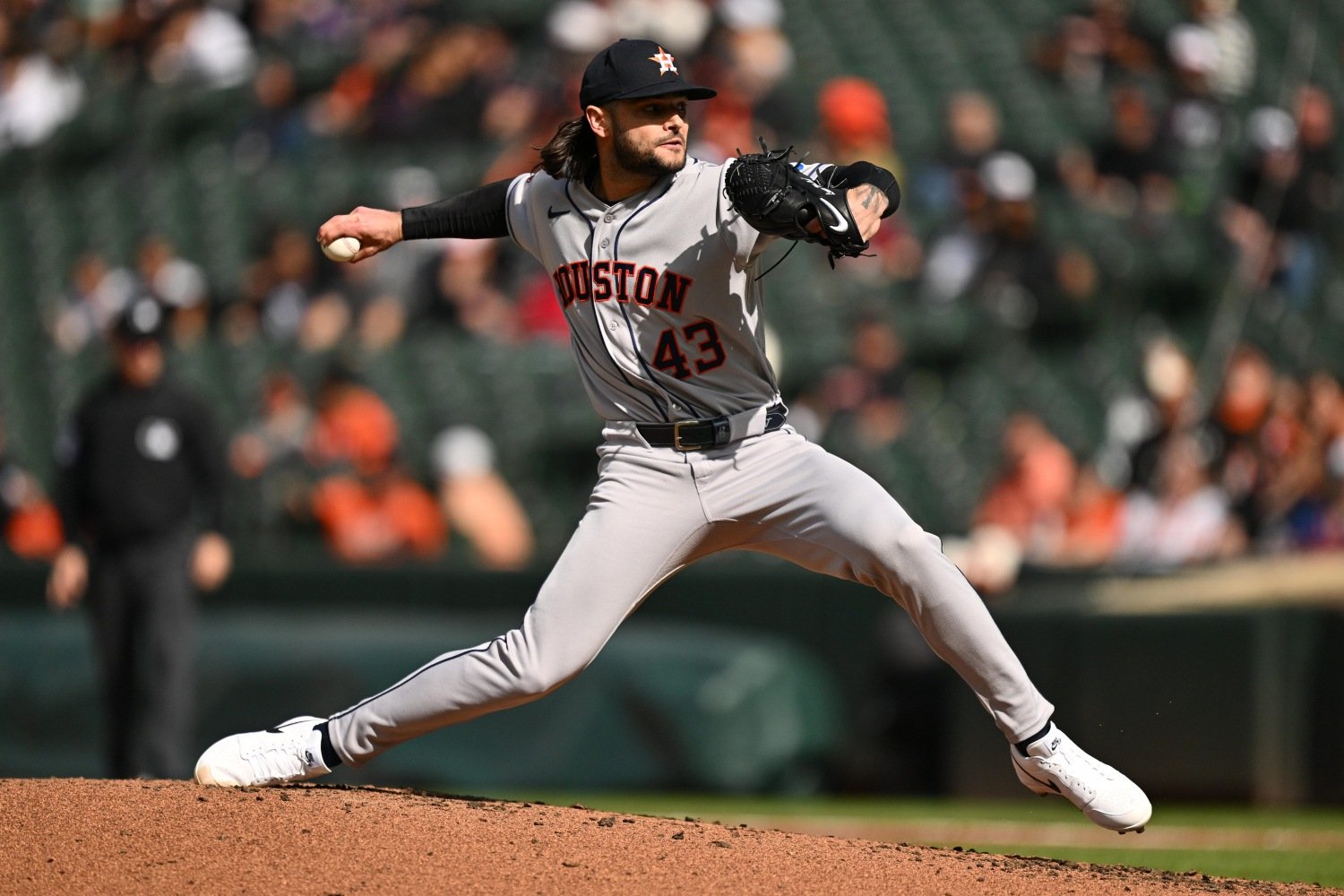 Lance McCullers Jr. probably won't become one of the Brewers’ best starters in the second half. The Astros wanted to dump most of his salary for a reason. McCullers is four years removed from performing like a viable big-league starter, and he’s currently working his way back from a shoulder injury. The Brewers have taken fliers on several injured pitchers in recent years, such as Trevor Rosenthal, Nestor Cortes, and Shelby Miller, and the returns have been next to nothing. There’s certainly room for the veteran to make an impact, though. Back-end starting pitching is a need for the Brewers, who recently lost Brandon Woodruff until at least September and just placed Kyle Harrison on the injured list with forearm tightness. The club seems to believe that the current version of McCullers, while diminished from his prime, can start games down the stretch with competitive enough results. In the late 2010s, when spinning the ball became all the rage in pitch design and usage, McCullers was among the poster children. From his debut in 2015 through 2022, he posted a 3.48 ERA, 3.35 FIP, and 3.73 SIERA while throwing high-spin breaking pitches 45.8% of the time, more than any other pitch group. His signature pitch was his knuckle curveball, which he famously threw for 24 straight pitches to close out Game 7 of the 2017 ALCS. Injuries began to strike near the end of that run. McCullers underwent Tommy John surgery after the 2018 season but remained productive after rehabbing. He then suffered a flexor strain during the 2021 postseason, and while he returned to make eight starts in 2022, he ultimately required surgery that sidelined him for the next two seasons. He hasn’t been the same since returning. In 94 ⅔ innings over the last two seasons, a sample interrupted by four more trips to the injured list, McCullers has pitched to a 6.65 ERA, 5.48 FIP, and 4.73 SIERA. Never a great control pitcher because of his big breaking ball, he's seen his walk rate balloon to 13.7% during that stretch. Hitters are seeing different stuff from this version of McCullers. His sinker used to sit around 94 MPH, but this year it’s averaged 91.3. He’s no longer a spin-first pitcher, either. After dabbling with a cutter for a few seasons, McCullers has made it one of his primary pitches for the first time this year. He’s now throwing fastballs 54% of the time, tied with his rookie campaign for the highest usage of his career. That change suggests McCullers is feeling things out without much success. That also applies to his mechanics. Overall, he seems to be searching for what kind of pitcher he should be at this stage of his career, and he hasn’t yet found a clear answer. After that original flexor injury, McCullers did not make his 2022 debut until August. He returned with a lower arm slot, a change that stuck through his two-year absence after surgery. This year, his slot was back to where it was before the injury, but it has dropped again during his rehab outings in Triple-A this month, which isn’t reflected on the chart below. McCullers has typically worked from the first-base side of the rubber, where his crossfire delivery can be most on-line to home plate, and the arm-side run of his sinker plays up best. But in one outing last July, he relocated to the middle of the rubber. After that, he switched back. With an in-season acquisition, the Brewers don’t have time to make wholesale changes, but helping McCullers establish an identity on the mound must be the starting point. Can he be a spin-heavy guy again, or is the fastball-centric approach the new way forward? Should he attack the strike zone aggressively or work the corners? How does his body move best after myriad injuries? On the arsenal front, there’s still plenty to like about his curveball, which has induced a 48.1% whiff rate and a .291 xwOBA. However, McCullers has lost his feel for locating it competitively, throwing nearly a quarter of his curveballs in what Statcast defines as the waste zone. Those are pitches so far outside the strike zone that they rarely force a hitter to swing, which makes a nasty pitch far less useful. The Brewers could try to make the curveball the centerpiece of McCullers’s arsenal again, but given their usual approach and where McCullers is right now, they’re more likely to emphasize his fastballs. Pitching coaches Chris Hook and Jim Henderson want starters to get early swings that miss barrels, which usually means sequencing sinkers, cutters, and four-seamers within the strike zone. McCullers now has that three-fastball mix, and his sinker and cutter are the only two pitches in his arsenal without a negative run value this season. Throwing the latter more often might be the key to reducing his walks while playing the east-west game to both sides of the plate. Pitch models grade his cutter as the best among his fastballs, and it has posted a +1 run value and 20% whiff rate this year. However, while McCullers has used the pitch as his leading fastball against left-handed batters, he’s thrown it more sparingly against right-handers. For comparison, Brandon Sproat, who has very similar pitch shapes from nearly the same arm slot, has used his cutter at nearly equal rates against both sides. McCullers clearly is not what he once was, but he might also have more potential for a decent second act than those numbers suggest. His 4.55 xERA, calculated by Statcast based on what usually happens on the kind of contact a pitcher allows, is passable. According to Baseball Prospectus, his 4.43 DRA is slightly better than the league average. McCullers has still generated whiffs on 27.3% of swings and posted a 44.8% ground ball rate, both of which are above average. The plan to be serviceable again will be somewhat tailored to McCullers as an individual, but expect the Brewers to turn to some familiar tricks. He’ll probably stay on the first-base side of the rubber. There might be small changes to his starting position and tempo to help get his arm on time and his torso more direct to the plate at foot strike. Attacking the zone with sinkers and cutters will probably be the playbook in most outings, with the expectation that an athletic defense will help him out on balls in play. It’s best to keep expectations measured. McCullers is a struggling rental pitcher, and he may not even be the main get of this deal for the Brewers. Left-hander Colton Gordon comes with five years of team control and might be more impactful when all is said and done. That said, few clubs are better than Milwaukee at turning struggling starters into serviceable arms for a brief stretch, including starters with underwhelming fastballs like McCullers. Perhaps he’ll follow in the footsteps of Colin Rea, Bryse Wilson, and Aaron Civale, among others.
- 3 comments
-
- 3
-

-
- lance mccullers jr.
- chris hook
- (and 1 more)
-
Image courtesy of © Jamie Sabau-Imagn Images Lance McCullers Jr. probably won't become one of the Brewers’ best starters in the second half. The Astros wanted to dump most of his salary for a reason. McCullers is four years removed from performing like a viable big-league starter, and he’s currently working his way back from a shoulder injury. The Brewers have taken fliers on several injured pitchers in recent years, such as Trevor Rosenthal, Nestor Cortes, and Shelby Miller, and the returns have been next to nothing. There’s certainly room for the veteran to make an impact, though. Back-end starting pitching is a need for the Brewers, who recently lost Brandon Woodruff until at least September and just placed Kyle Harrison on the injured list with forearm tightness. The club seems to believe that the current version of McCullers, while diminished from his prime, can start games down the stretch with competitive enough results. In the late 2010s, when spinning the ball became all the rage in pitch design and usage, McCullers was among the poster children. From his debut in 2015 through 2022, he posted a 3.48 ERA, 3.35 FIP, and 3.73 SIERA while throwing high-spin breaking pitches 45.8% of the time, more than any other pitch group. His signature pitch was his knuckle curveball, which he famously threw for 24 straight pitches to close out Game 7 of the 2017 ALCS. Injuries began to strike near the end of that run. McCullers underwent Tommy John surgery after the 2018 season but remained productive after rehabbing. He then suffered a flexor strain during the 2021 postseason, and while he returned to make eight starts in 2022, he ultimately required surgery that sidelined him for the next two seasons. He hasn’t been the same since returning. In 94 ⅔ innings over the last two seasons, a sample interrupted by four more trips to the injured list, McCullers has pitched to a 6.65 ERA, 5.48 FIP, and 4.73 SIERA. Never a great control pitcher because of his big breaking ball, he's seen his walk rate balloon to 13.7% during that stretch. Hitters are seeing different stuff from this version of McCullers. His sinker used to sit around 94 MPH, but this year it’s averaged 91.3. He’s no longer a spin-first pitcher, either. After dabbling with a cutter for a few seasons, McCullers has made it one of his primary pitches for the first time this year. He’s now throwing fastballs 54% of the time, tied with his rookie campaign for the highest usage of his career. That change suggests McCullers is feeling things out without much success. That also applies to his mechanics. Overall, he seems to be searching for what kind of pitcher he should be at this stage of his career, and he hasn’t yet found a clear answer. After that original flexor injury, McCullers did not make his 2022 debut until August. He returned with a lower arm slot, a change that stuck through his two-year absence after surgery. This year, his slot was back to where it was before the injury, but it has dropped again during his rehab outings in Triple-A this month, which isn’t reflected on the chart below. McCullers has typically worked from the first-base side of the rubber, where his crossfire delivery can be most on-line to home plate, and the arm-side run of his sinker plays up best. But in one outing last July, he relocated to the middle of the rubber. After that, he switched back. With an in-season acquisition, the Brewers don’t have time to make wholesale changes, but helping McCullers establish an identity on the mound must be the starting point. Can he be a spin-heavy guy again, or is the fastball-centric approach the new way forward? Should he attack the strike zone aggressively or work the corners? How does his body move best after myriad injuries? On the arsenal front, there’s still plenty to like about his curveball, which has induced a 48.1% whiff rate and a .291 xwOBA. However, McCullers has lost his feel for locating it competitively, throwing nearly a quarter of his curveballs in what Statcast defines as the waste zone. Those are pitches so far outside the strike zone that they rarely force a hitter to swing, which makes a nasty pitch far less useful. The Brewers could try to make the curveball the centerpiece of McCullers’s arsenal again, but given their usual approach and where McCullers is right now, they’re more likely to emphasize his fastballs. Pitching coaches Chris Hook and Jim Henderson want starters to get early swings that miss barrels, which usually means sequencing sinkers, cutters, and four-seamers within the strike zone. McCullers now has that three-fastball mix, and his sinker and cutter are the only two pitches in his arsenal without a negative run value this season. Throwing the latter more often might be the key to reducing his walks while playing the east-west game to both sides of the plate. Pitch models grade his cutter as the best among his fastballs, and it has posted a +1 run value and 20% whiff rate this year. However, while McCullers has used the pitch as his leading fastball against left-handed batters, he’s thrown it more sparingly against right-handers. For comparison, Brandon Sproat, who has very similar pitch shapes from nearly the same arm slot, has used his cutter at nearly equal rates against both sides. McCullers clearly is not what he once was, but he might also have more potential for a decent second act than those numbers suggest. His 4.55 xERA, calculated by Statcast based on what usually happens on the kind of contact a pitcher allows, is passable. According to Baseball Prospectus, his 4.43 DRA is slightly better than the league average. McCullers has still generated whiffs on 27.3% of swings and posted a 44.8% ground ball rate, both of which are above average. The plan to be serviceable again will be somewhat tailored to McCullers as an individual, but expect the Brewers to turn to some familiar tricks. He’ll probably stay on the first-base side of the rubber. There might be small changes to his starting position and tempo to help get his arm on time and his torso more direct to the plate at foot strike. Attacking the zone with sinkers and cutters will probably be the playbook in most outings, with the expectation that an athletic defense will help him out on balls in play. It’s best to keep expectations measured. McCullers is a struggling rental pitcher, and he may not even be the main get of this deal for the Brewers. Left-hander Colton Gordon comes with five years of team control and might be more impactful when all is said and done. That said, few clubs are better than Milwaukee at turning struggling starters into serviceable arms for a brief stretch, including starters with underwhelming fastballs like McCullers. Perhaps he’ll follow in the footsteps of Colin Rea, Bryse Wilson, and Aaron Civale, among others. View full article
- 3 replies
-
- 1
-
-
- lance mccullers jr.
- chris hook
- (and 1 more)
-
How Pat Murphy Evaluates the Brewers' At-Bats From the Dugout
Jack Stern posted an article in Brewers
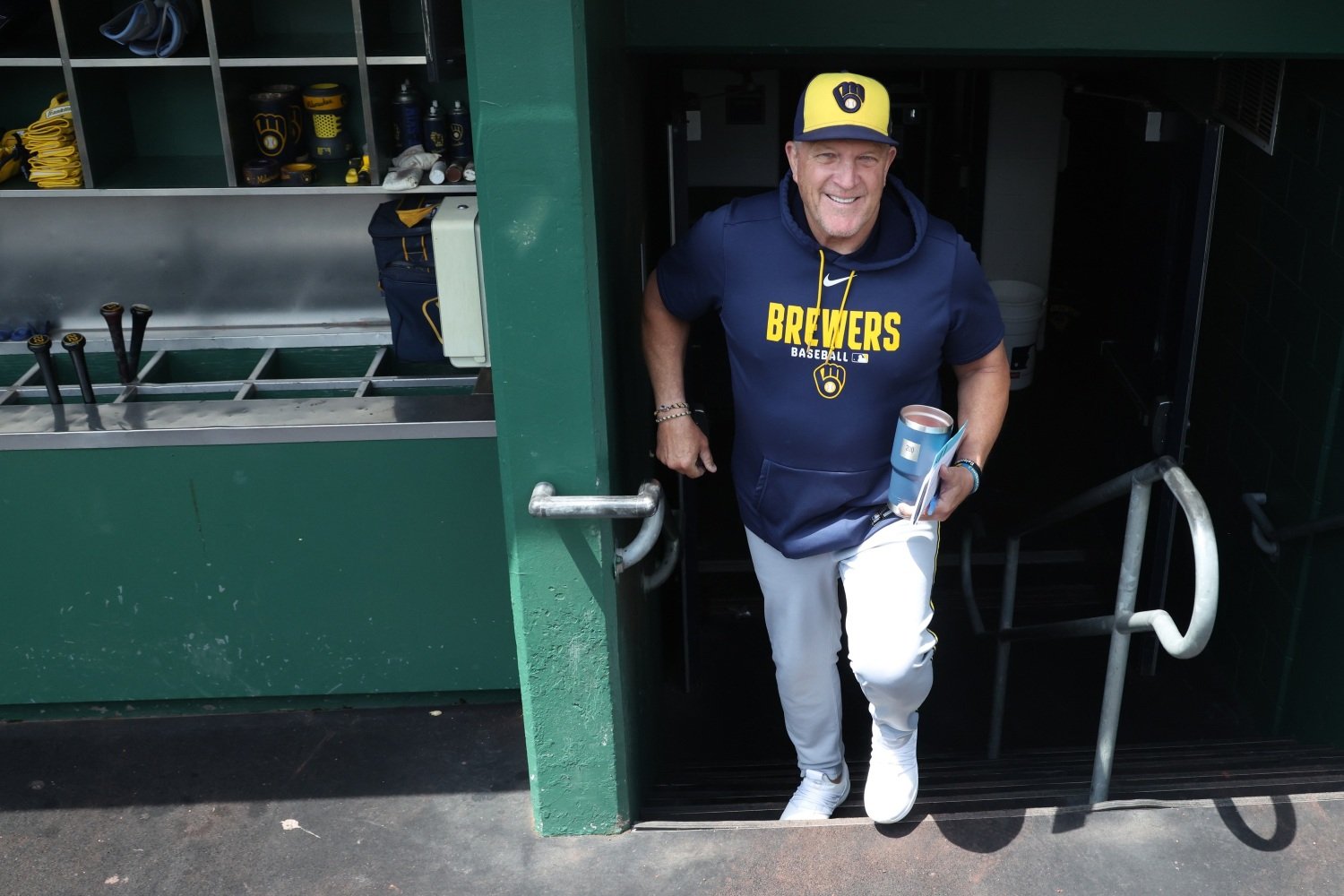 Sit in on just a few Pat Murphy media sessions, and you'll learn that the Brewers manager regularly goes off on tangents. Many of those asides have nothing to do with baseball, but sometimes, when Murphy is dissatisfied with the pregame questions he's received from the press, he'll keep the baseball talk going himself. That's what he did one day in April, in response to a question about Joey Ortiz's recent at-bats. "I'll let you in on this," Murphy said to the writers and broadcasters assembled in his office, gesturing to one of the many papers strewn across his desk. When he assesses the Brewers' at-bats during his postgame interview, Murphy often consults that sheet of paper, which, at first glance, appears to be a traditional scorecard. It's more than that, though. The card, Murphy explained, is filled with shorthand symbols. It's his method of evaluating at-bats in real time. "I make notations on the type of at-bat it is," he said. "If it's a dot, that means solid at-bat. If it's a plus, that means really good. If it's a minus, that means ******. If it's an equal sign, that means, 'Meh.'" Box scores date back to the beginning of professional baseball, but today's players, coaches, and analysts have more information than ever to quantify process, not just outcomes. Rather than chasing results, hitters are better off focusing on actions they can control—swinging at the right pitches and making the right kind of contact—that produce good results more often than not. That's what Murphy is doing. In essence, his notations are his simplified version of a live Statcast feed. He's tracking the process, not just the results. At times, there's extra nuance due to the game situation or other less tangible factors. "If it's an 11-pitch strikeout, I might give them an equal sign. Good battle," Murphy said. "But the key is to not have too many minuses. That's what gets guys in trouble, the minus, minus, minus. Poor at-bats, at-bats that hurt us." A hitter's Statcast overview on their Baseball Savant page includes several metrics evaluating how well they impact the ball. There's hard-hit rate, which is based solely on exit velocity. Sweet spot rate focuses more on launch angle, reporting how many batted balls are hit at the best trajectories for line drives and fly balls to the outfield gaps. It won't give a hitter credit for hard-hit ground balls or pop-ups. Murphy doesn't read Baseball Savant pages. He'll say that his eyes can see what the technology tracks. There's a good chance he doesn't know that sweet spot rate is a stat, but he tracks a crude version of it on his card. "Hard contacts are usually a plus," Murphy said. "If it's straight down or straight up, I can't give you a plus. I can give you a dot, not a plus." He even tracks his own version of what Statcast defines as a barrel: a ball hit at least 98 mph within a certain launch angle range (in other words, a very hard-hit ball in the air). It's not the same term, nor exactly the same criteria, but it's the same concept. "If you get one good and it goes on that perfect trajectory… I'll give you a plus with a circle," Murphy said. As with most information gleaned from the eye test, it's not nearly as accurate as numbers tracked by state-of-the-art technology. It's probably safe to say the Brewers don't build their models to include direct input from Murphy's scorecards. "It's not scientific," Murphy said with a laugh. "It's really for me to remember without putting the actual scoring down there." There's still a benefit to it, though, and it reinforces how a manager with an old-school background continues working productively with an analytical front office. Even if Murphy's evaluation method is less scientific, he and the ivory tower often value the same skills and the same approach to the game. He just needs that information to be tracked and packaged in a language that makes sense to his baseball mind.
 -
Image courtesy of © Charles LeClaire-Imagn Images Sit in on just a few Pat Murphy media sessions, and you'll learn that the Brewers manager regularly goes off on tangents. Many of those asides have nothing to do with baseball, but sometimes, when Murphy is dissatisfied with the pregame questions he's received from the press, he'll keep the baseball talk going himself. That's what he did one day in April, in response to a question about Joey Ortiz's recent at-bats. "I'll let you in on this," Murphy said to the writers and broadcasters assembled in his office, gesturing to one of the many papers strewn across his desk. When he assesses the Brewers' at-bats during his postgame interview, Murphy often consults that sheet of paper, which, at first glance, appears to be a traditional scorecard. It's more than that, though. The card, Murphy explained, is filled with shorthand symbols. It's his method of evaluating at-bats in real time. "I make notations on the type of at-bat it is," he said. "If it's a dot, that means solid at-bat. If it's a plus, that means really good. If it's a minus, that means ******. If it's an equal sign, that means, 'Meh.'" Box scores date back to the beginning of professional baseball, but today's players, coaches, and analysts have more information than ever to quantify process, not just outcomes. Rather than chasing results, hitters are better off focusing on actions they can control—swinging at the right pitches and making the right kind of contact—that produce good results more often than not. That's what Murphy is doing. In essence, his notations are his simplified version of a live Statcast feed. He's tracking the process, not just the results. At times, there's extra nuance due to the game situation or other less tangible factors. "If it's an 11-pitch strikeout, I might give them an equal sign. Good battle," Murphy said. "But the key is to not have too many minuses. That's what gets guys in trouble, the minus, minus, minus. Poor at-bats, at-bats that hurt us." A hitter's Statcast overview on their Baseball Savant page includes several metrics evaluating how well they impact the ball. There's hard-hit rate, which is based solely on exit velocity. Sweet spot rate focuses more on launch angle, reporting how many batted balls are hit at the best trajectories for line drives and fly balls to the outfield gaps. It won't give a hitter credit for hard-hit ground balls or pop-ups. Murphy doesn't read Baseball Savant pages. He'll say that his eyes can see what the technology tracks. There's a good chance he doesn't know that sweet spot rate is a stat, but he tracks a crude version of it on his card. "Hard contacts are usually a plus," Murphy said. "If it's straight down or straight up, I can't give you a plus. I can give you a dot, not a plus." He even tracks his own version of what Statcast defines as a barrel: a ball hit at least 98 mph within a certain launch angle range (in other words, a very hard-hit ball in the air). It's not the same term, nor exactly the same criteria, but it's the same concept. "If you get one good and it goes on that perfect trajectory… I'll give you a plus with a circle," Murphy said. As with most information gleaned from the eye test, it's not nearly as accurate as numbers tracked by state-of-the-art technology. It's probably safe to say the Brewers don't build their models to include direct input from Murphy's scorecards. "It's not scientific," Murphy said with a laugh. "It's really for me to remember without putting the actual scoring down there." There's still a benefit to it, though, and it reinforces how a manager with an old-school background continues working productively with an analytical front office. Even if Murphy's evaluation method is less scientific, he and the ivory tower often value the same skills and the same approach to the game. He just needs that information to be tracked and packaged in a language that makes sense to his baseball mind. View full article
-
Grant Anderson's Stuff Has Been Effective in a Different Way in 2026
Jack Stern posted an article in Brewers
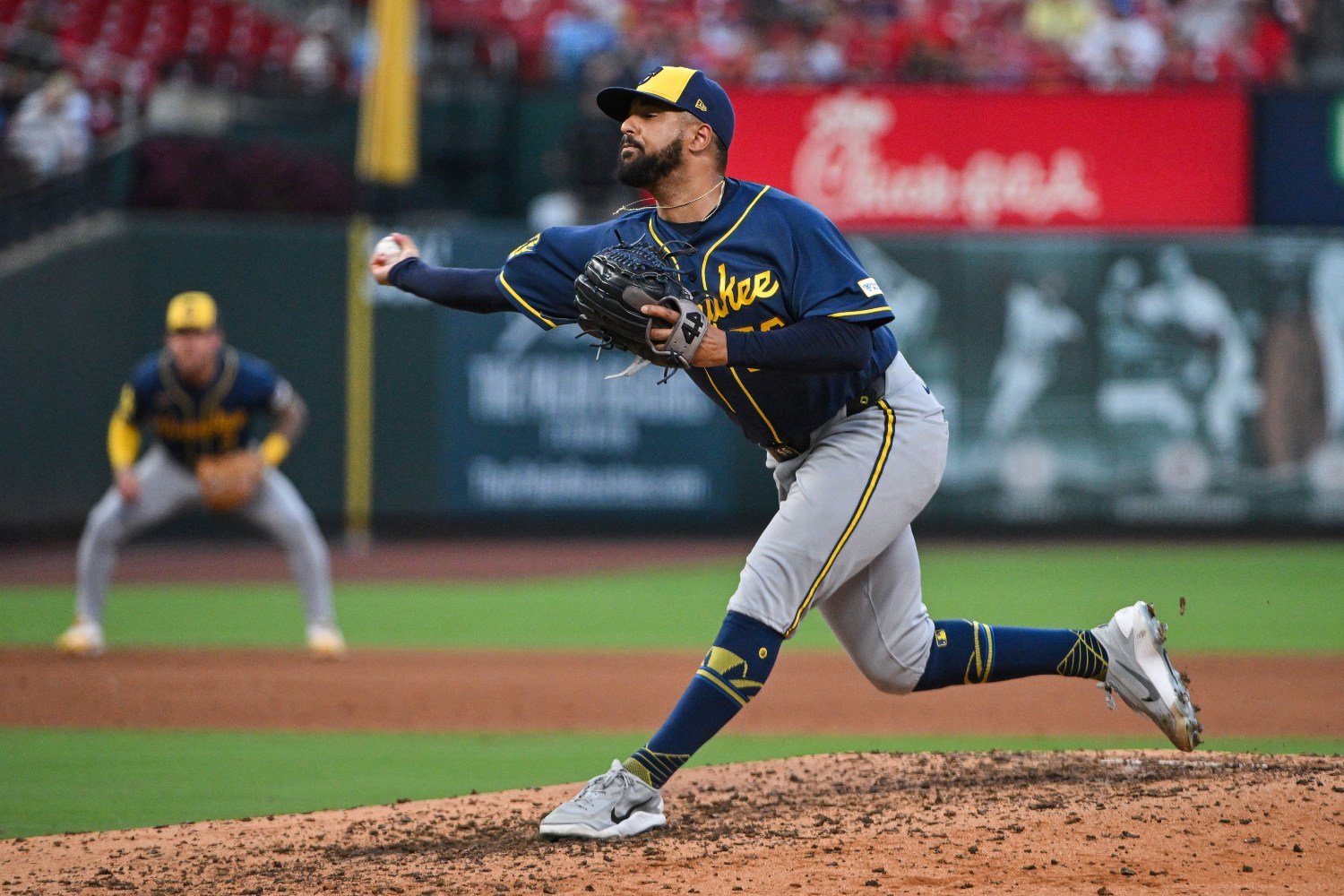 At first glance, it doesn’t look like much has changed for Grant Anderson. After emerging as a versatile and durable middle reliever in his first season with the Brewers last year, the right-hander has resumed that role in 2026 with the same results. From a process standpoint, however, Anderson has not been quite the same guy. He’s issued slightly more walks, and his strikeout rate has dropped by five percentage points. As a result, most ERA estimators believe he’s pitched a bit worse than last year, and it looks as though an abnormally low batting average on balls in play is helping him maintain that shiny ERA. Season K-BB% BABIP ERA xERA FIP DRA- 2025 15.1% .274 3.23 3.72 3.84 91 2026 8.9% .221 3.32 3.30 4.44 108 Aside from those increased walks, it’s not really fair to say that Anderson has pitched worse this season. The real takeaway is that his stuff is playing differently, particularly his signature four-seam fastball. When Anderson arrived in Milwaukee, he and the Brewers originally leaned into a sinker-sweeper approach and worked in a few elevated four-seamers to left-handed hitters. Over time, that four-seamer took over as Anderson’s primary fastball, becoming just as integral to his breakout as his new sweeper. The key was his low arm slot, which made it look like the ball was rising as it entered the top of the zone. Despite its pedestrian velocity, opponents whiffed on nearly 40% of swings against Anderson’s four-seamer because it was so challenging to get the bat on top of it. This year, his slot has increased ever so slightly, creating a ripple effect on how that fastball plays. Season Arm Angle IVB VAA Whiff% Under% LA wOBAcon 2025 8° 12.2 -3.51 39% 68% 28° .383 2026 12° 12.6 -3.87 23% 48% 35° .340 The change is most reflected in the vertical approach angle of Anderson’s fastball, which measures the steepness at which the pitch crosses home plate. Last year, it had the ninth-lowest VAA among qualified four-seamers, meaning it entered the zone at one of the flattest angles in baseball, prompting so many swings underneath the ball. This year, its VAA ranks 19th. That’s still elite, but in a game of inches, it reduces how far underneath those swings are. Fewer swings from opposing hitters have been underneath Anderson’s four-seamer this year, which is a big reason why it’s gotten significantly fewer whiffs. However, the average launch angle against it has increased. That means many of those swings and misses have instead become high fly balls and pop-ups, which are still nearly automatic outs. It’s a slightly different way of getting to the same result. The small change to his arm slot has effectively transformed Anderson from a swing-and-miss pitcher to a pop-up king. His whiff rate has dropped from an excellent 30.9% last year to a below-average 24.1% this year, but his 13.8% pop-up rate ranks ninth among qualified pitchers, according to Statcast. Pitchers who allow such high fly balls usually have a lower opponent BABIP, so Anderson is not necessarily getting lucky that more of them are finding gloves. It’s why xERA (a Statcast-based metric that looks at how often batted balls of each exit velocity and launch angle combination go for hits) believes he has actually been better, even as most of his peripheral stats have taken a step backward. Hitters are making more contact, but in ways that typically lead to fewer hits. Ideally, Anderson will rediscover that lower release, allowing him to be a more balanced pitcher who can get swings and misses when he needs them. But outs are outs, and he still has a reliable way to get them.
 -
At first glance, it doesn’t look like much has changed for Grant Anderson. After emerging as a versatile and durable middle reliever in his first season with the Brewers last year, the right-hander has resumed that role in 2026 with the same results. From a process standpoint, however, Anderson has not been quite the same guy. He’s issued slightly more walks, and his strikeout rate has dropped by five percentage points. As a result, most ERA estimators believe he’s pitched a bit worse than last year, and it looks as though an abnormally low batting average on balls in play is helping him maintain that shiny ERA. Season K-BB% BABIP ERA xERA FIP DRA- 2025 15.1% .274 3.23 3.72 3.84 91 2026 8.9% .221 3.32 3.30 4.44 108 Aside from those increased walks, it’s not really fair to say that Anderson has pitched worse this season. The real takeaway is that his stuff is playing differently, particularly his signature four-seam fastball. When Anderson arrived in Milwaukee, he and the Brewers originally leaned into a sinker-sweeper approach and worked in a few elevated four-seamers to left-handed hitters. Over time, that four-seamer took over as Anderson’s primary fastball, becoming just as integral to his breakout as his new sweeper. The key was his low arm slot, which made it look like the ball was rising as it entered the top of the zone. Despite its pedestrian velocity, opponents whiffed on nearly 40% of swings against Anderson’s four-seamer because it was so challenging to get the bat on top of it. This year, his slot has increased ever so slightly, creating a ripple effect on how that fastball plays. Season Arm Angle IVB VAA Whiff% Under% LA wOBAcon 2025 8° 12.2 -3.51 39% 68% 28° .383 2026 12° 12.6 -3.87 23% 48% 35° .340 The change is most reflected in the vertical approach angle of Anderson’s fastball, which measures the steepness at which the pitch crosses home plate. Last year, it had the ninth-lowest VAA among qualified four-seamers, meaning it entered the zone at one of the flattest angles in baseball, prompting so many swings underneath the ball. This year, its VAA ranks 19th. That’s still elite, but in a game of inches, it reduces how far underneath those swings are. Fewer swings from opposing hitters have been underneath Anderson’s four-seamer this year, which is a big reason why it’s gotten significantly fewer whiffs. However, the average launch angle against it has increased. That means many of those swings and misses have instead become high fly balls and pop-ups, which are still nearly automatic outs. It’s a slightly different way of getting to the same result. The small change to his arm slot has effectively transformed Anderson from a swing-and-miss pitcher to a pop-up king. His whiff rate has dropped from an excellent 30.9% last year to a below-average 24.1% this year, but his 13.8% pop-up rate ranks ninth among qualified pitchers, according to Statcast. Pitchers who allow such high fly balls usually have a lower BABIP, so Anderson is not necessarily getting lucky that more of them are finding gloves. It’s why xERA – a Statcast-based metric that looks at how often batted balls of each exit velocity and launch angle combination go for hits – believes he has actually been better, even as most of his peripheral stats have taken a step backward. Hitters are making more contact, but in ways that typically lead to fewer hits. Ideally, Anderson will rediscover that lower release, allowing him to be a more balanced pitcher who can get swings and misses when he needs them. But outs are outs, and he still has a reliable way to get them. View full article
-
William Contreras Has Found the Wrong Way to Pull the Ball in the Air
Jack Stern posted an article in Brewers
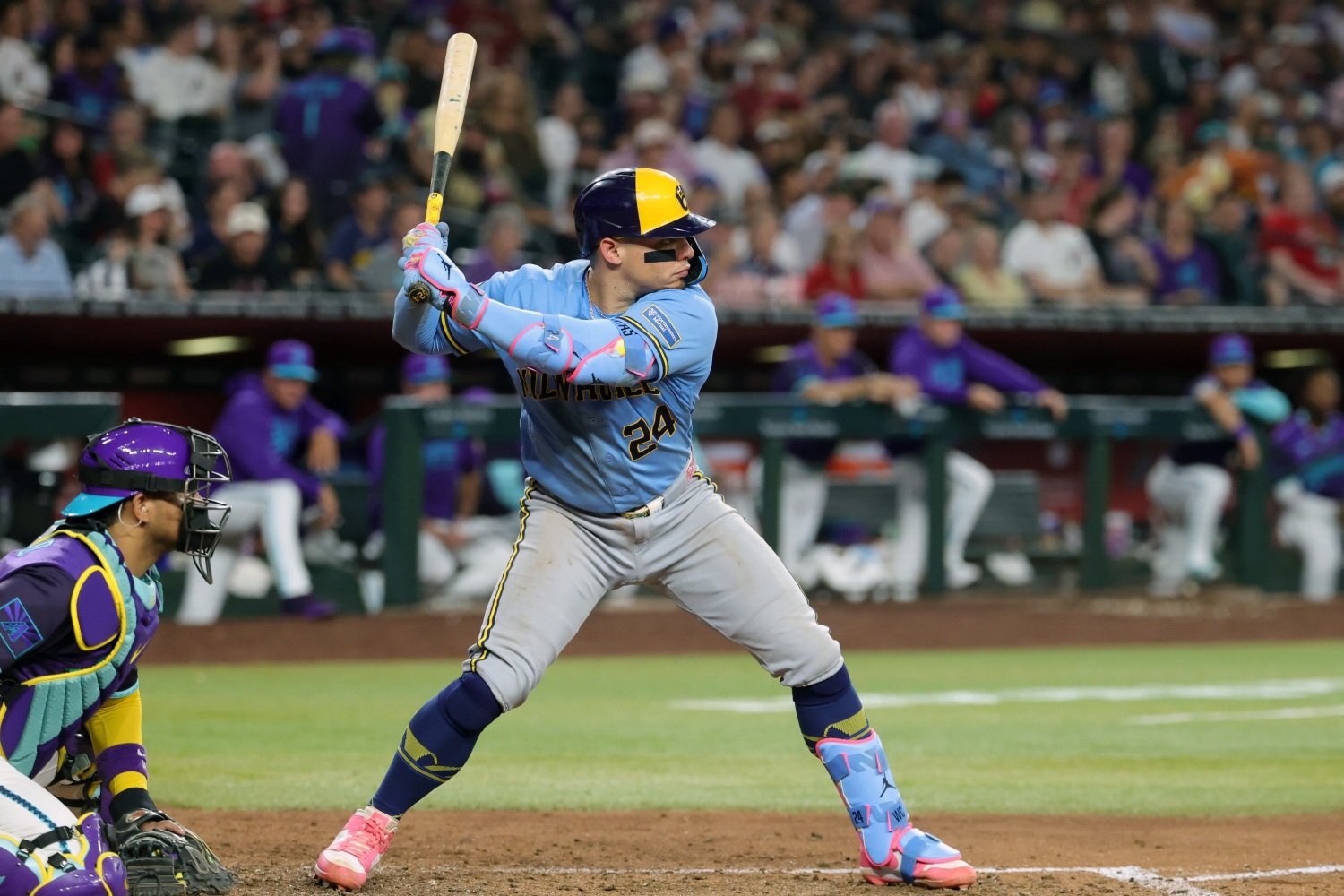 Despite being one of the best offensive catchers in baseball for most of the current decade, William Contreras has not fully tapped into his talent at the plate. Contreras has flashed prodigious power over the years, hitting baseballs at elite exit velocities. Even while playing with a broken finger last season, he still posted an excellent 90th-percentile exit velocity of 107.4 mph. The issue has been Contreras hitting more than half of his contact on the ground in most seasons, running one of baseball’s highest ground-ball rates. If he could find a way to launch those hard-hit balls in the air, he could also become one of the game’s best power hitters. That change to his flight plan has technically happened this year. Contreras’s ground-ball rate has fallen to a career-low 43.5% in 2026. For the first time since a cup of coffee with Atlanta in 2021, his 17.2% pull air rate slightly exceeds the league average. And yet, Contreras is hitting for less power than he ever has as a full-time player, managing just a .118 isolated power and a modest .406 slugging average. His 107 wRC+ is the lowest of his Brewers career. There’s a bit of misfortune here, as Contreras’s .340 xwOBA suggests he should have notched a few more extra-base hits. More importantly, though, his seemingly improved pull air rate is misleading. Not every batted ball pulled in the air is equally productive. Contreras’s overall hard-hit rate is down to 43.5% this season. That’s still slightly above the league average, but it’s the worst mark of his career. When he is hitting the ball at power trajectories—a high enough angle for a fly ball to travel into a gap or over the fence—he’s often hitting it around 90 mph, which typically makes for a routine flyout. Contreras’s xwOBA on contact this year is .360, an improvement over last season, but still lower than his best years in 2023 and 2024. Back in May, Matt Trueblood covered how this year’s changes to Contreras’s stance, stride, and swing path have pushed his contact point further out in front without an increase in power. Now, we’ve seen how those shifts have played out in the first half. Contreras is still making great contact against fastballs, slugging .475 against them with a .499 xSLG. According to Statcast’s swing timing data, his bat is more lined up on hard stuff than ever before. However, by forcing his contact point further in front, he’s been unable to wait back as consistently on breaking and offspeed pitches. With that slightly flatter bat path, Contreras doesn't roll over the ball as often when he’s early. He’s meeting soft stuff in a better spot vertically, but many of those early swings are producing harmless pop-ups. Last season, Contreras slugged .367 against breaking pitches and .403 against offspeed pitches, hitting a combined eight of his 16 home runs against them. This year, he’s slugging .258 and .361, respectively, with just one homer. He's already popped out 15 times against non-fastballs this year. On 10 of them, he was well out in front, making contact at least 32 inches in front of his body. For the fourth straight season, the Brewers have one of baseball’s lowest pull air rates as an offense. They’re not against pulling the ball in the air, but they want their hitters to get there in what they deem the right way, while still having a balanced approach. Contreras seems to have strayed from that a bit, and the ironic result has been less damage for a hitter who has long carried the potential to be even more than he already is, despite hitting balls in the general direction and on the general trajectory people have always cried out for.
 -
Image courtesy of © Mark J. Rebilas-Imagn Images Despite being one of the best offensive catchers in baseball for most of the current decade, William Contreras has not fully tapped into his talent at the plate. Contreras has flashed prodigious power over the years, hitting baseballs at elite exit velocities. Even while playing with a broken finger last season, he still posted an excellent 90th-percentile exit velocity of 107.4 mph. The issue has been Contreras hitting more than half of his contact on the ground in most seasons, running one of baseball’s highest ground-ball rates. If he could find a way to launch those hard-hit balls in the air, he could also become one of the game’s best power hitters. That change to his flight plan has technically happened this year. Contreras’s ground-ball rate has fallen to a career-low 43.5% in 2026. For the first time since a cup of coffee with Atlanta in 2021, his 17.2% pull air rate slightly exceeds the league average. And yet, Contreras is hitting for less power than he ever has as a full-time player, managing just a .118 isolated power and a modest .406 slugging average. His 107 wRC+ is the lowest of his Brewers career. There’s a bit of misfortune here, as Contreras’s .340 xwOBA suggests he should have notched a few more extra-base hits. More importantly, though, his seemingly improved pull air rate is misleading. Not every batted ball pulled in the air is equally productive. Contreras’s overall hard-hit rate is down to 43.5% this season. That’s still slightly above the league average, but it’s the worst mark of his career. When he is hitting the ball at power trajectories—a high enough angle for a fly ball to travel into a gap or over the fence—he’s often hitting it around 90 mph, which typically makes for a routine flyout. Contreras’s xwOBA on contact this year is .360, an improvement over last season, but still lower than his best years in 2023 and 2024. Back in May, Matt Trueblood covered how this year’s changes to Contreras’s stance, stride, and swing path have pushed his contact point further out in front without an increase in power. Now, we’ve seen how those shifts have played out in the first half. Contreras is still making great contact against fastballs, slugging .475 against them with a .499 xSLG. According to Statcast’s swing timing data, his bat is more lined up on hard stuff than ever before. However, by forcing his contact point further in front, he’s been unable to wait back as consistently on breaking and offspeed pitches. With that slightly flatter bat path, Contreras doesn't roll over the ball as often when he’s early. He’s meeting soft stuff in a better spot vertically, but many of those early swings are producing harmless pop-ups. Last season, Contreras slugged .367 against breaking pitches and .403 against offspeed pitches, hitting a combined eight of his 16 home runs against them. This year, he’s slugging .258 and .361, respectively, with just one homer. He's already popped out 15 times against non-fastballs this year. On 10 of them, he was well out in front, making contact at least 32 inches in front of his body. For the fourth straight season, the Brewers have one of baseball’s lowest pull air rates as an offense. They’re not against pulling the ball in the air, but they want their hitters to get there in what they deem the right way, while still having a balanced approach. Contreras seems to have strayed from that a bit, and the ironic result has been less damage for a hitter who has long carried the potential to be even more than he already is, despite hitting balls in the general direction and on the general trajectory people have always cried out for. View full article
-
Image courtesy of © Mark J. Rebilas-Imagn Images When Blake Perkins stepped into the left-handed batter’s box to face Arizona Diamondbacks right-hander Taylor Clarke on Friday night, it was his first plate appearance from the left side in nearly a month. The switch-hitting Perkins last hit left-handed in Las Vegas on June 8, and like his at-bat in Arizona, it only happened because the game went to extra innings after he entered as a pinch-runner. Since May 16, he has taken just six plate appearances as a left-handed hitter. A natural right-handed hitter, Perkins has typically fared best from that side, making more contact and hitting for more power. As a lefty, he’s never truly been close to an average hitter, but that matchup flexibility added enough value to his glove-first profile to make him a solid big-leaguer. That hasn’t been true this year, as his very limited production from the left side has bottomed out. He has just two left-handed hits, one of which was a bunt single. {C}%3C!%2D%2Dtd%20%7Bborder%3A%201px%20solid%20%23cccccc%3B%7Dbr%20%7Bmso-data-placement%3Asame-cell%3B%7D%2D%2D%3E--> Season wOBA (LHB) xwOBA (LHB) K% (LHB) wOBA (RHB) xwOBA (RHB) K% (RHB) 2023 .313 .254 30.3% .302 .286 15.2% 2024 .280 .276 30.4% .299 .303 16.4% 2025 .256 .265 29.3% .286 .326 22.0% 2026 .136 .204 30.0% .352 .309 23.6% Perkins continues to swing from both sides, but in reality, he does not function as a switch-hitter on the 2026 Brewers. That raises the question of whether he should hit exclusively right-handed moving forward, a transition he considered a few times earlier in his career. There are numerous fairly recent examples of hitters giving up switch-hitting during their big-league careers. Perkins wouldn’t be the first Brewer to do it within the last two seasons. In Triple-A last year, the club encouraged Anthony Seigler to focus solely on hitting from his best side before his eventual debut. However, many of those players, including Seigler, stopped hitting right-handed to focus solely on their left-handed swing. That’s usually a worthwhile tradeoff, as left-handed hitters have the platoon advantage the majority of the time, particularly against starting pitchers. In every season of the pitch-tracking era (since 2008), right-handed pitchers have thrown more than 70% of all pitches. For Perkins, it might make some sense in the short term to focus solely on being an average right-handed hitter against lefties, but he’s more likely to prolong his opportunities beyond this season by becoming passable again from both sides. His offense will probably never be good enough to make him a full-time player, but he’ll have a much better chance of getting starts in center field with a future team if he can hit left-handed. That may still be a possibility, as his left-handed swing does not look irretrievably broken. According to Statcast, Perkins’s bat speed and swing path from the left side are nearly identical to his career averages. In a small sample this year, he’s gotten underneath or been jammed by too many fastballs, and he’s waved early at slower stuff. That’s left him hitting too many pop-ups and ground balls, a poor combination for any hitter. This version of Perkins only helps the Brewers in a limited role. He also owes most of those opportunities to injuries, as the club has been down a right-handed-hitting outfielder—first Jackson Chourio, then Brandon Lockridge—for most of the year. Once Lockridge and Luis Lara start factoring into the mix, Perkins could head back to Triple-A, where he’d have more opportunities to get right. Those opportunities won’t matter much for the Brewers, but they may still matter to Perkins, who will have to start thinking more broadly about his career prospects. With Lockridge still two seasons away from arbitration and Lara on a recently signed extension, Perkins's time as a productive fourth outfielder in Milwaukee is probably nearing its end. He's a beloved teammate and has defensive and baserunning value, though, so this stop need not be the last one on his tour of the major leagues. View full article
-
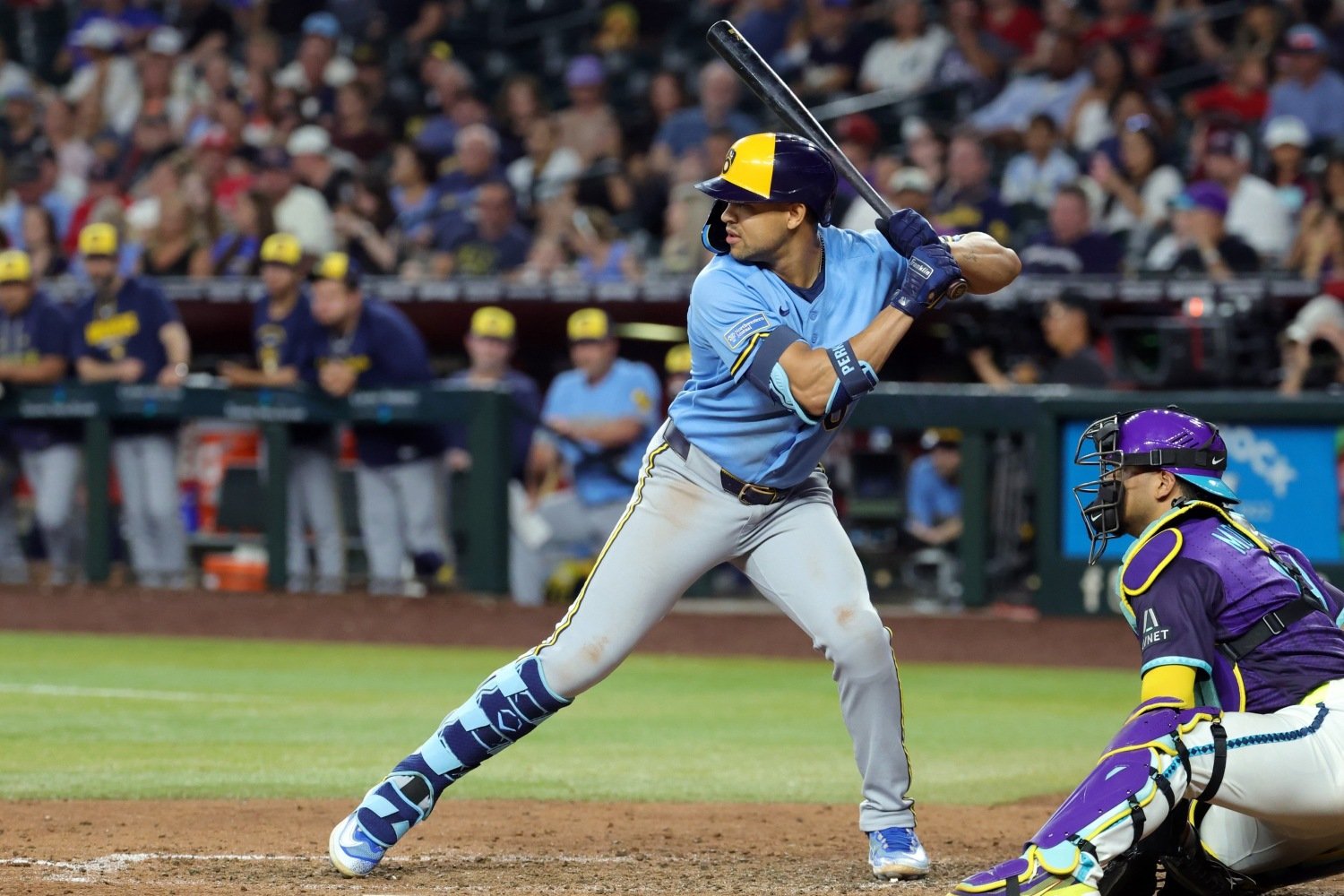 When Blake Perkins stepped into the left-handed batter’s box to face Arizona Diamondbacks right-hander Taylor Clarke on Friday night, it was his first plate appearance from the left side in nearly a month. The switch-hitting Perkins last hit left-handed in Las Vegas on June 8, and like his at-bat in Arizona, it only happened because the game went to extra innings after he entered as a pinch-runner. Since May 16, he has taken just six plate appearances as a left-handed hitter. A natural right-handed hitter, Perkins has typically fared best from that side, making more contact and hitting for more power. As a lefty, he’s never truly been close to an average hitter, but that matchup flexibility added enough value to his glove-first profile to make him a solid big-leaguer. That hasn’t been true this year, as his very limited production from the left side has bottomed out. He has just two left-handed hits, one of which was a bunt single. {C}%3C!%2D%2Dtd%20%7Bborder%3A%201px%20solid%20%23cccccc%3B%7Dbr%20%7Bmso-data-placement%3Asame-cell%3B%7D%2D%2D%3E--> Season wOBA (LHB) xwOBA (LHB) K% (LHB) wOBA (RHB) xwOBA (RHB) K% (RHB) 2023 .313 .254 30.3% .302 .286 15.2% 2024 .280 .276 30.4% .299 .303 16.4% 2025 .256 .265 29.3% .286 .326 22.0% 2026 .136 .204 30.0% .352 .309 23.6% Perkins continues to swing from both sides, but in reality, he does not function as a switch-hitter on the 2026 Brewers. That raises the question of whether he should hit exclusively right-handed moving forward, a transition he considered a few times earlier in his career. There are numerous fairly recent examples of hitters giving up switch-hitting during their big-league careers. Perkins wouldn’t be the first Brewer to do it within the last two seasons. In Triple-A last year, the club encouraged Anthony Seigler to focus solely on hitting from his best side before his eventual debut. However, many of those players, including Seigler, stopped hitting right-handed to focus solely on their left-handed swing. That’s usually a worthwhile tradeoff, as left-handed hitters have the platoon advantage the majority of the time, particularly against starting pitchers. In every season of the pitch-tracking era (since 2008), right-handed pitchers have thrown more than 70% of all pitches. For Perkins, it might make some sense in the short term to focus solely on being an average right-handed hitter against lefties, but he’s more likely to prolong his opportunities beyond this season by becoming passable again from both sides. His offense will probably never be good enough to make him a full-time player, but he’ll have a much better chance of getting starts in center field with a future team if he can hit left-handed. That may still be a possibility, as his left-handed swing does not look irretrievably broken. According to Statcast, Perkins’s bat speed and swing path from the left side are nearly identical to his career averages. In a small sample this year, he’s gotten underneath or been jammed by too many fastballs, and he’s waved early at slower stuff. That’s left him hitting too many pop-ups and ground balls, a poor combination for any hitter. This version of Perkins only helps the Brewers in a limited role. He also owes most of those opportunities to injuries, as the club has been down a right-handed-hitting outfielder—first Jackson Chourio, then Brandon Lockridge—for most of the year. Once Lockridge and Luis Lara start factoring into the mix, Perkins could head back to Triple-A, where he’d have more opportunities to get right. Those opportunities won’t matter much for the Brewers, but they may still matter to Perkins, who will have to start thinking more broadly about his career prospects. With Lockridge still two seasons away from arbitration and Lara on a recently signed extension, Perkins's time as a productive fourth outfielder in Milwaukee is probably nearing its end. He's a beloved teammate and has defensive and baserunning value, though, so this stop need not be the last one on his tour of the major leagues.

