



Jack Stern
-
Posts
764 -
Joined
-
Last visited
-
Days Won
2
Content Type
Profiles
Forums
Blogs
Events
News
2026 Milwaukee Brewers Top Prospects Ranking
Milwaukee Brewers Videos
2022 Milwaukee Brewers Draft Picks
Milwaukee Brewers Free Agent & Trade Rumors, Notes, & Tidbits
Guides & Resources
2023 Milwaukee Brewers Draft Picks
2024 Milwaukee Brewers Draft Picks
The Milwaukee Brewers Players Project
2025 Milwaukee Brewers Draft Pick Tracker
2026 Milwaukee Brewers Draft Tracker: Picks & Bonuses
Store
Downloads
Gallery
Everything posted by Jack Stern
-
 Image courtesy of Kiyoshi Mio-Imagn Images In the system's inaugural season, no catcher has used ABS challenges more than William Contreras. Contreras challenged 185 calls during the regular season, leading all catchers by 49. The difference between Contreras's challenge total and that of second-place Tyler Stephenson was greater than that between Stephenson and 23rd-place Cal Raleigh. According to Statcast, he challenged 43 more times than the average catcher would have against the same pitches. Only Victor Caratini challenged a greater number of pitches compared to the expected number. It helped that the Brewers typically deferred their challenges to Contreras. Milwaukee hitters challenged just 13% of possible overturns, the lowest rate of any offense. When a catcher has access to both of his team’s challenges, he can challenge more aggressively, and it helps more than it hurts. An incorrect challenge won’t stop him from using a second one at the right moment, so turning a ball into a strike on the next attempt is worth more than the small loss of burning that first challenge. Contreras gained more fractions of a run than expected from challenges in all but one month this year. Still, his approach bordered on mindless aggressiveness for much of the summer. The league success rate on catcher challenges was 58%, but between June and August, Contreras’s was just 49%. In late June, he lost eight consecutive challenges and 14 of 15, and his August success rate bottomed out at 46%. On the verge of costing his team runs with challenges, another catcher might become more conservative, but that’s not how Contreras is wired. He plays the game fiercely, with a relentless drive to be the best at everything. Instead of backing off, he started challenging even more. The difference is that he became opportunistic. That turned Contreras into one of the most valuable challengers in September and into the postseason. Month Challenges Won% % Overturn Runs Gained Net Runs Above Avg March/April 34 53% 35% 0.1 May 33 61% 46% 0.7 June 33 48% 39% -0.2 July 23 52% 40% 0.2 August 26 46% 50% 0.2 September 36 75% 57% 0.9 October 20 60% 61% 0.5 Among catchers with at least five postseason overturn opportunities, Contreras and Liam Hicks are tied for the most net runs above average. He’s second to J.T. Realmuto in percentage of possible overturns challenged. Contreras has also gained two inning-ending strikeouts on challenges. He turned things around by tightening his radius. In August, Contreras challenged seven pitches more than one inch outside the strike zone. In September, he only challenged one. In the postseason, he’s challenged none. Even when home-plate umpire Lance Barrett had 12 calls challenged in Game 2 of the NLDS, Contreras showed restraint. He won three of four challenges, only losing on a first-pitch ball to Xander Bogaerts in the eighth inning that missed by half an inch. Contreras has also become more disciplined at the plate. He’s cut his chase rate from 28.3% in the regular season to 25.7% in October, boosting his walk rate from 9.5% to 14.3%. Just as being opportunistic has helped him enforce the strike zone, it’s also made him the Brewers’ best postseason hitter. Contreras leads the club with three home runs and a 212 wRC+ in October, spearheading the playoff power surge that brought the team to the World Series. That’s been more than enough to mask his remaining shortcomings. Contreras has still been a poor framer and blocker in the postseason, but October has unleashed a sharper version of him. He willed the Brewers to a pennant with his bat, and he's started helping his pitchers on the margins when it matters most. Poor ABS use was one of Milwaukee's few glaring weaknesses entering the postseason, but Contreras fixed his side of it when it mattered most. View full article
 -
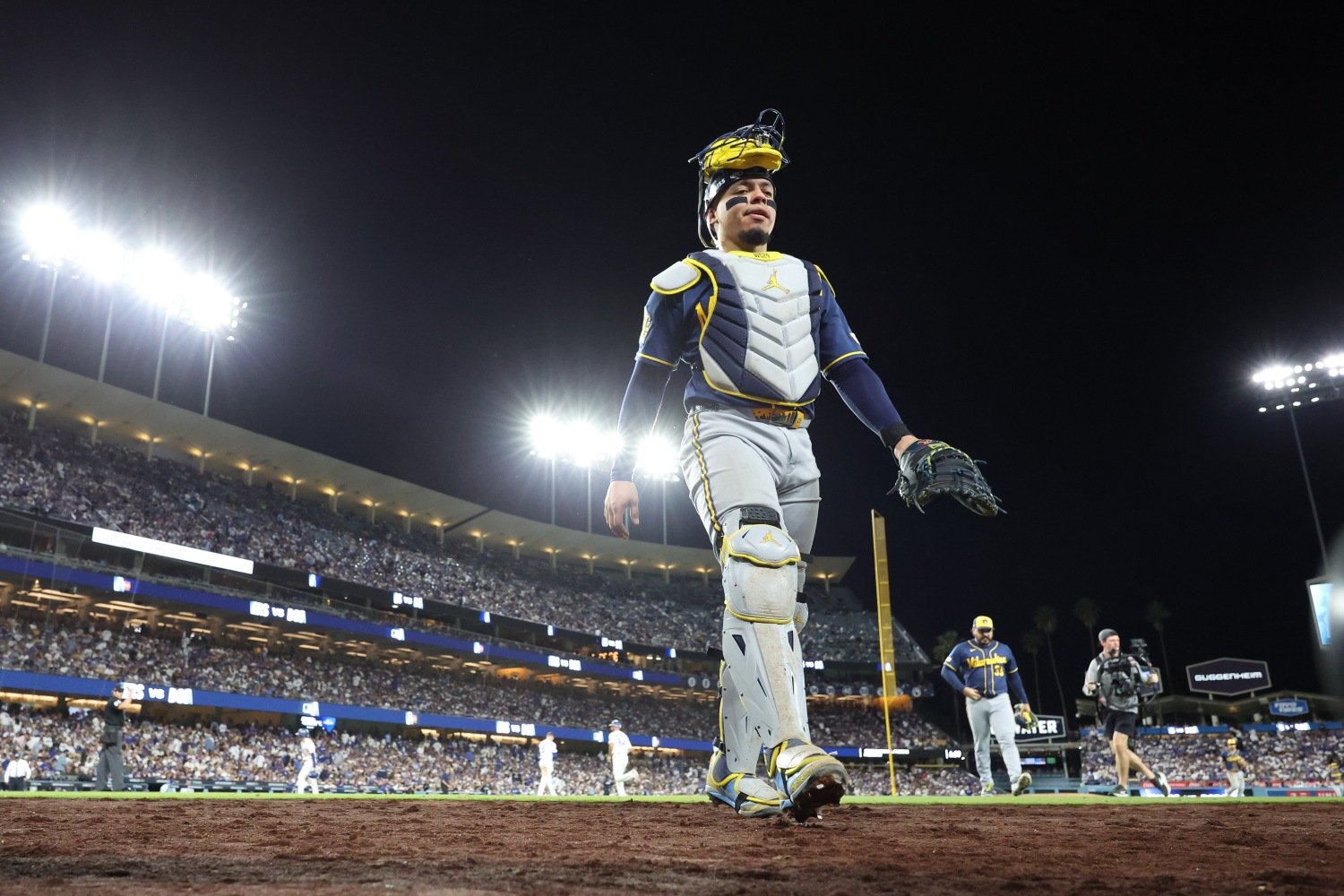 In the system's inaugural season, no catcher has used ABS challenges more than William Contreras. Contreras challenged 185 calls during the regular season, leading all catchers by 49. The difference between Contreras's challenge total and that of second-place Tyler Stephenson was greater than that between Stephenson and 23rd-place Cal Raleigh. According to Statcast, he challenged 43 more times than the average catcher would have against the same pitches. Only Victor Caratini challenged a greater number of pitches compared to the expected number. It helped that the Brewers typically deferred their challenges to Contreras. Milwaukee hitters challenged just 13% of possible overturns, the lowest rate of any offense. When a catcher has access to both of his team’s challenges, he can challenge more aggressively, and it helps more than it hurts. An incorrect challenge won’t stop him from using a second one at the right moment, so turning a ball into a strike on the next attempt is worth more than the small loss of burning that first challenge. Contreras gained more fractions of a run than expected from challenges in all but one month this year. Still, his approach bordered on mindless aggressiveness for much of the summer. The league success rate on catcher challenges was 58%, but between June and August, Contreras’s was just 49%. In late June, he lost eight consecutive challenges and 14 of 15, and his August success rate bottomed out at 46%. On the verge of costing his team runs with challenges, another catcher might become more conservative, but that’s not how Contreras is wired. He plays the game fiercely, with a relentless drive to be the best at everything. Instead of backing off, he started challenging even more. The difference is that he became opportunistic. That turned Contreras into one of the most valuable challengers in September and into the postseason. Month Challenges Won% % Overturn Runs Gained Net Runs Above Avg March/April 34 53% 35% 0.1 May 33 61% 46% 0.7 June 33 48% 39% -0.2 July 23 52% 40% 0.2 August 26 46% 50% 0.2 September 36 75% 57% 0.9 October 20 60% 61% 0.5 Among catchers with at least five postseason overturn opportunities, Contreras and Liam Hicks are tied for the most net runs above average. He’s second to J.T. Realmuto in percentage of possible overturns challenged. Contreras has also gained two inning-ending strikeouts on challenges. He turned things around by tightening his radius. In August, Contreras challenged seven pitches more than one inch outside the strike zone. In September, he only challenged one. In the postseason, he’s challenged none. Even when home-plate umpire Lance Barrett had 12 calls challenged in Game 2 of the NLDS, Contreras showed restraint. He won three of four challenges, only losing on a first-pitch ball to Xander Bogaerts in the eighth inning that missed by half an inch. Contreras has also become more disciplined at the plate. He’s cut his chase rate from 28.3% in the regular season to 25.7% in October, boosting his walk rate from 9.5% to 14.3%. Just as being opportunistic has helped him enforce the strike zone, it’s also made him the Brewers’ best postseason hitter. Contreras leads the club with three home runs and a 212 wRC+ in October, spearheading the playoff power surge that brought the team to the World Series. That’s been more than enough to mask his remaining shortcomings. Contreras has still been a poor framer and blocker in the postseason, but October has unleashed a sharper version of him. He willed the Brewers to a pennant with his bat, and he's started helping his pitchers on the margins when it matters most. Poor ABS use was one of Milwaukee's few glaring weaknesses entering the postseason, but Contreras fixed his side of it when it mattered most.
 -
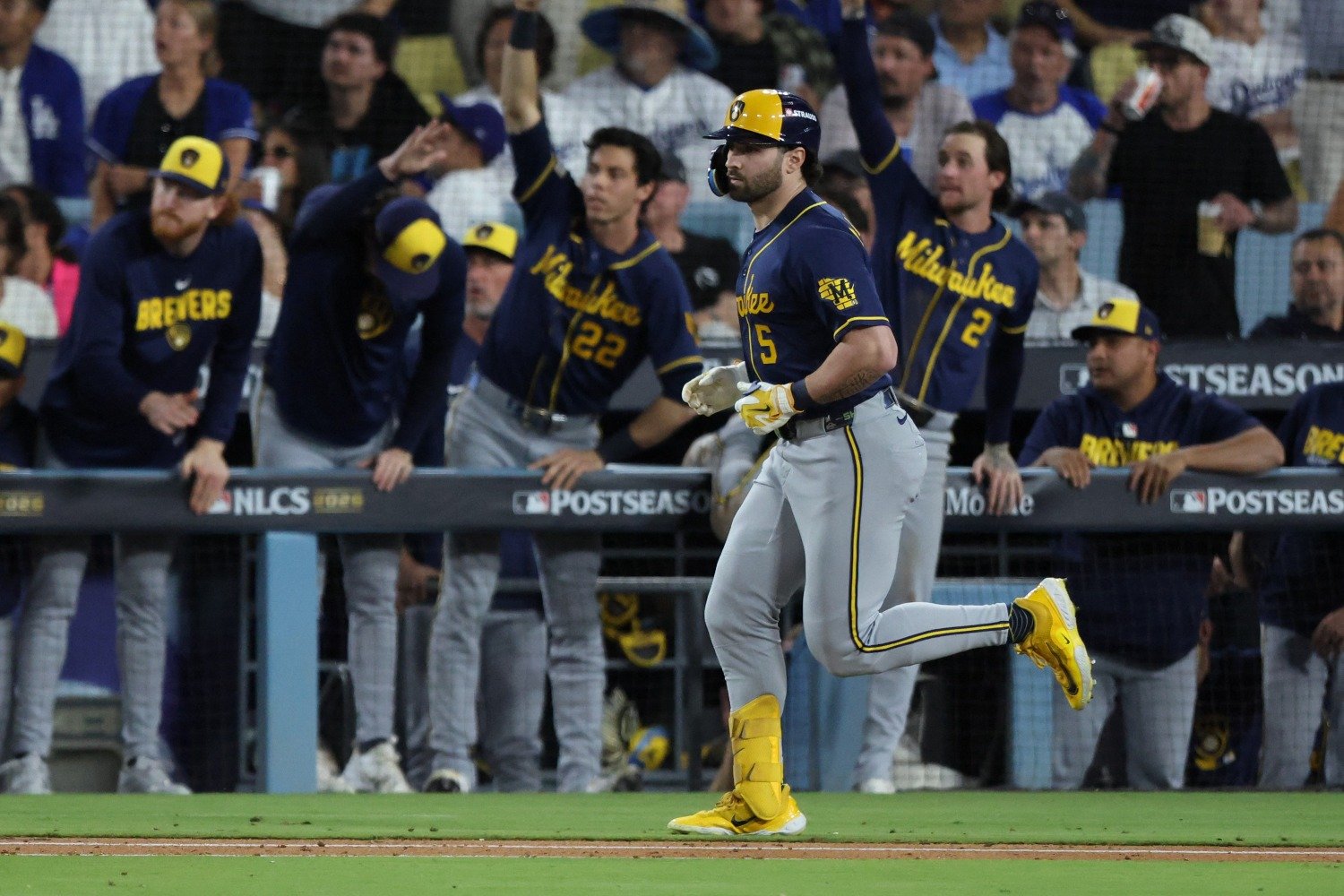 The 2026 campaign was a prove-it season for Garrett Mitchell. First, he needed to prove he could stay healthy. Four years into his big-league career, Milwaukee's former first-round pick had played in just 141 games and taken 443 plate appearances, due to myriad injuries. He cleared the health hurdle. Mitchell modified his routine and physical preparation over the winter and carried it into the regular season. He learned when, within games, to push his body to its limits and when to ease off the gas without sacrificing competitiveness. It wasn't always smooth (early in the year, Mitchell's defense suffered as he played cautiously near the outfield wall), but he quickly found the right balance and played in a career-high 145 games. The next step was proving he could perform. Mitchell flashed his high ceiling throughout those four years, hitting .254/.333/.433 (114 wRC+) with elite bat speed and raw power, but those results came with red flags. He struck out 33.9% of the time over that span. Due to a gaping hole in his swing path, he whiffed on 48.5% of swings against high fastballs. He benefitted from a .376 BABIP, the highest among all hitters with at least 400 plate appearances during that span. According to Statcast, his expected slash line of .220/.303/.361 didn't come close to supporting his results. A full season was supposed to answer what kind of player Mitchell truly was and whether he would hit big-league pitching. Over a larger sample, his extreme metrics on both sides would trend toward the mean. That didn't fully happen. There's more to a player than his Statcast summary card, but in Mitchell's case, it's a good summary. In nearly every facet of the game, he's either one of the best or one of the worst. Mitchell didn't quite prove that his extreme profile will work long-term, but he did prove that it can work. The red on that card far outnumbers the blue. He didn't cut down his swing-and-miss, but he made up for it with a disciplined approach and by crushing the ball when he made contact. Mitchell hit .262/.354/.416 (116 wRC+), and this time, his expected line of .268/.356/.447 was better than his results. It was a milestone season for Mitchell. He punctuated it with the swing that sent the Brewers to their first World Series in over four decades. The NLCS posed a daunting matchup for him. The Brewers were facing the Dodgers, baseball's reigning back-to-back champions and one of the few teams that knows how to exploit his weaknesses and can execute those sequences. In their regular-season matchups, LA pitchers peppered Mitchell with high fastballs and low changeups, and he managed just two singles in 11 at-bats, with six strikeouts. They had a similar plan in the postseason. The Dodgers challenged Mitchell with high fastballs throughout the series, daring him to hit them. For the most part, he didn't, going 2-for-14 with six strikeouts. But true to form, the Orange County native made those two hits count in two dramatic homecoming moments: a solo home run to cap the Brewers' seventh-inning comeback against Blake Snell in Game 3, and the tie-breaking shot in Game 4 that ended the Dodgers' hopes of a threepeat. Mitchell's outlier swing worked this year because of his zone awareness. The holes in his swing remain, but when a pitch is in his wheelhouse, he hits it hard. Mitchell knows this and refined his swing decisions this year around his personal scouting report. He's patient against pitches he can't hit (including high fastballs) and forces pitchers back into his hot zones over the heart of the plate. His decisive home run on Thursday night epitomized the approach that carried Mitchell through a productive season. Facing left-hander Tanner Scott, he fell behind 0-2 on a pair of sliders, then refused to chase and worked the count full. In a tie game on the brink of elimination, Scott wasn't going to put the go-ahead run on base with a leadoff walk; he was coming back with his best strike pitch. Mitchell had forced him into his damage zone. He got a center-cut fastball and launched it to center, completing the Brewers' final comeback of an NLCS sweep. With his elite speed and power, Mitchell always had the upside of a potential postseason game-changer—the kind of player who could decide a series with one memorable play. He waited years for that moment, dealing with physical setbacks and questions about his performance. The Brewers waited for years for that moment, floundering in early playoff exits as Mitchell struggled or sat out. The moment arrived for both of them. Mitchell had his big swing, and he and the Brewers are going to the World Series.
 -
Image courtesy of Kiyoshi Mio-Imagn Images The 2026 campaign was a prove-it season for Garrett Mitchell. First, he needed to prove he could stay healthy. Four years into his big-league career, Milwaukee's former first-round pick had played in just 141 games and taken 443 plate appearances, due to myriad injuries. He cleared the health hurdle. Mitchell modified his routine and physical preparation over the winter and carried it into the regular season. He learned when, within games, to push his body to its limits and when to ease off the gas without sacrificing competitiveness. It wasn't always smooth (early in the year, Mitchell's defense suffered as he played cautiously near the outfield wall), but he quickly found the right balance and played in a career-high 145 games. The next step was proving he could perform. Mitchell flashed his high ceiling throughout those four years, hitting .254/.333/.433 (114 wRC+) with elite bat speed and raw power, but those results came with red flags. He struck out 33.9% of the time over that span. Due to a gaping hole in his swing path, he whiffed on 48.5% of swings against high fastballs. He benefitted from a .376 BABIP, the highest among all hitters with at least 400 plate appearances during that span. According to Statcast, his expected slash line of .220/.303/.361 didn't come close to supporting his results. A full season was supposed to answer what kind of player Mitchell truly was and whether he would hit big-league pitching. Over a larger sample, his extreme metrics on both sides would trend toward the mean. That didn't fully happen. There's more to a player than his Statcast summary card, but in Mitchell's case, it's a good summary. In nearly every facet of the game, he's either one of the best or one of the worst. Mitchell didn't quite prove that his extreme profile will work long-term, but he did prove that it can work. The red on that card far outnumbers the blue. He didn't cut down his swing-and-miss, but he made up for it with a disciplined approach and by crushing the ball when he made contact. Mitchell hit .262/.354/.416 (116 wRC+), and this time, his expected line of .268/.356/.447 was better than his results. It was a milestone season for Mitchell. He punctuated it with the swing that sent the Brewers to their first World Series in over four decades. The NLCS posed a daunting matchup for him. The Brewers were facing the Dodgers, baseball's reigning back-to-back champions and one of the few teams that knows how to exploit his weaknesses and can execute those sequences. In their regular-season matchups, LA pitchers peppered Mitchell with high fastballs and low changeups, and he managed just two singles in 11 at-bats, with six strikeouts. They had a similar plan in the postseason. The Dodgers challenged Mitchell with high fastballs throughout the series, daring him to hit them. For the most part, he didn't, going 2-for-14 with six strikeouts. But true to form, the Orange County native made those two hits count in two dramatic homecoming moments: a solo home run to cap the Brewers' seventh-inning comeback against Blake Snell in Game 3, and the tie-breaking shot in Game 4 that ended the Dodgers' hopes of a threepeat. Mitchell's outlier swing worked this year because of his zone awareness. The holes in his swing remain, but when a pitch is in his wheelhouse, he hits it hard. Mitchell knows this and refined his swing decisions this year around his personal scouting report. He's patient against pitches he can't hit (including high fastballs) and forces pitchers back into his hot zones over the heart of the plate. His decisive home run on Thursday night epitomized the approach that carried Mitchell through a productive season. Facing left-hander Tanner Scott, he fell behind 0-2 on a pair of sliders, then refused to chase and worked the count full. In a tie game on the brink of elimination, Scott wasn't going to put the go-ahead run on base with a leadoff walk; he was coming back with his best strike pitch. Mitchell had forced him into his damage zone. He got a center-cut fastball and launched it to center, completing the Brewers' final comeback of an NLCS sweep. With his elite speed and power, Mitchell always had the upside of a potential postseason game-changer—the kind of player who could decide a series with one memorable play. He waited years for that moment, dealing with physical setbacks and questions about his performance. The Brewers waited for years for that moment, floundering in early playoff exits as Mitchell struggled or sat out. The moment arrived for both of them. Mitchell had his big swing, and he and the Brewers are going to the World Series. View full article
-
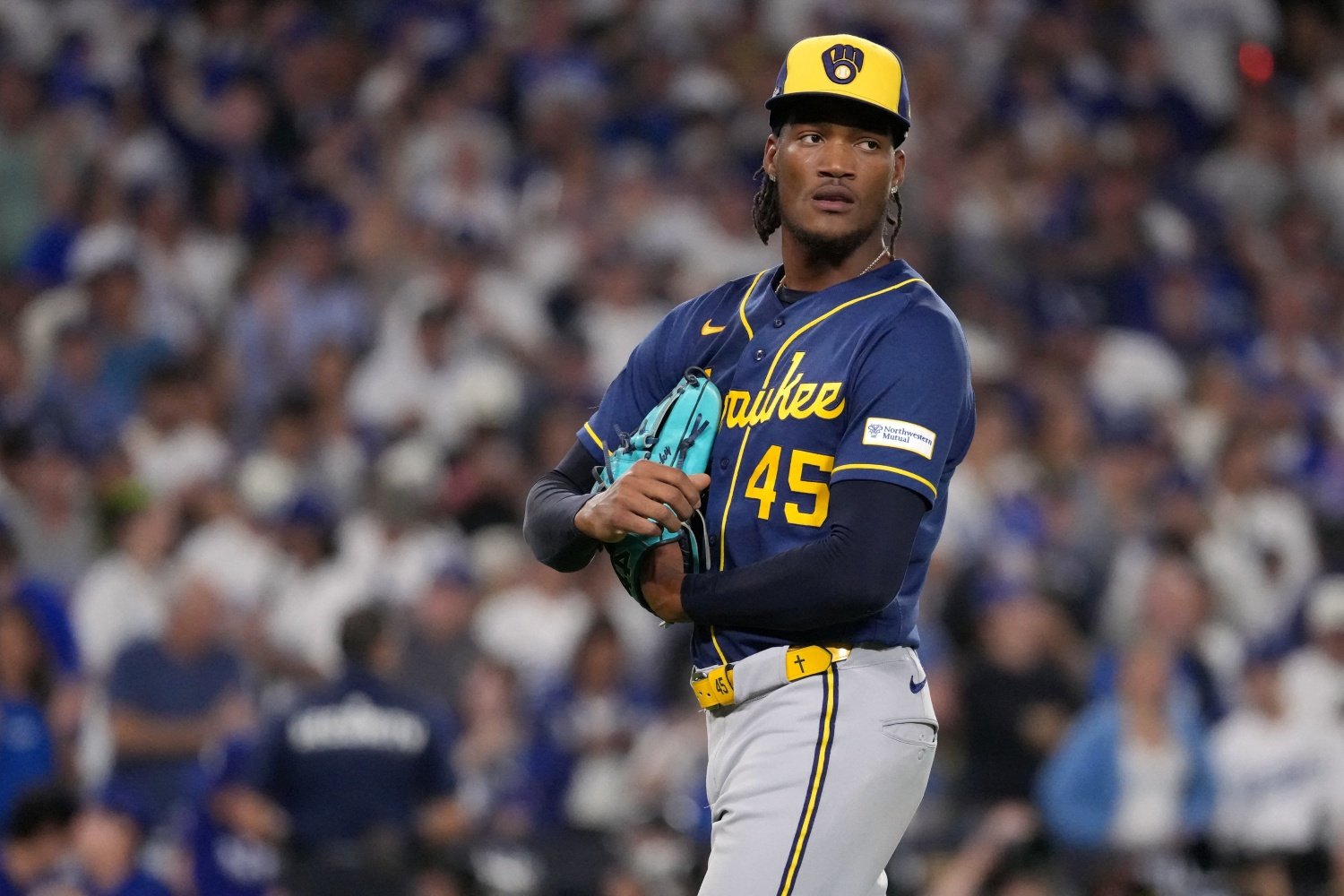 For the past two seasons, Abner Uribe has been Pat Murphy's iron man. Uribe pitched 75 times last regular season, and while he pitched only 61 games this year (because he spent 20 days on the injured list with a forearm strain), he pitched more often on a rate basis. It's no surprise, then, that Murphy has floored the gas pedal with Uribe this postseason, pitching him in all seven of the Brewers' October games so far. On the surface, it worked through the first six games, as Uribe tossed six scoreless innings. Results can be deceptive in a small sample, though. Uribe pitched poorly in all four of his Division Series outings; he threw just 37.9% of his pitches in the strike zone; issued two walks and a hit-by-pitch against just one strikeout; and nearly allowed a game-tying home run in Game 4 that Garrett Mitchell robbed. His 9.22 xERA and 6.33 SIERA described his performance more accurately than his 3 ⅔ scoreless innings. Uribe's slider command was particularly non-competitive throughout the series. Uribe turned the page with two dominant outings to start the NLCS, but the chickens came home to roost in Game 3. He looked like his NLDS self, but the Dodgers didn't bail him out with bad chases and poorly placed contact, as the Padres (and Lady Luck) did. Handed a 1-0 lead in the bottom of the sixth, Uribe walked the bases loaded with one out, then left a first-pitch sinker down the middle that Will Smith roped for a go-ahead double. Murphy and the Brewers' pitching coaches managed the inning poorly. It was an awkward lineup pocket for Uribe. If a runner reached, the Dodgers had left-handers Kyle Tucker and Shohei Ohtani due up, and Max Muncy was also likely to pinch-hit. The Brewers had southpaw DL Hall and righty Chad Patrick warming in the bullpen, but they stuck with the erratic Uribe for Ohtani and Smith. After the game, Murphy told reporters that he wanted the Uribe vs. Smith matchup, but the way the inning unfolded, that wasn't an acceptable rationale. Using Uribe at some point wasn't unreasonable. Because of team off days between games and series, he's pitched seven times in the last 12 days. That's a heavy but manageable workload in a small sample. He can't continue at that rate for the rest of the postseason, though. Few relievers can stay sharp while pitching more often than not, and Uribe already hasn't been sharp. If they have a lead in Game 4, Murphy and the Brewers should go full throttle to finish an NLCS sweep. Winning in four games would give them a full week off before Game 1 of the World Series to reset and stack their cards. Uribe should be the one pitcher off-limits. With a 3-0 series lead, he shouldn't pitch again in Los Angeles. Given his wildness, they should watch closely when he does return to action. The postseason is the time to push the envelope with workloads. When few future games are guaranteed, saving players for future games isn't worth it. There should still be limits in non-elimination games, though. Murphy pushed his iron man too hard on Wednesday, and he's about to do the same with his cumulative workload—unless he throttles back and learns to trust another pitcher or two in his relief corps.
- 4 comments
-
- 1
-

-
- abner uribe
- 2026 postseason
- (and 1 more)
-
Image courtesy of Kirby Lee-Imagn Images For the past two seasons, Abner Uribe has been Pat Murphy's iron man. Uribe pitched 75 times last regular season, and while he pitched only 61 games this year (because he spent 20 days on the injured list with a forearm strain), he pitched more often on a rate basis. It's no surprise, then, that Murphy has floored the gas pedal with Uribe this postseason, pitching him in all seven of the Brewers' October games so far. On the surface, it worked through the first six games, as Uribe tossed six scoreless innings. Results can be deceptive in a small sample, though. Uribe pitched poorly in all four of his Division Series outings; he threw just 37.9% of his pitches in the strike zone; issued two walks and a hit-by-pitch against just one strikeout; and nearly allowed a game-tying home run in Game 4 that Garrett Mitchell robbed. His 9.22 xERA and 6.33 SIERA described his performance more accurately than his 3 ⅔ scoreless innings. Uribe's slider command was particularly non-competitive throughout the series. Uribe turned the page with two dominant outings to start the NLCS, but the chickens came home to roost in Game 3. He looked like his NLDS self, but the Dodgers didn't bail him out with bad chases and poorly placed contact, as the Padres (and Lady Luck) did. Handed a 1-0 lead in the bottom of the sixth, Uribe walked the bases loaded with one out, then left a first-pitch sinker down the middle that Will Smith roped for a go-ahead double. Murphy and the Brewers' pitching coaches managed the inning poorly. It was an awkward lineup pocket for Uribe. If a runner reached, the Dodgers had left-handers Kyle Tucker and Shohei Ohtani due up, and Max Muncy was also likely to pinch-hit. The Brewers had southpaw DL Hall and righty Chad Patrick warming in the bullpen, but they stuck with the erratic Uribe for Ohtani and Smith. After the game, Murphy told reporters that he wanted the Uribe vs. Smith matchup, but the way the inning unfolded, that wasn't an acceptable rationale. Using Uribe at some point wasn't unreasonable. Because of team off days between games and series, he's pitched seven times in the last 12 days. That's a heavy but manageable workload in a small sample. He can't continue at that rate for the rest of the postseason, though. Few relievers can stay sharp while pitching more often than not, and Uribe already hasn't been sharp. If they have a lead in Game 4, Murphy and the Brewers should go full throttle to finish an NLCS sweep. Winning in four games would give them a full week off before Game 1 of the World Series to reset and stack their cards. Uribe should be the one pitcher off-limits. With a 3-0 series lead, he shouldn't pitch again in Los Angeles. Given his wildness, they should watch closely when he does return to action. The postseason is the time to push the envelope with workloads. When few future games are guaranteed, saving players for future games isn't worth it. There should still be limits in non-elimination games, though. Murphy pushed his iron man too hard on Wednesday, and he's about to do the same with his cumulative workload—unless he throttles back and learns to trust another pitcher or two in his relief corps. View full article
- 4 replies
-
- 1
-
-
- abner uribe
- 2026 postseason
- (and 1 more)
-
The Brewers Are Hitting the Home Runs They Need to Win in the Postseason
Jack Stern posted an article in Brewers
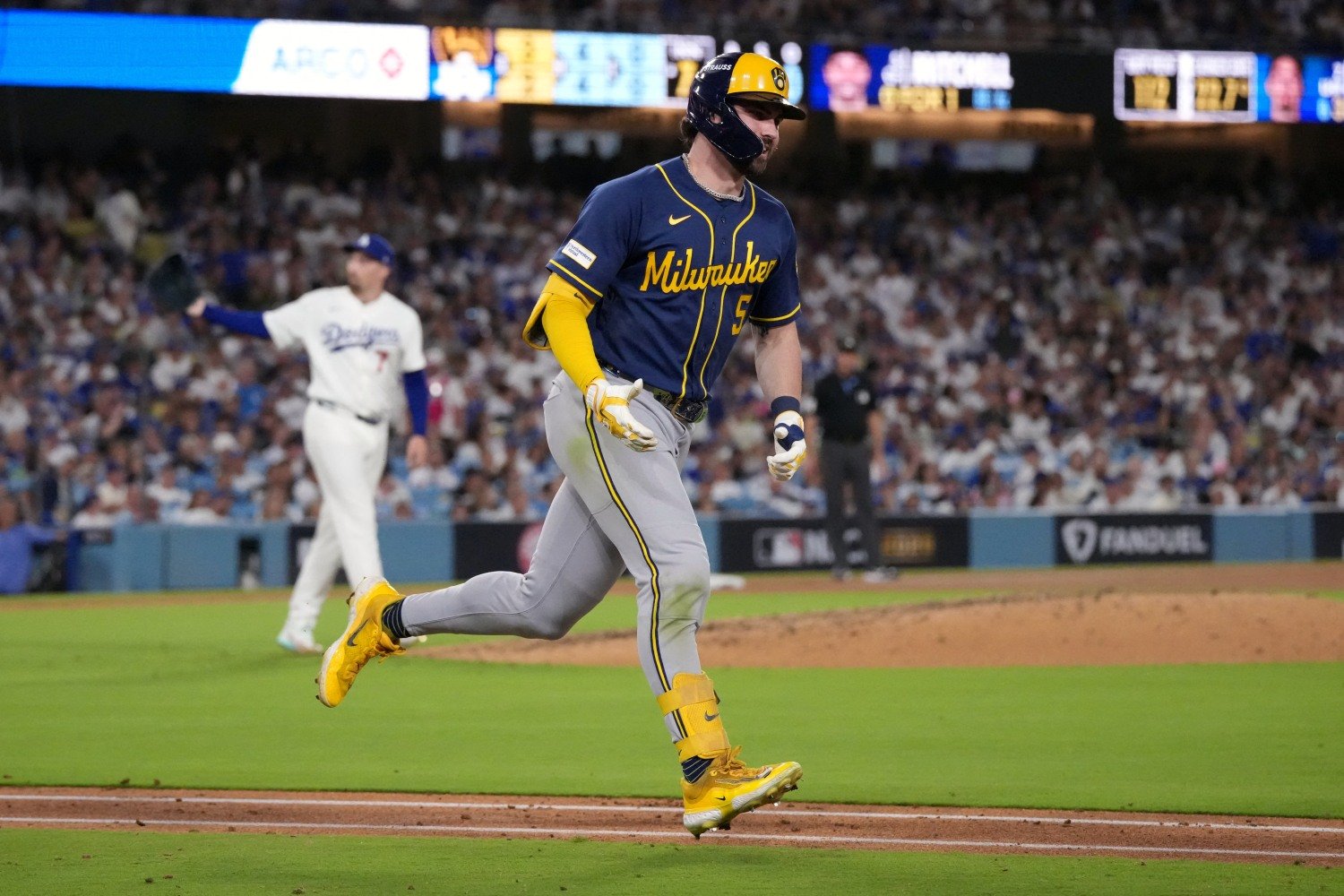 Playoff baseball is a different game. It trades in the six-month marathon of the regular season for a four-week sprint to win three or four short series. Teams face the best defenses and elite pitching, with dominant relievers throwing a greater share of innings. That’s why the run environment changes in October. Hits become harder to come by, and manufacturing runs becomes even more challenging. This isn’t reflected only in overall offense (teams have scored 3.48 runs per game this postseason, a full run lower than in the regular season), but also in performance with runners on base. Since 2021, hitting with runners in scoring position has consistently dipped in October, and the rate of runners left on base has increased by about five percentage points in four of six seasons, including this year. Season RISP OPS (Regular Season) LOB% (Regular Season) RISP OPS (Postseason) LOB% (Postseason) 2021 .755 72.1% .735 74.3% 2022 .741 72.6% .685 77.2% 2023 .755 71.9% .717 77.7% 2024 .741 72.1% .692 74.8% 2025 .745 72.3% .732 77.1% 2026 .743 72.3% .648 76.8% The Brewers have been no exception. They led baseball in OPS with runners in scoring position this year, but entering Game 3 of the NLCS, they had stranded significantly more runners in scoring position in the postseason. That hasn’t been because they stopped having the same patient, smart at-bats they did in the regular season. The Brewers were actually making more contact, hitting the ball harder, and drawing more walks with runners in scoring position. They'd simply run into better pitching, better defense, and tough luck in a small sample. Split RISP wOBA LOB% RISP xwOBA RISP BB% RISP K% Regular Season .344 67.8% .320 11.8% 21.8% Postseason .313 80.0% .335 15.5% 15.5% This is why home runs become even more critical to success in October. You don’t get many mistake pitches against the game’s best arms, so you have to make them count. There’s also no time for bad luck to even out in a short series, but a ball hit well over the fence will never find a glove and will score at least one run. That’s why the Brewers, who scored the second-most runs but hit the second-fewest homers in baseball, once again faced questions about how their offense would fare. Their pressure-centric brand of baseball—stacking singles and walks and moving runners a base or two at a time—doesn’t work as well in the postseason, and it hasn’t this year. To make a deep run, they needed to hit more home runs. They’ve done just that. After leaving the yard three times in a Game 3 comeback win, Milwaukee tied the Dodgers as the team with the most homers this postseason. The Brewers have hit eight long balls this October, including five in this series. The Braves, Guardians, and White Sox have also played seven games this October. The Braves hit six home runs, the Guardians have hit five, and the White Sox hit four. Most of those home runs have redirected momentum toward the Brewers. In Game 1 of the NLDS, Jackson Chourio’s two-run blast off Robbie Ray tied it after Jacob Misiorowski’s shaky start, and William Contreras’s solo shot a few innings later was the game-winning run. Brice Turang and Contreras hit game-tying homers in Games 1 and 2 against the Dodgers. On Wednesday, the Brewers scored all but one run against a dominant Blake Snell on home runs. Chourio blasted Snell’s first pitch to give them an early lead, and Jake Bauers and Garrett Mitchell chased him with back-to-back blasts in a comeback seventh inning. That inning epitomized what the Brewers needed to do to get over the hump this October: execute their existing approach to grind down opposing pitchers, then crush the mistake pitch when they got it. Snell cruised through six innings on 81 pitches, and Abner Uribe had squandered a 1-0 lead and a great Robert Gasser start in an erratic bottom of the sixth. With the heart of the order due up, the Brewers needed long plate appearances and a big swing. Andrew Vaughn led off the seventh with a seven-pitch walk, not swinging until the count reached 3-2. That brought up Bauers, who worked a 12-pitch walk to help chase Yoshinobu Yamamoto in the third inning of Game 2. Bauers didn’t swing until Snell’s fourth pitch, a 2-1 changeup, then began fouling off secondary pitches while waiting for a mistake fastball. By the 10th pitch, Snell was running out of steam; he hung a slider right down the middle, and although Bauers was early, he got a bat on it and hooked it foul down the right-field line. The next pitch was even worse: a four-seamer right down the middle. It was a questionable pitch call after Bauers was ahead of a center-cut slider, but it was even worse execution. It was the kind of mistake a pitcher makes when he’s on fumes. On the 11th pitch of another grueling fight, Bauers got the fastball he’d been waiting for, and he didn’t miss it. With a screaming 412-foot fly ball to right and a bat toss, the Brewers had the lead. Snell’s next pitch to Garrett Mitchell was a non-competitive fastball that missed inside, followed by a changeup down the middle. Mitchell made even louder contact than Bauers, crushing a 428-foot blast that ended the left-hander’s night. The Brewers didn’t look back, as DL Hall and Trevor Megill retired 11 of the last 12 hitters they faced, putting Milwaukee one win away from the pennant. Against tough postseason pitching, the Brewers have (predictably) chased more in October, but most of their rallies have started with spurts of the patience that made them great in the regular season. The difference-maker has been hitting home runs when they force mistakes with those pesky at-bats. The Brewers have married their scrappy approach with the extra slug they needed to win in October, and it’s brought them to the precipice of their second World Series appearance.
- 2 comments
-
- 1
-
-
- jake bauers
- garrett mitchell
- (and 2 more)
-
Image courtesy of Kirby Lee-Imagn Images Playoff baseball is a different game. It trades in the six-month marathon of the regular season for a four-week sprint to win three or four short series. Teams face the best defenses and elite pitching, with dominant relievers throwing a greater share of innings. That’s why the run environment changes in October. Hits become harder to come by, and manufacturing runs becomes even more challenging. This isn’t reflected only in overall offense (teams have scored 3.48 runs per game this postseason, a full run lower than in the regular season), but also in performance with runners on base. Since 2021, hitting with runners in scoring position has consistently dipped in October, and the rate of runners left on base has increased by about five percentage points in four of six seasons, including this year. Season RISP OPS (Regular Season) LOB% (Regular Season) RISP OPS (Postseason) LOB% (Postseason) 2021 .755 72.1% .735 74.3% 2022 .741 72.6% .685 77.2% 2023 .755 71.9% .717 77.7% 2024 .741 72.1% .692 74.8% 2025 .745 72.3% .732 77.1% 2026 .743 72.3% .648 76.8% The Brewers have been no exception. They led baseball in OPS with runners in scoring position this year, but entering Game 3 of the NLCS, they had stranded significantly more runners in scoring position in the postseason. That hasn’t been because they stopped having the same patient, smart at-bats they did in the regular season. The Brewers were actually making more contact, hitting the ball harder, and drawing more walks with runners in scoring position. They'd simply run into better pitching, better defense, and tough luck in a small sample. Split RISP wOBA LOB% RISP xwOBA RISP BB% RISP K% Regular Season .344 67.8% .320 11.8% 21.8% Postseason .313 80.0% .335 15.5% 15.5% This is why home runs become even more critical to success in October. You don’t get many mistake pitches against the game’s best arms, so you have to make them count. There’s also no time for bad luck to even out in a short series, but a ball hit well over the fence will never find a glove and will score at least one run. That’s why the Brewers, who scored the second-most runs but hit the second-fewest homers in baseball, once again faced questions about how their offense would fare. Their pressure-centric brand of baseball—stacking singles and walks and moving runners a base or two at a time—doesn’t work as well in the postseason, and it hasn’t this year. To make a deep run, they needed to hit more home runs. They’ve done just that. After leaving the yard three times in a Game 3 comeback win, Milwaukee tied the Dodgers as the team with the most homers this postseason. The Brewers have hit eight long balls this October, including five in this series. The Braves, Guardians, and White Sox have also played seven games this October. The Braves hit six home runs, the Guardians have hit five, and the White Sox hit four. Most of those home runs have redirected momentum toward the Brewers. In Game 1 of the NLDS, Jackson Chourio’s two-run blast off Robbie Ray tied it after Jacob Misiorowski’s shaky start, and William Contreras’s solo shot a few innings later was the game-winning run. Brice Turang and Contreras hit game-tying homers in Games 1 and 2 against the Dodgers. On Wednesday, the Brewers scored all but one run against a dominant Blake Snell on home runs. Chourio blasted Snell’s first pitch to give them an early lead, and Jake Bauers and Garrett Mitchell chased him with back-to-back blasts in a comeback seventh inning. That inning epitomized what the Brewers needed to do to get over the hump this October: execute their existing approach to grind down opposing pitchers, then crush the mistake pitch when they got it. Snell cruised through six innings on 81 pitches, and Abner Uribe had squandered a 1-0 lead and a great Robert Gasser start in an erratic bottom of the sixth. With the heart of the order due up, the Brewers needed long plate appearances and a big swing. Andrew Vaughn led off the seventh with a seven-pitch walk, not swinging until the count reached 3-2. That brought up Bauers, who worked a 12-pitch walk to help chase Yoshinobu Yamamoto in the third inning of Game 2. Bauers didn’t swing until Snell’s fourth pitch, a 2-1 changeup, then began fouling off secondary pitches while waiting for a mistake fastball. By the 10th pitch, Snell was running out of steam; he hung a slider right down the middle, and although Bauers was early, he got a bat on it and hooked it foul down the right-field line. The next pitch was even worse: a four-seamer right down the middle. It was a questionable pitch call after Bauers was ahead of a center-cut slider, but it was even worse execution. It was the kind of mistake a pitcher makes when he’s on fumes. On the 11th pitch of another grueling fight, Bauers got the fastball he’d been waiting for, and he didn’t miss it. With a screaming 412-foot fly ball to right and a bat toss, the Brewers had the lead. Snell’s next pitch to Garrett Mitchell was a non-competitive fastball that missed inside, followed by a changeup down the middle. Mitchell made even louder contact than Bauers, crushing a 428-foot blast that ended the left-hander’s night. The Brewers didn’t look back, as DL Hall and Trevor Megill retired 11 of the last 12 hitters they faced, putting Milwaukee one win away from the pennant. Against tough postseason pitching, the Brewers have (predictably) chased more in October, but most of their rallies have started with spurts of the patience that made them great in the regular season. The difference-maker has been hitting home runs when they force mistakes with those pesky at-bats. The Brewers have married their scrappy approach with the extra slug they needed to win in October, and it’s brought them to the precipice of their second World Series appearance. View full article
-
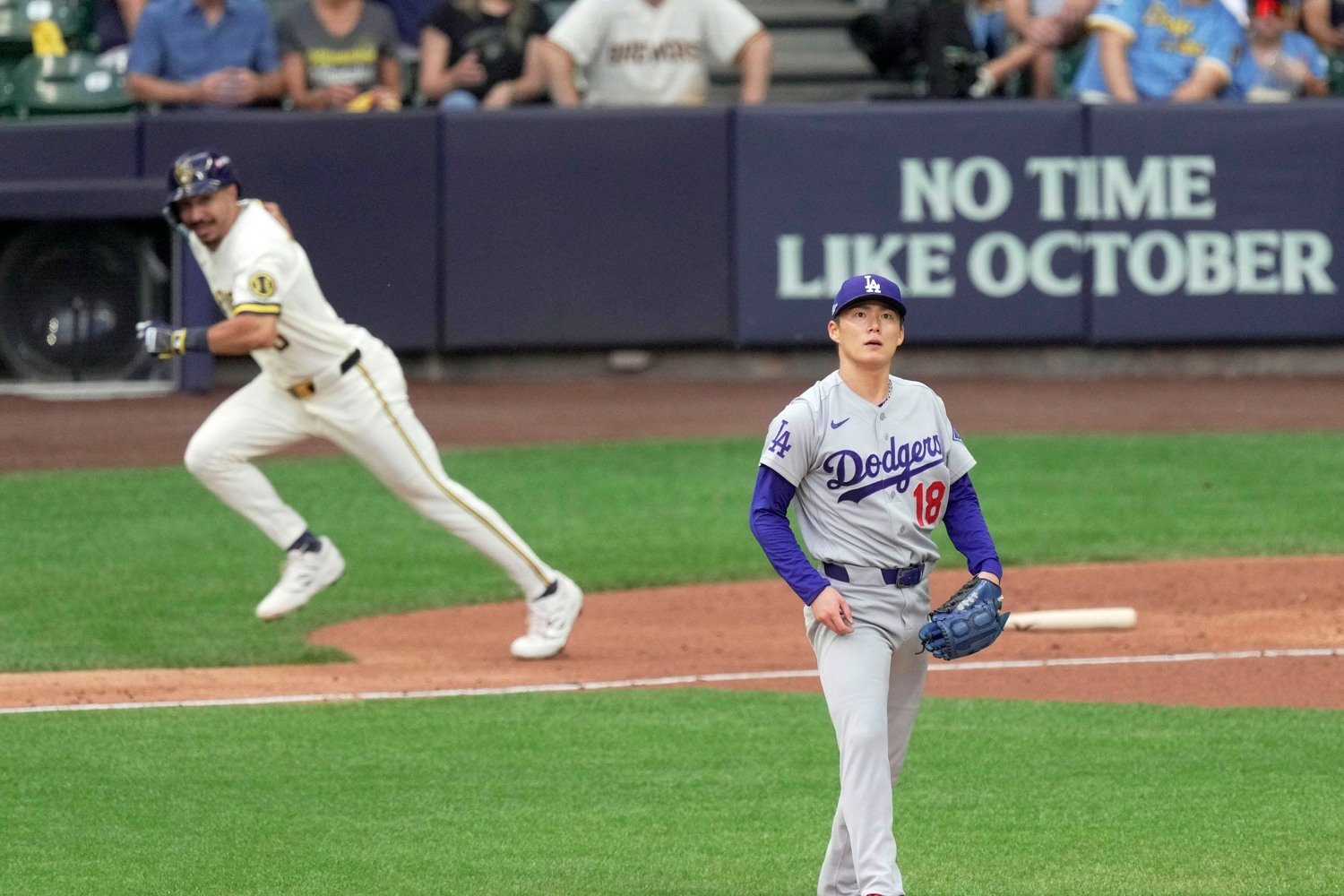 Several impressive at-bats propelled the Brewers’ comeback win in Game 2 of the NLCS. Jake Bauers worked a 12-pitch walk against Yoshinobu Yamamoto, setting up Christian Yelich’s bases-loaded, go-ahead single, which knocked the right-hander out in the third inning. William Contreras tied the game twice and singled in the winning run in the sixth. David Hamilton didn’t deliver those big hits, but he may have had the best offensive game (save Contreras's). The speedy Hamilton reached base three times, and each time, he advanced to scoring position without a hit and later scored. He joined Brice Turang as the only players in franchise history with multiple stolen bases in a postseason game. “Hammy's been doing that for us all year,” Bauers said. “He finds a way on in big spots, and he's such a good baserunner that he makes something happen with his legs. That's such a huge piece for us at the 9-hole coming around to the top of the lineup, to be able to get on, steal bases, make things happen, put pressure on the defense.” His most pivotal baserunning was in the sixth, when he set up Contreras’s go-ahead hit. Brock Stewart hit Hamilton with a pitch to open the inning. With the lineup turning over and nobody out, everyone was already thinking about a potential steal. “When I went out to check on Hamilton after the hit-by-pitch, [Freddie Freeman] said to me, ‘Oh, you’re just doing this, Murph, just to get extra time because you want him to steal,’” Pat Murphy said. “I said, ‘Should we go on the first or second pitch? Let me know.’” Fearing a steal, Stewart threw to first. Freeman couldn’t handle the throw, allowing Hamilton to advance to second. Jackson Chourio hit a routine ground ball to short, right where Hamilton was leading off second base. Reading it off the bat and knowing he could make it with his speed, the speedster took off on contact, advancing to third on a play on which some runners might stay put. “I saw the ball. I felt like it was a little bit in front of me, but I could still get there,” Hamilton said. “I didn’t look back, so I slid just to be sure.” From third, he had more time to read Contreras’s topspin blooper into left field and still score easily. In a game where the Brewers disadvantaged themselves with early mistakes in the field, he helped them claw back for good by doing the little things on the bases. “Everybody knew what was going on, and sometimes that affects the pitcher and affects the balance of the game, so he didn’t have to steal,” Murphy said. “He made a good read. That’s all those little things in baserunning that make a difference.” “I think the little things is what wins ballgames, especially critical games like this,” Hamilton said. “So we definitely have an emphasis on that, and so we try and do it.” A few innings later, Hamilton helped the Brewers pull away with a two-run eighth. He led off with a single, stole second, and later scored on Brice Turang’s base hit. Even if his elite athleticism didn’t translate into the breakout the Brewers envisioned (his 80 OPS+ during the regular season matched his career mark entering 2026), Monday night was a reminder of how impactful Hamilton’s speed can be when he reaches base. “He had that pick attempt that got away [in the sixth], he gets to second base, he ends up scoring. He steals the base [in the eighth], he ends up scoring,” Bauers said. “That's such a big piece of the lineup, one through nine, for sure.”
 -
Image courtesy of USA TODAY Network via Reuters Connect Several impressive at-bats propelled the Brewers’ comeback win in Game 2 of the NLCS. Jake Bauers worked a 12-pitch walk against Yoshinobu Yamamoto, setting up Christian Yelich’s bases-loaded, go-ahead single, which knocked the right-hander out in the third inning. William Contreras tied the game twice and singled in the winning run in the sixth. David Hamilton didn’t deliver those big hits, but he may have had the best offensive game (save Contreras's). The speedy Hamilton reached base three times, and each time, he advanced to scoring position without a hit and later scored. He joined Brice Turang as the only players in franchise history with multiple stolen bases in a postseason game. “Hammy's been doing that for us all year,” Bauers said. “He finds a way on in big spots, and he's such a good baserunner that he makes something happen with his legs. That's such a huge piece for us at the 9-hole coming around to the top of the lineup, to be able to get on, steal bases, make things happen, put pressure on the defense.” His most pivotal baserunning was in the sixth, when he set up Contreras’s go-ahead hit. Brock Stewart hit Hamilton with a pitch to open the inning. With the lineup turning over and nobody out, everyone was already thinking about a potential steal. “When I went out to check on Hamilton after the hit-by-pitch, [Freddie Freeman] said to me, ‘Oh, you’re just doing this, Murph, just to get extra time because you want him to steal,’” Pat Murphy said. “I said, ‘Should we go on the first or second pitch? Let me know.’” Fearing a steal, Stewart threw to first. Freeman couldn’t handle the throw, allowing Hamilton to advance to second. Jackson Chourio hit a routine ground ball to short, right where Hamilton was leading off second base. Reading it off the bat and knowing he could make it with his speed, the speedster took off on contact, advancing to third on a play on which some runners might stay put. “I saw the ball. I felt like it was a little bit in front of me, but I could still get there,” Hamilton said. “I didn’t look back, so I slid just to be sure.” From third, he had more time to read Contreras’s topspin blooper into left field and still score easily. In a game where the Brewers disadvantaged themselves with early mistakes in the field, he helped them claw back for good by doing the little things on the bases. “Everybody knew what was going on, and sometimes that affects the pitcher and affects the balance of the game, so he didn’t have to steal,” Murphy said. “He made a good read. That’s all those little things in baserunning that make a difference.” “I think the little things is what wins ballgames, especially critical games like this,” Hamilton said. “So we definitely have an emphasis on that, and so we try and do it.” A few innings later, Hamilton helped the Brewers pull away with a two-run eighth. He led off with a single, stole second, and later scored on Brice Turang’s base hit. Even if his elite athleticism didn’t translate into the breakout the Brewers envisioned (his 80 OPS+ during the regular season matched his career mark entering 2026), Monday night was a reminder of how impactful Hamilton’s speed can be when he reaches base. “He had that pick attempt that got away [in the sixth], he gets to second base, he ends up scoring. He steals the base [in the eighth], he ends up scoring,” Bauers said. “That's such a big piece of the lineup, one through nine, for sure.” View full article
-
Image courtesy of USA TODAY Network via Reuters Connect The Brewers did what they've done all postseason: respond. For the fifth time in six games, the opposition scored first, but Milwaukee has only lost once. The Dodgers scored in three innings, and each time, the Brewers tied or took the lead in the bottom half of that very frame. It didn't need to be a back-and-forth affair. None of the four runs Milwaukee allowed should have scored. William Contreras allowed a wild pitch to bounce off his chest protector in the first inning, Cooper Pratt couldn't knock down a tough hop on what should have been a double-play ball in the third, and Logan Henderson made throwing errors in both the third and the fifth. Poor infield defense has been a theme. Errors are a small and incomplete measure of defense, but the Brewers have already committed seven this postseason. Because they've also made a handful of great plays, their fielding has probably been closer to a net zero, but a team that is usually fundamentally sound has made things harder for itself with those misplays. "It was the way we just kept going. We kept competing," Yelich said. "We beat ourselves a little early in the game, would get up, get behind. It was just a lot of self-inflicted wounds." Those wounds limited Henderson to four innings in his second postseason start. He wasn't hit hard in either outing, but walks and miscues have limited his success after an outstanding regular season. "You walk the lead-off hitter, you threw a ball in the dirt with a man on second that kicked away—that's not a pitch that was called for in the dirt. Now he put himself in that jam," Pat Murphy said. "Then he throws the ball away to first on two different occasions. That's three runs that you give them. That can't happen. That just can't happen. But I believe in him, and I believe he'll correct it." Meanwhile, the Brewers' offense went to work against Yoshinobu Yamamoto, who threw a one-run complete game in his last playoff outing at American Family Field. Contreras practically willed Milwaukee to victory, tying the game with a first-inning single and a fifth-inning home run before securing the lead for good with another single in the sixth. The game's trajectory changed when the Brewers chased Yamamoto in a 36-pitch third inning. With two outs, Jake Bauers saw five of his six pitch types in a 12-pitch plate appearance, spoiling all of them with six straight foul balls before drawing a walk to load the bases. "It just got to a certain point where it was straight compete mode," Bauers said. "A little bit of [a] blackout, just kind of in the flow a little bit of competing." The seven-minute battle clearly took a chunk out of Yamamoto. After Bauers finally took ball four, the Dodgers' playoff superhero nearly hit Christian Yelich with a first-pitch fastball, then hung a curveball that Yelich lined up the middle for a go-ahead single. "That changes the game," Murphy said. "You think about that and what it does to a pitcher. He can get through an inning in less than seven minutes, and he does all the time. He's one of the best pitchers in the land. It was a great at-bat. I think [it was] a turning point, I really do." "The deeper the at-bat got, I knew he was getting on, whether it be by hit or walk, whatever it may be," Yelich said. "You want to follow a great at-bat like that with a good at-bat." That was all for Yamamoto, who was the World Series MVP a year ago. In last year's NLCS, he recorded all 27 outs against the Brewers in Game 2 on just 111 pitches. This time, he needed 75 pitches for eight outs. From there, Milwaukee kept the pressure on as the Dodgers emptied their bullpen, with David Hamilton's aggressive baserunning and more big swings by Contreras putting them over the hump. Before the postseason started, multiple Brewers insisted this year would be different from past disappointing Octobers. They said they learned from last year's NLCS sweep against the Dodgers and came back stronger, hungrier, and more confident. They're proving every night that it wasn't just talk. The Brewers look different than the team that ran out of steam last postseason. Their offense is grinding down great pitching. Their bullpen has allowed one earned run in 28 ⅔ innings, making up for Henderson and Jacob Misiorowski's shorter-than-expected outings. They've even gotten timely home runs from Contreras, Jackson Chourio, and Brice Turang, to score enough runs when their pressure-focused style has fallen short. The Brewers feel inevitable, and they've undertaken their domination with businesslike determination. "This year, they don't want to be denied," Murphy said. "They're going against arguably one of the best teams in baseball ever put together, and they don't care. They won't be denied." When they have felt vulnerable, it was because they were beating themselves. The Brewers overcame misplays in the NLDS to eliminate the Padres, and they're on that path against the Dodgers. But the reality remains that Los Angeles, the NL's other 100-win team, will make them pay if they keep making mistakes. The margin for error is thinner than it was against the Padres, and it's not worth testing. The job is far from finished, and the Brewers have gotten by without playing their best baseball. If they clean things up in the field, they could secure their first World Series berth since 1982 in a few days. "Keep going," Contreras said. "The goal is not to think about where we're at. Regardless of where we're going, who we're playing against, the goal is just to focus on doing our jobs and executing our jobs. That's the task at hand. Just focusing on what's next." "We've got to keep going," Yelich said. "We haven't accomplished anything yet. It was a good start, but still a long way to go. They're a great team over there, and we know that we've got to continue to play well." View full article
-
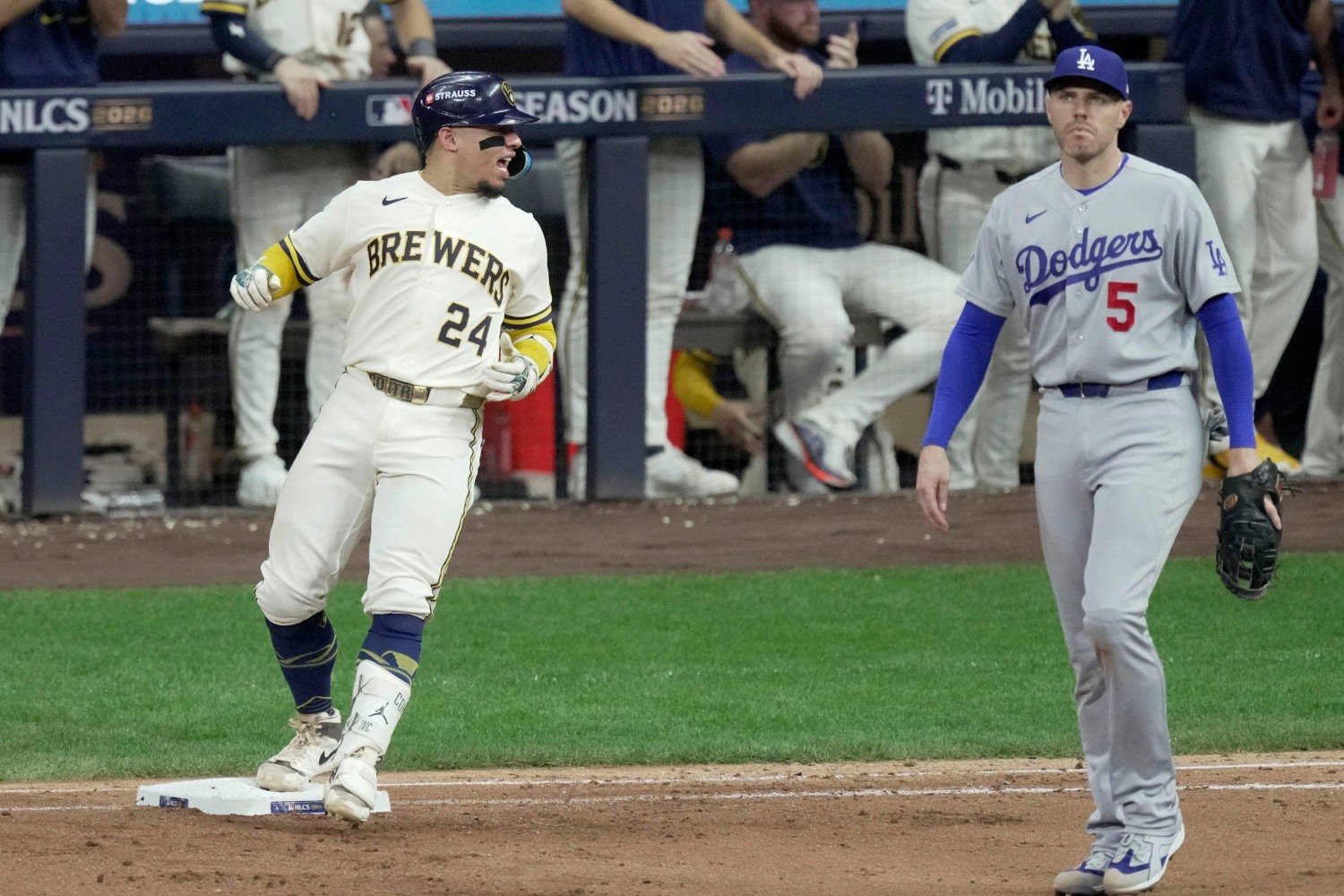 The Brewers did what they've done all postseason: respond. For the fifth time in six games, the opposition scored first, but Milwaukee has only lost once. The Dodgers scored in three innings, and each time, the Brewers tied or took the lead in the bottom half of that very frame. It didn't need to be a back-and-forth affair. None of the four runs Milwaukee allowed should have scored. William Contreras allowed a wild pitch to bounce off his chest protector in the first inning, Cooper Pratt couldn't knock down a tough hop on what should have been a double-play ball in the third, and Logan Henderson made throwing errors in both the third and the fifth. Poor infield defense has been a theme. Errors are a small and incomplete measure of defense, but the Brewers have already committed seven this postseason. Because they've also made a handful of great plays, their fielding has probably been closer to a net zero, but a team that is usually fundamentally sound has made things harder for itself with those misplays. "It was the way we just kept going. We kept competing," Yelich said. "We beat ourselves a little early in the game, would get up, get behind. It was just a lot of self-inflicted wounds." Those wounds limited Henderson to four innings in his second postseason start. He wasn't hit hard in either outing, but walks and miscues have limited his success after an outstanding regular season. "You walk the lead-off hitter, you threw a ball in the dirt with a man on second that kicked away—that's not a pitch that was called for in the dirt. Now he put himself in that jam," Pat Murphy said. "Then he throws the ball away to first on two different occasions. That's three runs that you give them. That can't happen. That just can't happen. But I believe in him, and I believe he'll correct it." Meanwhile, the Brewers' offense went to work against Yoshinobu Yamamoto, who threw a one-run complete game in his last playoff outing at American Family Field. Contreras practically willed Milwaukee to victory, tying the game with a first-inning single and a fifth-inning home run before securing the lead for good with another single in the sixth. The game's trajectory changed when the Brewers chased Yamamoto in a 36-pitch third inning. With two outs, Jake Bauers saw five of his six pitch types in a 12-pitch plate appearance, spoiling all of them with six straight foul balls before drawing a walk to load the bases. "It just got to a certain point where it was straight compete mode," Bauers said. "A little bit of [a] blackout, just kind of in the flow a little bit of competing." The seven-minute battle clearly took a chunk out of Yamamoto. After Bauers finally took ball four, the Dodgers' playoff superhero nearly hit Christian Yelich with a first-pitch fastball, then hung a curveball that Yelich lined up the middle for a go-ahead single. "That changes the game," Murphy said. "You think about that and what it does to a pitcher. He can get through an inning in less than seven minutes, and he does all the time. He's one of the best pitchers in the land. It was a great at-bat. I think [it was] a turning point, I really do." "The deeper the at-bat got, I knew he was getting on, whether it be by hit or walk, whatever it may be," Yelich said. "You want to follow a great at-bat like that with a good at-bat." That was all for Yamamoto, who was the World Series MVP a year ago. In last year's NLCS, he recorded all 27 outs against the Brewers in Game 2 on just 111 pitches. This time, he needed 75 pitches for eight outs. From there, Milwaukee kept the pressure on as the Dodgers emptied their bullpen, with David Hamilton's aggressive baserunning and more big swings by Contreras putting them over the hump. Before the postseason started, multiple Brewers insisted this year would be different from past disappointing Octobers. They said they learned from last year's NLCS sweep against the Dodgers and came back stronger, hungrier, and more confident. They're proving every night that it wasn't just talk. The Brewers look different than the team that ran out of steam last postseason. Their offense is grinding down great pitching. Their bullpen has allowed one earned run in 28 ⅔ innings, making up for Henderson and Jacob Misiorowski's shorter-than-expected outings. They've even gotten timely home runs from Contreras, Jackson Chourio, and Brice Turang, to score enough runs when their pressure-focused style has fallen short. The Brewers feel inevitable, and they've undertaken their domination with businesslike determination. "This year, they don't want to be denied," Murphy said. "They're going against arguably one of the best teams in baseball ever put together, and they don't care. They won't be denied." When they have felt vulnerable, it was because they were beating themselves. The Brewers overcame misplays in the NLDS to eliminate the Padres, and they're on that path against the Dodgers. But the reality remains that Los Angeles, the NL's other 100-win team, will make them pay if they keep making mistakes. The margin for error is thinner than it was against the Padres, and it's not worth testing. The job is far from finished, and the Brewers have gotten by without playing their best baseball. If they clean things up in the field, they could secure their first World Series berth since 1982 in a few days. "Keep going," Contreras said. "The goal is not to think about where we're at. Regardless of where we're going, who we're playing against, the goal is just to focus on doing our jobs and executing our jobs. That's the task at hand. Just focusing on what's next." "We've got to keep going," Yelich said. "We haven't accomplished anything yet. It was a good start, but still a long way to go. They're a great team over there, and we know that we've got to continue to play well."
- 6 comments
-
- 1
-
-
- 2026 postseason
- william contreras
- (and 3 more)
-
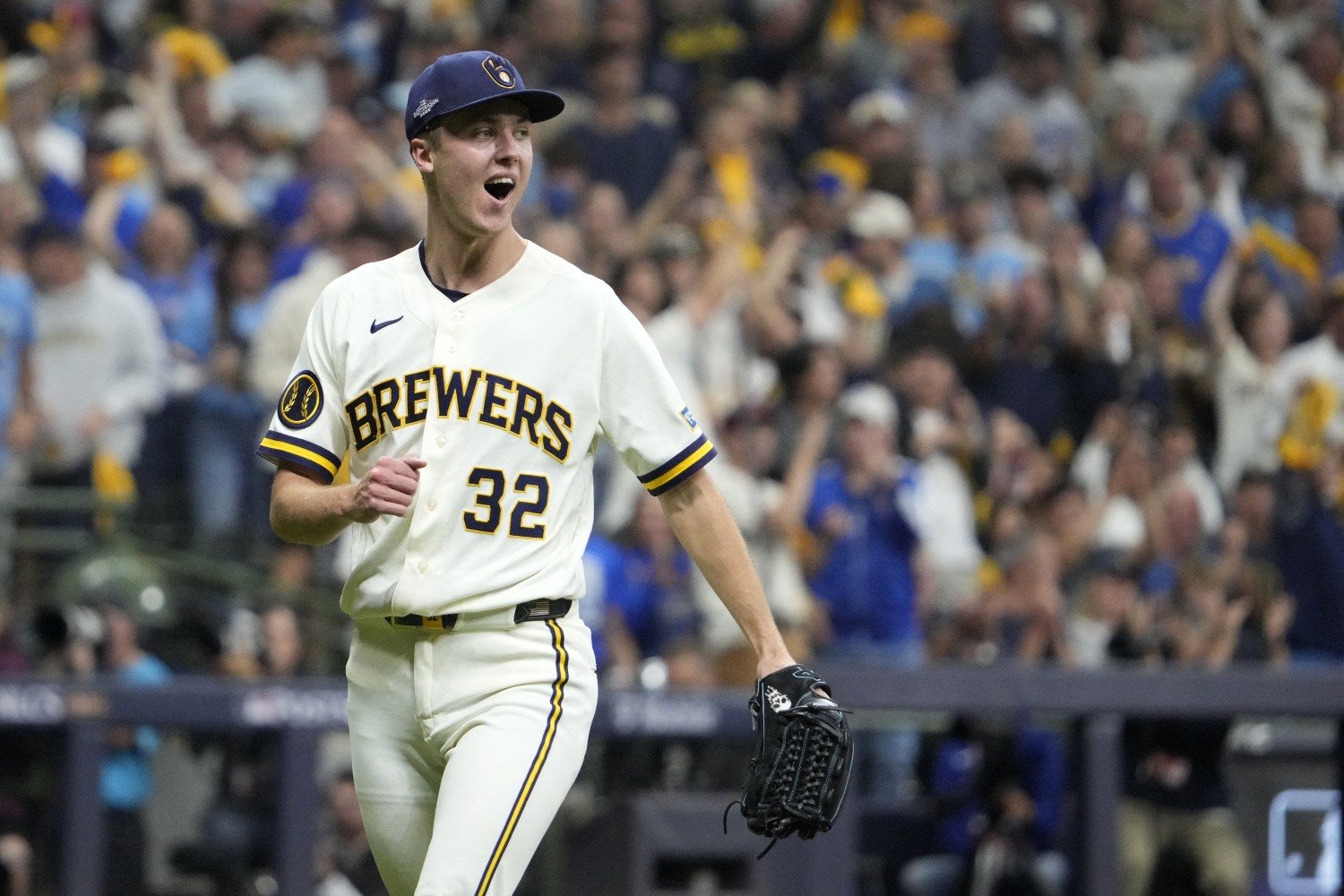 It felt like a rerun of last year's NLCS. Jacob Misiorowski's second playoff start began like his first, as he labored through his first two innings while the Dodgers scored first. Meanwhile, Tarik Skubal was doing what Blake Snell did to the Brewers in last year's Game 1, forcing baseball's most patient offense to swing at more balls than strikes. The Dodgers were in control, and the Brewers were fighting to keep up. In the middle innings, the momentum began to shift. The Brewers turned one of three inning-ending double plays on Enrique Hernández to avoid further damage in the second, then Misiorowski tossed scoreless third and fourth frames. The latter ended with a dramatic strikeout of Kyle Tucker after a balk undid an inning-ending pickoff. Minutes later, Brice Turang turned around a Skubal sinker on the inside corner for a game-tying home run. It was a swing more than a week in the making. Turang looked lost during the NLDS, recording just two singles in 16 at-bats. He stayed late after the Brewers' off-day workout on Friday for a session with hitting coach Daniel Vogelbach, searching for the feel that would get him on time and on plane with the baseball. "I don't do it very often," Turang said. "Some years I don't do it at all. But I just felt like I needed to stay after, get some more swings in, and just kind of talk it out, maybe hear what someone's got to say." Two days later, he stayed inside a power fastball boring in on his hands with one of the best swings of his career. "That's what he's working on exactly," Pat Murphy said. "Instead of his hands dropping and cutting across, to just get straight to the baseball." Turang started doing that in his final two at-bats of the Padres series, shooting the ball to left in both, but it took one more nudge to fully calibrate his swing. Skubal also gave him an inside sinker in his first at-bat, and he fouled it off his ailing left knee that caused him to miss time in August. "I didn't want to foul a ball off my knee again, so I was like, 'I'm going to stay inside of this one,'" Turang said. After that, the Brewers started waiting out Skubal in a 26-pitch fifth inning. Garrett Mitchell led off with a walk, advanced to second on Cooper Pratt's sacrifice bunt, then scored on one of Skubal's few mistake pitches of the evening: a first-pitch changeup down the middle that Luis Lara smacked up the middle for his first postseason hit. "When the leadoff guy gets on sometimes by walking, he's a threat to steal, and sometimes that can alter the way the guy goes about it," Murphy said. "I thought that getting a guy into scoring position, he tried to get ahead with a changeup to Lara, left it where he didn't want to. Other than that, he was dominant." Misiorowski, meanwhile, only recorded one more out than in his last playoff start, but he kept one of baseball's better lineups at bay without a dominant fastball. Like the Padres, the Dodgers whiffed just five times against his four-seamer, but they also tagged it for three hard-hit balls and four hits. "It's the same as the last outing I had against the Padres," he said. "I think that was the same goal. Both teams did really well." One could argue that for most of the night, the Brewers played like the inferior team. They didn't have the best at-bats, and they weren't dominant on the mound. The Dodgers drew more walks, had more baserunners, and had a .243 expected batting average compared to Milwaukee's .182. Skubal outlasted Misiorowski and looked untouchable for more of his outing. Yet, the Brewers took the series opener, by playing their best in the right moments. They made plays when the Dodgers pushed their backs to the wall, and when Skubal was even slightly vulnerable for a few batters, they took advantage. Turang's swing was the separator, the latest reminder of how impactful home runs can be against great October pitchers who won't throw many hittable pitches. It was also another instance of the Brewers proving what they've said all month: they learned from last year's series and are prepared to handle this matchup. Unlike last season, they've rejected the underdog identity, and it's reflected in their performance. "Guys are getting more experience, they're learning the game," Turang said. "Even for me, still learning, getting experience. That's a big factor in this. Then not giving up when we are behind in the game and knowing that we can do it, we can make up runs." Now, the Brewers lead 1-0 in a series that seemed unwinnable a year ago, and their path to a World Series berth is becoming clearer.
- 3 comments
-
- 1
-
-
- jacob misiorowski
- brice turang
- (and 1 more)
-
Image courtesy of Michael McLoone-Imagn Images It felt like a rerun of last year's NLCS. Jacob Misiorowski's second playoff start began like his first, as he labored through his first two innings while the Dodgers scored first. Meanwhile, Tarik Skubal was doing what Blake Snell did to the Brewers in last year's Game 1, forcing baseball's most patient offense to swing at more balls than strikes. The Dodgers were in control, and the Brewers were fighting to keep up. In the middle innings, the momentum began to shift. The Brewers turned one of three inning-ending double plays on Enrique Hernández to avoid further damage in the second, then Misiorowski tossed scoreless third and fourth frames. The latter ended with a dramatic strikeout of Kyle Tucker after a balk undid an inning-ending pickoff. Minutes later, Brice Turang turned around a Skubal sinker on the inside corner for a game-tying home run. It was a swing more than a week in the making. Turang looked lost during the NLDS, recording just two singles in 16 at-bats. He stayed late after the Brewers' off-day workout on Friday for a session with hitting coach Daniel Vogelbach, searching for the feel that would get him on time and on plane with the baseball. "I don't do it very often," Turang said. "Some years I don't do it at all. But I just felt like I needed to stay after, get some more swings in, and just kind of talk it out, maybe hear what someone's got to say." Two days later, he stayed inside a power fastball boring in on his hands with one of the best swings of his career. "That's what he's working on exactly," Pat Murphy said. "Instead of his hands dropping and cutting across, to just get straight to the baseball." Turang started doing that in his final two at-bats of the Padres series, shooting the ball to left in both, but it took one more nudge to fully calibrate his swing. Skubal also gave him an inside sinker in his first at-bat, and he fouled it off his ailing left knee that caused him to miss time in August. "I didn't want to foul a ball off my knee again, so I was like, 'I'm going to stay inside of this one,'" Turang said. After that, the Brewers started waiting out Skubal in a 26-pitch fifth inning. Garrett Mitchell led off with a walk, advanced to second on Cooper Pratt's sacrifice bunt, then scored on one of Skubal's few mistake pitches of the evening: a first-pitch changeup down the middle that Luis Lara smacked up the middle for his first postseason hit. "When the leadoff guy gets on sometimes by walking, he's a threat to steal, and sometimes that can alter the way the guy goes about it," Murphy said. "I thought that getting a guy into scoring position, he tried to get ahead with a changeup to Lara, left it where he didn't want to. Other than that, he was dominant." Misiorowski, meanwhile, only recorded one more out than in his last playoff start, but he kept one of baseball's better lineups at bay without a dominant fastball. Like the Padres, the Dodgers whiffed just five times against his four-seamer, but they also tagged it for three hard-hit balls and four hits. "It's the same as the last outing I had against the Padres," he said. "I think that was the same goal. Both teams did really well." One could argue that for most of the night, the Brewers played like the inferior team. They didn't have the best at-bats, and they weren't dominant on the mound. The Dodgers drew more walks, had more baserunners, and had a .243 expected batting average compared to Milwaukee's .182. Skubal outlasted Misiorowski and looked untouchable for more of his outing. Yet, the Brewers took the series opener, by playing their best in the right moments. They made plays when the Dodgers pushed their backs to the wall, and when Skubal was even slightly vulnerable for a few batters, they took advantage. Turang's swing was the separator, the latest reminder of how impactful home runs can be against great October pitchers who won't throw many hittable pitches. It was also another instance of the Brewers proving what they've said all month: they learned from last year's series and are prepared to handle this matchup. Unlike last season, they've rejected the underdog identity, and it's reflected in their performance. "Guys are getting more experience, they're learning the game," Turang said. "Even for me, still learning, getting experience. That's a big factor in this. Then not giving up when we are behind in the game and knowing that we can do it, we can make up runs." Now, the Brewers lead 1-0 in a series that seemed unwinnable a year ago, and their path to a World Series berth is becoming clearer. View full article
-
Image courtesy of Michael McLoone-Imagn Images After posting a 1.80 ERA and 3.47 FIP against the Padres in the NLDS, the Brewers' pitching staff faces a more daunting assignment against the Dodgers in a rematch of last year's NLCS. That, at least, is how it looks at first glance. The Padres were a capable offense, finishing the regular season with a 102 wRC+, but the Dodgers' 111 wRC+ ranked second in baseball. Season-long numbers can be misleading for projecting a playoff series, though. The Padres entered October hot, ranking second with a 119 wRC+ in the second half. The Dodgers will make the Brewers work for every out, but the Padres already did that for most of the NLDS. In that sense, Los Angeles won't be a new challenge. It won't be from a matchup-specific perspective, either. During that second-half surge, the Padres led the league with a .358 xwOBA and 0.57 runs per 100 pitches against fastballs. The Brewers' pitching coaches prioritize fastballs because they're easiest to throw for strikes; no team has thrown fastballs with a higher percentage of their total offerings since 2023. Facing a team that was crushing fastballs, the Brewers stuck to their approach. After throwing fastballs 66.4% of the time in the regular season, they threw them 64.9% of the time in the NLDS. It worked swimmingly, as the Padres managed just a .294 wOBA against those heaters. They face a similar matchup against the Dodgers, who were easily the best fastball hitters in baseball this year. Even during a second-half dropoff, their .356 wOBA against heaters trailed only the Padres. Team FB wOBA FB xwOBA FB Run Value/100 Dodgers .363 .370 0.397 Cubs .355 .346 0.306 Brewers .361 .350 0.201 Rockies .353 .340 0.152 Tigers .352 .360 0.141 If the NLDS was any indication, the Brewers won't back down from throwing fastballs to fastball hitters. "By executing pitches, that stops offenses," Pat Murphy said before a team workout on Saturday afternoon. "We're still going to pitch to our strengths, and we're going to try to go—it's like any other fight. It's like, styles matter, but we can only do what we can do." Leaning on each pitcher's strengths is the correct starting point. The Brewers boast some of baseball's best fastballs. Jacob Misiorowski's four-seamer led all pitches in run value this year, and Logan Henderson's four-seamer was 19th. They also have plenty of excellent secondary pitches, which means they have room to maximize matchups by using velocity more strategically. Here's how the hitters the Brewers are most likely to see in the NLCS fared against different pitch types from right-handed pitchers (minimum 80 pitches per pitch type), measured with expected wOBA: body { font-family: Arial, Helvetica, sans-serif; margin: 0; padding: 10px; } table { border-collapse: collapse; font-size: 20px; color: #000; white-space: nowrap; } th, td { border: 1px solid #d0d0d0; padding: 4px 8px; height: 22px; font-weight: normal; text-align: center; } /* Bold header row */ th { font-weight: bold; background-color: #fff; text-align: center; } /* Column widths */ th:first-child, td:first-child { min-width: 165px; } th:nth-child(2), td:nth-child(2) { min-width: 35px; } th:not(:first-child):not(:nth-child(2)), td:not(:first-child):not(:nth-child(2)) { min-width: 135px; } /* Green heatmap */ .g1 { background-color: #edf6f2; } .g2 { background-color: #d4ebe1; } .g3 { background-color: #b7e1d0; } .g4 { background-color: #9bd5bc; } .g5 { background-color: #7bc9a6; } .g6 { background-color: #57b98d; } /* Red heatmap */ .r1 { background-color: #fce2e2; } .r2 { background-color: #fbcaca; } .r3 { background-color: #f9a1a1; } .r4 { background-color: #fa7777; } .r5 { background-color: #ff0000; } /* Force every empty data cell to gray */ td.empty, td:empty { background: #d3d3d3 !important; } /* Neutral cell with a value */ .n { background-color: #fff; } Hitter Side Four-Seam FB Sinker Cutter Curveball Slider Sweeper Changeup Splitter Mookie Betts R .347 .422 .301 .271 .376 Tommy Edman L .254 .372 .431 .234 .286 .286 Freddie Freeman L .391 .371 .463 .340 .374 .343 .352 Teoscar Hernandez R .353 .344 .313 .275 .136 .405 Max Muncy L .450 .442 .472 .270 .340 .098 .314 .201 Shohei Ohtani L .416 .550 .498 .295 .404 .423 .346 .279 Andy Pages R .296 .339 .436 .270 .319 .396 Miguel Rojas R .316 .288 .278 Dalton Rushing L .341 .343 .419 .464 .285 Will Smith R .507 .487 .591 .280 .271 Kyle Tucker L .350 .429 .370 .347 .301 .263 .269 .234 Here's that same breakdown against left-handed pitchers: body { font-family: Arial, Helvetica, sans-serif; margin: 0; padding: 10px; } table { border-collapse: collapse; font-size: 20px; color: #000; white-space: nowrap; } th, td { border: 1px solid #d0d0d0; padding: 4px 8px; height: 22px; font-weight: normal; text-align: center; } /* Bold header row */ th { font-weight: bold; background-color: #fff; text-align: center; } /* Column widths */ th:first-child, td:first-child { min-width: 165px; } th:nth-child(2), td:nth-child(2) { min-width: 35px; } th:not(:first-child):not(:nth-child(2)), td:not(:first-child):not(:nth-child(2)) { min-width: 135px; } /* Green heatmap */ .g1 { background-color: #edf6f2; } .g2 { background-color: #d4ebe1; } .g3 { background-color: #b7e1d0; } .g4 { background-color: #9bd5bc; } .g5 { background-color: #7bc9a6; } .g6 { background-color: #57b98d; } /* Red heatmap */ .r1 { background-color: #fce2e2; } .r2 { background-color: #fbcaca; } .r3 { background-color: #f9a1a1; } .r4 { background-color: #fa7777; } .r5 { background-color: #ff0000; } /* Gray background for all empty cells */ td.empty, td:empty { background: #d3d3d3 !important; } Hitter Side Four-Seam FB Sinker Cutter Curveball Slider Sweeper Changeup Mookie Betts R .379 .394 .273 .170 .351 Tommy Edman R .259 .103 .277 Freddie Freeman L .304 .328 .469 .311 .209 Teoscar Hernandez R .413 .573 .300 .268 .361 Max Muncy L .386 .341 .310 Shohei Ohtani L .266 .533 .261 .318 .579 Andy Pages R .407 .488 .461 .369 .272 Miguel Rojas R .303 .372 .328 .442 .242 Dalton Rushing L .220 .419 Will Smith R .361 .409 Kyle Tucker L .401 .292 .243 .328 .490 This is an incomplete, imperfect snapshot. Pitch-specific xwOBA only looks at pitches that ended a plate appearance, so it ignores productive takes, called strikes, and whiffs that occur earlier in counts. Still, it's a decent starting point for scouting reports. A few things stand out. Most Dodgers hitters punish sinkers, regardless of pitcher handedness. That shouldn't preclude some of the Brewers' best sinkerballers (Antonio Senzatela, Abner Uribe, Aaron Ashby) from throwing their primary fastballs, but their multi-fastball guys (Robert Gasser, Shane Drohan, Dustin May, Chad Patrick) may want to lean toward other pitches. On the flip side, many Los Angeles hitters struggle against short sliders. That means Drohan and DL Hall could play big roles in the series. Uribe has also gone more slider-heavy in certain matchups over the last two years, and this could be one of them. To advance to their first World Series since 1982, the Brewers must beat the Dodgers with their best on both sides of the ball. Misiorowski shouldn't suddenly become a junkballer, and the relievers behind him shouldn't pitch scared. But when the Brewers have the arsenal to adapt, they should consider mixing things up if the Dodgers' swings call for more secondaries. "We can't worry about changing what we do," Murphy said. "We just have to go in and be a little better at the things we do." View full article
-
How Should Brewers Pitch Dodgers' Fastball-Hunting Offense in NLCS?
Jack Stern posted an article in Brewers
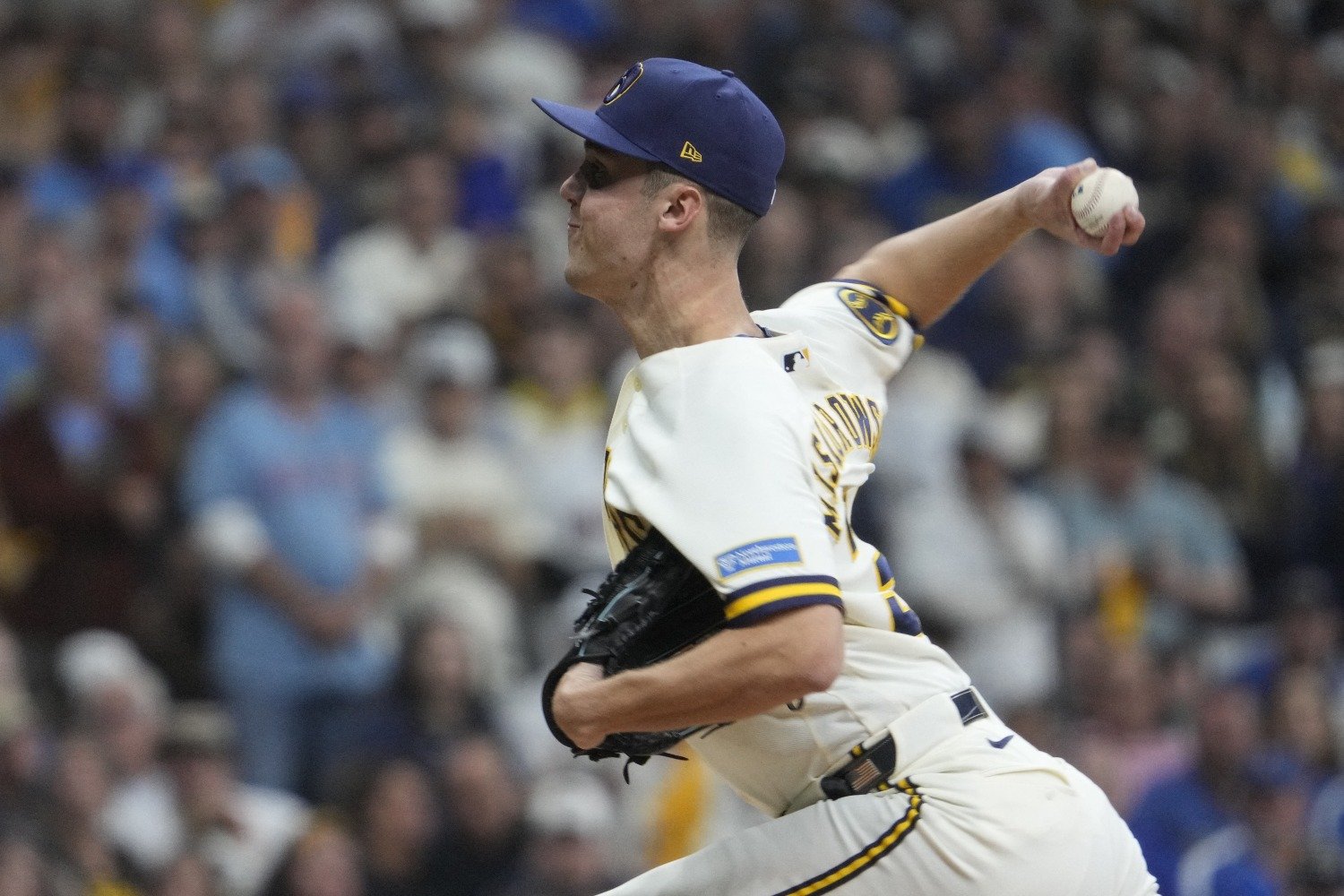 After posting a 1.80 ERA and 3.47 FIP against the Padres in the NLDS, the Brewers' pitching staff faces a more daunting assignment against the Dodgers in a rematch of last year's NLCS. That, at least, is how it looks at first glance. The Padres were a capable offense, finishing the regular season with a 102 wRC+, but the Dodgers' 111 wRC+ ranked second in baseball. Season-long numbers can be misleading for projecting a playoff series, though. The Padres entered October hot, ranking second with a 119 wRC+ in the second half. The Dodgers will make the Brewers work for every out, but the Padres already did that for most of the NLDS. In that sense, Los Angeles won't be a new challenge. It won't be from a matchup-specific perspective, either. During that second-half surge, the Padres led the league with a .358 xwOBA and 0.57 runs per 100 pitches against fastballs. The Brewers' pitching coaches prioritize fastballs because they're easiest to throw for strikes; no team has thrown fastballs with a higher percentage of their total offerings since 2023. Facing a team that was crushing fastballs, the Brewers stuck to their approach. After throwing fastballs 66.4% of the time in the regular season, they threw them 64.9% of the time in the NLDS. It worked swimmingly, as the Padres managed just a .294 wOBA against those heaters. They face a similar matchup against the Dodgers, who were easily the best fastball hitters in baseball this year. Even during a second-half dropoff, their .356 wOBA against heaters trailed only the Padres. Team FB wOBA FB xwOBA FB Run Value/100 Dodgers .363 .370 0.397 Cubs .355 .346 0.306 Brewers .361 .350 0.201 Rockies .353 .340 0.152 Tigers .352 .360 0.141 If the NLDS was any indication, the Brewers won't back down from throwing fastballs to fastball hitters. "By executing pitches, that stops offenses," Pat Murphy said before a team workout on Saturday afternoon. "We're still going to pitch to our strengths, and we're going to try to go—it's like any other fight. It's like, styles matter, but we can only do what we can do." Leaning on each pitcher's strengths is the correct starting point. The Brewers boast some of baseball's best fastballs. Jacob Misiorowski's four-seamer led all pitches in run value this year, and Logan Henderson's four-seamer was 19th. They also have plenty of excellent secondary pitches, which means they have room to maximize matchups by using velocity more strategically. Here's how the hitters the Brewers are most likely to see in the NLCS fared against different pitch types from right-handed pitchers (minimum 80 pitches per pitch type), measured with expected wOBA: body { font-family: Arial, Helvetica, sans-serif; margin: 0; padding: 10px; } table { border-collapse: collapse; font-size: 20px; color: #000; white-space: nowrap; } th, td { border: 1px solid #d0d0d0; padding: 4px 8px; height: 22px; font-weight: normal; text-align: center; } /* Bold header row */ th { font-weight: bold; background-color: #fff; text-align: center; } /* Column widths */ th:first-child, td:first-child { min-width: 165px; } th:nth-child(2), td:nth-child(2) { min-width: 35px; } th:not(:first-child):not(:nth-child(2)), td:not(:first-child):not(:nth-child(2)) { min-width: 135px; } /* Green heatmap */ .g1 { background-color: #edf6f2; } .g2 { background-color: #d4ebe1; } .g3 { background-color: #b7e1d0; } .g4 { background-color: #9bd5bc; } .g5 { background-color: #7bc9a6; } .g6 { background-color: #57b98d; } /* Red heatmap */ .r1 { background-color: #fce2e2; } .r2 { background-color: #fbcaca; } .r3 { background-color: #f9a1a1; } .r4 { background-color: #fa7777; } .r5 { background-color: #ff0000; } /* Force every empty data cell to gray */ td.empty, td:empty { background: #d3d3d3 !important; } /* Neutral cell with a value */ .n { background-color: #fff; } Hitter Side Four-Seam FB Sinker Cutter Curveball Slider Sweeper Changeup Splitter Mookie Betts R .347 .422 .301 .271 .376 Tommy Edman L .254 .372 .431 .234 .286 .286 Freddie Freeman L .391 .371 .463 .340 .374 .343 .352 Teoscar Hernandez R .353 .344 .313 .275 .136 .405 Max Muncy L .450 .442 .472 .270 .340 .098 .314 .201 Shohei Ohtani L .416 .550 .498 .295 .404 .423 .346 .279 Andy Pages R .296 .339 .436 .270 .319 .396 Miguel Rojas R .316 .288 .278 Dalton Rushing L .341 .343 .419 .464 .285 Will Smith R .507 .487 .591 .280 .271 Kyle Tucker L .350 .429 .370 .347 .301 .263 .269 .234 Here's that same breakdown against left-handed pitchers: body { font-family: Arial, Helvetica, sans-serif; margin: 0; padding: 10px; } table { border-collapse: collapse; font-size: 20px; color: #000; white-space: nowrap; } th, td { border: 1px solid #d0d0d0; padding: 4px 8px; height: 22px; font-weight: normal; text-align: center; } /* Bold header row */ th { font-weight: bold; background-color: #fff; text-align: center; } /* Column widths */ th:first-child, td:first-child { min-width: 165px; } th:nth-child(2), td:nth-child(2) { min-width: 35px; } th:not(:first-child):not(:nth-child(2)), td:not(:first-child):not(:nth-child(2)) { min-width: 135px; } /* Green heatmap */ .g1 { background-color: #edf6f2; } .g2 { background-color: #d4ebe1; } .g3 { background-color: #b7e1d0; } .g4 { background-color: #9bd5bc; } .g5 { background-color: #7bc9a6; } .g6 { background-color: #57b98d; } /* Red heatmap */ .r1 { background-color: #fce2e2; } .r2 { background-color: #fbcaca; } .r3 { background-color: #f9a1a1; } .r4 { background-color: #fa7777; } .r5 { background-color: #ff0000; } /* Gray background for all empty cells */ td.empty, td:empty { background: #d3d3d3 !important; } Hitter Side Four-Seam FB Sinker Cutter Curveball Slider Sweeper Changeup Mookie Betts R .379 .394 .273 .170 .351 Tommy Edman R .259 .103 .277 Freddie Freeman L .304 .328 .469 .311 .209 Teoscar Hernandez R .413 .573 .300 .268 .361 Max Muncy L .386 .341 .310 Shohei Ohtani L .266 .533 .261 .318 .579 Andy Pages R .407 .488 .461 .369 .272 Miguel Rojas R .303 .372 .328 .442 .242 Dalton Rushing L .220 .419 Will Smith R .361 .409 Kyle Tucker L .401 .292 .243 .328 .490 This is an incomplete, imperfect snapshot. Pitch-specific xwOBA only looks at pitches that ended a plate appearance, so it ignores productive takes, called strikes, and whiffs that occur earlier in counts. Still, it's a decent starting point for scouting reports. A few things stand out. Most Dodgers hitters punish sinkers, regardless of pitcher handedness. That shouldn't preclude some of the Brewers' best sinkerballers (Antonio Senzatela, Abner Uribe, Aaron Ashby) from throwing their primary fastballs, but their multi-fastball guys (Robert Gasser, Shane Drohan, Dustin May, Chad Patrick) may want to lean toward other pitches. On the flip side, many Los Angeles hitters struggle against short sliders. That means Drohan and DL Hall could play big roles in the series. Uribe has also gone more slider-heavy in certain matchups over the last two years, and this could be one of them. To advance to their first World Series since 1982, the Brewers must beat the Dodgers with their best on both sides of the ball. Misiorowski shouldn't suddenly become a junkballer, and the relievers behind him shouldn't pitch scared. But when the Brewers have the arsenal to adapt, they should consider mixing things up if the Dodgers' swings call for more secondaries. "We can't worry about changing what we do," Murphy said. "We just have to go in and be a little better at the things we do."
-
- 1
-
-
- shane drohan
- dl hall
- (and 3 more)
-
Bend, Don't Break: Brewers Held the Line in San Diego to Advance to NLCS
Jack Stern posted an article in Brewers
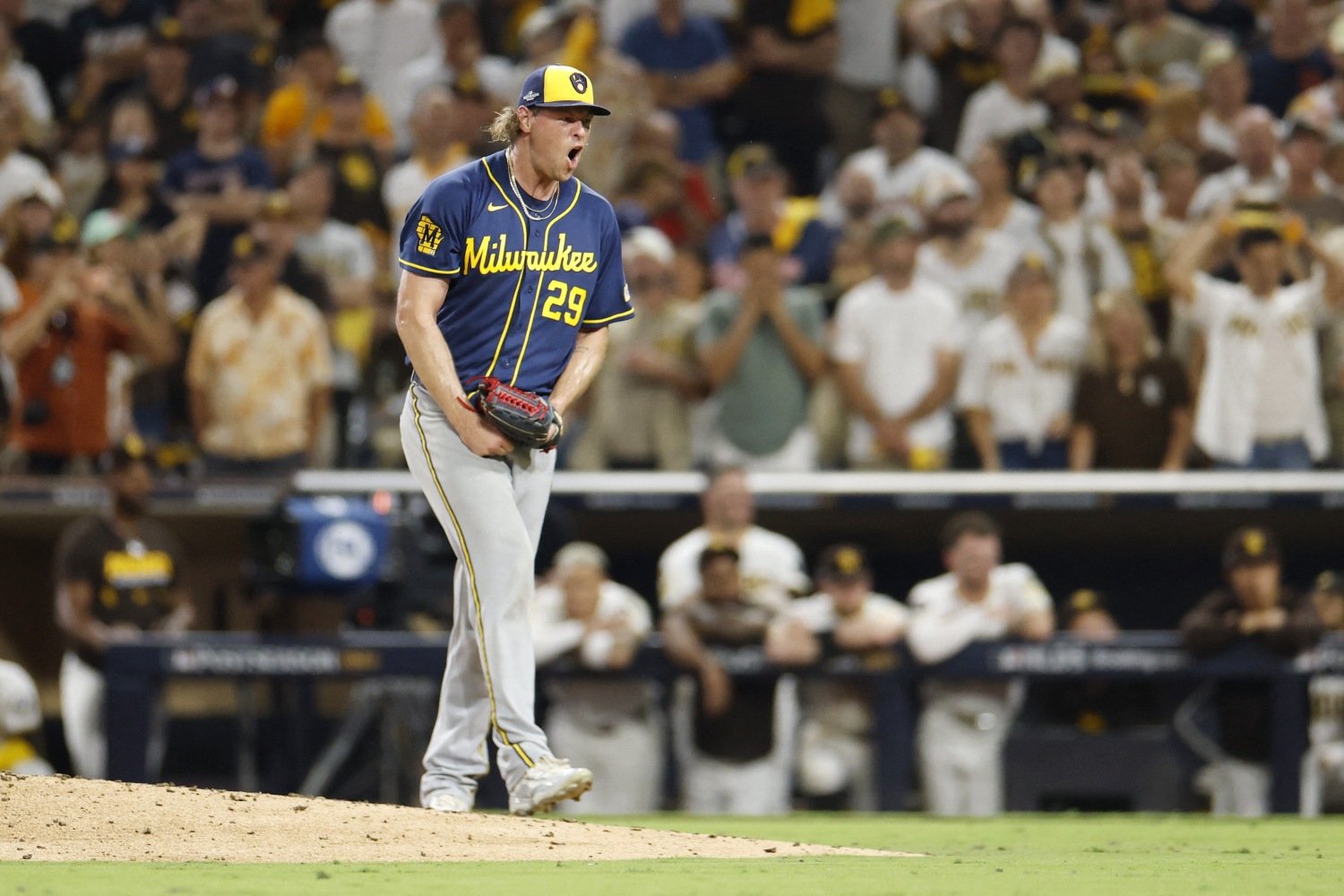 Last week, Jake Bauers reflected candidly on last year's Brewers team, which was swept by the Los Angeles Dodgers in the NLCS. After the best regular season in franchise history and an emotional win over the Chicago Cubs in the NLDS, they looked like shells of themselves in a largely non-competitive series. Once the Dodgers punched first with a Game 1 win, the Brewers looked exhausted and defeated. "When I think back to last year, I think there was an element of maybe a little bit of lack of belief that we could do it, maybe a little too much doubt," Bauers said. "I think going into this postseason, there's a different feeling around the team." The Brewers' offense got away from its strengths in last year's NLCS. Against tough Los Angeles pitching, their hitters stopped responding to adversity and started expanding the strike zone. Bauers felt that would be different this year. "I think we've built a really good team, a really good culture, and I think we believe in each other," he said. "I think we all know that whether one person doesn't get it done, there's someone right behind them that's going to be ready to pick them up. And that's something that we've done all year, and I think that's only added to the confidence." Unlike in last year's NLCS, the Brewers weren't fazed by adversity. Yes, they caught a break on Ty France's redirected flyout off American Family Field's roof in Game 1, but a lot went wrong in a tense NLDS against the San Diego Padres. Jacob Misiorowski and Logan Henderson were not their sharpest. The infield defense was shaky. They made more hard contact (45%) than the Padres (30%), but well-struck outs kept them from building more comfortable leads. Through it all, the Brewers stayed consistent in two ways that ultimately won them the series in four games: they pitched exceptionally, and they stuck to their disciplined approach. Milwaukee pitchers posted a 1.80 ERA and 3.47 FIP in the series to outlast San Diego's vaunted bullpen. Its offense chased just 26% of pitches outside the strike zone and swung at 63% of pitches in the zone, slightly better than their regular-season swing decisions. That consistency amid adversity came to a head in Game 4, where the Brewers held off the Padres to advance to the NLCS. San Diego repeatedly threatened to send the series back to Milwaukee for an elimination game, but while the Brewers bent in multiple key moments, they did not break. Robert Gasser was tested immediately in his first career postseason start. One out into the bottom of the first inning, Jackson Merrill blooped a single and Manny Machado bunted for a hit. Instead of turning an inning-ending double play on a ground ball to third, Joey Ortiz strolled to the base and held onto the ball after retiring the lead runner. His unnecessary caution nearly created a big inning, as Gasser walked Austin Hays to load the bases. Gasser bore down, though, getting ahead to Xander Bogaerts and inducing an inning-ending pop-up with a 0-2 sweeper. He went on to work four innings of one-run ball, keeping the Brewers in the game and allowing them to avoid using their higher-variance relievers in the middle innings. Offensively, the Brewers made some loud contact early against Walker Buehler, without much to show for it. Jackson Chourio and Christian Yelich hit hard groundouts in a scoreless first inning. They scored with nobody out in the third on consecutive singles by Sal Frelick and Garrett Mitchell, but hopes of a big inning were dashed when Ortiz drilled a 108-MPH ground ball right at Bogaerts for a double play. After the Padres tied it on a Fernando Tatis Jr. homer a few minutes later, Frelick smoked a 100-MPH grounder up the middle to a shaded Bogaerts in another unsuccessful scoring situation. The Brewers didn't change their approach, though, staying selective and striking at the right pitches. After Mitchell led off the fifth with a triple, Jackson Chourio muscled a Bradgley Rodriguez sinker into center to score the go-ahead run. They added another on Frelick's sac fly in the sixth. By then, the defense locked back in. Pratt, who committed his third error of the series an inning earlier, robbed Tatis of a single with a diving stop in the fifth to help Aaron Ashby through his first of three scoreless innings. In the eighth, a shaky Abner Uribe nearly allowed a game-tying home run to Manny Machado, but Garrett Mitchell reached over the short wall in center to bring it back for the second out. Brice Turang then called off Jake Bauers to snag an inning-ending pop-up on the run in foul territory. Trevor Megill slammed the door with a perfect ninth. The Brewers weren't their best. The Padres made them work for nearly every out and nearly every run. They hardly seemed fazed, which should serve them well in an NLCS rematch with the Dodgers. By winning the series in four games, they'll get three days off to recharge for the series instead of last year's one-day break after the Cubs series. After Megill struck out Gavin Sheets to end the series, the Brewers lined up and shook hands in a subdued celebration similar to a regular-season win. It was another reflection of how their standards and expectations have grown. They still face real challenges and concerns in reaching their first World Series since 1982, but this team is showing signs of being different than those that fell short before it.
- 6 comments
-
- 2
-
-
- trevor megill
- garrett mitchell
- (and 1 more)
-
Image courtesy of David Frerker-Imagn Images Last week, Jake Bauers reflected candidly on last year's Brewers team, which was swept by the Los Angeles Dodgers in the NLCS. After the best regular season in franchise history and an emotional win over the Chicago Cubs in the NLDS, they looked like shells of themselves in a largely non-competitive series. Once the Dodgers punched first with a Game 1 win, the Brewers looked exhausted and defeated. "When I think back to last year, I think there was an element of maybe a little bit of lack of belief that we could do it, maybe a little too much doubt," Bauers said. "I think going into this postseason, there's a different feeling around the team." The Brewers' offense got away from its strengths in last year's NLCS. Against tough Los Angeles pitching, their hitters stopped responding to adversity and started expanding the strike zone. Bauers felt that would be different this year. "I think we've built a really good team, a really good culture, and I think we believe in each other," he said. "I think we all know that whether one person doesn't get it done, there's someone right behind them that's going to be ready to pick them up. And that's something that we've done all year, and I think that's only added to the confidence." Unlike in last year's NLCS, the Brewers weren't fazed by adversity. Yes, they caught a break on Ty France's redirected flyout off American Family Field's roof in Game 1, but a lot went wrong in a tense NLDS against the San Diego Padres. Jacob Misiorowski and Logan Henderson were not their sharpest. The infield defense was shaky. They made more hard contact (45%) than the Padres (30%), but well-struck outs kept them from building more comfortable leads. Through it all, the Brewers stayed consistent in two ways that ultimately won them the series in four games: they pitched exceptionally, and they stuck to their disciplined approach. Milwaukee pitchers posted a 1.80 ERA and 3.47 FIP in the series to outlast San Diego's vaunted bullpen. Its offense chased just 26% of pitches outside the strike zone and swung at 63% of pitches in the zone, slightly better than their regular-season swing decisions. That consistency amid adversity came to a head in Game 4, where the Brewers held off the Padres to advance to the NLCS. San Diego repeatedly threatened to send the series back to Milwaukee for an elimination game, but while the Brewers bent in multiple key moments, they did not break. Robert Gasser was tested immediately in his first career postseason start. One out into the bottom of the first inning, Jackson Merrill blooped a single and Manny Machado bunted for a hit. Instead of turning an inning-ending double play on a ground ball to third, Joey Ortiz strolled to the base and held onto the ball after retiring the lead runner. His unnecessary caution nearly created a big inning, as Gasser walked Austin Hays to load the bases. Gasser bore down, though, getting ahead to Xander Bogaerts and inducing an inning-ending pop-up with a 0-2 sweeper. He went on to work four innings of one-run ball, keeping the Brewers in the game and allowing them to avoid using their higher-variance relievers in the middle innings. Offensively, the Brewers made some loud contact early against Walker Buehler, without much to show for it. Jackson Chourio and Christian Yelich hit hard groundouts in a scoreless first inning. They scored with nobody out in the third on consecutive singles by Sal Frelick and Garrett Mitchell, but hopes of a big inning were dashed when Ortiz drilled a 108-MPH ground ball right at Bogaerts for a double play. After the Padres tied it on a Fernando Tatis Jr. homer a few minutes later, Frelick smoked a 100-MPH grounder up the middle to a shaded Bogaerts in another unsuccessful scoring situation. The Brewers didn't change their approach, though, staying selective and striking at the right pitches. After Mitchell led off the fifth with a triple, Jackson Chourio muscled a Bradgley Rodriguez sinker into center to score the go-ahead run. They added another on Frelick's sac fly in the sixth. By then, the defense locked back in. Pratt, who committed his third error of the series an inning earlier, robbed Tatis of a single with a diving stop in the fifth to help Aaron Ashby through his first of three scoreless innings. In the eighth, a shaky Abner Uribe nearly allowed a game-tying home run to Manny Machado, but Garrett Mitchell reached over the short wall in center to bring it back for the second out. Brice Turang then called off Jake Bauers to snag an inning-ending pop-up on the run in foul territory. Trevor Megill slammed the door with a perfect ninth. The Brewers weren't their best. The Padres made them work for nearly every out and nearly every run. They hardly seemed fazed, which should serve them well in an NLCS rematch with the Dodgers. By winning the series in four games, they'll get three days off to recharge for the series instead of last year's one-day break after the Cubs series. After Megill struck out Gavin Sheets to end the series, the Brewers lined up and shook hands in a subdued celebration similar to a regular-season win. It was another reflection of how their standards and expectations have grown. They still face real challenges and concerns in reaching their first World Series since 1982, but this team is showing signs of being different than those that fell short before it. View full article
-
Image courtesy of Charles LeClaire-Imagn Images Teams rarely roster 13 pitchers in the Division Series. In a five-game series with two travel days, that extra pitcher probably won't be needed, especially if a team gets enough innings from its starters. Carrying an extra catcher, defensive specialist, or speedy runner is a better use of that final spot. The Brewers don't have that luxury. They have a deep pitching staff, but they entered the NLDS without a reliable traditional starter behind Jacob Misiorowski and Logan Henderson. That meant it would be all hands on deck for Games 3 and 4, so the Brewers loaded up on arms. Dustin May got the ball for Game 3 for a (planned) short start. He pitched fine in three-plus innings, but he failed to control the running game and lost control after a pair of run-scoring ground balls. The Brewers could never fully catch up against the Padres' bullpen, forcing a Game 4 wherein that extra depth will come into play. Because they carried 13 pitchers, Milwaukee has more fresh arms than San Diego. Pat Murphy still hasn't used four of them in the series: Robert Gasser, Chad Patrick, Shane Drohan, and Kyle Harrison. That's partly because they were always on the roster to pitch in a potential Game 4 more than anything else, but also because Murphy preferred more trustworthy relievers in three very close games so far. Patrick and Drohan battled wildness in September. Harrison's excellent fastball disappeared for most of the second half before returning in his last couple of outings. Gasser's peripherals didn't fully support his strong stretch run. All four had pronounced platoon splits in the regular season, so the Brewers must use them carefully in short playoff series, where individual matchups matter more. Pitcher wOBA vs. LHB wOBA vs. RHB Robert Gasser .252 .335 Shane Drohan .276 .344 Kyle Harrison .271 .363 Chad Patrick .342 .262 Murphy declined to name a Game 4 starter on Tuesday night, but he mentioned Gasser, Patrick, and Drohan as candidates. Starting Patrick as an opener might make the most sense. In all five of their playoff games, the Padres have started right-handed hitters Fernando Tatis Jr., Manny Machado, and Ty France in three of the top four lineup spots. Opening with a righty reliever would also force Craig Stammen to choose which platoon bats to start in the bottom half of the order. From there, it's a matter of lining up matchups through the middle innings. If Stammen starts his lefties, it could create a pocket for Harrison near the bottom of the lineup. Machado has struggled against lefty sinker-slider pairings like Drohan's. Gasser could get the most runway as a true bulk guy: he has the lowest opposite-hand opponent wOBA, and his four-seamer and cutter have neutralized righties at times. The Brewers should still be fine in the late innings. DL Hall and JoJo Romero may be down after multi-inning outings, but Aaron Ashby and Trevor Megill have had two days off, and Abner Uribe threw just seven pitches in Game 3. Before that, though, expect plenty of mixing and matching with the guys who haven't pitched yet. To prevent the series from returning to Milwaukee for an elimination Game 5, the Brewers need their wild card pitchers to step up. View full article
-
The Wild Cards: Brewers Will Lean on Bullpen Chaos to End NLDS in San Diego
Jack Stern posted an article in Brewers
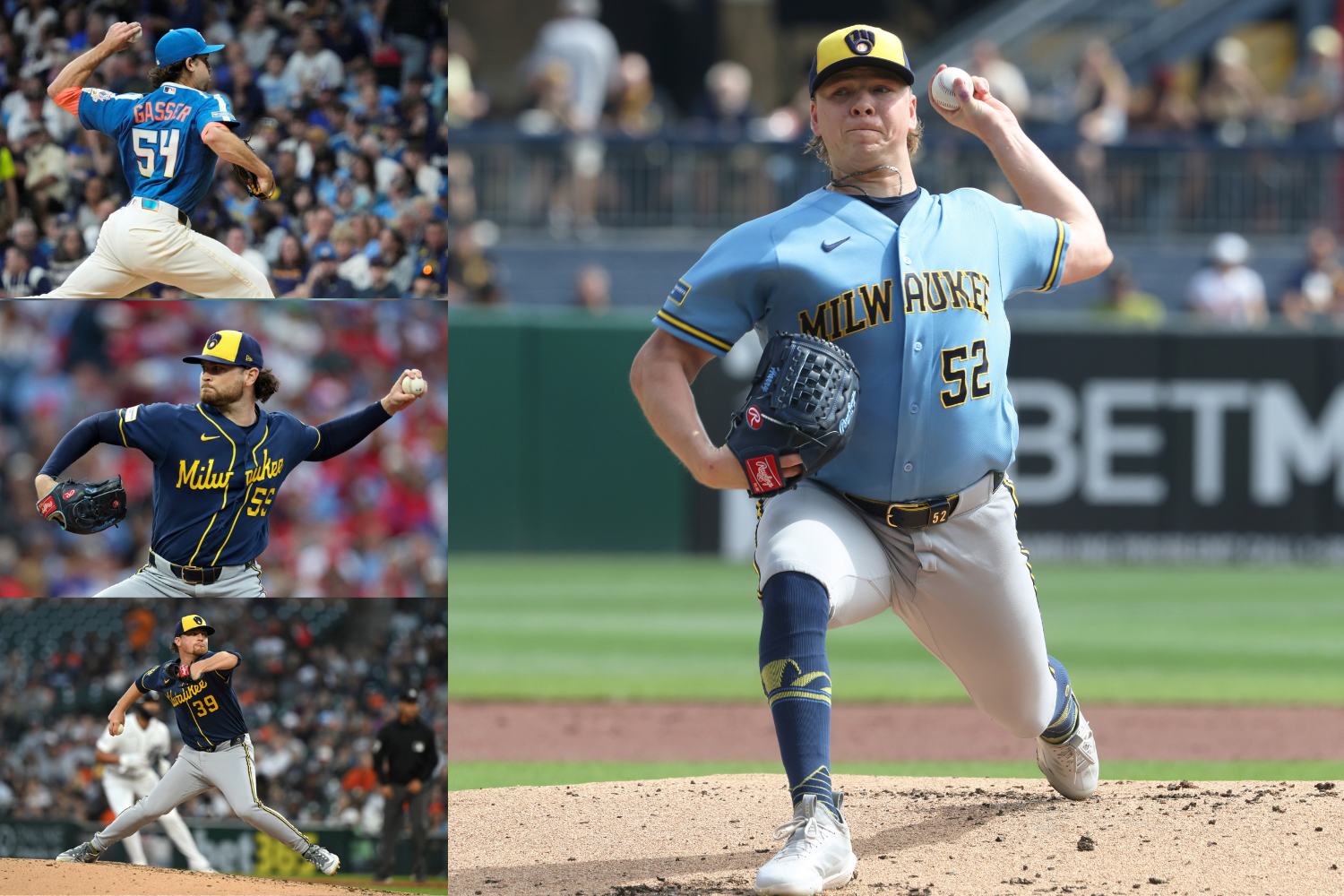 Teams rarely roster 13 pitchers in the Division Series. In a five-game series with two travel days, that extra pitcher probably won't be needed, especially if a team gets enough innings from its starters. Carrying an extra catcher, defensive specialist, or speedy runner is a better use of that final spot. The Brewers don't have that luxury. They have a deep pitching staff, but they entered the NLDS without a reliable traditional starter behind Jacob Misiorowski and Logan Henderson. That meant it would be all hands on deck for Games 3 and 4, so the Brewers loaded up on arms. Dustin May got the ball for Game 3 for a (planned) short start. He pitched fine in three-plus innings, but he failed to control the running game and lost control after a pair of run-scoring ground balls. The Brewers could never fully catch up against the Padres' bullpen, forcing a Game 4 wherein that extra depth will come into play. Because they carried 13 pitchers, Milwaukee has more fresh arms than San Diego. Pat Murphy still hasn't used four of them in the series: Robert Gasser, Chad Patrick, Shane Drohan, and Kyle Harrison. That's partly because they were always on the roster to pitch in a potential Game 4 more than anything else, but also because Murphy preferred more trustworthy relievers in three very close games so far. Patrick and Drohan battled wildness in September. Harrison's excellent fastball disappeared for most of the second half before returning in his last couple of outings. Gasser's peripherals didn't fully support his strong stretch run. All four had pronounced platoon splits in the regular season, so the Brewers must use them carefully in short playoff series, where individual matchups matter more. Pitcher wOBA vs. LHB wOBA vs. RHB Robert Gasser .252 .335 Shane Drohan .276 .344 Kyle Harrison .271 .363 Chad Patrick .342 .262 Murphy declined to name a Game 4 starter on Tuesday night, but he mentioned Gasser, Patrick, and Drohan as candidates. Starting Patrick as an opener might make the most sense. In all five of their playoff games, the Padres have started right-handed hitters Fernando Tatis Jr., Manny Machado, and Ty France in three of the top four lineup spots. Opening with a righty reliever would also force Craig Stammen to choose which platoon bats to start in the bottom half of the order. From there, it's a matter of lining up matchups through the middle innings. If Stammen starts his lefties, it could create a pocket for Harrison near the bottom of the lineup. Machado has struggled against lefty sinker-slider pairings like Drohan's. Gasser could get the most runway as a true bulk guy: he has the lowest opposite-hand opponent wOBA, and his four-seamer and cutter have neutralized righties at times. The Brewers should still be fine in the late innings. DL Hall and JoJo Romero may be down after multi-inning outings, but Aaron Ashby and Trevor Megill have had two days off, and Abner Uribe threw just seven pitches in Game 3. Before that, though, expect plenty of mixing and matching with the guys who haven't pitched yet. To prevent the series from returning to Milwaukee for an elimination Game 5, the Brewers need their wild card pitchers to step up.
- 2 comments
-
- 3
-
-
- chad patrick
- robert gasser
- (and 2 more)
-
Image courtesy of Michael McLoone-Imagn Images Despite being a mostly productive constant on and off the field through the Brewers’ last eight playoff berths, Christian Yelich has largely been a non-factor in the postseason. Entering this October, Yelich was a career .218/.347/.317 playoff hitter (84 OPS+). Despite usually hitting somewhere in the middle of the order, he has gone 74 at-bats without a playoff RBI, last driving in a run with his home run in Game 7 of the 2018 NLCS. That was still a small sample of just 121 postseason plate appearances, though. The real concern, entering the NLDS, was Yelich coming off his worst regular season. He was a below-average hitter for the first time in his career, hitting .235/.315/.378 (91 wRC+). At times, his swing looked stiffer and less adaptable. Even if Yelich is more limited as he enters his mid-30s, that doesn’t mean all of his skills have disappeared. His bat speed is nearly identical to last year, and he still makes sound swing decisions, running the third-lowest chase rate among Milwaukee hitters with at least 400 plate appearances. Pitches over the inner third of the plate became problematic this year, but when Yelich gets one over the middle or the outer third, there’s still enough juice in his bat to drive it. Those tools have helped Yelich start strong this October. He’s reached base three times in the first two games of the NLDS, but more importantly, he’s looked dialed-in from pitch to pitch. Here are all 30 pitches Yelich has seen in the series so far: Those are outstanding swing decisions. Yelich hasn’t offered at much outside the zone, including several near-misses just off the outside corner. Some of his best takes came in his ninth-inning walk on Sunday, the first of three walks against Mason Miller in the Brewers’ walk-off rally against one of baseball’s best closers. Yelich isn’t just getting away with being passive, either. He’s swung at nearly every pitch in the zone that hasn’t been on the corner, and those swings have looked solid. Yelich has put five balls in play so far, and three were well struck. Jackson Chourio and William Contreras have gotten attention for the biggest swings of the series, but Yelich has quietly had some of the best plate appearances. He broke up Michael King’s perfect game with a fifth-inning double in Game 2, then scored Milwaukee’s first run on Sal Frelick’s single. Yelich started turning the gears against Miller a few innings later. He may have sparked an earlier seventh-inning rally, had Jackson Merrill not made a leaping catch near the center-field wall. It’s a microscopic sample, so those positive plate appearances are hardly guaranteed to continue, but they’re worth highlighting. After his regular season, there was a valid argument that Yelich was not one of the nine best hitters worth starting in the Brewers’ playoff lineup. Now, process-wise, he looks like the best version of what he can be at this stage in his career. The Brewers named Yelich the first captain in franchise history during the final weekend of the regular season, but the expectation of driving the offense is now on Chourio, Contreras, Brice Turang, and other younger, more dynamic hitters. That might afford Yelich the freedom he needed this fall. He can still lengthen the lineup as a supporting contributor in the bottom half of the order. The first two games of the NLDS have hinted that this October could be different for the Brewers, and it could be different for him, too. View full article
-
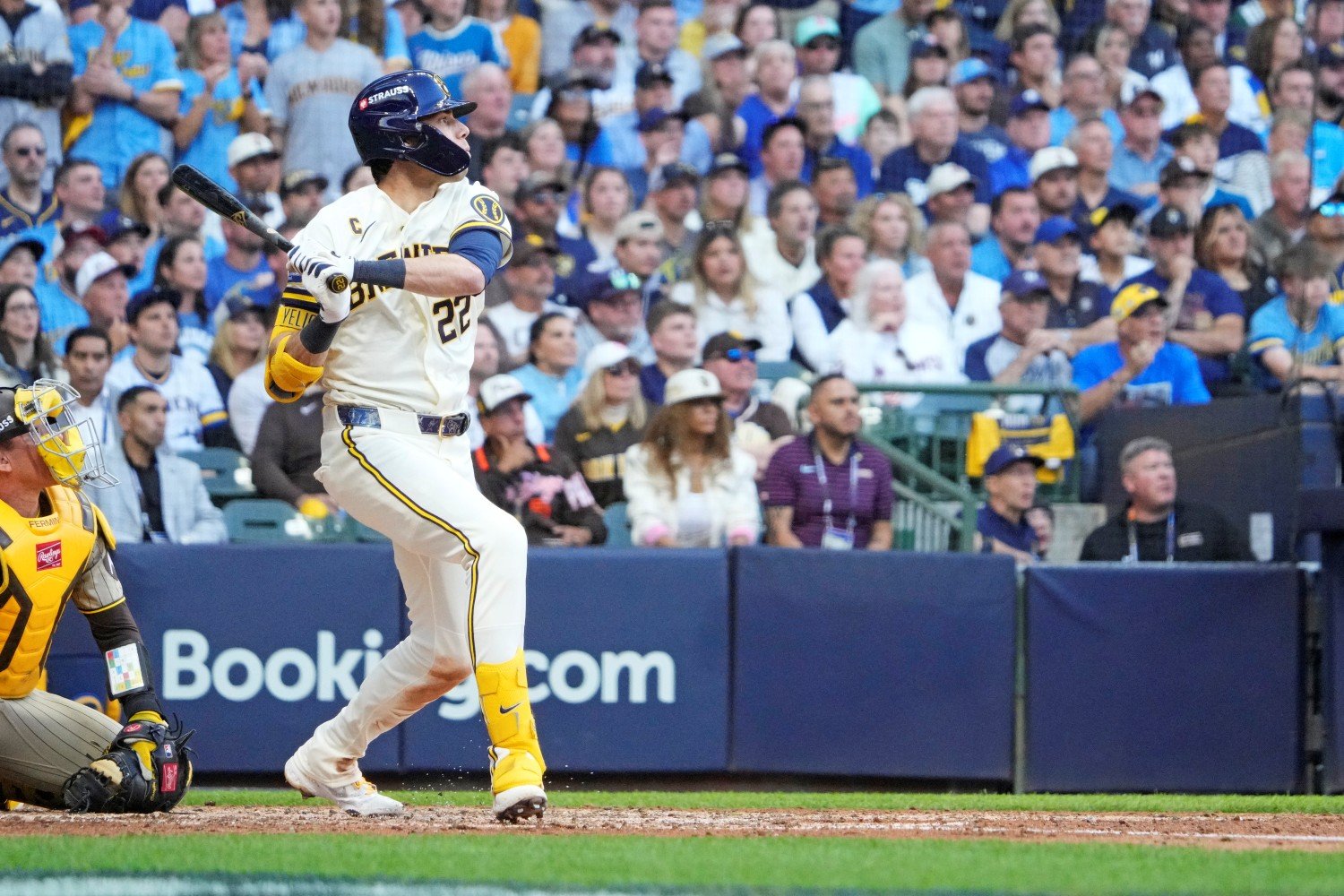 Despite being a mostly productive constant on and off the field through the Brewers’ last eight playoff berths, Christian Yelich has largely been a non-factor in the postseason. Entering this October, Yelich was a career .218/.347/.317 playoff hitter (84 OPS+). Despite usually hitting somewhere in the middle of the order, he has gone 74 at-bats without a playoff RBI, last driving in a run with his home run in Game 7 of the 2018 NLCS. That was still a small sample of just 121 postseason plate appearances, though. The real concern, entering the NLDS, was Yelich coming off his worst regular season. He was a below-average hitter for the first time in his career, hitting .235/.315/.378 (91 wRC+). At times, his swing looked stiffer and less adaptable. Even if Yelich is more limited as he enters his mid-30s, that doesn’t mean all of his skills have disappeared. His bat speed is nearly identical to last year, and he still makes sound swing decisions, running the third-lowest chase rate among Milwaukee hitters with at least 400 plate appearances. Pitches over the inner third of the plate became problematic this year, but when Yelich gets one over the middle or the outer third, there’s still enough juice in his bat to drive it. Those tools have helped Yelich start strong this October. He’s reached base three times in the first two games of the NLDS, but more importantly, he’s looked dialed-in from pitch to pitch. Here are all 30 pitches Yelich has seen in the series so far: Those are outstanding swing decisions. Yelich hasn’t offered at much outside the zone, including several near-misses just off the outside corner. Some of his best takes came in his ninth-inning walk on Sunday, the first of three walks against Mason Miller in the Brewers’ walk-off rally against one of baseball’s best closers. Yelich isn’t just getting away with being passive, either. He’s swung at nearly every pitch in the zone that hasn’t been on the corner, and those swings have looked solid. Yelich has put five balls in play so far, and three were well struck. Jackson Chourio and William Contreras have gotten attention for the biggest swings of the series, but Yelich has quietly had some of the best plate appearances. He broke up Michael King’s perfect game with a fifth-inning double in Game 2, then scored Milwaukee’s first run on Sal Frelick’s single. Yelich started turning the gears against Miller a few innings later. He may have sparked an earlier seventh-inning rally, had Jackson Merrill not made a leaping catch near the center-field wall. It’s a microscopic sample, so those positive plate appearances are hardly guaranteed to continue, but they’re worth highlighting. After his regular season, there was a valid argument that Yelich was not one of the nine best hitters worth starting in the Brewers’ playoff lineup. Now, process-wise, he looks like the best version of what he can be at this stage in his career. The Brewers named Yelich the first captain in franchise history during the final weekend of the regular season, but the expectation of driving the offense is now on Chourio, Contreras, Brice Turang, and other younger, more dynamic hitters. That might afford Yelich the freedom he needed this fall. He can still lengthen the lineup as a supporting contributor in the bottom half of the order. The first two games of the NLDS have hinted that this October could be different for the Brewers, and it could be different for him, too.
 -
Image courtesy of Michael McLoone-Imagn Images The question posed to Pat Murphy before the Brewers' workout on Friday afternoon: to win playoff games, do you have to play in a way that forces the other team away from its strengths, or is excelling at what you do best good enough? "That's the age-old question, right?" Murphy replied. "You got to do what you do well, and you got to understand what the other team can do well and how they're going to attack you, knowing how you play and what you do well. So it's that cat-and-mouse all the time, and you can only try to put yourself in the right positions." The Brewers took a valiant crack at it in Game 1 of the NLDS, making excellent swing decisions against a Padres bullpen known for making hitters chase outside the strike zone. It ultimately took home runs from Jackson Chourio and William Contreras to score just enough in a tense series opener. For most of Game 2, the Padres forced the Brewers away from their strengths and made them look like an entirely different team. Michael King's sequencing was masterful, and his changeup and breaking balls flummoxed a usually disciplined lineup. The Brewers chased 34% of King's pitches outside the zone and took too many fastballs for strikes. Meanwhile, the Padres did what the Brewers usually do, forcing a starter to work for each out for a second straight game. They chased just 18% of the time against Logan Henderson, who settled in after a shaky first two innings to toss five competitive innings in his postseason debut. They also put more balls in play than Milwaukee, who committed three errors and botched a bunt coverage to allow two unearned runs. The Padres looked more like the Brewers than the Brewers—a fundamentally sound team having one of their sloppiest games of the year at the wrong time. "We didn't play special," Murphy said. "When do you see us make four defensive miscues in a game in the infield?" "We feel like we probably didn't play our best, cleanest game," Christian Yelich said. "It happens, though, and you just got to flush it." That ties back to Murphy's answer on Friday. There's value in trying to combat the other team's strengths, but he came back to the same message he preaches daily in the clubhouse: control what you can control, respond to what the game gives you in the moment, and worry about nothing else. "It comes down to being ready pitch-to-pitch and winning more pitches than not. And there's some parts of the game you can't control," Murphy said. "You can't control some parts of the game. And the ones you can control, you try to control, and you stay after it. Don't give up." The Brewers took it pitch by pitch in the late innings. When the Padres unleashed flamethrowing closer Mason Miller in the eighth inning for a six-out save, they knew the assignment. "Just grind, man," Yelich said. "Just find a way to get on [base] there." "Guys like that don't give up multiple hits in innings very often," Sal Frelick said. "He was tasked with six outs today, so we wanted to kind of put the pressure on him." Miller didn't give them opportunities to do that in the eighth, breezing through the heart of the order while throwing six of 12 pitches in the zone. In the ninth, those strikes turned into near misses, and the Brewers refused to bite. With one out, Yelich laid off multiple back-door sliders and drew a five-pitch walk. Frelick never swung as Miller danced around the edges of the zone for another walk. Then Murphy went to the bench, hitting veterans Andrew Vaughn and Gary Sánchez for Cooper Pratt and David Hamilton. Vaughn flied out, but like Frelick, Sánchez didn't swing, working back from a 2-2 count for a third walk. "Honestly, it started with Gary," Frelick said. "When you see a guy like that do that and then pass the bat to Jackson, you kind of start to feel that momentum." Having watched the inning unfold, Chourio stepped into a bases-loaded situation with a game plan: make Miller throw him a fastball for a strike, and be ready when he got it. "Watching those at-bats, I knew he was a little bit erratic," Chourio said through interpreter Daniel de Mondesert. "I knew he was going to come at me with the fastball at some point, so mentally I was just making sure that I was prepared for that." He got it on the first pitch and swung through it. He whiffed on another fastball right down the middle to fall into a 1-2 count. After fighting off a painted heater on the outside corner and laying off a low slider ("An unbelievable take," Yelich said), Chourio timed the next fastball perfectly, drilling a 110-MPH liner up the middle to walk it off. "I think it's probably in the top three of the special moments I've had in my career," Chourio said. "He loves those moments, and he knows how talented he is and what he can do on a baseball field," Yelich said. "He can do anything." Chourio delivered the final punch, but Murphy emphasized that Frelick was the engine of the comeback, from his six-pitch walk to his tight rounding of third base to score the winning run on a hard line drive. "That ball's smashed that Chourio hit," Murphy said, "and cutting that turn the way he did makes a difference in the game." "This is the stuff we take pride in," Frelick said. "This is the stuff that we practice every day in spring training, is cutting the corner at third base and not getting too wide and how much time you lose. It's that attention to detail that is instilled in our culture." To win the series, the Brewers were going to have to get to the Padres' bullpen at least once. They waited out Miller in one of their most disciplined innings of the season. It was an impressive response from a team that has struggled to recover from tough moments in past playoff games, a sign that this year's group is different from the others that fell short in October. Now, Milwaukee heads to San Diego in the driver's seat, one win away from a second straight trip to the NLCS. "They have a belief," Murphy said. "That's what it is. They have a belief." View full article
-
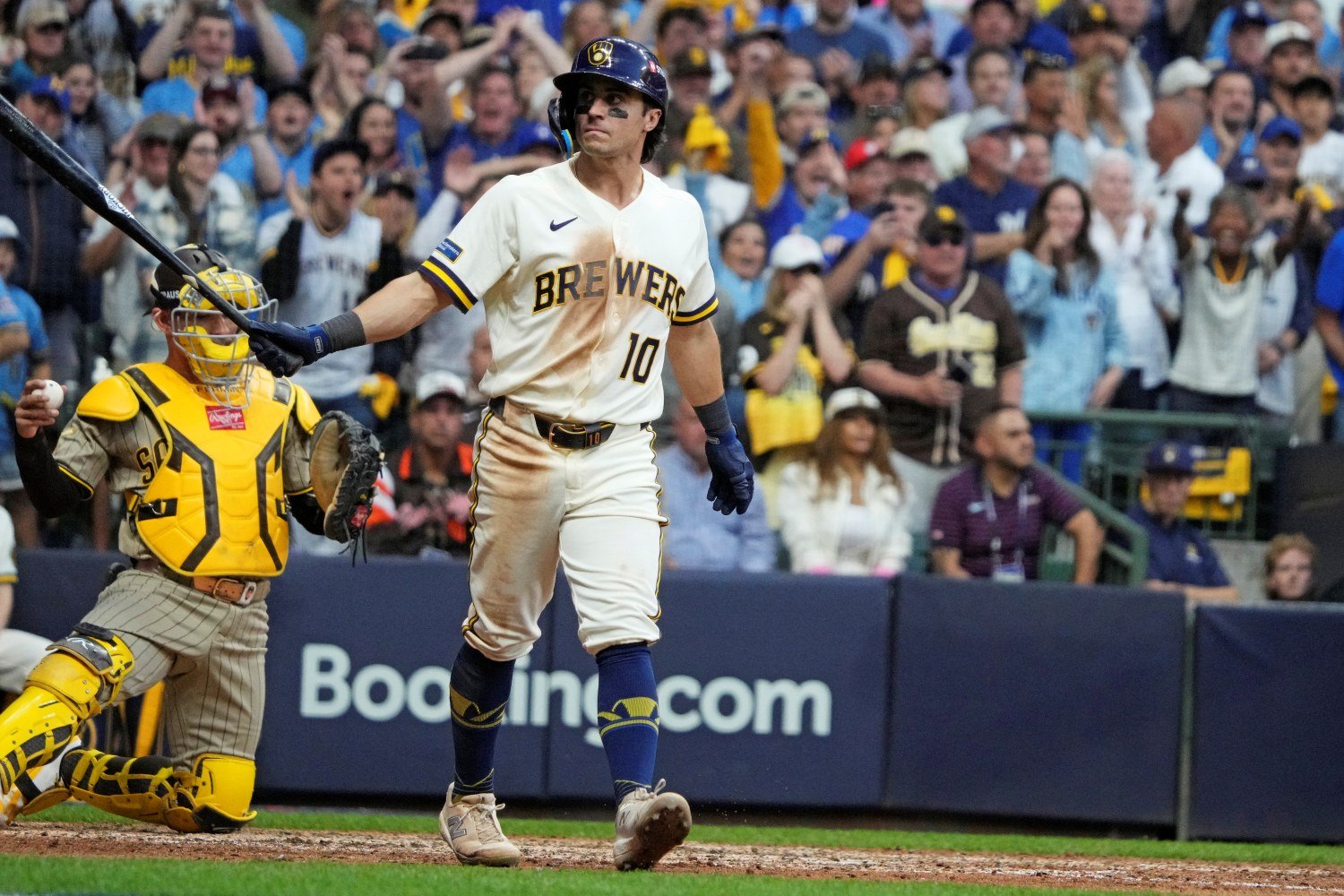 The question posed to Pat Murphy before the Brewers' workout on Friday afternoon: to win playoff games, do you have to play in a way that forces the other team away from its strengths, or is excelling at what you do best good enough? "That's the age-old question, right?" Murphy replied. "You got to do what you do well, and you got to understand what the other team can do well and how they're going to attack you, knowing how you play and what you do well. So it's that cat-and-mouse all the time, and you can only try to put yourself in the right positions." The Brewers took a valiant crack at it in Game 1 of the NLDS, making excellent swing decisions against a Padres bullpen known for making hitters chase outside the strike zone. It ultimately took home runs from Jackson Chourio and William Contreras to score just enough in a tense series opener. For most of Game 2, the Padres forced the Brewers away from their strengths and made them look like an entirely different team. Michael King's sequencing was masterful, and his changeup and breaking balls flummoxed a usually disciplined lineup. The Brewers chased 34% of King's pitches outside the zone and took too many fastballs for strikes. Meanwhile, the Padres did what the Brewers usually do, forcing a starter to work for each out for a second straight game. They chased just 18% of the time against Logan Henderson, who settled in after a shaky first two innings to toss five competitive innings in his postseason debut. They also put more balls in play than Milwaukee, who committed three errors and botched a bunt coverage to allow two unearned runs. The Padres looked more like the Brewers than the Brewers—a fundamentally sound team having one of their sloppiest games of the year at the wrong time. "We didn't play special," Murphy said. "When do you see us make four defensive miscues in a game in the infield?" "We feel like we probably didn't play our best, cleanest game," Christian Yelich said. "It happens, though, and you just got to flush it." That ties back to Murphy's answer on Friday. There's value in trying to combat the other team's strengths, but he came back to the same message he preaches daily in the clubhouse: control what you can control, respond to what the game gives you in the moment, and worry about nothing else. "It comes down to being ready pitch-to-pitch and winning more pitches than not. And there's some parts of the game you can't control," Murphy said. "You can't control some parts of the game. And the ones you can control, you try to control, and you stay after it. Don't give up." The Brewers took it pitch by pitch in the late innings. When the Padres unleashed flamethrowing closer Mason Miller in the eighth inning for a six-out save, they knew the assignment. "Just grind, man," Yelich said. "Just find a way to get on [base] there." "Guys like that don't give up multiple hits in innings very often," Sal Frelick said. "He was tasked with six outs today, so we wanted to kind of put the pressure on him." Miller didn't give them opportunities to do that in the eighth, breezing through the heart of the order while throwing six of 12 pitches in the zone. In the ninth, those strikes turned into near misses, and the Brewers refused to bite. With one out, Yelich laid off multiple back-door sliders and drew a five-pitch walk. Frelick never swung as Miller danced around the edges of the zone for another walk. Then Murphy went to the bench, hitting veterans Andrew Vaughn and Gary Sánchez for Cooper Pratt and David Hamilton. Vaughn flied out, but like Frelick, Sánchez didn't swing, working back from a 2-2 count for a third walk. "Honestly, it started with Gary," Frelick said. "When you see a guy like that do that and then pass the bat to Jackson, you kind of start to feel that momentum." Having watched the inning unfold, Chourio stepped into a bases-loaded situation with a game plan: make Miller throw him a fastball for a strike, and be ready when he got it. "Watching those at-bats, I knew he was a little bit erratic," Chourio said through interpreter Daniel de Mondesert. "I knew he was going to come at me with the fastball at some point, so mentally I was just making sure that I was prepared for that." He got it on the first pitch and swung through it. He whiffed on another fastball right down the middle to fall into a 1-2 count. After fighting off a painted heater on the outside corner and laying off a low slider ("An unbelievable take," Yelich said), Chourio timed the next fastball perfectly, drilling a 110-MPH liner up the middle to walk it off. "I think it's probably in the top three of the special moments I've had in my career," Chourio said. "He loves those moments, and he knows how talented he is and what he can do on a baseball field," Yelich said. "He can do anything." Chourio delivered the final punch, but Murphy emphasized that Frelick was the engine of the comeback, from his six-pitch walk to his tight rounding of third base to score the winning run on a hard line drive. "That ball's smashed that Chourio hit," Murphy said, "and cutting that turn the way he did makes a difference in the game." "This is the stuff we take pride in," Frelick said. "This is the stuff that we practice every day in spring training, is cutting the corner at third base and not getting too wide and how much time you lose. It's that attention to detail that is instilled in our culture." To win the series, the Brewers were going to have to get to the Padres' bullpen at least once. They waited out Miller in one of their most disciplined innings of the season. It was an impressive response from a team that has struggled to recover from tough moments in past playoff games, a sign that this year's group is different from the others that fell short in October. Now, Milwaukee heads to San Diego in the driver's seat, one win away from a second straight trip to the NLCS. "They have a belief," Murphy said. "That's what it is. They have a belief."
- 2 comments
-
- 2
-
-
- jackson chourio
- christian yelich
- (and 1 more)
-
It Wasn't Pretty, But Brewers Did What They Needed to Do in NLDS Game 1 Win
Jack Stern posted an article in Brewers
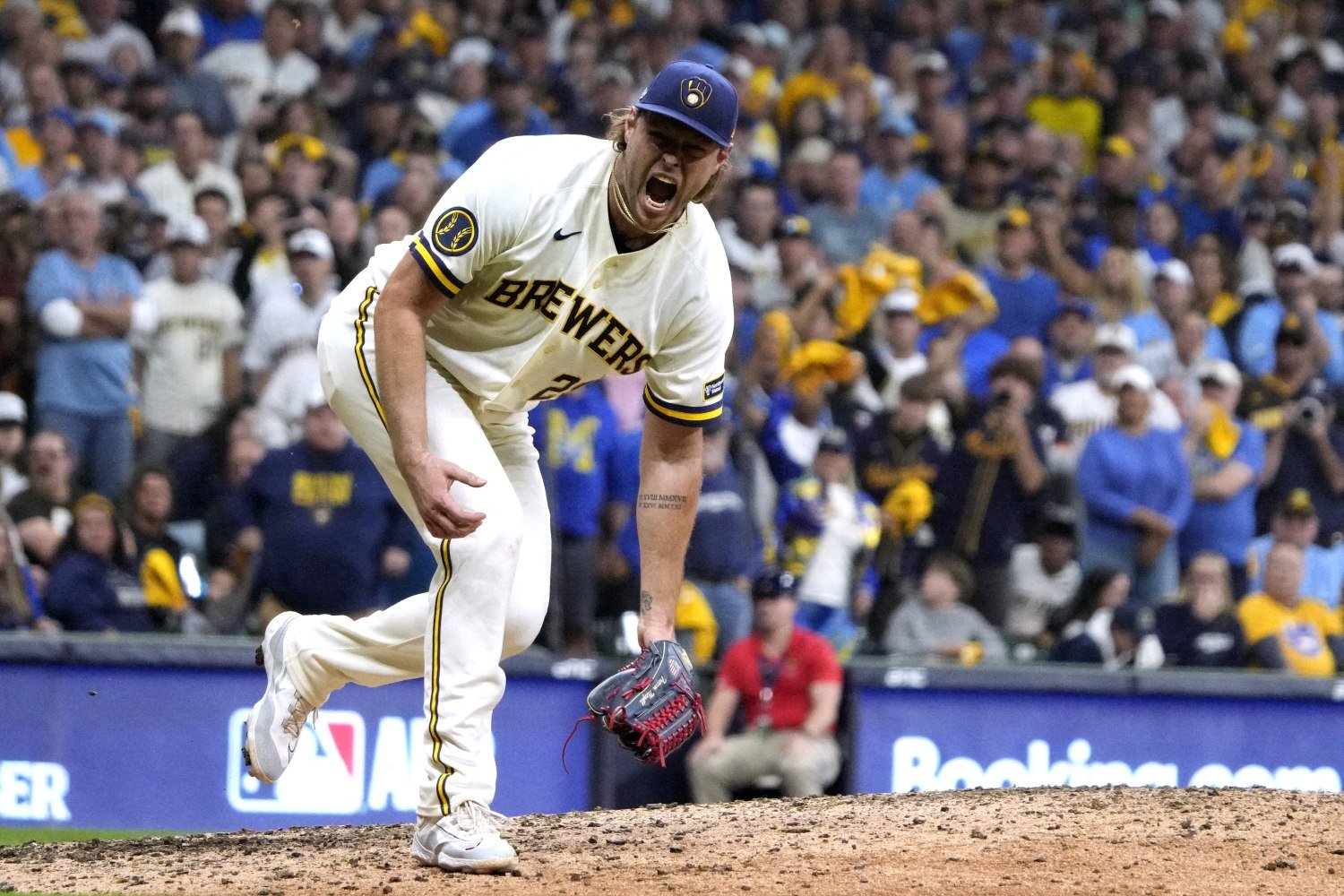 It sounds dramatic to call a non-elimination game a must-win, but for the Brewers, a Game 1 win in the NLDS was as close as you can get. Generally speaking, the first game sets leverage for the rest of the series; under MLB's current playoff format, the team that wins Game 1 of the Division Series has won the series more than 70% of the time. In this matchup, even more leverage was at stake. Milwaukee will face Michael King and Nick Pivetta, the Padres' two best starting pitchers, in Games 2 and 3. The latter will be at a rowdy Petco Park, where the Brewers must piece together two bullpen games with some combination of Robert Gasser, Dustin May, Shane Drohan, and Kyle Harrison. Gasser finished his season strong, but with middling peripherals. May, Drohan, and Harrison all struggled in September and lost full-time rotation spots. The Game 1 matchup, meanwhile, firmly favored the Brewers: soon-to-be NL Cy Young Award winner Jacob Misiorowski against back-of-the-rotation veteran Robbie Ray. It was their opportunity to set the tone and give themselves room for error in those San Diego games. Instead, things went haywire from the get-go. Misiorowski couldn't control his fastball, and the Padres worked him for 25 pitches in a scoreless first inning. Ray retired the side in order on seven pitches, sending Misiorowski right back to the mound. With Misiorowski's fastball command faltering, William Contreras faced the challenging job of calling the right pitches to rein him back in. When his fastball sails up and arm-side, as it was on Saturday, the cutter becomes his most consistent in-zone pitch, because it forces him to work through the ball to his glove side. But there's a fine line between the cutter being a valuable fallback fastball and the worst pitch to throw in a given sequence. When hitters are late on triple digits, they're right on time for 95- to 97-MPH cutters. Misiorowski's fastball wasn't overpowering the Padres—they whiffed just four times on 28 swings against it—but they weren't timing it up, either. Most of their foul balls were late swings. Timing-wise, cutters were not the right call during a three-batter sequence in the second inning. With one out, Xander Bogaerts reached on a hard ground ball in the hole that Cooper Pratt knocked down for an infield single. After Ethan Salas whiffed late on a first-pitch fastball down the middle, Contreras called a cutter on the next pitch. Even though it was below the zone, Salas drilled it up the middle for another hit. After Luis Campusano took a fastball for strike one, Contreras called another cutter, and Campusano singled down the right-field line. The Padres had an early lead, in a game where the Brewers were positioned to strike first. "In the second inning, his heater wasn't a strike very often. He was missing his spots, and they felt they had to go to offspeed," Pat Murphy said. "After you see the [hit], 'Why didn't you just throw a fastball at 103?' But they weren't feeling good—[Contreras] and Miz himself—they weren't feeling good about the heater command after the first inning." After a mound visit from Chris Hook, Contreras and Misiorowski committed to the fastball, throwing it 77% of the time in the third and fourth innings. He threw one more cutter, but the rest of his secondary pitches were curveballs. Misiorowski faced the minimum over those final two innings before the Brewers went to the bullpen. "We're trying to battle them, and they were fouling **** off," Misiorowski said. "You've kind of got to make an adjustment and try to go soft, and they're fouling soft off. You kind of just do something until it sticks, and that was the curveball and heater." Meanwhile, Jackson Chourio resumed his postseason heroics with a game-tying home run off Ray in the bottom of the third. The Brewers loaded the bases with two walks and a bloop single after that, but Christian Yelich and Cooper Pratt failed to drive those runners in. That kicked off a three-inning stretch where Milwaukee had traffic but couldn't score. It wasn't a lack of effort or poor process. The Brewers had the same strong at-bats they usually do, making sound swing decisions and forcing the Padres to make plays. Murphy said a few hitters were "a little jittery," but the offense chased just 24% of pitches outside the zone and swung at 72% of pitches in the zone, both even better than its season averages. That approach scored the second-most runs in baseball during the regular season. On Saturday night, it wasn't working. The Brewers just ran into a buzzsaw Padres bullpen and a few loud outs, including six outs with exit velocities of at least 100 MPH. "You've got to understand who we faced," Murphy said. "That bullpen is recognized as the best in the game, if not one of them." Like last year, this is the concern shrouding the Brewers' brand of offense in October: does waiting out pitchers and stringing together hits work against the game's best arms in a short series? If not, Milwaukee, who ranked 29th in home runs, must hit for enough power to change games with a couple of swings. Their very first postseason game played out that way. The Brewers needed another home run, and they got it in the seventh. William Contreras worked Morejon into a 3-1 count, then launched a 3-2 sinker over the outer third of the plate to right-center to give the Brewers a 3-2 lead. "[The home runs] were helpful," Murphy said. "We'll take them." "There's a lot of people in the public opinion that think that we're not able to connect with the big hits, with the homers," Contreras said. "I like that today that's how the game shook out, and we were able to win like that. We were able to show that we were able to play that game, as well." Some of that tough batted-ball luck swung back the Brewers' way in the ninth. With the tying run on first base against Trevor Megill, Ty France's loud fly ball hit one of the cables hanging from American Family Field's roof and deflected down to Chourio, who caught it for the second out. Jackson Merrill then ripped a 109-MPH lineout to Luis Lara to end it. France's fly ball almost certainly wasn't clearing the fence in fair territory without the deflection. In the Statcast era (since 2015), just one batted ball with a launch angle of at least 49° and exit velocity between 105 and 106 MPH—how France hit his ball—has been a home run. He hit it too high. Both Murphy and Chourio believe it was tailing foul, meaning the cable denied France another swing against Megill. "A hitter that talented, they would have liked to have that hitter back up there with another strike," Murphy said. The Brewers' path to their first World Series becomes clearer if they win Misiorowski's starts and hit with timely power. They did both on Saturday night. The Padres took a bite out of Milwaukee in the process, forcing them to use five relievers behind Misiorowski, but that's inconsequential compared to the importance of a Game 1 Brewers win. It wasn't easy, but they gained the series leverage they needed.
- 3 comments
-
- 1
-
-
- jackson chourio
- 2026 postseason
- (and 4 more)

