



Telemachus Rafaelidys
-
Posts
88 -
Joined
-
Last visited
Content Type
Profiles
Forums
Blogs
Events
News
2026 Milwaukee Brewers Top Prospects Ranking
Milwaukee Brewers Videos
2022 Milwaukee Brewers Draft Picks
Milwaukee Brewers Free Agent & Trade Rumors, Notes, & Tidbits
Guides & Resources
2023 Milwaukee Brewers Draft Picks
2024 Milwaukee Brewers Draft Picks
The Milwaukee Brewers Players Project
2025 Milwaukee Brewers Draft Pick Tracker
2026 Milwaukee Brewers Draft Tracker: Picks & Bonuses
Store
Downloads
Gallery
Everything posted by Telemachus Rafaelidys
-
Image courtesy of BrewerFanatic Brewers Affiliates Post 3-1 Day but Disappoint in Double-A Showcase vs Cubs. Tyson Hardin Leaves Early for Nashville, Bitonti and the T-Rats Mash while the Warbirds Run Wild Transaction: LHP Robert Gasser optioned, assigned to Nashville Sounds Pre-game media notes Nashville 6, Charlotte (White Sox) 3 Box Score & Game Log Four-Run Seventh Leads Sounds to Even Series - Miller earns his first career Triple-A multi-hit game Tyson Hardin took a ground ball deflection in the first inning and left the game after three innings. No updates as yet. Nashville’s offense kept the bases juiced with nine hits and ten walks scattered throughout the lineup. Luke Adams went 1-3, with two walks, two runs and his fifth stolen base of the season. The Sounds tied the game 1-1 in the 2nd on Ethan Murray's bases-loaded walk. Eduardo Garcia followed that with an RBI single to left, but Darrien Miller was thrown out at the plate for the 2nd out of the inning on the play. Eddys Leonard hit his eleventh home run of the season for his only hit in five trips to the plate. It came in the top of the 7th, a nice response as Charlotte had just tied the game at 2-2. Later in the 7th, Miller's second hit of the game drove in Luke Adams, then -- Tyler Black extended his on-base streak to 18 games with a hit in four at-bats and his 16th stolen base. There are four additional videos available here (all dated 7/8) from a Charlotte perspective. We don't see the very first batter of the game, it was a 94.6 MPH grounder that deflected off of Hardin. The MiLB.TV archive for subscribers shows the ball catching the back or side of Hardin's calf just above the ankle (01:08:00 hour/minute mark) before deflecting to Brock Wilken at third base, batter reached. They don't show it on screen, but the Charlotte announcers indicated Hardin slammed his glove down in frustration and they also mentioned it was the third consecutive start that he's been nailed by a comebacker. Pre-game media notes Knoxville 9 (Cubs), Biloxi 6 Box Score & Game Log Hurtubise Has 3-RBI Night in Shuckers Loss to Smokies - Biloxi Drops Back-to-Back Games to Knoxville In MiLB’s featured game of the day, the Brewers top prospects were held in check as Jesus Made, Andrew Fischer, Blake Burke and Josh Adamczewski all went hitless, though Adamczewski extended his perfect Double-A on-base streak to seventeen games with three walks. Jacob Hurtubise and Mike Boeve carried the load on offense, with four of the team's six hits in the game. Early action: Got closer in the three-run 7th -- While he didn’t get a hit, Burke walked and then stole his 18th and 19th bases of the season and is now just one steal and one home run away from the Shuckers first 20/20 season since Jackson Chourio played for Biloxi in 2023. Jesuis Broca pitched an inning of relief with no runs allowed and two strikeouts. There are seven videos detailing the Charlotte attack available here. Pre-game media notes Wisconsin 14, Beloit (Marlins) 4 Box Score & Game Log Rattlers Batter Beloit - Bitonti bombs two homers as Wisconsin moves back into first place A day after mustering only five hits, the home team mashed 16 including four home runs. Eric Bitonti busted out of a mini slump with a 3-4 game, 2 home runs, 3 RBI and 4 runs scored effort. Bitonti now has 14 home runs on the season. Daniel Dickenson and Tayden Hall both hit home runs and two hits apiece. Leading off, Marco Dinges went 2-5. Centerfielder Tyler Rodriguez went 3-3 with his first double with the T-Rats and is now hitting .414 through his eight games in High-A. Starter Daniel Corniel pitched a tidy four innings in 66 pitches with three strikeouts, while allowing 2 hits, 2 walks and one run. Enjoy the Postgame Podcast with Manager Nick Stanley, Tanner Perry, Tayden Hall, & Eric Bitonti Pre-game media notes Wilson 6, Fayetteville (Astros) 4 Box Score & Game Log Warbirds Stifle Late Fayetteville Rally - Martinez Homer Seals Game Juan Martinez, recently called up from Arizona, hit his first home run with the Warbirds, a solo shot in the eighth inning. Brady Ebel went 1-3 with a walk as he continues to get on base at an elite - above .400 rate. Ebel was a menace on the base paths all game and stole his 25th base of the season and scored two runs but was also caught attempting to steal home plate. As a team the Warbirds stole three bases but were caught four times, twice by Filippo Di Turi. Handelfry Encarnacion stayed hot with a 2-4 effort out of the leadoff spot, including a double. Rylan Mills and Juan Ortuno each had two hits as well. Juan Ortuno singles on a line drive to right to plate the first run for Wilson Handelfry Encarnacion RBI single for a 2-1 lead in the 2nd Ortuno lines a double to left to break a 2-2 tie in the 5th Starter Jacob Morrison threw 60 pitches, covering 3.1 innings, striking out 4, while allowing 2 hits, no walks and 1 run. Thursday's scoreboard linked below shows that the schedule jumps from four to seven games as all three rookie level clubs return to action. Organizational Scoreboard including starting pitcher info, game times, MiLB TV links, and box scores Current Milwaukee Brewers Organization Batting Stats and Depth Current Milwaukee Brewers Organization Pitching Stats and Depth View full article
-
 Transactions: - RHP Carlos Rodriguez sent on rehab assignment to ACL Brewers - RHP Wenderlyn King activated from ACL Brewers’ 60-day injured list - INF Moises Polanco activated from ACL Brewers’ 7-day injured list Nashville pre-game media notes Jacksonville (Marlins) 1, Nashville 0 Box Score & Game Log Hot Chickens Blanked in Loss to Jacksonville - Yoho Extends Streak to 20.2 Innings Pitched Without Allowing an Earned Run Nashville looked more like Cold Chickens tonight, mustering only five singles in the game and suffering their first home shutout of the season. Luis Lara went 1-4 and stole his 22nd base of the season. Easton McGee and a host of Brewers relievers kept Jacksonville off the board after the one run starter Gerson Garabito gave up over the first three innings. Tyson Hardin will start tomorrow’s final game as the Hot Chickens. Completion of Wednesday's Suspended Game: Chattanooga (Reds) 14, Biloxi 9 Box Score & Game Log Regularly Scheduled Game: Biloxi 6, Chattanooga 5, seven innings as scheduled Box Score & Game Log New Shuckers Dazzle in Double Header Split - Adamczewski, Fischer, Ragsdale Show Out in Twin Bill with Lookouts Ben brought you the majority of the Game 1 highlights in yesterday’s Minor League Report Biloxi entered the postponement one run down, but the wheels came off quickly when the game was restarted today. On the bright side, Josh Adamczewski joined his recently promoted teammates in the home run party with a two-run shot in the bottom of the 8th! Jesus Made finished 4-5 with a double. VIDEO: Jesus Made's four-hit game *** Biloxi won the seven-inning Game 2 affair, spreading out seven hits amongst seven different batters. Adamczewski stayed sharp going 1-2 with a two-RBI double and a walk. Ragsdale extended his Double-A hitting streak to a perfect two with a 1-1, two walk batting line. Cameron Wagoner earned his fifth save of the season pitching a clean seventh inning with two strikeouts. VIDEO Package via WLOX: Highlights Jaron DeBerry gets the start for Biloxi tomorrow. Wisconsin pre-game media notes Wisconsin 7, Peoria (Cardinals) 3 Box Score & Game Log Dorchies Cools Chiefs as Wisconsin Offense Stays Hot - Rattlers off to best start in a half in team history Three video highlights within the game summary New Timber Rattler catcher Yannic Walther had a debut! Walther homered in his first Wisconsin at-bat, finishing 2-3 with 2 runs, 2 RBI, 2 walks and threw 2 attempted base-stealers out! Daniel Dickenson hit a home run and double on a 2-4 night and Luis Castillo added a home run as well. The offense had 13 total hits and six walks, keeping the bases busy. Ethan Dorchies has his second consecutive nice outing. Dorchies was cruising through five innings before running into some trouble in the sixth but working his way out of it only allowing one run. Dorchies finished with seven strikeouts, and only gave up four hits, and one walk to earn the win. Daniel Corniel is scheduled to start for Wisconsin tomorrow. Wilson pre-game media notes Wilson 9, Kannapolis (White Sox) 6 Box Score & Game Log Wilson Runs Rampant Against Kannapolis - Prado Quiets Cannon Ballers Bats The Warbirds had nine hits in this game, and seven of them went for extra bases! Catcher Rylan Mills led the charge with a home run and double as part of a 3-3 night. Handelfry Encarnacion hit a home run and went 2-5. Brady Ebel was 0-1 at the plate but took four walks and stole two bases. Alexander Frias hit an opposite field double off the base of the wall in left to tack on the final run of the game for Wisconsin. Starter Enniel Cortez pitched three innings, racking up five strikeouts while allowing, two hits, one walk and one earned run. Jacob Morrison will get the start for Wilson tomorrow. ACL Guardians 5, ACL Brewers 0 Box Score & Game Log Brewers hitters managed 3 hits and zero walks in this game. The pitchers fared just slightly better, striking out four batters over six innings while also allowing four walks, with all five runs coming in the first and fifth innings. The official scorer did not record an error for the Brewers! Postponed, lightning: DSL Brewers Gold at DSL Red Sox Blue The three rookie teams play day games Thursday. Take in the full-season affiliates in the evening, as the big-league Brewers have their own matinee. Organizational Scoreboard including starting pitcher info, game times, MiLB TV links, and box scores Current Milwaukee Brewers Organization Batting Stats and Depth Current Milwaukee Brewers Organization Pitching Stats and Depth
- 1 comment
-
- 1
-

-
- josh adamczewski
- ethan dorchies
- (and 7 more)
-
Image courtesy of BrewerFanatic Transactions: - RHP Carlos Rodriguez sent on rehab assignment to ACL Brewers - RHP Wenderlyn King activated from ACL Brewers’ 60-day injured list - INF Moises Polanco activated from ACL Brewers’ 7-day injured list Nashville pre-game media notes Jacksonville (Marlins) 1, Nashville 0 Box Score & Game Log Hot Chickens Blanked in Loss to Jacksonville - Yoho Extends Streak to 20.2 Innings Pitched Without Allowing an Earned Run Nashville looked more like Cold Chickens tonight, mustering only five singles in the game and suffering their first home shutout of the season. Luis Lara went 1-4 and stole his 22nd base of the season. Easton McGee and a host of Brewers relievers kept Jacksonville off the board after the one run starter Gerson Garabito gave up over the first three innings. Tyson Hardin will start tomorrow’s final game as the Hot Chickens. Completion of Wednesday's Suspended Game: Chattanooga (Reds) 14, Biloxi 9 Box Score & Game Log Regularly Scheduled Game: Biloxi 6, Chattanooga 5, seven innings as scheduled Box Score & Game Log New Shuckers Dazzle in Double Header Split - Adamczewski, Fischer, Ragsdale Show Out in Twin Bill with Lookouts Ben brought you the majority of the Game 1 highlights in yesterday’s Minor League Report Biloxi entered the postponement one run down, but the wheels came off quickly when the game was restarted today. On the bright side, Josh Adamczewski joined his recently promoted teammates in the home run party with a two-run shot in the bottom of the 8th! Jesus Made finished 4-5 with a double. VIDEO: Jesus Made's four-hit game *** Biloxi won the seven-inning Game 2 affair, spreading out seven hits amongst seven different batters. Adamczewski stayed sharp going 1-2 with a two-RBI double and a walk. Ragsdale extended his Double-A hitting streak to a perfect two with a 1-1, two walk batting line. Cameron Wagoner earned his fifth save of the season pitching a clean seventh inning with two strikeouts. VIDEO Package via WLOX: Highlights Jaron DeBerry gets the start for Biloxi tomorrow. Wisconsin pre-game media notes Wisconsin 7, Peoria (Cardinals) 3 Box Score & Game Log Dorchies Cools Chiefs as Wisconsin Offense Stays Hot - Rattlers off to best start in a half in team history Three video highlights within the game summary New Timber Rattler catcher Yannic Walther had a debut! Walther homered in his first Wisconsin at-bat, finishing 2-3 with 2 runs, 2 RBI, 2 walks and threw 2 attempted base-stealers out! Daniel Dickenson hit a home run and double on a 2-4 night and Luis Castillo added a home run as well. The offense had 13 total hits and six walks, keeping the bases busy. Ethan Dorchies has his second consecutive nice outing. Dorchies was cruising through five innings before running into some trouble in the sixth but working his way out of it only allowing one run. Dorchies finished with seven strikeouts, and only gave up four hits, and one walk to earn the win. Daniel Corniel is scheduled to start for Wisconsin tomorrow. Wilson pre-game media notes Wilson 9, Kannapolis (White Sox) 6 Box Score & Game Log Wilson Runs Rampant Against Kannapolis - Prado Quiets Cannon Ballers Bats The Warbirds had nine hits in this game, and seven of them went for extra bases! Catcher Rylan Mills led the charge with a home run and double as part of a 3-3 night. Handelfry Encarnacion hit a home run and went 2-5. Brady Ebel was 0-1 at the plate but took four walks and stole two bases. Alexander Frias hit an opposite field double off the base of the wall in left to tack on the final run of the game for Wisconsin. Starter Enniel Cortez pitched three innings, racking up five strikeouts while allowing, two hits, one walk and one earned run. Jacob Morrison will get the start for Wilson tomorrow. ACL Guardians 5, ACL Brewers 0 Box Score & Game Log Brewers hitters managed 3 hits and zero walks in this game. The pitchers fared just slightly better, striking out four batters over six innings while also allowing four walks, with all five runs coming in the first and fifth innings. The official scorer did not record an error for the Brewers! Postponed, lightning: DSL Brewers Gold at DSL Red Sox Blue The three rookie teams play day games Thursday. Take in the full-season affiliates in the evening, as the big-league Brewers have their own matinee. Organizational Scoreboard including starting pitcher info, game times, MiLB TV links, and box scores Current Milwaukee Brewers Organization Batting Stats and Depth Current Milwaukee Brewers Organization Pitching Stats and Depth View full article
-
Jesus MadeLuis PenaLuis LaraCooper PrattMarco DingesAndrew FischerBraylon PayneJett WilliamsJosh AdamczewskiBlake BurkeBishop LetsonBrady EbelTyson HardinJeferson QueroJD ThompsonJosh KnothLuke AdamsColeman CrowCraig YohoDylan O'Rae I would have Alexander Frias at 20 if he were on the list. Wagoner would be close too.
-
 Transactions: Wisconsin Timber Rattlers activated RHP Michael Fowler from the 7-day injured list. Wisconsin Timber Rattlers activated RHP Daniel Corniel from the 60-day injured list. Nashville Pre-Game Media Notes (unavailable) Nashville 10, Memphis (Cardinals) 8 Box Score & Game Log Via the Sounds, game details, and we encourage readers to always review affiliate write-ups as part of their Link Report routine: Sounds Jump out to Early Lead, Hold off Redbirds Another day, another slugfest between the top two teams in the standings. After losing Tuesday, the Sounds flipped the scoreboard on Wednesday, while both teams stayed hot at the plate with 28 total hits and six home runs. Jett Williams followed up his two-homer game with his ninth home run of the season (108.5 MPH exit velo) on a 1-5 night. Akil Baddoo added two home runs, proving that he can hit them against teams other than the Durham Bulls. In 88 PAs for Nashville this season, Baddoo is sporting a .955 OPS with six home runs, giving the Brewers the roster depth that he was brought in to provide. Jefferson Quero hit three singles following his home run yesterday. Greg Jones and Ethan Murray also added three hits apiece with a double for each. VIDEO: Greg Jones RBI double caps the scoring Rehabbing Jared Koenig got the win, giving up two hits, a walk and one earned run while striking out two. Biloxi pre-game media notes Columbus (Braves) 9, Biloxi 4 Box Score & Game Log Adamczewski, Fischer Drive in Runs in Double-A Debuts, Shuckers Fall to Clingstones - New Shuckers Shine in Loss to Clingstones Welcome to Double-A Andrew Fischer! Fischer hit a home run in his first AA at-bat. Stay hot! Josh Adamczewski also got a hit in his first game with Biloxi, ripping a double to the wall in left center. Unfortunately, Adamczewski collided with Jesús Made in the sixth inning and Made exited the game with a left quad contusion. (video of collision posted with story) Catcher Matthew Wood went 1-3 with a double and now has an .841 OPS on the season. Quietly having a solid year, Wood sports a walk rate above 20 percent, almost double his 11.7 percent strikeout rate. After pitching a clean six innings last week, Tanner Gillis gave up four earned runs and two homers this week. Wisconsin pre-game media notes Quad Cities (Royals) 3, Wisconsin 2 Box Score & Game Log Small Ball Bandits Beat Wisconsin - Quad Cities back-to-back bunts in sixth inning pushes go-ahead run across the plate Braylon Payne stayed hot going 3-4 with an RBI, a steal and a caught stealing. With the promotion of Fischer and Adamczewski, Payne has taken over as the lineup anchor batting in the 3-hole. Wisconsin took a 2-1 lead in the 5th, first set up by Daniel Dickinson with this double: VIDEO: Payne then drove in Dickinson with a dive into first base for an RBI single, as Dickinson was on the move with two outs and did not stop. Josiah Ragsdale provided the rest of the offense going 2-4 with a home run, while extending his on-base streak to twenty-three games. Josh Knoth took another step forward, setting a season high for innings with 4.2 and strikeouts with seven. Knoth gave up two runs but only allowed 3 hits, one walk and no home runs. Wilson pre-game media notes Wilson 12, Charleston (Rays) 3 Box Score & Game Log Wilson Blasts Off to Victory Over Charleston - Warbirds Mash Four Homers Of the Warbirds four home runs, two were by lead-off hitter Handelfry Encarnacion. Infielder Juan Ortuna had a home run as part of a 3-3 night with two walks and a steal. Jadyn Fielder hit the final home run for Wilson. VIDEOS: Find contributing RBI from Filippo Di Turi, Frederi Montero and Jose Anderson Brady Ebel missed the party with an 0-5 game. Jarrette Bonet came on in relief to earn the win, pitching five innings with three strikeouts, allowing one run, 3 hits and two walks. DSL Blue 12, DSL Astros Orange 11 Box Score & Game Log Brewers Blue scored 12 runs on 12 walks with only four hits. Astros Orange came up just short with 11 runs on 12 walks and eight hits. Luckily for team Blue, three of the four hits were home runs and the fourth was a double. Top winter signing ($1.6MM bonus) Diego Frontado went 1-2 with a grand slam, two walks, two steals and three runs. The 17-year-old shortstop now has four home runs on the season. Gerlyn Payano also hit his fourth home run of the season and catcher Johanderson Tarazona hit his first. If you had to pick a pitcher to highlight, Jean Rodriguez didn’t allow a run over two innings, while striking out two and giving up a hit and three walks. There are eight games scheduled Thursday as Biloxi hopes to complete two. The Arizona Brewers play a rare weekday afternoon game. Organizational Scoreboard including starting pitcher info, game times, MiLB TV links, and box scores Current Milwaukee Brewers Organization Batting Stats and Depth Current Milwaukee Brewers Organization Pitching Stats and Depth
- 1 comment
-
- 2
-
-
- jesus made
- andrew fischer
- (and 8 more)
-
Image courtesy of BrewerFanatic Transactions: Wisconsin Timber Rattlers activated RHP Michael Fowler from the 7-day injured list. Wisconsin Timber Rattlers activated RHP Daniel Corniel from the 60-day injured list. Nashville Pre-Game Media Notes (unavailable) Nashville 10, Memphis (Cardinals) 8 Box Score & Game Log Via the Sounds, game details, and we encourage readers to always review affiliate write-ups as part of their Link Report routine: Sounds Jump out to Early Lead, Hold off Redbirds Another day, another slugfest between the top two teams in the standings. After losing Tuesday, the Sounds flipped the scoreboard on Wednesday, while both teams stayed hot at the plate with 28 total hits and six home runs. Jett Williams followed up his two-homer game with his ninth home run of the season (108.5 MPH exit velo) on a 1-5 night. Akil Baddoo added two home runs, proving that he can hit them against teams other than the Durham Bulls. In 88 PAs for Nashville this season, Baddoo is sporting a .955 OPS with six home runs, giving the Brewers the roster depth that he was brought in to provide. Jefferson Quero hit three singles following his home run yesterday. Greg Jones and Ethan Murray also added three hits apiece with a double for each. VIDEO: Greg Jones RBI double caps the scoring Rehabbing Jared Koenig got the win, giving up two hits, a walk and one earned run while striking out two. Biloxi pre-game media notes Columbus (Braves) 9, Biloxi 4 Box Score & Game Log Adamczewski, Fischer Drive in Runs in Double-A Debuts, Shuckers Fall to Clingstones - New Shuckers Shine in Loss to Clingstones Welcome to Double-A Andrew Fischer! Fischer hit a home run in his first AA at-bat. Stay hot! Josh Adamczewski also got a hit in his first game with Biloxi, ripping a double to the wall in left center. Unfortunately, Adamczewski collided with Jesús Made in the sixth inning and Made exited the game with a left quad contusion. (video of collision posted with story) Catcher Matthew Wood went 1-3 with a double and now has an .841 OPS on the season. Quietly having a solid year, Wood sports a walk rate above 20 percent, almost double his 11.7 percent strikeout rate. After pitching a clean six innings last week, Tanner Gillis gave up four earned runs and two homers this week. Wisconsin pre-game media notes Quad Cities (Royals) 3, Wisconsin 2 Box Score & Game Log Small Ball Bandits Beat Wisconsin - Quad Cities back-to-back bunts in sixth inning pushes go-ahead run across the plate Braylon Payne stayed hot going 3-4 with an RBI, a steal and a caught stealing. With the promotion of Fischer and Adamczewski, Payne has taken over as the lineup anchor batting in the 3-hole. Wisconsin took a 2-1 lead in the 5th, first set up by Daniel Dickinson with this double: VIDEO: Payne then drove in Dickinson with a dive into first base for an RBI single, as Dickinson was on the move with two outs and did not stop. Josiah Ragsdale provided the rest of the offense going 2-4 with a home run, while extending his on-base streak to twenty-three games. Josh Knoth took another step forward, setting a season high for innings with 4.2 and strikeouts with seven. Knoth gave up two runs but only allowed 3 hits, one walk and no home runs. Wilson pre-game media notes Wilson 12, Charleston (Rays) 3 Box Score & Game Log Wilson Blasts Off to Victory Over Charleston - Warbirds Mash Four Homers Of the Warbirds four home runs, two were by lead-off hitter Handelfry Encarnacion. Infielder Juan Ortuna had a home run as part of a 3-3 night with two walks and a steal. Jadyn Fielder hit the final home run for Wilson. VIDEOS: Find contributing RBI from Filippo Di Turi, Frederi Montero and Jose Anderson Brady Ebel missed the party with an 0-5 game. Jarrette Bonet came on in relief to earn the win, pitching five innings with three strikeouts, allowing one run, 3 hits and two walks. DSL Blue 12, DSL Astros Orange 11 Box Score & Game Log Brewers Blue scored 12 runs on 12 walks with only four hits. Astros Orange came up just short with 11 runs on 12 walks and eight hits. Luckily for team Blue, three of the four hits were home runs and the fourth was a double. Top winter signing ($1.6MM bonus) Diego Frontado went 1-2 with a grand slam, two walks, two steals and three runs. The 17-year-old shortstop now has four home runs on the season. Gerlyn Payano also hit his fourth home run of the season and catcher Johanderson Tarazona hit his first. If you had to pick a pitcher to highlight, Jean Rodriguez didn’t allow a run over two innings, while striking out two and giving up a hit and three walks. There are eight games scheduled Thursday as Biloxi hopes to complete two. The Arizona Brewers play a rare weekday afternoon game. Organizational Scoreboard including starting pitcher info, game times, MiLB TV links, and box scores Current Milwaukee Brewers Organization Batting Stats and Depth Current Milwaukee Brewers Organization Pitching Stats and Depth View full article
-
 Transactions: RHP Jake Woodford assigned to Nashville Sounds RHP Jacob Waguespack traded to Detroit Tigers for cash considerations LF Jacob Hurtubise assigned to Biloxi Shuckers from Nashville Sounds C Luis Corobo placed on ACL Brewers’ 7-day injured list Game Action: Nashville 8, Durham (Rays) 5 Box Score and Game Log Seven Unanswered Runs Fuels Brewskis to Victory Over Durham - Baddoo Earns Second Straight 3-RBI Night; Wichrowski Tallies Second Win with Nashville A day after Cooper Pratt hit his sixth home run of the season and first since May 20, Jett Williams hit his sixth home run of the season and his first since May 17! Maybe they’ve heard that the left-side of the Brewers’ infield could use some help. Williams led off the home half of the first inning with the 414-foot shot to left center at 100.5 MPH off the bat. Akil Baddoo stayed hot with a triple and then, insurance runs with his second home run in as many days. Luis Lara and Pratt each had one hit and each stole a base. More video highlights: Luis Lara singles on a ground ball to left, scoring Cooper Pratt Luis Matos with an RBI single on a fly ball to center Brock Wilken singles on a ground ball deflected by third baseman Logan Davidson, scoring Luis Matos Cooper Pratt with an RBI single on a ground ball to third gives the Sounds the lead Brett Wichrowski earned his second win for Nashville but did not have the cleanest outing. Wichrowski had a particularly rough third inning giving up a lot of hard contact, with five batted balls having an exit velocity above 103 MPH, including two home runs and a double. Wichrowski did throw five innings, striking out six batters, while only walking one, to somewhat overcome his rough inning. In his first outing since being optioned back to Nashville, Craig Yoho earned the save, pitching two perfect innings and striking out 4 batters. Biloxi pre-game media notes Game 1: Biloxi 14 - Birmingham (White Sox) 1, seven innings as scheduled Box Score and Game Log Game 2: Birmingham 2, Biloxi 1, eight innings (scheduled for seven) Box Score and Game Log Shuckers Split Twin Bill in Birmingham - Shuckers Score 14 in Game One, Fall Short in 8-Inning Game Two Biloxi scored fifteen runs in fifteen total innings on Wednesday, while only giving up three total runs to Birmingham, but only managed to split the doubleheader and remain 1.5 games behind Birmingham in the standings. Tanner Gillis completed six innings, surrendering only two hits and two walks while striking out four. It was the second consecutive start where Gillis pitched six innings. Jesus Made was one of four Shuckers batters with multiple hits in the first game of the day going 2-5 with an RBI, a run and his 21st steal of the season. Mike Boeve had three hits. Catcher Matthew Wood reached base twice in the first game, extending his on-base streak to a career high 21 games, and then promptly ended his new record there, failing to reach in game two. The Shuckers only managed two total hits in the second game squandering strong outings from pitchers Anthony Flores and Jack Seppings. Flores pitched a season-high three innings and struck out five batters, also a highwater mark for this year. Game Two's lone offensive highlight: Wisconsin pre-game media notes Game 1: Wisconsin 5, Great Lakes (Dodgers) 0, seven innings as scheduled Box Score and Game Log Game 2: Postponed Fischer’s Decisive Blast sinks Loons Josh Knoth had a season high five strikeouts, while surrendering 3 hits and 2 walks over 3.2 innings as he continues to build his way back from Tommy John surgery. Garret Hodges and Yerlin Rodriguez completed the seven-inning shutout. Third baseman Andrew Fischer hit his league leading 19th home run to give the T-Rats the lead. The home run and a walk extended Fischer’s on-base streak to 27 games, and pushed his OBP to .434, however with 79 strikeouts on the season already he is developing quite the Three True Outcomes profile. Highly ranked prospects Josh Adamczewski and Marco Dinges each went 1-3, Juan Baez filling in at shortstop for Luis Pena had two hits, raising his average to just below the Mendoza Line. Wilson pre-game media notes Wilson 8, Hill City (Guardians) 7 Box Score & Game Log Warbirds Use Longball to Bounce Back in Lynchburg - Anderson, Ebel Go Deep in Victory Brady Ebel and Jose Anderson provided the fireworks for the Warbirds. Both batters made their one hit in five at-bats count with a pair of 2-run homers. Anderson hit his league leading fifteenth home run but now has 96 strikeouts in 202 at-bats! Nineteen-year-old catcher Rylan Mils, another late round Brewers’ draft pick and overslot signing last season, had his first multi-hit game in A-ball, going 2-3 with a walk and his first stolen base of the season. Rylan Mills lines an RBI single to left Luis Lameda drives in two on a ground ball single to right The Howlers outhit the Warbirds 12-7 on the night and plated three runs in the bottom of the ninth inning with Joshua Quezeda ending the attempted comeback and earning the save after entering with a two-run lead, runners on the corners and nobody out. There are eight games scheduled on Thursday as the rookie levels return to action. Wisconsin will again attempt to get two games in starting at 5:10 Central, although they will be the "road team" in Appleton for the Game Two makeup contest. Organizational Scoreboard including starting pitcher info, game times, MiLB TV links, and box scores Current Milwaukee Brewers Organization Batting Stats and Depth Current Milwaukee Brewers Organization Pitching Stats and Depth
 -
Image courtesy of BrewerFanatic Transactions: RHP Jake Woodford assigned to Nashville Sounds RHP Jacob Waguespack traded to Detroit Tigers for cash considerations LF Jacob Hurtubise assigned to Biloxi Shuckers from Nashville Sounds C Luis Corobo placed on ACL Brewers’ 7-day injured list Game Action: Nashville 8, Durham (Rays) 5 Box Score and Game Log Seven Unanswered Runs Fuels Brewskis to Victory Over Durham - Baddoo Earns Second Straight 3-RBI Night; Wichrowski Tallies Second Win with Nashville A day after Cooper Pratt hit his sixth home run of the season and first since May 20, Jett Williams hit his sixth home run of the season and his first since May 17! Maybe they’ve heard that the left-side of the Brewers’ infield could use some help. Williams led off the home half of the first inning with the 414-foot shot to left center at 100.5 MPH off the bat. Akil Baddoo stayed hot with a triple and then, insurance runs with his second home run in as many days. Luis Lara and Pratt each had one hit and each stole a base. More video highlights: Luis Lara singles on a ground ball to left, scoring Cooper Pratt Luis Matos with an RBI single on a fly ball to center Brock Wilken singles on a ground ball deflected by third baseman Logan Davidson, scoring Luis Matos Cooper Pratt with an RBI single on a ground ball to third gives the Sounds the lead Brett Wichrowski earned his second win for Nashville but did not have the cleanest outing. Wichrowski had a particularly rough third inning giving up a lot of hard contact, with five batted balls having an exit velocity above 103 MPH, including two home runs and a double. Wichrowski did throw five innings, striking out six batters, while only walking one, to somewhat overcome his rough inning. In his first outing since being optioned back to Nashville, Craig Yoho earned the save, pitching two perfect innings and striking out 4 batters. Biloxi pre-game media notes Game 1: Biloxi 14 - Birmingham (White Sox) 1, seven innings as scheduled Box Score and Game Log Game 2: Birmingham 2, Biloxi 1, eight innings (scheduled for seven) Box Score and Game Log Shuckers Split Twin Bill in Birmingham - Shuckers Score 14 in Game One, Fall Short in 8-Inning Game Two Biloxi scored fifteen runs in fifteen total innings on Wednesday, while only giving up three total runs to Birmingham, but only managed to split the doubleheader and remain 1.5 games behind Birmingham in the standings. Tanner Gillis completed six innings, surrendering only two hits and two walks while striking out four. It was the second consecutive start where Gillis pitched six innings. Jesus Made was one of four Shuckers batters with multiple hits in the first game of the day going 2-5 with an RBI, a run and his 21st steal of the season. Mike Boeve had three hits. Catcher Matthew Wood reached base twice in the first game, extending his on-base streak to a career high 21 games, and then promptly ended his new record there, failing to reach in game two. The Shuckers only managed two total hits in the second game squandering strong outings from pitchers Anthony Flores and Jack Seppings. Flores pitched a season-high three innings and struck out five batters, also a highwater mark for this year. Game Two's lone offensive highlight: Wisconsin pre-game media notes Game 1: Wisconsin 5, Great Lakes (Dodgers) 0, seven innings as scheduled Box Score and Game Log Game 2: Postponed Fischer’s Decisive Blast sinks Loons Josh Knoth had a season high five strikeouts, while surrendering 3 hits and 2 walks over 3.2 innings as he continues to build his way back from Tommy John surgery. Garret Hodges and Yerlin Rodriguez completed the seven-inning shutout. Third baseman Andrew Fischer hit his league leading 19th home run to give the T-Rats the lead. The home run and a walk extended Fischer’s on-base streak to 27 games, and pushed his OBP to .434, however with 79 strikeouts on the season already he is developing quite the Three True Outcomes profile. Highly ranked prospects Josh Adamczewski and Marco Dinges each went 1-3, Juan Baez filling in at shortstop for Luis Pena had two hits, raising his average to just below the Mendoza Line. Wilson pre-game media notes Wilson 8, Hill City (Guardians) 7 Box Score & Game Log Warbirds Use Longball to Bounce Back in Lynchburg - Anderson, Ebel Go Deep in Victory Brady Ebel and Jose Anderson provided the fireworks for the Warbirds. Both batters made their one hit in five at-bats count with a pair of 2-run homers. Anderson hit his league leading fifteenth home run but now has 96 strikeouts in 202 at-bats! Nineteen-year-old catcher Rylan Mils, another late round Brewers’ draft pick and overslot signing last season, had his first multi-hit game in A-ball, going 2-3 with a walk and his first stolen base of the season. Rylan Mills lines an RBI single to left Luis Lameda drives in two on a ground ball single to right The Howlers outhit the Warbirds 12-7 on the night and plated three runs in the bottom of the ninth inning with Joshua Quezeda ending the attempted comeback and earning the save after entering with a two-run lead, runners on the corners and nobody out. There are eight games scheduled on Thursday as the rookie levels return to action. Wisconsin will again attempt to get two games in starting at 5:10 Central, although they will be the "road team" in Appleton for the Game Two makeup contest. Organizational Scoreboard including starting pitcher info, game times, MiLB TV links, and box scores Current Milwaukee Brewers Organization Batting Stats and Depth Current Milwaukee Brewers Organization Pitching Stats and Depth View full article
-
 Transactions: Milwaukee Brewers recalled LHP Robert Gasser from Nashville Sounds. Wisconsin Timber Rattlers activated RHP Jose Nova from the Development List Wisconsin Timber Rattlers placed J.D. Thompson on the 7-Day injured list. Nashville pre-game media notes Jacksonville (Marlins) 3, Nashville 2 Box Score & Game Log Nashville Drops Second Straight to Jumbo Shrimp - Adams Crushes First Triple-A Homer in 59 Days NOTE: Two videos within the summary, including the Luke Adams blast Filling in for Robert Gasser, Tyson Hardin had his first less than stellar outing in Triple-A, giving up two earned runs on four hits and only managing 3.2 innings. Overall, his ERA at the level remains a shining 1.61. Rehabbing Jared Koenig made his third appearance for Nashville, striking out one, giving up a hit and walking three batters while only retiring two. Koenig’s sinker was mostly 91/92 MPH with one pitch reading at 95 MPH. In his second game back with the Sounds, Luke Adams hit his third home run of the season, 102.3 MPH off the bat. Cooper Pratt went 0-3 with a walk and a strikeout to extend his on-base streak to 23 games. His bat might not be an improvement on Joey Ortiz’s right now, but his glove at shortstop is likely better than David Hamilton’s. Biloxi pre-game media notes Biloxi 3, Montgomery (Rays) 1 Box Score & Game Log Rodriguez Rolls in Front of 5,000+ Fans For 3-1 Shuckers Win - Shuckers Beat Biscuits to Begin June The Shuckers only mustered three hits on the night, but they made them count with home runs by Matthew Wood (7) and Blake Burke (13). Burke now leads the Southern League in home runs. The Biscuits also had three hits in the game including a home run by Brayden Taylor, the third baseman the Rays drafted out of TCU in the first round of the 2023 MLB Draft, one pick after the Brewers selected Brock Wilken from Wake Forest. Dylan O’Rae had his 8-game hit streak snapped but took a walk and has reached base in 13 straight games. Manuel Rodriguez pitched a gem, striking out five over 6.2 innings with no walks and just two hits, including the Taylor home run. Rodriguez lowered his WHIP to an impressive 1.01 in 50 innings pitched on the season. Cameron Wagoner picked up a two-inning save (video finish), striking out five batters. Wagoner hadn’t pitched in a week but has been exhibiting impressive velocity and strike out numbers this season. Basket catch the hard way early on - Tanner Gillis is scheduled to start Game One for Biloxi as part of Thursday's doubleheader. Wisconsin pre-game notes Wisconsin 10, Cedar Rapids (Twins) 4 Box Score & Game Log Adamczewski Drives in Five for Wisconsin - Rattlers rout Cedar Rapids 10-4 NOTE: Three videos within the summary (aka, "The Josh Show") One day after being ejected, Josh Adamczewski went 3-5 with a home run and double. Adamczewski totaled five RBI in all, stole a base and also recorded an outfield assist at home plate. Josiah Ragsdale, Marco Dinges and Daniel Dickenson also recorded doubles in the game. Surprisingly, Andrew Fischer did not hit another home run but did extend his hit streak to seven games with a 1-3 outing. Ragsdale also extended his hitting streak to seven. Braylon Payne was back in the lineup for the first time since May 21 and had a nice game until being replaced for a pinch hitter in the eighth inning. Payne went 1-2 with two walks, two runs, two RBI and his tenth stolen base of the season. Starter Braylon Owens struck out two and walked one over five innings of one-run ball while giving up five hits. The available non-Adamczewski highlights - Josh Knoth is scheduled to start for Wisconsin Thursday. Wilson pre-game notes Wilson 2, Salem (Red Sox) 1 Box Score & Game Log Warbirds Win Pitching Duel with Second Straight Rally - Prado Strikes Out the Side in the Ninth The Warbirds came from behind to score two runs in the eighth inning. Recording only two hits in the game, Wilson took advantage of a couple of walks, a bloop hit, an error and a fielder's choice RBI to load the bases and move runners across the plate. Salem let this game slip away. VIDEOS: The game-tying run The go-ahead, eventual winning run Brady Ebel earned the RBI to take the lead but saw his 16-game on base streak come to an end. Four Warbirds pitchers contributed solid outings in the win, allowing zero earned runs. Eric Prado earned the save recording three strikeouts in the ninth inning. Jarette Bonet will make his tenth start of the season on Thursday. There are a whopping eight games on tap on the Brewers farm Thursday, with the only daytime action in the Dominican Republic, where all their games are in the early hours (9:00 AM Central). On the big-league front, the Crew wraps up the series vs. the Giants with their own matinee. Organizational Scoreboard including starting pitcher info, game times, MiLB TV links, and box scores Current Milwaukee Brewers Organization Batting Stats and Depth Current Milwaukee Brewers Organization Pitching Stats and Depth
-
- 2
-
-
- cameron wagoner
- jared koenig
- (and 8 more)
-
Image courtesy of BrewerFanatic Transactions: Milwaukee Brewers recalled LHP Robert Gasser from Nashville Sounds. Wisconsin Timber Rattlers activated RHP Jose Nova from the Development List Wisconsin Timber Rattlers placed J.D. Thompson on the 7-Day injured list. Nashville pre-game media notes Jacksonville (Marlins) 3, Nashville 2 Box Score & Game Log Nashville Drops Second Straight to Jumbo Shrimp - Adams Crushes First Triple-A Homer in 59 Days NOTE: Two videos within the summary, including the Luke Adams blast Filling in for Robert Gasser, Tyson Hardin had his first less than stellar outing in Triple-A, giving up two earned runs on four hits and only managing 3.2 innings. Overall, his ERA at the level remains a shining 1.61. Rehabbing Jared Koenig made his third appearance for Nashville, striking out one, giving up a hit and walking three batters while only retiring two. Koenig’s sinker was mostly 91/92 MPH with one pitch reading at 95 MPH. In his second game back with the Sounds, Luke Adams hit his third home run of the season, 102.3 MPH off the bat. Cooper Pratt went 0-3 with a walk and a strikeout to extend his on-base streak to 23 games. His bat might not be an improvement on Joey Ortiz’s right now, but his glove at shortstop is likely better than David Hamilton’s. Biloxi pre-game media notes Biloxi 3, Montgomery (Rays) 1 Box Score & Game Log Rodriguez Rolls in Front of 5,000+ Fans For 3-1 Shuckers Win - Shuckers Beat Biscuits to Begin June The Shuckers only mustered three hits on the night, but they made them count with home runs by Matthew Wood (7) and Blake Burke (13). Burke now leads the Southern League in home runs. The Biscuits also had three hits in the game including a home run by Brayden Taylor, the third baseman the Rays drafted out of TCU in the first round of the 2023 MLB Draft, one pick after the Brewers selected Brock Wilken from Wake Forest. Dylan O’Rae had his 8-game hit streak snapped but took a walk and has reached base in 13 straight games. Manuel Rodriguez pitched a gem, striking out five over 6.2 innings with no walks and just two hits, including the Taylor home run. Rodriguez lowered his WHIP to an impressive 1.01 in 50 innings pitched on the season. Cameron Wagoner picked up a two-inning save (video finish), striking out five batters. Wagoner hadn’t pitched in a week but has been exhibiting impressive velocity and strike out numbers this season. Basket catch the hard way early on - Tanner Gillis is scheduled to start Game One for Biloxi as part of Thursday's doubleheader. Wisconsin pre-game notes Wisconsin 10, Cedar Rapids (Twins) 4 Box Score & Game Log Adamczewski Drives in Five for Wisconsin - Rattlers rout Cedar Rapids 10-4 NOTE: Three videos within the summary (aka, "The Josh Show") One day after being ejected, Josh Adamczewski went 3-5 with a home run and double. Adamczewski totaled five RBI in all, stole a base and also recorded an outfield assist at home plate. Josiah Ragsdale, Marco Dinges and Daniel Dickenson also recorded doubles in the game. Surprisingly, Andrew Fischer did not hit another home run but did extend his hit streak to seven games with a 1-3 outing. Ragsdale also extended his hitting streak to seven. Braylon Payne was back in the lineup for the first time since May 21 and had a nice game until being replaced for a pinch hitter in the eighth inning. Payne went 1-2 with two walks, two runs, two RBI and his tenth stolen base of the season. Starter Braylon Owens struck out two and walked one over five innings of one-run ball while giving up five hits. The available non-Adamczewski highlights - Josh Knoth is scheduled to start for Wisconsin Thursday. Wilson pre-game notes Wilson 2, Salem (Red Sox) 1 Box Score & Game Log Warbirds Win Pitching Duel with Second Straight Rally - Prado Strikes Out the Side in the Ninth The Warbirds came from behind to score two runs in the eighth inning. Recording only two hits in the game, Wilson took advantage of a couple of walks, a bloop hit, an error and a fielder's choice RBI to load the bases and move runners across the plate. Salem let this game slip away. VIDEOS: The game-tying run The go-ahead, eventual winning run Brady Ebel earned the RBI to take the lead but saw his 16-game on base streak come to an end. Four Warbirds pitchers contributed solid outings in the win, allowing zero earned runs. Eric Prado earned the save recording three strikeouts in the ninth inning. Jarette Bonet will make his tenth start of the season on Thursday. There are a whopping eight games on tap on the Brewers farm Thursday, with the only daytime action in the Dominican Republic, where all their games are in the early hours (9:00 AM Central). On the big-league front, the Crew wraps up the series vs. the Giants with their own matinee. Organizational Scoreboard including starting pitcher info, game times, MiLB TV links, and box scores Current Milwaukee Brewers Organization Batting Stats and Depth Current Milwaukee Brewers Organization Pitching Stats and Depth View full article
-
 Transactions: Wisconsin Timber Rattlers activated SS Luis Pena from the 7-day injured list. Wisconsin Timber Rattlers transferred RHP Jose Nova to the Development List. OF Jesus Mancera assigned to DSL Brewers Gold RHP Manuel Davila assigned to DSL Brewers Blue Nashville pre-game media notes Final: Gwinnett (Braves) 5, Nashville 3 Box Score & Game Log Quinn Priester’s outing included 38 pitches, only 18 for strikes, five base runners and only two outs recorded. Priester’s ERA in Nashville now sits at 17.65 as memories of the pitcher who won 12 straight decisions for the Brewers last season seem very distant. Video highlights available via the Sounds game writeup include Jefferson Quero hitting his sixth home run of the year. Quero added a single as well, on the downside, all four Stripers that attempted to steal against him were successful. After beginning his season with ten scoreless outings and then hitting the injured list, Will Childers got back to putting up zeros in his second outing since returning to active duty. Childers will need to be added to the 40-man roster this coming winter, and his continued development could add yet more depth to the Brewers playoff push this season. Cooper Pratt and Jett Williams each had two strikeouts today and have slowed down a little of late, perhaps cooling talk of imminent callups to Milwaukee for the duo. Tyson Hardin will look for a third straight strong outing with the Sounds on Thursday, as he’s made the jump from AA look easy so far. Biloxi pre-game media notes Final, Game 1: Columbus (Braves) 2, Biloxi 1 Box Score & Game Log 1 Final, Game 2: Columbus 4, Biloxi 1 Box Score & Game Log 2 Two runs in two games. Not great. With Jesus Made out with an illness (not pulled for promotion) the Shuckers went a combined 0-15 with runners in scoring position across the two games. Dylan O’Rae managed two singles in each game raising his batting average to .319 with the 4-hit day, while building a five-game hit streak with four multi-hit games and 11 hits in his last 20 at-bats. After throwing 100 MPH on Saturday, Cameron Wagoner pitched two clean innings in the opener, striking out three without allowing a baserunner. In 10.1 innings pitched this season he has 14 strikeouts and one walk, albeit with four HBP. Darien Miller provided the other offensive bright spot on the day, hitting his eighth home run with a moonshot to right-center in the opener and drawing two walks in the second game. Brett Wichrowski will make the start for the Shuckers on Thursday. Wisconsin Pre-Game Media Notes (download link) Final, Game One: Peoria (Cardinals) 6, Wisconsin 0, seven innings as scheduled Box Score and Game Log Via the Timber Rattlers, game details: Chiefs Shut out Rattlers in Game One - Van Dyke and Sparks combine on two-hit shutout GIDP: Baez, J; Bitonti; Castillo, L; Peña; Ragsdale. Wow, as the game summary noted, five GIDP's in just seven innings. That's one way to limit the men left on base (official number was three). Note the media team did not include any of them in their highlight package, blessedly brief at just under two minutes: OF Braylon Payne has now missed a week's worth of action, having last played on Thursday the 21st. We await formal word on his absence. Payne was the lone position player to not see action in either game. Luis Pena returned to the Timber Rattlers lineup as the designated hitter after a scorching three-game stint in Maryvale. He walked once, in the first of his three plate appearances. After being a GIDP victim, he lined out to short in his final at-bat. Pena would not play in Game Two, understandably. Eric Bitonti's missed catch was his first error of the season in 38 games (36 at first base, two at third base). Andrew Fischer reached base twice (BB, HBP), as did Daniel Dickinson (double, BB), though Dickinson was immediately thrown out attempting to steal third base after his leadoff two-bagger in the 2nd. That broke the don't make the first out at third base rule. That became painful when Luis Castillo lined a single as the next batter, and yes, those two back-to-back knocks represented the entirety of Wisconsin base hits in this opener. After his rude three-run 5th inning introduction to the Midwest League, just-promoted RHP Tanner Perry settled in for two additional innings in which only one man reached (HBP). *** Final, Game Two: Wisconsin 12, Peoria 7, seven innings as scheduled Box Score and Game Log Via the Timber Rattlers, game details: Rattlers Score Twelve to Earn Split in Doubleheader - Wisconsin scores six in first to bounce back from game one loss The nearly 5,000 in attendance (4,864) were rewarded for their patience, and as the game summary title notes, didn't have to wait long. As you'd imagine, the 19 combined runs produced a much lengthier highlight package: It's been a minute since we got to enjoy a Postgame Podcast, so the combined video and pod give you a nearly 30-minute feast of catching up with this club. Postgame Podcast with Manager Nick Stanley, infielder Juan Baez and RHP Garrett Hodges Yes, Marco Dinges has not seen action behind the plate in two and a half weeks, as he singled and walked in the designated hitter spot here after sitting out Game One. We now know what Dinges has been dealing with, but it's promising that the injury has not fully sidelined him and allowed him to swing the bat. Within your box score review, you'll see that all nine T-Rats reached base, and that the one player not to have a base hit, SS Luiyin Alastre, contributed with a walk and sacrifice fly. Left fielder Josh Adamczewski (double, single, walk) and first baseman Tayden Hall (two singles, walk) led the way among the seven Wisconsin batters to reach base multiple times, impressive when one considers that the team only had six innings as the home team to put together their stat lines. Be sure to review that Game Two summary for a more thorough breakdown of the game log. The mound efforts in the nightcap (afternooncap?) were a mixed bag - starter Braylon Owens did not issue a free pass over four innings but surrendered five runs. Fellow righty Quinton Low struck out three in his lone inning and was credited with the win, even though his elevated ERA took another hit with two runs allowed. Garrett Hodges earned the save despite the five-run final margin because his effort in the 6th inning came when the lead was only two runs. Wilson pre-game media notes Final: Myrtle Beach (Cubs) 6, Wilson 2 Box Score & Game Log Jayden Dubanewicz had an uneven but successful start. In his fifth outing of the season Dubanewicz pitched three innings, surrendering only two hits, while striking out three and not giving up any runs, however, he did walk four batters. Prior to this game he had 3 total walks in his first 4 games. Last week’s Carolina League Player of the week, Brady Ebel, went 1-4 with a walk and extended his hitting streak to 11 games. Leading off Handelfry Encarnacion went 2-4 with a walk and his ninth steal of the season. Venezuelan 2024 international signee, Enderson Mercado will make his sixth start of the season on Thursday. Final: ACL Royals 6, ACL Brewers 2 Box Score & Game Log Alexander Frias had three more hits raising his average to an Arizona Complex League leading .434. The 18-year-old supreme athlete had singles of 103.2 and 99.9 MPH in the game. 2025 19th round draft pick and $750K overslot bonus signee, Chase Bentley, struck out five over four innings, but gave up two home runs in his fourth professional outing. Rehabbing Luke Adams was hitless in three at-bats. Also rehabbing, Griffin Tobias threw 32 pitches, 23 for strikes, giving up two runs (1 ER), three hits allowed and one strikeout. Kenny Fenelon and Brailyn Antunez each had a hit, with Antunez’s hit a triple. Preview Thursday's action, five games in all, below. Organizational Scoreboard including starting pitcher info, game times, MiLB TV links, and box scores Arizona Complex League Scoreboard Current Milwaukee Brewers Organization Batting Stats and Depth Current Milwaukee Brewers Organization Pitching Stats and Depth
- 10 comments
-
- 1
-
-
- luis pena
- quinn priester
- (and 8 more)
-
Image courtesy of BrewerFanatic Transactions: Wisconsin Timber Rattlers activated SS Luis Pena from the 7-day injured list. Wisconsin Timber Rattlers transferred RHP Jose Nova to the Development List. OF Jesus Mancera assigned to DSL Brewers Gold RHP Manuel Davila assigned to DSL Brewers Blue Nashville pre-game media notes Final: Gwinnett (Braves) 5, Nashville 3 Box Score & Game Log Quinn Priester’s outing included 38 pitches, only 18 for strikes, five base runners and only two outs recorded. Priester’s ERA in Nashville now sits at 17.65 as memories of the pitcher who won 12 straight decisions for the Brewers last season seem very distant. Video highlights available via the Sounds game writeup include Jefferson Quero hitting his sixth home run of the year. Quero added a single as well, on the downside, all four Stripers that attempted to steal against him were successful. After beginning his season with ten scoreless outings and then hitting the injured list, Will Childers got back to putting up zeros in his second outing since returning to active duty. Childers will need to be added to the 40-man roster this coming winter, and his continued development could add yet more depth to the Brewers playoff push this season. Cooper Pratt and Jett Williams each had two strikeouts today and have slowed down a little of late, perhaps cooling talk of imminent callups to Milwaukee for the duo. Tyson Hardin will look for a third straight strong outing with the Sounds on Thursday, as he’s made the jump from AA look easy so far. Biloxi pre-game media notes Final, Game 1: Columbus (Braves) 2, Biloxi 1 Box Score & Game Log 1 Final, Game 2: Columbus 4, Biloxi 1 Box Score & Game Log 2 Two runs in two games. Not great. With Jesus Made out with an illness (not pulled for promotion) the Shuckers went a combined 0-15 with runners in scoring position across the two games. Dylan O’Rae managed two singles in each game raising his batting average to .319 with the 4-hit day, while building a five-game hit streak with four multi-hit games and 11 hits in his last 20 at-bats. After throwing 100 MPH on Saturday, Cameron Wagoner pitched two clean innings in the opener, striking out three without allowing a baserunner. In 10.1 innings pitched this season he has 14 strikeouts and one walk, albeit with four HBP. Darien Miller provided the other offensive bright spot on the day, hitting his eighth home run with a moonshot to right-center in the opener and drawing two walks in the second game. Brett Wichrowski will make the start for the Shuckers on Thursday. Wisconsin Pre-Game Media Notes (download link) Final, Game One: Peoria (Cardinals) 6, Wisconsin 0, seven innings as scheduled Box Score and Game Log Via the Timber Rattlers, game details: Chiefs Shut out Rattlers in Game One - Van Dyke and Sparks combine on two-hit shutout GIDP: Baez, J; Bitonti; Castillo, L; Peña; Ragsdale. Wow, as the game summary noted, five GIDP's in just seven innings. That's one way to limit the men left on base (official number was three). Note the media team did not include any of them in their highlight package, blessedly brief at just under two minutes: OF Braylon Payne has now missed a week's worth of action, having last played on Thursday the 21st. We await formal word on his absence. Payne was the lone position player to not see action in either game. Luis Pena returned to the Timber Rattlers lineup as the designated hitter after a scorching three-game stint in Maryvale. He walked once, in the first of his three plate appearances. After being a GIDP victim, he lined out to short in his final at-bat. Pena would not play in Game Two, understandably. Eric Bitonti's missed catch was his first error of the season in 38 games (36 at first base, two at third base). Andrew Fischer reached base twice (BB, HBP), as did Daniel Dickinson (double, BB), though Dickinson was immediately thrown out attempting to steal third base after his leadoff two-bagger in the 2nd. That broke the don't make the first out at third base rule. That became painful when Luis Castillo lined a single as the next batter, and yes, those two back-to-back knocks represented the entirety of Wisconsin base hits in this opener. After his rude three-run 5th inning introduction to the Midwest League, just-promoted RHP Tanner Perry settled in for two additional innings in which only one man reached (HBP). *** Final, Game Two: Wisconsin 12, Peoria 7, seven innings as scheduled Box Score and Game Log Via the Timber Rattlers, game details: Rattlers Score Twelve to Earn Split in Doubleheader - Wisconsin scores six in first to bounce back from game one loss The nearly 5,000 in attendance (4,864) were rewarded for their patience, and as the game summary title notes, didn't have to wait long. As you'd imagine, the 19 combined runs produced a much lengthier highlight package: It's been a minute since we got to enjoy a Postgame Podcast, so the combined video and pod give you a nearly 30-minute feast of catching up with this club. Postgame Podcast with Manager Nick Stanley, infielder Juan Baez and RHP Garrett Hodges Yes, Marco Dinges has not seen action behind the plate in two and a half weeks, as he singled and walked in the designated hitter spot here after sitting out Game One. We now know what Dinges has been dealing with, but it's promising that the injury has not fully sidelined him and allowed him to swing the bat. Within your box score review, you'll see that all nine T-Rats reached base, and that the one player not to have a base hit, SS Luiyin Alastre, contributed with a walk and sacrifice fly. Left fielder Josh Adamczewski (double, single, walk) and first baseman Tayden Hall (two singles, walk) led the way among the seven Wisconsin batters to reach base multiple times, impressive when one considers that the team only had six innings as the home team to put together their stat lines. Be sure to review that Game Two summary for a more thorough breakdown of the game log. The mound efforts in the nightcap (afternooncap?) were a mixed bag - starter Braylon Owens did not issue a free pass over four innings but surrendered five runs. Fellow righty Quinton Low struck out three in his lone inning and was credited with the win, even though his elevated ERA took another hit with two runs allowed. Garrett Hodges earned the save despite the five-run final margin because his effort in the 6th inning came when the lead was only two runs. Wilson pre-game media notes Final: Myrtle Beach (Cubs) 6, Wilson 2 Box Score & Game Log Jayden Dubanewicz had an uneven but successful start. In his fifth outing of the season Dubanewicz pitched three innings, surrendering only two hits, while striking out three and not giving up any runs, however, he did walk four batters. Prior to this game he had 3 total walks in his first 4 games. Last week’s Carolina League Player of the week, Brady Ebel, went 1-4 with a walk and extended his hitting streak to 11 games. Leading off Handelfry Encarnacion went 2-4 with a walk and his ninth steal of the season. Venezuelan 2024 international signee, Enderson Mercado will make his sixth start of the season on Thursday. Final: ACL Royals 6, ACL Brewers 2 Box Score & Game Log Alexander Frias had three more hits raising his average to an Arizona Complex League leading .434. The 18-year-old supreme athlete had singles of 103.2 and 99.9 MPH in the game. 2025 19th round draft pick and $750K overslot bonus signee, Chase Bentley, struck out five over four innings, but gave up two home runs in his fourth professional outing. Rehabbing Luke Adams was hitless in three at-bats. Also rehabbing, Griffin Tobias threw 32 pitches, 23 for strikes, giving up two runs (1 ER), three hits allowed and one strikeout. Kenny Fenelon and Brailyn Antunez each had a hit, with Antunez’s hit a triple. Preview Thursday's action, five games in all, below. Organizational Scoreboard including starting pitcher info, game times, MiLB TV links, and box scores Arizona Complex League Scoreboard Current Milwaukee Brewers Organization Batting Stats and Depth Current Milwaukee Brewers Organization Pitching Stats and Depth View full article
-
 Transactions: RHP Jacob Waguespack assigned to Nashville Sounds from ACL Brewers. Nashville Sounds transferred LF Jacob Hurtubise to the Development List Game Action: Nashville pre-game media notes Nashville 10, Durham (Rays) 2 Box Score A day after a dramatic 9th inning comeback, Nashville won their ninth straight. The Sounds scored first and then scored a lot more after the Bulls tied the game at two in the third. The lineup produced a season-high four home runs, including two from Akil Baddoo, Cooper Pratt’s fifth and the eighth home run of the season for Eddys Leonard. At 446 feet, Leonard’s blast tied for the third longest of the season in triple A. Luis Lara had a double as part of a three hit night as he continues to be a hit machine and raise his prospect profile. On the mound Tate Kuehner failed to make it through the third inning, but the bullpen pitched a shutout for six and a third innings, Including a three strikeout, five out performance from Easton McGee. McGee remains on call for the Brewers should the need arise. Nashville improved to 28-19 and are now in a tie for first place in the International League. Biloxi 9, Birmingham (White Sox) 7 Box Score The Shuckers survived a wild affair against Birmingham, pulling out a 9-7 win in a game packed with offense, defensive miscues, and momentum swings. Biloxi capitalized on four Birmingham errors and overcoming three of their own. Dylan O’Rae scored three runs on no hits and one walk at the top of the lineup, while Jesus Made had two singles and four RBI. Each member of the double play combo also added a steal bringing Made’s total to 18 and O’Rae’s to 22. The pitching was uneven, but finished with Mark Manfredi pitching a clean 9th inning to earn his first save of the season. Biloxi moved to 19-21 on the season in the tightly packed Southern League standings. Great Lakes (Dodgers) 4, Wisconsin 3 Box Score The T-Rats fell to the Dodgers affiliate on a night where they could only muster three hits, none of which produced runs. The excitement for the visitors occurred in the top of the sixth inning, when Davis Chastain came into pitch for the Loons. Chastain proceeded to walk the first five batters he faced, scoring two runs! After Juan Baez struck out looking, Blayberg Diaz secured a sacrifice fly to take the lead at 3-2, and that would be the end of the scoring for Wisconsin. The Brewers then countered with a new pitcher in the bottom of the sixth with Yorman Galindez surrendering the lead in a hard luck inning. After getting two quick outs, Galindez hit Nico Perez, who then stole second and third base and scored on a throwing error by the catcher Diaz. Brewers starter, Braylon Owens, gave up a leadoff home run to start the game, and followed that up with a walk and a hit to leave the first inning down 2-0, but put in a strong effort thereafter. Owens threw four more scoreless innings only allowing one more hit and walk, while striking out seven overall. Wisconsin drops to 21-17, just a half game behind the Cubs affiliate for first place in the Western Division. Delmarva (Orioles) 12, Wilson 6 Box Score The Warbirds fell back below .500 just as soon as they got there, getting doubled up by the last place Shorebirds. One day after hitting his first home run as a professional, shortstop Brady Ebel had two more hits including a triple. Joining him with multiple hits at the top of the lineup were Handelfry Encarnacion and Juan Ortuno, with the three combining for seven of the team’s eleven hits on the night. In his second start of the year, Jayden Dubanewicz made progress, pitching into the fourth inning, and recording five strikeouts and no home runs allowed. The Shorebirds were aggressive on the bases, testing young catcher Rylan Mills. They successfully stole four bases, but the 19 year old 2025 over slot signing also threw out two would-be thieves for a solid caught stealing percentage of thirty-three on the night. Warbirds record now 20-21.
- 1 comment
-
- 2
-
-
- eddys leonard
- luis lara
- (and 8 more)
-
Image courtesy of BrewerFanatic Transactions: RHP Jacob Waguespack assigned to Nashville Sounds from ACL Brewers. Nashville Sounds transferred LF Jacob Hurtubise to the Development List Game Action: Nashville pre-game media notes Nashville 10, Durham (Rays) 2 Box Score A day after a dramatic 9th inning comeback, Nashville won their ninth straight. The Sounds scored first and then scored a lot more after the Bulls tied the game at two in the third. The lineup produced a season-high four home runs, including two from Akil Baddoo, Cooper Pratt’s fifth and the eighth home run of the season for Eddys Leonard. At 446 feet, Leonard’s blast tied for the third longest of the season in triple A. Luis Lara had a double as part of a three hit night as he continues to be a hit machine and raise his prospect profile. On the mound Tate Kuehner failed to make it through the third inning, but the bullpen pitched a shutout for six and a third innings, Including a three strikeout, five out performance from Easton McGee. McGee remains on call for the Brewers should the need arise. Nashville improved to 28-19 and are now in a tie for first place in the International League. Biloxi 9, Birmingham (White Sox) 7 Box Score The Shuckers survived a wild affair against Birmingham, pulling out a 9-7 win in a game packed with offense, defensive miscues, and momentum swings. Biloxi capitalized on four Birmingham errors and overcoming three of their own. Dylan O’Rae scored three runs on no hits and one walk at the top of the lineup, while Jesus Made had two singles and four RBI. Each member of the double play combo also added a steal bringing Made’s total to 18 and O’Rae’s to 22. The pitching was uneven, but finished with Mark Manfredi pitching a clean 9th inning to earn his first save of the season. Biloxi moved to 19-21 on the season in the tightly packed Southern League standings. Great Lakes (Dodgers) 4, Wisconsin 3 Box Score The T-Rats fell to the Dodgers affiliate on a night where they could only muster three hits, none of which produced runs. The excitement for the visitors occurred in the top of the sixth inning, when Davis Chastain came into pitch for the Loons. Chastain proceeded to walk the first five batters he faced, scoring two runs! After Juan Baez struck out looking, Blayberg Diaz secured a sacrifice fly to take the lead at 3-2, and that would be the end of the scoring for Wisconsin. The Brewers then countered with a new pitcher in the bottom of the sixth with Yorman Galindez surrendering the lead in a hard luck inning. After getting two quick outs, Galindez hit Nico Perez, who then stole second and third base and scored on a throwing error by the catcher Diaz. Brewers starter, Braylon Owens, gave up a leadoff home run to start the game, and followed that up with a walk and a hit to leave the first inning down 2-0, but put in a strong effort thereafter. Owens threw four more scoreless innings only allowing one more hit and walk, while striking out seven overall. Wisconsin drops to 21-17, just a half game behind the Cubs affiliate for first place in the Western Division. Delmarva (Orioles) 12, Wilson 6 Box Score The Warbirds fell back below .500 just as soon as they got there, getting doubled up by the last place Shorebirds. One day after hitting his first home run as a professional, shortstop Brady Ebel had two more hits including a triple. Joining him with multiple hits at the top of the lineup were Handelfry Encarnacion and Juan Ortuno, with the three combining for seven of the team’s eleven hits on the night. In his second start of the year, Jayden Dubanewicz made progress, pitching into the fourth inning, and recording five strikeouts and no home runs allowed. The Shorebirds were aggressive on the bases, testing young catcher Rylan Mills. They successfully stole four bases, but the 19 year old 2025 over slot signing also threw out two would-be thieves for a solid caught stealing percentage of thirty-three on the night. Warbirds record now 20-21. View full article
-
Jesus MadeLuis PenaLuis LaraMarco DingesLogan HendersonAndrew FischerBishop LetsonCooper PrattBraylon PayneBlake BurkeJett WilliamsJosh AdamczewskiJD ThompsonTyson HardinJeferson QueroJosh KnothBryce MeccageLuke AdamsColeman CrowBrady Ebel
-
Image courtesy of © Benny Sieu-Imagn Images Baseball is here, and the Brewers look to continue their dominance of the NL Central. To do so, they may need some breakout performances. National baseball writers have released a slew of bold predictions, including Eno Sarris picking Jacob Misiorowski to win the Cy Young Award. Here’s a quartet of hot takes of my own for the Brewers. 1. Brandon Sproat will generate more WAR than Freddy Peralta this season. Now that Sproat has secured a spot in the rotation from day one, there's no reason he can’t be there all season. After throwing more than 140 innings last season, he should easily be good for a full season of 150+ this year. In his prospect writeup, Brewers Fanatic’s Spencer Michaelis highlighted Sproat’s deep six-pitch arsenal and the steep improvement he showed over the course of last season. Peralta will probably put up a typically strong season, but that’s what makes this a bold prediction. Sproat will have the benefit of the Brewers’ defense behind him, and as he said himself about the Brewers, “this team bets on themselves.” Here’s betting he has a Rookie of the Year-worthy season, even after a rough start. 2. Jake Bauers will lead the 2026 Brewers in home runs. Bauers raked all spring, leading the majors in homers (7), wRC+ (311), and OPS (1.725). Yes, every year players explode in spring training only to implode once the season starts, but Bauers’s transformation took place over the course of last season, peaking in September and the playoffs. Matt Trueblood highlighted how Bauers spent his offseason training to lock in the changes he made and build on his momentum. Christian Yelich led the 2025 Brewers with 29 home runs, and the team is much better off when Yelich is performing at a high level. To keep Yelich healthy and productive, the team might give him more rest this season and provide additional playing time for Bauers. Even before Jackson’s Chourio’s terribly-timed injury news (and Andrew Vaughn's even worse one), Tim Mura pointed out that Bauers could be slated for more playing time this season. It's unlikely that Bauers will face many left-handed pitchers, but if he gets close to 500 plate appearances, he could lead this team with 30 home runs. 3. Brice Turang will be the best second baseman in baseball. This is certainly less bold than the first two, but many national pundits and writers aren’t fully bought in on Turang’s August breakout last season. However, Turang represented his country with aplomb during the World Baseball Classic and looks primed to ascend to the top of the keystone position. Nico Hoerner and Ketel Marte led the league in fWAR by second basemen last season, but the majority of Hoerner’s value comes from his defense, while the opposite is true for Marte. Turang’s defense is often underrated by publicly available advanced defensive metrics, but it’s not hard to imagine he climbs back into the upper echelon of those rankings while maintaining the better part of his breakout at the plate. Elite defense combined with elite offense and durability should push Turang to post the top WAR at the position and fully stamp his arrival as a superstar. 4. Marco Dinges ascends to become the top catching prospect in baseball. Dinges is just a few years removed from surviving a life-threatening medical condition. After recovering, he spent one season playing Division I baseball at Florida State, where he crushed the ball but was mostly confined to DH duty. The Brewers drafted Dinges in the fourth round of the 2024 Draft and set about developing him as a catcher. Prospect gurus don’t have consistent rankings on Dinges, but they all agree his receiving and footwork behind the plate need work; he swings hard, with a solid approach; he has a strong arm; and he has “twitchy” athletic characteristics. 'Twitchy' is just about the best trait a baseball athlete can possess. Dinges wants to catch and is diving into the work. He has a lot to learn, but with ABS creeping into MLB, receiving skills are likely to become less important, and his strong arm and athletic traits should help him post strong caught stealing numbers in the future. Combine the middle-of-the-order offensive upside that Spencer Michaelis sees with Dinges’s athleticism, work ethic, and history of overcoming challenges most can’t imagine, and he is primed to become one of the best catching prospects in baseball. View full article
-
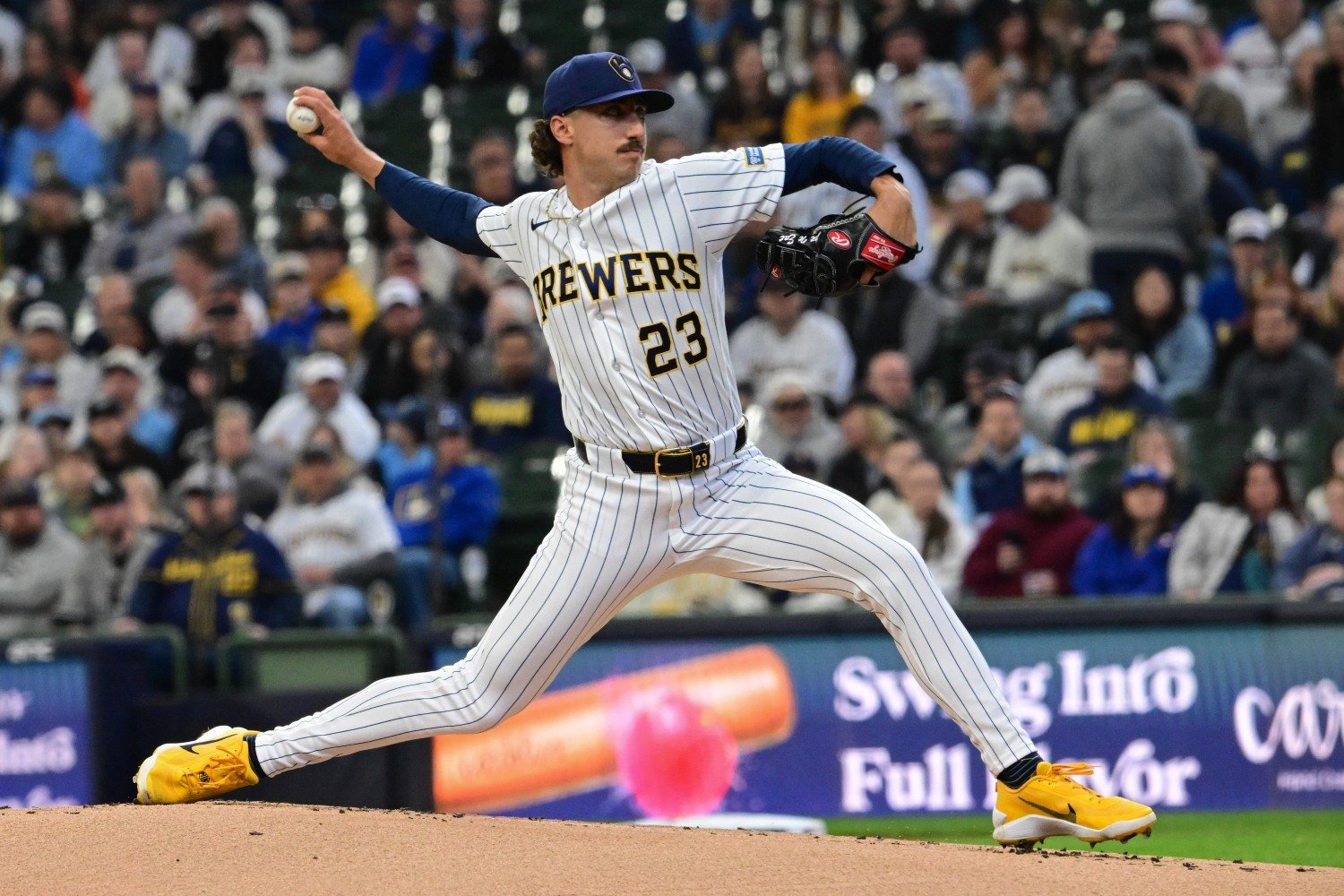 Baseball is here, and the Brewers look to continue their dominance of the NL Central. To do so, they may need some breakout performances. National baseball writers have released a slew of bold predictions, including Eno Sarris picking Jacob Misiorowski to win the Cy Young Award. Here’s a quartet of hot takes of my own for the Brewers. 1. Brandon Sproat will generate more WAR than Freddy Peralta this season. Now that Sproat has secured a spot in the rotation from day one, there's no reason he can’t be there all season. After throwing more than 140 innings last season, he should easily be good for a full season of 150+ this year. In his prospect writeup, Brewers Fanatic’s Spencer Michaelis highlighted Sproat’s deep six-pitch arsenal and the steep improvement he showed over the course of last season. Peralta will probably put up a typically strong season, but that’s what makes this a bold prediction. Sproat will have the benefit of the Brewers’ defense behind him, and as he said himself about the Brewers, “this team bets on themselves.” Here’s betting he has a Rookie of the Year-worthy season, even after a rough start. 2. Jake Bauers will lead the 2026 Brewers in home runs. Bauers raked all spring, leading the majors in homers (7), wRC+ (311), and OPS (1.725). Yes, every year players explode in spring training only to implode once the season starts, but Bauers’s transformation took place over the course of last season, peaking in September and the playoffs. Matt Trueblood highlighted how Bauers spent his offseason training to lock in the changes he made and build on his momentum. Christian Yelich led the 2025 Brewers with 29 home runs, and the team is much better off when Yelich is performing at a high level. To keep Yelich healthy and productive, the team might give him more rest this season and provide additional playing time for Bauers. Even before Jackson’s Chourio’s terribly-timed injury news (and Andrew Vaughn's even worse one), Tim Mura pointed out that Bauers could be slated for more playing time this season. It's unlikely that Bauers will face many left-handed pitchers, but if he gets close to 500 plate appearances, he could lead this team with 30 home runs. 3. Brice Turang will be the best second baseman in baseball. This is certainly less bold than the first two, but many national pundits and writers aren’t fully bought in on Turang’s August breakout last season. However, Turang represented his country with aplomb during the World Baseball Classic and looks primed to ascend to the top of the keystone position. Nico Hoerner and Ketel Marte led the league in fWAR by second basemen last season, but the majority of Hoerner’s value comes from his defense, while the opposite is true for Marte. Turang’s defense is often underrated by publicly available advanced defensive metrics, but it’s not hard to imagine he climbs back into the upper echelon of those rankings while maintaining the better part of his breakout at the plate. Elite defense combined with elite offense and durability should push Turang to post the top WAR at the position and fully stamp his arrival as a superstar. 4. Marco Dinges ascends to become the top catching prospect in baseball. Dinges is just a few years removed from surviving a life-threatening medical condition. After recovering, he spent one season playing Division I baseball at Florida State, where he crushed the ball but was mostly confined to DH duty. The Brewers drafted Dinges in the fourth round of the 2024 Draft and set about developing him as a catcher. Prospect gurus don’t have consistent rankings on Dinges, but they all agree his receiving and footwork behind the plate need work; he swings hard, with a solid approach; he has a strong arm; and he has “twitchy” athletic characteristics. 'Twitchy' is just about the best trait a baseball athlete can possess. Dinges wants to catch and is diving into the work. He has a lot to learn, but with ABS creeping into MLB, receiving skills are likely to become less important, and his strong arm and athletic traits should help him post strong caught stealing numbers in the future. Combine the middle-of-the-order offensive upside that Spencer Michaelis sees with Dinges’s athleticism, work ethic, and history of overcoming challenges most can’t imagine, and he is primed to become one of the best catching prospects in baseball.
 -
We’ll find out soon!
-
Sanchez played 12 innings at first with the Brewers in 2024 and four innings total with the Yankees and Twins before that, but your point holds. They didn’t call up Wilken, they brought up another catcher. Definitely trust Arnold et al - we shall see!
-
Curt Hogg of the Milwaukee Journal Sentinel reports that Jeferson Quero will be called up to the Brewers today. To make room for Jeferson Quero, Andrew Vaughn will be placed on the IL with a hand Injury sustained on Opening Day. Quero has been touted as a top 100 prospect in baseball the last three winters, but an unfortunate shoulder injury during the first game of the 2024 season waylaid his ascent to the majors. Quero has not had the same success at or behind the plate since his injury, but the Brewers will bring him to Milwaukee for his first big league opportunity. Quero is already on the 40-man roster and has an option allowing the Brewers to return him to the minor leagues if and when the team wants to make that move. For now, it appears Pat Murphy will have three catchers on the team with Quero joining All-Star starter William Contreras and veteran backup Gary Sanchez. The Brewers will be without Vaughn for an indeterminate amount of time. He left the first game of the season in the sixth inning for a pinch-runner, and the Brewers have not announced the nature or seriousness of the injury. With Vaughn out, Jake Bauers looks to be the starter at first base against all right-handed pitching. Bauers started the season with a home run in the opening game, a good first step toward validating last season's improvements and his league-leading seven home runs in spring training. Despite his breakout, Bauers is still unlikely to face left-handed pitchers, and with the Brewers facing a left-handed starter on Sunday, it's possible Quero or Sanchez could get the start at first base. View full rumor
-
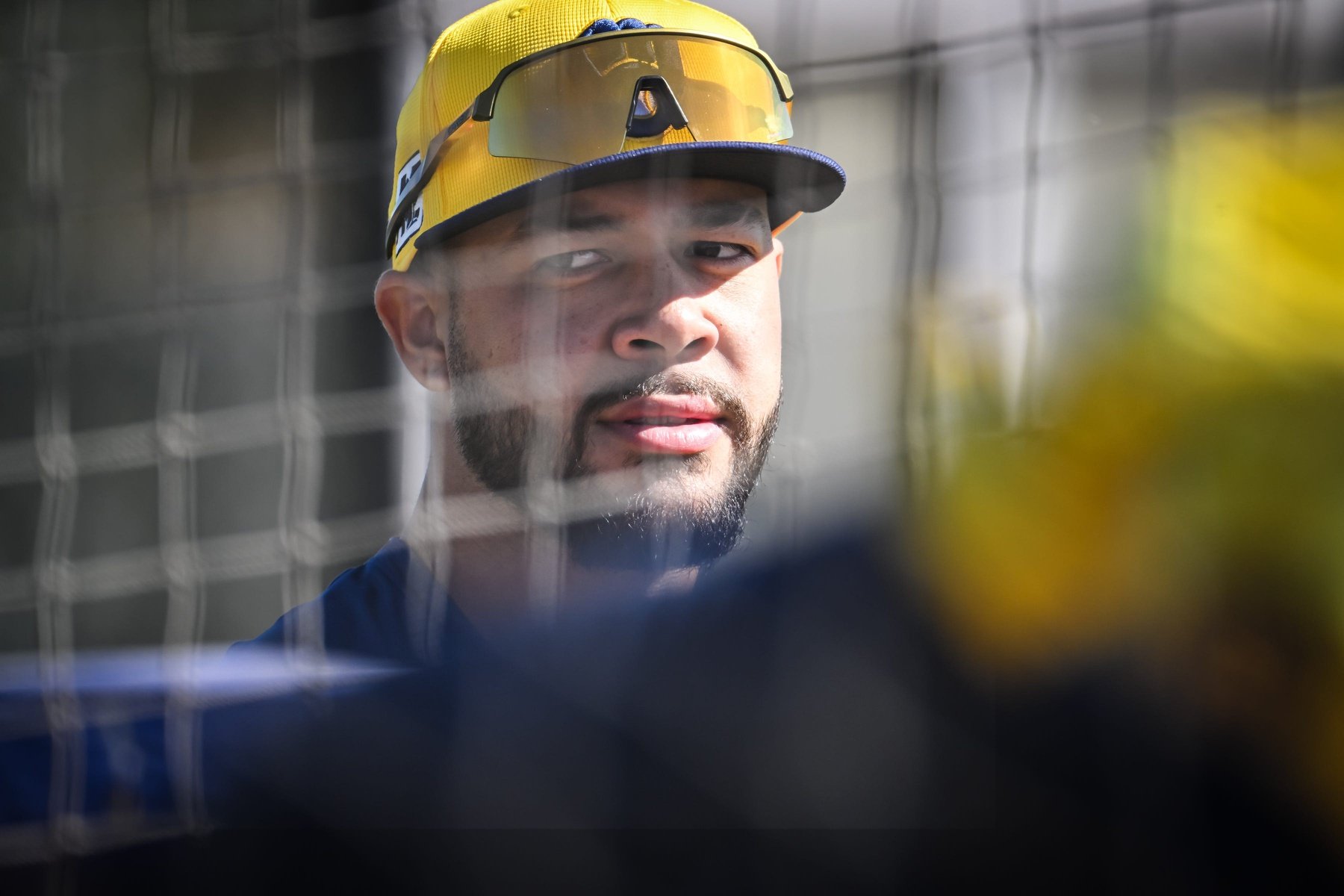 Curt Hogg of the Milwaukee Journal Sentinel reports that Jeferson Quero will be called up to the Brewers today. To make room for Jeferson Quero, Andrew Vaughn will be placed on the IL with a hand Injury sustained on Opening Day. Quero has been touted as a top 100 prospect in baseball the last three winters, but an unfortunate shoulder injury during the first game of the 2024 season waylaid his ascent to the majors. Quero has not had the same success at or behind the plate since his injury, but the Brewers will bring him to Milwaukee for his first big league opportunity. Quero is already on the 40-man roster and has an option allowing the Brewers to return him to the minor leagues if and when the team wants to make that move. For now, it appears Pat Murphy will have three catchers on the team with Quero joining All-Star starter William Contreras and veteran backup Gary Sanchez. The Brewers will be without Vaughn for an indeterminate amount of time. He left the first game of the season in the sixth inning for a pinch-runner, and the Brewers have not announced the nature or seriousness of the injury. With Vaughn out, Jake Bauers looks to be the starter at first base against all right-handed pitching. Bauers started the season with a home run in the opening game, a good first step toward validating last season's improvements and his league-leading seven home runs in spring training. Despite his breakout, Bauers is still unlikely to face left-handed pitchers, and with the Brewers facing a left-handed starter on Sunday, it's possible Quero or Sanchez could get the start at first base.
 -
0-2 walk, catcher interference, walk, dink…double. Four runs on basically one hit! Brewers ball!
-
Brewers scoring runs their way….2026 is on
-
Image courtesy of © Jayne Kamin-Oncea-Imagn Images Opening Day against the White Sox is fast approaching. After a surprising trade and some late offseason shopping, this roster projection has the most changes of any we've published this winter. Caleb Durbin looked poised to be the everyday choice at third, but he plays in Boston now, so the Brewers found a new option. After trading away Freddy Peralta earlier in the offseason, the Brewers continue to get younger and deeper, with perhaps the best farm system in baseball. Virtually the entire pitching staff is young and talented, providing a litany of options for the team to choose from. The position-player group has both youth and experience, and a cluster of infield options on the cusp of the major leagues. The 2026 Opening Day Roster will be strong, and the future is very bright. Catchers (2) William Contreras Gary Sánchez Gary Sánchez returns to Milwaukee, solidifying the backup catcher position and giving the manager Pat Murphy a right-handed power bat on the bench. The 2025 team didn’t often have an option like Sánchez on the bench, and the former top prospect will provide both stability and punch. William Contreras looks primed for another All-Star season in 2026, Jeferson Quero will get more time to keep working back toward his pre-injury form, while Marco Dinges marches toward top-100 prospect status. V 4.0 changes: Sanchez in, Quero out. Infielders (6) Andrew Vaughn (1B) Brice Turang (2B) Luis Rengifo (3B) Joey Ortiz (SS) David Hamilton (INF) Jake Bauers (INF-OF) Team USA’s Brice Turang is in fine form already, primed to build on last season’s breakout. The Brewers signed Luis Rengifo to be the new starting third baseman, but the switch-hitter has had much better success in his career against left-handed pitching, opening the door for shared time at third. That's where things get interesting. With Andruw Monasterio accompanying Durbin to the Red Sox, the backup infielder role is open. David Hamilton was re-acquired from Boston, after originally being drafted by the Brewers, and is already a favorite of Pat Murphy. Hamilton would fit as a left-handed batter, but he's coming off a calamitous offensive season. Jett Williams and Cooper Pratt could contribute in similar roles to Hamilton's, as the season unfolds. Following a September and playoff breakout, Jake Bauers came to an agreement on a pay raise early in the offseason and looks locked into a bench role, with some chance to be more like the starting first baseman if things break right. Bauers’s defense at first is far superior to Tyler Black’s, so despite the electric start to spring training that Black has had, there isn’t room on the Opening Day roster for him; the main consequence of his stronger showing might be a boost to his trade value. V 4.0 changes: Rengifo and Hamilton in, Durbin and Monasterio out. Outfield (5) Jackson Chourio (LF) Garrett Mitchell (CF) Sal Frelick (RF) Christian Yelich (DH) Brandon Lockridge (OF) Brandon Lockridge’s fast start to camp (combined with Pat Murphy’s unabashed love for the speedster) nudges him just ahead of Blake Perkins. Perkins has minor-league options available to be exercised, and given Mitchell’s injury history, Perkins will almost certainly be a valuable depth piece again this season. As on the infield, Williams and Black are considerations on the grass, but not for Day 1. Akil Baddoo and Steward Berroa also lurk on the 40-man roster. V 4.0 changes: Lockridge in, Perkins out. Starting Pitchers (5) Brandon Woodruff Jacob Misiorowski Quinn Priester Chad Patrick Logan Henderson The battle for the final two spots in the rotation could be epic, with Kyle Harrison and Shane Drohan—the major returns in the Durbin trade—joining Chad Patrick, Logan Henderson, Robert Gasser and Brandon Sproat in the competition. Sproat flashed elite stuff in his first spring outing, and has the baseline workload to be a big-league starting pitcher right now. If Brandon Woodruff isn’t ready or the Brewers decide Patrick is more valuable in the bullpen, Sproat could be the frontrunner for the final spot. V 4.0 changes: None. Bullpen (8) Abner Uribe Trevor Megill Aaron Ashby Jared Koenig Grant Anderson Rob Zastryzny Ángel Zerpa DL Hall The depth of rotation options on the 40-man roster also deepens the bullpen, and despite no changes in this projection, there are many strong arms available to the Brewers. Zastryzny is the only player listed without a minor-league option available, but he might also be the most likely to be replaced if a change is made. Five lefties is probably too many, and the Brewers have let Zastryzny go in the past. Replacing him with Patrick, Craig Yoho or Coleman Crow could be the answer. V 4.0 changes: None. With the majority of spring training still to be played and a few decisions for the Brewers still to make, they sit in an enviable position. They have a strong core, youth, and depth throughout the roster. Which stud prospects will claim rotation spots? How will the infield time shares work out? Will Mitchell stay healthy? Will Black prove this is more than a lovely desert mirage? We will find out in a few weeks, but no matter who makes it to Opening Day, the 2026 Brewers are loaded with talent. View full article
-
2026 Brewers Opening Day Roster Projection, v 4.0
Telemachus Rafaelidys posted an article in Brewers
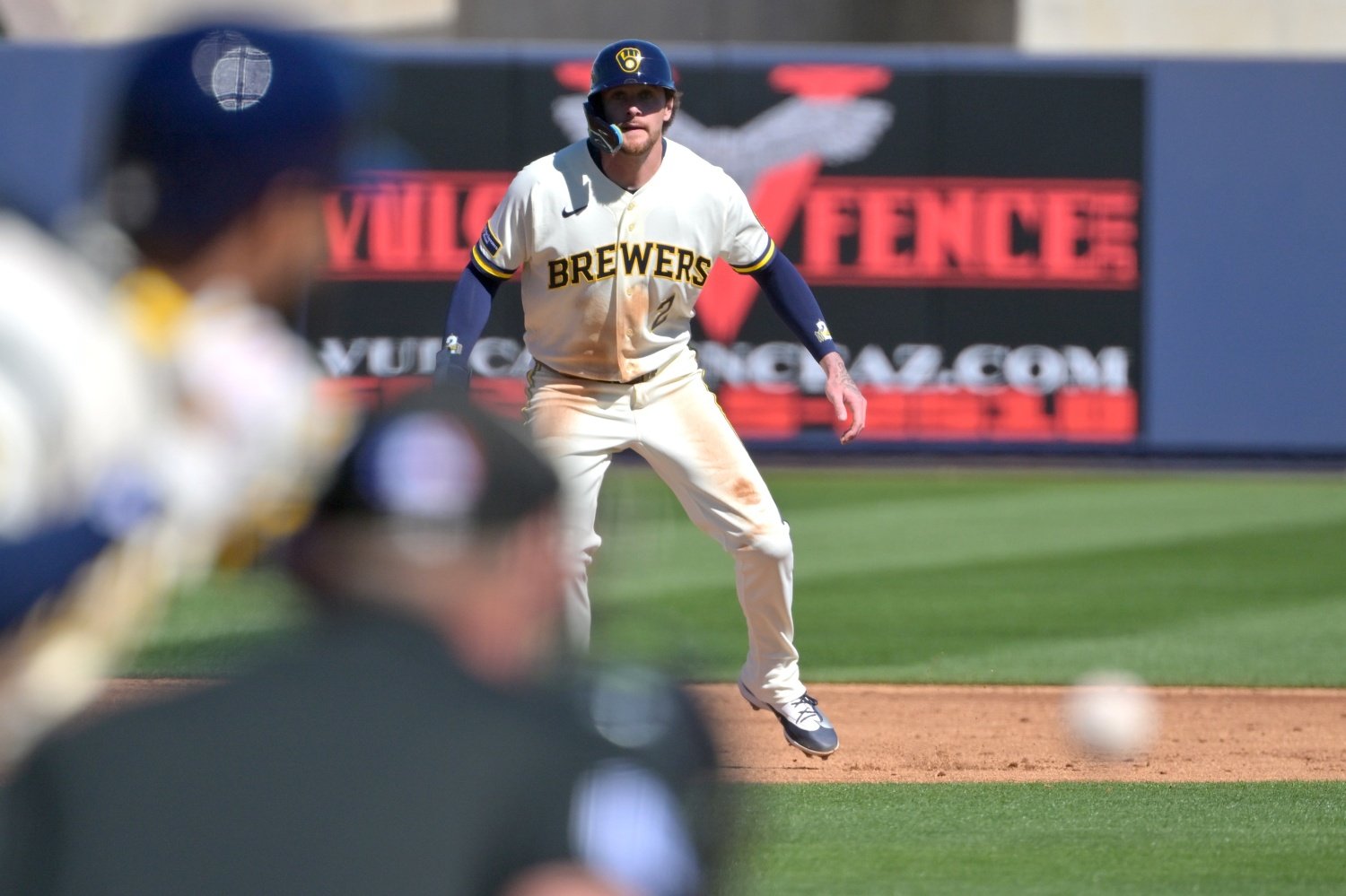 Opening Day against the White Sox is fast approaching. After a surprising trade and some late offseason shopping, this roster projection has the most changes of any we've published this winter. Caleb Durbin looked poised to be the everyday choice at third, but he plays in Boston now, so the Brewers found a new option. After trading away Freddy Peralta earlier in the offseason, the Brewers continue to get younger and deeper, with perhaps the best farm system in baseball. Virtually the entire pitching staff is young and talented, providing a litany of options for the team to choose from. The position-player group has both youth and experience, and a cluster of infield options on the cusp of the major leagues. The 2026 Opening Day Roster will be strong, and the future is very bright. Catchers (2) William Contreras Gary Sánchez Gary Sánchez returns to Milwaukee, solidifying the backup catcher position and giving the manager Pat Murphy a right-handed power bat on the bench. The 2025 team didn’t often have an option like Sánchez on the bench, and the former top prospect will provide both stability and punch. William Contreras looks primed for another All-Star season in 2026, Jeferson Quero will get more time to keep working back toward his pre-injury form, while Marco Dinges marches toward top-100 prospect status. V 4.0 changes: Sanchez in, Quero out. Infielders (6) Andrew Vaughn (1B) Brice Turang (2B) Luis Rengifo (3B) Joey Ortiz (SS) David Hamilton (INF) Jake Bauers (INF-OF) Team USA’s Brice Turang is in fine form already, primed to build on last season’s breakout. The Brewers signed Luis Rengifo to be the new starting third baseman, but the switch-hitter has had much better success in his career against left-handed pitching, opening the door for shared time at third. That's where things get interesting. With Andruw Monasterio accompanying Durbin to the Red Sox, the backup infielder role is open. David Hamilton was re-acquired from Boston, after originally being drafted by the Brewers, and is already a favorite of Pat Murphy. Hamilton would fit as a left-handed batter, but he's coming off a calamitous offensive season. Jett Williams and Cooper Pratt could contribute in similar roles to Hamilton's, as the season unfolds. Following a September and playoff breakout, Jake Bauers came to an agreement on a pay raise early in the offseason and looks locked into a bench role, with some chance to be more like the starting first baseman if things break right. Bauers’s defense at first is far superior to Tyler Black’s, so despite the electric start to spring training that Black has had, there isn’t room on the Opening Day roster for him; the main consequence of his stronger showing might be a boost to his trade value. V 4.0 changes: Rengifo and Hamilton in, Durbin and Monasterio out. Outfield (5) Jackson Chourio (LF) Garrett Mitchell (CF) Sal Frelick (RF) Christian Yelich (DH) Brandon Lockridge (OF) Brandon Lockridge’s fast start to camp (combined with Pat Murphy’s unabashed love for the speedster) nudges him just ahead of Blake Perkins. Perkins has minor-league options available to be exercised, and given Mitchell’s injury history, Perkins will almost certainly be a valuable depth piece again this season. As on the infield, Williams and Black are considerations on the grass, but not for Day 1. Akil Baddoo and Steward Berroa also lurk on the 40-man roster. V 4.0 changes: Lockridge in, Perkins out. Starting Pitchers (5) Brandon Woodruff Jacob Misiorowski Quinn Priester Chad Patrick Logan Henderson The battle for the final two spots in the rotation could be epic, with Kyle Harrison and Shane Drohan—the major returns in the Durbin trade—joining Chad Patrick, Logan Henderson, Robert Gasser and Brandon Sproat in the competition. Sproat flashed elite stuff in his first spring outing, and has the baseline workload to be a big-league starting pitcher right now. If Brandon Woodruff isn’t ready or the Brewers decide Patrick is more valuable in the bullpen, Sproat could be the frontrunner for the final spot. V 4.0 changes: None. Bullpen (8) Abner Uribe Trevor Megill Aaron Ashby Jared Koenig Grant Anderson Rob Zastryzny Ángel Zerpa DL Hall The depth of rotation options on the 40-man roster also deepens the bullpen, and despite no changes in this projection, there are many strong arms available to the Brewers. Zastryzny is the only player listed without a minor-league option available, but he might also be the most likely to be replaced if a change is made. Five lefties is probably too many, and the Brewers have let Zastryzny go in the past. Replacing him with Patrick, Craig Yoho or Coleman Crow could be the answer. V 4.0 changes: None. With the majority of spring training still to be played and a few decisions for the Brewers still to make, they sit in an enviable position. They have a strong core, youth, and depth throughout the roster. Which stud prospects will claim rotation spots? How will the infield time shares work out? Will Mitchell stay healthy? Will Black prove this is more than a lovely desert mirage? We will find out in a few weeks, but no matter who makes it to Opening Day, the 2026 Brewers are loaded with talent.
- 4 comments
-
- 1
-
-
- brandon lockridge
- gary sanchez
- (and 3 more)

