



Cory Sparks
-
Posts
171 -
Joined
-
Last visited
Content Type
Profiles
Forums
Blogs
Events
News
2026 Milwaukee Brewers Top Prospects Ranking
Milwaukee Brewers Videos
2022 Milwaukee Brewers Draft Picks
Milwaukee Brewers Free Agent & Trade Rumors, Notes, & Tidbits
Guides & Resources
2023 Milwaukee Brewers Draft Picks
2024 Milwaukee Brewers Draft Picks
The Milwaukee Brewers Players Project
2025 Milwaukee Brewers Draft Pick Tracker
2026 Milwaukee Brewers Draft Tracker: Picks & Bonuses
Store
Downloads
Gallery
Everything posted by Cory Sparks
-
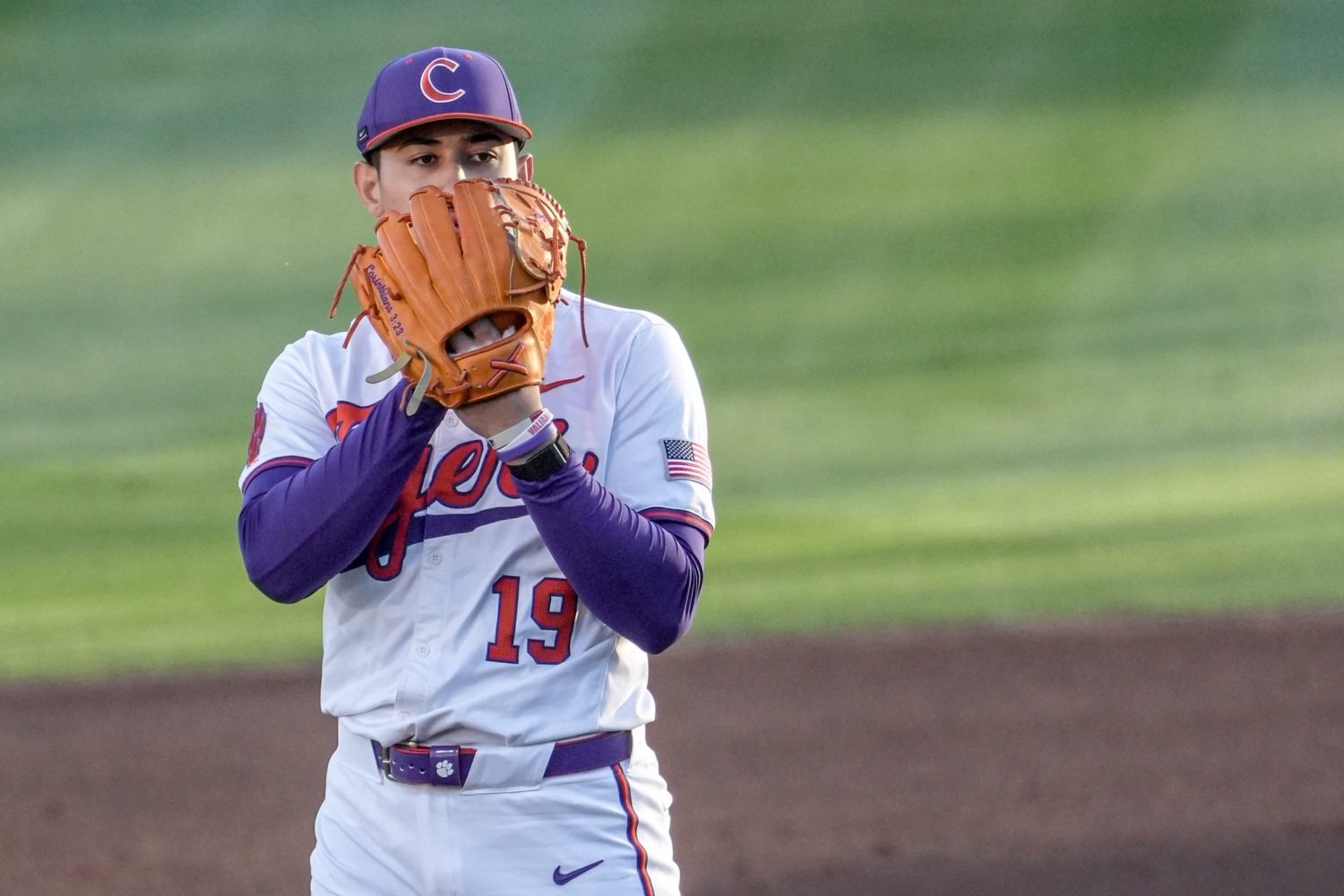 The 2026 MLB Draft is behind us, and the Milwaukee Brewers found some high-upside players even outside of the first couple of rounds. Aidan Knaak is one of them. Milwaukee selected him in the fifth round, at 163rd overall. Let’s dive into his story, strengths, weaknesses and overall projection within the Brewers organization. Knaak’s Background Knaak is a 6-foot-1, 215-pound right-handed pitcher out of Clemson. He was already a high-profile prep product, as the righty showed great ability to keep hitters off balance as a member of the Bishop Verot High School (Fort Myers, FL) rotation. After going undrafted due to the strength of his commitment to playing in college, Knaak started his Tigers career strong, earning All-ACC honors in each of his first two seasons. He tumbled this year, though, as the Florida native posted an ugly a 5.81 ERA. His production didn't match, but his scouting report still garnered enough appeal for him to be a top-250 draft recruit, per MLB Pipeline; he slotted in at No. 210. Knaak has gained a reputation for sticking around the edges of the strike zone and mixing it up, with an arsenal consisting of a fastball, curveball, slider and changeup. What’s There to Harness? The main appeal with Knaack is his changeup, a pitch that’s earned a 60 grade on MLB Pipeline’s 20-to-80 scouting scale. He’s able to manipulate and alter it, bringing it into the mid-80s or dropping it into the 70s and (either way) showing above-average arm-side run. With pristine pitch tunneling, this could make for an elite weapon at the professional level. If he’s able to make the changeup stick in the 70s, it only increases the effectiveness of a low-90s fastball. With the changeup being his best offering, I’m curious how he’ll work around it. He could either set up his best pitch by getting to a two-strike count on the fastball and then bury the offspeed offering in the dirt, or he could pitch backward a bit. Starting some at-bats with the changeup to set up the breaking stuff or a heater as the out pitch might work, based on the way he commands the cambio. There have been reports of him generating almost two feet of horizontal break and generating a whiff rate in the 50s (via Driveline). That would be considered elite at the minor-league and major-league levels. Points of Improvement Knaak and the Brewers could work on his fastball velocity, as a pitch currently topping out at 96 miles per hour is around average. (His average velocity is a few ticks lower.) He may not need to push the ceiling higher, but to profile as a future starter, he probably needs to bring up the floor and center line of his velocity band. His primary issue this spring was limiting hard contact with his other offspeed pitches. His slider and curveball are graded at 45 and 40 on the scouting scale, respectively. The righty allowed an opposing slash line of .476/.500/.714 against those two pitches to college hitters; he needs a lot of work in the spin department. Overall Projection Knaak may have had a bumpy spring, but he’s entering the right organization to make some tweaks to his game. He doesn’t need to be a hard thrower, by modern standards. Look at the early success of pitchers like Quinn Priester in 2025 (93.9 mph fastball average) or Logan Henderson (93.1 mph fastball average) this year. The main objective will be working around Knaak’s potentially elite changeup, something that has been his prized possession for years. From there, it’ll be on the pitching laboratory to generate more spin on his other pitches. If he can get ahead and garner better whiff rates on other pitches, this could be someone who turns into a future rotation piece.
 -
Bang on take - you can always flex someone over to the DH spot more times than not too!
-
I would say so! The speed, range-y glove and hit tool all fit the bill
-
I feel like it's definitely a long-term handoff, no? Mitchell may not be here forever, Yelich will be winding down and you'd assume Lara will be the lone man standing while his contract is still ongoing
- 9 replies
-
- 1
-

-
- luis lara
- sal frelick
- (and 1 more)
-
Image courtesy of © Dave Kallmann / Milwaukee Journal Sentinel / USA TODAY NETWORK via Imagn Images Luis Lara made his big-league debut Tuesday in St. Louis. He had an immediate impact, and there are many ways he can help this year's team. But how can he progress from a complementary piece in a crowded outfield mix to the full-timer the Brewers envisioned when they signed him to a long-term, pre-debut extension? First, let's do a quick review of his background. Lara is a 21-year-old outfield prospect who has surged up the team’s minor-league ladder since he signed for $1.1 million out of Venezuela. He quickly made a name for himself, leapfrogging the team’s Arizona Complex League team to play with the Single-A Carolina Mudcats to start the 2023 campaign. That year started a trend of three years out of four wherein the speedy center fielder logged a batting average above .250. Lara rose all the way up to play with the Triple-A Nashville Sounds this year, where he slashed .321/.432/.470, all career-bests, across 78 games. His ability to play the Brewers’ style of baseball at a high level at every stop earned him the chance he gets now: to represent the team at the highest level, still four months before his 22nd birthday. Game-Wrecking Speed The Venezuela native is diminutive, at 5-foot-7 and 169 pounds, so it’s no secret that his forte is getting up the line in a hurry. Lara is fresh off back-to-back 40-steal seasons, swiping 45 bases with the High-A Wisconsin Timber Rattlers in 2024 before finishing one steal shy of that total with the Double-A Biloxi Shuckers last year. Lara’s speed is well above average, and it supplements his strongest attribute, fielding. The speedy outfielder’s fielding tool earned a 70-grade on MLB Pipeline’s 20-to-80 scouting scale. This is someone who, despite his young age, you could argue has mastered the art of being a commanding center fielder as well as just about anybody. His scouting report states that he makes the correct initial reads and can cover plenty of ground gap-to-gap. He also piled up 10 outfield assists in the 2025 campaign. Power On The Rise Given that small size we mentioned, though, Lara has never hit for much power—until now. The switch-hitting prospect was strictly a doubles and triples guy in the past, but he ran into nine home runs over the course of 78 games in Nashville this year, which would put him on pace for an 18-home run performance across a 162-game season. For context, Lara had just 10 home runs over 391 games entering the 2026 season. As a result, his on-base plus slugging (OPS) metric ballooned to a career-best .902, .170 better than his previous career high across a couple of minor-league levels back in 2023. Where Does He Fit? The question for Lara now becomes: Where will he fit in the grand scheme of the Brewers’ outfield? Right now, he joins the team’s active roster, accompanying Jackson Chourio, Sal Frelick, Greg Jones and Garrett Mitchell. Chourio is locked down on a long-term deal and will not come out of the lineup much at all, barring injury. Frelick notably plays the most comparable style to Lara, never topping out past a .752 OPS but offering speed, defense and intensity. He'll be arbitration-eligible for the first time this winter, so some decision is pending, at least. Mitchell is on year two of arbitration after settling for $950,000 this year, and as a center fielder, he occupies the spot Lara seems to fit best. He's having such a good year, though, that it's not clear the team should or would displace him in order to install Lara, now or later. Lara will likely be a rotational piece in 2026, but with him getting an extension earlier this year, an everyday outfield spot should be in his future. At this moment, the best guess is that his time will come at the expense of Frelick and Mitchell, with each getting spelled against some left-handed starters. To find a deeper toehold next year, though, he'll have to show he can do as much for the club as those guys have already done—or wait for the Brewers to get an offer on one of them that they can't refuse. View full article
-
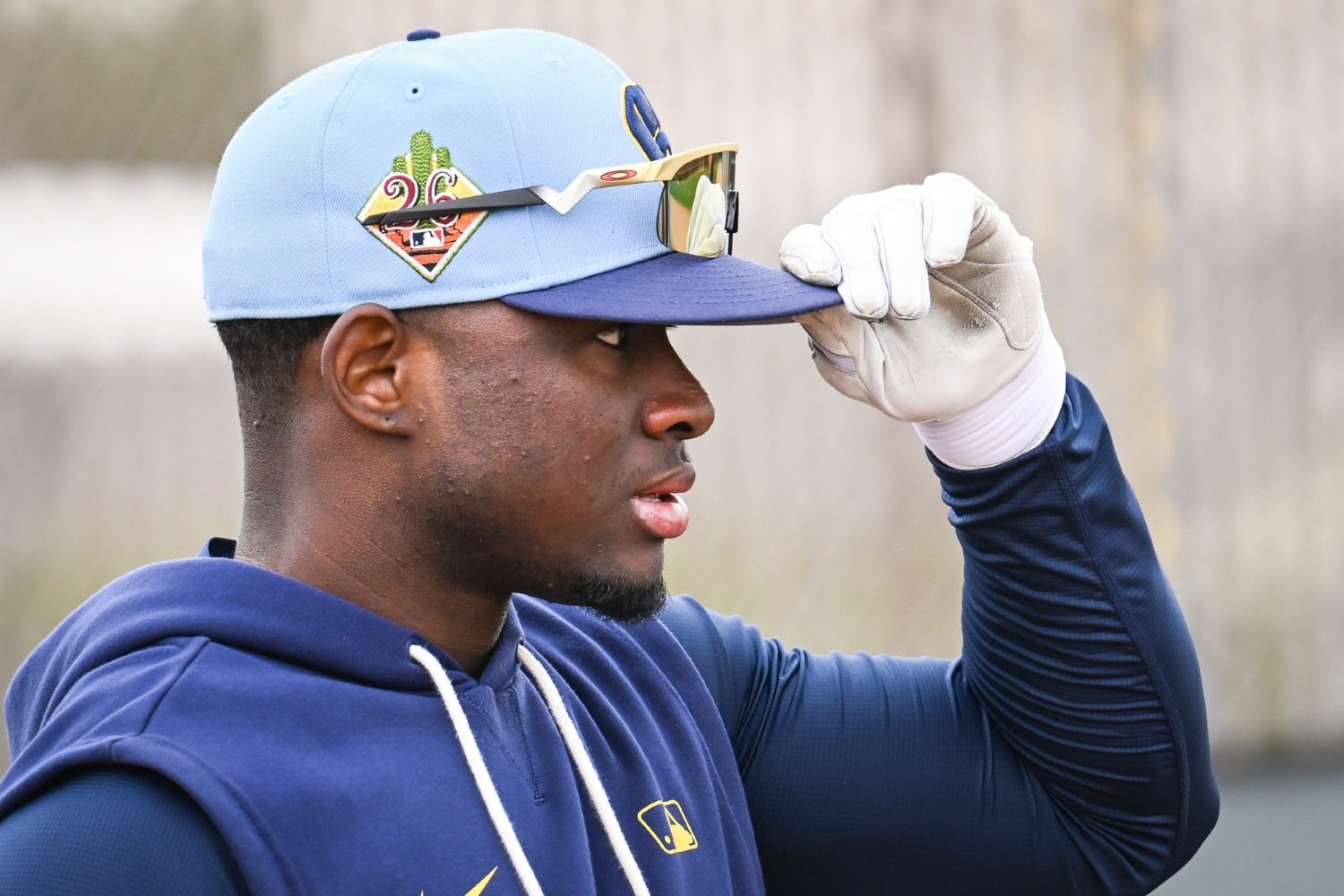 Luis Lara made his big-league debut Tuesday in St. Louis. He had an immediate impact, and there are many ways he can help this year's team. But how can he progress from a complementary piece in a crowded outfield mix to the full-timer the Brewers envisioned when they signed him to a long-term, pre-debut extension? First, let's do a quick review of his background. Lara is a 21-year-old outfield prospect who has surged up the team’s minor-league ladder since he signed for $1.1 million out of Venezuela. He quickly made a name for himself, leapfrogging the team’s Arizona Complex League team to play with the Single-A Carolina Mudcats to start the 2023 campaign. That year started a trend of three years out of four wherein the speedy center fielder logged a batting average above .250. Lara rose all the way up to play with the Triple-A Nashville Sounds this year, where he slashed .321/.432/.470, all career-bests, across 78 games. His ability to play the Brewers’ style of baseball at a high level at every stop earned him the chance he gets now: to represent the team at the highest level, still four months before his 22nd birthday. Game-Wrecking Speed The Venezuela native is diminutive, at 5-foot-7 and 169 pounds, so it’s no secret that his forte is getting up the line in a hurry. Lara is fresh off back-to-back 40-steal seasons, swiping 45 bases with the High-A Wisconsin Timber Rattlers in 2024 before finishing one steal shy of that total with the Double-A Biloxi Shuckers last year. Lara’s speed is well above average, and it supplements his strongest attribute, fielding. The speedy outfielder’s fielding tool earned a 70-grade on MLB Pipeline’s 20-to-80 scouting scale. This is someone who, despite his young age, you could argue has mastered the art of being a commanding center fielder as well as just about anybody. His scouting report states that he makes the correct initial reads and can cover plenty of ground gap-to-gap. He also piled up 10 outfield assists in the 2025 campaign. Power On The Rise Given that small size we mentioned, though, Lara has never hit for much power—until now. The switch-hitting prospect was strictly a doubles and triples guy in the past, but he ran into nine home runs over the course of 78 games in Nashville this year, which would put him on pace for an 18-home run performance across a 162-game season. For context, Lara had just 10 home runs over 391 games entering the 2026 season. As a result, his on-base plus slugging (OPS) metric ballooned to a career-best .902, .170 better than his previous career high across a couple of minor-league levels back in 2023. Where Does He Fit? The question for Lara now becomes: Where will he fit in the grand scheme of the Brewers’ outfield? Right now, he joins the team’s active roster, accompanying Jackson Chourio, Sal Frelick, Greg Jones and Garrett Mitchell. Chourio is locked down on a long-term deal and will not come out of the lineup much at all, barring injury. Frelick notably plays the most comparable style to Lara, never topping out past a .752 OPS but offering speed, defense and intensity. He'll be arbitration-eligible for the first time this winter, so some decision is pending, at least. Mitchell is on year two of arbitration after settling for $950,000 this year, and as a center fielder, he occupies the spot Lara seems to fit best. He's having such a good year, though, that it's not clear the team should or would displace him in order to install Lara, now or later. Lara will likely be a rotational piece in 2026, but with him getting an extension earlier this year, an everyday outfield spot should be in his future. At this moment, the best guess is that his time will come at the expense of Frelick and Mitchell, with each getting spelled against some left-handed starters. To find a deeper toehold next year, though, he'll have to show he can do as much for the club as those guys have already done—or wait for the Brewers to get an offer on one of them that they can't refuse.
- 9 comments
-
- 1
-
-
- luis lara
- sal frelick
- (and 1 more)
-
A pair of Milwaukee Brewers players made it into the 2026 All-Star Game: Jacob Misiorowski and William Contreras. In this video, we dive into the numbers of Kyle Harrison, Brice Turang, and Jackson Chourio while analyzing their cases to make it to Citizens Bank Park. View full video
-
A pair of Milwaukee Brewers players made it into the 2026 All-Star Game: Jacob Misiorowski and William Contreras. In this video, we dive into the numbers of Kyle Harrison, Brice Turang, and Jackson Chourio while analyzing their cases to make it to Citizens Bank Park.
-
Luis Lara, the Milwaukee Brewers' 4th-ranked prospect, got the call-up to the big leagues! Who is Lara, and how can he leverage his best tools (70-grade fielding, 60-grade run) to etch his way into an outfield littered with contracts encountering arbitration. Let's break it all down for someone who has already inked an extension with the organization. View full video
-
Luis Lara, the Milwaukee Brewers' 4th-ranked prospect, got the call-up to the big leagues! Who is Lara, and how can he leverage his best tools (70-grade fielding, 60-grade run) to etch his way into an outfield littered with contracts encountering arbitration. Let's break it all down for someone who has already inked an extension with the organization.
-
Braylon Payne is the Milwaukee Brewers' 9th-ranked prospect per our rankings. He was their first round pick in 2024, and his speed-oriented reputation has only grown since he cut his teeth at the professional baseball level. Now sporting 14 home runs through half a season with the High-A Wisconsin Timber Rattlers, it's becoming very clear that he could be one of the more well-rounded farmhands in Milwaukee's pipeline. View full video
-
Braylon Payne is the Milwaukee Brewers' 9th-ranked prospect per our rankings. He was their first round pick in 2024, and his speed-oriented reputation has only grown since he cut his teeth at the professional baseball level. Now sporting 14 home runs through half a season with the High-A Wisconsin Timber Rattlers, it's becoming very clear that he could be one of the more well-rounded farmhands in Milwaukee's pipeline.
-
Image courtesy of © Ron Chenoy-Imagn Images When the Milwaukee Brewers got Brandon Sproat, they gave up their 2025 ace in Freddy Peralta. The idea of having a primary option who could give Pat Murphy’s squad a chance to win every fifth day hung in the balance, though those questions were answered by megastellar starts to the season from Jacob Misiorowski and Kyle Harrison. Sproat doesn’t need to be the team’s ace, but he does need to be a consistent contributor in a rotation that is being jostled by injuries and the unsteady development of young arms beyond his own. Let’s break down the things Sproat needs to harness to become the presence Milwaukee needs. One of the major sources of appeal with Sproat’s game is his varied pitch arsenal. While some starters get by with three or four options, the University of Florida product rolls with six different pitches: the sinker, cutter, four-seam fastball, curveball, sweeper and changeup. The more options a hitter has to choose from, the better the odds for a pitcher. As we know, the Brewers love guys with multiple fastball shapes, in particular. So far, Sproat’s four-seamer, which rolls in at an average velocity of 96.4 miles per hour, is his most productive pitch. Opposing hitters are managing just a .204 batting average against it. The trick will be to tap into more value from one of his breaking balls. Sproat is yet to see a lot of his potential turn into results, but he does have a few above-average metrics through the first half of the season. As a byproduct of having a firm fastball and a varied pitch arsenal, he’s running an above-average 24.7% strikeout rate. He's fresh off a six-inning, scoreless outing against the Cincinnati Reds on June 23. In order to make starts like this more consistent, the former Mets starter still has a few wrinkles to iron out. For one, not all of Sproat’s pitches are landing as effective parts of his arsenal. While the four-seamer has worked, Sproat’s cutter, which he uses 25.3% of the time (second-most of any of his six options) is being mashed. He’s allowed his opponents to hit .341 against it, the highest opposing batting average of any pitch. With a larger sample size than his brief big-league stint last year, he’s also being hit harder on average. In 2025, Sproat gave up an average exit velocity of 87.9 miles per hour. This year, that mark has spiked to 90.2. He’s also running into more barrels this year, seeing a spike from 3.4% to 9.0% of the batted balls he allowed be hit at dangerous exit velocities and launch angles. The Key Adjustment Where can someone with Sproat’s ability improve? The strikeout rate is there, but a high average exit velocity and spiked launch angle can lead to extra bases. Sproat’s ground ball rate is at just 42.9%, so it's been easier to elevate him than you'd like for a guy who features the cutter and sinker. If he can keep more of his pitches down and get opposing hitters to roll over on the ball, this could keep more balls in the infield. But the big change, of course, needs to be filling up the zone more consistently. Sproat has walked almost 11% of the batters he's faced this year. He's making big progress on that front, with just five free passes issued in his last five starts, but he's still worked behind in some counts and put himself in position to get hit hard. That's the final adjustment he needs to make: attacking in ways that remain unpredictable, but staying in the zone. We may have seen him turn the corner on that front already—and if so, the Brewers might now have one of the best rotations in baseball. View full article
-
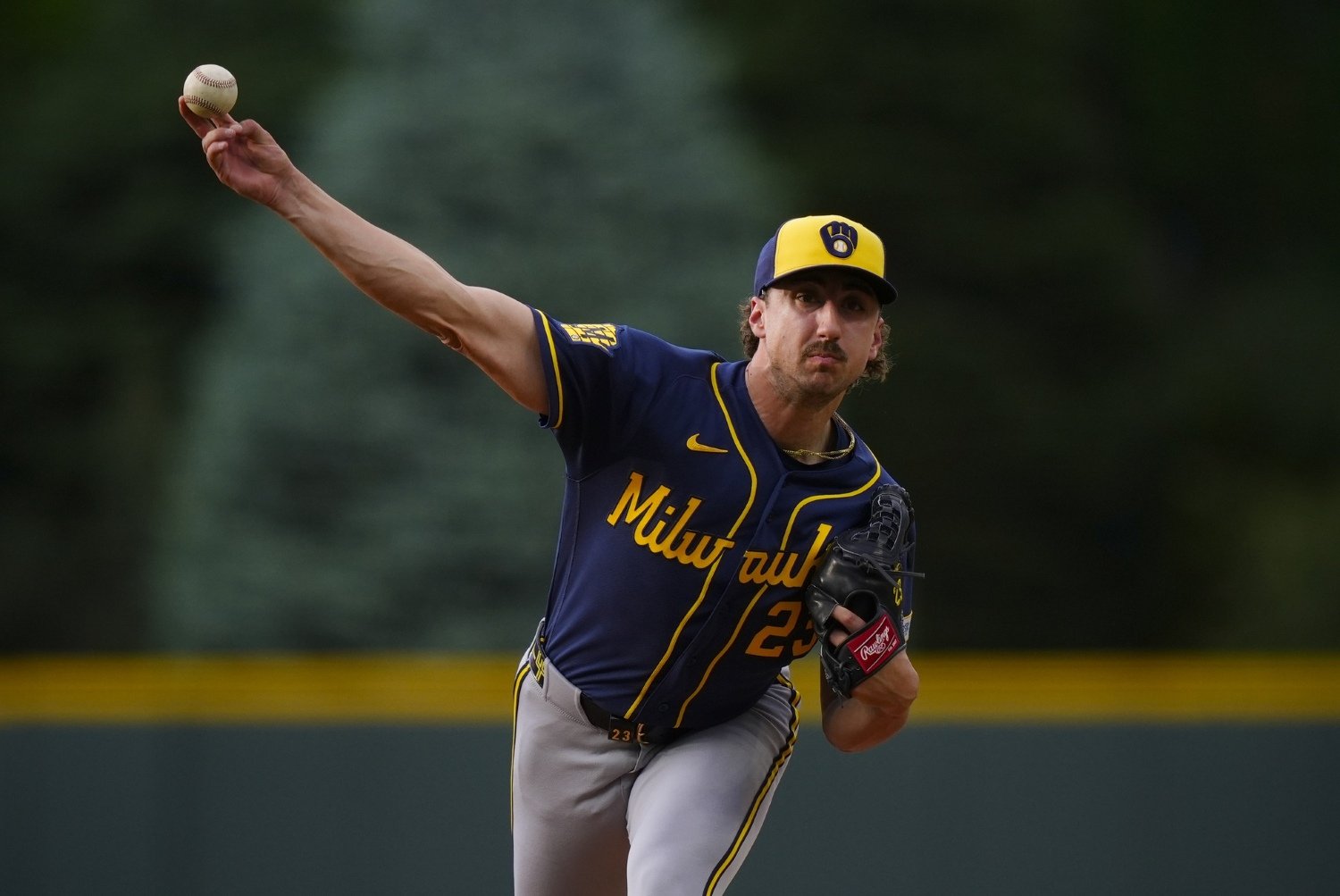 When the Milwaukee Brewers got Brandon Sproat, they gave up their 2025 ace in Freddy Peralta. The idea of having a primary option who could give Pat Murphy’s squad a chance to win every fifth day hung in the balance, though those questions were answered by megastellar starts to the season from Jacob Misiorowski and Kyle Harrison. Sproat doesn’t need to be the team’s ace, but he does need to be a consistent contributor in a rotation that is being jostled by injuries and the unsteady development of young arms beyond his own. Let’s break down the things Sproat needs to harness to become the presence Milwaukee needs. One of the major sources of appeal with Sproat’s game is his varied pitch arsenal. While some starters get by with three or four options, the University of Florida product rolls with six different pitches: the sinker, cutter, four-seam fastball, curveball, sweeper and changeup. The more options a hitter has to choose from, the better the odds for a pitcher. As we know, the Brewers love guys with multiple fastball shapes, in particular. So far, Sproat’s four-seamer, which rolls in at an average velocity of 96.4 miles per hour, is his most productive pitch. Opposing hitters are managing just a .204 batting average against it. The trick will be to tap into more value from one of his breaking balls. Sproat is yet to see a lot of his potential turn into results, but he does have a few above-average metrics through the first half of the season. As a byproduct of having a firm fastball and a varied pitch arsenal, he’s running an above-average 24.7% strikeout rate. He's fresh off a six-inning, scoreless outing against the Cincinnati Reds on June 23. In order to make starts like this more consistent, the former Mets starter still has a few wrinkles to iron out. For one, not all of Sproat’s pitches are landing as effective parts of his arsenal. While the four-seamer has worked, Sproat’s cutter, which he uses 25.3% of the time (second-most of any of his six options) is being mashed. He’s allowed his opponents to hit .341 against it, the highest opposing batting average of any pitch. With a larger sample size than his brief big-league stint last year, he’s also being hit harder on average. In 2025, Sproat gave up an average exit velocity of 87.9 miles per hour. This year, that mark has spiked to 90.2. He’s also running into more barrels this year, seeing a spike from 3.4% to 9.0% of the batted balls he allowed be hit at dangerous exit velocities and launch angles. The Key Adjustment Where can someone with Sproat’s ability improve? The strikeout rate is there, but a high average exit velocity and spiked launch angle can lead to extra bases. Sproat’s ground ball rate is at just 42.9%, so it's been easier to elevate him than you'd like for a guy who features the cutter and sinker. If he can keep more of his pitches down and get opposing hitters to roll over on the ball, this could keep more balls in the infield. But the big change, of course, needs to be filling up the zone more consistently. Sproat has walked almost 11% of the batters he's faced this year. He's making big progress on that front, with just five free passes issued in his last five starts, but he's still worked behind in some counts and put himself in position to get hit hard. That's the final adjustment he needs to make: attacking in ways that remain unpredictable, but staying in the zone. We may have seen him turn the corner on that front already—and if so, the Brewers might now have one of the best rotations in baseball.
 -
The Milwaukee Brewers have one of the best rosters in Major League Baseball, but they're lacking some much-needed rotational depth. In this video, we break down just how elite the front end of the rotation has been while also highlighting the holes down the line in varying capacities.
-
The Milwaukee Brewers have one of the best rosters in Major League Baseball, but they're lacking some much-needed rotational depth. In this video, we break down just how elite the front end of the rotation has been while also highlighting the holes down the line in varying capacities. View full video
-
One of the main offseason moves the Milwaukee Brewers made this offseason was swinging Freddy Peralta (and Tobias Myers) to the Big Apple in exchange for Brandon Sproat and Jett Williams. Sproat has the intangibles to be great, but he has underperformed so far this season. In this video, we'll dive into the key adjustments he could make to turn his season around.
-
One of the main offseason moves the Milwaukee Brewers made this offseason was swinging Freddy Peralta (and Tobias Myers) to the Big Apple in exchange for Brandon Sproat and Jett Williams. Sproat has the intangibles to be great, but he has underperformed so far this season. In this video, we'll dive into the key adjustments he could make to turn his season around. View full video
-
Image courtesy of © Jordan Godfree-Imagn Images The Milwaukee Brewers have a dire need at this year's MLB trade deadline. Even though they’re dominating the National League Central and look to be well-positioned pennant contenders yet again, they have an obvious hole in their roster that must be addressed to be taken seriously. They need one more starting pitcher. While they have a couple of elite starters—one from each side—the quality of their mid-rotation depth is a looming potential issue that could come back to bite the Crew in a five- or seven-game series. Let’s start with the promising part of the rotation. Jacob Misiorowski continues to wow the baseball world every time he toes the rubber. The hard-throwing right-handed pitcher has clocked his fastball at 105 miles per hour, with above-average extension. He's building a resume that may lead to a National League Cy Young Award at season’s end. Logging an 8-3 record with a minuscule 1.45 ERA and 138 strikeouts over just 93 innings pitched, the former second-round draft selection is truly in a league of his own. Kyle Harrison has been spectacular in his own right, and he’d be an ace on the majority of MLB teams right now. The former Boston Red Sox southpaw is currently sporting an 8-1 record with a remarkable 2.50 ERA, a mark that would be substantially lower if not for an odd start in a hitter-friendly environment in Las Vegas. Harrison’s four-pitch arsenal has proved to be effective, with his fastball (.221) and slurve (.141) both garnering very low opponent batting averages. While these two starters have been in the top tier league-wide, though, a playoff series typically demands four quality arms. They might have that many; they might not. Brandon Sproat was a pivotal piece in the return package the Brewers got in exchange for Freddy Peralta. While he has had his fair share of impressive starts (including a six-inning sscoreless outing and 10 strikeouts on June 23), the struggles have been there. Sproat possesses a six-pitch mix, but his only above-average Baseball Savant metrics are his strikeout rate (24.7%) and average fastball velocity (96.4 MPH). The former Mets farmhand is 2-4 with a 5.43 earned run average over 13 starts. While he has the arsenal to be part of this pitching staff for years to come, there’s plenty of work to be done before he can be trusted in a playoff-like atmosphere. Logan Henderson had a great start to this season, becoming the first pitcher in the Stathead database (dating back to 1898) to allow two runs or fewer in each of his first 10 career starts. While his game is more based on an expanded pitch arsenal than sheer velocity, he’s on the 15-day IL with a lower back strain. If he can come back healthy, he could be a solid third starter in a playoff series—but that's a huge 'if' right now. Speaking of huge 'if's, Brandon Woodruff, when healthy, is one of the best pitchers in the bigs. In his first start in just over two months, he fired six shutout innings with just one hit allowed, no walks and a season-high 10 punchouts. The problem? He was recovering from a classic case of “dead arm”, and his fastball velocity is down drastically. We've all watched him pitch brilliantly since returning last July from 21 months of rehab on his shoulder, despite that diminished velocity. We've also seen him rendered unavailable right on the cusp of the postseason over and over. While Sproat has the intangibles, Henderson had a red-hot start and Woodruff is reliable as they come when healthy, the Brewers do not have four reliable postseason starters at the moment. They're remarkably deep, with the likes of Shane Drohan, Robert Gasser and Chad Patrick also showing flashes of being above-average starters, but those guys come with at least as many questions as Sproat, Henderson and Woodruff do. The drop-off behind Misiorowski and Harrison is drastic. If the Brewers get a chance to acquire a third surefire stud to round out the playoff rotation, they should strongly consider it. View full article
-
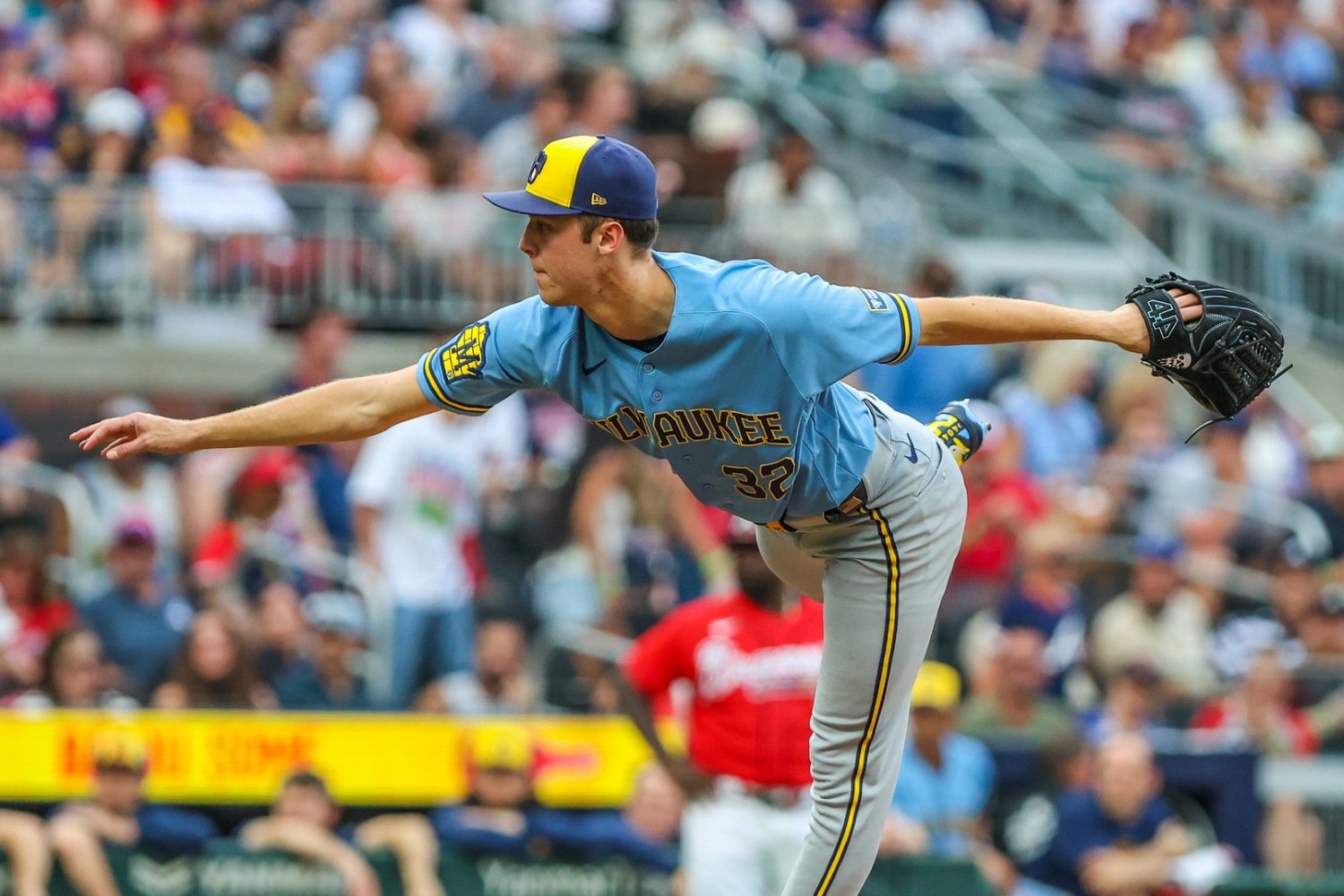 The Milwaukee Brewers have a dire need at this year's MLB trade deadline. Even though they’re dominating the National League Central and look to be well-positioned pennant contenders yet again, they have an obvious hole in their roster that must be addressed to be taken seriously. They need one more starting pitcher. While they have a couple of elite starters—one from each side—the quality of their mid-rotation depth is a looming potential issue that could come back to bite the Crew in a five- or seven-game series. Let’s start with the promising part of the rotation. Jacob Misiorowski continues to wow the baseball world every time he toes the rubber. The hard-throwing right-handed pitcher has clocked his fastball at 105 miles per hour, with above-average extension. He's building a resume that may lead to a National League Cy Young Award at season’s end. Logging an 8-3 record with a minuscule 1.45 ERA and 138 strikeouts over just 93 innings pitched, the former second-round draft selection is truly in a league of his own. Kyle Harrison has been spectacular in his own right, and he’d be an ace on the majority of MLB teams right now. The former Boston Red Sox southpaw is currently sporting an 8-1 record with a remarkable 2.50 ERA, a mark that would be substantially lower if not for an odd start in a hitter-friendly environment in Las Vegas. Harrison’s four-pitch arsenal has proved to be effective, with his fastball (.221) and slurve (.141) both garnering very low opponent batting averages. While these two starters have been in the top tier league-wide, though, a playoff series typically demands four quality arms. They might have that many; they might not. Brandon Sproat was a pivotal piece in the return package the Brewers got in exchange for Freddy Peralta. While he has had his fair share of impressive starts (including a six-inning sscoreless outing and 10 strikeouts on June 23), the struggles have been there. Sproat possesses a six-pitch mix, but his only above-average Baseball Savant metrics are his strikeout rate (24.7%) and average fastball velocity (96.4 MPH). The former Mets farmhand is 2-4 with a 5.43 earned run average over 13 starts. While he has the arsenal to be part of this pitching staff for years to come, there’s plenty of work to be done before he can be trusted in a playoff-like atmosphere. Logan Henderson had a great start to this season, becoming the first pitcher in the Stathead database (dating back to 1898) to allow two runs or fewer in each of his first 10 career starts. While his game is more based on an expanded pitch arsenal than sheer velocity, he’s on the 15-day IL with a lower back strain. If he can come back healthy, he could be a solid third starter in a playoff series—but that's a huge 'if' right now. Speaking of huge 'if's, Brandon Woodruff, when healthy, is one of the best pitchers in the bigs. In his first start in just over two months, he fired six shutout innings with just one hit allowed, no walks and a season-high 10 punchouts. The problem? He was recovering from a classic case of “dead arm”, and his fastball velocity is down drastically. We've all watched him pitch brilliantly since returning last July from 21 months of rehab on his shoulder, despite that diminished velocity. We've also seen him rendered unavailable right on the cusp of the postseason over and over. While Sproat has the intangibles, Henderson had a red-hot start and Woodruff is reliable as they come when healthy, the Brewers do not have four reliable postseason starters at the moment. They're remarkably deep, with the likes of Shane Drohan, Robert Gasser and Chad Patrick also showing flashes of being above-average starters, but those guys come with at least as many questions as Sproat, Henderson and Woodruff do. The drop-off behind Misiorowski and Harrison is drastic. If the Brewers get a chance to acquire a third surefire stud to round out the playoff rotation, they should strongly consider it.
 -
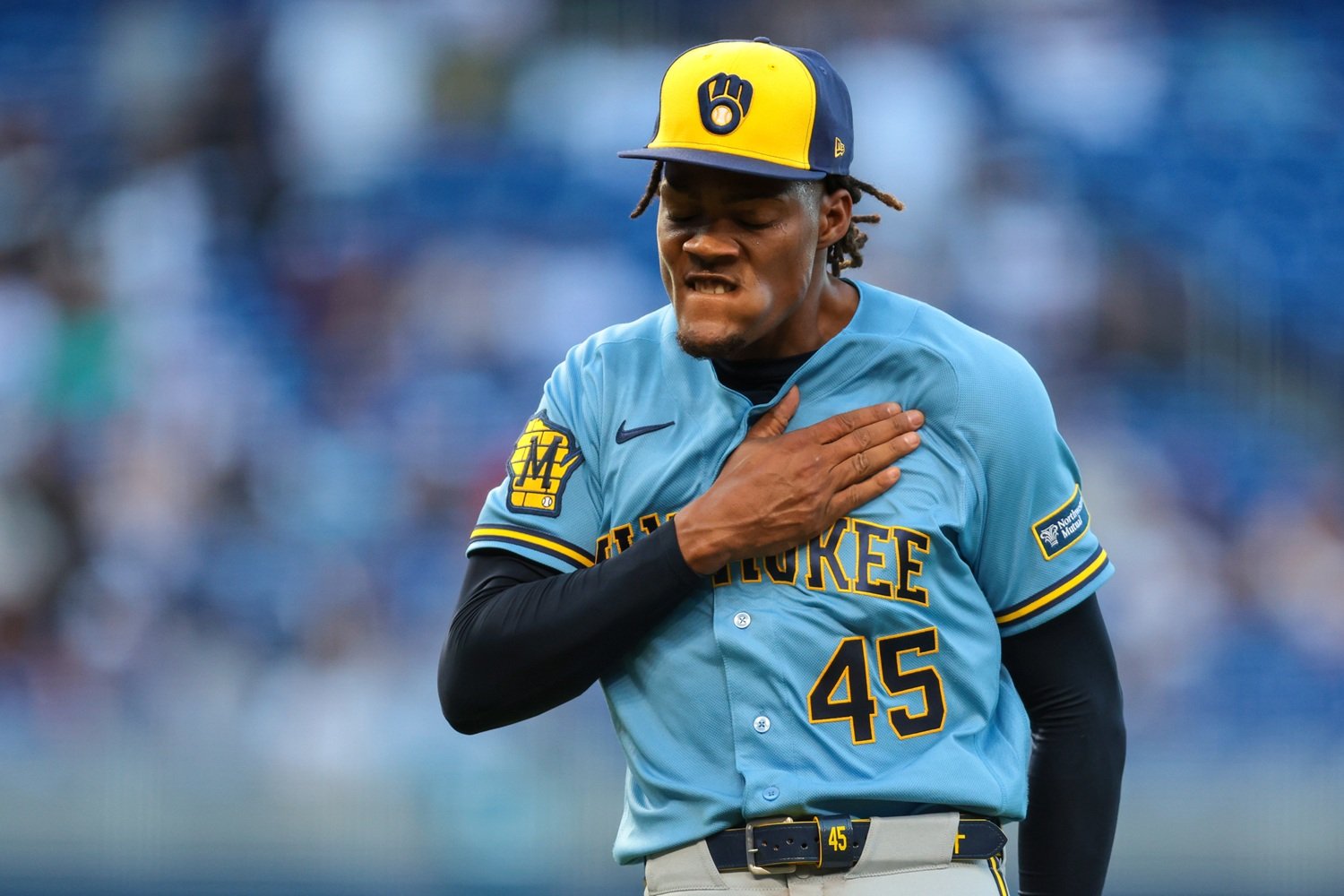 Abner Uribe is one of the most dynamic closers in baseball, and this lightning rod of energy belongs to the Milwaukee Brewers’ pitching staff. Whether it’s his electric sinker or the mannerisms that follow a key out, this is someone who has the baseball world’s attention. But if you look into his advanced analytics, you’ll find something even more notable. Background Uribe is a 25-year-old, hard-throwing right-handed pitcher who is originally from the Dominican Republic. The Brewers’ reliever has now appeared in four major-league seasons, with 142 2/3 innings and 166 strikeouts. He’s not only been quite productive, but dominant, with a 2.21 ERA since the start of 2025. Last season, the Brewers utilized him practically every other night, and he proved to be one of the most impactful hurlers in the game. Strengths In 2026, you need to throw hard. There are a few finesse-driven success stories out there, but the name of the game—especially for relievers—is having top-end velocity that speeds up the clock of a hitter and makes their job that much more difficult. The flame-throwing closer passes that test with flying colors, as he clocks in with an average fastball velocity of 98.3 miles per hour. While harder-thrown pitches can come right back and have more zip on them when they come off the bat, Uribe has been an expert at avoiding quality contact. His 3.2% barrel rate is one of the best in the game, directly correlating to a 33.3% hard-hit percentage. Above all else, this is someone who can consistently force opposing hitters to beat the ball into the ground. Look no further than his 49.2% ground ball rate, a mark well above average. Pitch Mix Unlike starting pitchers, the quality of pitches really outweighs the variance of a relief pitcher’s arsenal. In Uribe’s case, his bread and butter has been a 1-2 punch that has worked for the last four seasons. His sinker, which he utilizes 65% of the time, can saw off the swing of opposing right-handed hitters or run away from lefties. Uribe’s slider, which he uses on 35% of pitches, couldn’t be more stark in its differences from the sinker. Not only does it buzz in at 86.6 mph, almost a 12-mph difference, but it bites glove-side. Opposing batters are hitting just .200 against it through the first third of the season. Weakness One fallback to lock in on is the righty’s wavering command. While both of his options can bend between 12-18 inches in opposite directions, his 9.5% walk rate is worse than average. He’s relying more on the sinker now than in years past, as it's faring better (.236 BAA vs. .248 BAA last year), but if one of his pitches isn’t on, he’s essentially pigeon-holed between sticking it out or pivoting to his only other option. There is also, of course, the constant question of how well Uribe is controlling himself emotionally. It takes a certain poise to win in key, late-game moments, and he hasn't always demonstrated that mental toughness. Outlook Uribe isn't and won't be the team's sole closer any time soon. He's sharing that role with Trevor Megill, and indeed, Megill is getting more of the save chances lately. However, because of that ability to induce weak and ground-ball contact (as well as racking up the punchouts), Uribe is very much a co-relief ace for the Brewers, and one of the best righty relievers in the National League.
 -
Image courtesy of © Sam Navarro-Imagn Images Abner Uribe is one of the most dynamic closers in modern day baseball, and this lightning rod of energy belongs to the Milwaukee Brewers’ pitching staff. Whether it’s his electric sinker or the mannerisms that follow a key out, this is someone who has the baseball world’s attention. But if you look into his advanced analytics, you’ll find something even more notable. Let’s dive in. Background Uribe is a 25-year-old, hard-throwing right-handed pitcher who is originally from the Dominican Republic. The Brewers’ reliever has four seasons of major league experience under his belt, amounting to over 140 innings of work and north of 160 strikeouts in his big league career. He’s not only someone who has been quite productive for Milwaukee over his first few years, but this is somebody who logged a sub-2 earned run average over the course of 75 appearances. Think about that; the Brewers utilized him every other night and he proved to be one of the most impactful hurlers in the game. Let’s take a further look at what makes Uribe so dominant and how he’s at the heart of plenty of wins for a ball club that continues to prove the naysayers wrong. Strengths In 2026, you need to throw hard. There are a few, finesse-driven examples out there, but the name of the game, especially for relievers, is having top-end velocity that speeds up the clock of a hitter and makes their job that much more difficult. The flame-throwing closer passes that test with flying colors, as he clocks in with an average fastball velocity of 98.3 miles per hour (95th percentile). While harder-thrown pitches can come right back and have more zip on them when they come off the bat, Uribe has been an expert at avoiding quality contact. His 3.2% barrel percentage (93rd percentile) is one of the best rates among MLB pitchers, directly correlating to a 33.3% hard-hit percentage (77th percentile). Above all else, this is someone who can consistently force opposing hitters to beat the ball into the ground. Look no further than his 49.2% ground ball rate, a mark well above average at the 78th percentile. Pitch Mix Unlike starting pitchers, the quality of pitches really outweighs the variance of a relief pitcher’s arsenal. In Uribe’s case, his bread and butter has been a 1-2 punch that has worked for the last four seasons. His sinker, which he utilizes 65% of the time, can saw off the swing of opposing right-handed hitters or chase away from lefties at that 98.3 mph average. Uribe’s slider, which he uses on 35% of pitches, couldn’t be more stark in its differences from the sinker. Not only does it buzz in at 86.6 mph, almost a 12 mph difference, but it bites gloveside in the exact opposite direction. Opposing batters are hitting just .200 at it through the first third of the season. Weakness One fallback to lock in on is the righty’s wavering command. While both of his options can bend between 12-18 inches in opposite directions, his 9.5% walk rate (40th percentile) is below the league average. He’s relying more on the sinker now than in years past, as its faring better (.236 BAA vs. .248 BAA last year), but if one of his pitches isn’t on, he’s essentially pigeon-holed between sticking it out or pivoting to his only other option. Outlook Can Abner Uribe keep a firm hold on the team’s closer role? With Trevor McGill serving as the squad’s main form of competition for the spot, the hurler’s arsenal and velocity plays well with arbitration taking effect starting in 2028. View full article
-
Jackson Chourio was the Milwaukee Brewers' top prospect just a couple of years ago. Now, in his third season as a big leaguer, he's unlocking a level of his game that could make him worth far more than the team-friendly contract extension he signed a pair of seasons ago. View full video
-
Jackson Chourio was the Milwaukee Brewers' top prospect just a couple of years ago. Now, in his third season as a big leaguer, he's unlocking a level of his game that could make him worth far more than the team-friendly contract extension he signed a pair of seasons ago.
-
Abner Uribe is an electric, high-leverage reliever for the Milwaukee Brewers. A season removed from a run where he logged 75 appearances and a sub-2 earned run average in 2025, his sinker/slider combo makes up one of the deadliest arsenals in MLB. In this video, we'll break down what truly makes Uribe so lethal. View full video