


.png.9b3255335b0f586ff82d428f3bf6f962.png)
Yirsandy Rodríguez
-
Posts
20 -
Joined
-
Last visited
Yirsandy Rodríguez's Achievements


-
.thumb.png.97a48f5e988eb5cd844bab443feb771d.png) Image courtesy of © Jeff Hanisch-Imagn Images Less than three weeks ago, the Brewers looked like a below-average offense searching for answers. Today, they're producing runs at a pace no team in baseball has matched during the first half of June. The transformation wasn't driven by a single superstar or an unsustainable hot streak. Instead, it has come from a collective surge that has reshaped the identity of Milwaukee's lineup. A jump from a 90 wRC+ to a 156 wRC+ doesn't happen by accident. If that kind of improvement played out over a full season, we'd be talking about one of the most dramatic offensive turnarounds in recent baseball history. Milwaukee pulled it off in a matter of weeks, evolving from a below-average offense into the most productive lineup in the majors during the opening weeks of June. The contrast between those two versions of the lineup is impossible to miss. By the end of May, Milwaukee was hitting just .242/.316/.354 as a team, posting a .112 ISO and launching only 18 home runs across 26 games. The Brewers rarely generated consistent damage and often depended on stringing together multiple baserunners to manufacture runs. When timely contact failed to arrive, the lineup had few ways to compensate. Two weeks later, the picture looks entirely different. The Brewers have slashed .309/.392/.529 in June, hitting 21 home runs in just 12 games while producing a 156 wRC+, the best mark in Major League Baseball during that span. One important piece of context is Milwaukee's recent schedule. The Brewers spent part of this surge on the road in Colorado and Las Vegas, two of the most favorable offensive environments in professional baseball. Those conditions likely contributed to some of the eye-catching traditional numbers, particularly the club's .529 slugging percentage and .220 ISO during the month. However, the park-adjusted production suggests the breakout was not driven solely by those environments. Milwaukee posted a 155 wRC+ during the Colorado and Athletics portions of the road trip, but also recorded a 145 wRC+ in seven games against San Francisco and Philadelphia during the same stretch. While Colorado and Las Vegas may have amplified some of the raw offensive totals, the difference in park-adjusted production was relatively modest. The Brewers remained one of baseball's most productive offenses regardless of venue, and the underlying gains in walk rate, strikeout rate, power production, and individual hitter performance point toward a broader offensive improvement rather than a surge created primarily by ballpark conditions. Month wRC+ BB% K% ISO May 90 9.2% 21.4% .112 June 156 12.2% 19.1% .220 The improvement extends well beyond a single category. Milwaukee is drawing more walks, striking out less often, and generating far more power than it did a month ago. Offensive breakouts of this magnitude are often accompanied by rising strikeout rates or an overwhelming dependence on home runs. Instead, the Brewers have paired better swing decisions with louder contact, creating the kind of impact that was missing throughout much of May. The team-wide numbers, however, tell only part of the story. Surges like this are always driven by individual players changing the equation, and in Milwaukee, several hitters began doing exactly that at the same time. Player May wRC+ June wRC+ Change Jackson Chourio 102 244 142 Garrett Mitchell 82 177 95 Sal Frelick 40 125 85 Jake Bauers 159 208 49 Andrew Vaughn 171 207 36 Christian Yelich 96 128 32 William Contreras 104 96 -8 The numbers point to something larger than a few players getting hot. Chourio, Mitchell, and Frelick entered June from very different positions, yet all three found another gear almost simultaneously. Just as important, Bauers and Vaughn avoided the regression that often accompanies team-wide offensive explosions, allowing Milwaukee's gains to compound rather than merely offset declines elsewhere in the lineup. The most dramatic transformation belongs to Jackson Chourio. Although he finished May with a respectable 102 wRC+, he still wasn't delivering the level of impact Milwaukee envisioned. In June, his ISO has skyrocketed from .138 to .407, his strikeout rate has fallen from 28.7% to 18.3%, and his slugging percentage has climbed to .815. This isn't a hot streak. It's a completely different hitter profile. Yet the Brewers' breakout can't be explained through Chourio alone. Garrett Mitchell has gone from an 82 wRC+ to a 177 mark behind a .286 ISO and a .440 BABIP. Sal Frelick, after enduring a miserable May that produced a 40 wRC+, has raised his walk rate to 14% while hitting .297 in June. Both have gone from offensive weak spots to productive pieces of the lineup. While several hitters were rediscovering their form, Jake Bauers and Andrew Vaughn kept the engine running. Bauers has walked in 28.6% of his plate appearances this month, pushing his OBP to .469. Vaughn has nearly eliminated strikeouts altogether, carrying a 5.6% strikeout rate while hitting .406. That consistency helps explain why Milwaukee's offensive leap has been so dramatic. The best offense in baseball didn't emerge because one of its stars suddenly entered MVP mode. Milwaukee has reached this level while receiving meaningful contributions from virtually every corner of the lineup, a far more encouraging sign than relying on an extraordinary individual performance. That doesn't mean the Brewers will maintain a 156 wRC+ for the rest of the season. No team does. What matters is that June's surge is built on tangible foundations: Bauers's improved plate discipline, Vaughn's elite contact skills, legitimate power growth from Chourio and Mitchell, and quieter but meaningful rebounds from players like Frelick. A few weeks ago, Milwaukee looked like an offense trying to survive. Today, it looks like a lineup capable of creating damage from multiple spots in the batting order. Whether the Brewers remain baseball's most productive offense for the rest of the summer is almost beside the point. More important is how they've reached this level. This isn't a lineup being carried by a single superstar. It's a lineup getting meaningful production from nearly every spot in the order. The Brewers who finished May searching for answers and the Brewers who have spent June overwhelming opposing pitching barely resemble the same team. View full article
Image courtesy of © Jeff Hanisch-Imagn Images Less than three weeks ago, the Brewers looked like a below-average offense searching for answers. Today, they're producing runs at a pace no team in baseball has matched during the first half of June. The transformation wasn't driven by a single superstar or an unsustainable hot streak. Instead, it has come from a collective surge that has reshaped the identity of Milwaukee's lineup. A jump from a 90 wRC+ to a 156 wRC+ doesn't happen by accident. If that kind of improvement played out over a full season, we'd be talking about one of the most dramatic offensive turnarounds in recent baseball history. Milwaukee pulled it off in a matter of weeks, evolving from a below-average offense into the most productive lineup in the majors during the opening weeks of June. The contrast between those two versions of the lineup is impossible to miss. By the end of May, Milwaukee was hitting just .242/.316/.354 as a team, posting a .112 ISO and launching only 18 home runs across 26 games. The Brewers rarely generated consistent damage and often depended on stringing together multiple baserunners to manufacture runs. When timely contact failed to arrive, the lineup had few ways to compensate. Two weeks later, the picture looks entirely different. The Brewers have slashed .309/.392/.529 in June, hitting 21 home runs in just 12 games while producing a 156 wRC+, the best mark in Major League Baseball during that span. One important piece of context is Milwaukee's recent schedule. The Brewers spent part of this surge on the road in Colorado and Las Vegas, two of the most favorable offensive environments in professional baseball. Those conditions likely contributed to some of the eye-catching traditional numbers, particularly the club's .529 slugging percentage and .220 ISO during the month. However, the park-adjusted production suggests the breakout was not driven solely by those environments. Milwaukee posted a 155 wRC+ during the Colorado and Athletics portions of the road trip, but also recorded a 145 wRC+ in seven games against San Francisco and Philadelphia during the same stretch. While Colorado and Las Vegas may have amplified some of the raw offensive totals, the difference in park-adjusted production was relatively modest. The Brewers remained one of baseball's most productive offenses regardless of venue, and the underlying gains in walk rate, strikeout rate, power production, and individual hitter performance point toward a broader offensive improvement rather than a surge created primarily by ballpark conditions. Month wRC+ BB% K% ISO May 90 9.2% 21.4% .112 June 156 12.2% 19.1% .220 The improvement extends well beyond a single category. Milwaukee is drawing more walks, striking out less often, and generating far more power than it did a month ago. Offensive breakouts of this magnitude are often accompanied by rising strikeout rates or an overwhelming dependence on home runs. Instead, the Brewers have paired better swing decisions with louder contact, creating the kind of impact that was missing throughout much of May. The team-wide numbers, however, tell only part of the story. Surges like this are always driven by individual players changing the equation, and in Milwaukee, several hitters began doing exactly that at the same time. Player May wRC+ June wRC+ Change Jackson Chourio 102 244 142 Garrett Mitchell 82 177 95 Sal Frelick 40 125 85 Jake Bauers 159 208 49 Andrew Vaughn 171 207 36 Christian Yelich 96 128 32 William Contreras 104 96 -8 The numbers point to something larger than a few players getting hot. Chourio, Mitchell, and Frelick entered June from very different positions, yet all three found another gear almost simultaneously. Just as important, Bauers and Vaughn avoided the regression that often accompanies team-wide offensive explosions, allowing Milwaukee's gains to compound rather than merely offset declines elsewhere in the lineup. The most dramatic transformation belongs to Jackson Chourio. Although he finished May with a respectable 102 wRC+, he still wasn't delivering the level of impact Milwaukee envisioned. In June, his ISO has skyrocketed from .138 to .407, his strikeout rate has fallen from 28.7% to 18.3%, and his slugging percentage has climbed to .815. This isn't a hot streak. It's a completely different hitter profile. Yet the Brewers' breakout can't be explained through Chourio alone. Garrett Mitchell has gone from an 82 wRC+ to a 177 mark behind a .286 ISO and a .440 BABIP. Sal Frelick, after enduring a miserable May that produced a 40 wRC+, has raised his walk rate to 14% while hitting .297 in June. Both have gone from offensive weak spots to productive pieces of the lineup. While several hitters were rediscovering their form, Jake Bauers and Andrew Vaughn kept the engine running. Bauers has walked in 28.6% of his plate appearances this month, pushing his OBP to .469. Vaughn has nearly eliminated strikeouts altogether, carrying a 5.6% strikeout rate while hitting .406. That consistency helps explain why Milwaukee's offensive leap has been so dramatic. The best offense in baseball didn't emerge because one of its stars suddenly entered MVP mode. Milwaukee has reached this level while receiving meaningful contributions from virtually every corner of the lineup, a far more encouraging sign than relying on an extraordinary individual performance. That doesn't mean the Brewers will maintain a 156 wRC+ for the rest of the season. No team does. What matters is that June's surge is built on tangible foundations: Bauers's improved plate discipline, Vaughn's elite contact skills, legitimate power growth from Chourio and Mitchell, and quieter but meaningful rebounds from players like Frelick. A few weeks ago, Milwaukee looked like an offense trying to survive. Today, it looks like a lineup capable of creating damage from multiple spots in the batting order. Whether the Brewers remain baseball's most productive offense for the rest of the summer is almost beside the point. More important is how they've reached this level. This isn't a lineup being carried by a single superstar. It's a lineup getting meaningful production from nearly every spot in the order. The Brewers who finished May searching for answers and the Brewers who have spent June overwhelming opposing pitching barely resemble the same team. View full article -
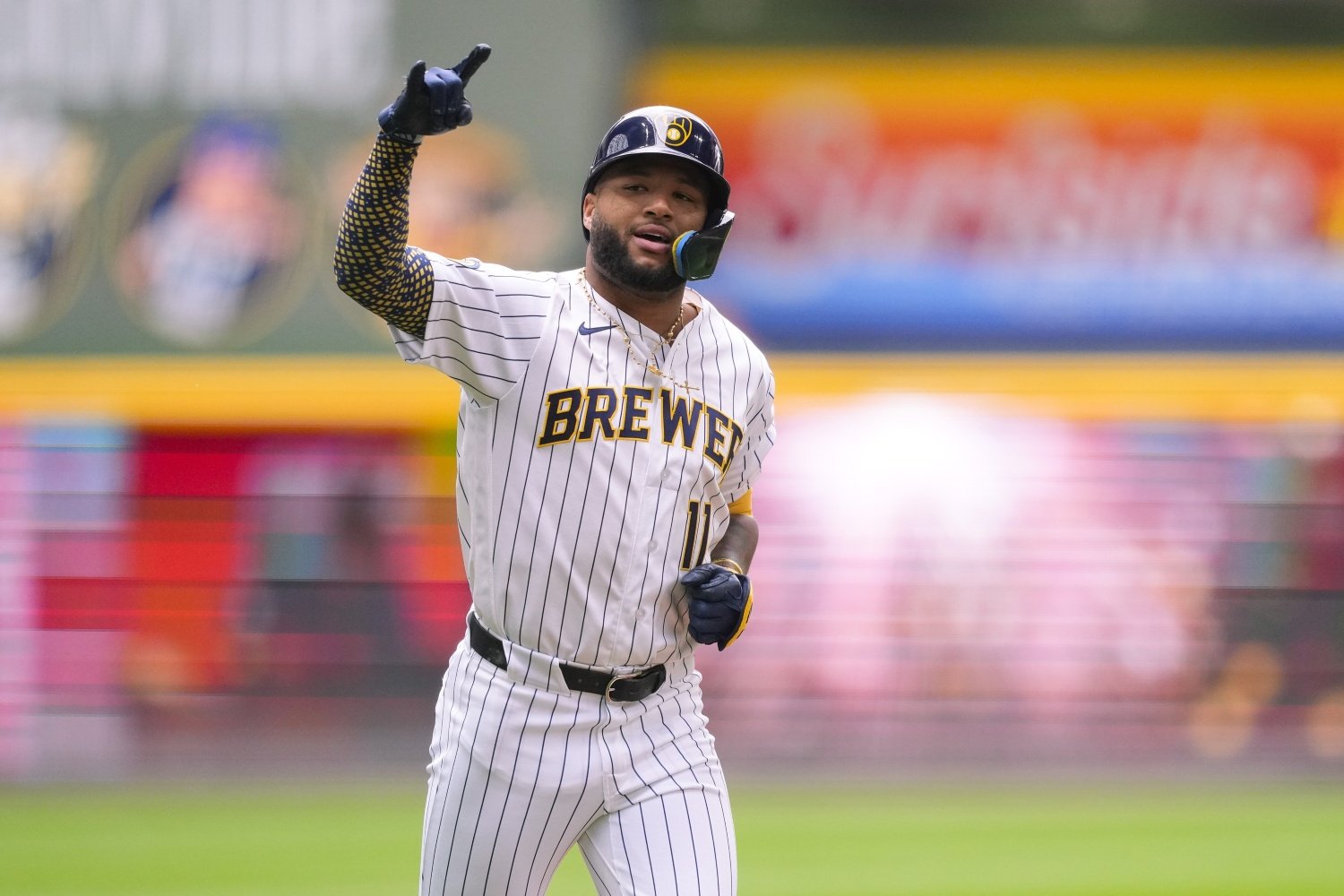 Less than three weeks ago, the Brewers looked like a below-average offense searching for answers. Today, they're producing runs at a pace no team in baseball has matched during the first half of June. The transformation wasn't driven by a single superstar or an unsustainable hot streak. Instead, it has come from a collective surge that has reshaped the identity of Milwaukee's lineup. A jump from a 90 wRC+ to a 156 wRC+ doesn't happen by accident. If that kind of improvement played out over a full season, we'd be talking about one of the most dramatic offensive turnarounds in recent baseball history. Milwaukee pulled it off in a matter of weeks, evolving from a below-average offense into the most productive lineup in the majors during the opening weeks of June. The contrast between those two versions of the lineup is impossible to miss. By the end of May, Milwaukee was hitting just .242/.316/.354 as a team, posting a .112 ISO and launching only 18 home runs across 26 games. The Brewers rarely generated consistent damage and often depended on stringing together multiple baserunners to manufacture runs. When timely contact failed to arrive, the lineup had few ways to compensate. Two weeks later, the picture looks entirely different. The Brewers have slashed .309/.392/.529 in June, hitting 21 home runs in just 12 games while producing a 156 wRC+, the best mark in Major League Baseball during that span. One important piece of context is Milwaukee's recent schedule. The Brewers spent part of this surge on the road in Colorado and Las Vegas, two of the most favorable offensive environments in professional baseball. Those conditions likely contributed to some of the eye-catching traditional numbers, particularly the club's .529 slugging percentage and .220 ISO during the month. However, the park-adjusted production suggests the breakout was not driven solely by those environments. Milwaukee posted a 155 wRC+ during the Colorado and Athletics portions of the road trip, but also recorded a 145 wRC+ in seven games against San Francisco and Philadelphia during the same stretch. While Colorado and Las Vegas may have amplified some of the raw offensive totals, the difference in park-adjusted production was relatively modest. The Brewers remained one of baseball's most productive offenses regardless of venue, and the underlying gains in walk rate, strikeout rate, power production, and individual hitter performance point toward a broader offensive improvement rather than a surge created primarily by ballpark conditions. Month wRC+ BB% K% ISO May 90 9.2% 21.4% .112 June 156 12.2% 19.1% .220 The improvement extends well beyond a single category. Milwaukee is drawing more walks, striking out less often, and generating far more power than it did a month ago. Offensive breakouts of this magnitude are often accompanied by rising strikeout rates or an overwhelming dependence on home runs. Instead, the Brewers have paired better swing decisions with louder contact, creating the kind of impact that was missing throughout much of May. The team-wide numbers, however, tell only part of the story. Surges like this are always driven by individual players changing the equation, and in Milwaukee, several hitters began doing exactly that at the same time. Player May wRC+ June wRC+ Change Jackson Chourio 102 244 142 Garrett Mitchell 82 177 95 Sal Frelick 40 125 85 Jake Bauers 159 208 49 Andrew Vaughn 171 207 36 Christian Yelich 96 128 32 William Contreras 104 96 -8 The numbers point to something larger than a few players getting hot. Chourio, Mitchell, and Frelick entered June from very different positions, yet all three found another gear almost simultaneously. Just as important, Bauers and Vaughn avoided the regression that often accompanies team-wide offensive explosions, allowing Milwaukee's gains to compound rather than merely offset declines elsewhere in the lineup. The most dramatic transformation belongs to Jackson Chourio. Although he finished May with a respectable 102 wRC+, he still wasn't delivering the level of impact Milwaukee envisioned. In June, his ISO has skyrocketed from .138 to .407, his strikeout rate has fallen from 28.7% to 18.3%, and his slugging percentage has climbed to .815. This isn't a hot streak. It's a completely different hitter profile. Yet the Brewers' breakout can't be explained through Chourio alone. Garrett Mitchell has gone from an 82 wRC+ to a 177 mark behind a .286 ISO and a .440 BABIP. Sal Frelick, after enduring a miserable May that produced a 40 wRC+, has raised his walk rate to 14% while hitting .297 in June. Both have gone from offensive weak spots to productive pieces of the lineup. While several hitters were rediscovering their form, Jake Bauers and Andrew Vaughn kept the engine running. Bauers has walked in 28.6% of his plate appearances this month, pushing his OBP to .469. Vaughn has nearly eliminated strikeouts altogether, carrying a 5.6% strikeout rate while hitting .406. That consistency helps explain why Milwaukee's offensive leap has been so dramatic. The best offense in baseball didn't emerge because one of its stars suddenly entered MVP mode. Milwaukee has reached this level while receiving meaningful contributions from virtually every corner of the lineup, a far more encouraging sign than relying on an extraordinary individual performance. That doesn't mean the Brewers will maintain a 156 wRC+ for the rest of the season. No team does. What matters is that June's surge is built on tangible foundations: Bauers's improved plate discipline, Vaughn's elite contact skills, legitimate power growth from Chourio and Mitchell, and quieter but meaningful rebounds from players like Frelick. A few weeks ago, Milwaukee looked like an offense trying to survive. Today, it looks like a lineup capable of creating damage from multiple spots in the batting order. Whether the Brewers remain baseball's most productive offense for the rest of the summer is almost beside the point. More important is how they've reached this level. This isn't a lineup being carried by a single superstar. It's a lineup getting meaningful production from nearly every spot in the order. The Brewers who finished May searching for answers and the Brewers who have spent June overwhelming opposing pitching barely resemble the same team.
- 1 comment
-
- 3
-

-
- jackson chourio
- andrew vaughn
- (and 2 more)
-
Yirsandy Rodríguez changed their profile photo
-
Image courtesy of © Benny Sieu-Imagn Images Kyle Harrison lifted his eyes and saw the crowd on its feet, applauding at American Family Field as he made his way back toward the Brewers' dugout. His 11th start of the season had ended with yet another dominant line: 5 2/3 innings, one run allowed, 12 strikeouts, and only two walks against the San Francisco Giants. Harrison reached double-digit strikeouts by the fourth inning and matched a career high with 12 punchouts, including three against Rafael Devers. In the sixth, a solo home run by Willy Adames finally snapped his scoreless streak after 23 consecutive innings, and after issuing a walk to Matt Chapman, his night was over. Even then, Harrison's ERA remained at 1.57, accompanied by a 2.83 xFIP and 1.9 fWAR. Any metric you choose to look at still feels almost unbelievable. This is a new and completely reinvented Harrison, one whose four-seam fastball has climbed into the Top 10 pitches in baseball in Run Value (9) and whose slurve may be the best pitch of its kind in the game right now. Some numbers tell a story, and others simply leave you speechless. Harrison has now made 11 starts in Milwaukee, and the baseball world can no longer look the other way. He's already put up the best ERA through one's first 10 starts of a season as a left-handed starter for the Brewers—not in the modern pitching era, not in a period defined by hitter-friendly environments and ever-increasing velocity, but across the entire history of the franchise, stretching back to 1970. The names surrounding him are not ordinary ones. Teddy Higuera appears three different times. CC Sabathia sits in second place. And yet, at the very top of the list, above all of them, stands Harrison. Rk Player Team Span Started Span Ended ERA W L GS CG SHO IP ERA SO% SO-BB HR% H R ER HR BB SO BF 1 Kyle Harrison MIL 3/30/2026 5/26/2026 1.57 6 1 10 0 0 51.2 1.57 29.6% 4.4 1.5% 39 9 9 3 14 61 206 2 CC Sabathia MIL 7/8/2008 8/24/2008 1.59 8 0 10 5 2 79 1.59 23.5% 4.9 1.3% 68 17 14 4 15 74 315 3 Teddy Higuera MIL 4/10/1990 6/13/1990 1.78 5 1 10 1 1 55.2 1.78 18.1% 2.4 0.9% 44 15 11 2 17 41 226 4 Bill Travers MIL 4/10/1976 6/3/1976 1.95 6 2 10 3 1 69.1 1.95 16.0% 1.6 0.0% 61 22 15 0 29 47 293 5 Wade Miley MIL 5/2/2018 8/24/2018 2.32 2 2 10 0 0 50.1 2.32 15.4% 1.6 1.4% 45 17 13 3 21 33 214 6 Eric Lauer MIL 4/12/2022 6/5/2022 2.38 5 1 10 0 0 56.2 2.38 27.7% 3.8 3.4% 46 20 15 8 17 65 235 7 Teddy Higuera MIL 4/4/1988 5/30/1988 2.54 4 3 10 2 0 71 2.54 20.7% 3.9 1.8% 56 22 20 5 15 58 280 8 Teddy Higuera MIL 4/7/1986 5/22/1986 2.59 5 4 10 4 0 76.1 2.59 22.3% 2.8 3.2% 62 27 22 10 25 70 314 9 Al Downing MIL 6/28/1970 8/21/1970 2.78 1 7 10 1 0 58.1 2.78 14.9% 1.1 1.6% 45 30 18 4 36 38 255 10 Chris Capuano MIL 4/4/2006 5/21/2006 2.78 5 3 10 1 1 68 2.78 21.7% 3.8 1.8% 57 24 21 5 16 60 277 The top of that leaderboard becomes a roadmap of Milwaukee's left-handed pitching history. Higuera dominated it in three separate seasons, as he made it a habit to get off to tremendous starts in the second half of the 1980s. Chris Capuano is there. Wade Miley is there. Eric Lauer is there. Less than a year ago, he was being shuffled between the rotation and the bullpen in San Francisco and Boston. Harrison posted a 4.39 ERA over parts of three seasons with those two organizations. Now, that looks like it will be the prologue in a much more exultant career story. Nine of his first 10 starts ended with one earned run allowed or fewer. Six of those outings ended with a zero in the earned-run column. The consistency of the numbers speaks to something more meaningful than a hot streak. It speaks to a pitcher who may have found something real. Sabathia, in his own 11th start as a Brewer back in 2008, went even further, throwing a complete-game one-hitter with 11 strikeouts in a performance that came agonizingly close to being a no-hitter. That outing allowed Sabathia to move ahead in cumulative ERA, but the fact that anyone is comparing Harrison to Sabathia's legendary (however brief) stint in a Brewers uniform at this point in the conversation says everything that needs to be said. Harrison's numbers reveal a clear story about where he is at his most dangerous. The best version of him is a combination of power and conviction: complete command of the strike zone, relentless attack, and a pitch mix that has limited damage to a degree he had never previously achieved. In some of his most dominant outings of the season—April 26 against Pittsburgh, when he allowed just one hit and struck out 12 across six innings, or May 20 against the Cubs, when he surrendered only two hits while striking out 11 over seven scoreless frames—the formula has remained the same: A fastball that dominates the edges of the strike zone. Very few walks. Plenty of strikeouts. The depth of his outings has grown as the season has progressed. His first three appearances were shorter, ranging from 4 1/3 to 5 2/3 innings, but beginning with his fourth start, Harrison consistently found ways to work deeper into games, regularly reaching the sixth and seventh innings. Command has been the key. He's gone away from the kick-change he added to his arsenal recently when it hasn't landed in the zone often enough for his tastes; he's been equally willing to lean away from the slurve. His fastball is good enough to force whiffs, called strikes and weak contact, so at times, he's simply pounding hitters with it, over and over. When hitters cannot square up the baseball and a pitcher refuses to hand out free bases, the result becomes almost inevitable: a shutout, or something very close to one. But this is not simply the story of a pitcher having a good season. This is a story about perseverance, redemption, and what can happen when a player finally finds the right place. Harrison was traded twice in less than a year. Every trade represents an organization saying, through its actions, that it is not entirely convinced you are "the guy." Harrison arrived in Milwaukee as another name included in a transaction package, and now he is stealing the spotlight from the rest of the league. The Brewers, winners of 19 of their previous 24 games entering that start, continue to demonstrate something that is hardly news by now: they possess a special ability to unlock pitchers, to provide them with context, confidence, and the structure necessary to flourish. Pat Murphy saw Harrison pitch against Milwaukee while he was still with San Francisco in 2024 and liked what he saw, despite the unfavorable result for the young left-hander. That says a great deal about the evaluation skills of this coaching staff. "It's nice to finally have found a home here," Harrison said after the game. It's nice for Brewers fans to have found him, too. View full article
-
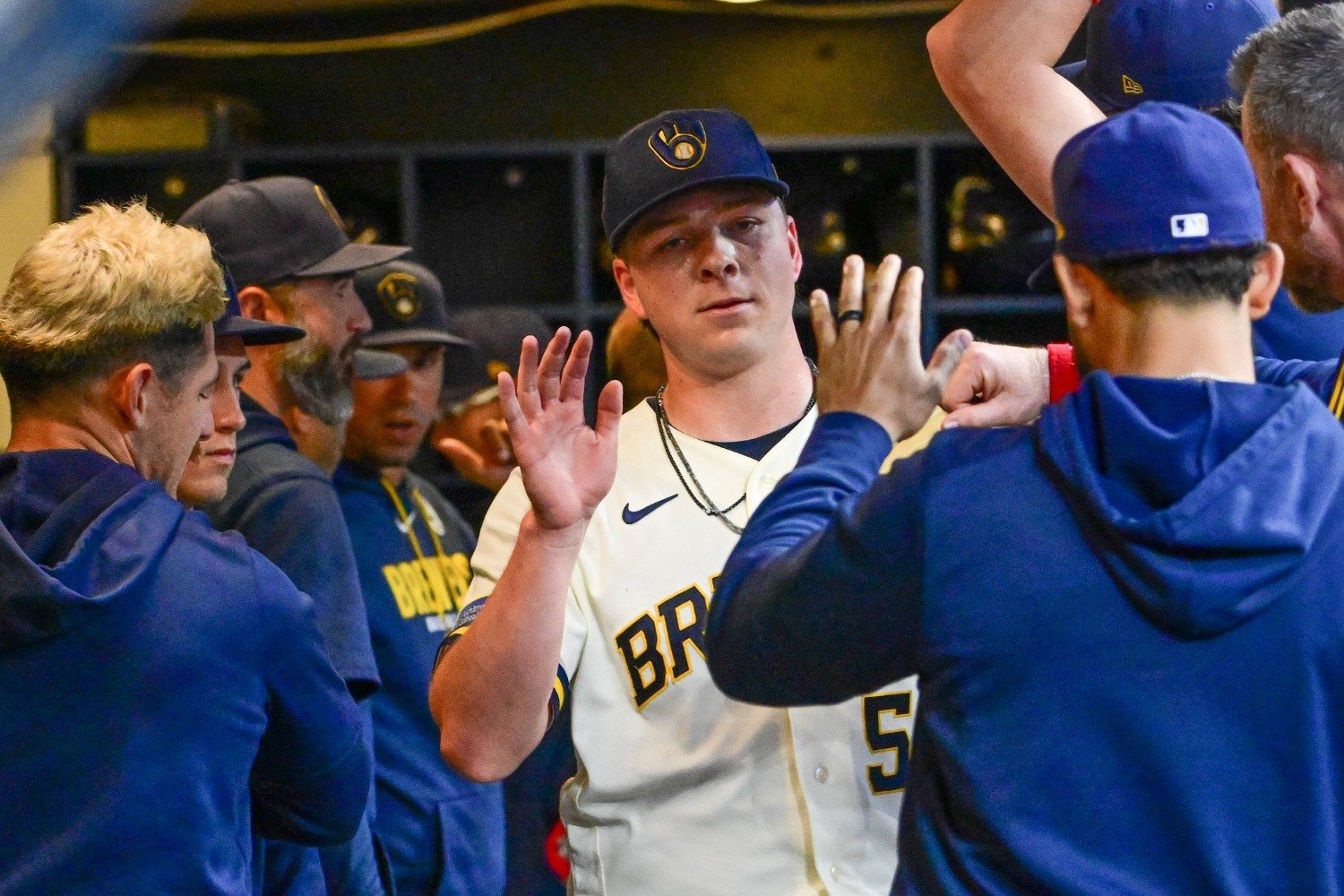 Kyle Harrison lifted his eyes and saw the crowd on its feet, applauding at American Family Field as he made his way back toward the Brewers' dugout. His 11th start of the season had ended with yet another dominant line: 5 2/3 innings, one run allowed, 12 strikeouts, and only two walks against the San Francisco Giants. Harrison reached double-digit strikeouts by the fourth inning and matched a career high with 12 punchouts, including three against Rafael Devers. In the sixth, a solo home run by Willy Adames finally snapped his scoreless streak after 23 consecutive innings, and after issuing a walk to Matt Chapman, his night was over. Even then, Harrison's ERA remained at 1.57, accompanied by a 2.83 xFIP and 1.9 fWAR. Any metric you choose to look at still feels almost unbelievable. This is a new and completely reinvented Harrison, one whose four-seam fastball has climbed into the Top 10 pitches in baseball in Run Value (9) and whose slurve may be the best pitch of its kind in the game right now. Some numbers tell a story, and others simply leave you speechless. Harrison has now made 11 starts in Milwaukee, and the baseball world can no longer look the other way. He's already put up the best ERA through one's first 10 starts of a season as a left-handed starter for the Brewers—not in the modern pitching era, not in a period defined by hitter-friendly environments and ever-increasing velocity, but across the entire history of the franchise, stretching back to 1970. The names surrounding him are not ordinary ones. Teddy Higuera appears three different times. CC Sabathia sits in second place. And yet, at the very top of the list, above all of them, stands Harrison. Rk Player Team Span Started Span Ended ERA W L GS CG SHO IP ERA SO% SO-BB HR% H R ER HR BB SO BF 1 Kyle Harrison MIL 3/30/2026 5/26/2026 1.57 6 1 10 0 0 51.2 1.57 29.6% 4.4 1.5% 39 9 9 3 14 61 206 2 CC Sabathia MIL 7/8/2008 8/24/2008 1.59 8 0 10 5 2 79 1.59 23.5% 4.9 1.3% 68 17 14 4 15 74 315 3 Teddy Higuera MIL 4/10/1990 6/13/1990 1.78 5 1 10 1 1 55.2 1.78 18.1% 2.4 0.9% 44 15 11 2 17 41 226 4 Bill Travers MIL 4/10/1976 6/3/1976 1.95 6 2 10 3 1 69.1 1.95 16.0% 1.6 0.0% 61 22 15 0 29 47 293 5 Wade Miley MIL 5/2/2018 8/24/2018 2.32 2 2 10 0 0 50.1 2.32 15.4% 1.6 1.4% 45 17 13 3 21 33 214 6 Eric Lauer MIL 4/12/2022 6/5/2022 2.38 5 1 10 0 0 56.2 2.38 27.7% 3.8 3.4% 46 20 15 8 17 65 235 7 Teddy Higuera MIL 4/4/1988 5/30/1988 2.54 4 3 10 2 0 71 2.54 20.7% 3.9 1.8% 56 22 20 5 15 58 280 8 Teddy Higuera MIL 4/7/1986 5/22/1986 2.59 5 4 10 4 0 76.1 2.59 22.3% 2.8 3.2% 62 27 22 10 25 70 314 9 Al Downing MIL 6/28/1970 8/21/1970 2.78 1 7 10 1 0 58.1 2.78 14.9% 1.1 1.6% 45 30 18 4 36 38 255 10 Chris Capuano MIL 4/4/2006 5/21/2006 2.78 5 3 10 1 1 68 2.78 21.7% 3.8 1.8% 57 24 21 5 16 60 277 The top of that leaderboard becomes a roadmap of Milwaukee's left-handed pitching history. Higuera dominated it in three separate seasons, as he made it a habit to get off to tremendous starts in the second half of the 1980s. Chris Capuano is there. Wade Miley is there. Eric Lauer is there. Less than a year ago, he was being shuffled between the rotation and the bullpen in San Francisco and Boston. Harrison posted a 4.39 ERA over parts of three seasons with those two organizations. Now, that looks like it will be the prologue in a much more exultant career story. Nine of his first 10 starts ended with one earned run allowed or fewer. Six of those outings ended with a zero in the earned-run column. The consistency of the numbers speaks to something more meaningful than a hot streak. It speaks to a pitcher who may have found something real. Sabathia, in his own 11th start as a Brewer back in 2008, went even further, throwing a complete-game one-hitter with 11 strikeouts in a performance that came agonizingly close to being a no-hitter. That outing allowed Sabathia to move ahead in cumulative ERA, but the fact that anyone is comparing Harrison to Sabathia's legendary (however brief) stint in a Brewers uniform at this point in the conversation says everything that needs to be said. Harrison's numbers reveal a clear story about where he is at his most dangerous. The best version of him is a combination of power and conviction: complete command of the strike zone, relentless attack, and a pitch mix that has limited damage to a degree he had never previously achieved. In some of his most dominant outings of the season—April 26 against Pittsburgh, when he allowed just one hit and struck out 12 across six innings, or May 20 against the Cubs, when he surrendered only two hits while striking out 11 over seven scoreless frames—the formula has remained the same: A fastball that dominates the edges of the strike zone. Very few walks. Plenty of strikeouts. The depth of his outings has grown as the season has progressed. His first three appearances were shorter, ranging from 4 1/3 to 5 2/3 innings, but beginning with his fourth start, Harrison consistently found ways to work deeper into games, regularly reaching the sixth and seventh innings. Command has been the key. He's gone away from the kick-change he added to his arsenal recently when it hasn't landed in the zone often enough for his tastes; he's been equally willing to lean away from the slurve. His fastball is good enough to force whiffs, called strikes and weak contact, so at times, he's simply pounding hitters with it, over and over. When hitters cannot square up the baseball and a pitcher refuses to hand out free bases, the result becomes almost inevitable: a shutout, or something very close to one. But this is not simply the story of a pitcher having a good season. This is a story about perseverance, redemption, and what can happen when a player finally finds the right place. Harrison was traded twice in less than a year. Every trade represents an organization saying, through its actions, that it is not entirely convinced you are "the guy." Harrison arrived in Milwaukee as another name included in a transaction package, and now he is stealing the spotlight from the rest of the league. The Brewers, winners of 19 of their previous 24 games entering that start, continue to demonstrate something that is hardly news by now: they possess a special ability to unlock pitchers, to provide them with context, confidence, and the structure necessary to flourish. Pat Murphy saw Harrison pitch against Milwaukee while he was still with San Francisco in 2024 and liked what he saw, despite the unfavorable result for the young left-hander. That says a great deal about the evaluation skills of this coaching staff. "It's nice to finally have found a home here," Harrison said after the game. It's nice for Brewers fans to have found him, too.
 -
Fair point. And honestly, that reaction is probably part of why I wrote it. For Brewers fans, 2011 is remembered as a magical season—but it's also impossible to separate it from what happened in October. St. Louis didn't just win that NLCS 4-2. David Freese and Albert Pujols essentially turned the series into their personal showcase, combining to hit .511 (23-for-45) with 5 home runs and 18 RBI. Freese alone hit .545 with 3 homers and 9 RBI and was named NLCS MVP. The Cardinals' pitching was just as important. Chris Carpenter, Lance Lynn, Octavio Dotel, and Marc Rzepczynski repeatedly shut down key Brewers rallies and helped St. Louis win four of the final five games after Milwaukee took Game 1. That's actually part of the reason the comparison interested me. The Brewers swept the Cardinals at home in June 2011, then saw St. Louis get the last word when it mattered most. Fifteen years later, Milwaukee has completed another home sweep of the Cardinals, but this time with a club built very differently—one that hopes the story ends somewhere other than where 2011 ended. So I completely understand not wanting reminders of 2011. For Brewers fans, it remains one of the most important seasons in franchise history—and one of the most heartbreaking. And thanks for reading and taking the time to comment. I always appreciate the discussion.
-
Image courtesy of © Jeff Hanisch, Michael McLoone-Imagn Images There is a particular kind of happiness in baseball that has no equivalent in other sports. It's not the euphoria of a touchdown or a last-second goal. It's something slower and more settled—more like finding an old letter in a drawer you hadn't opened in years. Baseball allows for that luxury: meaningful repetition. The chance to return to the same place and discover that time, which transforms everything, sometimes also gifts you perfect symmetry. That's what happened in Milwaukee between Monday, May 25 and Wednesday, May 27, 2026. The Brewers, leaders of the National League Central, hosted the St. Louis Cardinals and swept them in three games, exactly as they had done in this same ballpark—then called Miller Park, now American Family Field or (around here, and someday, God willing, everywhere) Uecker Field—between June 10 and June 12, 2011. Two home sweeps against the same rival, separated by fifteen years of history, failures, rebuilds, and all the dark theology of teams trying to become something, without ever being able to guarantee it. In 2011, that sweep arrived in the middle of what many still remember as the most exciting season in recent franchise history. Ron Roenicke’s Brewers won 96 games that year, reached the National League Championship Series, and gave Milwaukee something the city had not tasted since the days of Yount and Molitor: the collective sense that something great might happen. In 2026, Pat Murphy and his club already own 33 wins in 53 games; hold a four-and-a-half-game lead over those same Cardinals; and are producing something the city also has not experienced in a very long time: certainty, not hope, that something great is already happening. JUNE 2011: THE ORIGINAL SWEEP Three games · Miller Park · Milwaukee, Wisconsin To understand what that 2011 sweep was, you have to understand the context. The Cardinals arrived in Milwaukee fighting to stay alive in the division race. The Brewers were already emerging as the team to beat in the Central. And baseball, which is a sport of ego and blunt force, had prepared a lesson. Game 1 | June 10, 2011 “The Night of Narveson and Craig Counsell’s Triple” Milwaukee 8, St. Louis 0 Chris Narveson threw eight scoreless innings against one of the most dangerous lineups in the National League, led by Albert Pujols, Lance Berkman, and Yadier Molina. The Cardinals collected six hits, but Narveson stitched them into emptiness, as if it hardly mattered who was stepping into the batter’s box. The defining moment came in the third inning: Craig Counsell, the eternal utility player nobody ever picked as the favorite for anything, ripped a triple to right field that unleashed the offensive avalanche. Counsell finished with six total bases. It was one of those nights when baseball decides the least likely man will become the hero, and executes it with almost choreographed precision. Ryan Braun hit a two-run homer in the fifth. Corey Hart added another in the sixth. The Brewers won 8-0 in front of 33,240 fans. Game 1 Hero: Chris Narveson Game 2 | June 11, 2011 “Rickie Weeks’s Sixth Inning” Milwaukee 5, St. Louis 3 This was the most dramatic game of the series. The Cardinals had the best pitcher in their rotation on the mound: Chris Carpenter, a potential future Hall of Famer, the kind of presence capable of intimidating any lineup with his aura and that vicious two-seam fastball. Berkman had returned to being a dangerous hitter, and his solo home run in the sixth gave St. Louis a 2-1 lead. Then came the Brewers’ sixth inning. With Zack Greinke on base, Rickie Weeks crushed a two-run homer to right field that flipped the scoreboard and ignited the crowd at Miller Park. Corey Hart followed with a two-run double. In a matter of minutes, what had looked like an afternoon of Cardinals resistance turned into a comfortable 5-3 Milwaukee victory. Greinke threw seven innings and was good enough. His teammates were better. Game 2 Hero: Rickie Weeks Game 3 | June 12, 2011 “Fielder’s Home Run That Completed the Conquest” Milwaukee 4, St. Louis 3 The final game was the tightest. Jake Westbrook faced Shaun Marcum in what looked like an even matchup. In the fourth inning, with the bases loaded, Skip Schumaker lined a two-run single that gave St. Louis a 3-0 lead. The stadium, packed with 42,692 fans on that sunny Sunday afternoon, fell silent. Marcum absorbed the blow and kept yielding ground without collapsing. The comeback arrived in the sixth inning, when Mark Kotsay doubled to center field to drive in Weeks. Ryan Braun followed with an RBI single. Then Prince Fielder, with Braun on first, launched the biggest home run of the afternoon: a shot to right field that put Milwaukee ahead 4-3 and completed one of the most satisfying comebacks of that season. John Axford closed it out without trouble. The sweep was complete. Game 3 Hero: Prince Fielder MAY 2026: HISTORY REPEATS ITSELF Three games · American Family Field · Milwaukee, Wisconsin Fifteen years is a long time. The stadium has a different name. The players from 2011 are now mostly names on old baseball cards, television analysts, or memories talked about by dads en route to the park. But baseball, which is a religion of rituals and repetition, decided Milwaukee deserved to relive the same story with new characters. And the characters of 2026 are extraordinary. Game 1 | May 25, 2026 “Memorial Day and the 100-MPH Monster” Milwaukee 5, St. Louis 1 Jacob Misiorowski took the mound on Memorial Day and did something we had never seen before in the pitch-tracking era. The young Brewers right-hander threw his first pitch of the afternoon at 103 mph. Then another. Then another. In the first inning alone, he fired eight pitches at 103 mph or higher, an unprecedented demonstration of power. By the end of the day, he had reached triple digits 57 times, ten more than any pitcher since ballparks began accurately tracking velocity in 2008. Twelve strikeouts. A no-hit bid through five innings. A 1.83 ERA. Misiorowski is, if not unimpressed with himself, at least unwilling to make the simple anything but simple. “That’s what I do,” Misiorowski said when asked about it. “I throw hard.” The only run he allowed came in the sixth, when Pedro Pagés dropped a soft single into right field and eventually scored. Meanwhile, Christian Yelich had already hit a two-run homer in the first inning, and the Brewers won 5-1 with an ease that concealed how monumental the pitching performance truly was. “We’re watching it happen in front of our eyes, so we’re already starting to believe it,” Brewers pitching coordinator Jim Henderson said. Game 1 Hero: Jacob Misiorowski Game 2 | May 26, 2026 “Harrison and the Drag Race Era” Milwaukee 6, St. Louis 0 If Misiorowski represents the future of raw power, Kyle Harrison is something more difficult to classify: a left-hander from the “drag race” era—the term Brewers coaches use for the modern philosophy of maximizing quality over six innings, rather than chasing volume over nine—who, through this first stretch of 2026, has become the best pitcher Milwaukee has acquired in decades. When Harrison completed his sixth scoreless inning Tuesday night, his ERA dropped to 1.57, the best mark in franchise history through a pitcher’s first 10 starts. Fans who remember 2011 understand the resonance of that number. In July 2008, CC Sabathia arrived in Milwaukee through a trade that transformed the season and electrified the city. His ERA through his first 10 starts as a Brewer was 1.59. Harrison has eclipsed that achievement—barely, but eclipsed it, nonetheless. And he did it on a night when he admitted he did not even have his best stuff. “This time I just went out there and competed,” Harrison said. The result: six innings, four hits, no walks, two strikeouts. The Cardinals collected seven hits overall and still failed to score. David Hamilton, the shortstop acquired alongside Harrison in the trade with Boston, stole two hits with spectacular defensive plays. The offense handled the rest: a Jake Bauers home run to open the scoring, followed by a two-run double from William Contreras and a three-run homer by Garrett Mitchell. Final score: 6-0, and the series was already slipping away from St. Louis. This, of course, amid some extracurricular nonsense that grabbed some of the headlines. Game 2 Hero: Kyle Harrison Game 3 | May 27, 2026 “Hitless Until the Eighth — Then Yelich Arrived” Milwaukee 2, St. Louis 1 This was the most improbable game of the three, the one memory will preserve most fondly precisely because it nearly did not happen. Dustin May, the Cardinals right-hander who five years earlier had blown out his elbow in this same ballpark as a Dodgers prospect, returned to Milwaukee on a mission of redemption. And he fulfilled it: seven brilliant innings without allowing a single hit, permitting only two baserunners, one via hit-by-pitch and another on catcher’s interference. The Brewers could not solve him in any way. Garrett Mitchell finally broke the spell with a leadoff double in the eighth. Luis Rengifo dropped down a bunt that pushed May out of the game. Then came Christian Yelich, the man who has served as the heart of this franchise for years, the player who won back-to-back batting titles and who this season seems to have discovered a second version of himself. With two outs and the Brewers trailing 1-0, Yelich lined a single to center field that tied the game. Then Masyn Winn (the Cardinals shortstop whose spectacular fifth-inning play had preserved May’s no-hit bid) committed a fielding error while trying to handle a ground ball from Jackson Chourio, allowing Sal Frelick to score the winning run. The game ended with Trevor Megill striking out Yohel Pozo on a 100-mph fastball. The Cardinals had the tying run on third base, but couldn't get it home. Milwaukee won 2-1. The sweep was complete. Game 3 Hero: Christian Yelich TWO SWEEPS, ONE SPIRIT The comparisons between both series are inevitable, and fair. In 2011, the pitching staff opened the path: Narveson dominated, Greinke survived, and Marcum battled. The offense—Braun, Fielder, and Weeks—served as the visible engine. In 2026, the pitching is so dominant that the offense almost feels like a luxury. Misiorowski and Harrison combined to shut out the Cardinals for 13 innings over the first two games. The third game was won with only three hits and two runs, both scored in the eighth inning against a pitcher who had dominated them for seven hitless frames. There's something revealing about the nature of these two teams. In 2011, the Brewers were aggressive and impatient, a club capable of exploding in any inning but dependent on everything clicking at once. They were thrilling in a version of baseball that now feels distant when we look back on it. The 2026 Brewers are something else entirely. They are a team of moments, constantly adapting to situations. Murphy’s club does not lose control of games. It simply manages them until the opponent commits the mistake that seals its fate. The third game of 2026 was the purest example of this philosophy. Dustin May dominated them for seven innings. The scoreboard read 1-0 Cardinals. And the Brewers waited. They did not panic. They did not chase pitches outside the strike zone. They waited for their moment, which finally arrived in the eighth inning, and it was enough. Fifteen years apart. The same result. In the same corner of the baseball universe, the same city that spent decades trying to convince itself it belonged among the chosen ones, the Milwaukee Brewers once again proved they can make rivals suffer in different ways, but with equally definitive force. There are teams that win because of raw talent. There are teams that win because of luck. And then there are teams that win because, at the exact moment the game demands a hero, one always seems to be available. The Brewers of 2011 had Braun and Fielder. The Brewers of 2026 have Misiorowski and Yelich. The sweep of memory. The sweep of the present. The same city, the same rival, the same story refusing to end. When they say 'history repeats itself,' they usually mean that we tend to make the same mistakes. But sometimes, that repetition is more akin to the chorus of a beloved song, coming back between verses to tie the work together and demonstrate our connectedness with one another, and with our past selves. It was just three games in Milwaukee this week, and it was just three games in Milwaukee in 2011. But the resonance between them is more than that. View full article
-
.png.3d491ca43ec13478d2017ef432bb81d0.png) There is a particular kind of happiness in baseball that has no equivalent in other sports. It's not the euphoria of a touchdown or a last-second goal. It's something slower and more settled—more like finding an old letter in a drawer you hadn't opened in years. Baseball allows for that luxury: meaningful repetition. The chance to return to the same place and discover that time, which transforms everything, sometimes also gifts you perfect symmetry. That's what happened in Milwaukee between Monday, May 25 and Wednesday, May 27, 2026. The Brewers, leaders of the National League Central, hosted the St. Louis Cardinals and swept them in three games, exactly as they had done in this same ballpark—then called Miller Park, now American Family Field or (around here, and someday, God willing, everywhere) Uecker Field—between June 10 and June 12, 2011. Two home sweeps against the same rival, separated by fifteen years of history, failures, rebuilds, and all the dark theology of teams trying to become something, without ever being able to guarantee it. In 2011, that sweep arrived in the middle of what many still remember as the most exciting season in recent franchise history. Ron Roenicke’s Brewers won 96 games that year, reached the National League Championship Series, and gave Milwaukee something the city had not tasted since the days of Yount and Molitor: the collective sense that something great might happen. In 2026, Pat Murphy and his club already own 33 wins in 53 games; hold a four-and-a-half-game lead over those same Cardinals; and are producing something the city also has not experienced in a very long time: certainty, not hope, that something great is already happening. JUNE 2011: THE ORIGINAL SWEEP Three games · Miller Park · Milwaukee, Wisconsin To understand what that 2011 sweep was, you have to understand the context. The Cardinals arrived in Milwaukee fighting to stay alive in the division race. The Brewers were already emerging as the team to beat in the Central. And baseball, which is a sport of ego and blunt force, had prepared a lesson. Game 1 | June 10, 2011 “The Night of Narveson and Craig Counsell’s Triple” Milwaukee 8, St. Louis 0 Chris Narveson threw eight scoreless innings against one of the most dangerous lineups in the National League, led by Albert Pujols, Lance Berkman, and Yadier Molina. The Cardinals collected six hits, but Narveson stitched them into emptiness, as if it hardly mattered who was stepping into the batter’s box. The defining moment came in the third inning: Craig Counsell, the eternal utility player nobody ever picked as the favorite for anything, ripped a triple to right field that unleashed the offensive avalanche. Counsell finished with six total bases. It was one of those nights when baseball decides the least likely man will become the hero, and executes it with almost choreographed precision. Ryan Braun hit a two-run homer in the fifth. Corey Hart added another in the sixth. The Brewers won 8-0 in front of 33,240 fans. Game 1 Hero: Chris Narveson Game 2 | June 11, 2011 “Rickie Weeks’s Sixth Inning” Milwaukee 5, St. Louis 3 This was the most dramatic game of the series. The Cardinals had the best pitcher in their rotation on the mound: Chris Carpenter, a potential future Hall of Famer, the kind of presence capable of intimidating any lineup with his aura and that vicious two-seam fastball. Berkman had returned to being a dangerous hitter, and his solo home run in the sixth gave St. Louis a 2-1 lead. Then came the Brewers’ sixth inning. With Zack Greinke on base, Rickie Weeks crushed a two-run homer to right field that flipped the scoreboard and ignited the crowd at Miller Park. Corey Hart followed with a two-run double. In a matter of minutes, what had looked like an afternoon of Cardinals resistance turned into a comfortable 5-3 Milwaukee victory. Greinke threw seven innings and was good enough. His teammates were better. Game 2 Hero: Rickie Weeks Game 3 | June 12, 2011 “Fielder’s Home Run That Completed the Conquest” Milwaukee 4, St. Louis 3 The final game was the tightest. Jake Westbrook faced Shaun Marcum in what looked like an even matchup. In the fourth inning, with the bases loaded, Skip Schumaker lined a two-run single that gave St. Louis a 3-0 lead. The stadium, packed with 42,692 fans on that sunny Sunday afternoon, fell silent. Marcum absorbed the blow and kept yielding ground without collapsing. The comeback arrived in the sixth inning, when Mark Kotsay doubled to center field to drive in Weeks. Ryan Braun followed with an RBI single. Then Prince Fielder, with Braun on first, launched the biggest home run of the afternoon: a shot to right field that put Milwaukee ahead 4-3 and completed one of the most satisfying comebacks of that season. John Axford closed it out without trouble. The sweep was complete. Game 3 Hero: Prince Fielder MAY 2026: HISTORY REPEATS ITSELF Three games · American Family Field · Milwaukee, Wisconsin Fifteen years is a long time. The stadium has a different name. The players from 2011 are now mostly names on old baseball cards, television analysts, or memories talked about by dads en route to the park. But baseball, which is a religion of rituals and repetition, decided Milwaukee deserved to relive the same story with new characters. And the characters of 2026 are extraordinary. Game 1 | May 25, 2026 “Memorial Day and the 100-MPH Monster” Milwaukee 5, St. Louis 1 Jacob Misiorowski took the mound on Memorial Day and did something we had never seen before in the pitch-tracking era. The young Brewers right-hander threw his first pitch of the afternoon at 103 mph. Then another. Then another. In the first inning alone, he fired eight pitches at 103 mph or higher, an unprecedented demonstration of power. By the end of the day, he had reached triple digits 57 times, ten more than any pitcher since ballparks began accurately tracking velocity in 2008. Twelve strikeouts. A no-hit bid through five innings. A 1.83 ERA. Misiorowski is, if not unimpressed with himself, at least unwilling to make the simple anything but simple. “That’s what I do,” Misiorowski said when asked about it. “I throw hard.” The only run he allowed came in the sixth, when Pedro Pagés dropped a soft single into right field and eventually scored. Meanwhile, Christian Yelich had already hit a two-run homer in the first inning, and the Brewers won 5-1 with an ease that concealed how monumental the pitching performance truly was. “We’re watching it happen in front of our eyes, so we’re already starting to believe it,” Brewers pitching coordinator Jim Henderson said. Game 1 Hero: Jacob Misiorowski Game 2 | May 26, 2026 “Harrison and the Drag Race Era” Milwaukee 6, St. Louis 0 If Misiorowski represents the future of raw power, Kyle Harrison is something more difficult to classify: a left-hander from the “drag race” era—the term Brewers coaches use for the modern philosophy of maximizing quality over six innings, rather than chasing volume over nine—who, through this first stretch of 2026, has become the best pitcher Milwaukee has acquired in decades. When Harrison completed his sixth scoreless inning Tuesday night, his ERA dropped to 1.57, the best mark in franchise history through a pitcher’s first 10 starts. Fans who remember 2011 understand the resonance of that number. In July 2008, CC Sabathia arrived in Milwaukee through a trade that transformed the season and electrified the city. His ERA through his first 10 starts as a Brewer was 1.59. Harrison has eclipsed that achievement—barely, but eclipsed it, nonetheless. And he did it on a night when he admitted he did not even have his best stuff. “This time I just went out there and competed,” Harrison said. The result: six innings, four hits, no walks, two strikeouts. The Cardinals collected seven hits overall and still failed to score. David Hamilton, the shortstop acquired alongside Harrison in the trade with Boston, stole two hits with spectacular defensive plays. The offense handled the rest: a Jake Bauers home run to open the scoring, followed by a two-run double from William Contreras and a three-run homer by Garrett Mitchell. Final score: 6-0, and the series was already slipping away from St. Louis. This, of course, amid some extracurricular nonsense that grabbed some of the headlines. Game 2 Hero: Kyle Harrison Game 3 | May 27, 2026 “Hitless Until the Eighth — Then Yelich Arrived” Milwaukee 2, St. Louis 1 This was the most improbable game of the three, the one memory will preserve most fondly precisely because it nearly did not happen. Dustin May, the Cardinals right-hander who five years earlier had blown out his elbow in this same ballpark as a Dodgers prospect, returned to Milwaukee on a mission of redemption. And he fulfilled it: seven brilliant innings without allowing a single hit, permitting only two baserunners, one via hit-by-pitch and another on catcher’s interference. The Brewers could not solve him in any way. Garrett Mitchell finally broke the spell with a leadoff double in the eighth. Luis Rengifo dropped down a bunt that pushed May out of the game. Then came Christian Yelich, the man who has served as the heart of this franchise for years, the player who won back-to-back batting titles and who this season seems to have discovered a second version of himself. With two outs and the Brewers trailing 1-0, Yelich lined a single to center field that tied the game. Then Masyn Winn (the Cardinals shortstop whose spectacular fifth-inning play had preserved May’s no-hit bid) committed a fielding error while trying to handle a ground ball from Jackson Chourio, allowing Sal Frelick to score the winning run. The game ended with Trevor Megill striking out Yohel Pozo on a 100-mph fastball. The Cardinals had the tying run on third base, but couldn't get it home. Milwaukee won 2-1. The sweep was complete. Game 3 Hero: Christian Yelich TWO SWEEPS, ONE SPIRIT The comparisons between both series are inevitable, and fair. In 2011, the pitching staff opened the path: Narveson dominated, Greinke survived, and Marcum battled. The offense—Braun, Fielder, and Weeks—served as the visible engine. In 2026, the pitching is so dominant that the offense almost feels like a luxury. Misiorowski and Harrison combined to shut out the Cardinals for 13 innings over the first two games. The third game was won with only three hits and two runs, both scored in the eighth inning against a pitcher who had dominated them for seven hitless frames. There's something revealing about the nature of these two teams. In 2011, the Brewers were aggressive and impatient, a club capable of exploding in any inning but dependent on everything clicking at once. They were thrilling in a version of baseball that now feels distant when we look back on it. The 2026 Brewers are something else entirely. They are a team of moments, constantly adapting to situations. Murphy’s club does not lose control of games. It simply manages them until the opponent commits the mistake that seals its fate. The third game of 2026 was the purest example of this philosophy. Dustin May dominated them for seven innings. The scoreboard read 1-0 Cardinals. And the Brewers waited. They did not panic. They did not chase pitches outside the strike zone. They waited for their moment, which finally arrived in the eighth inning, and it was enough. Fifteen years apart. The same result. In the same corner of the baseball universe, the same city that spent decades trying to convince itself it belonged among the chosen ones, the Milwaukee Brewers once again proved they can make rivals suffer in different ways, but with equally definitive force. There are teams that win because of raw talent. There are teams that win because of luck. And then there are teams that win because, at the exact moment the game demands a hero, one always seems to be available. The Brewers of 2011 had Braun and Fielder. The Brewers of 2026 have Misiorowski and Yelich. The sweep of memory. The sweep of the present. The same city, the same rival, the same story refusing to end. When they say 'history repeats itself,' they usually mean that we tend to make the same mistakes. But sometimes, that repetition is more akin to the chorus of a beloved song, coming back between verses to tie the work together and demonstrate our connectedness with one another, and with our past selves. It was just three games in Milwaukee this week, and it was just three games in Milwaukee in 2011. But the resonance between them is more than that.
There is a particular kind of happiness in baseball that has no equivalent in other sports. It's not the euphoria of a touchdown or a last-second goal. It's something slower and more settled—more like finding an old letter in a drawer you hadn't opened in years. Baseball allows for that luxury: meaningful repetition. The chance to return to the same place and discover that time, which transforms everything, sometimes also gifts you perfect symmetry. That's what happened in Milwaukee between Monday, May 25 and Wednesday, May 27, 2026. The Brewers, leaders of the National League Central, hosted the St. Louis Cardinals and swept them in three games, exactly as they had done in this same ballpark—then called Miller Park, now American Family Field or (around here, and someday, God willing, everywhere) Uecker Field—between June 10 and June 12, 2011. Two home sweeps against the same rival, separated by fifteen years of history, failures, rebuilds, and all the dark theology of teams trying to become something, without ever being able to guarantee it. In 2011, that sweep arrived in the middle of what many still remember as the most exciting season in recent franchise history. Ron Roenicke’s Brewers won 96 games that year, reached the National League Championship Series, and gave Milwaukee something the city had not tasted since the days of Yount and Molitor: the collective sense that something great might happen. In 2026, Pat Murphy and his club already own 33 wins in 53 games; hold a four-and-a-half-game lead over those same Cardinals; and are producing something the city also has not experienced in a very long time: certainty, not hope, that something great is already happening. JUNE 2011: THE ORIGINAL SWEEP Three games · Miller Park · Milwaukee, Wisconsin To understand what that 2011 sweep was, you have to understand the context. The Cardinals arrived in Milwaukee fighting to stay alive in the division race. The Brewers were already emerging as the team to beat in the Central. And baseball, which is a sport of ego and blunt force, had prepared a lesson. Game 1 | June 10, 2011 “The Night of Narveson and Craig Counsell’s Triple” Milwaukee 8, St. Louis 0 Chris Narveson threw eight scoreless innings against one of the most dangerous lineups in the National League, led by Albert Pujols, Lance Berkman, and Yadier Molina. The Cardinals collected six hits, but Narveson stitched them into emptiness, as if it hardly mattered who was stepping into the batter’s box. The defining moment came in the third inning: Craig Counsell, the eternal utility player nobody ever picked as the favorite for anything, ripped a triple to right field that unleashed the offensive avalanche. Counsell finished with six total bases. It was one of those nights when baseball decides the least likely man will become the hero, and executes it with almost choreographed precision. Ryan Braun hit a two-run homer in the fifth. Corey Hart added another in the sixth. The Brewers won 8-0 in front of 33,240 fans. Game 1 Hero: Chris Narveson Game 2 | June 11, 2011 “Rickie Weeks’s Sixth Inning” Milwaukee 5, St. Louis 3 This was the most dramatic game of the series. The Cardinals had the best pitcher in their rotation on the mound: Chris Carpenter, a potential future Hall of Famer, the kind of presence capable of intimidating any lineup with his aura and that vicious two-seam fastball. Berkman had returned to being a dangerous hitter, and his solo home run in the sixth gave St. Louis a 2-1 lead. Then came the Brewers’ sixth inning. With Zack Greinke on base, Rickie Weeks crushed a two-run homer to right field that flipped the scoreboard and ignited the crowd at Miller Park. Corey Hart followed with a two-run double. In a matter of minutes, what had looked like an afternoon of Cardinals resistance turned into a comfortable 5-3 Milwaukee victory. Greinke threw seven innings and was good enough. His teammates were better. Game 2 Hero: Rickie Weeks Game 3 | June 12, 2011 “Fielder’s Home Run That Completed the Conquest” Milwaukee 4, St. Louis 3 The final game was the tightest. Jake Westbrook faced Shaun Marcum in what looked like an even matchup. In the fourth inning, with the bases loaded, Skip Schumaker lined a two-run single that gave St. Louis a 3-0 lead. The stadium, packed with 42,692 fans on that sunny Sunday afternoon, fell silent. Marcum absorbed the blow and kept yielding ground without collapsing. The comeback arrived in the sixth inning, when Mark Kotsay doubled to center field to drive in Weeks. Ryan Braun followed with an RBI single. Then Prince Fielder, with Braun on first, launched the biggest home run of the afternoon: a shot to right field that put Milwaukee ahead 4-3 and completed one of the most satisfying comebacks of that season. John Axford closed it out without trouble. The sweep was complete. Game 3 Hero: Prince Fielder MAY 2026: HISTORY REPEATS ITSELF Three games · American Family Field · Milwaukee, Wisconsin Fifteen years is a long time. The stadium has a different name. The players from 2011 are now mostly names on old baseball cards, television analysts, or memories talked about by dads en route to the park. But baseball, which is a religion of rituals and repetition, decided Milwaukee deserved to relive the same story with new characters. And the characters of 2026 are extraordinary. Game 1 | May 25, 2026 “Memorial Day and the 100-MPH Monster” Milwaukee 5, St. Louis 1 Jacob Misiorowski took the mound on Memorial Day and did something we had never seen before in the pitch-tracking era. The young Brewers right-hander threw his first pitch of the afternoon at 103 mph. Then another. Then another. In the first inning alone, he fired eight pitches at 103 mph or higher, an unprecedented demonstration of power. By the end of the day, he had reached triple digits 57 times, ten more than any pitcher since ballparks began accurately tracking velocity in 2008. Twelve strikeouts. A no-hit bid through five innings. A 1.83 ERA. Misiorowski is, if not unimpressed with himself, at least unwilling to make the simple anything but simple. “That’s what I do,” Misiorowski said when asked about it. “I throw hard.” The only run he allowed came in the sixth, when Pedro Pagés dropped a soft single into right field and eventually scored. Meanwhile, Christian Yelich had already hit a two-run homer in the first inning, and the Brewers won 5-1 with an ease that concealed how monumental the pitching performance truly was. “We’re watching it happen in front of our eyes, so we’re already starting to believe it,” Brewers pitching coordinator Jim Henderson said. Game 1 Hero: Jacob Misiorowski Game 2 | May 26, 2026 “Harrison and the Drag Race Era” Milwaukee 6, St. Louis 0 If Misiorowski represents the future of raw power, Kyle Harrison is something more difficult to classify: a left-hander from the “drag race” era—the term Brewers coaches use for the modern philosophy of maximizing quality over six innings, rather than chasing volume over nine—who, through this first stretch of 2026, has become the best pitcher Milwaukee has acquired in decades. When Harrison completed his sixth scoreless inning Tuesday night, his ERA dropped to 1.57, the best mark in franchise history through a pitcher’s first 10 starts. Fans who remember 2011 understand the resonance of that number. In July 2008, CC Sabathia arrived in Milwaukee through a trade that transformed the season and electrified the city. His ERA through his first 10 starts as a Brewer was 1.59. Harrison has eclipsed that achievement—barely, but eclipsed it, nonetheless. And he did it on a night when he admitted he did not even have his best stuff. “This time I just went out there and competed,” Harrison said. The result: six innings, four hits, no walks, two strikeouts. The Cardinals collected seven hits overall and still failed to score. David Hamilton, the shortstop acquired alongside Harrison in the trade with Boston, stole two hits with spectacular defensive plays. The offense handled the rest: a Jake Bauers home run to open the scoring, followed by a two-run double from William Contreras and a three-run homer by Garrett Mitchell. Final score: 6-0, and the series was already slipping away from St. Louis. This, of course, amid some extracurricular nonsense that grabbed some of the headlines. Game 2 Hero: Kyle Harrison Game 3 | May 27, 2026 “Hitless Until the Eighth — Then Yelich Arrived” Milwaukee 2, St. Louis 1 This was the most improbable game of the three, the one memory will preserve most fondly precisely because it nearly did not happen. Dustin May, the Cardinals right-hander who five years earlier had blown out his elbow in this same ballpark as a Dodgers prospect, returned to Milwaukee on a mission of redemption. And he fulfilled it: seven brilliant innings without allowing a single hit, permitting only two baserunners, one via hit-by-pitch and another on catcher’s interference. The Brewers could not solve him in any way. Garrett Mitchell finally broke the spell with a leadoff double in the eighth. Luis Rengifo dropped down a bunt that pushed May out of the game. Then came Christian Yelich, the man who has served as the heart of this franchise for years, the player who won back-to-back batting titles and who this season seems to have discovered a second version of himself. With two outs and the Brewers trailing 1-0, Yelich lined a single to center field that tied the game. Then Masyn Winn (the Cardinals shortstop whose spectacular fifth-inning play had preserved May’s no-hit bid) committed a fielding error while trying to handle a ground ball from Jackson Chourio, allowing Sal Frelick to score the winning run. The game ended with Trevor Megill striking out Yohel Pozo on a 100-mph fastball. The Cardinals had the tying run on third base, but couldn't get it home. Milwaukee won 2-1. The sweep was complete. Game 3 Hero: Christian Yelich TWO SWEEPS, ONE SPIRIT The comparisons between both series are inevitable, and fair. In 2011, the pitching staff opened the path: Narveson dominated, Greinke survived, and Marcum battled. The offense—Braun, Fielder, and Weeks—served as the visible engine. In 2026, the pitching is so dominant that the offense almost feels like a luxury. Misiorowski and Harrison combined to shut out the Cardinals for 13 innings over the first two games. The third game was won with only three hits and two runs, both scored in the eighth inning against a pitcher who had dominated them for seven hitless frames. There's something revealing about the nature of these two teams. In 2011, the Brewers were aggressive and impatient, a club capable of exploding in any inning but dependent on everything clicking at once. They were thrilling in a version of baseball that now feels distant when we look back on it. The 2026 Brewers are something else entirely. They are a team of moments, constantly adapting to situations. Murphy’s club does not lose control of games. It simply manages them until the opponent commits the mistake that seals its fate. The third game of 2026 was the purest example of this philosophy. Dustin May dominated them for seven innings. The scoreboard read 1-0 Cardinals. And the Brewers waited. They did not panic. They did not chase pitches outside the strike zone. They waited for their moment, which finally arrived in the eighth inning, and it was enough. Fifteen years apart. The same result. In the same corner of the baseball universe, the same city that spent decades trying to convince itself it belonged among the chosen ones, the Milwaukee Brewers once again proved they can make rivals suffer in different ways, but with equally definitive force. There are teams that win because of raw talent. There are teams that win because of luck. And then there are teams that win because, at the exact moment the game demands a hero, one always seems to be available. The Brewers of 2011 had Braun and Fielder. The Brewers of 2026 have Misiorowski and Yelich. The sweep of memory. The sweep of the present. The same city, the same rival, the same story refusing to end. When they say 'history repeats itself,' they usually mean that we tend to make the same mistakes. But sometimes, that repetition is more akin to the chorus of a beloved song, coming back between verses to tie the work together and demonstrate our connectedness with one another, and with our past selves. It was just three games in Milwaukee this week, and it was just three games in Milwaukee in 2011. But the resonance between them is more than that.- 2 comments
-
- 3
-

-
-
- jacob misiorowski
- christian yelich
- (and 4 more)
-
The Milwaukee Brewers are not building a dominant rotation around a single pitch. They are building it around an entire laboratory of elite weapons. While much of MLB remains obsessed with pure velocity or extreme “stuff” arsenals, Milwaukee is developing something far more complex: a collection of pitches that dominate in completely different ways. Some destroy plate appearances through nearly unsustainable swing-and-miss rates. Others survive through contact manipulation, constant discomfort, or the inability of hitters to elevate the baseball with authority. And perhaps the most interesting part is that the collective results are now beginning to tell a historic story. Stats in this article are through Friday, August 22nd. The Brewers reached Game 47 of the 2026 season at 29-18, marking the ninth time in franchise history they have led the division at this point of the year. But when compared to the other eight Brewers teams that also occupied first place after 47 games, something even more revealing appears: none combined such a high winning percentage (.617) with such dominant run prevention (3.18 ERA). That matters. Because every previous team on that list eventually played meaningful October baseball. From the division champions of 2011, 2018, 2021, 2023, 2024, and 2025, to the 1982 American League pennant winner, each of those starts evolved into a legitimately competitive season. And this current group is outperforming nearly all of them in the area that most consistently sustains real success: pitching. Span Started Span Ended Final Record Rank Postseason G W L WL% ERA HR% SO% BB% 26/3/2026 20/5/2026 29-18 1 47 29 18 .617 3.18 2.0% 26.8% 9.2% 29/3/2018 20/5/2018 96-67 1 Division Champ 47 28 19 .596 3.47 2.7% 22.7% 9.4% 29/3/2024 20/5/2024 93-69 1 Division Champ 47 27 20 .574 4.02 3.2% 21.0% 9.0% 11/4/1981 1/6/1981 62-47 1 Division Champ 47 27 20 .574 3.61 1.4% 12.1% 7.3% 30/3/2023 22/5/2023 92-70 1 Division Champ 47 25 22 .532 4.23 3.7% 20.6% 8.9% 1/4/2021 24/5/2021 95-67 1 Division Champ 47 24 23 .511 3.79 3.4% 27.7% 9.2% 31/3/2011 22/5/2011 96-66 1 Division Champ 47 24 23 .511 3.73 2.4% 20.5% 7.8% 9/4/1982 1/6/1982 95-67 1 AL Pennant 47 23 24 .489 4.08 2.1% 11.8% 8.0% 27/3/2025 18/5/2025 97-65 1 Division Champ 47 22 25 .468 4.14 3.0% 21.0% 9.9% The difference shows up even deeper inside the secondary numbers. This staff is striking out 26.8% of opposing hitters — one of the best marks of any team on this list — while suppressing home-run damage better than almost every modern Brewers club before it. This does not feel like a first-place team built on opportunistic offense or a favorable stretch of scheduling luck. It looks like a roster whose entire identity begins on the mound. And that is where a closer look at their best pitches begins to explain why Milwaukee feels different. The slider of Jacob Misiorowski is performing as the most valuable breaking ball in baseball through pure physical intimidation. Kyle Harrison dominates with two opposite weapons: a four-seam fastball built on swing-and-miss and a slurve that almost completely erases hard contact. Chad Patrick has transformed an apparently less explosive cutter into one of the most efficient pitches in MLB. Trevor Megill, meanwhile, is throwing a curveball at an absurd frequency without hitters finding answers. What connects all of those pitches is not shape. It is outcome. Milwaukee is not simply collecting good arms, the organization is building one of the most fascinating pitching ecosystems in the league, where every pitch seems to solve the same problem from a completely different geometric angle. Pitch Type: Slider Top-40 Run Value Pitchers: Jacob Misiorowski (1) Jacob Misiorowski’s slider does not merely lead Brewers pitchers. Right now, by Run Value, it is literally the most valuable slider in all of baseball. And the most impressive part is that it does so without necessarily dominating every traditional category usually associated with a devastating pitch. First place in Run Value (+10) already places him ahead of names like Jacob deGrom, Dylan Cease, and Chris Sale. But once you dig deeper into the details, something even more interesting appears: Misiorowski creates run prevention through an extremely rare combination of weak contact, aggressive command, and difficulty allowing hitters to elevate the ball. His 23.4% hard-hit rate allowed is one of the best marks anywhere on the leaderboard and clearly superior to most elite sliders surrounding him. Among pitchers with significantly positive Run Value, very few combine that level of contact suppression with such overwhelming overall effectiveness. Even dominant arms like Chase Burns, Andrés Muñoz, or Max Meyer allow considerably more hard contact. And that is one of the defining characteristics of this slider: it does not need to rely exclusively on whiffs to destroy plate appearances. His 25.8% whiff rate is excellent, but not historically absurd. In fact, it sits well below monsters like Mason Miller or Chase Burns, both comfortably above 50%. Yet Misiorowski turns the slider into an elite weapon because hitters simply cannot damage it when they do make contact. A .102 batting average allowed, and .169 slugging percentage against are outrageous numbers for a secondary pitch thrown nearly 25% of the time. Even more revealing: the expected metrics fully support the dominance. This does not look fluky. The xSLG (.227) and xwOBA (.186) continue to place him among the absolute elite. The difference may lie in how the pitch feels inside an at-bat. Many sliders dominate through accumulated swings and misses. Misiorowski’s also dominates through intimidation. Hitters rarely elevate it with authority, rarely square it up out front, and consistently seem more focused on surviving the plate appearance than attacking the pitch. That combination is often what defines truly special pitches. Pitch Type: Four-Seam Fastball Top-40 Run Value Pitchers: Kyle Harrison (11), Jacob Misiorowski (18) The most interesting part is not simply that Kyle Harrison ranks 11th and Jacob Misiorowski 18th in total Run Value among four-seam fastballs. What is truly revealing is that they arrived there through completely different paths. Harrison has a more “stable” four-seam fastball built around contact suppression. Misiorowski has a four-seamer that functions like pure physical violence. Harrison’s fastball produces better traditional contact results: a .227 batting average allowed, .330 slugging percentage, and .292 wOBA. The hard-hit rate allowed is also remarkably low (31.6%), especially for someone throwing the pitch nearly 60% of the time. That speaks to a very difficult combination to find: volume, confidence, and relatively controlled damage. But the real heart of Harrison’s profile lies in the swing-and-miss ability. His 33.5% whiff rate and 36.7% strikeout rate turn that four-seamer into a direct dominance tool. It is not merely a fastball designed to get ahead in counts. It is a fastball capable of ending at-bats by itself. The contrast with Misiorowski is fascinating. Because Misiorowski allows more slugging (.296), more wOBA (.290), and far more hard contact (42.9%). In theory, that should dramatically reduce the pitch’s value. Instead, the opposite happens: the four-seam fastball remains elite because the swing-and-miss level is absurd. His 45.1% whiff rate is one of the most extreme marks anywhere in baseball. And the 47.2% strikeout rate against the pitch feels pulled directly from a video game. Those are numbers that usually belong to devastating sliders, not a fastball thrown more than 60% of the time. That is the fundamental conceptual difference between the two: Harrison owns a dominant four-seam fastball because he blends whiffs with healthy contact suppression. Misiorowski owns a dominant four-seam fastball because he simply removes hitters before they can inflict meaningful damage. And that explains why the risk profiles differ as well. Harrison appears statistically more sustainable. His expected numbers align with the actual production, and the hard contact allowed remains manageable. There are clear structural foundations behind the success. With Misiorowski, everything exists on the edge of chaos. Even his expected metrics remain excellent (.195 xBA and .275 xwOBA), but the level of hard contact allowed suggests that when hitters do connect, they usually hit the ball very hard. The entire model depends on the fastball remaining nearly impossible to reach consistently. And honestly, that may be enough. Because a four-seam fastball generating whiffs above 45% simply breaks normal evaluation rules. At that point, you are no longer discussing “a good fastball.” You are talking about a weapon that completely alters the geometry of the plate appearance. What makes it even more impressive is that both pitchers arrived in the same statistical neighborhood using opposite roads: Harrison through contact management and efficiency; Misiorowski through pure aerial destruction. Pitch Type: Cutter Top-40 Run Value Pitchers: Chad Patrick (4), Brandon Sproat (18) Chad Patrick’s cutter belongs in an entirely different category. It does not dominate through explosive raw stuff, but through the combination of location, angle, and weak contact. And yet the result remains among the best in the league. Patrick ranks fourth in MLB in total Run Value among cutters with at least 130 pitches thrown, and the profile perfectly explains why. Hitters are batting just .155 against it while producing only a .207 slugging percentage — absurdly low numbers for a pitch he throws 41.4% of the time. That matters tremendously: this is not a situational cutter used to steal strikes. It is one of the foundational pillars of his entire arsenal. The most fascinating aspect is how two worlds coexist inside the pitch. On one hand, it generates legitimate swing-and-miss: a 33.1% whiff rate and 26.4% put-away rate. But it also suppresses damage extremely well when hitters make contact. The hard-hit rate allowed sits at only 34.1%, clearly below many elite cutters around baseball. That combination is rare. Normally, cutters that miss this many bats eventually pay for it with loud contact when hitters connect. Patrick is avoiding both outcomes simultaneously. It also helps that the expected metrics support much of the production. A .250 xwOBA remains excellent, even if it sits somewhat above the actual .193 mark. This does not look like a pitch surviving solely on luck. The case of Brandon Sproat is completely different. His cutter still carries positive Run Value and ranks 18th in MLB, but the profile is far more unstable. The 24.7% whiff rate is solid, though far from Patrick’s impact, and hitters have inflicted considerably more damage upon contact: a .469 slugging percentage and .339 wOBA allowed. What is interesting is that the expected metrics do suggest room for improvement. His xBA (.238) and xwOBA (.331) are better than the actual outcomes, a sign he has probably allowed somewhat more damage than deserved. But even then, the cutter still does not show the same consistent ability to suppress hard contact or dominate counts. The primary difference between the two lies in stability. Patrick’s cutter already functions as a fully consolidated elite-level weapon. Sproat’s still feels like a pitch with brilliant flashes that has not yet fully mastered contact quality when hitters avoid the swing-and-miss. Pitch Type: Slurve Top-40 Run Value Pitchers: Kyle Harrison (1) Kyle Harrison’s slurve not only leads MLB in total Run Value among pitchers with at least 150 offerings of the pitch. It also owns one of the most destructive profiles in the league, regardless of breaking ball category. Hitters are batting just .116 against it and slugging only .140, nearly absurd numbers for a pitch that Harrison throws 27.4% of the time. This is not some hidden secondary weapon reserved for certain counts. It is a central component of his repertoire, and still nobody is punishing it. The most impressive aspect is probably the blend of swing-and-miss and total hard-contact suppression. His 30.3% whiff rate and 32.6% strikeout rate show real put-away ability, but the truly outrageous figure appears in the hard-hit rate: just 10.7%. That number is almost surreal in today’s offensive environment. Even many of MLB’s best breaking balls allow significantly more loud contact when hitters manage to connect. Harrison is eliminating both outcomes simultaneously: swings and misses and damage on balls in play. And the expected metrics fully support the dominance. The .161 xBA, .188 xSLG, and .188 xwOBA are absolute elite-tier indicators. There do not appear to be meaningful regression signals hiding beneath the surface. Compared to the league’s other high-value slurves, the difference becomes obvious. Michael Soroka generates elite swing-and-miss numbers — 36.9% whiffs and a 38.7% strikeout rate — but allows substantially more hard contact and overall damage when hitters connect. Sean Newcomb actually falls into negative Run Value territory despite maintaining some whiff ability. Harrison, meanwhile, combines everything simultaneously: swings and misses, strikeouts, weak contact, and dominant expected outcomes. That is what transforms the slurve into one of the single most effective pitches anywhere in MLB this season. Pitch Type: Curveball Top-40 Run Value Pitchers: Trevor Megill (6) Trevor Megill’s curveball may be one of the least discussed pitches among MLB’s dominant relievers this season. The numbers suggest it deserves far more attention. Megill ranks sixth in total Run Value among all curveballs in baseball, but the underlying profile is even more impressive than the ranking itself. Hitters are batting just .125 against the pitch and slugging only .156, while producing a ridiculous .157 wOBA. And the most striking part is that this is not an occasional curveball used merely to disrupt timing. Megill throws it 42% of the time — an extraordinarily high usage rate for such a dominant breaking ball. That completely changes the conversation. Hitters know it is coming; they see it constantly, and they still cannot damage it. The swing-and-miss profile lives in absolute elite territory. His 48.4% whiff rate is one of the most extreme figures anywhere in baseball among high-volume curveballs, paired with a 37.1% strikeout rate and 29.5% put-away rate. Essentially, when Megill needs to finish an at-bat, the curveball becomes the primary weapon. But perhaps the most important detail is that the dominance does not rely solely on whiffs. The expected metrics fully sustain the performance: a .119 xBA, .147 xSLG, and .151 xwOBA. Those are absurdly low figures even inside the league’s elite breaking-ball group. In fact, when compared with other top curveballs around the leaderboard, Megill stands out because of the pitch’s complete balance. Ben Brown generates more overall whiffs, Spencer Arrighetti allows even less hard contact, and Tyler Glasnow posts an outrageous strikeout rate, but very few combine usage volume, swing-and-miss ability, and total damage prevention the way Megill currently does. That is what makes this curveball far more than a quality secondary pitch. It is functioning as one of the most dominant individual offerings in all of MLB, regardless of role or pitcher archetype. Pitch Type: Sinker Top-40 Run Value Pitchers: DL Hall (36), Abner Uribe (39) DL Hall’s sinker does not rank among the league’s most dominant offerings because of whiffs or strikeouts, but it does show intriguing signs of damage suppression. Opponents are batting just .150 against it and have produced virtually no extra-base damage (.150 SLG), which helps explain why the pitch maintains positive Run Value despite far less favorable underlying metrics. In fact, the contrast is sharp: the xwOBA climbs all the way to .418 and the xSLG to .403, signals that the contact quality allowed has been considerably more dangerous than the surface numbers indicate. Even so, Hall has managed to avoid catastrophic damage while keeping the hard-hit rate at a respectable 33.3%. The case of Abner Uribe appears more stable and aligns more closely with what teams usually seek from a power reliever’s sinker. His 64.1% usage rate clearly establishes it as the centerpiece of his arsenal, and while the numbers are not spectacular, they remain solid across multiple areas: a .233 batting average allowed, .301 wOBA, and respectable ability to generate swings and misses (17.7%) and strikeouts (19.1%). He does not dominate the league in weak contact, either, but the 38.2% hard-hit rate remains manageable considering the violence of the repertoire. Between the two, Uribe’s sinker appears more sustainable; Hall’s, meanwhile, still seems to rely more heavily on current outcomes than on underlying contact-quality indicators. Behind Milwaukee’s best start in decades (29-18, 3.18 ERA) sits a pitching arsenal that is dominating MLB from every possible angle. With seven unique pitchers spread across six distinct pitch types inside the Top 40 — including the most valuable slider in baseball (Misiorowski, +10), the top slurve in its category (Harrison, .116 average allowed), an elite cutter (Patrick, .155 average allowed), and a curveball producing a microscopic .157 wOBA (Megill) — the Brewers are not building around a single pitch. They are building an entire laboratory where every weapon solves the same problem from a different geometric direction. View full article
-
- 2
-
-
- jacob misiorowski
- kyle harrison
- (and 4 more)
-
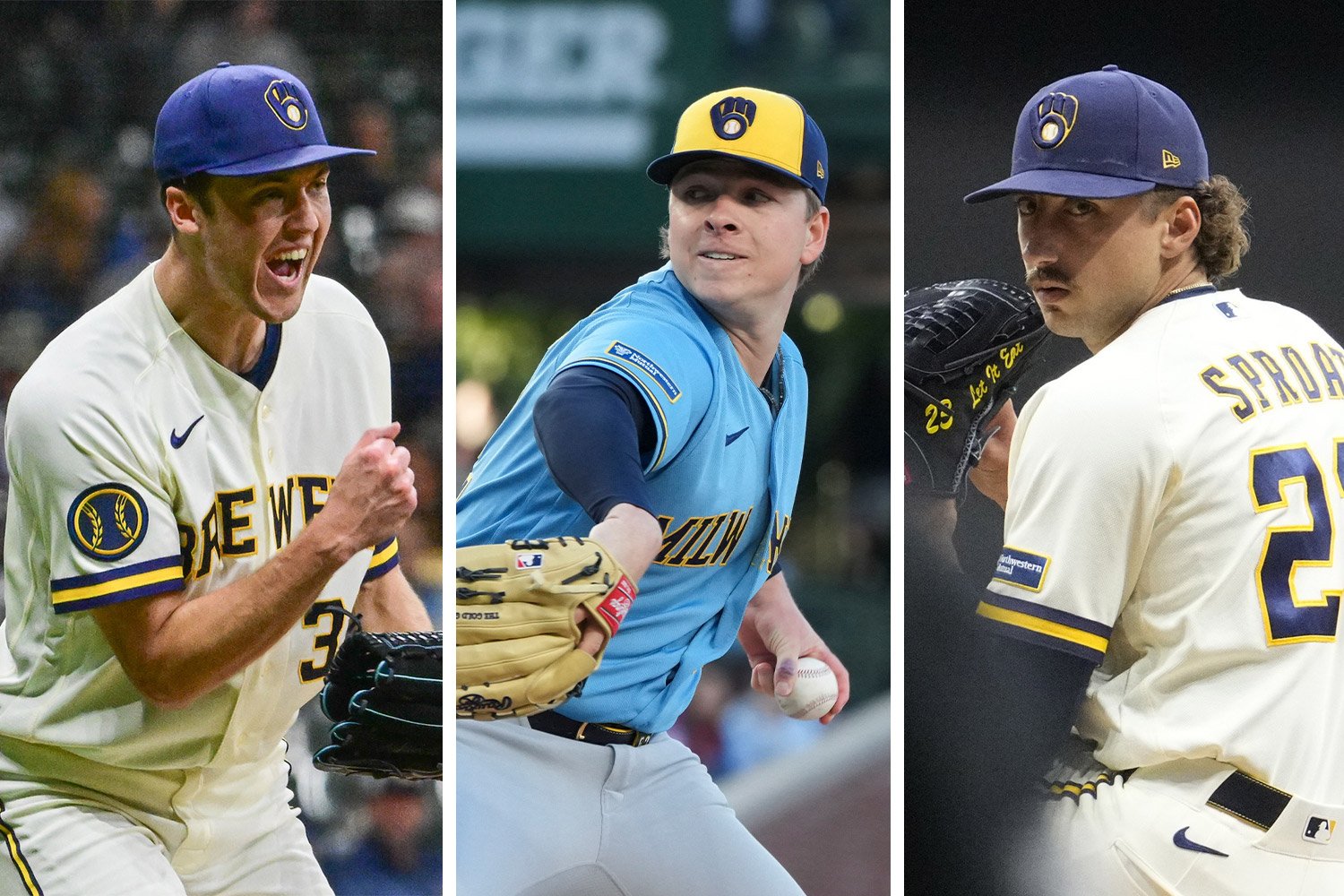 The Milwaukee Brewers are not building a dominant rotation around a single pitch. They are building it around an entire laboratory of elite weapons. While much of MLB remains obsessed with pure velocity or extreme “stuff” arsenals, Milwaukee is developing something far more complex: a collection of pitches that dominate in completely different ways. Some destroy plate appearances through nearly unsustainable swing-and-miss rates. Others survive through contact manipulation, constant discomfort, or the inability of hitters to elevate the baseball with authority. And perhaps the most interesting part is that the collective results are now beginning to tell a historic story. Stats in this article are through Friday, August 22nd. The Brewers reached Game 47 of the 2026 season at 29-18, marking the ninth time in franchise history they have led the division at this point of the year. But when compared to the other eight Brewers teams that also occupied first place after 47 games, something even more revealing appears: none combined such a high winning percentage (.617) with such dominant run prevention (3.18 ERA). That matters. Because every previous team on that list eventually played meaningful October baseball. From the division champions of 2011, 2018, 2021, 2023, 2024, and 2025, to the 1982 American League pennant winner, each of those starts evolved into a legitimately competitive season. And this current group is outperforming nearly all of them in the area that most consistently sustains real success: pitching. Span Started Span Ended Final Record Rank Postseason G W L WL% ERA HR% SO% BB% 26/3/2026 20/5/2026 29-18 1 47 29 18 .617 3.18 2.0% 26.8% 9.2% 29/3/2018 20/5/2018 96-67 1 Division Champ 47 28 19 .596 3.47 2.7% 22.7% 9.4% 29/3/2024 20/5/2024 93-69 1 Division Champ 47 27 20 .574 4.02 3.2% 21.0% 9.0% 11/4/1981 1/6/1981 62-47 1 Division Champ 47 27 20 .574 3.61 1.4% 12.1% 7.3% 30/3/2023 22/5/2023 92-70 1 Division Champ 47 25 22 .532 4.23 3.7% 20.6% 8.9% 1/4/2021 24/5/2021 95-67 1 Division Champ 47 24 23 .511 3.79 3.4% 27.7% 9.2% 31/3/2011 22/5/2011 96-66 1 Division Champ 47 24 23 .511 3.73 2.4% 20.5% 7.8% 9/4/1982 1/6/1982 95-67 1 AL Pennant 47 23 24 .489 4.08 2.1% 11.8% 8.0% 27/3/2025 18/5/2025 97-65 1 Division Champ 47 22 25 .468 4.14 3.0% 21.0% 9.9% The difference shows up even deeper inside the secondary numbers. This staff is striking out 26.8% of opposing hitters — one of the best marks of any team on this list — while suppressing home-run damage better than almost every modern Brewers club before it. This does not feel like a first-place team built on opportunistic offense or a favorable stretch of scheduling luck. It looks like a roster whose entire identity begins on the mound. And that is where a closer look at their best pitches begins to explain why Milwaukee feels different. The slider of Jacob Misiorowski is performing as the most valuable breaking ball in baseball through pure physical intimidation. Kyle Harrison dominates with two opposite weapons: a four-seam fastball built on swing-and-miss and a slurve that almost completely erases hard contact. Chad Patrick has transformed an apparently less explosive cutter into one of the most efficient pitches in MLB. Trevor Megill, meanwhile, is throwing a curveball at an absurd frequency without hitters finding answers. What connects all of those pitches is not shape. It is outcome. Milwaukee is not simply collecting good arms, the organization is building one of the most fascinating pitching ecosystems in the league, where every pitch seems to solve the same problem from a completely different geometric angle. Pitch Type: Slider Top-40 Run Value Pitchers: Jacob Misiorowski (1) Jacob Misiorowski’s slider does not merely lead Brewers pitchers. Right now, by Run Value, it is literally the most valuable slider in all of baseball. And the most impressive part is that it does so without necessarily dominating every traditional category usually associated with a devastating pitch. First place in Run Value (+10) already places him ahead of names like Jacob deGrom, Dylan Cease, and Chris Sale. But once you dig deeper into the details, something even more interesting appears: Misiorowski creates run prevention through an extremely rare combination of weak contact, aggressive command, and difficulty allowing hitters to elevate the ball. His 23.4% hard-hit rate allowed is one of the best marks anywhere on the leaderboard and clearly superior to most elite sliders surrounding him. Among pitchers with significantly positive Run Value, very few combine that level of contact suppression with such overwhelming overall effectiveness. Even dominant arms like Chase Burns, Andrés Muñoz, or Max Meyer allow considerably more hard contact. And that is one of the defining characteristics of this slider: it does not need to rely exclusively on whiffs to destroy plate appearances. His 25.8% whiff rate is excellent, but not historically absurd. In fact, it sits well below monsters like Mason Miller or Chase Burns, both comfortably above 50%. Yet Misiorowski turns the slider into an elite weapon because hitters simply cannot damage it when they do make contact. A .102 batting average allowed, and .169 slugging percentage against are outrageous numbers for a secondary pitch thrown nearly 25% of the time. Even more revealing: the expected metrics fully support the dominance. This does not look fluky. The xSLG (.227) and xwOBA (.186) continue to place him among the absolute elite. The difference may lie in how the pitch feels inside an at-bat. Many sliders dominate through accumulated swings and misses. Misiorowski’s also dominates through intimidation. Hitters rarely elevate it with authority, rarely square it up out front, and consistently seem more focused on surviving the plate appearance than attacking the pitch. That combination is often what defines truly special pitches. Pitch Type: Four-Seam Fastball Top-40 Run Value Pitchers: Kyle Harrison (11), Jacob Misiorowski (18) The most interesting part is not simply that Kyle Harrison ranks 11th and Jacob Misiorowski 18th in total Run Value among four-seam fastballs. What is truly revealing is that they arrived there through completely different paths. Harrison has a more “stable” four-seam fastball built around contact suppression. Misiorowski has a four-seamer that functions like pure physical violence. Harrison’s fastball produces better traditional contact results: a .227 batting average allowed, .330 slugging percentage, and .292 wOBA. The hard-hit rate allowed is also remarkably low (31.6%), especially for someone throwing the pitch nearly 60% of the time. That speaks to a very difficult combination to find: volume, confidence, and relatively controlled damage. But the real heart of Harrison’s profile lies in the swing-and-miss ability. His 33.5% whiff rate and 36.7% strikeout rate turn that four-seamer into a direct dominance tool. It is not merely a fastball designed to get ahead in counts. It is a fastball capable of ending at-bats by itself. The contrast with Misiorowski is fascinating. Because Misiorowski allows more slugging (.296), more wOBA (.290), and far more hard contact (42.9%). In theory, that should dramatically reduce the pitch’s value. Instead, the opposite happens: the four-seam fastball remains elite because the swing-and-miss level is absurd. His 45.1% whiff rate is one of the most extreme marks anywhere in baseball. And the 47.2% strikeout rate against the pitch feels pulled directly from a video game. Those are numbers that usually belong to devastating sliders, not a fastball thrown more than 60% of the time. That is the fundamental conceptual difference between the two: Harrison owns a dominant four-seam fastball because he blends whiffs with healthy contact suppression. Misiorowski owns a dominant four-seam fastball because he simply removes hitters before they can inflict meaningful damage. And that explains why the risk profiles differ as well. Harrison appears statistically more sustainable. His expected numbers align with the actual production, and the hard contact allowed remains manageable. There are clear structural foundations behind the success. With Misiorowski, everything exists on the edge of chaos. Even his expected metrics remain excellent (.195 xBA and .275 xwOBA), but the level of hard contact allowed suggests that when hitters do connect, they usually hit the ball very hard. The entire model depends on the fastball remaining nearly impossible to reach consistently. And honestly, that may be enough. Because a four-seam fastball generating whiffs above 45% simply breaks normal evaluation rules. At that point, you are no longer discussing “a good fastball.” You are talking about a weapon that completely alters the geometry of the plate appearance. What makes it even more impressive is that both pitchers arrived in the same statistical neighborhood using opposite roads: Harrison through contact management and efficiency; Misiorowski through pure aerial destruction. Pitch Type: Cutter Top-40 Run Value Pitchers: Chad Patrick (4), Brandon Sproat (18) Chad Patrick’s cutter belongs in an entirely different category. It does not dominate through explosive raw stuff, but through the combination of location, angle, and weak contact. And yet the result remains among the best in the league. Patrick ranks fourth in MLB in total Run Value among cutters with at least 130 pitches thrown, and the profile perfectly explains why. Hitters are batting just .155 against it while producing only a .207 slugging percentage — absurdly low numbers for a pitch he throws 41.4% of the time. That matters tremendously: this is not a situational cutter used to steal strikes. It is one of the foundational pillars of his entire arsenal. The most fascinating aspect is how two worlds coexist inside the pitch. On one hand, it generates legitimate swing-and-miss: a 33.1% whiff rate and 26.4% put-away rate. But it also suppresses damage extremely well when hitters make contact. The hard-hit rate allowed sits at only 34.1%, clearly below many elite cutters around baseball. That combination is rare. Normally, cutters that miss this many bats eventually pay for it with loud contact when hitters connect. Patrick is avoiding both outcomes simultaneously. It also helps that the expected metrics support much of the production. A .250 xwOBA remains excellent, even if it sits somewhat above the actual .193 mark. This does not look like a pitch surviving solely on luck. The case of Brandon Sproat is completely different. His cutter still carries positive Run Value and ranks 18th in MLB, but the profile is far more unstable. The 24.7% whiff rate is solid, though far from Patrick’s impact, and hitters have inflicted considerably more damage upon contact: a .469 slugging percentage and .339 wOBA allowed. What is interesting is that the expected metrics do suggest room for improvement. His xBA (.238) and xwOBA (.331) are better than the actual outcomes, a sign he has probably allowed somewhat more damage than deserved. But even then, the cutter still does not show the same consistent ability to suppress hard contact or dominate counts. The primary difference between the two lies in stability. Patrick’s cutter already functions as a fully consolidated elite-level weapon. Sproat’s still feels like a pitch with brilliant flashes that has not yet fully mastered contact quality when hitters avoid the swing-and-miss. Pitch Type: Slurve Top-40 Run Value Pitchers: Kyle Harrison (1) Kyle Harrison’s slurve not only leads MLB in total Run Value among pitchers with at least 150 offerings of the pitch. It also owns one of the most destructive profiles in the league, regardless of breaking ball category. Hitters are batting just .116 against it and slugging only .140, nearly absurd numbers for a pitch that Harrison throws 27.4% of the time. This is not some hidden secondary weapon reserved for certain counts. It is a central component of his repertoire, and still nobody is punishing it. The most impressive aspect is probably the blend of swing-and-miss and total hard-contact suppression. His 30.3% whiff rate and 32.6% strikeout rate show real put-away ability, but the truly outrageous figure appears in the hard-hit rate: just 10.7%. That number is almost surreal in today’s offensive environment. Even many of MLB’s best breaking balls allow significantly more loud contact when hitters manage to connect. Harrison is eliminating both outcomes simultaneously: swings and misses and damage on balls in play. And the expected metrics fully support the dominance. The .161 xBA, .188 xSLG, and .188 xwOBA are absolute elite-tier indicators. There do not appear to be meaningful regression signals hiding beneath the surface. Compared to the league’s other high-value slurves, the difference becomes obvious. Michael Soroka generates elite swing-and-miss numbers — 36.9% whiffs and a 38.7% strikeout rate — but allows substantially more hard contact and overall damage when hitters connect. Sean Newcomb actually falls into negative Run Value territory despite maintaining some whiff ability. Harrison, meanwhile, combines everything simultaneously: swings and misses, strikeouts, weak contact, and dominant expected outcomes. That is what transforms the slurve into one of the single most effective pitches anywhere in MLB this season. Pitch Type: Curveball Top-40 Run Value Pitchers: Trevor Megill (6) Trevor Megill’s curveball may be one of the least discussed pitches among MLB’s dominant relievers this season. The numbers suggest it deserves far more attention. Megill ranks sixth in total Run Value among all curveballs in baseball, but the underlying profile is even more impressive than the ranking itself. Hitters are batting just .125 against the pitch and slugging only .156, while producing a ridiculous .157 wOBA. And the most striking part is that this is not an occasional curveball used merely to disrupt timing. Megill throws it 42% of the time — an extraordinarily high usage rate for such a dominant breaking ball. That completely changes the conversation. Hitters know it is coming; they see it constantly, and they still cannot damage it. The swing-and-miss profile lives in absolute elite territory. His 48.4% whiff rate is one of the most extreme figures anywhere in baseball among high-volume curveballs, paired with a 37.1% strikeout rate and 29.5% put-away rate. Essentially, when Megill needs to finish an at-bat, the curveball becomes the primary weapon. But perhaps the most important detail is that the dominance does not rely solely on whiffs. The expected metrics fully sustain the performance: a .119 xBA, .147 xSLG, and .151 xwOBA. Those are absurdly low figures even inside the league’s elite breaking-ball group. In fact, when compared with other top curveballs around the leaderboard, Megill stands out because of the pitch’s complete balance. Ben Brown generates more overall whiffs, Spencer Arrighetti allows even less hard contact, and Tyler Glasnow posts an outrageous strikeout rate, but very few combine usage volume, swing-and-miss ability, and total damage prevention the way Megill currently does. That is what makes this curveball far more than a quality secondary pitch. It is functioning as one of the most dominant individual offerings in all of MLB, regardless of role or pitcher archetype. Pitch Type: Sinker Top-40 Run Value Pitchers: DL Hall (36), Abner Uribe (39) DL Hall’s sinker does not rank among the league’s most dominant offerings because of whiffs or strikeouts, but it does show intriguing signs of damage suppression. Opponents are batting just .150 against it and have produced virtually no extra-base damage (.150 SLG), which helps explain why the pitch maintains positive Run Value despite far less favorable underlying metrics. In fact, the contrast is sharp: the xwOBA climbs all the way to .418 and the xSLG to .403, signals that the contact quality allowed has been considerably more dangerous than the surface numbers indicate. Even so, Hall has managed to avoid catastrophic damage while keeping the hard-hit rate at a respectable 33.3%. The case of Abner Uribe appears more stable and aligns more closely with what teams usually seek from a power reliever’s sinker. His 64.1% usage rate clearly establishes it as the centerpiece of his arsenal, and while the numbers are not spectacular, they remain solid across multiple areas: a .233 batting average allowed, .301 wOBA, and respectable ability to generate swings and misses (17.7%) and strikeouts (19.1%). He does not dominate the league in weak contact, either, but the 38.2% hard-hit rate remains manageable considering the violence of the repertoire. Between the two, Uribe’s sinker appears more sustainable; Hall’s, meanwhile, still seems to rely more heavily on current outcomes than on underlying contact-quality indicators. Behind Milwaukee’s best start in decades (29-18, 3.18 ERA) sits a pitching arsenal that is dominating MLB from every possible angle. With seven unique pitchers spread across six distinct pitch types inside the Top 40 — including the most valuable slider in baseball (Misiorowski, +10), the top slurve in its category (Harrison, .116 average allowed), an elite cutter (Patrick, .155 average allowed), and a curveball producing a microscopic .157 wOBA (Megill) — the Brewers are not building around a single pitch. They are building an entire laboratory where every weapon solves the same problem from a different geometric direction.
-
- 2
-
-
- jacob misiorowski
- kyle harrison
- (and 4 more)
-
Yes, the walks and the recent drop in strikeouts could be genuine signs that he's seeing the ball better. And usually, when a hitter starts to have better control of the strike zone, that's one of the first positive indicators. The problem with Ortiz is that we've seen similar moments before. His focus improves a bit, his at-bats look cleaner, but then his contact loses quality again, and his entire offensive line collapses once more. That's why I think the question is no longer just whether he can have better control of the strike zone, but whether he can regain enough dynamic contact to produce consistent hitting again. That seems to be where the real difference lies between simply surviving offensively and becoming a viable player every day.
-
That's probably the big question right now. Because yes, we've seen short stretches where Ortiz seems to adjust, improves his swing decision, and connects a little more… but then his offensive output drops again. And I think that has a lot to do with how narrow his offensive margin is. Ortiz doesn't have the kind of natural power that allows him to survive even when he's not constantly hitting line drives. When the line drives and the sweet spot disappear, practically all of his offensive production suffers at the same time. What you mentioned about matchups is also valid. Milwaukee clearly seems much more careful with how they use him compared to a year ago, and that probably helps to mask some of his more obvious offensive weaknesses.
-
Thanks for reading and sharing this excellent comment! I think that's precisely the dilemma with Ortiz. His defense is still good enough to give him some leeway—he's in the top three in MLB in Runs Prevented and OAA—especially on a roster that's still waiting for some pieces to gel. And I also agree that his recent at-bats look more competitive. Fewer empty swings, more walks, and better decisions are usually signs that his pitch recognition isn't completely broken. But at the same time, Ortiz's offensive problem seems to go beyond simply "looking better" in some at-bats. What the numbers show is that much of the dynamic contact that sustained his 2024 profile has disappeared: fewer line drives, fewer sweet spots, and significantly less aerial damage. That's why the margin remains so narrow. He can improve his approach and still struggle if some of that contact doesn't return. In the long run, there will be changes there.
-
Image courtesy of © Mark Hoffman/Milwaukee Journal Sentinel / USA TODAY NETWORK via Imagn Images Joey Ortiz still plays defense well enough to justify meaningful innings in Milwaukee’s infield. His hands remain quick, his versatility still carries value, and there are managers who would live for years with a light bat if the glove compensates for it at a premium position. The problem for the Brewers is that Ortiz’s bat is no longer merely light. It's entering an offensive zone where virtually his entire profile depends on flared liners, bloopers, and perfectly-placed ground balls. And in modern baseball, surviving solely on that is like trying to live on pretzels. Pretzels are nice, but as a full diet, they leave much to be desired. Worst of all, perhaps, this isn't new. Ortiz's results have been volatile, but his expected stats—the numbers beneath the numbers—have been persistently brutal for the last year. Here are his actual and expected weighted on-base averages by month for his big-league career. In only one month since the middle of 2024 (last August) has Ortiz put up an expected wOBA above .292; the league average is .316. Since last summer, the Brewers have used him increasingly judiciously. Not since last June has he reached 80 plate appearances in a month, and though he's putting up slightly better numbers this month, that's in only 39 trips to the plate. Ortiz finished April with the worst xwOBA of his career at just .222, surpassing his previous collapse of .224 in August 2024. That pattern matters, because it helps explain something fundamental: Ortiz’s initial collapse did not necessarily begin as a hitter incapable of generating competitive contact. It began as a hitter whose offensive margin became so thin that any combination of mediocre contact, low BABIP, and lack of power ended up sinking his entire offensive line. And over time, that offensive pressure also transformed the quality of his swings. When we dive into the full evolution of his numbers, what emerges is not a conventional slump. There is no single broken indicator explaining the decline. What appears, instead, is the progressive deterioration of nearly every component that supported his offensive production in 2024, the only season in which he truly looked like he had built a stable offensive identity in the major leagues. That year, Ortiz was not an intimidating hitter, but he was a functionally uncomfortable one for opponents. He posted a .159 ISO, a .347 xSLG, hit 16 barrels, and maintained a relatively balanced contact profile. His production did not depend on raw power, but on generating line drives, using the gaps, and creating enough quality contact to force pitchers to respect the strike zone. Today, that aspect has almost completely disappeared. The drop in contact quality is far too consistent to ignore. His average exit velocity fell from 87.8 mph in 2024 to 84.9 in 2025. His Hard-Hit% dropped from 38.4% to 31.7%. His barrel rate fell to just 3.7%, well below league average. And perhaps the statistic that best captures the problem: only three barrels in 82 batted balls this season. That does not describe an unlucky hitter. It describes a hitter whose contact has lost its explosiveness. But there is an even more revealing number, one that probably explains better than any other why the damage disappeared from his offensive game: the collapse of his Sweet Spot%. In 2023, Ortiz placed 40% of his batted balls within the ideal launch-angle window. Even in 2024, he still maintained enough balance in his swing plane to sustain productive rallies and dangerous contact. Today, that number has fallen to just 18.3%. For a hitter with limited power, Sweet Spot% is practically a lifeline. Ortiz does not possess the physical margin to survive while producing mediocre contact. He needs to consistently find the correct angle to be a good hitter. Once that percentage collapses, the entire offensive structure begins falling apart at the same time. That's exactly what his numbers show. In 2024, Ortiz still built healthy offensive at-bats because line drives sat at the center of his profile. He hit .618 on line drives, produced 19 doubles and six triples on that type of contact, and registered an absurd 1.118 slugging percentage whenever he found that swing plane. That was his offense. He did not need to be a 30-home-run hitter, because he created rallies through frequent, clean contact. The problem is that contact has almost completely evaporated. His line-drive rate has fallen from 24% in 2023 to just 13.4% in 2026. And when a hitter with limited natural power stops producing line drives, there is usually not much left behind to sustain the rest of the offensive profile. That explains why his fly balls have turned into harmless outs. In 2024, even though he hit only .150 on fly balls, 10 of his 15 hits on fly balls went for extra bases. There was hidden damage there. Pitchers knew that if the ball carried, there was real danger. Two years later, that threat has disappeared completely. His slugging percentage on fly balls fell from .480 to .230 in 2025 and sits at just .250 this year. His HR/FB% collapsed from 15.5% to 5.9%. The balls that once found the gap or scraped the fence now simply die in the outfield. This is where the metrics become brutal, because the expected numbers do not suggest bad luck. The decline is legitimate. His xwOBA fell from .329 in 2024 to .275 in 2025 and .282 this year. His xSLG dropped from .347 to .279. His xISO cratered to .064. His wOBACON has fallen nearly one hundred points from its peak. There is not much separation between the results and the actual quality of contact. Ortiz is producing exactly the kind of offense his current swings suggest. Perhaps the most revealing detail of the entire transformation appears in the distribution of his contact. At his offensive best, Ortiz used the entire field naturally. There were line drives to the opposite field, firm contact into both gaps, and enough variety to keep defenses uncomfortable. Today, the profile looks far more limited: nearly all of his contact travels toward center field, while his opposite-field usage has dropped to just 12.2%. That does not necessarily describe a hitter who is late on swings, but it does describe one who is less dynamic and far more dependent on simply putting the ball in play. And when that version of the swing also comes with less sweet-spot contact, fewer line drives, and less authority in the air, the result becomes exactly what the numbers show: softer ground balls, harmless fly balls, and far less overall damage. Even so, Milwaukee still finds one small reason not to completely give up on him. The collapse has not come with an explosion in swing-and-miss, and when Ortiz does manage to hit line drives, the production still appears. The real challenge for the Brewers is not recovering elite contact strength, because Joey Ortiz has never been that type of hitter. What they need to recover is the swing that once produced dynamic contact and enough damage to punish mistakes in the strike zone—and make pitchers just a little more uncomfortable. View full article
-
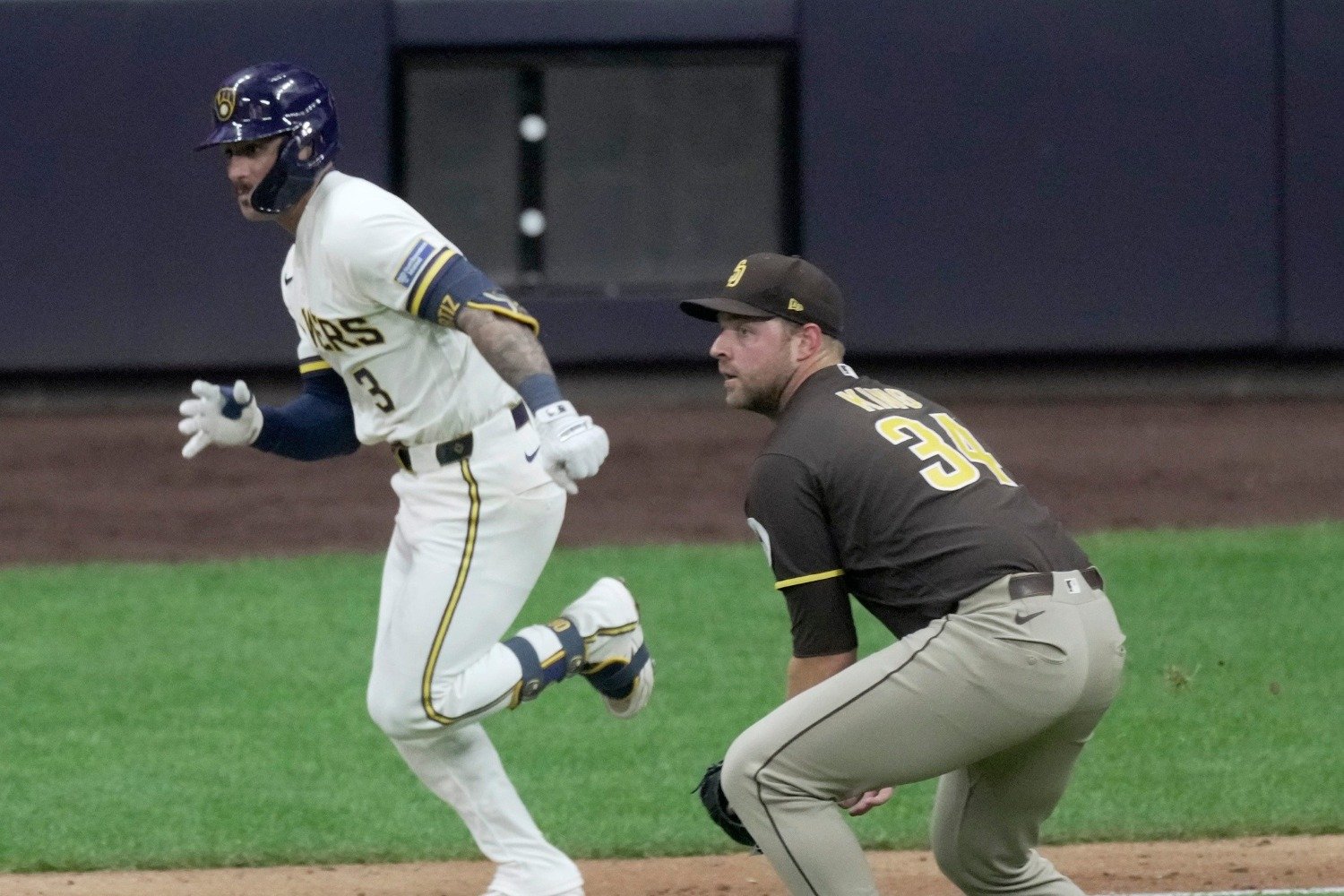 Joey Ortiz still plays defense well enough to justify meaningful innings in Milwaukee’s infield. His hands remain quick, his versatility still carries value, and there are managers who would live for years with a light bat if the glove compensates for it at a premium position. The problem for the Brewers is that Ortiz’s bat is no longer merely light. It's entering an offensive zone where virtually his entire profile depends on flared liners, bloopers, and perfectly-placed ground balls. And in modern baseball, surviving solely on that is like trying to live on pretzels. Pretzels are nice, but as a full diet, they leave much to be desired. Worst of all, perhaps, this isn't new. Ortiz's results have been volatile, but his expected stats—the numbers beneath the numbers—have been persistently brutal for the last year. Here are his actual and expected weighted on-base averages by month for his big-league career. In only one month since the middle of 2024 (last August) has Ortiz put up an expected wOBA above .292; the league average is .316. Since last summer, the Brewers have used him increasingly judiciously. Not since last June has he reached 80 plate appearances in a month, and though he's putting up slightly better numbers this month, that's in only 39 trips to the plate. Ortiz finished April with the worst xwOBA of his career at just .222, surpassing his previous collapse of .224 in August 2024. That pattern matters, because it helps explain something fundamental: Ortiz’s initial collapse did not necessarily begin as a hitter incapable of generating competitive contact. It began as a hitter whose offensive margin became so thin that any combination of mediocre contact, low BABIP, and lack of power ended up sinking his entire offensive line. And over time, that offensive pressure also transformed the quality of his swings. When we dive into the full evolution of his numbers, what emerges is not a conventional slump. There is no single broken indicator explaining the decline. What appears, instead, is the progressive deterioration of nearly every component that supported his offensive production in 2024, the only season in which he truly looked like he had built a stable offensive identity in the major leagues. That year, Ortiz was not an intimidating hitter, but he was a functionally uncomfortable one for opponents. He posted a .159 ISO, a .347 xSLG, hit 16 barrels, and maintained a relatively balanced contact profile. His production did not depend on raw power, but on generating line drives, using the gaps, and creating enough quality contact to force pitchers to respect the strike zone. Today, that aspect has almost completely disappeared. The drop in contact quality is far too consistent to ignore. His average exit velocity fell from 87.8 mph in 2024 to 84.9 in 2025. His Hard-Hit% dropped from 38.4% to 31.7%. His barrel rate fell to just 3.7%, well below league average. And perhaps the statistic that best captures the problem: only three barrels in 82 batted balls this season. That does not describe an unlucky hitter. It describes a hitter whose contact has lost its explosiveness. But there is an even more revealing number, one that probably explains better than any other why the damage disappeared from his offensive game: the collapse of his Sweet Spot%. In 2023, Ortiz placed 40% of his batted balls within the ideal launch-angle window. Even in 2024, he still maintained enough balance in his swing plane to sustain productive rallies and dangerous contact. Today, that number has fallen to just 18.3%. For a hitter with limited power, Sweet Spot% is practically a lifeline. Ortiz does not possess the physical margin to survive while producing mediocre contact. He needs to consistently find the correct angle to be a good hitter. Once that percentage collapses, the entire offensive structure begins falling apart at the same time. That's exactly what his numbers show. In 2024, Ortiz still built healthy offensive at-bats because line drives sat at the center of his profile. He hit .618 on line drives, produced 19 doubles and six triples on that type of contact, and registered an absurd 1.118 slugging percentage whenever he found that swing plane. That was his offense. He did not need to be a 30-home-run hitter, because he created rallies through frequent, clean contact. The problem is that contact has almost completely evaporated. His line-drive rate has fallen from 24% in 2023 to just 13.4% in 2026. And when a hitter with limited natural power stops producing line drives, there is usually not much left behind to sustain the rest of the offensive profile. That explains why his fly balls have turned into harmless outs. In 2024, even though he hit only .150 on fly balls, 10 of his 15 hits on fly balls went for extra bases. There was hidden damage there. Pitchers knew that if the ball carried, there was real danger. Two years later, that threat has disappeared completely. His slugging percentage on fly balls fell from .480 to .230 in 2025 and sits at just .250 this year. His HR/FB% collapsed from 15.5% to 5.9%. The balls that once found the gap or scraped the fence now simply die in the outfield. This is where the metrics become brutal, because the expected numbers do not suggest bad luck. The decline is legitimate. His xwOBA fell from .329 in 2024 to .275 in 2025 and .282 this year. His xSLG dropped from .347 to .279. His xISO cratered to .064. His wOBACON has fallen nearly one hundred points from its peak. There is not much separation between the results and the actual quality of contact. Ortiz is producing exactly the kind of offense his current swings suggest. Perhaps the most revealing detail of the entire transformation appears in the distribution of his contact. At his offensive best, Ortiz used the entire field naturally. There were line drives to the opposite field, firm contact into both gaps, and enough variety to keep defenses uncomfortable. Today, the profile looks far more limited: nearly all of his contact travels toward center field, while his opposite-field usage has dropped to just 12.2%. That does not necessarily describe a hitter who is late on swings, but it does describe one who is less dynamic and far more dependent on simply putting the ball in play. And when that version of the swing also comes with less sweet-spot contact, fewer line drives, and less authority in the air, the result becomes exactly what the numbers show: softer ground balls, harmless fly balls, and far less overall damage. Even so, Milwaukee still finds one small reason not to completely give up on him. The collapse has not come with an explosion in swing-and-miss, and when Ortiz does manage to hit line drives, the production still appears. The real challenge for the Brewers is not recovering elite contact strength, because Joey Ortiz has never been that type of hitter. What they need to recover is the swing that once produced dynamic contact and enough damage to punish mistakes in the strike zone—and make pitchers just a little more uncomfortable.
 -
Image courtesy of © Benny Sieu-Imagn Images When a starter builds an 8-0 record, it usually signals a Cy Young contender. When a reliever does it, the achievement carries a different tone. It's usually a mildly interesting statistical aberration, because it's usually a reliever's record at the end of a full season. Only five relievers have won eight or more games and lost zero in a season this century: Arthur Rhodes (2001), Rheal Cormier (2003), Micah Owings (2011), Nate Jones (2012) and Nick Sandlin (2024). That's not a list of the best relievers of the last three decades; it's just a neutral bit of fun. What Aaron Ashby is doing—he's 8-0 less than a third of the way through the Brewers' season—is different, and a whole lot more interesting. The 27-year-old left-hander from Kansas City (and nephew of former big-leaguer Andy Ashby) is putting together a 2026 season worthy of a frame. Through his first 21 appearances, Ashby owns an 8-0 record, a 2.17 ERA, and 44 strikeouts across 29 innings. Over his last eight outings, Ashby has recorded at least one strikeout in each, combining for 20 strikeouts in 13 ⅔ innings. During that span, he has allowed only three hits to 54 opposing hitters. Everything else about the profile borders on absurdity: he has surrendered just one home run all season (hit by Jonny DeLuca on March 30), while striking out 36.4% of batters and generating ground balls at a 58.1% rate. One of the most surprising numbers is his .361 opponent BABIP. That sounds unusually high, right? And honestly, it doesn’t quite match the level of dominance he has shown to begin the year. He suppresses home runs. He disrupts timing with an elite strikeout rate. Opponents are producing only a 37.1% Hard Hit rate against him. So what explains it? Yes, the heavy ground-ball rate plays a role, because grounders turn into hits more often than flies (at least the flies that stay in the park). But the BABIP issue goes deeper. Opponents have found unusual success on line drives against Ashby, going 12-for-14. He's limiting damage in the air a bit better; he might just be trading some extra line-drive singles for that. Ashby's statistics command attention on their own. But when you place them beside the handful of pitchers in baseball history who opened a season with at least eight wins and zero losses, Ashby’s name starts to carry a legendary echo. A small club with enormous names According to Stathead, Ashby has entered a list that is both exclusive and remarkably diverse. From baseball’s old-school era to the modern game, only 11 pitchers have opened a season 8-0 in their first 21 games. Of those, only five have come since the integration of the game in 1947. Brooks Lawrence (1956, CIN): 12-0, 3.48 ERA, 42 strikeouts in 111 1/.3 innings. Roy Face (1959, PIT): 8-0 as a pure reliever, 1.45 ERA, 31 strikeouts in 37 ⅓ innings. Dave McNally (1969, BAL): 12-0, 2.85 ERA, 88 strikeouts in 139 innings Arthur Rhodes (1996, BAL): 8-0, 3.92 ERA, 52 strikeouts in 43 ⅔ innings as a reliever/swingman. And now, Aaron Ashby (2026, MIL): 8-0, 2.17 ERA, 44 strikeouts in 29 innings. What separates Ashby from the rest (and what has Milwaukee dreaming) isn't simply the unbeaten record, but how he's doing it. Right now, he is the most overpowering strikeout pitcher on that list. The closest pitcher to Ashby is Rhodes, who had an impressive 28.2% strikeout rate through his hot start to 1996 but can't keep pace. The achievement becomes even more impressive when viewed through Milwaukee history. Since the franchise began, only 38 times has a Brewers pitcher opened a season with at least 25 innings pitched and zero losses. That list includes bullpen giants such as Josh Hader (70 strikeouts, 2-0 in 2018), Dan Plesac (31 strikeouts, 1-0 in 1988), Corbin Burnes (28 strikeouts, 4-0 in 2018), and Bryan Hudson (37 strikeouts, 4-0 in 2024). Among that group, Ashby owns the franchise record for most wins, with eight. No other pitcher in Brewers history had ever reached 8-0 in that span. In strikeouts, he ranks second with 44, trailing only Hader’s 70. In K/9 (13.7), he is also second, again behind Hader. That he's won so many games might be fluky, but there's nothing unearned about it. His dominance rivals even that of the much more obviously overwhelming Hader. He features a sinker that can touch 98 mph, though he deploys it selectively because his true weapons are the slider and curveball. He's generated 16 strikeouts with each pitch, meaning 73% of his 44 strikeouts have come from that devastating combination of breakers. Opponents own a whiff rate of 70.4% against his slider and 61.5% against his curveball. Those numbers belong on some other planet. Hitters are 0-for-20 with 16 strikeouts and a microscopic .010 expected slugging percentage against the curveball. The league is also just 3-for-15 with seven strikeouts against his changeup, which carries a 56.3% whiff rate and which Ashby loves to call his favorite pitch—even though it's hard for it to grab attention in this thicket of elite weapons. In a bullpen forced to navigate injuries and constant adjustments, Ashby has become Pat Murphy’s favorite weapon—the changeup in his skipper's arsenal. His 1.31 WHIP is more than acceptable for a high-volume reliever, and his inherited-runner numbers reveal something scouts call “big-game nerve.” Most impressive of all his numbers, arguably, is the innings count. Ashby remains on pace to pitch 100 innings this season, which would be an extraordinary achievement for a 21st-century reliever. Being as electric as he has been across a volume this large is unfathomable in the modern game. He probably won't stay undefeated or maintain a strikeout rate that reads like Peak Ichiro's batting average, but Ashby balances ability and availability in a way that makes 8-0 feel like a fair representation of his value to this team—which is saying an awful lot. View full article
.thumb.png.97a48f5e988eb5cd844bab443feb771d.png)
.png.3d491ca43ec13478d2017ef432bb81d0.png)

