


Brewers Video
Last year, the Brewers were 24th in home runs and 28th in isolated power. They also ranked 24th in team DRC+, according to Baseball Prospectus. Yet, they were 17th in runs per game, marking just one way that the whole was greater than the sum of the parts for them in a division-winning campaign. They drew walks at the third-highest rate in the league, fueling an unconventional offensive engine for MLB in the 2020s.
Isolated power explained roughly 74 percent of the variance between teams in runs per game in 2023, and as you can see, the Brewers were one of the larger outliers in that regard.

It's no secret that power has become more indispensable over the last several years, but to illustrate the magnitude of that change, ISO only explained about 57 percent of variance in runs per game in 2015. In 2000, it was 46 percent. Power has become synonymous with offense.
Not so in Milwaukee, under the integrated, team-focused stewardship of Pat Murphy, Rickie Weeks, Connor Dawson, and Ozzie Timmons. Power wasn't how the Brewers tried to score runs last year, and it won't be how they go about it this year, either.
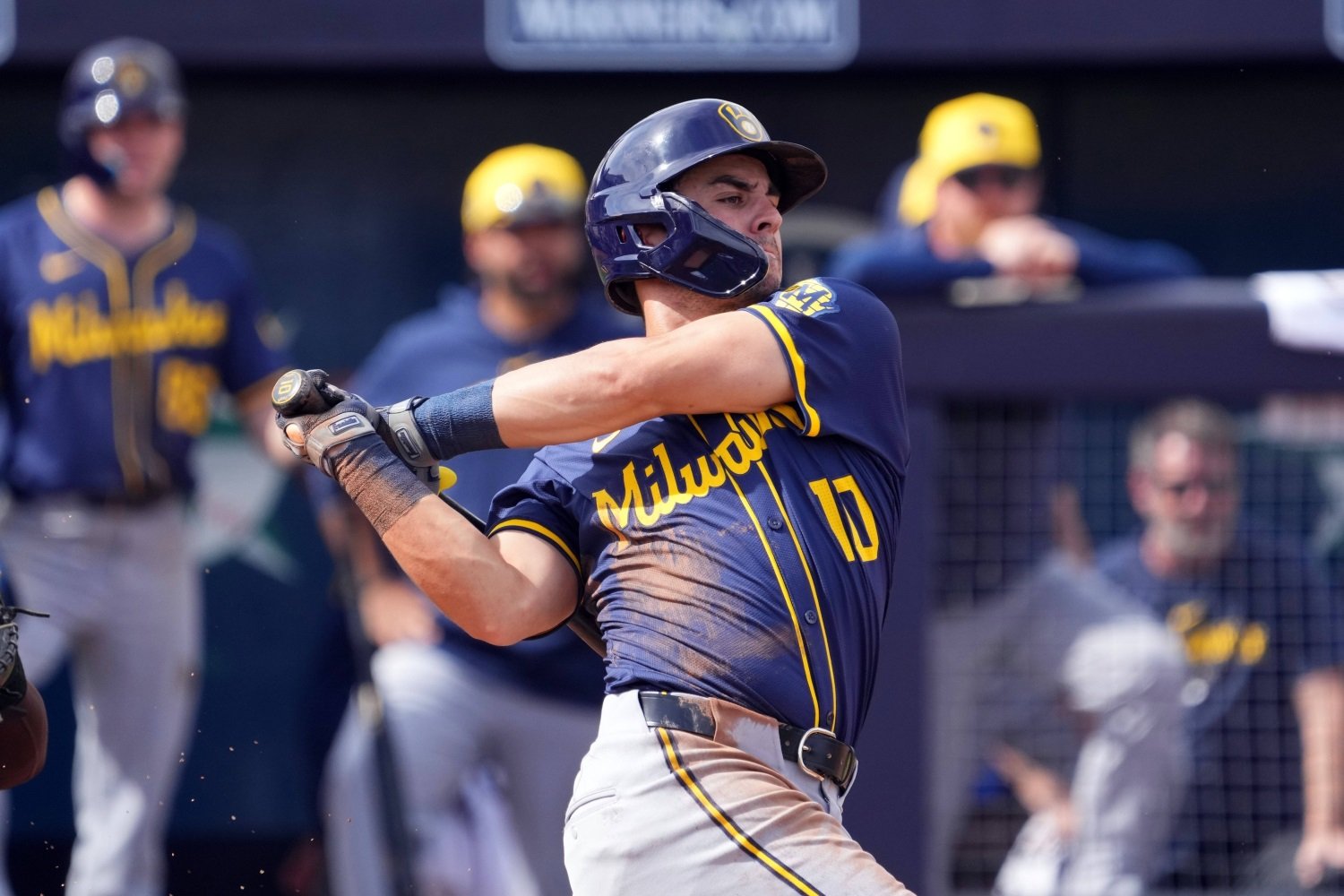
Andruw Monasterio and Brice Turang had total power outages down the stretch in 2023. Each of them came to camp this spring considerably bigger and stronger. Does Murphy anticipate them trading a bit of contact to find more pop?
"I hope not," the skipper said Wednesday. "I don’t believe in that. I believe home runs are thrown, to a great extent. When you’re trying to do damage, is really when it’s damaging to the club. I look at plenty of players when they’re coming up, ‘Hey, you’ve gotta hit homers, man, you’ve gotta hit homers.’ As soon as you start thinking that…"
Finishing the sentence isn't necessary. The point is made. Murphy doesn't want his hitters to go looking for power; he believes they just need to hit their pitch when it comes. Part of his persistent efforts to share the stories of everyone in the clubhouse this spring and knit the roster together more tightly is his conviction that the game needs to be played with a team mindset.
"It’s a harder way to score. Yeah. Because you’ve gotta pass the baton," Murphy said, but not by way of bemoaning it. "When the 3-2 pitch is eight inches outside, you gotta turn it over to the next guy. Trust the guy behind you: it’s the key to hitting. It’s the key to our offense. Trust the guy behind you. It’s hard to do, when you’re trying to earn your keep and you get a 3-2 breaking ball in the dirt, but you were hoping it would be out over the plate, well you think, ‘Maybe I can still make contact.’ You have to be willing to pass the baton."
As the walk rate from 2023 reflects, the Brewers have been good at that under the leadership of Dawson and Timmons, anyway. Murphy, of course, has been part of those conversations all along, and he expects to carry forward that mentality as the manager.
Trusting teammates means more than just taking the borderline pitch in a deep count. It also means using the opposite field, where appropriate, sacrificing some opportunity to split a gap or clear the fence for an increased likelihood of getting on base. It can mean stopping oneself from getting thrown out ill-advisedly on the bases, too. Murphy has expressed a desire to be aggressive and make plays with speed, but he also wants to see his team avoid making bad outs. Believing that the next guy will get you over or in to score can help with that.
Yes, it also means bunting. Murphy is not going to resuscitate the dying sacrifice bunt, but that doesn't mean it won't be part of the team's repertoire of offensive moves.
"Sal Frelick can bunt--and should, because he hits so many balls to the left side, so [bunting] forces those guys into a bad spot," Murphy said. Before the infield shift was banned, the bunt was a more obvious means of pulling a defense out of its preferred shape. Now, it might not seem as necessary, and the hits to be gained directly by the bunt are not as easy to get, but the effect of forcing a team to set itself differently remains in play.
"Bunting is misunderstood in the game. It's not always for the percentages," said Murphy. "It's sometimes for the momentum. Think about the qualities of beating a No. 1, beating a star, beating a dude. Scherzer. How do you beat Scherzer? Sometimes there's little things that you can do that just drive them mad, that you didn't have to execute a perfect swing on a great pitch. It ends up disrupting them a little bit. So it's worth practicing, if you can break down a No. 1 just a hair."
That's a good encapsulation of Murphy's offensive philosophy. He attends to details. He believes in a team approach, and in passing the baton. He doesn't want to merely bludgeon middling pitchers; the plan is to find ways to beat everyone the team faces. It's possible to distill things even further, though. Murphy did that Tuesday.
"Get to first, go left, hurry back."





Recommended Comments
Create an account or sign in to comment
You need to be a member in order to leave a comment
Create an account
Sign up for a new account in our community. It's easy!
Register a new accountSign in
Already have an account? Sign in here.
Sign In Now