


Brewers Video
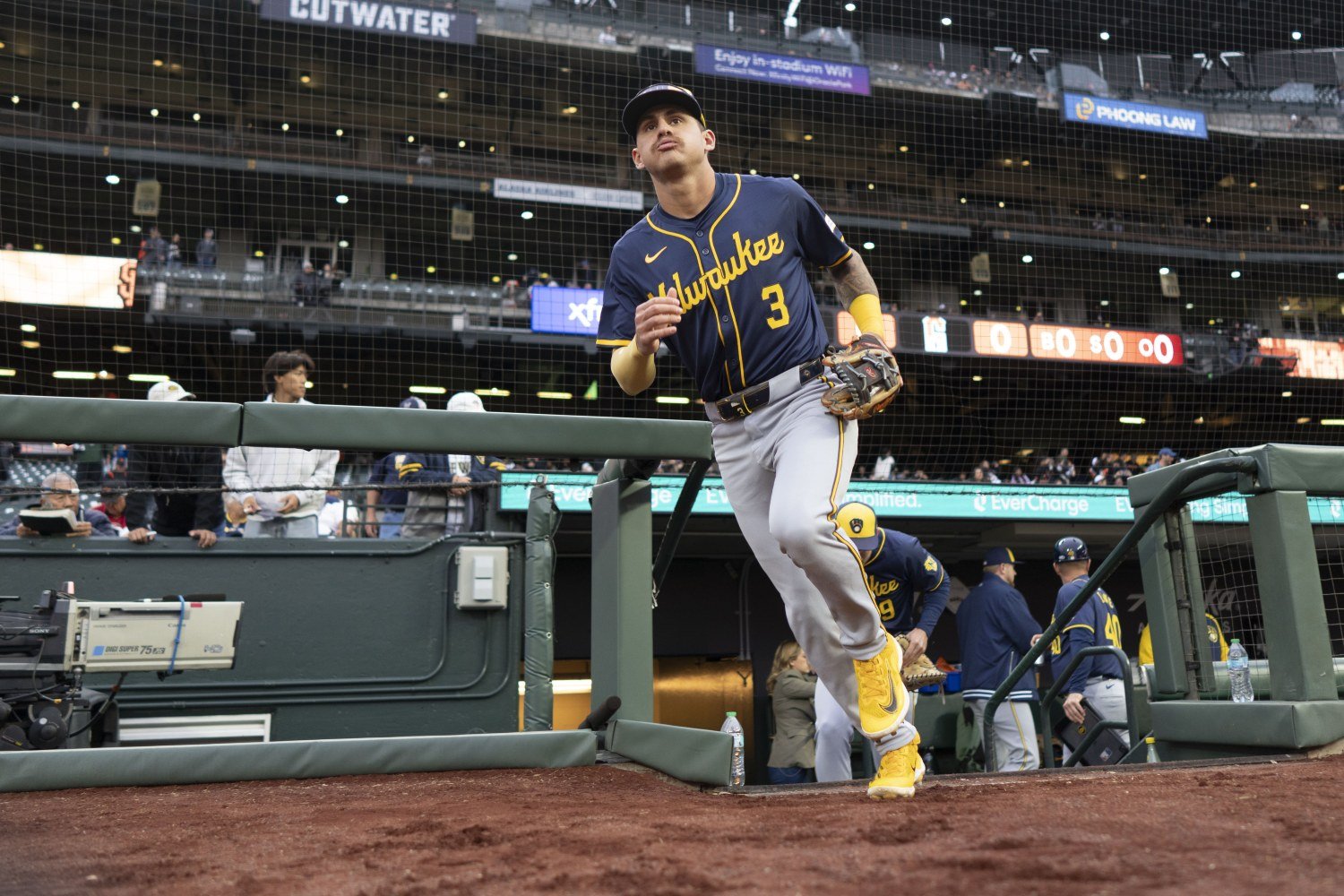
Caleb Durbin is a fine defender, but his size and (therefore) arm strength are limiting factors. You don't want the diminutive Durbin going deep into the hole at shortstop and trying to manage the long throw across to first base on time, so he's been widely viewed as best suited to second base. The only real alternative is to play him at third base, where (at least) the longest throws tend to be ones on which the ball got to you quickly and you can set your feet behind the throw, even getting some momentum going toward first.
In fact, that's the key thing to consider, here. Pat Murphy likes to talk a lot about the fact that the difficulty of a given throw on the infield is determined as much by the direction of a player's momentum when they make the play and going into release as by their position on the field and the time they have to get the ball to its destination. Once one embraces that concept, a new insight dawns: the Brewers could leverage the varied skill sets of their three infielders by anticipating which kinds of plays will need to be made most often at each position, day by day.
Say Freddy Peralta or Tobias Myers is starting for the Brewers, and the opponent has loaded their lineup with left-handed batters in an attempt to gain the upper hand, platoon-wise. In such a situation, most of the ground balls that day will take the fielder to his left. Under the new rules outlawing defensive shifts, all teams can do is shade batters toward the side to which they're more likely to hit the ball, so you won't see the second baseman in shallow right field or the shortstop collecting routine grounders to second. Instead, each fielder will set up so as to cover the likely batted balls for that particular hitter optimally, and against a lefty, that usually means that the shortstop will be just to the left of second base. They can range to their left to claim most balls hit even to the right of second, if it tends to be up the middle. The third baseman will be off the line, but their duties will also include cutting off balls hit toward the average position of a shortstop, so they'll most often be going to their left. The second baseman will shade toward the hole, but with the shortstop able to slide to his left to claim the balls up the middle, most of the tough plays for the keystone man will still be balls toward the hole between the first and second basemen.
Now, picture a righty-loaded lineup, against the likes of Nestor Cortes, DL Hall, or Aaron Ashby. In that case, most of the tough-but-playable grounders will take the defenders to their right. The second baseman might have to make a play deep behind the bag. The third baseman will have to make some right down the line, and the shortstop will have to cover the deep hole between short and third. The question is: do the Brewers serve themselves best by sending out the same infield arrangement for each scenario?
That question is rhetorical, because I feel that I have the answer, and it's "no". Consider the Plus/Minus ratings for both Brice Turang and Joey Ortiz at their primary positions in 2024:
| Player | Pos. | To His Right | Straight On | To His Left |
| Brice Turang | 2B | 22 | 1 | 4 |
| Joey Ortiz | 3B | -1 | 2 | 6 |
You don't want Turang, with his less powerful arm, trying to make plays going to his right at shortstop. You do want him making those plays going to his right at second, though; he's superb at it. You also want Ortiz at third when the ball will be to his left; he's going to cover that ground gorgeously.
Against righty-leaning lineups, the Crew should put Turang at second base, Ortiz at shortstop, and Durbin at third. Against lefty-heavy ones, it should be Durbin at second, Turang at short, and Ortiz at third base. That's the best way to manage around Durbin and Turang's slight shortcomings in arm strength, and to accentuate the strengths each player has demonstrated in directional playmaking. It would be the best way for the team to sustain one of the best infield defenses in baseball.
The downside of this approach would be that it risks overworking Durbin, who would be on the busier side of the infield no matter whom the team is facing. It would be a clever way to leverage the skills of each individual and maximize the efficiency of the team defense, but it would also apply lots of pressure to the young Durbin and risk getting a little too cute.
An even more ruthless version of this gambit would be to rearrange the infielders each inning, based on the pocket of the opposing batting order due that frame. The rules that outlawed shifting starting in 2023 also banned the practice of swapping positions within a frame, but the team could still move them from one inning to the next. It makes more sense, though, to keep such moves to a minimum, and only to change positions from one day to the next, based on the handedness picture posed by the opposing batters. To fine-tune the strategy, the team could assess which hitters in each lineup are most likely to hit ground balls, rather than just counting hitters from each side.
This is a bit of a geeky idea, and it's unlikely the team will employ it. Still, it underscores the fact that the front office has built a uniquely versatile, athletic, interesting roster, and that they might find unique advantages in unexpected places.
Do you approve of the job the Brewers' front office is doing?

Follow Brewer Fanatic For Milwaukee Brewers News & Analysis



-
 1
1


Recommended Comments
Create an account or sign in to comment
You need to be a member in order to leave a comment
Create an account
Sign up for a new account in our community. It's easy!
Register a new accountSign in
Already have an account? Sign in here.
Sign In Now