


Brewers Video
So far, new manager Pat Murphy runs his pitching staff virtually exactly the same way his predecessor did. While there are bound to be some differences that play themselves out over time, Murphy mostly did what Craig Counsell would have Wednesday. Alas, this is one area in which both skippers are less than perfect, although it's fair to wonder how close to perfect any manager can be in such a delicate calibration.
What we're talking about is understanding when (and when not) to give up a little bit of win probability today to keep pitchers healthy and fresh for tomorrow, or next week. Over the last few years, Counsell has become one of baseball's very best at it, in a specific way: he pretty much tries to hold onto any lead his team gets for dear life, but doesn't chase wins by using his better relievers when the team is trailing. He's a ruthless machine, converting leads into wins.
That comes at a cost, though. Counsell knew that, and became increasingly willing to pay that cost, over time. It involves pushing relievers hard in terms of how many times they might be asked to pitch multiple innings, or go on back-to-back days, or appear in four games in a span of five or six. Many relievers will either struggle or break under that kind of demand, but the Brewers' pitching infrastructure has allowed both managers to discount that consideration in their mind, somewhat. More than most teams, the Brewers aggressively deploy their best relievers to protect late leads, even when their workload has been heavy recently.
In addition to longer-term concerns like injury, there are short-term problems with this approach. A winning streak becomes a modest burden. Though he didn't ultimately do it, Murphy did state his willingness to use the still-young Abner Uribe for a third day in a row when the Crew were in position to sweep the Mets Sunday. Wednesday would, ultimately, find Joel Payamps on the mound for the fourth time in five games across six days. But we're getting ahead of ourselves.
Every decision a manager has to make about pitching changes is loaded and multi-faceted. It's pregnant with secondary considerations, like what choosing to lift a starter (or to leave him in) will do to the player's confidence, or whether making a given switch might beget a pinch-hitter for the opponents--and then whether the resulting matchup would be a desirable one or not. Most of all, though, the skipper has to keep not only that day's game in view, but the next several--even though he has no way of knowing what shape those contests will take, and can only make the loosest and least definite guesses about what needs will need to be met to pull victories out of the fog of the future.
Let's dispense with abstraction. In the top of the fourth inning Wednesday, the Brewers enjoyed a 1-0 lead, but Joe Ross was running out of runway in a hurry and couldn't seem to lift off--literally. His sinker-slider combo did keep the Twins from squaring the ball up and doing any actual damage, but he wasn't getting as many whiffs or filling up the strike zone as well as the team might have hoped. With Edouard Julien due up (signaling the arrival of the dreaded third time through the batting order for Ross) and the bases loaded, Murphy felt he had to make a move.
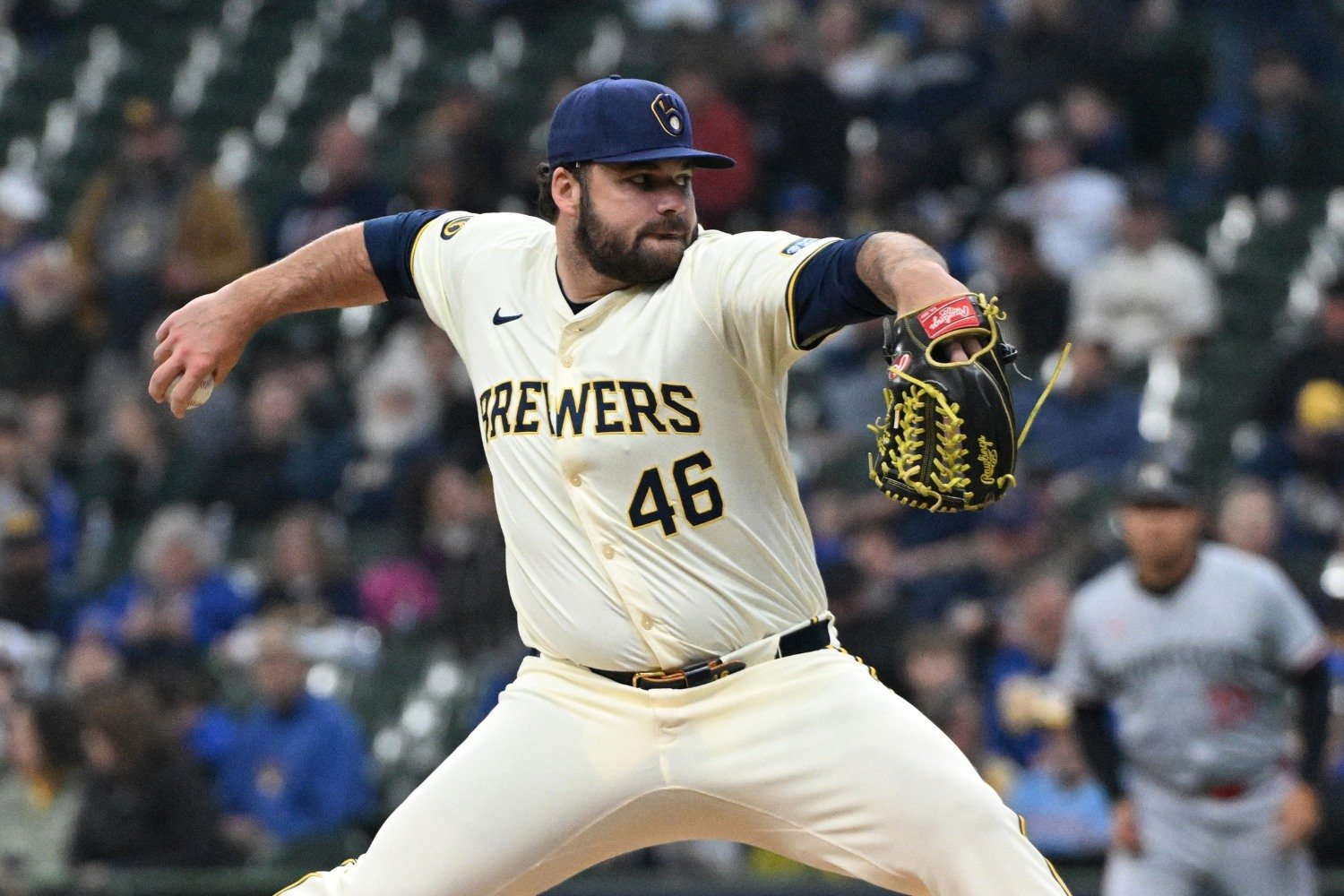
Interestingly, though, he went to Hoby Milner. It was the second day in a row for Milner, and matched the earliest that he was called upon in any game last season. Milner also came into the fifth inning six times in 2023, but four of those six (like his one appearance in the fourth) came by mid-May. For virtually all of 2023, he was a trusted, later-inning reliever. Murphy elected to use him as a fireman, though, believing the situation demanded that kind of matchup manipulation.
Milner's entrance did force Julien out of the game, as Rocco Baldelli pinch-hit for him with Manuel Margot. That had value, on its own. When Margot bizarrely dropped down a bunt and was thrown out to end the inning, Milner looked like the right choice. In truth, though, he hasn't been quite as sharp as his stuff requires him to be so far this year, and it caught up to him in the fifth, when Murphy brought him back out for another few batters.
Going to Milner early was an admission by Murphy that he didn't have an ideal set of options. He was trying to build a bridge to Payamps and Uribe, but he had a short list of ways to do that Wednesday. The loss of Devin Williams (before the season) and Trevor Megill (just this week, to a scary non-baseball-related accident that left him with a concussion) loomed large. Murphy felt he had to get Ross out of there, but he still had 16 outs to account for when he did. It was always going to be difficult to get through them with a lead intact, unless the Brewers offense had a major breakthrough in the meantime.
The most interesting thing about choosing Milner, though, is that Murphy could have chosen Bryan Hudson instead and held his more trusted lefty in reserve. Hudson did pitch three innings in his last appearance, but that was Sunday in New York. After two days off, he should have been ready to at least face Julien (or whichever pinch-hitter the Twins might have run at him) and Alex Kirilloff, and would have had an excellent chance of getting out of the inning by retiring one of the two. Then, if rest and workload were concerns for the manager, he could lift Hudson and go right to another pitcher to open the fifth.
During spring training, Murphy talked about the value and impact of pitchers who offer a rubber arm--who can come in often or with relatively little notice. He also talked a lot about the value of versatility, in terms of being able to get out both lefty and righty batters and in terms of being situationally flexible. A manager has to have the same flexibility and resiliency, though. Murphy did escape the fourth Wednesday, but the catenary had begun. One decision linked up with another, until the Brewers ended up needing huge outs from (first) Payamps and (when he, understandably, cracked under his heavy early yoke) Bryse Wilson in the seventh inning, and they couldn't get them.
Ultimately, the optimal moves were (respectively) to use Hudson instead of Milner in the fourth, then to turn to Thyago Vieira and/or J.B. Bukauskas in the fifth and sixth. That might have gotten them to the seventh with a bit more breathing room, and then, perhaps, Murphy could have gone to Wilson or to Milner in the seventh, under very different circumstances. If Hudson, Vieira or Bukauskas had blown the lead themselves in longer looks (which is certainly possible), that still would have held some value: it would have discouraged Murphy from bringing in Payamps and putting more early mileage on a tired arm.
Given the off day looming Thursday, it's understandable that Murphy tried to get aggressive and sew up an undefeated start to the season. He'd have better served the team, though, by giving a couple of his less-trusted middle relievers chances to earn a greater share of that trust, knowing that if they didn't pass the test, he would at least be unburdened of any feeling of obligation to turn to his beleaguered best arms.
It's just one loss, and sometimes, losses are just the price you pay for previous wins. As the team looks ahead to a couple of long stretches without off days and without some key arms in their relief mix, though, Murphy will need to quickly figure out how to better balance one game against its successors and bring down those prices.
Are you optimistic about the Brewers right now?

Follow Brewer Fanatic For Milwaukee Brewers News & Analysis



-
 1
1


Recommended Comments
Create an account or sign in to comment
You need to be a member in order to leave a comment
Create an account
Sign up for a new account in our community. It's easy!
Register a new accountSign in
Already have an account? Sign in here.
Sign In Now