


Brewers Video
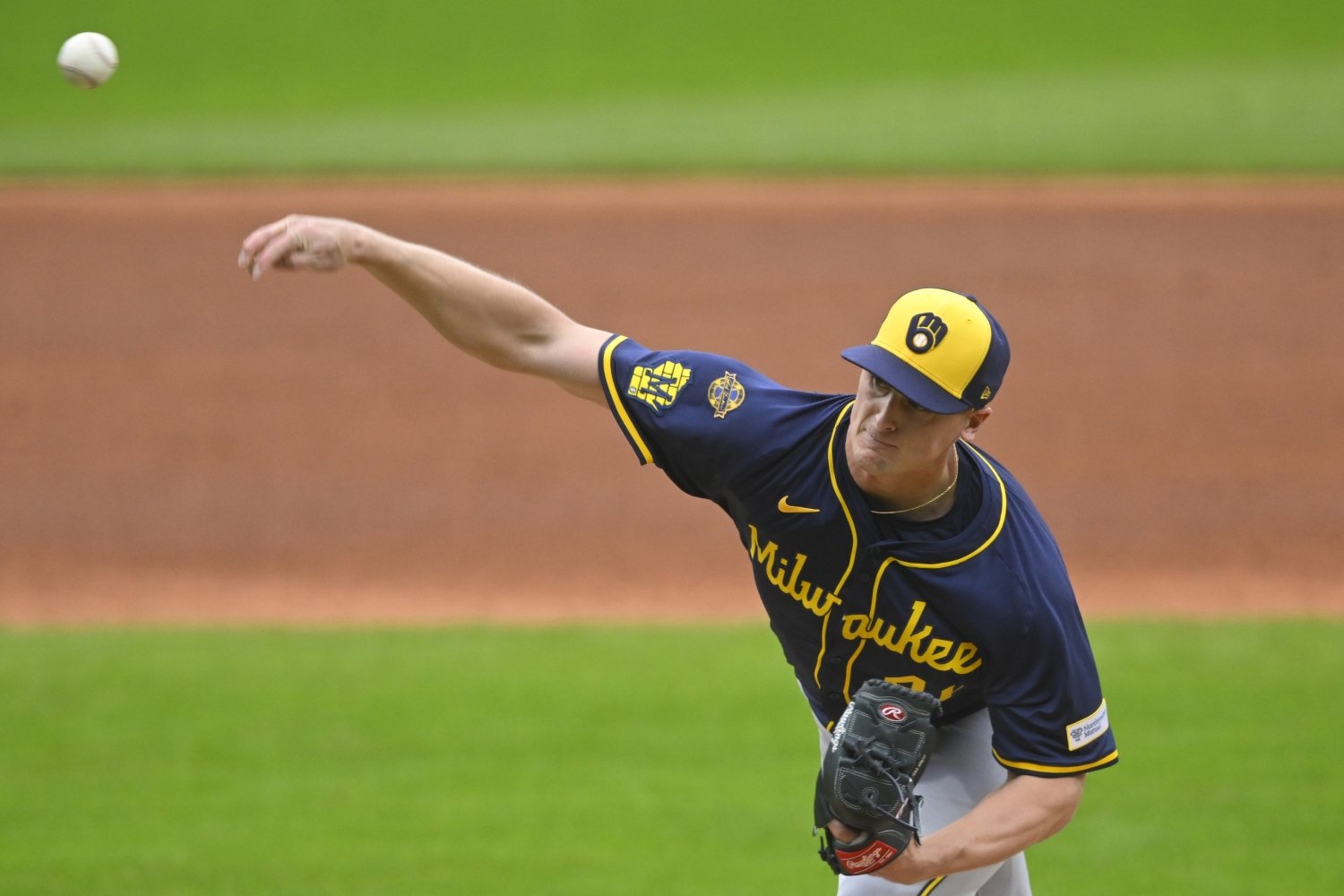
Quinn Priester is a fascinating figure. A former top prospect with the Pittsburgh Pirates who hasn't yet found success in the major leagues, he also presents an interesting profile. Priester had pitched almost 100 innings in the majors before joining the Brewers, recording just 69 strikeouts and a whopping 41 walks in that time. He had an ERA of 6.23.
Nonetheless, the Brewers felt comfortable trading one of the organization's top 10 prospects (Yophery Rodriguez); the 33rd pick in the 2025 MLB Draft; and their fifth-round pick from last year, pitcher John Holobetz, to get ahold of Priester. On the Milwaukee Journal-Sentinel Brewers podcast with host JR Radcliffe, guest and Brewers Weekly host Dom Cotroneo indicated the Brewers weren't as high on Rodriguez as some of the prospect rankings might suggest, but even so, that's a substantial outlay for a player yet to even establish himself as a bona fide big-league hurler.
So what exactly did the Brewers see in Priester? Was it the improvements made within the Red Sox organization? Did they see some mechanical issues they felt they could smooth over, to unlock further potential? Let's take a look:
The Red Sox Pitching Lab
The Boston Red Sox acquired Priester for another former first-round pick, Nick Yorke, in 2024. Their primary focus was to add velocity to his fastballs, and they succeeded in doing so during the offseason:

During the spring, that velocity showed up, adding a tick and a half to his entire arsenal—with corresponding boosts to his Stuff+ grades. The sinker, his primary pitch, is the most important beneficiary. There was also lots of talk about Priester developing a new cutter, but actually, it seems like more of a classification change from what was previously a very straight four-seam fastball.
Since the trade, the Brewers have slowly reduced the cutter usage, leaning heavily on the sinker and its ground ball tendencies. They've made it clear that sinker is one of the main reasons for their interest in Priester, and I'll get to why in a moment.

Comparing Priester's velocity in Triple A with the Red Sox to his more recent numbers, it seems the Red Sox also saw the cutter as more of a "get off the sinker" offering than a primary fastball. Whatever the reason, the velocity has steadily come back to the sort of range Priester was roaming in during 2023-24. Without that added gas, what exactly do the Brewers find so attractive? Is the sinker better than advertised? The cutter has been crushed, and they've adapted, primarily using the sinker and slider in recent starts (which have been his best)—as Brewer Fanatic beat reporter Jack Stern pointed out last night:

The slider has returned some solid whiff rates, but the sinker, not so much. he hasn't been locating it well to get ahead in the count, and by Stuff+ metrics, it doesn't grade out well. Why, then, do the Brewers love it? Well, if you listened to the Brewer Fanatic Podcast last week, you may have a hint:
The Dead Zone
Jeremy Maschino has recently compiled a model that looks at the spin rate, direction and Magnus acceleration of a pitch. He's been able to assess the expected Magnus effect and movement of a pitch based on release point, extension, pitch type and initial trajectory, and use that as a basis to compare with the actual Magnus effect and movement of the pitch. A dead-zone pitch would be one that moves exactly as expected.
To use Jeremy's words:
QuoteWe use Magnus acceleration because it’s a release direction‐relative metric that’s independent of time under a constant‐acceleration model—so time to the plate doesn’t add unwanted variance. You can think of the accel components as induced vertical break and horizontal break.
I'll leave the nerdiness behind now. In this case, Quinn Priester's sinker is an absolute outlier:

The shaded circles are the expected movement profile, while the clear circles are the actual movement. His sinker drops 3.6 ft/sec more than expected, giving him an extremely high possibility of keeping the ball on the ground if he can command it effectively.
He also gets some additional drop on his gyro slider—another reason why Priester has a ground ball rate of 57.6%, something that should play up with the Brewers' stout defensive middle infield. There are two limiting factors for Priester at this point. His command, and the lack of a third pitch. There is, however, a blueprint for shoring up those weaknesses in a similar pitcher, and he's an elite arm.
Is Logan Webb A Basis For Comparison?

Logan Webb has a lower arm angle, but the expected movement on his sinker is similar to Priester's. He gets a little more added drop on the offering, but overall, you can see the potential here. The differentiating factors between Webb and hurlers like Priester are the very ones we named above: he's found a good third pitch, and he commands his whole arsenal well.

Webb has perhaps the best command in the major leagues, pounding the strike zone with both his sinker and his sweeper to great effect. He can live in the heart of the zone with his sinker, unlike Priester, because of how his sweeper and changeup combine to keep hitters off balance, Both of those offerings generate strong whiff rates.
A pitcher whose primary fastball is a sinker often finds a sweeper easier to pick up, due to the natural arm angle many sinkerballers throw from. That's also a reason why Logan Webb's induced vertical break on his sinker is a lot lower than Priester's, despite similar results. With Priester's higher arm slot, it could be argued that his slider is a viable alternative to the sweeper that Webb possesses, generating even slightly higher swing-and-miss rates (although he doesn't hit the strike zone as often). The big difference, then, is the changeup.
If well-located, the changeup can coexist very well with the sinker, tunneling off it with similar initial trajectories but different speeds and eventual movement. The combination of the two leaves hitters in two minds, no longer able to sit on the fastball so easily, and can generate good chase and whiff rates as a result. The change is a fantastic put-away pitch for Webb, something Priester could certainly use (given his low strikeout rate). More importantly, it might mean he wouldn't have to nibble the edges of the strike zone, and could attack hitters more directly.
The problem with Priester's changeup is the inconsistent delivery. At times, he's able to garner some really effective late drop on the pitch—more than expected, given the release, which suggests he's highly capable of throwing a strong off-speed pitch. There are other times, though, when it comes out hard and flat, with minimal break, and that's liable to run into damage. If he gets it right, you can see how far out in front the hitters are when targeting his sinker but getting the change:
So far, the movement is inconsistent, and Priester struggles both to kill spin and to sustain a sound differential between the velocities of his heater and his changeup. If he can eventually shore those weaknesses up, though, he could start using the whole zone better and give left-handed batters a much harder time.

I mention this because left-handers crush Priester, with a .400 on-base percentage and .509 slugging average in 2025. Having that third offering that either allows his sinker to start on the inner third or middle of the plate and bore onto the outer third more effectively, or a slider that can generate called strikes at the bottom of the zone, could transform how Priester's pitch mix plays.
Webb is just one template on whom the Brewers could model a remade Priester. One way or another, he needs to make some changes, but the trail he might follow has already been blazed.
Many thanks to Thomas Nestico and Jeremy Maschino for allowing me to use their models. If you're a stats nerd like me, their subscriptions are entirely worthwhile via Patreon, at TJStats and Pitchprofiler.
What do you think of the comparison for Logan Webb? Can you see the similarities in the profile? Or is it further away than one capable pitch in his arsenal? Let me know your thoughts in the comments below!




Recommended Comments
Create an account or sign in to comment
You need to be a member in order to leave a comment
Create an account
Sign up for a new account in our community. It's easy!
Register a new accountSign in
Already have an account? Sign in here.
Sign In Now