


Brewers Video
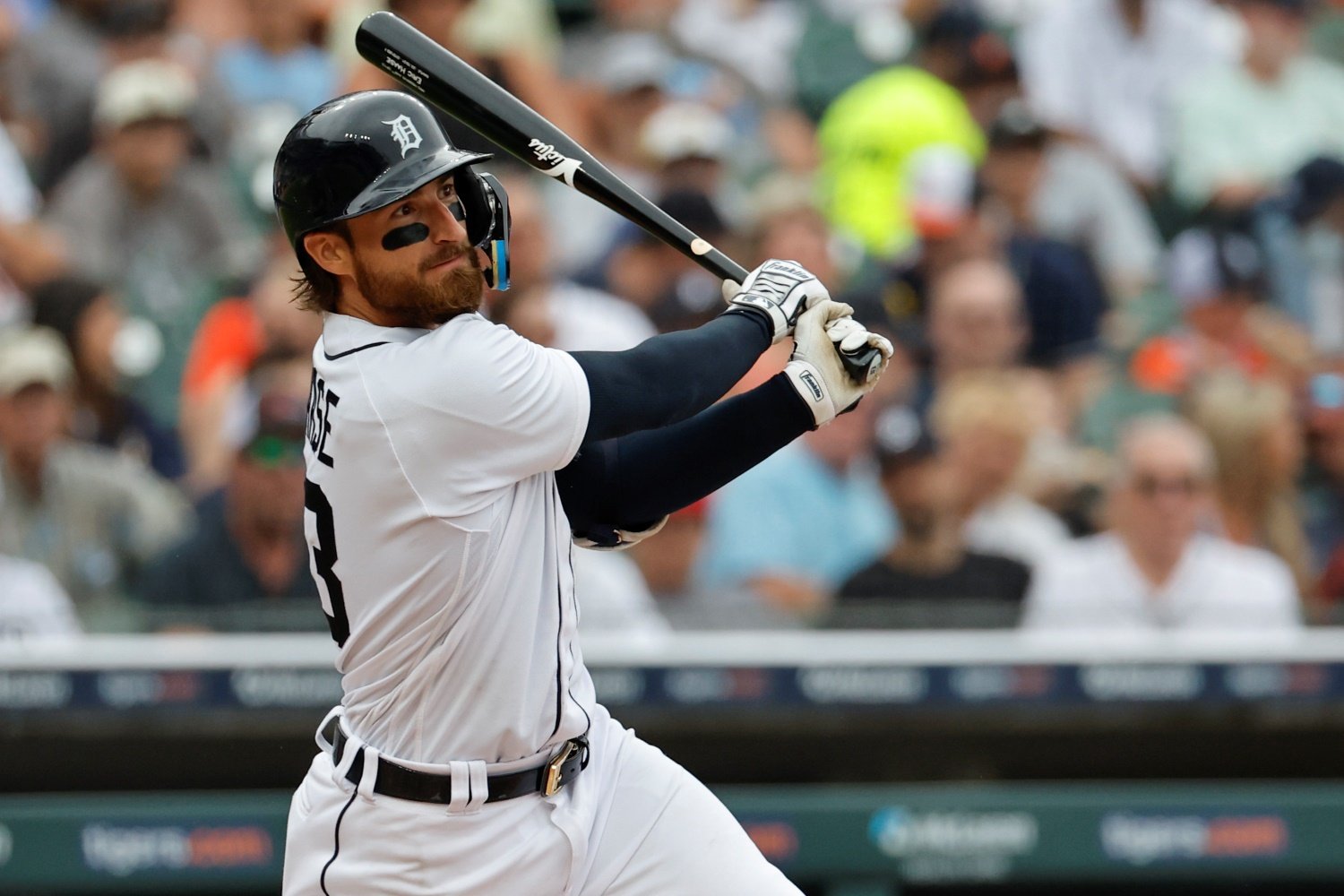
The bad news for the Brewers' newest big-league position player is that, at 30, he's losing the ability to catch up to big-league heat. The good news is that he's come to the right place.
For most of his brief MLB career, Eric Haase has punished fastballs. It's how he survives as a hitter. It's how he clubbed 22 home runs in 2021 and another 14 in 2022, despite limiting playing time in each season and a high strikeout rate. One sure way to stick around as a fringy big-leaguer is to be willing to don catcher's gear and able to deliver some power in a backup role.
An even better way to ensure teams want you around is to be a good pitch framer and/or game caller. As I documented yesterday, though, Haase has generally been pretty lousy at framing pitches during his time behind the plate, which puts extra pressure on his whiff-prone bat. When his offense cratered in 2023, his big-league viability just about went up in smoke, even as his framing incrementally improved. The Brewers are famously good at coaching up that skill, and probably hope they can bring him to the right side of average in 2024.
That won't matter much if he can't hit, though, and last year, he couldn't hit. Specifically, the problem he ran into is one of the most familiar (and understandable) ones that a player can have: he lost a little bit of bat speed, and could no longer catch up to good fastballs. In his age-30 season, with the wear and tear that comes with being a professional catcher piling up on him, Haase started getting beaten by the heat.
Here's a heat map showing Haase's Efficient Velocity (exit velo, weighted and adjusted for launch angle by the good folks at TruMedia) against pitches at 94 miles per hour or faster in 2022:
.png.73256422433872f3d8d74dcedc4fb1e9.png)
Red is good; blue is bad. Like we said, when going well, Haase blasted mistakes. Now, here's the same heat map for 2023:
.png.f114d68712e283d371e2e1d3fc889747.png)
Even if you prefer not to adjust to Efficient Velocity, Haase saw a cataclysmic drop-off. His raw exit velocity on pitches at 94+ was five miles per hour lower than it had been the previous year. On top of that, his whiff rate on such offerings climbed, from 26.6 percent in 2022 to 29.1 percent. There's no good news there. In this day and age, it's not even as though 94 miles per hour represents a plus fastball. It's average. If you can't hit 94 and above, you're doomed.
Luckily for Haase, though, the Brewers are a fine destination for a player looking to survive some lost bat speed, as well as for one needing to polish their framing. See, a big part of Haase's problem throughout his career has been an overly aggressive approach at the plate. Last year, he swung at over 53 percent of the pitches he saw, and chased 35.7 percent of those even outside the strike zone. Those were both well over the league average; Haase swings a lot.
The Brewers, er, don't.
.png.a205bdfc82a72b7f8e49ae4210b7e6d2.png)
Now, no player's approach is entirely (or even primarily) a function of their coaching or their organization. Haase is wildly unlikely to go from swinging at 53 percent of the pitches he sees to just over 45 percent, as the Brewers averaged last year. He might come almost halfway down that sliding scale, though, and that would mean a few more walks, but it would also make the rest of his offensive game a bit easier.
The main reason why Haase has always swung so much is that he's always been focused on getting started early. He's a pull hitter, and in Detroit, you can't just be kind of a pull hitter. You have to learn to crowd as many of your batted balls (especially those you hope will be extra-base hits) into the areas near the lines as possible. At Comerica Park, a 390-foot fly ball to center field is a can of corn.
.png.00f46d9b559f3db93d67fb213d3bda27.png)
When Haase lost that little bit of bat speed in 2023 and couldn't get out around the ball as easily, he started cheating to try (in vain) to do so. All of that only exacerbated his issues. Firstly, then, we should note that the Brewers ran one of the lowest 10 Pull rates in baseball last season. That's a product of a team approach more focused on plate discipline and seeing a strike before attacking. Just as importantly, though, consider the way a park like Comerica takes center field away from a hitter, versus what Miller Park does for them. Here's the percentage of each team's batted balls to center field, at home, that were Barrels (by TruMedia's definition, meaning they had to be at least 95 miles per hour off the bat and between 10 and 35 degrees of launch angle), plotted against their slugging average on all batted balls to center at home.
.png.3baee5ae42b05f1ca866e9722545736b.png)
The Tigers, average at barreling the ball to center, were about 80 points below the mean in slugging average. The Brewers, about 3.5 percentage points below-average in their Barrel rate, were right on the average in slugging. Haase shouldn't need to get his swing started as early, playing in Milwaukee. He should, with the instruction of the Brewers' OBP-focused coaches, be able to trim his swing rate by hitting to the big part of the field more often, and when he does that, he usually has success.
Don't expect Haase to usurp William Contreras. He might not even block Jeferson Quero, if the youngster has an impressive enough season at the highest levels of the minors. The fit of player and team should benefit Haase, though, and I don't think he's in much danger of ceding the backup backstop role to Austin Nola, at least in the short term. The Crew should be able to augment both his defense and his offense, thanks to the way they already do things and the skill set he brings to the table.
Does any of that wash with you? Are you on board with Haase, or ripping pages off your Quero Qountdown Qalendar as feverishly as ever? Let's talk about it further in the comments.





Recommended Comments
Create an account or sign in to comment
You need to be a member in order to leave a comment
Create an account
Sign up for a new account in our community. It's easy!
Register a new accountSign in
Already have an account? Sign in here.
Sign In Now