


Brewers Video
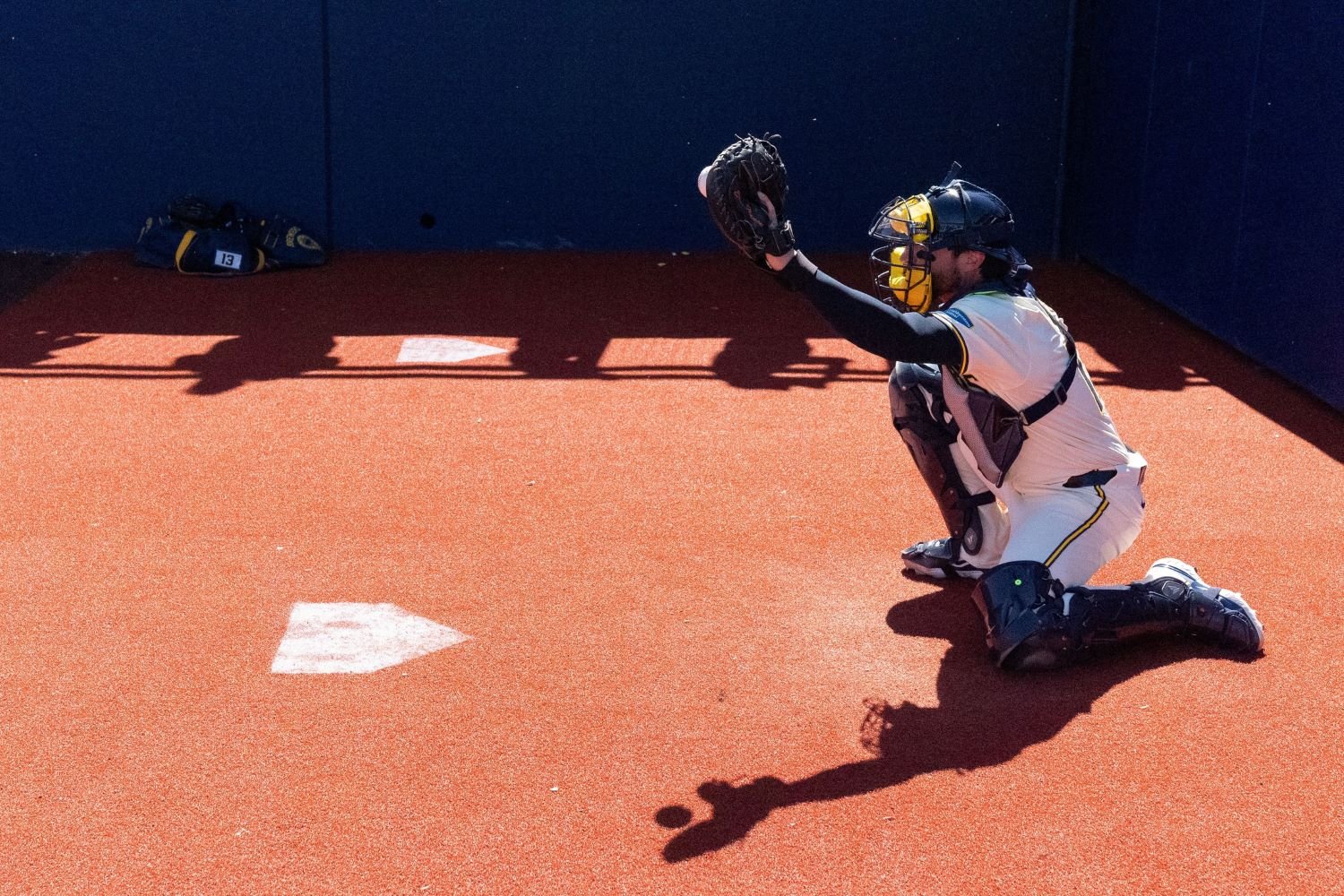
A backup catcher has to be defensively sound. As evidenced by three passed balls on Wednesday (and some other instances), Gary Sánchez doesn't necessarily meet that standard. Will that open the door for Eric Haase to squeeze onto the Milwaukee Brewers' Opening Day roster?
Eric Haase has come out of the gates hot this spring, but while his bat may improve, there are concerns over his catching ability. Grading out as well below average over the last two seasons in blocking, framing and pop times isn’t particularly appealing, but this Brewers staff turned William Contreras from a liability into a defensive stud only last year. Can they do it again?
How Well Does Haase Call Games?
Out of 132 catchers in the last three seasons with over 1,000 pitches caught, Haase is 117th for average exit velocity. Simply put, when he’s been behind the plate, balls have been crushed at an average of 89.4 mph. Yet, there are a few caveats to this. The Detroit Tigers staff have been hampered significantly by injuries and, frankly, talent deficiencies, and as such, the quality of pitches he was receiving are far below what William Contreras and Victor Caratini caught last year.

Take the above as an example, it’s the location of every pitch Haase has received over the last three years. Inducing weak contact while catching that much of the plate that often just isn't on the cards. It's hard to parse whose fault it is when the ball wanders down the middle, because surely, both the catcher and the pitcher have to take some share of the blame.
Ultimately, how a catcher calls a game is often judged more on reputation and rumor than on statistics, but that in and of itself can be handy. Tucker Barnhart is renowned as a solid defensive catcher, and over the course of 2022 and 2023, he received a similar number of pitches and produced an almost identical average exit velocity, hard hit rate and xWOBA as Haase. (For half that time, of course, they were teammates, so do we count that as evidence that the pitchers were to blame, or that Haase and Barnhart are closer in skill at calling games than is generally thought?)
To say Haase bears no fault for the high average exit velocities would be wrong, it is a catcher’s role to limit hard contact with their pitch-calling, exploiting weaknesses in the hitter’s swing. Ultimately, it appears as though a considerable portion of blame should be attributed to the lackluster Detroit Tigers staff, but it’s definitely something to keep an eye on if Haase starts the season with the Brewers.
Athleticism & Stance
One thing that Charlie Greene spoke about with William Contreras is his raw athleticism and how the Brewers tried to find a way to capture that in his catching technique. They used his body strength and hand-eye coordination to develop a technique more suited to picking rather than blocking pitches, and going to one knee in an effort to help him frame below the strike zone. Both endeavors were quantifiable successes that improved his framing, blocking and pop time numbers in 2023.
Haase had an average sprint speed of 28 ft/sec last season, demonstrating at least some level of agility and athleticism, so can the Brewers turn this around? They may have already started, with his blocking. Haase was in the 18th percentile for blocks above average last season, using a very low, spread-out body position to maximize his frame on pitches lower down:

While he still adopts this position from time to time, he’s started to receive these pitches in a more upright stance, allowing him to use his hands better, as you can see below. William Contreras made a very similar change, and it resulted in him saving nine extra runs from blocking pitches alone in 2023, compared to his 2022 numbers.

This ball is virtually in the dirt, yet Haase kept his left knee in a stronger position. On top of whether this can help him with blocking, it should be a big boost to his framing abilities, as Haase in 2022 and 2023 used two differing stances, depending on pitch location; he was very upright for pitches up in the zone, and sprawled out for pitches down in the zone. Maintaining a more consistent stance should add a layer of deception for the umpire to deal with, and allow him to get more calls in the shadow areas outside the strike zone.
Haase has had considerably more time with this Brewers pitching staff this spring, looking sharp both with the bat and behind the plate, while Sánchez may be a bit rushed to be ready for Opening Day. He certainly didn’t look sharp on Wednesday, and that hand injury may have played a part in it, although he will likely improve as the spring goes on. It seems more and more likely that Haase will be on the initial roster, at least holding his position for a while as Sánchez alleviates concerns with his injury and his receiving skills. At the very least, Haase should be a serviceable trade chip if another team comes calling for his services.
What do you think of Eric Haase? Can Charlie Greene work his magic once again? And will the bat continue to thrive after spring?
Do you approve of the job Pat Murphy is doing as Brewers manager?

Follow Brewer Fanatic For Milwaukee Brewers News & Analysis



-
 1
1


Recommended Comments
Create an account or sign in to comment
You need to be a member in order to leave a comment
Create an account
Sign up for a new account in our community. It's easy!
Register a new accountSign in
Already have an account? Sign in here.
Sign In Now