


Brewers Video
If the day after Thanksgiving isn't the occasion to travel back in time and savor a 1987 game between the Brewers and Tigers, what is?
Baseball doesn't have to have an offseason anymore. It's ok that it does; we don't want to gorge ourselves on so much baseball as to make ourselves dislike or resent it. But if you're stuffed as full of football as of turkey on this Black Friday, I want to invite you into a time machine. Back in June of 1987, the Brewers went to Detroit to play a series against the fierce Tigers. Thanks to YouTube, we can still watch that game now, almost 40 years later.
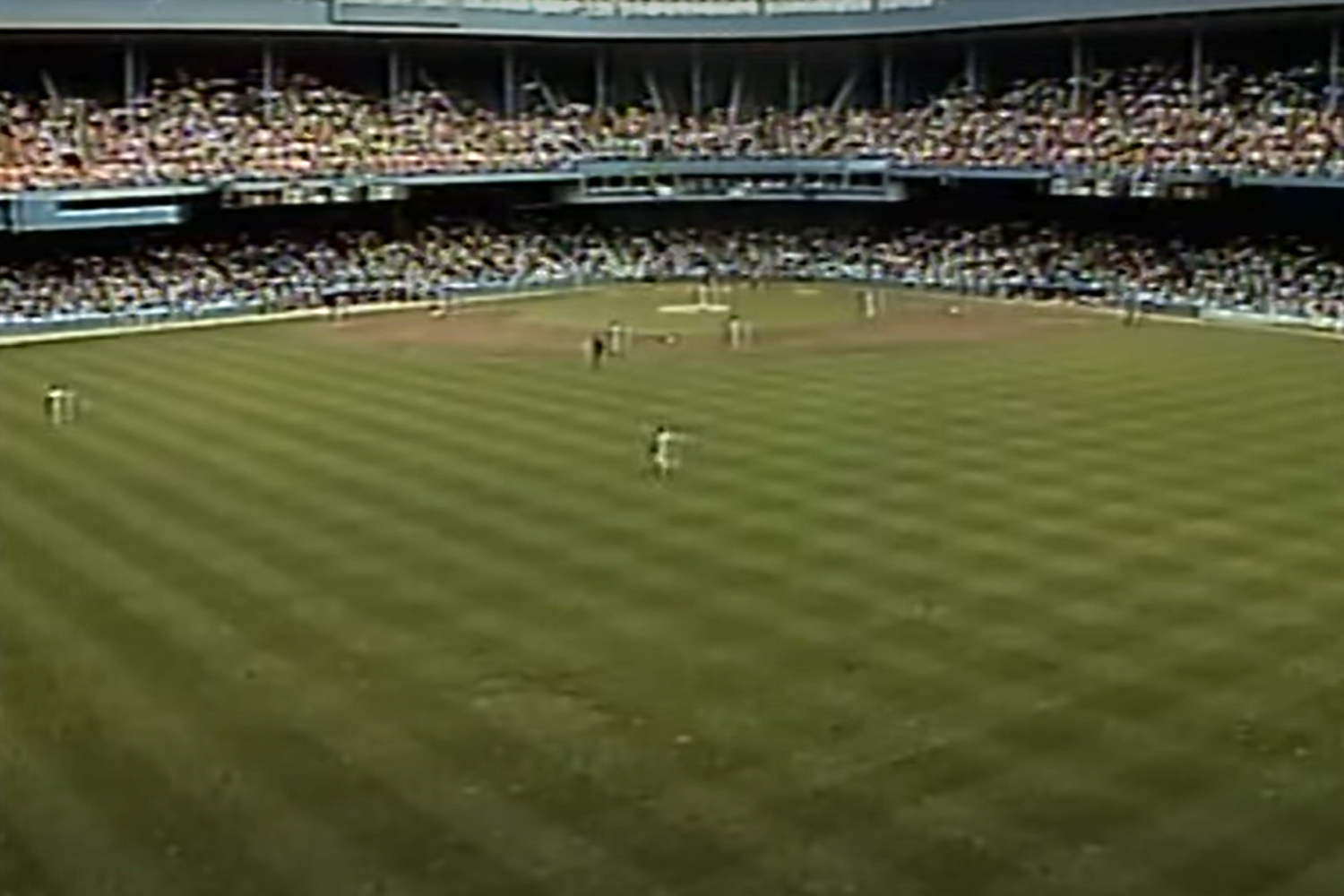
This game was played at old Tiger Stadium, which is the first fun thing about it. County Stadium had its own charms, and we'll discuss them tomorrow in a recap of a different game, but Tiger Stadium is the old ballpark as cathedral: the enclosed, sacred space. It also had some truly wonderful traits, like the second deck being stacked directly atop the first one all around the outfield, meaning that a player could hit perhaps a 350-foot upper-deck homer if they pulled it down the line. The roof of the stadium didn't extend out over the field, of course, but there was a roof all the way around, keeping all the fans' attention funneled downward, toward the diamond.
It was something close to a true diamond, too, unlike the rough-hewn wedges and cones more common today. Today, American Family Field is something closer to the industry standard, although it and Wrigley Field still stand slightly apart for their deep lines and shallow alleys. It's 345 feet to the corner and 400 to dead center, more or less. At Tiger Stadium, it was 325 to the right field line, 340 to the left field pole, 365 to left-center, 375 to right-center... and a seemingly impossible 440 feet out to center. This is also the shape of Yankee Stadium, prior to its big renovations. It's what the Polo Grounds were like, although a bit less extreme. Old Comiskey Park had this general shape. The field offered reachable porches down the lines, and some had easily reachable gaps. The center field fences were, intentionally, miles away.
I mention that fact not only because it defines the aesthetic of Tiger Stadium games, but because it came into play immediately in this game. The Brewers sent Len Barker to the mound on that mid-June evening, trying to help him rediscover the magic that had leaked out of his arm. Barker had been an All-Star in 1981, the second straight season in which he led the American League in strikeouts and the same year he threw a perfect game. He'd broken down badly in the intervening half-decade, though. The Brewers were giving him his first big-league shot since 1985, and it wasn't going well.
I won't mince words here: Barker didn't record an out that night. He faced five batters, they all collected hits, and he left, giving way to John Henry Johnson. That was a somewhat aggressive move by Brewers skipper Tom Trebelhorn, of course, but at the time, it wasn't as crazy as it now seems. The quick hook used to be a tool kept close at hand in a manager's tool belt. In the 1940 and 1950s, the average season saw about 60 starts (league-wide) in which a pitcher left after facing six or fewer batters. In the 1960s, that fell into the low 50s, and in the 1970s, it was usually in the 40s. That 1987 season saw 31 starts at least somewhat like Barker's, but then there wouldn't be as many as 30 in any season until 2018—when, of course, the frequency of that occurrence exploded, thanks to the advent of the opener. Now, there are anywhere from 90 to 130 such starts each year.
But the true quick hook is still a lost art. Trebelhorn acted decisively, whereas almost every manager since that year has at least tried to get a modicum of length from starters who have a disastrous first handful of batters faced in a game. Alas, the first inning ended 4-0, and it seemed like perhaps the race to save Barker was wasted effort.
Let's rewind a moment, though. It's not quite fair to Barker to pretend the inning even had to unfold the way it did. Leadoff man Lou Whitaker did smash the ball, over the head of right fielder Glenn Braggs and up against the wall for a loud double. After a tough at-bat, Bill Madlock put the ball in play with two strikes, but the shallow fly ball he hit was high enough to be an out almost anywhere, and any time. At Tiger Stadium, though, center fielders tended to play deep—very deep. Robin Yount was in center for the Brewers that night, and he gave a valiant effort, but he probably should have been shallower in the first place against the exceptional contact hitter in Madlock. Despite a racing dive and roll, the ball fell, sending Whitaker over to third and putting runners on the corners.
While Kirk Gibson was batting, the Earth shook. It was only felt as an initially unexplained tremor in Detroit, where the commentators remarked on it with bemusement, but it was actually an earthquake of moderate magnitude (5.2). It was felt as such a remote rumble because its epicenter was in southern Illinois, hundreds of miles away. Fortunately, it didn't do major damage, even closer to the heart of its impact zone. Unfortunately, Gibson did plenty of damage. He hit a long fly to left-center, forcing Yount (still trying to catch his breath from running down Madlock's bloop) to flat-out sprint a long way to his right and attempt a leap and lunge. He missed the ball, and once he did, the ball kicked around out between the 400 and 440 signs in center field. Both runners scored, and Gibson pulled in with an easy triple.
With the Brewers infield in, Alan Trammell then lofted a soft liner over the head of third baseman Jim Paciorek for an RBI single. It could have been caught, if the infield were back, but Trebelhorn had been trying to keep the game close. So much for that. Matt Nokes, the Tigers' star rookie catcher, then bounced a ball back up the middle to put runners on the corners all over again. It would unequivocally be a double play in 2024, because Nokes was a left-handed pull hitter and the hit was a two-hopper just to the shortstop side of second base. It's right where the team would position their shortstop now, but back then, teams were more circumspect in their shading.
So, Barker gave up five hits, but two could have been outs with nothing more than modern defensive positioning, and another was a hit principally because of the situation and the way it changed the defense's setup. They still count, and Barker didn't appear to have any answers, but this is a good example of how much harder the game has gotten lately, as teams update information like this and make such sound adjustments—and of how playing in a park with fairly shallow corners but such an expansive center field subtly but profoundly changes baseball, relative to modern parks and their tendency to go the other way.
Johnson came in and allowed one inherited runner to score, but cleaned up the mess nicely beyond that. The Brewers got out of the first down 4-0, knowing it could have been even worse. Nonetheless, falling behind 4-0 in just one frame is a problem. You won't win many in that circumstance.
As it happens, though, that season, there were a fair number of comebacks from that type of deficit. Here's something even neater, too: the 2024 season was the best one in at least 50 years for such comebacks.

Teams win about 88.7% of the games in which they lead by four or more after one inning. In 2003, the leading teams went on to win 122 of 131 such games. There are plenty of years in which you were down to a worse than 10% chance to win if you fell behind big after one.
In 1987, though, teams came back to win 13 times in 81 games fitting those criteria. This season, they were even better at getting off the mat, with 16 wins in 82 games. While it would signal something broken about the game if teams ever won, say, 40 percent of such games, I think the game is at its best when an early lead is not automatic—when, as in 1987 and 2024, you're far from done with your work even if you jump out to a big lead in the first or second frame.
The Brewers recovered gorgeously from the early Detroit barrage. Johnson (who, like Barker, would never appear again for another team after struggling badly with the 1987 Brewers) was the first hero. A journeyman lefty whose career was clearly on the ropes even before that season, he was on the fast track to being cut, but he turned in five shutout, one-hit innings of emergency long relief. The Detroit lineup didn't seem to lose interest; they just couldn't hit Johnson. It did help him a bit that Sparky Anderson, with a large lead in which to luxuriate, didn't immediately lift the hitters he usually used only in platoon spots against righty hurlers. Nonetheless, it was great work—the last good night of Johnson's career. He would give up four, four, and five runs in his next three outings and never appear in MLB again.
Tigers starter Walt Terrell was having a good night, though, and it looked like he might suffocate the Brewers and make it an easy, boring night. He'd shut them down without so much as a true threat through four innings, when Braggs cracked a home run in the fifth to get the Crew on the board. B.J. Surhoff (like Nokes, a rookie catcher already having an impressive season) followed that with a bunt single, which is a good excuse and reminder to note that Surhoff caught the eye everywhere he went that night. Obviously, he had been the No. 1 overall pick just two years earlier, out of the University of North Carolina, so the team had high hopes, and he was showing the extraordinary athleticism that allowed him to have a long, solid career mostly at positions other than catcher. He also wore wristbands (one blue, one white) pulled high up his forearms, just below his elbows, making him vaguely reminiscent of fellow UNC alumnus Michael Jordan. It was a minor affectation, but a fun one.
Surhoff came around to score a manufactured run, making it 4-2 after five frames. Terrell was going well enough, though, that Anderson left him in there. In the sixth, he set the Crew down again. He got all the way through the order three times without much trouble. Meanwhile, Brewers starter Juan Nieves entered the game to relieve Johnson, which gently but noticeably ratcheted up the stakes of the game. Nieves had been struck on the knee with a line drive in his previous start and was penciled in to pitch again for the first time at Yankee Stadium four days after this game, missing a turn in the rotation. As the game unfolded, though, Trebelhorn had Nieves warm, then enter, easing him back into action but also giving his team a chance, once they made a down payment on a comeback. Nieves worked a clean sixth.
In the top of the seventh, Terrell got two quick outs again. That was at the bottom of the order for the third time, though, and upon getting a fourth look, the top of the Brewers order pounced. Paciorek (playing in place of Paul Molitor, who had sprained his ankle over the weekend) walked. Yount (playing through his own nagging injuries) singled. Then, Cecil Cooper had the last really good moment of his career, one much more illustrious than those of Barker or Johnson. The aged Brewers slugger had started that season disastrously, after a tough 1986, and it was clear he was near the end. His batting like was a miserable .143/.151/.171 when he was benched for a week in mid-May, but he'd heated up nicely since returning to the lineup, batting .367/.383/.608 in his last 81 plate appearances entering this game. Terrell made a mistake to him, and Cooper smashed it. The ball was gone the moment it left his bat, deep into the upper deck down the line, for the 200th homer of his career and a 5-4 Brewers lead.
That was a wonderful moment. It would be, basically, the end for Cooper, who hit just .229/.324/.302 after that and ended the season embroiled in a frustrating staredown with the Brewers whereby he didn't play at all after Jul. 12, despite being on the roster the whole time. The team would have had to pay him his whole 1988 salary if they cut him in 1987, but they felt he wasn't worth playing, so they put him on the bench in mid-July and never gave him even a meaningless farewell plate appearance thereafter. On that one final night in mid-June in Detroit, though, Cooper had become the hero.
Detroit fought back. Nieves and Chris Bosio combined to work a clean seventh, but in the eighth (despite Trebelhorn making a trio if moves to strengthen his defense and get Yount some rest, bringing on Mike Felder, Rick Manning and Juan Castillo), Dan Plesac gave up a tying tally.
The game went to extra innings—where Surhoff showed up again. After a walk and a single, Surhoff blasted a three-run, go-ahead homer to right-center with two outs, landing the final blow in the back-and-forth battle. Plesac shut down the Tigers in the 10th, finishing a three-inning appearance that would be unheard-of for a modern closer. For Plesac, though, it was almost routine that year. He got at least eight outs in five different games in 1987, his first All-Star campaign. He pitched two innings another five times.
This game was full of twists, and of players at extreme ends of long careers. It was played in one of baseball's great venues, but one that distorted the game to suit itself in ways we no longer expect to see ballparks do. It featured thoughtful yet aggressive managing, some huge hits, and heroic pitching performances. It seems, now, to belong to another time, but it's nice to know that while games quite like this one are few and far between, the central takeaway from the game is very much alive in 2024 and beyond: Don't let the first punch decide the bout. Keep swinging.
Which team do you dislike the most in the NL Central?

Follow Brewer Fanatic For Milwaukee Brewers News & Analysis



-
 2
2


Recommended Comments
Create an account or sign in to comment
You need to be a member in order to leave a comment
Create an account
Sign up for a new account in our community. It's easy!
Register a new accountSign in
Already have an account? Sign in here.
Sign In Now