


Brewers Video
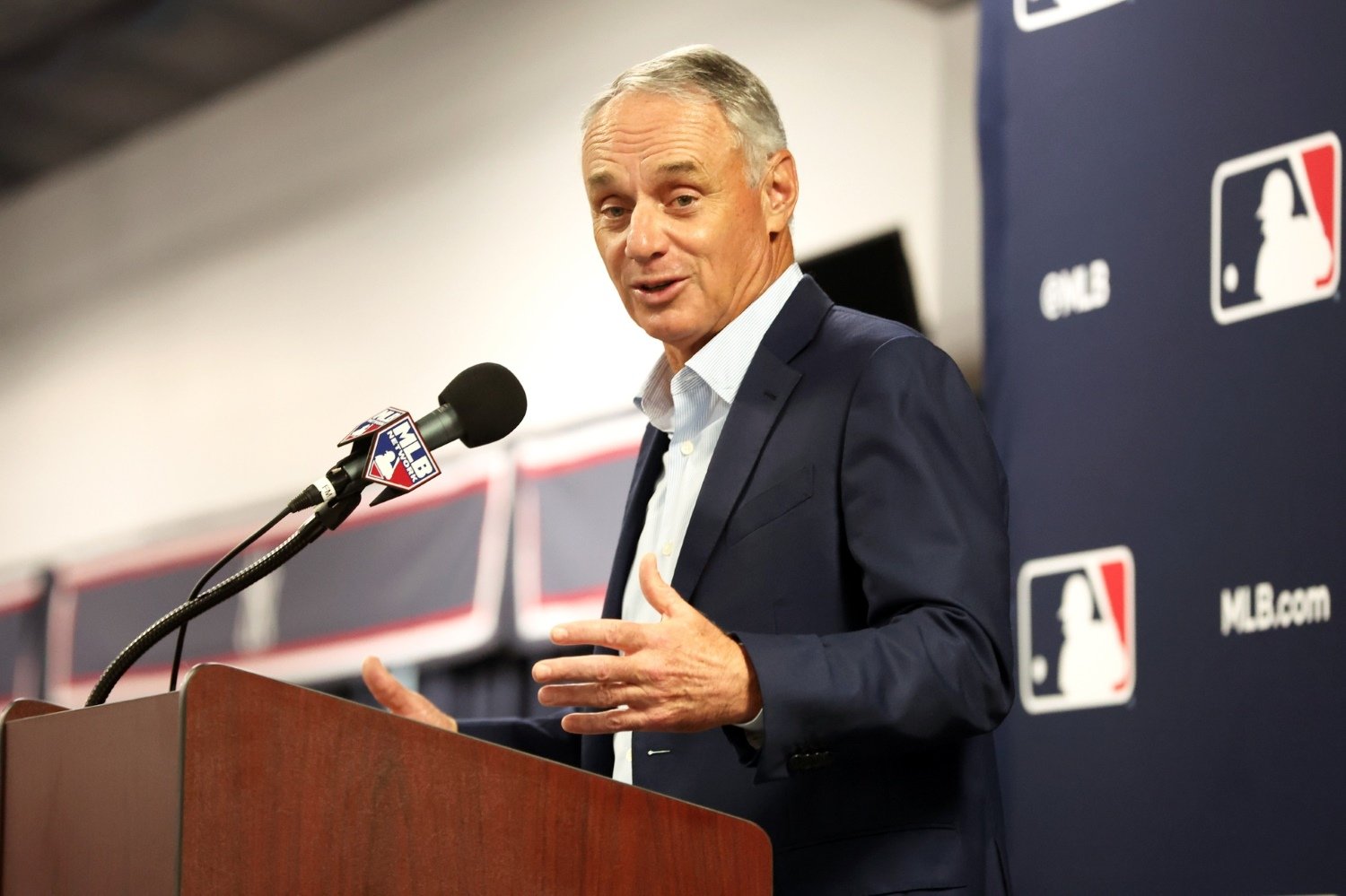
Due to a slow-moving market, MLB Commissioner Rob Manfred suggested a free agent deadline to speed up the process. Could that have a lasting effect on future Milwaukee Brewers offseasons?
Man, is it taking forever for some free agents players to find new teams. Spring Training has begun, and players like the reigning NL Cy Young Award winner Blake Snell still are free agents. What if there was a way to ensure players sign sooner?
When Rob Manfred announced he was going to step down from his role as commissioner after his current term, he also suggested a potential deadline for free agents. While nothing is official, the fact that it is being talked about at that level makes it worth further exploration.
While agents like Scott Boras might not like the idea, it does help speed the process along and gives that hot stove feel fans are looking for during the offseason. But what could that mean for teams like the Milwaukee Brewers?
The Brewers are a small-market team. While they could afford virtually every contract paid out in MLB history, the fact that other teams have much wider and deeper revenue streams will always make it easier for them to offer such deals. While there have been times when the Brewers spent some cash to add players (see: Lorenzo Cain), it’s still rare to see small-market teams make a big splash on the market.
There is a chance a deadline could have a major impact on the way the Brewers and other small-market teams make their signings. Here’s why a potential free agent deadline will change the Brewers offseason plans going forward.
Goodbye Brewers Month
Many fans look forward to what players their favorite teams add from the market. While the Brewers can’t buy top-of-the-line talent like Shohei Ohtani and Aaron Judge, they still have spent a good chunk of money to bring in effective talent.
In the last seven offseasons, the Brewers have made several splashes. There’s the aforementioned Cain deal, where the Brewers got the center fielder on a five-year, $80-million contract. In 2021, the Brewers added Kolton Wong on a two-year, $18-million pact with an option for a third year. In 2019, Yasmani Grandal was signed to a one-year deal eventually worth $18.25 million. Most recently, the team added Rhys Hoskins on a two-year, $34-million deal.
There is one common trend with all of these deals: they all occurred with less than two months prior to catchers and pitchers reporting to camp. Each occurred after the New Year. There’s a good reason why it is unofficially Brewers Month, once our calendars read January.
If we are to believe what the commissioner has suggested, the free agent deadline could be set as soon as the end of December. If this deadline had been added in an earlier collective bargaining agreement (CBA), none of these deals would have happened, and these players may not have landed with the Brewers.
Should MLB go through with (presumably) a December deadline, organizations will have to sign their players as soon as possible. While the Crew have made substantial additions in December during prior offseasons, those were mainly through avenues of trade, rather than the free agent market.
I’m sure if the league were to issue a deadline, it would be for offering multiyear deals to free agents. But that still will take away the teams’ odd of keeping a veteran player beyond one season. Regardless, Brewers Month will cease to exist and big players could sign with other organizations for multiple seasons elsewhere.
More Bidding Wars
When you are a small-market team, you can only spend so much money before you start burning holes in your pockets and working into the red for the season. Sure, marking up prices can result in more profits but it can also become less affordable for the average fan, leaving more empty seats in the stands.
That’s why most small-market teams rely on acquiring young prospects in the draft and trades in hopes to develop them and have them become a regular in the organization for at least six seasons. Recently, small-market teams have signed multi-year extensions beyond their arbitration years and backloaded the money. For example, Bobby Witt Jr.signed an 11-year, $288 million extension but is only has a $2-million base salary in 2024.
What does this have to do with a deadline? Let’s assume this deadline is on December 31 and will be the last day for players to sign multi-year deals. That means if players want to get that big-money deal they are searching for, they’ll have to accept something prior to December 31.
Since there will be added pressure to get that long-term contract, teams have the leverage and could offer deals with lower average annual salaries. That doesn’t mean it won’t get expensive, as there might be teams trying to outbid each other to get a player long term.
But once that deadline passes, the pressure shifts another direction. With players only allowed to sign one-year deals, they can now wait for the best offer. There will be tons of bidding wars amongst teams.
No matter how the deadline works, teams will have to make their best moves earlier in the winter than in the past. The Brewers' highest-paid free agent was Cain, on that 2018 deal. Like other small-market teams, the Crew can’t afford getting into a bidding war, especially against the other big-market clubs out there.
Players now like Matt Chapman, Blake Snell and Cody Bellinger, who all declined the qualifying offer, are looking for long-term deals around $20-25 million annually. It’s not like the small-market teams have a high chance of landing these guys, but their odds could spiral downward when it gets later into the offseason.
Additional Deadlines & Midseason Additions
Injuries, releases, and DFAs happen all throughout the season. In the past, organizations would fill holes with other players using either the next man up, waiver claims or free agents. However, we don’t know the exact details that would come with a deadline. For now, let’s continue using a late December multi-year deadline.
Even if the market picks up in December, it could slow back down in January. This leaves an opening for a potential free agent hard deadline. If it gets to that point, then deals like the Jackie Bradley Jr. signing in March 2021 and the details of Julio Teherán’s deal midseason would have been different.
We won’t know how the league plans to use the deadline until they adopt one, should they manage to actually do so. Until then, we have to cover all different scenarios. While it may speed up the process of free agency and excite baseball fans, it can also affect the way small-market teams like the Brewers have to use their spending money.
Do you want to see a free agent deadline? Are there other solutions to getting the best free agents off the market faster? Let us know.






Recommended Comments
Create an account or sign in to comment
You need to be a member in order to leave a comment
Create an account
Sign up for a new account in our community. It's easy!
Register a new accountSign in
Already have an account? Sign in here.
Sign In Now