


Brewers Video
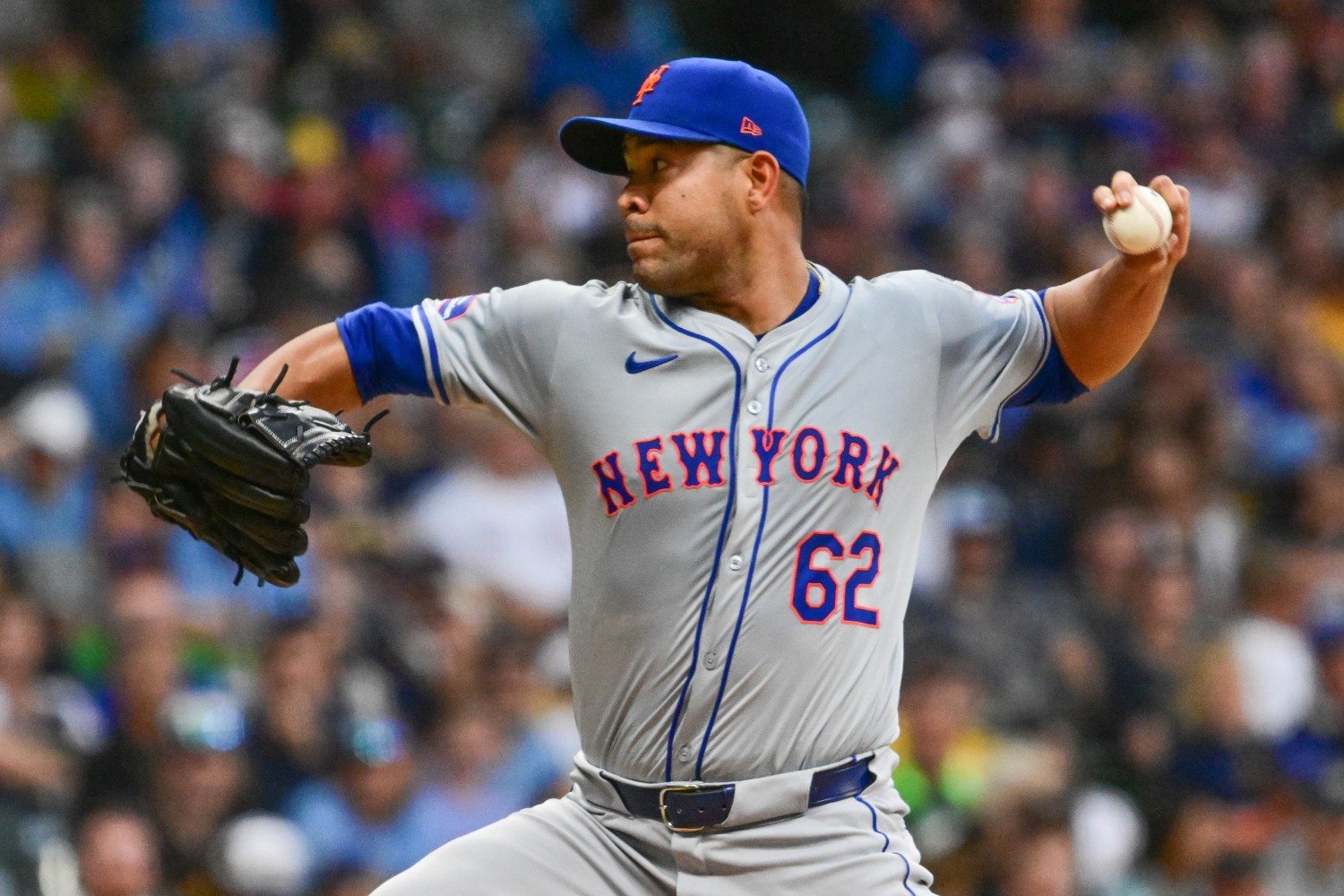
Milwaukee’s approach to signing pitchers reminds me of house-flipping. They typically look to acquire someone whose stock is at an all-time low, but who still has some life left in his arm and some intrinsic stuff to work with. Aaron Civale, Frankie Montas, and Bryse Wilson are a few recent examples of this sort of practice that had decent results. Rarely does the team go out and pick up a free-agent pitcher who has just come off of a year with a 3.75 ERA over 170 ⅓ innings but it seems like Jose Quintana will be the first in a while. In fact, outside of a 2021 marred by injury, he has been a consistent starter since he debuted in 2012. If he’s as good as his numbers say, how were the frugal Brewers able to get their hands on him without breaking the bank?
Quintana has a few things going against him. First, he’s 36 years old, which (in baseball terms) translates to pretty darn old. He’s not quite 58-year-old Satchel Paige on the 1965 Kansas City Athletics, but baseball is quickly becoming a young man’s game. For context, only two free-agent starters older than 34 were able to lock down multi-year deals: Matthew Boyd (two-year deal with the Cubs) and Nathan Eovaldi (three-year deal with the Rangers).
Second, his underlying numbers from 2024 don’t support his ERA as much as one would like. His FIP was 4.56, largely driven by a strikeout rate of just 18.8% and a walk rate of 8.8%. With an average fastball velocity just barely above 90 mph and secondary pitches with below-average movement, this shouldn’t be surprising. Presumably, his velocity and movement will only get worse with age.
Quintana is likely aware of this, though, and made a big adjustment to his arsenal after inking a two-year deal with the Mets in 2023. Historically, he had used the four-seam fastball as his primary weapon, with mixed results. It was the most effective with the Cardinals in 2022, but his first year in Queens saw him struggle to rediscover what made it great. Part of this was likely due to the stress fracture that limited him to just 75 ⅔ innings that year. He decided to pivot to a highly effective sinker that has taken the top spot in his toolkit ever since.
For older pitchers with fading velocity, sinkers can be extremely effective. Compared to cutters and four-seam fastballs, the whiff rates are typically lower to begin with, so there’s no need to be as dominant. There are some notable exceptions, like Josh Hader (throws a riding sinker) and Paul Skenes (throws a splinker), but generally, as long as you can induce soft contact, it can play. In Quintana’s case, his sinker is a major contributor to his 48.8% ground ball rate, but because he’s also got good command, he can make it even better by getting called strikes on the edges. This combination is what gave him the seventh-best sinker run value in MLB last year.
But wait, if his command with the sinker is so good, then why is his walk rate still worse than the league average? To me, the clear culprit is his changeup. Despite a stellar .203 opposing batting average, .260 opposing slugging percentage, and a 36.7% whiff rate, his changeup had a run value of 0 last year. This leads me to believe that many of these off-speed offerings were wasted pitches that resulted in balls. It also doesn’t help that there’s only about a 5-mph difference between his changeup and fastball on average, making both pitches comparatively less effective.
Given all of this information, it seems that a major key to success will be ensuring his fastball arsenal and proficiency with the sinker will align with Milwaukee’s elite infield defense. Brice Turang, Joey Ortiz, and whoever ends up getting most of the reps at third base should form an excellent trio that converts ground balls into outs at one of the best rates in baseball. This specific aspect of his profile is likely what made him especially enticing for Milwaukee, as they’ve shown a similar pattern in identifying defensive synergies with other newly acquired pitchers.
As for his changeup, we’ll have to wait and see whether he decides to keep it around or toys with a different pitch. He hasn’t thrown a slider in years, but it could give him more optionality to his glove side. Alternatively, if he wants to keep another arm-side option around, he could follow in the footsteps of Shota Imanaga and develop a rare lefty splitter.
All 29 other teams had the opportunity to sign Quintana, and they all passed, leaving the Brewers in position to sign him for just $4.25 million. Sure, his numbers under the hood may be concerning and he’s far closer to the end of his career than he is to his prime, but there’s still a lot to like about what he can potentially bring to an already intriguing Brewers rotation.
Do you approve of the job the Brewers' front office is doing?

Follow Brewer Fanatic For Milwaukee Brewers News & Analysis



-
 1
1



Recommended Comments
Create an account or sign in to comment
You need to be a member in order to leave a comment
Create an account
Sign up for a new account in our community. It's easy!
Register a new accountSign in
Already have an account? Sign in here.
Sign In Now