


Brewers Video
The new vogue in the ferocious battle for free-agent pitchers could hold the secret to the Brewers' next systematic pitching edge. All they have to do is embrace the happy medium everyone else is awkwardly avoiding.
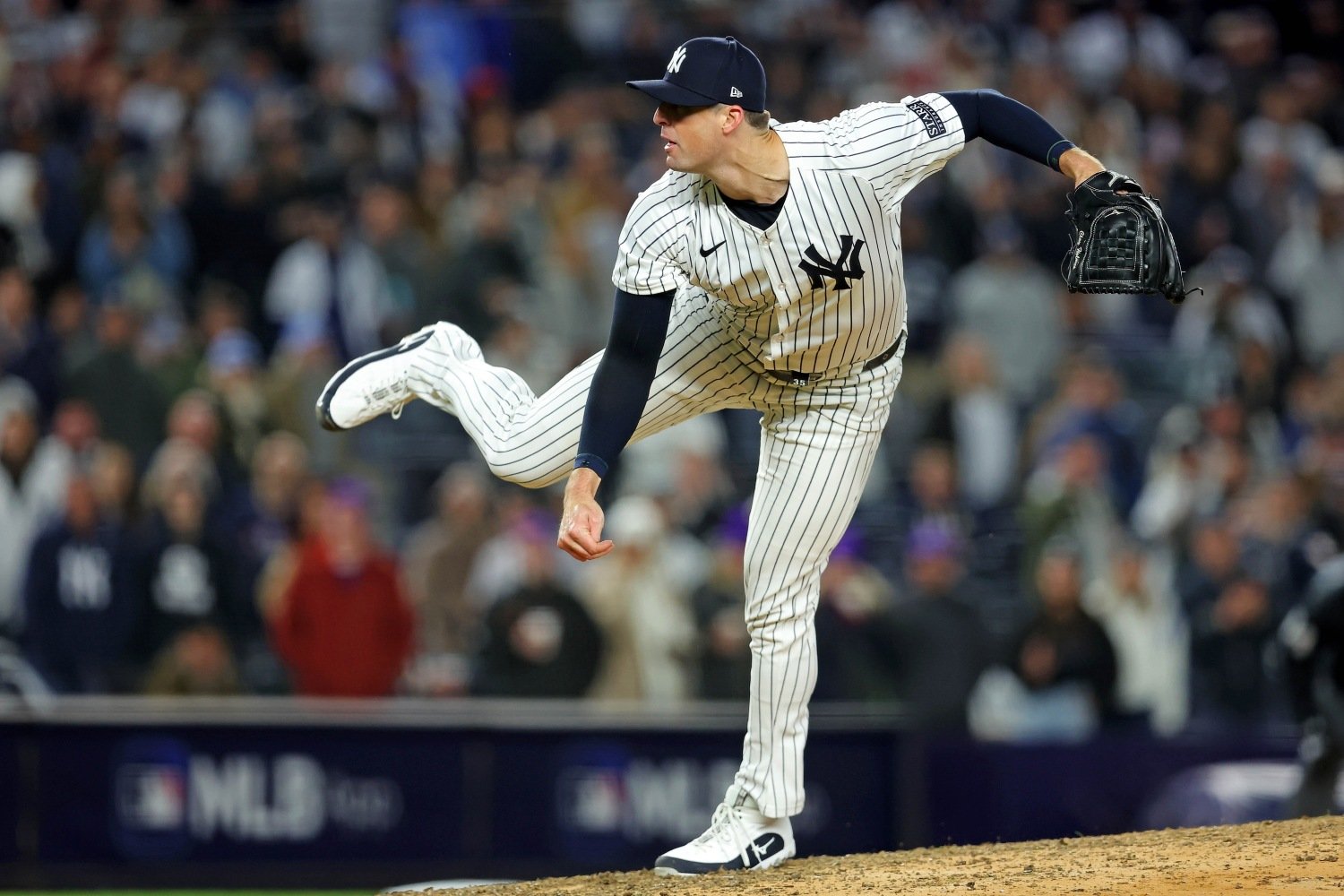
As the starting pitching market continues to develop, one new free agent entered the talent pool this week: Clay Holmes. A reliever for the last few years with the Yankees, Holmes has even been an established closer in the recent past, but reportedly, multiple teams are interested in converting him to starting duty. A year or two ago, that would have counted as big, unexpected news, but suddenly it's practically old news. Earlier this offseason, we heard the same rumors about Phillies relief ace Jeff Hoffman. Either (or both) could still end up signing with a team in need of bullpen help and working solely in short relief next year, but they wouldn't be the first to make the move back from bullpen to rotation, anyway.
Last season, both Jordan Hicks and Reynaldo López surprisingly signed as free agents to move back to starting duty, years after they'd established themselves as hard-throwing relievers. The incumbent clubs of Garrett Crochet and A.J. Puk also tried to convert each back to starting work, though only Crochet's transformation took. Seth Lugo and Nick Martinez are, in their mid-30s, just now putting down their roots in the starting rotations of the Royals and Reds, respectively, after careers split between that role and the bullpen. The Rays have moved Zack Littell, Drew Rasmussen, and Jeffrey Springs from relief to starting gigs within the last few years. This winter, in addition to free agents considering some upward mobility, players like Nate Pearson of the Cubs and Griffin Jax of the Twins are being considered for moves to the rotation by their teams while they remain under team control.
These moves all spring from the same set of central facts:
- The continuing rise in injury rates among pitchers is making good starters scarce—so much so that it makes sense even to reassign high-end relievers to that job.
- The pitch design revolution has tended to make almost everyone's arsenals deeper. Even relievers have been given the tools to attack hitters with three or four pitches, and that makes them better suited to the harder in-game work of a starter than the same pitchers might have been several years ago.
- Whereas the roles of starters and relievers were once separated by a huge chasm, they're now much closer to the same thing. Starter workloads have shrunk so much—through extra rest between starts and quicker hooks within them—that many starters can work a full season and pitch little more than twice as many innings as relievers do. That's a far cry from a few decades ago, when it was most common for starters to work three times as many frames as relievers and the true workhorses might get to four times as much. With the advent of the three-batter minimum, too, even relievers have to be able to get out both left- and right-handed batters. Thus, a good reliever is likely to be relatively immune to platoon effects, and they might very well be able to sustain most of the velocity bump they get from moving to the bullpen, even while stretching back out to start.
- Starters and closers are still the only pitchers well-rewarded by the arbitration system, and only starters are paid their true worth in free agency. That incentivizes teams to bring good pitchers up as middle and long relievers, but motivates pitchers to pursue jobs as starters or closers whenever they can get them.
Once you accept those four truths, though, an alternative plan becomes pretty clear. If pitchers who can be good relievers can also thrive as starters; and if it's relatively easy to equip them for the transition; and if the traditional roles of starters and relievers are converging all the time, then the natural question is: Why have those traditional roles at all? Why not, instead, let the pitchers not quite suited naturally to traditional starting work settle into rotational relief roles that involve facing 8-14 batters every three or four games?
So far, the returns on DL Hall and on the restored health of Aaron Ashby suggest that they're exactly that type of pitcher. They have good stuff, but struggle to sustain it beyond that 60 or 70 pitch mark within an outing. They each have enough durability concerns for the team not to want to use them like traditional, high-leverage relievers, who have to prepare and enter games according to need and can't develop routines as well as starters. Yet, neither is a great fit for the starting rotation as it has generally been built.
Rather than try to find the right role for either of these two southpaws, the Brewers should double down on their uniqueness and break away from the concept of two-tiered pitching hiring. They can simply assign each pitcher on their roster a role that suits their skills and biomechanical signatures, rather than lumping them into one of two bins that don't seem to be the right shape for them. This is how the Brewers can build great pitching staffs, above and beyond simply succeeding with the development of individual starting pitchers. They can cobble together the good work they need just by taking a more flexible, fluid approach to the whole endeavor.





Recommended Comments
Create an account or sign in to comment
You need to be a member in order to leave a comment
Create an account
Sign up for a new account in our community. It's easy!
Register a new accountSign in
Already have an account? Sign in here.
Sign In Now