


Brewers Video
Nick Mears may just be the option the Brewers need, with an electric fastball and some underrated breaking stuff. Some stats may give pause, but here’s why you should be excited about the Brewers' latest pickup.
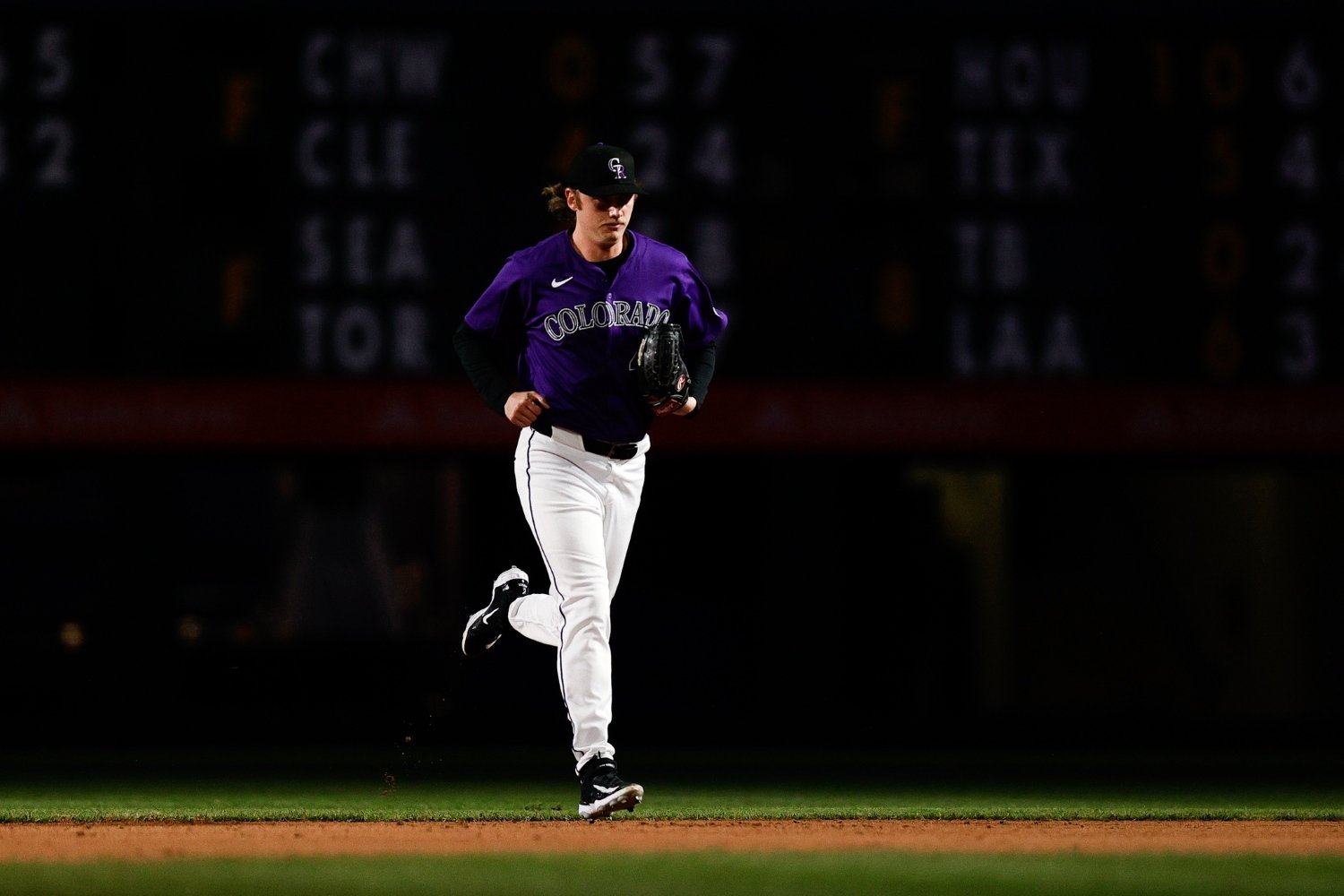
On Saturday evening, the Brewers traded for relief pitcher Nick Mears from the Colorado Rockies, giving up Yujanyer Herrera and Bradley Blalock. Mears has a 5.56 ERA this season, which doesn’t jump off the page, but it does initially appear that he’s been burned to some extent by his defense, given his 2.70 FIP and impressive 28.1% strikeout rate. The Brewers pen struggled earlier in the year with getting that swing-and-miss element, but with Devin Williams's return, Joel Payamps finding some form and then Trevor Megill, the Brewers may have four elite strikeout merchants that they can deploy in situations such as the one Elvis Peguero struggled with on Saturday night to escape a jam.
Some may be slightly perturbed by Mears being more effective in Colorado than he has been on the road, given Denver's friendliness to hitters. However, the biggest issue with playing at elevation isn’t always the elevation itself, so much as having to adjust with such frequency to how your pitches function at different elevations. He’s struggled more with walks while on the road, which lends some credence to this, but he's still kept up the gaudy strikeout numbers and he's given up just two home runs all year. He won't be back at Coors Field this season, so being able to have that consistency with how the pitches move should be beneficial to his command.
What Makes Him Different?
I’ll have to credit Matthew Trueblood for the observation that Mears's stuff has a very different profile from a lot of the Brewers relievers, who favor horizontal movement with their sweepers and two-seamers from lowish arm slots. With a fastball like his, Mears can still generate significant swing-and-miss, with the added advantage of that more downward action on his breaking pitches being conducive to ground balls and getting underneath the bat.

Given the slider and curveball are slightly different speeds but have similar movement profiles, he may consider ditching one of them, and I’d advocate that it be the curveball, due to how much better he commands the slider (slider on the left, curveball on the right):


The slider has better quality-of-contact metrics, in large part because of a tendency to hang the curveball more than he would like. When you narrow down more in terms of sequencing, when used after the four-seamer, the slider has been massively more effective. He hasn’t given up a single hard-hit ball this season on the slider, compared with a 17.6% barrel rate for the curveball. He’s thrown the curve a lot more in these situations, but it is something you may look to change.
The Fastball Is Electric
Mears real strength is his fastball, which has the type of movement you dream of in a late-inning reliever, and it really plays up when away from Coors Field. On the road this year, it averages 19” of induced vertical break (an elite number that creates an appearance of the pitch rising while it defies gravity) from a highish release slot. The real damage he does comes from his velocity and above-average extension, releasing the ball close to home plate in a way that makes it seem as though he’s throwing almost 98 mph on average.
When located in the upper third of the zone (and away from Coors Field), Mears induces a whiff rate of 31.3% on the heater, again an elite number, and his slider can really play well off of that. It’s a blink-and-you-’ll-miss-it offering that’s incredibly effective, not just because of the swing and miss but based on how well it avoids barrels.
A Word of Caution
There are two factors that may hinder Mears with the Brewers. His four-seam fastball has been barreled up at almost double the rate away from Coors Field, despite the improved metrics on the pitch. This is where the consistency in the air/lack of elevation can hopefully make a big turnaround for him in terms of results, but a 24.2% barrel rate just will not play at this level.
Then there are the walks. A late-inning reliever will give up runs every now and then, but they cannot afford to be walking people with regularity. Mears has walked hitters more than you would like, but there is a hope that, again, he can be more effective with a more consistent playing field. He overall has avoided barrels well enough to project he can be effective with an above-average walk rate, but it still needs to improve from where it is now, at a 10.3% walk rate.
So How Shrewd Is This Pickup?
Nick Mears has the kind of arm talent that’s reminiscent of Megill, with an elite fastball and quality breaking pitches that the Crew's pitching lab can get more out of than even his peripherals are suggesting. Yujanyer Herrera was a talented arm to give up, but the Brewers have a lot of such arms in the lower levels of the minors; they can afford to trade from a position of organizational depth. Given Mears has such a different look compared to everyone else (save Megill), and the best bullpens should have a variety of pitch shapes and angles, it may be a big boost if they use him well. They’ll need more from Mears than just looking pretty on paper, but the Brewers front office are excited about this pickup and the boost he can give them through 2027.
Do you approve of Brewers' ownership?

Follow Brewer Fanatic For Milwaukee Brewers News & Analysis



-
 1
1


Recommended Comments
Create an account or sign in to comment
You need to be a member in order to leave a comment
Create an account
Sign up for a new account in our community. It's easy!
Register a new accountSign in
Already have an account? Sign in here.
Sign In Now