


Brewers Video
The Brewers' 2024 third baseman will be their ostensible starting shortstop in 2025, and they will need a productive version of him. Can he sustain, and even build upon, what he did at the plate as a rookie?
Hitting is hard, man. It's viciously hard, and (at the big-league level) harder than ever in 2024 and 2025. It's been forever since the league expanded. Every roster is bloated with talented pitchers. There's a constant fight to get started early enough and have a fast enough bat to get the barrel into the hitting zone, but you also have to have extraordinarily good eyes, hands, and preparation, in order to catch the ball with the good part of the bat if it turns out to be one of the multiple good secondary pitches most pitchers throw these days.
Bat speed is important, but in the first year in which we've been able to directly view and analyze batters' swing speeds, we've quickly realized that not all bat speed is created equal. In fact, not all bat speed is even good. You have to swing fast to consistently generate meaningful power—but swinging fast doesn't guarantee power, because if a swing is so hard that the swinger loses control of the barrel, they're unlikely to square the ball up. If the contact between bat and ball isn't flush, the power potential of a fast swing is wasted, anyway.
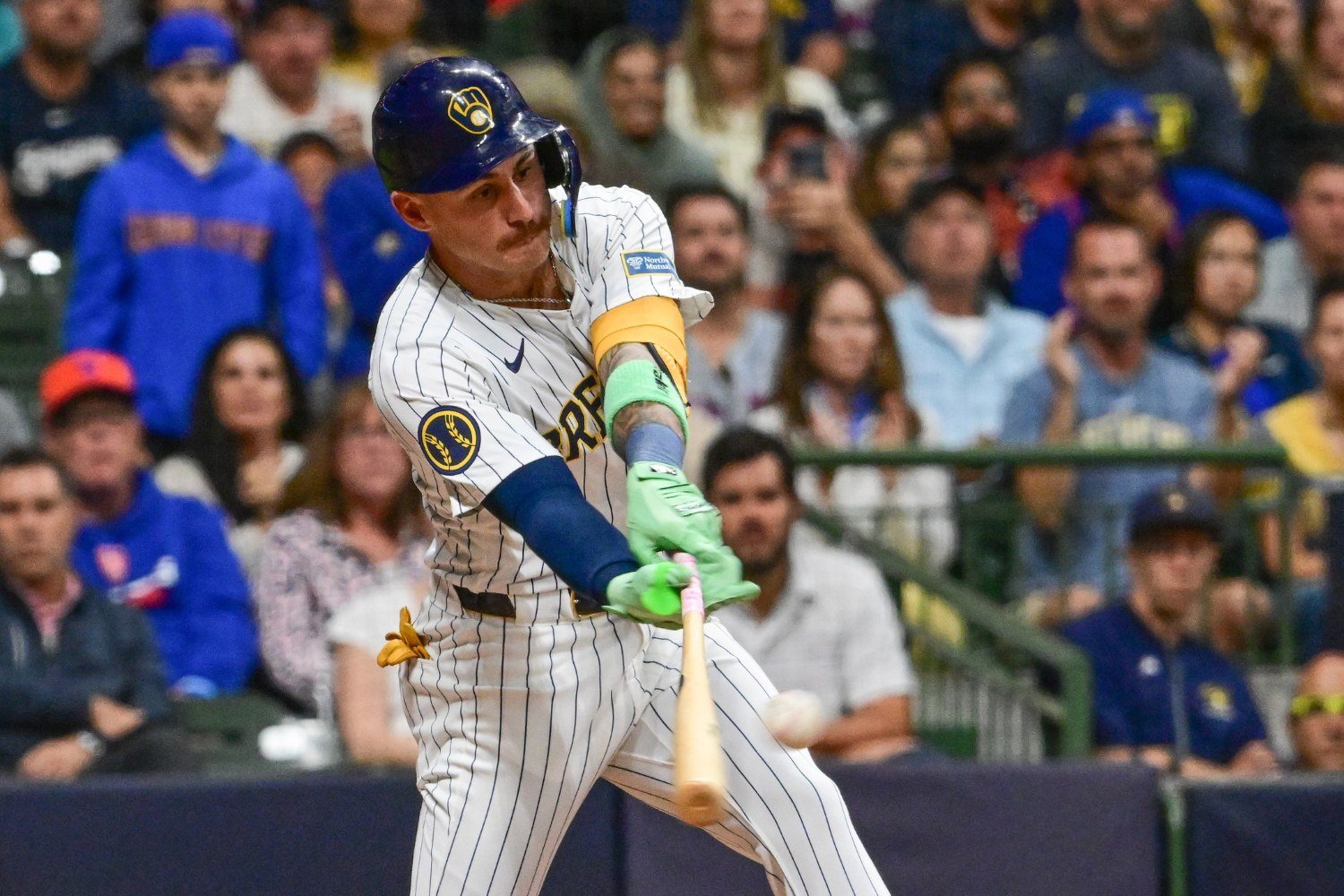
I say all this by way of introduction to the dilemma of Joey Ortiz. Entering 2025, the Brewers expect to move Ortiz from third base (where he thrived defensively and acquitted himself nicely as a regular in the batting order, in 2024) to shortstop, where he'll take the place of the departed Willy Adames. A good enough athlete to play a solid short, Ortiz should maintain the brilliance of the team defense around the infield. However, they need him to be (if not a true substitute for Adames's stellar production) a legitimate offensive threat.
He already does a few things quite well, in that area. Ortiz made contact within the zone at an elite rate last year, and rarely chased anything outside the zone. He also showed good speed, and his bat speed was markedly above-average. Here's the rub: Ortiz's fast swings led to a lot of mishit balls. He did generate good exit velocities, but they tended not to be at productive launch angles. His bat speed didn't translate into the kind of slugging an efficient swing speed would.
Specifically, Ortiz tended strongly to get on top of pitches inside, hitting too many of them into the ground.
.png.5c6e85213eba3333f3e44fcf3657dfba.png)
For context, that's not an automatic feature of all swings. Ortiz's average launch angle on batted balls that came on pitches on the inner third of the plate (or off it, inside) was 5°, which ranked 170th of 171 qualifying right-handed batters. By contrast, on pitches over the outer third or off the plate away, Ortiz's average launch angle was 13°, which ranked 56th of 191 qualifiers. He swung slower on pitches away (65th percentile swing speed, vs. 82nd-percentile on the inner part of the plate) but made more solid contact. Swinging fast tended to overwhelm Ortiz's efforts to keep his bat under control.

In the fight to be fast enough, Ortiz wasn't quite accurate enough with his bat. On inside pitches, he got going so quickly that he tended to be above the ball, because his swing is a little too flat to create upward plane at the contact point he tended to have when pitchers crowded him.
Throughout the year, Ortiz often looked his best when he stayed through a ball on the outer part of the plate, driving it cleanly to right-center field. He could catch such pitches out in front, because he had more space to get his bat around, and he tended to have gotten on plane with the pitch by then.
He did a bit more of that as the season went along, even starting to take pitches on the inner edge the other way with the same authority he showed in the clip above, from earlier in the campaign. That was a big adjustment for him, and it's an important one. He found ways to meet the ball more squarely as the season progressed. It's good news.

The bad news, of course, is that Ortiz's overall production moved more in concert with his ability to pull the ball than with that shift toward cleaner contact. Later in the year, he stopped turning on the ball, and his power diminished significantly.

Playing through a neck injury, he lost much of his bat speed for a couple of months, only recovering it near the end of the season. Being on time, then, meant starting earlier, and while that did allow him to use right field more effectively, it took some of the zip out of most of his batted balls.

The adjustment to find the barrel more often, even at the expense of some bat speed, was probably a necessary one for Ortiz's development. He still has to synthesize all the little adjustments he tried to make, though, and then hope for better health in 2025. That's how he can be more holistically strong at the plate.
We're probably talking about a change in swing plane, which will beget a change in Ortiz's contact skills and his contact point in 2025. Tweaking his approach can help him attack the ball better, and should give him a clearer set of strengths and weaknesses around which to structure his plan in the box. It will come with some growing pains, but this is the set of changes required for Ortiz to build upon the .239/.329/.398 line he put up in 2024.

This is why the Brewers should still be shopping for another infielder to bolster their lineup, though. Ortiz comes with tons of potential, and has a clear path to improvement—but that path includes risks, because it's harder to execute this suite of changes and align a new swing and approach to cover the whole zone with power than it is to identify the need for those adjustments. Waiting for him to deliver the production lost when Adames signed with the Giants, even in part, would be an error. The Crew needs to diminish Ortiz's role, even as they hope for augmented performance from him in his second full season in MLB.





Recommended Comments
Create an account or sign in to comment
You need to be a member in order to leave a comment
Create an account
Sign up for a new account in our community. It's easy!
Register a new accountSign in
Already have an account? Sign in here.
Sign In Now