


Brewers Video
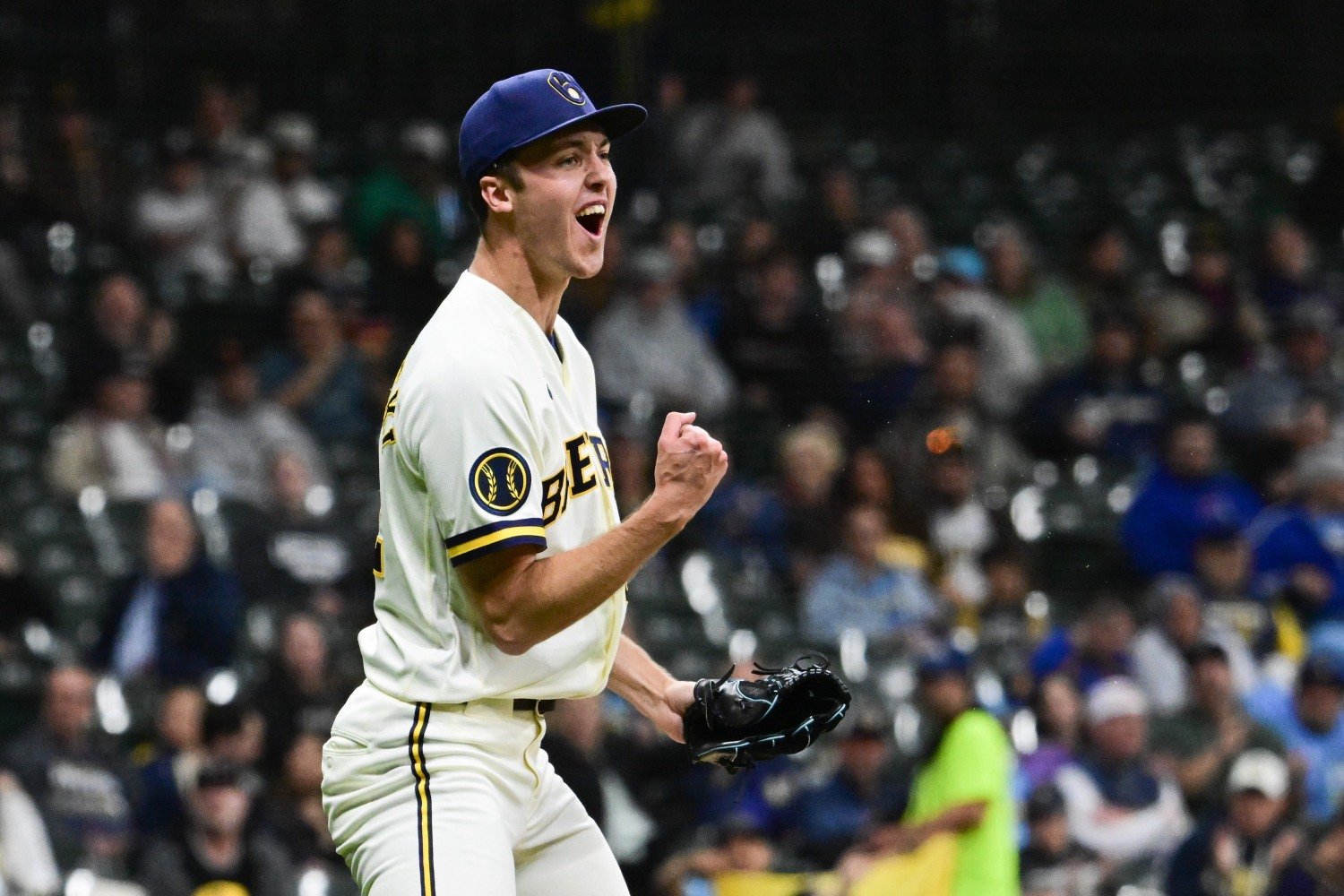
Jacob Misiorowski took over baseball headlines last year by being a flamethrowing rookie who was controversially nominated to the All-Star game after just five career games. At the time, his numbers looked good, but things deteriorated in the second half, during which he posted a 5.36 ERA over 40 ⅓ innings.
Now, he has recaptured the attention of fans across the sport—not because of some gimmick or contentious award, but because he has simply been dominant. He's currently tied with Cristopher Sánchez for the most strikeouts in MLB (80) and has absurd Statcast numbers, landing in the top decile for several statistics, including whiff rate (39.5%) and barrel rate (3.0%).
He’s just nine starts into the season, but after 51 innings, how do his other rate stats compare to some of the best pitching seasons in Brewers history? Here are the top five single-season performances by descending fWAR and how Misiorowski’s current numbers stack up.
Because nearly five decades separate Caldwell’s 1978 campaign and Misiorowski’s current work, there are quite a few differences that jump out almost immediately, with pitcher workload being perhaps the most notable.
Caldwell’s workload in 1978 was already a Herculean task by his standards, but the culture of the modern game likely means that no Brewer will ever get anywhere close to that number of innings again. In fact, the only player to pitch more than 200 innings for Milwaukee since 2012 was Corbin Burnes in 2022. Burnes just barely crossed the milestone marker, logging 202 innings of work.
Another key difference is strikeout rates, which have steadily climbed over the years. While Caldwell managed to accumulate 6.3 fWAR with a strikeout rate that would’ve been the worst among qualified pitchers in 2025, the team’s modern aces (Burnes and Misiorowski) have thrived by punching as many tickets as they could.
Misiorowski is the most extreme example of this contemporary pitching philosophy, which seems to prioritize dominance in shorter spans over longevity. Of his nine starts so far, only one has been more than six innings. It doesn’t help that he has been exiting games early due to cramping in his legs, but those injuries are a side effect of averaging 92 pitches per start, 61% of which are fastballs that average nearly 100 mph. To some, this may seem like a problem, but to the Brewers, this is sort of the desired outcome.
So while he might not be able to reach the counting-stat excellence of preceding franchise greats, he has a solid chance of having one of the most impressive rate-stat seasons in Milwaukee history. Assuming he maintains his current rate stats for the remainder of the year, this is where he’d stand compared to every other qualified pitching season for the Brewers.
Figures like SIERA and expected statistics are excluded because we don’t have data for earlier seasons.
Naturally, maintaining this torrid pace is much easier said than done. There’s still a chance that, like last year, the wheels of his season start to fall off once we approach the dog days of summer. Conversely, a year of working with Chris Hook and the Brewers’ pitching development program can do wonders for a young baseball talent, and there’s good reason to believe that he’s much closer to his true potential than he was as a rookie. Strikeouts and whiffs are up, walks are down, and he’s no longer solely reliant on his fastball to get through at-bats.
There are still plenty of things to nitpick, like how inefficient his outings can be or what things will look like if he does experience diminished velocity in later innings, especially since he opts to fill up the zone. Can he continue to get away with a three-pitch arsenal that’s really more like a two-pitch arsenal? Maybe, but it’d be nice to have some more fun offerings.
The question of where this season by Misiorowski will land in the history of all-time great campaigns by Brewers pitchers is one worth revisiting at the end of the season, even if it’s not the only year we’ll be on watch. In fact, it’d be quite surprising for a player to peak at just 24 years old, so his best years may even be ahead of him. The organization has had no shortage of premier pitching talent over the years, but finding someone of his caliber may be a first. This season should be the first of many to prove it.
Do you approve of the job Pat Murphy is doing as Brewers manager?

Follow Brewer Fanatic For Milwaukee Brewers News & Analysis



-
 1
1



Recommended Comments
Create an account or sign in to comment
You need to be a member in order to leave a comment
Create an account
Sign up for a new account in our community. It's easy!
Register a new accountSign in
Already have an account? Sign in here.
Sign In Now