


Brewers Video
One of the league's most aggressive fastball guys just joined the league's most fastball-heavy pitching staff. It's not hard to guess where this goes.
The mission statement of most modern pitchers (and the teams who employ them) is simple: Throw your best pitch most often, and most often, your best pitch is a breaking ball. Fastballs do not dominate big-league repertoires the way they used to. In fact, many pitchers don't even build their arsenal out from their fastball. They engineer excellent breaking pitches, and then shape everything else around that.
Not so in Milwaukee, where the Brewers lean heavier on fastballs than any other team in MLB—though they also vary that mix by using the four-seamer, the sinker and cutter in a more even mixture than most. Under Chris Hook, the Crew uses hard stuff to try to force weak contact and work ahead in counts, even if it means fewer strikeouts than other pitchers and teams might accrue. Whereas the focus elsewhere lies heavily on missing bats, the Brewers' ethos is to be satisfied (most of the time) with missing barrels.
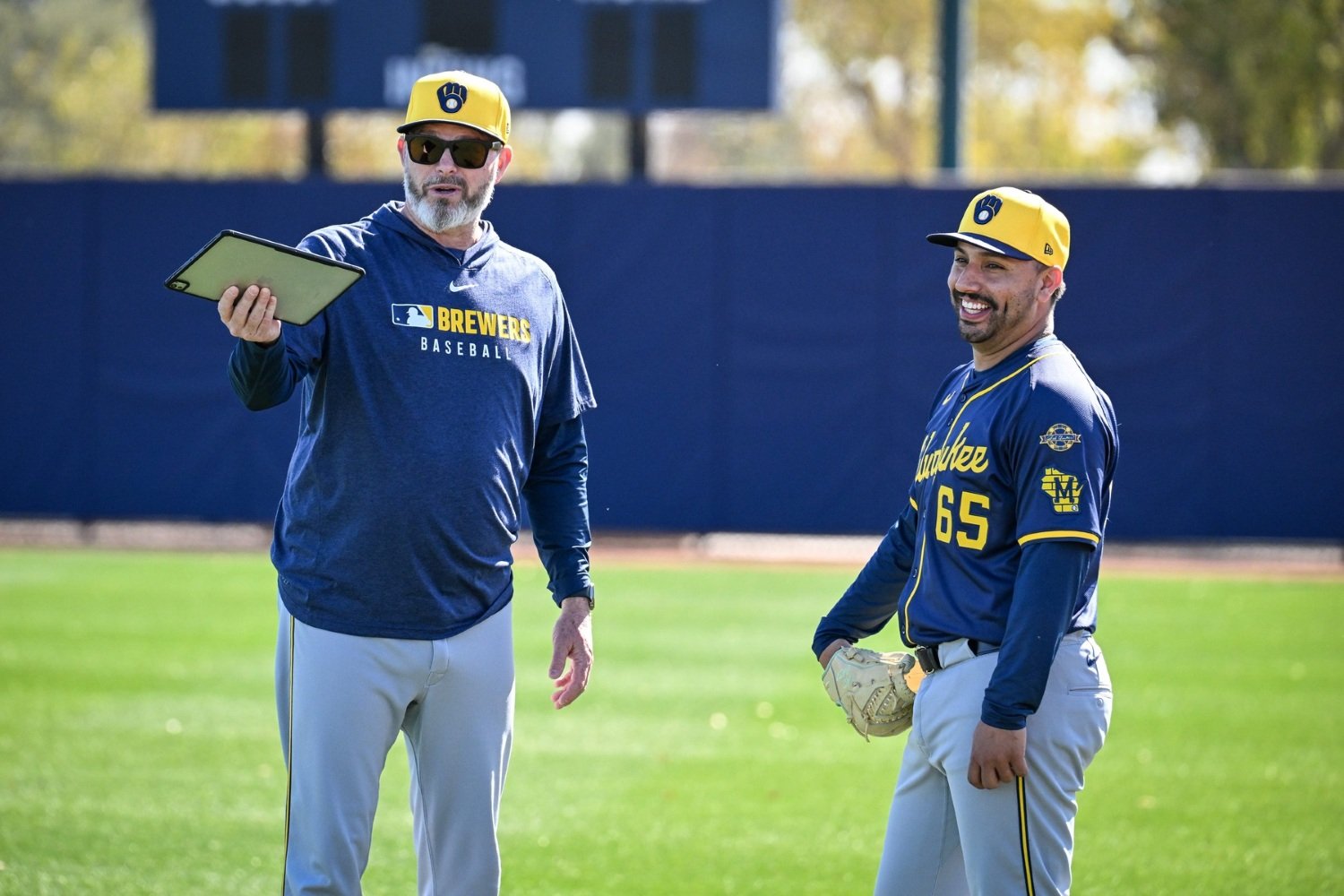
Nestor Cortes is as good a fit for that way of thinking as anyone. Cortes only threw a fistful of sinkers last year, but he's very fastball-forward, with a rising four-seamer and a good cutter that work in concert as the dominant offerings in his repertoire. Not only that, but even when he gets ahead, he keeps pounding away. In two-strike counts last year, Cortes threw a four-seamer, cutter or sinker 70.1% of the time, 20th-highest among all pitchers who threw at least 200 two-strike offerings. That's a crazy number, on its face, because Cortes doesn't have an overpowering fastball, and he doesn't have the kind of cutter that racks up whiffs. Instead, his plan with all those two-strike heaters seems to be just to keep opponents from properly timing things and doing damage.
Hammering away with fastballs invites hitters to be aggressive, and indeed, Cortes's opponents were far above average in swing speed all year; that swing speed also diminished less in two-strike counts for Cortes than for most. He gave up a whopping 18 batted balls at 105 miles per hour or more of exit velocity on two-strike fastballs in 2024. Here's the thing, though: seven of those were foul balls. When Cortes uses the inner third in two-strike counts, batters jump at the ball—but all they get out of it is a frustratingly well-struck liner into the seats down the line.
He most often does this with his cutter, as you see above, but he's also good at driving that four-seamer to the upper inside quadrant of the zone against righties, with similar results.
The danger, of course, lies in leaving a fastball in the heart of the zone, when you had two strikes on the batter and didn't need to risk that. Giving up long hits by missing middle-middle with a heater will drive a manager crazy.
The four-seamer does tend to get a little loose in terms of command, too, so Cortes occasionally gets burned. He's thinking like a power pitcher, but power really isn't his game.
That's the bad news. The good news is that the veteran Cortes adapts and adjusts quickly. Later in the same game in which he surrendered the above double to Connor Wong, he was ahead of Wong in the count again. This time, he went to the cutter, and while Wong made hard contact again, he never had a chance to keep the ball fair.
By having multiple fastball looks and good command, Cortes induces enough whiffs (and throw more than enough strikes) to make up for whatever excess hard contact he gave up by living in the zone with straight(ish) stuff. His .226 opponents expected weighted on-base average (xwOBA) on two-strike fastballs and his .224 opponents xwOBA on all two-strike offerings were both better than the league average. The tradeoff is obvious, but important. Throw more stuff with big wrinkles (changeups and breaking stuff) and you'll miss more bats, but it's virtually impossible to fill up the zone that way as well as one can with the three flavors of fastball.
Cortes's strikeout rate fell in 2024, as he got more aggressive within the zone. However, he also only walked 5.5% of opposing batters. Being fastball-forward in ostensibly breaking-ball counts costs you whiffs, but if you can limit hard contact by getting hitters anxious and exploiting the illusion of late movement based on multiple fastballs, it's worth doing so. Those extra fastballs limit walks and force hitters to earn their way on base—and, as we've discussed, the Brewers' defense is an extraordinarily good fit for Cortes's contact profile.
For the Brewers to make it three NL Central titles in a row, they need Cortes to deliver plenty of innings and stable, solid performance. He's a good bet to do just that, though, which is why the team was so excited to get him in the Devin Williams trade—and he gets there by pitching precisely the way the team already prefers to do so.
Do you approve of the job Pat Murphy is doing as Brewers manager?

Follow Brewer Fanatic For Milwaukee Brewers News & Analysis



-
 2
2


Recommended Comments
Create an account or sign in to comment
You need to be a member in order to leave a comment
Create an account
Sign up for a new account in our community. It's easy!
Register a new accountSign in
Already have an account? Sign in here.
Sign In Now