


Jump to content
Brewer Fanatic
  • Brewers News & Analysis

    Problem-Solving in an Unexpectedly Demanding Role, with Colin Rea


    Jason Wang

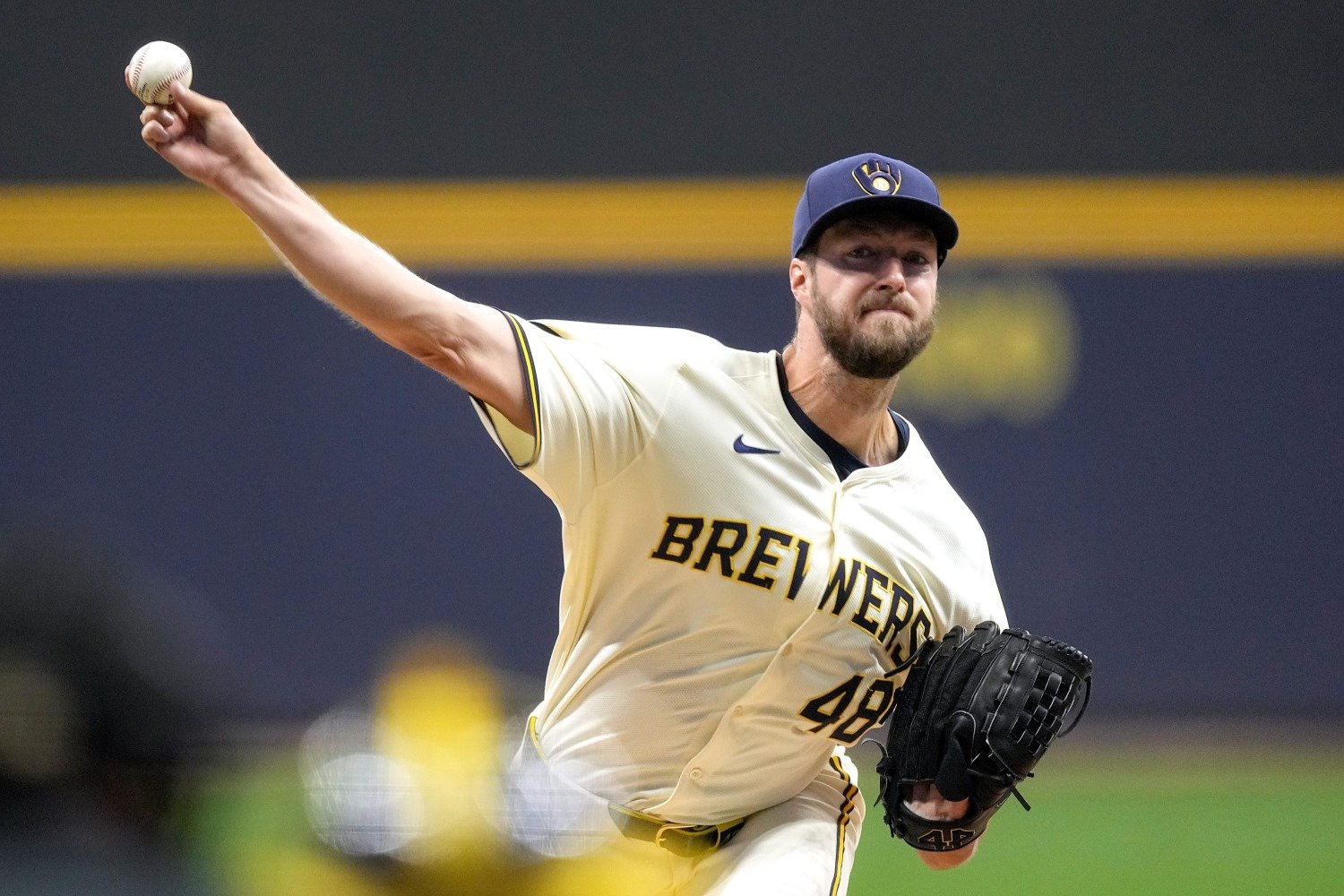
    It’s no secret that the Brewers rotation has been devastated by injury this year. Fortunately, one of the few remaining healthy starters has stepped up in a big way.

    Image courtesy of © Mark Hoffman / Milwaukee Journal Sentinel / USA TODAY NETWORK

    Brewers Video

    One look at the Brewers depth chart is all it takes to realize just how grim the starting pitching picture is. Jakob Junis and Wade Miley were both placed on the 60-day IL, joining Brandon Woodruff. DL Hall was placed on the 15-day IL with a left knee sprain and, according to Pat Murphy, he’s progressing slowly and is still without a clear timeline to return. Things are so bad that Bryse Wilson has been moved from long reliever to starter on a quasi-permanent basis. With the team also trading Corbin Burnes in the offseason, the rotation is a mere shadow of what it was just last year, when it had the sixth-best ERA in baseball at 3.94. 

    Without their two best pitchers from the past few years, the remaining arms have to step up in a big way. As the new ace, Freddy Peralta has been fine, but not (yet) mind-blowing. His 3.63 ERA is in line with his career average of 3.81, so it’s not like he’s had a meteoric improvement. Arguably, the most impressive pitcher so far has been Iowa’s favorite son, Colin Rea.

    After struggling for years to find a stable roster spot in MLB, Rea signed for a second stint with the Brewers in 2023. Thanks to ample injuries that year, too, he made more than 20 starts for the first time in his career. He was all right, posting a 4.55 ERA and 1.19 WHIP over his 124 ⅔ innings of work, giving them what a modern contender needs from a back-of-the-rotation guy. With names like Burnes, Woodruff, and Peralta in front of him, he didn’t need to be anything more than that, but after re-signing with the team this year, his role has grown considerably in scope and expectations. Since his bump in responsibility, he’s posted a 3.45 ERA.

    A quick peek at his arsenal shows that it’s more or less the same as last year’s. He still primarily relies on his sinker/cutter tandem, and his four-seam fastball is still one of his best pitches. However, his sweeper has made some drastic improvements. Last year, batters averaged .226 against it--not bad. This year, he’s increased his usage of the pitch from 10.9% to 17.1%, but opposing batters have yet to get a hit against it. He’s added some extra movement since last year--three more inches of vertical drop and three more inches of horizontal break, to be specific.

    In exchange for more movement, he seems to have lost a few ticks of velocity, averaging 81.7 mph on the pitch vs. last year’s average of 83.1 mph, increasing the difference between that pitch and his fastball and making the sweeper more effective. Batters are also averaging just .118 against his fastball, even though that pitch hovers around 92 mph, hardly a fireball of any sort.

    Despite the good ERA, though, there are some concerning secondary indicators here. Rea's strikeout rate of 15.7% is the lowest it has ever been in his career. His WHIP of 1.26 is respectable, but dependent on his defense. His walk rate of 6.8% is satisfactory, but his opponents' batting average of .243 is slightly up from last year. He also has an expected opponent average of .304 and an expected ERA of 5.77, pointing to some good fortune.

    The culprit behind these numbers are clear: he’s getting pounded on his two most frequently used pitches. Here are the numbers for his sinker and cutter.


    Usage%

    BA

    SLG

    wOBA

    Whiff%

    K%

    Sinker

    29.3

    .318

    .455

    .397

    10.7

    6.0

    Cutter

    25.2

    .371

    .714

    .478

    16.4

    5.3

    His cutter is getting hit especially hard. With a slugging percentage of .714, it’s hard to expect that continued use of the pitch will be conducive to success in the long term. A lot of the time, it just kind of hangs in the middle of the zone, and with an average velocity of just 87.7 mph, it’s not a competitive pitch.

    The sinker is better, although still not good; it also suffers from lackluster placement. Here’s a heat map of all of the cutters and sinkers he’s thrown this season. See if you can find where they mostly end up in the strike zone!

    LECUWbkOLBYcAPXvyRXWbHImqha_Sta2we3umUCG

    With a greater level of importance placed on his spot in the rotation, it’ll be interesting to see what adjustments (if any) Rea decides to make. Will he start to use his four-seam fastball and sweeper more often, and his cutter and sinker less? He worked on a splitter this winter, too. Will we start to see more of that pitch? How does he plan to stay competitive, given his less-than-overpowering “stuff?” Only time will tell. For now, Rea has already exceeded the expectations of many.

    Follow Brewer Fanatic For Milwaukee Brewers News & Analysis

    Recent Brewers Articles

    Recent Brewers Videos

    Brewers Top Prospects

    Brandon Sproat

    Milwaukee Brewers - MLB, RHP
    Sproat had a rough first appearance in a Brewers uniform (3 IP, 7 ER, 3 HR). On Thursday, he gave up one run on 4 hits and a walk over 6 2/3 innings. He struck out six Blue Jays batters.

    User Feedback

    Recommended Comments

    Featured Comments

    1 hour ago, Jason Wang said:

    One look at the Brewers depth chart is all it takes to realize just how grim the starting pitching picture is

    No doubt the Brewers starters aren’t as good as last year, but “grim” seems like a little bit of a dire adjective choice.

    Brewers rotation is currently 15th with an ERA- of 102 and 15th with 2.9 rWAR.

    Those overall numbers are also dragged down somewhat by the eleven starts from Ashby (242 ERA- | -0.4 rWAR), Hall (190 ERA- | -0.3 rWAR), Miley (158 ERA- | -0.1 rWAR) and Myers (131 ERA- | 0.1 rWAR).

    For the current five: Peralta (89 ERA- | 1.0 rWAR), Rea (72 ERA- | 1.0 rWAR) and Wilson (46 ERA- | 1.1 rWAR) have all been giving good starts while Gasser had an encouraging debut. Ross (117 ERA- | -0.1 rWAR) is the only real grim starter at the moment.

    Back to Rea specifically, he is looking more and more like one of the many FIP beaters the Brewers have been able to run out to the mound since Stearns & company arrived back in 2016…

    Chase Anderson
    590 IP | 90 ERA- | 111 FIP-

    Zach Davies
    580 IP | 91 ERA- | 99 FIP-

    Junior Guerra
    416 IP | 89 ERA- | 107 FIP-

    Brent Suter
    394 IP | 84 ERA- | 95 FIP-

    Eric Lauer
    335 IP | 100 ERA- | 115 FIP-

    Jhoulys Chacin 
    281 IP | 100 ERA- | 108 FIP-

    Wade Miley
    208 IP | 71 ERA- | 101 FIP-

    Colin Rea
    175 IP | 102 ERA- | 112 FIP-

    Hoby Milner
    170 IP | 73 ERA- | 85 FIP-

    Carlos Torres
    155 IP | 79 ERA- | 100 FIP-

    Gio Gonzalez 
    112 IP | 73 ERA- | 90 FIP-

    Bryce Wilson 
    110 IP | 61 ERA- | 102 FIP-

    Joel Payamps
    83 IP | 70 ERA- | 85 FIP-

    Alex Claudio
    81 IP | 92 ERA- | 106 FIP-

    Jordan Lyles 
    75 IP | 61 ERA- | 91 FIP-

    No doubt Burnes, Woodruff, Peralta, Hader and Williams were hugely impactful to the Brewers recent run of success, but the organization’s ability to help guys without dominant stuff to still prevent runs at lower than average rates (and at much lower rates than their peripherals would imply) has been even more hugely impactful and a big reason why I didn’t expect the Brewers rotation to dip much below average even without Burnes and Woodruff.

    • Like 1
    1 hour ago, sveumrules said:

    No doubt the Brewers starters aren’t as good as last year, but “grim” seems like a little bit of a dire adjective choice.

    Brewers rotation is currently 15th with an ERA- of 102 and 15th with 2.9 rWAR.

    Those overall numbers are also dragged down somewhat by the eleven starts from Ashby (242 ERA- | -0.4 rWAR), Hall (190 ERA- | -0.3 rWAR), Miley (158 ERA- | -0.1 rWAR) and Myers (131 ERA- | 0.1 rWAR).

    For the current five: Peralta (89 ERA- | 1.0 rWAR), Rea (72 ERA- | 1.0 rWAR) and Wilson (46 ERA- | 1.1 rWAR) have all been giving good starts while Gasser had an encouraging debut. Ross (117 ERA- | -0.1 rWAR) is the only real grim starter at the moment.

    Back to Rea specifically, he is looking more and more like one of the many FIP beaters the Brewers have been able to run out to the mound since Stearns & company arrived back in 2016…

    Chase Anderson
    590 IP | 90 ERA- | 111 FIP-

    Zach Davies
    580 IP | 91 ERA- | 99 FIP-

    Junior Guerra
    416 IP | 89 ERA- | 107 FIP-

    Brent Suter
    394 IP | 84 ERA- | 95 FIP-

    Eric Lauer
    335 IP | 100 ERA- | 115 FIP-

    Jhoulys Chacin 
    281 IP | 100 ERA- | 108 FIP-

    Wade Miley
    208 IP | 71 ERA- | 101 FIP-

    Colin Rea
    175 IP | 102 ERA- | 112 FIP-

    Hoby Milner
    170 IP | 73 ERA- | 85 FIP-

    Carlos Torres
    155 IP | 79 ERA- | 100 FIP-

    Gio Gonzalez 
    112 IP | 73 ERA- | 90 FIP-

    Bryce Wilson 
    110 IP | 61 ERA- | 102 FIP-

    Joel Payamps
    83 IP | 70 ERA- | 85 FIP-

    Alex Claudio
    81 IP | 92 ERA- | 106 FIP-

    Jordan Lyles 
    75 IP | 61 ERA- | 91 FIP-

    No doubt Burnes, Woodruff, Peralta, Hader and Williams were hugely impactful to the Brewers recent run of success, but the organization’s ability to help guys without dominant stuff to still prevent runs at lower than average rates (and at much lower rates than their peripherals would imply) has been even more hugely impactful and a big reason why I didn’t expect the Brewers rotation to dip much below average even without Burnes and Woodruff.

    Rea and Wilson are two of the biggest xERA overperformers this year. It's not bound to continue.

    Wilson is overperforming his xERA by 2.19 runs which is 3rd most in the MLB minimum 100 PA.

    Rea is overperforming his xERA by 2.00 runs which is the 6th most in the MLB minimum 100 PA.

    If/when the regression comes for those two it's going to hit hard. Brewers simply have a bad rotation. They don't strike out many batters. They walk a bunch of batters. They give up a ton of HR. 


    I get that regression is incoming for Rea and Wilson, I just believe it will be less severe than many are anticipating given the Brewers history with those kind of arms.

    2018 rotation ended up at 97 ERA- | 110 FIP-, this year’s version isn’t too far off that pace at 102 ERA- | 113 FIP-.

    After 41 games the 2018 rotation was at 105 ERA- | 117 FIP-.


    Create an account or sign in to comment

    You need to be a member in order to leave a comment

    Create an account

    Sign up for a new account in our community. It's easy!

    Register a new account

    Sign in

    Already have an account? Sign in here.

    Sign In Now

×
×
  • Create New...
