


Brewers Video
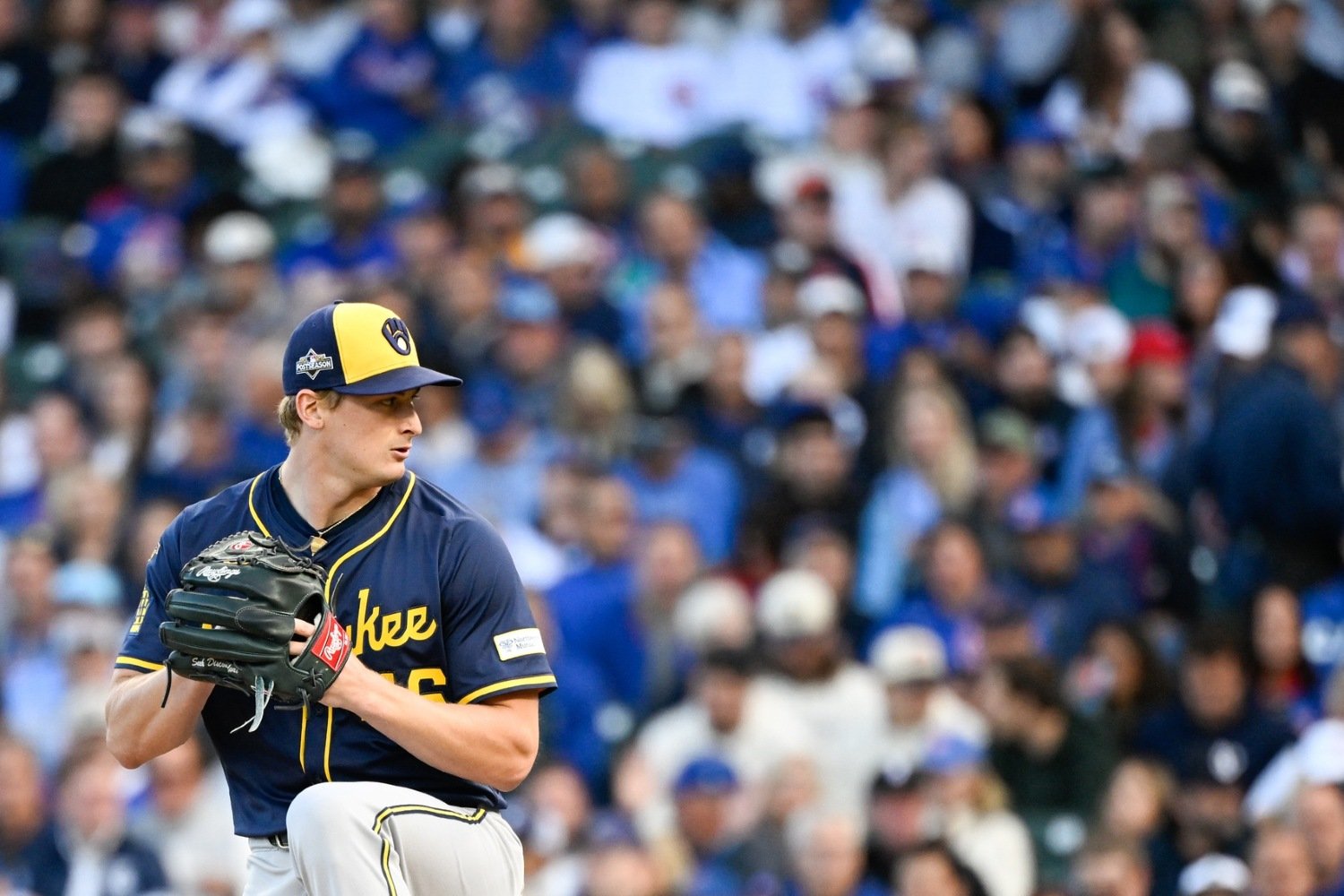
Quinn Priester made incredible in-season strides shortly after joining the Brewers via trade in early April. They first found success by leaning on his two best existing pitches—his sinker and slider—before working a retooled cut fastball and more curveballs into his mix. In 157 ⅓ innings, Priester posted a career-best 3.32 ERA and 82 DRA-, with an excellent 56.7% ground ball rate.
Even after all that progress, there was still something missing from his arsenal by season's end: a reliable changeup.
As the Brewers have emphasized mixing fastball variations, they've largely avoided throwing mediocre changeups, and Priester was no exception. He threw his changeup at a decent rate early in his career, but after joining the Brewers, he only used it sparingly for a few starts—before ditching it almost entirely.

Without a slower pitch to break away from lefties, Priester attacked them with more cutters and curveballs in addition to his sinker. It created noticeable platoon splits: righties managed just a .275 xwOBA against him, but lefties posted a .317 mark. The Brewers used an opener ahead of him five times during the regular season against lineups with left-handed sluggers at the top, and his postseason usage suggested they were shielding him from those matchups with added urgency.
To become a more well-rounded starter, Priester will need another weapon against opposite-handed opponents. When talking in early June about his sinker-slider pairing, pitching coach Chris Hook kept coming back to the changeup. They were still working at it on the side, he said, adding that he expected it to become a more significant factor in the future.
"I think the changeup is there," Hook said. "We've got to get to a point where we can trust it and throw it in spots that it's good for him, but he's got to be on time [mechanically] to be able to do it."
That point, seemingly, never arrived. For the rest of the season, Priester threw just 10 changeups.
Even if his execution improves to the Brewers' liking, he would benefit from adding a little more depth to the pitch. In 2025, the average right-handed sinker and changeup differed by 7.5 mph, 3.4 inches of spin-induced vertical movement, and 9.1 inches of total vertical drop. For Priester, those figures were 5.5, 2.7, and 6.5, respectively, meaning his changeup lacked separation from his heavy sinker. Notice in the movement plot below how close the green cluster of changeups is to the orange cluster of sinkers.

As someone who slightly cuts the ball at release and relies on seam effects to make it sink, Priester could be a candidate for a kick changeup, which incorporates a spiked middle finger to promote more sidespin. Another option may be a split-change, which became a weapon for Tobias Myers after he adopted it midseason.
Regardless of what it takes to get there, it's clear that Priester will need more dependable offspeed stuff to close one of the remaining holes in his arsenal, and the Brewers want him to develop it.
"He's showing me that he's able to do it," Hook said. "I look forward to the day that he's going to be able to incorporate the changeup as well."
Are you optimistic about the Brewers right now?

Follow Brewer Fanatic For Milwaukee Brewers News & Analysis



-
 5
5
-
 1
1


Recommended Comments
Create an account or sign in to comment
You need to be a member in order to leave a comment
Create an account
Sign up for a new account in our community. It's easy!
Register a new accountSign in
Already have an account? Sign in here.
Sign In Now